Cable Protector Ramps
A cable protector ramp is the low-profile wedge you drop over a hose or power cord so foot traffic, carts, and forklifts cross it without snagging the line or catching a toe. This collection is Vestil's full run of crossovers and cord protectors, from a roughly $30 foot-traffic cord cover to an $800 fabricated aluminum crossover built to take a loaded lift truck. That spread is the whole point, because a ramp sized for a welding lead in an office corridor is the wrong ramp for a compressor hose crossing a forklift aisle, and guessing wrong either cracks the ramp or pinches the line. Everything here is extruded or fabricated aluminum, urethane, or rubber, in silver and safety yellow, with channels that run from a single quarter-inch cord to a fist-thick hose bundle. Pick by the heaviest thing that crosses and the fattest line underneath, and the rest is color and length.
Compare Hose & Cable Crossovers
| Model | Price | Capacity | Overall Length | |
|---|---|---|---|---|
| Vestil Fabricated Aluminum Hose & Cable Crossovers | $358 | 2,000 lb | — | View → |
| Vestil Urethane Hose & Cable Crossovers | $126 | — | 24-48 in | View → |
| Vestil Long Extruded Rubber Cord Protectors | $124 | 4,400-6,600 lb | 12-24 ft | View → |
| Vestil Extruded Aluminum Hose & Cable Crossovers | $67 | 2,500-10,000 lb | 36-72 in | View → |
| Vestil Multi-Purpose Ramps | $53 | 5,000 lb | — | View → |
| Vestil Rubber Ramps | $40 | 4,000 lb | 23-35 in | View → |
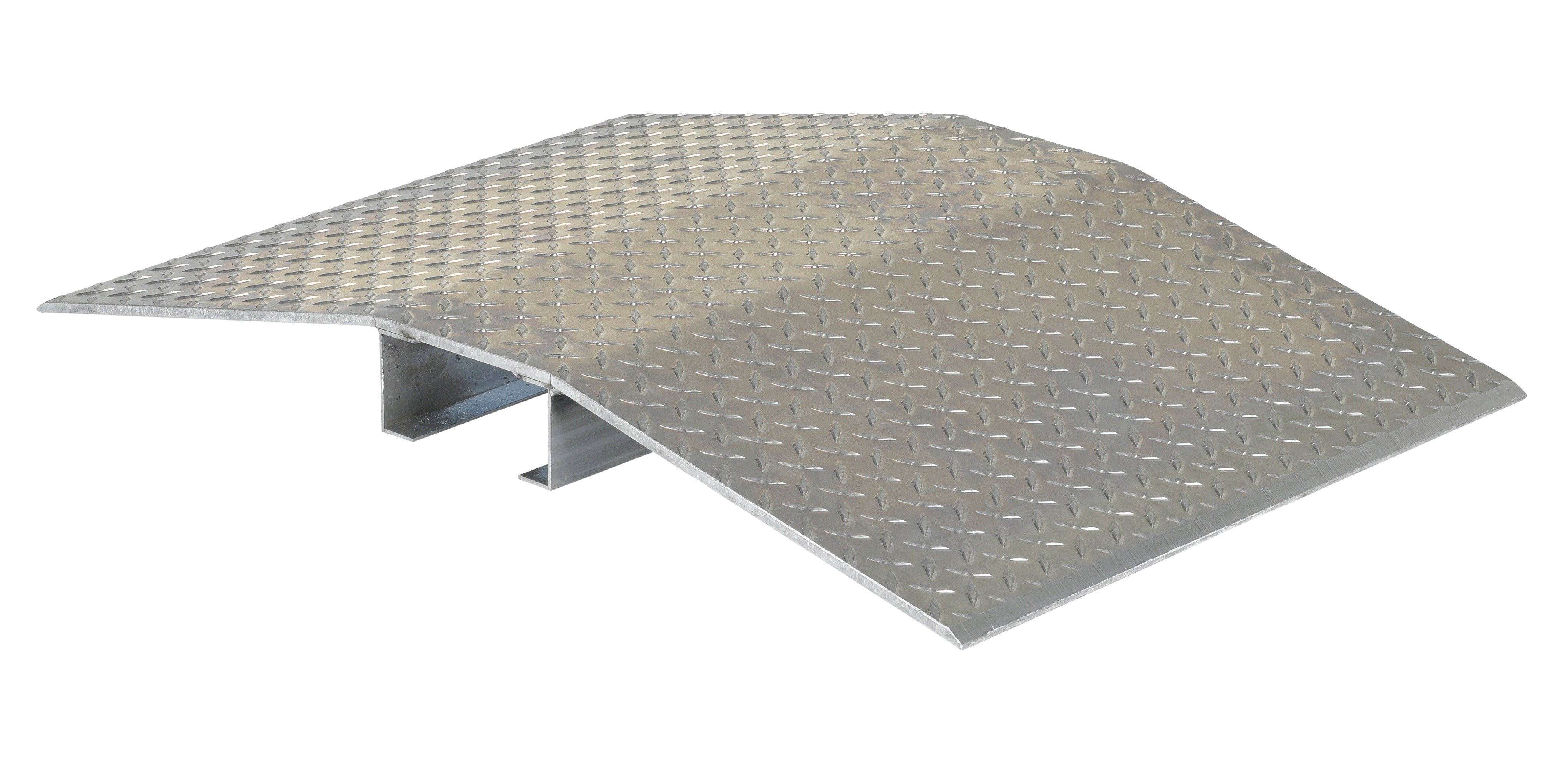 In Stock
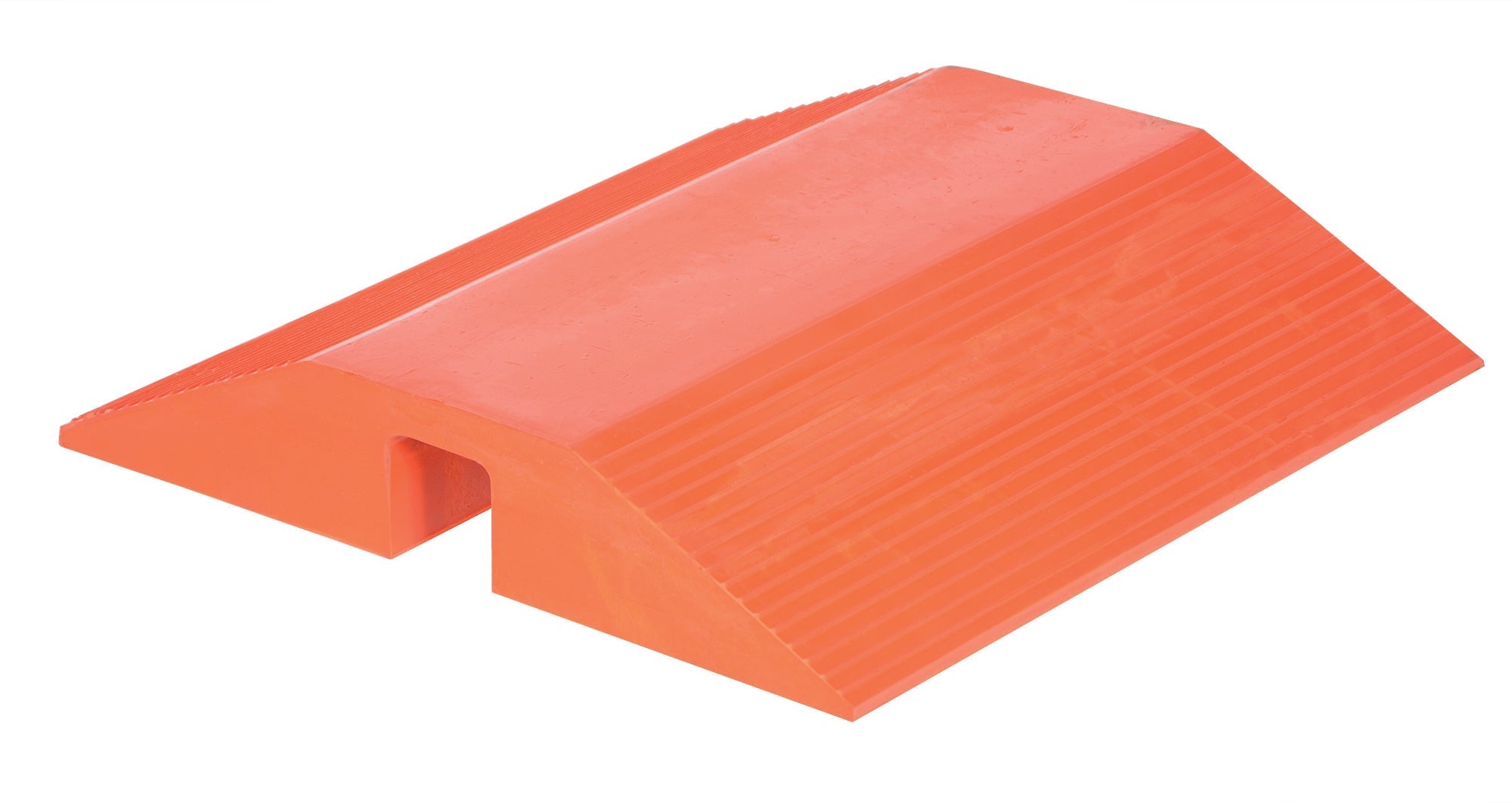 In Stock
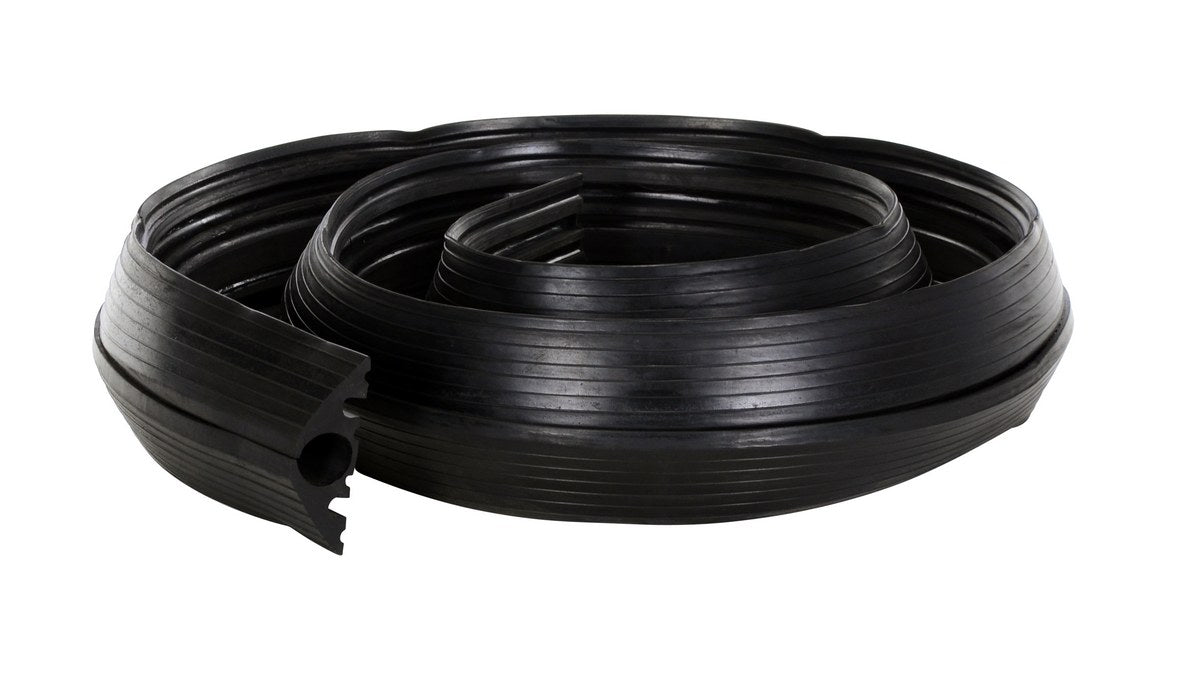 In Stock
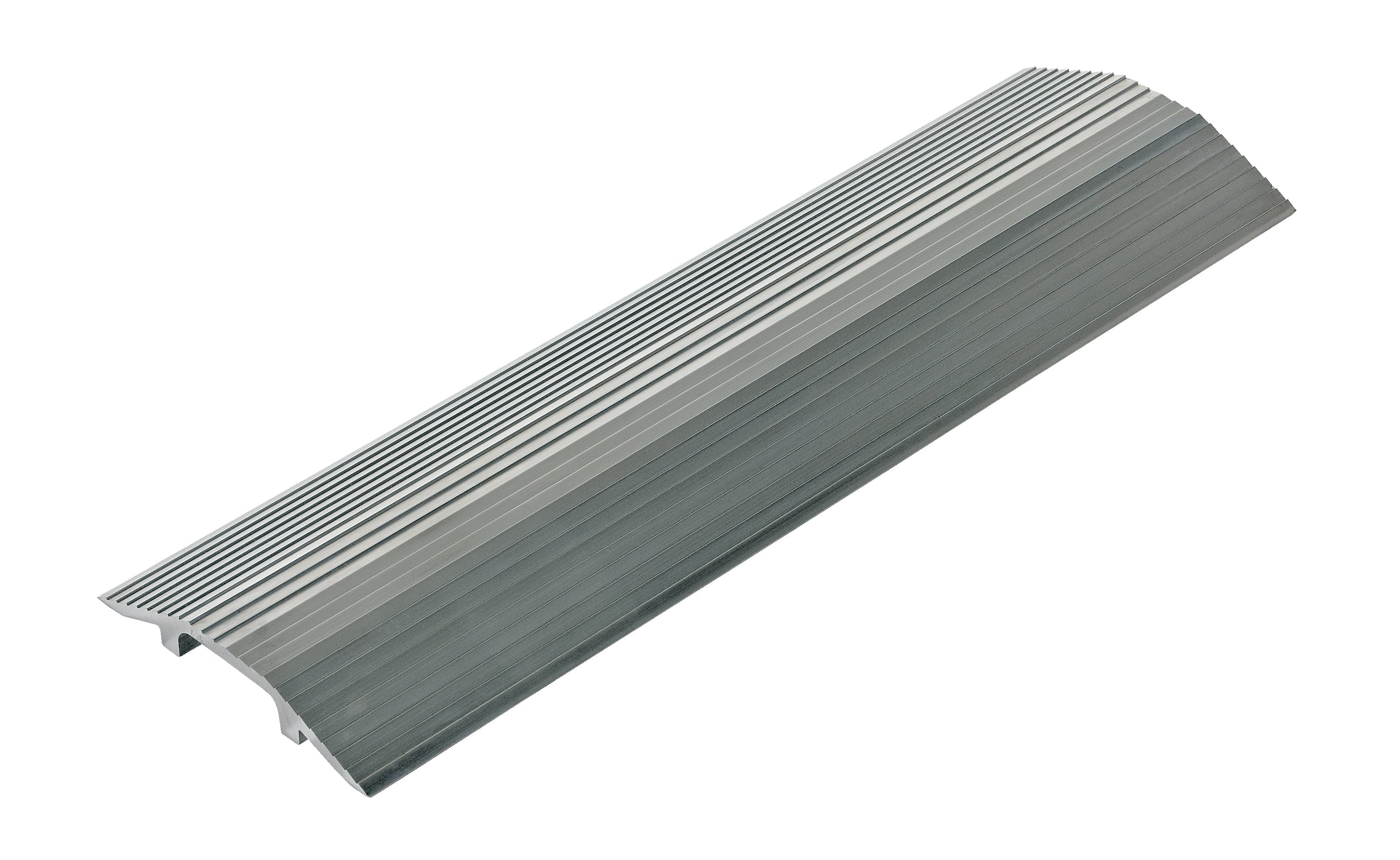 In Stock
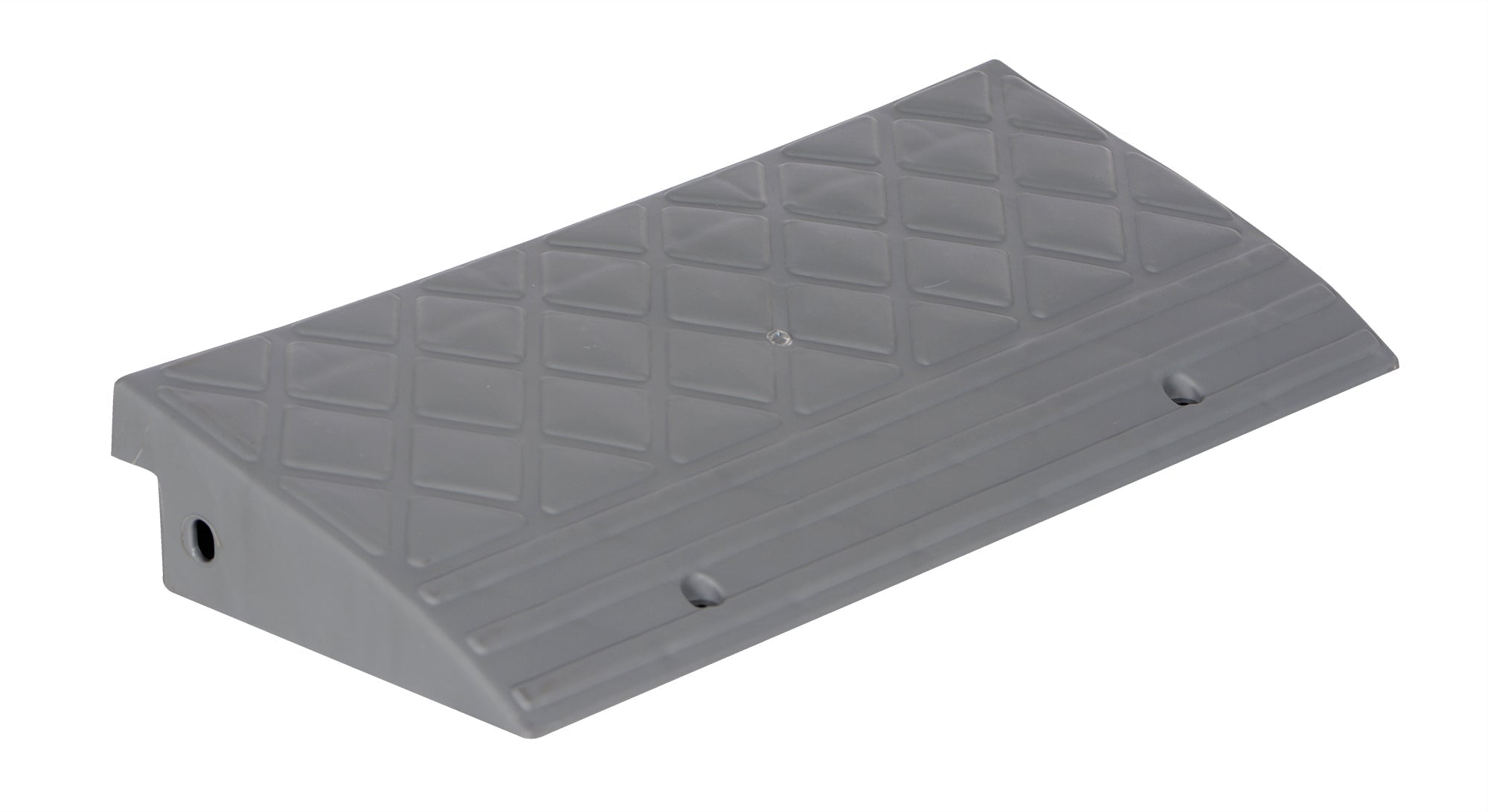 In Stock
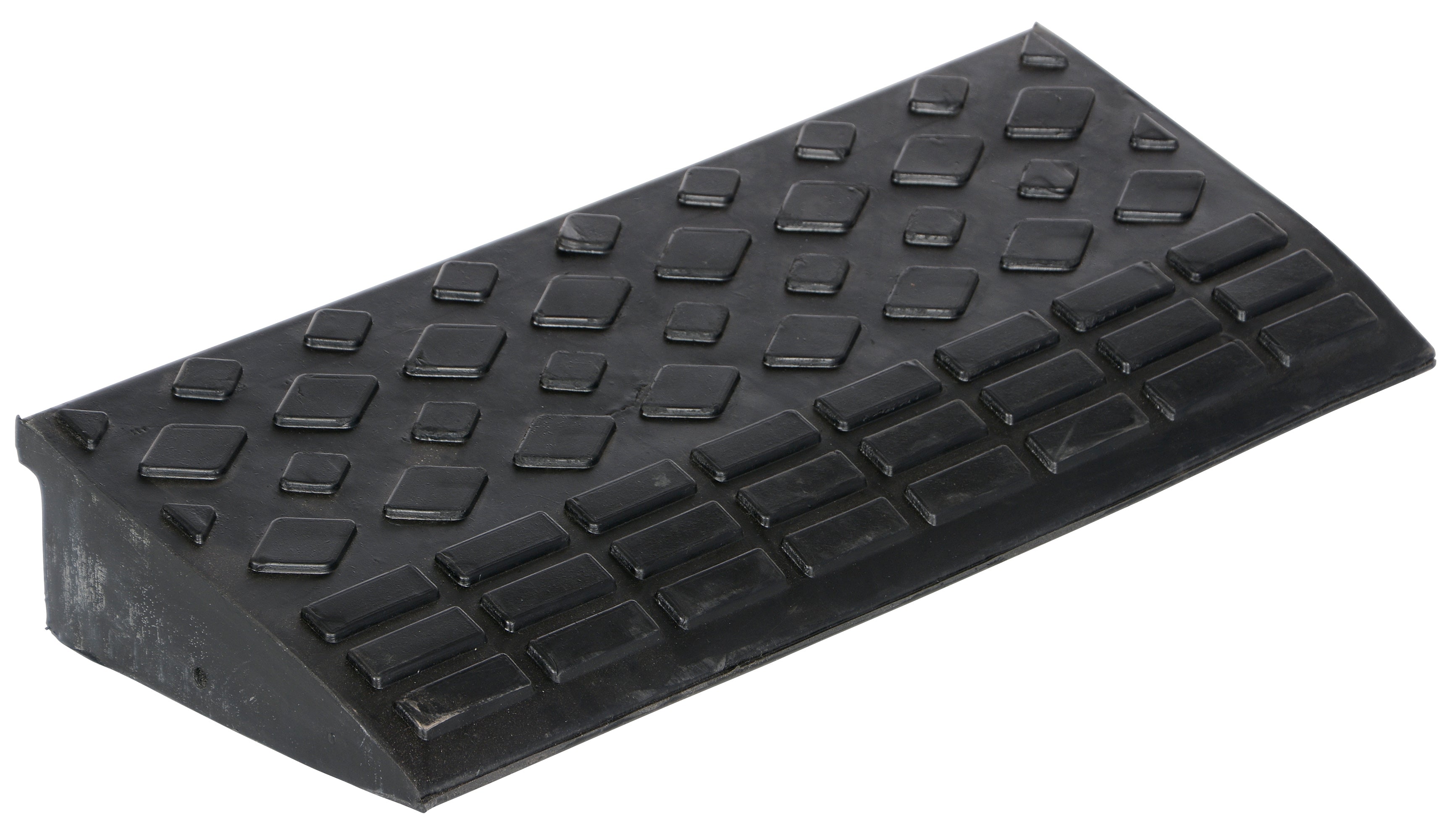 In Stock
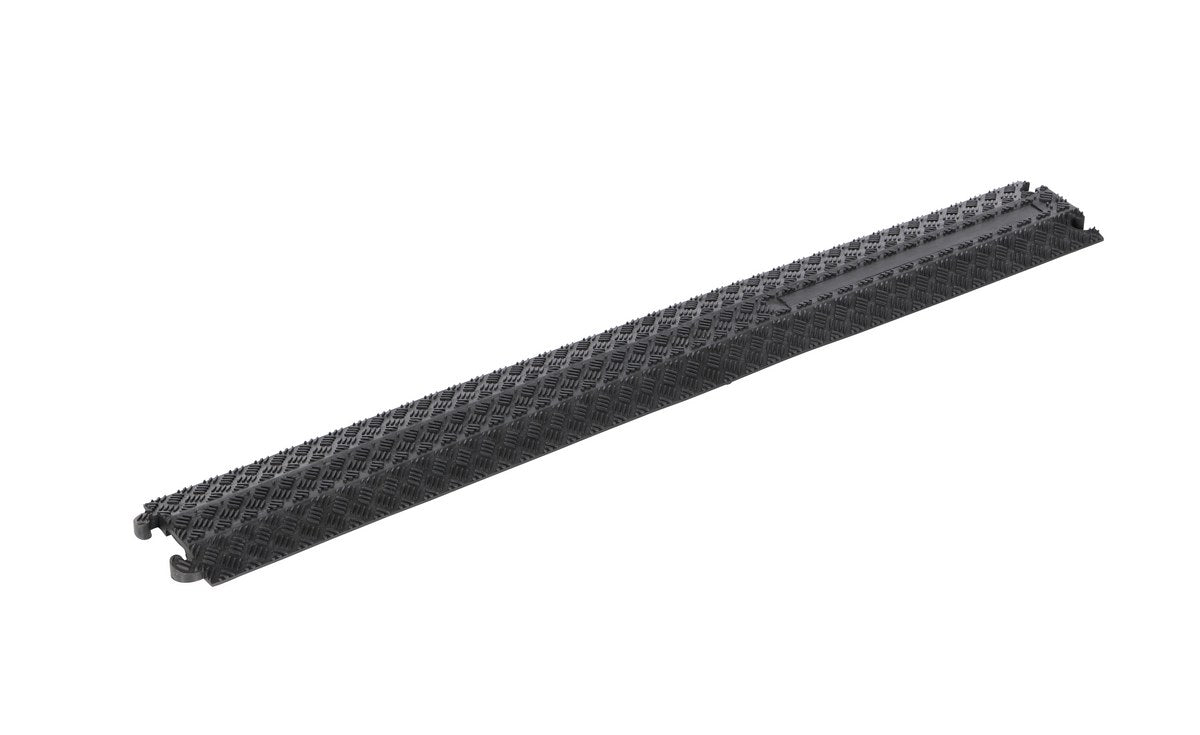 In Stock
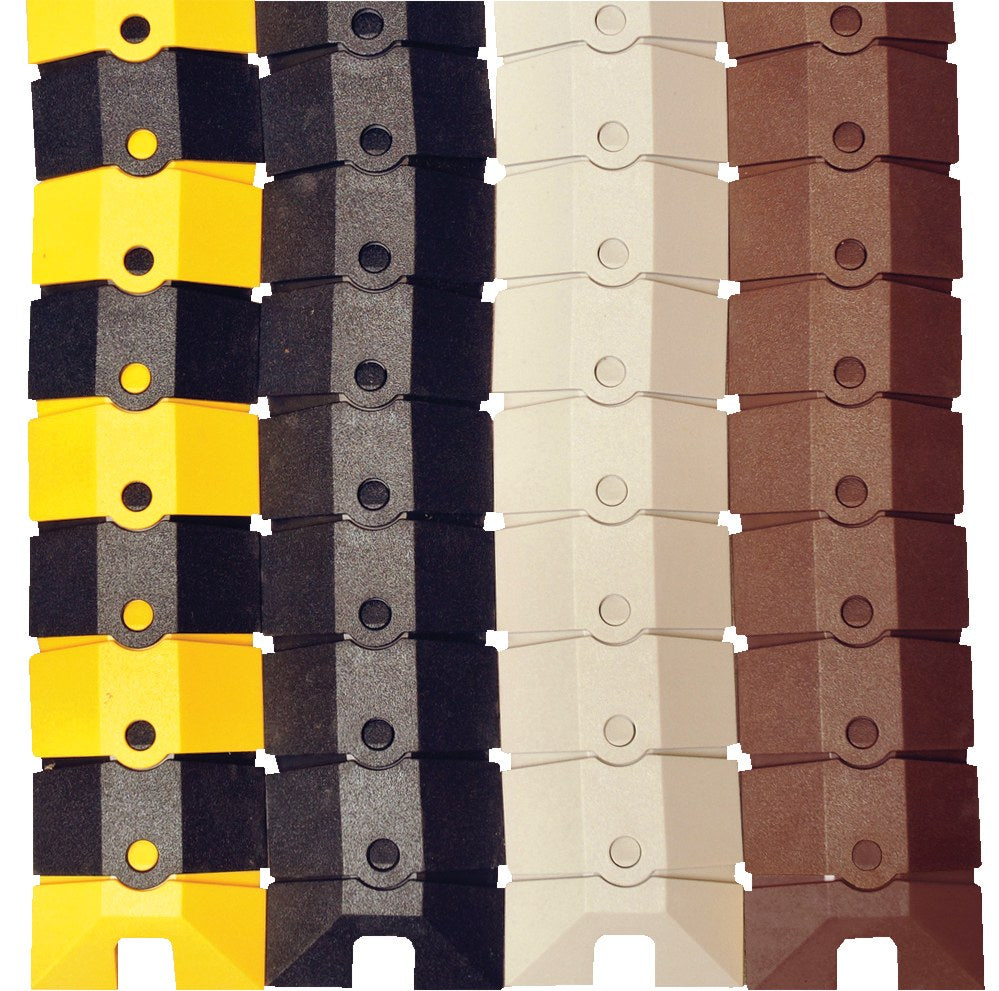 In Stock
Hose & Cable Crossovers Buying Guide
A crossover is the compliant way to leave a line on the floor. Somewhere a hose or power cord has to cross a lane people and forklifts use, and the cheap answer, taping it down, is the one OSHA writes up. 29 CFR 1910.22(a) puts walking and working surfaces on the maintenance department: they have to stay clean, orderly, and free of hazards like the loose lead a toe catches. A cable protector ramp is the compliant version of leaving that line where it needs to be, a sloped shell that houses the cable in a channel and lets traffic ride over the top. It sits alongside the rest of facilities maintenance for the same reason the guarding and the fans do: it is bought by the person who keeps the building running, not the person who lifts the load. When you can get the line off the floor entirely, the spring-driven hose and cable reels are the better fix; the crossover is for the runs that have to stay down.
Match the ramp to the heaviest wheel that crosses. Every crossover has one number that decides whether it survives: the load rating against the heaviest wheel that crosses it. The industry sorts by tier, foot traffic and carts up to roughly 2,000 lb, medium duty from there to about 20,000 lb, and heavy duty for forklifts and trucks above that per axle. Vestil rates its aluminum by single wheel, and the extruded aluminum crossovers come in a 2,500 lb version for light vehicles and a 10,000 lb version built to take a loaded lift truck, both in lengths from 24 to 72 inches. The fabricated aluminum models step up again for the widest spans and carry the highest price in the collection. At the light end, the rubber cord protectors and the Sidewinder cover foot traffic and the occasional pallet jack. Buy for the worst case, since one overweight pass cracks a ramp that was fine for everything else.
Then size the channel to the line, not the other way around. Once the ramp survives the traffic, the second number is the channel: it has to clear the line without pinching it. The extruded aluminum crossovers offer cable openings from 1-1/4 inch up to 4-1/2 inch, which covers a welding lead through a fat air line, and the fabricated aluminum versions open a usable span up to 16 inches wide and 4 inches tall for a whole bundle of hoses or a large-diameter line. Undersize the channel and you crush the hose you meant to protect; oversize it on a light cover and the lid works loose under traffic. For long continuous runs, the extruded rubber cord protectors come in 12 and 24 foot lengths so you are not butting short sections end to end across a room. When power and data cross together, a multi-channel protector keeps them in separate grooves instead of one crowded slot.
Aluminum, urethane, or rubber. Three bodies cover the range here, and they map to duty and setting. Aluminum is the heavy end, the extruded and fabricated crossovers that take forklift and truck traffic and stay put for years; the tradeoff is weight and a harder ride. Urethane sits in the middle, more flexible and quieter under wheels than aluminum while still rated for real vehicle loads. Rubber is the grippy, lower-cost end for foot traffic and light vehicles, and it handles weather and uneven ground better than the alternatives. The lighter covers, the Cable Guard and the Sidewinder, are made for cords in a corridor or a trade-show floor rather than an aisle, and they come in black, beige, brown, gray, and high-visibility yellow so the ramp itself does not become the next thing someone trips on.
ADA, pedestrians, and the office edge cases. Where people walk, the ramp has to be crossable, and that pulls in accessibility. ADA guidance caps a pedestrian ramp's running slope at 1:12, and the low-profile foot-traffic protectors are built long and shallow to stay under that line for wheelchairs, carts, and hand trucks; the tall aluminum vehicle crossovers are steeper by design and belong on forklift lanes, not accessible routes. Yellow lids and reflective edges earn their place at the mouth of an event floor or a public corridor. For a plain threshold or a doorway lip rather than a buried cable, the modular rubber ramps and multi-purpose ramps do that job, in middle and corner sections that build out to the width you need and rated to 4,000 lb for the loads that roll over a dock edge.
Placing them, and buying once. Set the crossover square across the lane, not at an angle a wheel can climb off the side, and give it enough length that the approach slope stays gentle for whatever crosses slowest. Bright lids and beveled edges do the visibility work; anchoring matters most on smooth concrete, where a heavy pass can walk an unsecured ramp forward. Think about the whole line, too: a crossover protects the span on the floor, but the hose fed by your fuel pumps or compressor is better served if the run itself lives on a reel and only drops down where it has to cross. Buy the crossover for the permanent crossings, size it once to the heaviest wheel and the fattest line, and keep a spare length on the shelf for the temporary runs that always show up mid-project.
Frequently Asked Questions
Read the load rating against the heaviest wheel that will cross, not the average traffic. As a rule of thumb the industry treats foot traffic and carts as up to about 2,000 lb, medium duty up to roughly 20,000 lb, and heavy duty for forklifts and trucks above that per axle. Vestil rates its aluminum by single wheel, so the 10,000 lb single-wheel extruded aluminum crossover is the one built for loaded lift trucks, while the rubber and urethane covers sit at the lighter end.
Match the channel to the line so it clears without pinching. The extruded aluminum crossovers offer cable openings from 1-1/4 inch to 4-1/2 inch, which covers most leads, cords, and air lines, and the fabricated aluminum models open a usable span up to 16 inches wide and 4 inches tall for a full bundle of hoses or a large-diameter line. An undersized channel crushes the very hose you were protecting.
For accessible routes you want a low-profile foot-traffic protector, since ADA guidance limits a pedestrian ramp's running slope to 1:12 and those covers are built long and shallow to stay under it for wheelchairs, carts, and hand trucks. The tall aluminum vehicle crossovers are steeper by design for forklift lanes and are not intended for accessible pedestrian routes.
It comes down to duty and environment. Aluminum is for forklift and truck traffic and long-term, fixed installations. Urethane is the flexible middle, quieter under wheels but still rated for real vehicle loads. Rubber and the lighter cord covers grip well, cost less, and handle weather and uneven ground, which makes them right for foot traffic, corridors, trade-show floors, and light vehicles.
Yes. Multi-channel protectors like the Sidewinder run parallel grooves so power and data ride in separate channels instead of one crowded slot, which also keeps the individual lines from chafing each other. For long continuous single runs, the extruded rubber cord protectors come in 12 and 24 foot lengths so you cover the whole span without butting short sections together.
Because tape does not make it compliant or durable. OSHA 1910.22(a) requires walking and working surfaces to stay free of trip hazards, and a taped cord is exactly the kind of loose lead that gets an audit finding. A crossover is the fix that both meets the housekeeping rule and survives traffic, and where the line does not have to stay on the floor at all, a hose and cable reel keeps it up and out of the lane.