Lift Tables
A lift table raises a load off the floor and holds it at a working height, so people stop bending, stooping, and lifting to reach the job. This collection covers the full range of work-height positioning gear from Vestil, with a handful of Valley Craft and Star Industries units alongside it. Scissor lift tables are the core of it, but the shelf runs wider than that: powered and foot-pump post tables, container tilters, self-leveling pallet levelers, roll and work positioners, portable material lifts, hydraulic elevating carts, and crank-up worker platforms. Capacities start a few hundred pounds for a bench tilter and climb past 12,000 lb on the heavy ground-lift and stacker units, with prices from a couple hundred dollars up into five figures. The hard part is not finding a table that lifts your weight. It is matching the mechanism, the platform size, and the raised height to the actual task, so the guide below sorts the shelf by what each machine is for.
Shop Lift Tables by Category
Compare Lift Tables
| Model | Price | Power | Capacity | |
|---|---|---|---|---|
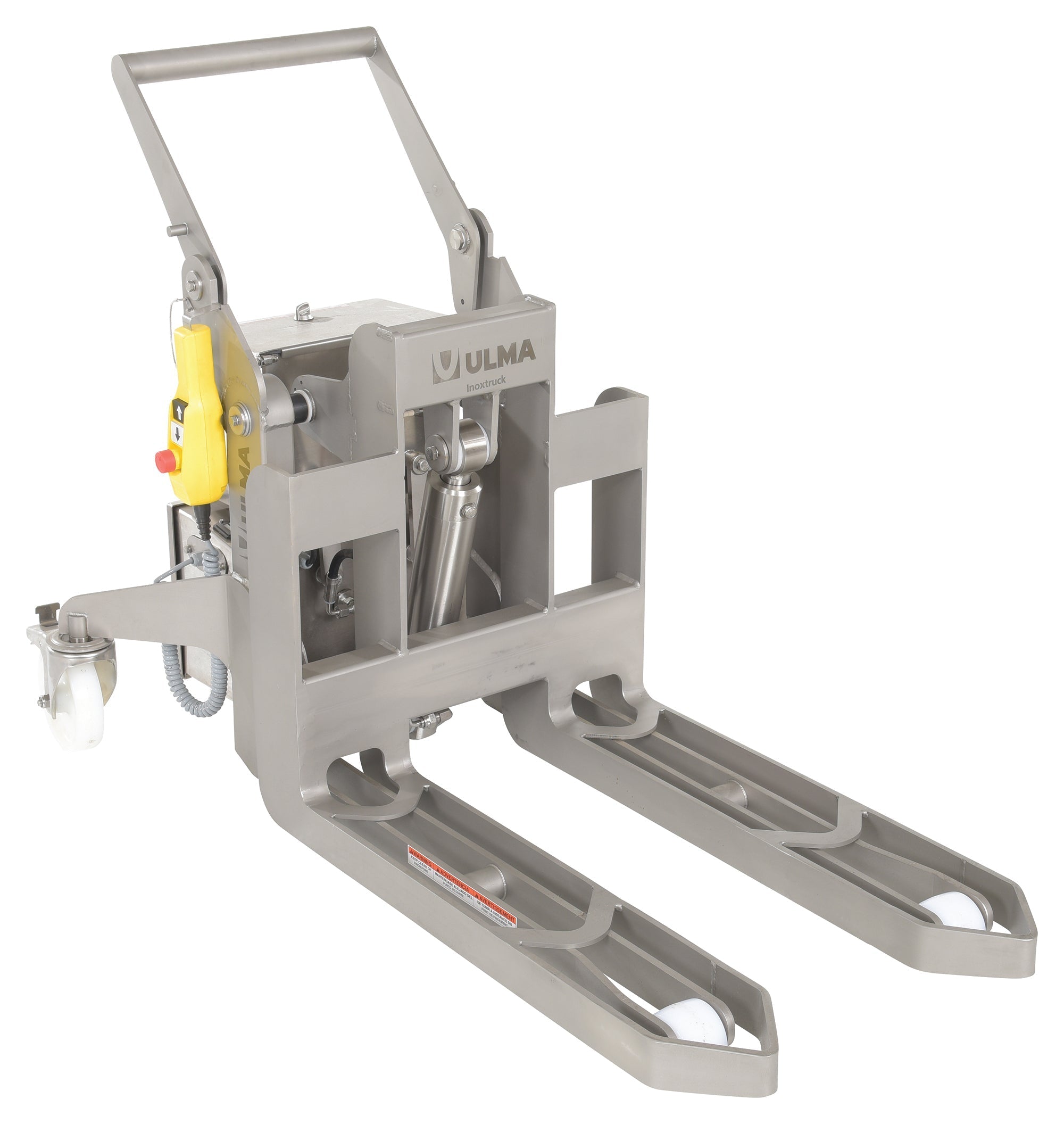
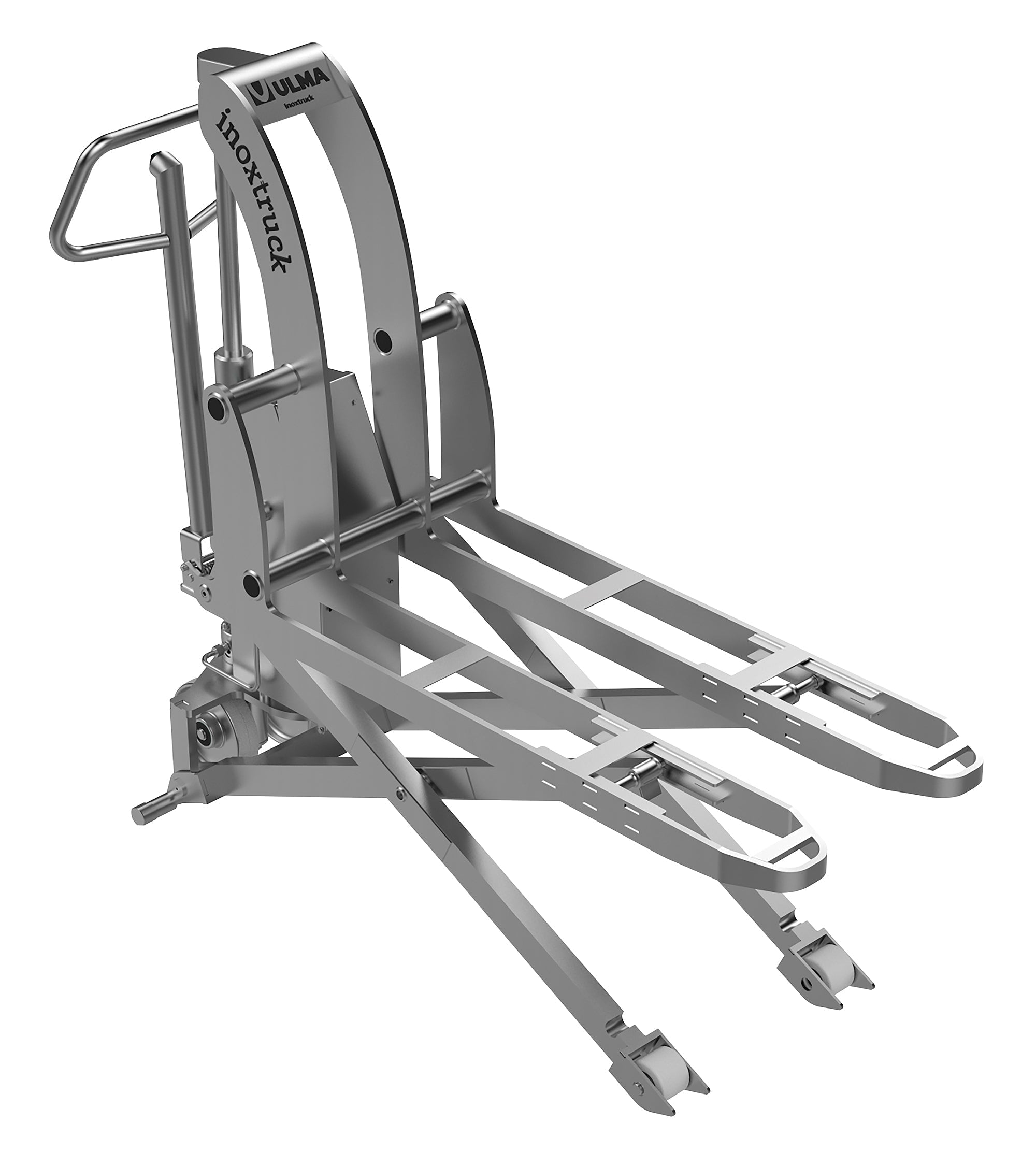
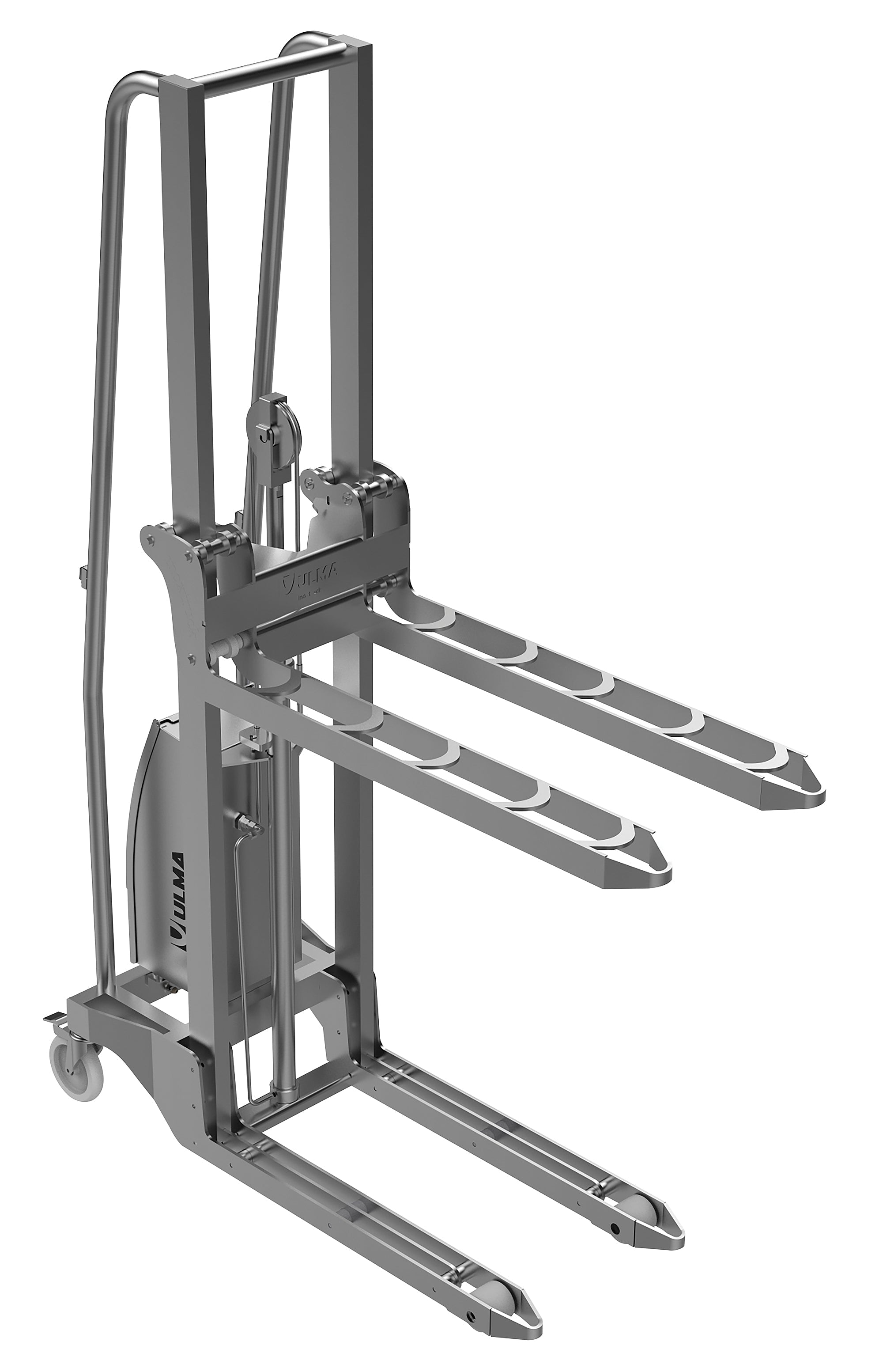
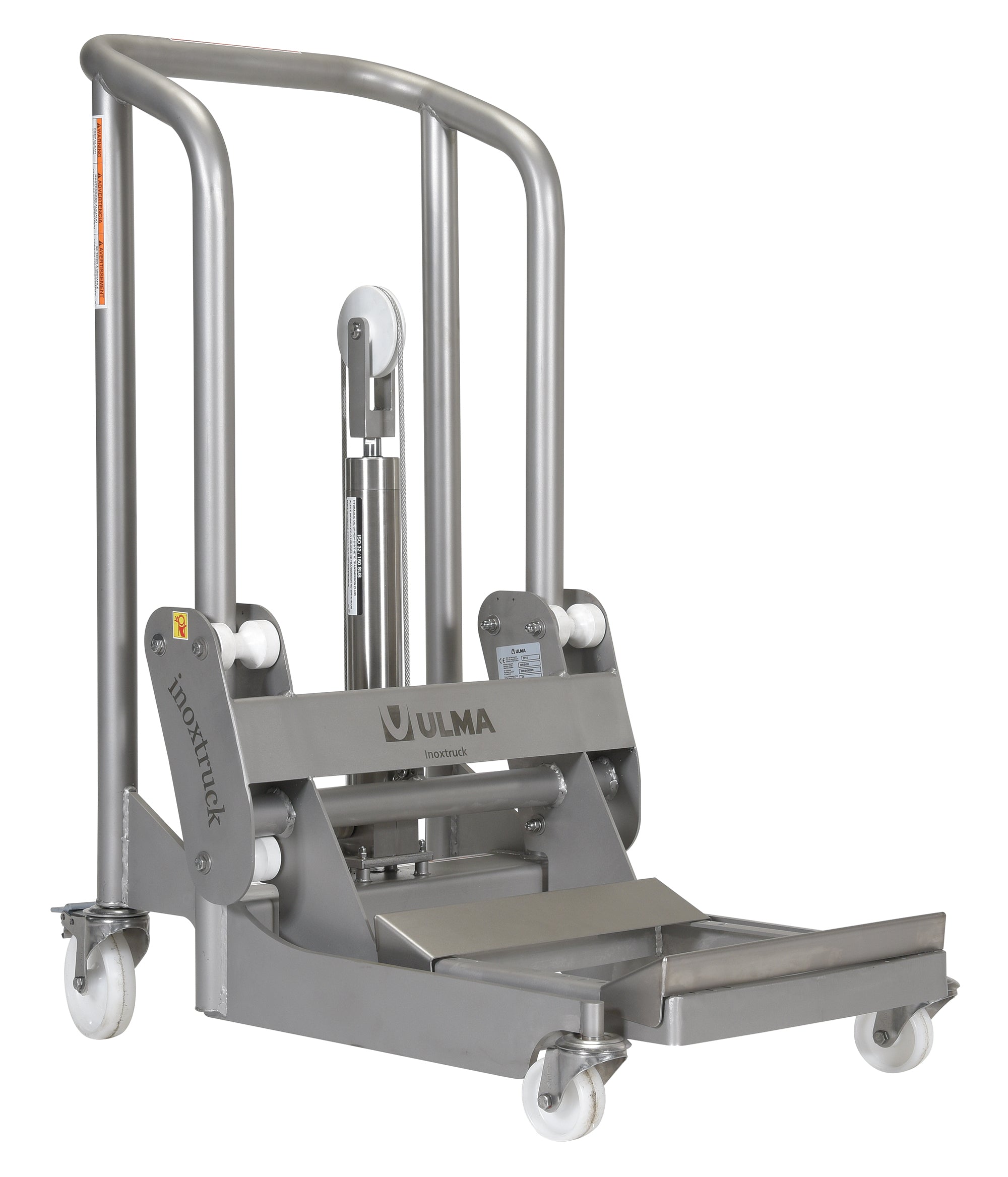
| Vestil ULMA Stainless Steel Tilt Master | $35,871 | 12V DC powered tilt, handheld pendant control, removable steering/driving handle | — | View → |
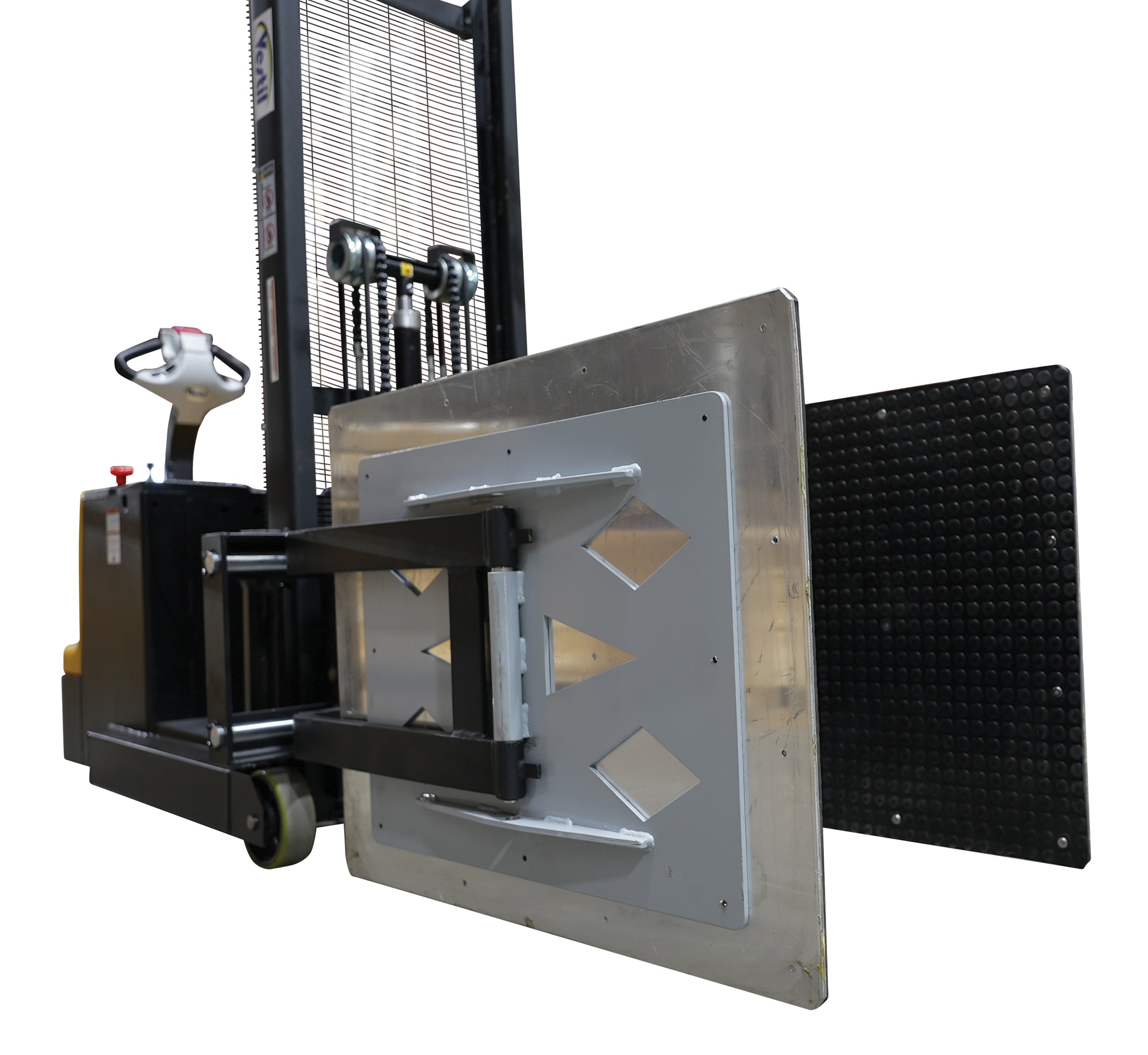
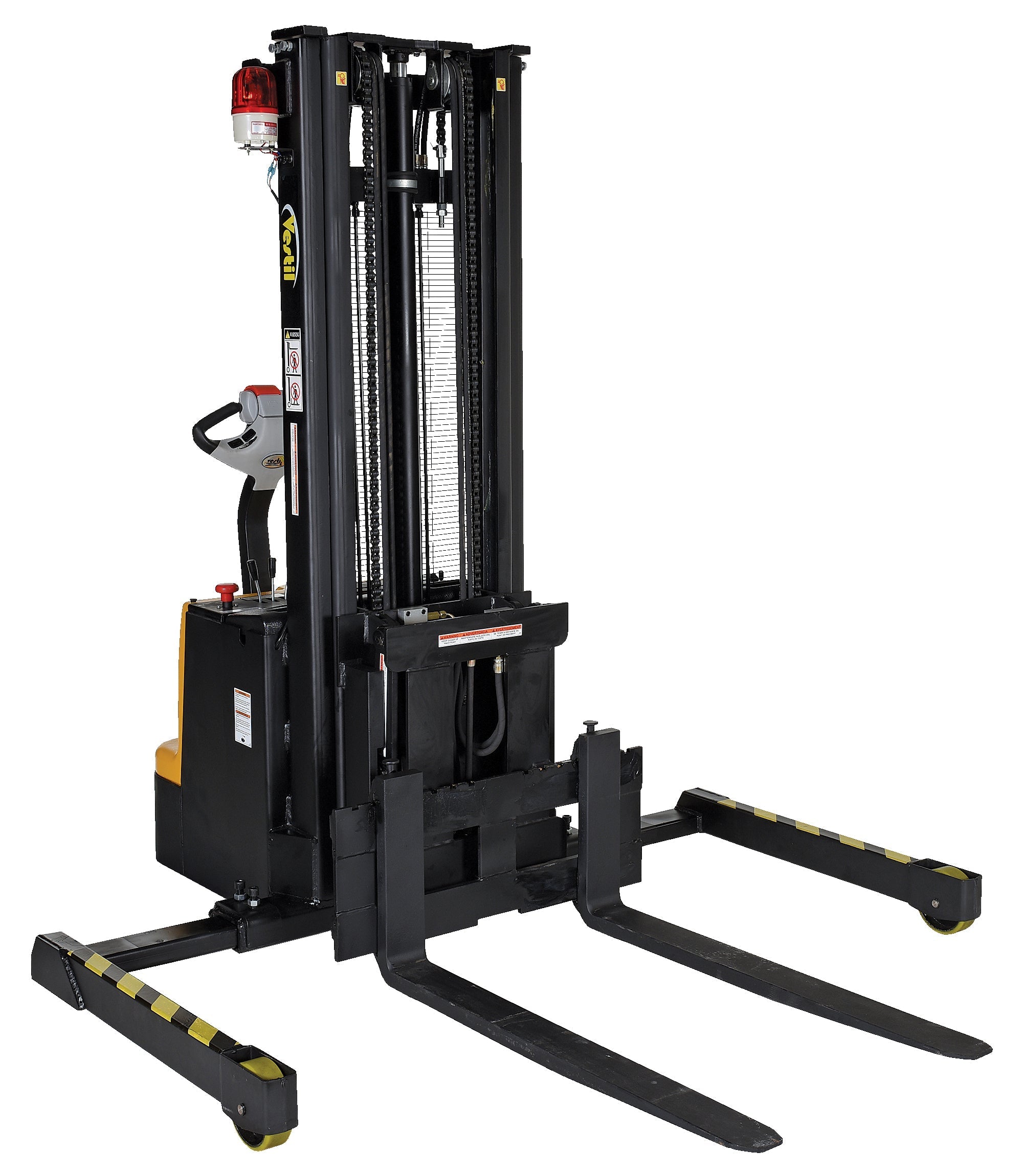
| Vestil Fully Powered Bale Clamp & Lift Stackers | $20,142 | 12V | — | View → |
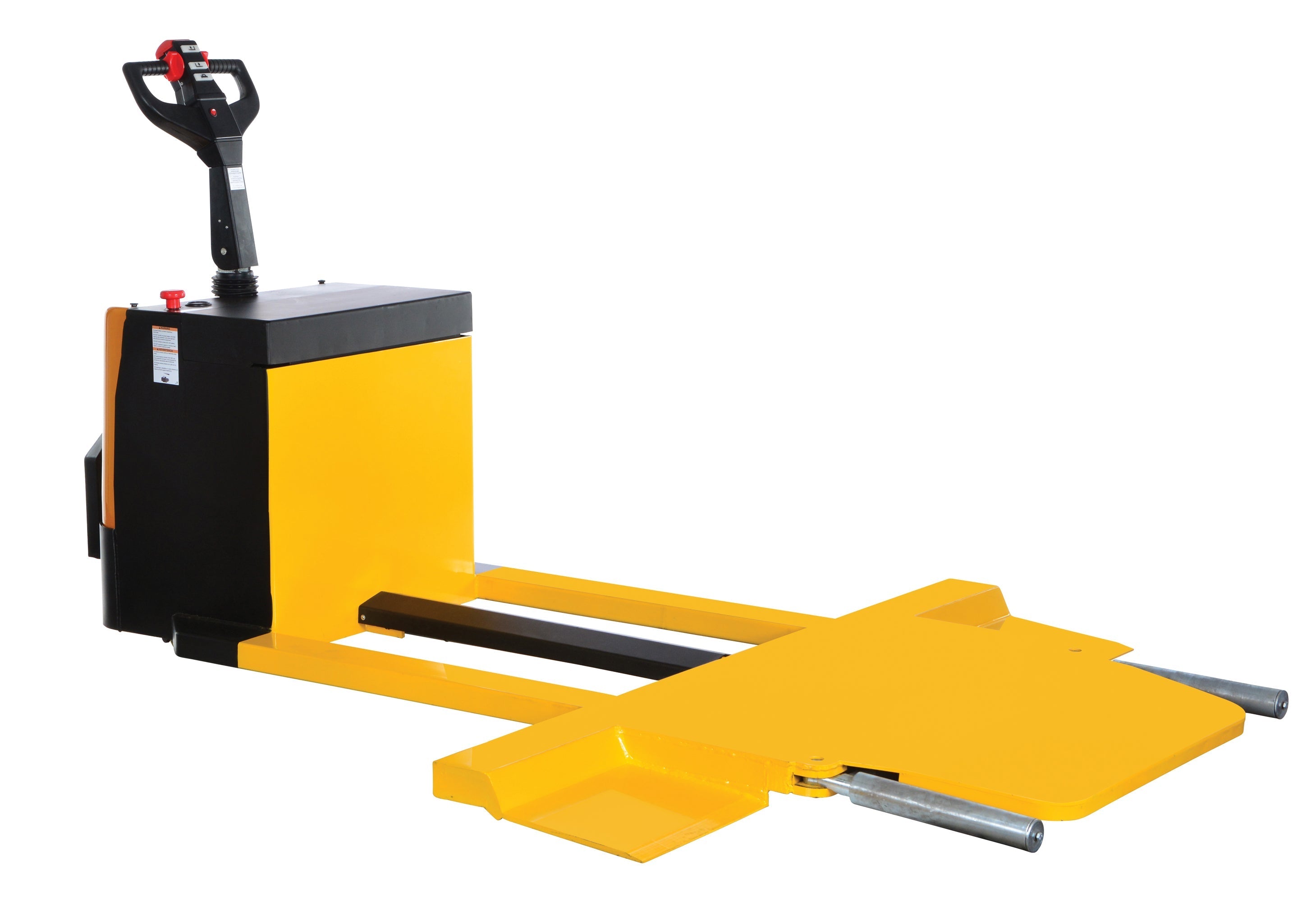
| Vestil Electric Car Mover | $18,451 | — | 7,500 lb | View → |
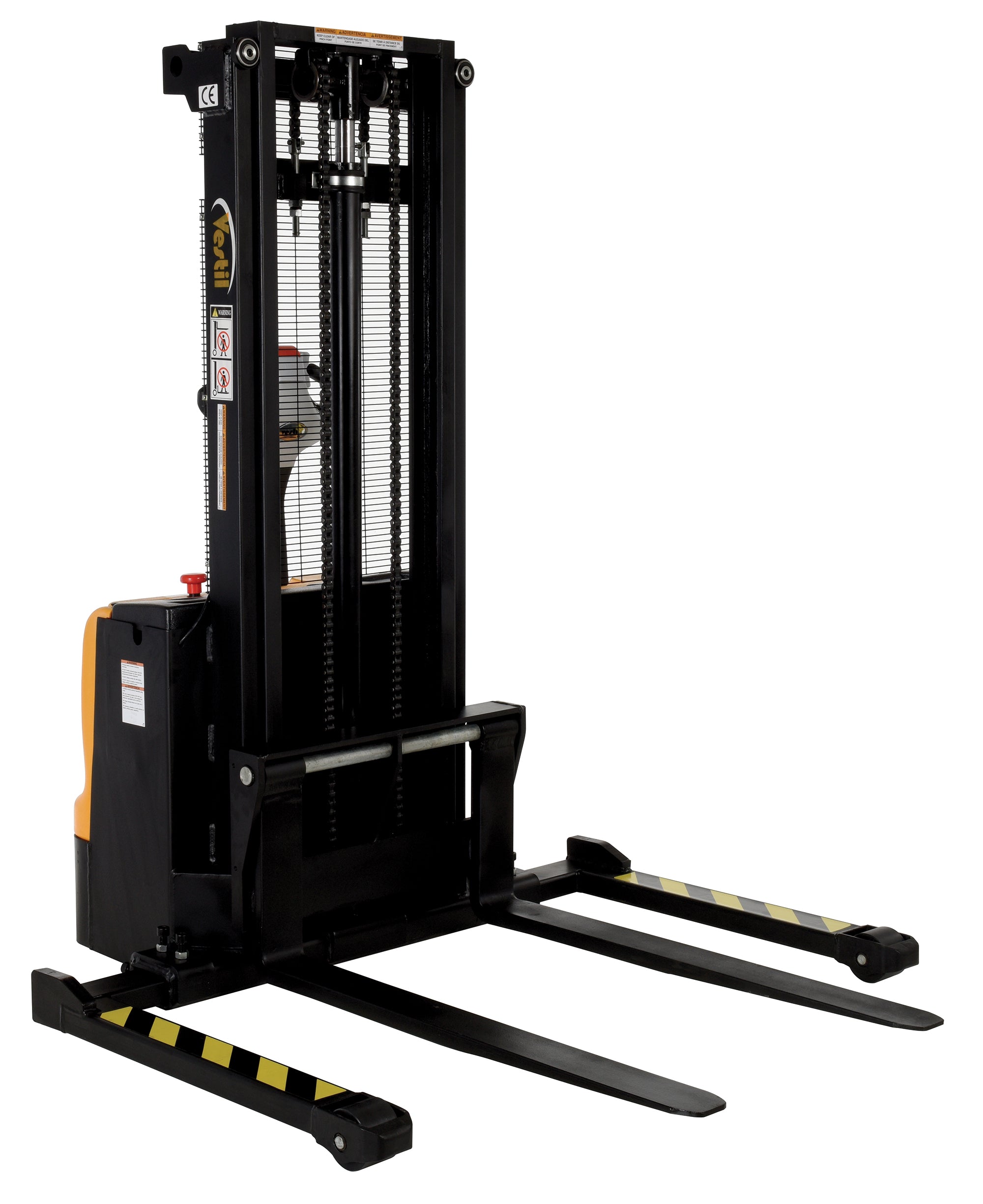
| Vestil High Tote Lifter | $17,356 | 12V | — | View → |
| Vestil Counter-Balanced Powered Drive Lifts | $17,160 | 12V | 1,000-2,000 lb | View → |
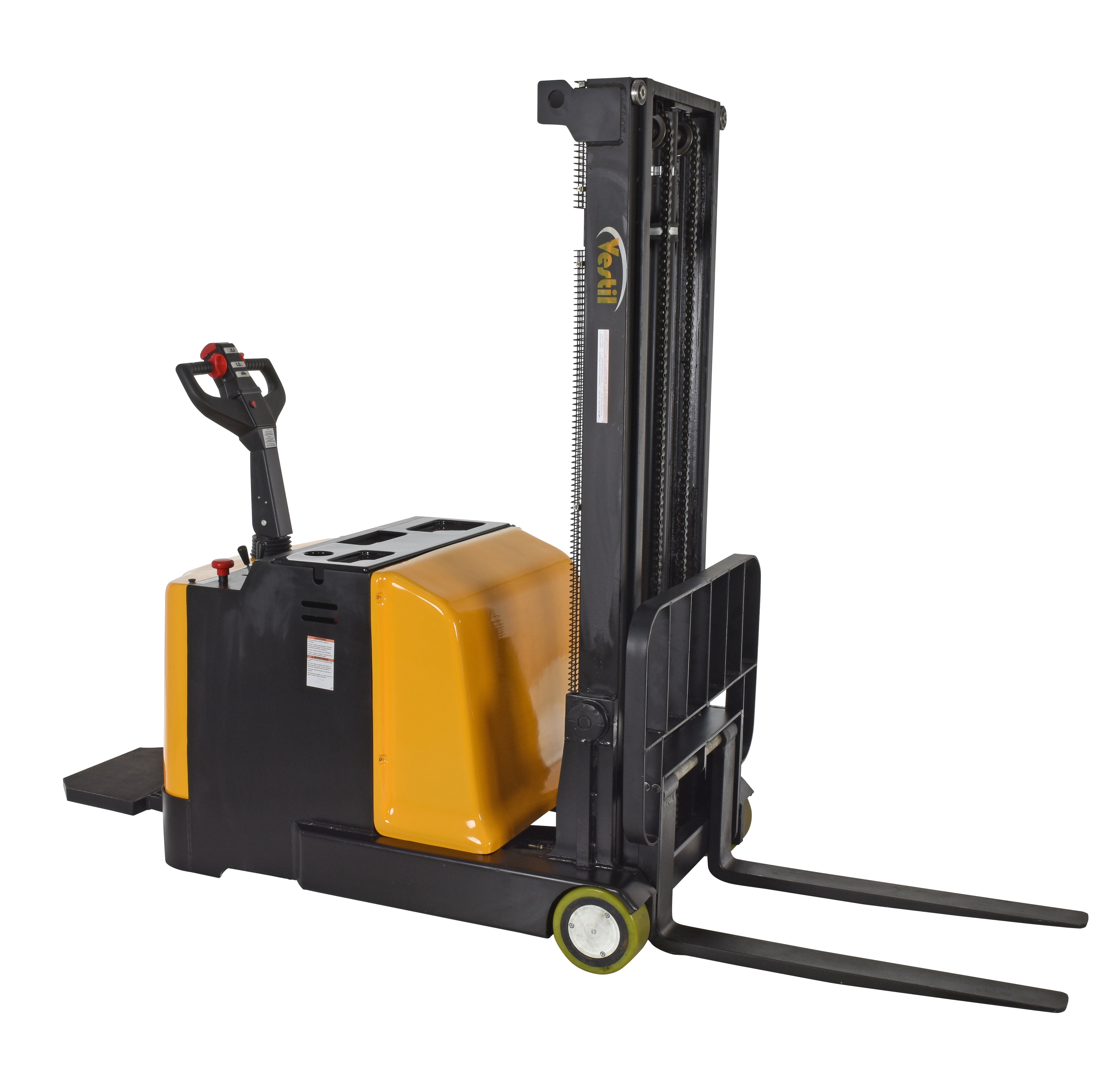
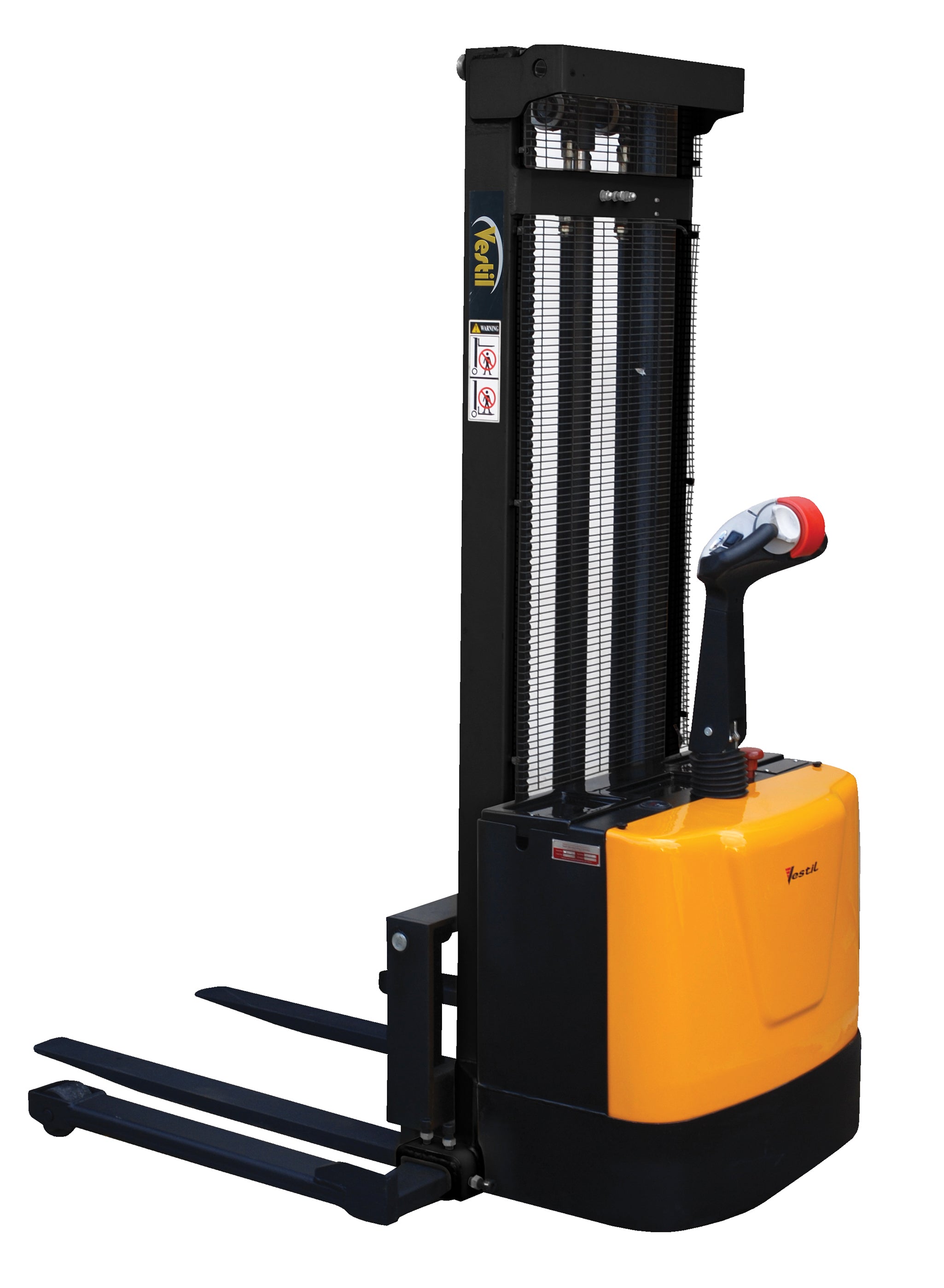
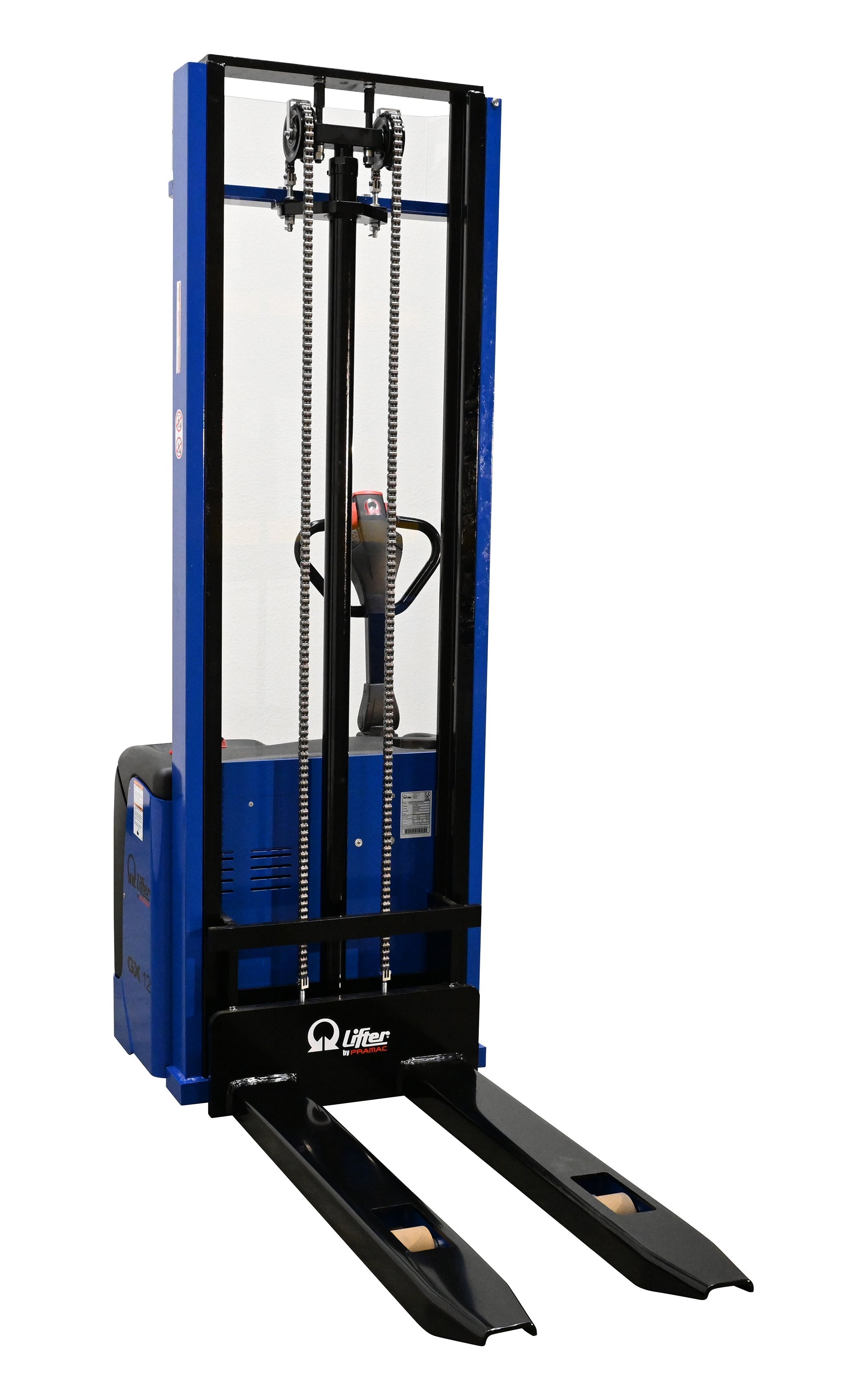
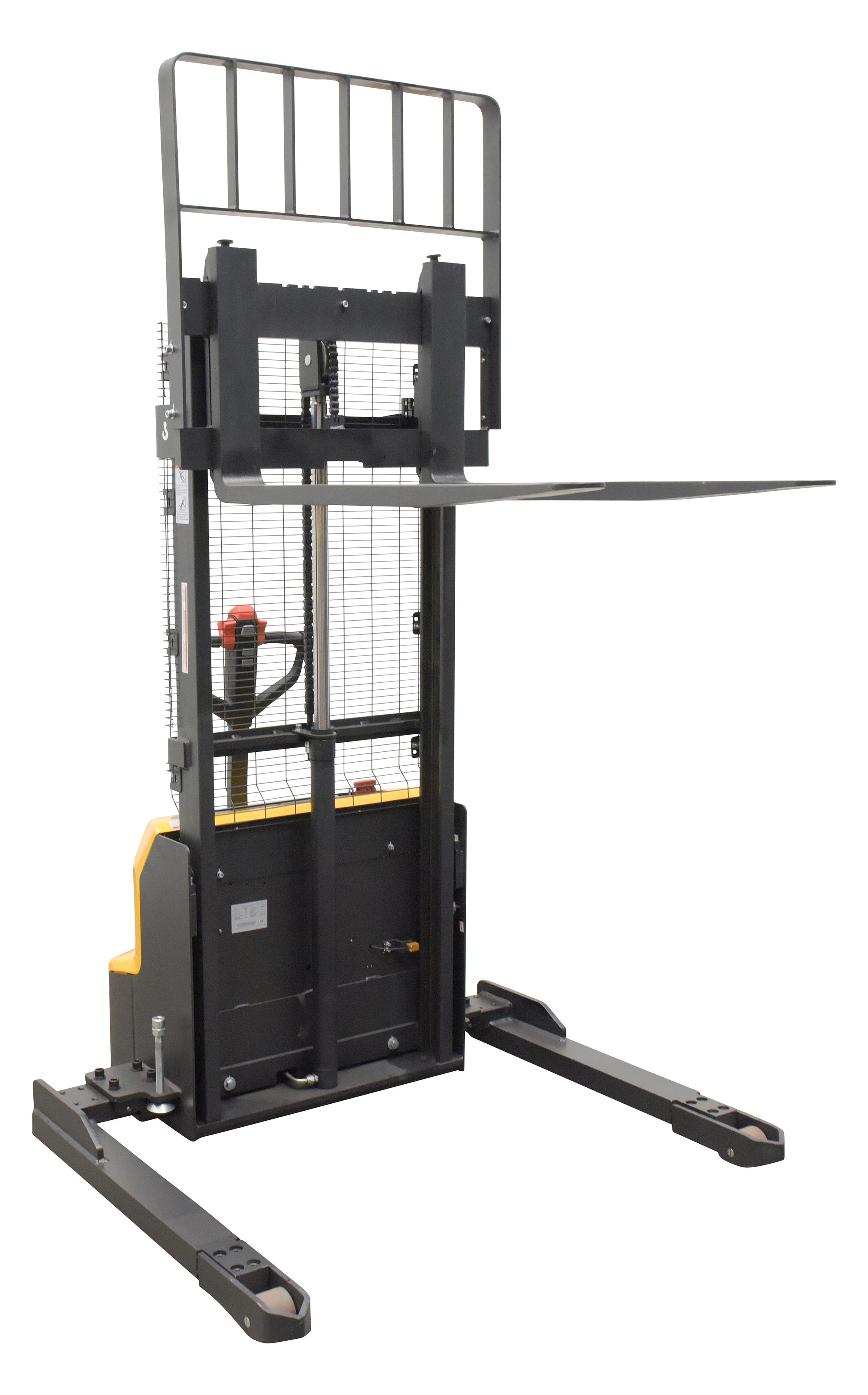
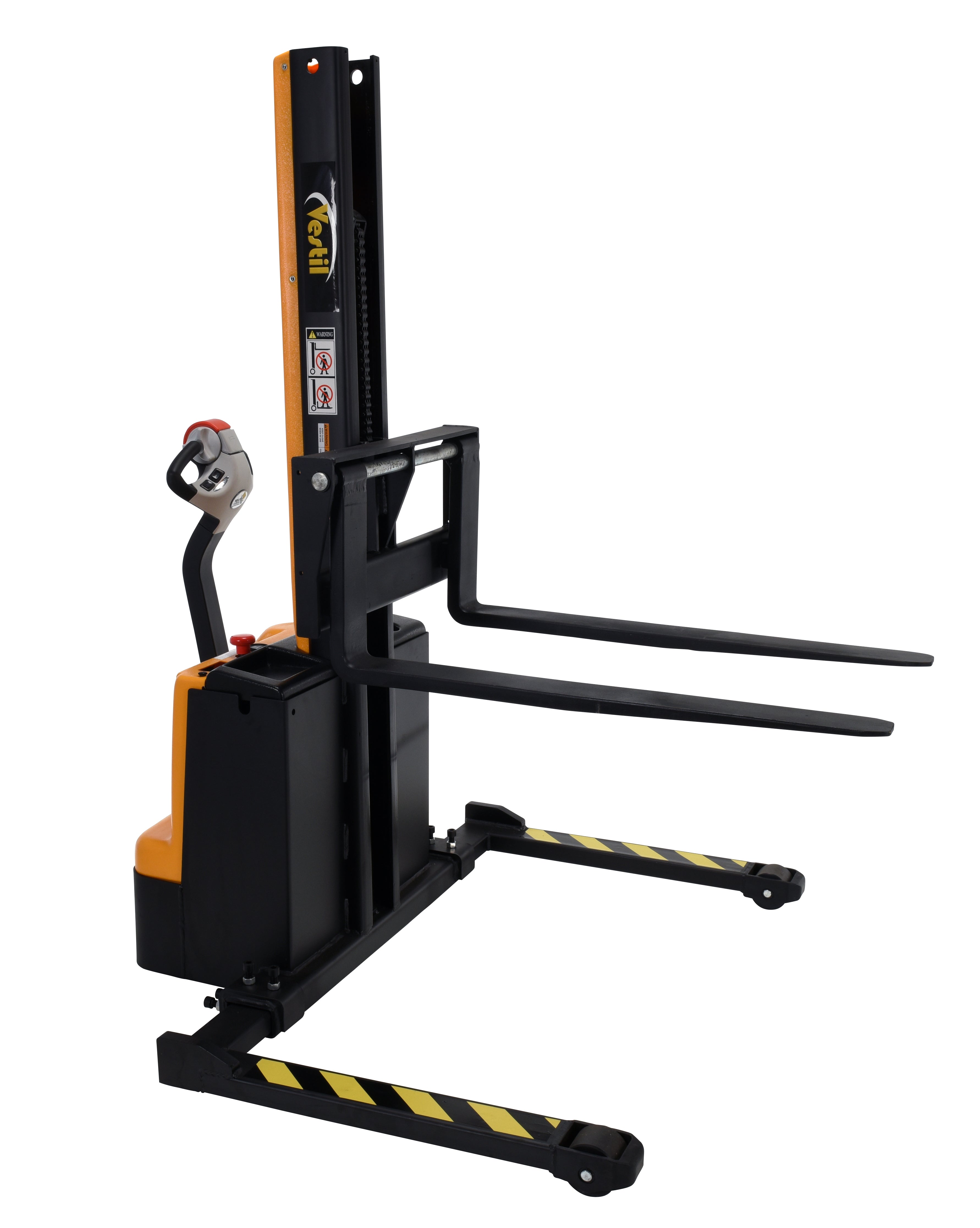
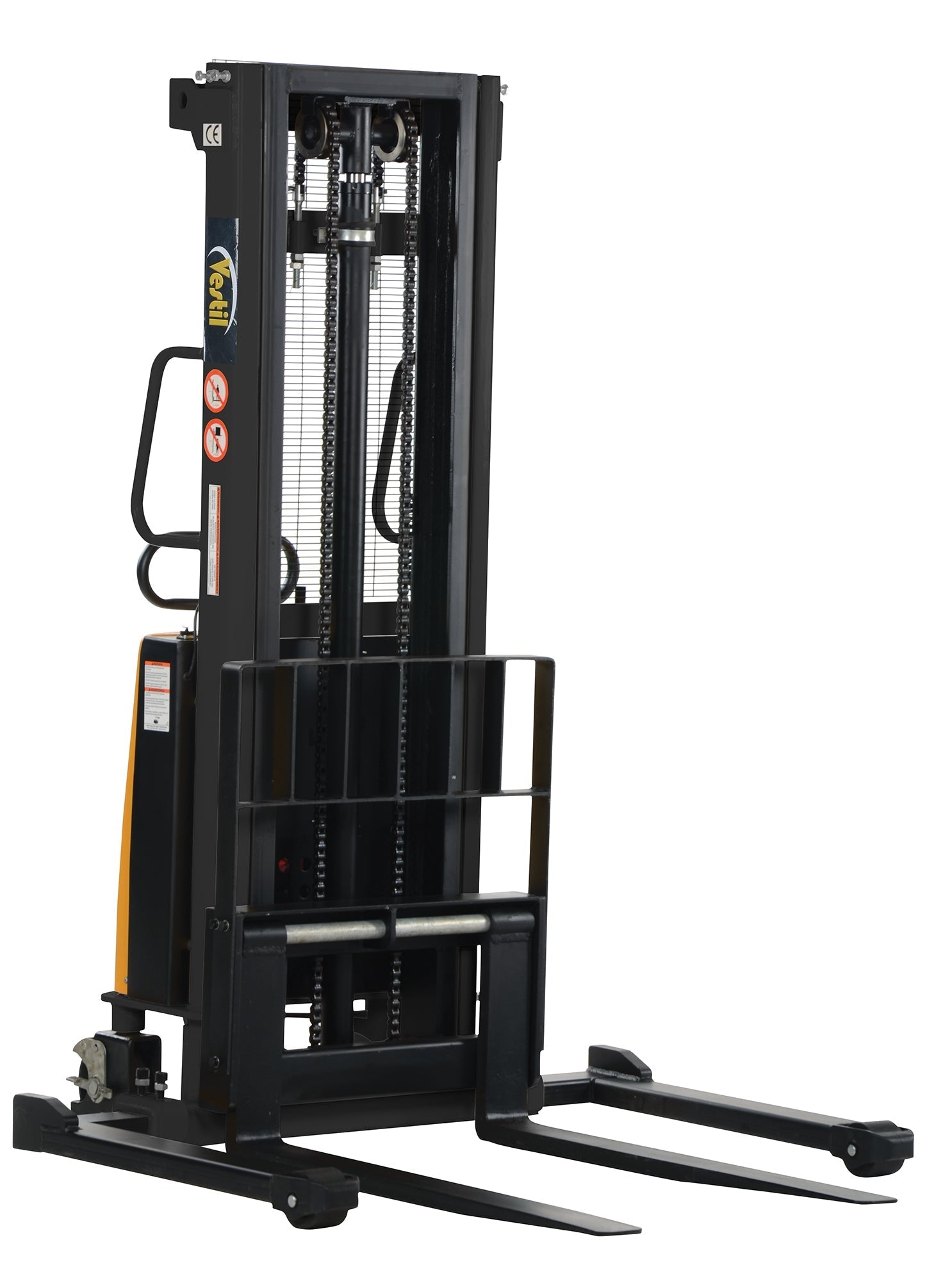
| Vestil Electric Powered Stacker | $14,195 | 12V | 2,000 lb | View → |
 In Stock
 In Stock
 In Stock
 In Stock
 In Stock
 In Stock
 In Stock
 In Stock
 In Stock
 In Stock
 In Stock
 In Stock
 In Stock
 In Stock
 In Stock
 In Stock
 In Stock
 In Stock
 In Stock
 In Stock
 In Stock
 In Stock
 In Stock
 In Stock
 In Stock
 In Stock
 In Stock
 In Stock
 In Stock
 In Stock
 In Stock
 In Stock
 In Stock
 In Stock
 In Stock
 In Stock
 In Stock
 In Stock
 In Stock
 In Stock
 In Stock
 In Stock
 In Stock
 In Stock
 In Stock
 In Stock
 In Stock
 In Stock
 In Stock
 In Stock
 In Stock
 In Stock
 In Stock
 In Stock
 In Stock
 In Stock
 In Stock
 In Stock
 In Stock
 In Stock
 In Stock
 In Stock
 In Stock
 In Stock
 In Stock
 In Stock
 In Stock
 In Stock
 In Stock
 In Stock
 In Stock
 In StockIn Stock
 In Stock
 In Stock
 In StockIn Stock
 In Stock
 In Stock
 In Stock
 In Stock
 In Stock
 In StockIn Stock
 In StockIn Stock
 In Stock
 In Stock
 In Stock
 In Stock
 In Stock
 In Stock
 In Stock
 In Stock
 In Stock
 In Stock
Lift Tables Buying Guide
Sort by the job before you shop the spec sheet. Everything on this page raises a load, but they do it for different reasons, and the reason points you at the right family faster than any capacity chart. If the goal is presenting a load flat at a comfortable height for assembly, packing, or feeding a machine, that is a scissor lift table or a post table. If the load has to pour, dump, or angle toward the operator, that is a tilter. If you are palletizing by hand and want the top layer to stay at waist height on its own, that is a self-leveling pallet leveler. If the load has to travel across the floor and rise at the far end, look at hydraulic lift carts or portable material lifts. Rolls, reels, and awkward single parts belong on work positioners, and if it is the worker who needs raising rather than the load, that is a worker platform. Pin the verb first, then size within the family.
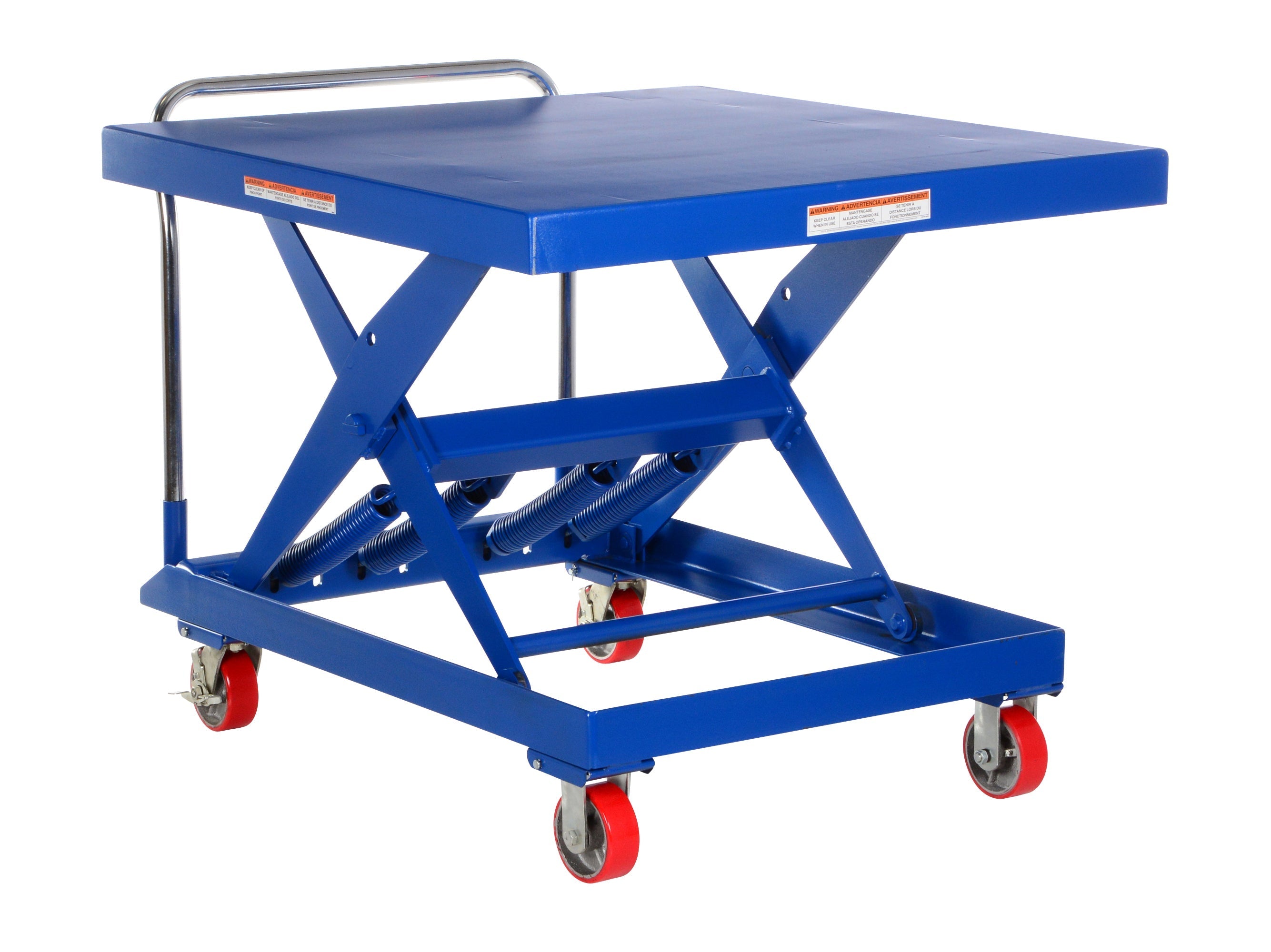
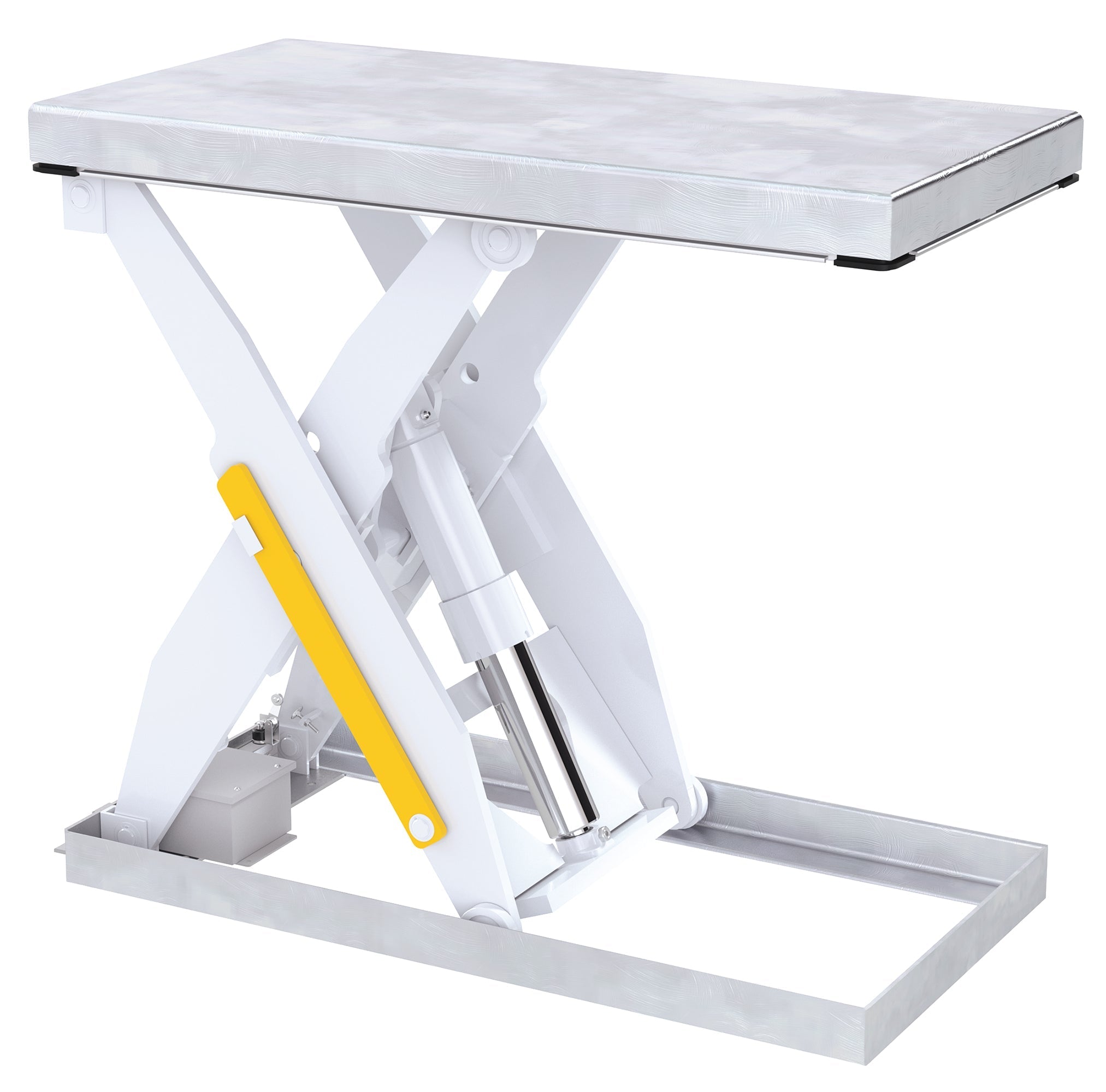
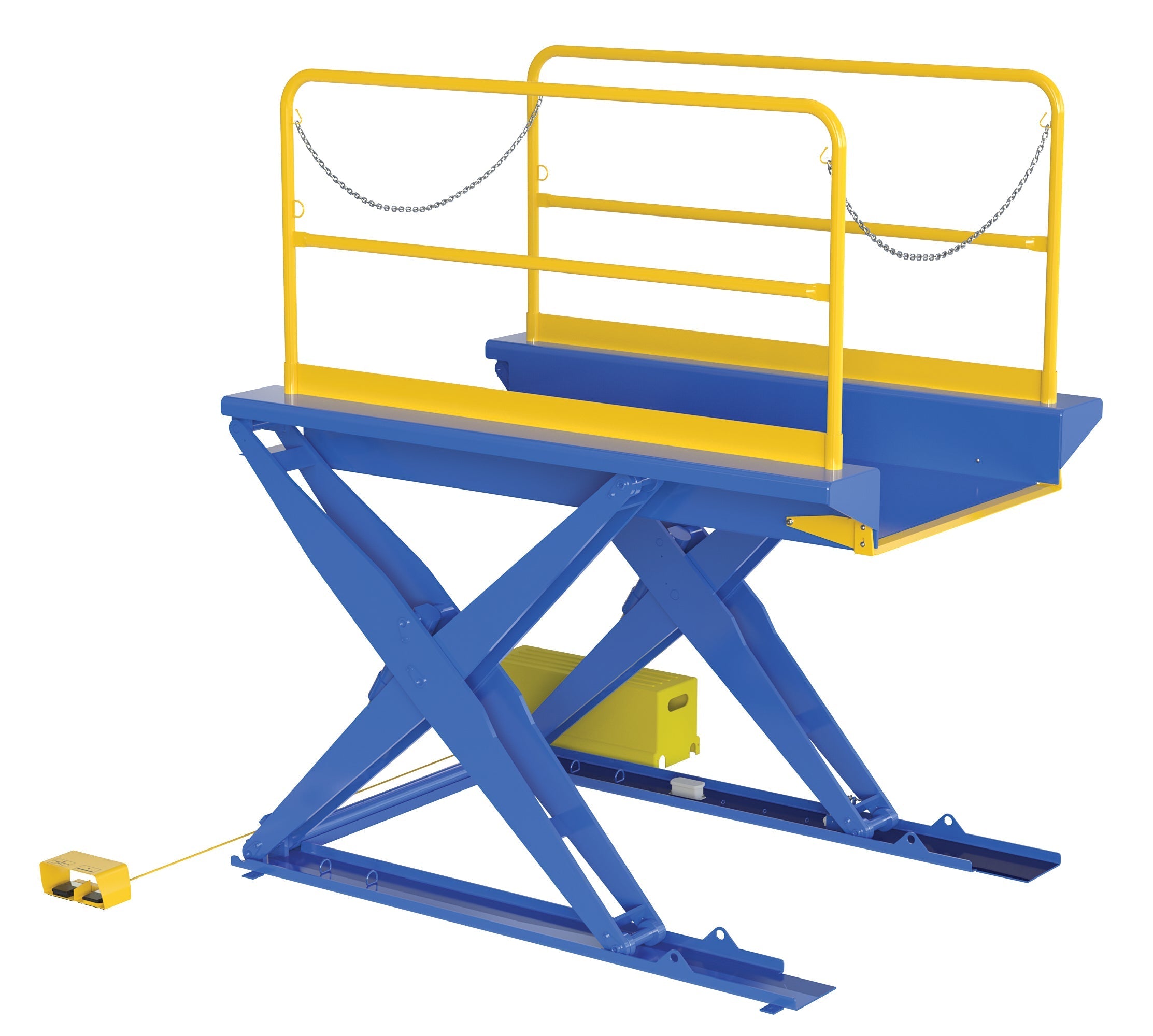
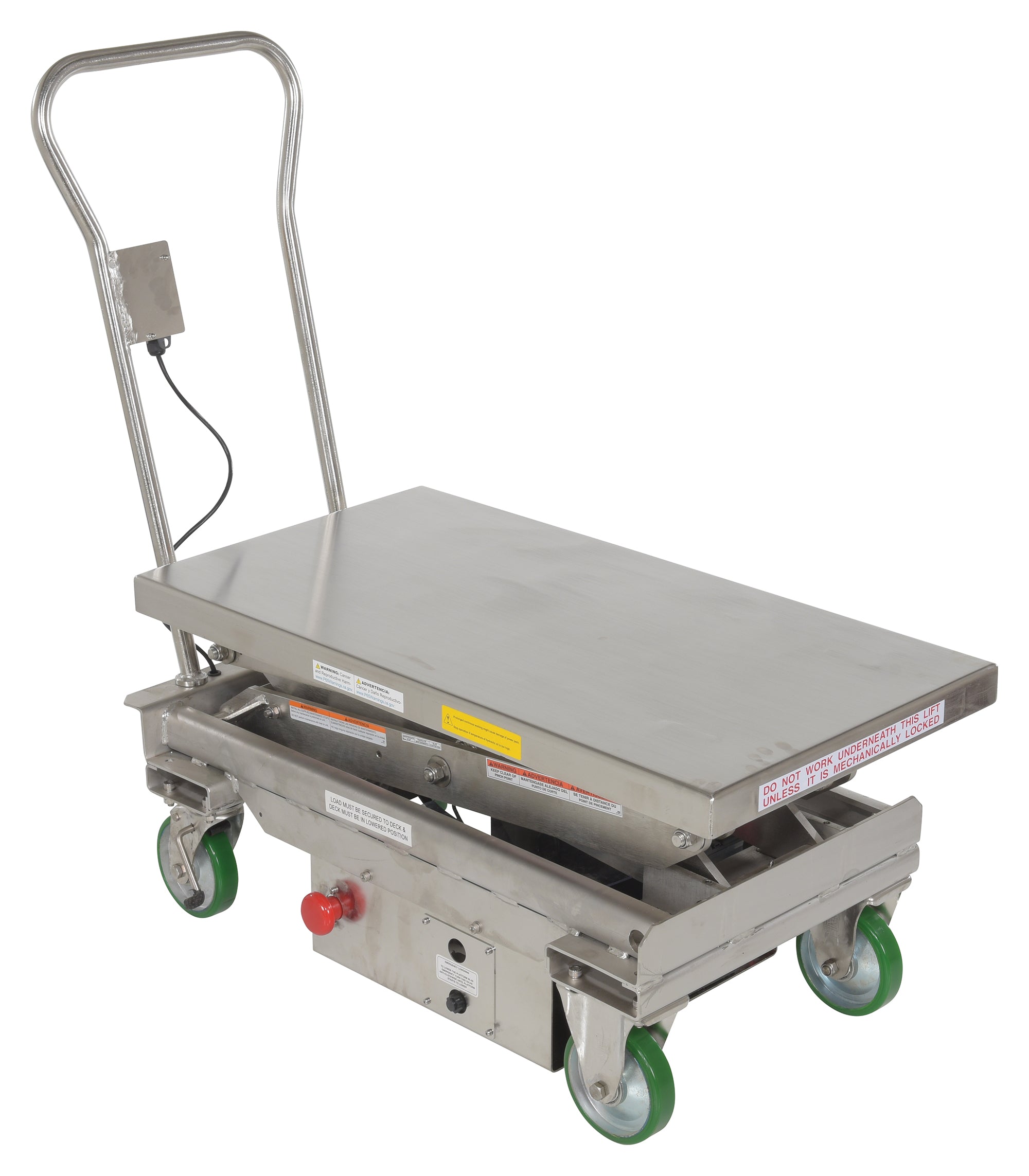
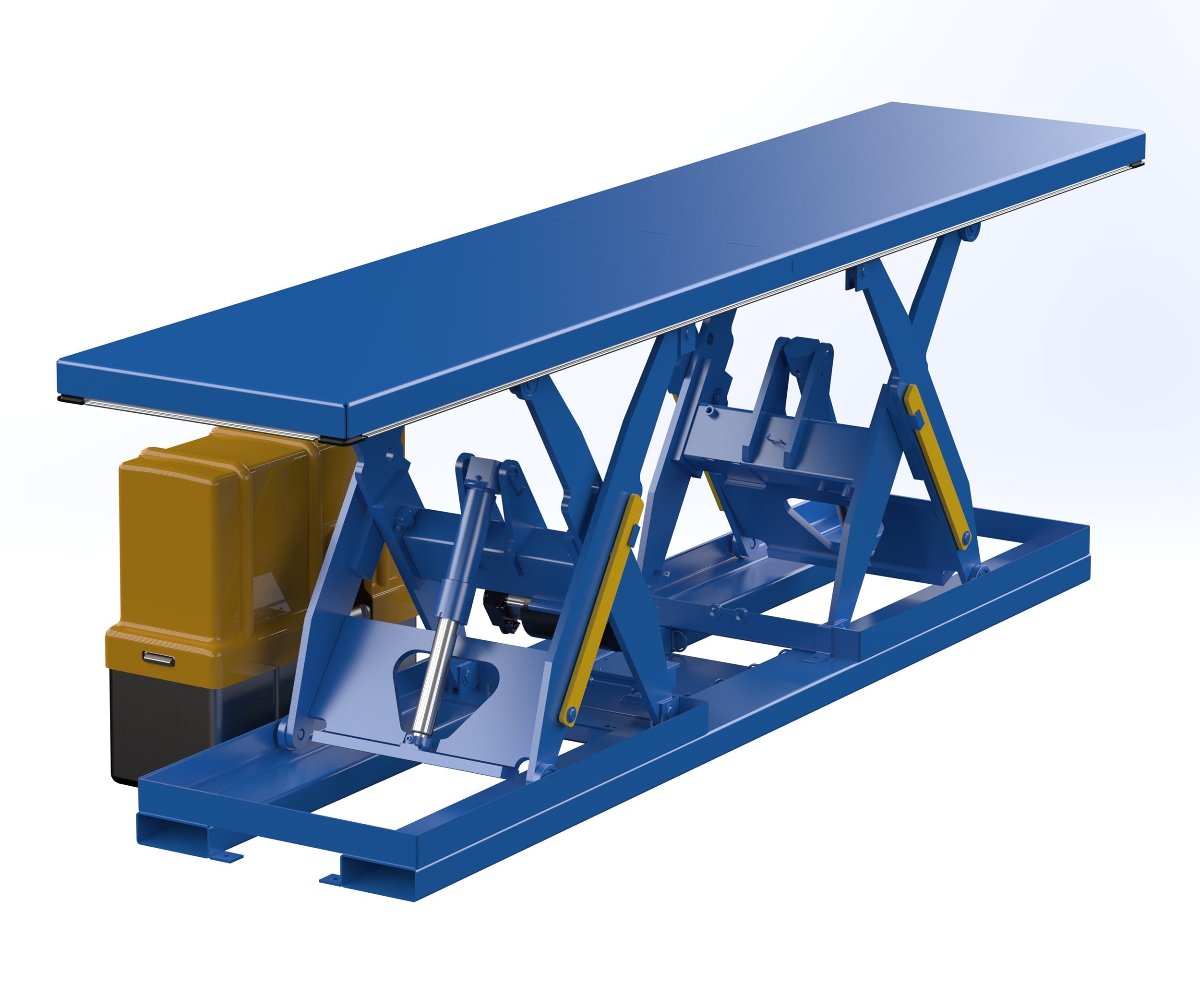
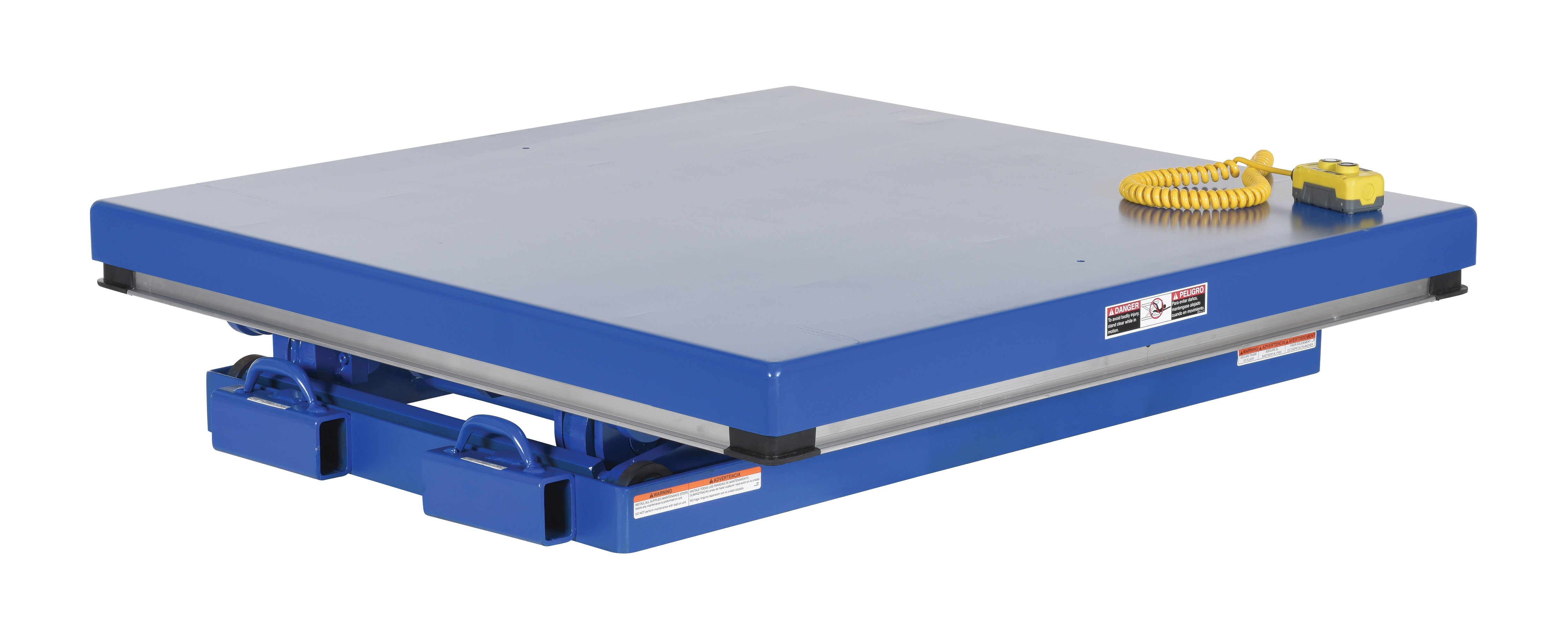
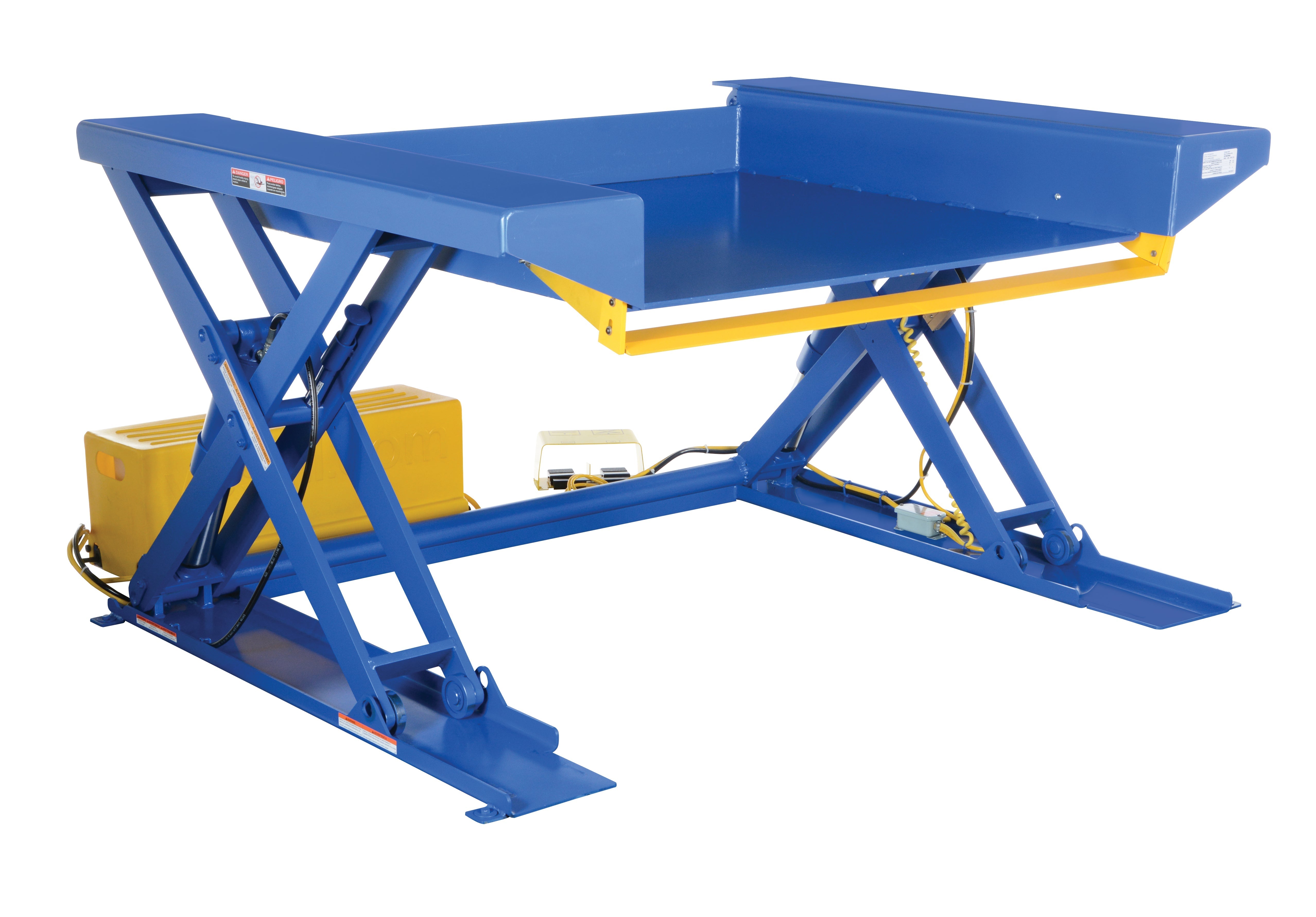
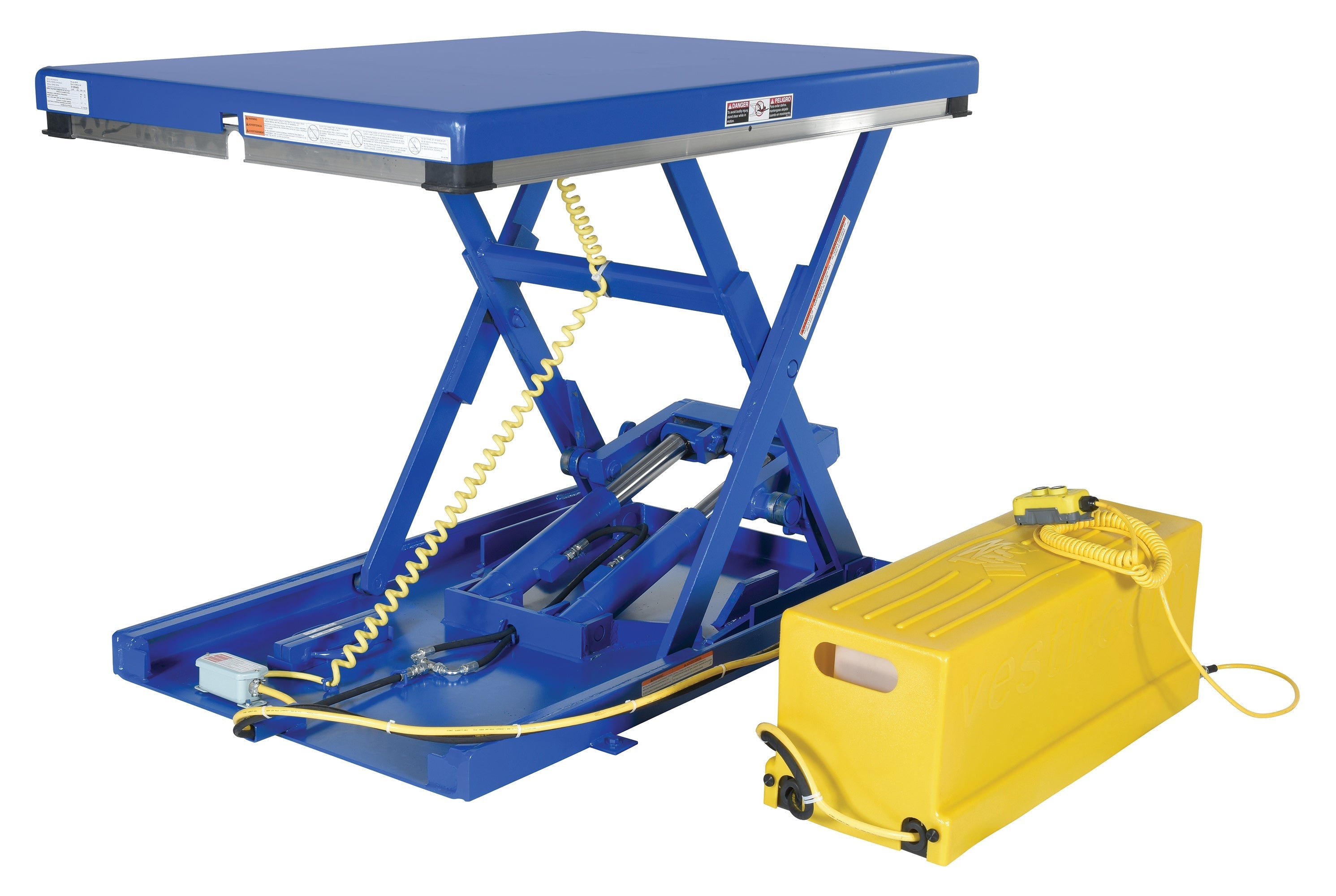
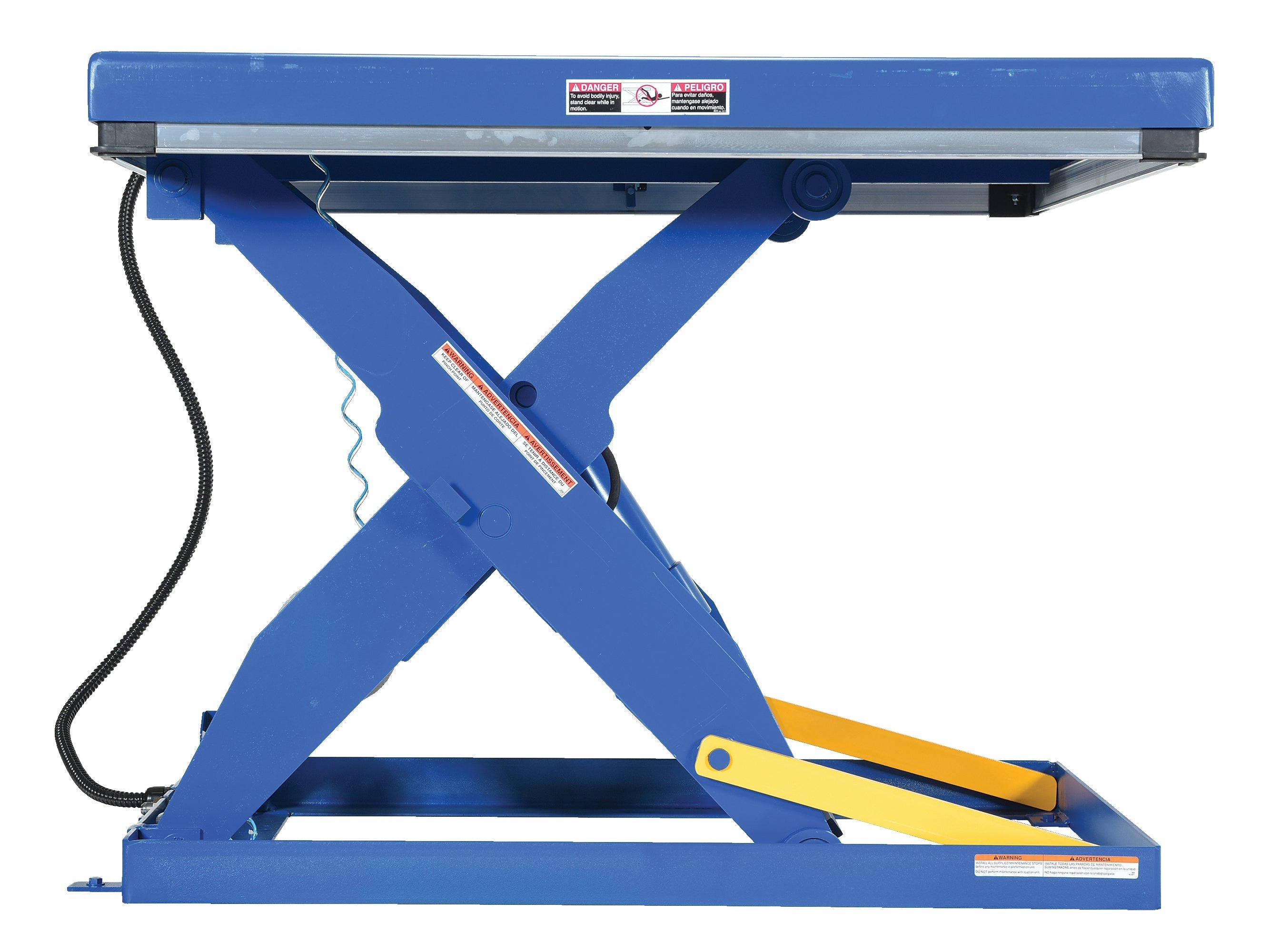
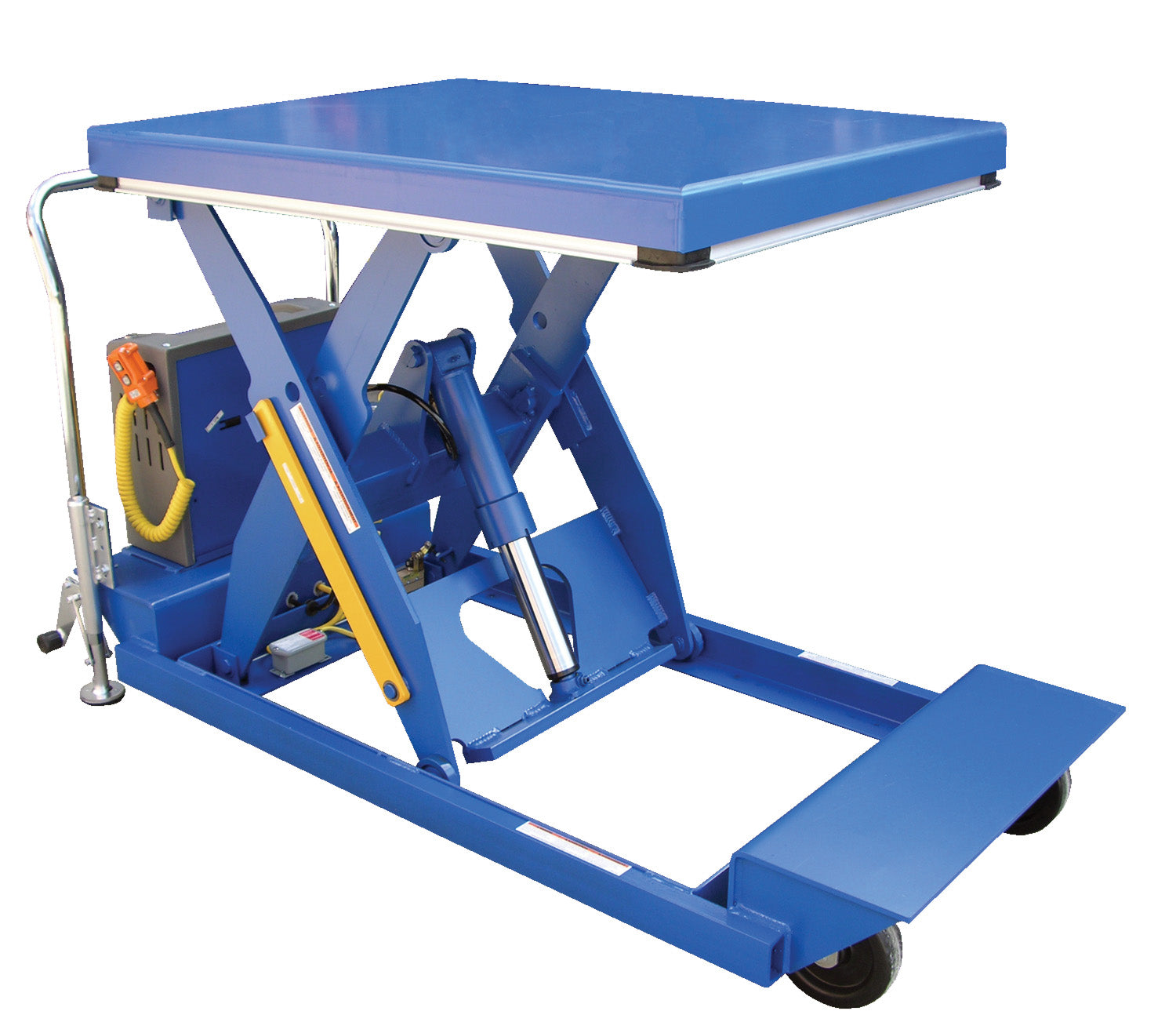
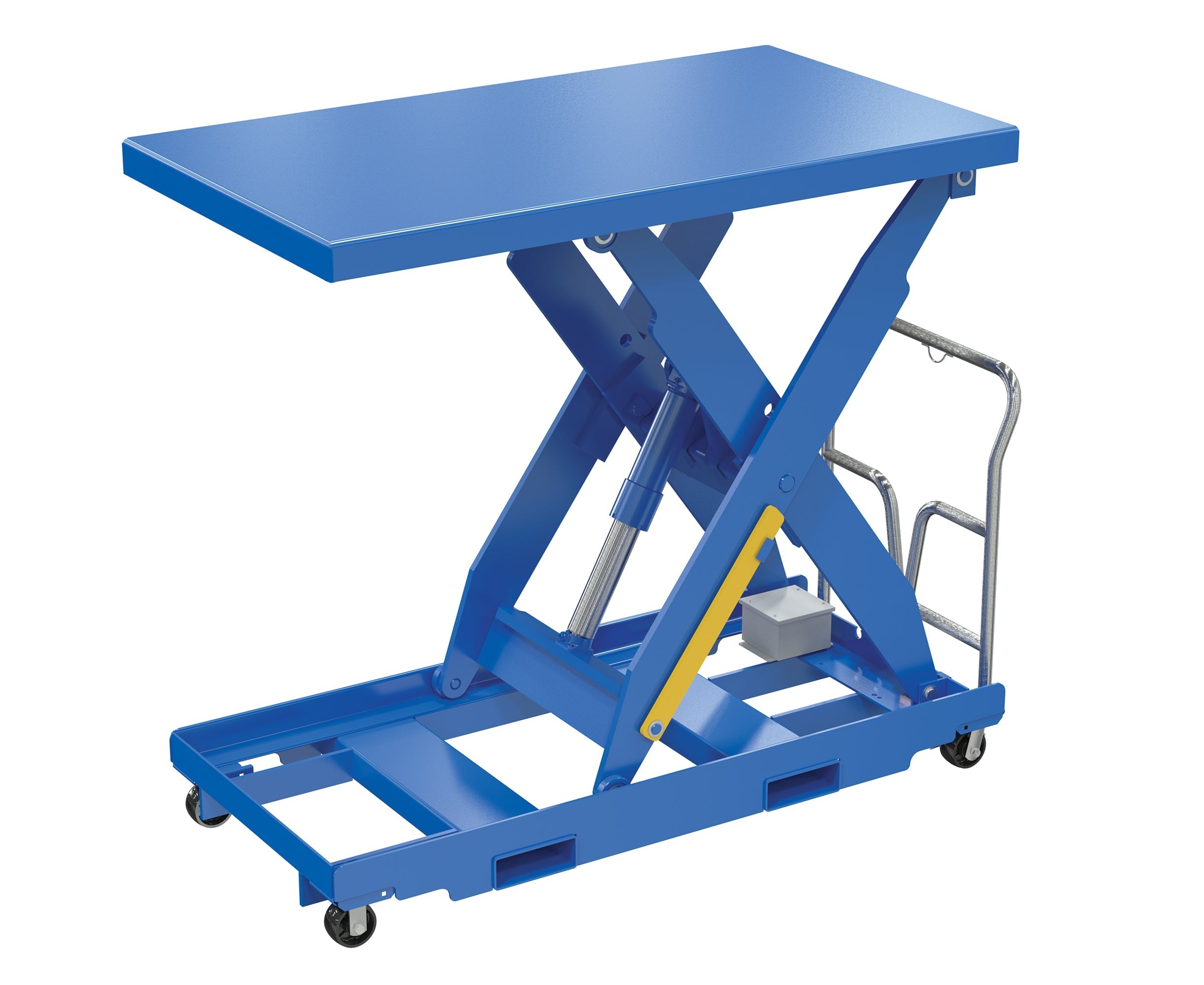
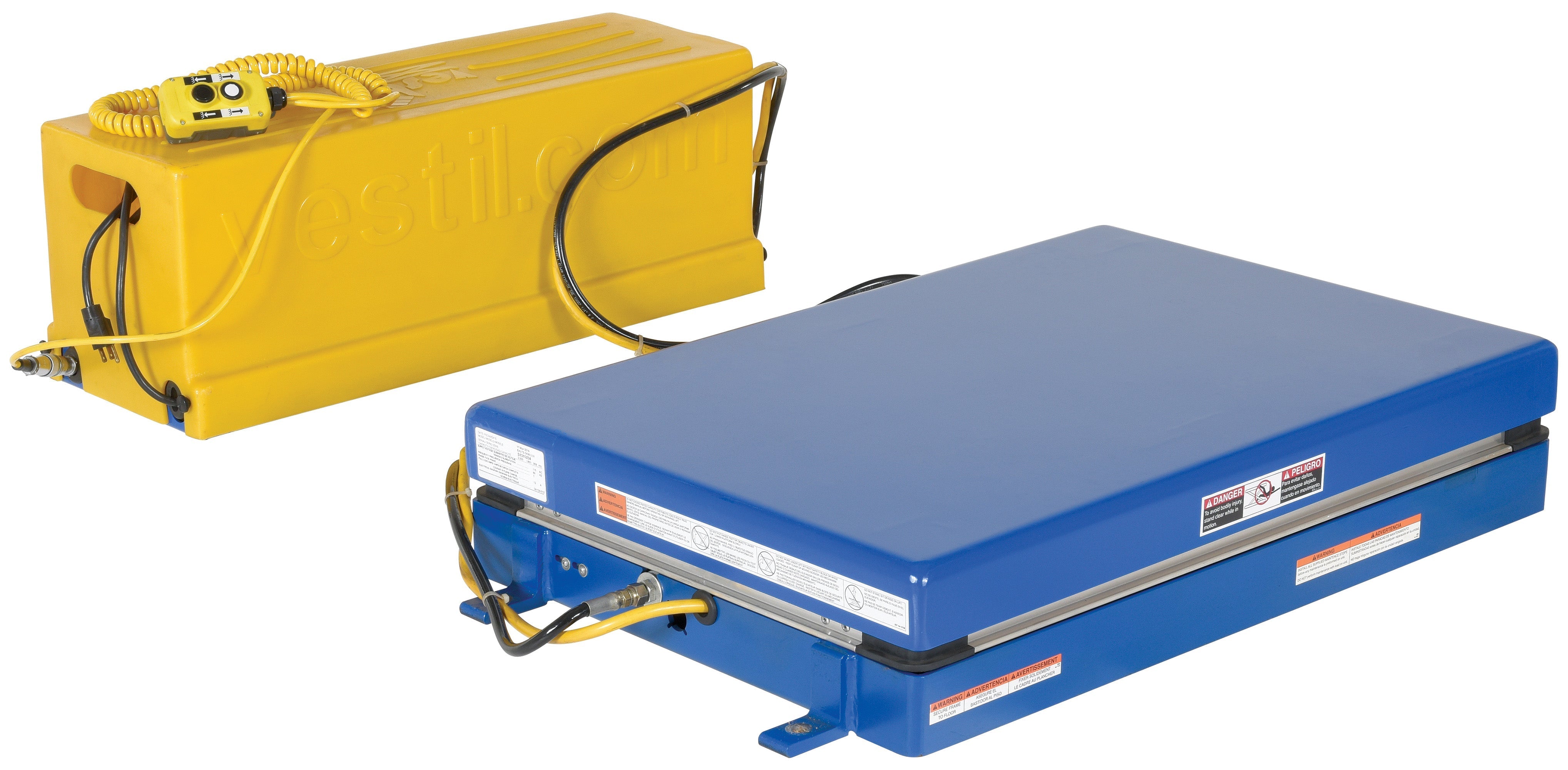
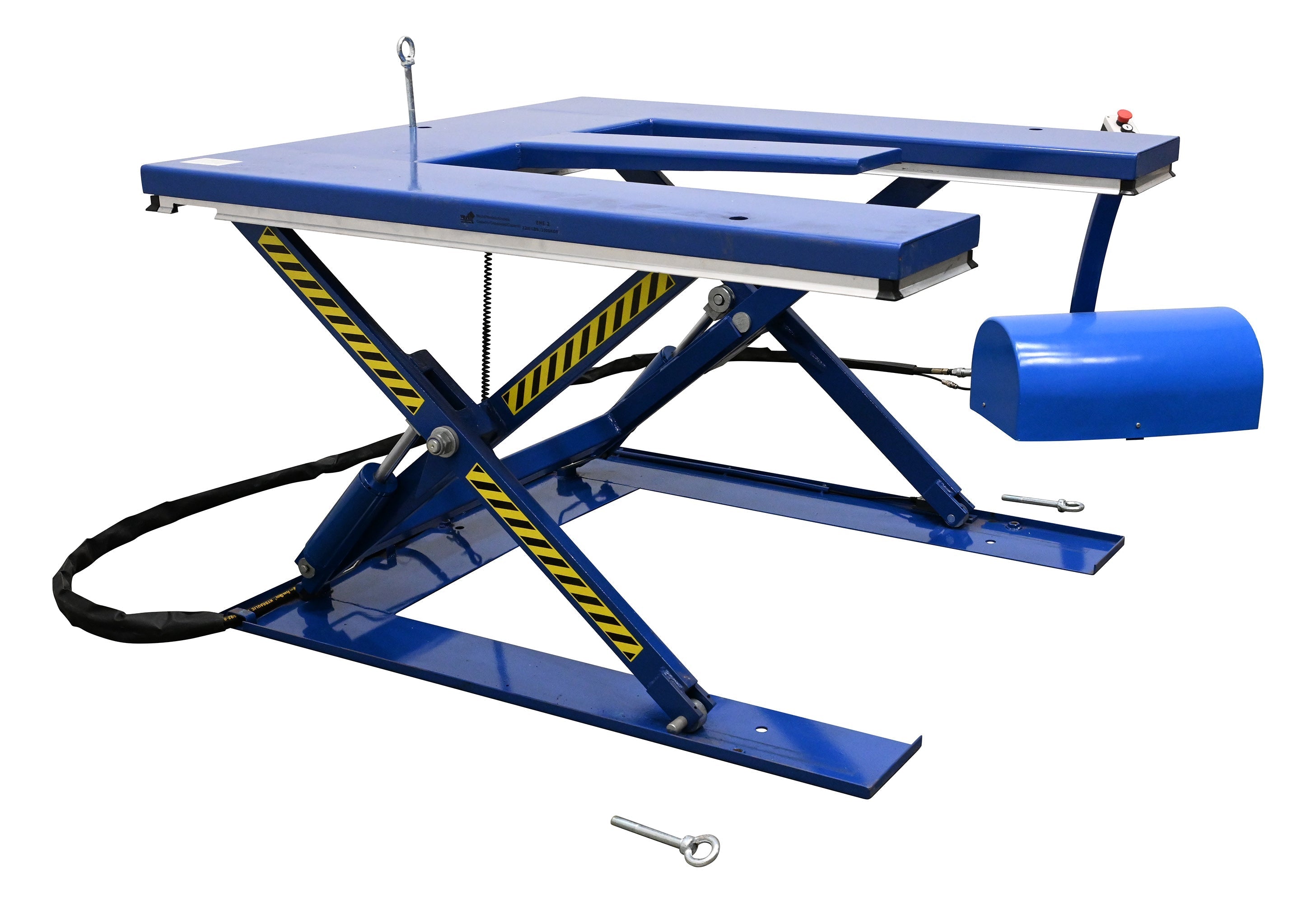
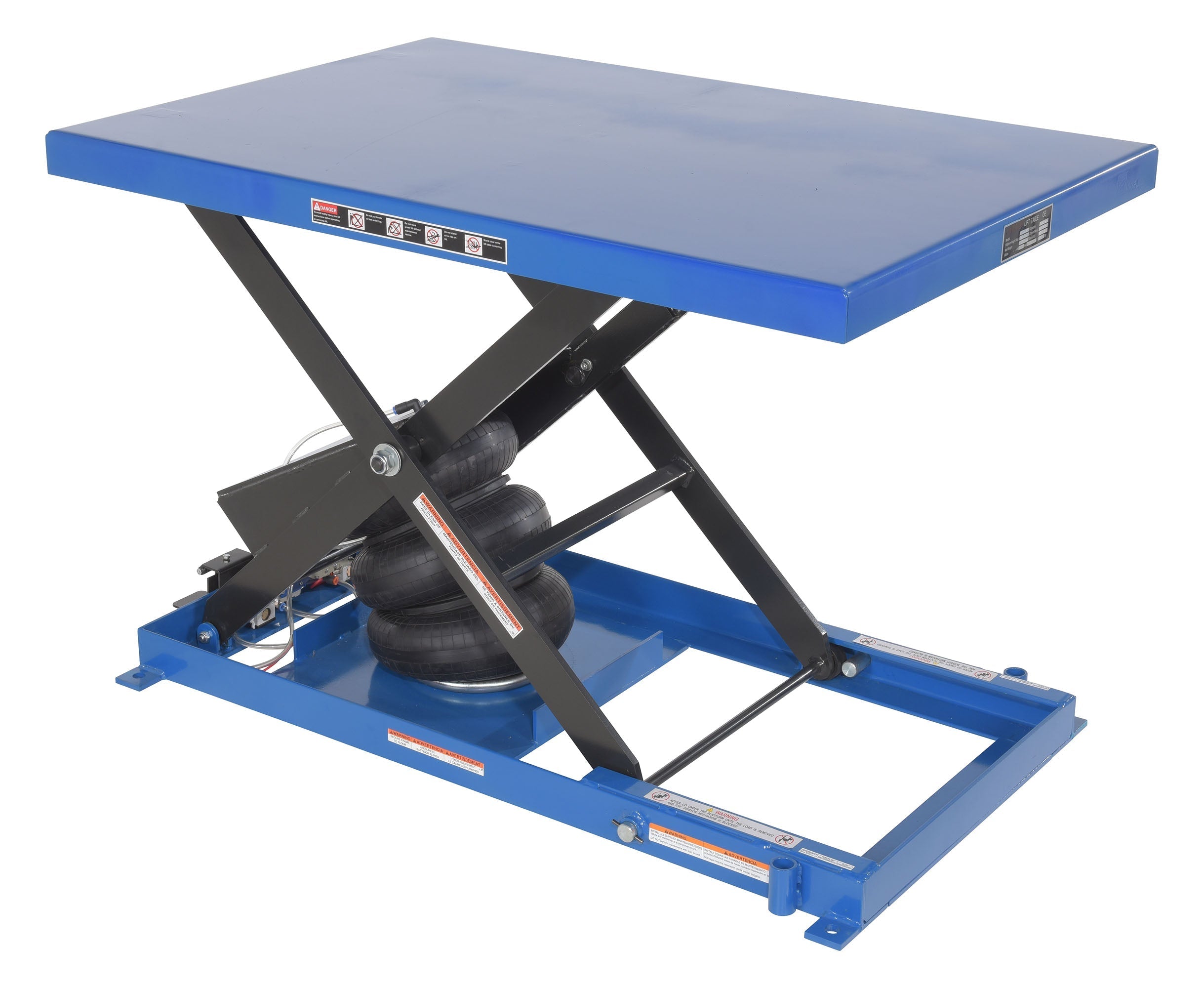
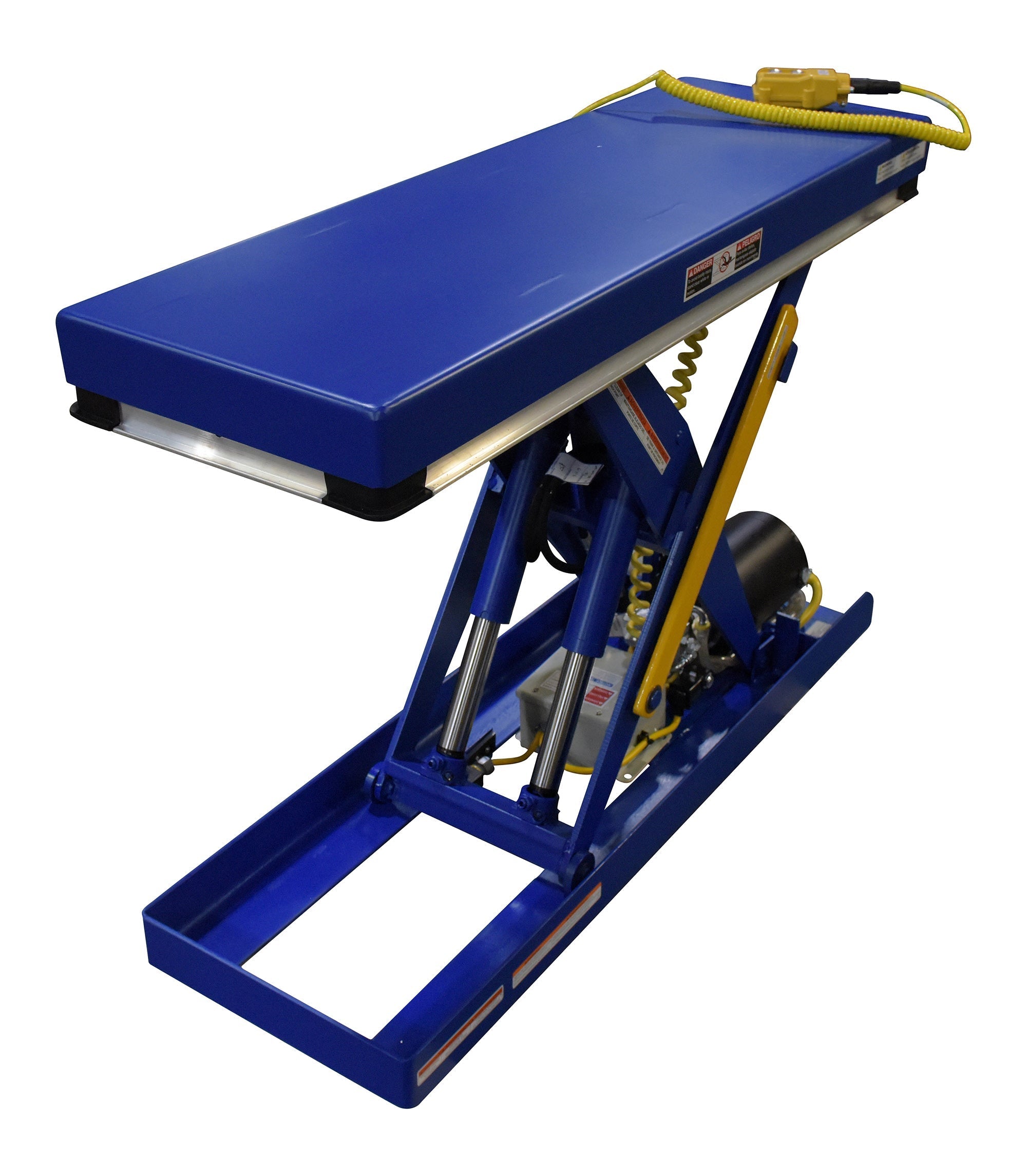
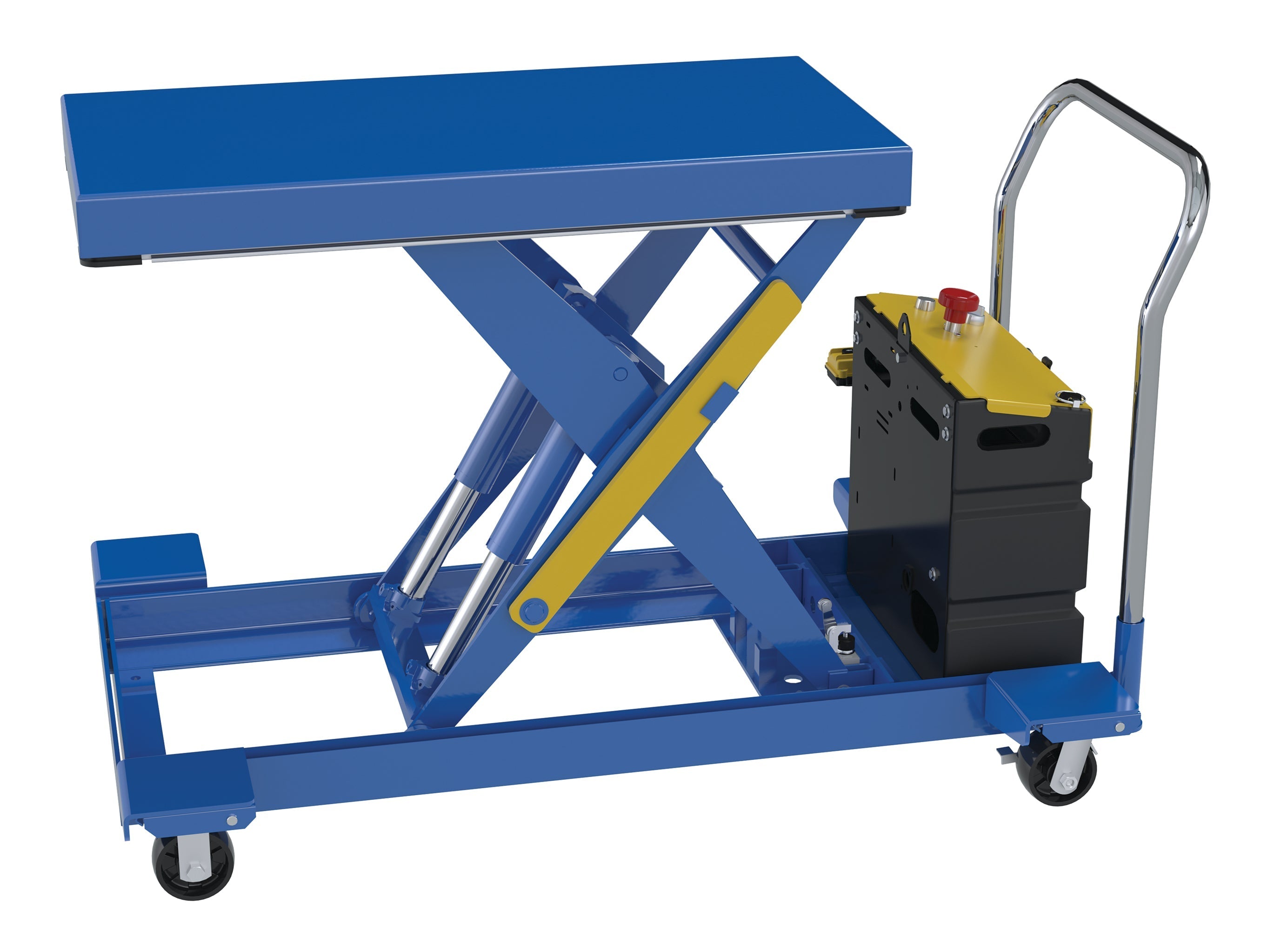
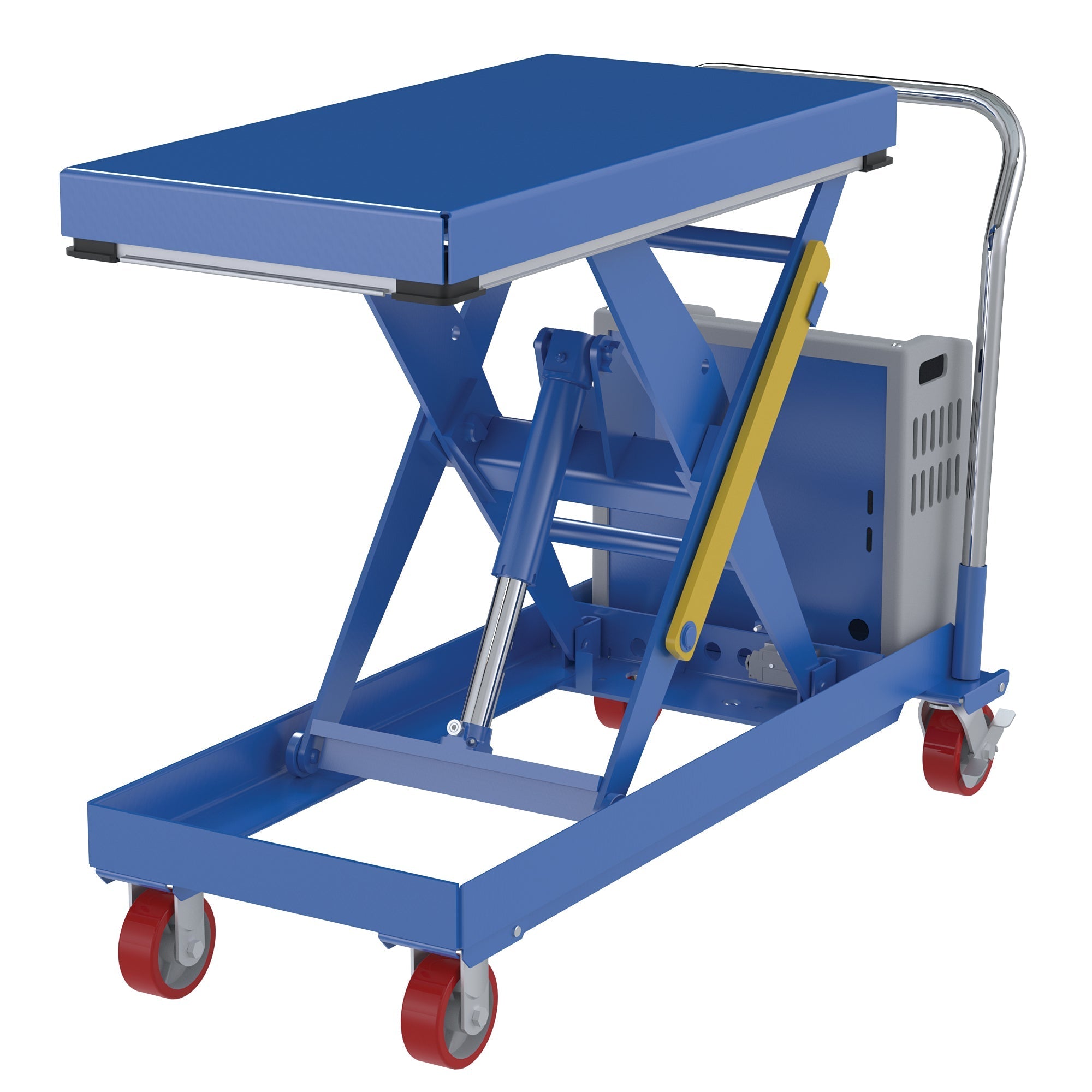
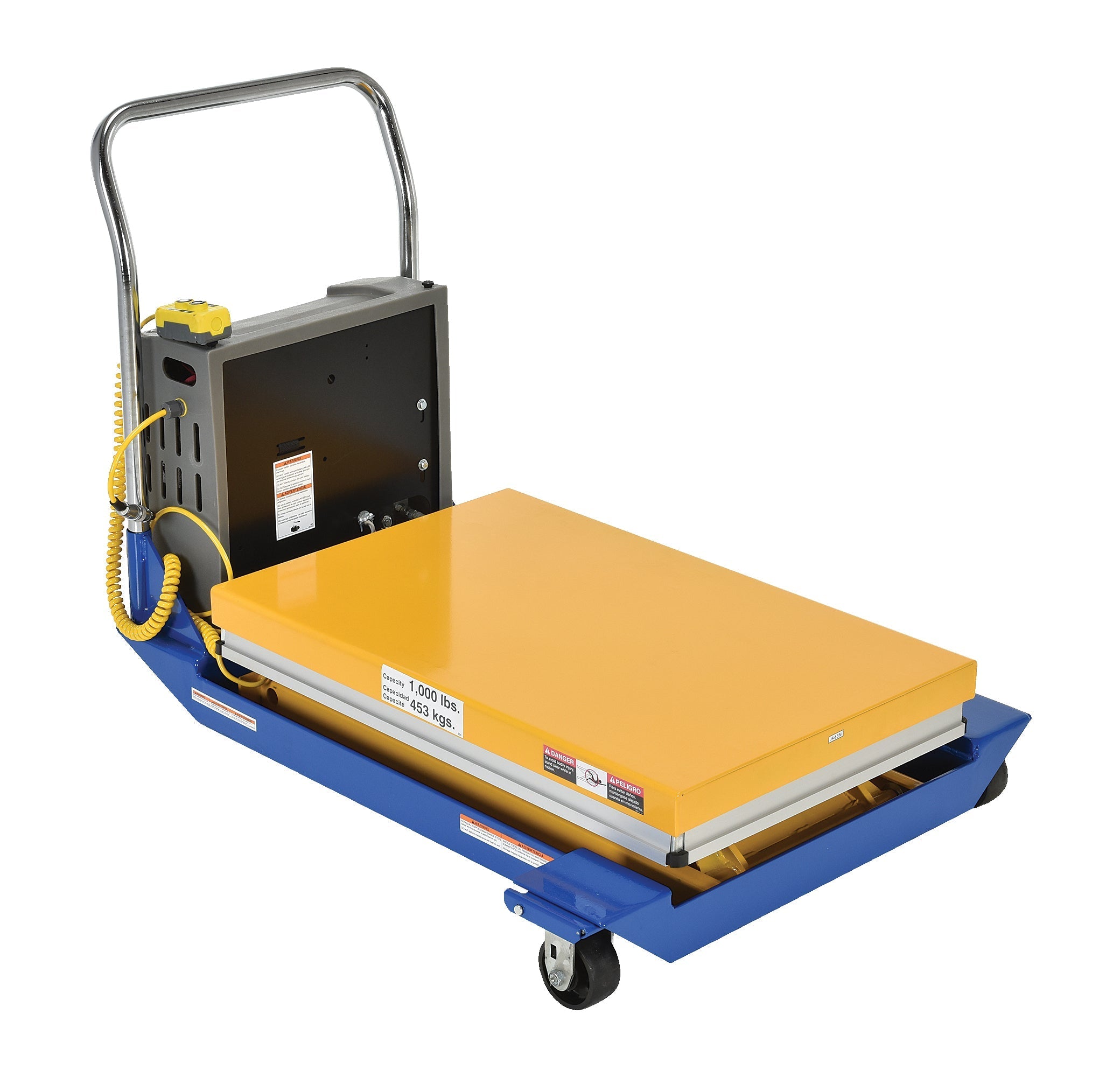
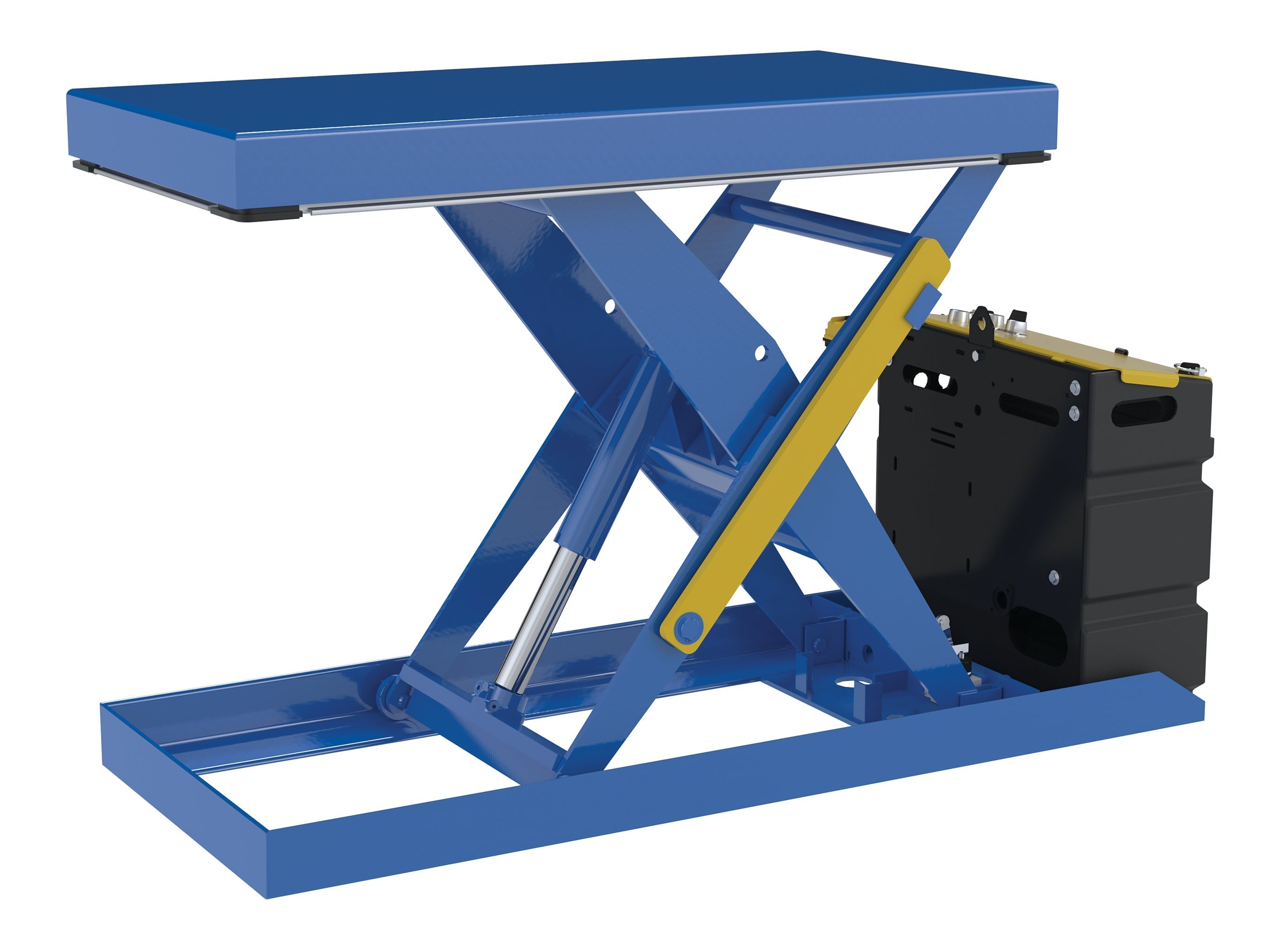
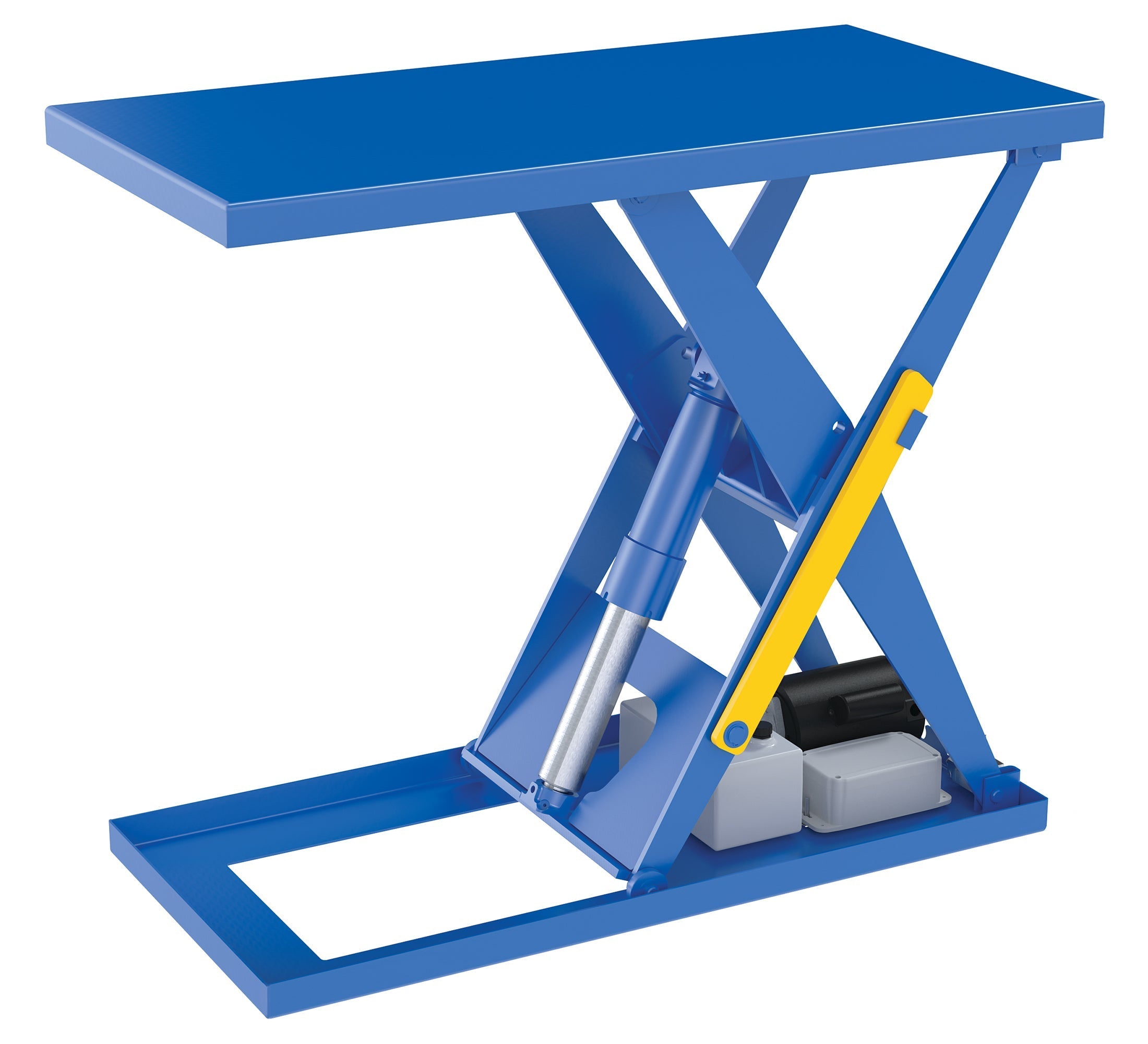
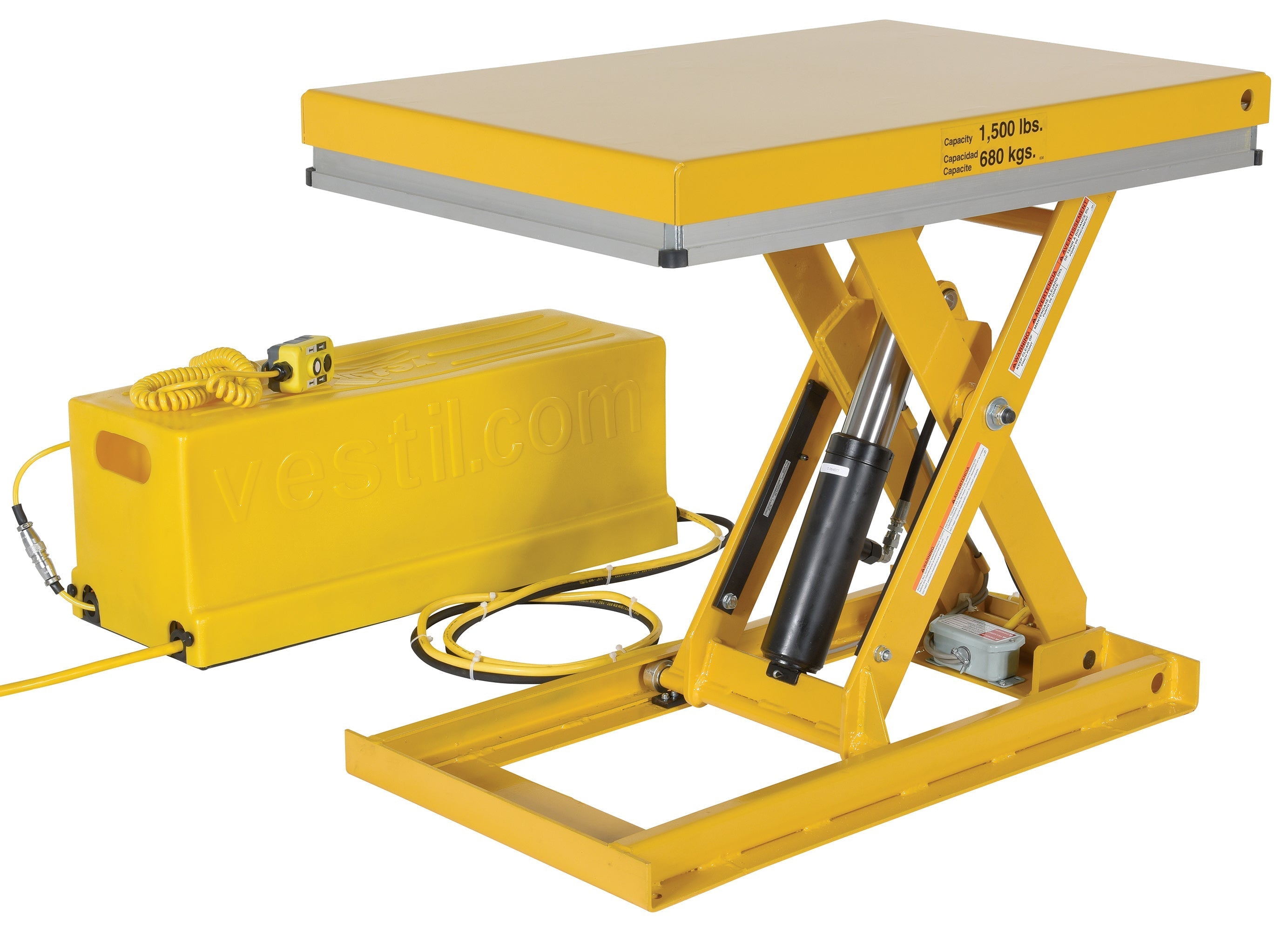
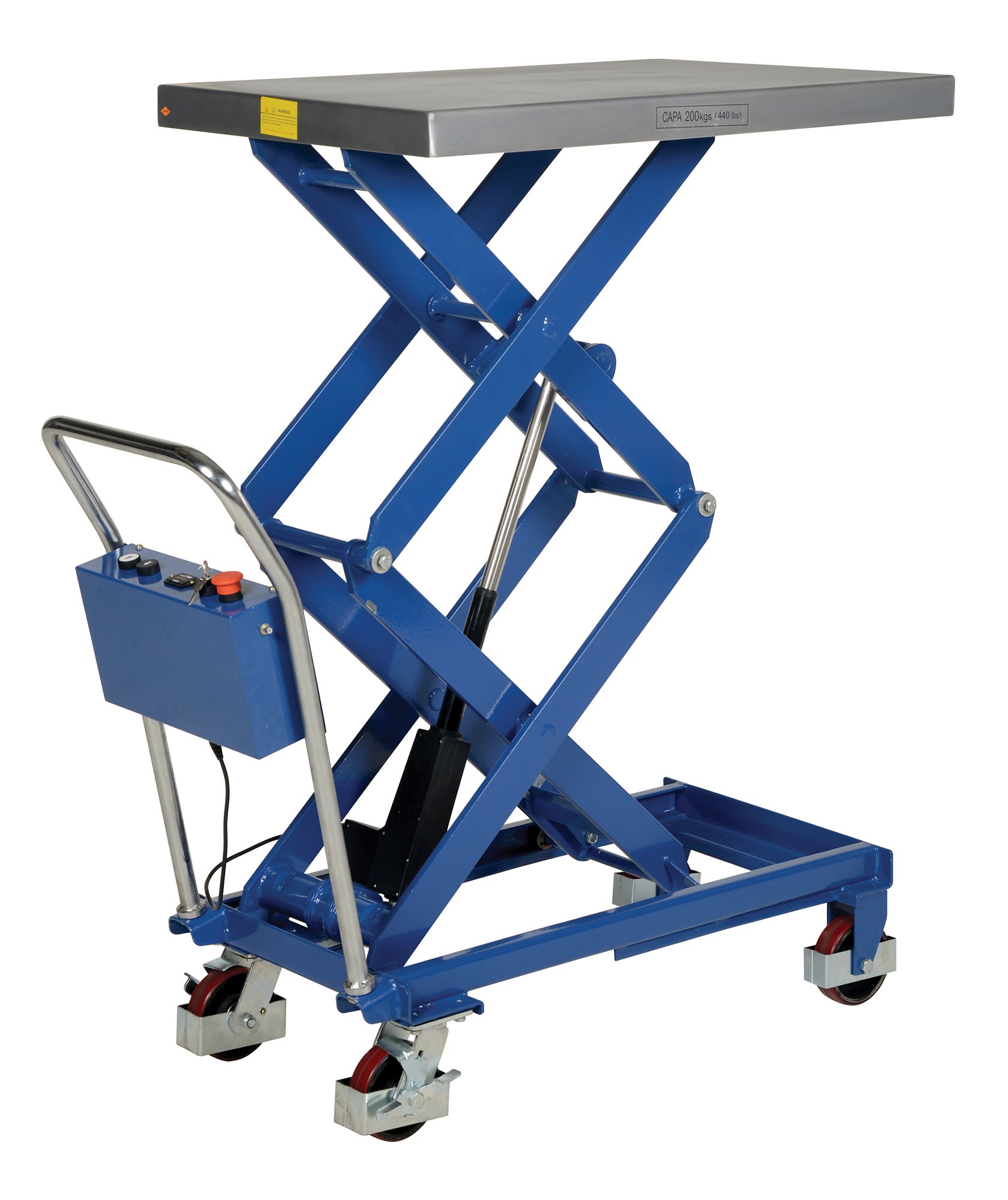
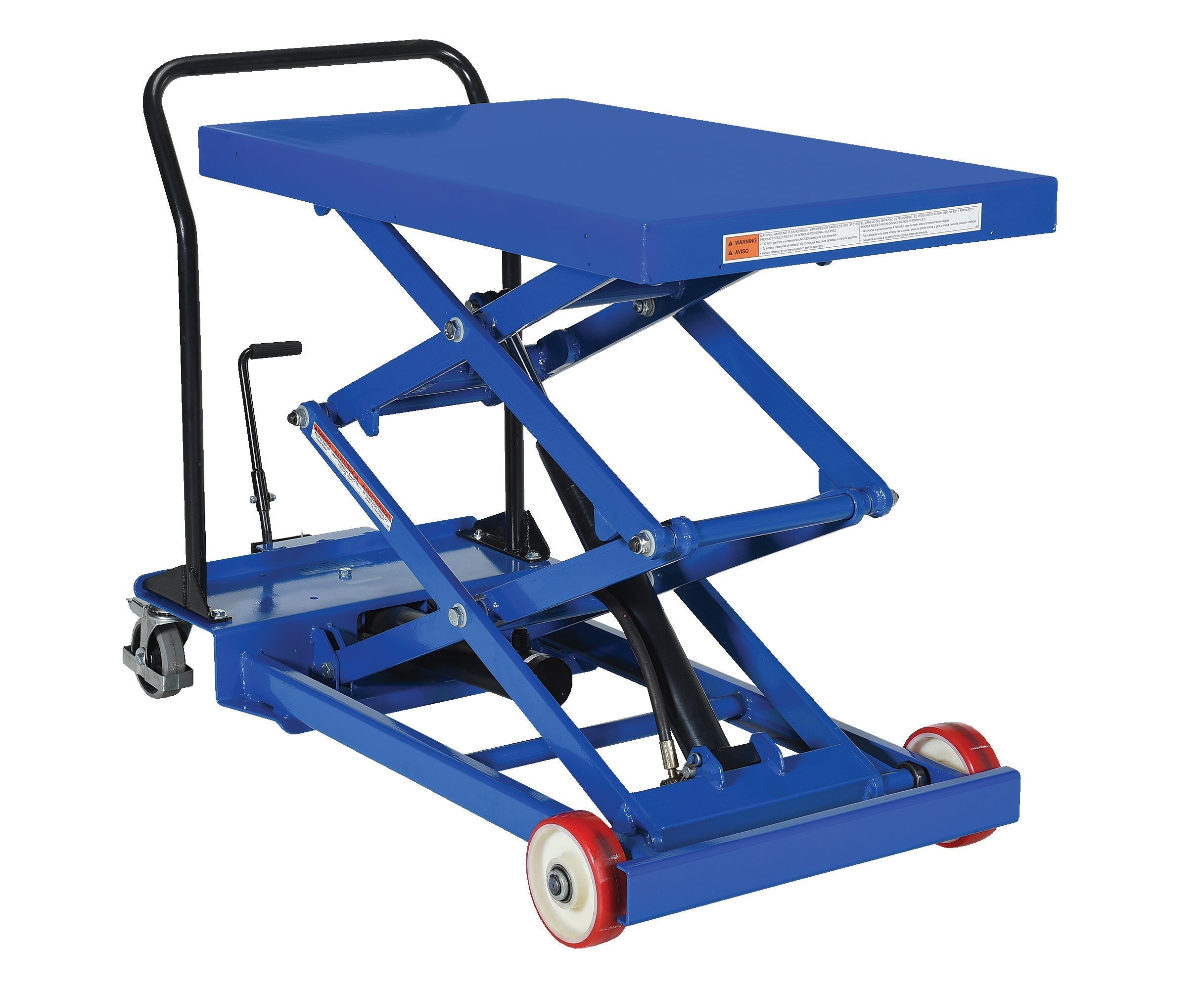
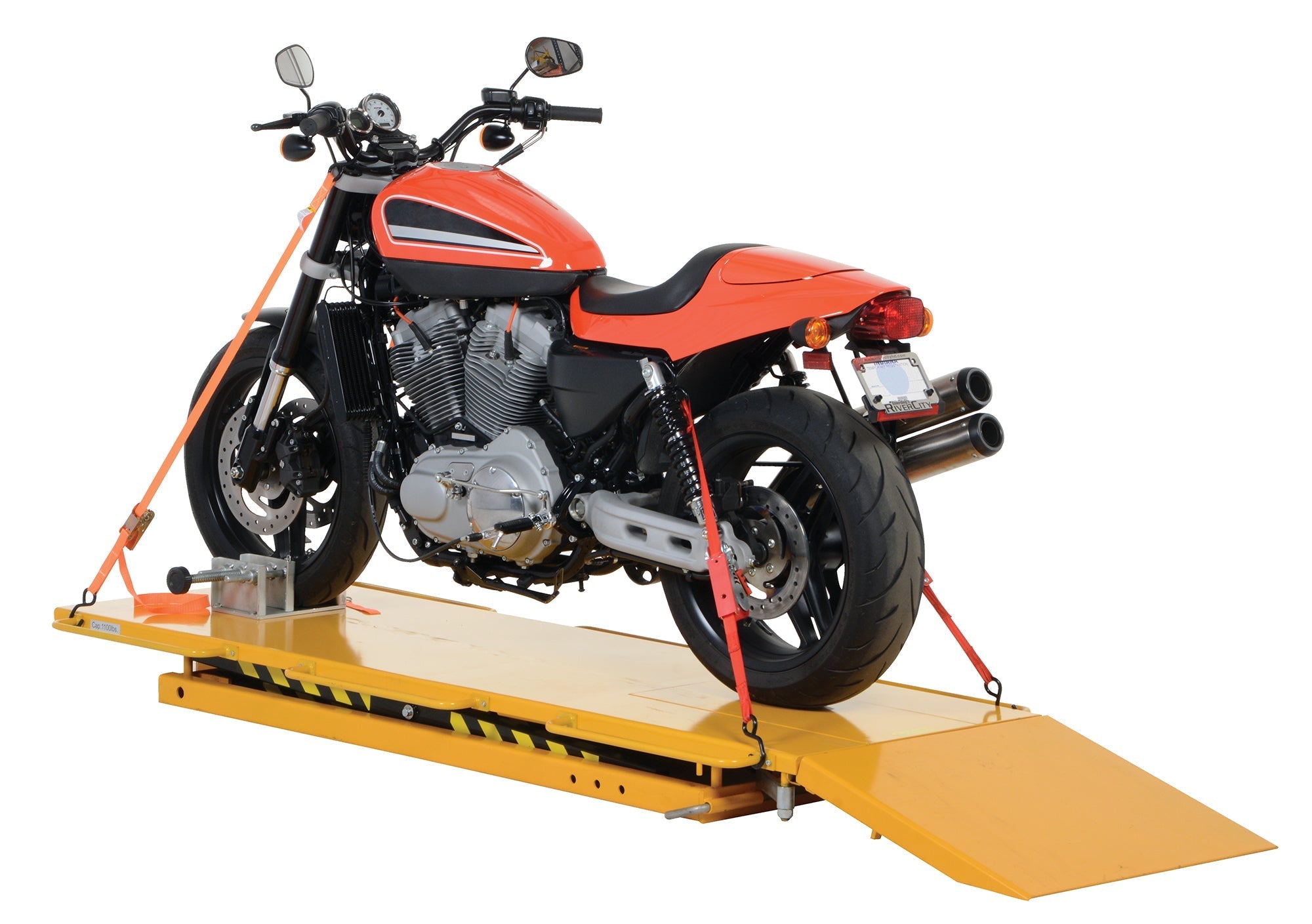
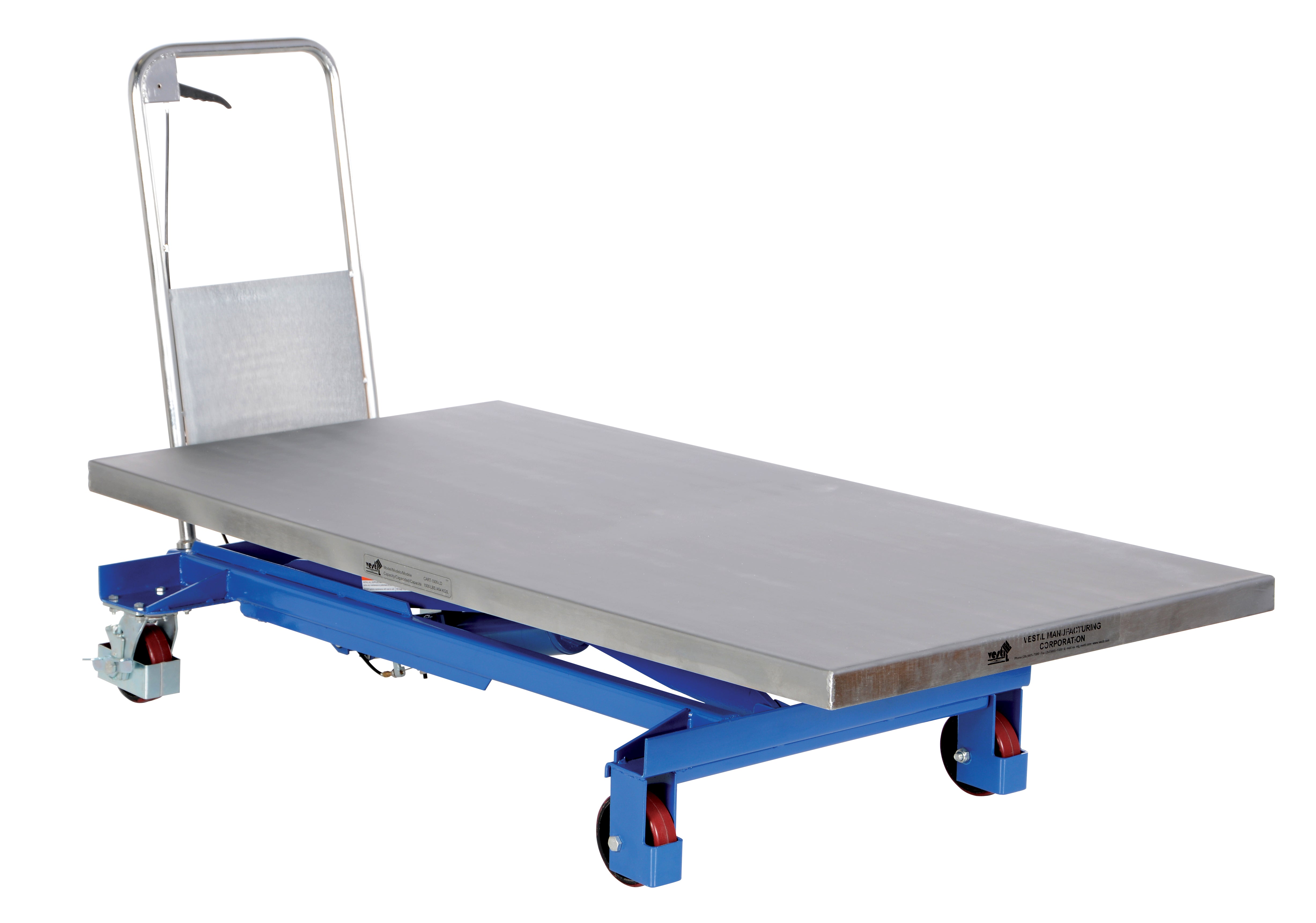
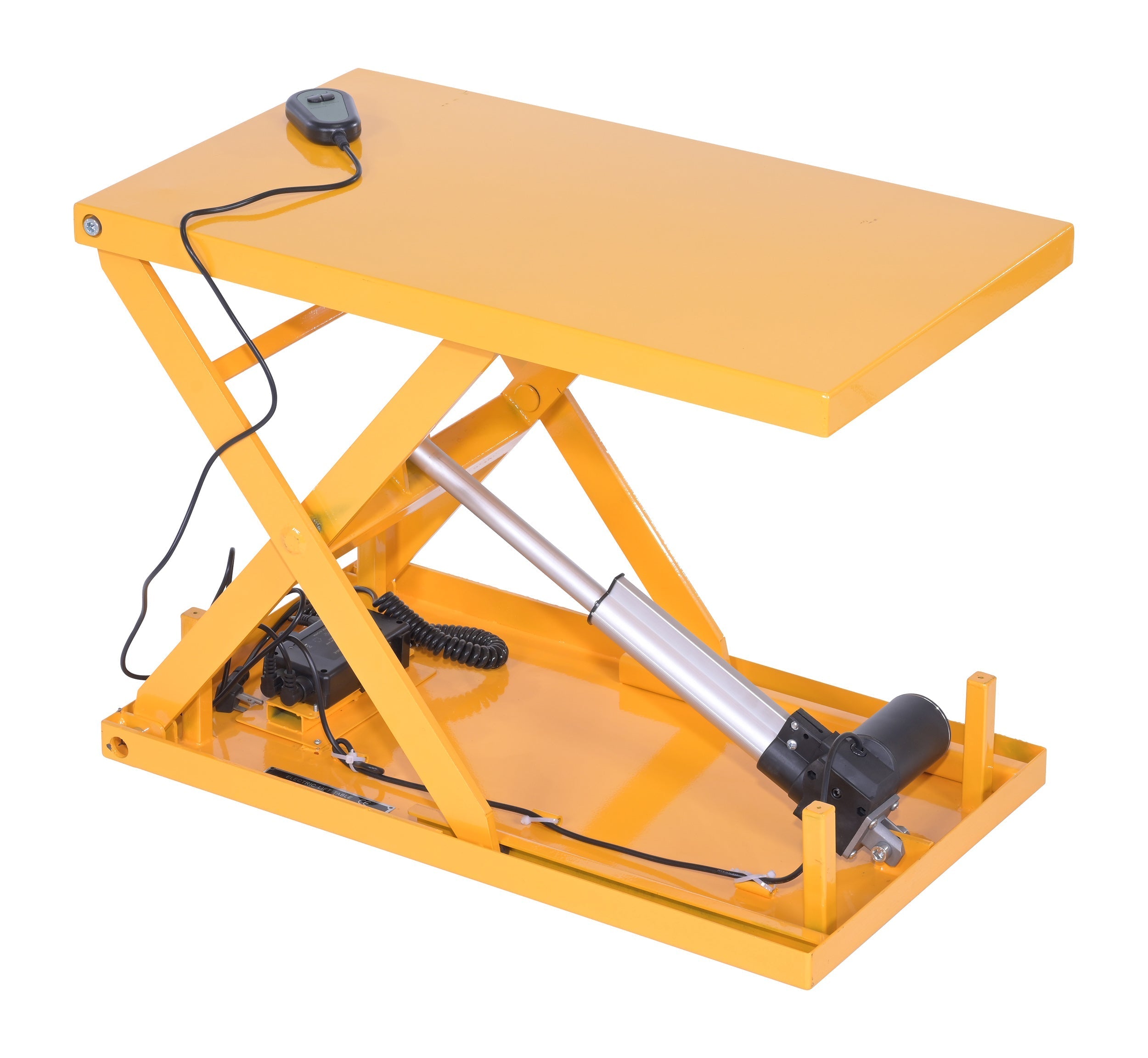
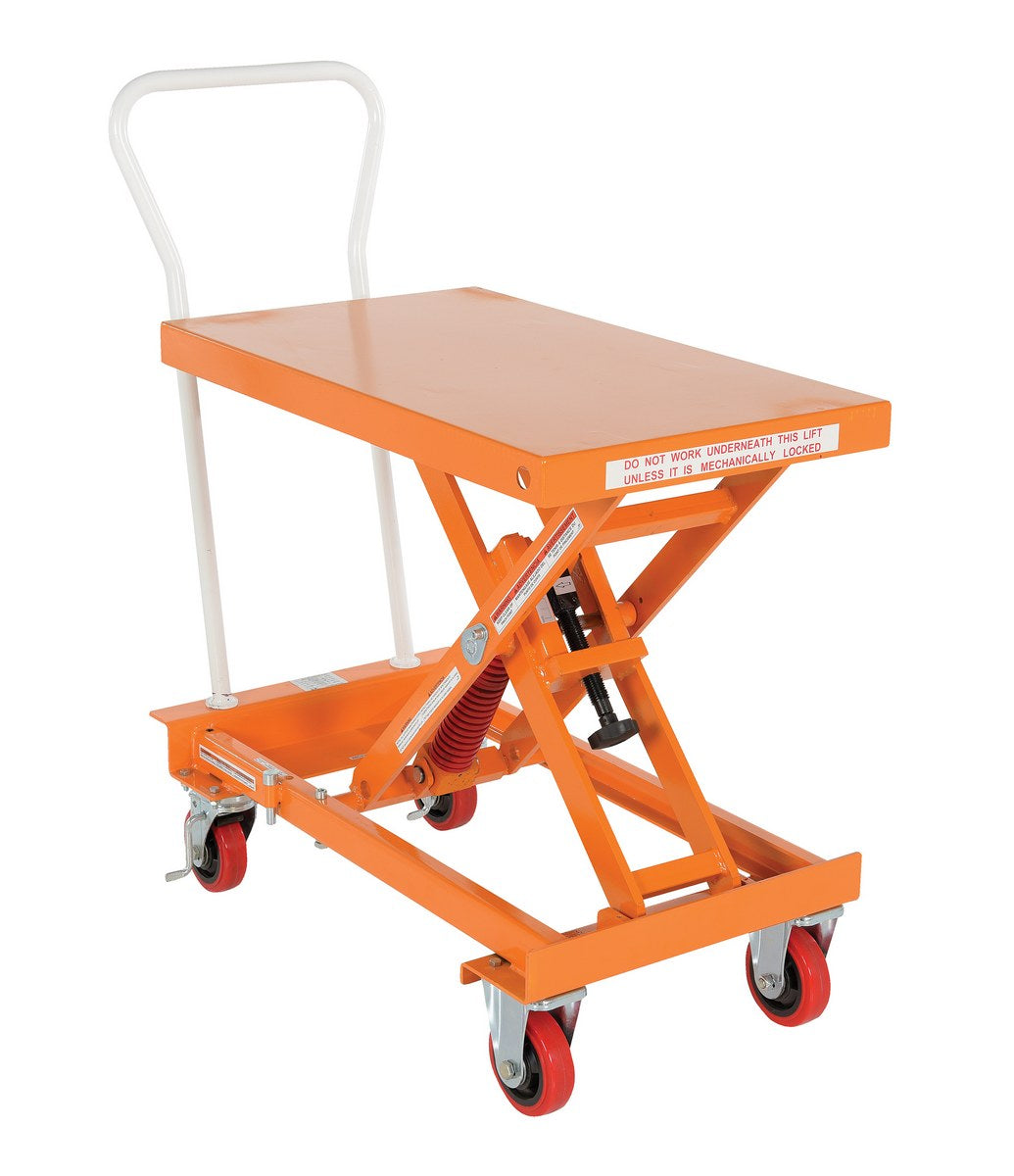
Scissor lift tables are the workhorse, and MH29.1 governs them. The scissor lift is the default because it does the most common job well: raise a flat deck straight up under a load and hold it steady. Our Vestil electric hydraulic scissor tables cover 1,000 to 12,000 lb across platforms from 24 by 48 inches up to 48 by 96 inches, starting around $3,256 and running to roughly $10,600 for the big decks. Ground-lift versions drop the collapsed height so a pallet jack or cart rolls straight on, and they reach into the $14,000 range at 4,000 lb. Any of these is an industrial scissors lift under ANSI MH29.1, the standard that defines dock lifts, work access lifts, and lift tables as its three categories and sets the safety requirements for all of them. That matters most on tables people work close to: keep the scissor guarded, the maintenance prop in reach, and nobody's feet under a descending platform.
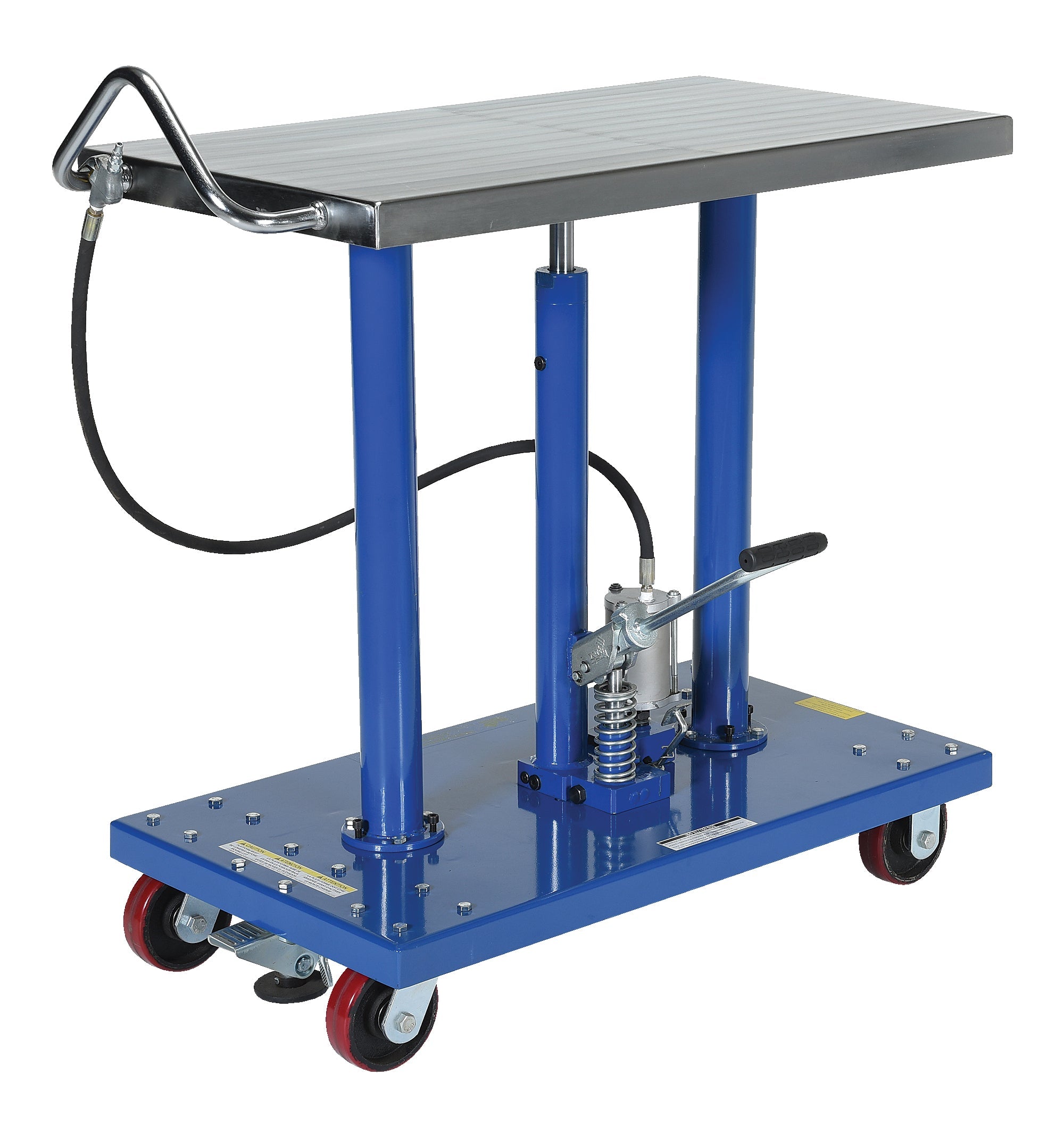
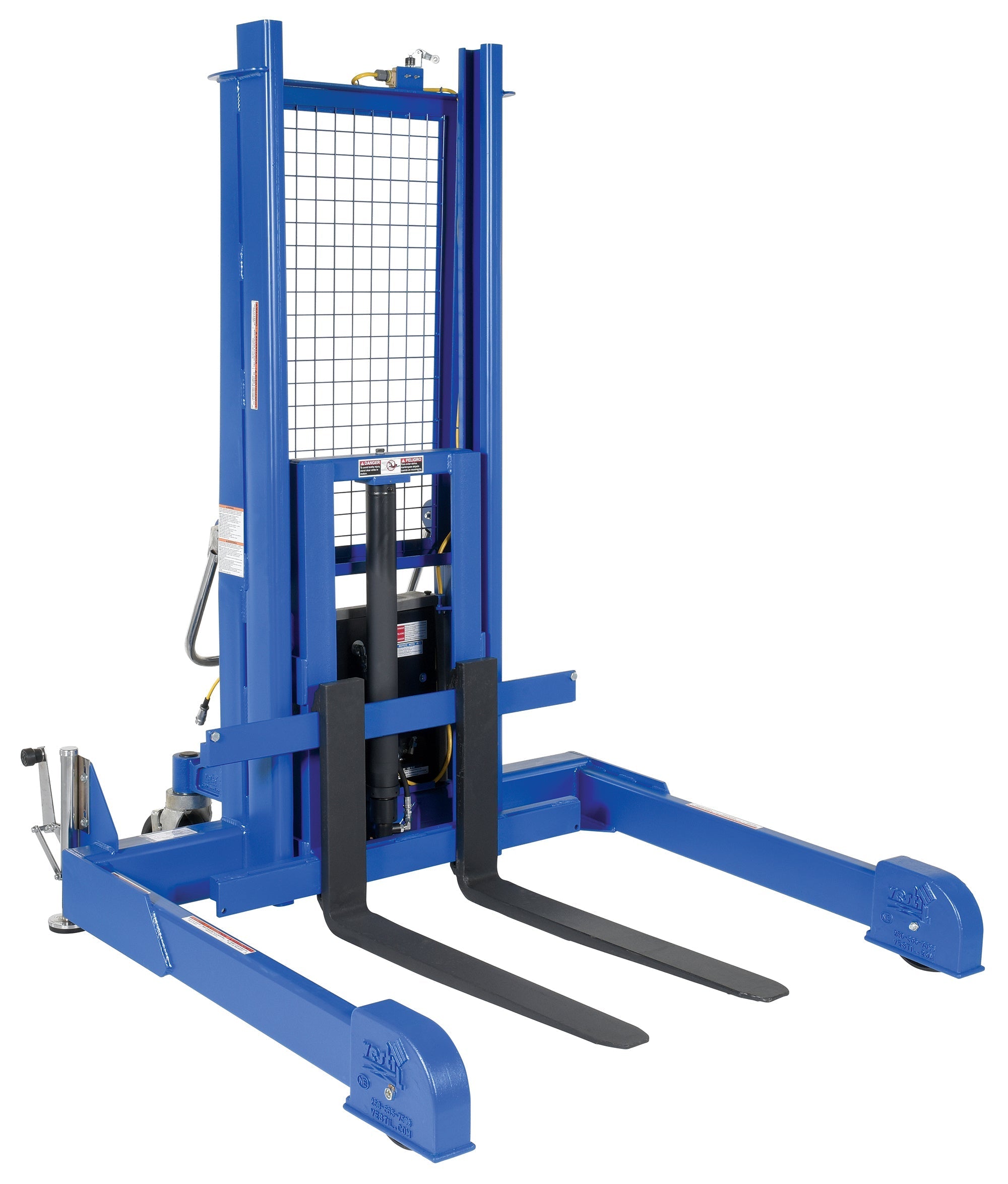
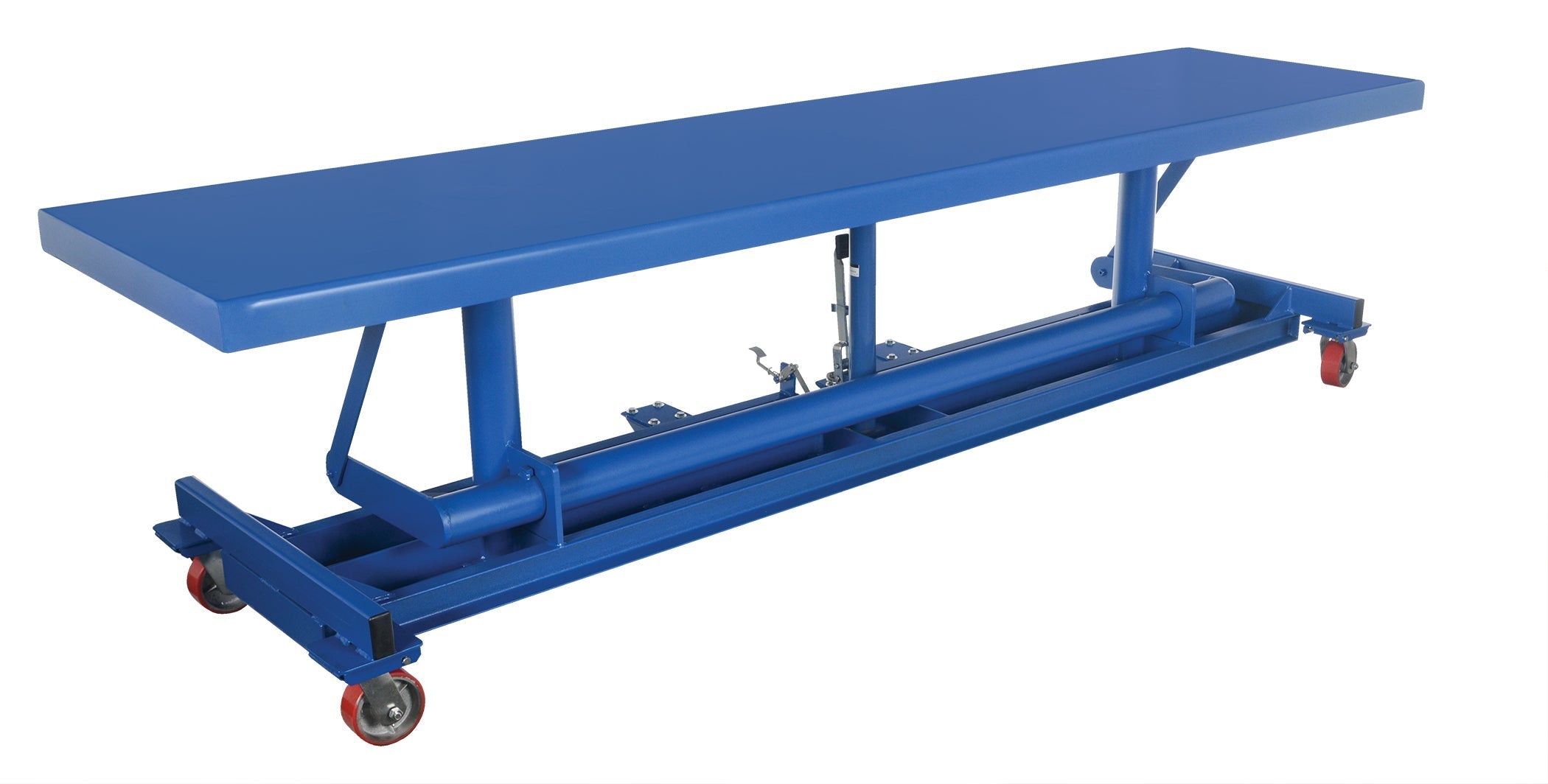
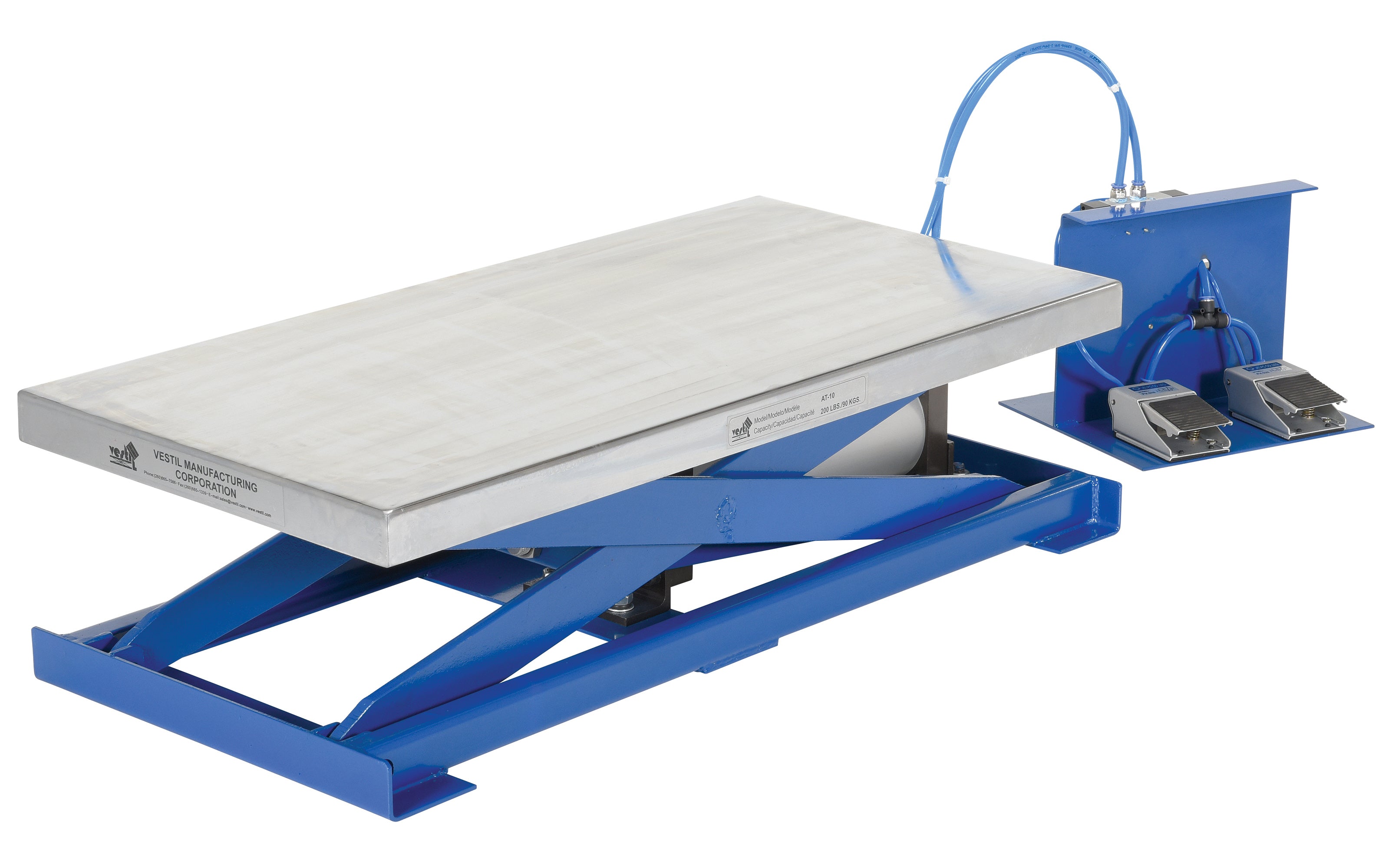
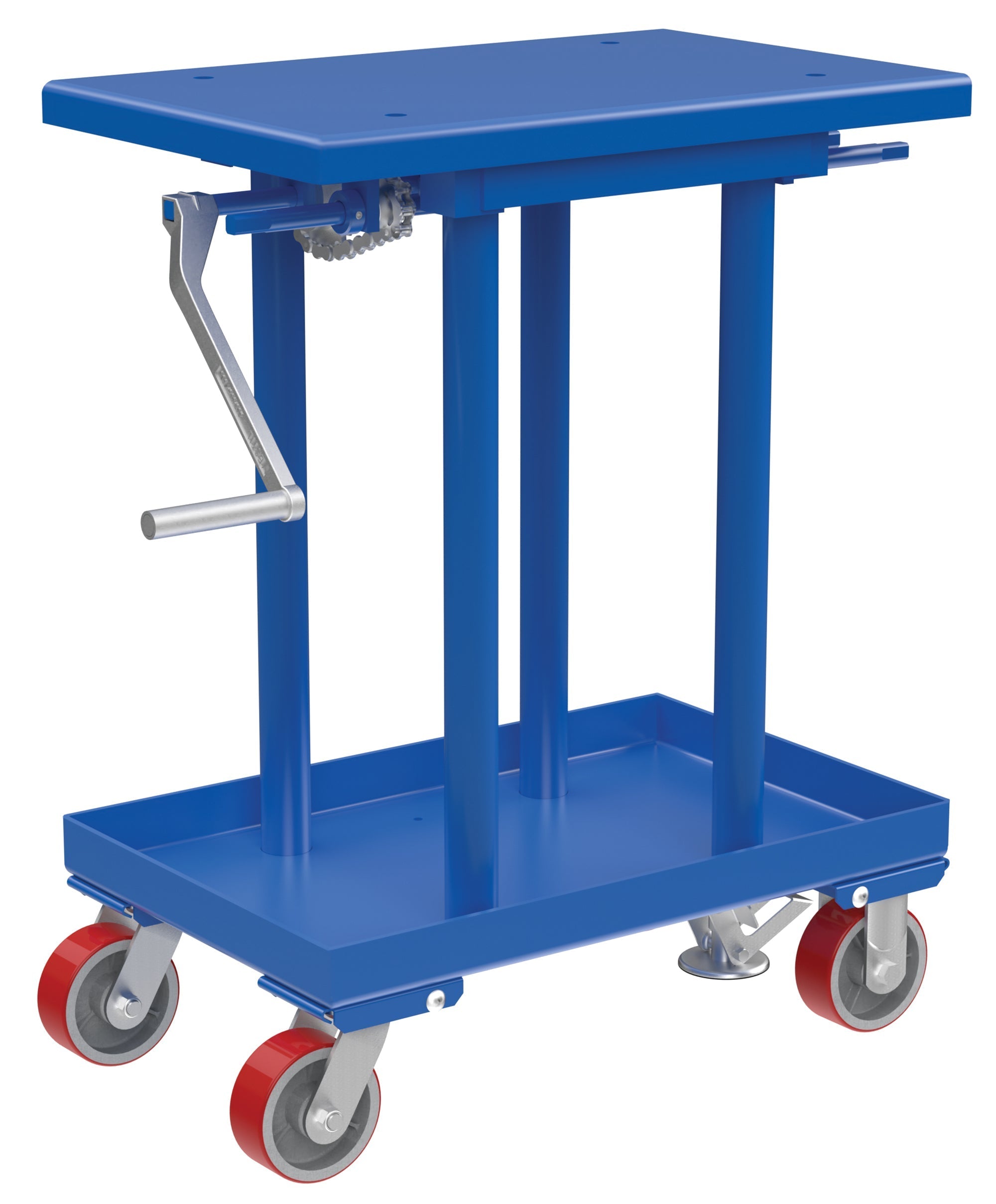
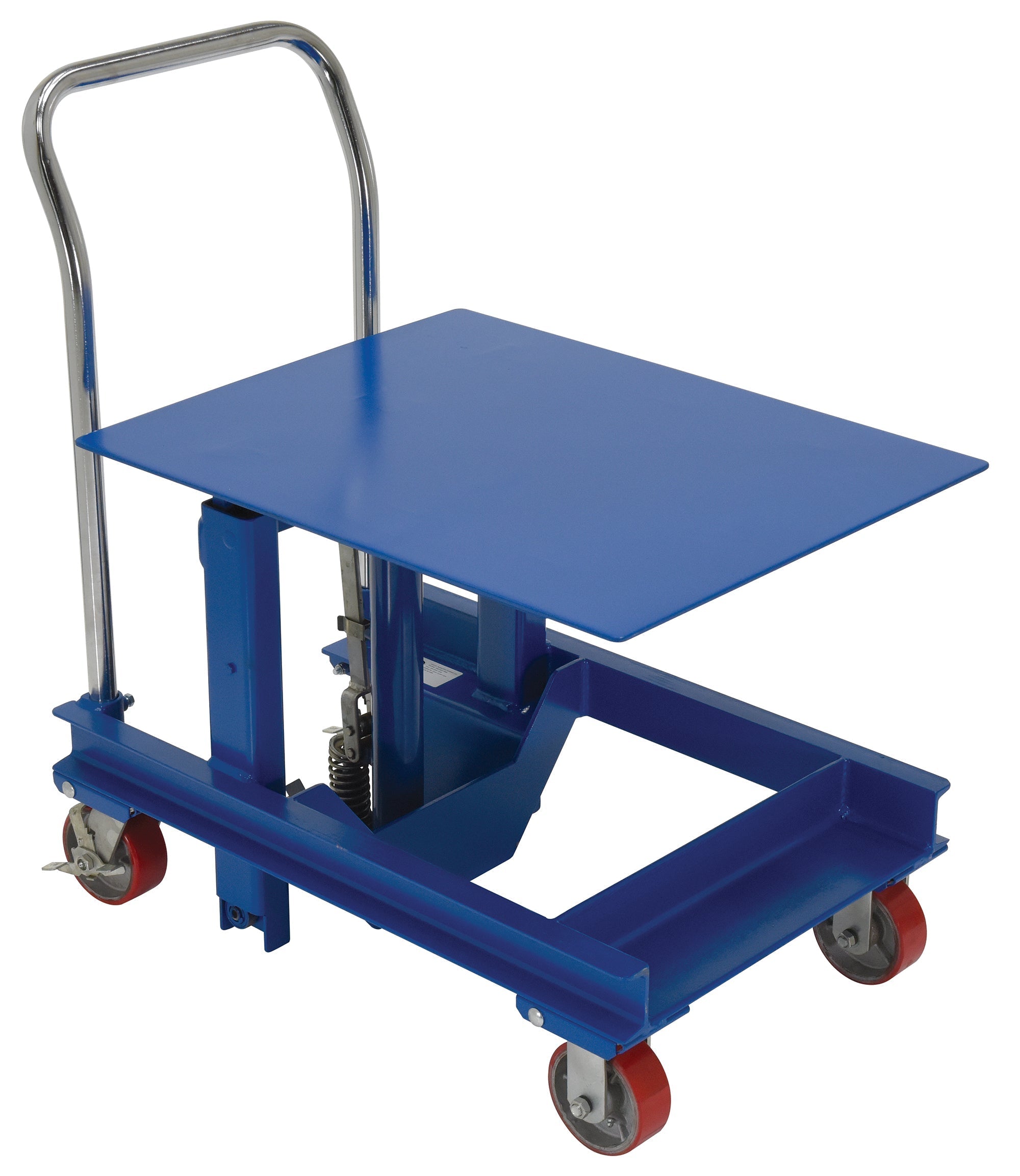
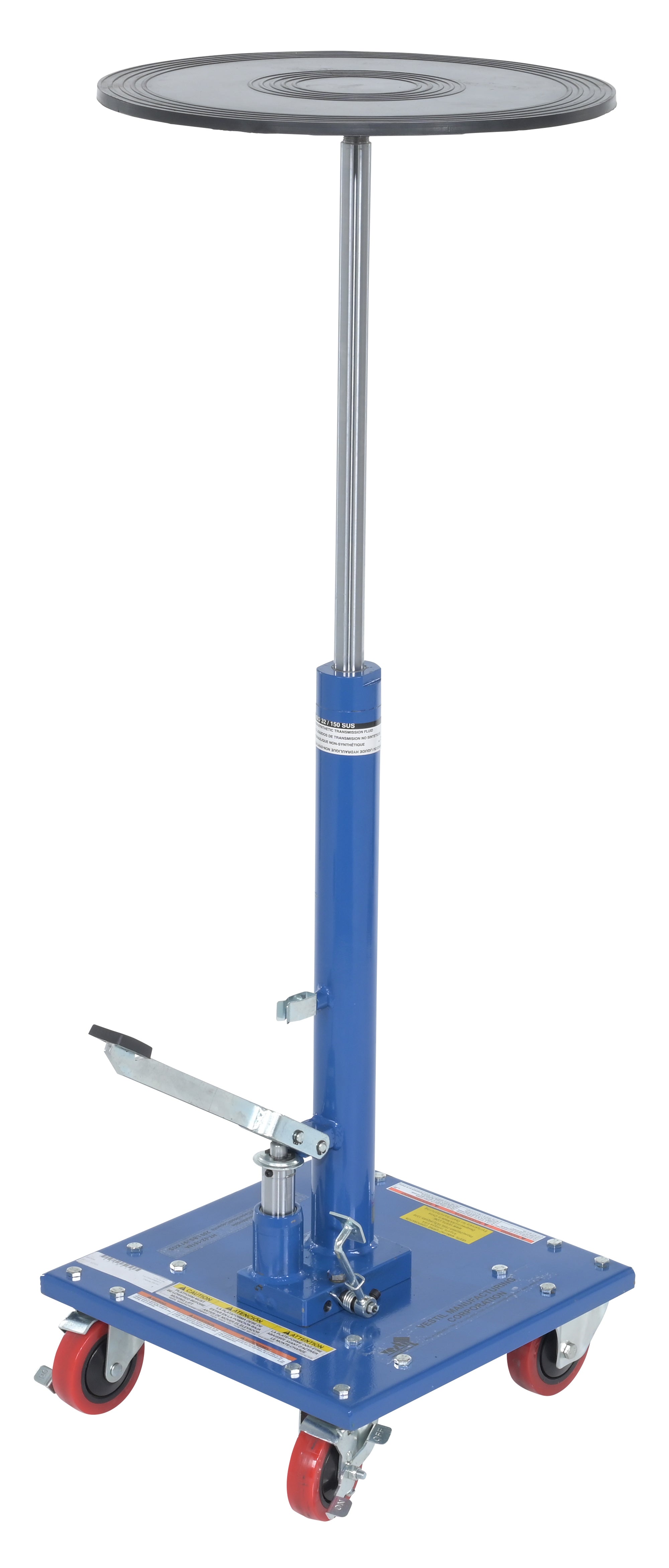
Post tables and die tables when the deck sits low and tight. A post table raises a deck on a single central hydraulic post instead of a scissor, which buys you two things: a very low collapsed height and an open underside with no scissor legs in the way. That open frame is why die tables and post lift tables suit machine shops feeding presses, where a die has to slide on and off the deck without a scissor mechanism fouling it. Our Vestil hydraulic post tables run 200 to 6,000 lb on decks from 16 inches square up to 48 by 48, in foot-pump, DC-powered, and partially stainless builds, with entry units near $531. The trade against a scissor is vertical travel: a post table lifts less far, so if you need a big rise, the scissor still wins. For low pick heights and open access, the post table is the cleaner buy.
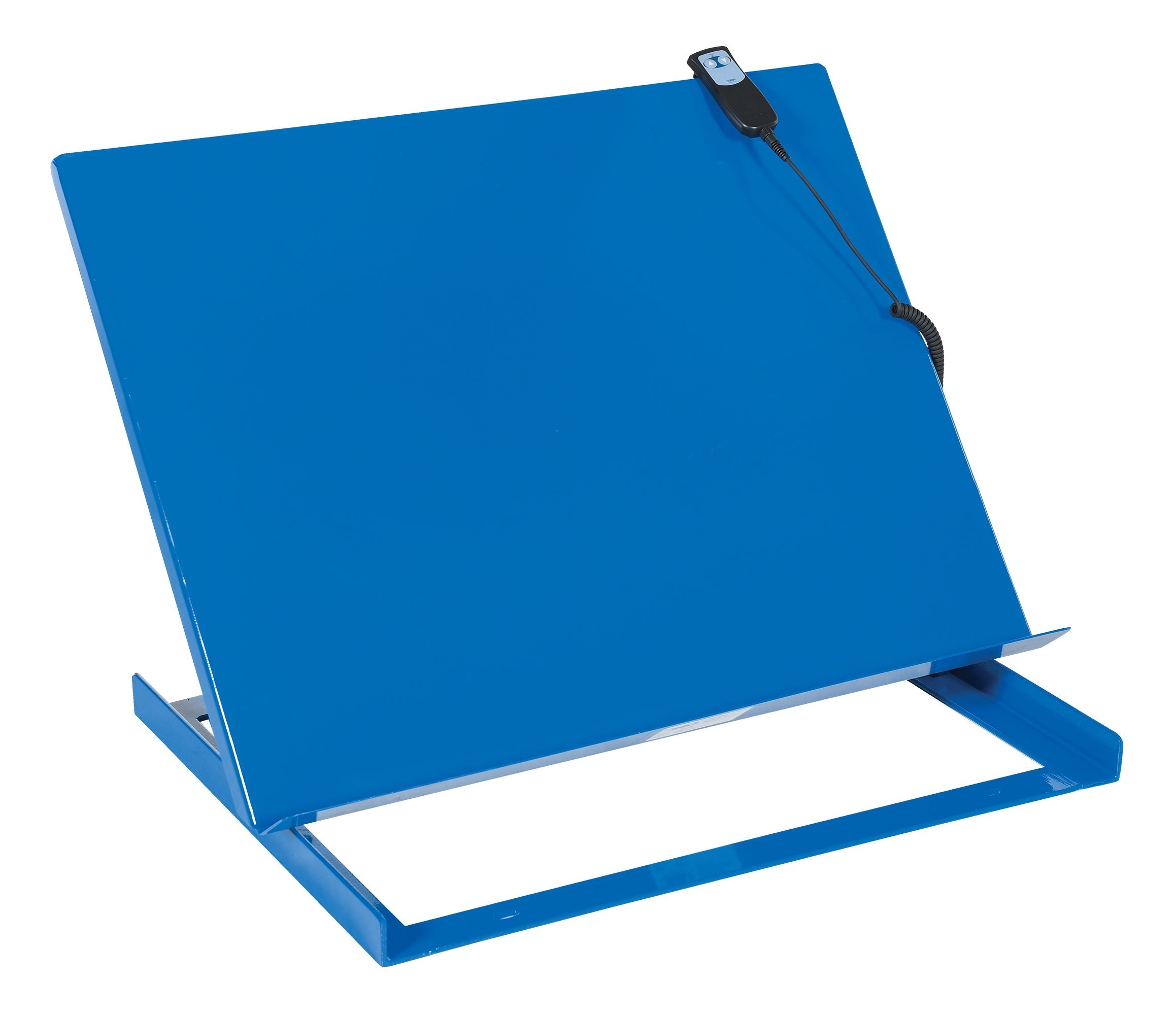
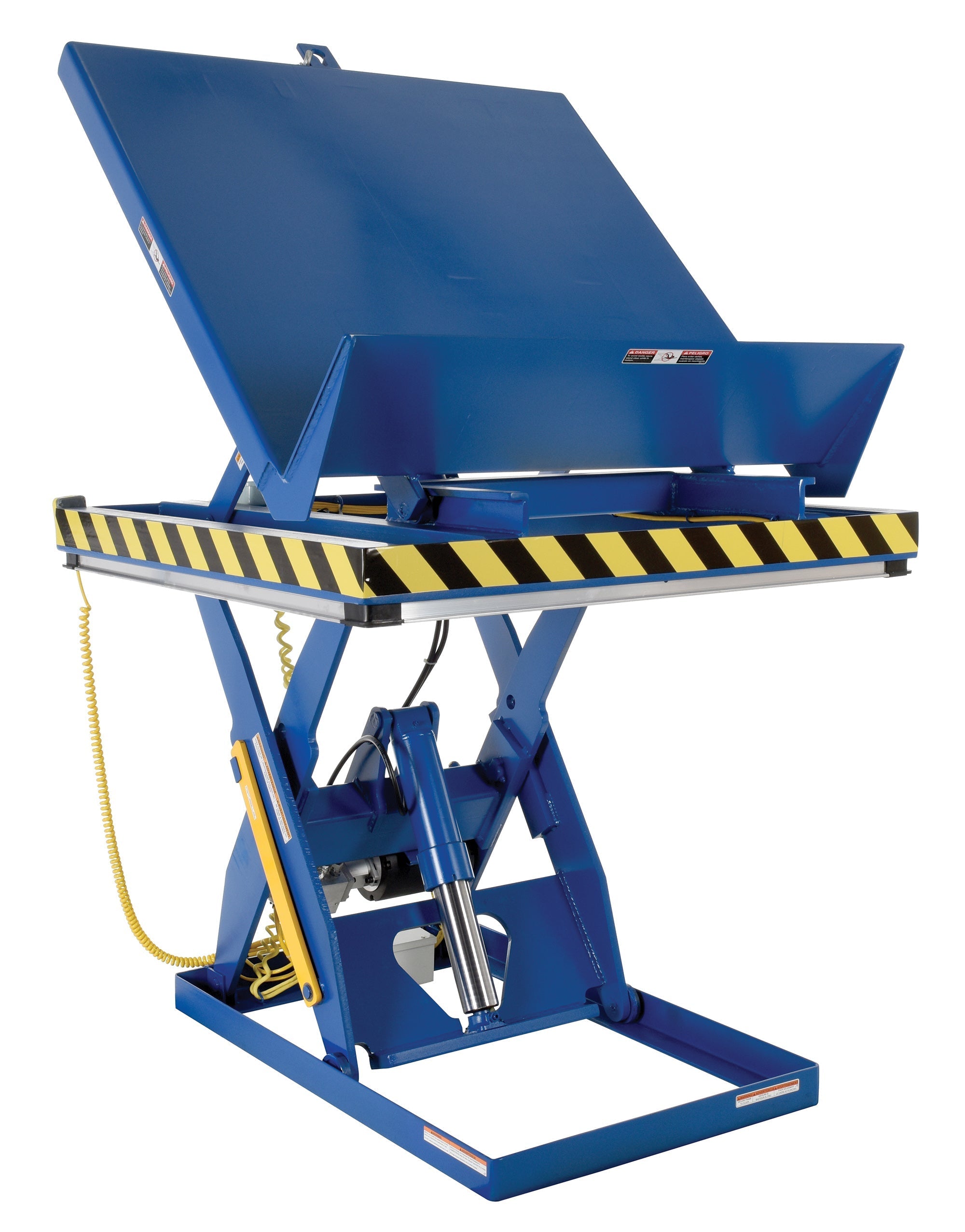
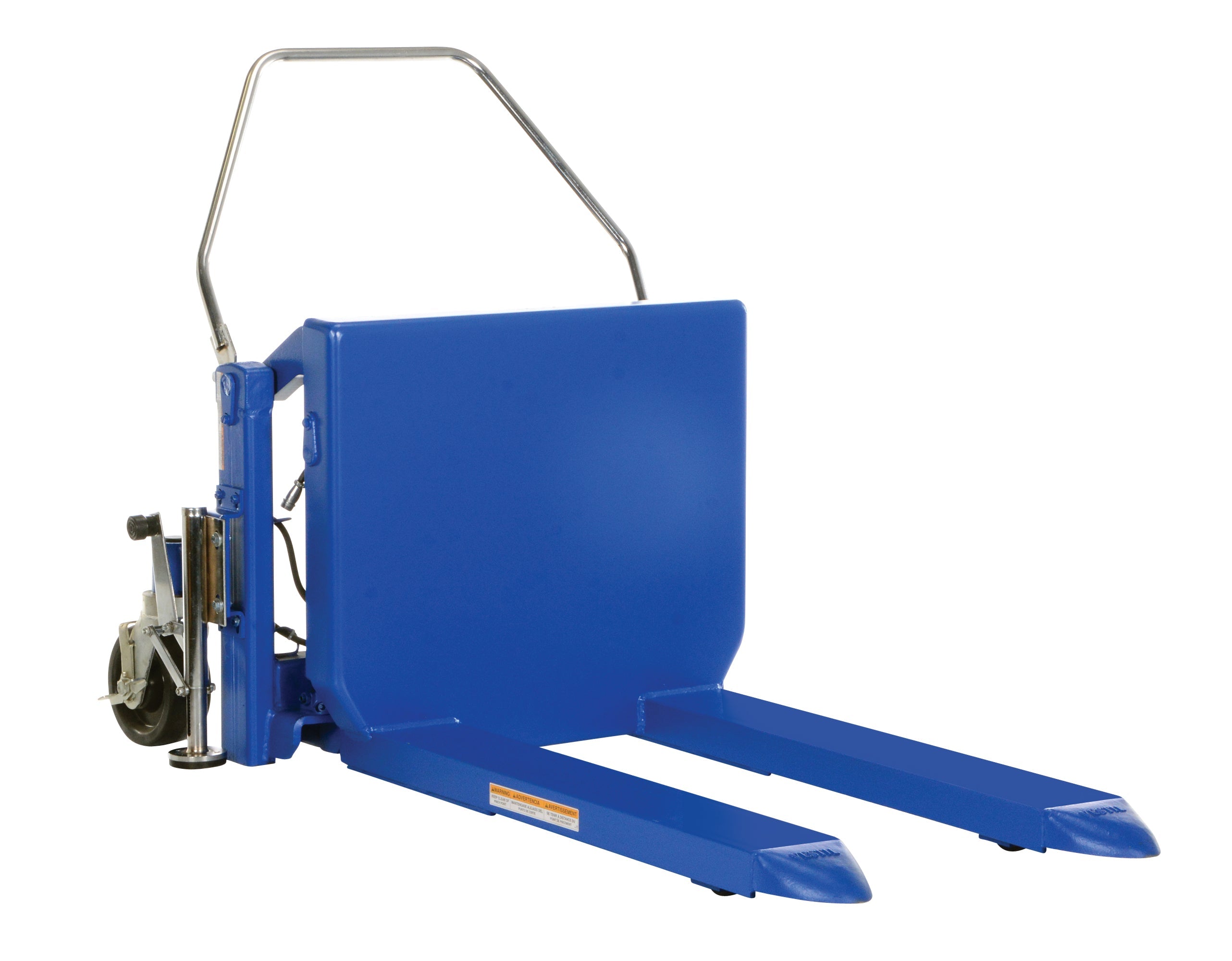
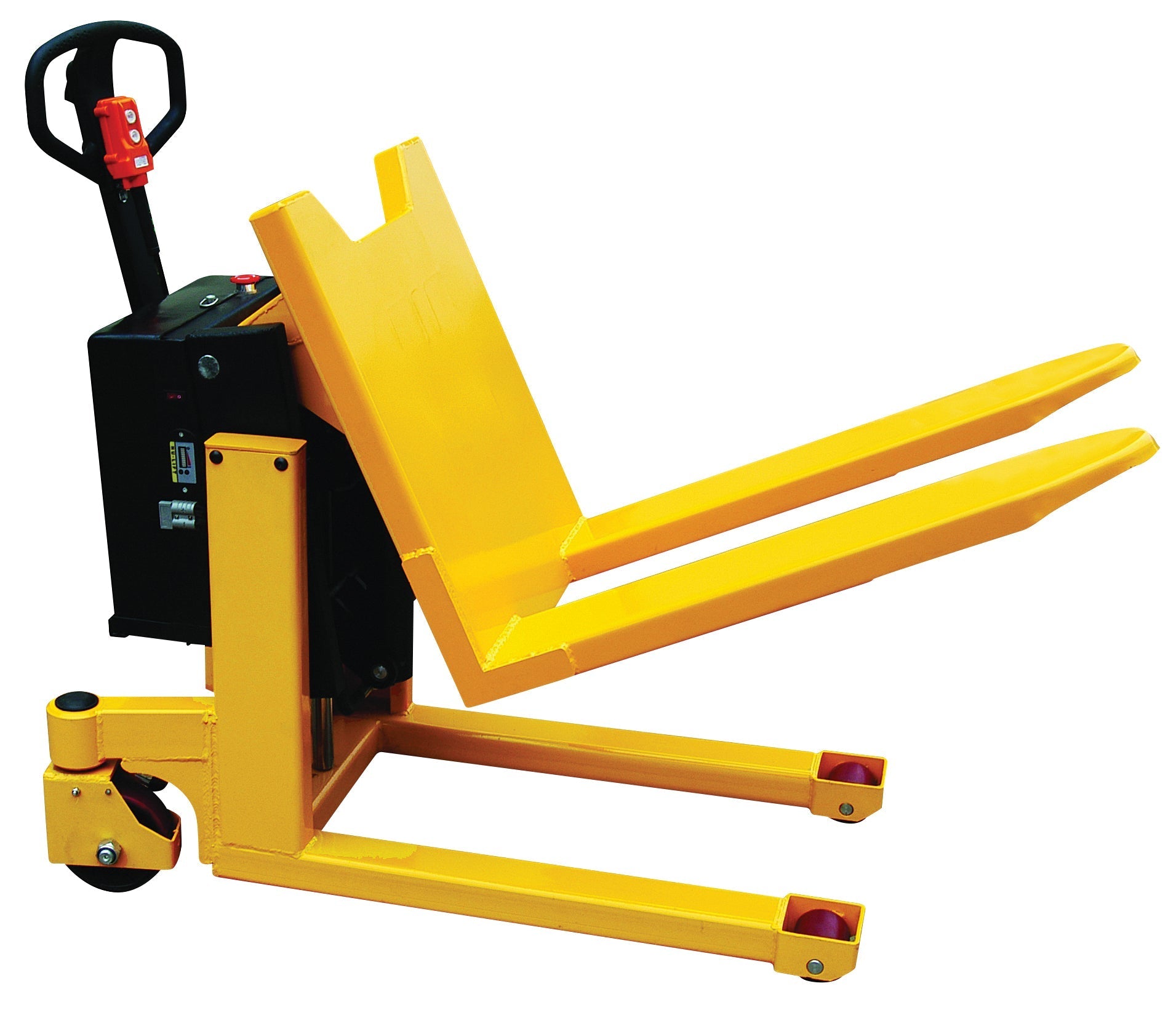
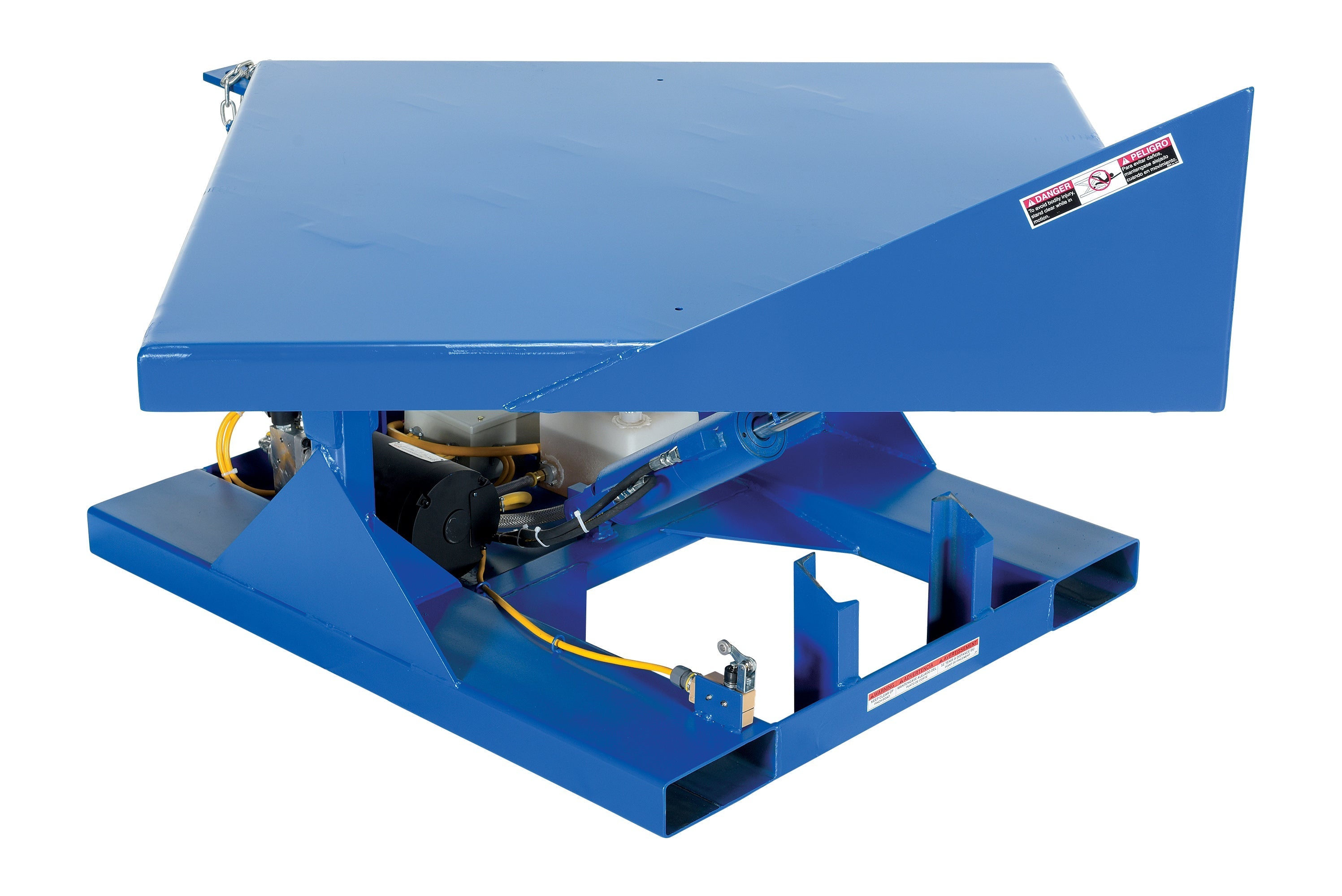
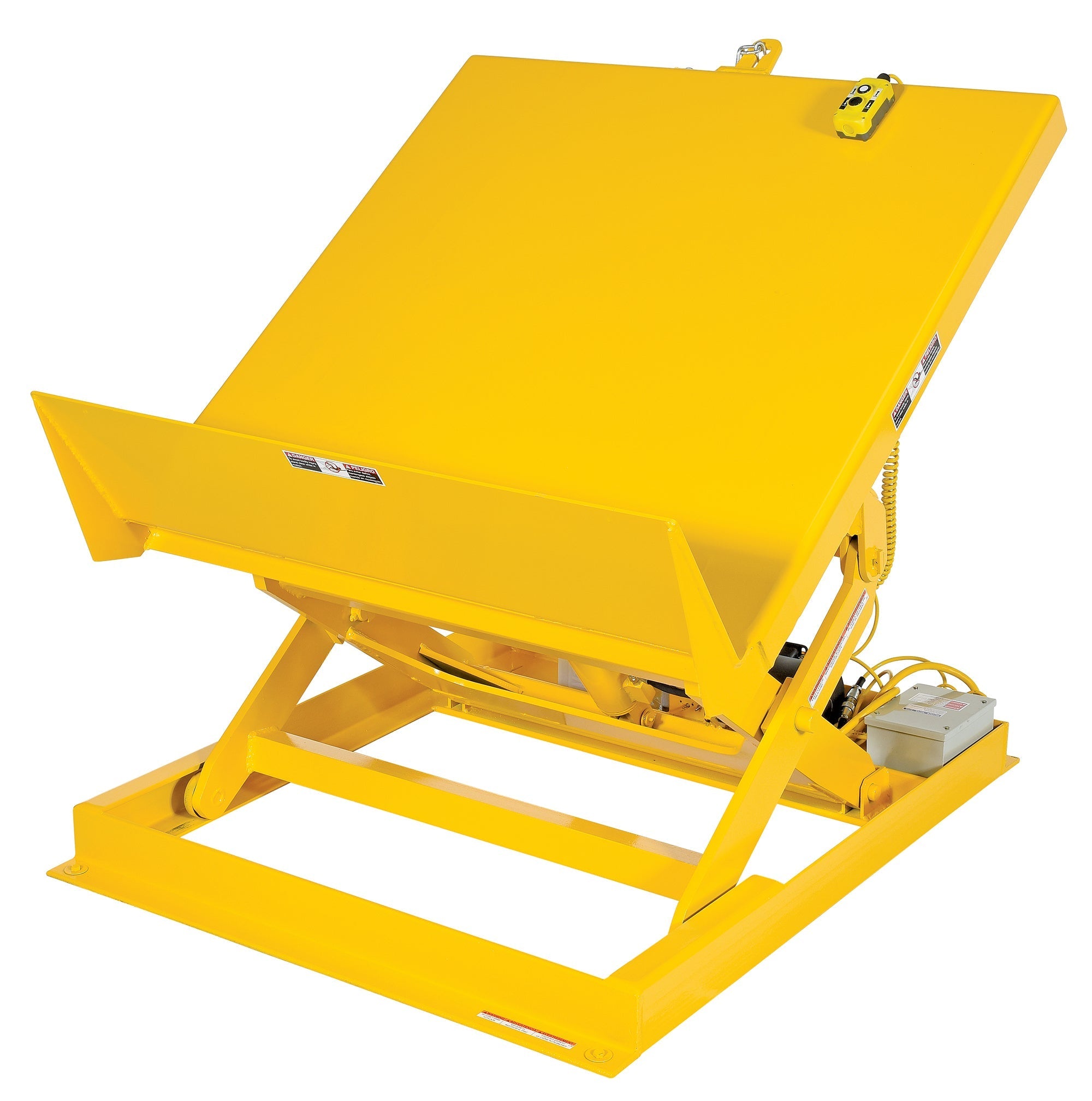
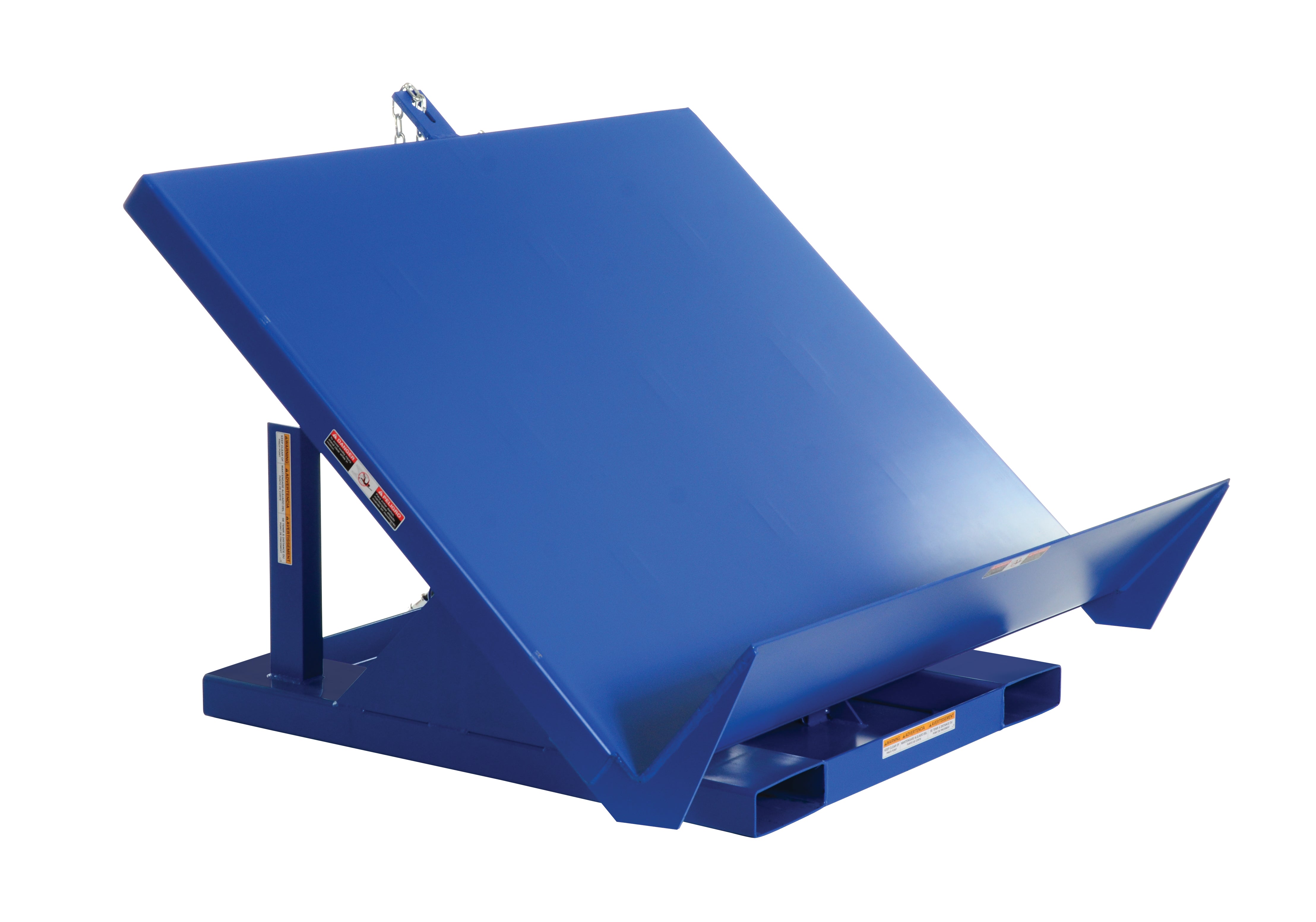
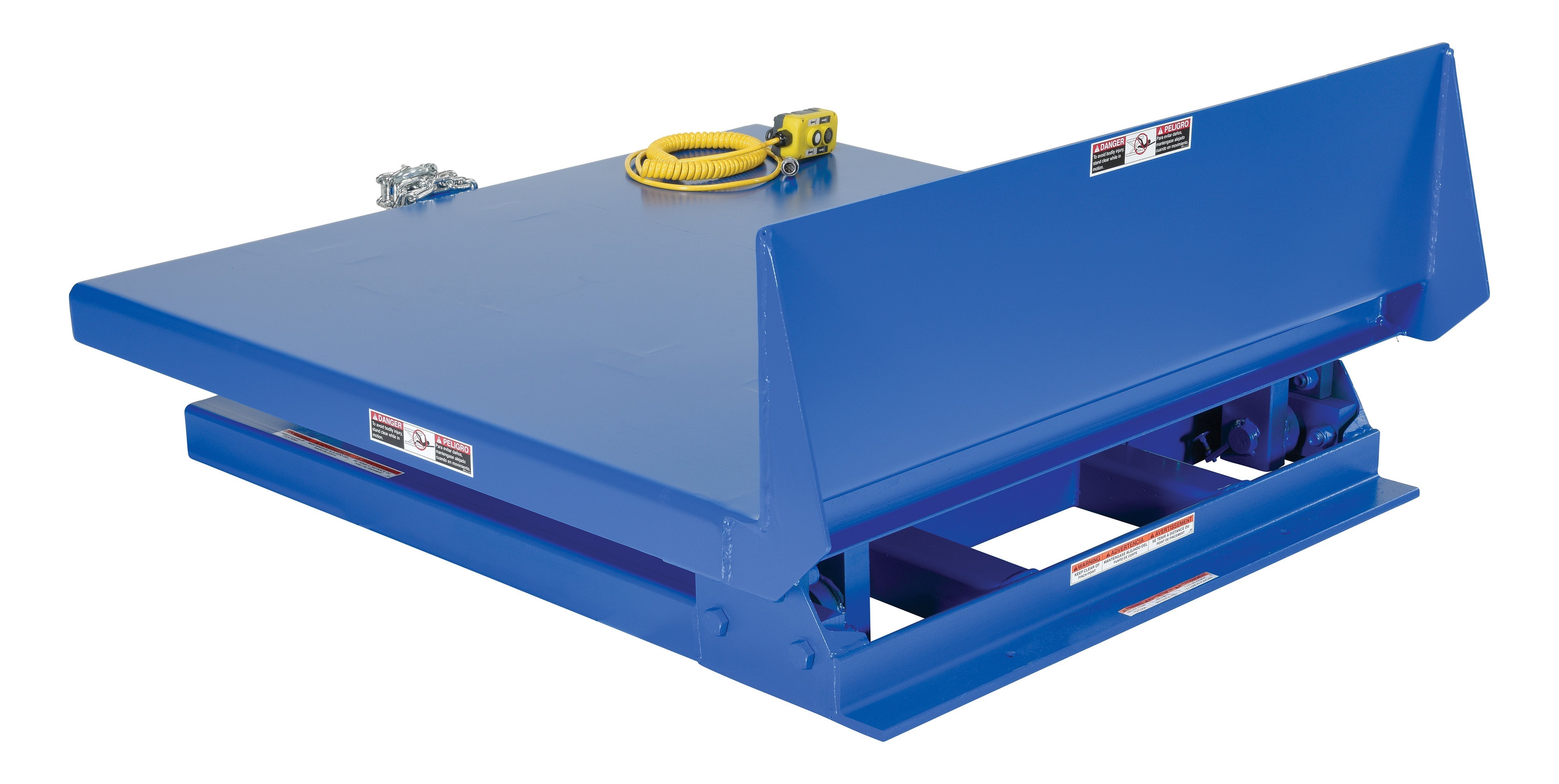
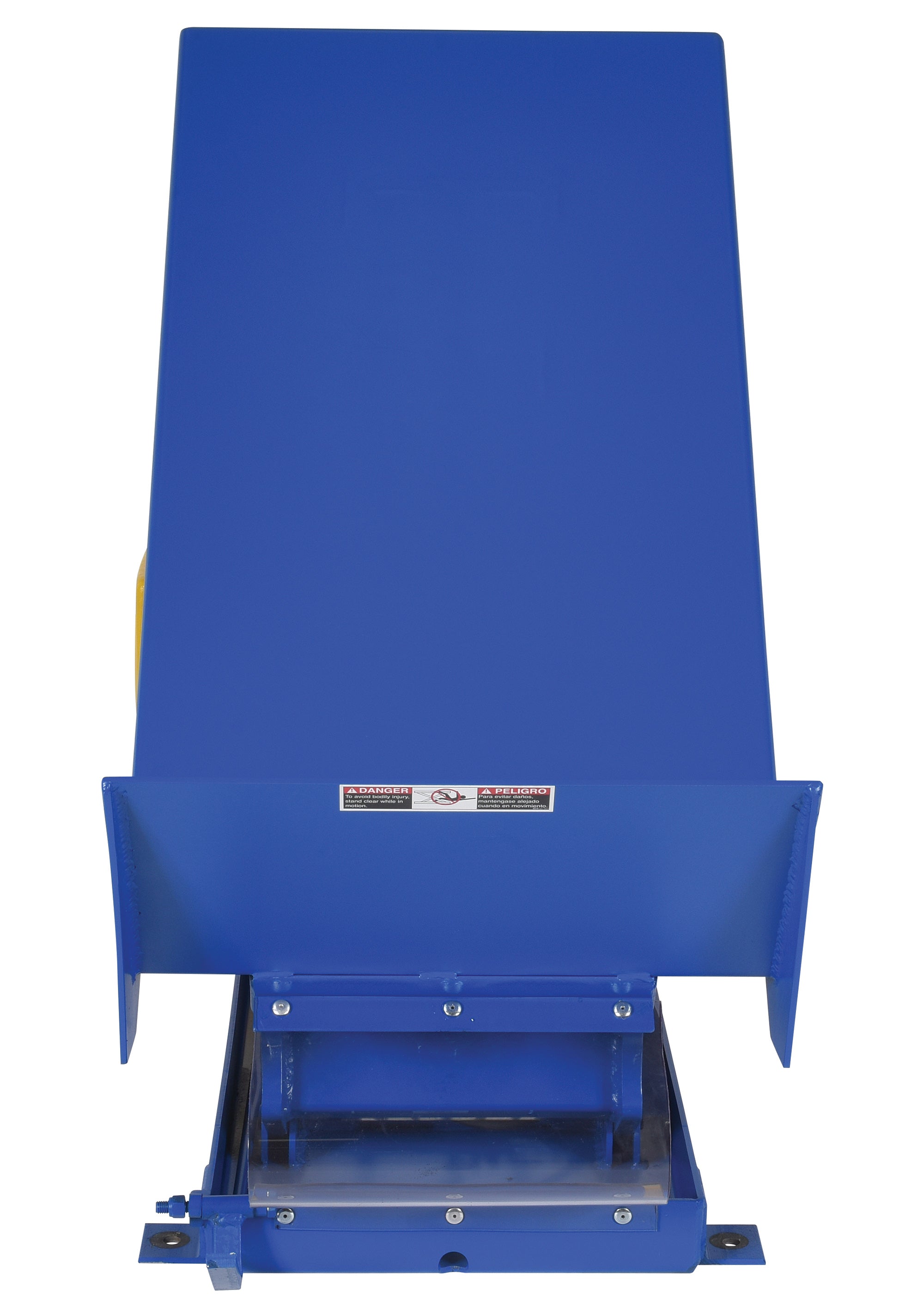
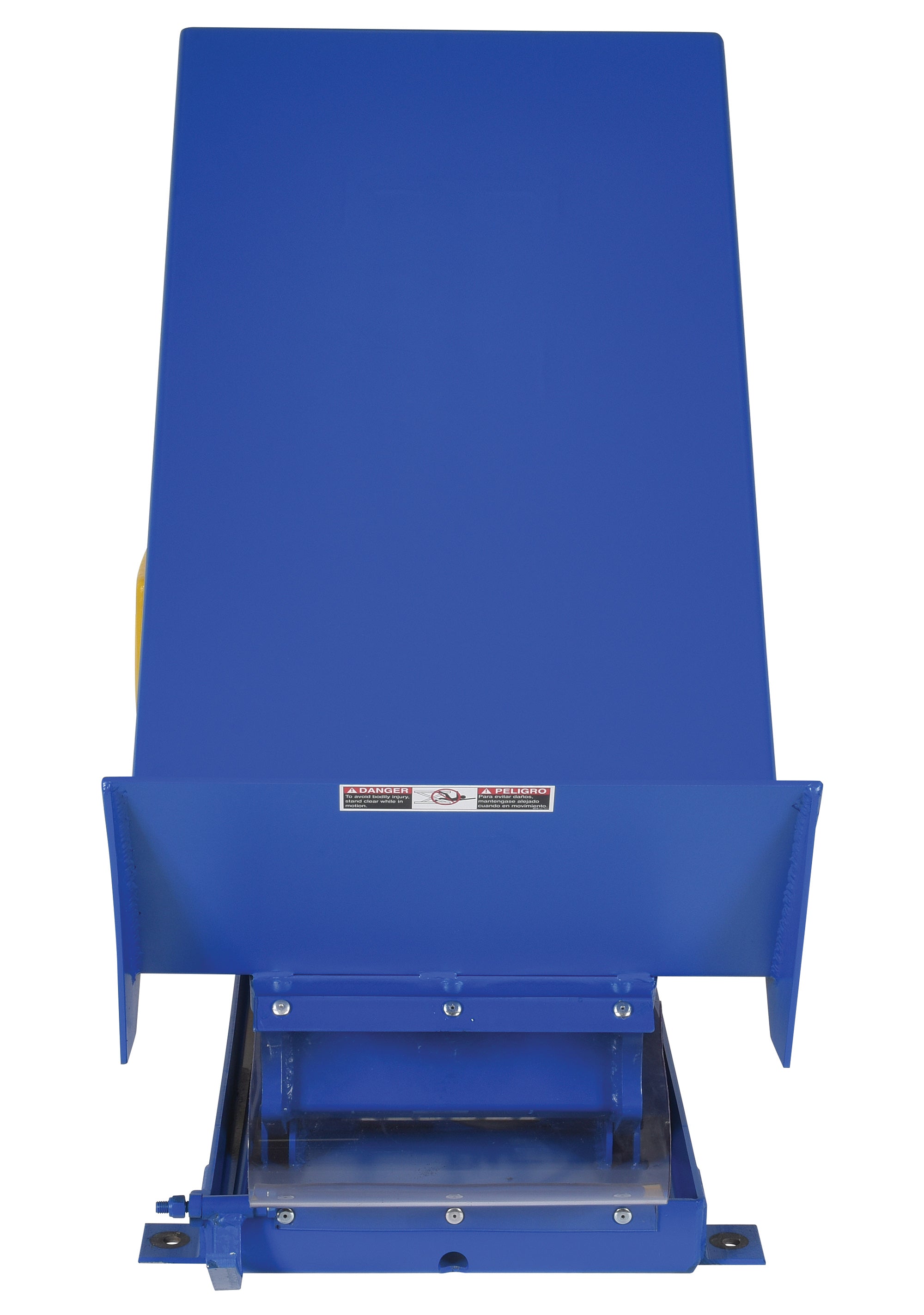
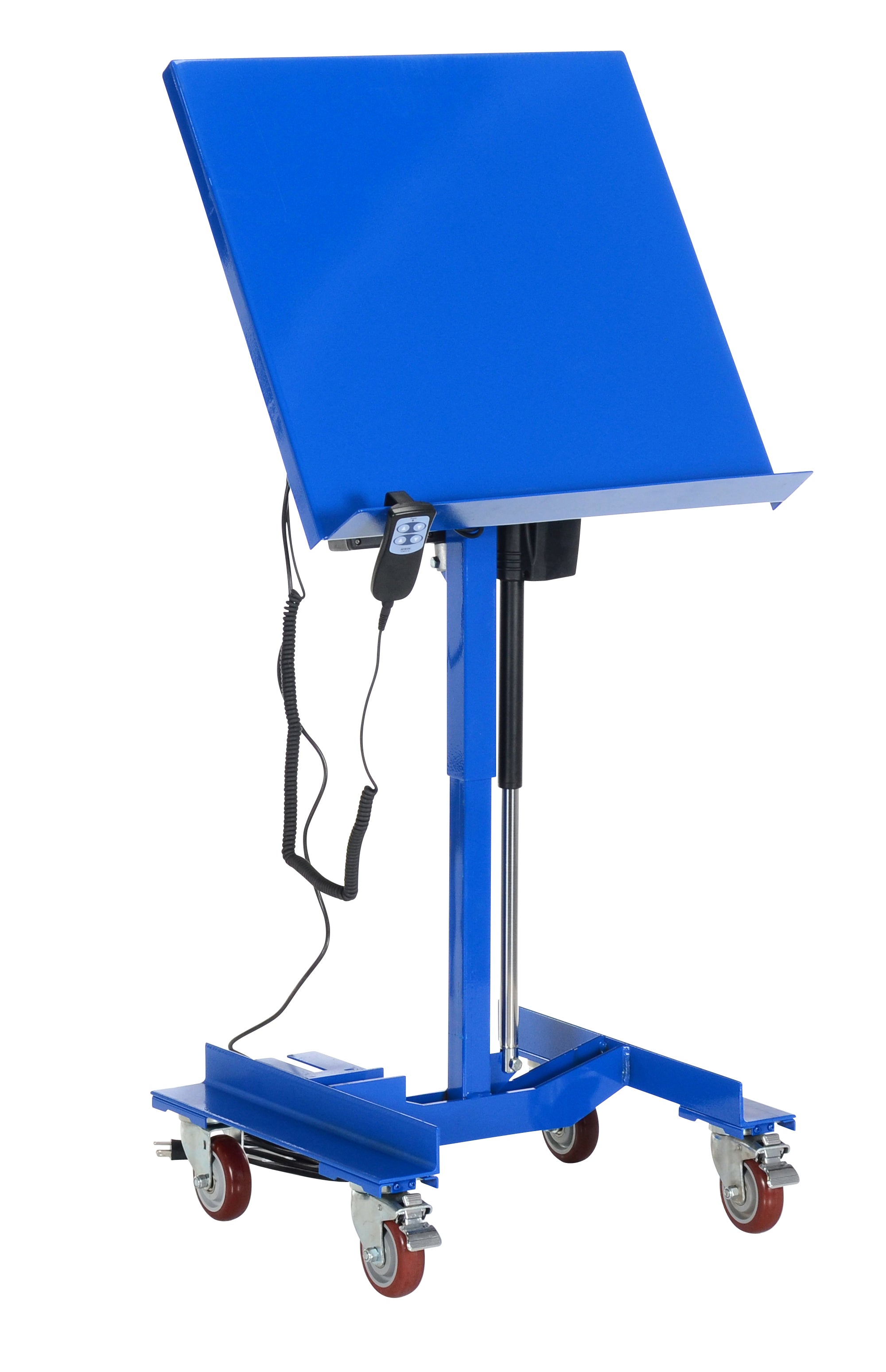
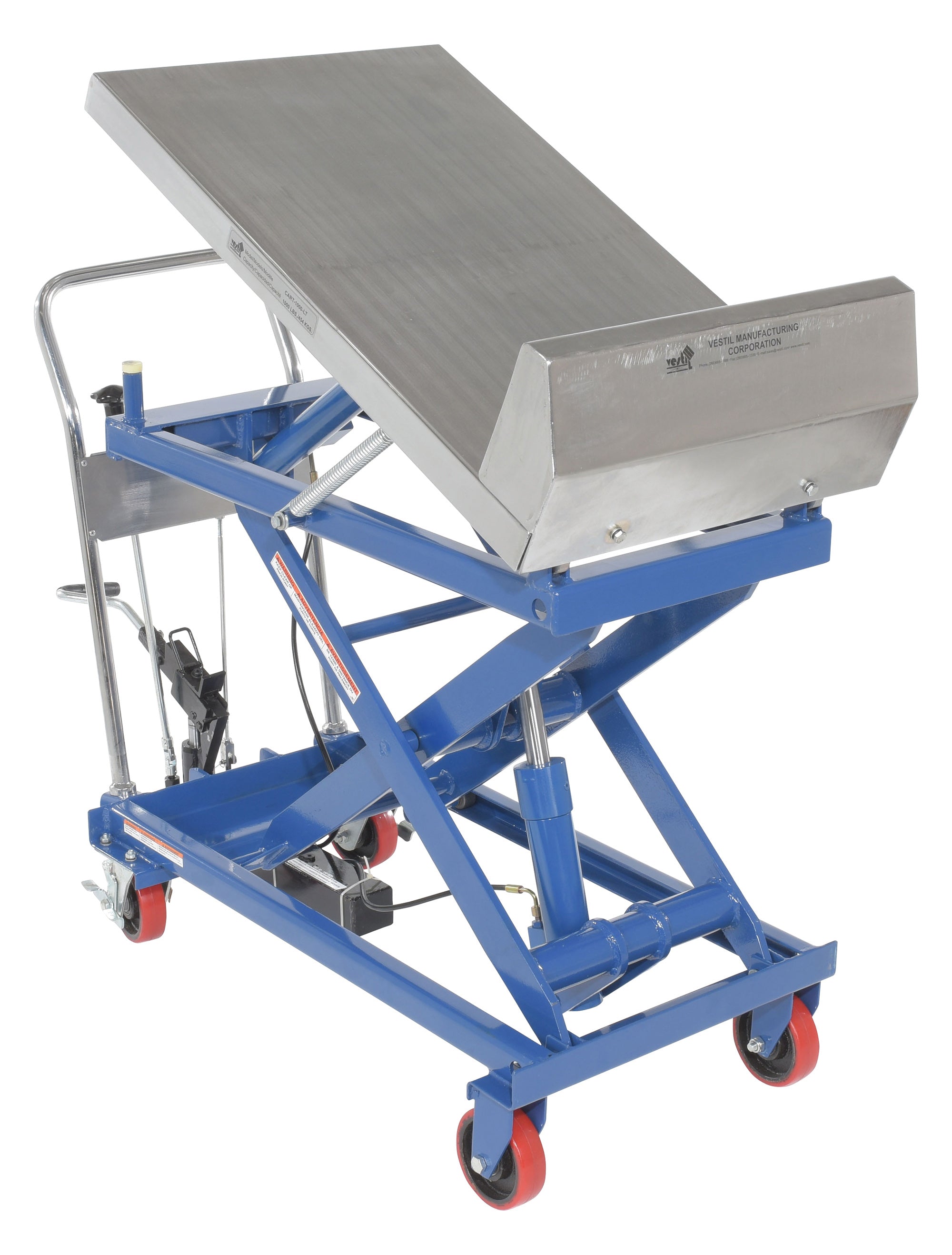
Tilters present the load instead of just raising it. A tilter angles the load toward the operator so parts feed by gravity and nobody reaches into the bottom of a deep container. Bench-top tilters handle 500 to 600 lb for parts bins and totes at a workstation, starting around $298, while the powered Tilt Master and corner tilter lines take 2,000 and 4,000 lb loads and tip full pallets or containers for line-side feeding. Match the tilt angle and the load retention to what you are handling: loose parts want a steep tilt with a lip, while a bound pallet needs a gentler angle and a stop. These are pallet tilters as much as bin tilters, so check the platform against your pallet footprint before ordering. Where a job needs both lift and tilt, Vestil builds combined lift-and-tilt scissor tables that do both from one deck.
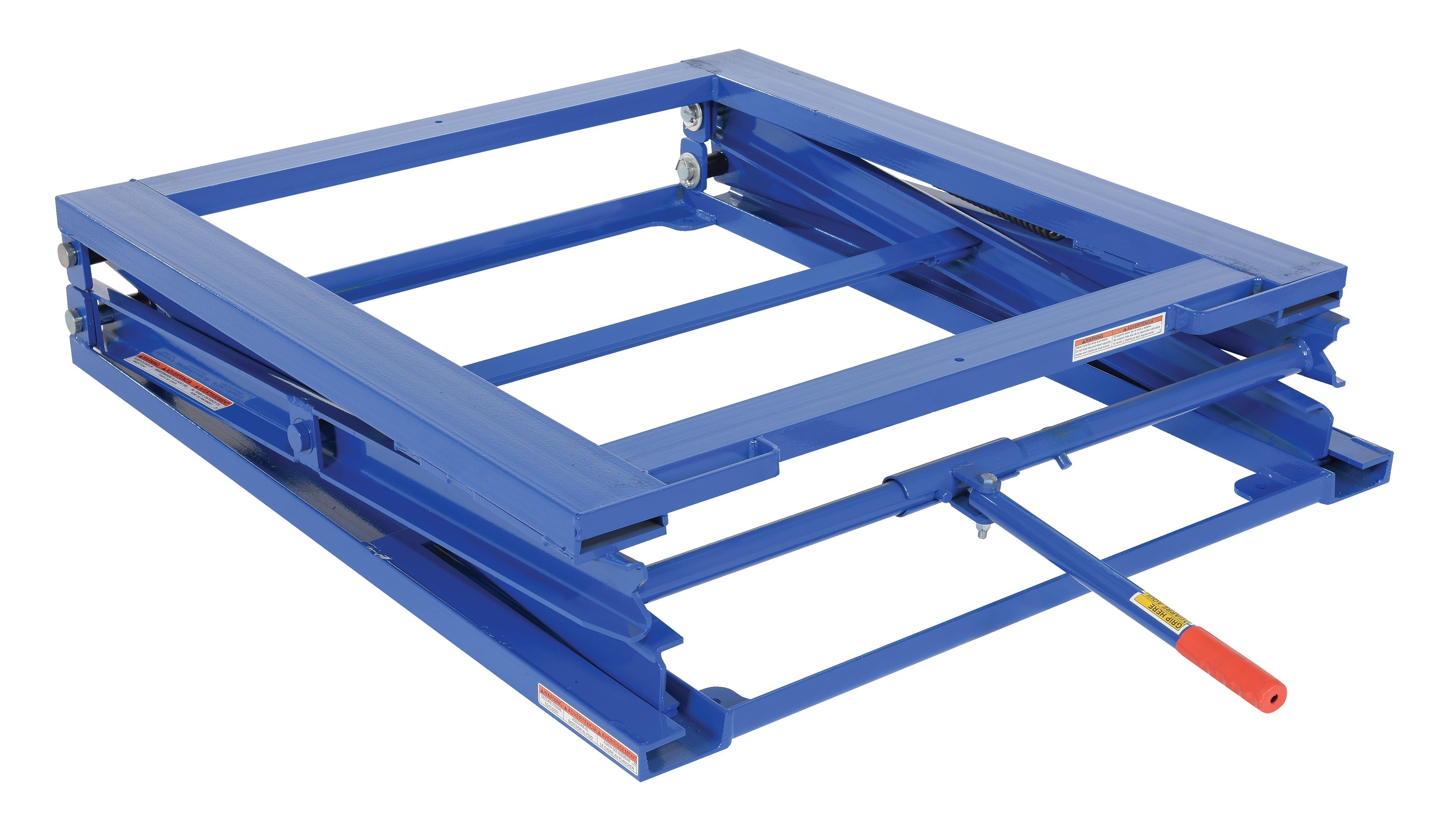
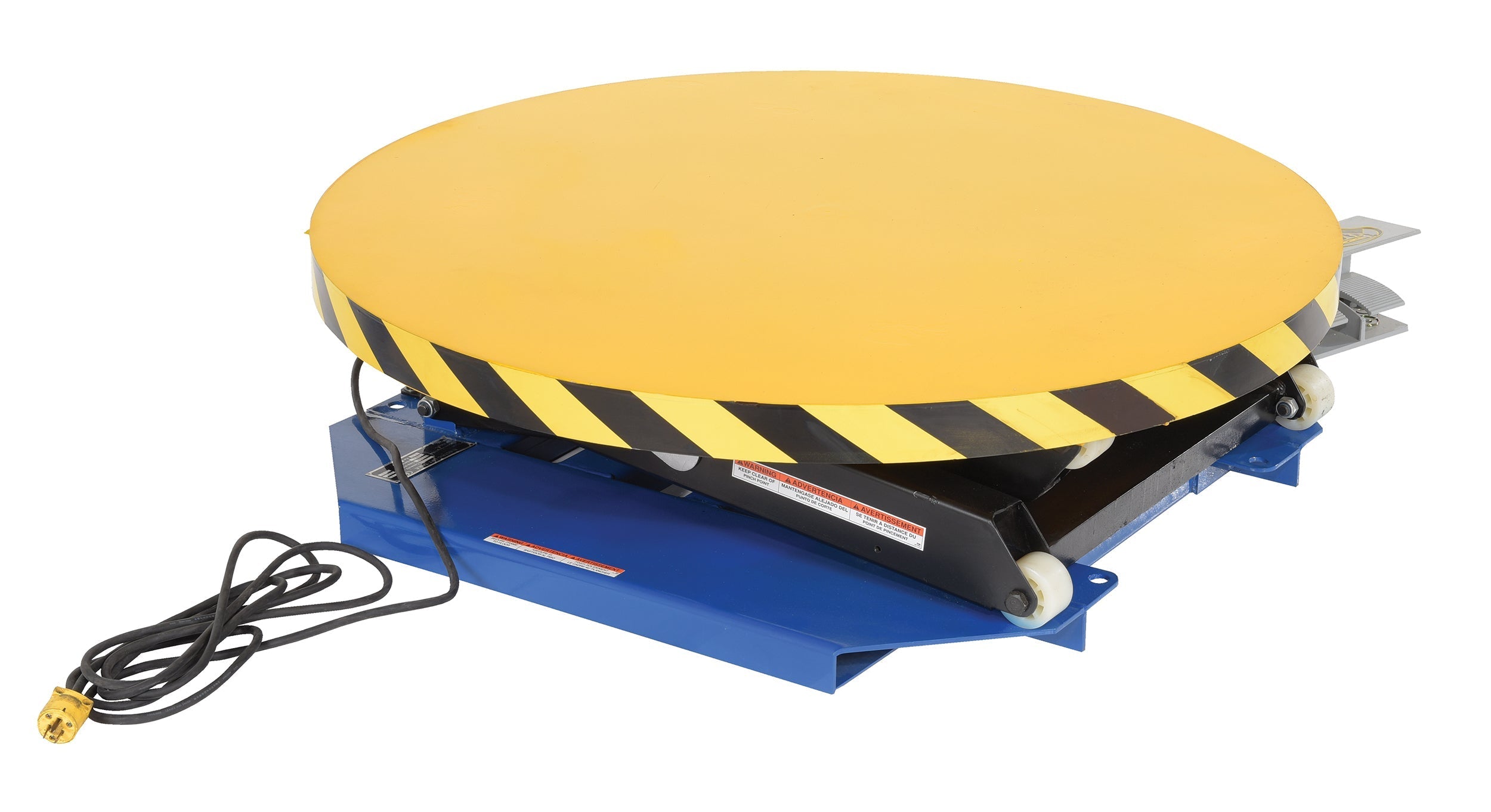
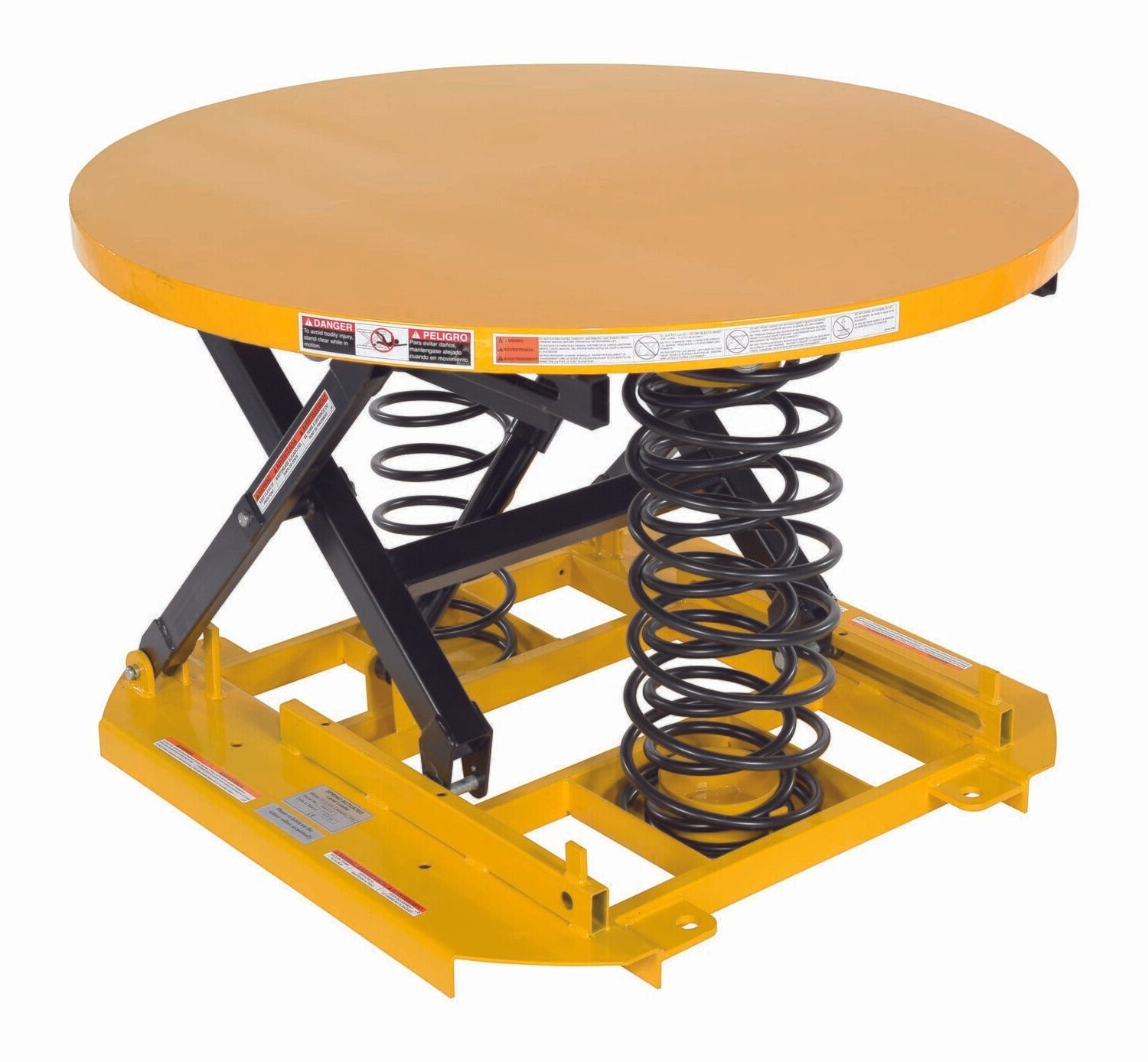
Self-leveling pallet levelers cut the bending out of hand palletizing. When a crew builds or breaks down pallets by hand, the killer is the reaching: down to the deck for the first layer, up over your head for the last. A spring-actuated pallet leveler fixes that with no power at all. Calibrated springs compress as boxes go on and rebound as they come off, so the top layer stays near waist height through the whole stack, and a turntable version lets you spin the load rather than walk around it. Our Vestil self-elevating spring tables and the automatic spring-actuated units in self-leveling pallet levelers run into the four-figure-pound range and need no air or electric hookup, which makes them cheap to place anywhere on the floor. For higher throughput, the powered auto-hite carts in the same group hold a set height automatically.
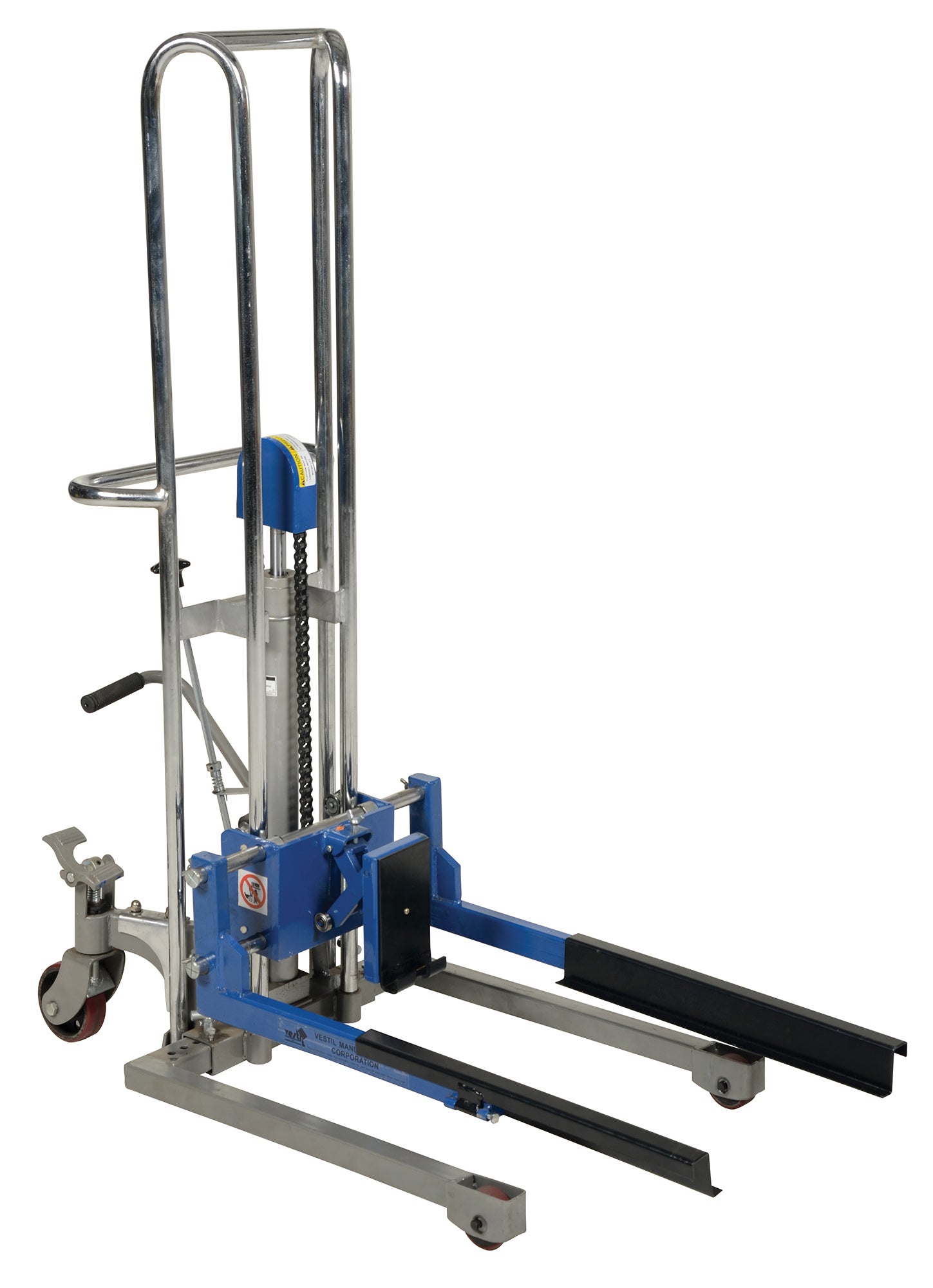
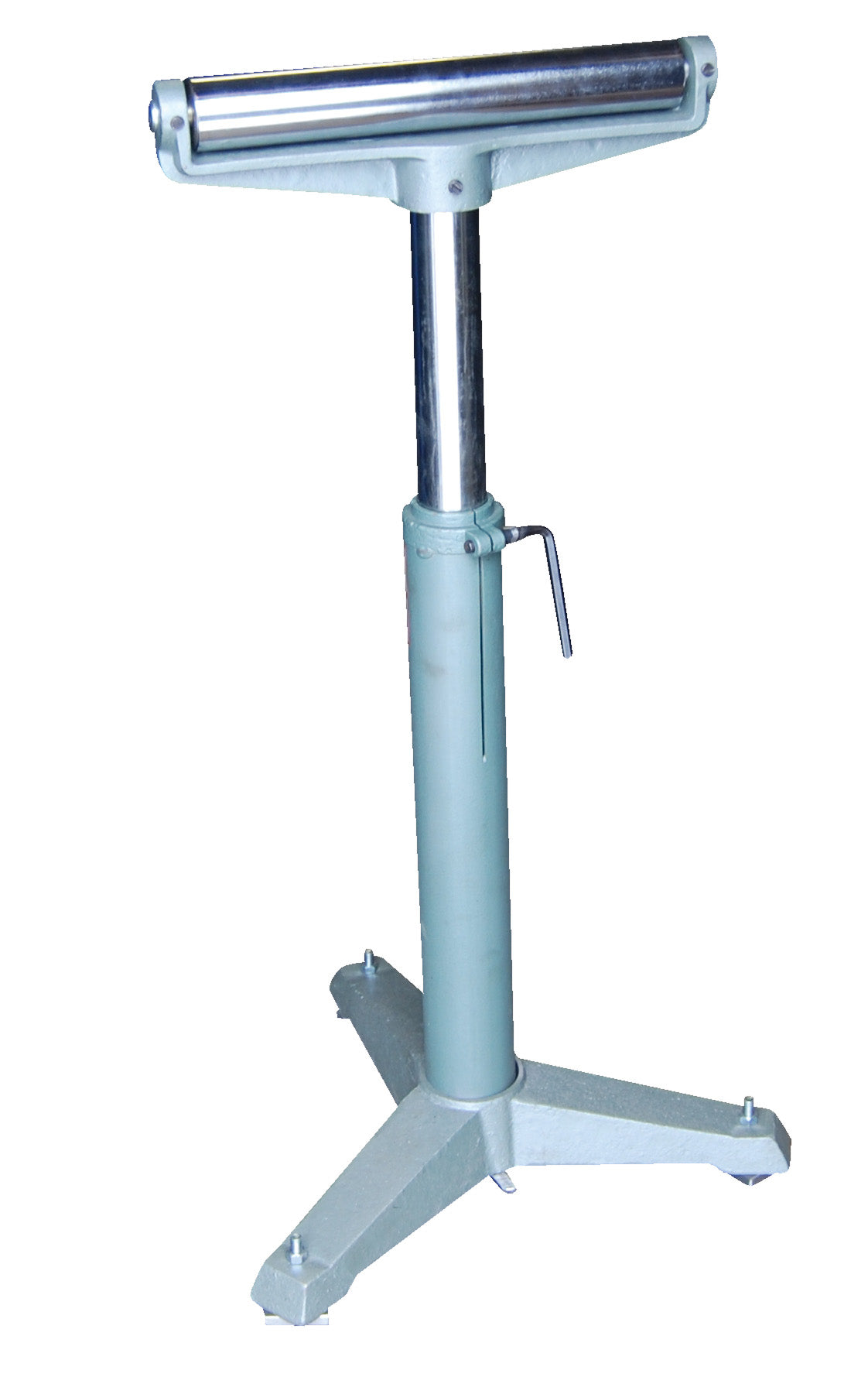
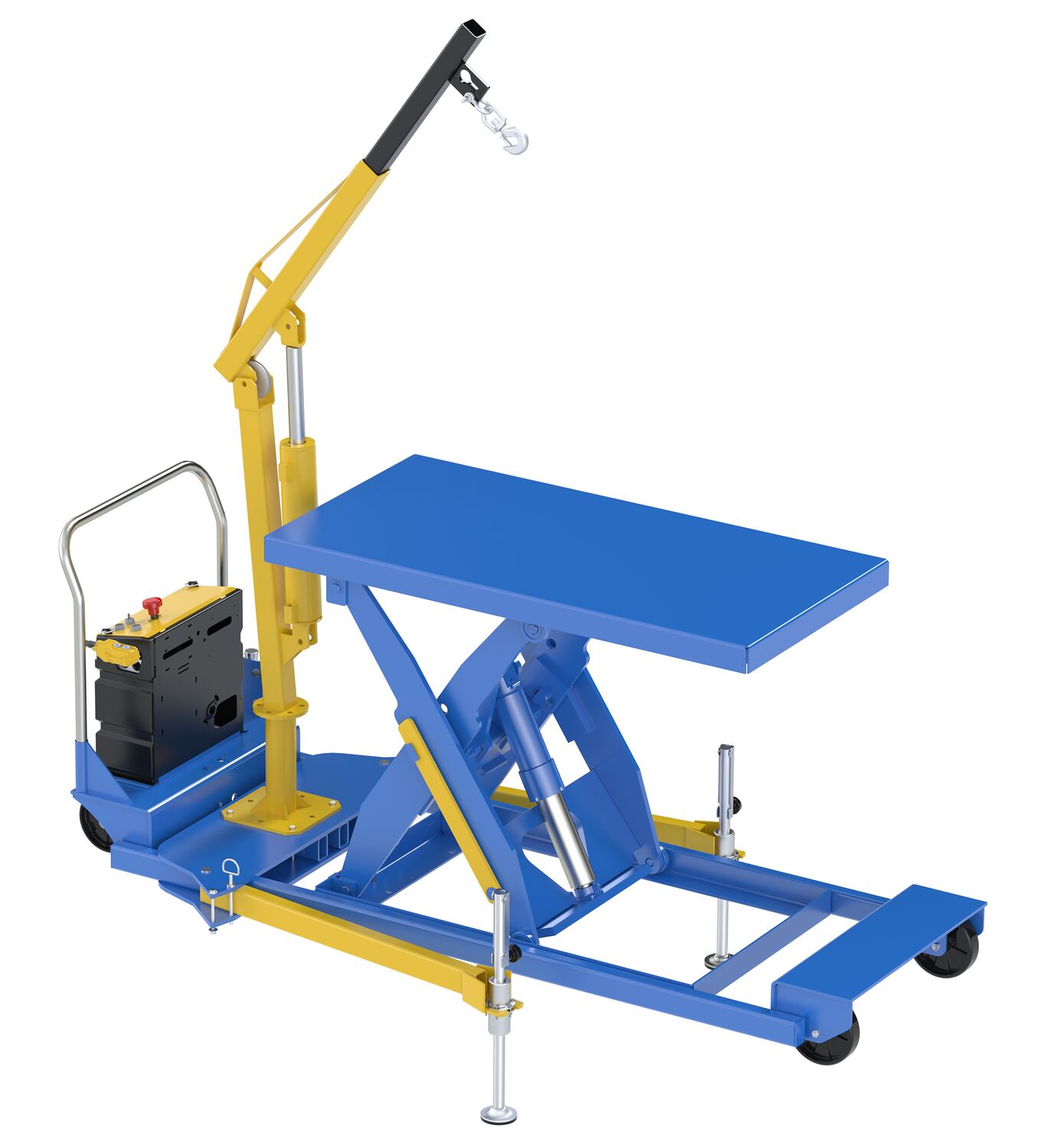
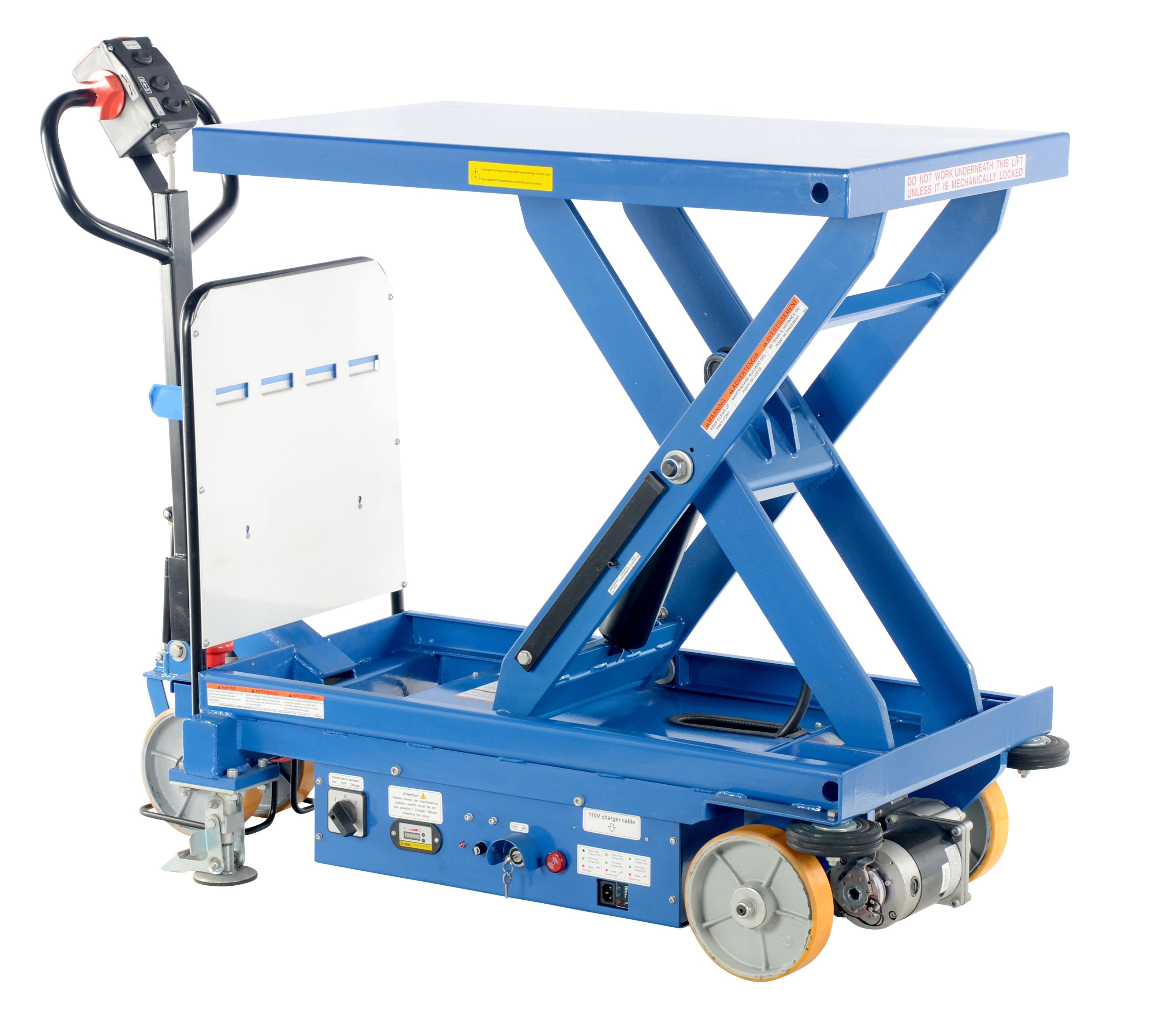
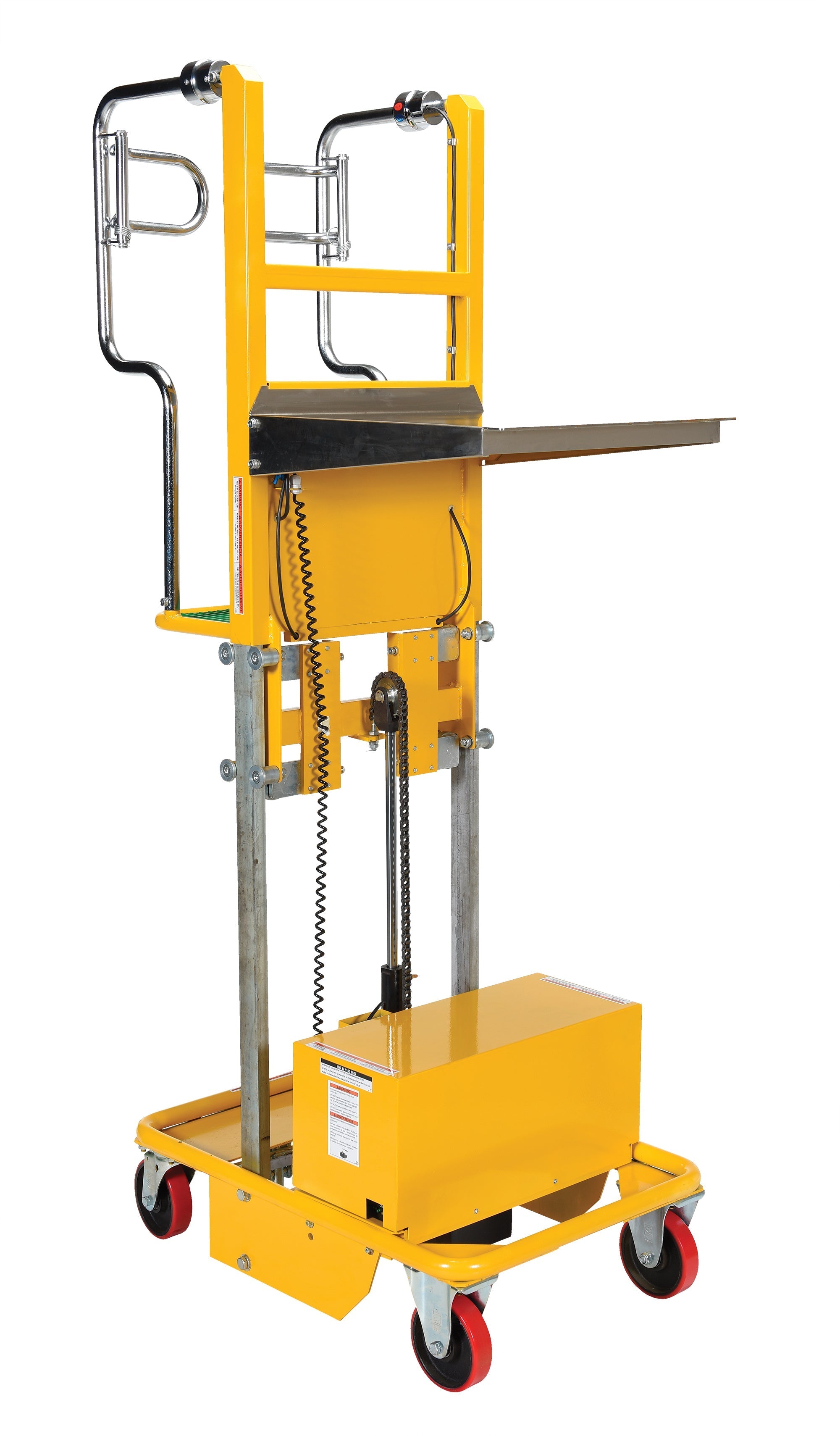
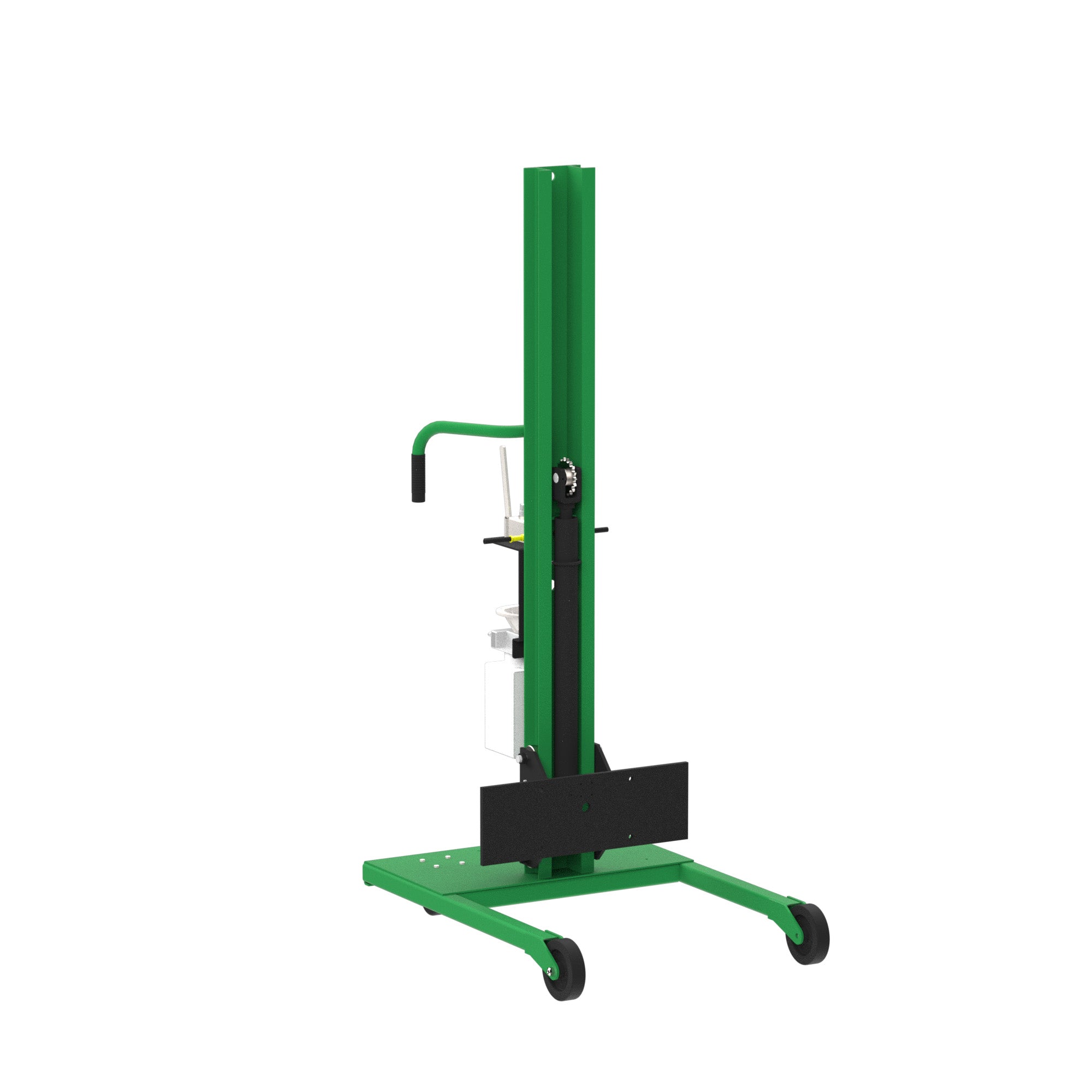
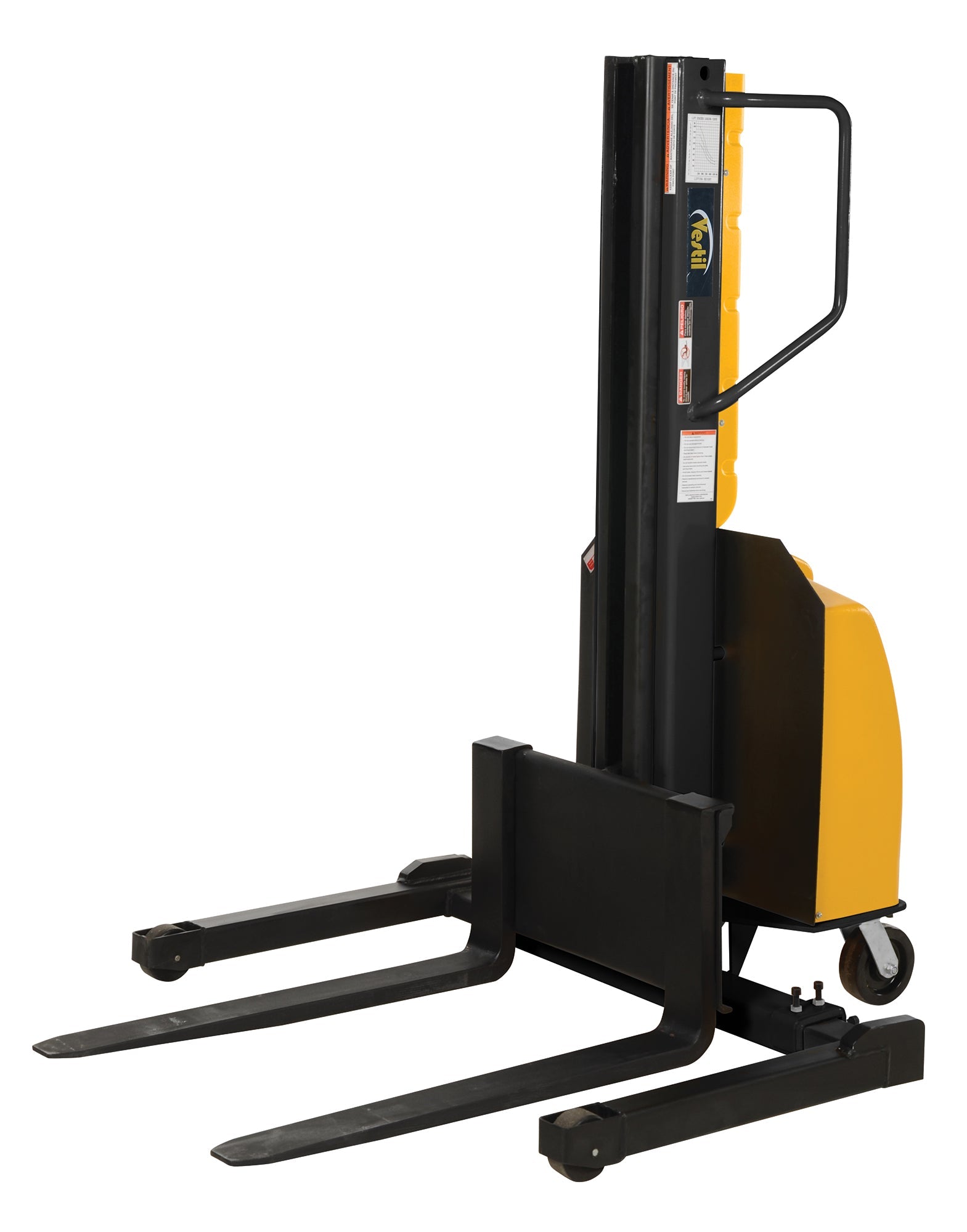
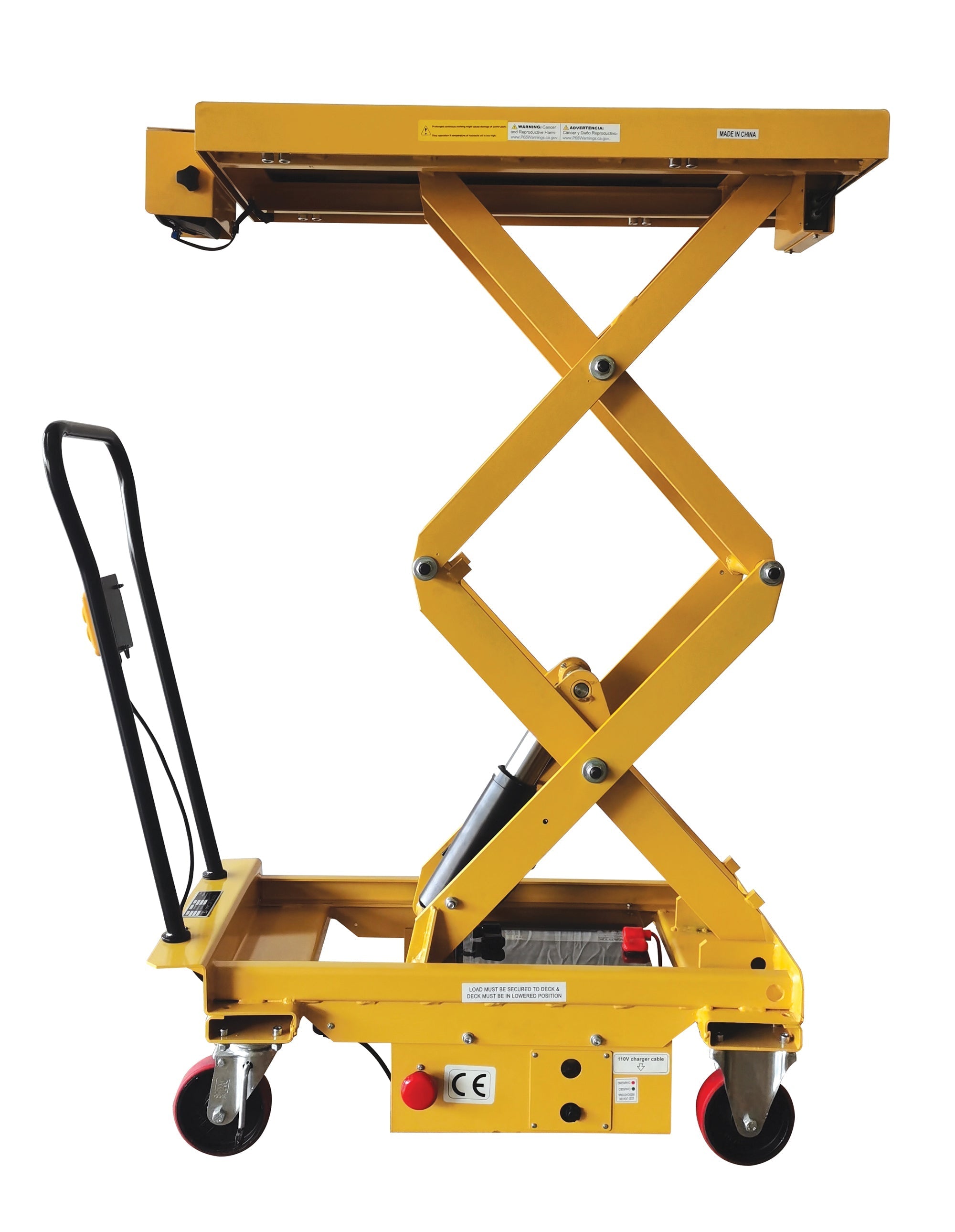
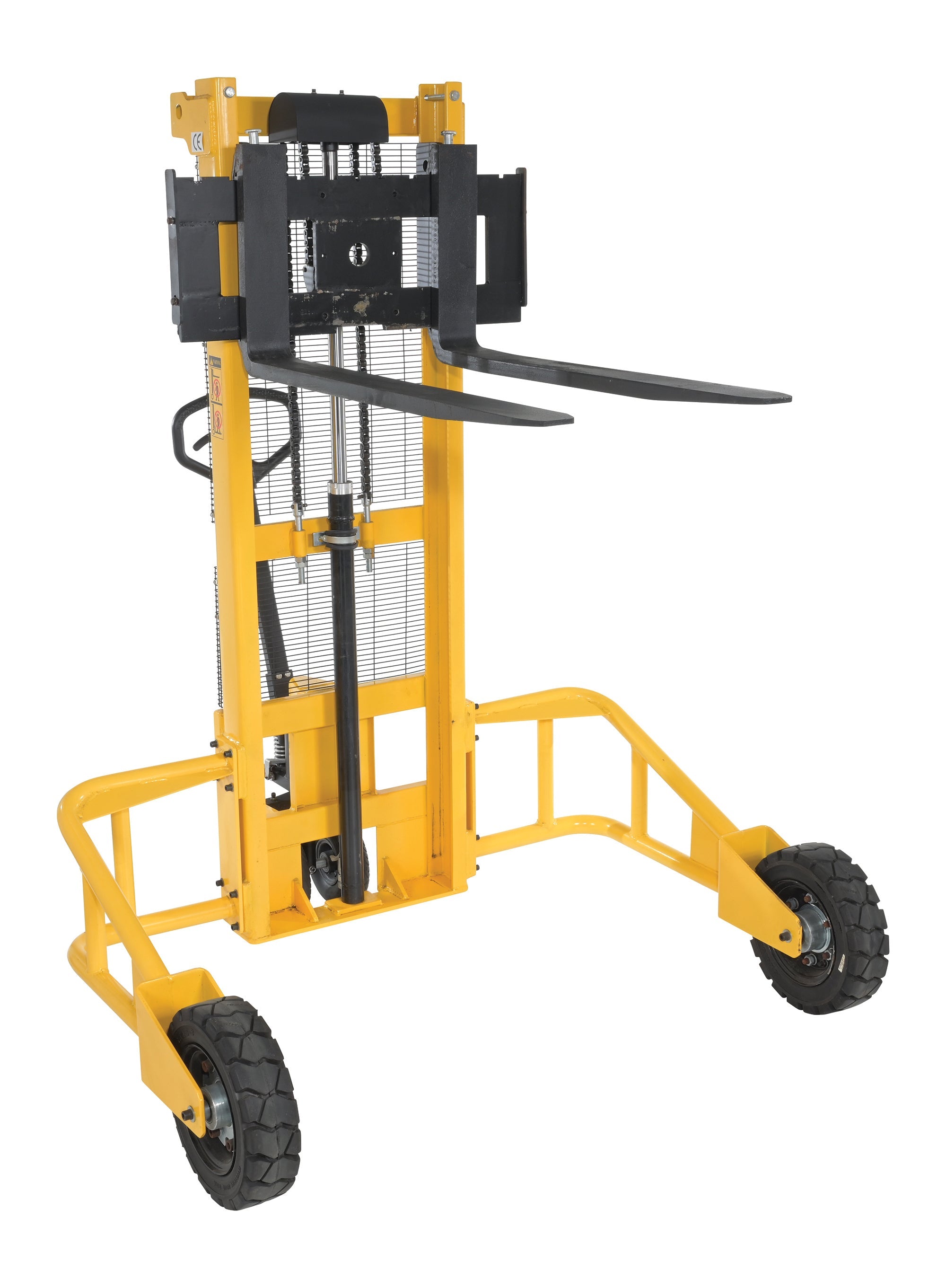
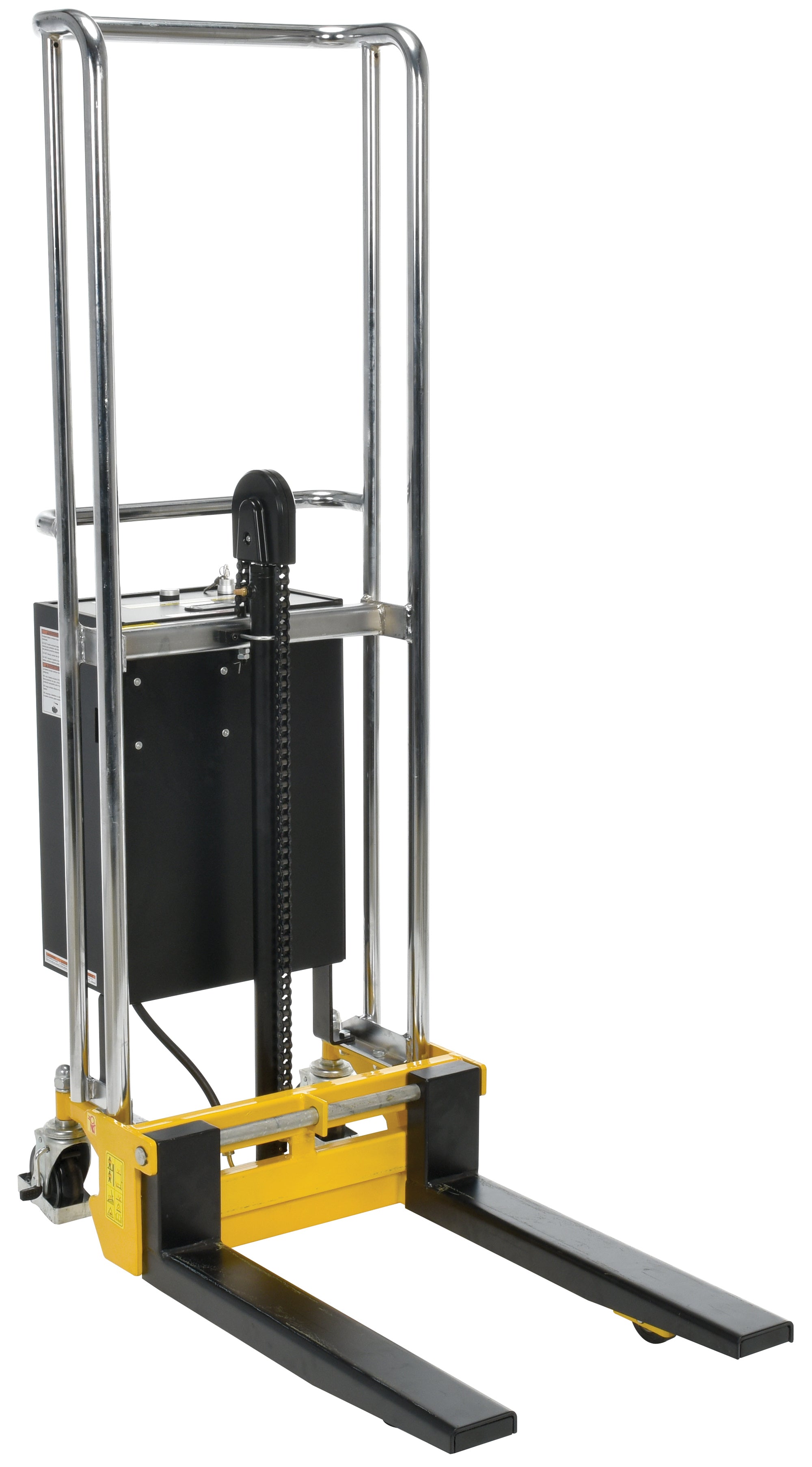
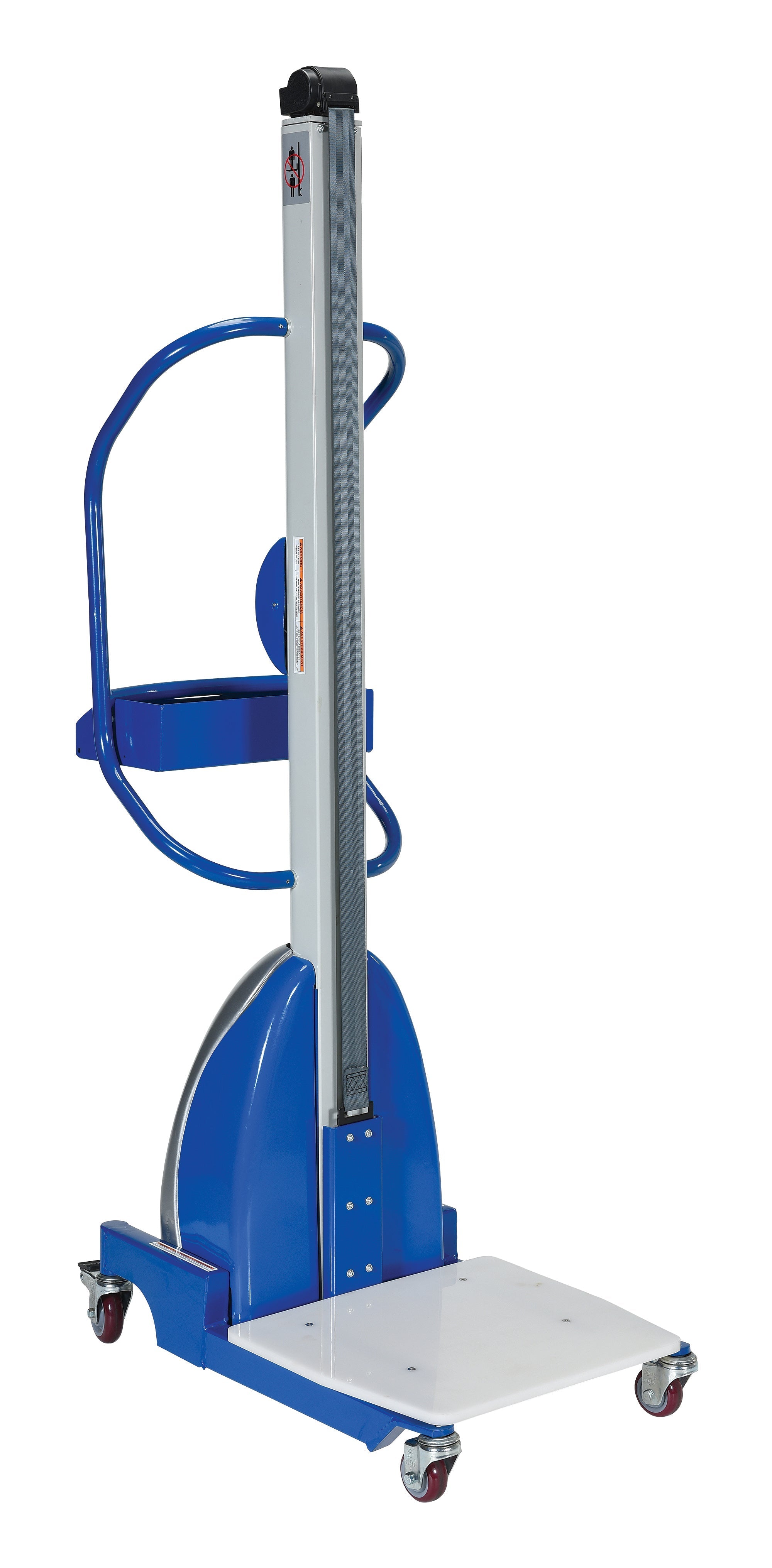
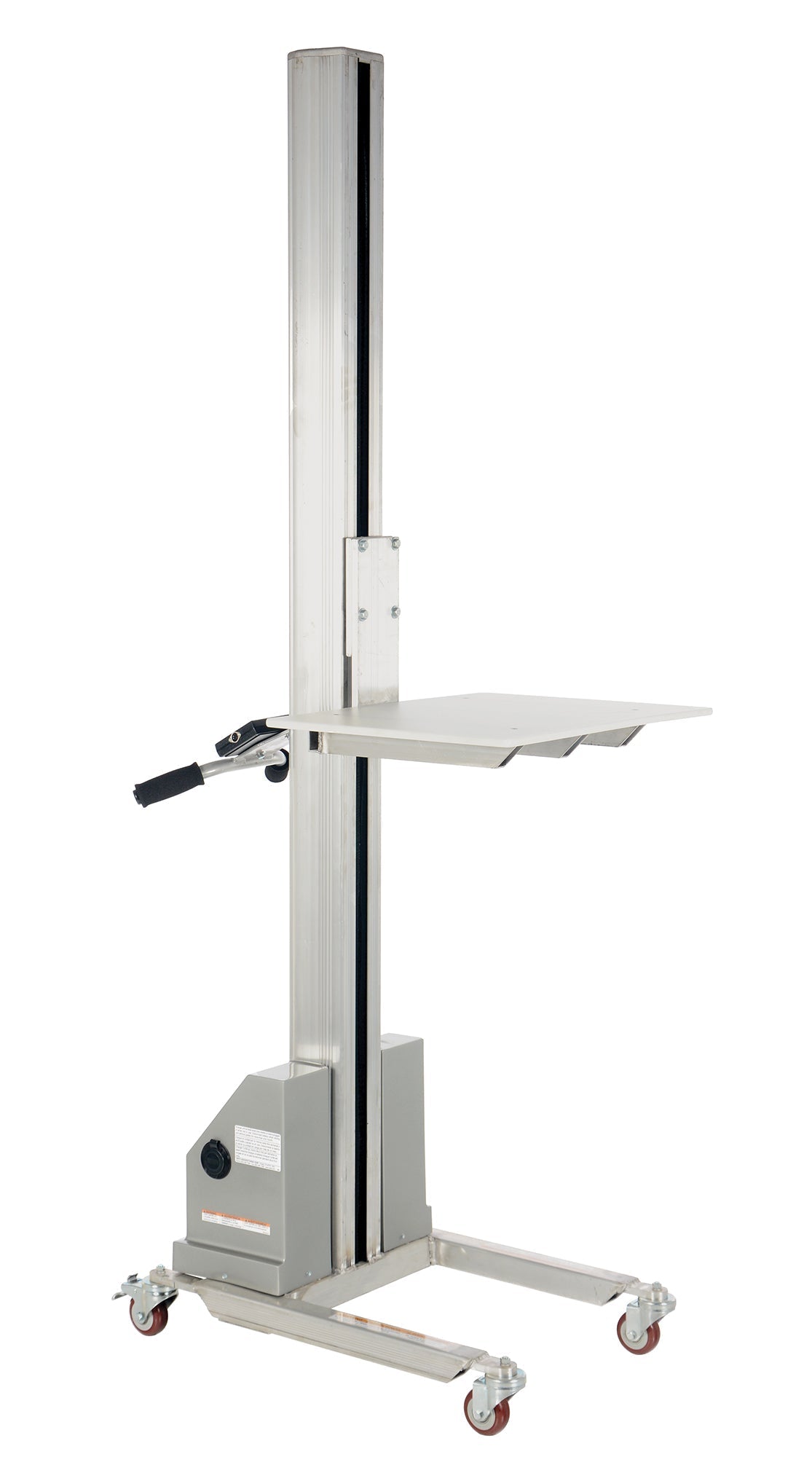
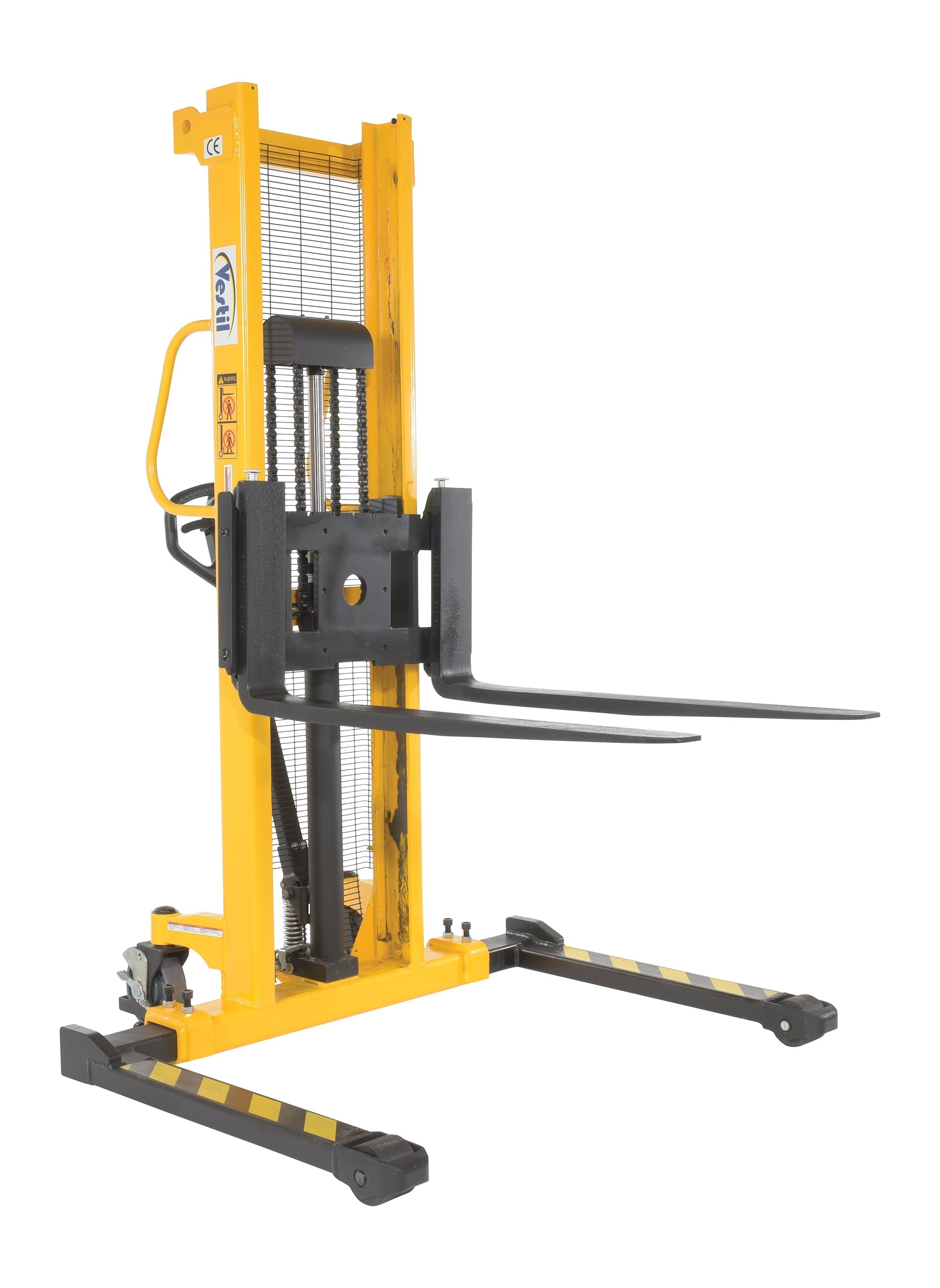
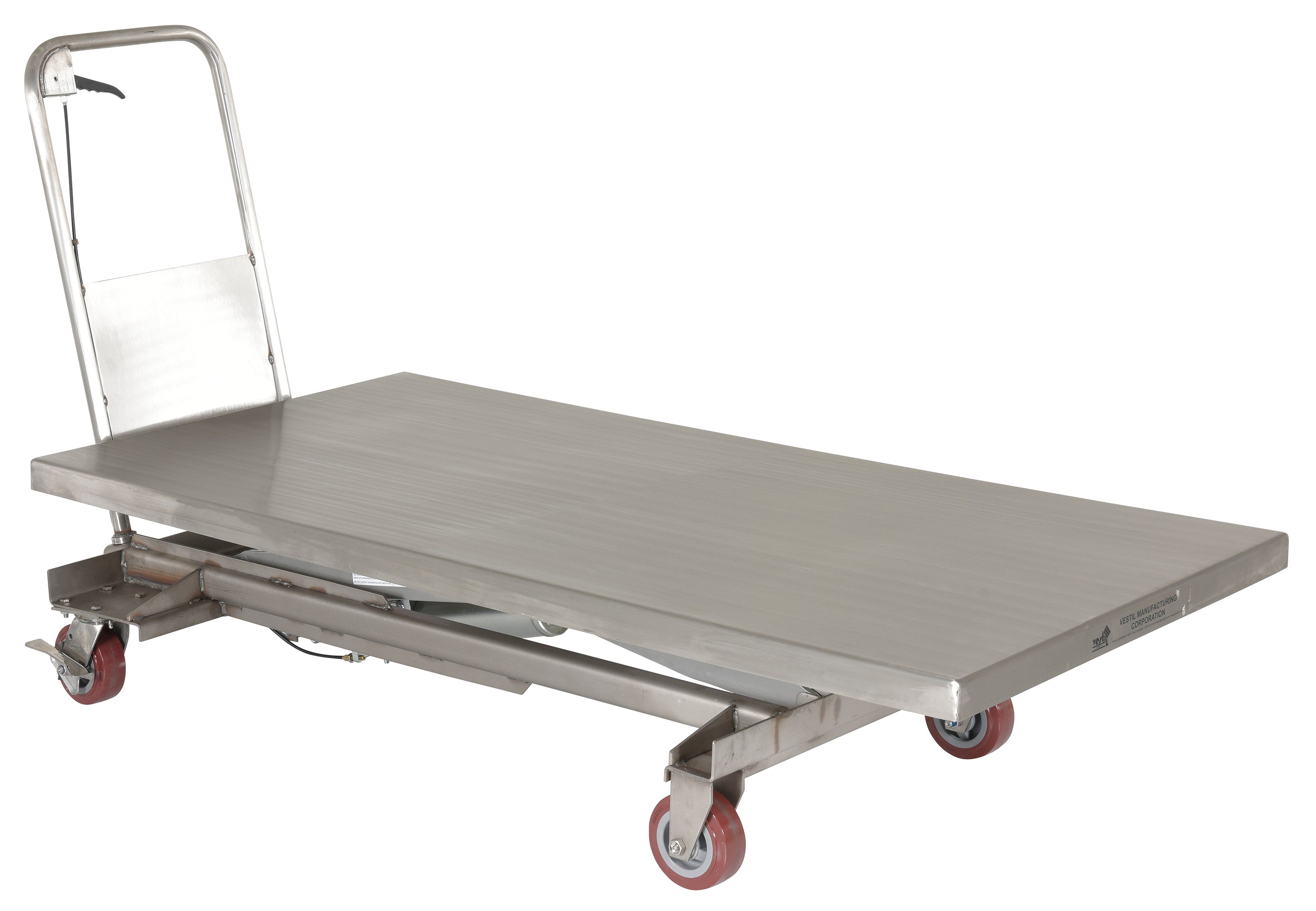
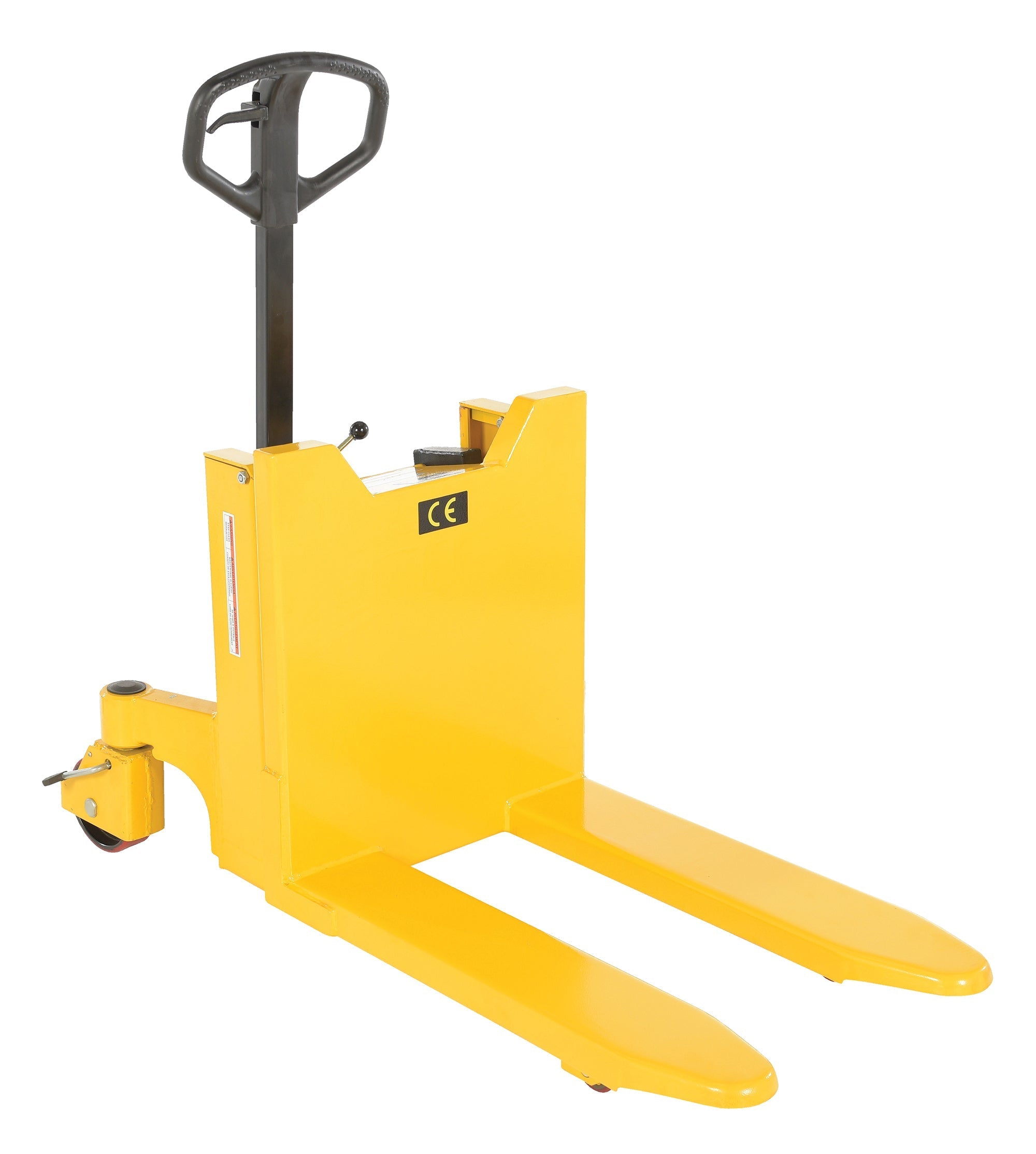
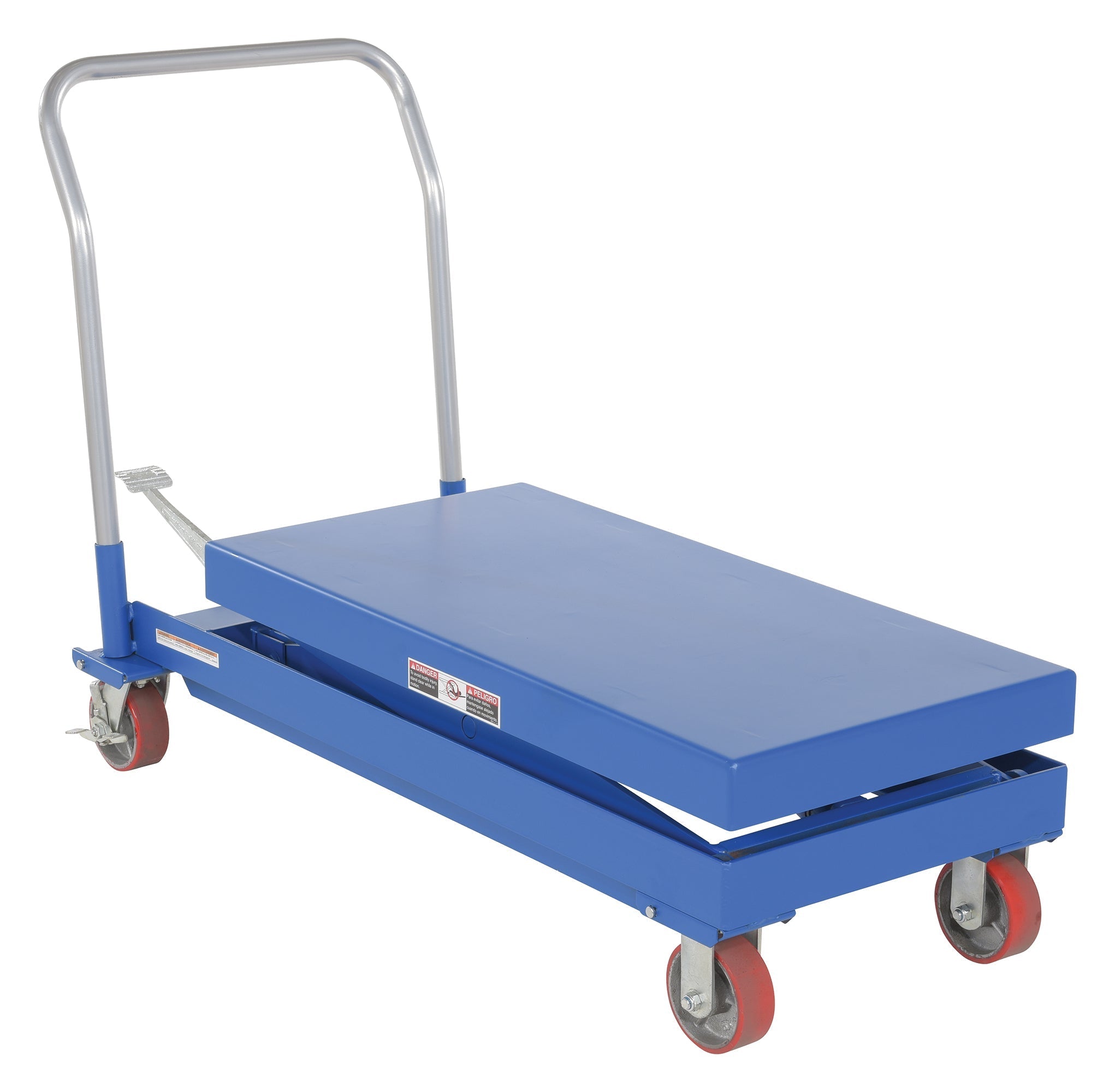
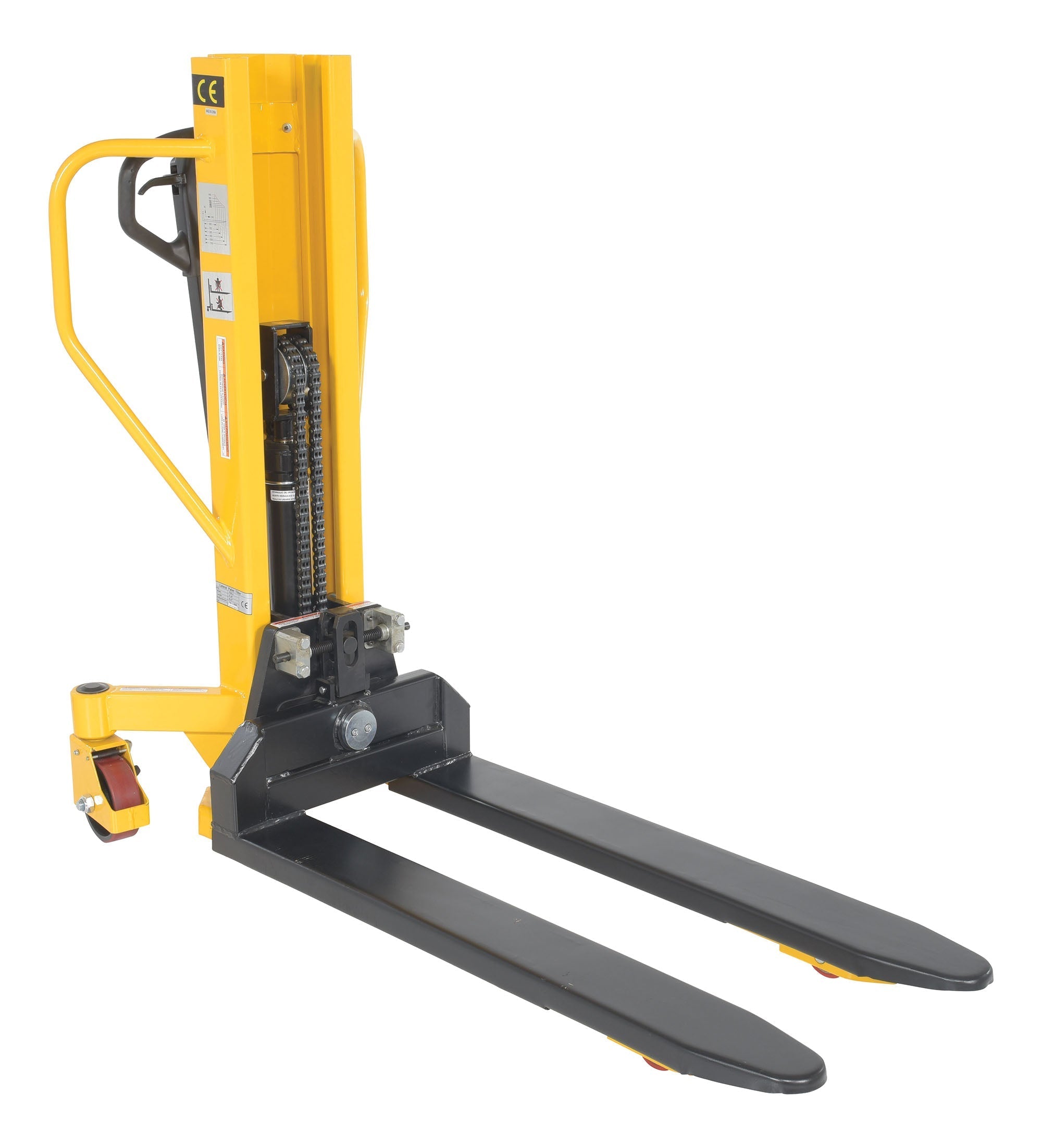
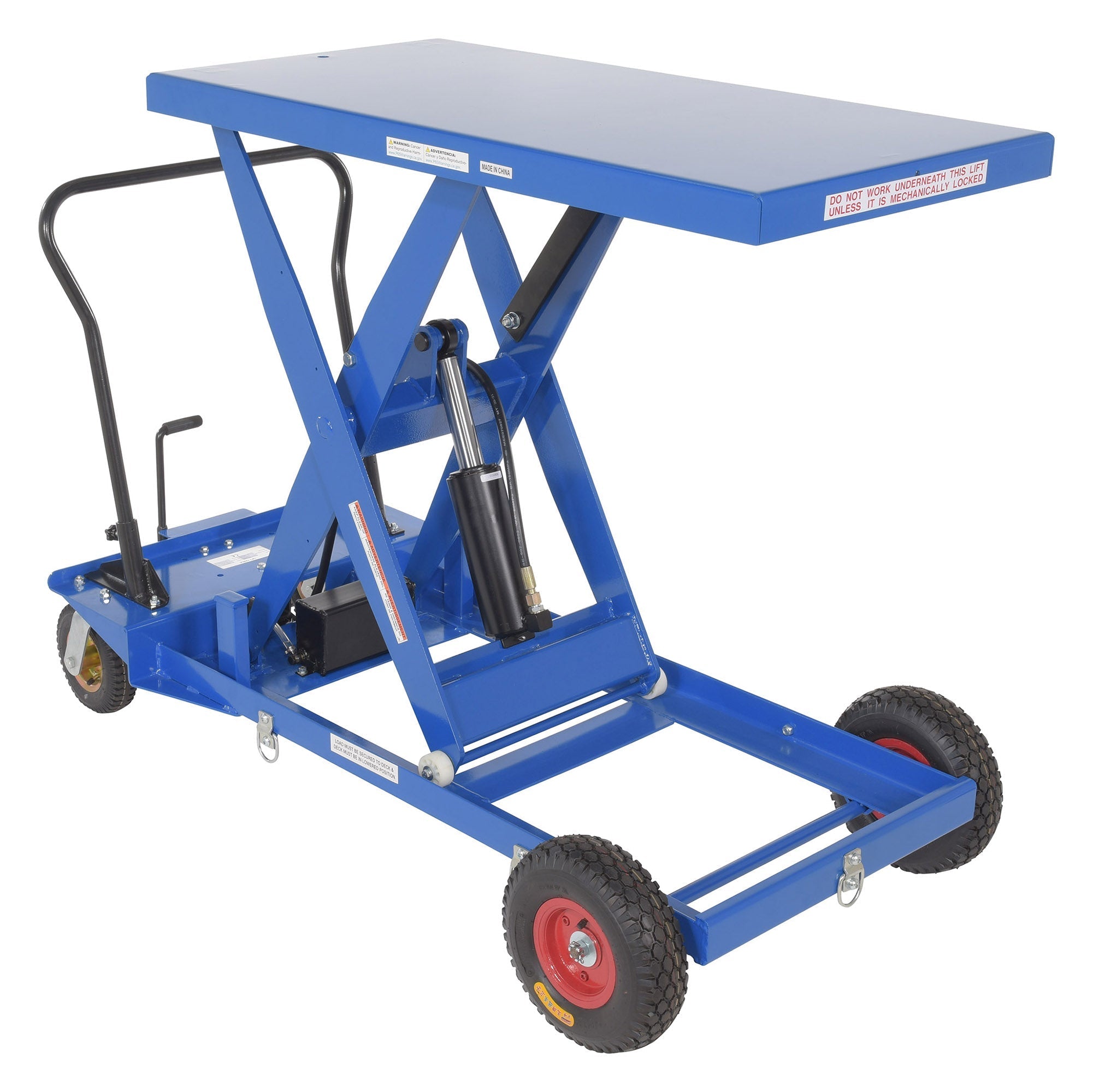
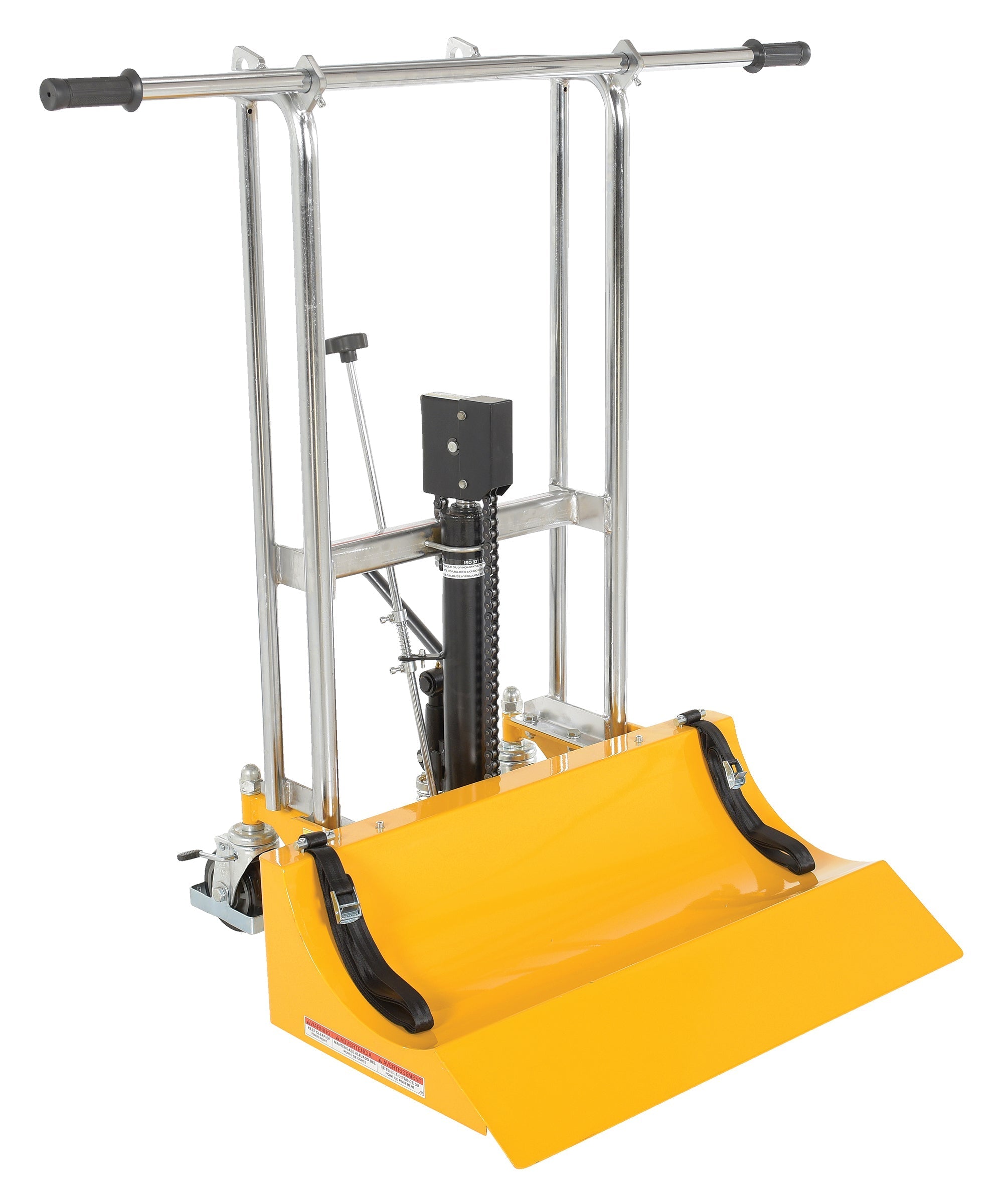
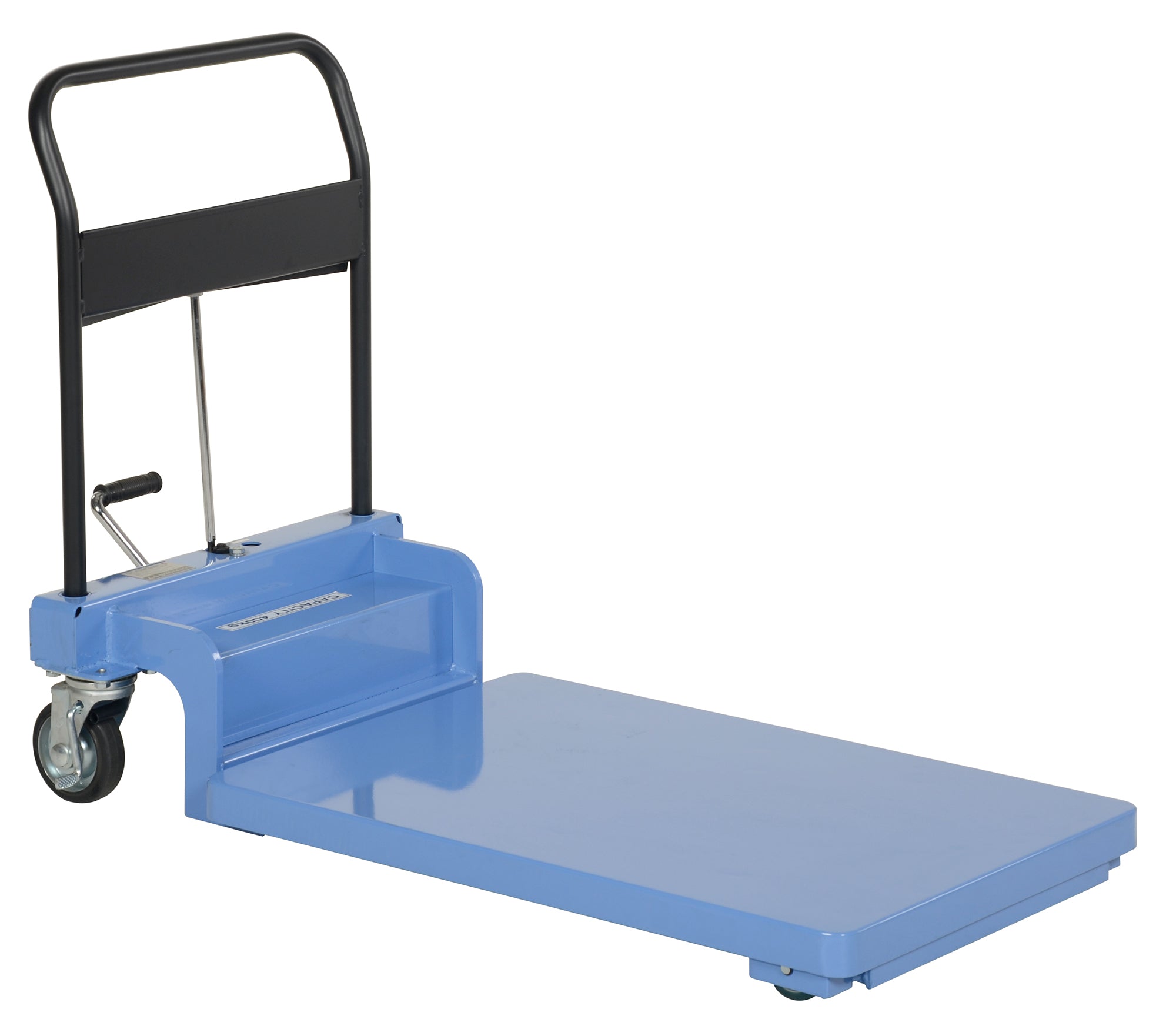
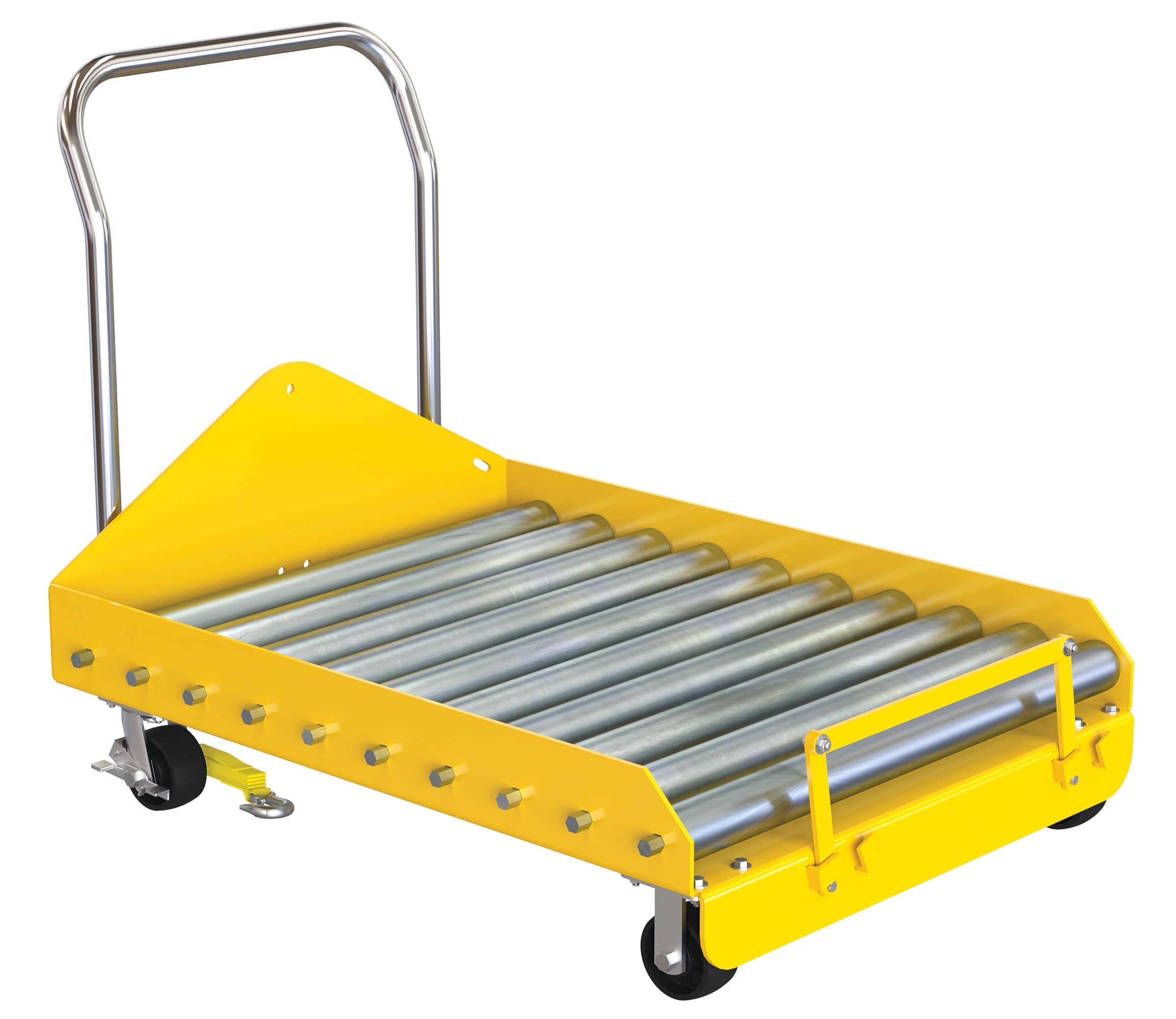
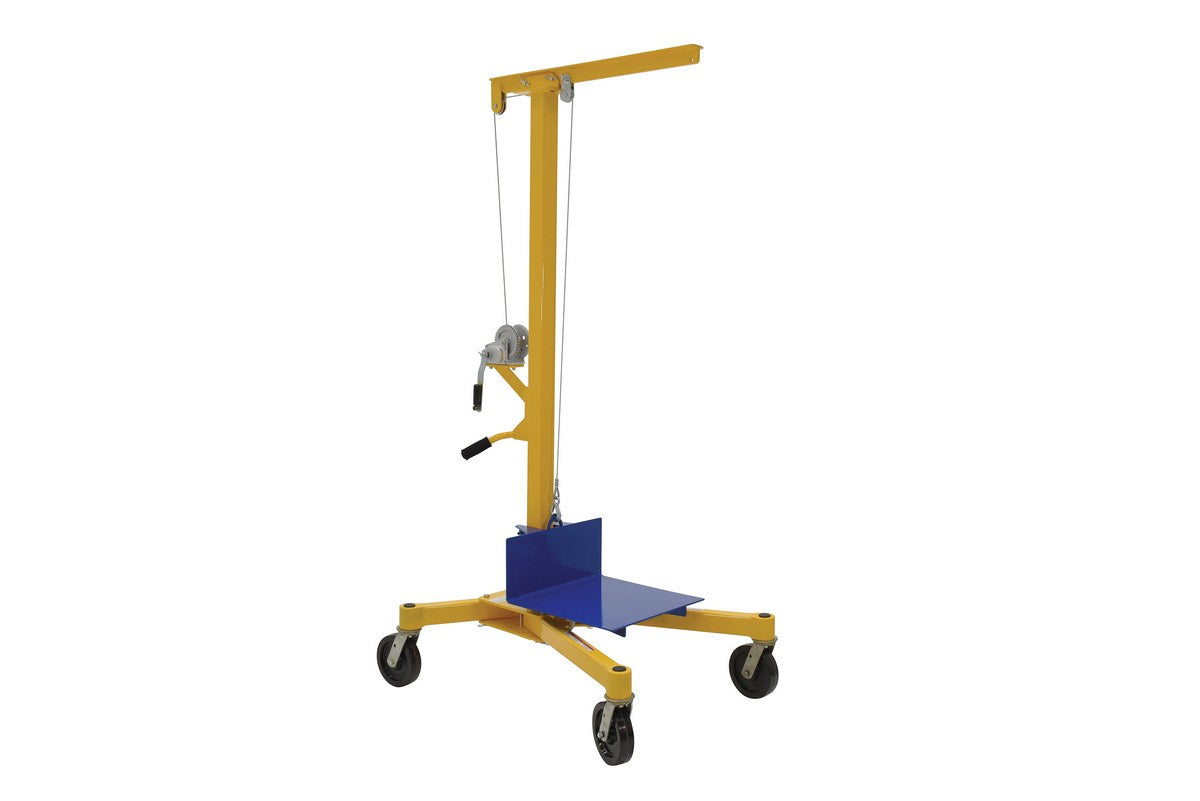
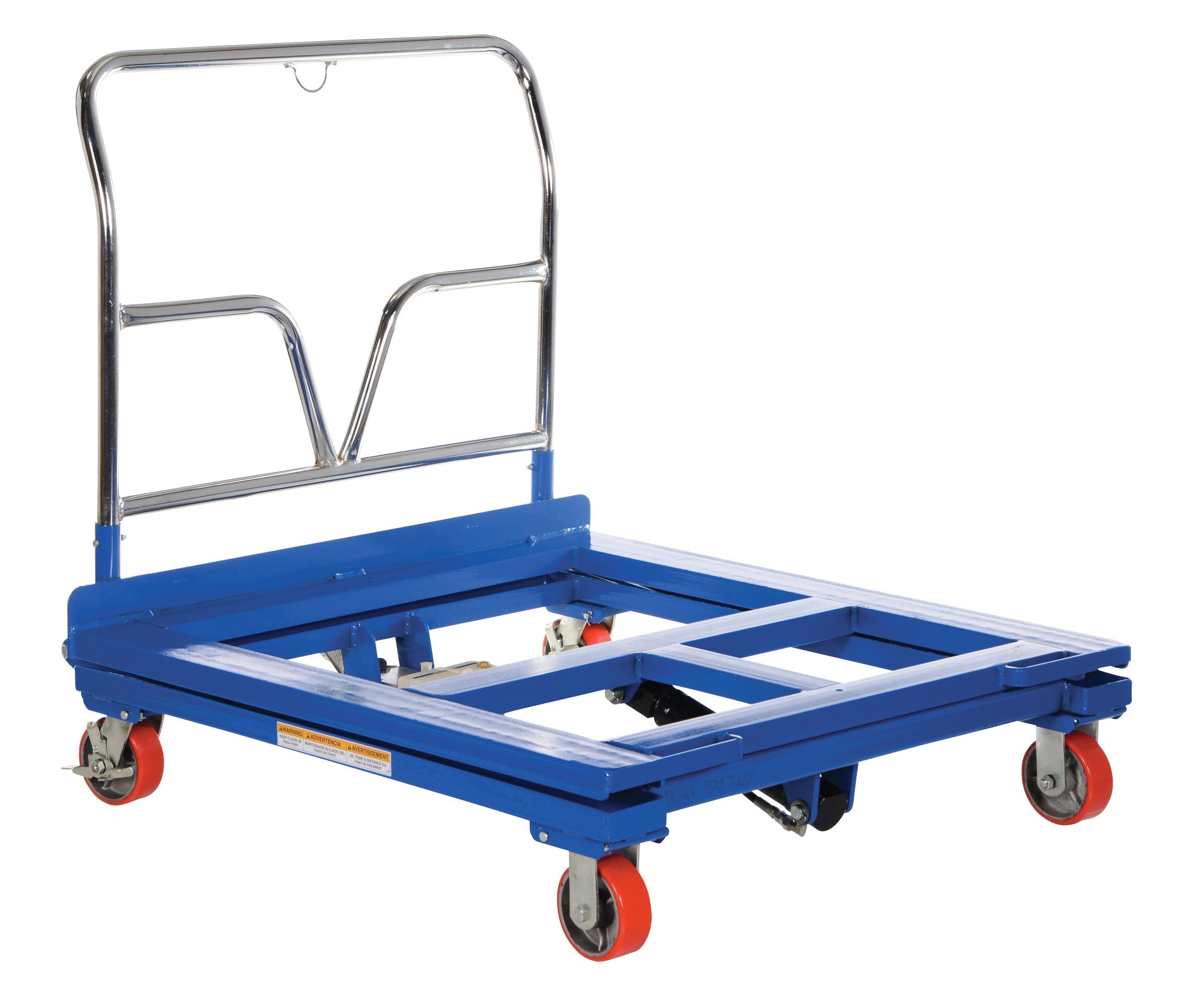
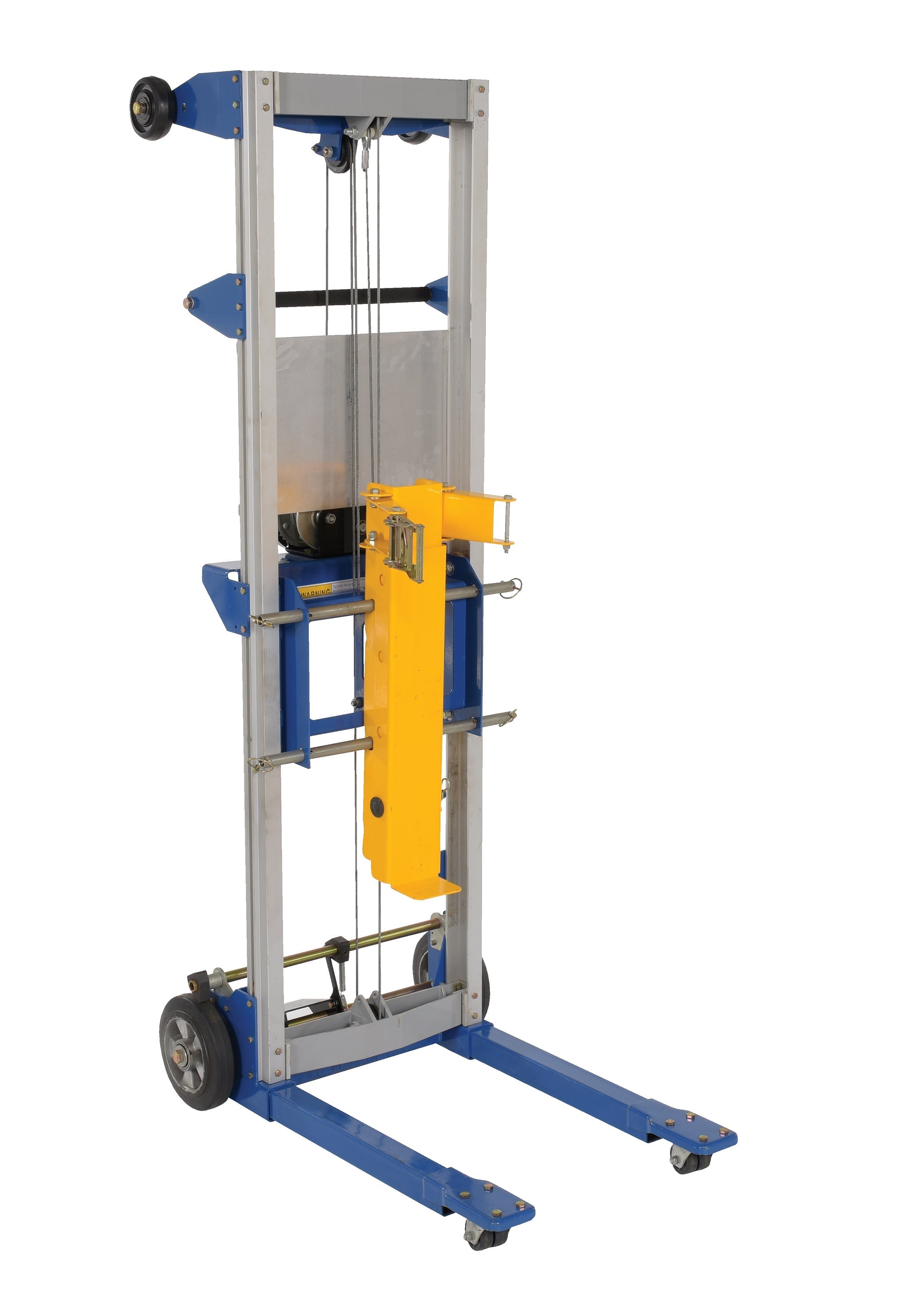
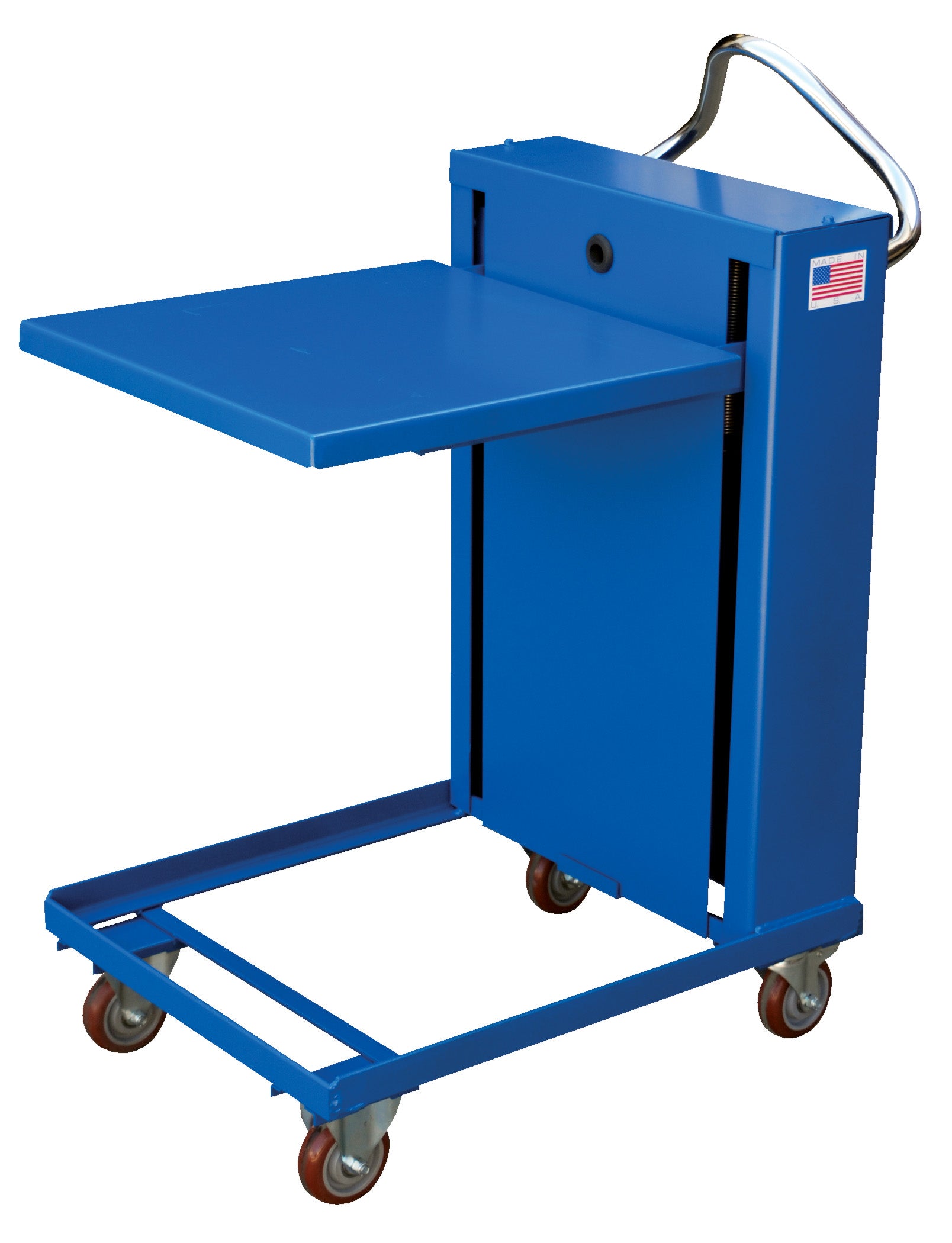
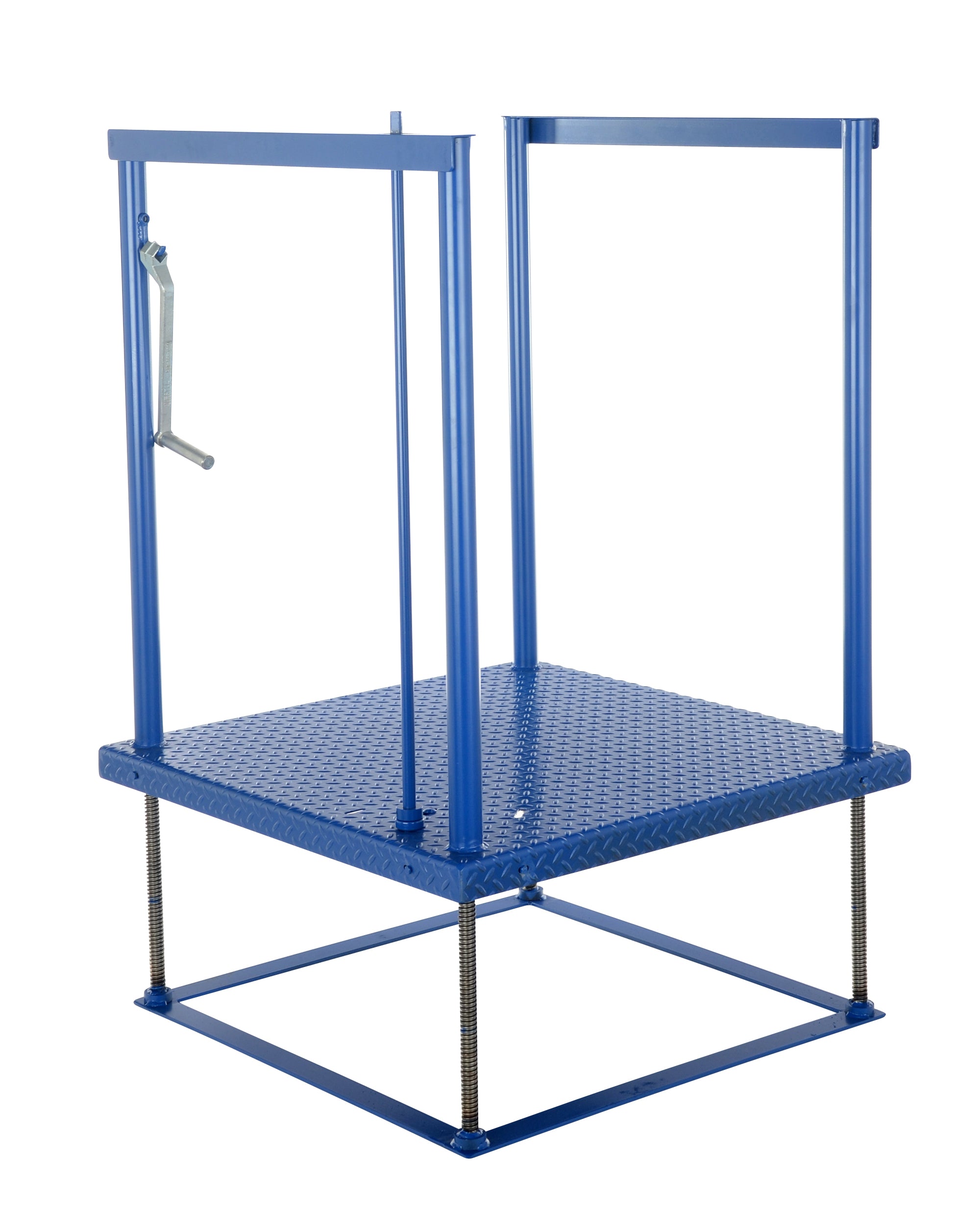
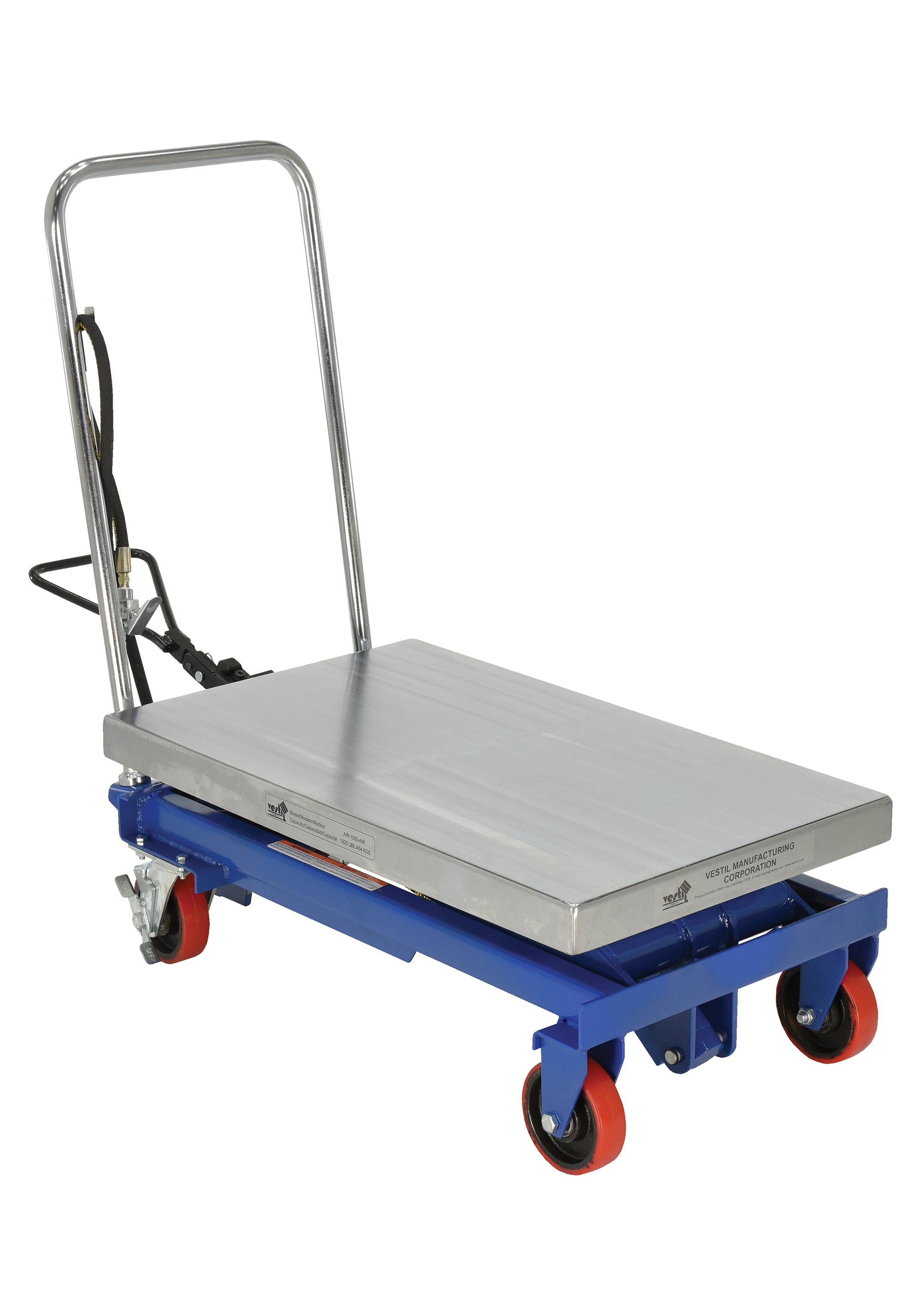
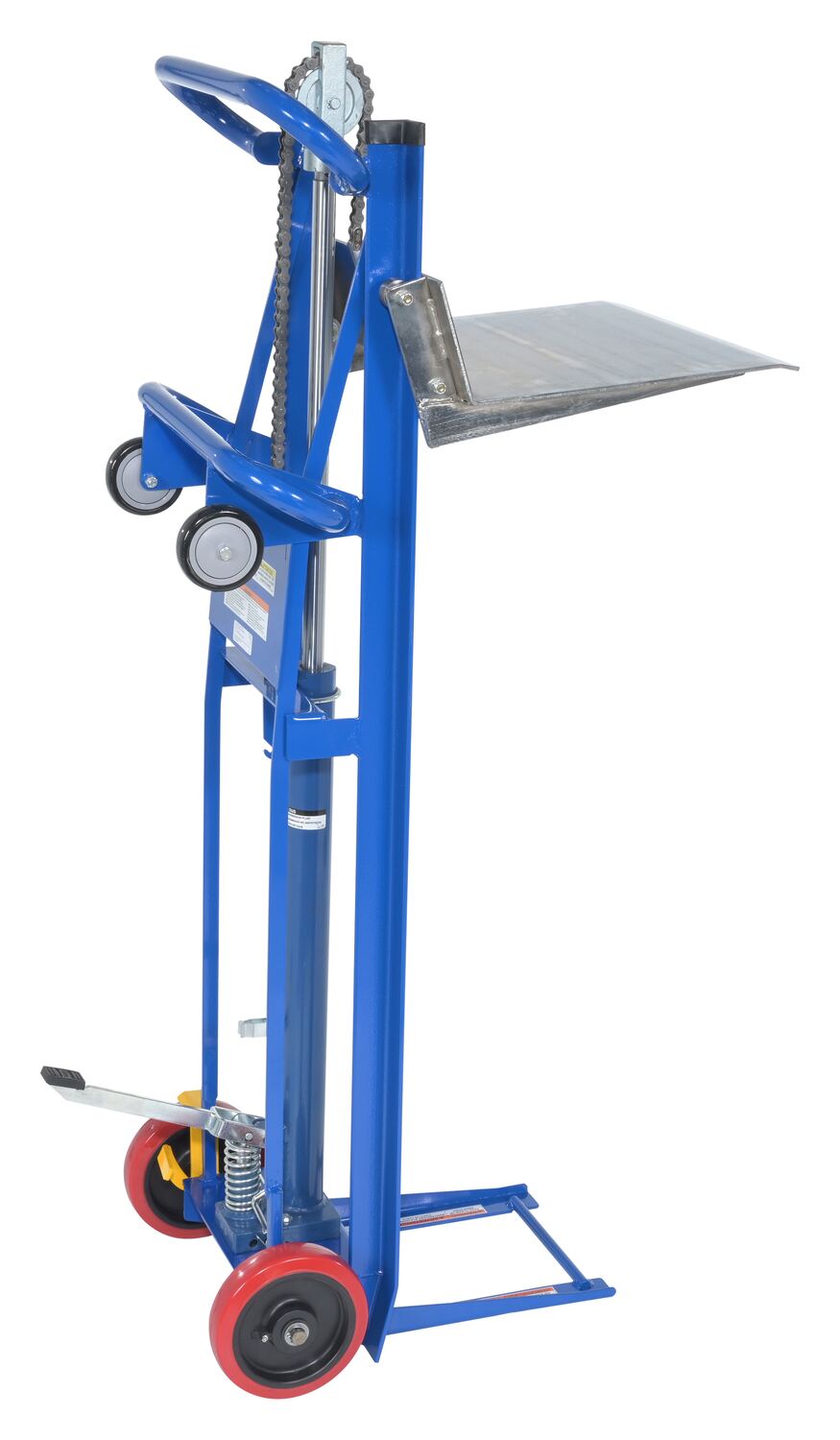
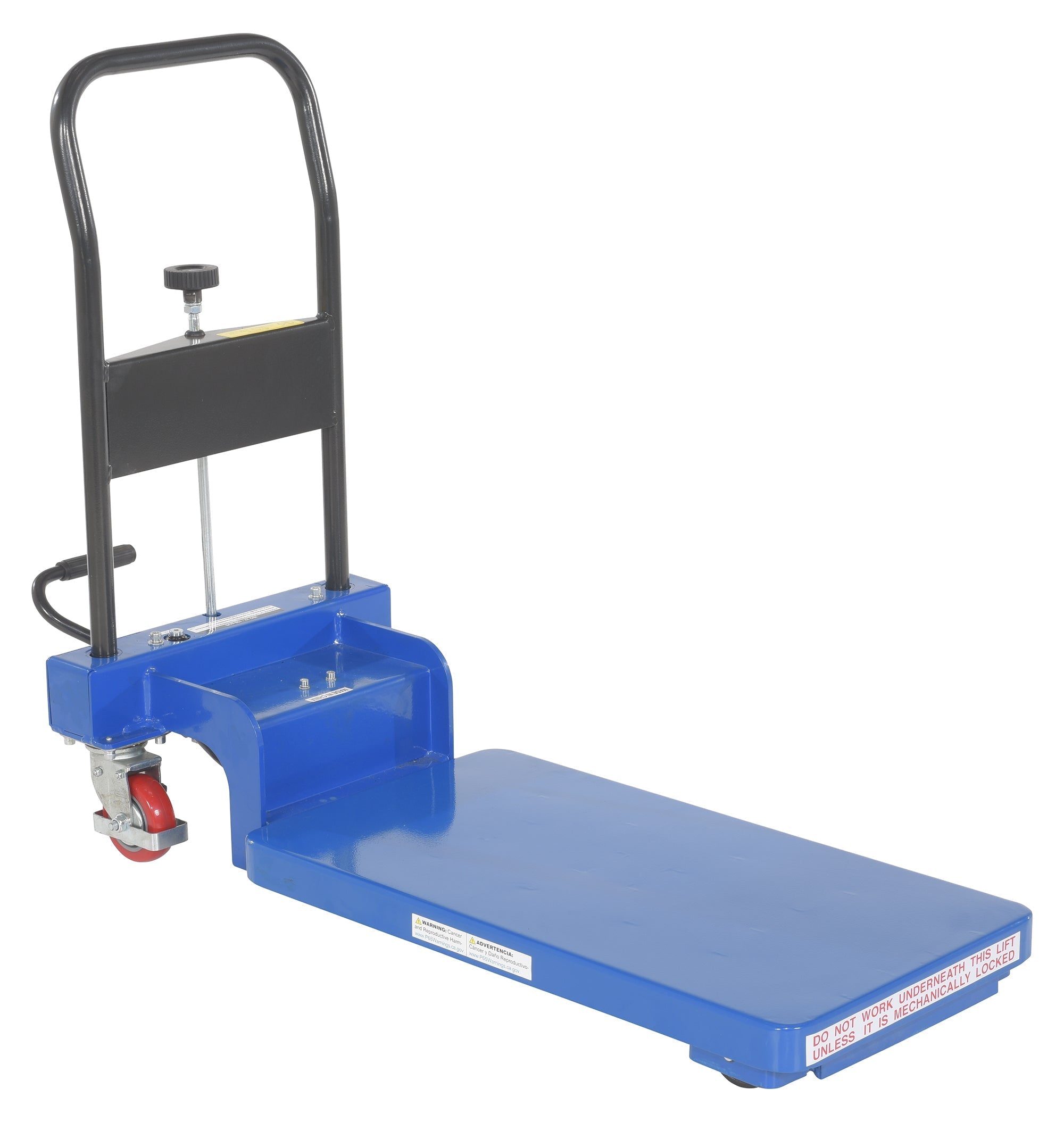
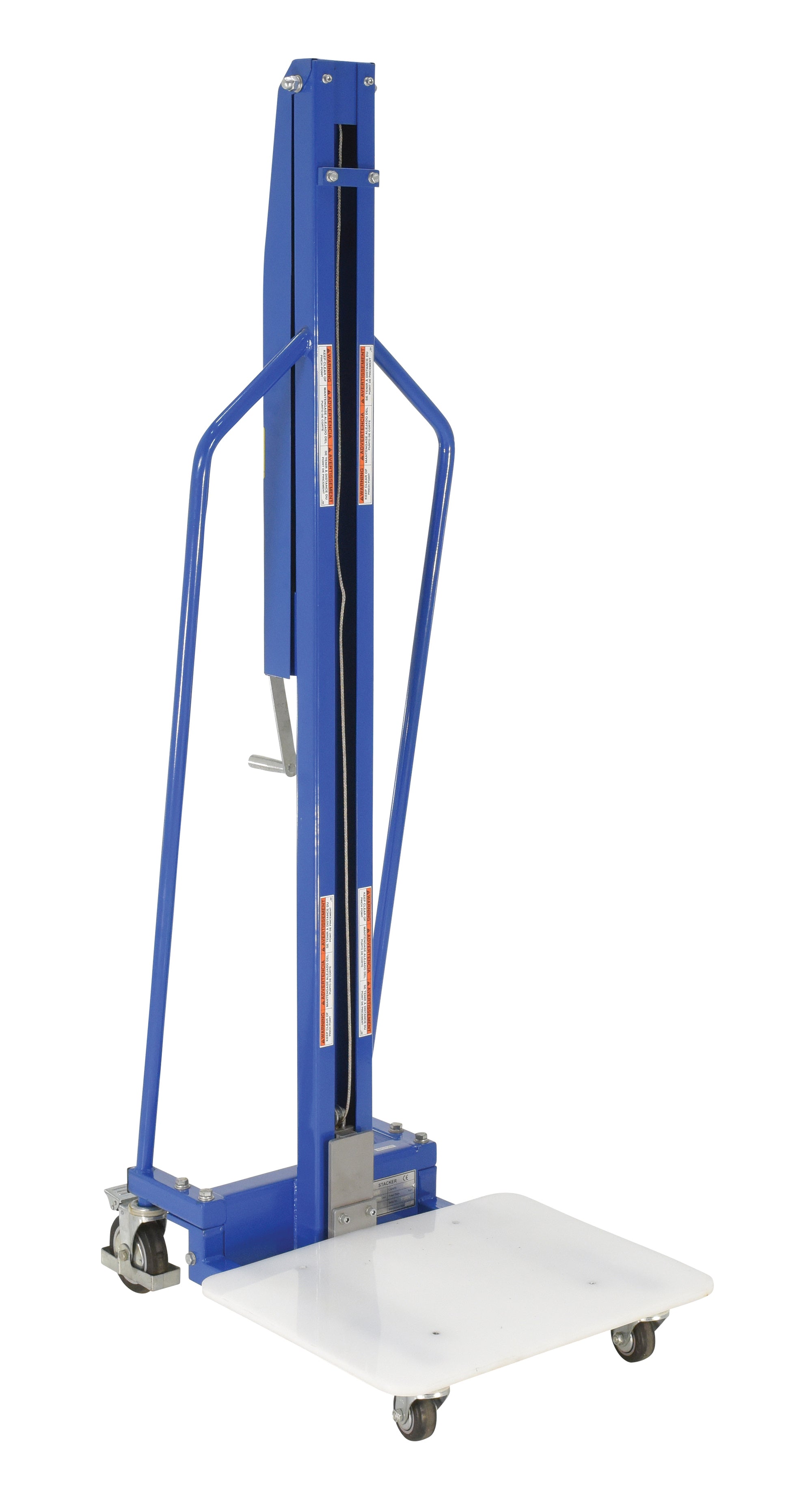
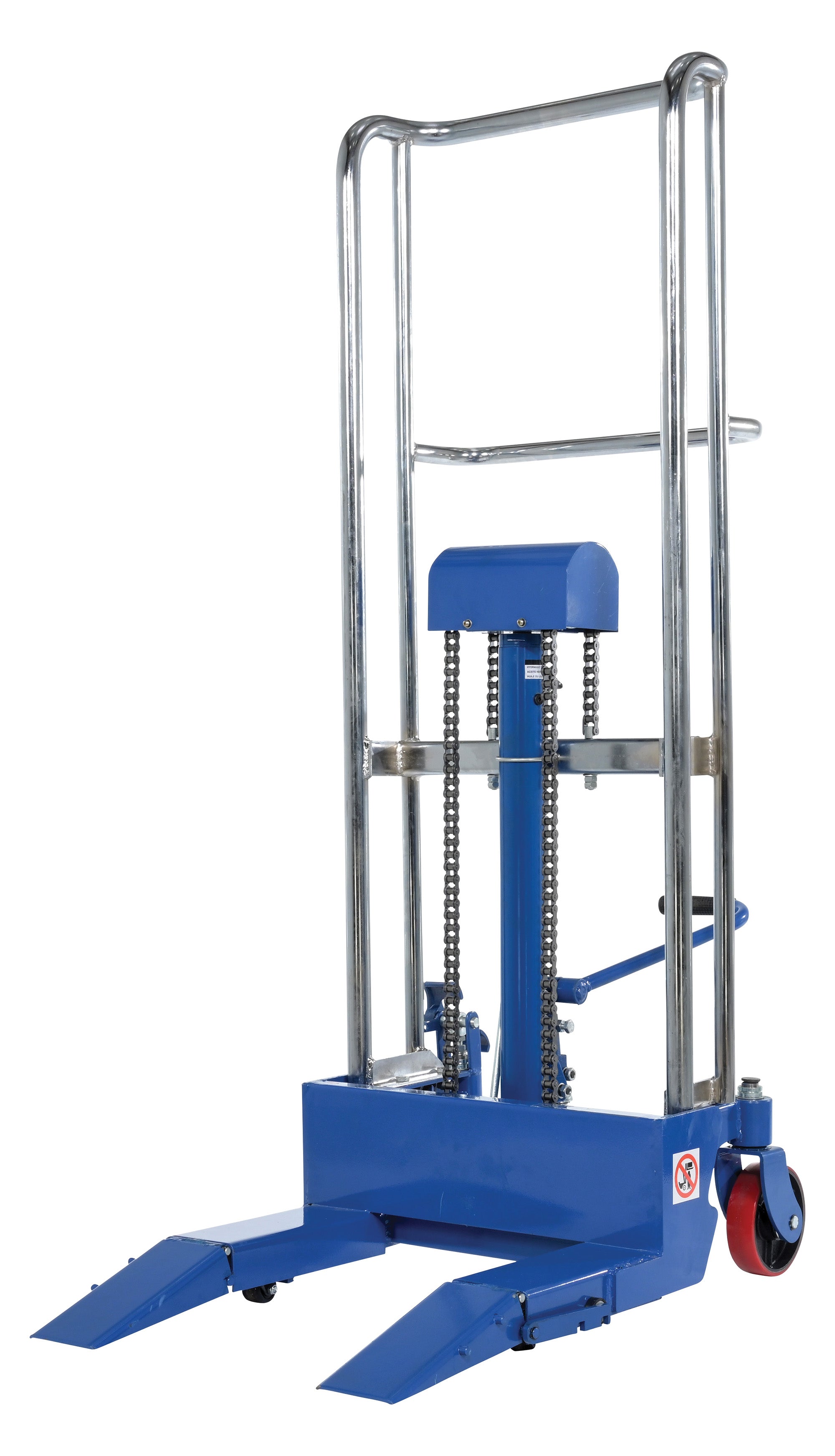
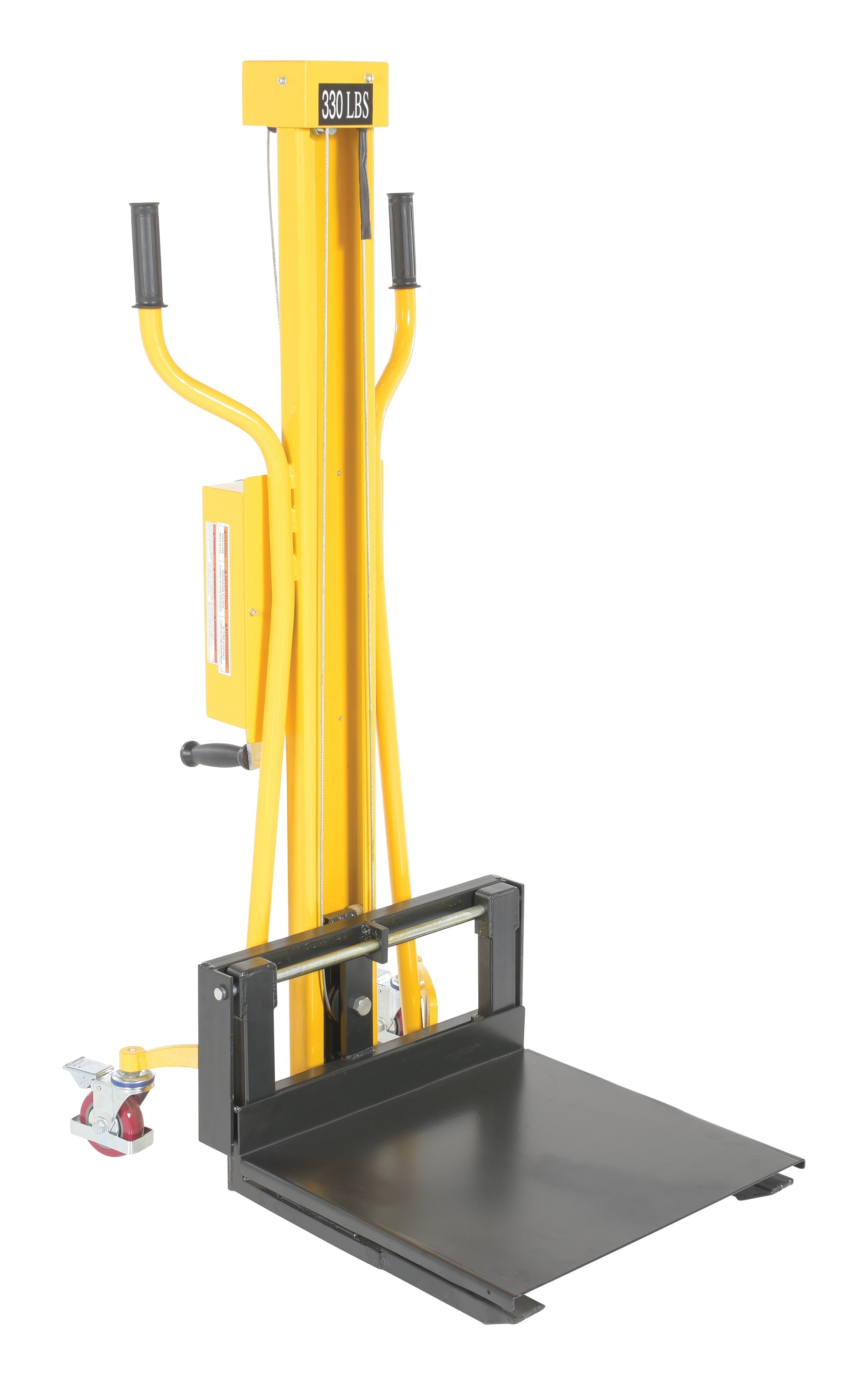
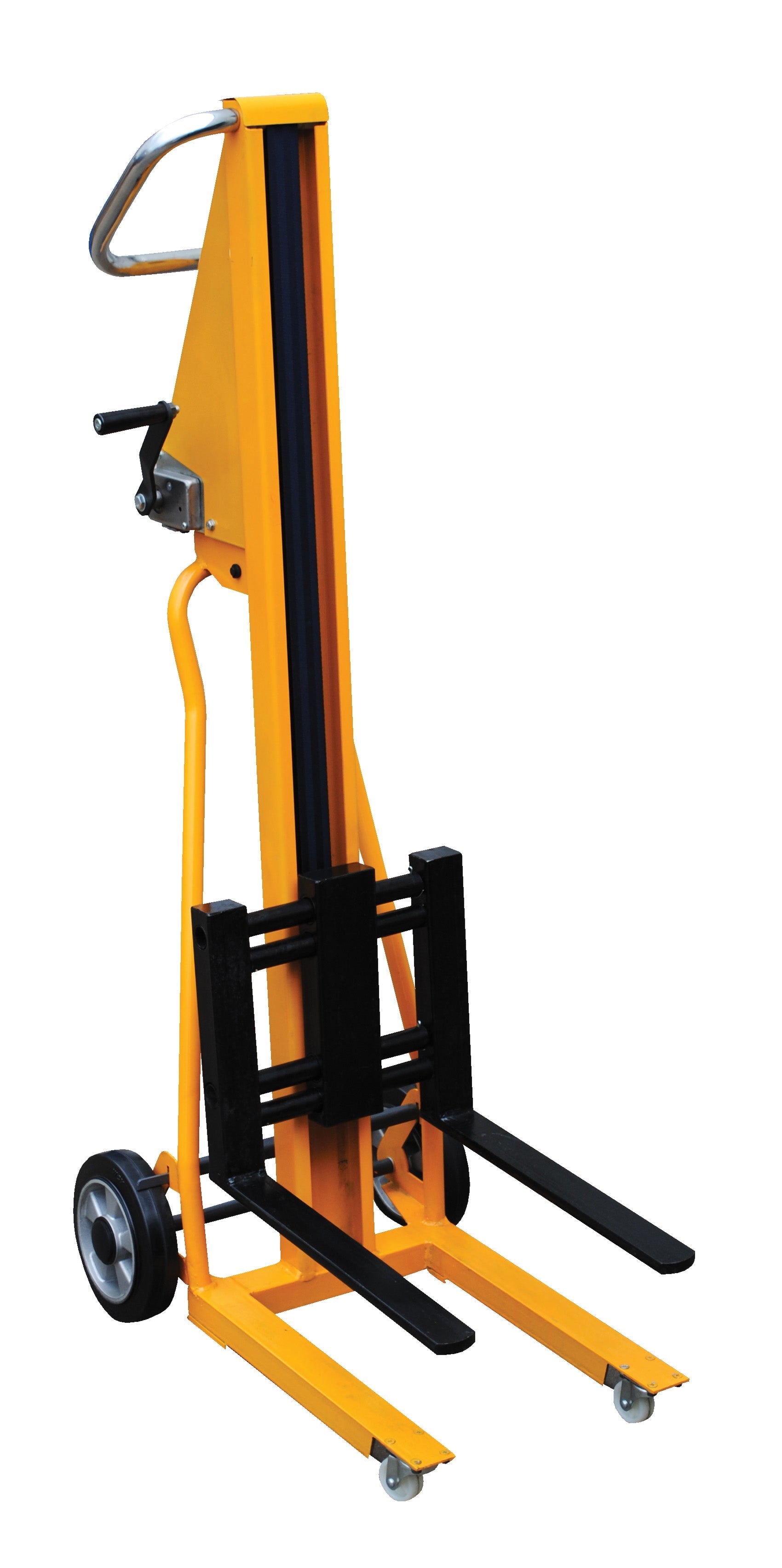
Carts, portable lifts, positioners, and platforms for everything else. The rest of the shelf handles the loads a fixed table cannot. Hydraulic lift carts combine a scissor deck with casters, so 200 to 4,000 lb rises and rolls in one unit, in steel or aluminum, from about $363. Portable material lifts go where there is no permanent station at all: a portable mini stacker at 260 lb, DC-powered Hefti-Lifts at 550 and 880 lb, and hand-winch and worksite lifters for the jobs a forklift cannot reach, most under $1,600. Work positioners handle the odd shapes, roll lifters and roller stands and mobile tilting work tables that hold a reel, roll, or single part at the right height and angle, some starting under $100. And when the fix is raising the person, the crank-up Posi-Crank units and add-a-level steps in worker platforms give a stable elevated stand instead of a ladder.
Size the capacity, the platform, and the raised height together. Three numbers decide whether a table fits, and buyers usually check only the first. Capacity is the easy one: total the heaviest load the deck will ever carry and buy the next rating up, the same margin discipline you use on any lifting gear. Platform size is where mistakes hide, because a load that overhangs the deck shifts the center of gravity and can tip a table that is well within its weight rating. Measure your largest load and pick a platform that fully supports it, not one it hangs off. Raised height is the third: a scissor gives you long vertical travel, a post table gives you less, and a cart or portable gives you less still. Decide the pick-and-place heights the job actually needs, confirm the collapsed height clears your loading method, and only then compare prices. Freight and lead time on these units are confirmed at checkout, and every model is quotable for bulk orders.
Frequently Asked Questions
A scissor lift table raises its deck on a folding scissor mechanism and gives you long vertical travel, which is why it is the default for jobs that need a big rise. A post table raises the deck on a single central hydraulic post, so it has an open underside with no scissor legs in the way and a very low collapsed height, but it lifts less far. Choose the scissor for reach and the post table for low, tight, open-access work like feeding dies onto a press.
Yes. Industrial scissor lift tables fall under ANSI MH29.1, the standard that defines dock lifts, work access lifts, and lift tables as the three categories of industrial scissors lifts and sets the safety requirements for each. Keep the scissor mechanism guarded, use the maintenance prop when working under a raised deck, and keep feet and hands clear of a descending platform.
Total the heaviest load the deck will ever hold and buy the next rating above it. Then size the platform to fully support your largest load, because a load that overhangs the deck shifts the center of gravity and can tip a table that is still within its weight rating. Our scissor tables cover 1,000 to 12,000 lb and post tables 200 to 6,000 lb, with platforms from 16 inches square up to 48 by 96 inches.
It is a spring-actuated table that keeps the top of a hand-built pallet near waist height. Calibrated springs compress as boxes are loaded and rebound as they are removed, so workers stop bending to the deck and reaching overhead. The spring models need no electric or air hookup at all, which makes them cheap to drop anywhere on the floor. Turntable versions also spin the load so you load from one spot instead of walking around the pallet.
Yes. Hydraulic lift carts put a scissor deck on casters so a 200 to 4,000 lb load rises and rolls in one unit. Portable material lifts, including mini stackers, DC-powered Hefti-Lifts, and hand-winch lifters, handle lighter loads where there is no permanent station and no forklift access. Match the caster and wheel type to your floor, and check whether the unit is rated to move under load or only when lowered.
Manual foot-pump and crank tables cost less, need no power drop, and suit low-cycle work where a lift happens a few times a shift. DC-powered and electric hydraulic tables earn their higher price when the same lift repeats all day, because pumping a foot pedal dozens of times per hour becomes its own fatigue and injury problem. Base the decision on duty cycle: occasional lifts favor manual, continuous use favors powered.