Harrington Chain Hoists
A Harrington chain hoist is a powered lifting machine from the brand American riggers and maintenance crews reach for first, and this collection gathers the full Harrington powered line under one page. It runs from the compact 120V ED that lifts a light jig off a bench, through the three-phase ER and NER production hoists that hang under crane bridges and monorails all day, to air-powered Cheetah and lube-free models for continuous-duty and spark-sensitive work, plus the KREWMATE entertainment hoists rigged over stages and arenas. Capacities span a quarter-ton mini up to 20 tons on multiple falls of chain, and prices run from mid-four-figure single-phase units to motorized-trolley machines past forty thousand dollars. Every model here suspends off a hook, a push trolley, a geared trolley, or a motorized trolley, and the guide below takes the buying decision in the order that matters: capacity and duty first, then power, then how it hangs.
Compare Harrington Motorized Hoists
| Model | Price | Capacity | |
|---|---|---|---|
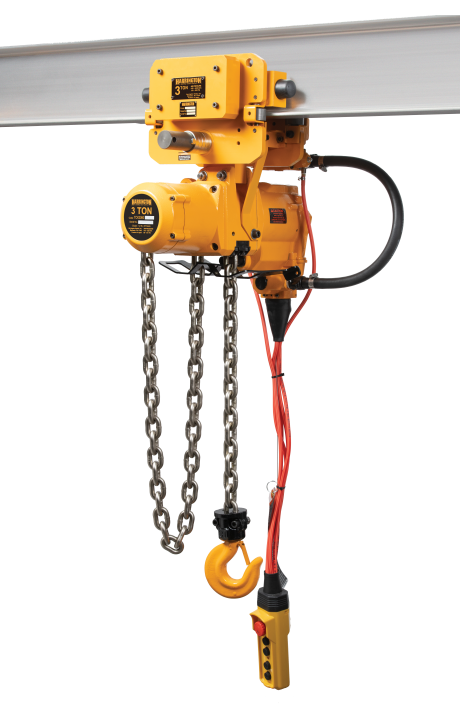
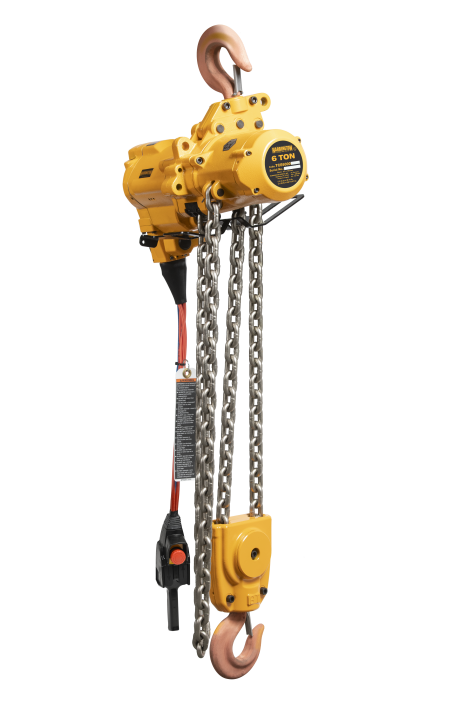
| Harrington TCKM Air Powered Trolley Hoist | $15,624 | 3-6 ton | View → |
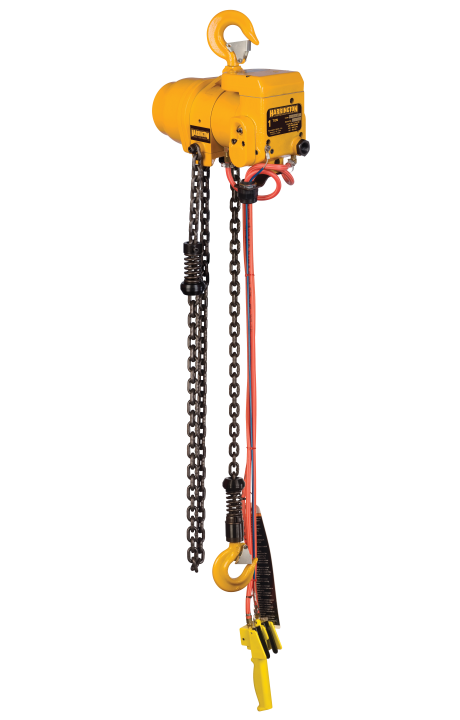
| Harrington TCK Hook Mount Air Hoist | $10,407 | 3-6 ton | View → |
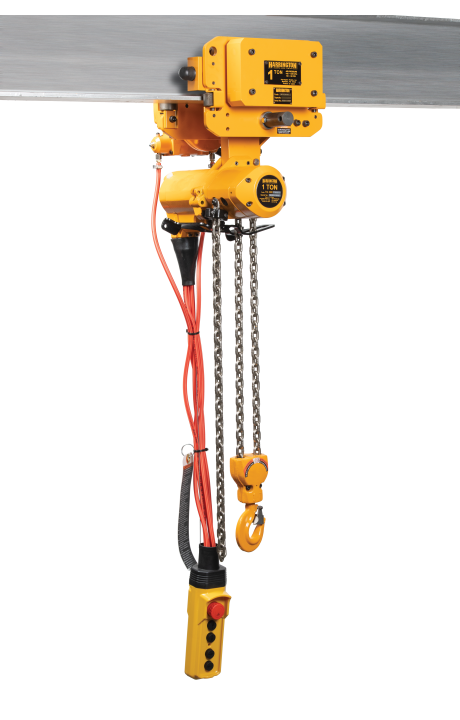
| Harrington TCRM Air Powered Trolley Hoists | $10,390 | 1/4-2 ton | View → |
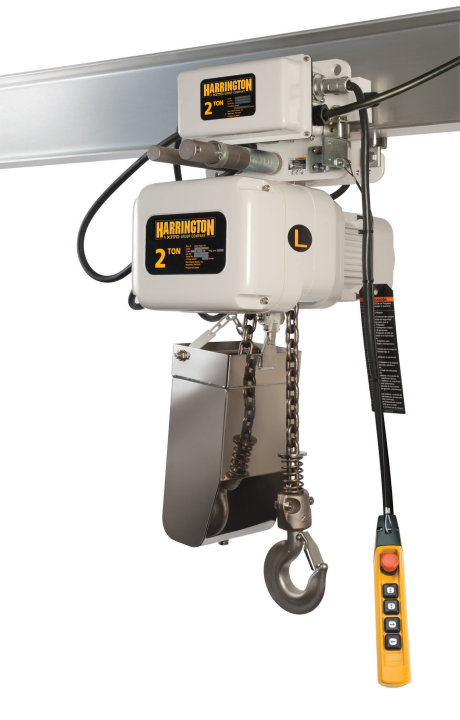
| Harrington NERM-FG Motorized Trolley Food Grade Electric Chain Hoist | $10,335 | 1/4-2 ton | View → |
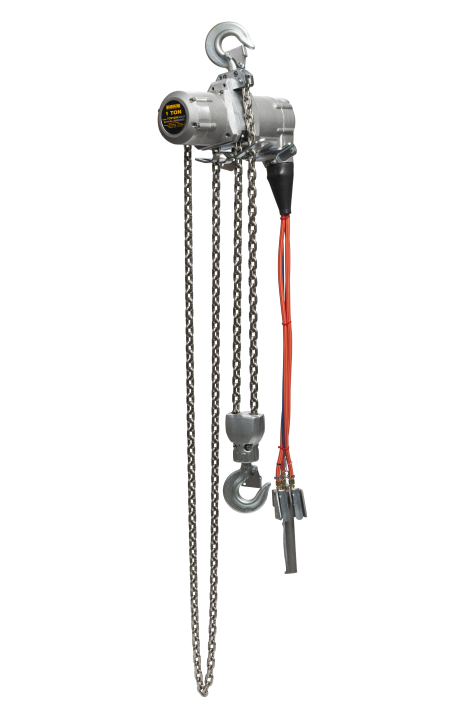
| Harrington TCLM Lube-Free Air Powered Trolley Hoists | $10,050 | 1/4-6 ton | View → |
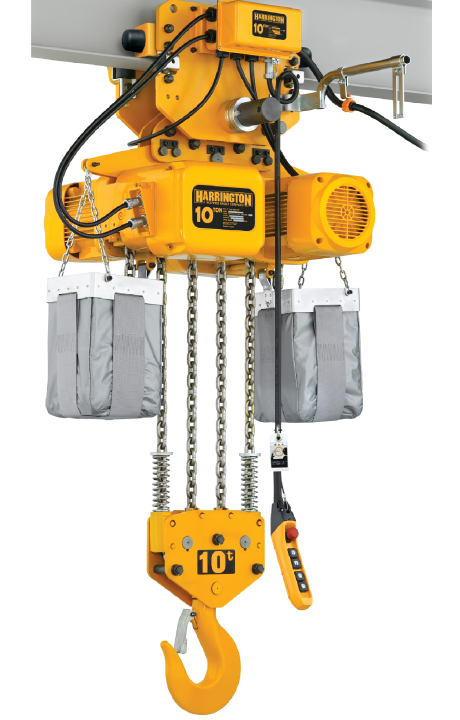
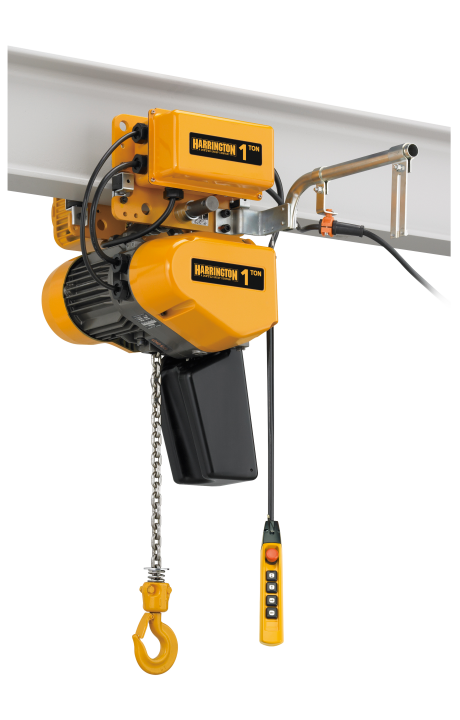
| Harrington ERM 3Ph Motorized Trolley Electric Chain Hoist | $8,525 | 1/8-20 ton | View → |
 In Stock
 In Stock
 In Stock
 In Stock
 In Stock
 In Stock
 In Stock
 In Stock
 In Stock
 In Stock
 In Stock
 In Stock
 In Stock
 In Stock
 In Stock
 In Stock
 In Stock
 In Stock
 In Stock
 In Stock
 In Stock
 In Stock
 In Stock
 In Stock
 In Stock
 In Stock
 In Stock
 In Stock
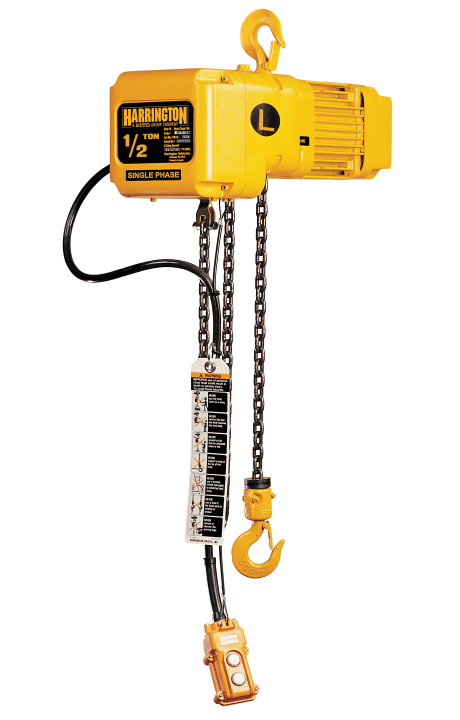 In Stock
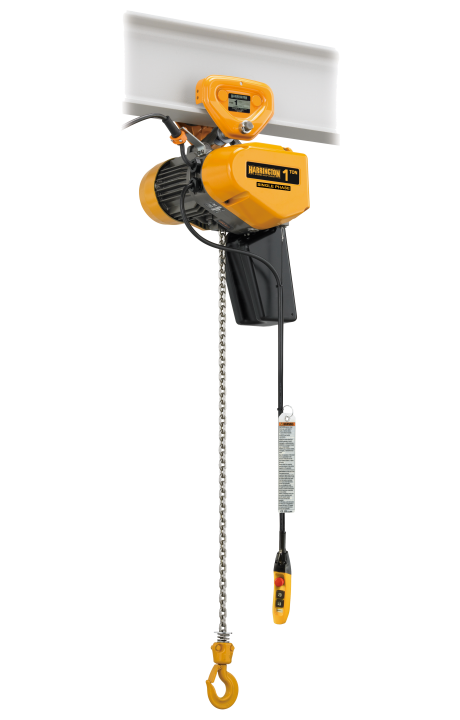 In Stock
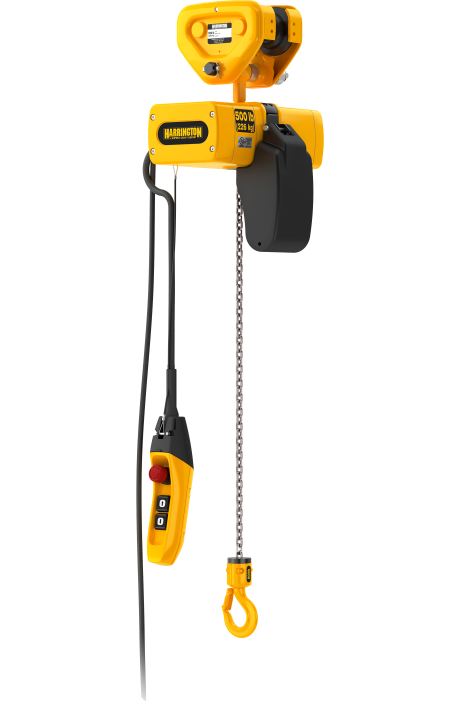 In Stock
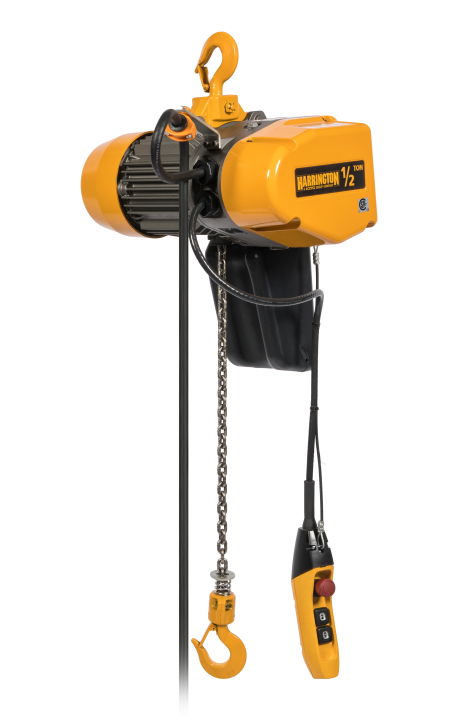 In Stock
 In Stock
 In Stock
 In Stock
 In Stock
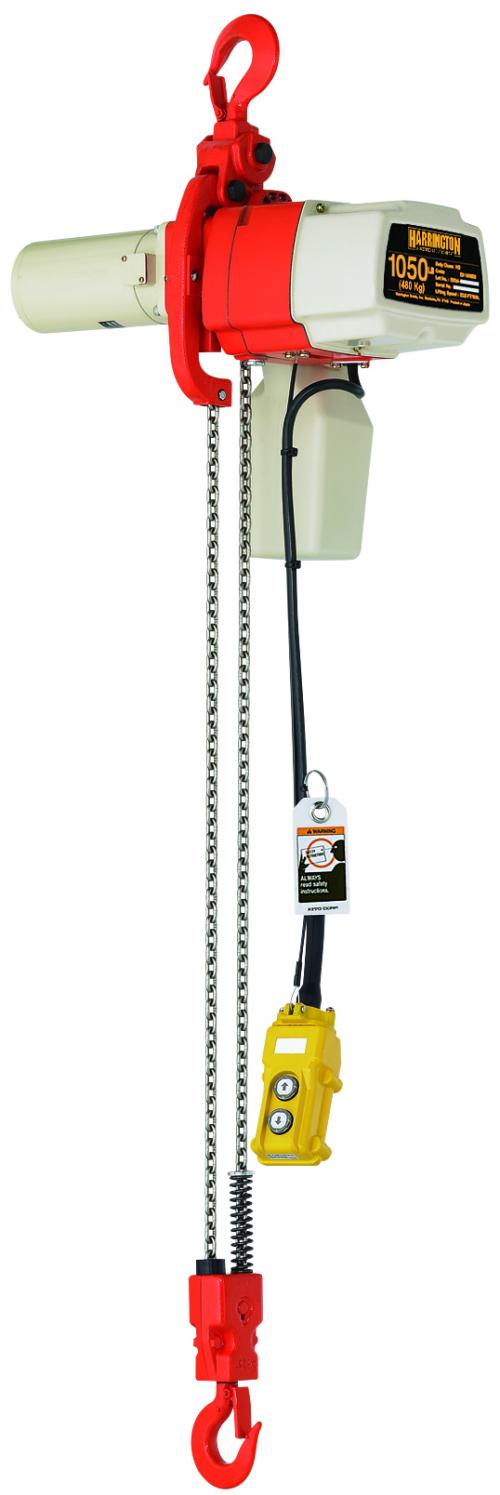 In Stock
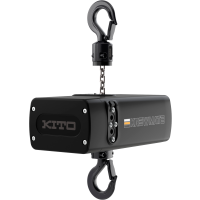 In Stock
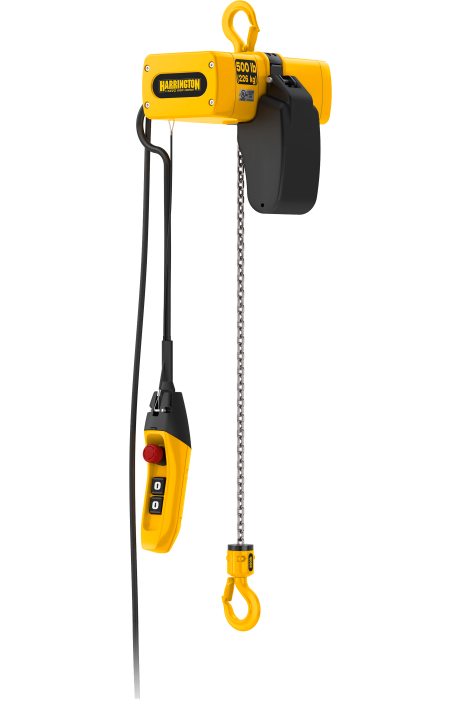 In StockIn Stock
Harrington Motorized Hoists Buying Guide
Size the capacity and match the duty class. Two numbers decide the hoist before anything else. The first is capacity, totaled the honest way: the heaviest load you will lift plus the hook block, the sling, and any below-hook gear, rounded up to the next rating. A hoist run near its ceiling wears fast, so leave margin and stop there. Harrington covers a quarter-ton up to 20 tons on multiple falls of chain, which spans almost any single-machine or production pick. The second number is duty, meaning how hard the motor runs across a shift. The Hoist Manufacturers Institute rates hoists H2 through H4 and up, and the ER and NER series carry an H4 heavy-duty classification with a 60-minute duty rating, built for high-volume work near rated load where running time can reach half the work period. Match the class to your real usage, because a shortfall shows up as a burned motor, not a warning light.
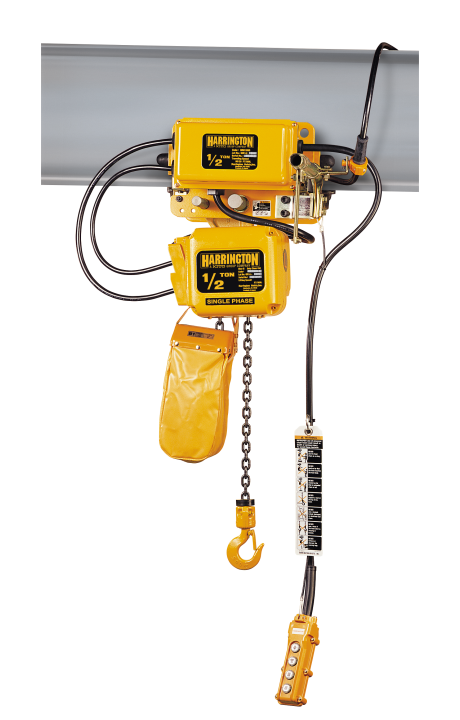
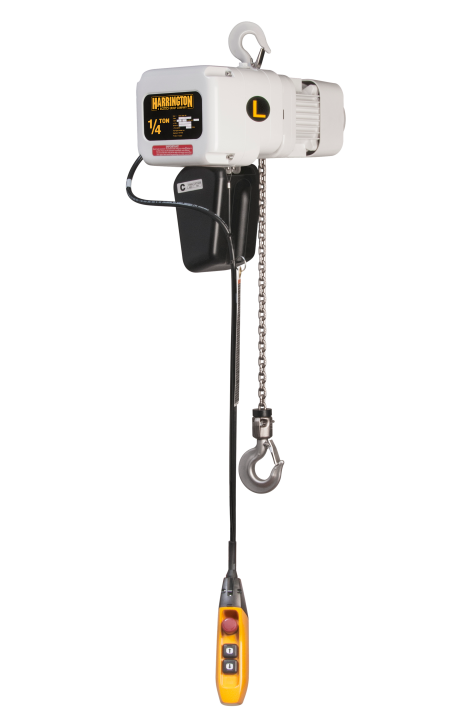
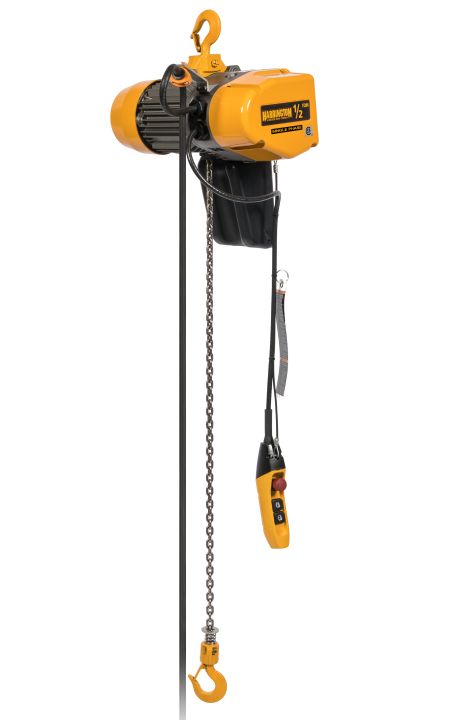
Single-phase or three-phase power. What is at your panel narrows the field fast. The compact ED runs on ordinary 120V single-phase power in a light aluminum body, the right tool for a bench jig or a light maintenance lift, and the SEM, SEQ, and SNER units cover the same small-shop and jobsite ground on 115V or 230V. The ER, NER, EQ, and MRQ machines are three-phase, wired for 208, 230, or 460V, and they are the practical requirement above about two tons where a single-phase motor runs out of headroom on long wire runs. The SNER is the exception worth knowing: a single-phase hoist engineered to an H4 industrial rating with a TEFC motor, so a shop stuck on single-phase power still gets three-phase duty. Confirm your voltage and phase before ordering, since a three-phase hoist will not run on single-phase power without a converter.
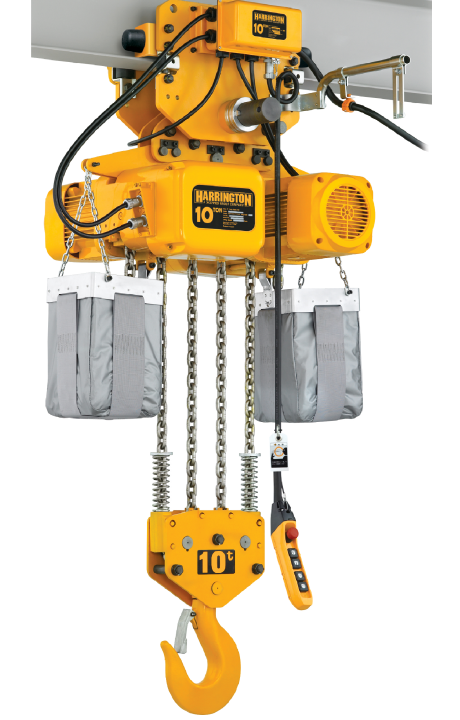
The Guardian brake and the case for Harrington. The reason crews specify Harrington by name is the brake. The ER and NER hoists use The Guardian, a DC electromagnetic brake that stays engaged unless the motor is energized, and it carries a 10-year brake warranty, one of the longest in the industry. Paired with the H4 duty rating, a fan-cooled motor with Class B insulation, and standard thermal overload protection, that is a machine built to run a decade of production rather than a season. A hardened, nickel-plated load chain and an ergonomic pendant round out the package. Spend the money here and the hoist earns it back in uptime.
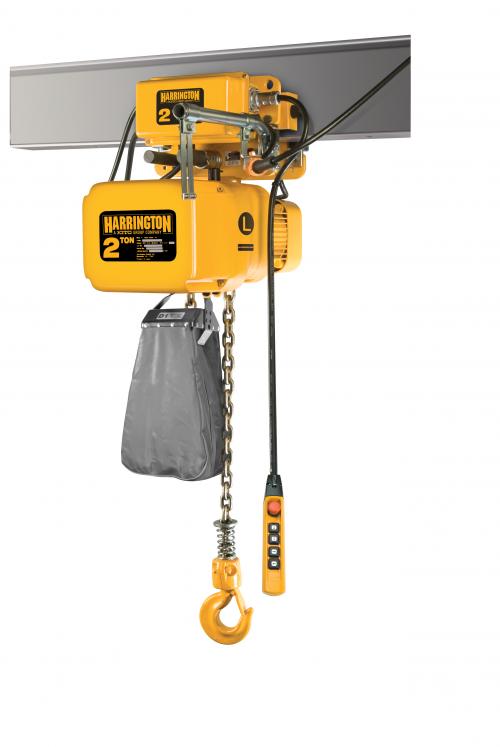
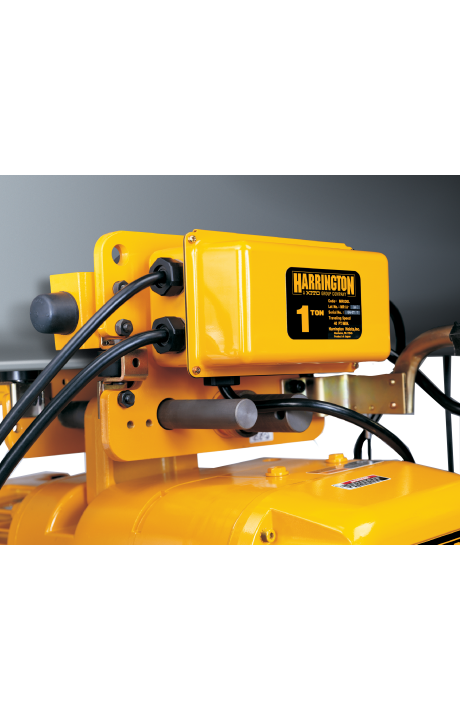
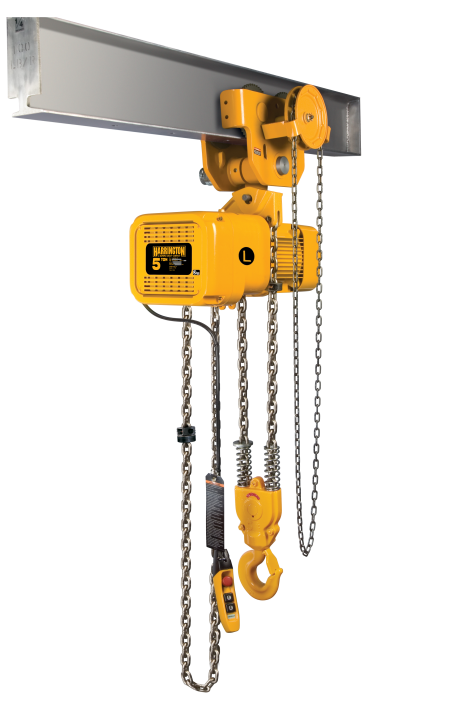
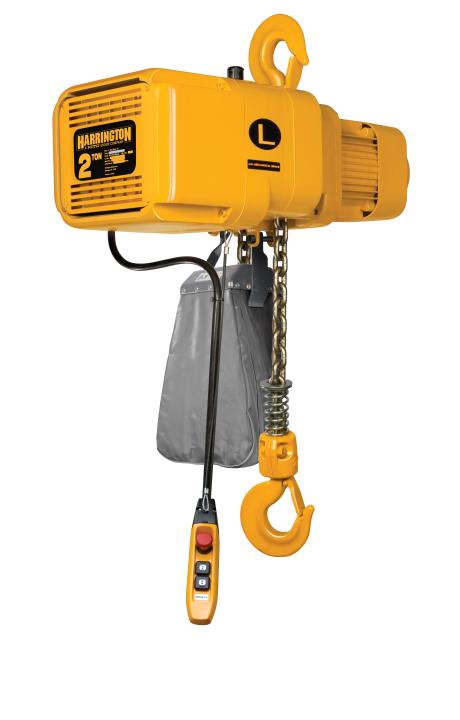
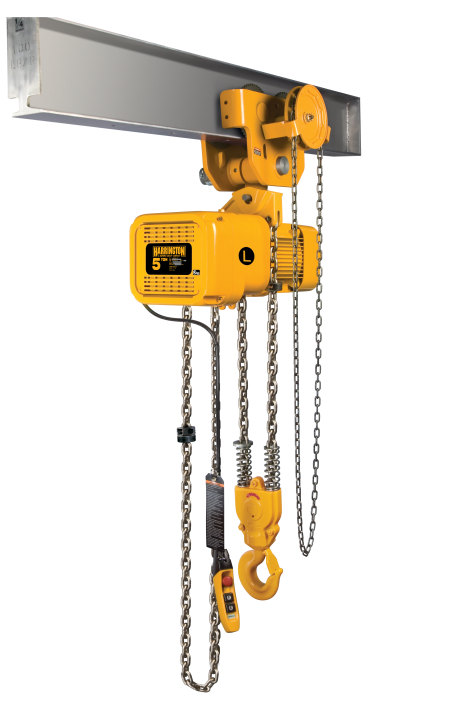
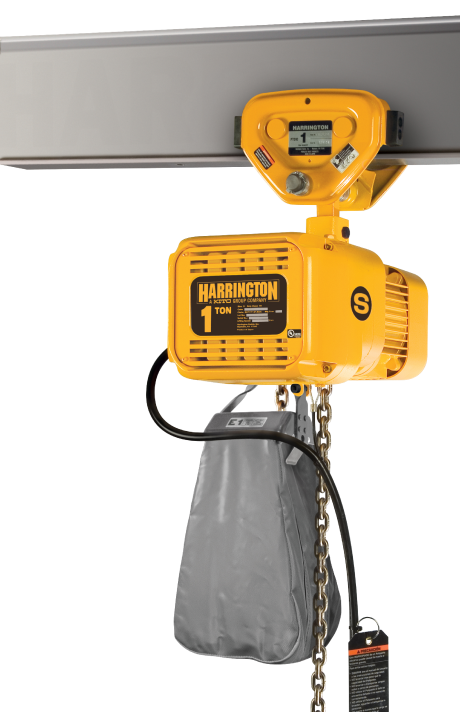
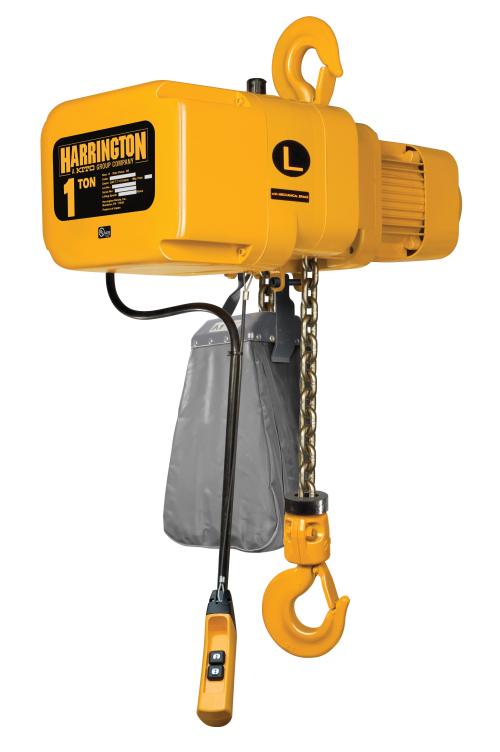
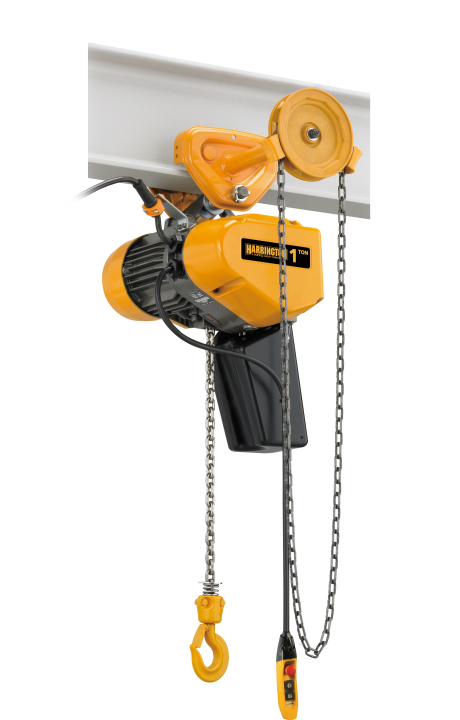
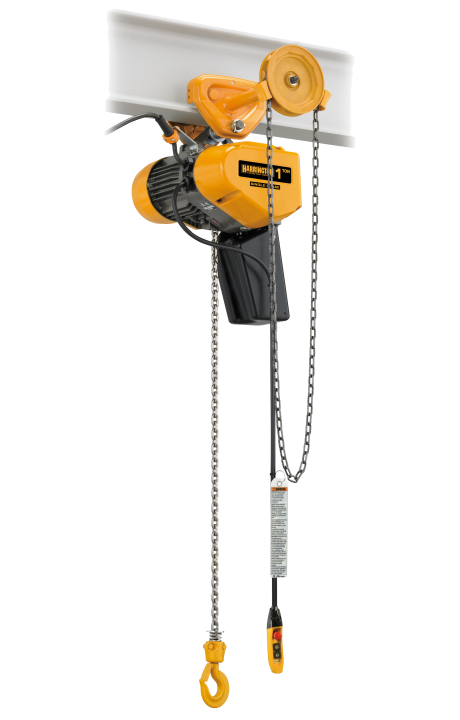
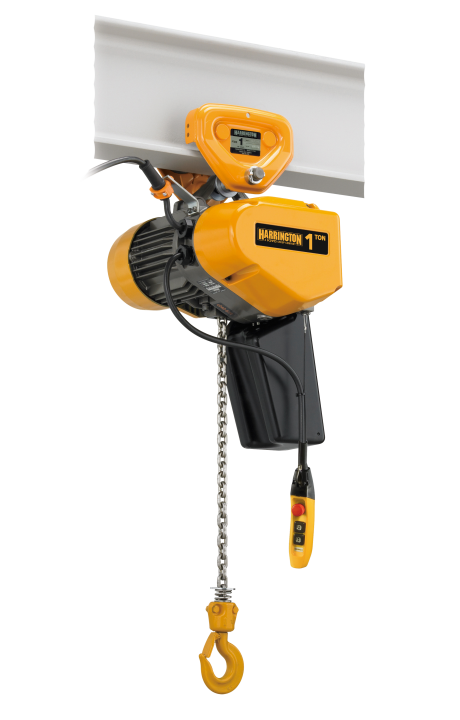
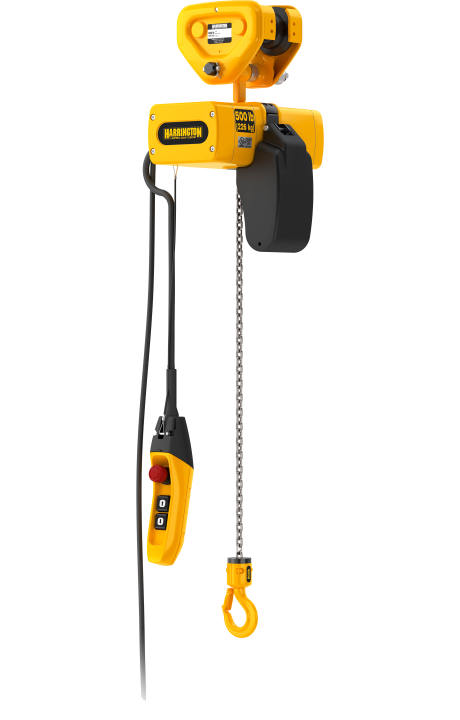
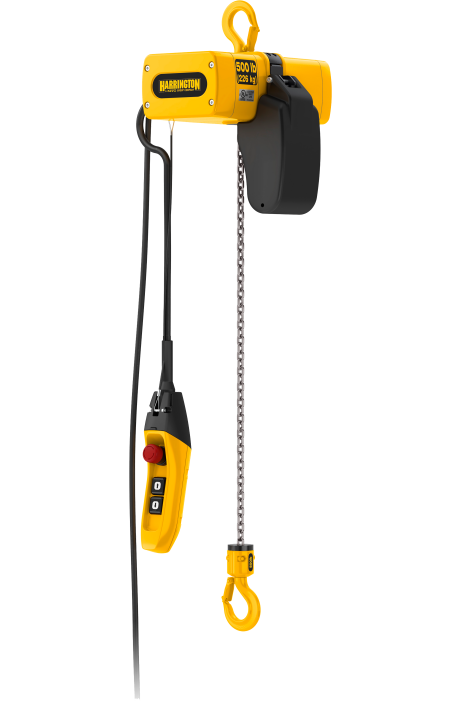
Hook, push, geared, or motorized suspension. After capacity, suspension is the biggest branch in the line, and the suffix on the model number tells you which one you are looking at. A top-hook unit, the plain ER, NER, or EQ, hangs from a beam clamp or a trolley eye and is the cheapest way onto your steel. Add a P, as in ERP or NERP, and it rides a push trolley you move by hand along the beam. A G suffix, ERG or NERG, adds a geared trolley you crank with a hand chain for heavier loads or precise spotting. An M, the ERM, NERM, or EQM, is a motorized trolley that travels the beam under power, which is what you want for heavy loads, long runs, or high-cycle work where pushing a load by hand stops being practical. Pick the drive first, then the trolley, since the trolley has to be rated for the same load the hoist lifts. For the hand-powered blocks that do the same job without a motor, see the manual chain hoists.
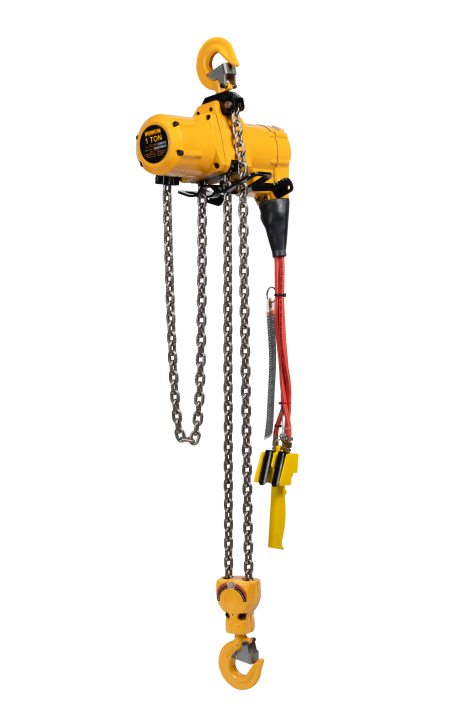
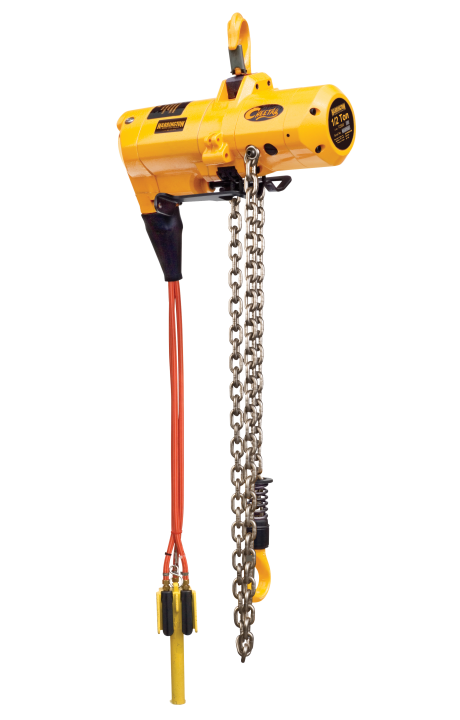
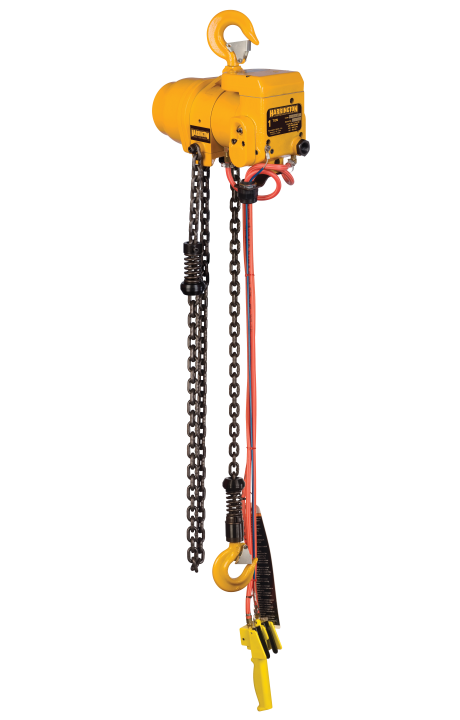
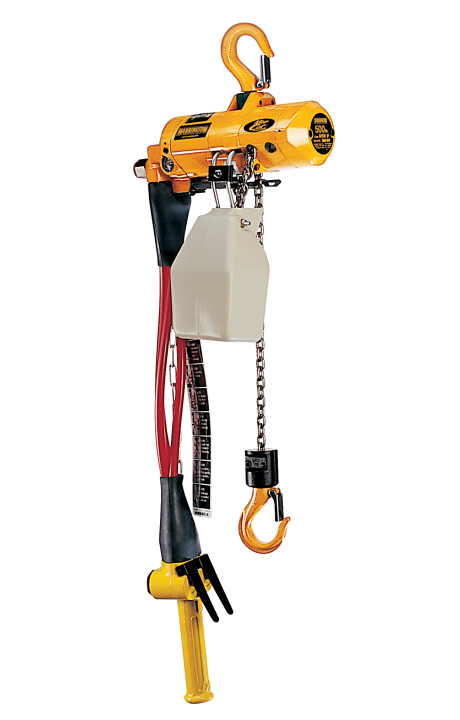
Air hoists: continuous duty, washdown, and spark-sensitive work. When the job runs continuously or the air is wrong for an electric motor, Harrington's air hoists take over. The TCS Cheetah lifts a quarter, half, or one ton on an unlimited duty cycle with fine feathering control, so it runs start after start without the heat problem that limits an electric hoist. The TCR and lube-free TCL and TWC series extend that into washdown and food or pharmaceutical lines where oil mist is a contaminant, and the little AH Mini-Cat handles precise 250 lb picks. For hazardous atmospheres, the TCE-EX is spark resistant and built to an ATEX Category 2 rating for locations where IIB gases or IIIB dusts are present, the hoist you use around petroleum, solvents, or combustible dust where a single spark is a real risk. Air hoists need clean, dry, regulated air, so size the compressor and line to the hoist before you hang it.
Entertainment hoists: rigging over people. The KREWMATE TEM and TSEM hoists are a separate discipline: mini electric chain hoists rigged over stages, arenas, and houses of worship to fly trusses, lighting, and audio above people. They are engineered to UL 1340, the ANSI E1.6 entertainment standard, and German BGV-D8, the regulations that govern overhead lifting where a crowd stands under the load, with a nickel-plated grade 80 chain, a low-profile upper limit switch, and a chain guide that prevents tangles. Rig anything over an audience and the standard, not the price, decides the hoist.
Standards, marking, and inspection. Powered chain and air hoists are built and inspected to ASME B30.16, the standard for overhead underhung and stationary hoists, which covers construction, installation, operation, inspection, and maintenance. Keep the rated load marked on the hoist and never exceed it, run the frequent and periodic inspections the standard calls for, and never side-load the hook or use the load chain as a sling. Harrington ships every hoist with a load chart and manual; keep them with the machine, because the inspection intervals tighten as the duty gets heavier.
Frequently Asked Questions
Total the honest worst case, the heaviest load plus the hook block, sling, and any below-hook gear, then round up to the next rating with margin. Harrington runs from a quarter-ton mini to 20 tons on multiple falls of chain. Do not size right at your maximum, since a hoist run near its ceiling wears out early, and match the duty class to how often you lift as well as how much you lift.
It depends on your panel. The compact ED runs on 120V, and the SEM, SEQ, and SNER units cover single-phase shops on 115V or 230V. The ER, NER, EQ, and MRQ hoists are three-phase on 208, 230, or 460V and are effectively required above about two tons. If you are stuck on single-phase power but need heavy duty, the SNER delivers an H4 industrial rating on a single-phase motor.
They tell you how the hoist suspends and travels. A plain ER, NER, or EQ is a top-hook unit. A P suffix, as in ERP or NERP, adds a hand-pushed trolley. A G, such as ERG or NERG, is a geared trolley you move with a hand chain. An M, the ERM, NERM, or EQM, is a motorized trolley that travels the beam under power, the choice for heavy loads, long runs, or high-cycle work.
You pay for duty life. The ER and NER carry an H4 heavy-duty rating with a 60-minute duty cycle and The Guardian DC brake, which holds unless the motor is energized and comes with a 10-year brake warranty. A hoist built to run half the shift near rated load lasts years where a light-duty unit burns out, so the premium comes back as uptime rather than repair bills.
For clean, food, or pharmaceutical lines, the lube-free TCL and TWC air hoists and the food-grade NER-FG electric hoist keep oil and contaminants off the product. For explosive atmospheres, the TCE-EX air hoist is spark resistant to an ATEX Category 2 rating for IIB gases and IIIB dusts, used around petroleum, solvents, and combustible dust. Air models also suit continuous-duty work an electric motor cannot sustain.