Safety Harnesses
A safety harness is the one piece of fall protection a worker wears on the body, the webbing cage that catches a fall and spreads the shock across the thighs, pelvis, chest, and shoulders instead of any single point. Every full body harness here is KStrong Kapture, built to ANSI/ASSP Z359.11 and rated for users from 130 to 310 lb, and the line runs from the value 3-point Essential up through arc flash, welding, and oil and gas derrick models with removable bosun chairs. You can buy a harness on its own or as a complete kit with the lanyard or lifeline and anchor already matched to it. What separates one harness from the next is D-ring layout, webbing treatment, and how it wears across a full shift, because a harness that hurts gets loosened, and a loose harness puts arrest forces where they injure. The sections below walk those choices in the order they actually matter.
Shop Safety Harnesses by Category
Compare Safety Harnesses
| Model | Price | Model | Type | |
|---|---|---|---|---|
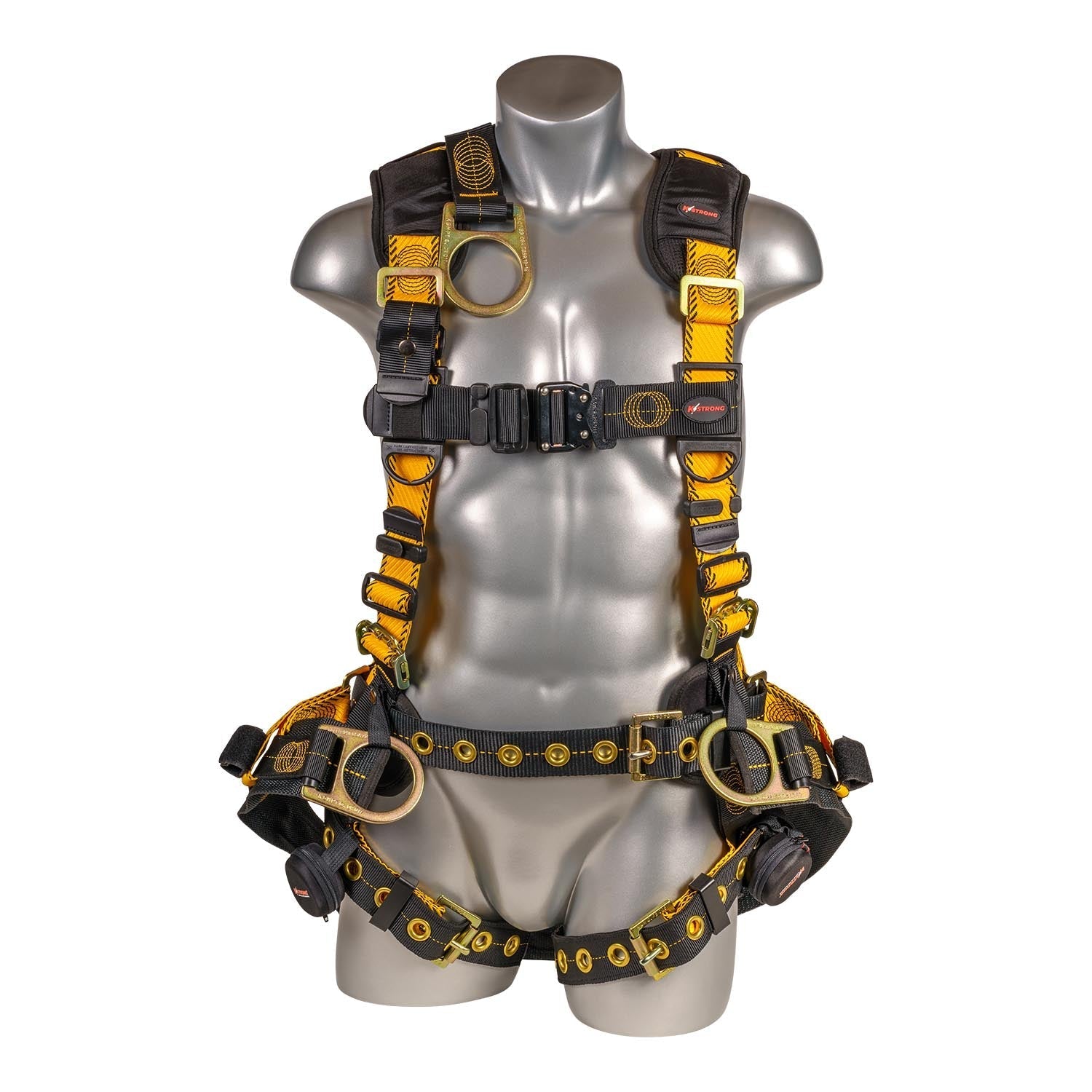
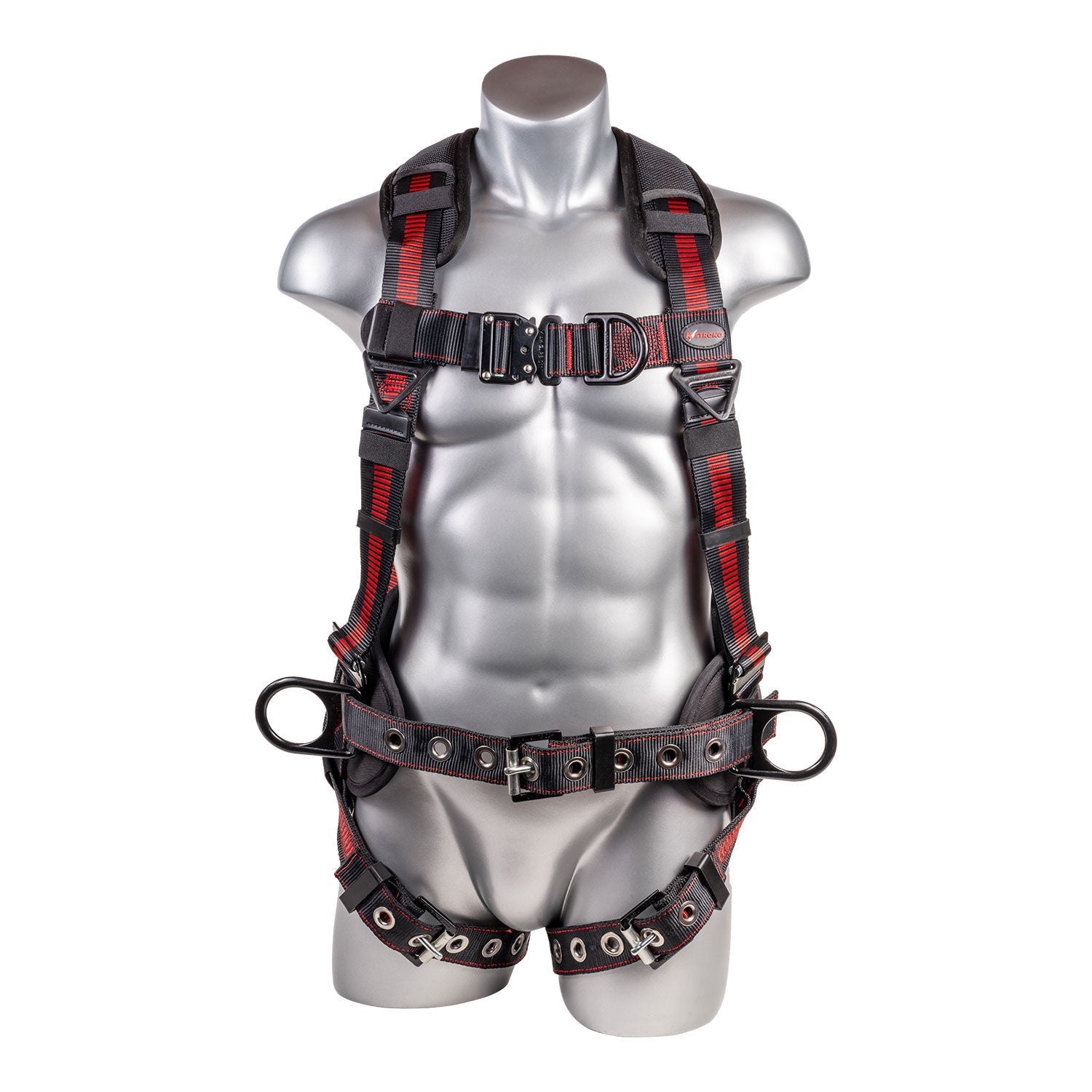
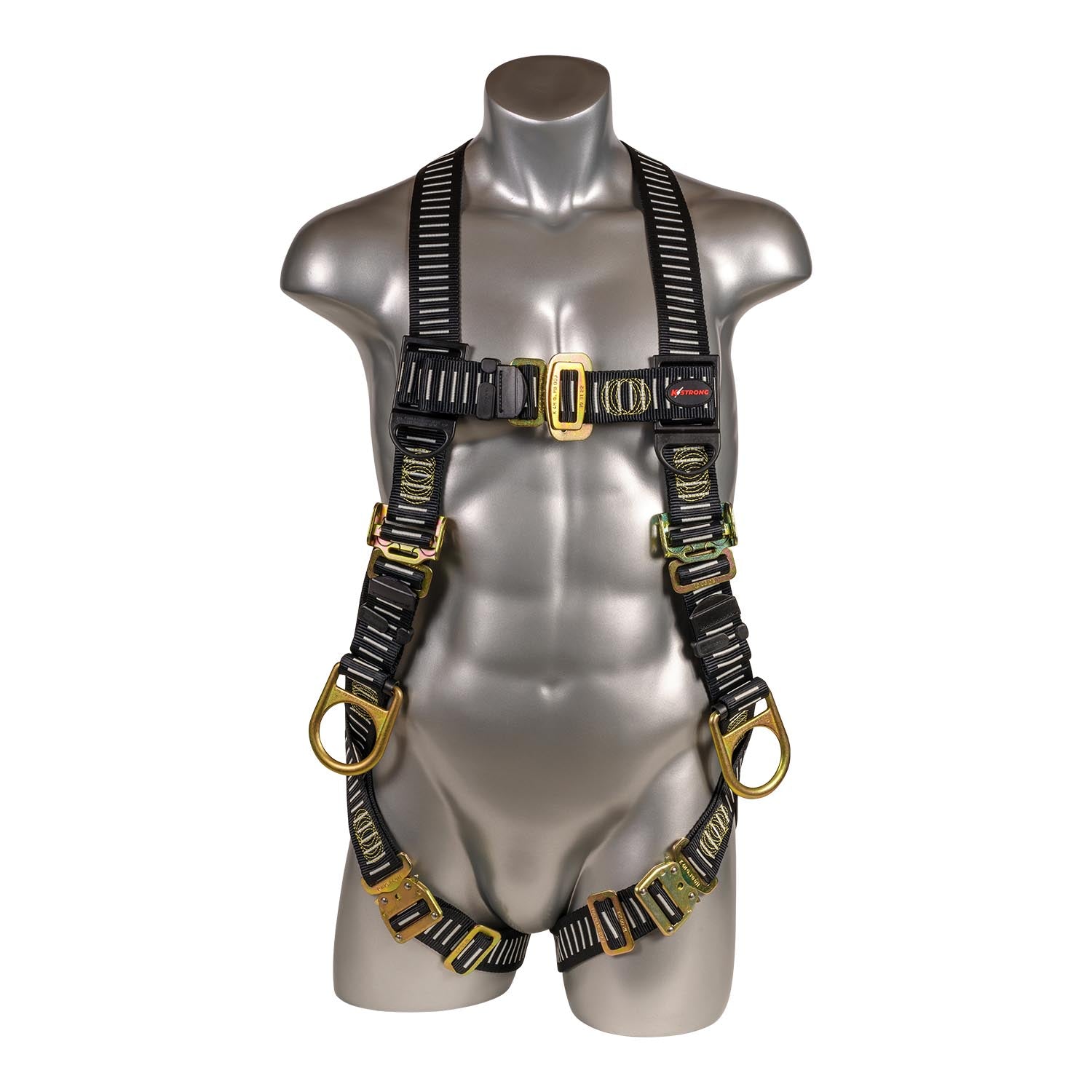
| KStrong® Kapture™ Element Oil and Gas Derrick Deluxe Harness with 7 D-Rings and Removable Bosun Chair | $428 | UFH90471G | — | View → |
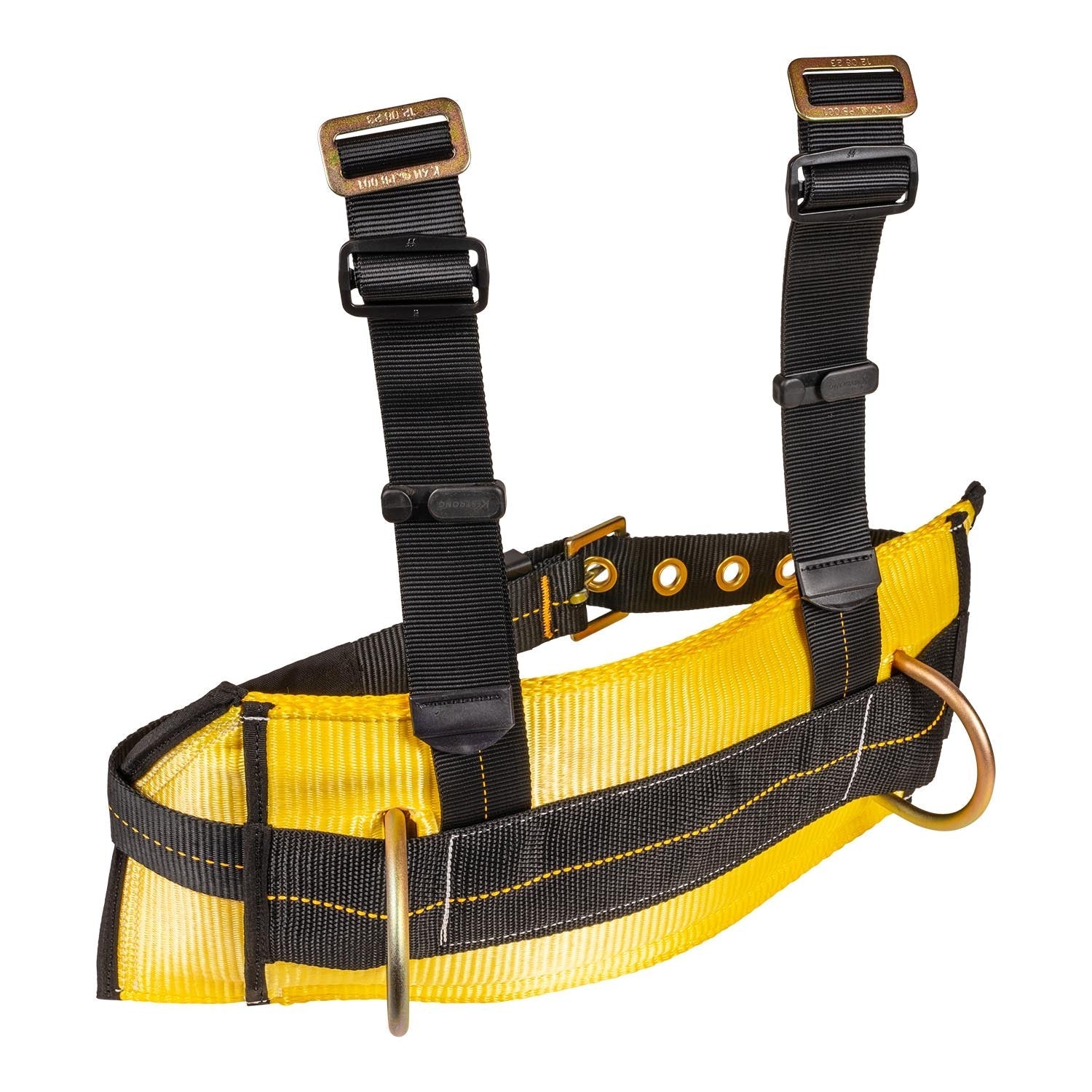
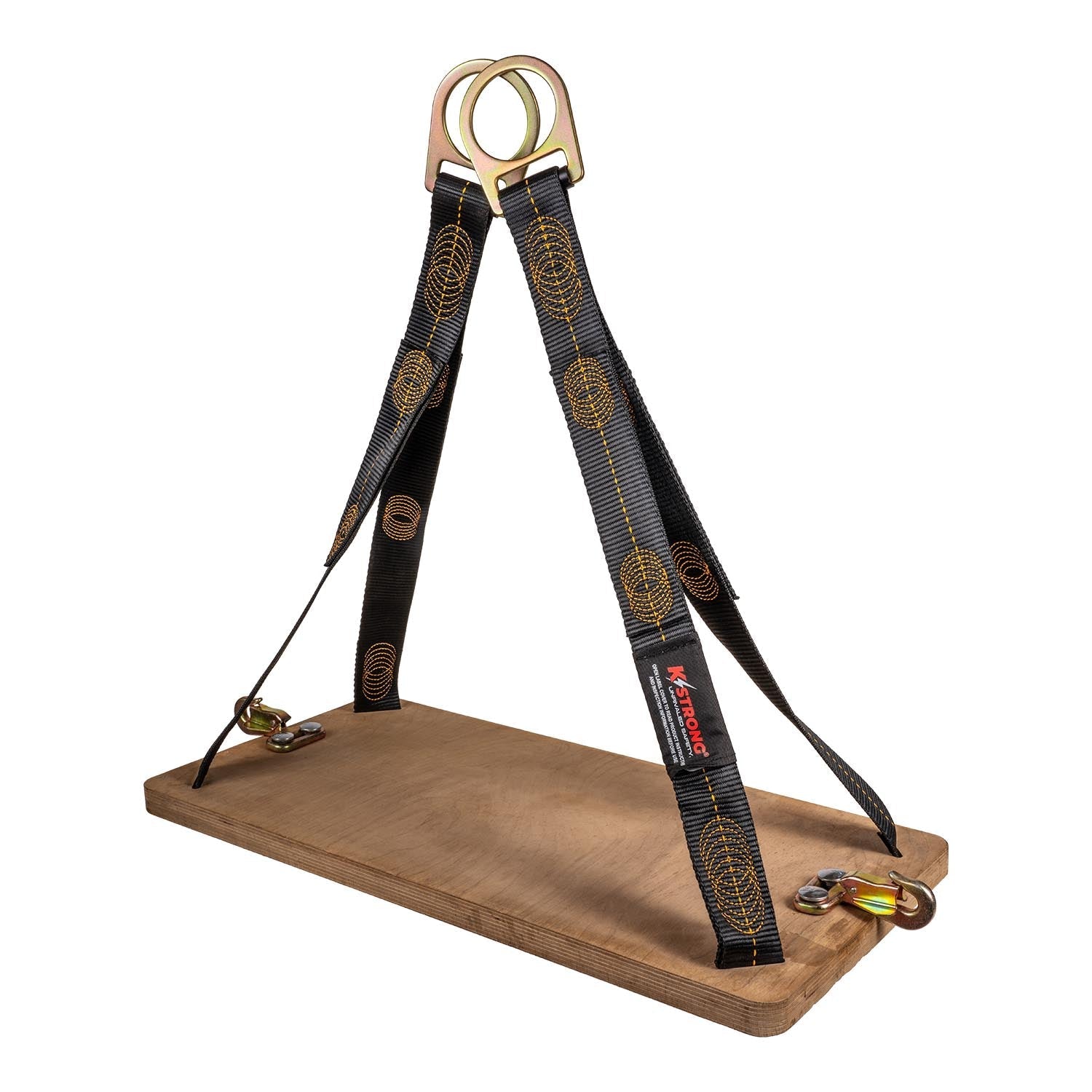
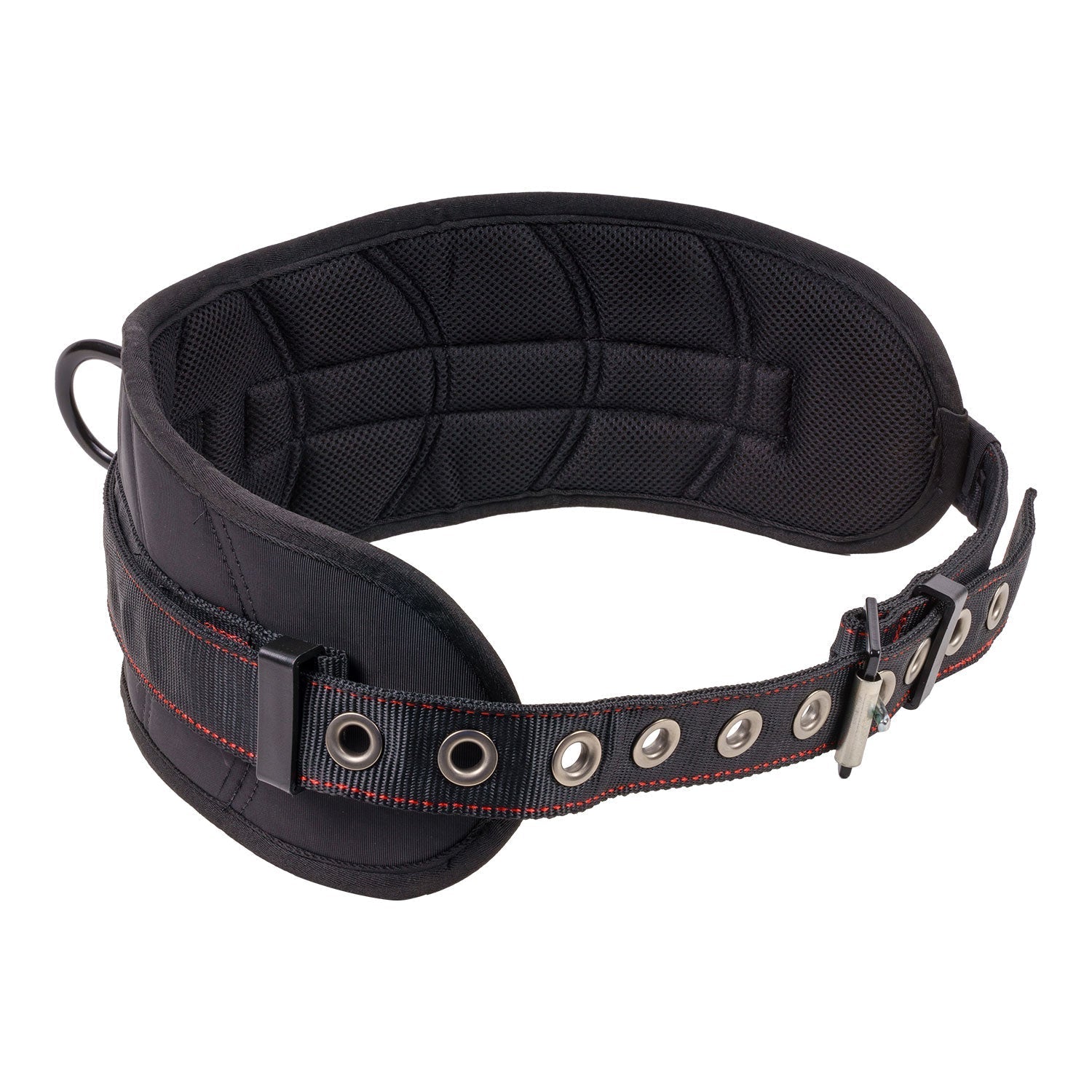
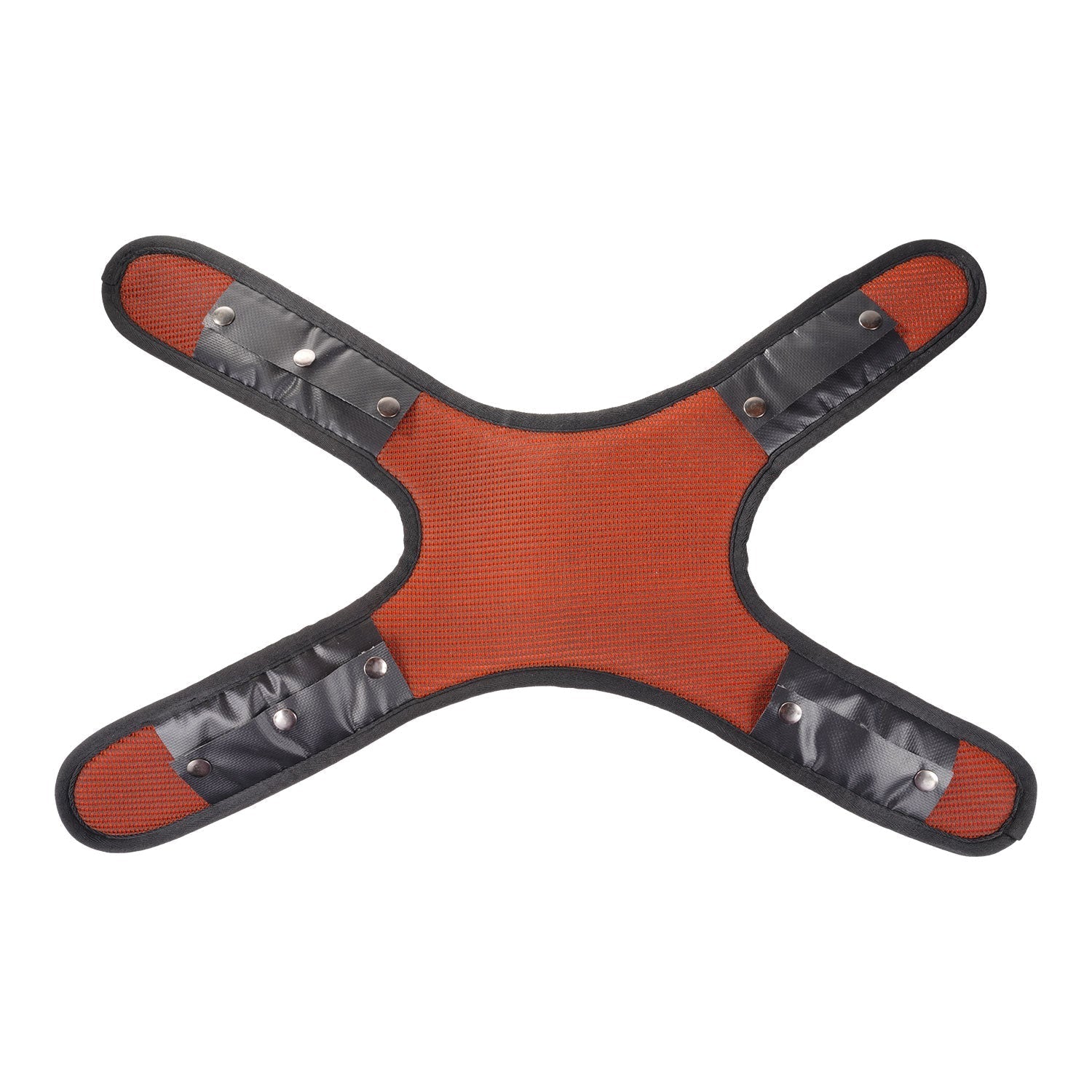
| KStrong® Bosun Chair with Padded Board | $345 | UFZ920011 | Bosun Chair with Padded Board | View → |
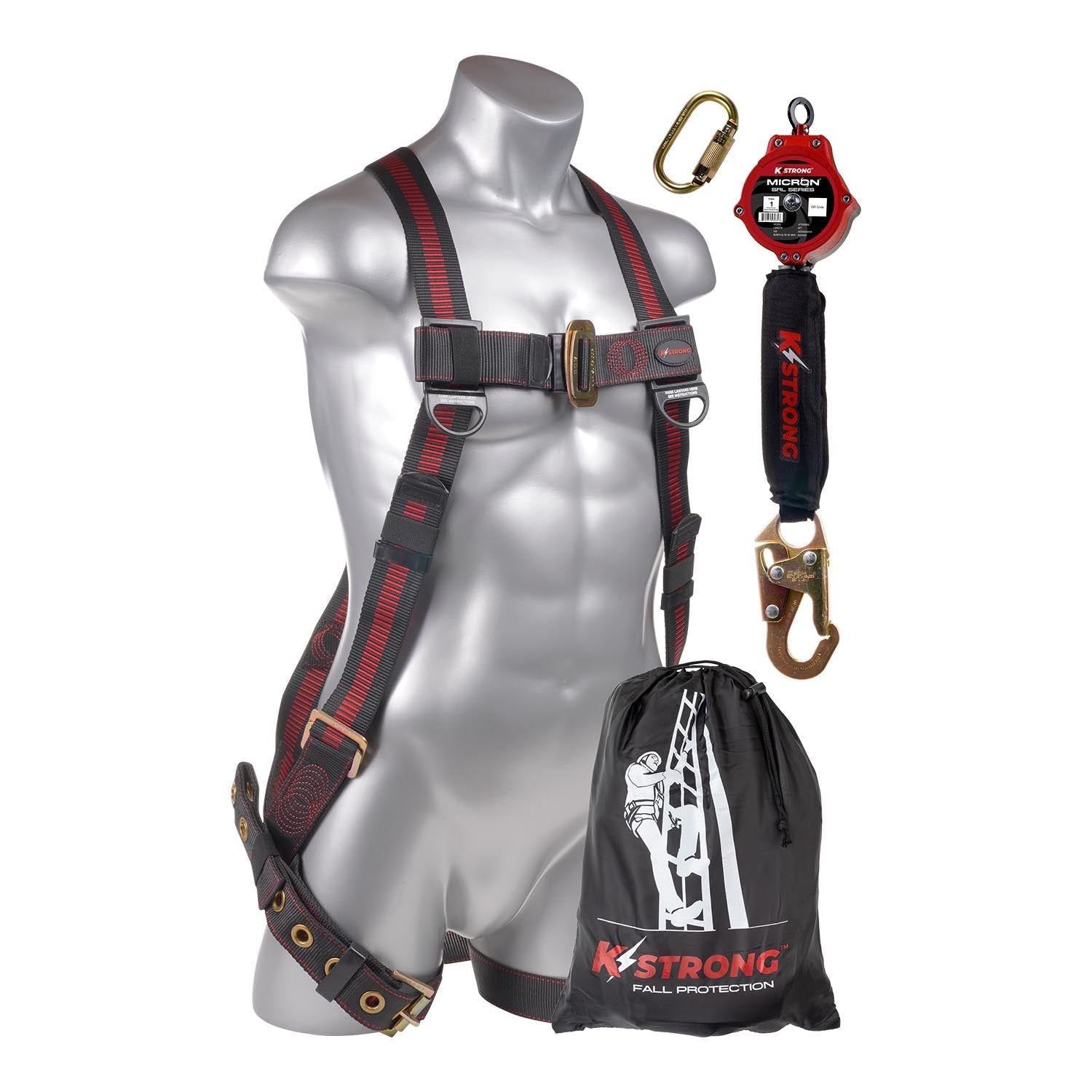
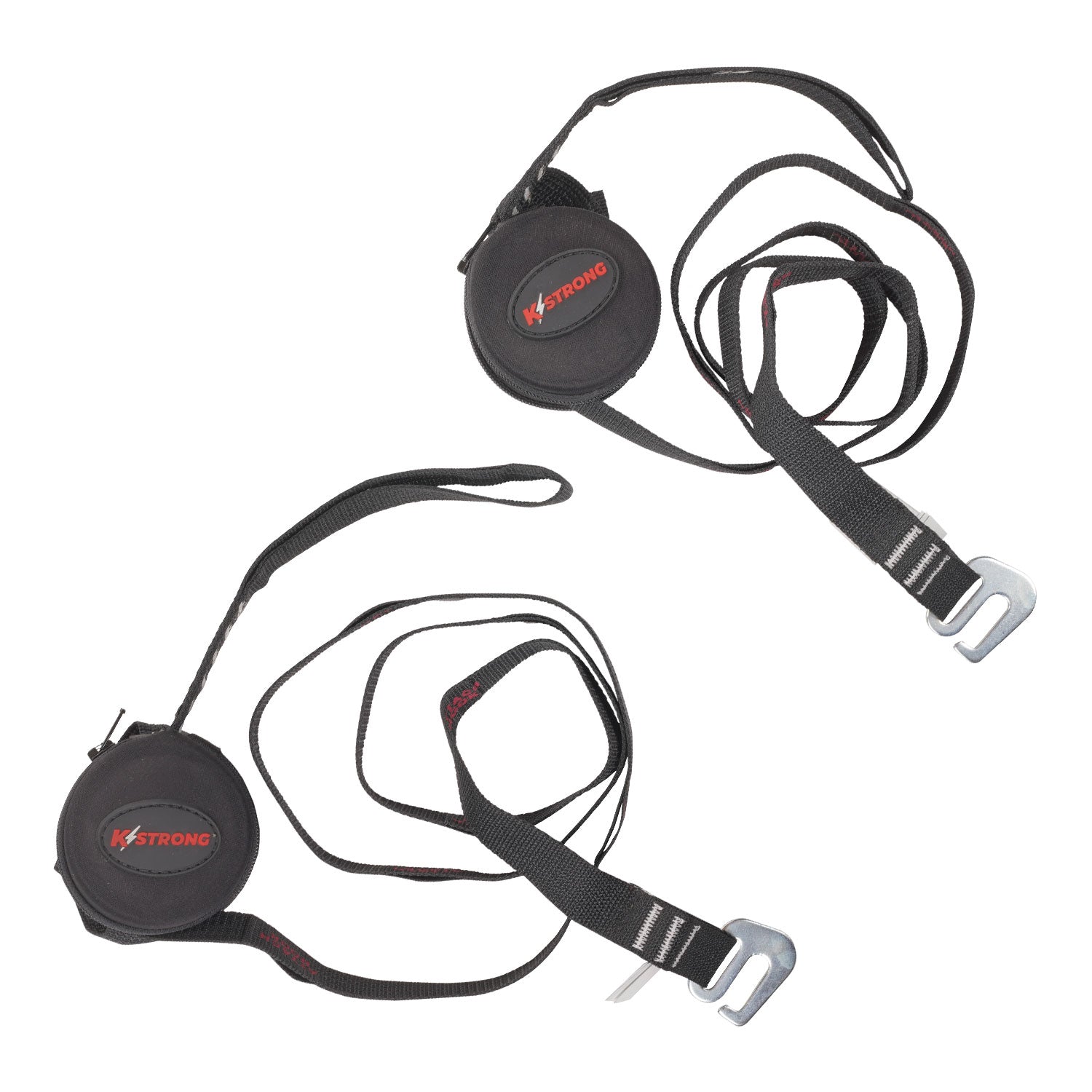
| KStrong® Aerial Kit with Elite™ 5-Point Full Body Harness, Dorsal D-ring, TB Legs and a Micron™ 6 ft. SRL with Snap Hook. Includes storage bag. (ANSI) | $235 | — | — | View → |
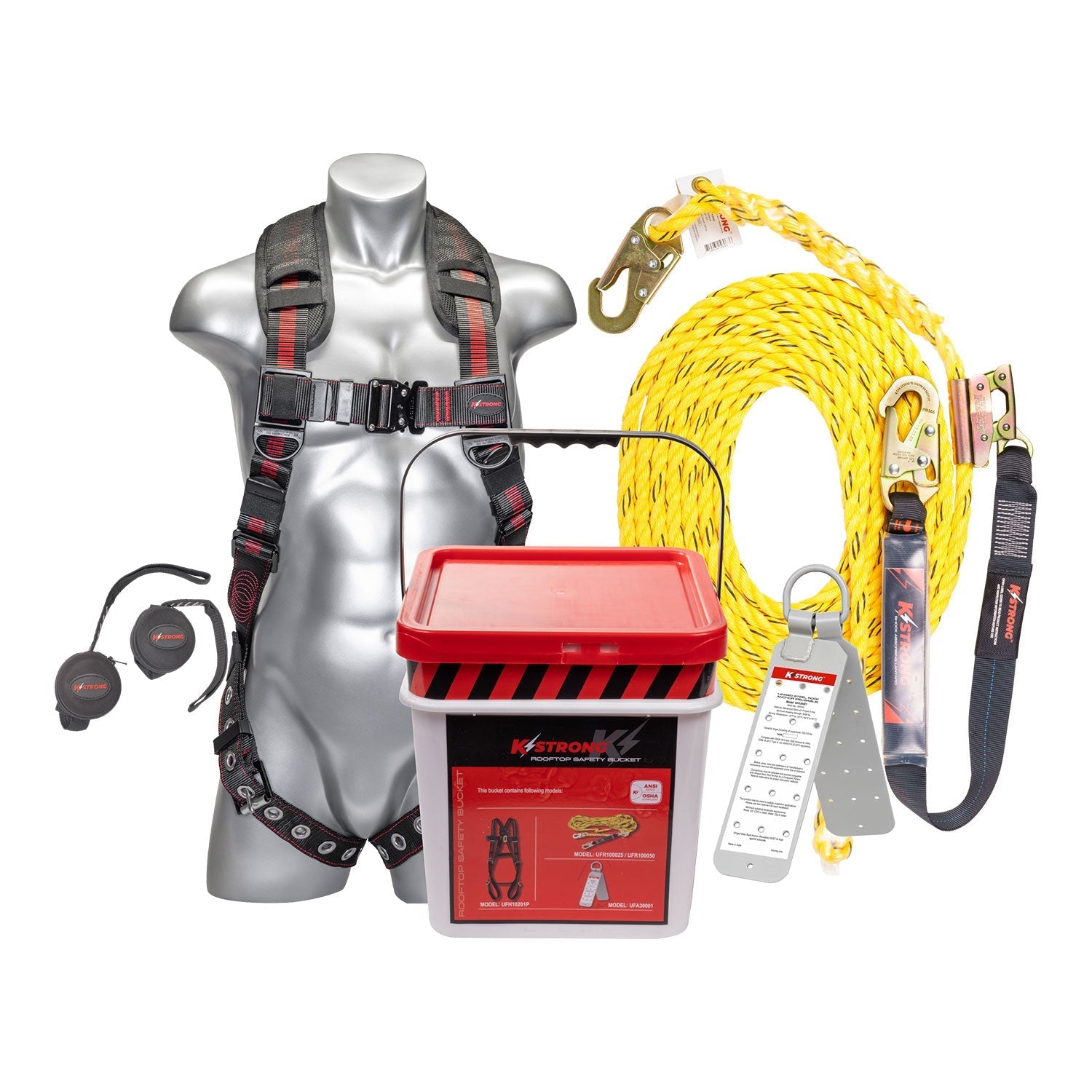
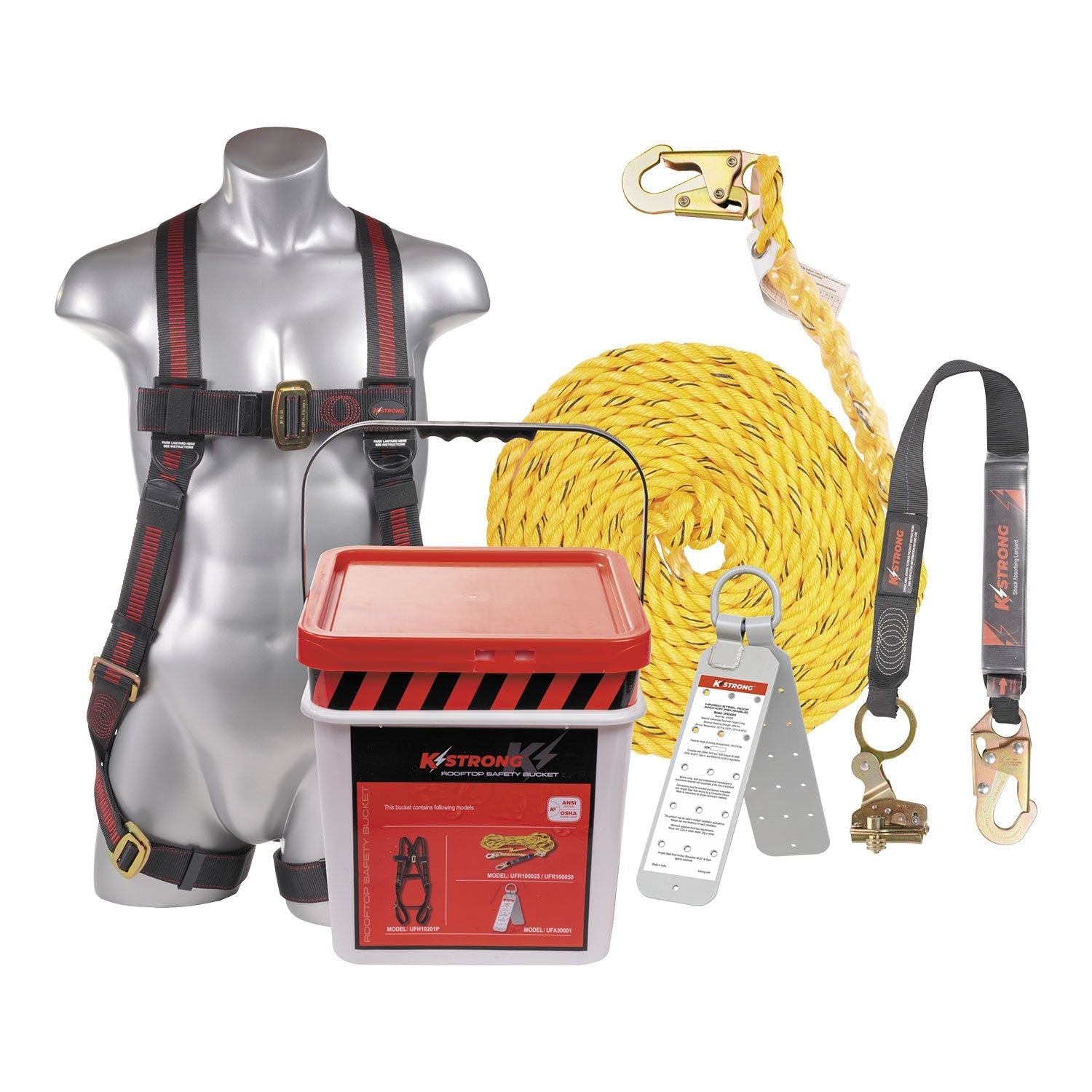
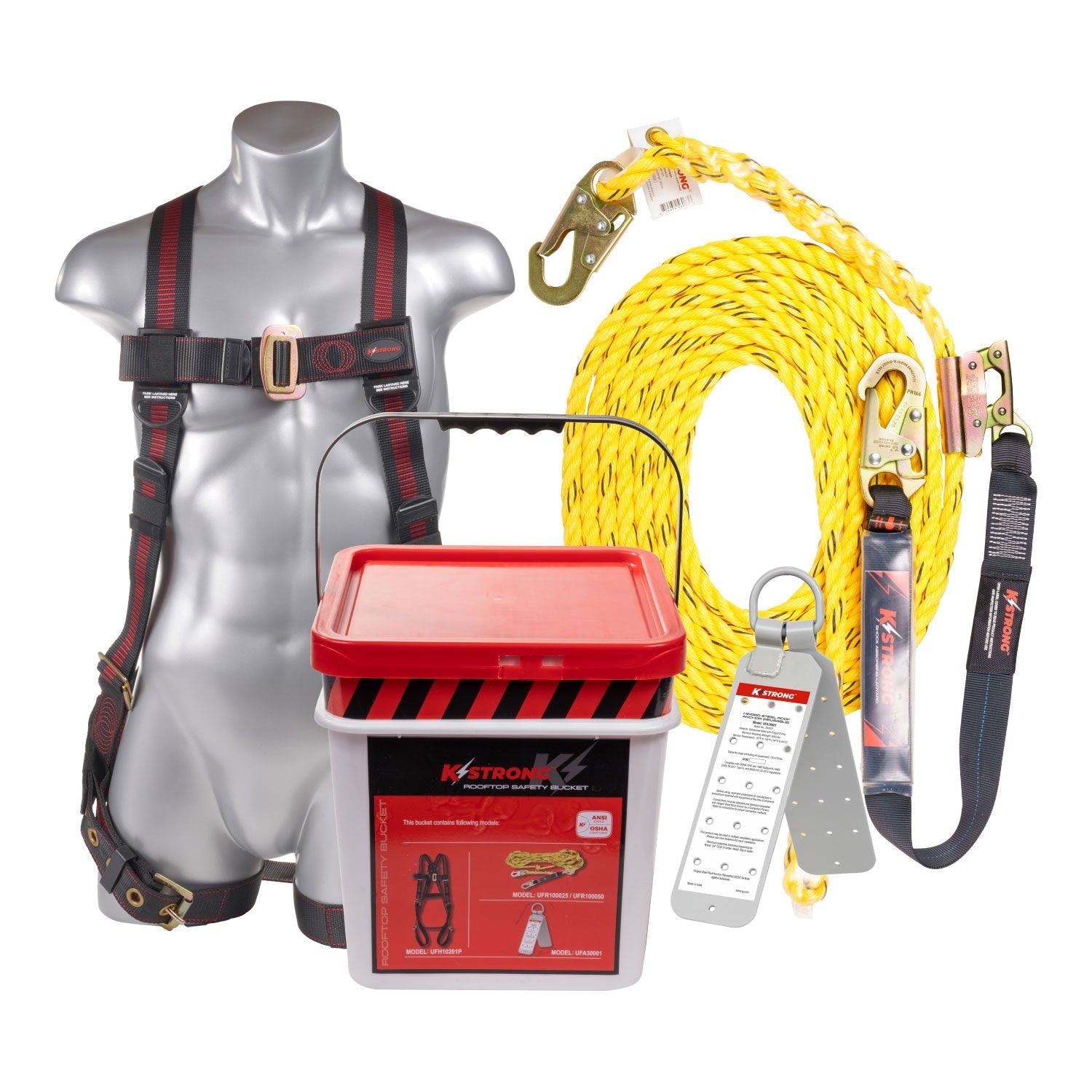
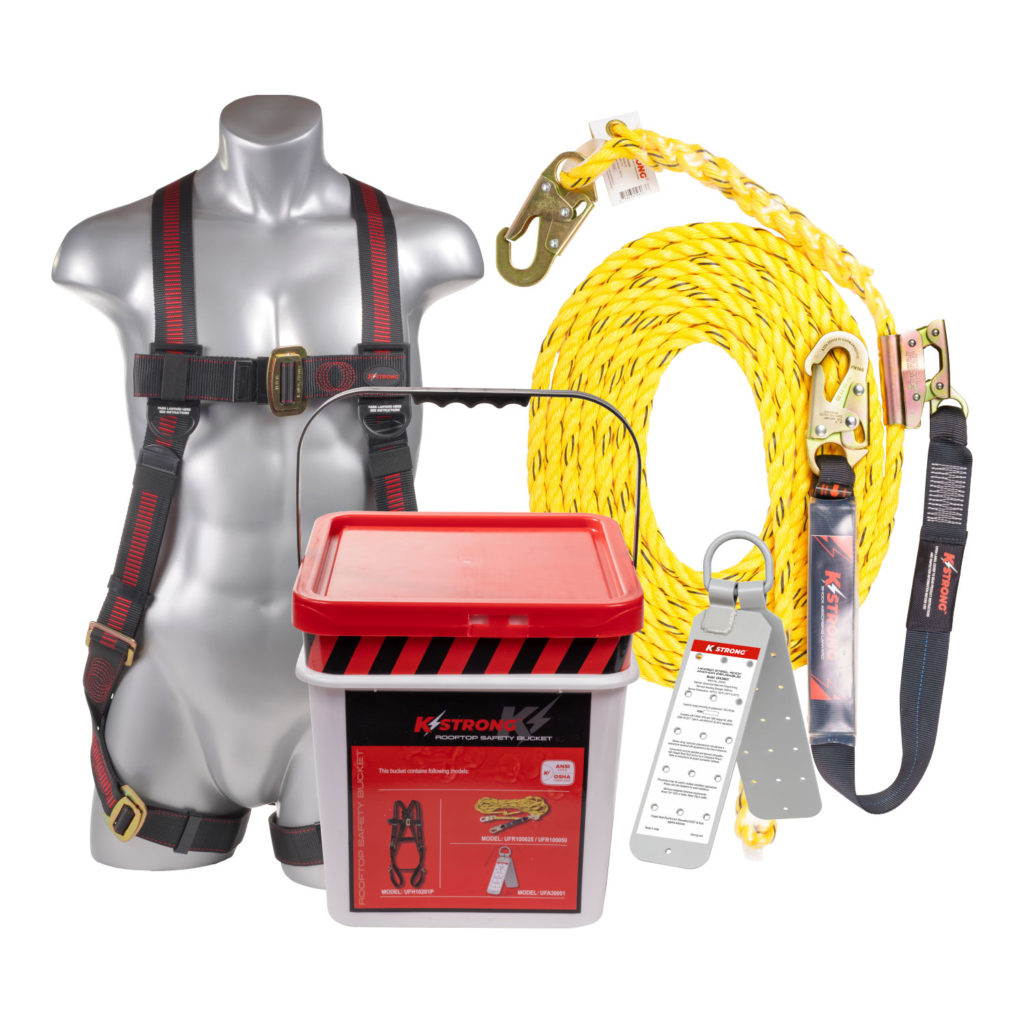
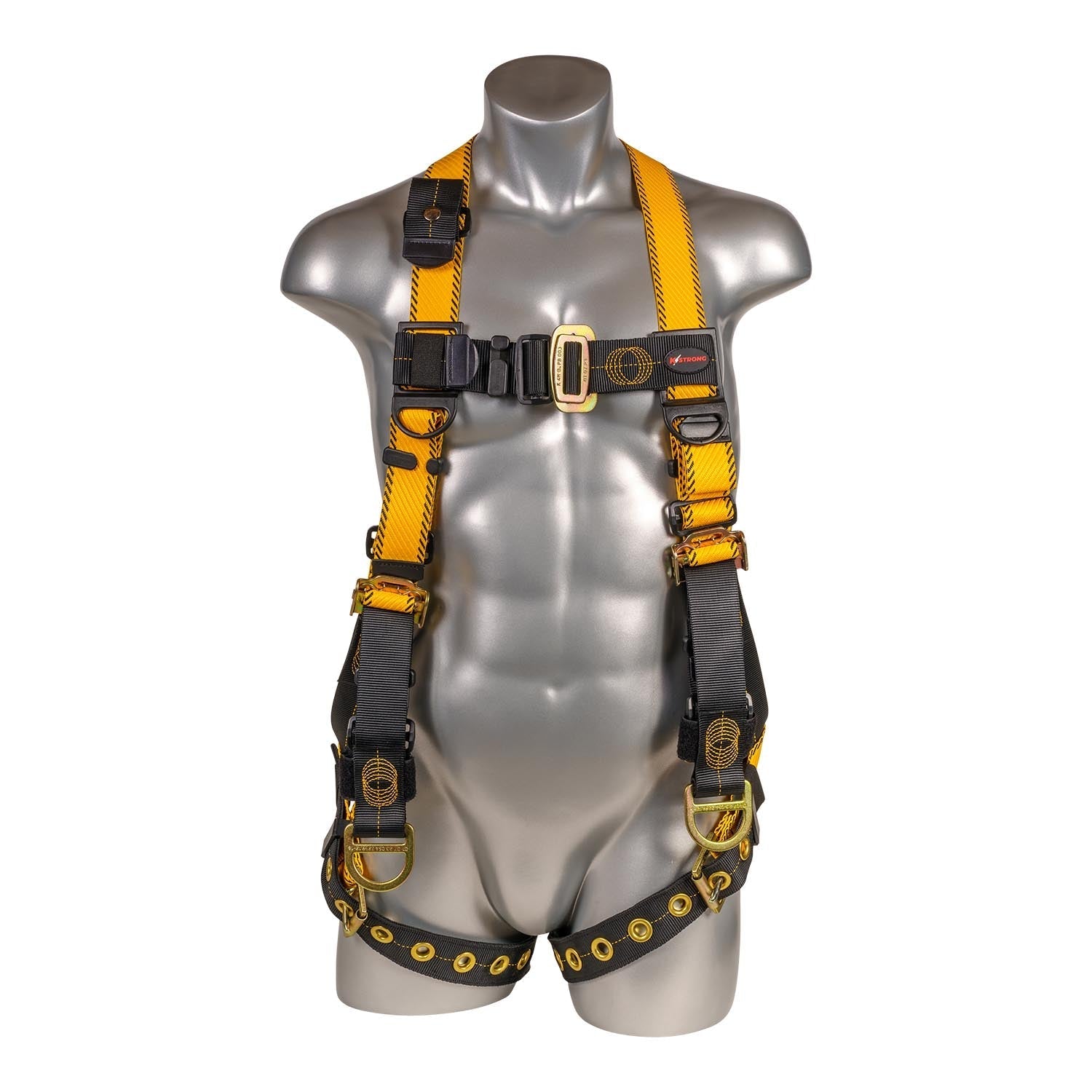
| KStrong® 25 ft. Deluxe Roofers Kit with Elite+ 5-Point Harness (M-L) | $227 | UFB102025(M-L) | Roofers Kit | View → |
| KStrong® Oil and Gas Derrick Belly Belt | $172 | — | Oil and Gas Derrick Belly Belt | View → |
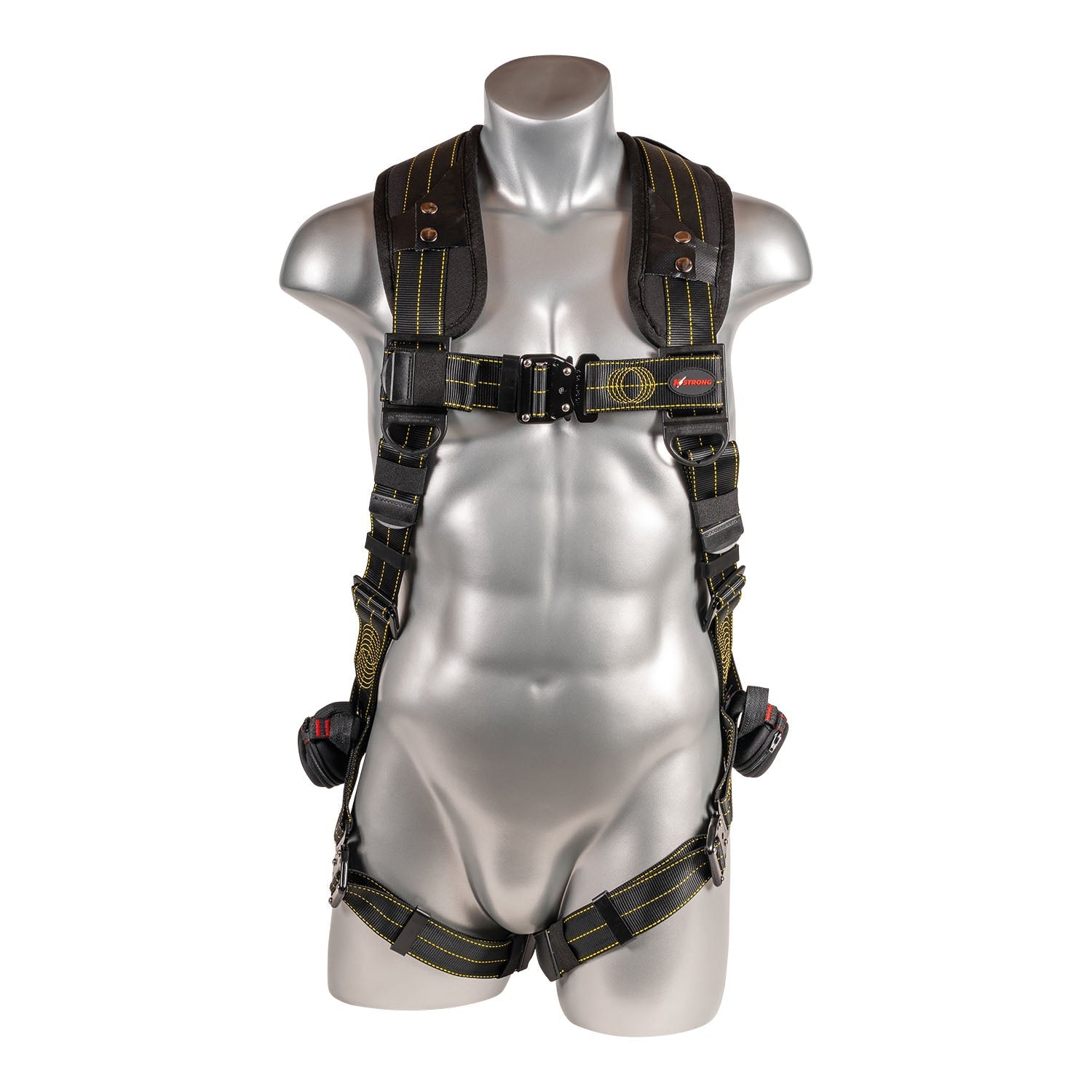
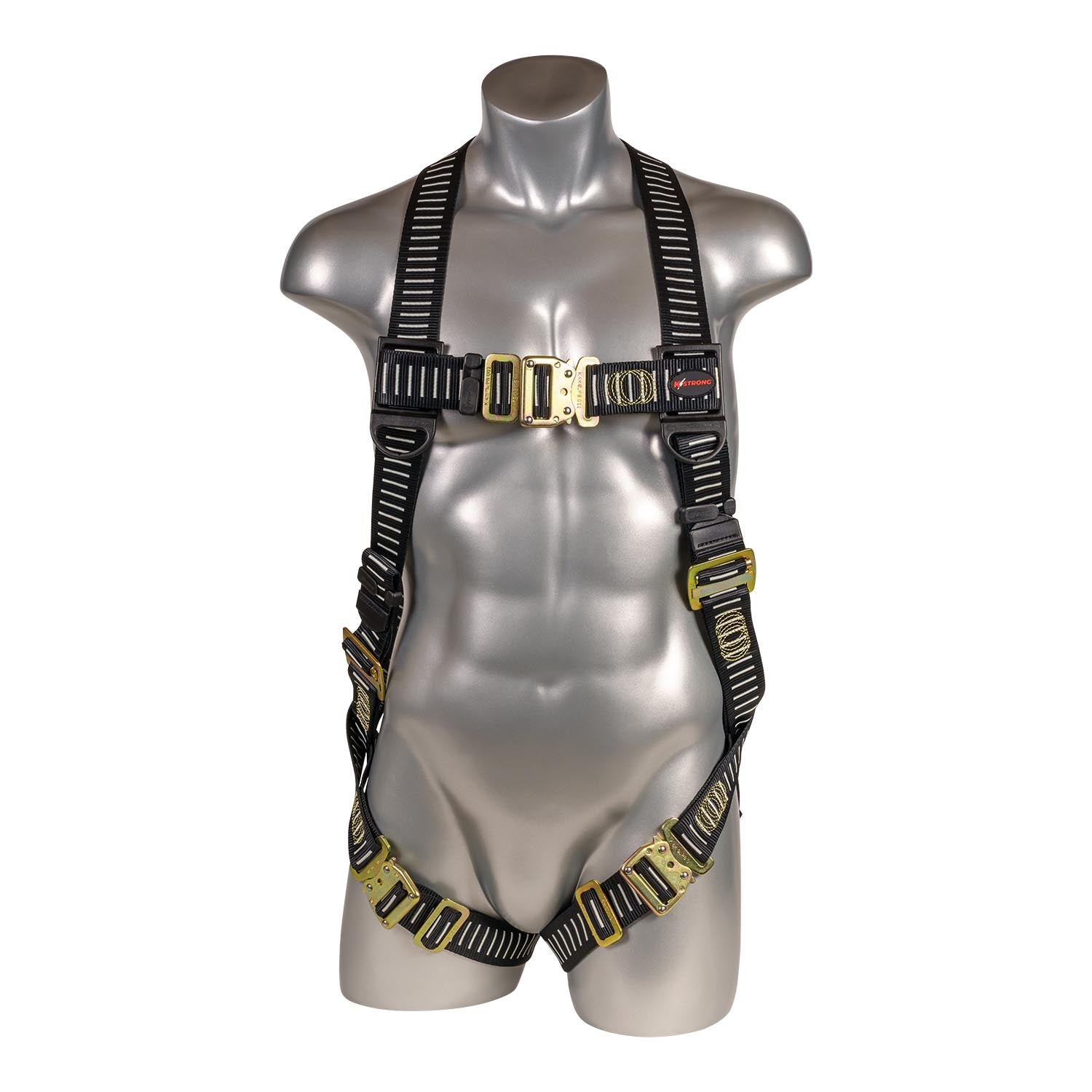
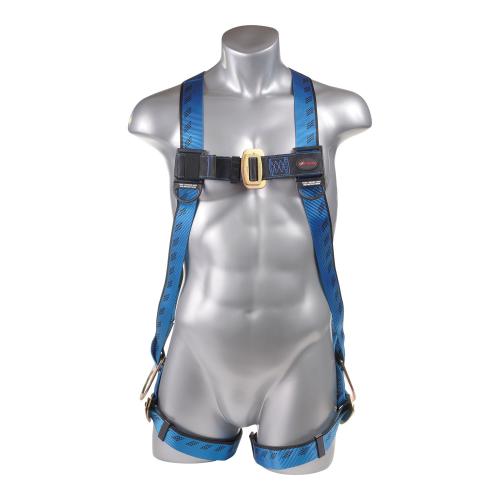
| KStrong® Kapture™ Element Oil and Gas Derrick Non-Belted Harness with 4 D-rings | $160 | — | — | View → |
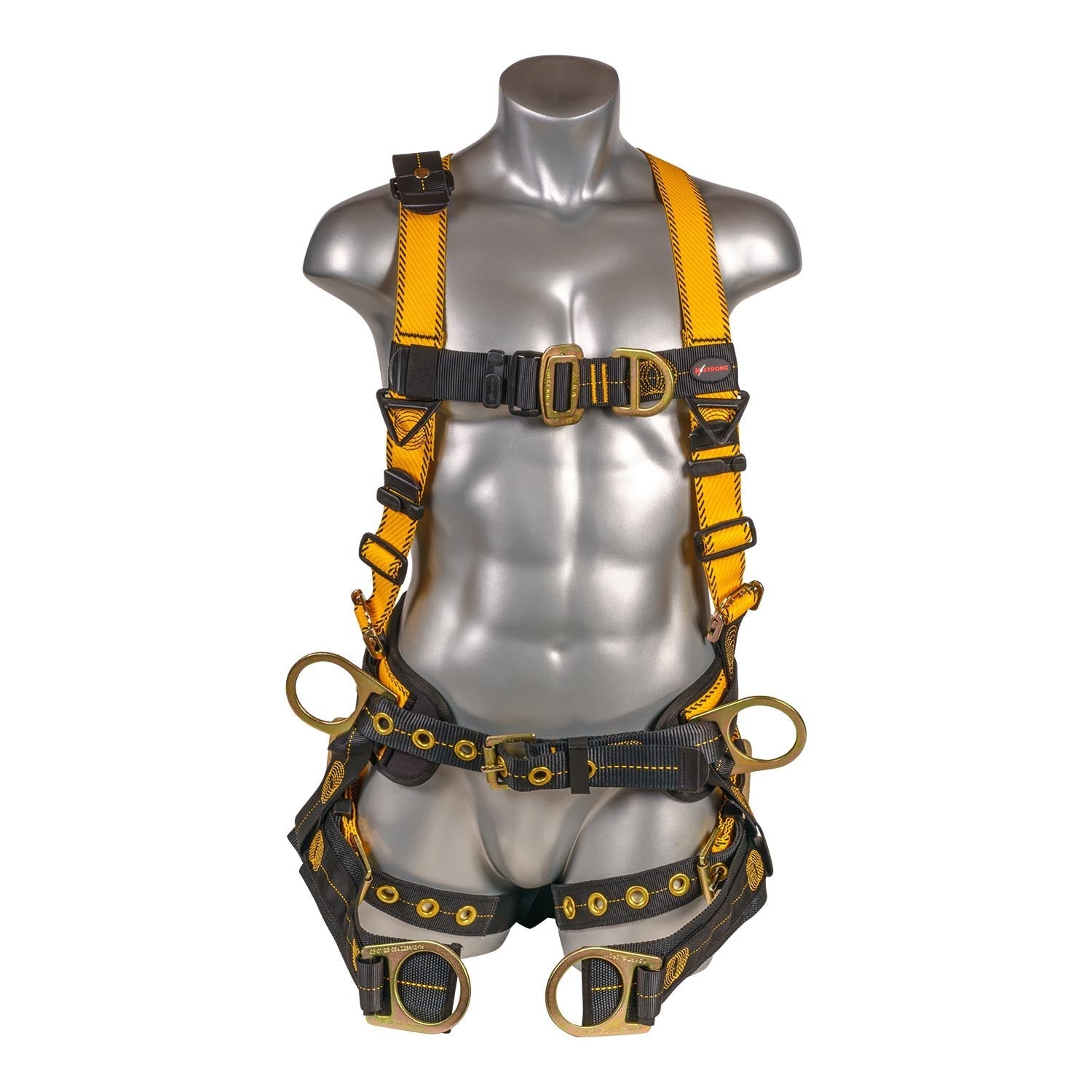 In Stock
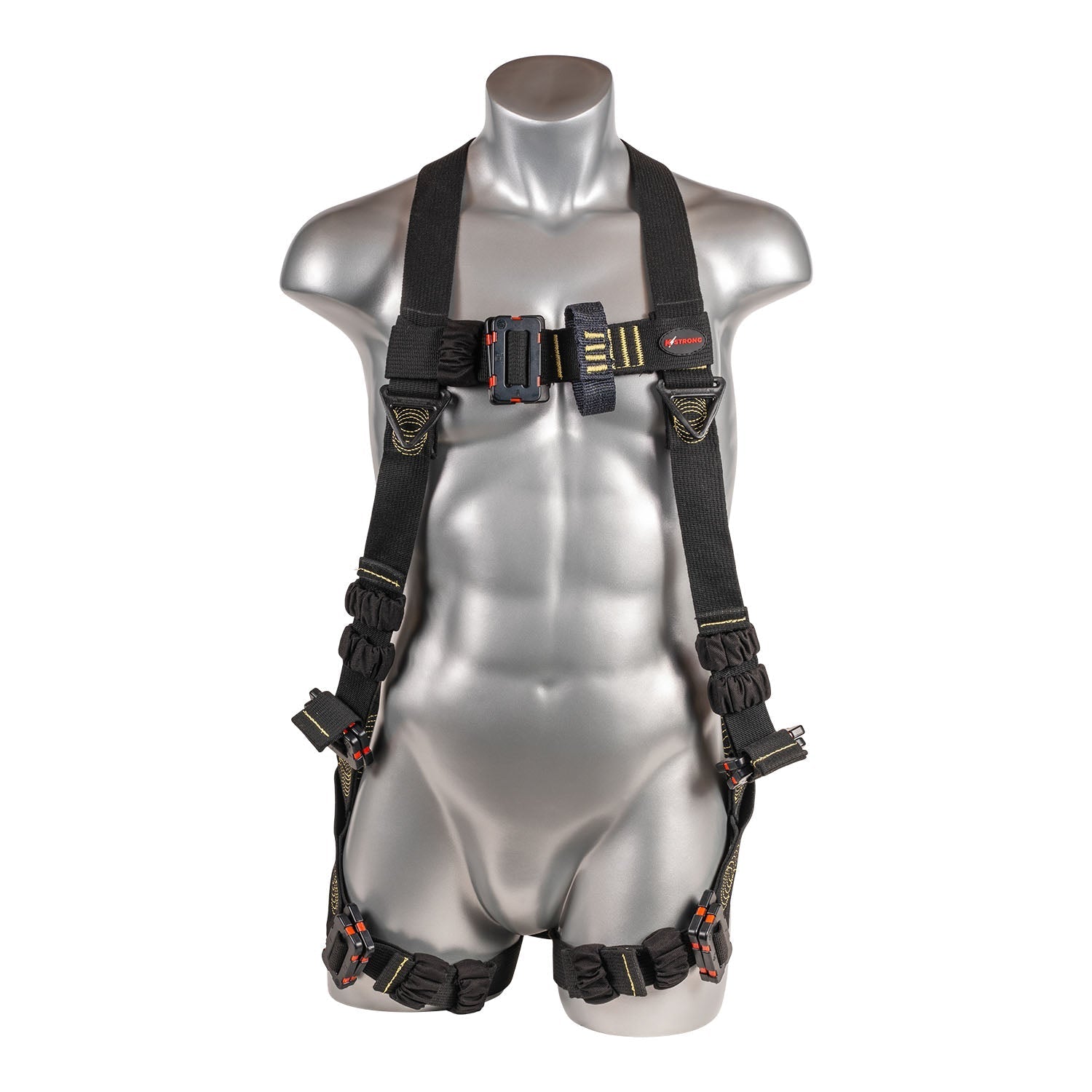 In Stock
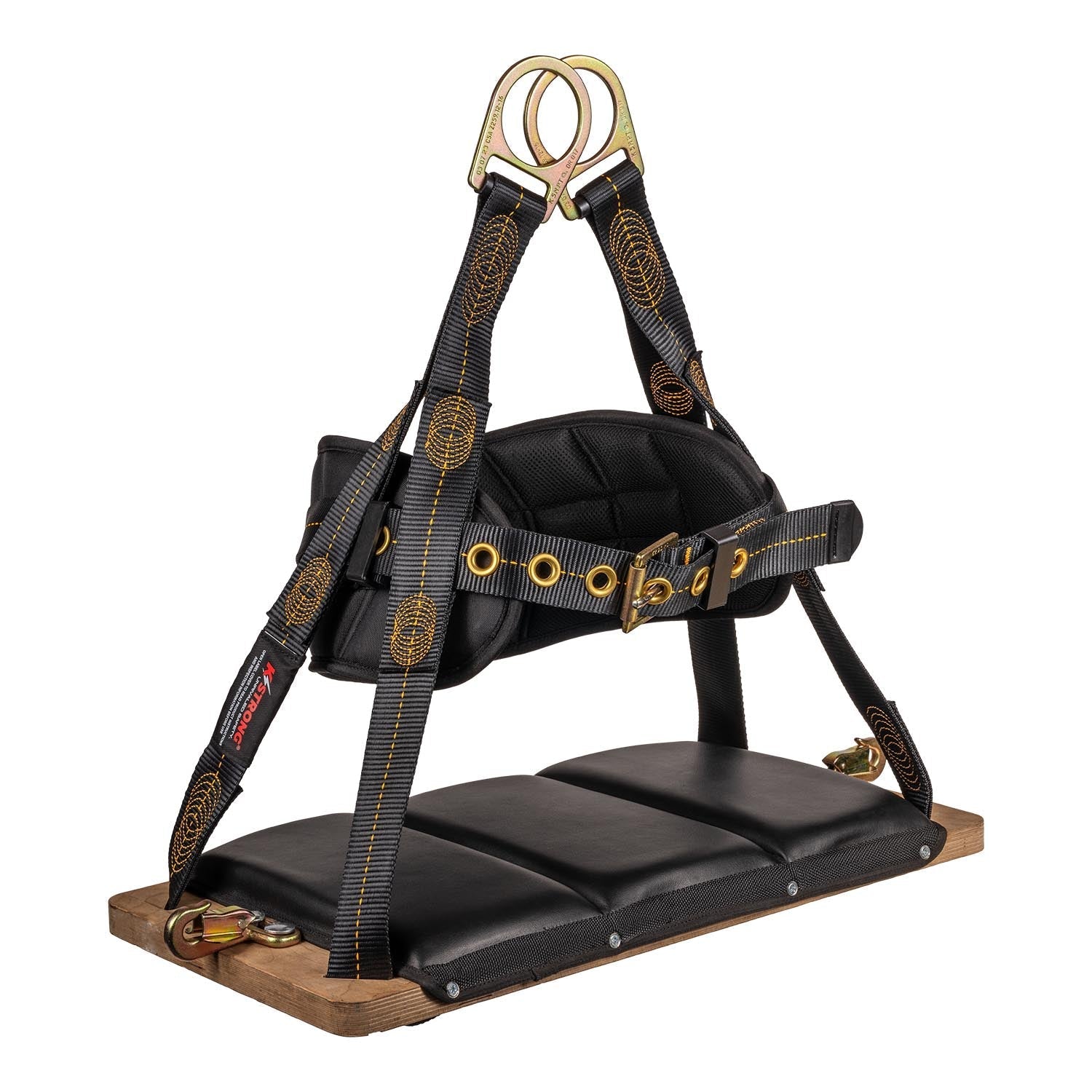 In Stock
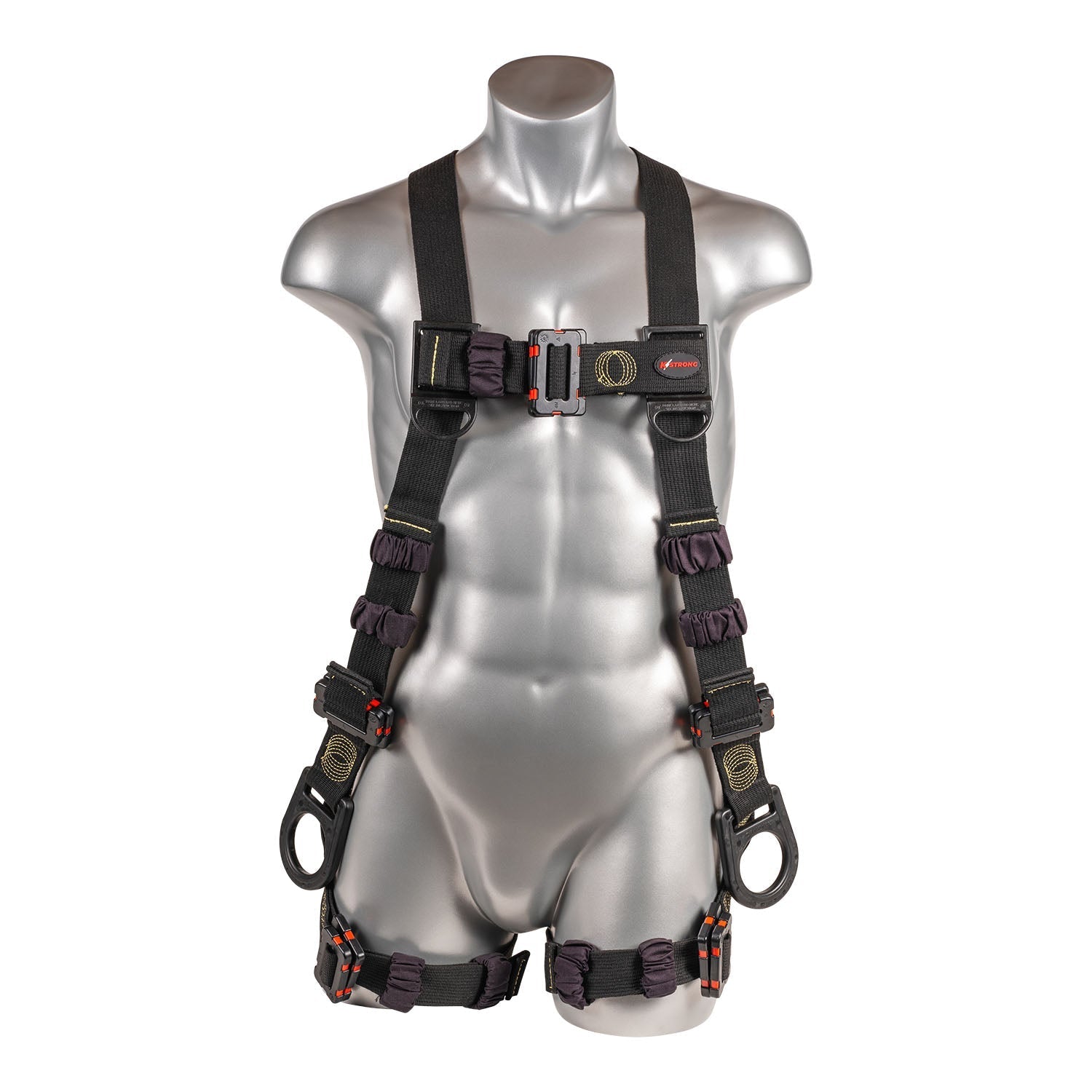 In Stock
 In Stock
 In Stock
 In Stock
 In Stock
 In Stock
 In Stock
 In Stock
 In Stock
 In Stock
 In Stock
 In Stock
 In Stock
 In Stock
 In Stock
 In Stock
 In Stock
 In Stock
 In Stock
 In Stock
 In Stock
 In Stock
 In Stock
 In Stock
 In Stock
 In Stock
 In Stock
 In Stock
 In Stock
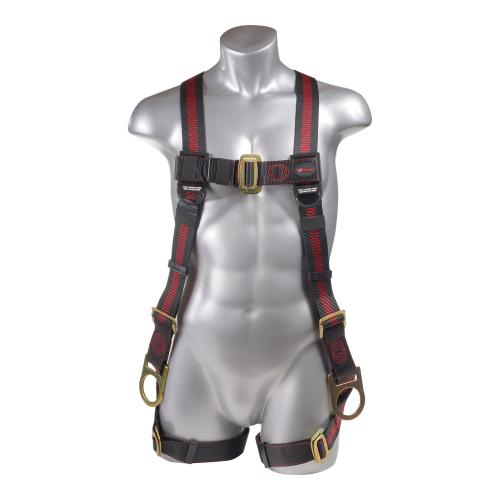 In Stock
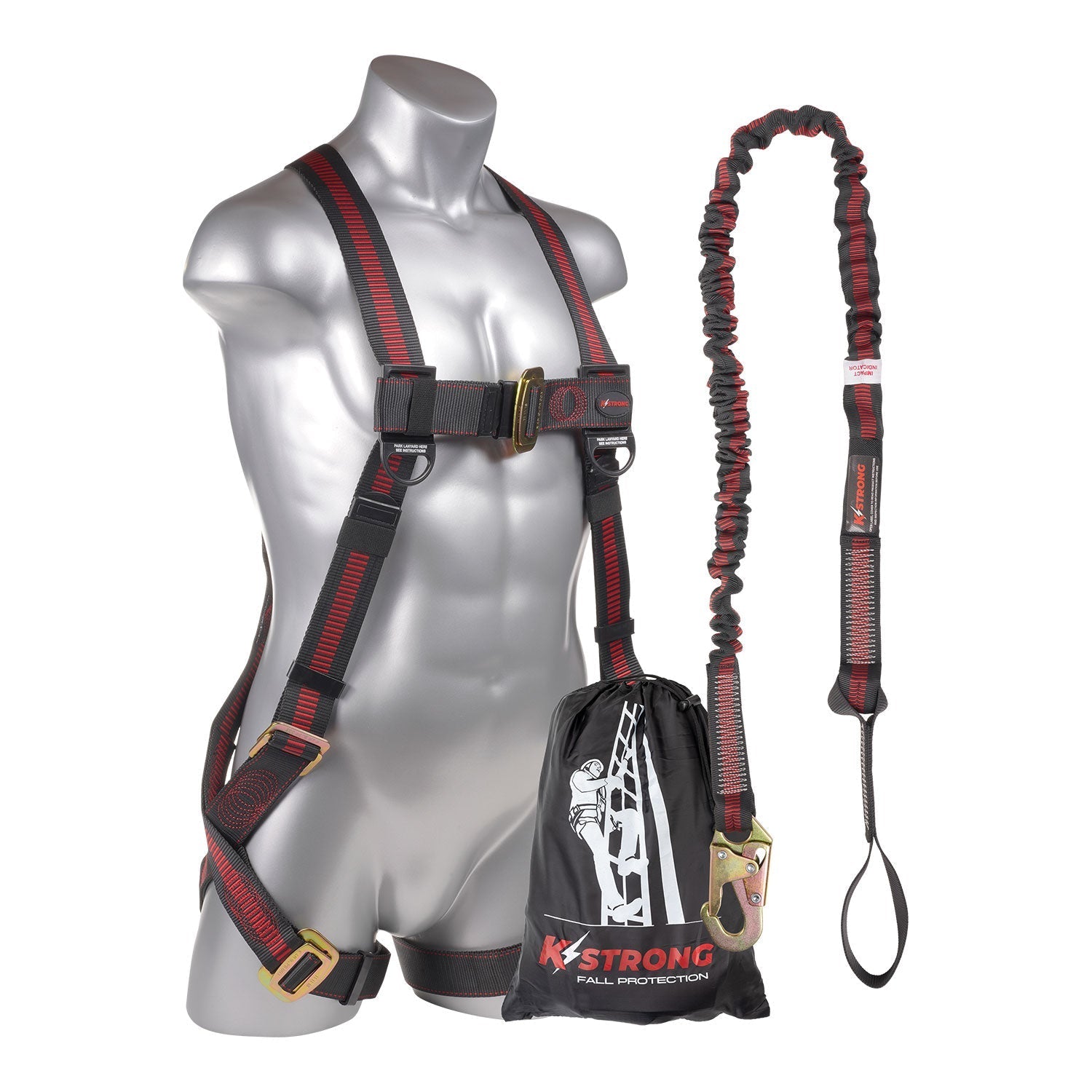 In Stock
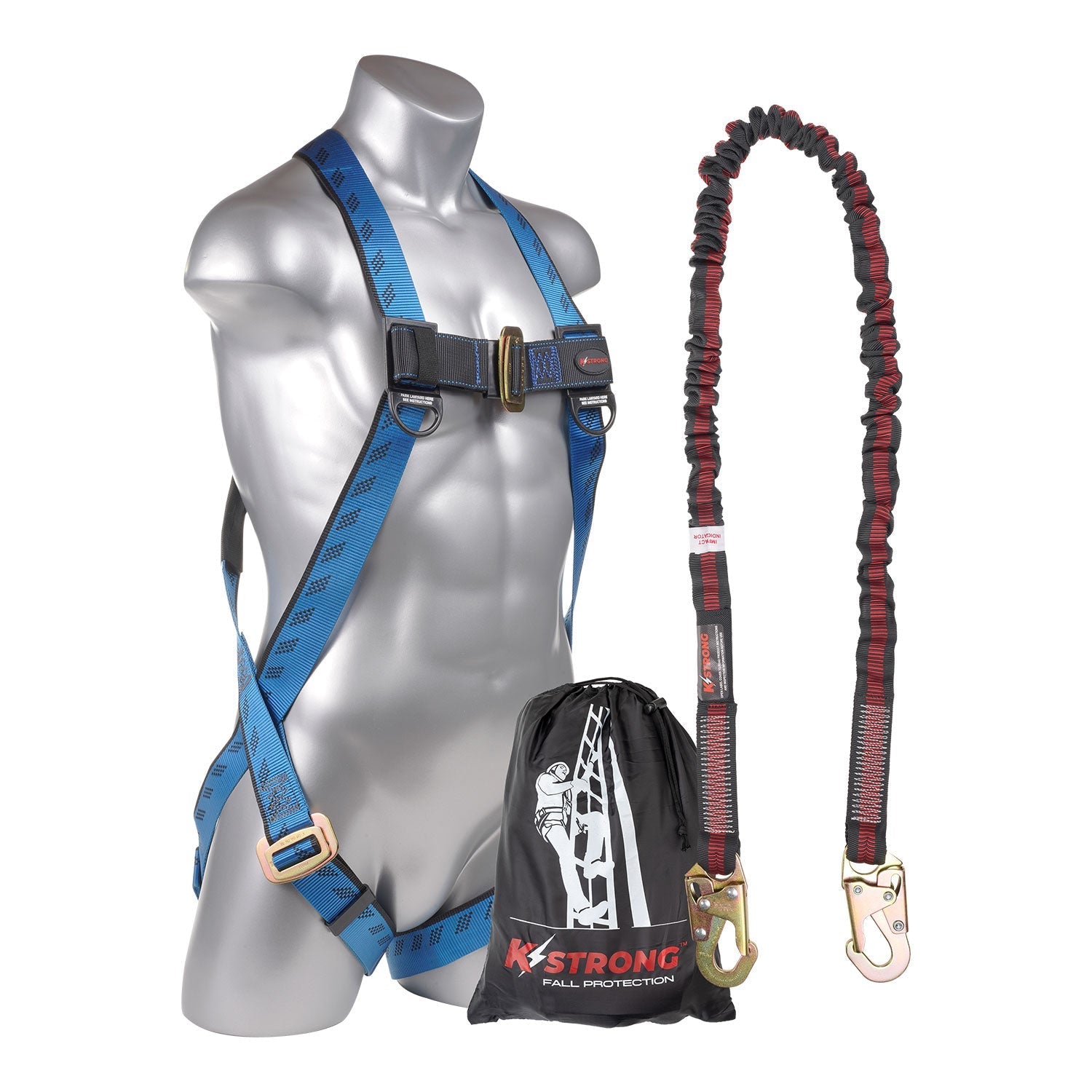 In Stock
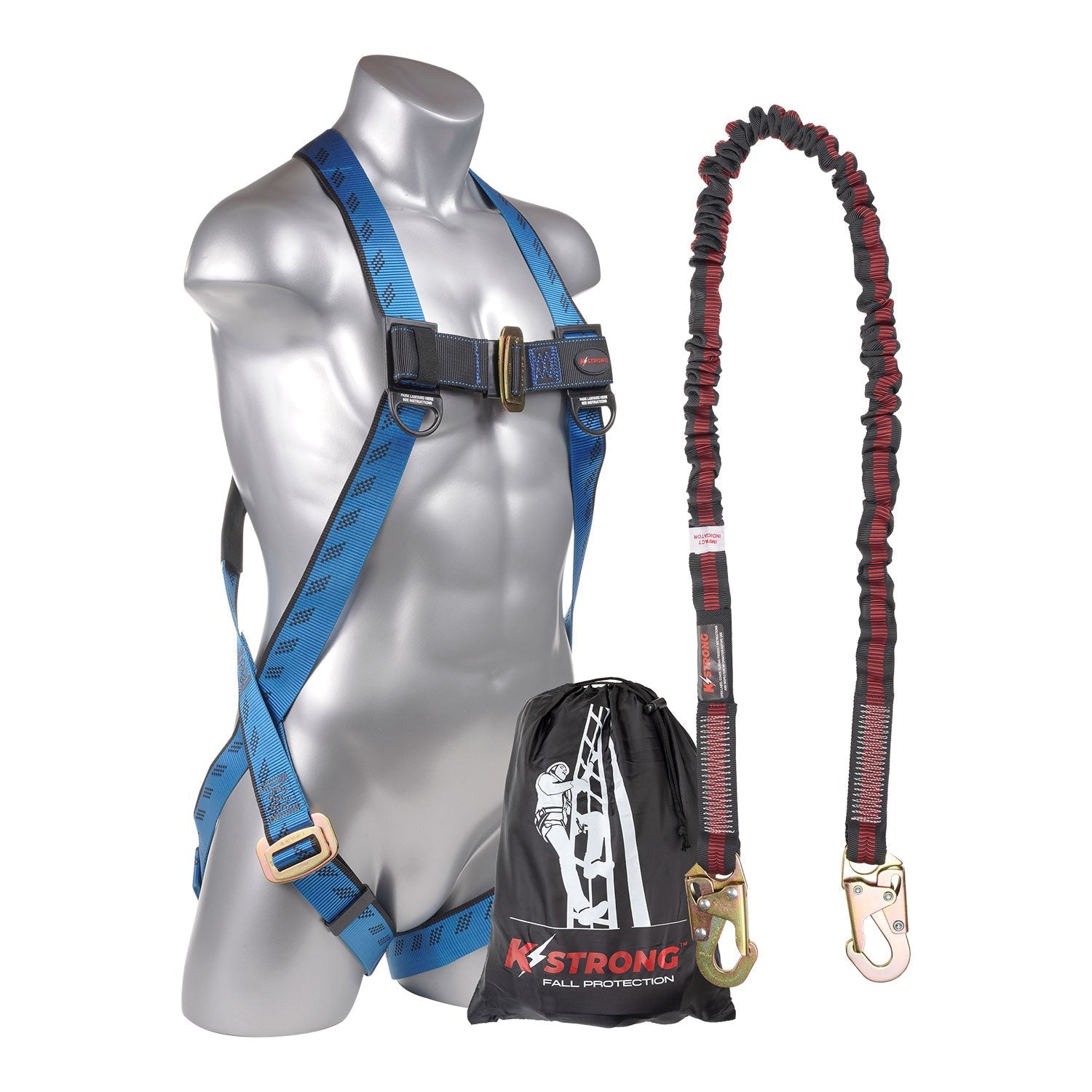 In Stock
 In Stock
 In Stock
 In Stock
 In Stock
Safety Harnesses Buying Guide
What the harness is rated to do. A full body harness is body support built to ANSI/ASSP Z359.11, and the standard defines its job precisely: contain the torso and distribute fall arrest forces over at least the upper thighs, pelvis, chest, and shoulders. That is why body belts alone are gone from fall arrest. The Z359.11 rating also sets the user window at 130 to 310 lb combined weight, worker plus clothing plus tools, so a loaded tool belt counts against that ceiling. OSHA sets the trigger for wearing one: fall protection is required at 6 ft in construction and 4 ft in general industry, which puts nearly all elevated work inside this collection. Every Kapture harness here carries the Z359.11 rating, so the choice is never whether a model is compliant. It is which layout, webbing, and fit match the work, and whether you want the harness by itself or built into a ready system.
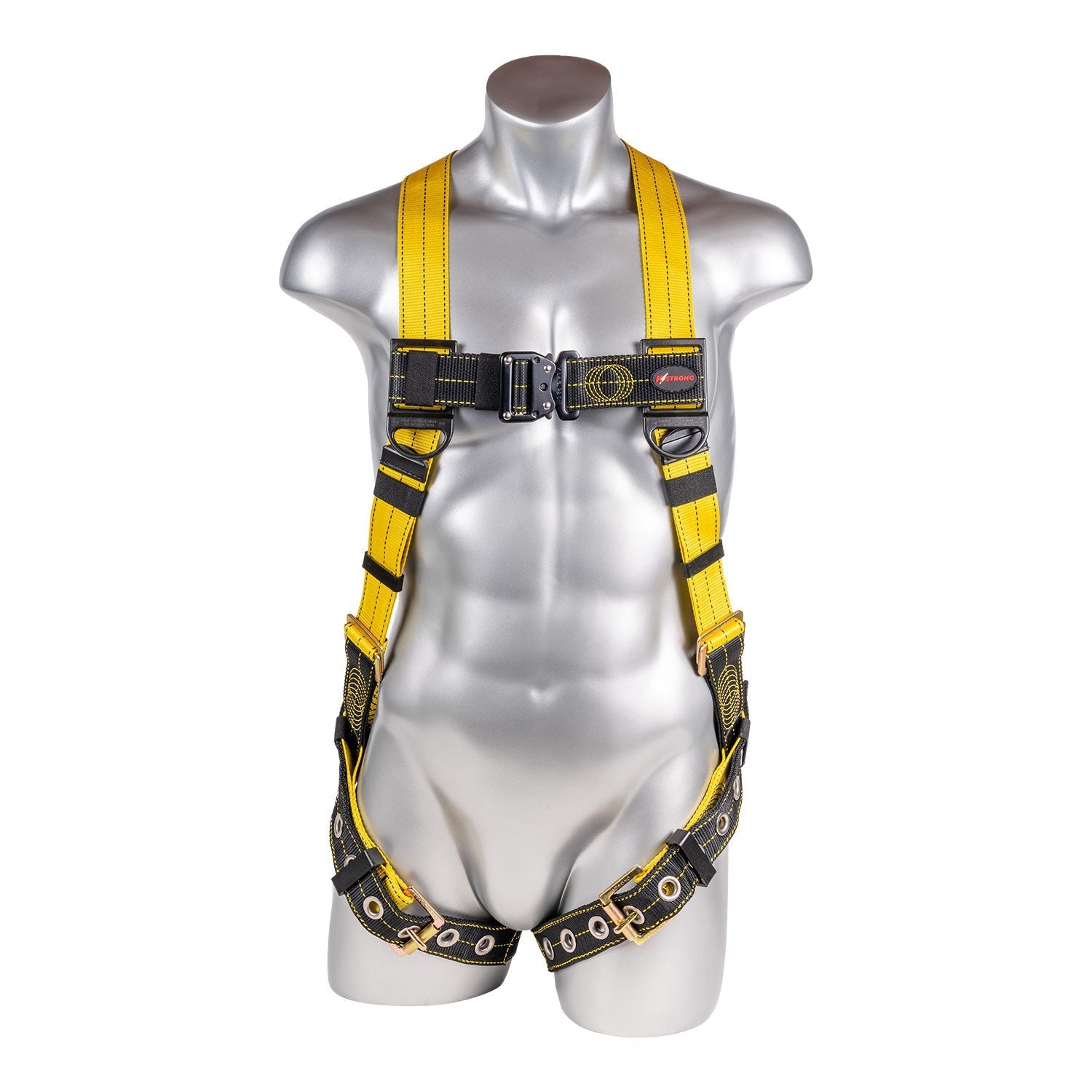
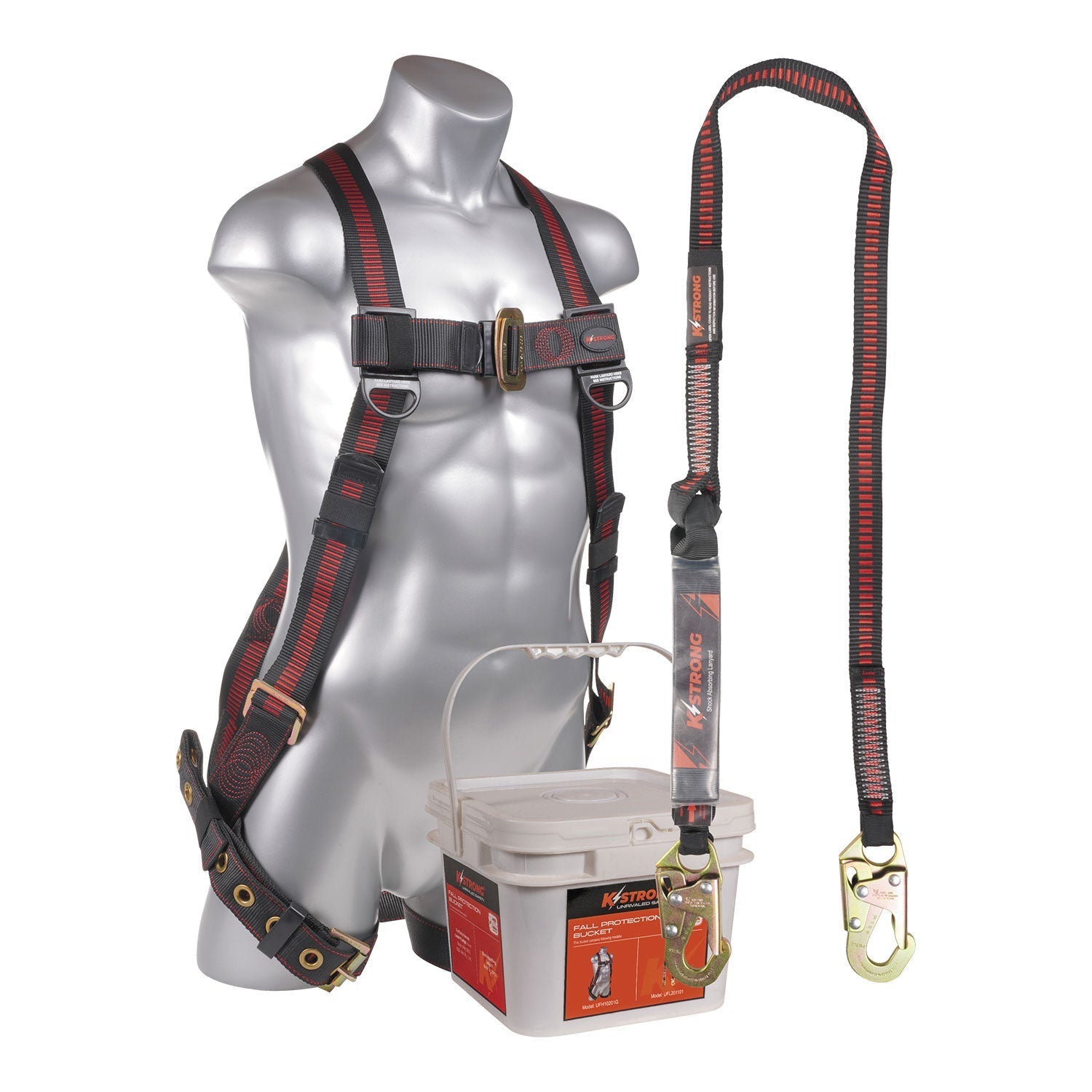
Buy the harness alone, or buy the whole system. This collection splits two ways. If you already run your own lanyards, lifelines, and anchors and only need the body support, the individual safety harnesses are the standalone harnesses, from the $54.88 Essential 3-point up to the $428 derrick harness with seven D-rings and a removable bosun chair. If you want one box that arrives ready to clip in, the safety harness kits pair a harness with the connecting device and anchor already matched and tagged as a set, from a $62.51 harness-and-lanyard combo to a $234 aerial kit. The advantage of the kit is that the pieces are chosen to work together: a roofers kit ships the harness, the rope lifeline, and the roof anchor as one, so there is no mismatch between a harness and a lanyard bought on separate days. Pick standalone when you stock the rest, and pick the kit when you want the system decided for you.
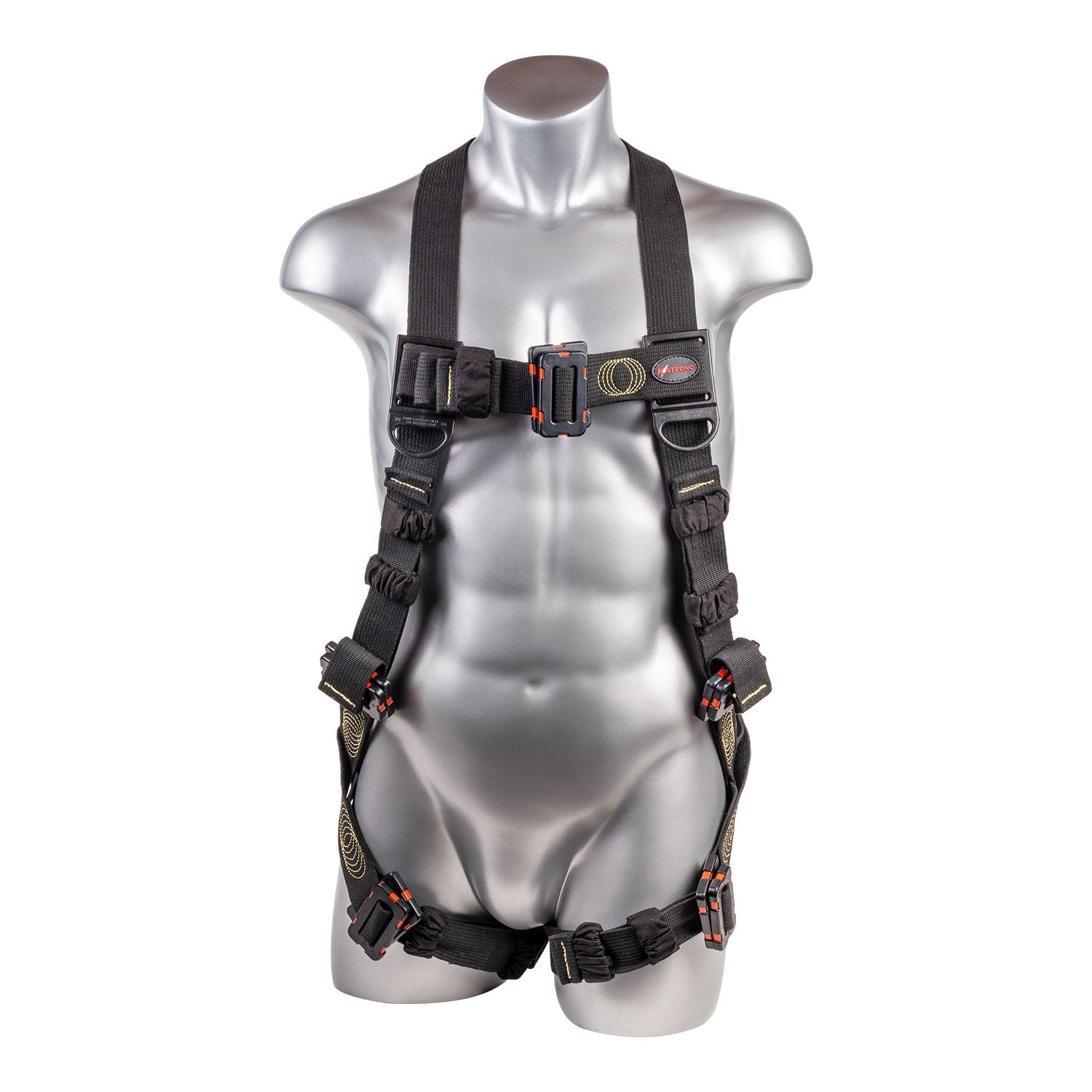
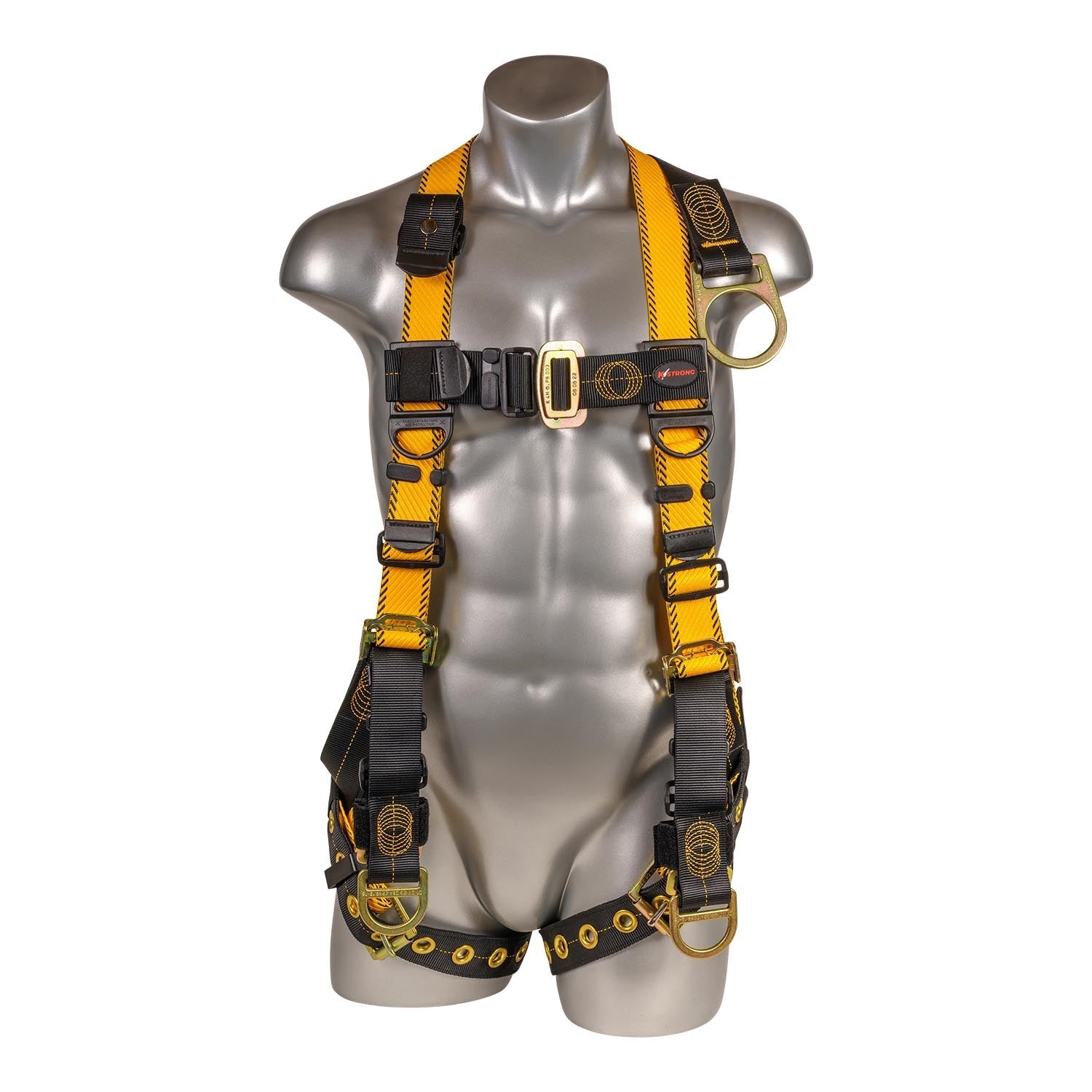
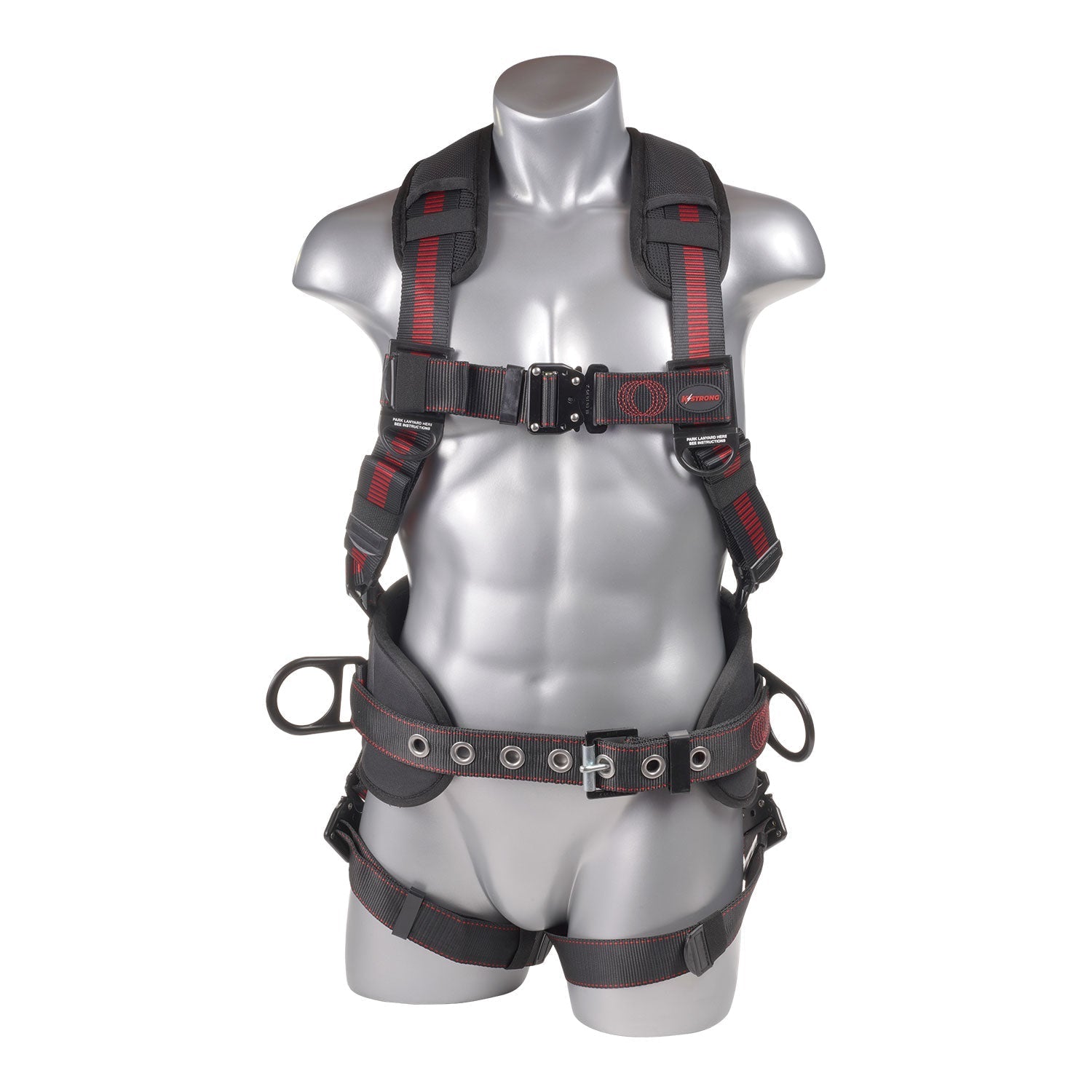
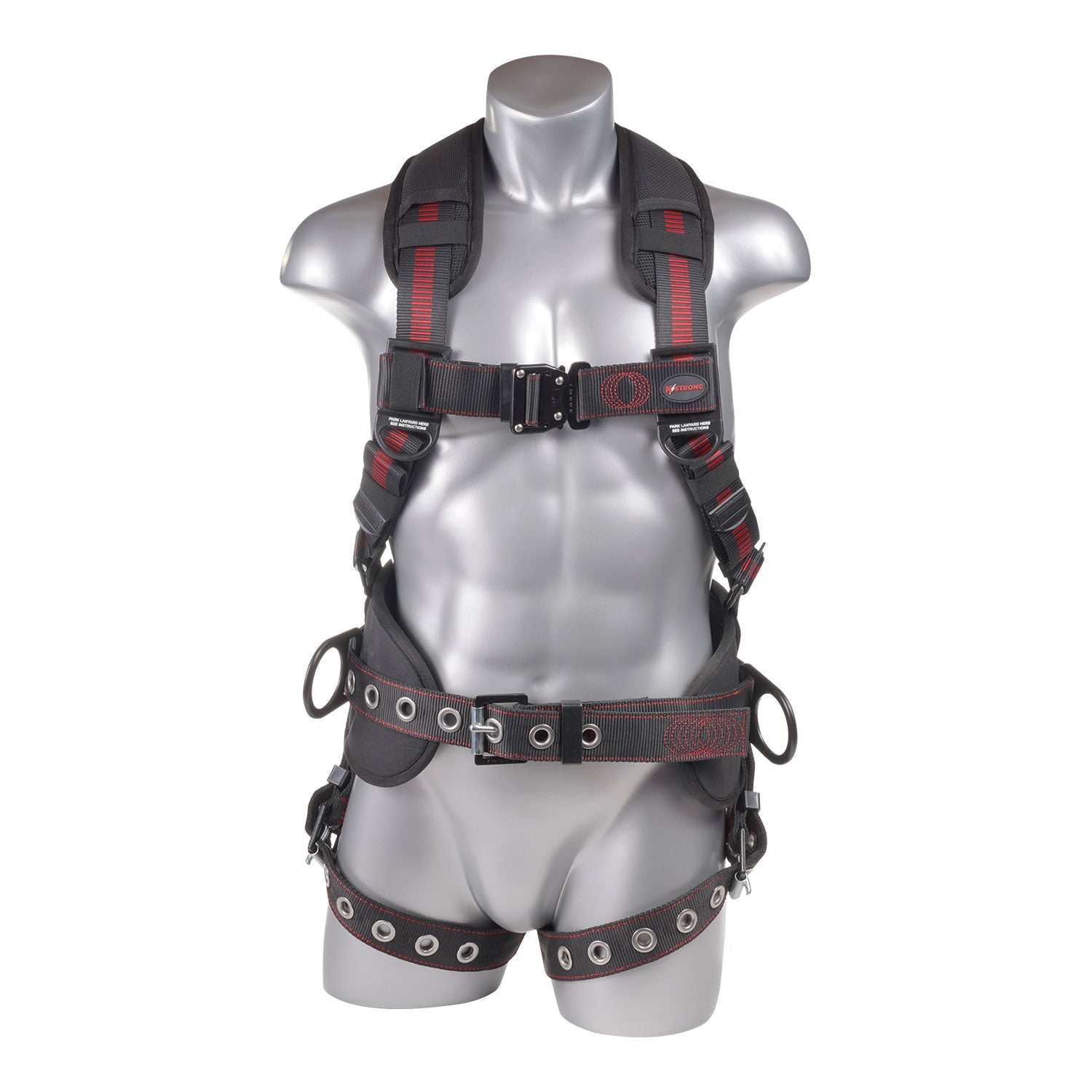
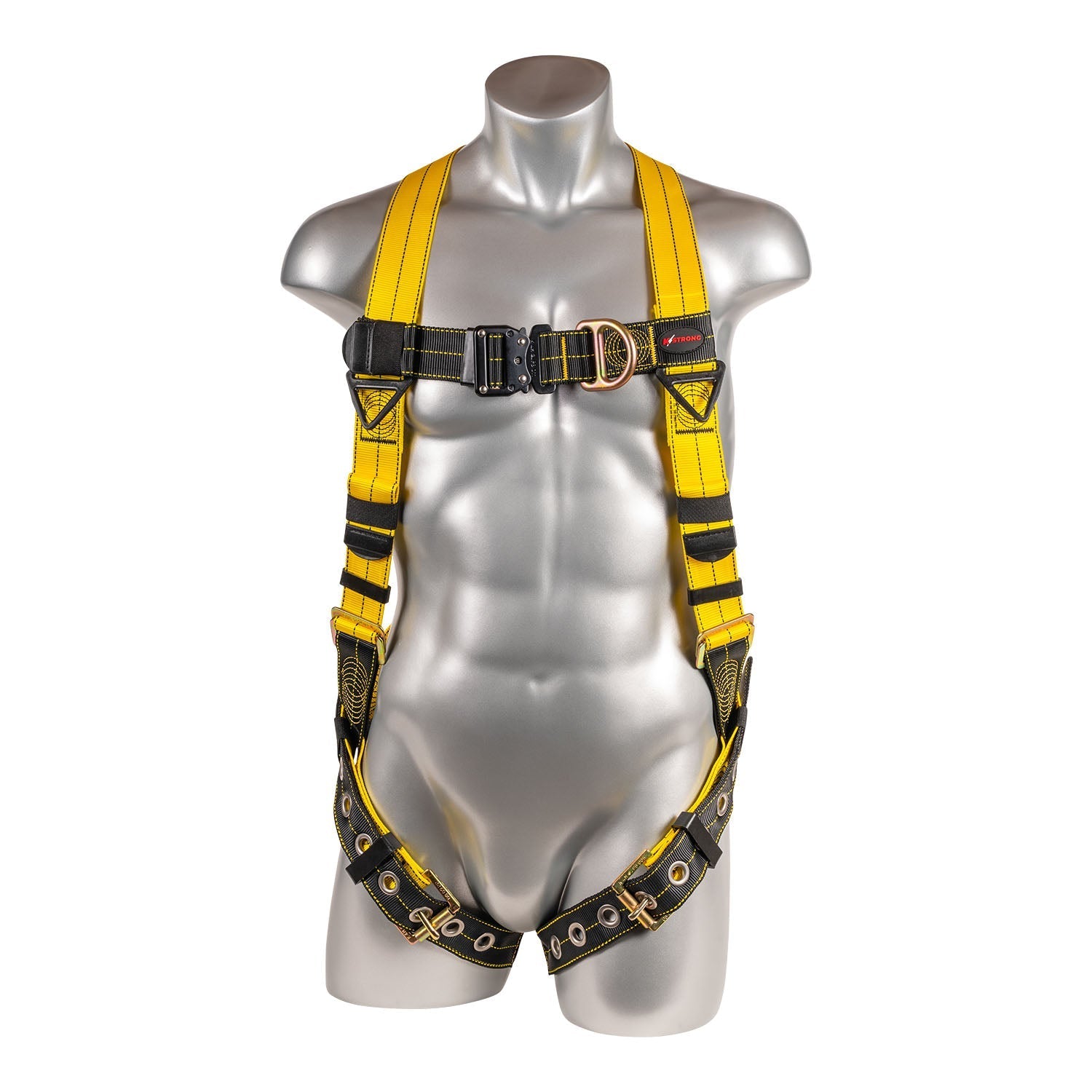
D-ring layout decides the job. The attachment points are the real difference between harness models, and each one has a rule. The dorsal D-ring on the back is the only connection OSHA and ANSI allow for fall arrest, positioned between the shoulder blades so a fall keeps the body upright. Side D-rings at the hips are for work positioning only, leaning into the harness with both hands free on rebar or a pole, and they are never rated to arrest a fall. A front or sternal D-ring handles ladder climbing and positioning. The 3-point Essential in the individual safety harnesses collection carries the dorsal D-ring alone, which is all a straight fall arrest job needs. The 5-point Elite and Epic+ models add front and side D-rings for positioning work, and the Epic+ builds in a waist pad with a removable tool belt. Buy only the D-rings the task uses, because every extra ring and pad adds cost and weight that an occasional-use crew will not touch.
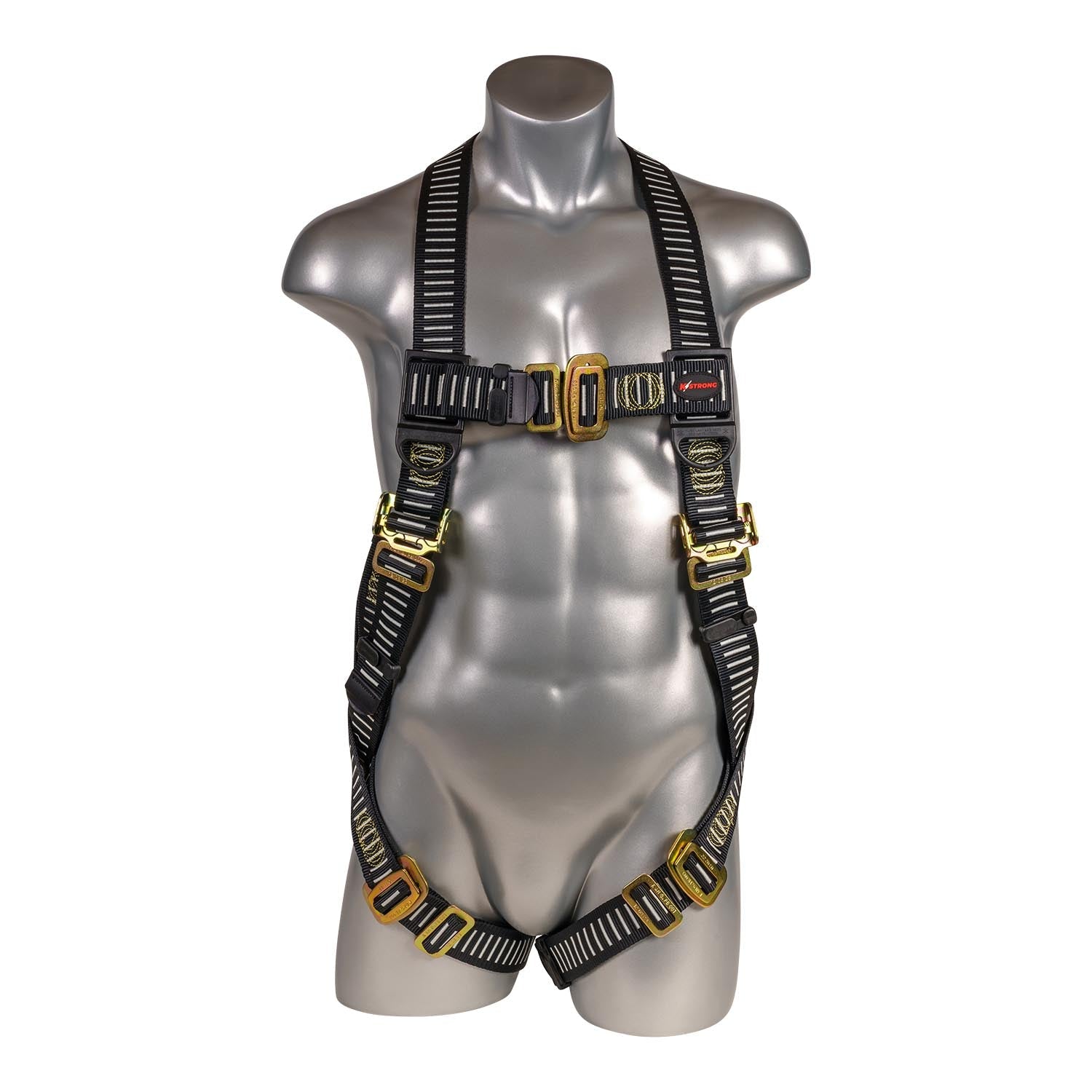
Sizing, buckles, and all-day comfort. Harnesses ship in size ranges, typically S-M, M-L, and L-XL, and the fit has to hold the dorsal D-ring high on the back and the leg straps snug, because a low D-ring lets the body fold during arrest. Buckle style is a real choice on the individual safety harnesses: mating buckles (MB) are the fastest to don, tongue buckles (TB) let a worker dial in an exact leg fit and hold it, and quick connect (QC) buckles snap and release one-handed. For crews wearing a harness eight hours a day, padding stops being a luxury. The Epic+ and the padded Element models add back and shoulder padding and trauma relief straps, the deployable loops a suspended worker stands in to keep blood moving and stave off suspension trauma while waiting for rescue. Comfort is a safety feature here, not a comfort feature, because a harness that digs in gets loosened, and slack turns arrest forces into injury.
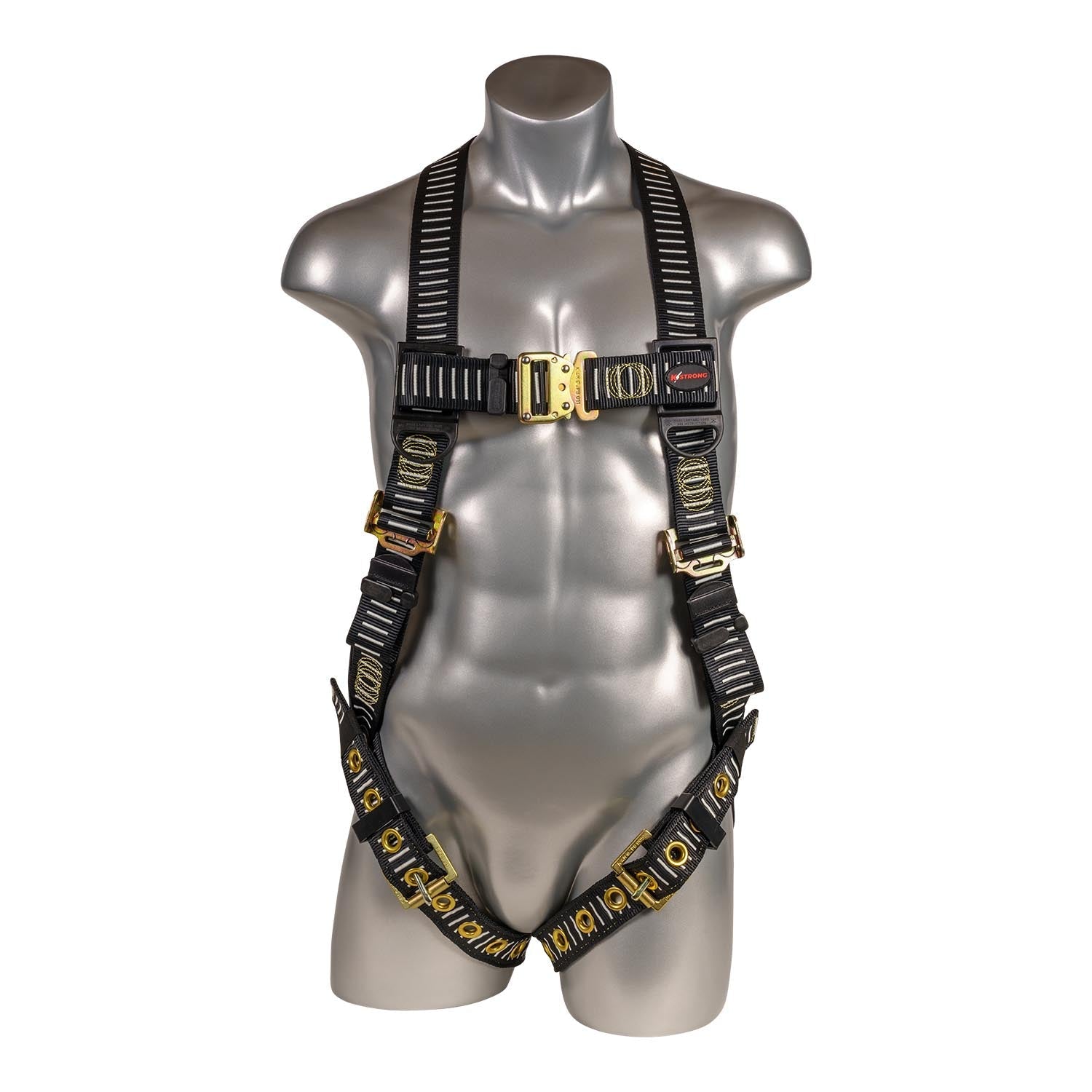
Specialty webbing for hot, electrical, and derrick work. Standard polyester webbing fails fast around specific hazards, so the individual safety harnesses collection carries treated and rated builds for them. The Element line uses Revolta oil and water repellent webbing that shrugs off the drilling fluid and grime that soak and stiffen ordinary straps. Arc flash rated Element harnesses, from $309, are built to survive electrical exposure that would destroy standard webbing and hardware, for utility and energized work. Welding harnesses use flame resistant webbing and heat tolerant hardware so a stray spark or slag drip does not compromise the straps holding the worker. The oil and gas derrick harnesses run from a non-belted 3 D-ring model up to a belted seven D-ring version with a removable bosun chair for long suspended work on the derrick board. Match the webbing to the hazard the worker actually faces, because a general purpose harness in an arc flash or hot work zone is the wrong tool, not a cheaper one.
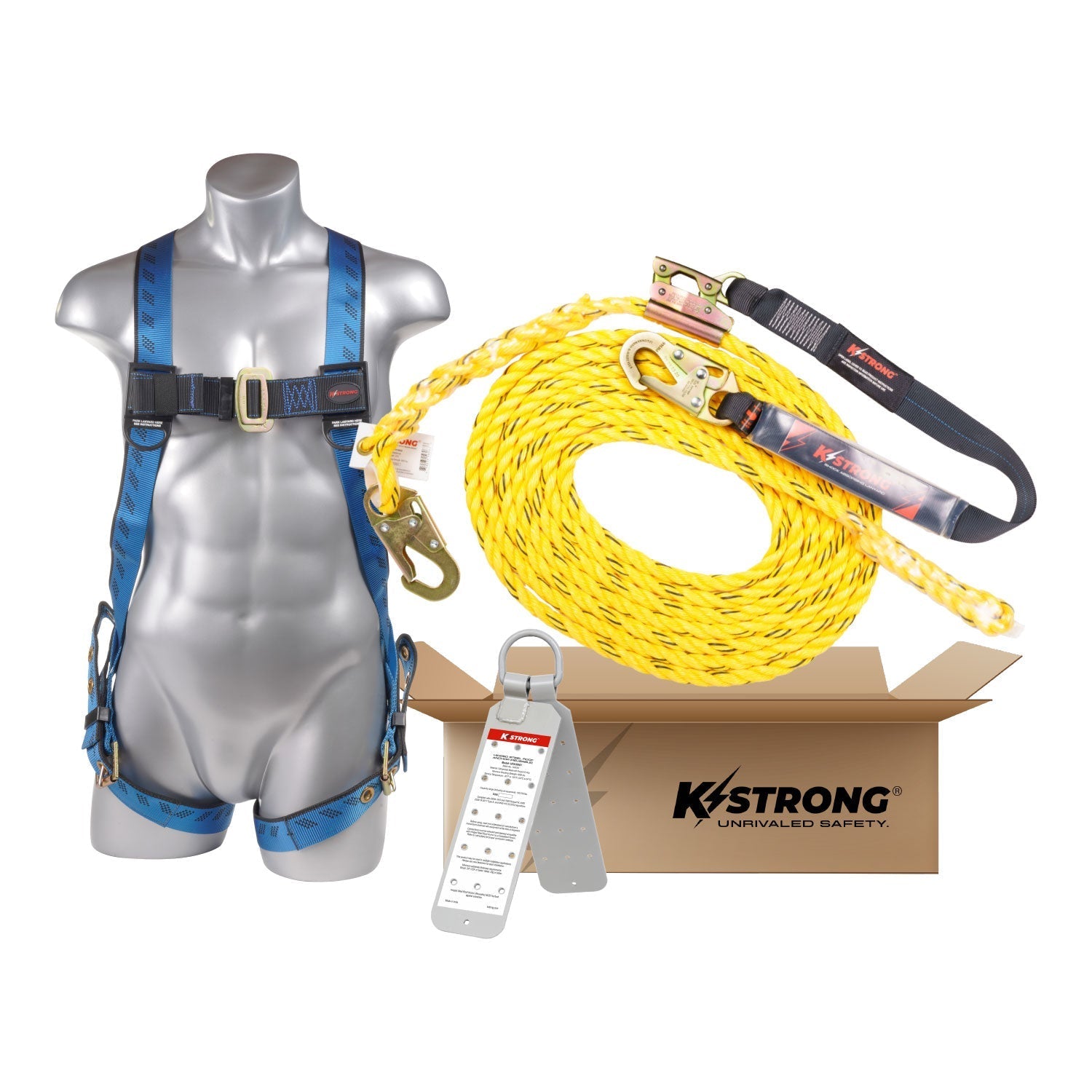
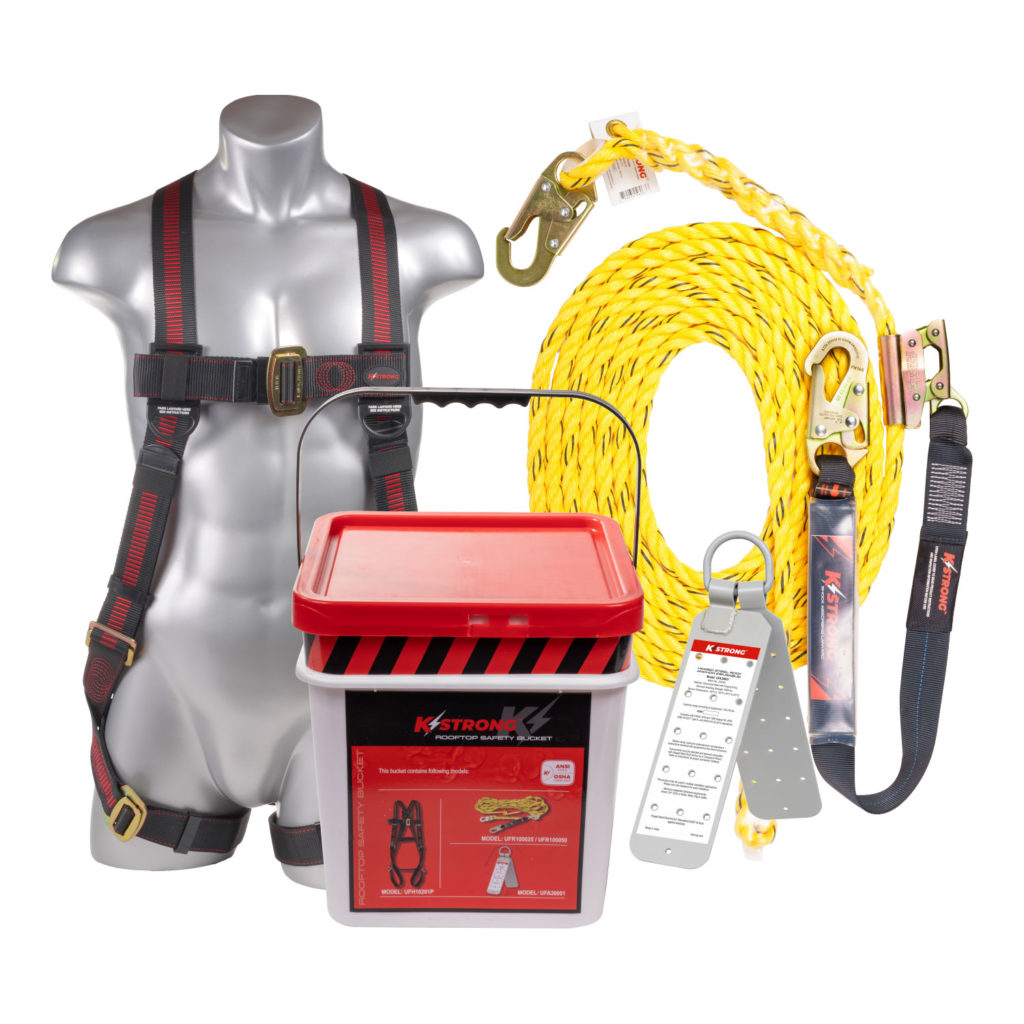
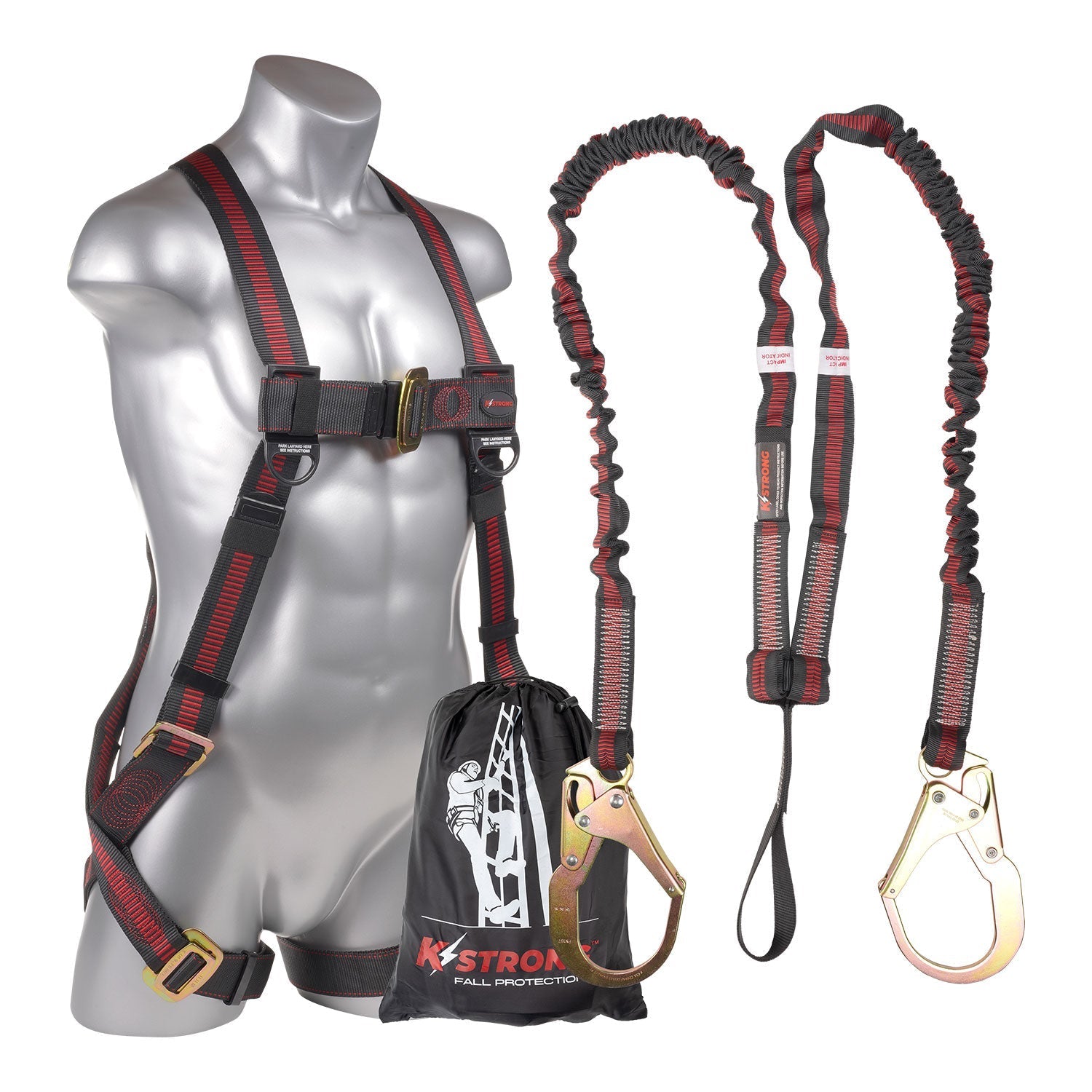
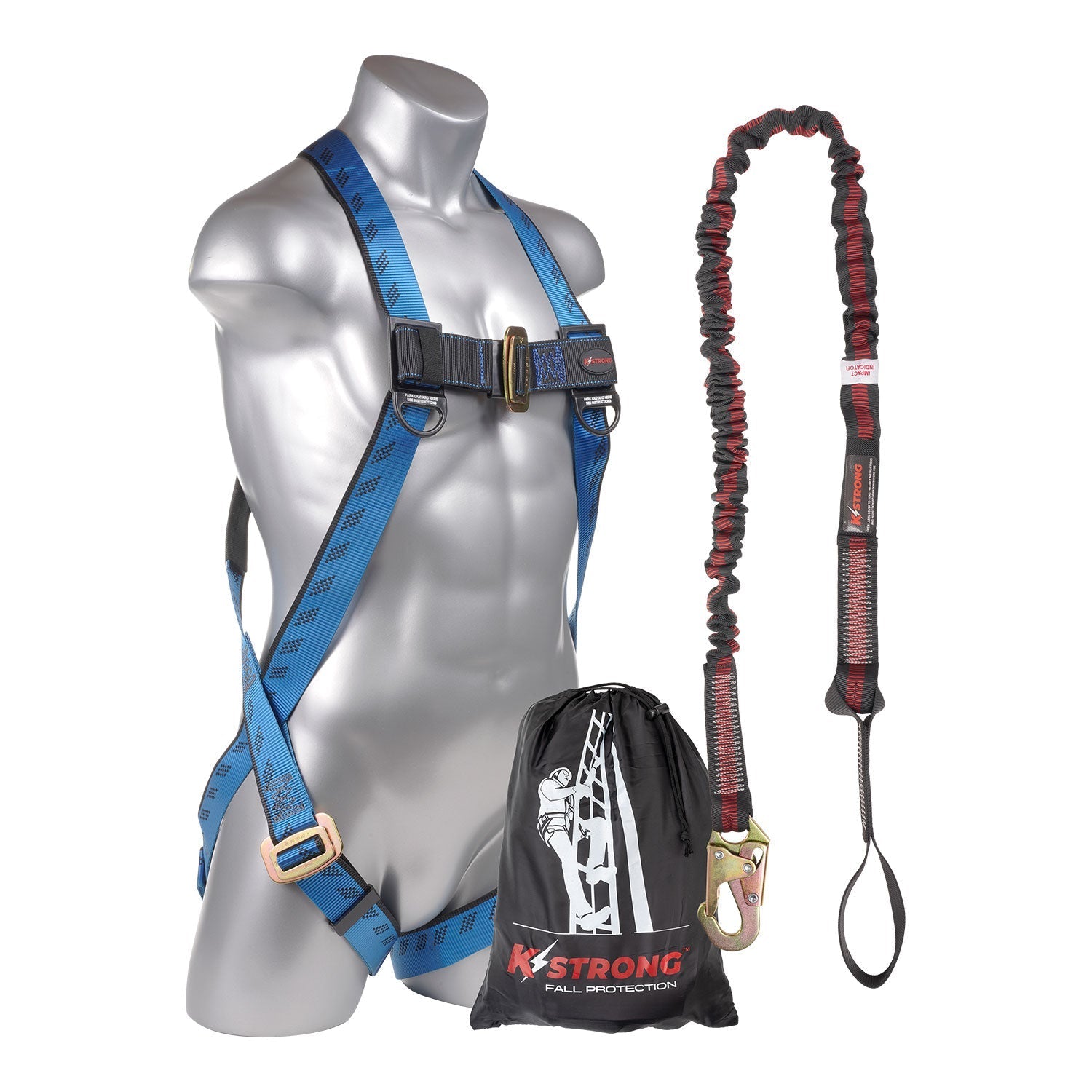
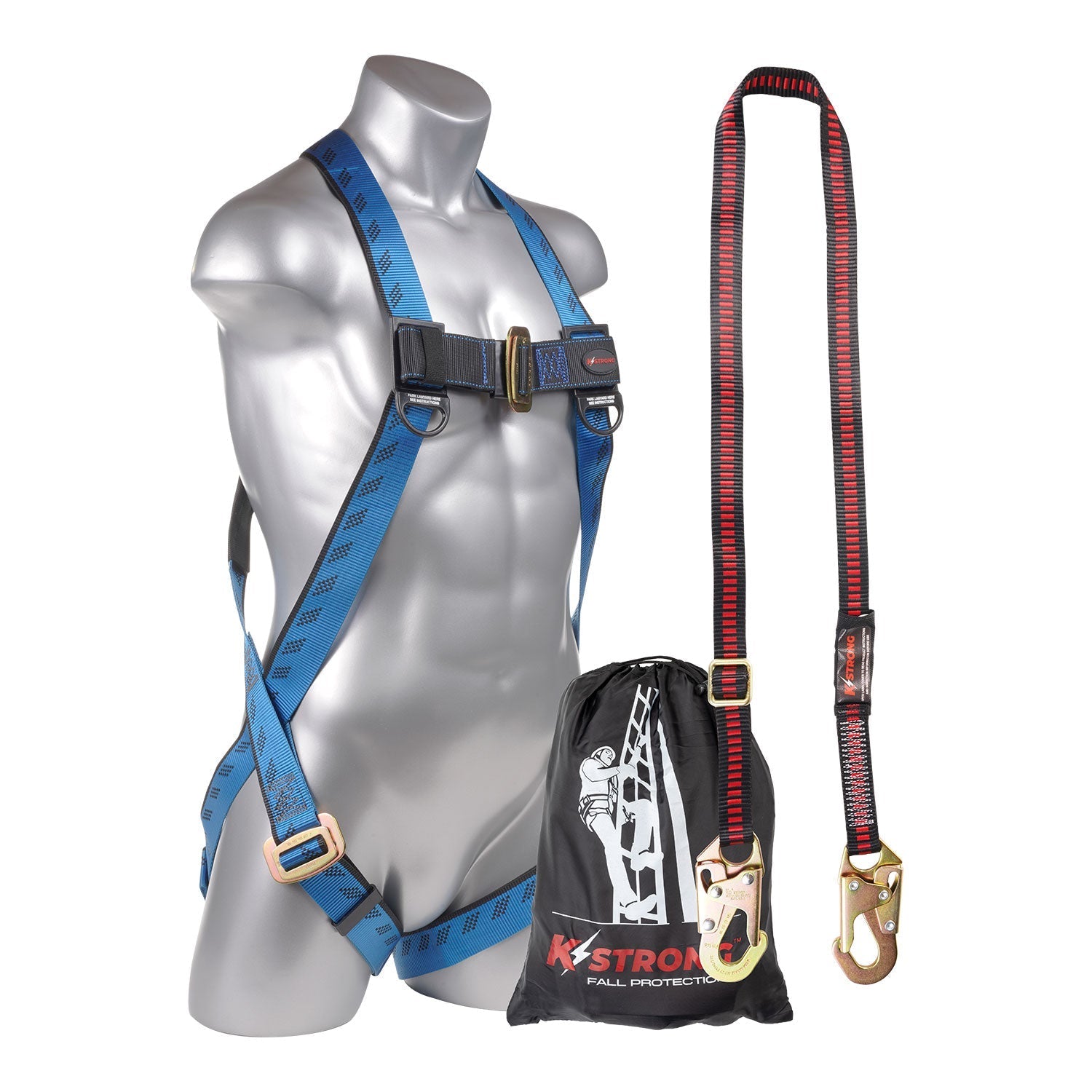
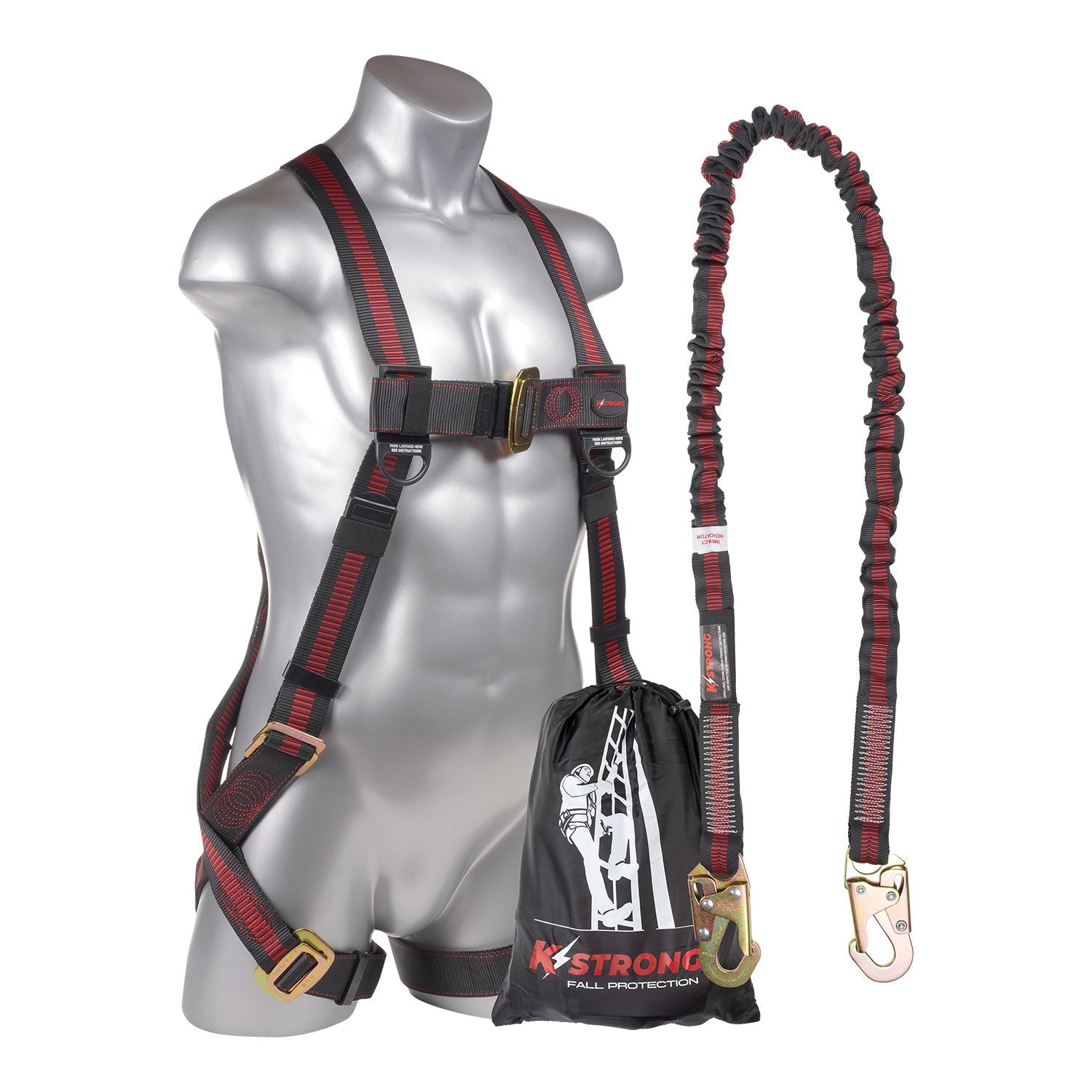
Kits for roofing, aerial, and bucket work. When the whole system should arrive matched, the safety harness kits package it. Residential roofing runs on one of OSHA's bluntest rules, 1926.501(b)(13), which requires conventional fall protection at 6 ft, and the roofers kits answer it with a harness, a 25 or 50 ft rope lifeline, and a roof anchor in one box, from $153 to $227. Aerial and combo bucket kits pair a harness with either a self-retracting lifeline or a shock absorbing lanyard for lift and bucket work, from $79 up. The harness-plus-lanyard kits, from $62.51, ship an Elite or Essential harness with a 6 ft internal design shock absorbing lanyard, including twin leg versions with rebar hooks for 100 percent tie-off while moving between anchor points. Every kit ships the connecting device and anchor already sized to the harness, which removes the most common field mistake: a harness and a lanyard bought separately that were never verified as a matched system.
Frequently Asked Questions
For straight fall arrest, the Essential 3-point at $54.88. It carries the dorsal D-ring, the only attachment OSHA allows for arrest, meets ANSI Z359.11, and covers the majority of jobs. Step up to a 5-point Elite or Epic+ only when the work adds positioning, where you need the side and front D-rings, or to a padded Element when the harness is worn all day.
The back dorsal D-ring is for fall arrest and nothing else. The side D-rings at the hips are for work positioning, taking your weight while both hands work, and are not rated to stop a fall. A front or sternal D-ring is for ladder climbing and positioning. Buying more D-rings than the job uses adds weight and cost, so match the layout to the task.
Fit is a safety issue. Our harnesses come in ranges like S-M, M-L, and L-XL, and Z359.11 rates them for 130 to 310 lb combined weight, worker plus tools. Set it so the dorsal D-ring sits high between the shoulder blades and the leg straps are snug. A loose harness lets the body fold during arrest and drives forces where they injure.
Buy the standalone harness if you already stock lanyards, lifelines, and anchors and only need body support. Buy the kit when you want a matched system out of the box, harness plus connecting device plus anchor, tagged as a set. Kits remove the most common field error, a harness and a lanyard bought separately that were never verified to work together.
Only if the worker faces that hazard. Arc flash rated harnesses are built to survive electrical exposure that destroys standard webbing, for energized and utility work. Welding harnesses use flame resistant webbing and heat tolerant hardware against sparks and slag. For general work at height, a standard Kapture harness is correct, and the specialty models are the wrong tool there, not an upgrade.
Immediately after it arrests a fall, no exceptions, because the harness may have taken loads that are not visible. Short of that, inspect before every use: webbing for cuts, burns, and UV chalking, stitching for pulls, and hardware and D-rings for cracks or corrosion. Any harness with illegible labels or that fails inspection is retired, and a competent person should run documented periodic inspections.