Pallet Stackers
Pallet stackers bridge the gap between a pallet jack and a forklift: they roll a loaded pallet across the floor like a jack, then raise it up a mast to put it on racking, into a truck, or onto a mezzanine. This collection is built around Vestil, which builds the range end to end, alongside EKKO straddle stackers, a Morse drum stacker, and Valley Craft on the manual end. Prices run from a portable mini stacker near $746 and manual models from about $1,206 up past $20,000 for the fully powered bale clamp machines, so the range covers everything from a two-pallet stockroom to a full shift on a warehouse floor. The buying decision comes down to three questions in order: how the mast and legs clear your load, how much of the work is powered, and what capacity you need at the height you actually lift. The guide below walks each one.
Compare Pallet Stackers
| Model | Price | Capacity | Power | |
|---|---|---|---|---|
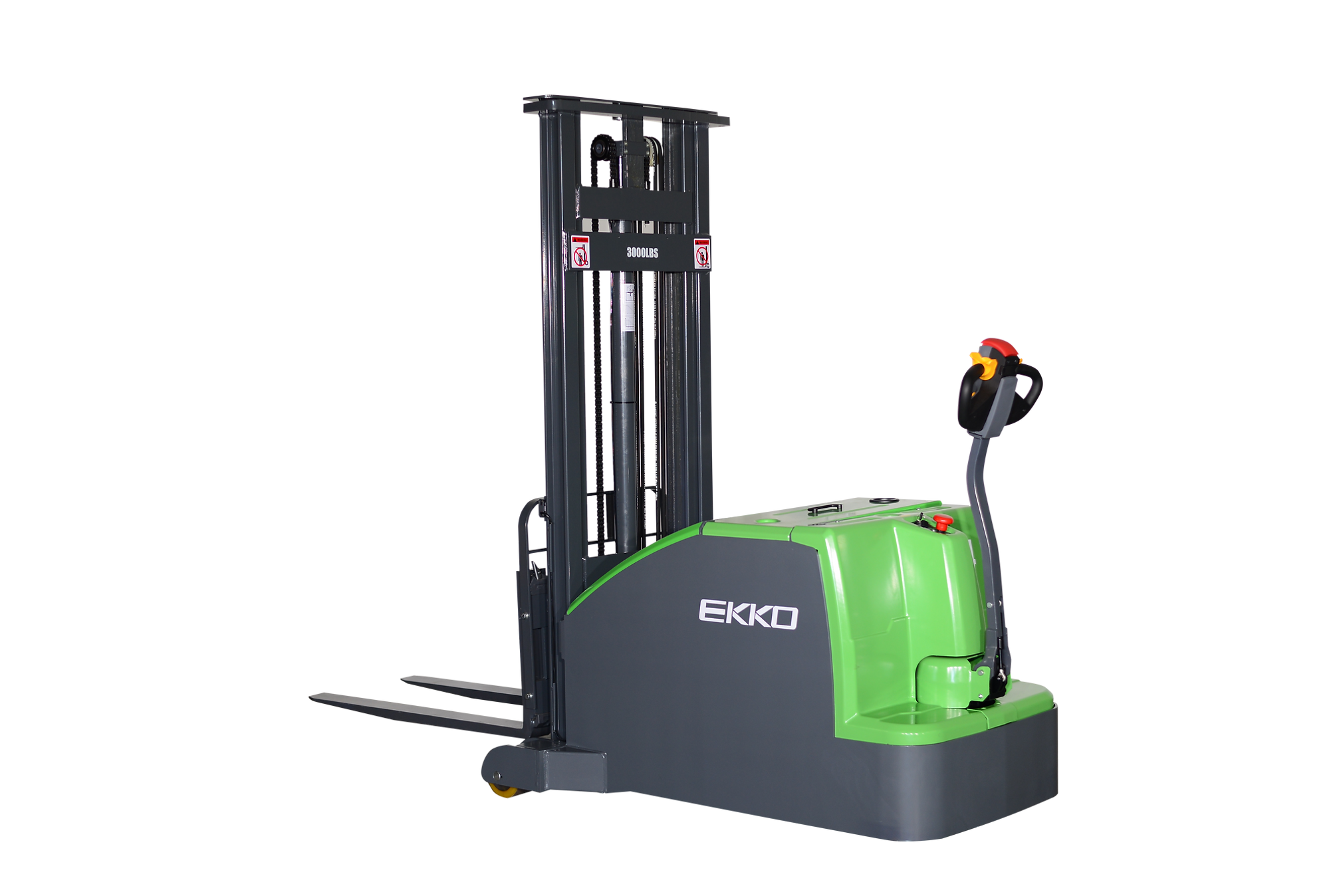
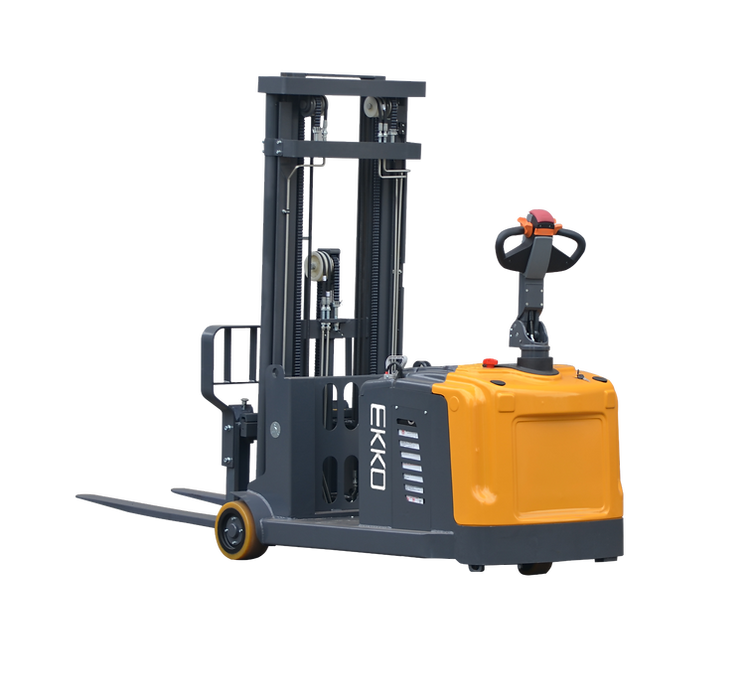
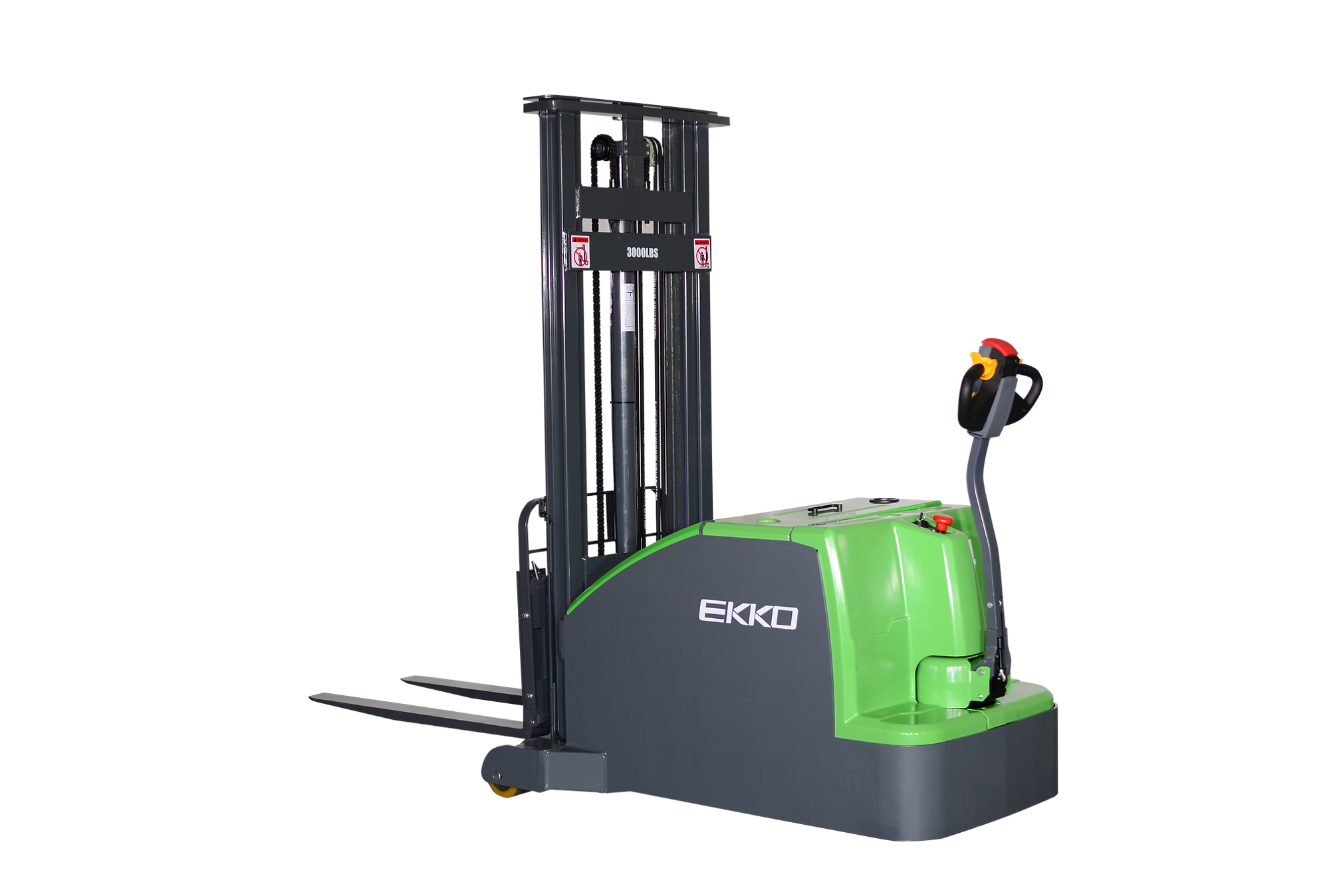
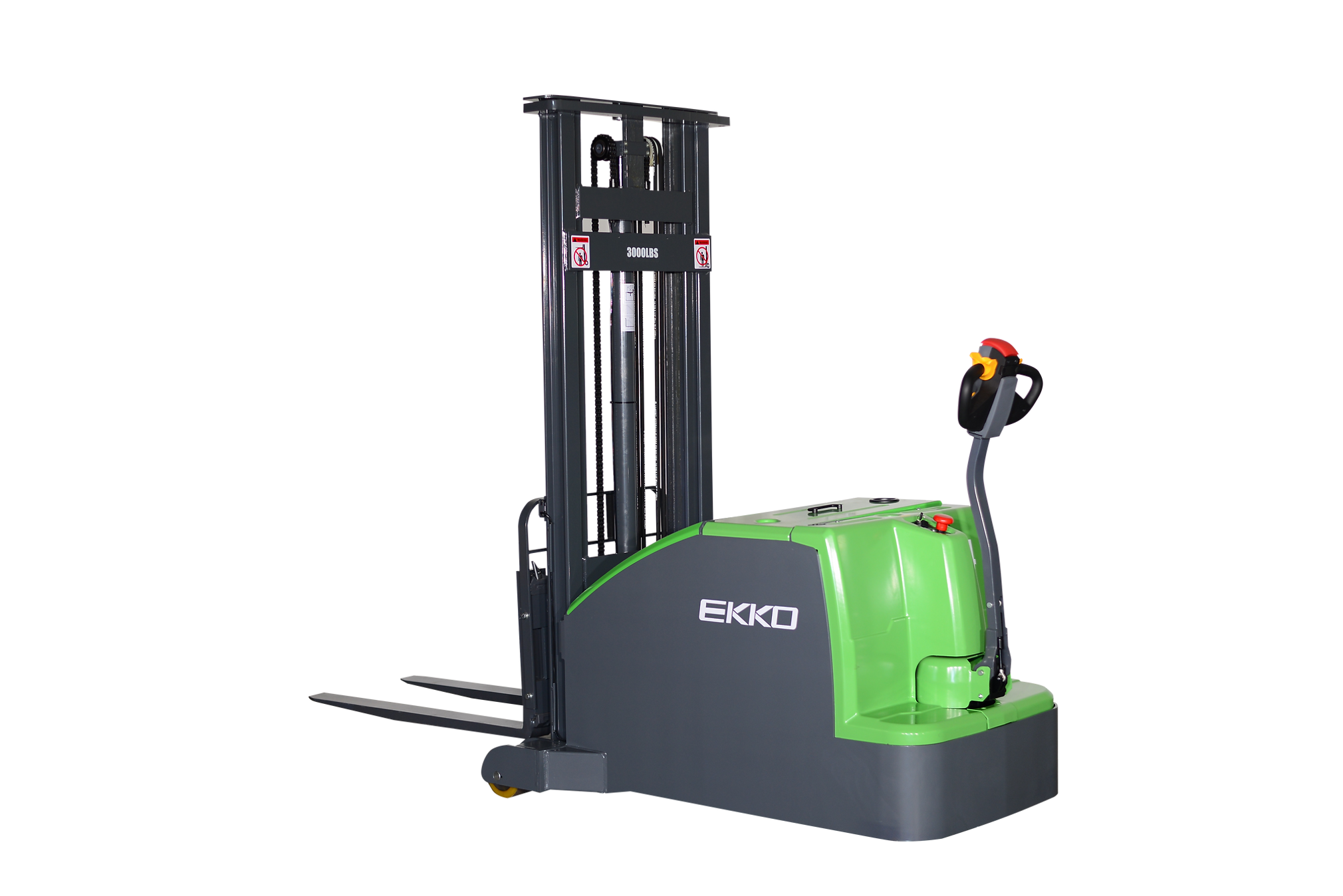
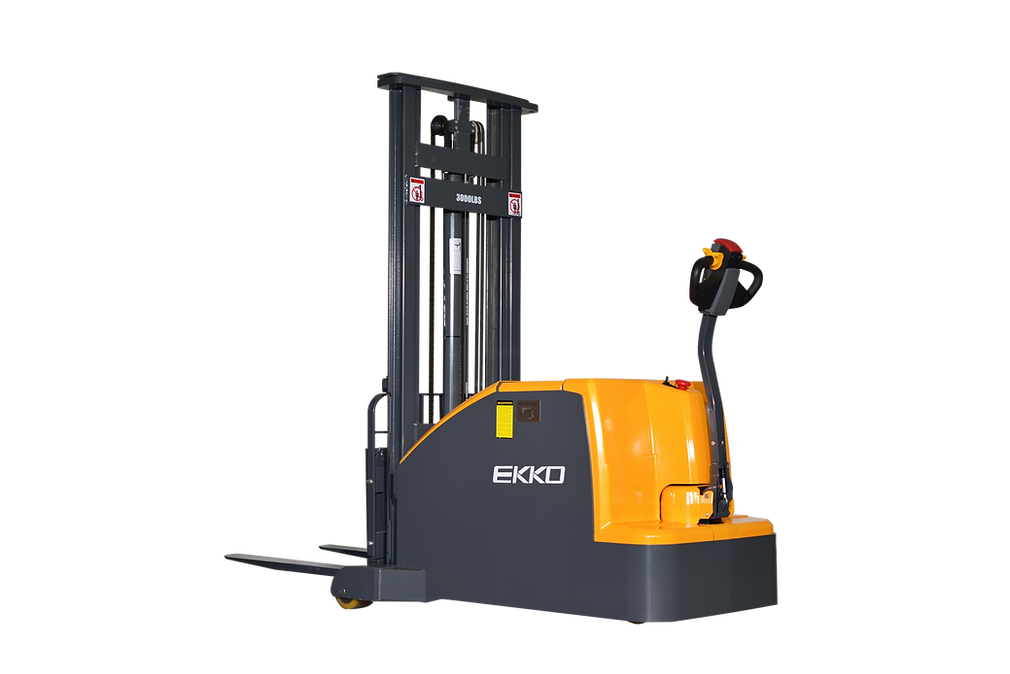
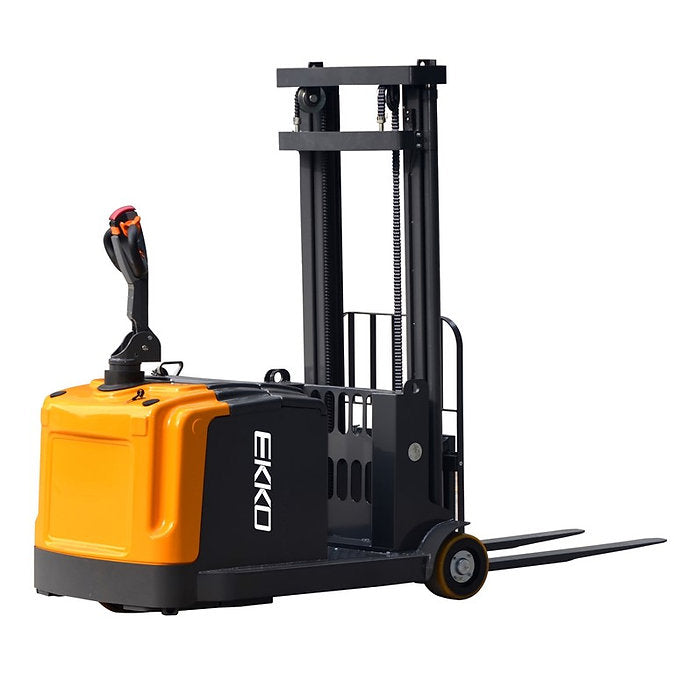
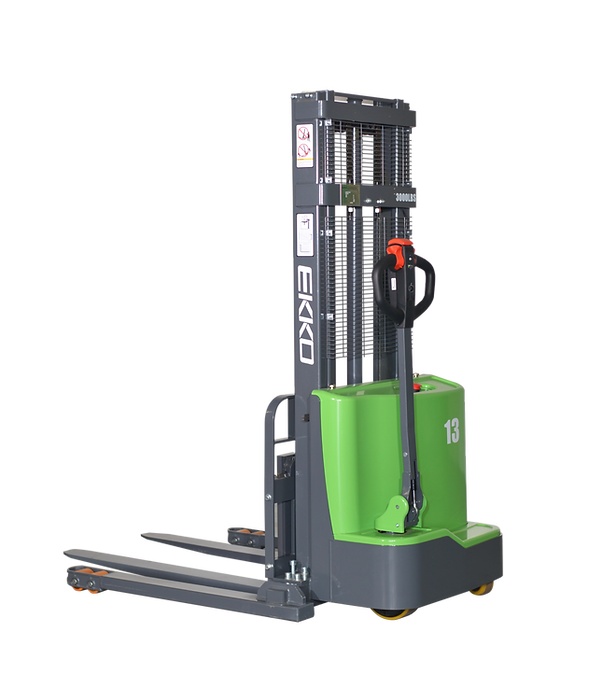
| EKKO EK14CS-189LI 3000lbs Counterbalanced Stacker 189" Lift | $23,038 | 3000 lb | 24V | View → |
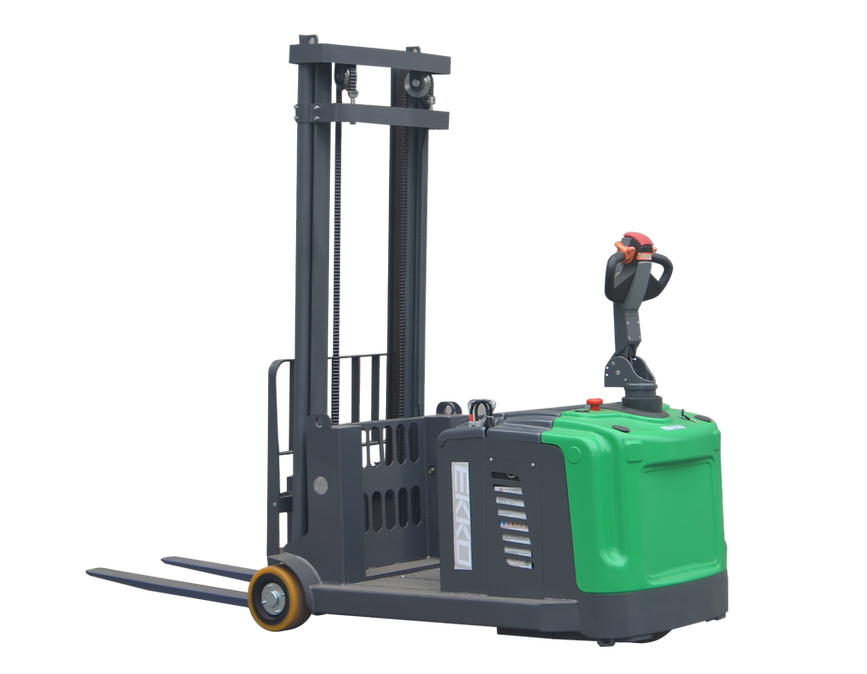
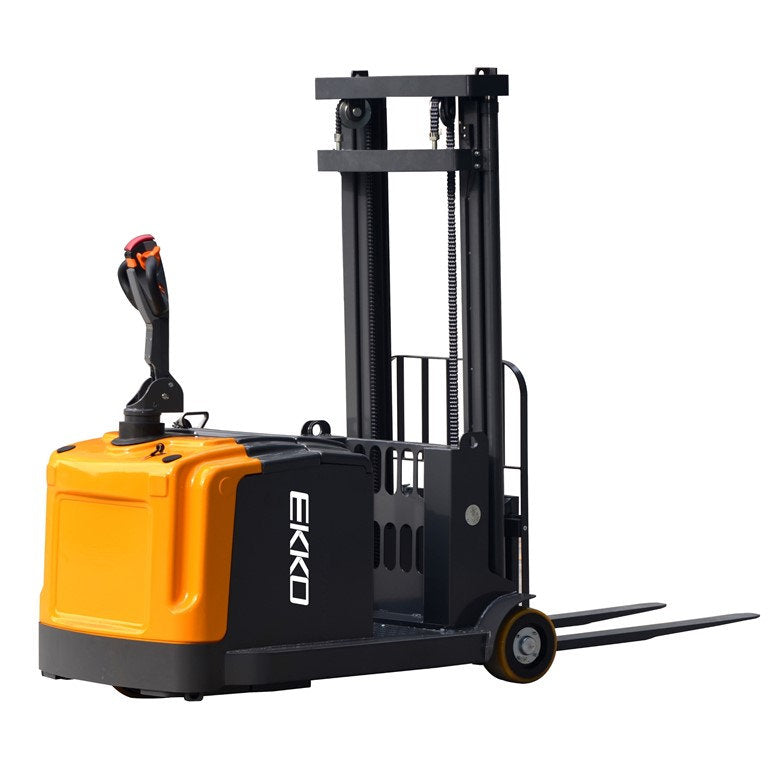
| EKKO EK14S-189LI 3300lbs Counterbalanced Stacker 189" Lift | $21,118 | 3300 lb | 24V | View → |
| Vestil Fully Powered Bale Clamp & Lift Stackers | $20,142 | — | 12V | View → |
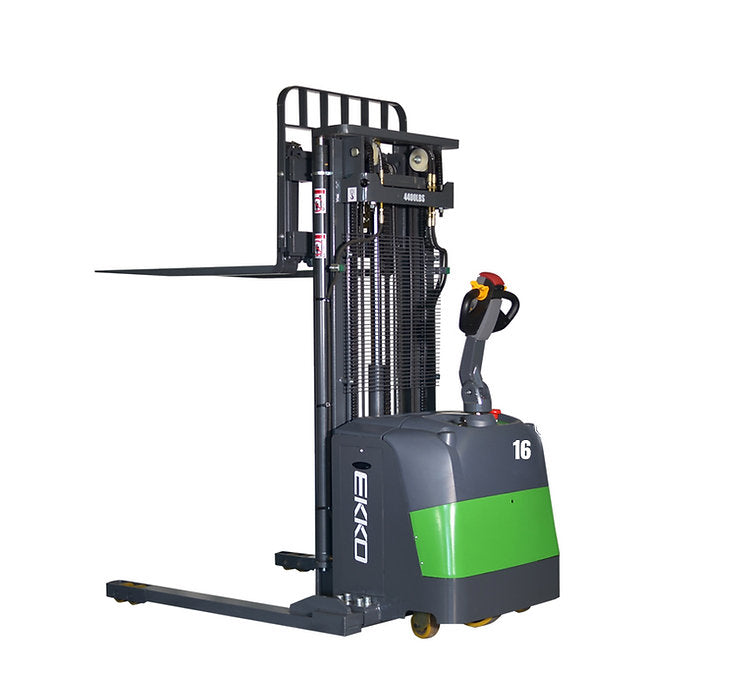
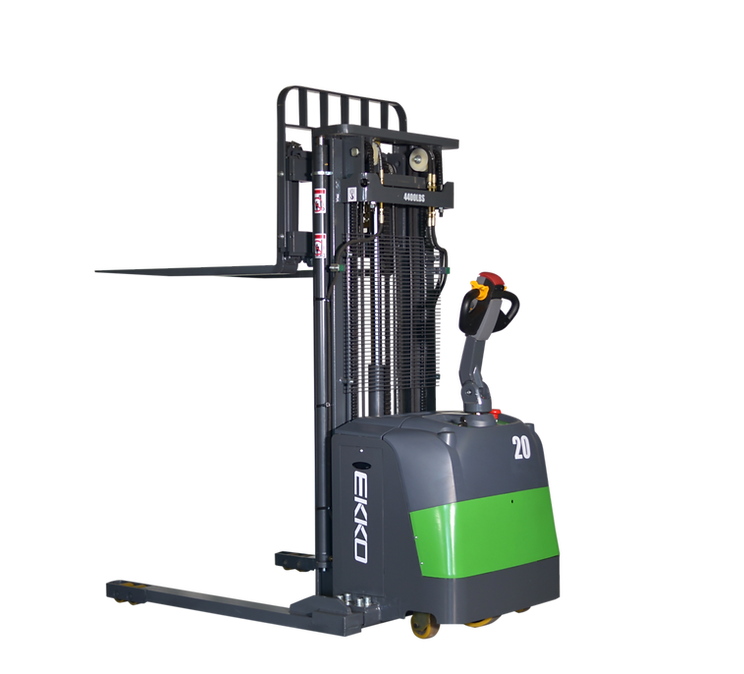
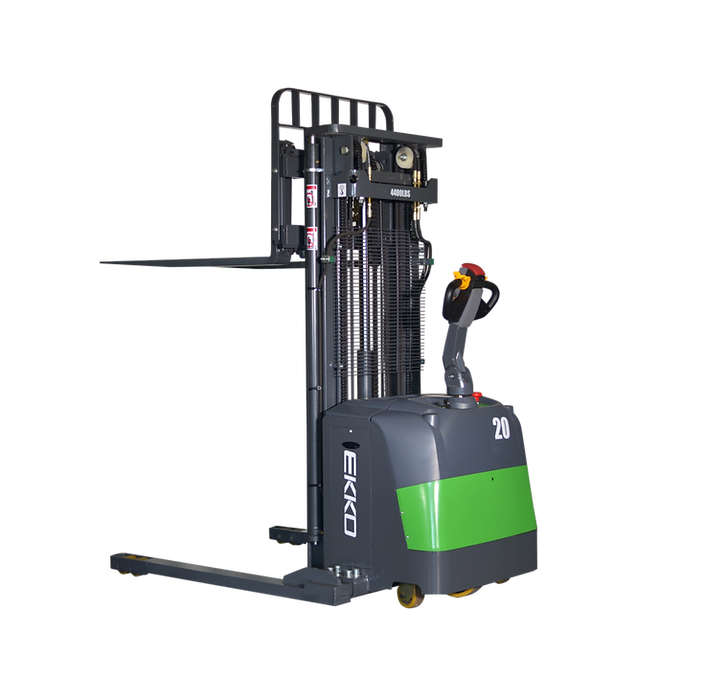
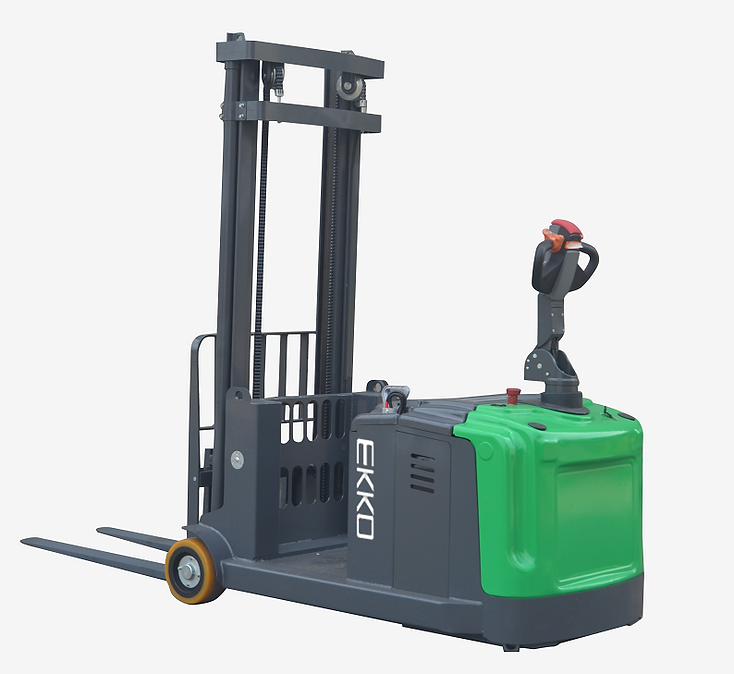
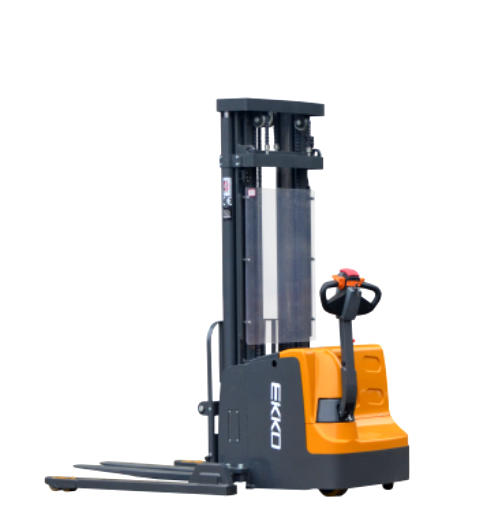
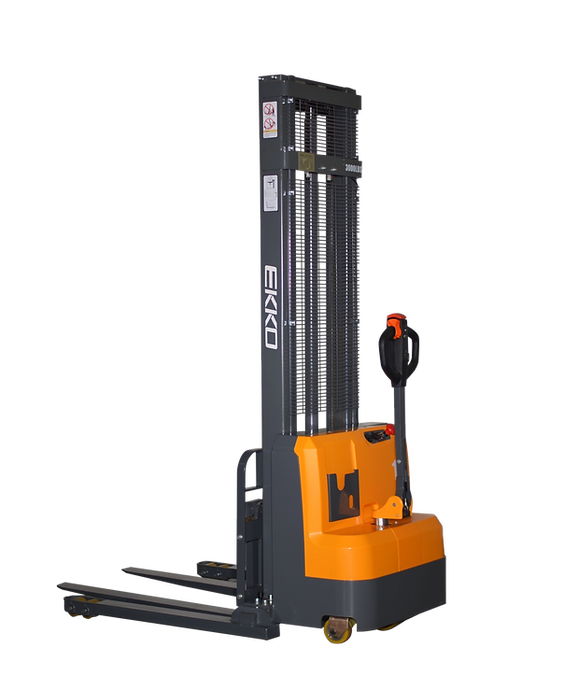
| EKKO EB16EAS-189Li 4400lbs Fully Powered Straddle Stacker - Side Shift 189" Lift | $19,198 | 4400 lb | 24V | View → |
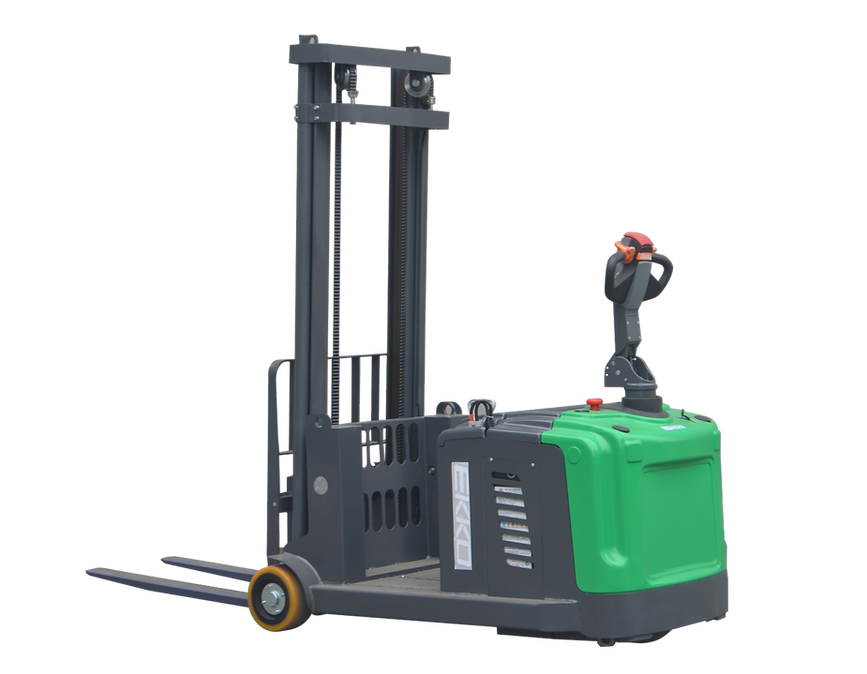
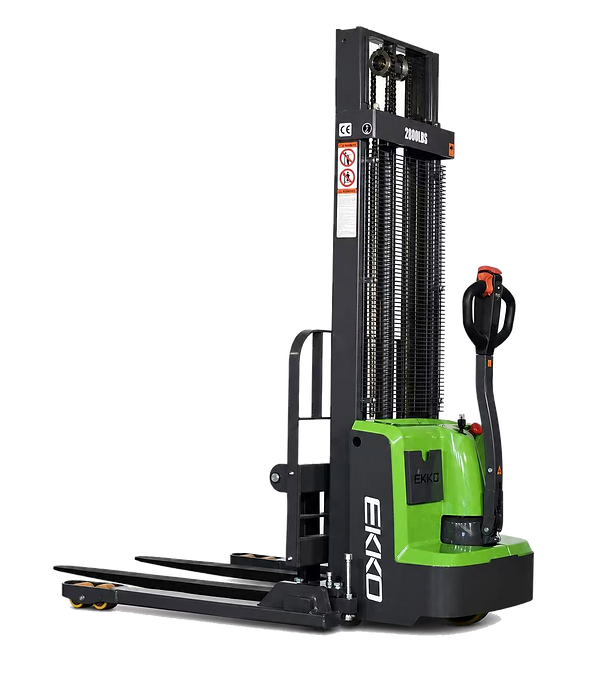
| EKKO EK13S-177 2860lbs Counterbalanced Stacker 177" Lift | $19,198 | 2860 lb | 24V | View → |
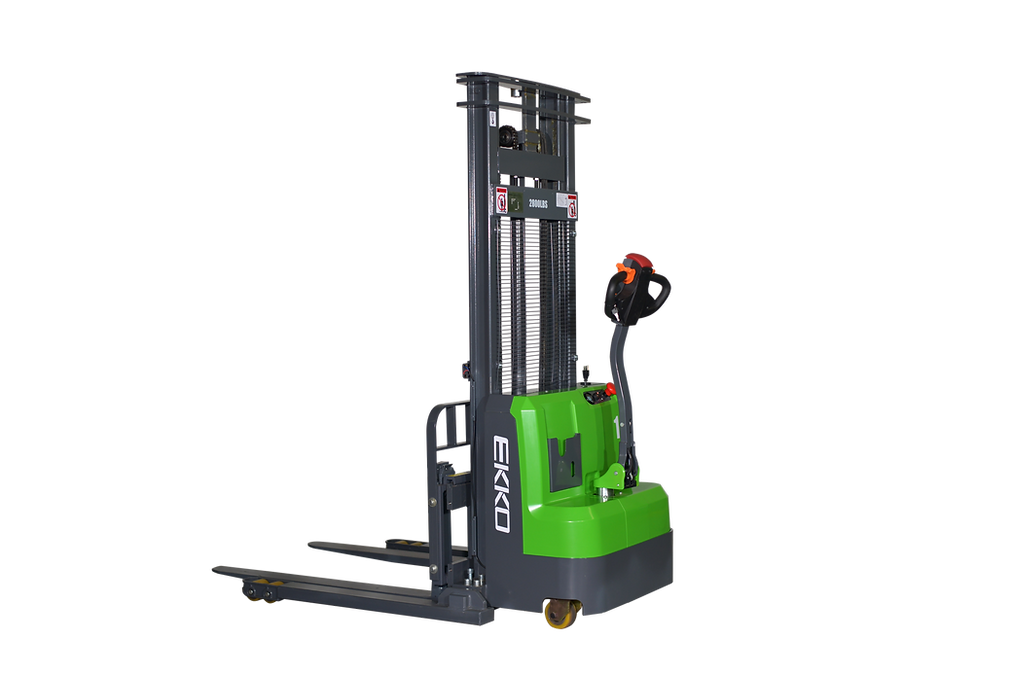
| EKKO EK14CS-130LI 3000lbs Counterbalanced Stacker 130" Lift | $19,198 | 3,000 lb | 24V | View → |
 In Stock
 In Stock
 In Stock
 In Stock
 In Stock
 In Stock
 In Stock
 In Stock
 In Stock
 In Stock
 In Stock
 In Stock
 In Stock
 In Stock
 In Stock
 In Stock
 In Stock
 In Stock
 In Stock
 In Stock
 In Stock
 In Stock
 In Stock
 In Stock
 In Stock
 In Stock
 In Stock
 In Stock
 In Stock
 In Stock
 In Stock
 In Stock
 In Stock
 In Stock
 In Stock
 In Stock
 In Stock
 In Stock
 In Stock
 In Stock
 In Stock
 In Stock
 In Stock
 In Stock
 In Stock
 In Stock
 In Stock
 In Stock
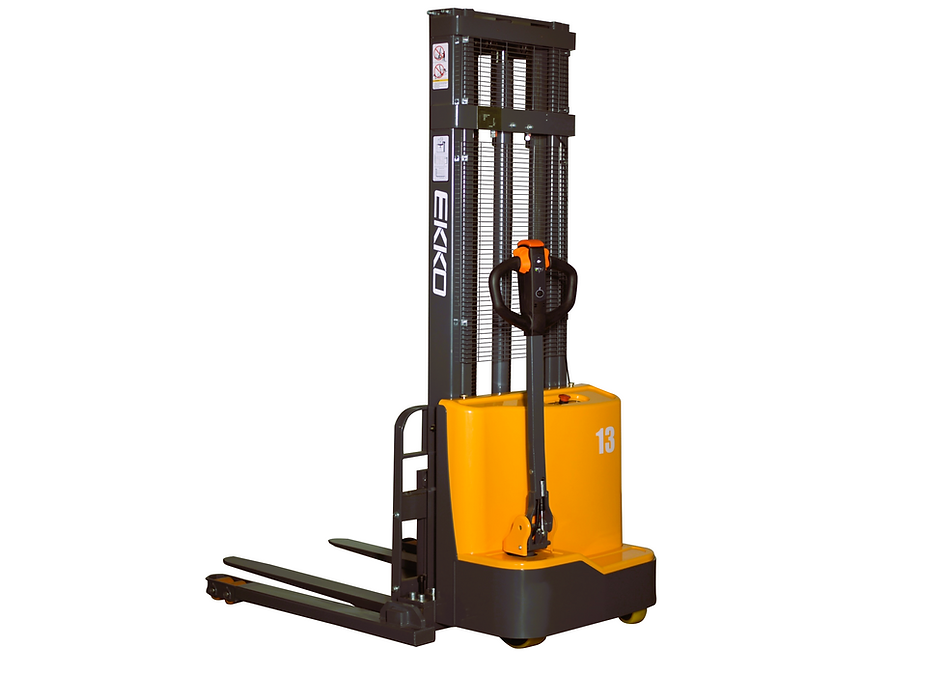 In Stock
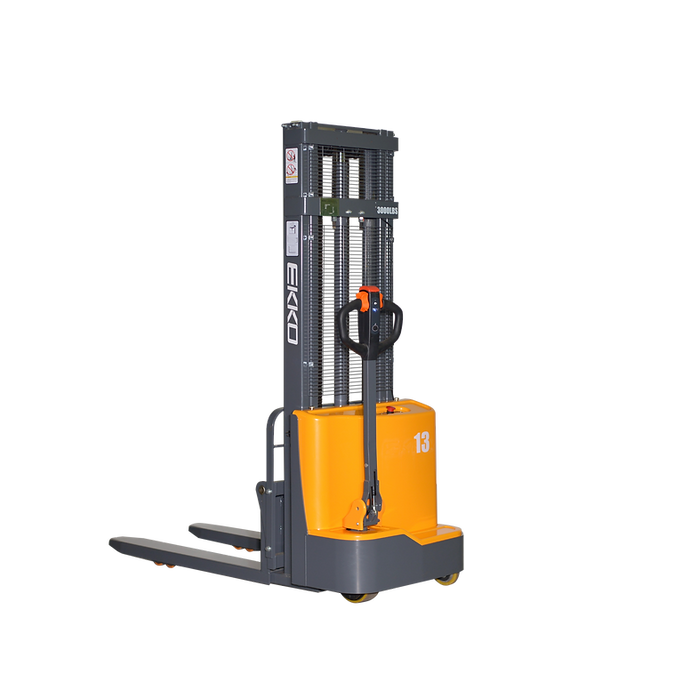 In Stock
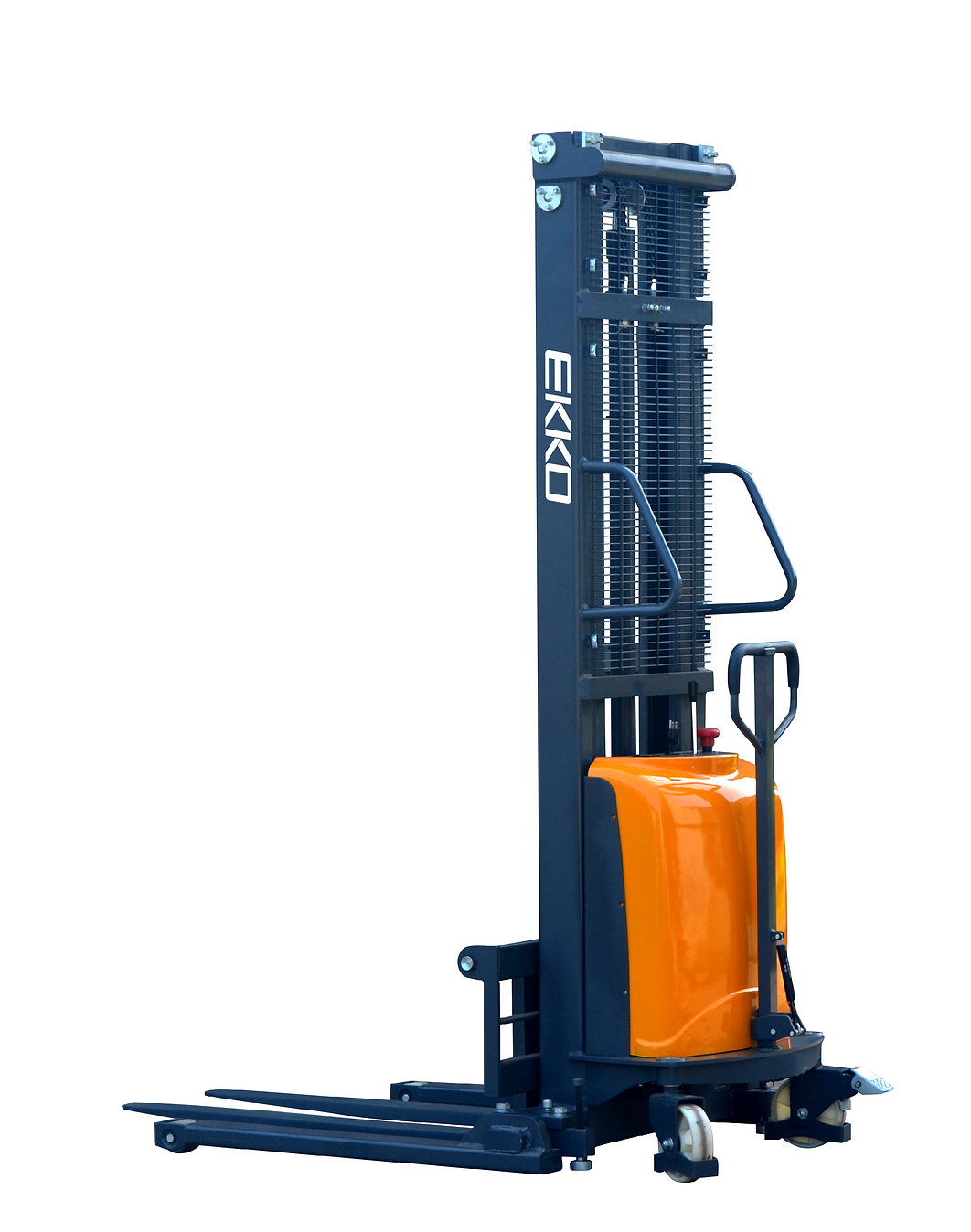 In Stock
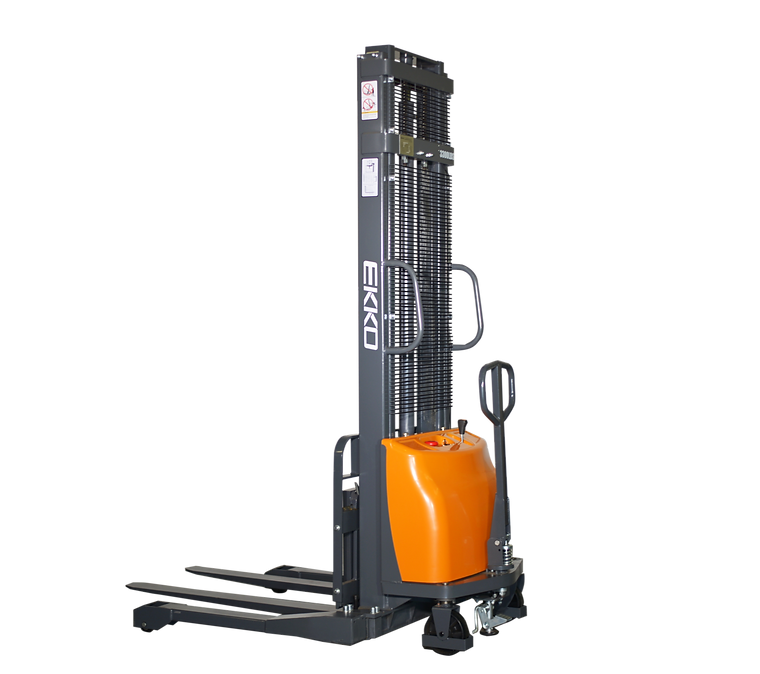 In Stock
 In Stock
 In Stock
 In Stock
 In Stock
 In Stock
 In Stock
 In Stock
 In Stock
 In Stock
 In Stock
 In Stock
 In Stock
 In Stock
 In Stock
 In Stock
 In Stock
 In Stock
 In Stock
 In Stock
 In Stock
Pallet Stackers Buying Guide
Stacker, pallet jack, or forklift. A pallet stacker sits between the two machines it is most often confused with. A pallet jack lifts a pallet a few inches, enough to clear the floor and roll it, and nothing more. A stacker raises that same pallet up a vertical mast to rack height, so it stacks loads instead of moving them at floor level. A forklift truck does the same lifting with a seated rider, more speed, and more capacity, at several times the price and footprint. The stacker's place is the building that needs to put pallets up and take them down but does not run the volume to justify a rider truck. If you never lift above floor level, buy a jack. If you rack pallets a few dozen times a shift, a stacker is the machine, and the rest of the choice is how it clears the load and how much of the effort is powered.
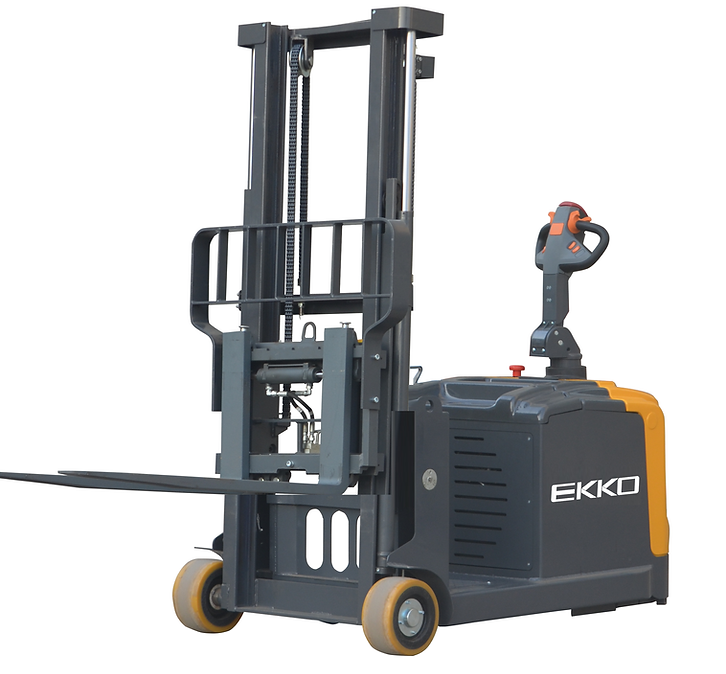
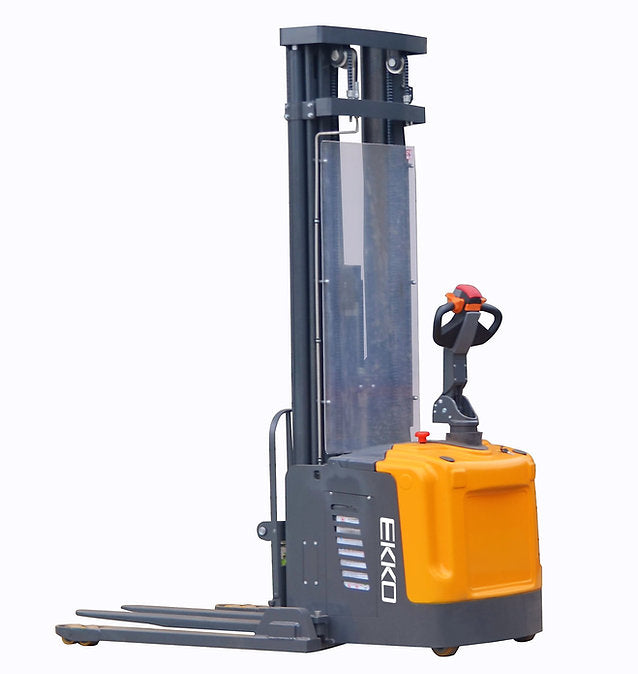
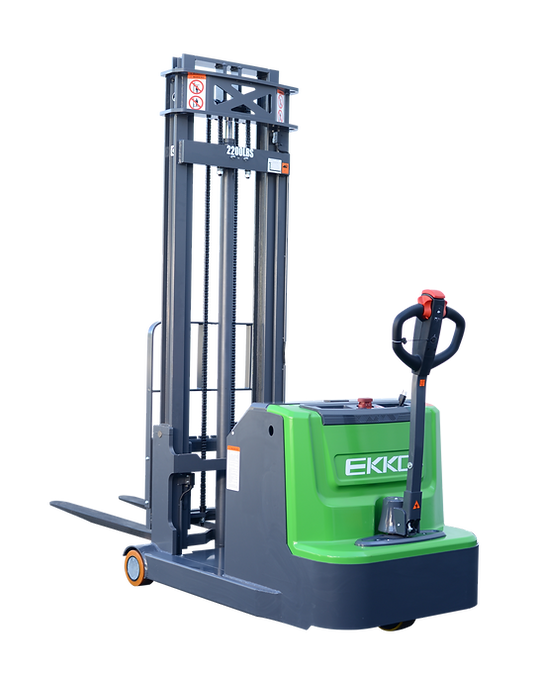
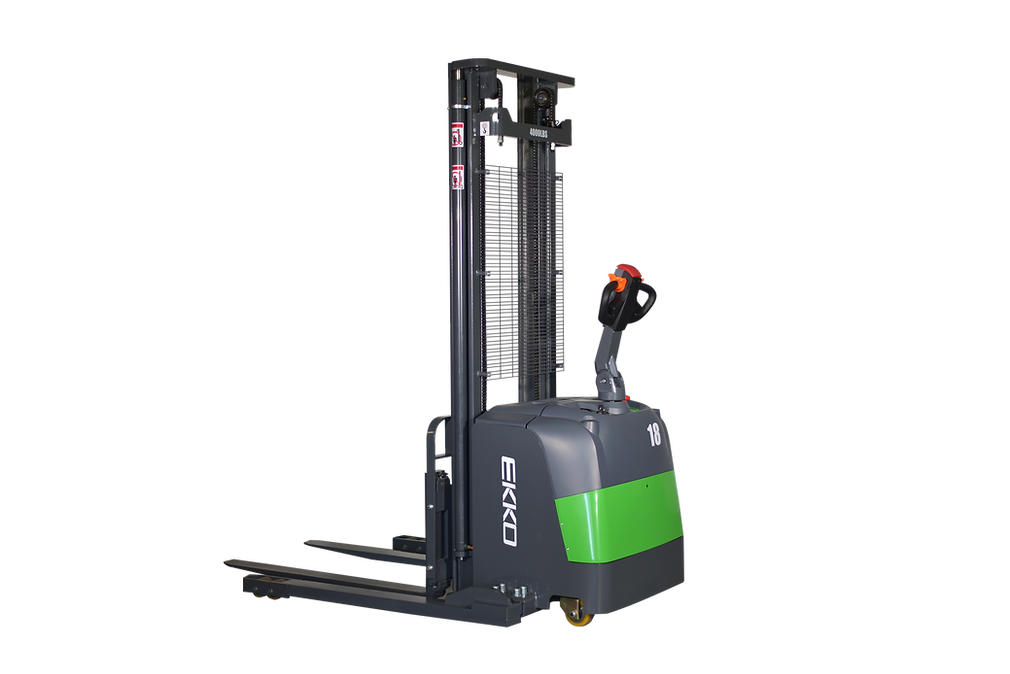
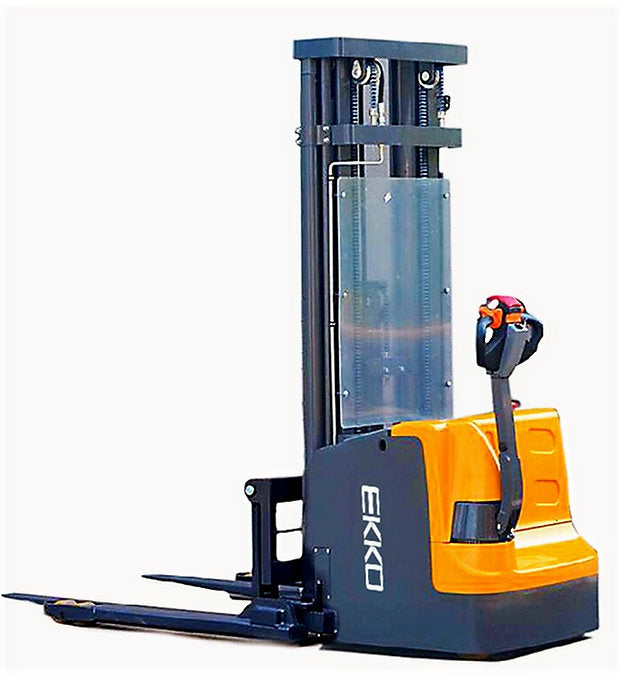
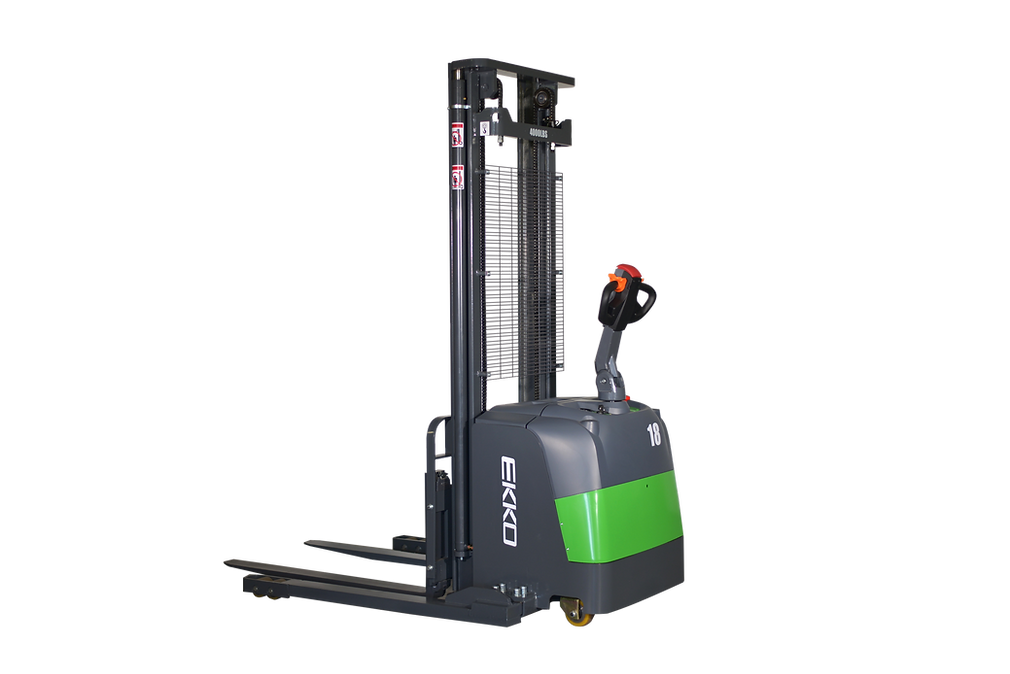
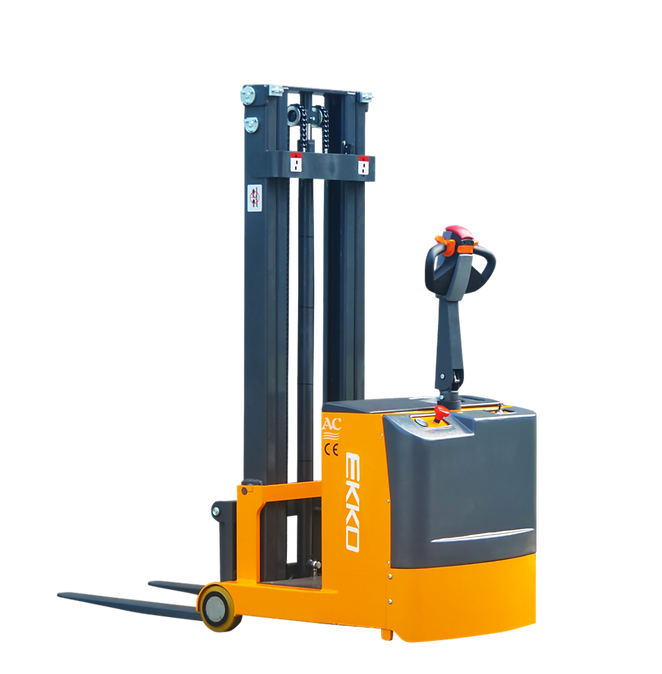
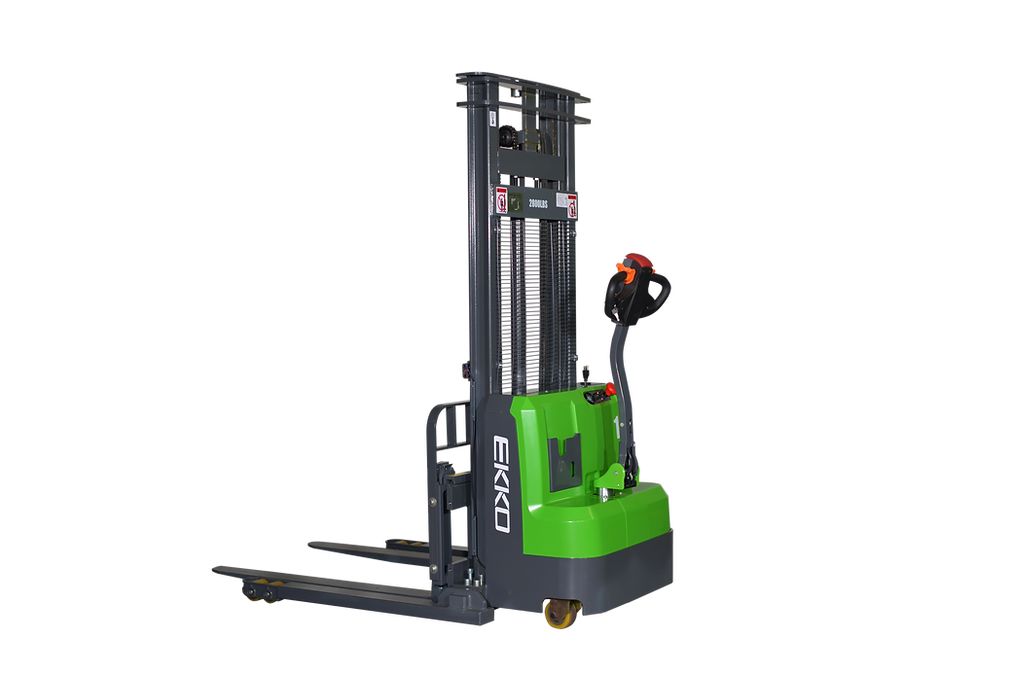
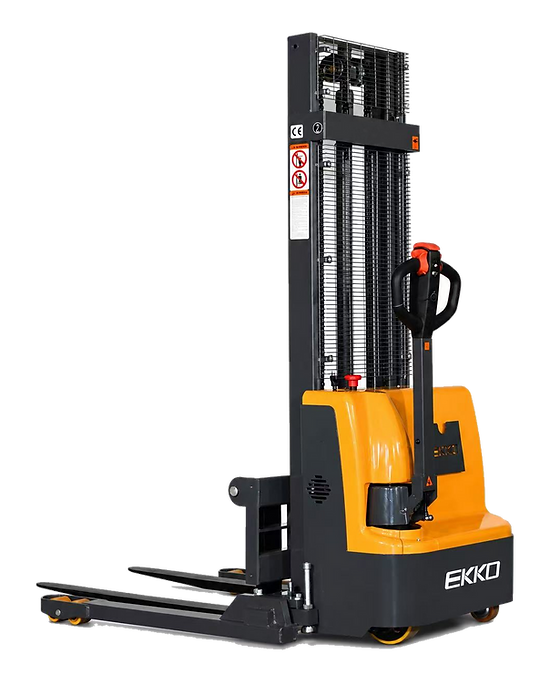
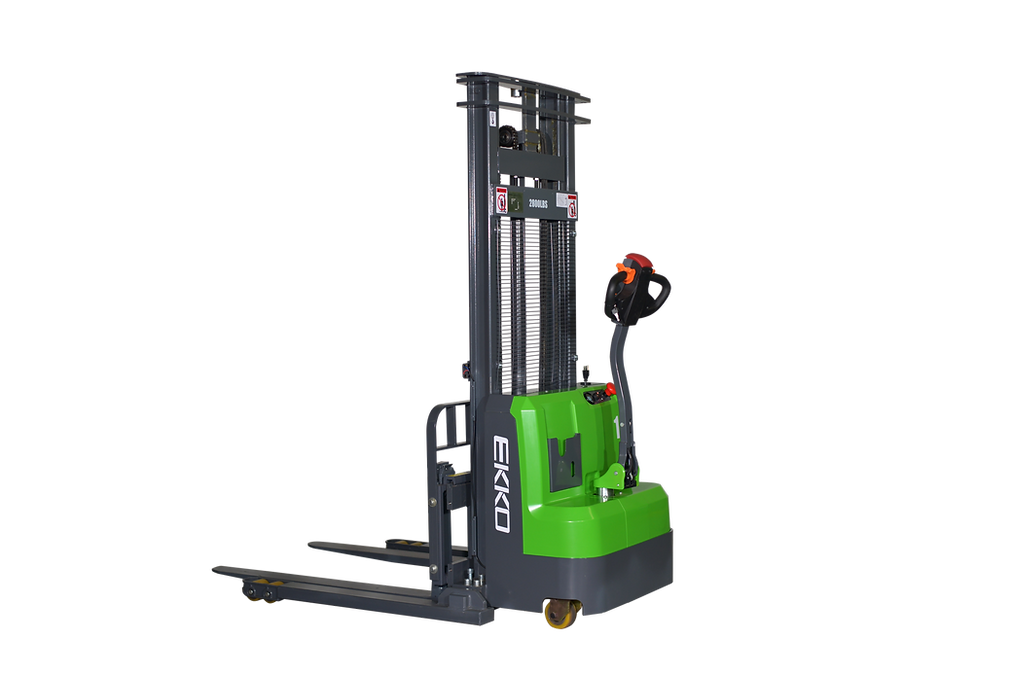
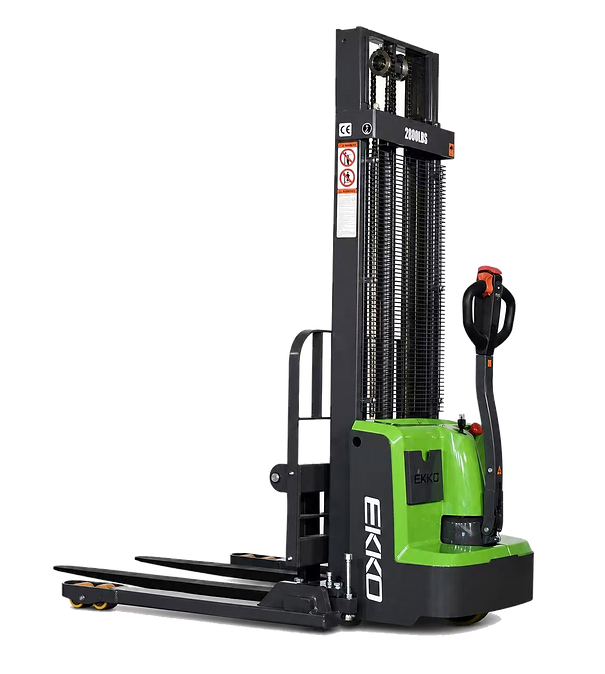
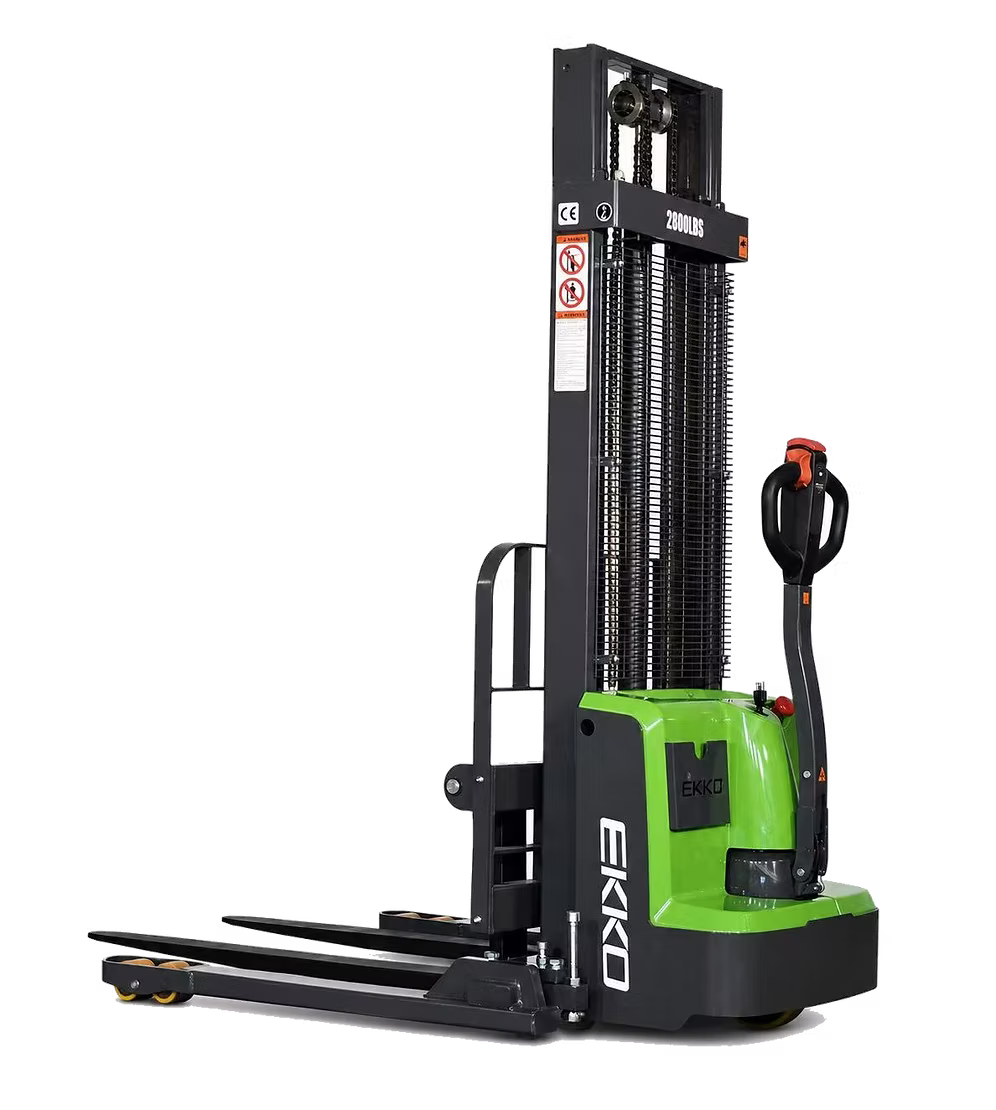
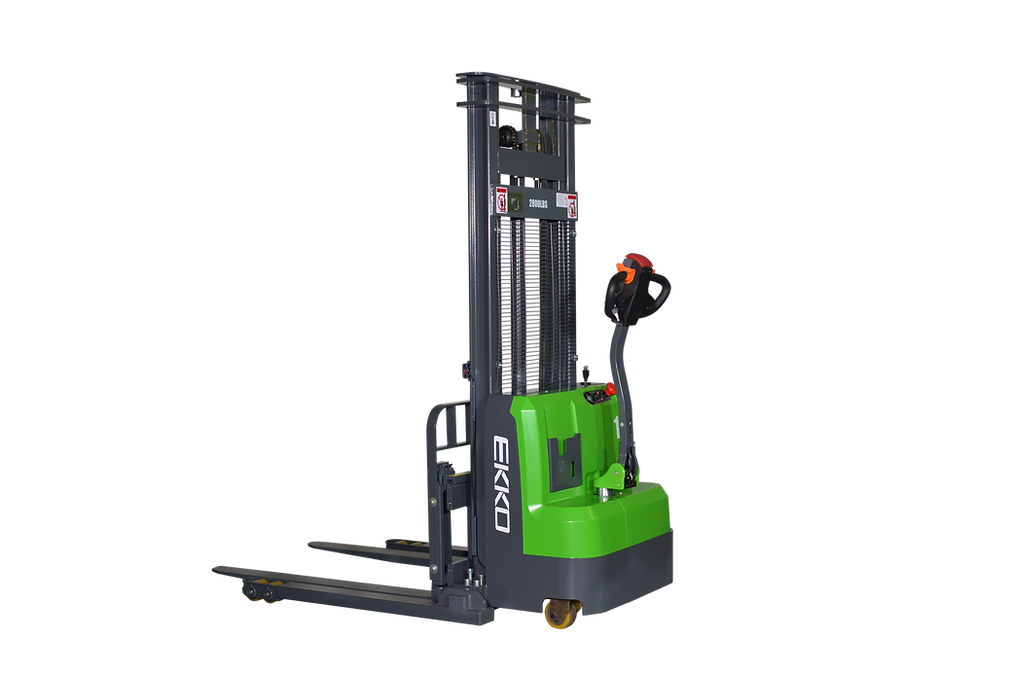
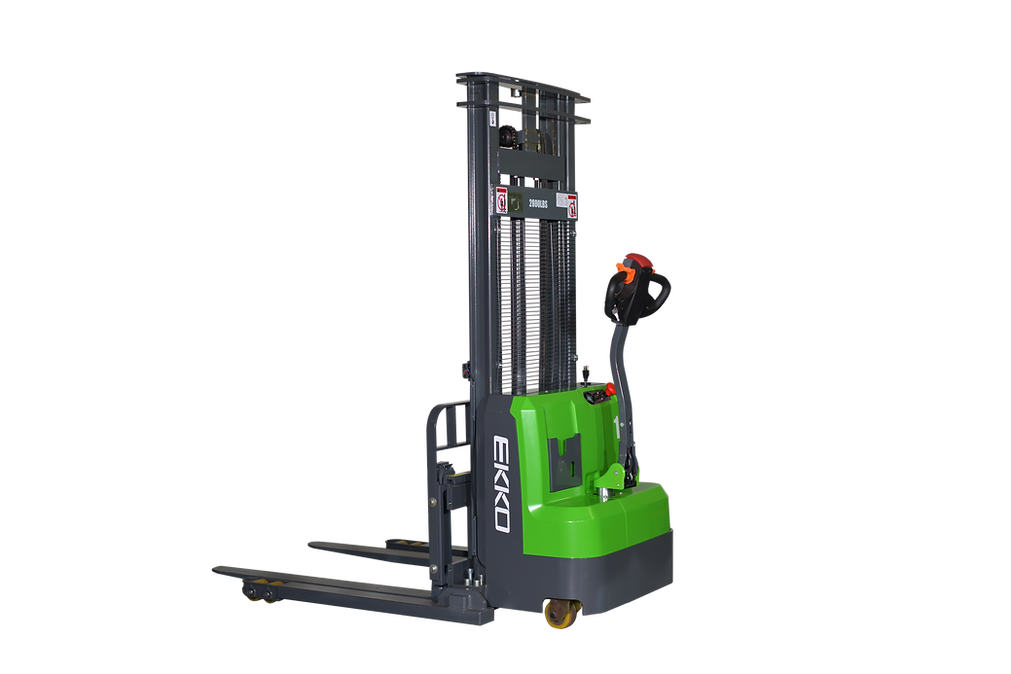
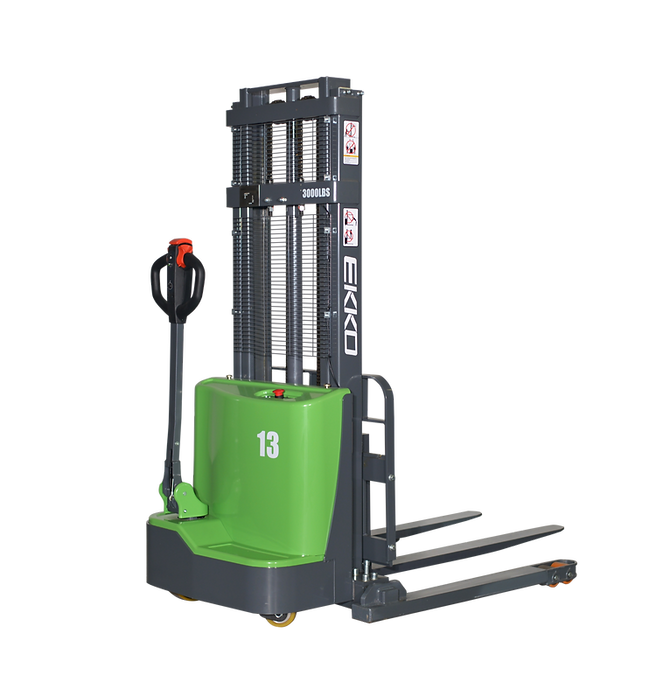
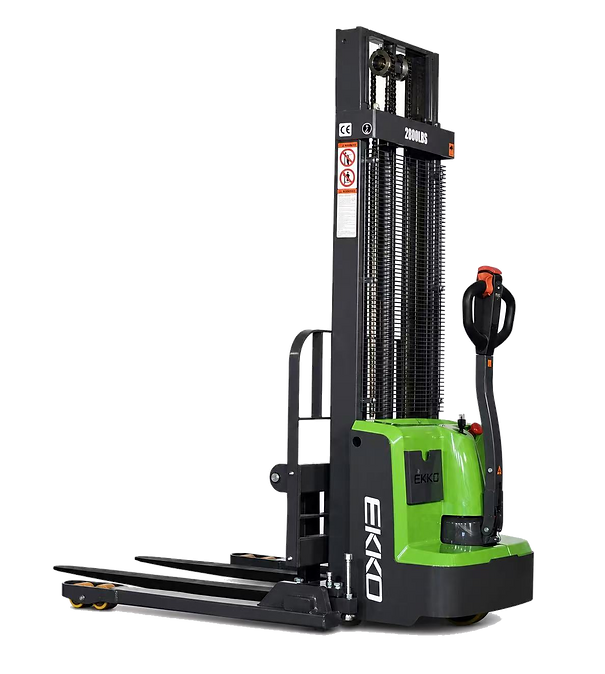
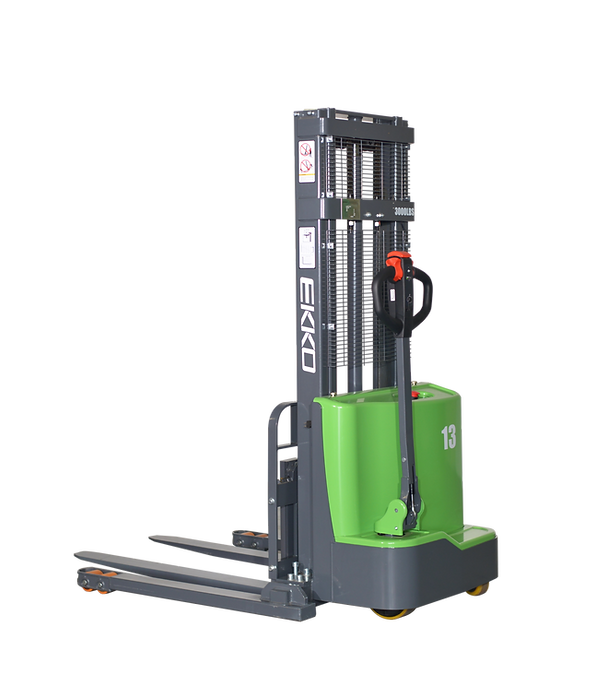
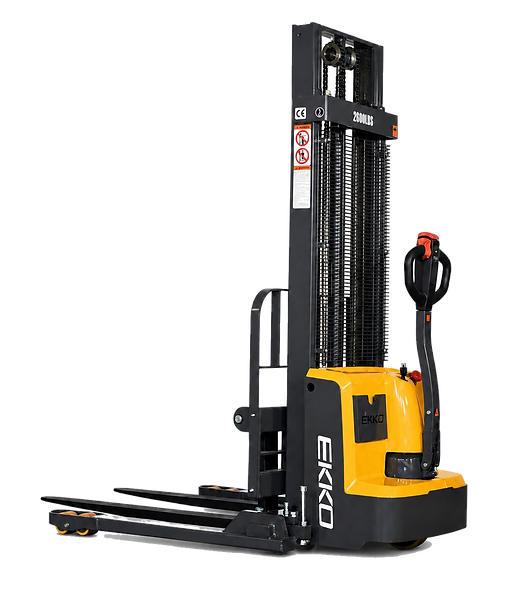
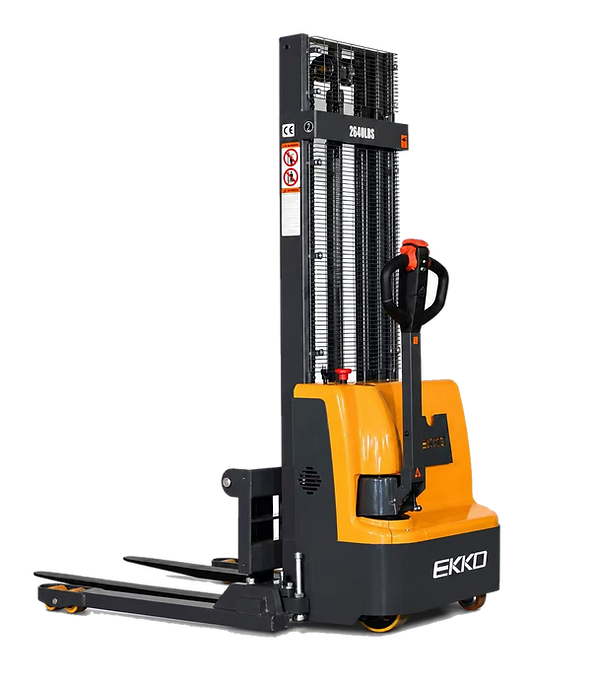
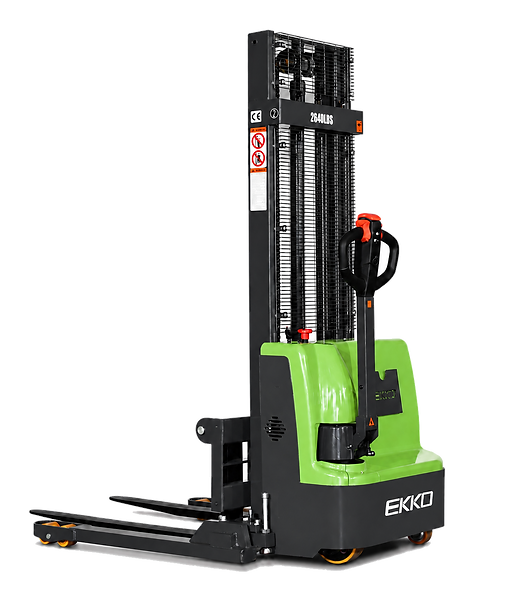
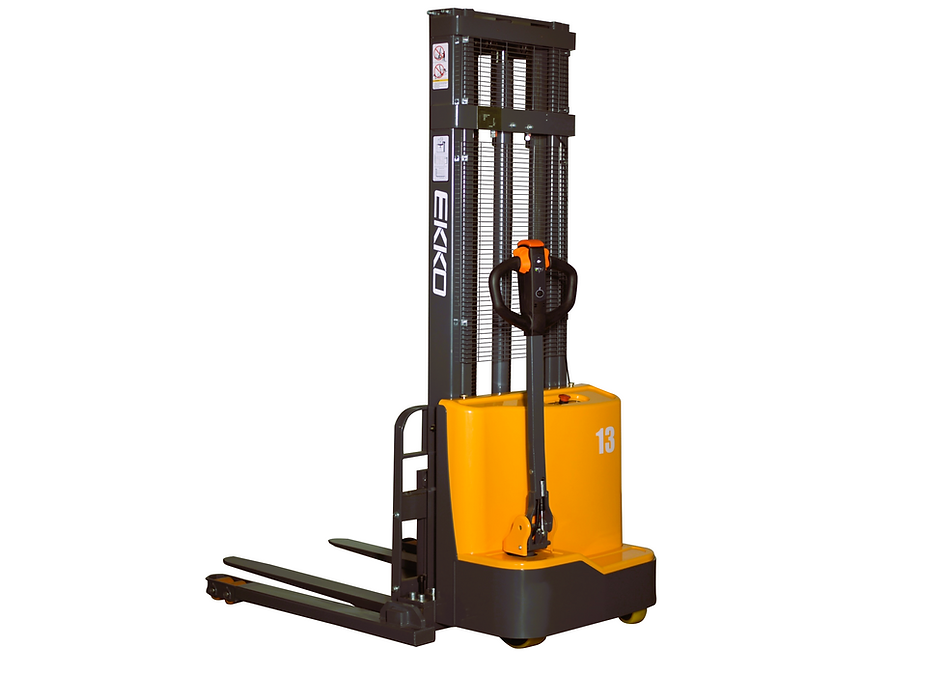
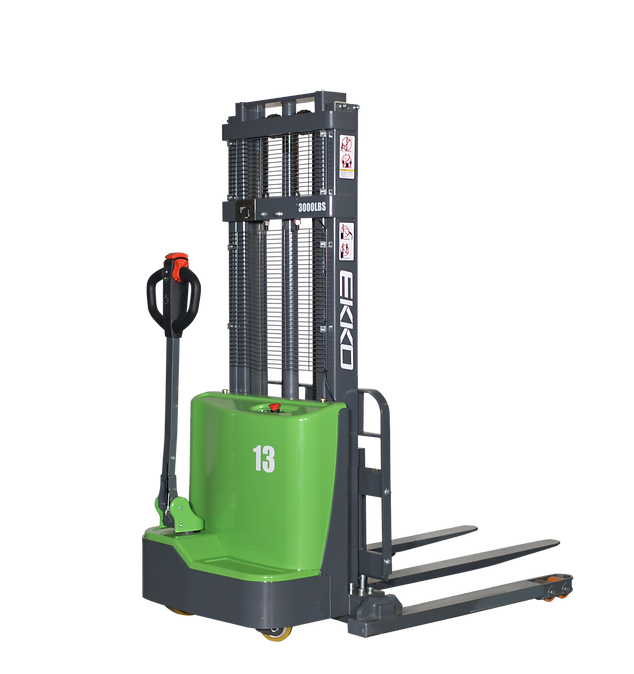
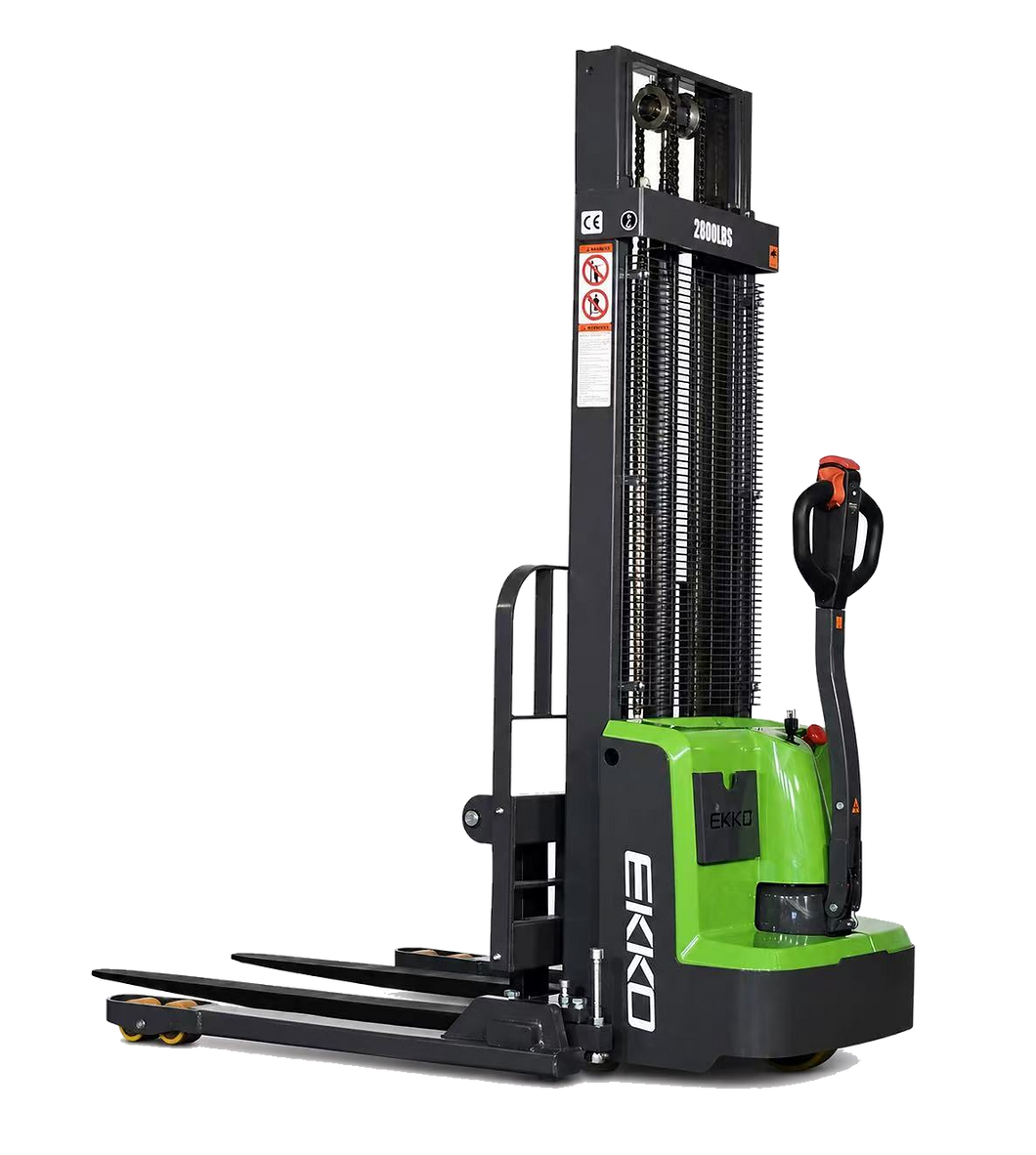
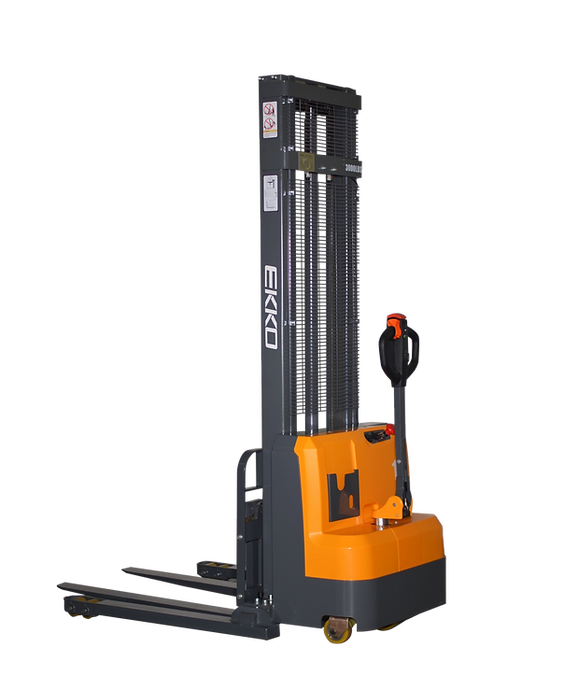
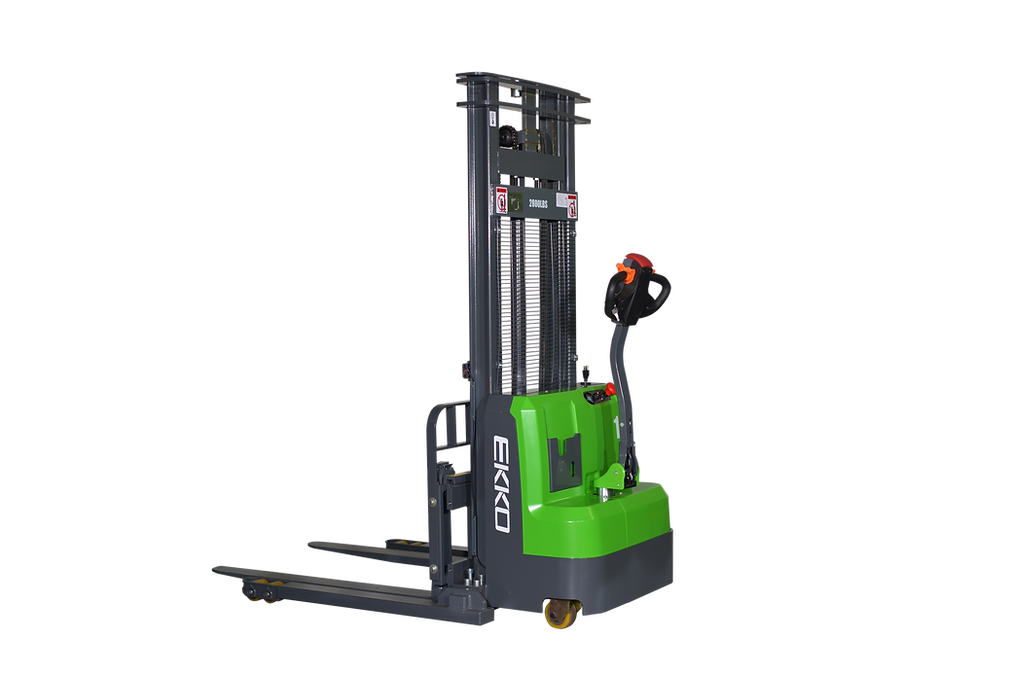
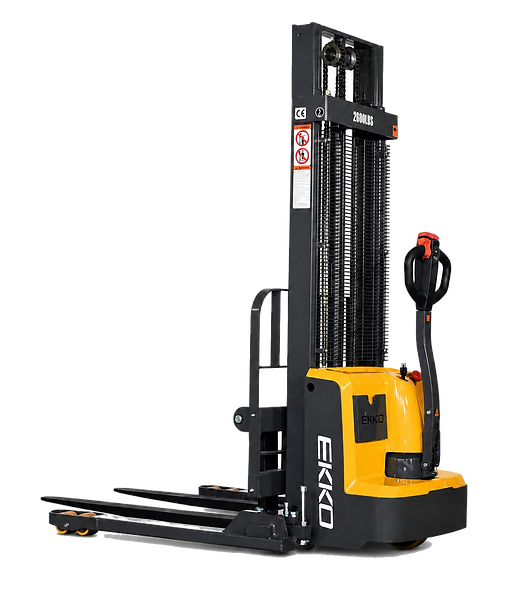
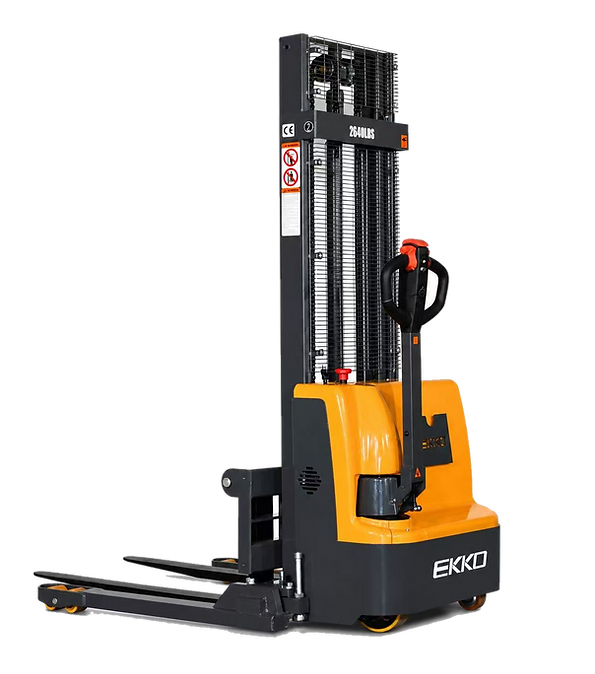
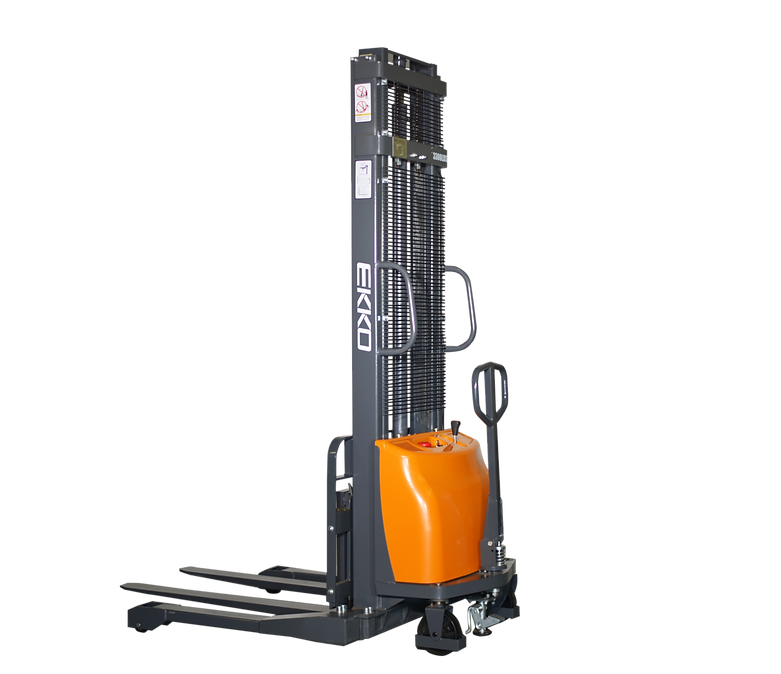
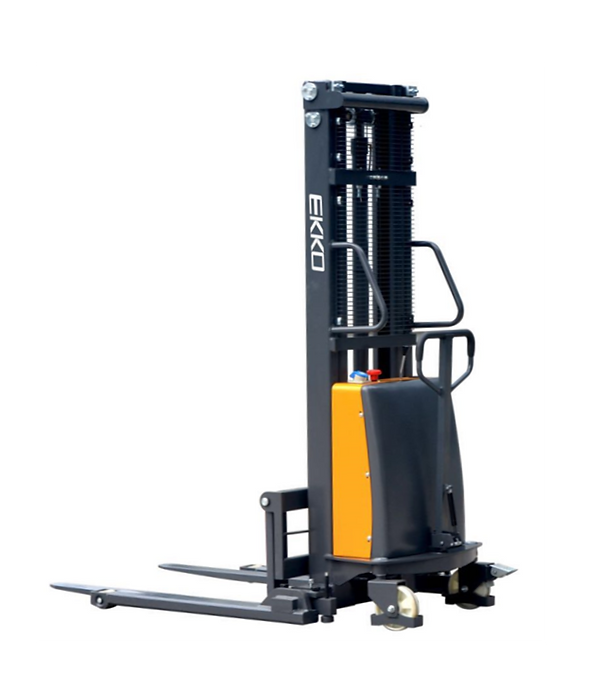
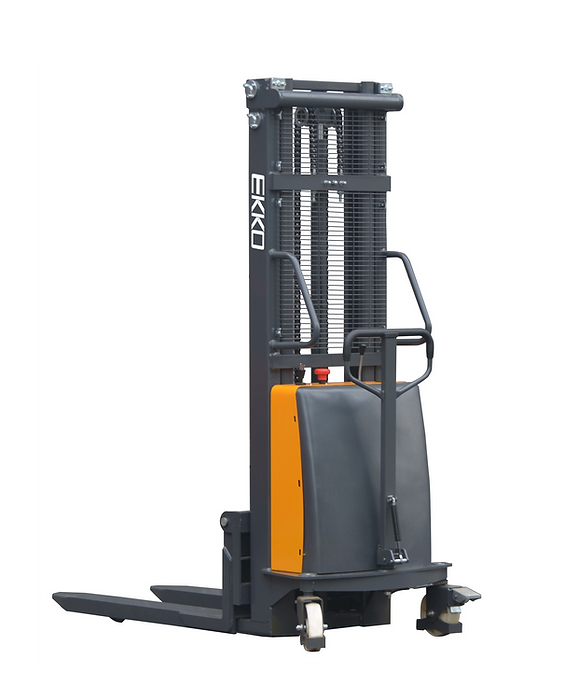
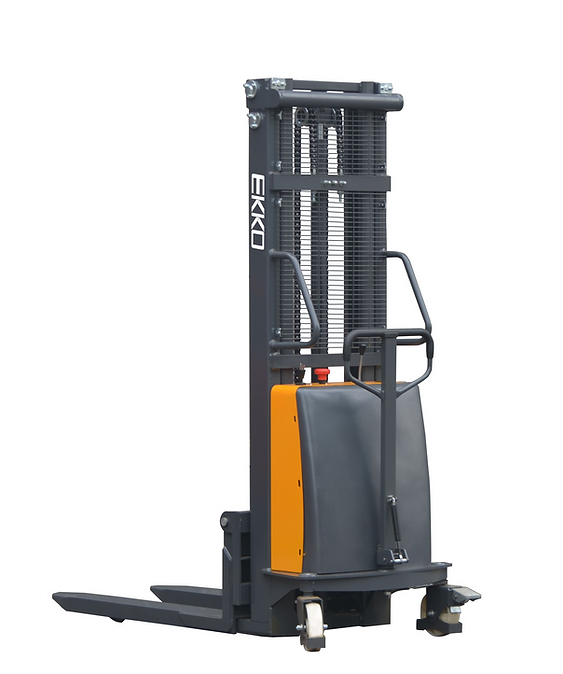
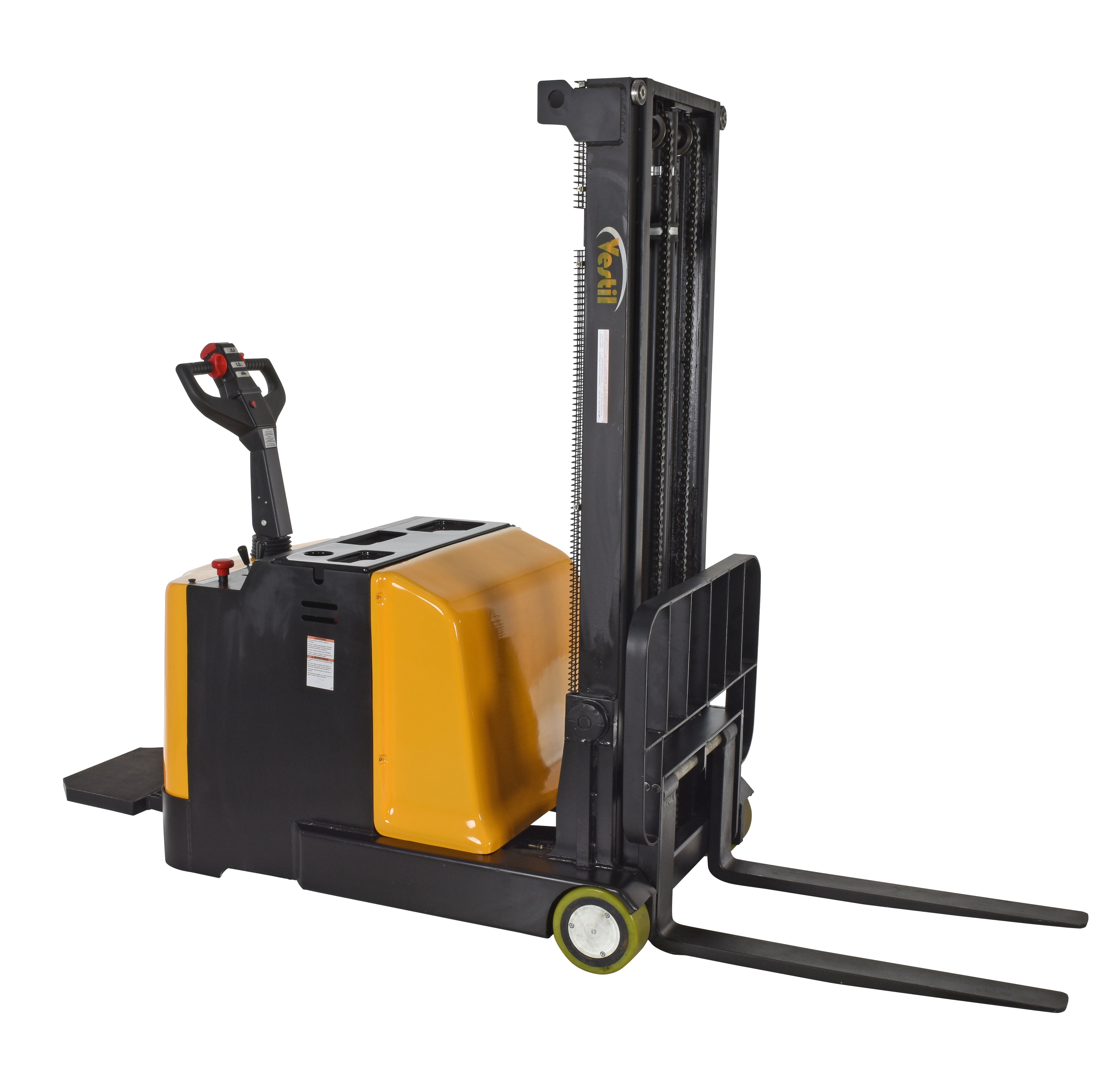
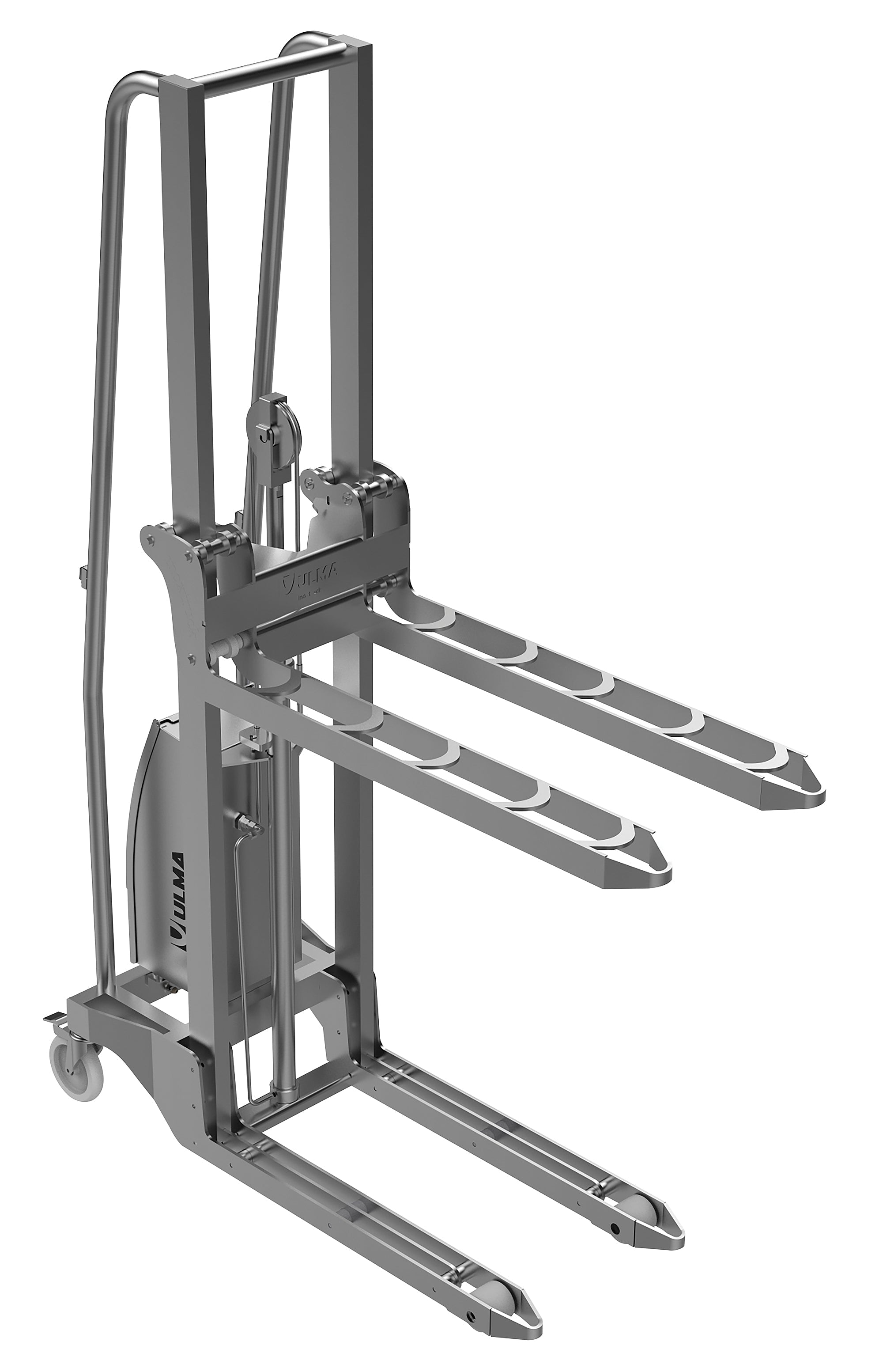
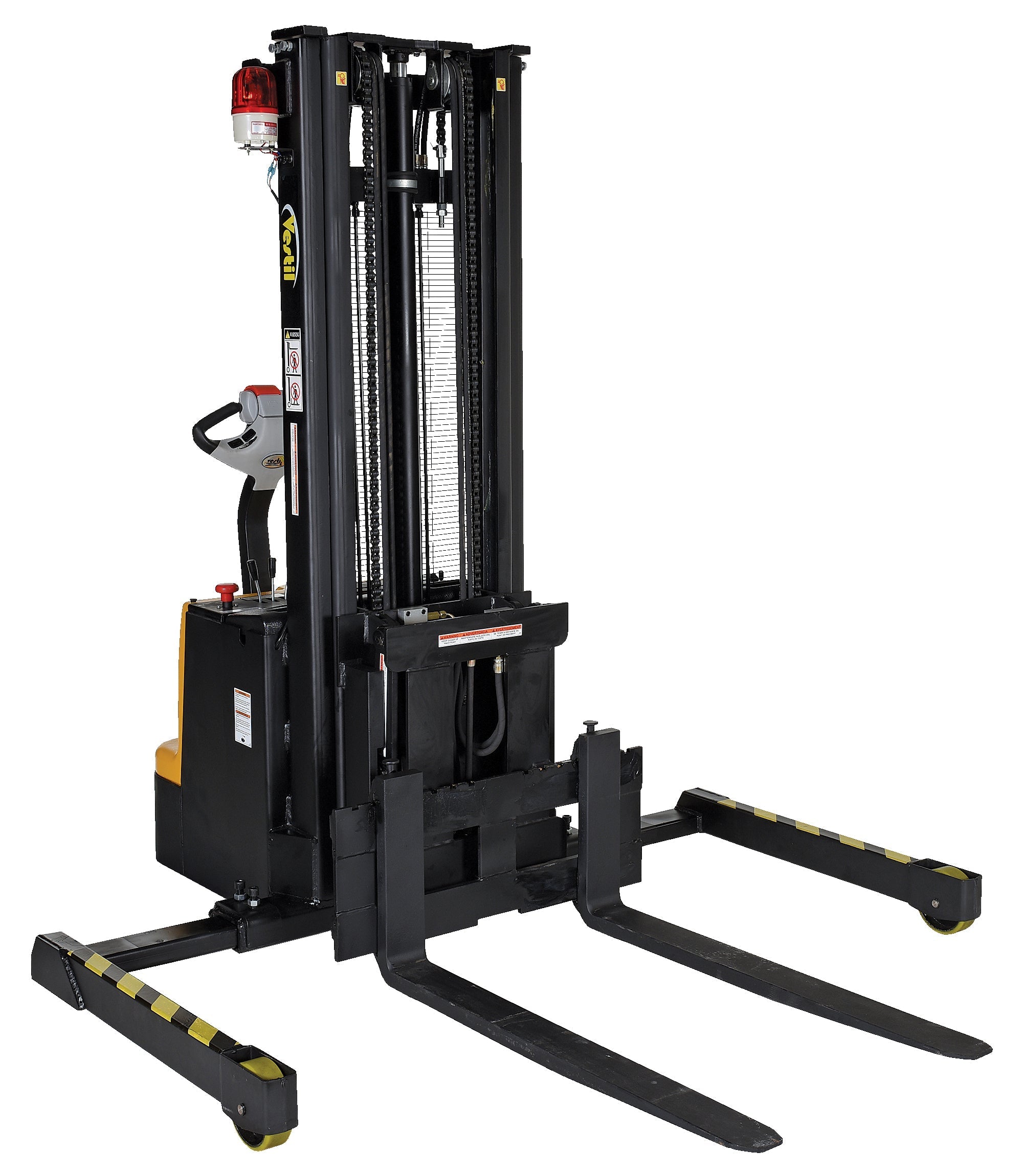
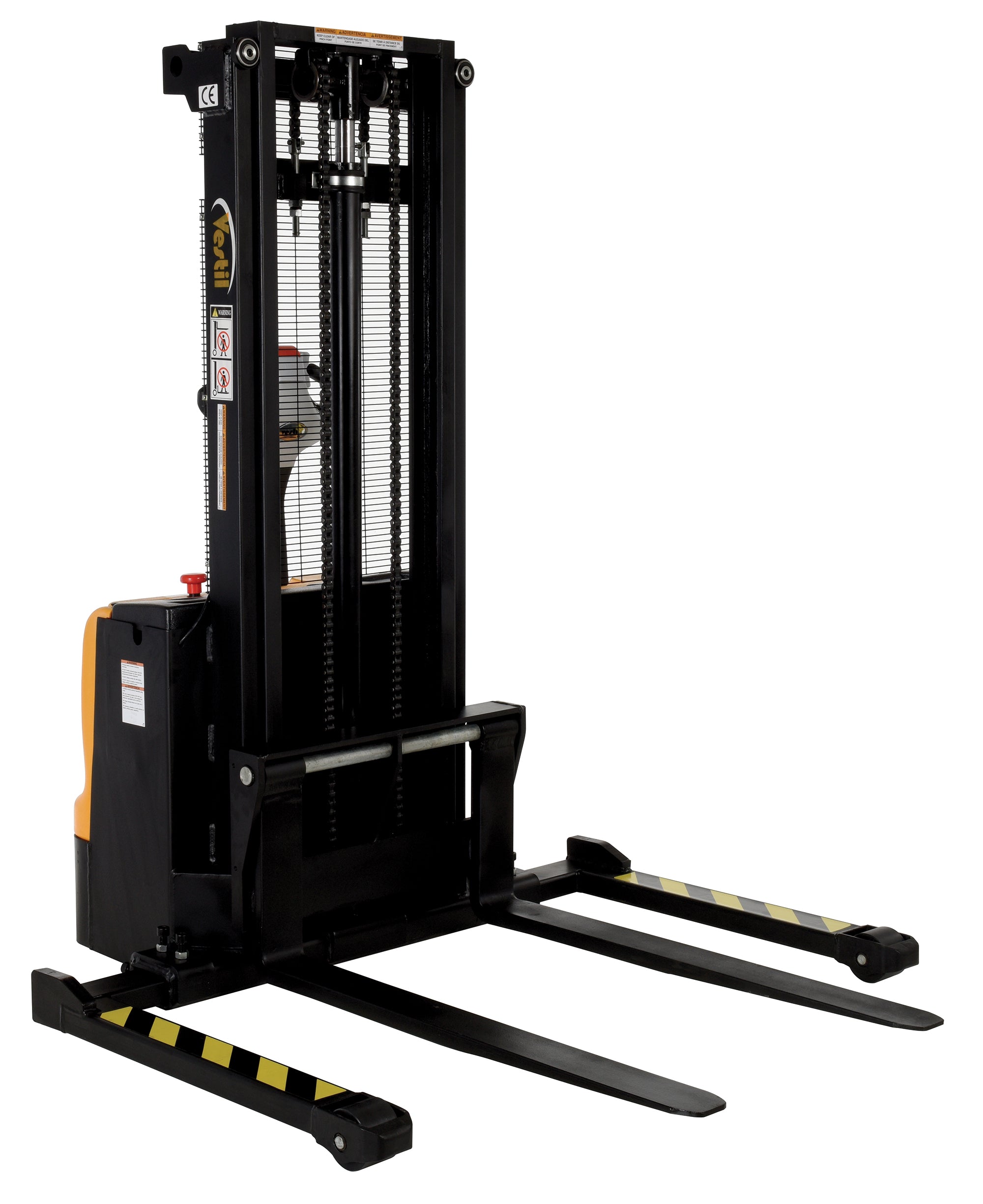
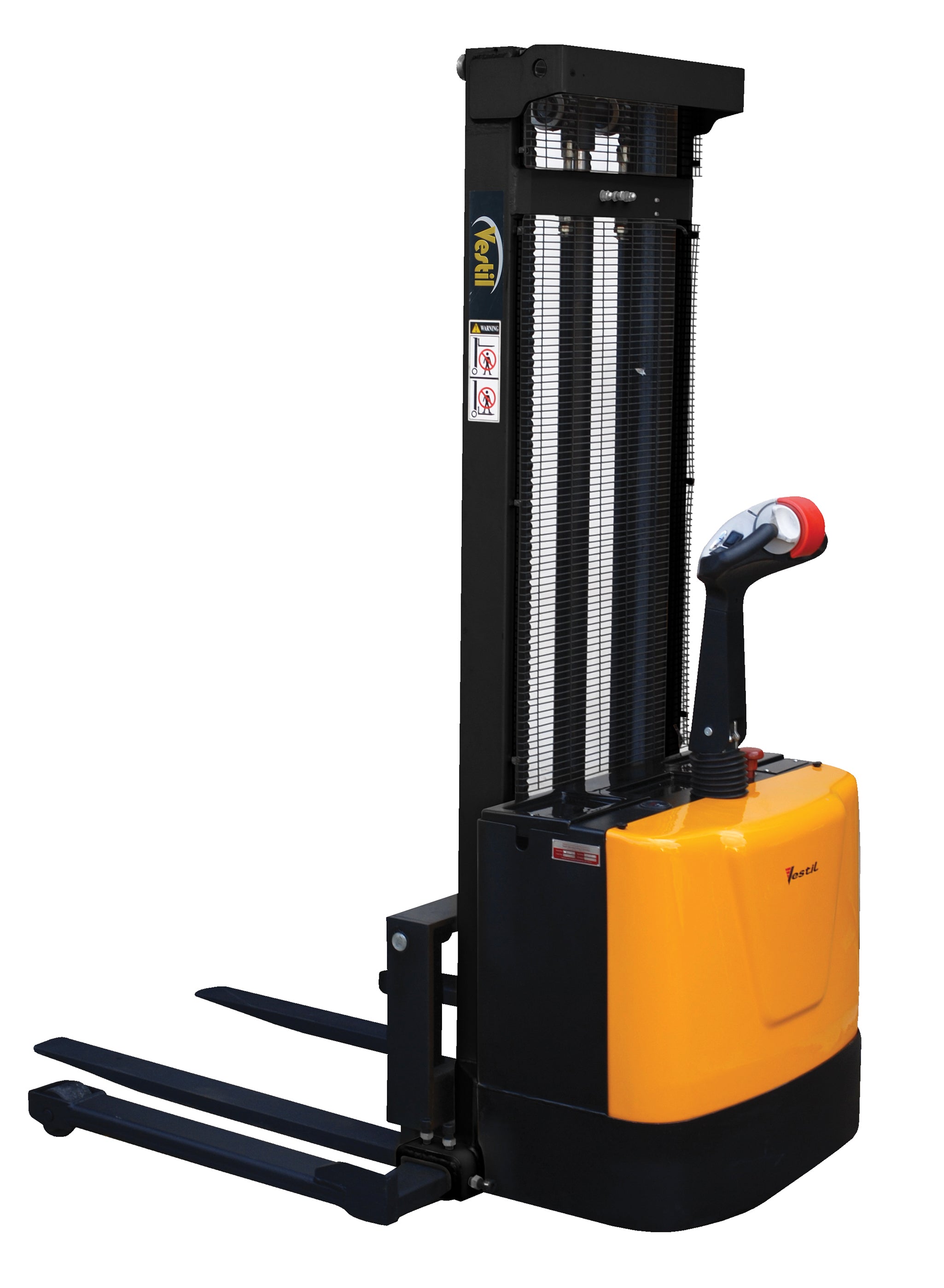
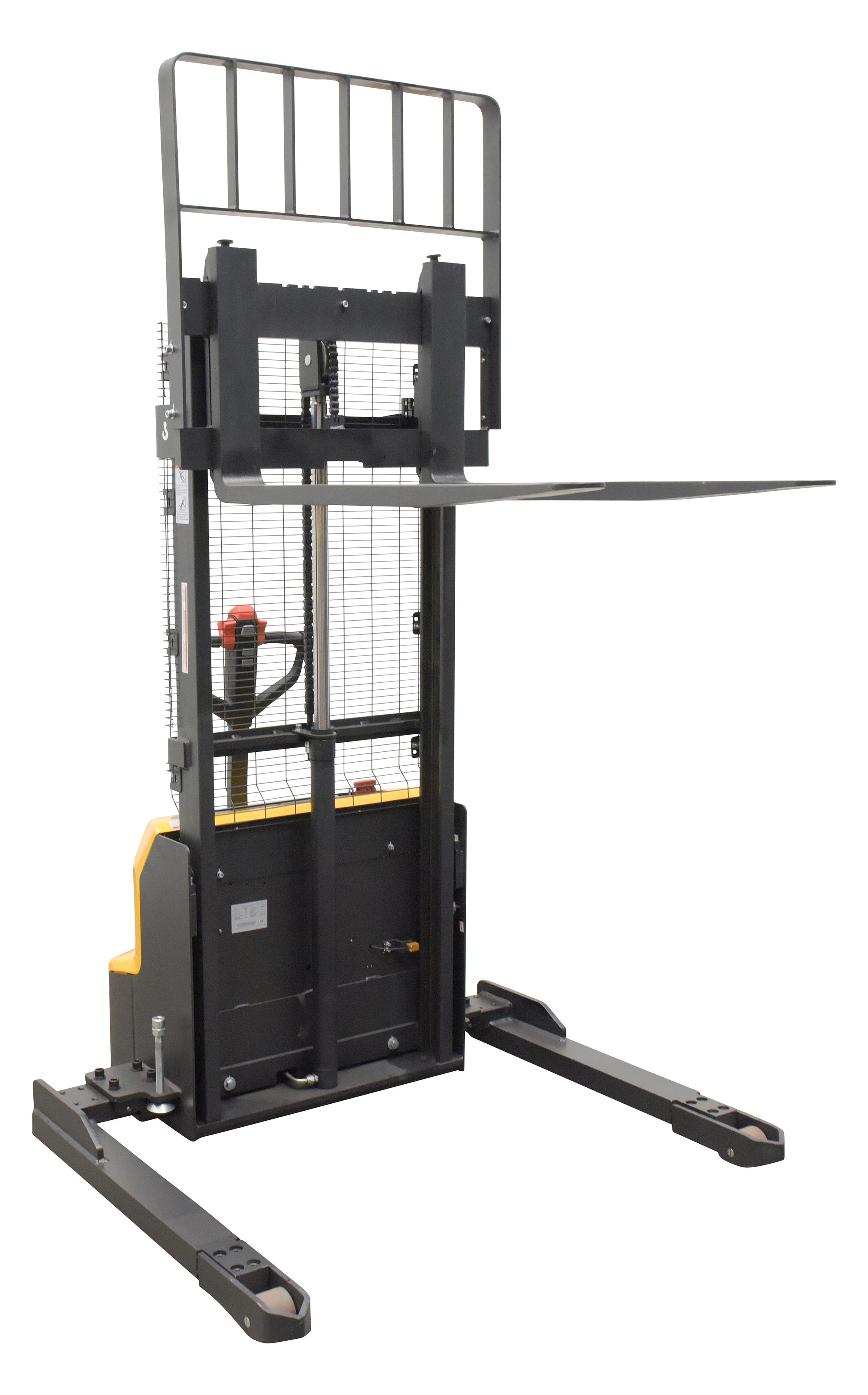
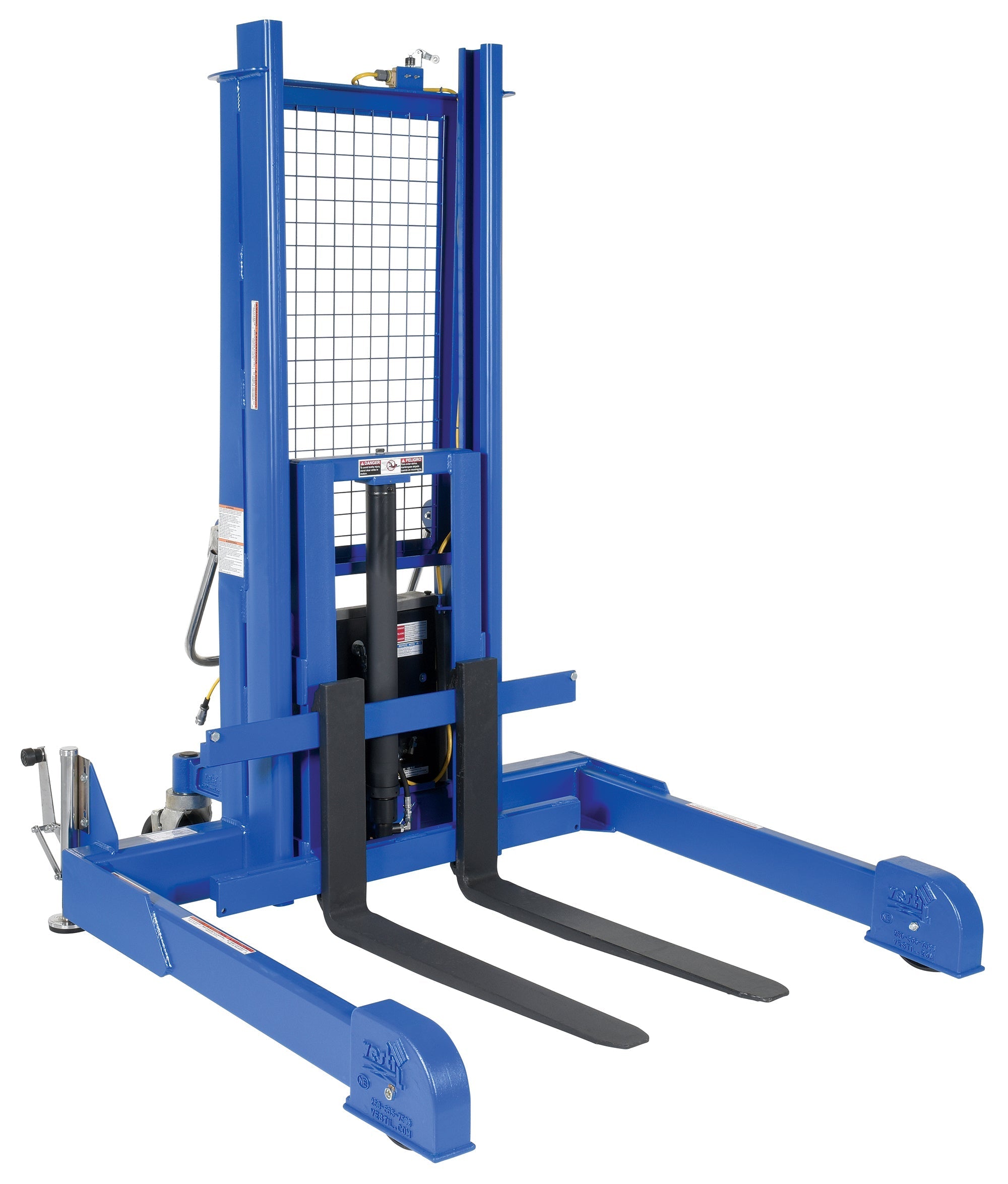
Straddle legs or counterbalanced. The first fork in the road is what holds the machine steady while the load is out front. A straddle stacker rides on two legs that spread out and straddle the pallet, putting wheels under the load so the truck stays light and stable with no rear weight. The EKKO EA15D and EA15E semi-electric straddle stackers are the example here, both rated 3,300 lb, from about $4,030. Straddle legs work when your pallets sit on open floor and the leg width can slide alongside them. A counterbalanced stacker drops the legs and carries a weight at the rear instead, which keeps the front clear so it can drive up to closed-front racking, block stacking, or a pallet boxed in on both sides. Vestil's counter-balanced powered drive lifts cover that job. The trade is weight and price: a counterbalanced machine is heavier and costs more for the same lift because it hauls its own ballast.
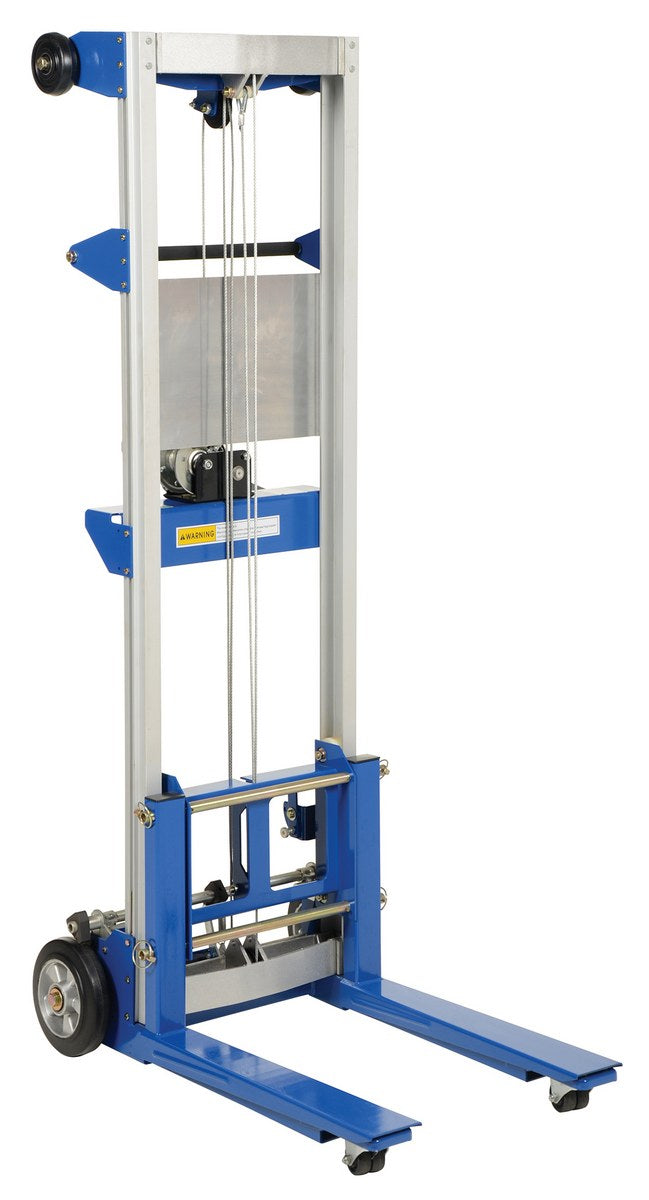
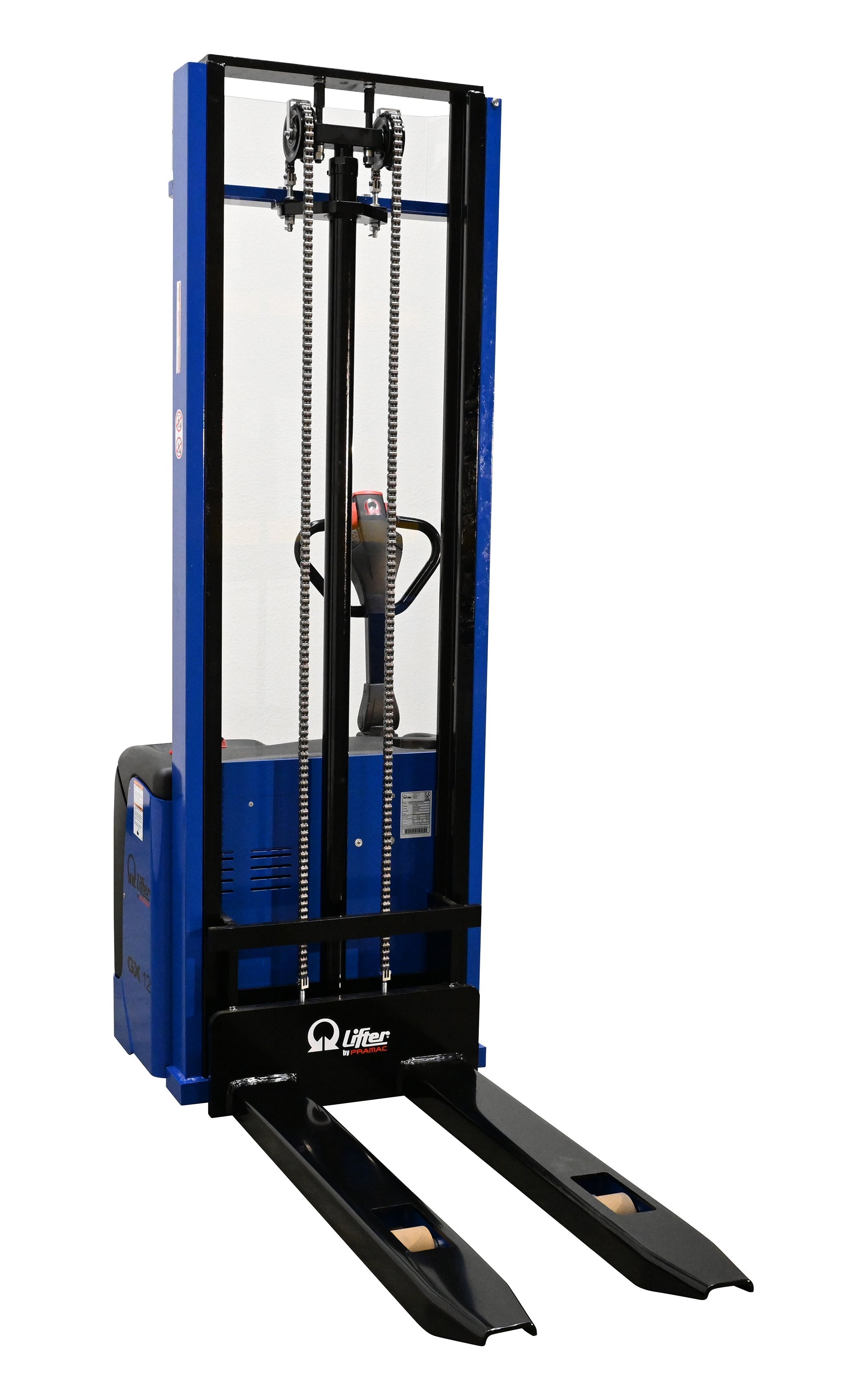
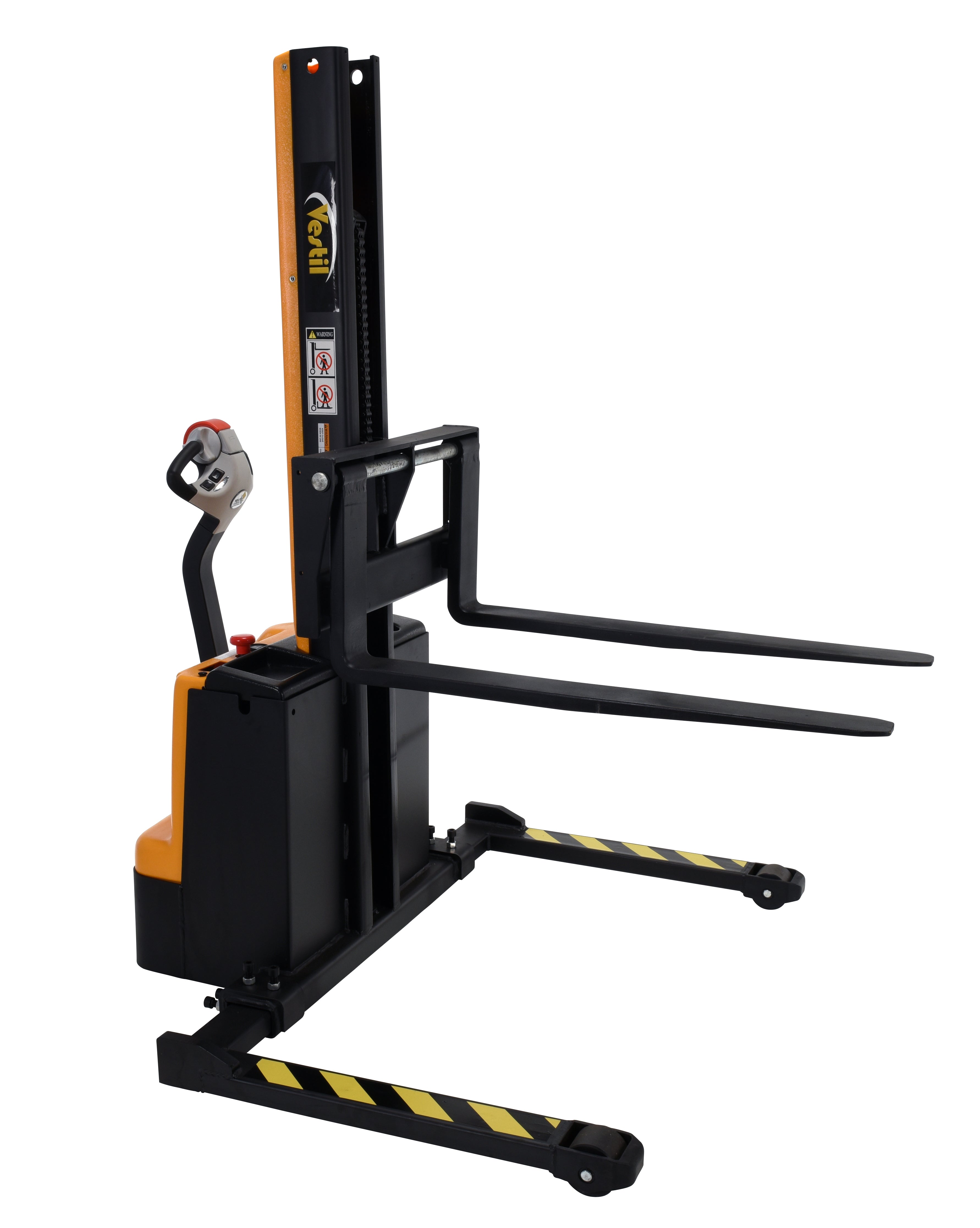
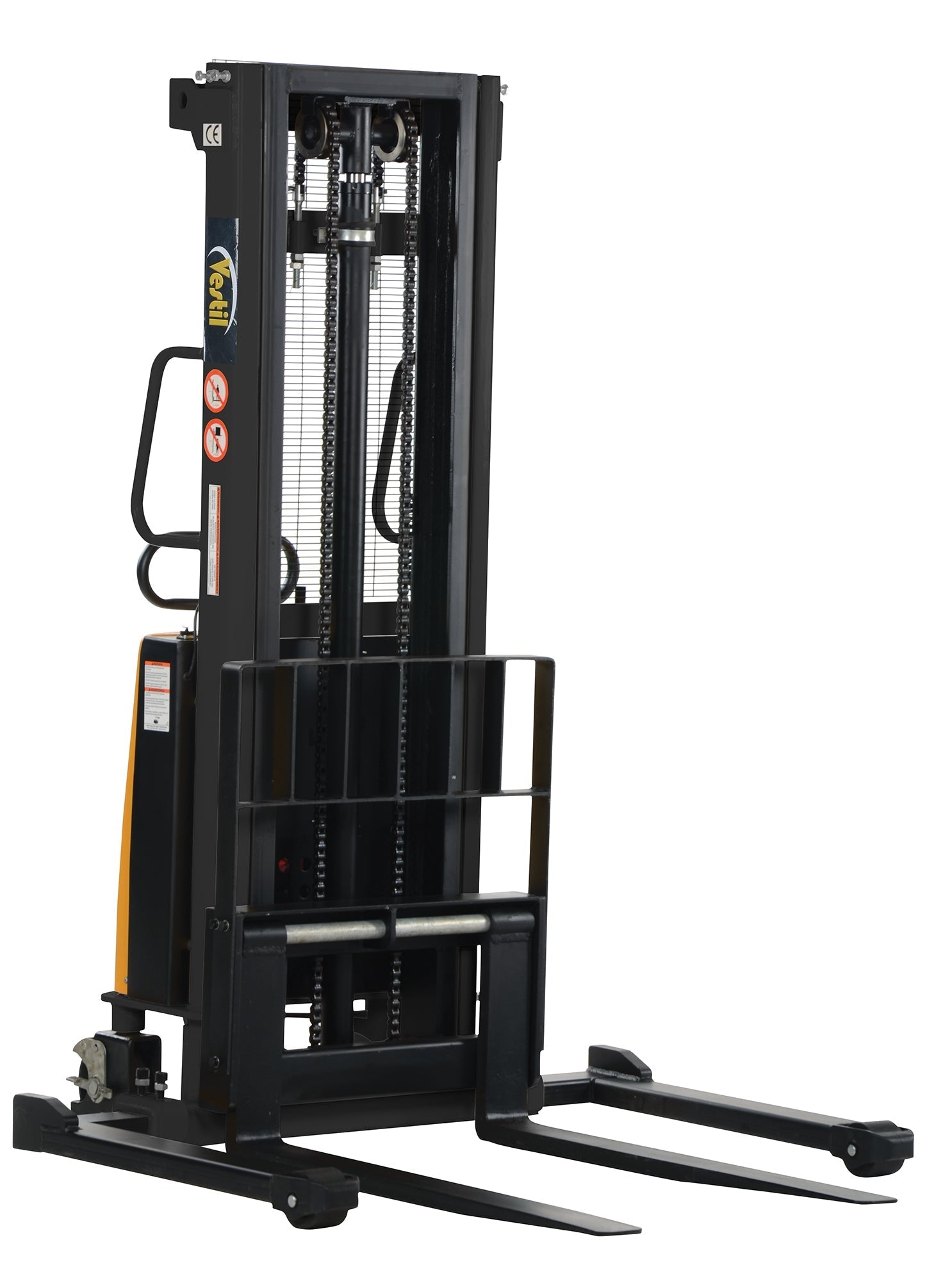
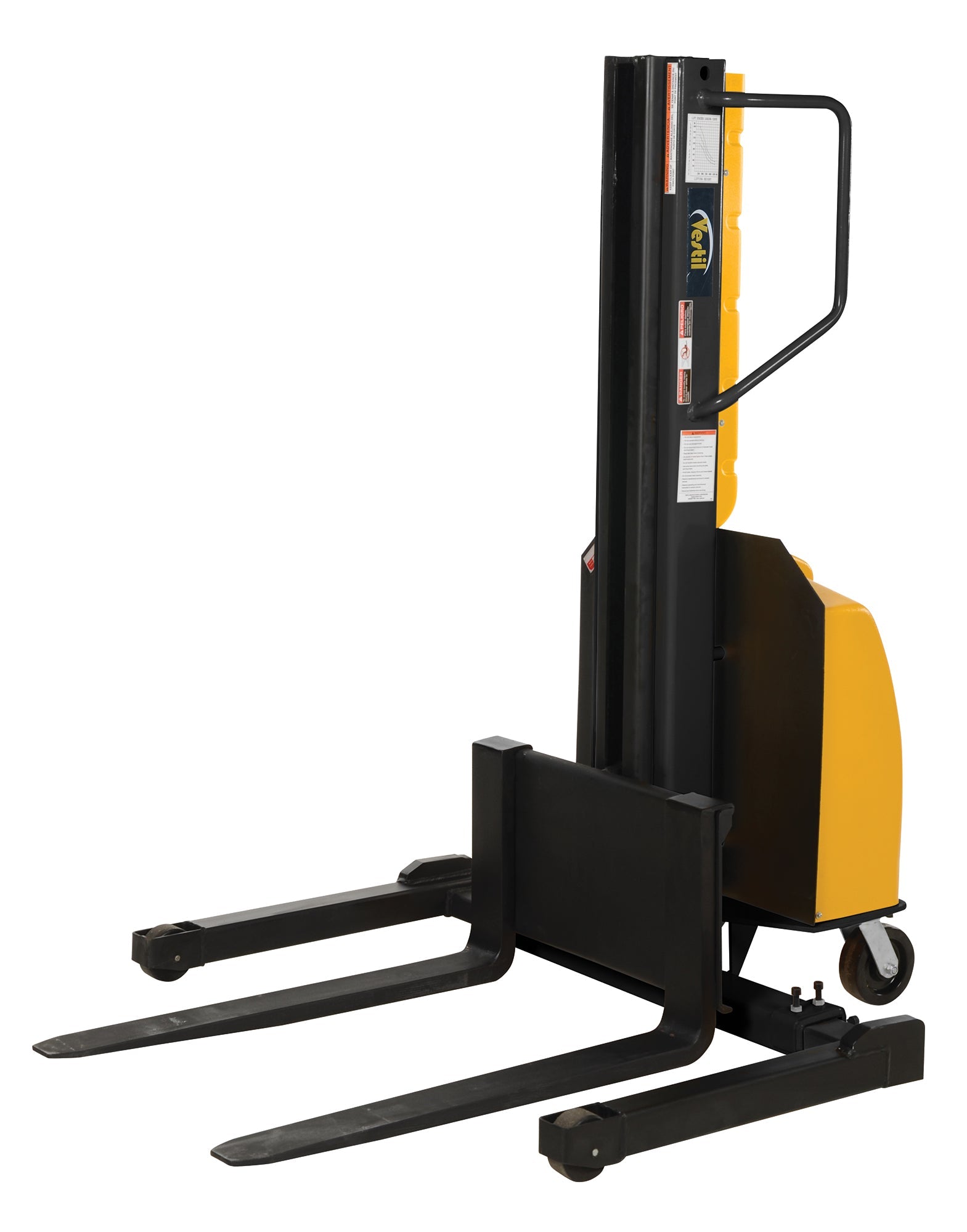
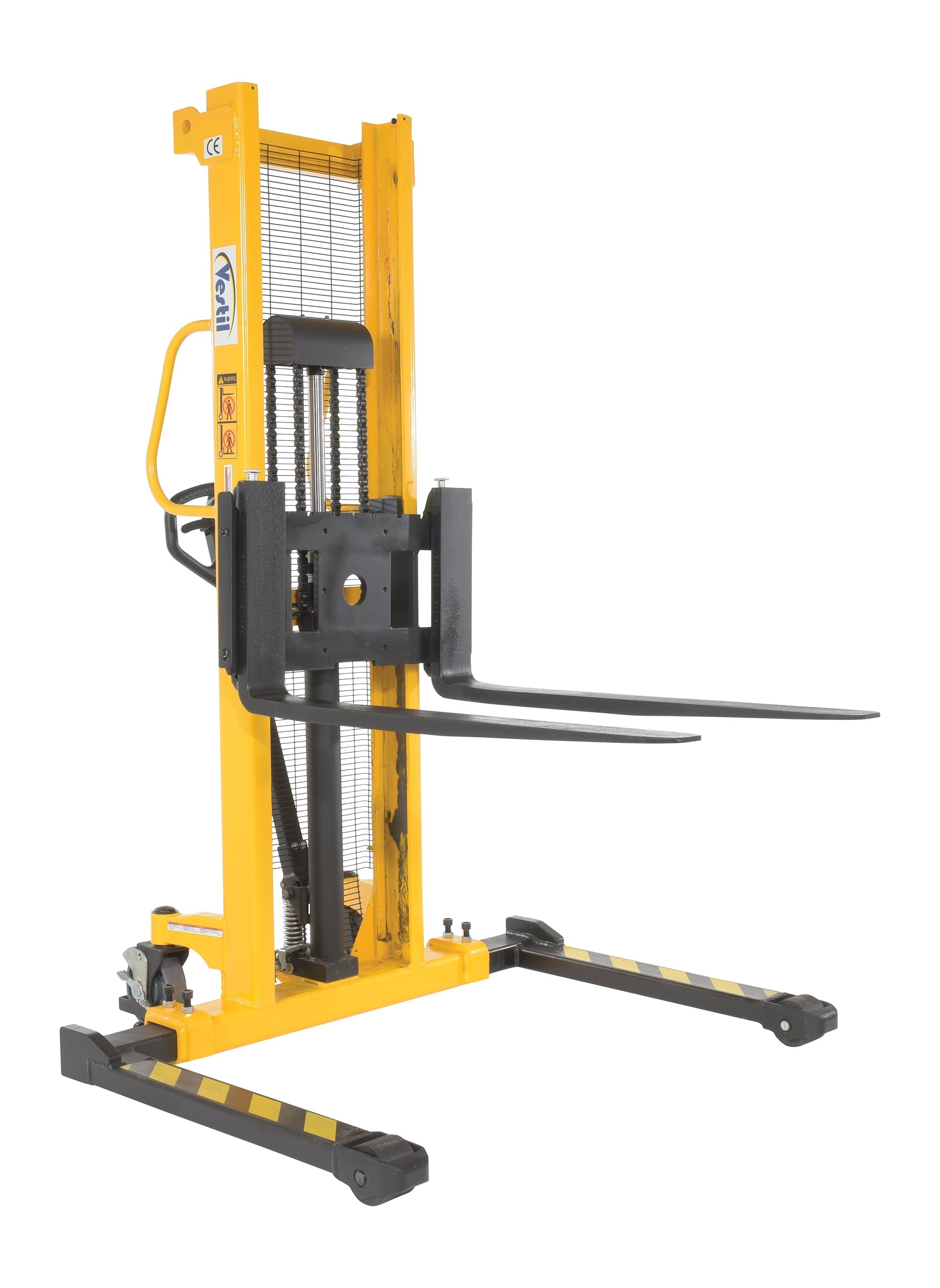
How much of the work is powered. Stackers come in three power grades, and picking one is a question about daily volume. A manual stacker uses a hand-pump hydraulic lift and is pushed by hand, which suits a stockroom that stacks a few pallets a day: Vestil's manual and electric stackers start around $1,206, and the lightweight winch stacker truck raises its load on a hand winch from about $1,121. A semi-electric machine powers the lift but is still pushed by the operator, the middle ground for moderate use. A fully electric stacker powers both lift and travel, so the operator walks alongside and steers, which is what a full shift on a warehouse floor needs. Vestil's stackers with powered drive and powered lift run 1,500 lb on a 24V system, and the lithium-ion battery models trade lead-acid charging downtime for opportunity charging between picks. Buy the power grade the daily cycle count justifies, then size the battery to the shift.
Capacity at the height you actually lift. A stacker's headline capacity is the number at the mast's lowest useful height and a standard load center, and both of those shrink in the real world. Push the load deeper or higher and the center of gravity moves forward and up, and safe capacity comes down with it, which is why every machine ships with a capacity chart rather than a single number. Read the chart at the height and load center you will actually work, not the front-page rating. The practical rule is to size against your heaviest real pallet at your tallest real lift, then leave margin. For loads that need to sit on a work surface rather than racking, a lift table holds the work at a fixed height and is steadier and cheaper than parking a stacker under it.
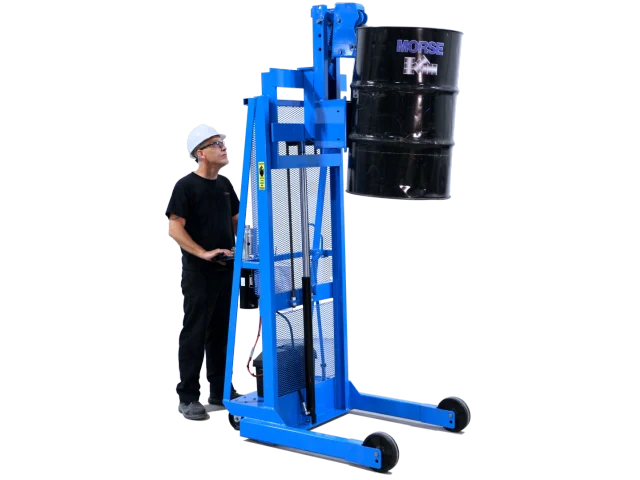
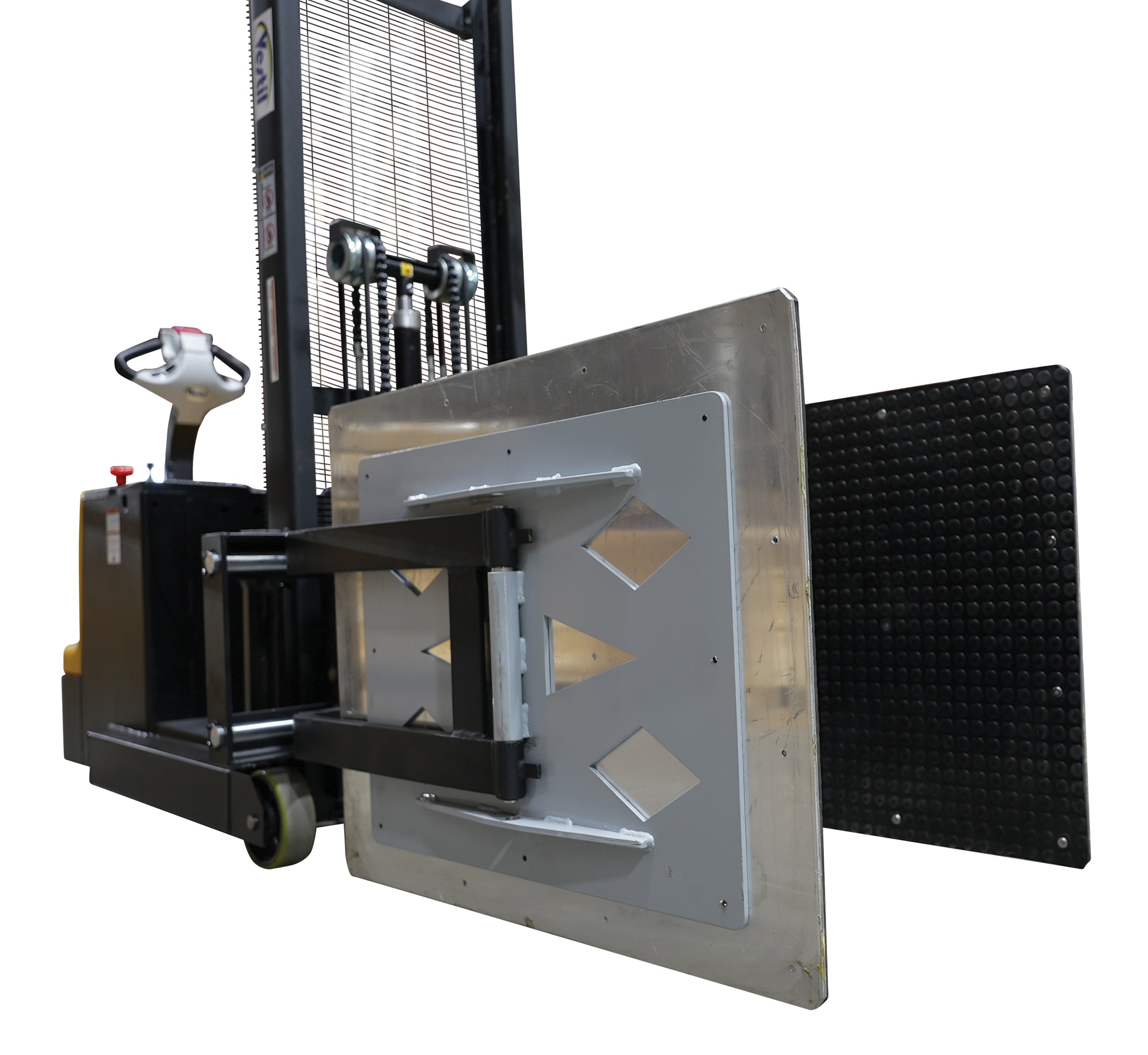
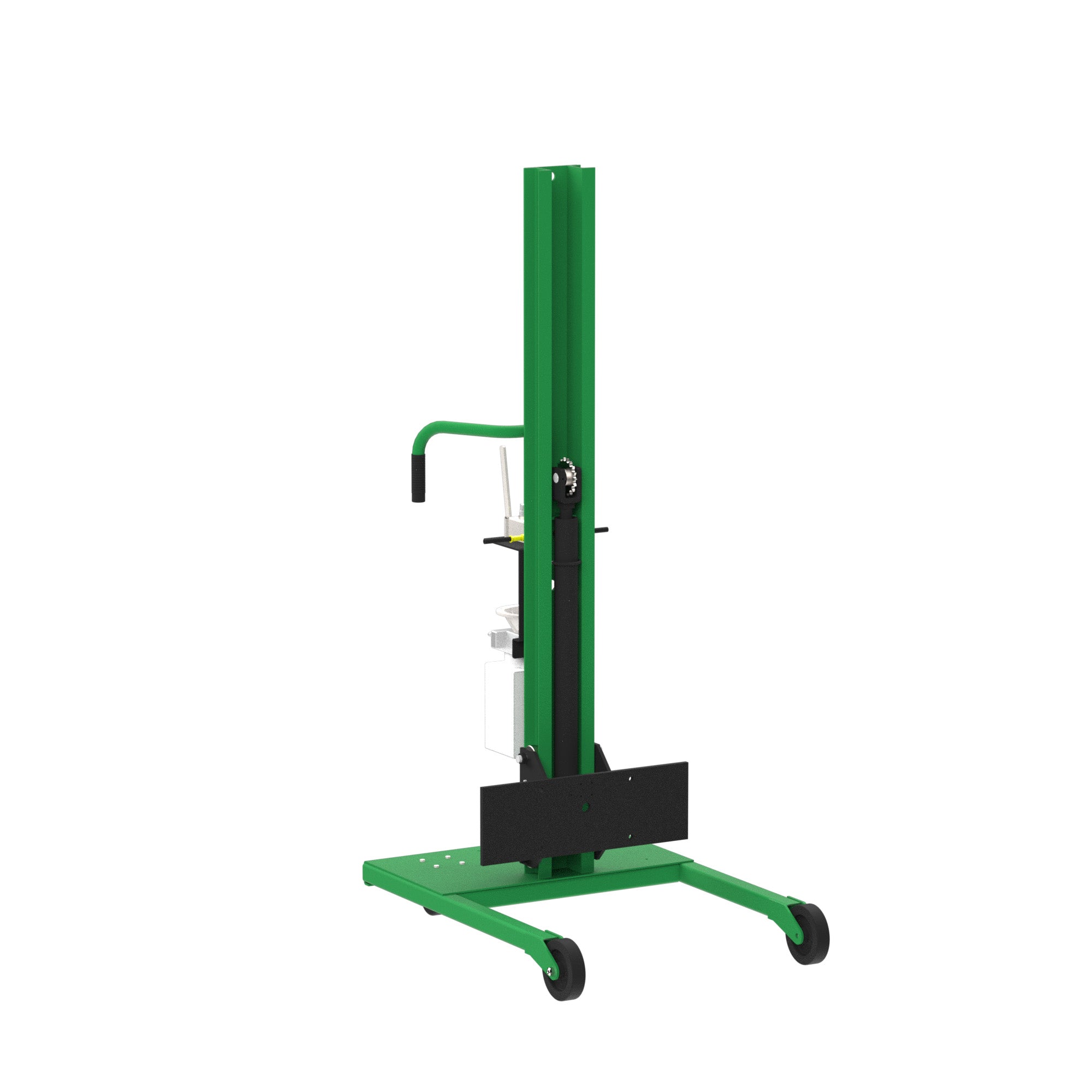
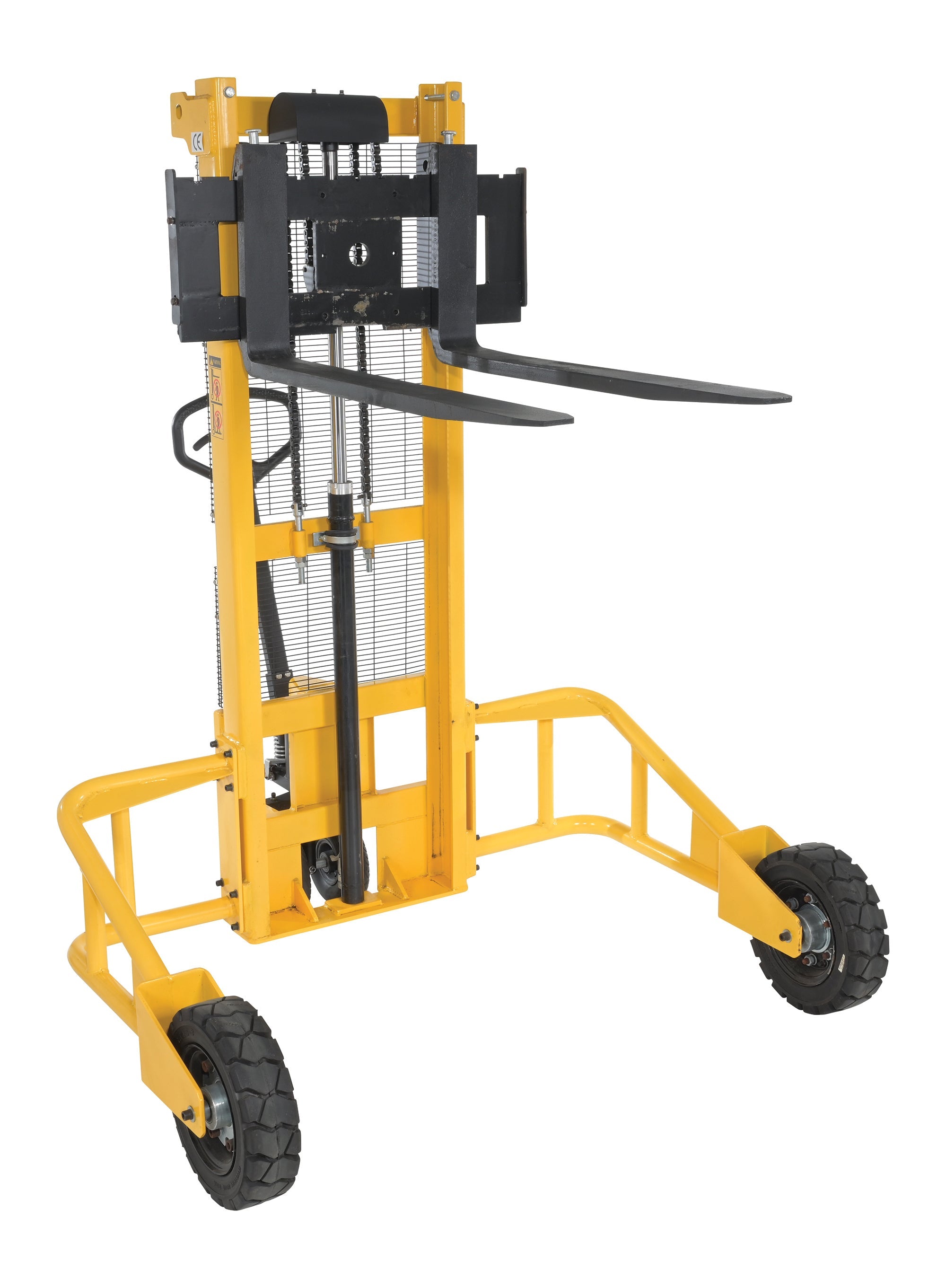
Specialty stackers for loads that are not standard pallets. Several machines here are stackers in mechanism but built for a specific load. The reach stacker, Vestil's powered stacker with power drive, lift, and fork reach, extends the forks forward to place into double-deep racking or over an obstruction, rated 1,500 lb. The rough terrain stacker swaps small poly wheels for a chassis that handles gravel and uneven yards. The bale clamp stackers replace forks with a powered clamp for bales, drums, and boxes with no pallet under them. The adjustable box stacker is a light-capacity mast for cartons, 380 lb to a lift height of 62 to 150 inches, and the portable mini stacker handles 260 lb where a full machine will not fit. Drums get their own answer: the Morse MORSPEED drum stacker lifts and places barrels, and the wider bench of barrel gear lives in drum handling equipment. Fork-mounted grabs and rotators that turn a rider truck into a handler live in forklift truck attachments.
Anything powered needs a trained operator. A powered stacker is a powered industrial truck under OSHA 29 CFR 1910.178, the same standard that governs forklifts, and the walking-operator machines are named in it directly. An operator has to be trained, evaluated, and certified before running one, with refresher training after an incident or on a three-year cycle, and the training has to be specific to the type of truck and the workplace. A manual hand-pump stacker that no motor drives falls outside the powered-truck rule, which is one quiet reason a low-volume stockroom sometimes stays manual. Beyond training, treat the mast, forks, chains, and hydraulics like the load-bearing parts they are: check them before each shift and pull anything with a leaking cylinder, a worn chain, or a bent fork out of service. Keep the capacity plate legible, because it is the chart that keeps a lift inside the machine's real limits.
Frequently Asked Questions
A pallet jack raises a pallet a few inches to roll it across the floor and does nothing higher. A pallet stacker raises the load up a mast to put it on racking, into a truck, or onto a mezzanine. If you only move loads at floor level, a jack is enough and far cheaper. Once you need to stack, you need a stacker, and when volume and speed climb past what a walk-behind can keep up with, a rider forklift is the next step.
Straddle stackers ride on two legs that spread around the pallet, putting the wheels under the load so the machine stays light and stable, like the EKKO 3,300 lb straddle stackers. They need open floor beside the pallet for the legs to slide alongside. A counterbalanced stacker uses a rear weight instead of legs, which keeps the front clear for closed-front racking or block-stacked loads, at more weight and cost for the same rating. Match it to whether your pallets sit on open floor or up against something.
It is a volume question. A manual stacker, pumped and pushed by hand from about $1,206, suits a stockroom that stacks a few pallets a day. Semi-electric powers the lift but you still push it, which fits moderate use. Fully electric powers both lift and travel for a full warehouse shift, with lithium-ion models that opportunity-charge between picks instead of sitting on a lead-acid charger. Buy the grade your daily cycle count justifies rather than the biggest machine on the page.
Ratings here run to 1,500 lb on the powered Vestil walkies and 3,300 lb on the EKKO straddle machines, but the front-page number is measured at the lowest useful height and a standard load center. Deeper or higher loads shift the center of gravity and lower the safe capacity, so read the machine's capacity chart at the height and load center you actually work, and size against your heaviest real pallet at your tallest real lift.
Yes. A powered stacker is a powered industrial truck under OSHA 29 CFR 1910.178, and walk-behind machines are named in the standard, so the operator must be trained, evaluated, and certified, with refresher training after an incident or every three years. The training has to be specific to the type of truck and the workplace. A purely manual hand-pump stacker with no motor falls outside that rule, which is one reason a low-volume operation sometimes stays manual.
Yes, with the right build. The Morse MORSPEED drum stacker lifts and places barrels, the bale clamp models swap forks for a powered clamp on loads with no pallet under them, and the adjustable box stacker is a light 380 lb mast for cartons up to a 150-inch lift. The portable mini stacker covers 260 lb loads in tight spots. For a full drum program beyond stacking, the rest of the barrel gear is in drum handling equipment.