Crane Attachments
Crane attachments are the rated devices that hang below the hook and let a crane or hoist move loads a bare hook cannot: a loaded pallet, a bin of scrap, a stack of fittings. This hub gathers two families. Crane forks from Tandemloc and Vestil slide under a pallet and lift it, in fixed, adjustable, and wheeled patterns rated 2,000 to 6,000 lb with 36, 42, and 48 inch tines, running from about $1,600 to $6,500. Material lifting baskets from BTH Gear box in loose or awkward material on a standard 48 by 40 inch footprint, rated 2 tons, with caster, gate, and ramp options. Every item here is a below-the-hook lifting device under ASME B30.20, which means it carries a rated load, a proof test, and an inspection schedule of its own. The guide below sorts the choice by what you are lifting and how it loads.
Shop Crane Attachments by Category
Compare Crane Attachments
| Model | Price | Capacity | |
|---|---|---|---|
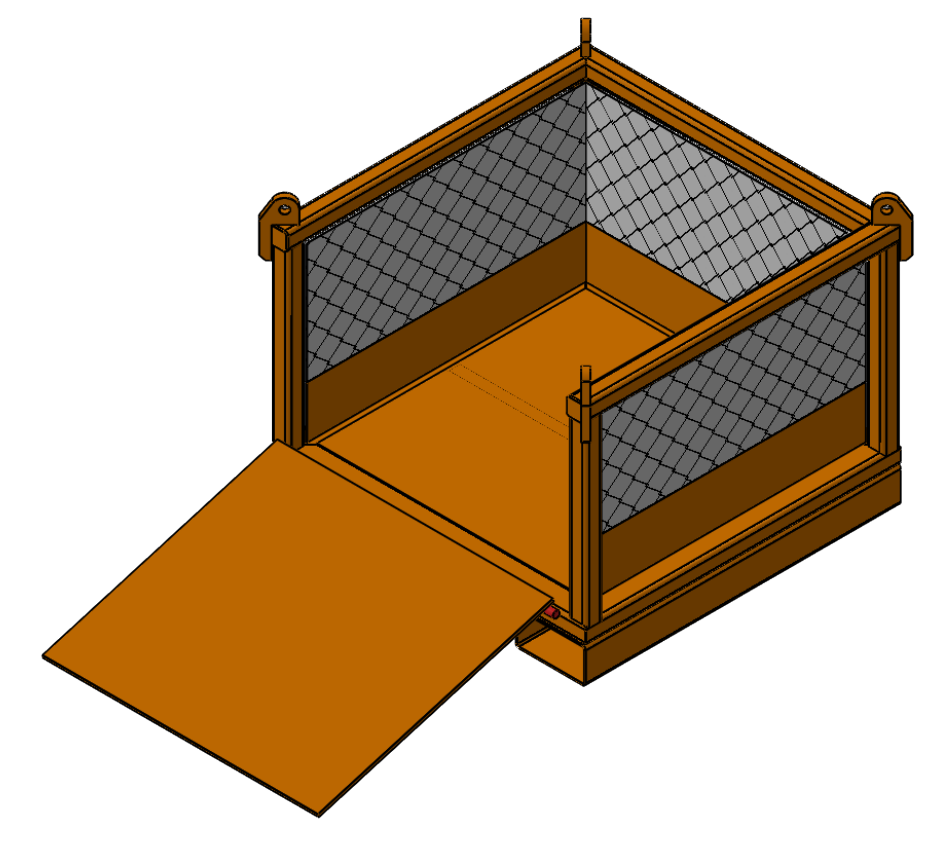
| BTH Gear Material Lifting Basket With Casters 48x40x42" x 2Ton | $5,650 | 2 ton | View → |
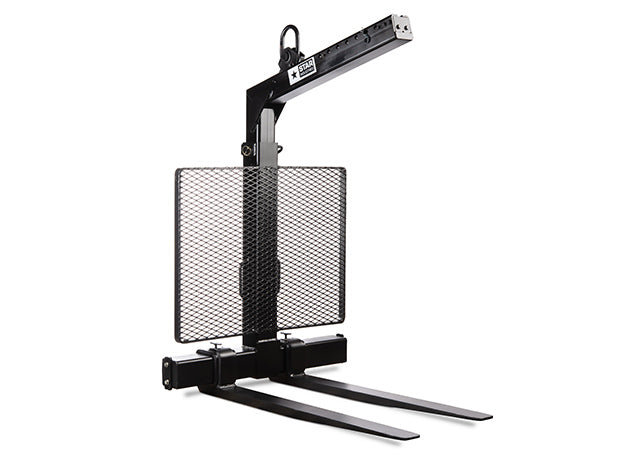
| Star Industries Crane Forks | $5,482 | — | View → |
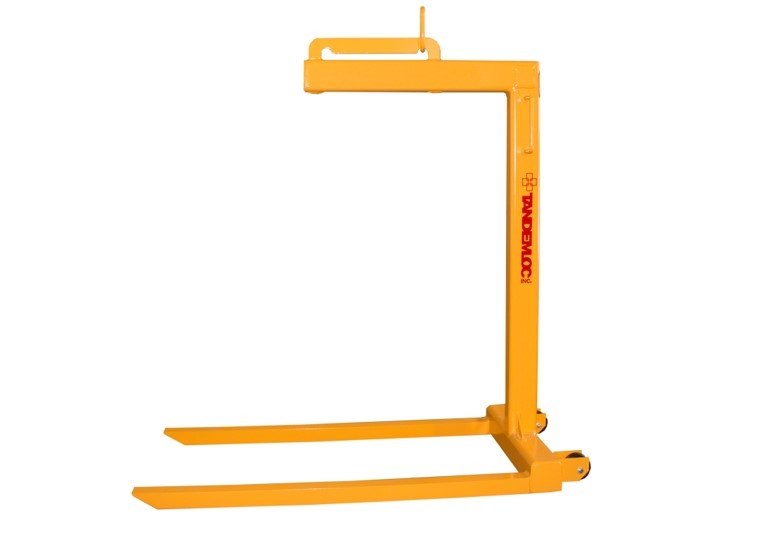
| Tandemloc AN17W Wheeled Lightweight Pallet Lifters | $3,865 | 2,000-4,000 lb | View → |
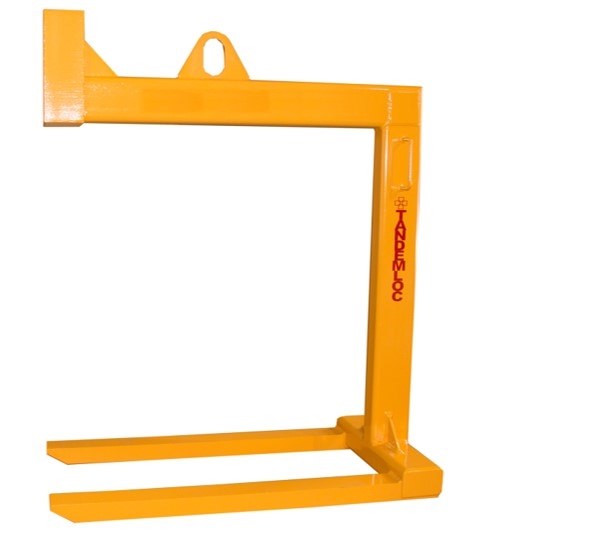
| Tandemloc AN18A Standard Fixed Fork Pallet Lifters | $3,061 | 2,000-6,000 lb | View → |
| Tandemloc AN17A Lightweight Pallet Lifter | $2,682 | 2,000-6,000 lb | View → |
| Machining & Welding Pallet Lifting Bars (Pair) | $2,098 | 4,000 lb | View → |
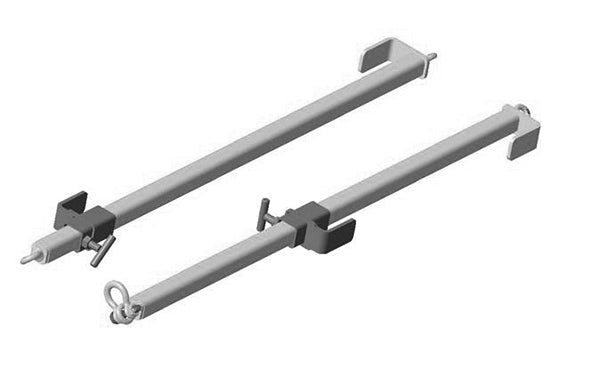 In Stock
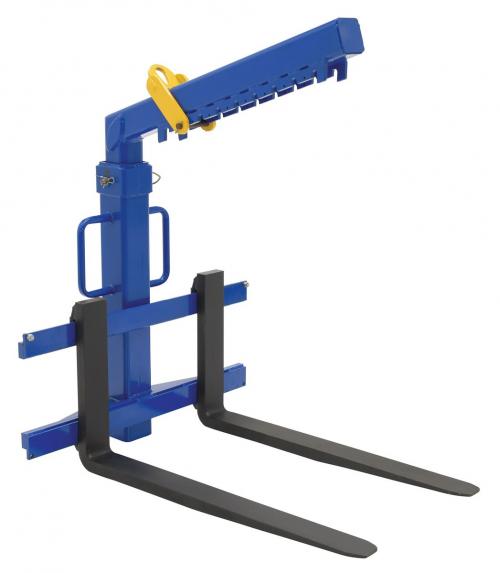 In Stock
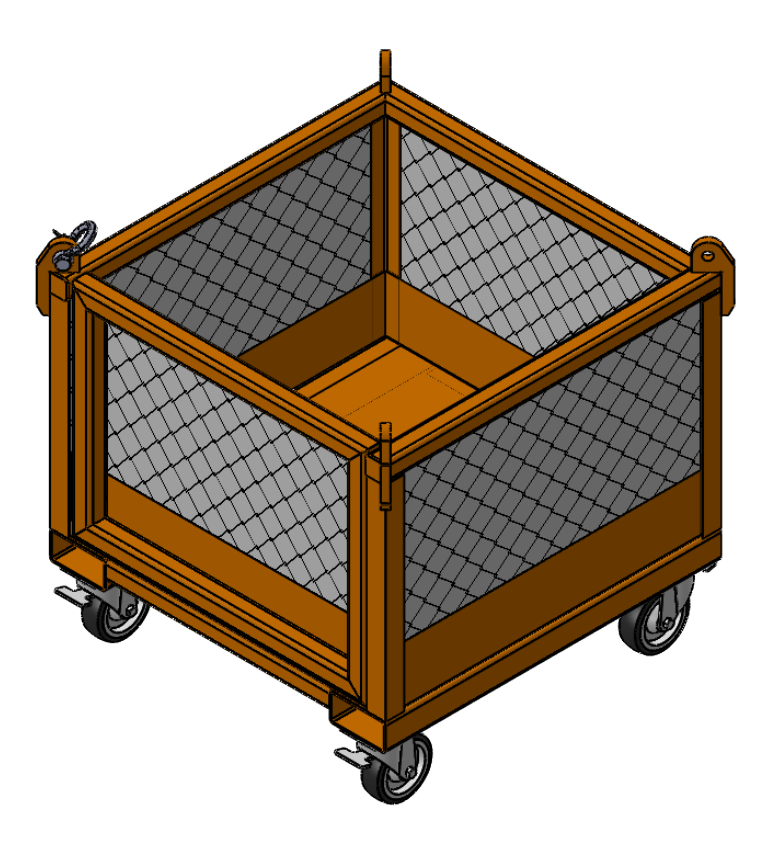 In Stock
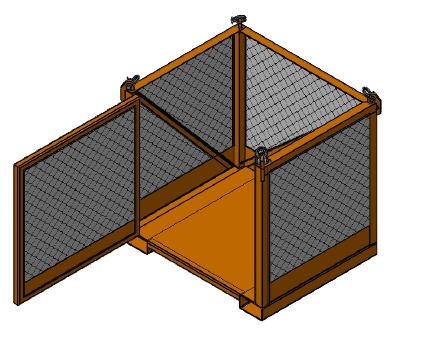 In Stock
 In Stock
 In Stock
 In Stock
 In Stock
 In Stock
 In Stock
Crane Attachments Buying Guide
What sits below the hook, and the standard that governs it. Everything on this page is a below-the-hook lifting device, gear that attaches a load to a hoist rather than connecting one rated component to another the way a shackle or sling does. That distinction sets the rules. ASME B30.20 governs the marking, construction, installation, inspection, testing, and operation of these devices, and it treats each one as a rated unit with its own working load limit and its own inspect-before-use discipline, the same standard that covers the rated units on the wider rigging equipment page. Two jobs split the collection. When the load rides a pallet, crane forks slide under it and pick it. When the load is loose, awkward, or would spill, material lifting baskets box it in first. Pick the job, then the capacity and the fit.
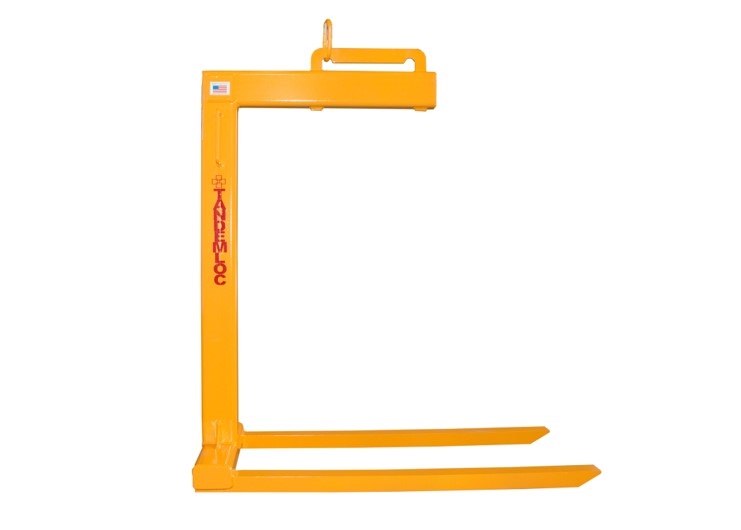
Crane forks: a pallet lift without a forklift. A crane fork is a set of tines on a bail that hangs from the hook and picks a loaded pallet straight up, which is how you move palletized stock into a bay a forklift cannot reach or off a mezzanine with no ramp. Tandemloc and Vestil cover the range here. Tandemloc's AN17A lightweight pallet lifter and AN18A standard fixed-fork lifter carry 2,000 to 6,000 lb on 36, 42, or 48 inch forks, and Vestil's overhead load lifters run 2,000 and 4,000 lb in fixed, adjustable, and deluxe builds from about $1,600. The Machining and Welding pallet lifting bars are a two-bar pair for the same job at $2,098. The safety detail that matters most is the back stop and the load's center: a crane fork must be loaded so the pallet cannot slide off the tines toward the open end, so keep the load against the heel and never pick a pallet the forks do not fully support. All of these live in the crane forks collection.
Fixed, adjustable, or wheeled. Three patterns solve three problems. A fixed-fork lifter like the AN18A sets the tine spread at the factory and is the simplest, strongest, and cheapest pick when every pallet you lift is the same size. An adjustable lifter, offered in the Vestil line, lets you slide the forks to match a wider or narrower pallet, worth the premium in a shop that lifts mixed loads. The Tandemloc AN17W wheeled lightweight lifter adds casters so a worker can roll the empty fork frame into position under a pallet, hook it, and lift, instead of muscling the bare device by hand, and it runs 2,000 to 4,000 lb on 36 and 48 inch forks. Fork length is the other axis: a 48 inch tine supports a deep or double pallet, a 36 inch tine is easier to handle in a tight aisle, and the rating gets harder to hold as the fork gets longer because the load sits further out on the arm.
Material lifting baskets: containing the load in the air. When the load will not sit on a pallet, a bin of weld offcuts, a pile of couplings, a load of brick or block, a material lifting basket contains it and lifts the whole box. The BTH Gear baskets here share a 48 by 40 by 42 inch body, the footprint of a standard GMA pallet, and a 2 ton rating, and they come in three loading styles: a caster version that rolls on the floor between picks, a gate version whose side drops for forklift or hand loading, and a ramp version you can walk material up into. Each is offered with or without a factory rigging assembly, the four-leg bridle that connects the basket to the hook. Order the rigging assembly unless you already own a matched 2 ton bridle, because a basket is only as safe as the legs that hang it, and a mismatched sling angle can overload one corner. Prices start at $5,650 and rise with the casters, gate or ramp, and bridle you add. The full range sits in material lifting baskets.
Rate the whole pick, and the one line you never cross. Rate the whole pick, not the load alone. The attachment's own weight comes off the crane's capacity, and its length pushes the load's center of gravity down and out, so read the crane and hoist ratings against the loaded attachment before every lift. Two more rules are not negotiable. First, a custom or shop-built lifting device must be proof tested to 125 percent of its rated load before first use and inspected before every shift under ASME B30.20, so buy the rating tag and keep the paperwork. Second, and this one has no exception: a material lifting basket is for material, never for people. Hoisting an employee in a crane basket is governed by OSHA 1926.1431 and demands a purpose-built, tested personnel platform, not a material box. When you need the crane itself rather than what hangs below it, that is the overhead cranes hub, and the slings and shackles that finish any rig sit in lifting slings and the wider rigging equipment page.
Frequently Asked Questions
No. The baskets on this page are material-only below-the-hook devices and must never carry people. Hoisting an employee from a crane is governed by OSHA 1926.1431, which requires a purpose-built, load-tested personnel platform and a specific set of pre-lift procedures. A material box does not meet that standard, and using one for personnel is a citable violation.
Add the pallet and its load together to get the weight at the hook, then confirm the crane and hoist can carry that plus the fork's own weight, since the attachment counts against the crane's rating just like the load. The forks here run 2,000 to 6,000 lb. If your load lands between two sizes, buy the next one up, because duty and deflection both get easier with the margin.
A fixed-fork lifter sets the tine spread at the factory and is the strongest and least expensive pick when your pallets are one size. An adjustable lifter lets you slide the forks to match different pallet widths. A wheeled lifter, like the Tandemloc AN17W, adds casters so one worker can roll the frame under a pallet and hook it rather than lifting the bare device into place by hand.
The crane forks come in 36, 42, and 48 inch tine lengths to match common pallet depths, with 48 inch tines handling deep or double pallets. The BTH Gear baskets are built on a 48 by 40 inch footprint, the same as a standard GMA pallet, so they drop into pallet racking and forklift workflows without a special fixture.
Yes. Under ASME B30.20, below-the-hook lifting devices carry a rated load and require a visual inspection before each use plus periodic documented inspection. Custom or shop-built lifting accessories must also be proof tested to 125 percent of their rated load before first use. Keep the rating tag legible and the test paperwork on file, because both are what an inspector checks first.