Electric Hoists
An electric hoist is the powered muscle behind an overhead lift: a motor, a length of chain or wire rope, and a hook that raises and lowers the load at the push of a pendant button. This hub pulls together every powered hoist we carry, from the Harrington ER and NER chain hoists and the CM Lodestar that hangs under production cranes and monorails, to Bison three-phase units up to 10 tons, Vestil wire rope hoists, and OZ builders hoists that ride up a scaffold. Prices run from compact 115V hoists under $1,000 to multi-fall three-phase machines past $40,000, and most of the decision comes down to three things: what you lift, how hard you work it, and the power you have at the wall. The guide below sorts the collection into three families, chain hoists, wire rope hoists, and construction hoists, and walks the levers that separate a hoist that lasts a decade from one that burns out in a season.
Shop Electric Hoists by Category
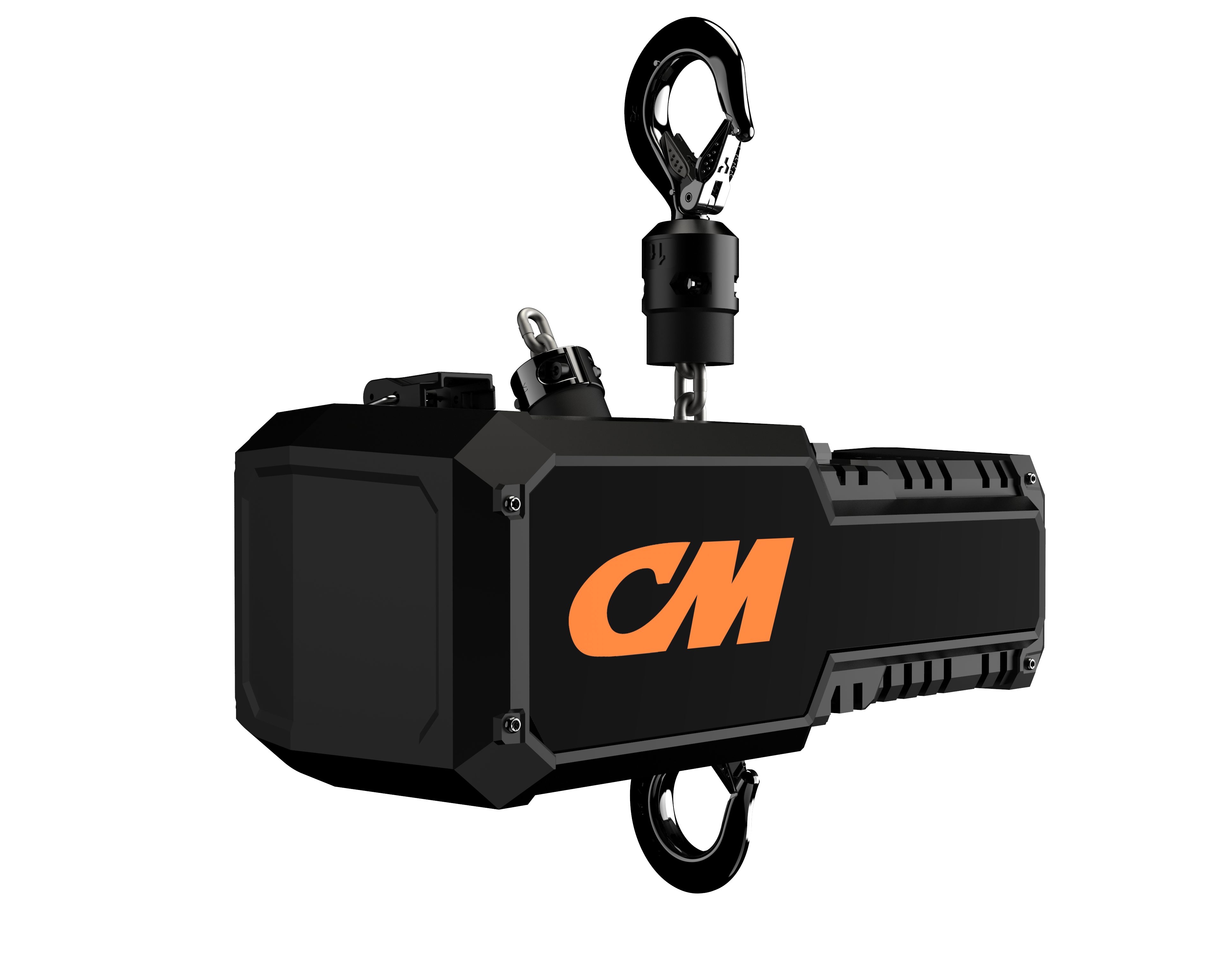
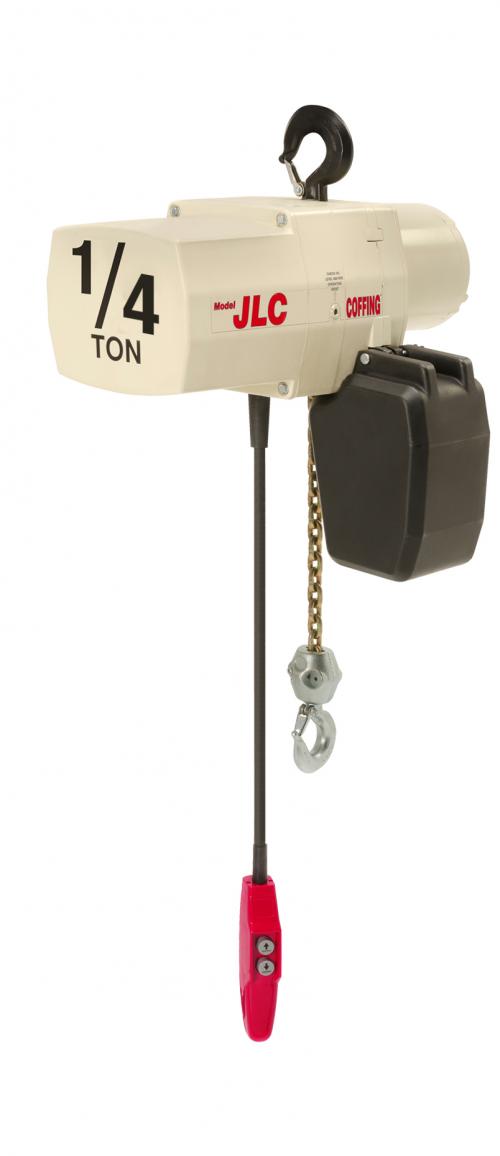
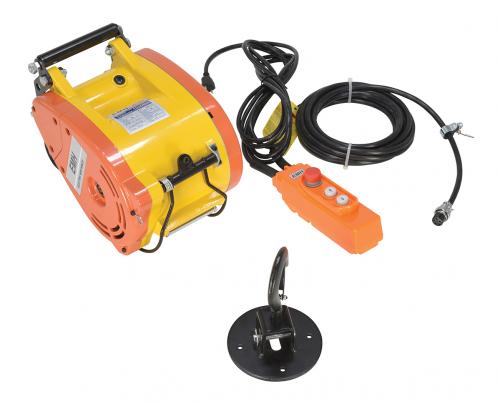
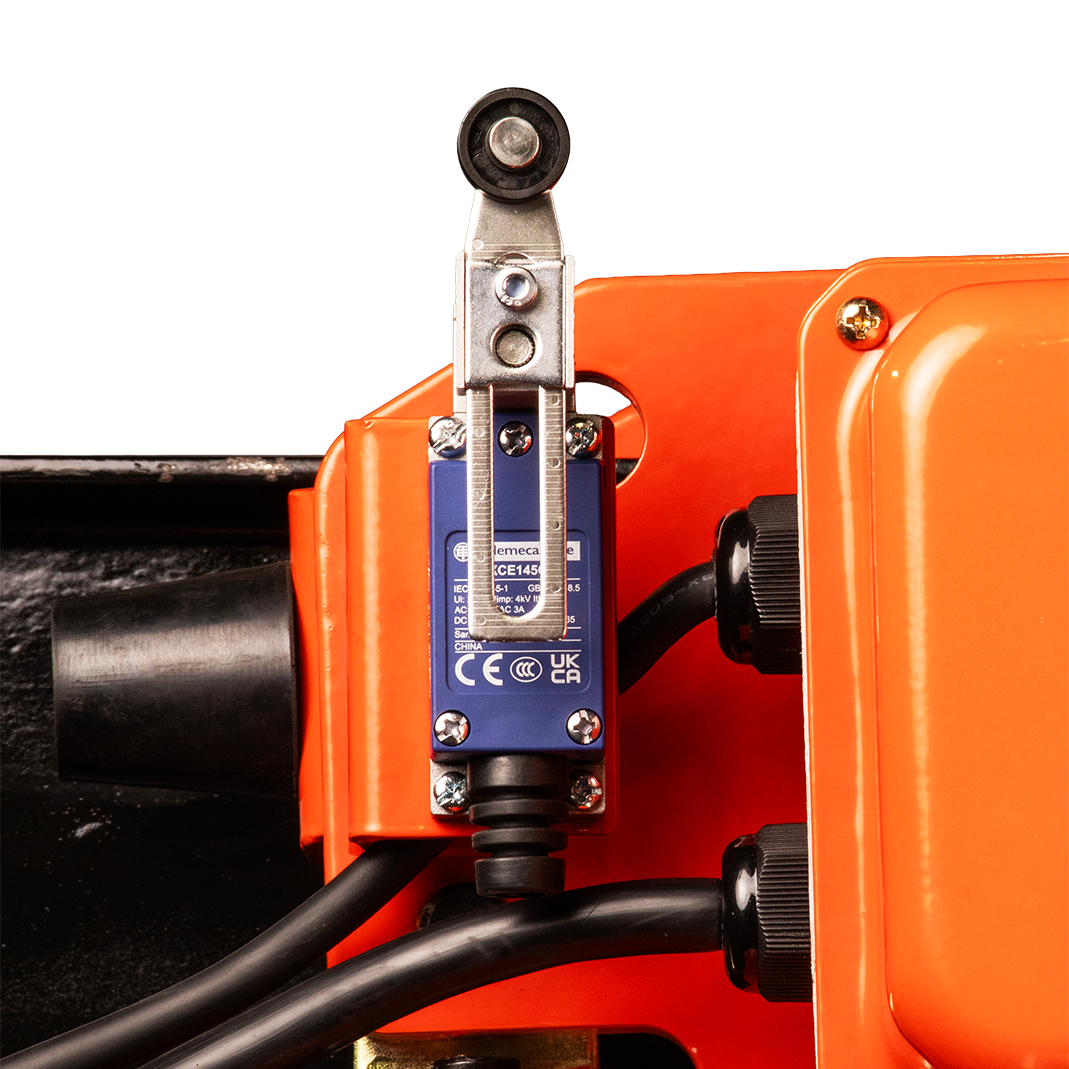
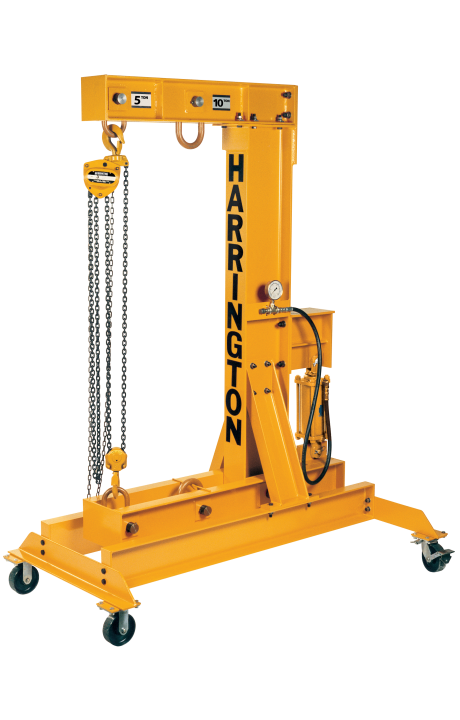
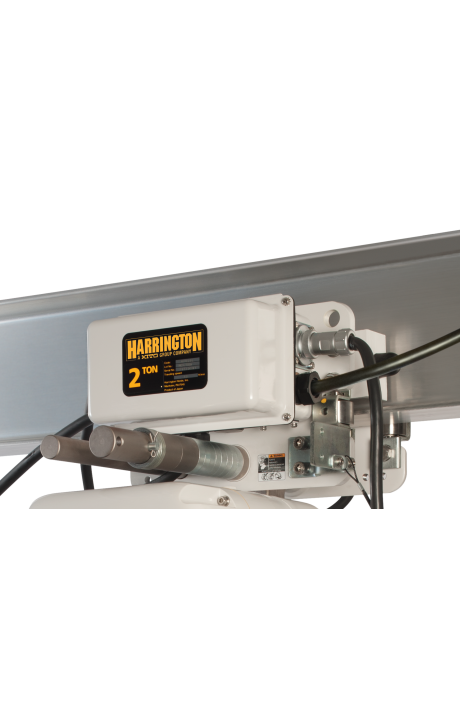
Compare Electric Hoists
| Model | Price | Capacity | Power | |
|---|---|---|---|---|
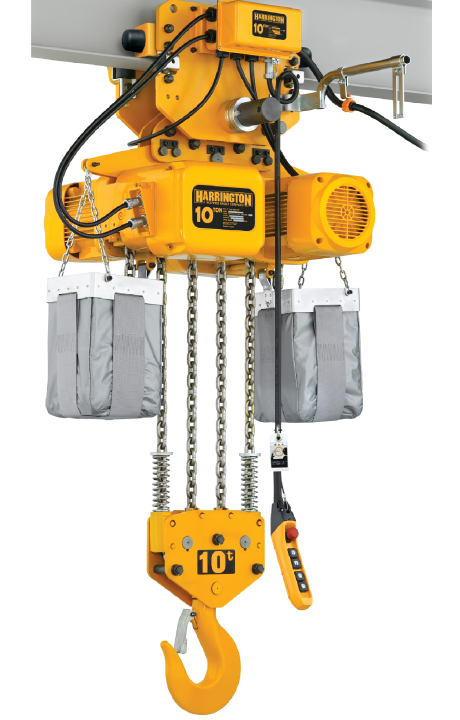
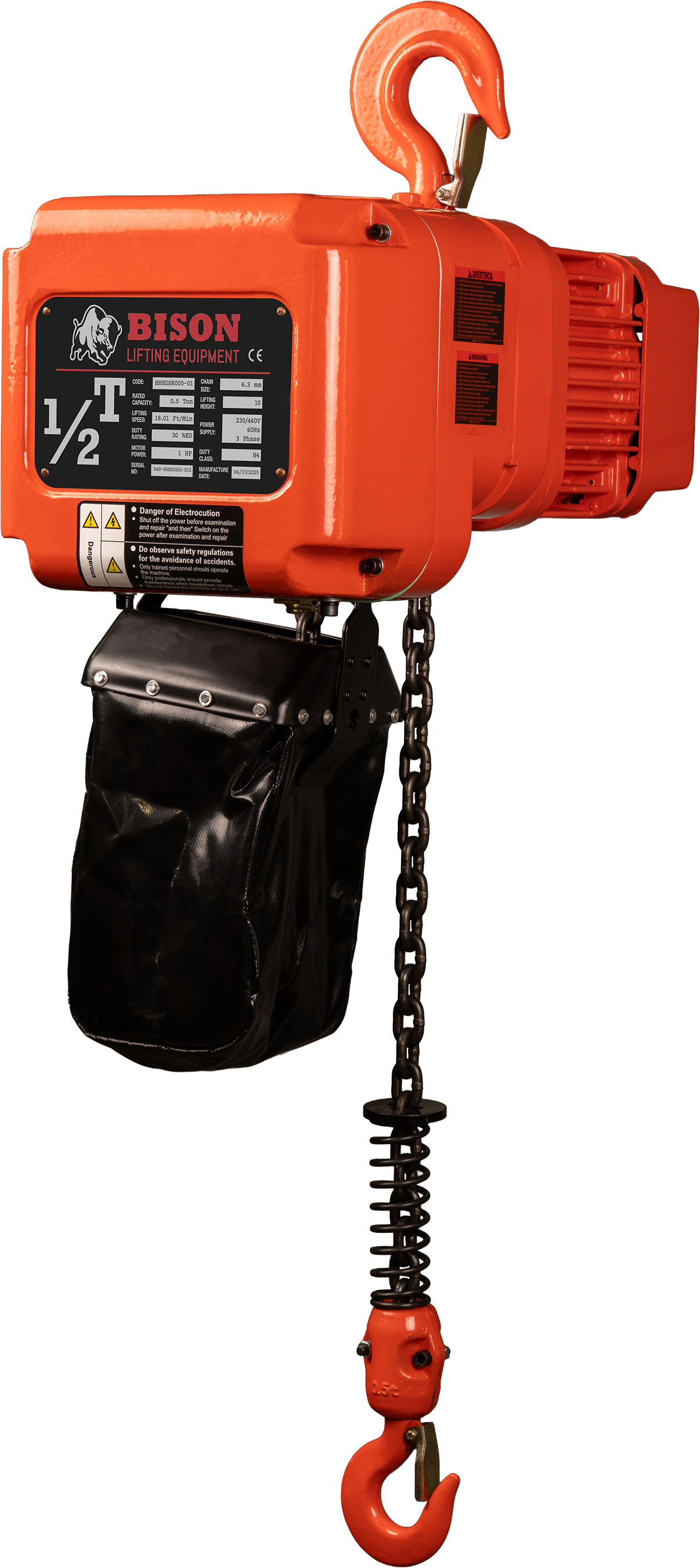
| Bison 10Ton Three Phase Dual Speed Electric Chain Hoist with Trolley 230v/460v | $21,823 | 10 ton | 230V | View → |
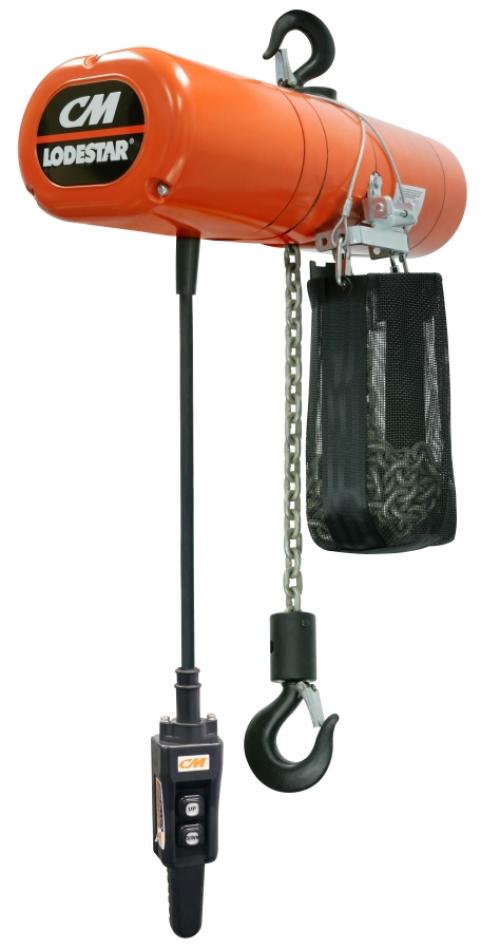
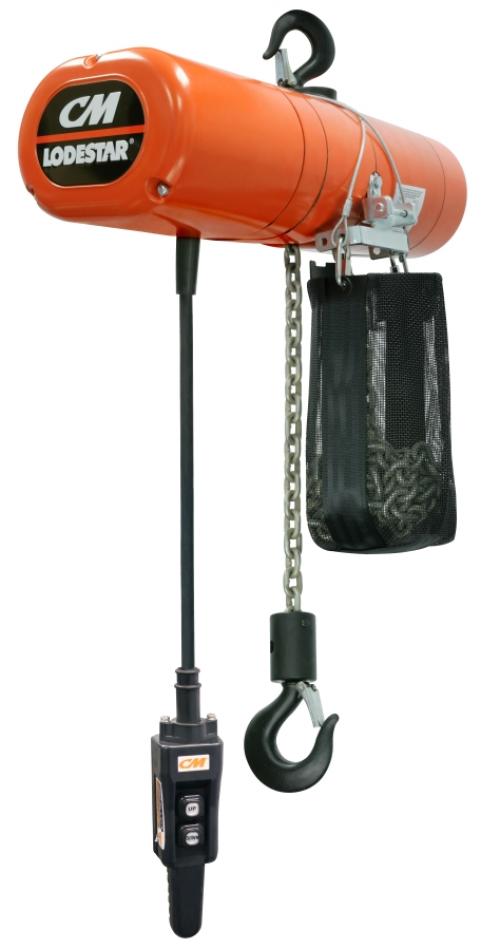
| CM Lodestar XL Electric Chain Hoist | $14,353 | 2-6 ton | — | View → |
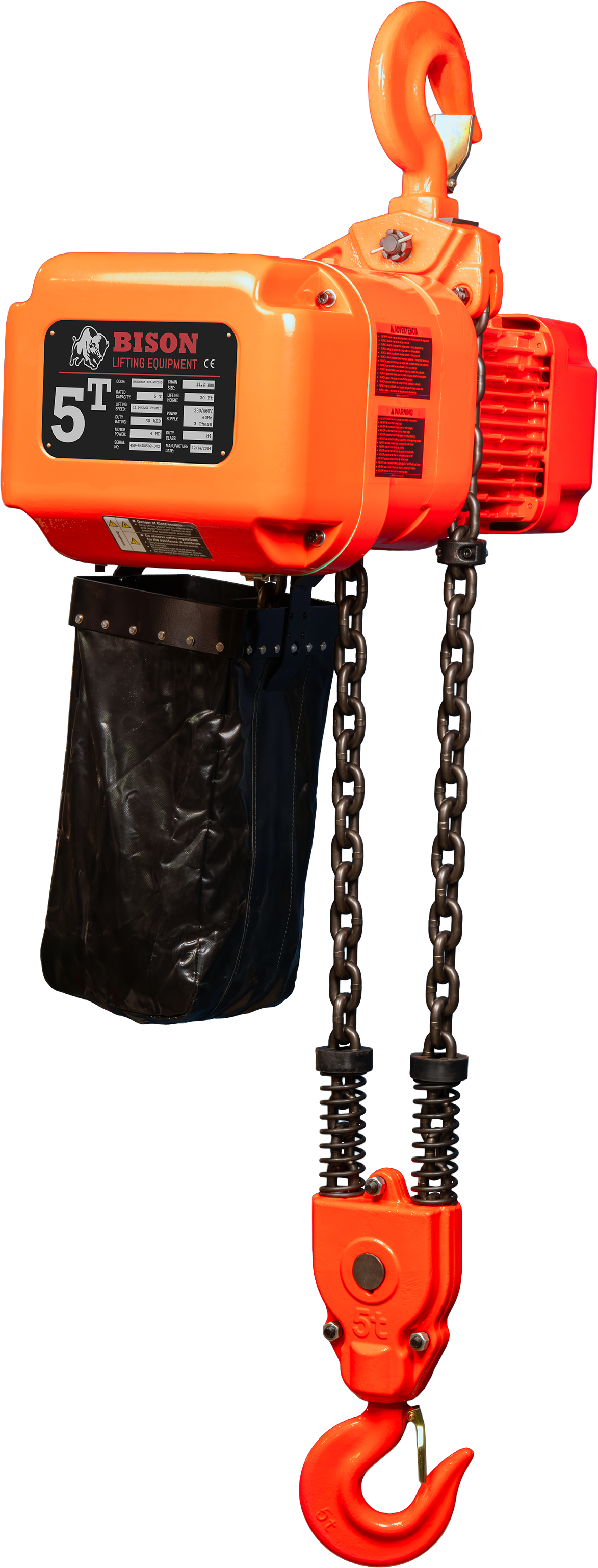
| Bison 5Ton Three Phase Dual Speed Electric Chain Hoist with Trolley 230v/460v | $11,034 | 5 ton | 230V | View → |
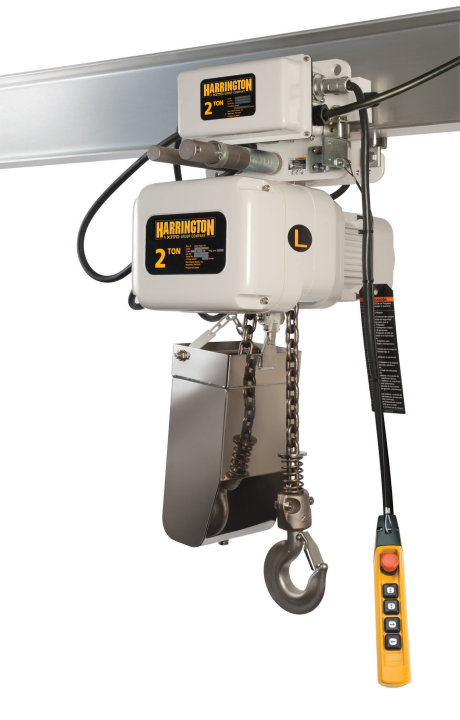
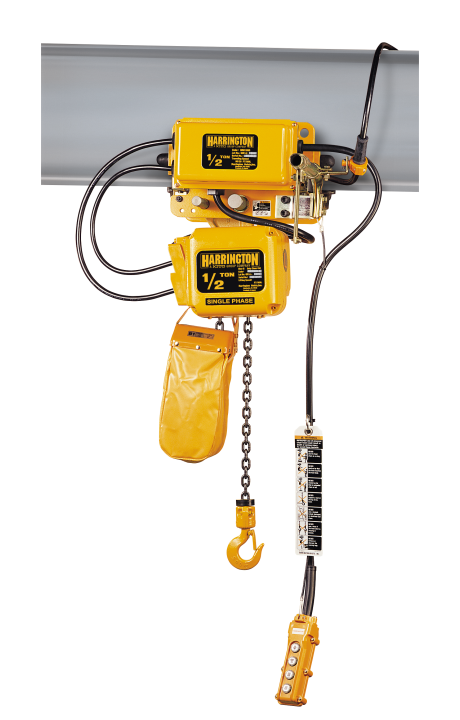
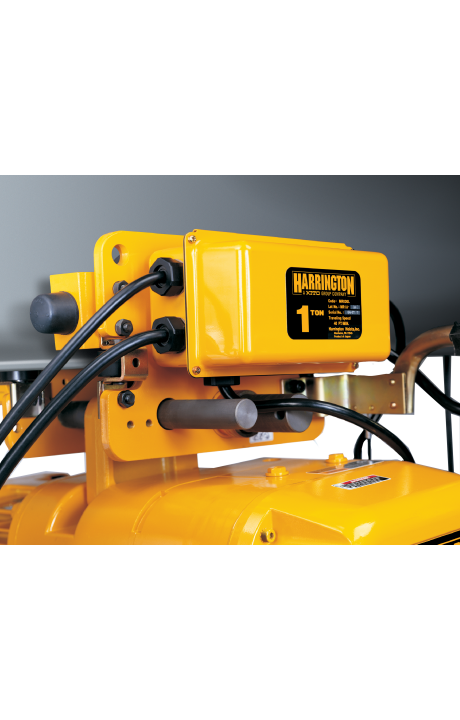
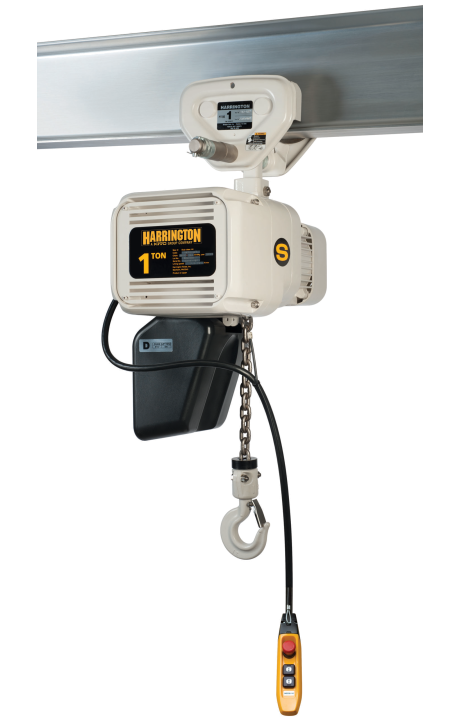
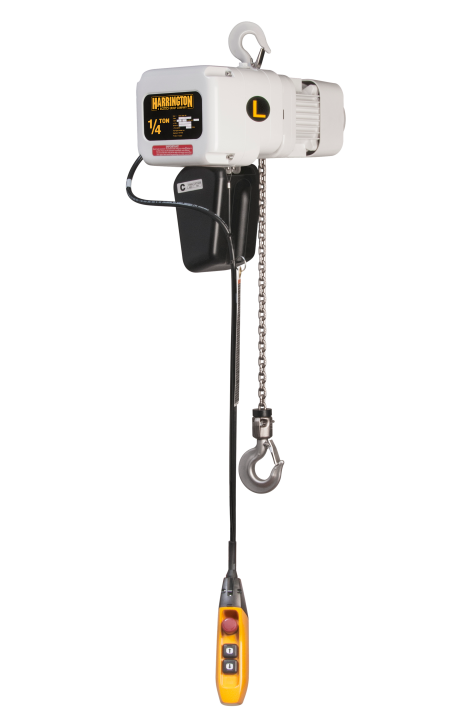
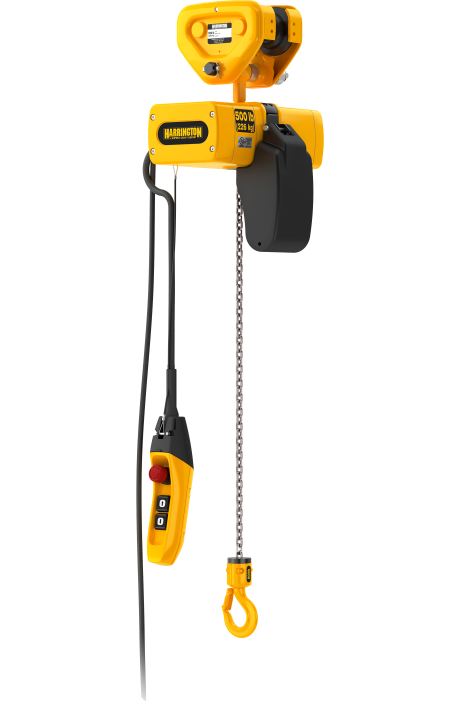
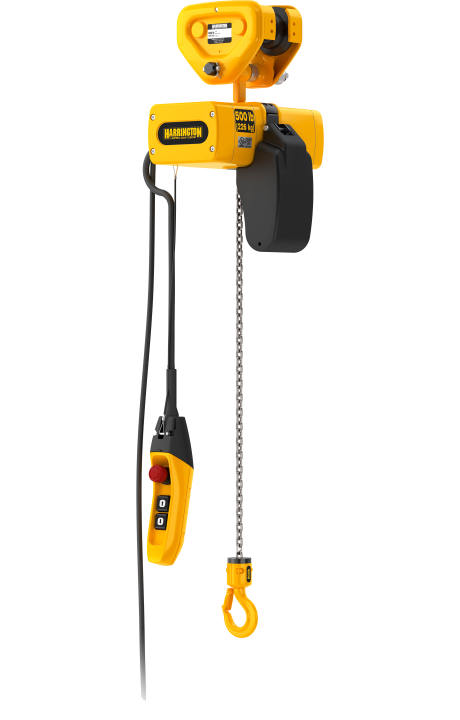
| Harrington NERM-FG Motorized Trolley Food Grade Electric Chain Hoist | $10,335 | 1/4-2 ton | — | View → |
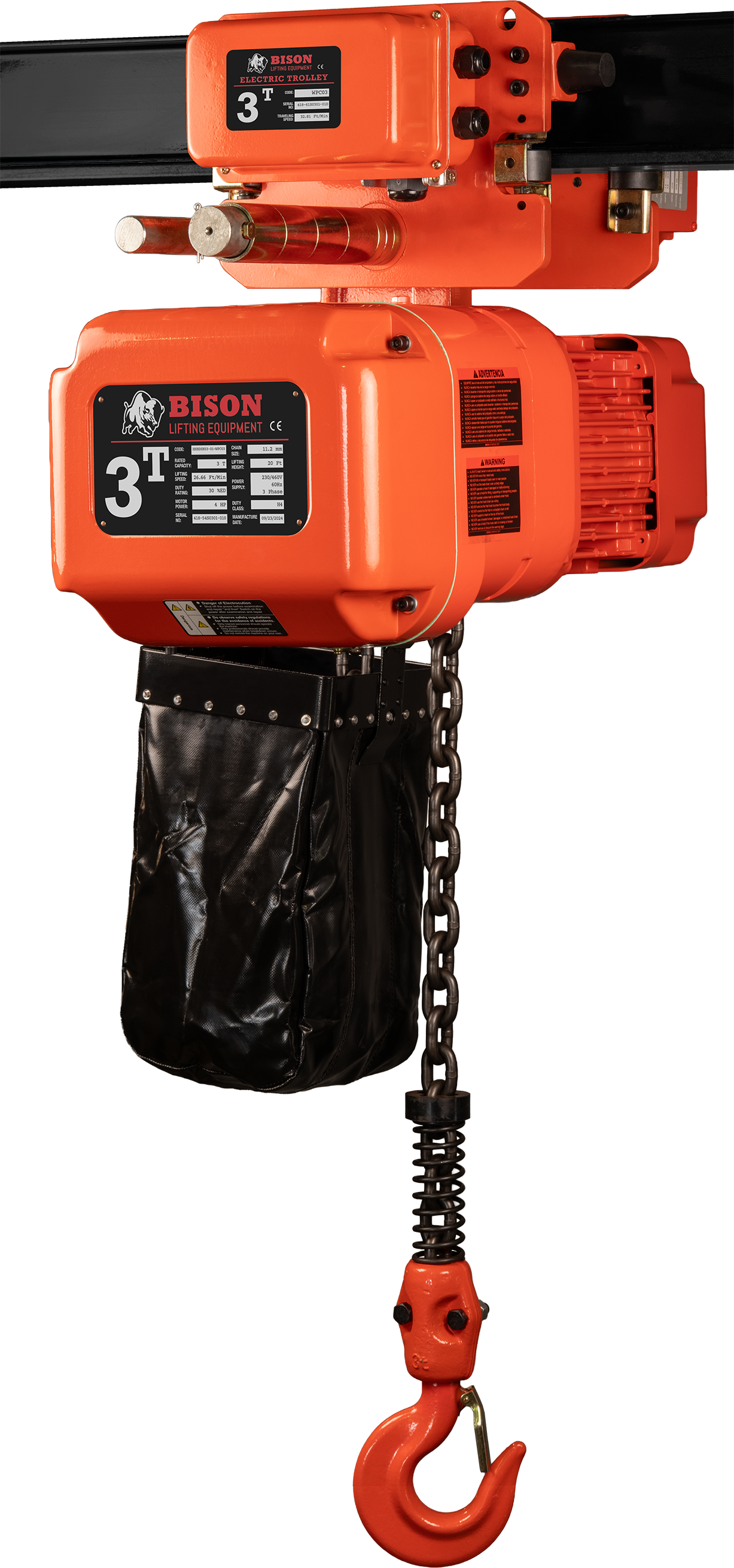
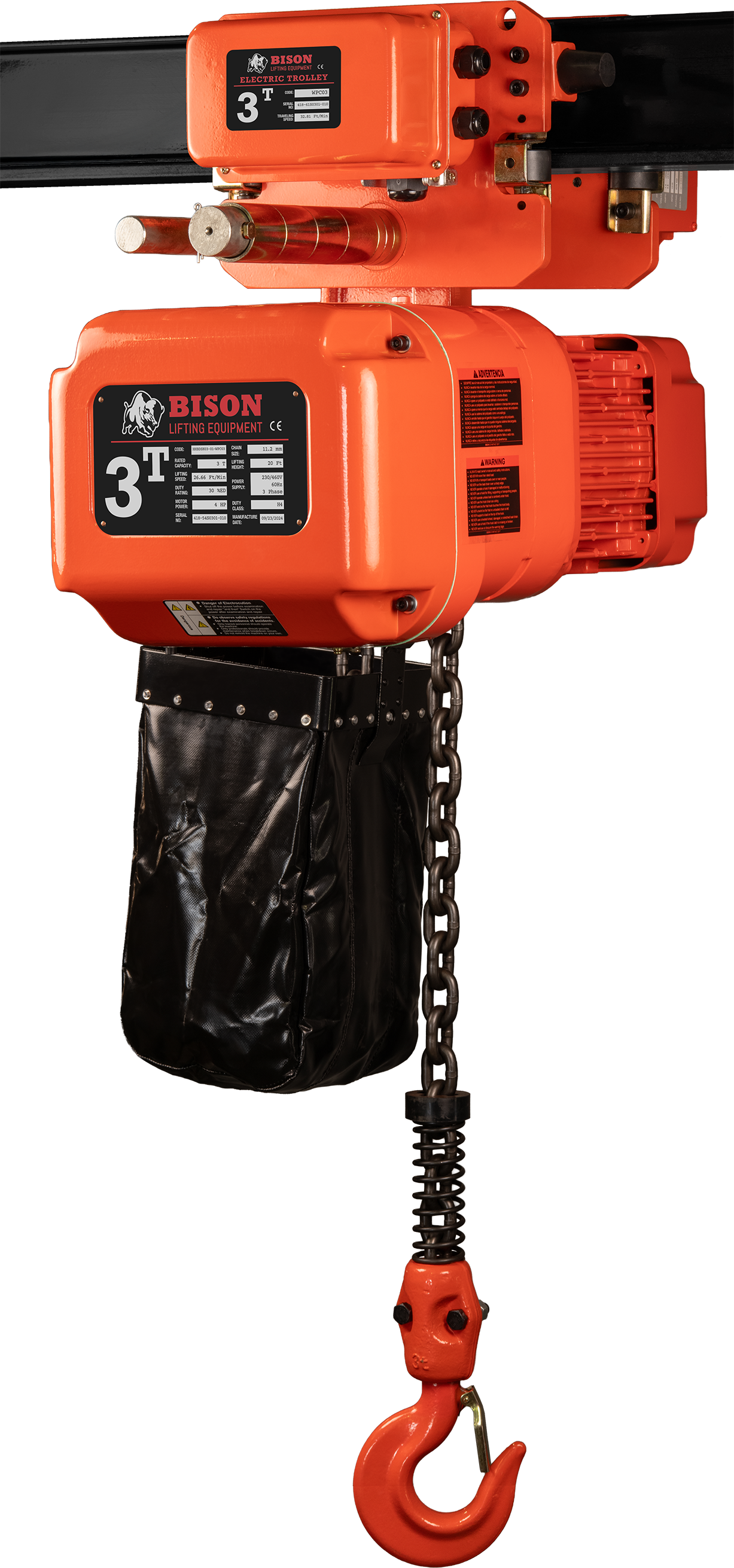
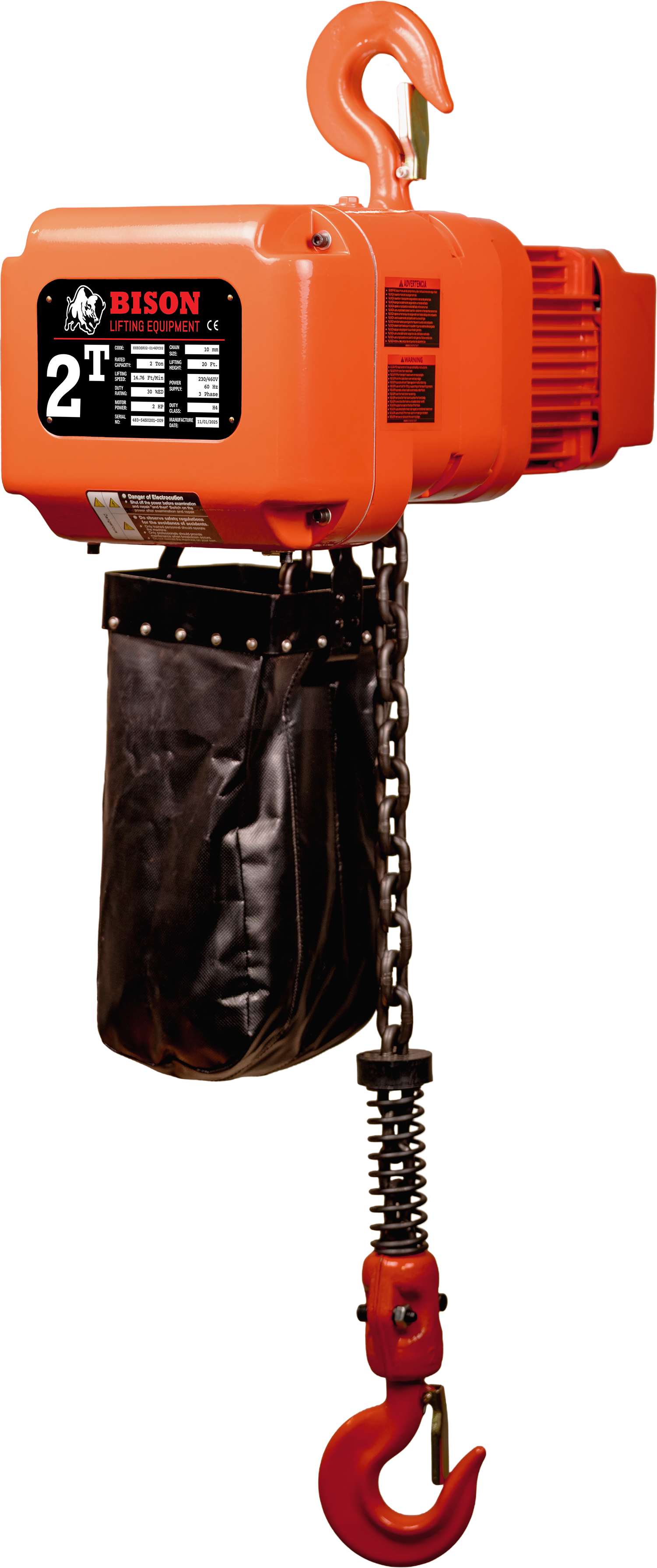
| Bison 3Ton Three Phase Dual Speed Electric Chain Hoist with Trolley 230v/460v | $9,511 | 3 ton | 230V | View → |
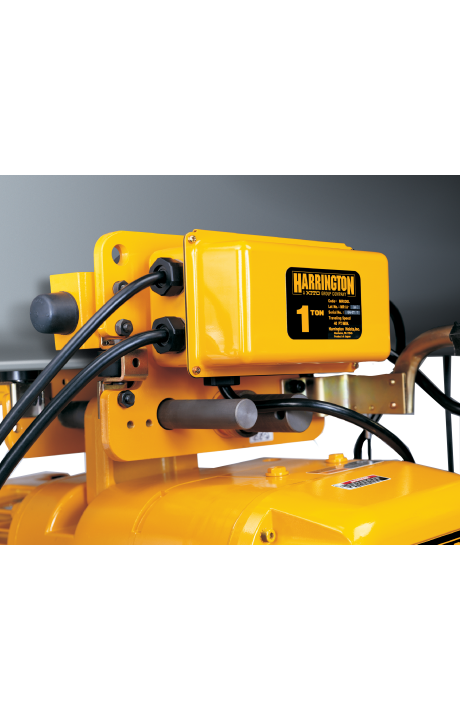
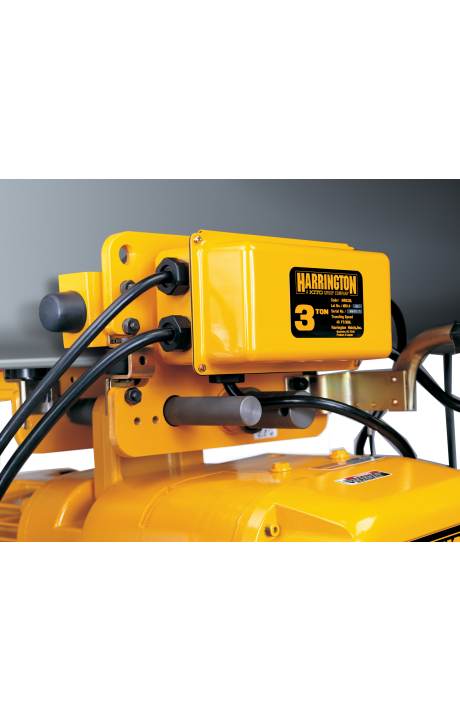
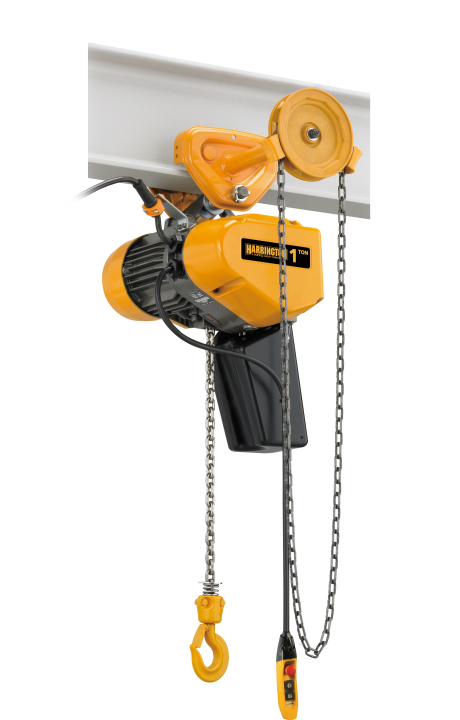
| Harrington ERM 3Ph Motorized Trolley Electric Chain Hoist | $8,525 | 1/8-20 ton | — | View → |
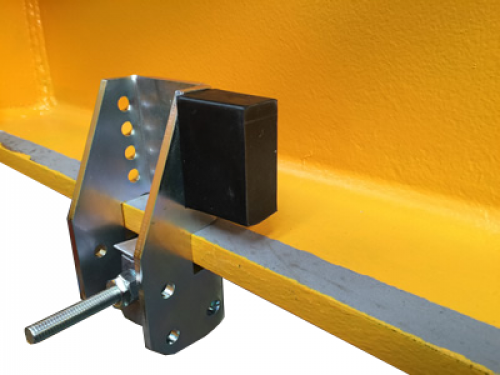 In Stock
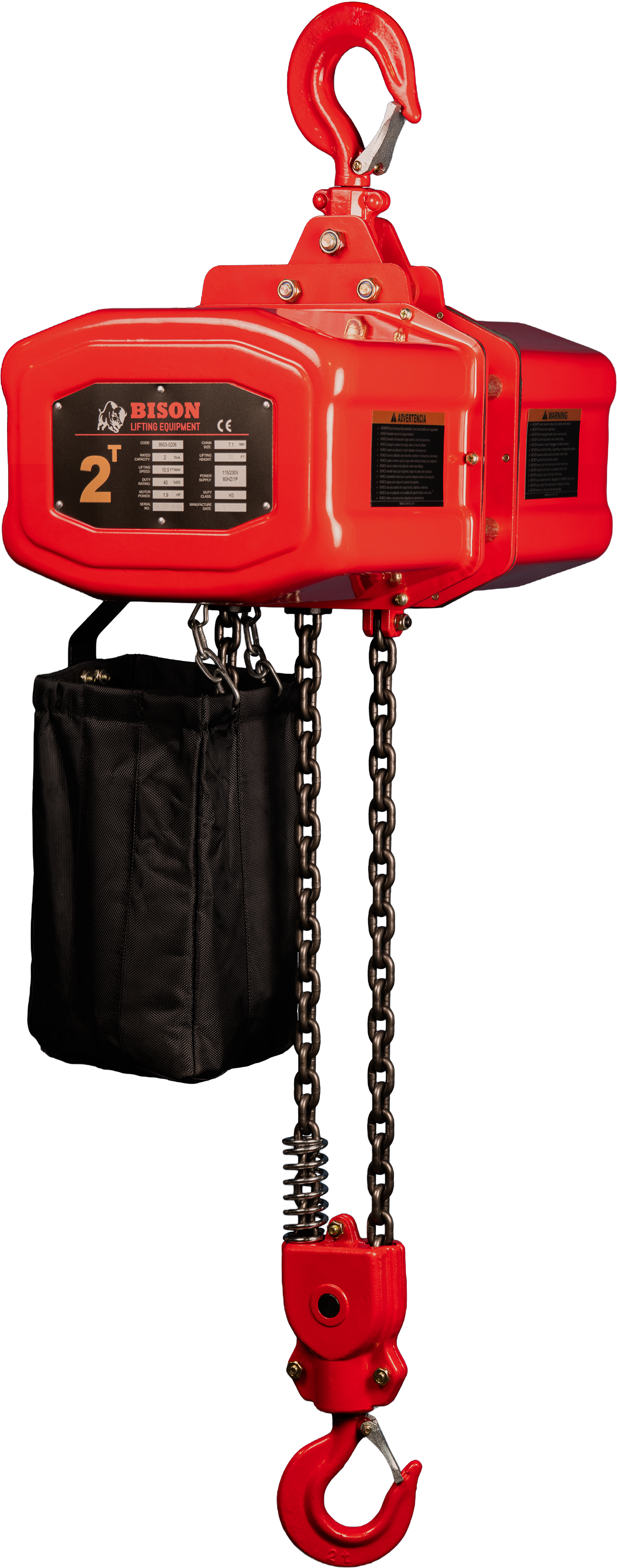 In Stock
 In Stock
 In Stock
 In Stock
 In StockIn Stock
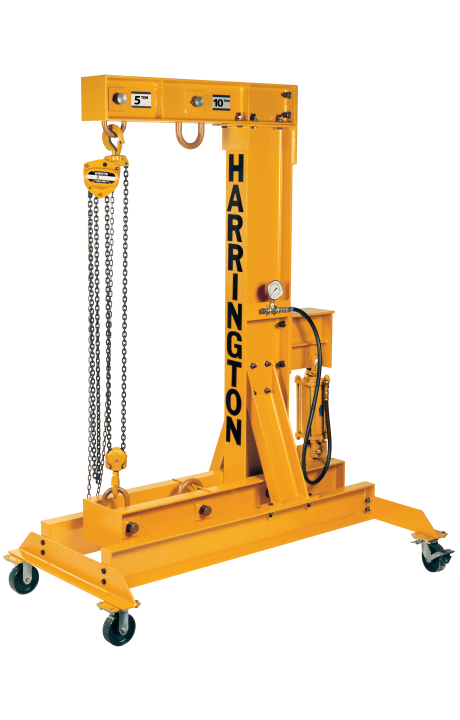 In Stock
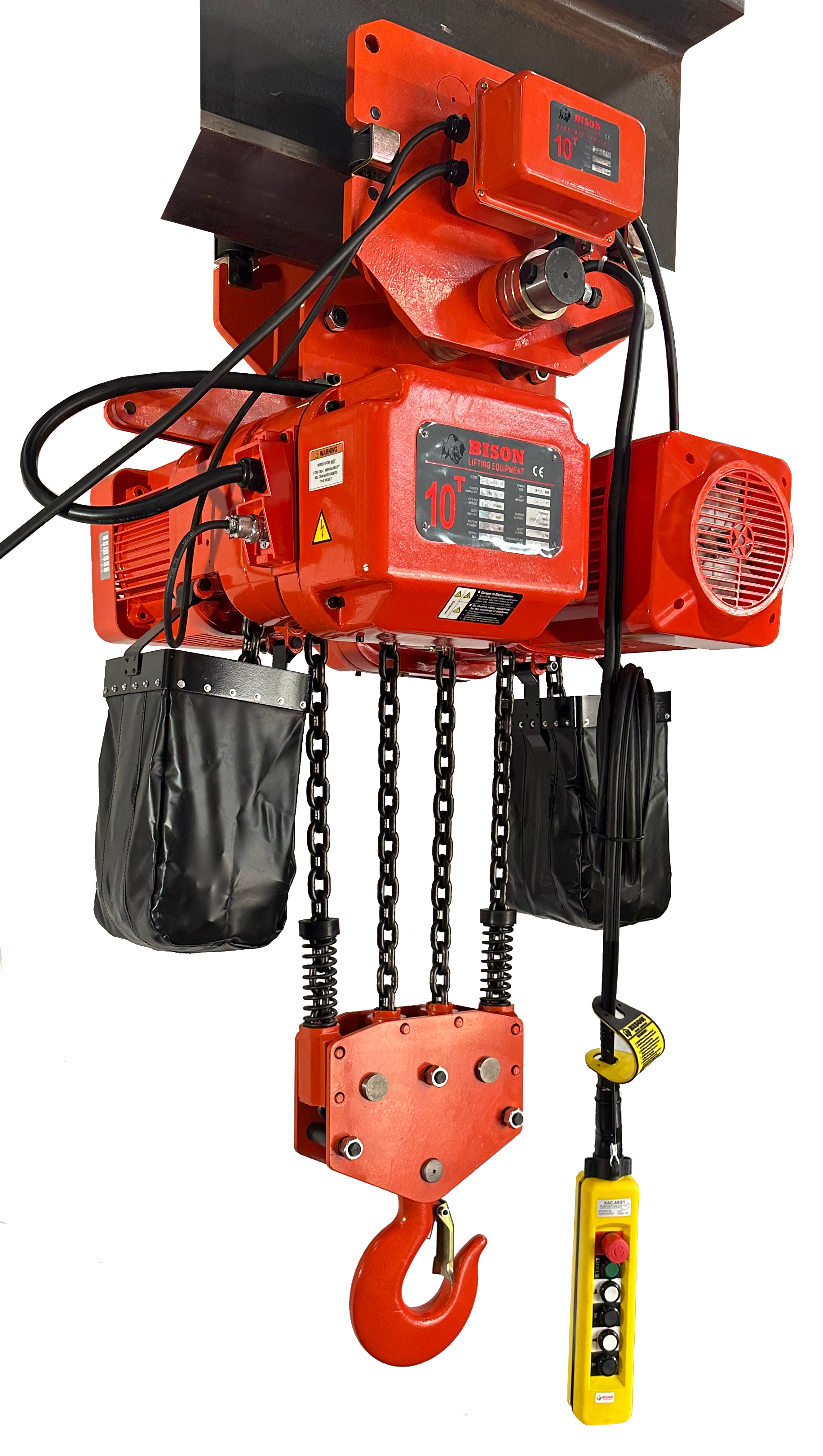 In Stock
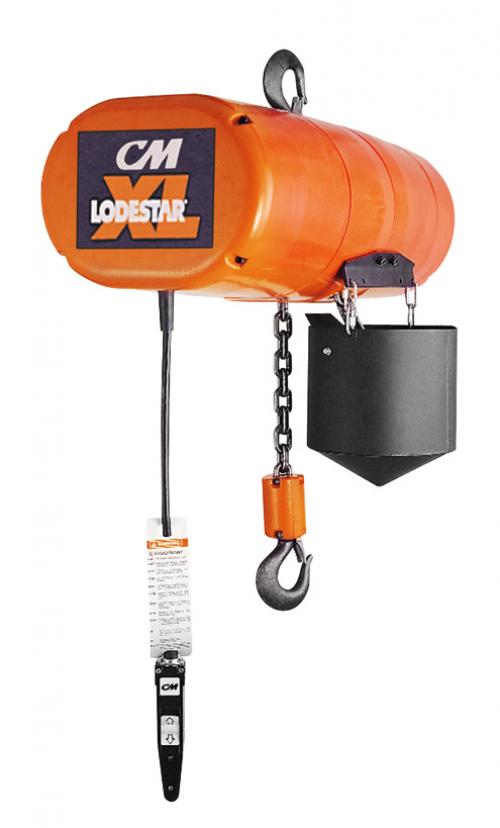 In Stock
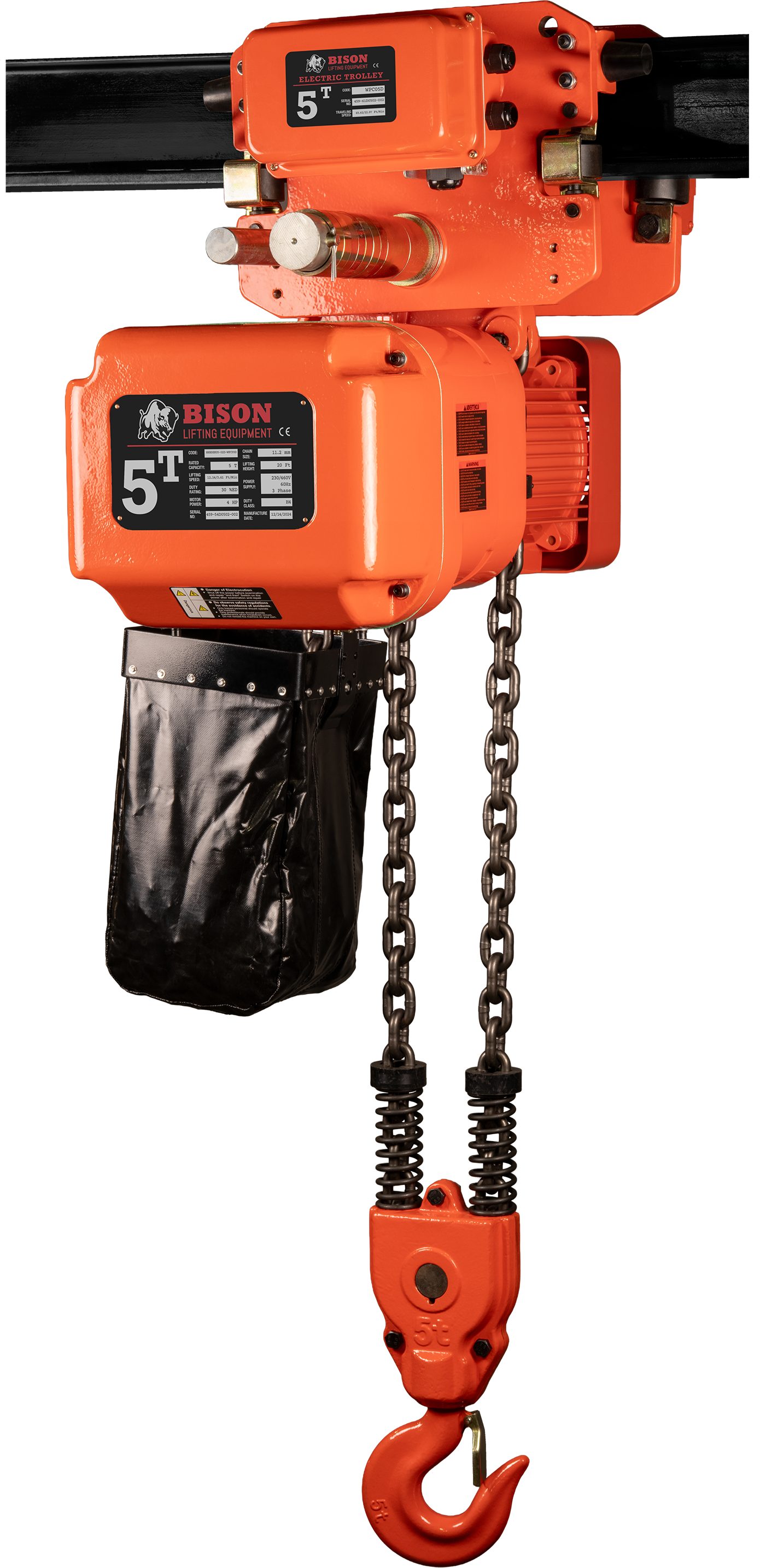 In Stock
 In Stock
 In Stock
 In Stock
 In StockIn Stock
 In Stock
 In Stock
 In Stock
 In Stock
 In Stock
 In Stock
 In Stock
 In Stock
 In Stock
 In Stock
 In Stock
 In Stock
 In Stock
 In Stock
 In Stock
 In Stock
 In Stock
 In Stock
 In Stock
 In StockIn Stock
 In Stock
 In Stock
 In StockIn Stock
 In Stock
 In Stock
 In Stock
 In Stock
 In Stock
 In Stock
 In Stock
 In Stock
 In Stock
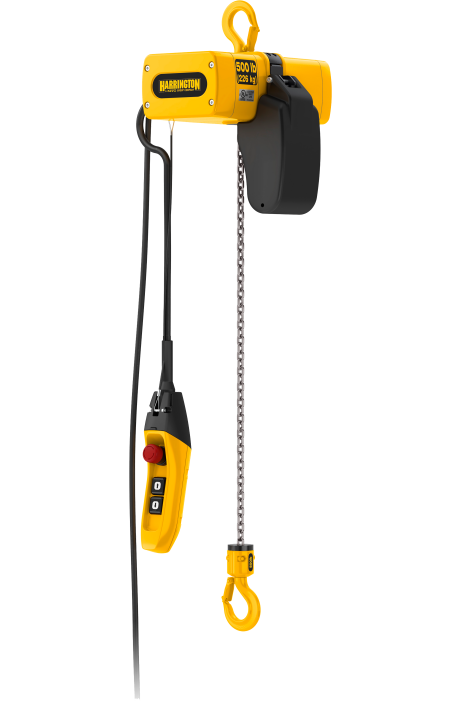 In Stock
 In Stock
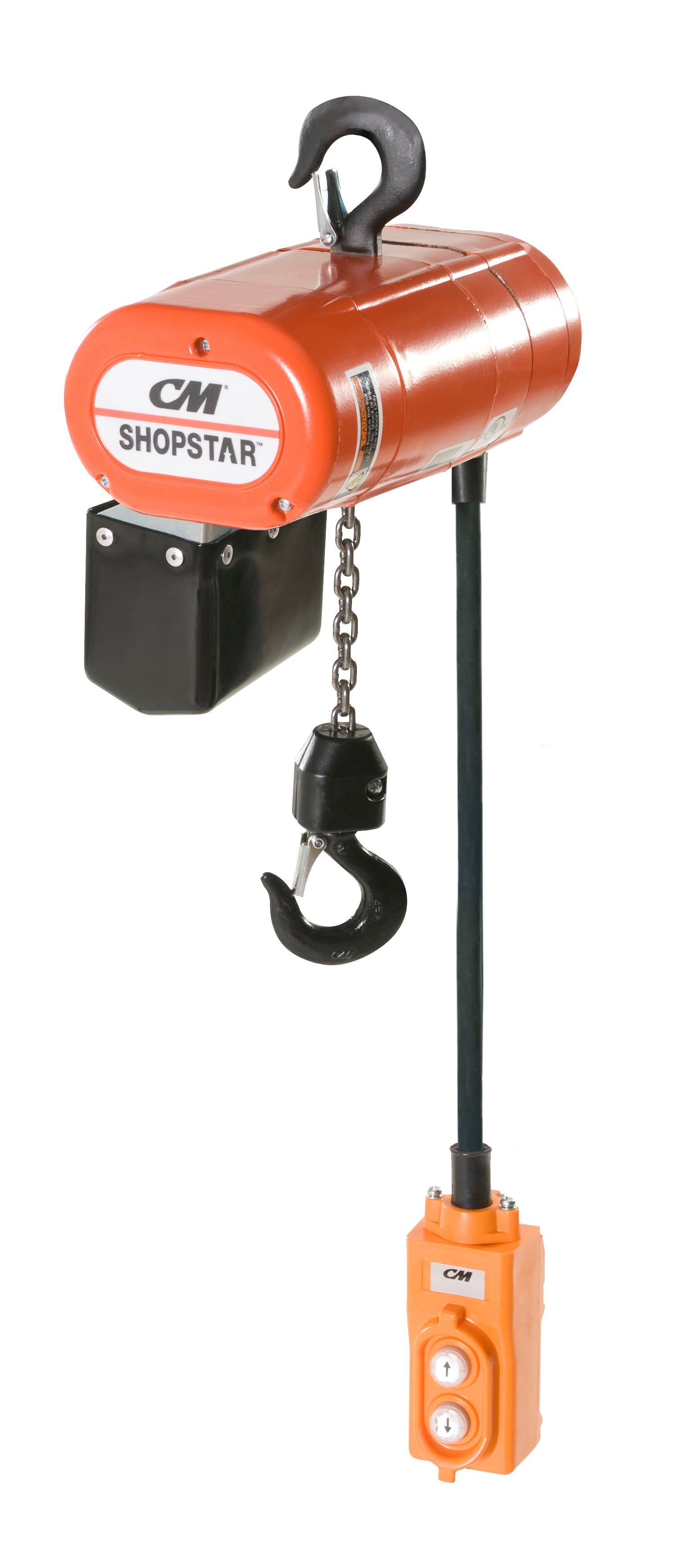 In Stock
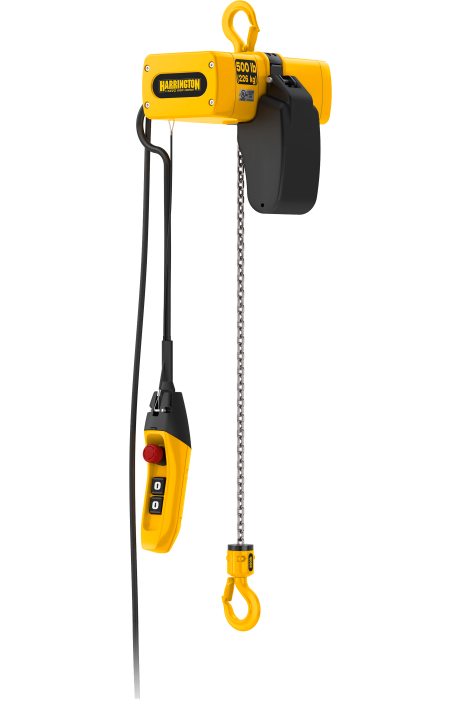 In StockIn StockIn Stock
 In Stock
 In Stock
 In Stock
 In Stock
 In Stock
 In Stock
 In Stock
 In Stock
 In Stock
 In Stock
 In StockIn Stock
 In Stock
 In Stock
Electric Hoists Buying Guide
Start with the load and the duty, not the catalog. The first number is the load, totaled the honest way: the heaviest thing you lift plus the hook block, the sling, and any below-hook gear. Round up to the next rating and stop there, because a hoist run near its ceiling wears fast and a hoist bought two sizes over is money parked on the wall. The second number is duty, meaning how often the motor runs and how heavy the average pick is. A hoist that lifts a jig twice a shift lives a different life than one feeding a production line, and dropping a light-duty unit onto a heavy-duty job is the most common way to kill a hoist early. The third is where it hangs and how the load has to travel, which is what decides chain versus wire rope and a fixed hook versus a trolley. Settle those three before you compare model numbers.
Chain, wire rope, or a construction hoist. Three families cover almost everything on this page. Electric chain hoists are the default for shop and production work, from a fraction of a ton up to about 10 tons: compact, easy to spot precisely at slow speed, and serviceable link by link. Electric wire rope hoists wind rope on a drum instead of pulling chain over a pocket wheel, which buys longer lifts, higher speed, and, with the right reeving, true vertical travel that raises the load without letting it drift sideways. They are the choice when the runway is long or the lift is tall. Construction hoists, also called builders or scaffold hoists, are a different animal: portable 115V units that clamp to a scaffold, wall, or beam and haul material up the outside of a building on 90 feet of rope. Pick the family first, then size within it.
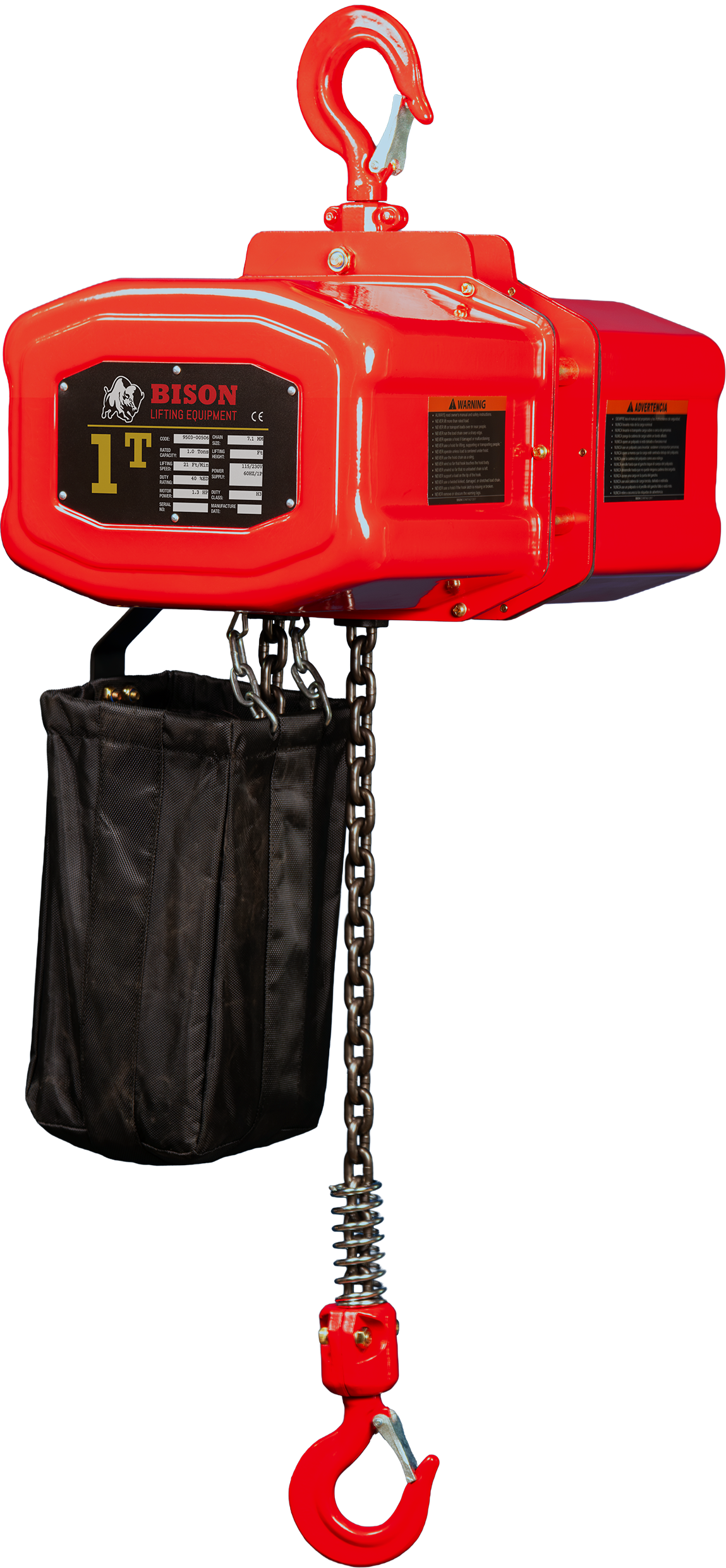
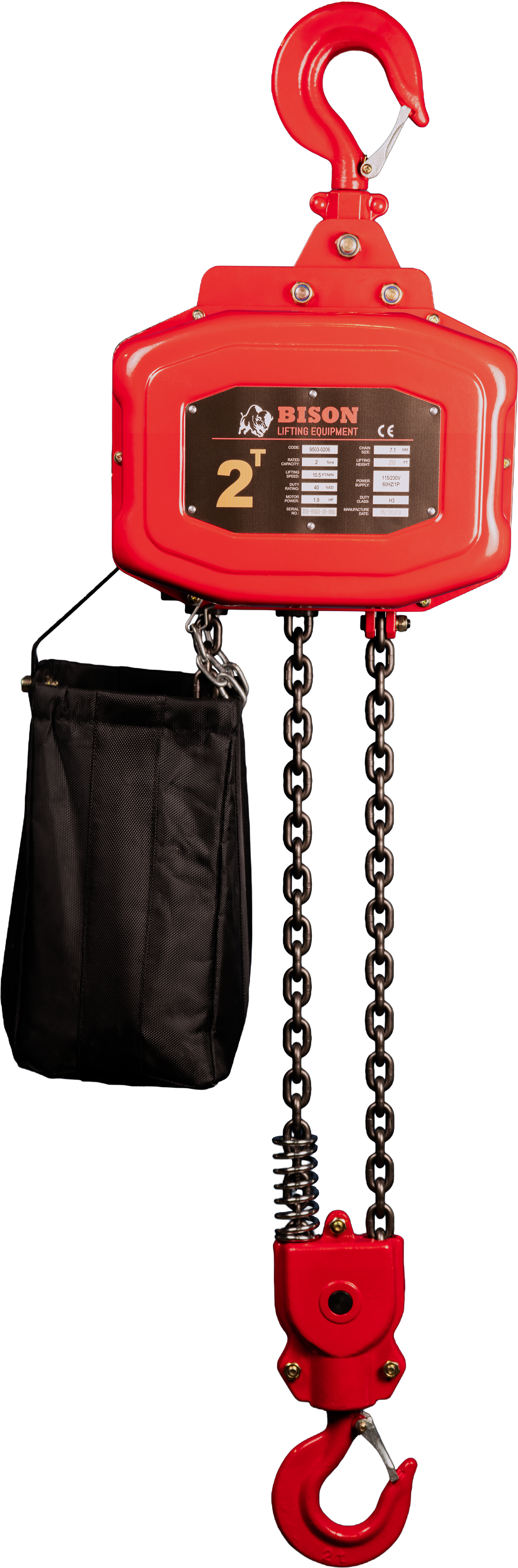
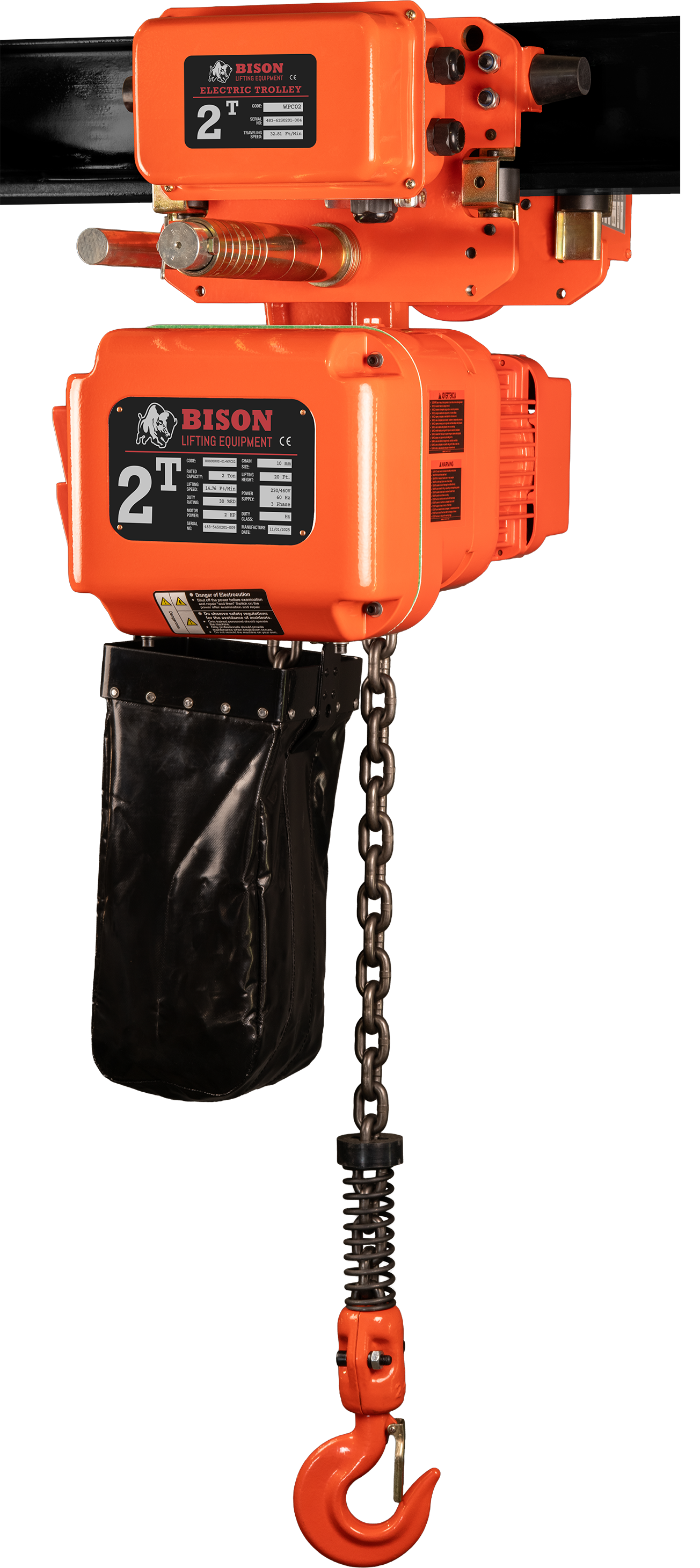
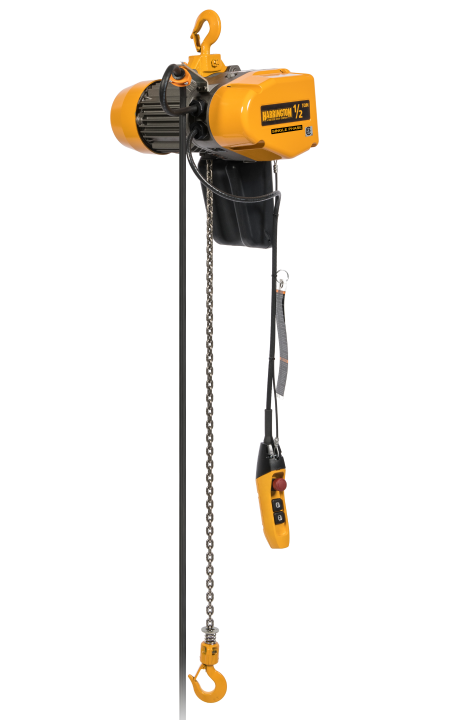
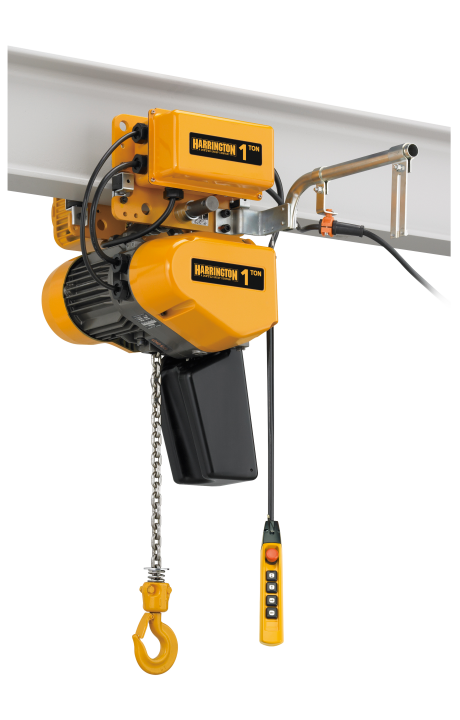
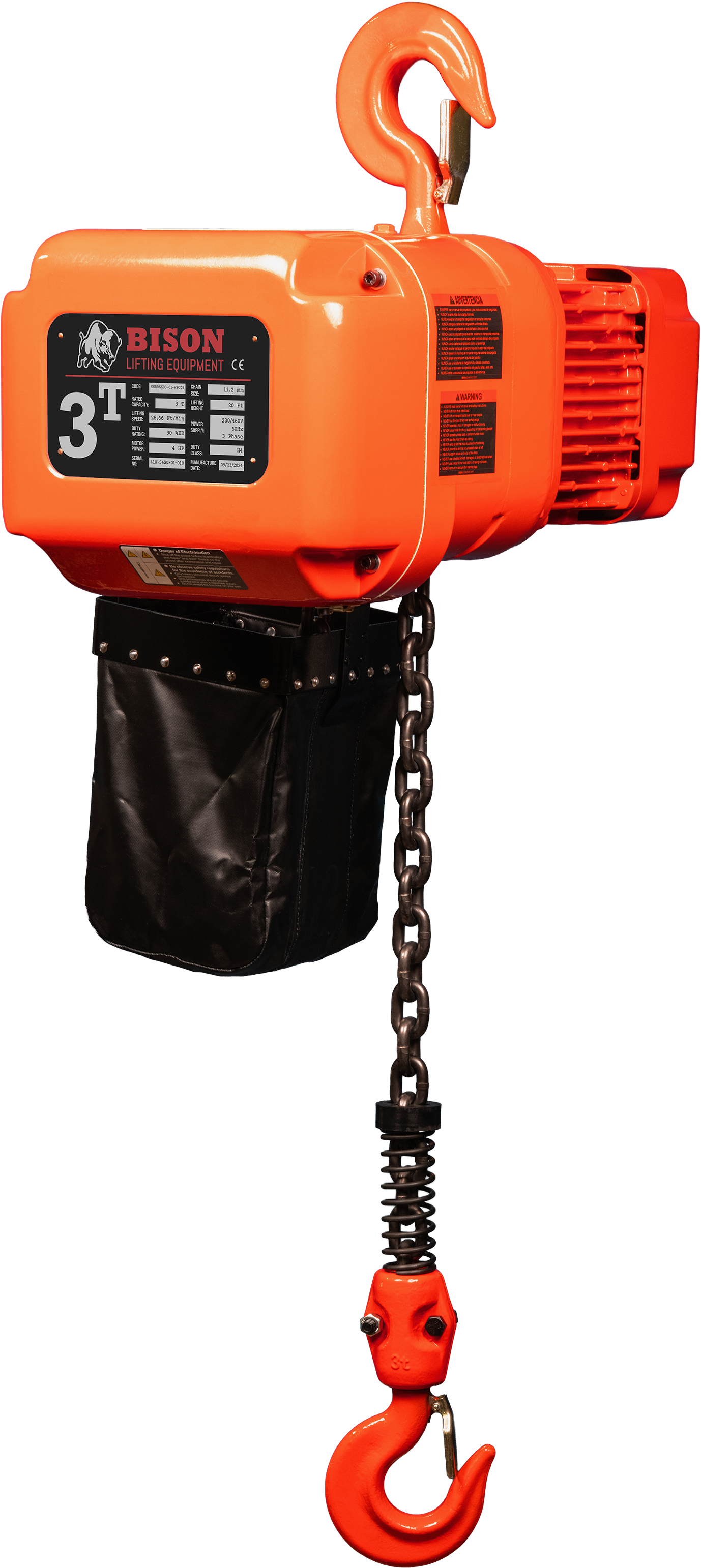
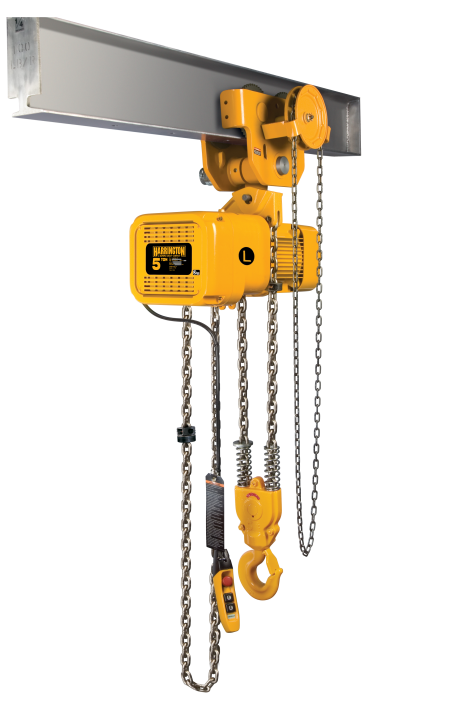
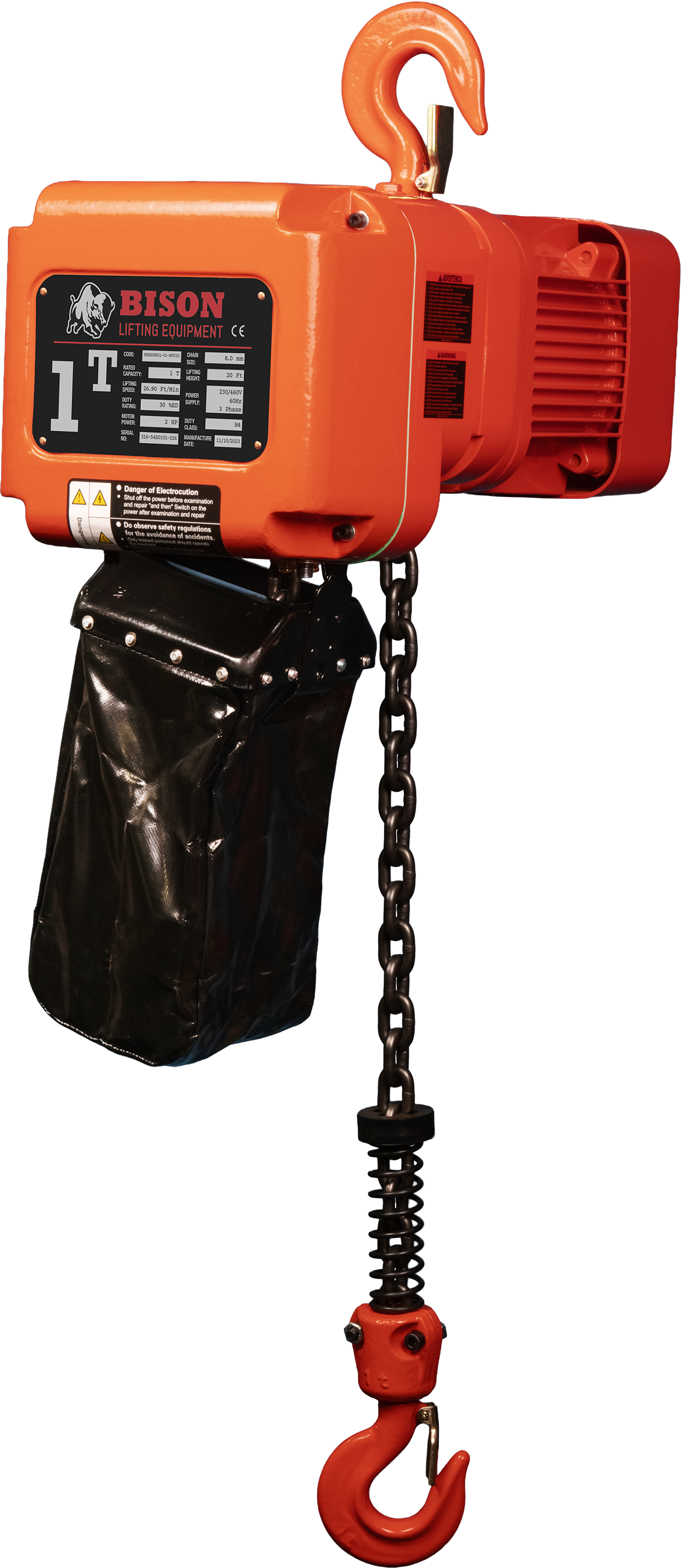
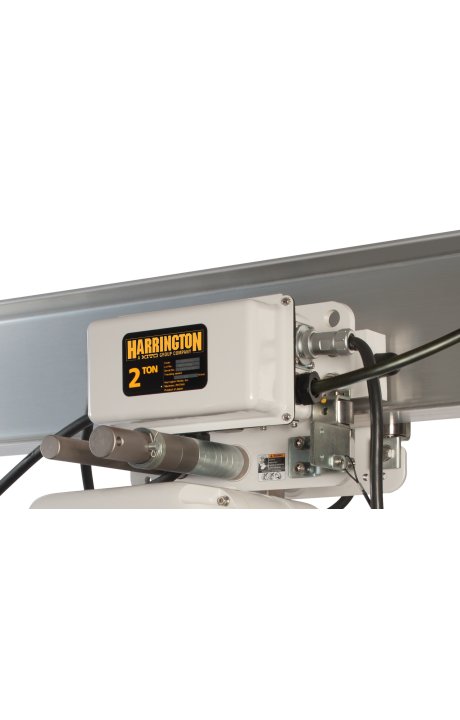
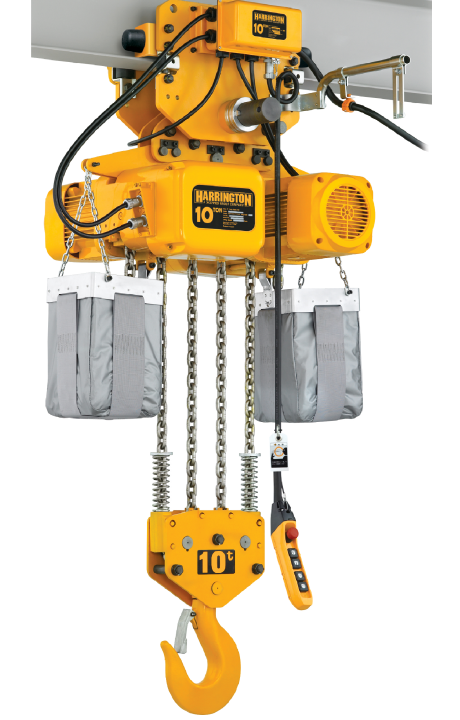
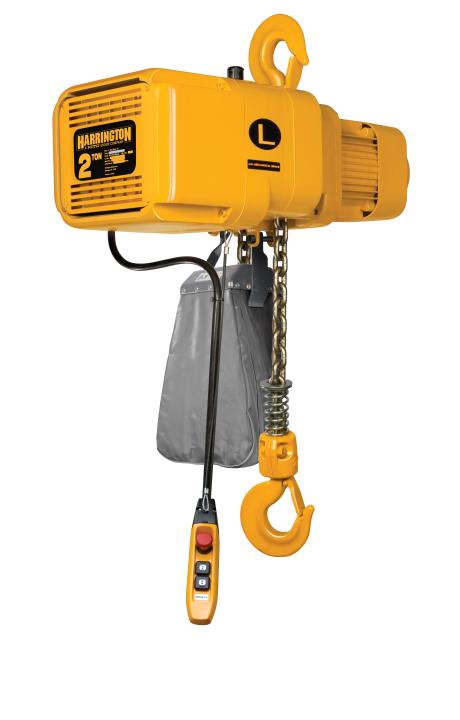
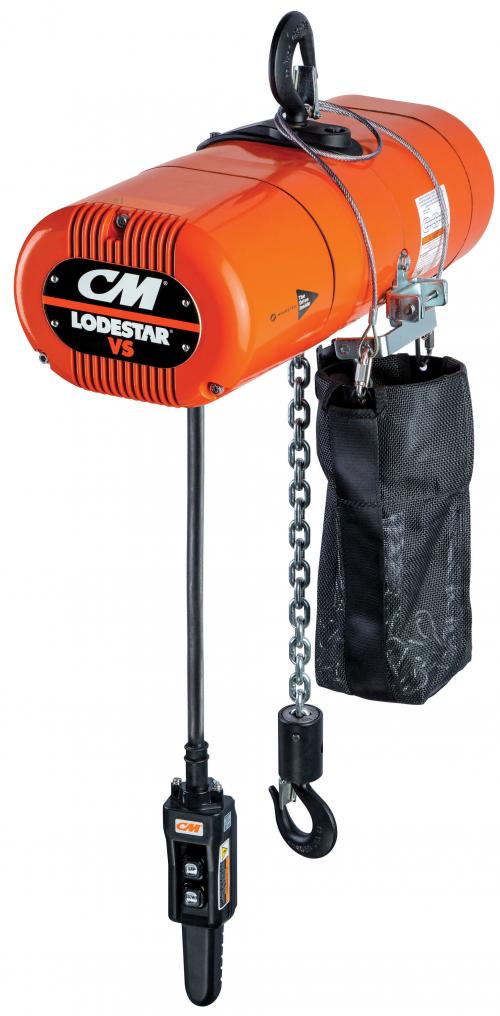
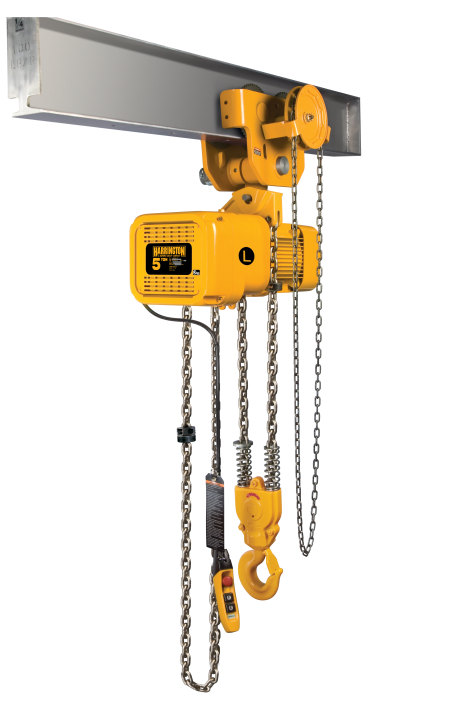
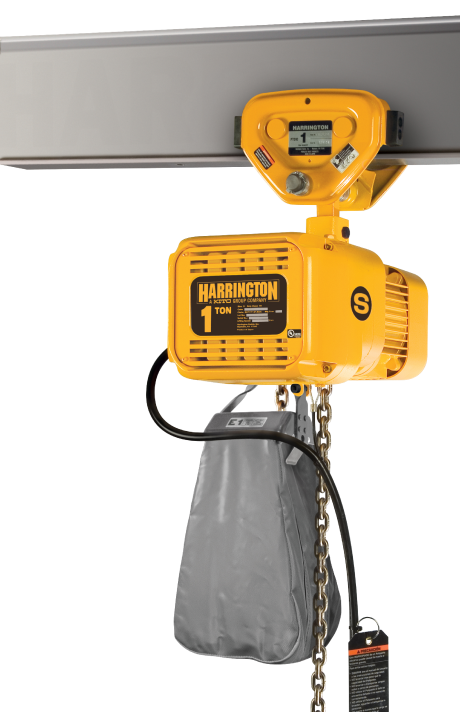
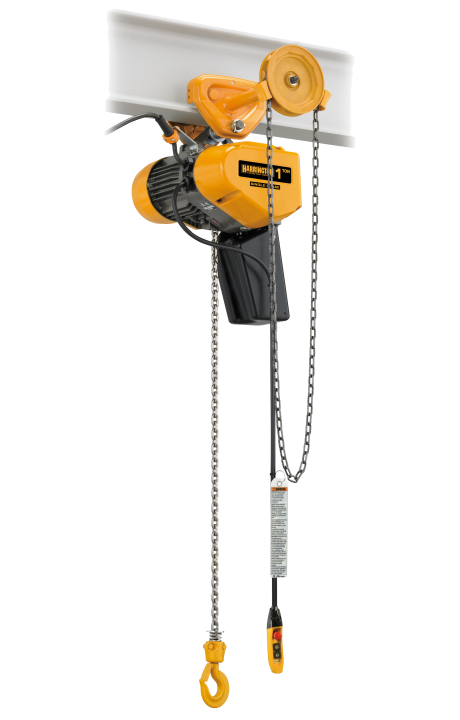
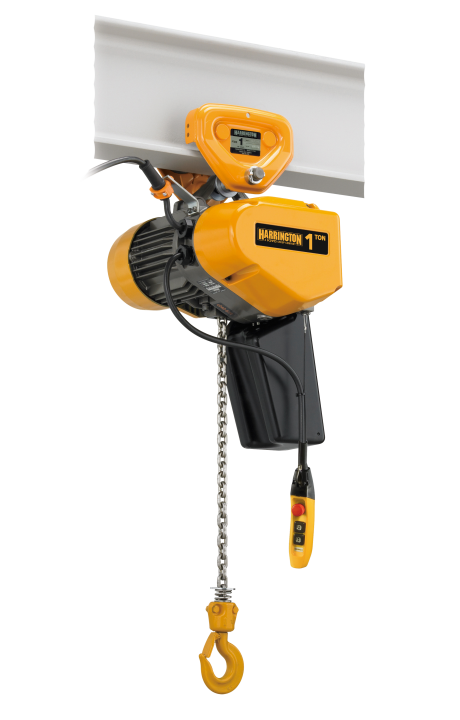
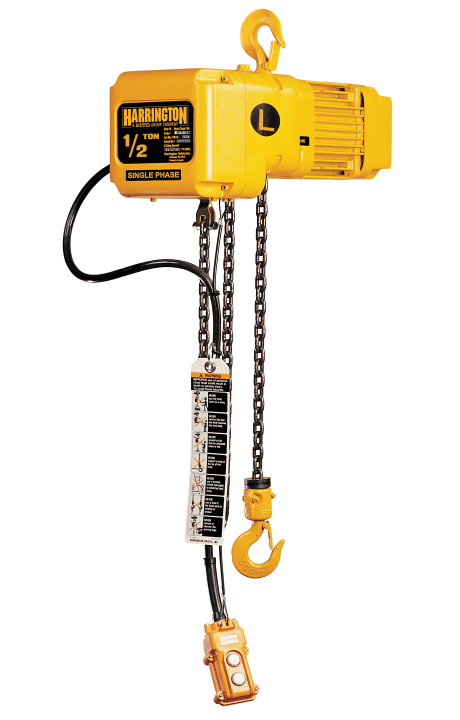
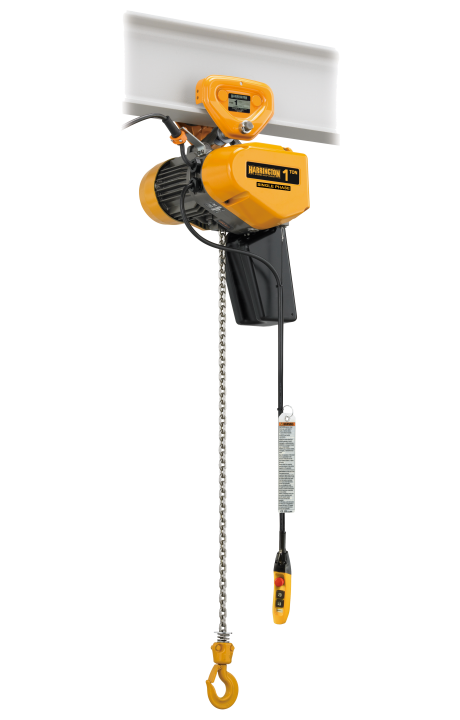
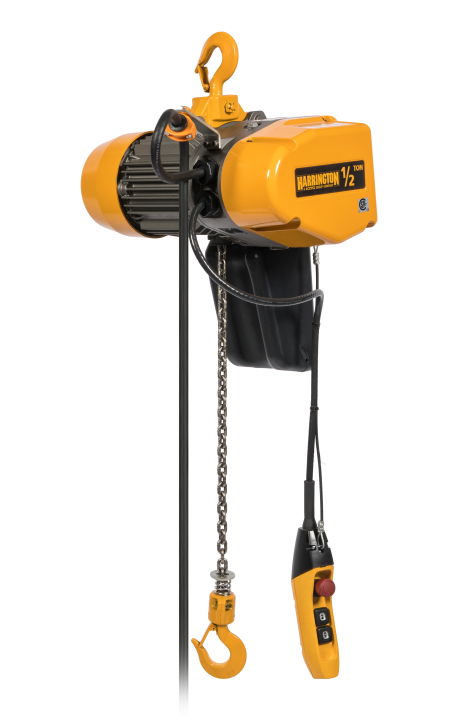
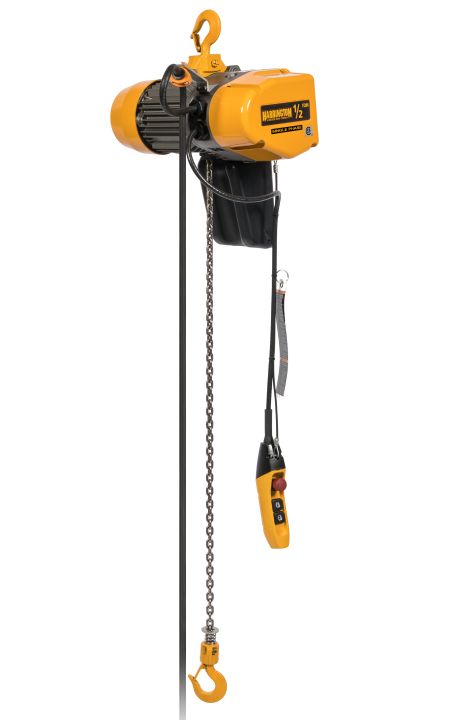
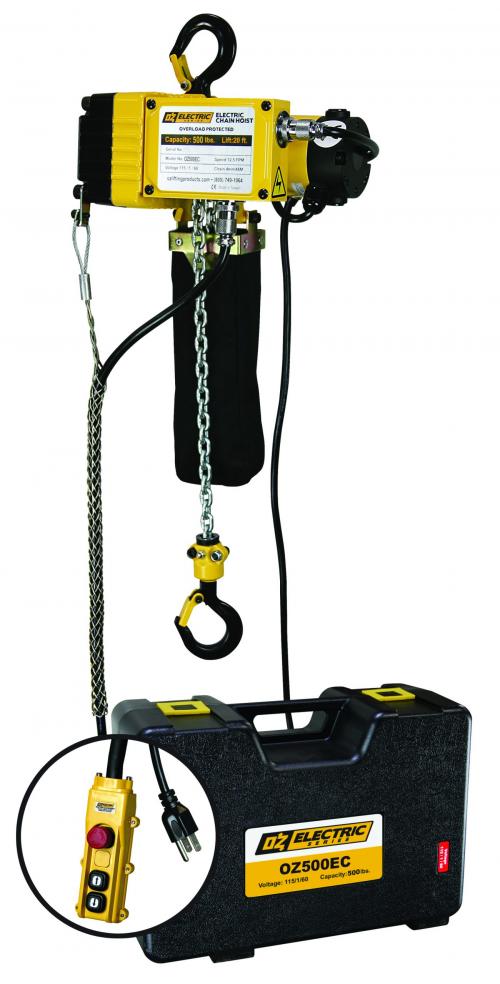
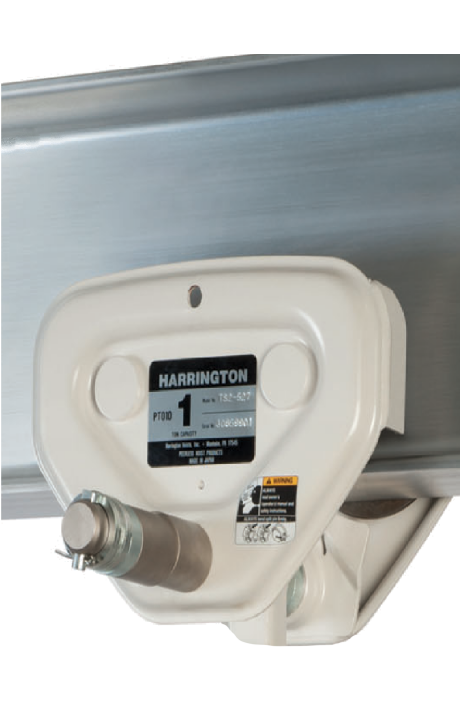
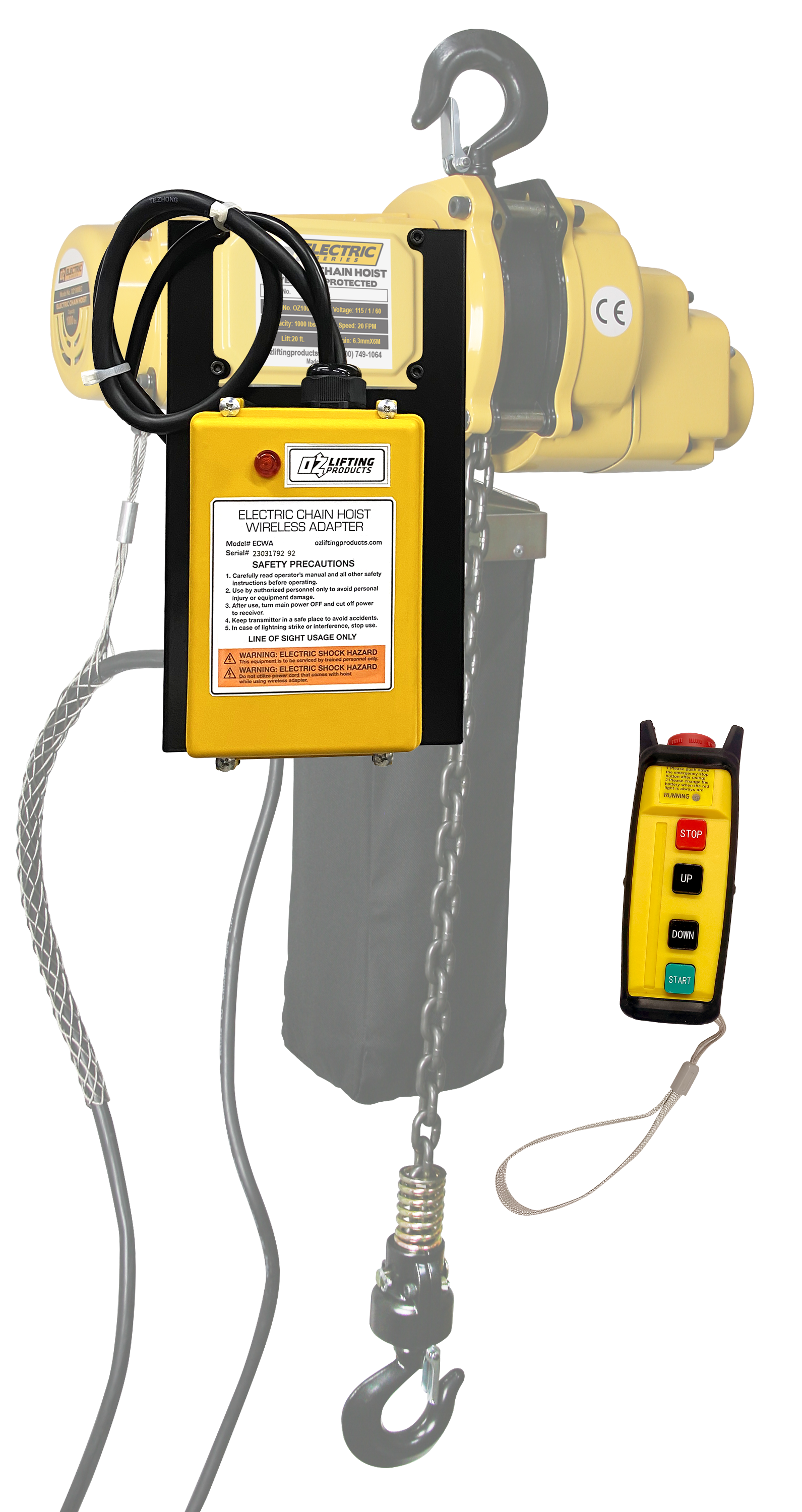
Electric chain hoists: the shop and production workhorse. Electric chain hoists are where most buyers land, and the collection runs the names people ask for by heart: Harrington's ER and NER series, the CM Lodestar that has hung under American crane bridges for generations, and Bison three-phase units from half a ton to 10 tons. Capacities start at 1/8 ton and climb past 10 tons on multiple falls of chain. The decision after capacity is suspension. A top hook hangs the hoist from a beam clamp or a trolley eye and is the cheapest way in; a push trolley lets you roll the load along a beam by hand; a geared or motorized trolley moves it under power for heavier loads or higher-cycle work. Dual-speed models add a slow creep for landing the load exactly where it belongs plus a fast speed for the empty return, and that second speed pays for itself anywhere placement matters.
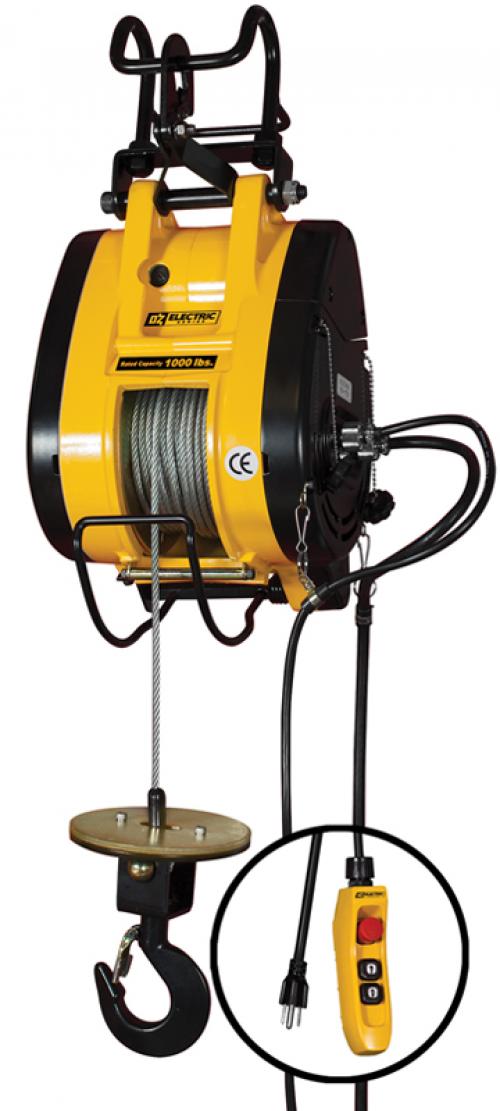
Wire rope hoists: long lifts and true vertical travel. Electric wire rope hoists earn their place when the lift is long or the pace is high. Our Vestil rope hoists raise 300 to 1,000 pounds on 90 feet of cable from an ordinary 115V outlet, priced from about $817, and the OZ builders units cover the same light-capacity, long-lift ground. Rope on a drum gives a smoother, faster line of travel than chain over a wheel, and it stores far more lift height in the same headroom, which is why wire rope dominates tall bays and long production runways in the heavy industrial world. The trade is that a drum and rope want more clearance than a chain and need close inspection for broken wires and birdcaging, so match the hoist to the bay rather than the load on the hook alone.
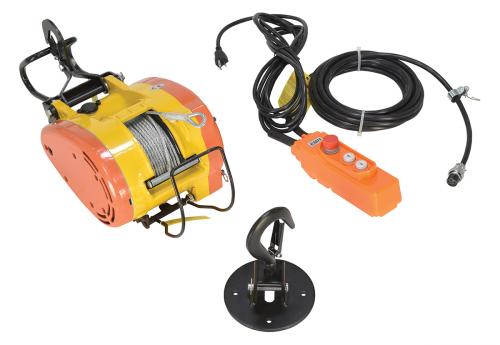
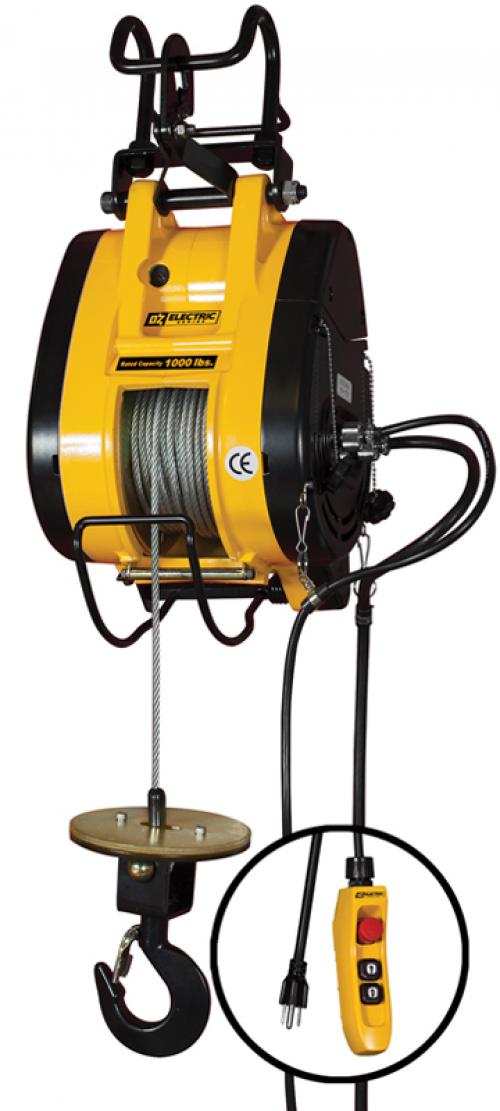
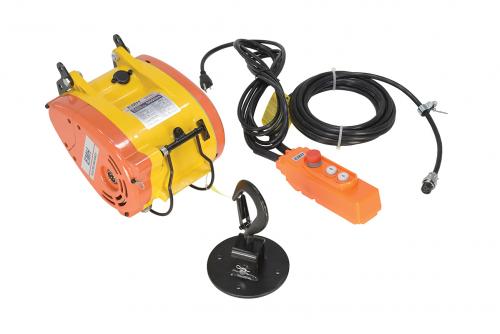
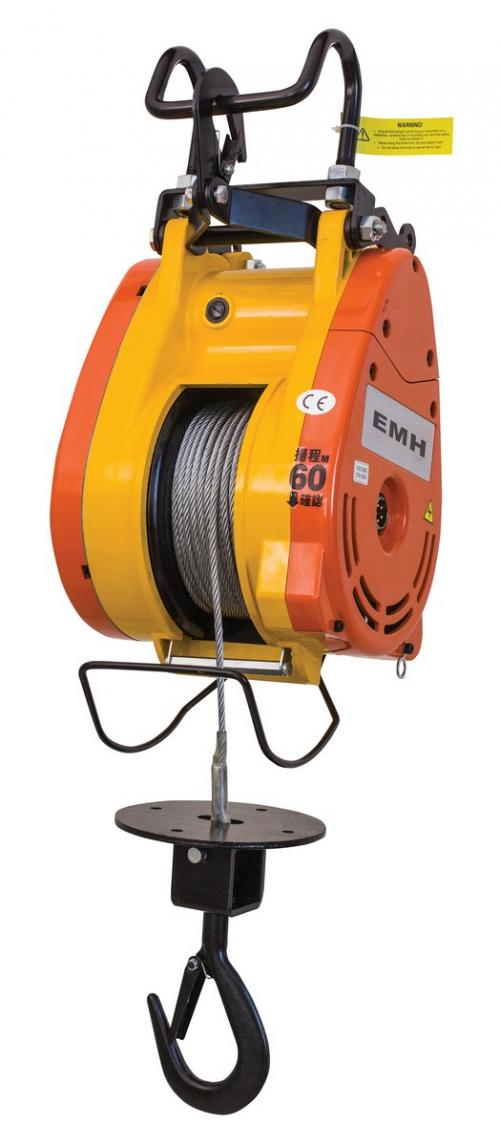
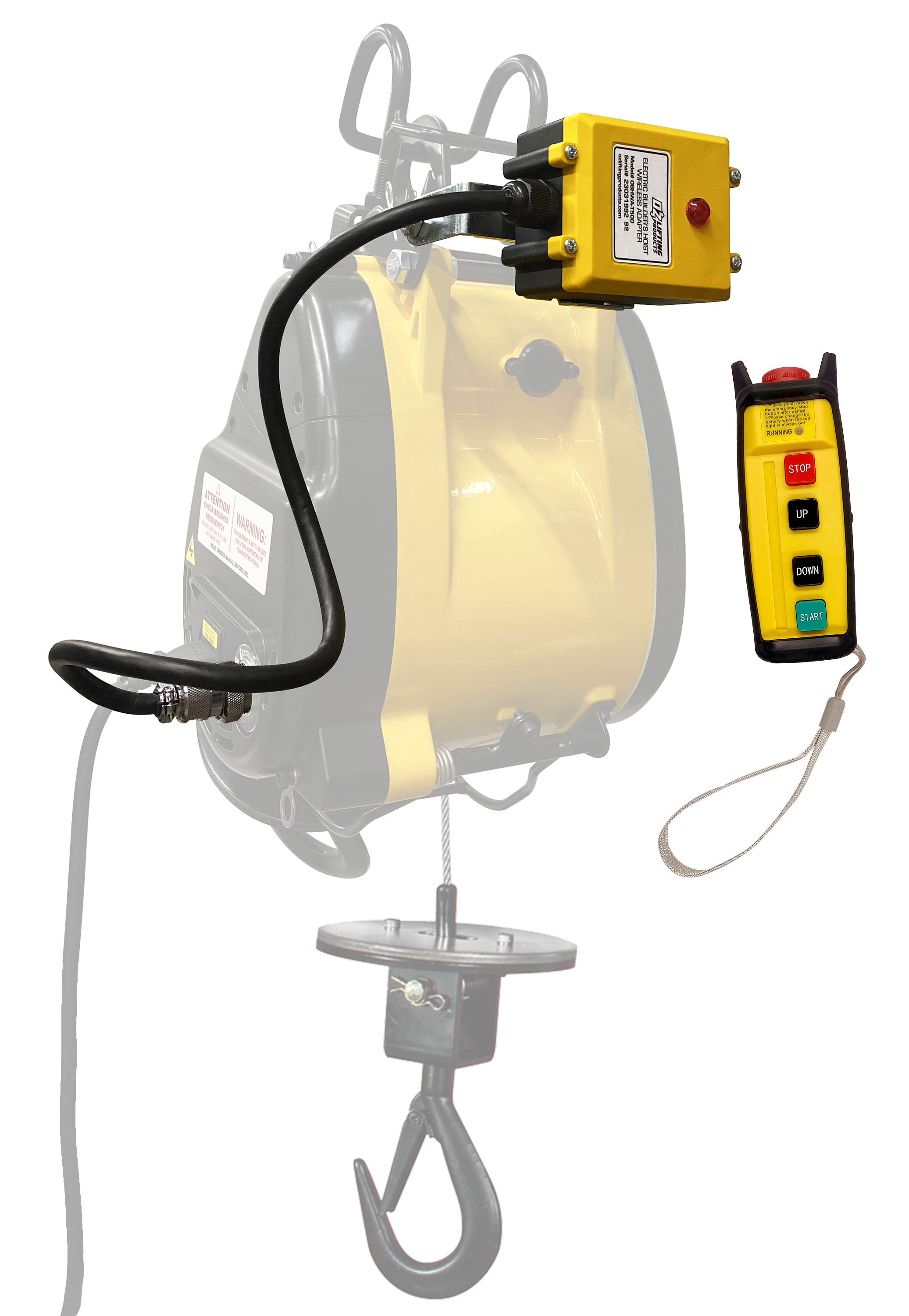
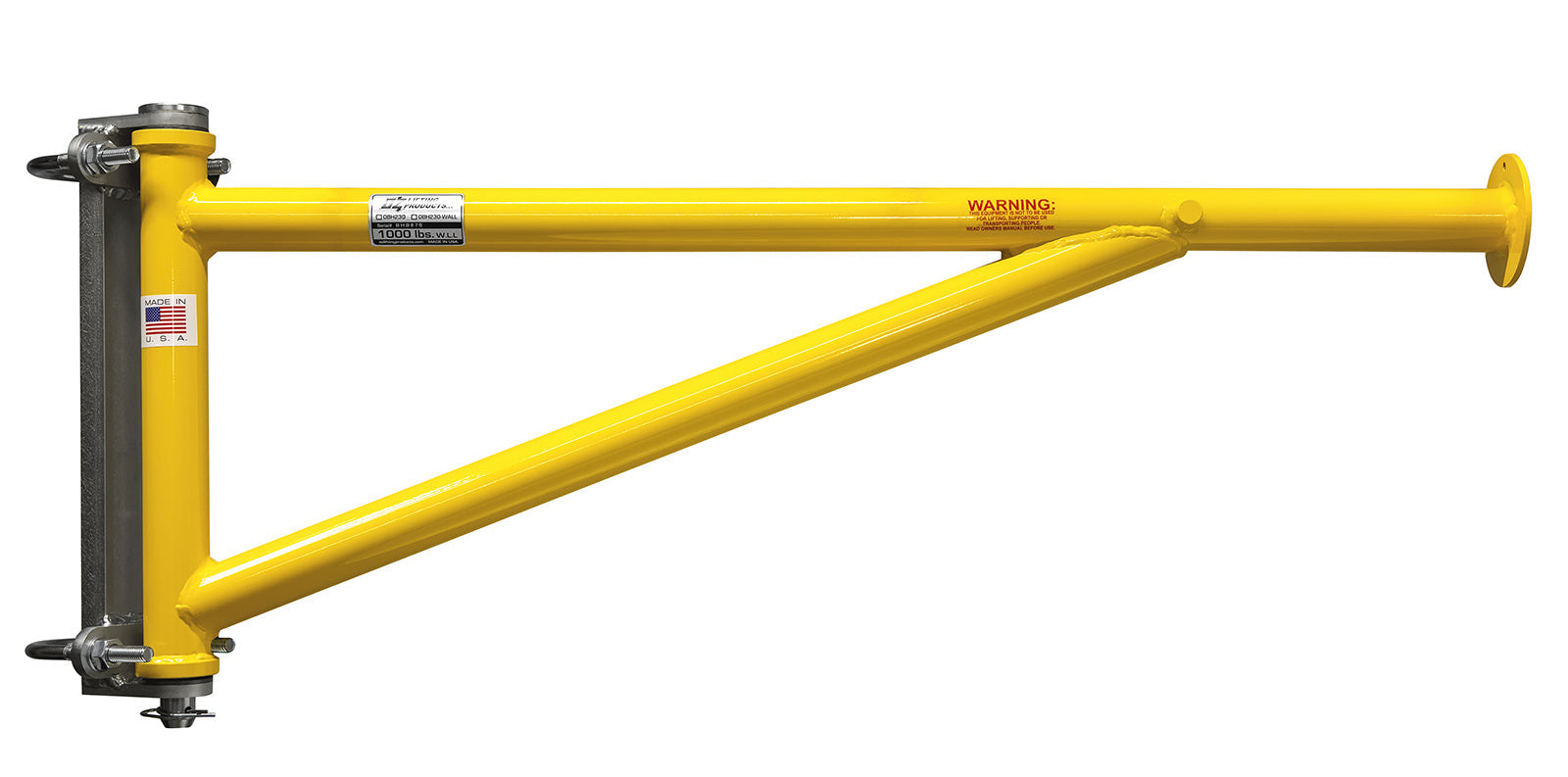
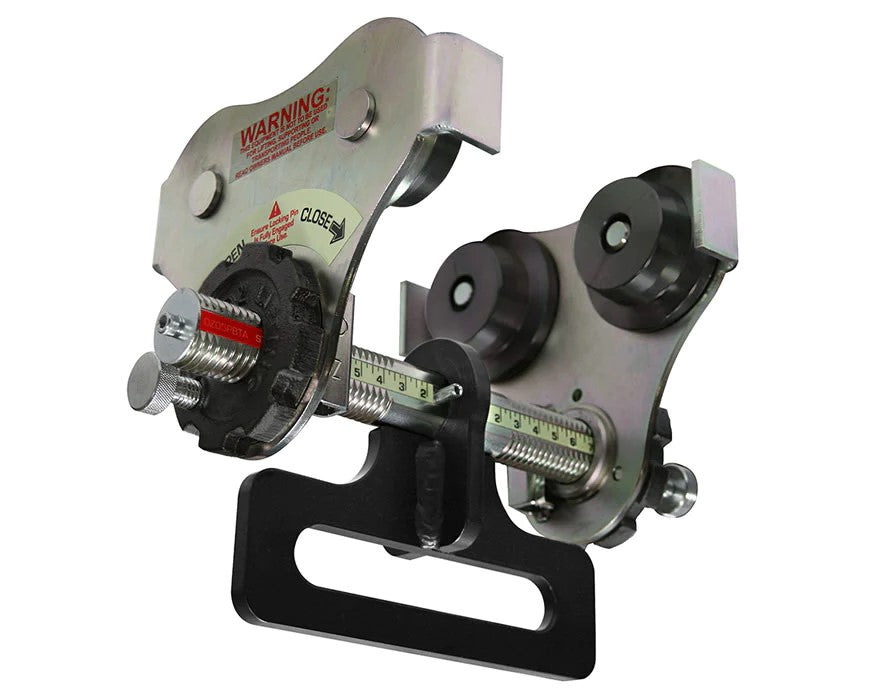
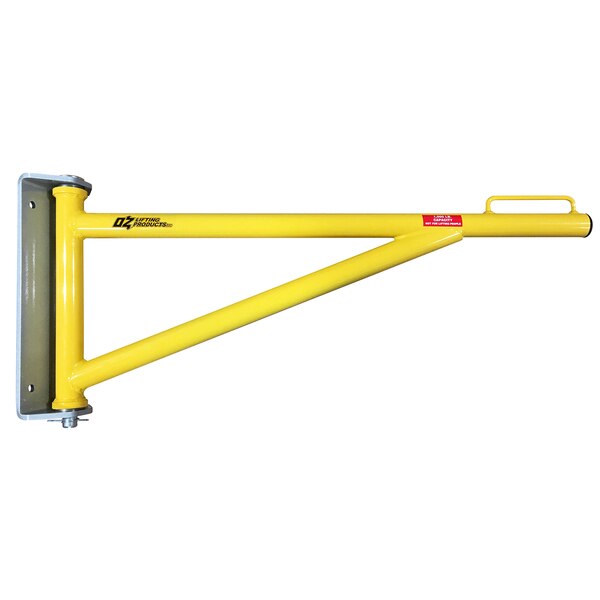
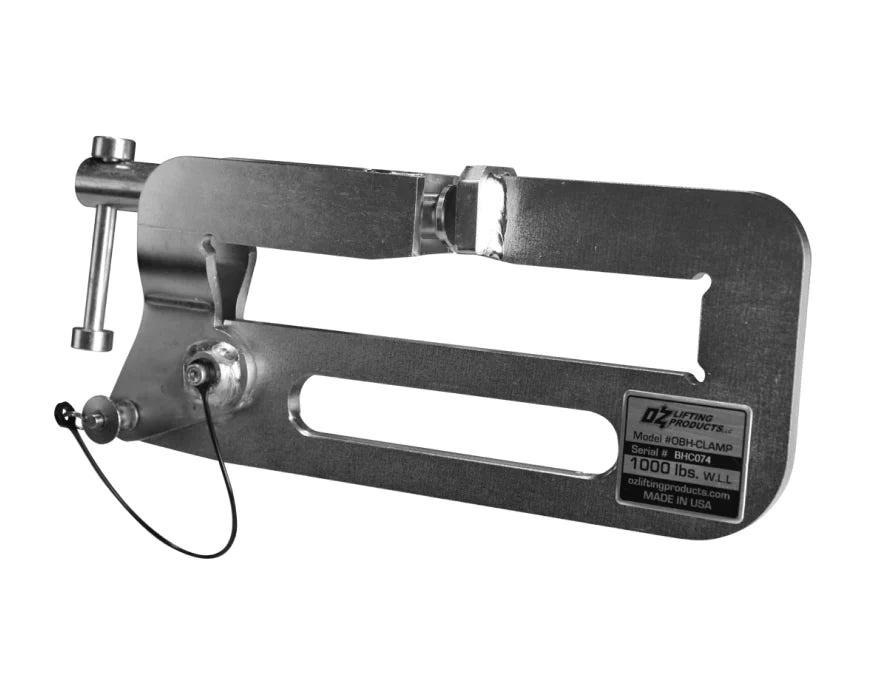
Construction hoists: getting material up the scaffold. Construction hoists solve the site problem: getting bundles of shingles, buckets, and tools up to a roof or a scaffold platform without tying up a crane. Ours are OZ Lifting and Vestil builders hoists rated 300 to 1,000 pounds, running on standard 115V power with 90 feet of lift, and they mount three ways, a scaffold bracket, a wall bracket, or a beam clamp, so the same hoist follows the crew from job to job. The accessories carry as much weight as the hoist here: OZ's wall and scaffold mounts, beam clamps, push-beam trolleys, and a wireless plug-and-play adapter that lets one worker run the hoist from the landing instead of the base. Work out how the hoist will attach to your structure before you buy the hoist itself, because the mount is what makes it usable on your site.
Power, duty class, and the standards that apply. Two things decide whether a hoist is even wired for your shop. The first is phase. Single-phase hoists run on 115V or 230V branch circuits and suit small shops and site power, while three-phase hoists on 230V or 460V are more efficient over long wire runs and are effectively the requirement above about 2 tons, so confirm what you have at the panel before you order. The second is duty class. The Hoist Manufacturers Institute rates hoists H2 through H4 and up by how hard they run: H2 for light, intermittent maintenance work, H3 for general shop use where the motor runs no more than about a quarter of the shift, and H4 for high-cycle production. Match the class to your real usage, because a shortfall shows up as a burned motor, not as a warning light. On the rules side, powered overhead hoists are built and inspected to ASME B30.16, which covers electric and air-powered chain and wire rope hoists. OSHA's construction rule at 29 CFR 1926.554 adds that the rated load must be marked on the hoist and never exceeded, and that the unit is installed and used per the manufacturer's instructions. Keep the load chart on the machine, run the frequent and periodic inspections the standard calls for, and never side-load the hook.
Frequently Asked Questions
For most shop and production lifting from a fraction of a ton up to about 10 tons, a chain hoist is the right call: it is compact, positions loads precisely at slow speed, and is simple to inspect and service. Reach for a wire rope hoist when the lift is tall or the runway is long, since rope on a drum stores more lift height in the same headroom, runs faster, and can be reeved for true vertical travel that raises the load without side drift.
Total the honest worst case: the heaviest load you will ever lift plus the hook block, the sling, and any below-hook attachment, then round up to the next rating with margin. Do not size right at your maximum, because a hoist run near its ceiling wears out early. Just as important, match the duty class to how often you lift, an H2 unit for occasional maintenance work will not survive a production line that needs H4.
It depends on what is at your panel. Single-phase hoists run on 115V or 230V branch circuits and are the practical choice for small shops and jobsite power. Three-phase hoists run on 230V or 460V, waste less energy over long wire runs, and are effectively required above about 2 tons. Confirm your available voltage and phase before ordering, since a three-phase hoist will not run on single-phase power without a converter.
A construction hoist, also called a builders or scaffold hoist, is a portable 115V unit that clamps to a scaffold, wall, or beam and lifts material up the outside of a building, typically 300 to 1,000 pounds on 90 feet of rope. Use one to move shingles, buckets, and tools up to a roof or platform without tying up a crane. Match the mounting bracket, scaffold, wall, or beam clamp, to your structure, since the mount is what makes the hoist usable on site.
They rate how hard a hoist is built to run. H2 covers light, intermittent maintenance work with infrequent full-capacity picks. H3 is standard general shop use, with the motor running no more than about a quarter of the work period. H4 is high-cycle production with heavy, frequent lifting. Buying below your real usage is the fastest route to a burned-out motor, so estimate your on-time and starts per hour honestly and match the class to them.