Forklift Trucks
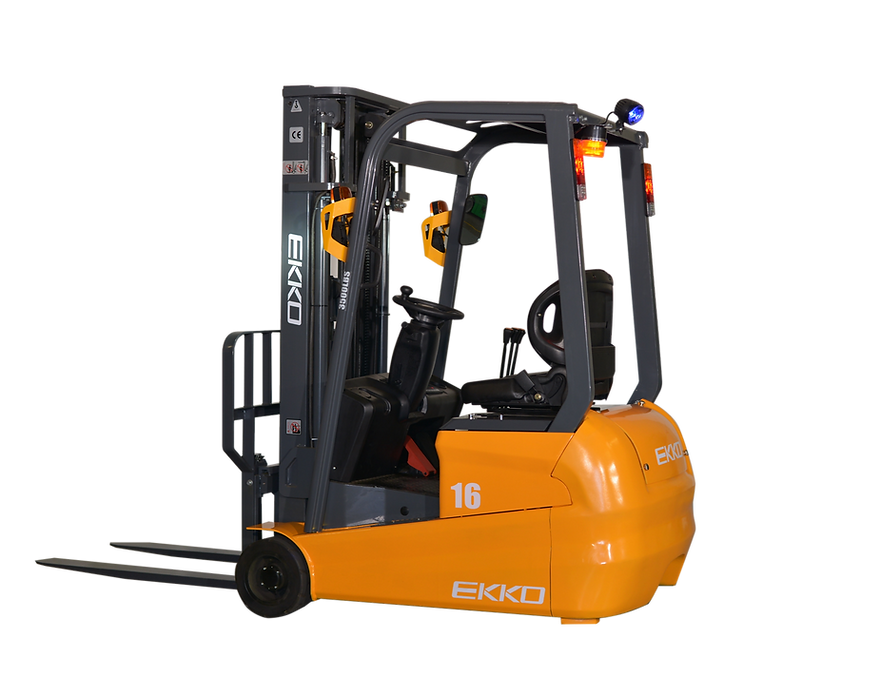
Shopping for a forklift for sale usually starts with capacity and ends in confusion, because the word covers a compact 3-wheel truck that turns inside a tight bay and a 10,000 lb pneumatic-tire machine working a lumber yard. This hub is the full EKKO line under one roof, sorted so you land on the right type before you compare models. Power is the first decision: battery-electric for clean indoor duty, LPG for mixed indoor and outdoor work with ventilation, diesel for the yard. Aisle width and lift height are the second: counterbalance trucks for open floors, narrow-aisle reach trucks and order pickers for tall racking. Capacities run from 220 lb order pickers up to 10,000 lb LPG trucks, and prices land roughly between $24,000 and $63,000 depending on capacity, mast height, and power. Use this page to pick the class that fits your floor and your load, then open the child collection to compare the exact trucks.
Shop Forklift Trucks by Category
Compare Forklift Trucks
| Model | Price | Load Center | Lift Height | Wheelbase | Service Weight | |
|---|---|---|---|---|---|---|
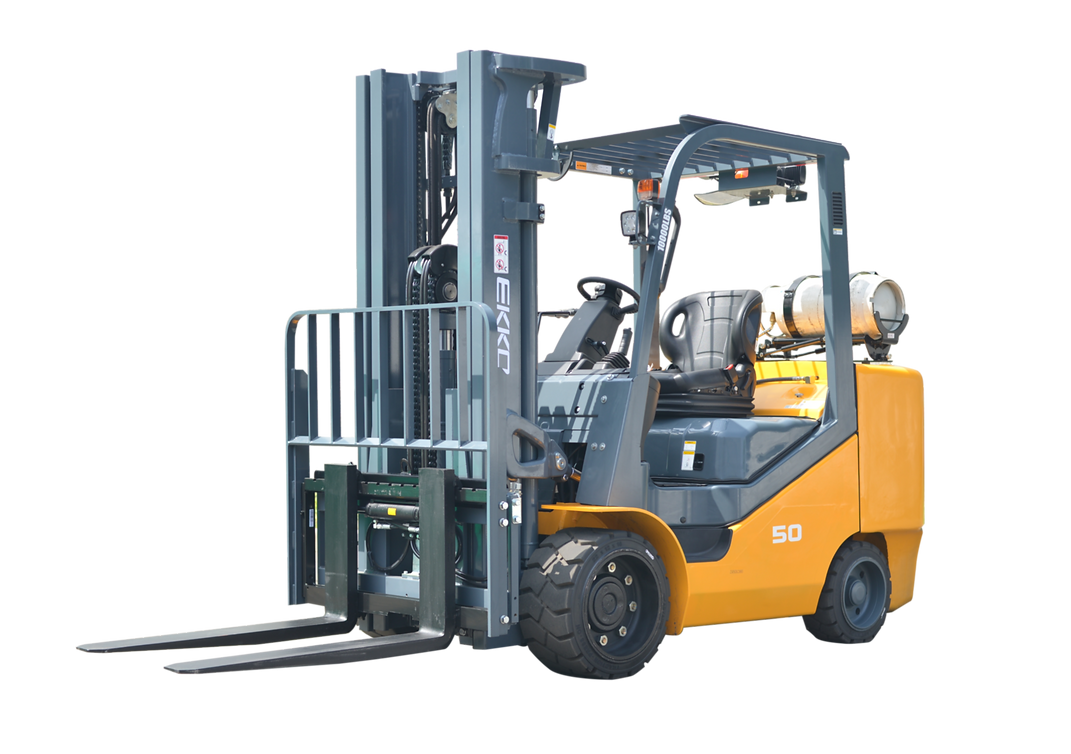
| EKKO EK50LP 10000lbs LPG Forklift | $62,999 | 24 in | 185 in | 62 in | 16,250 lb | View → |
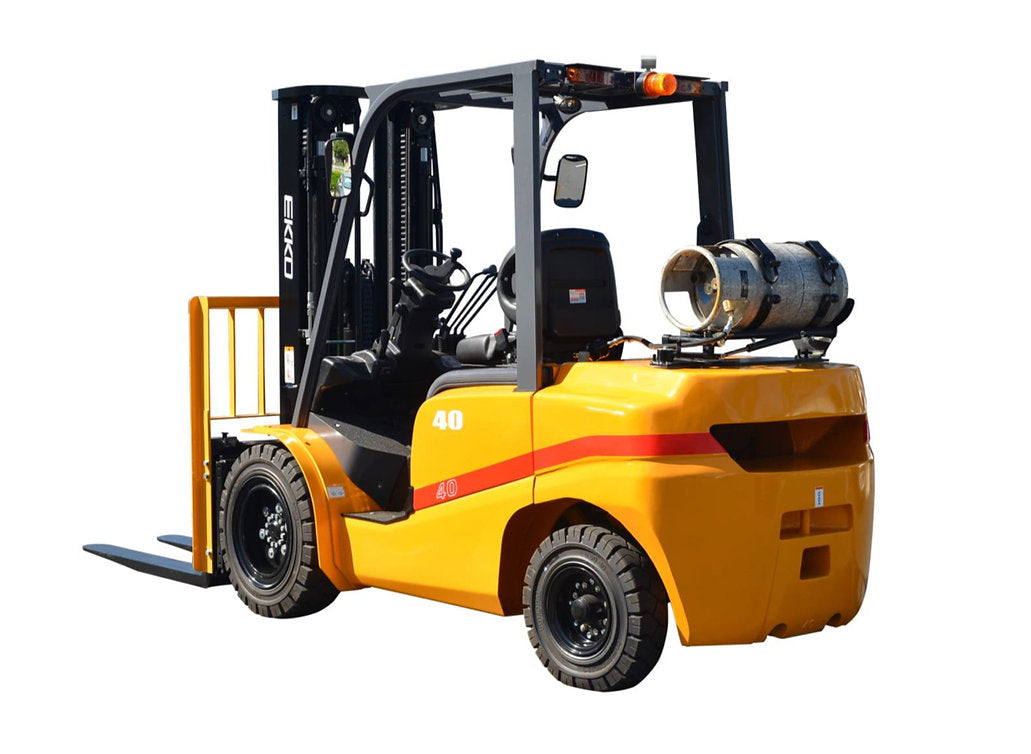
| EKKO EK40TLP 8500lbs LPG Forklift | $46,199 | 24 in | 185 in | 71 in | 11,519 lb | View → |
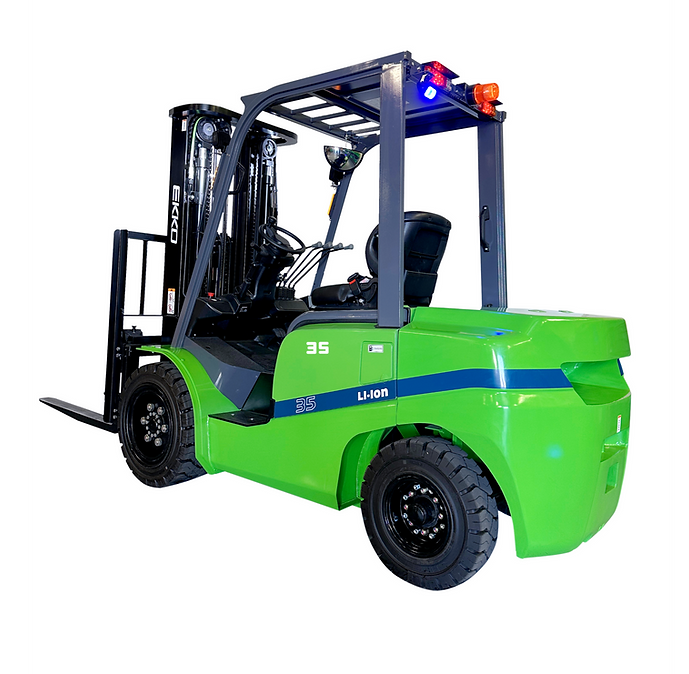
| EKKO EK35GT-LI 7000lbs 4-Wheel Electric Forklift | $41,999 | — | 185 in | 66.9 in | 10,648 lb | View → |
| EKKO EOP150-216LI 1500lbs Order Picker 216" Lift | $37,999 | 20" | 165 | 216" | 275" | — | — | View → |
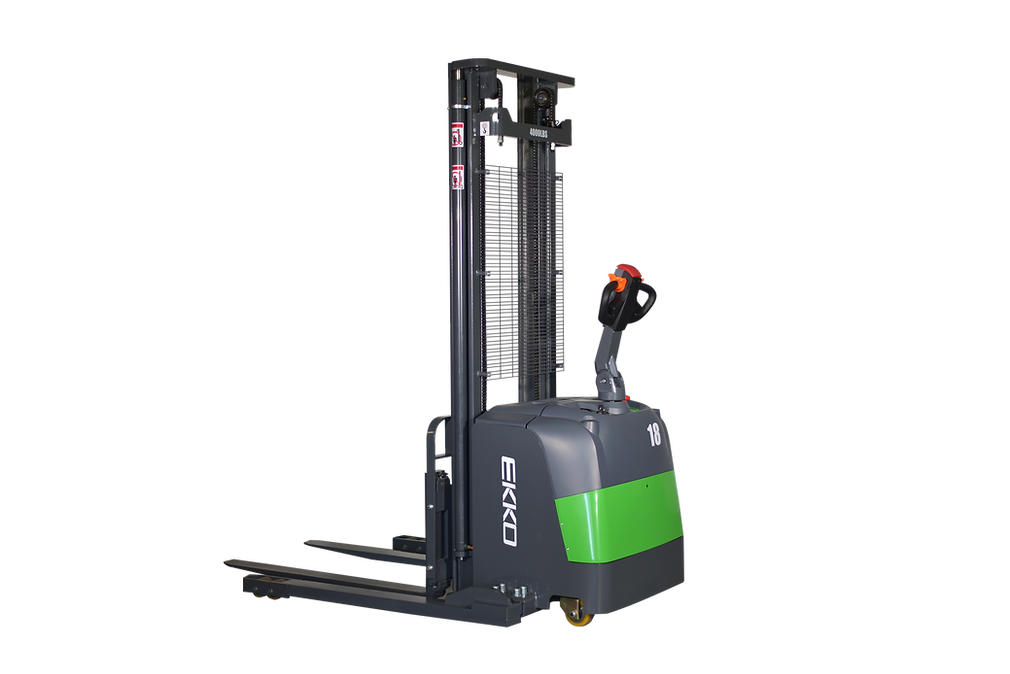
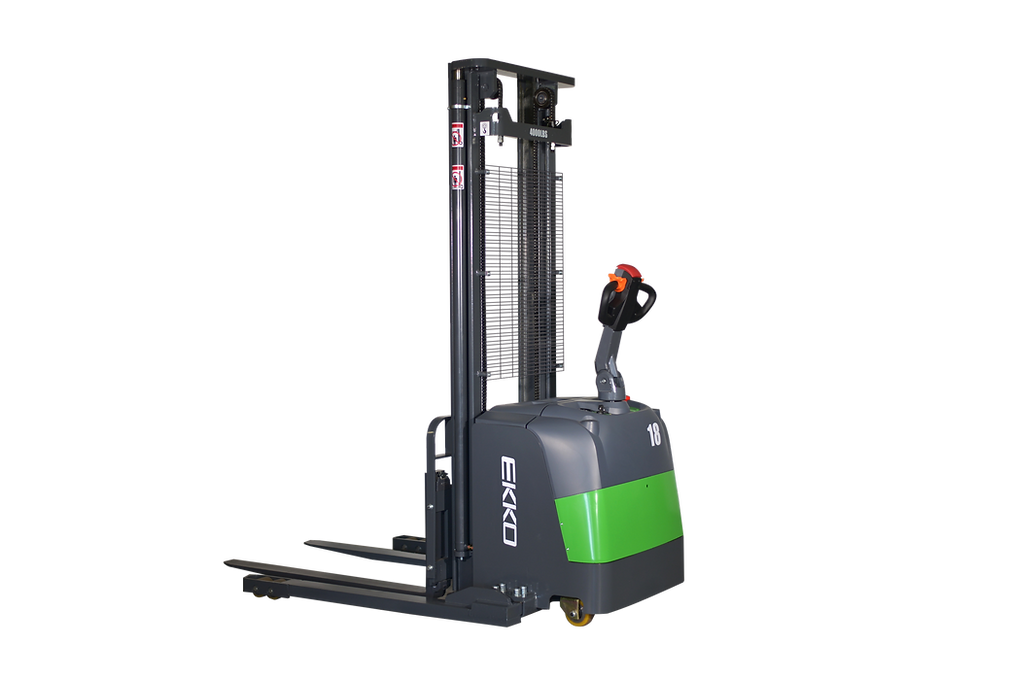
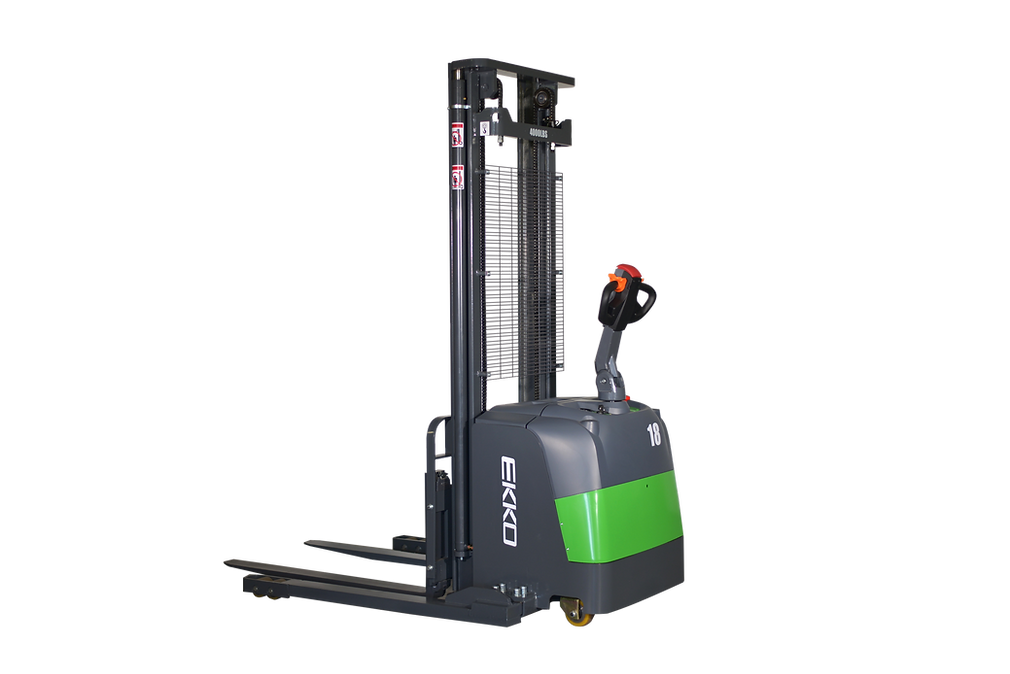
| EKKO EK18RFL 4000lbs Stand-Up Rider Forklift | $37,799 | — | — | — | — | View → |
| EKKO EK35LP 7000lbs LPG Forklift | $36,399 | — | 189" lift height | — | — | View → |
 In Stock
 In Stock
 In Stock
 In Stock
 In Stock
 In Stock
 In Stock
 In Stock
 In Stock
 In Stock
 In Stock
 In Stock
 In Stock
 In Stock
 In Stock
 In Stock
 In Stock
 In Stock
 In Stock
 In Stock
 In Stock
 In Stock
 In Stock
 In Stock
 In Stock
 In Stock
 In Stock
 In Stock
 In Stock
 In Stock
 In Stock
 In Stock
 In Stock
 In Stock
 In Stock
 In Stock
 In Stock
 In Stock
 In Stock
 In Stock
 In Stock
 In Stock
 In Stock
 In Stock
 In Stock
 In Stock
 In Stock
 In Stock
 In Stock
 In Stock
 In Stock
 In Stock
 In Stock
 In Stock
 In Stock
 In Stock
 In Stock
 In Stock
 In StockIn Stock
 In Stock
 In StockIn Stock
 In Stock
 In Stock
 In StockIn Stock
 In Stock
 In StockIn StockIn Stock
 In Stock
 In Stock
 In StockIn Stock
 In Stock
 In Stock
 In Stock
 In StockIn StockIn Stock
 In Stock
 In Stock
Forklift Trucks Buying Guide
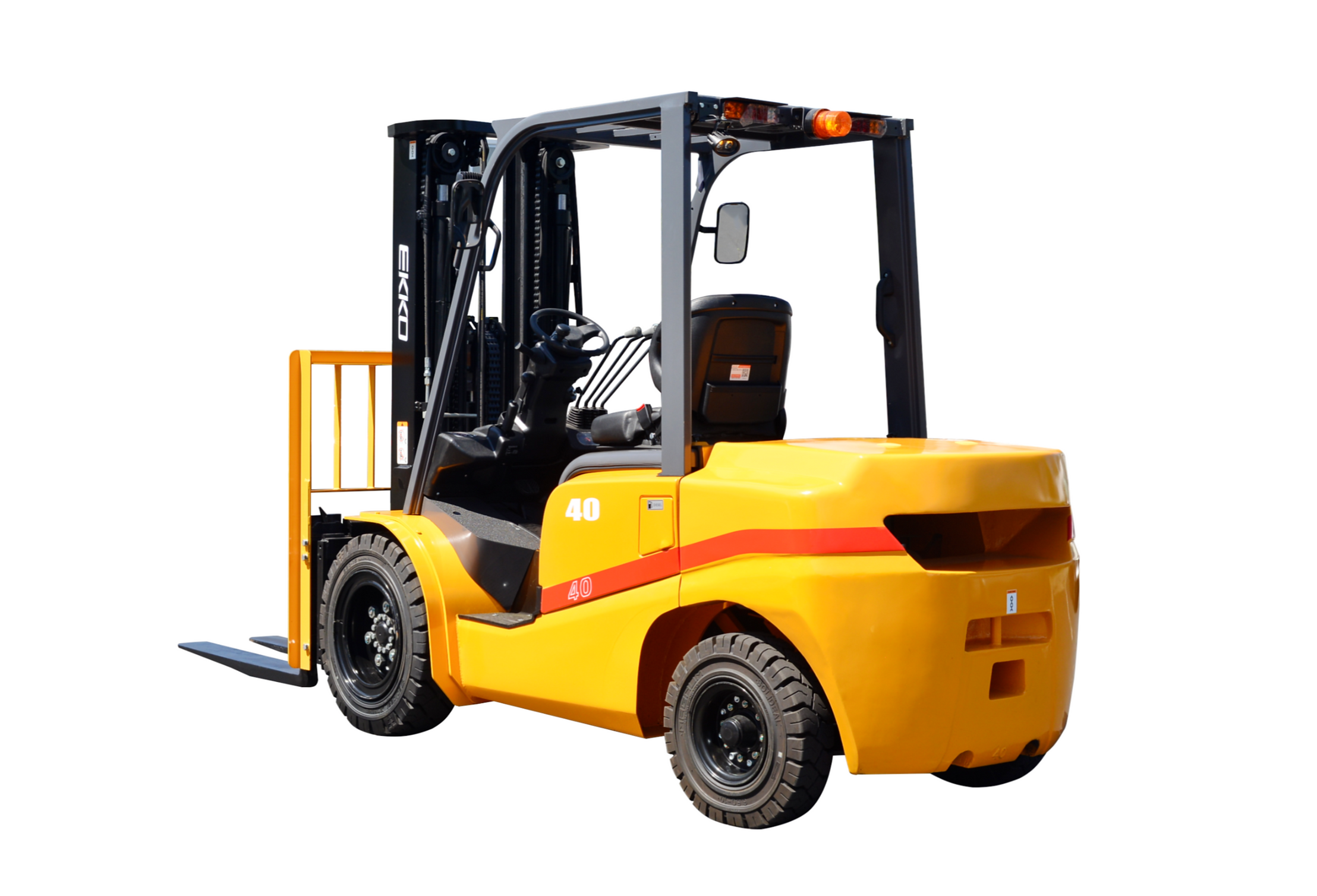
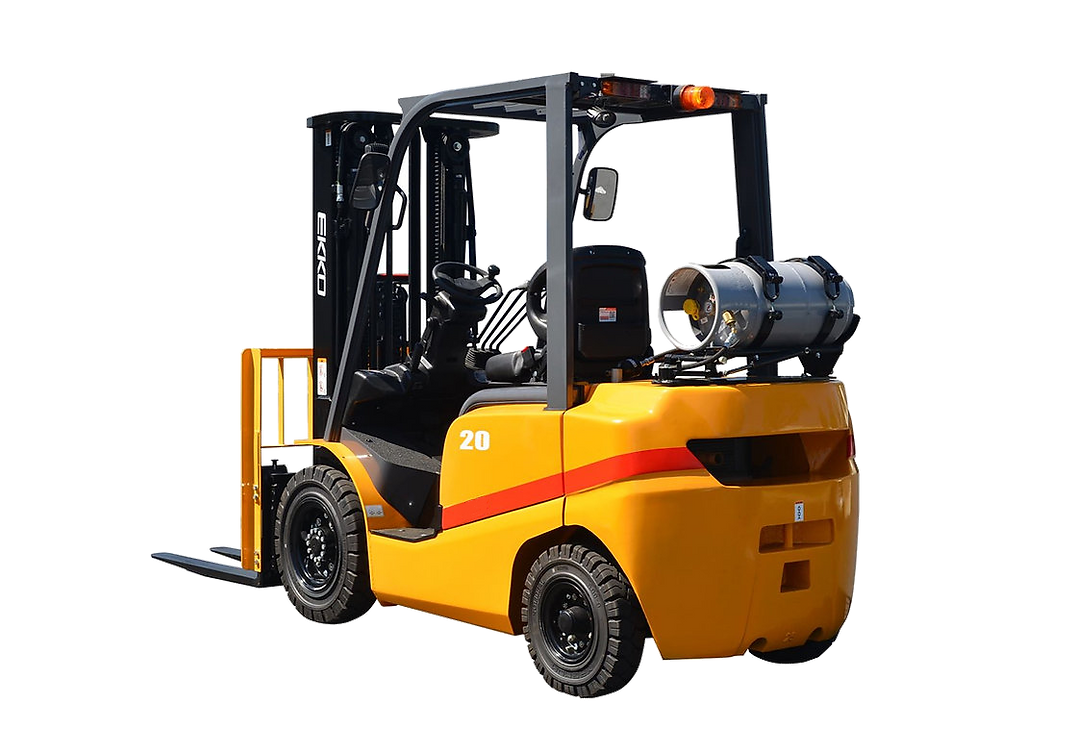
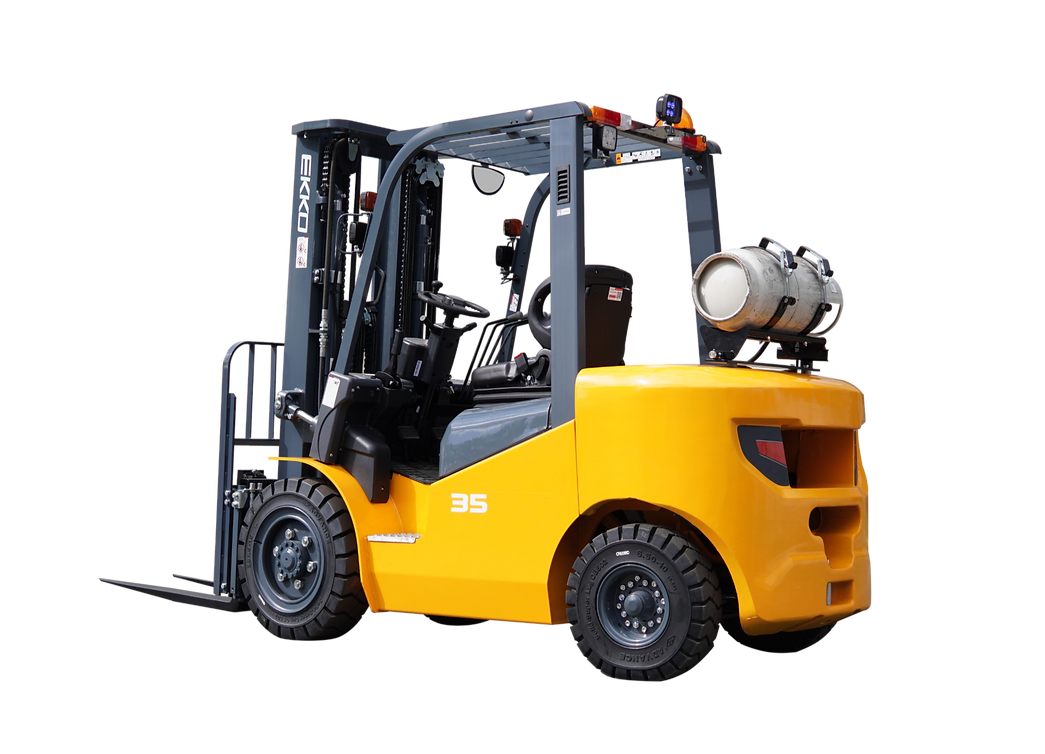
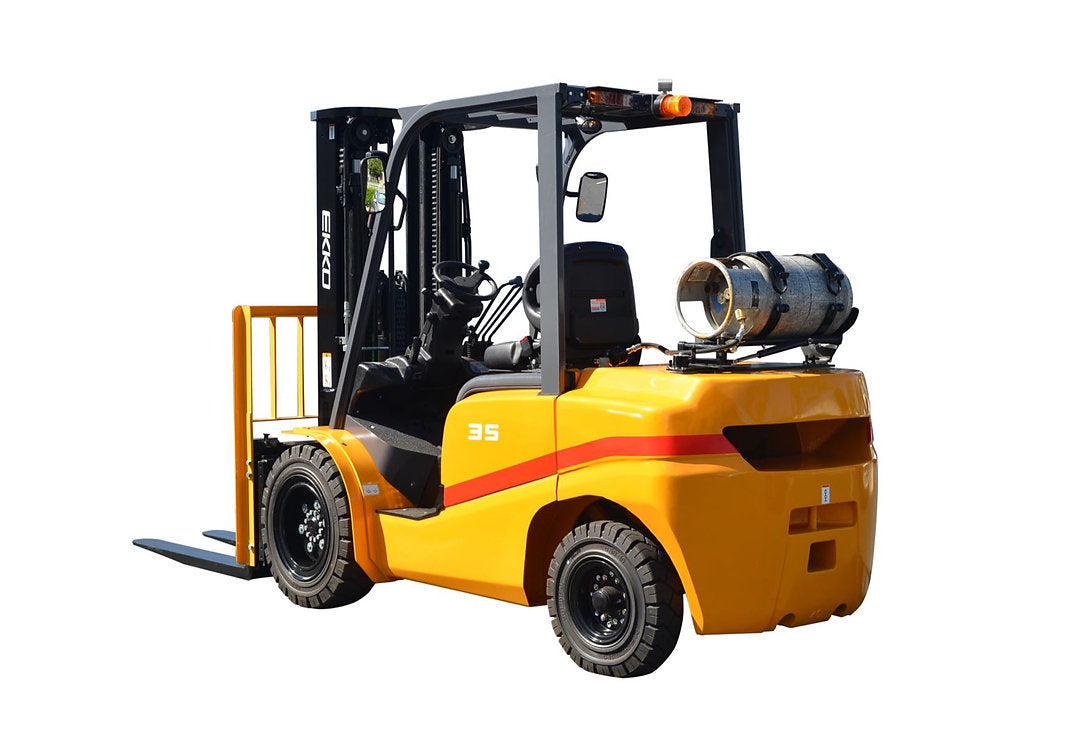
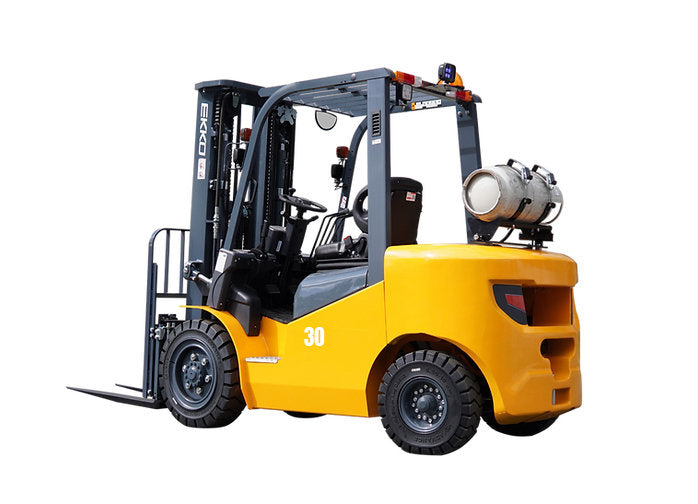
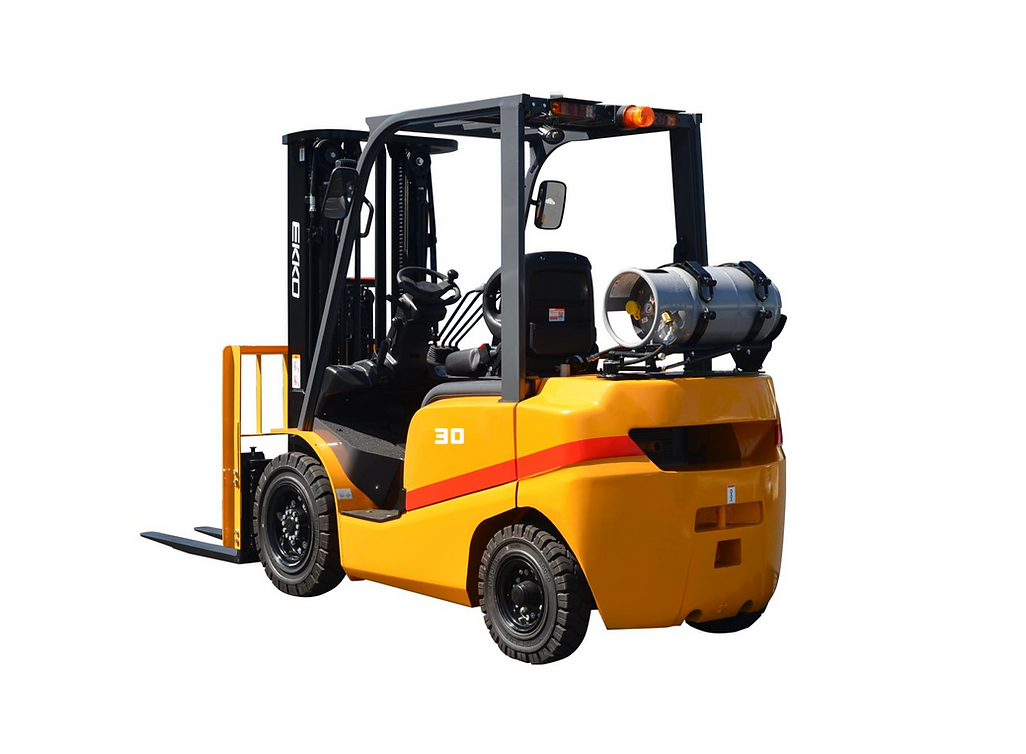
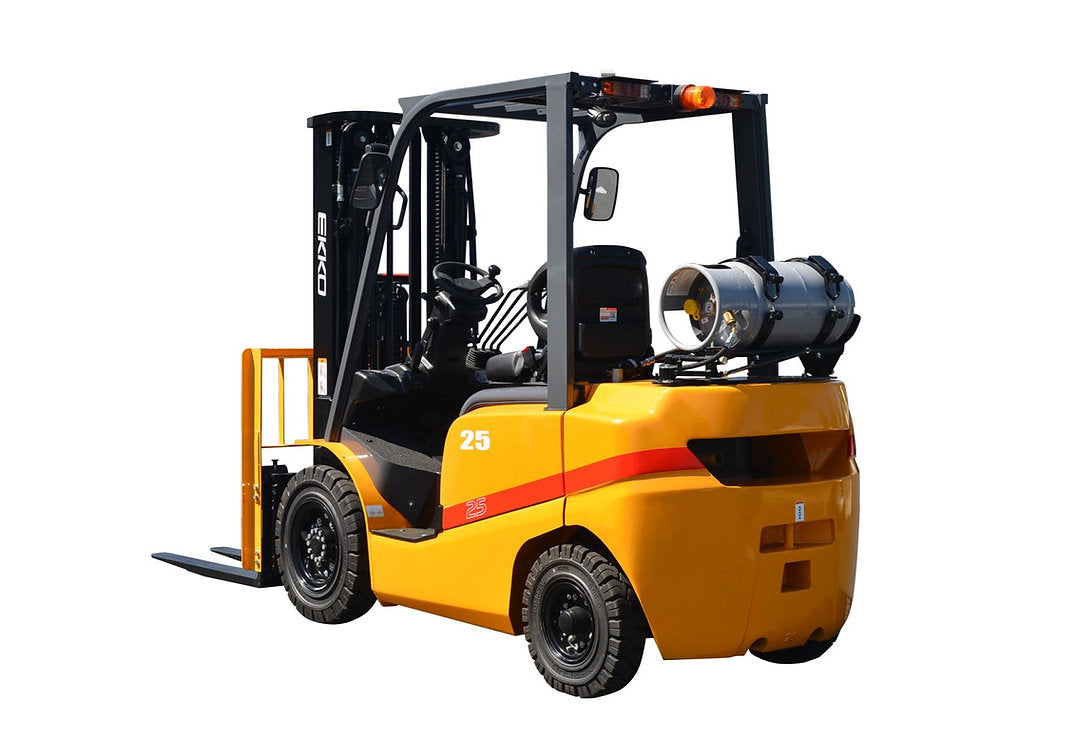
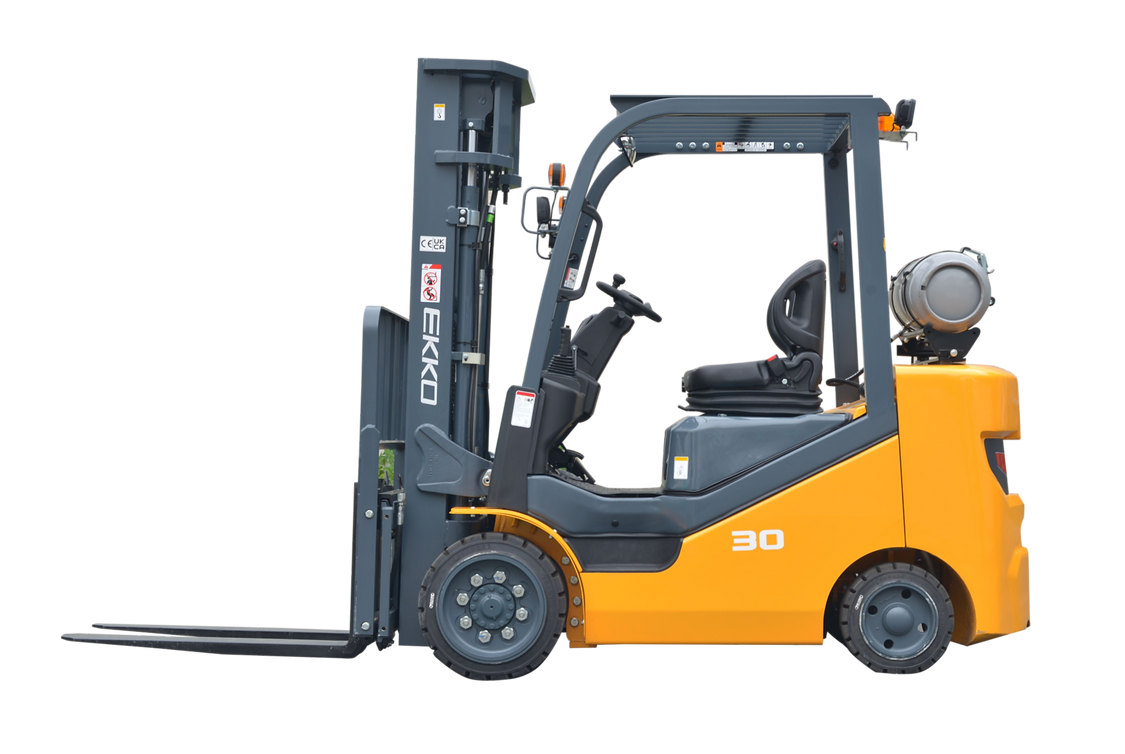
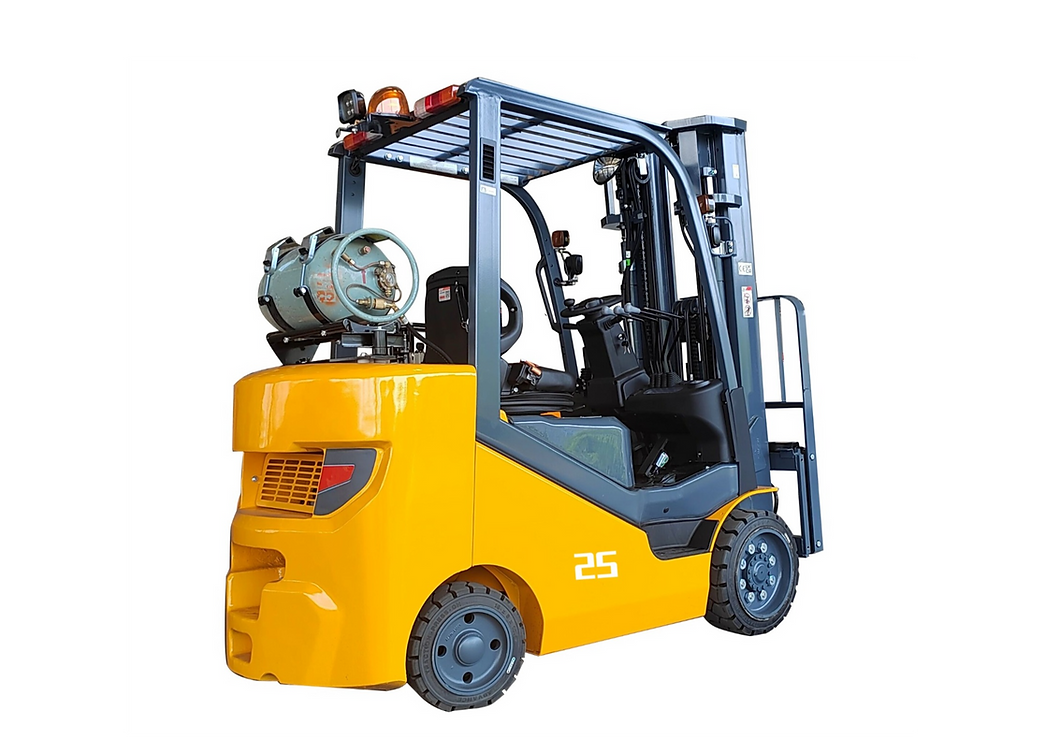
Start with power: electric, LPG, or diesel. The engine dictates where a truck can legally and comfortably work, so decide it first. Battery-electric trucks make no exhaust, which suits enclosed warehouses, food and cold storage, and any indoor shift where air quality matters. EKKO's sit down electric forklifts cover that lane, a compact 3-wheel model rated 3,500 lb for tight indoor bays and a lithium 4-wheel truck to 7,000 lb for heavier indoor pallet work. When the same truck has to move between the dock and the yard, LPG forklifts are the flexible middle: propane runs indoors with adequate ventilation and outdoors without a second thought, and a swappable tank refuels in minutes instead of waiting on a charge. The EKKO LPG range is the deepest bench in this hub, running from 4,000 lb up to a 10,000 lb truck. When the work lives outside on rough ground, diesel forklifts bring the torque, and EKKO's 8,500 lb diesel is built for the lumber yard, the block plant, and the loading apron. Diesel exhaust is the catch: carbon monoxide and particulate build fast in enclosed spaces, so keep diesel outdoors or in wide, open bays.
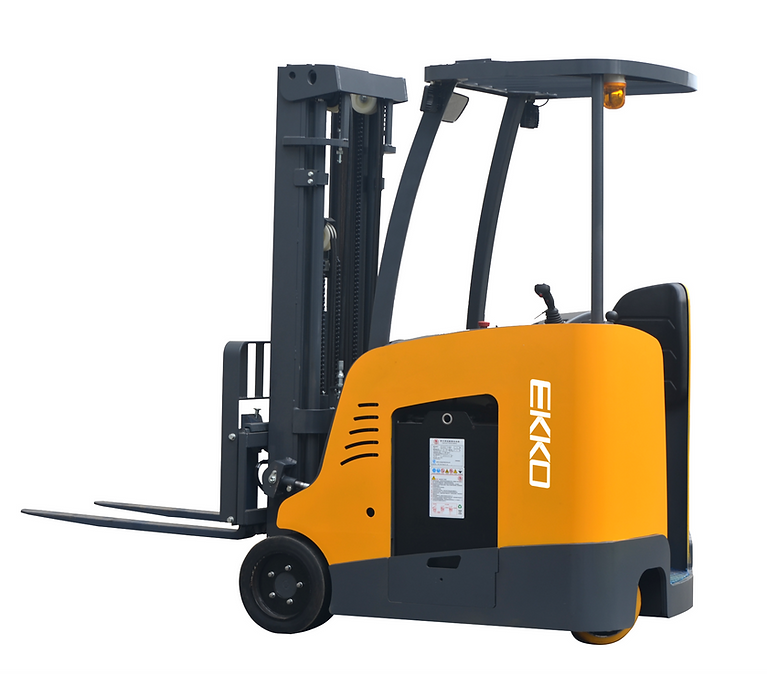
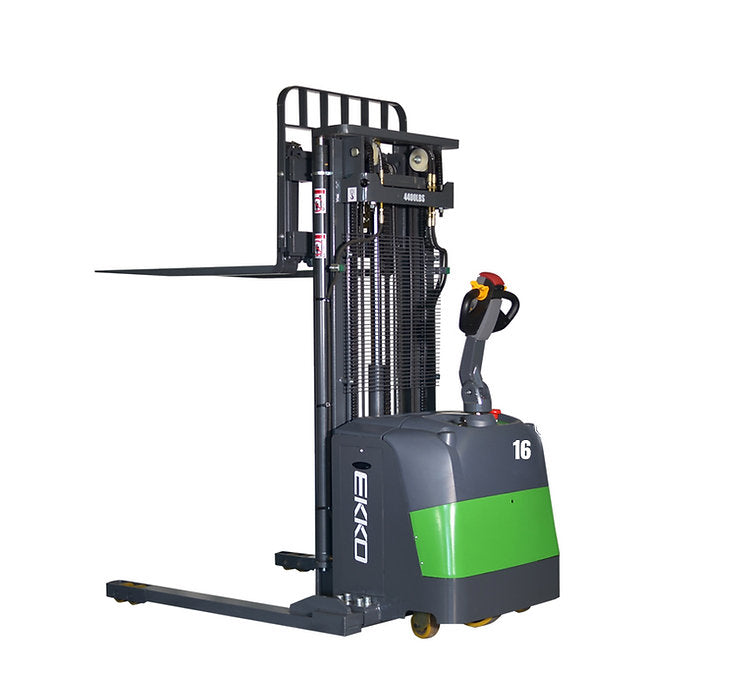
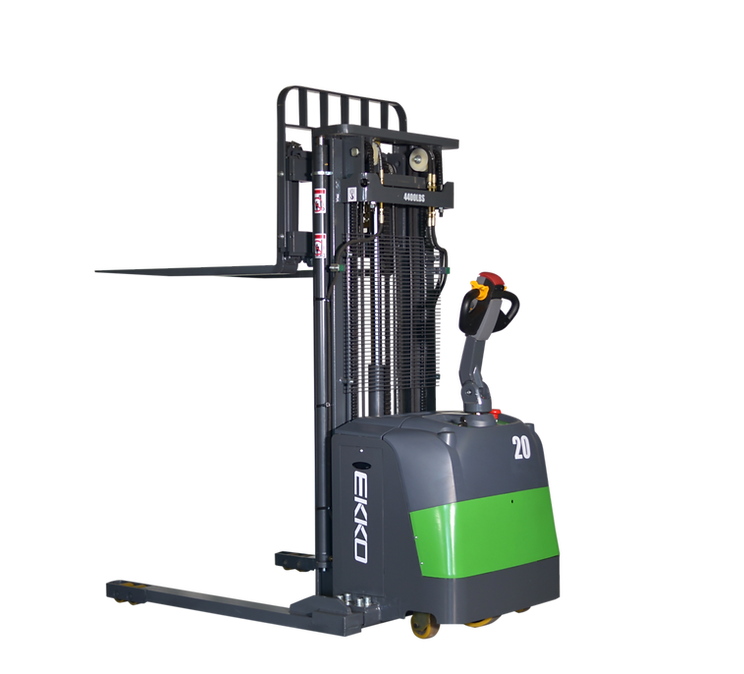
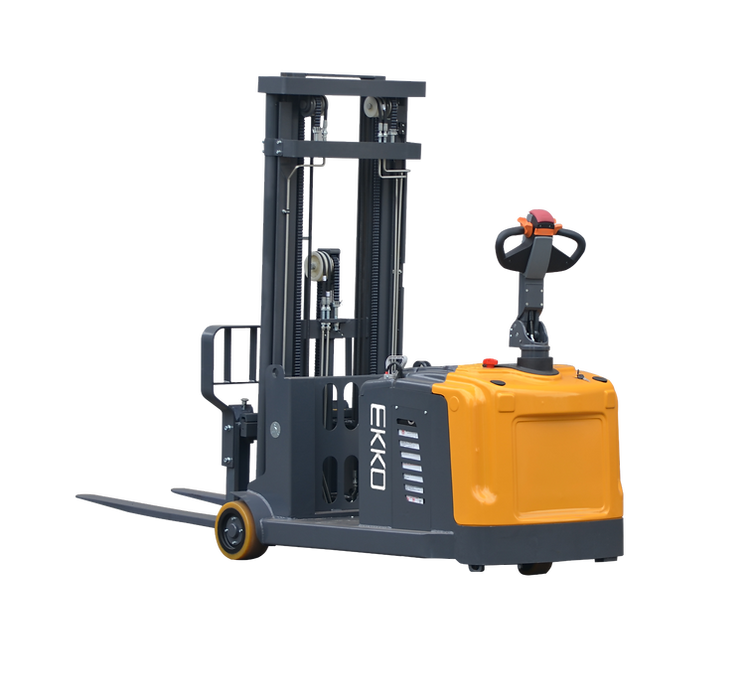
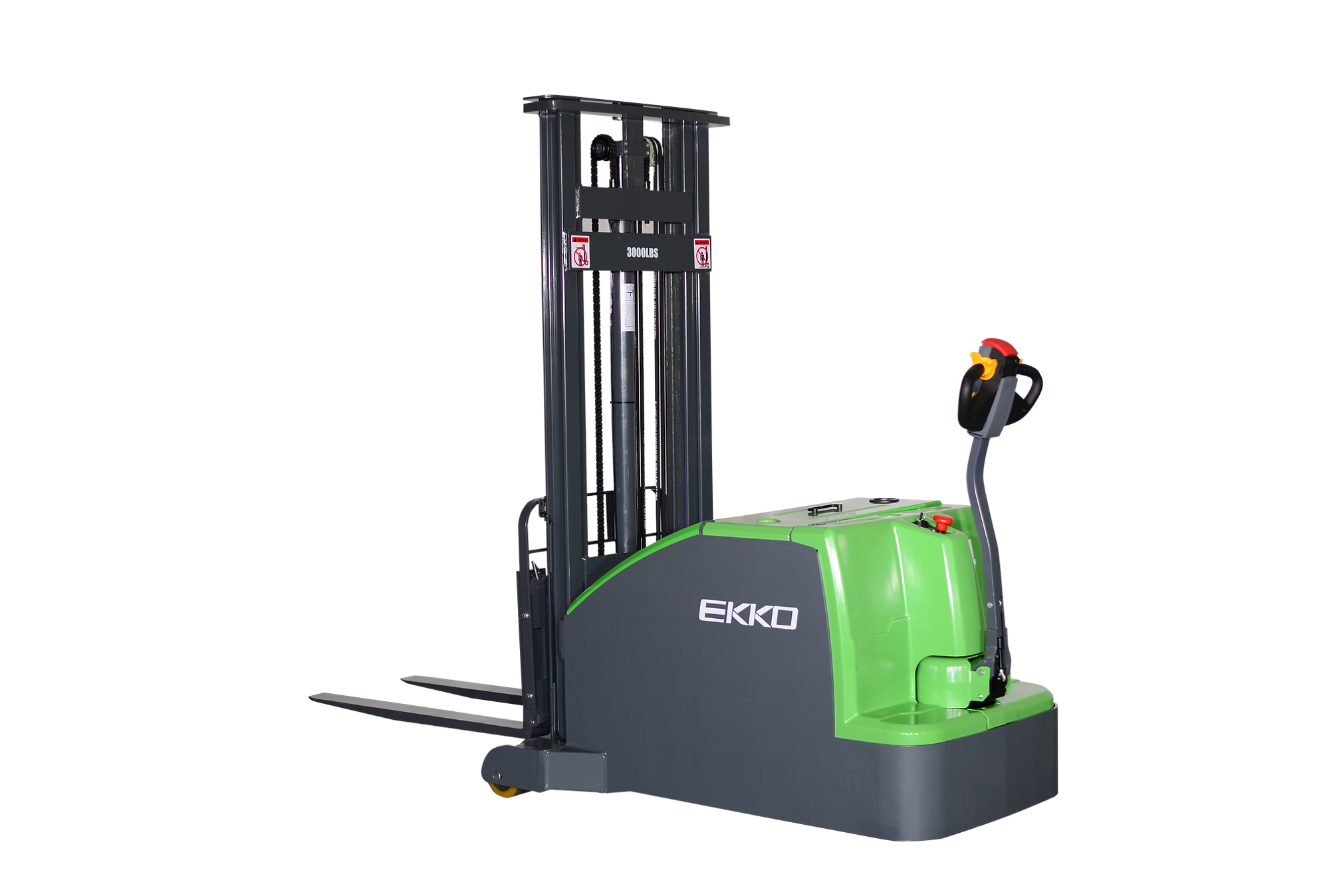
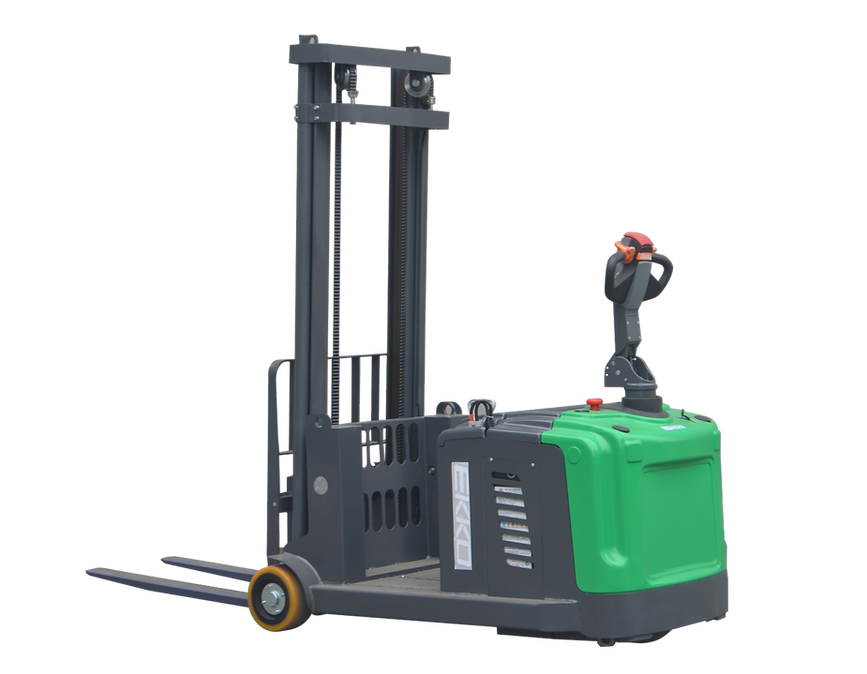
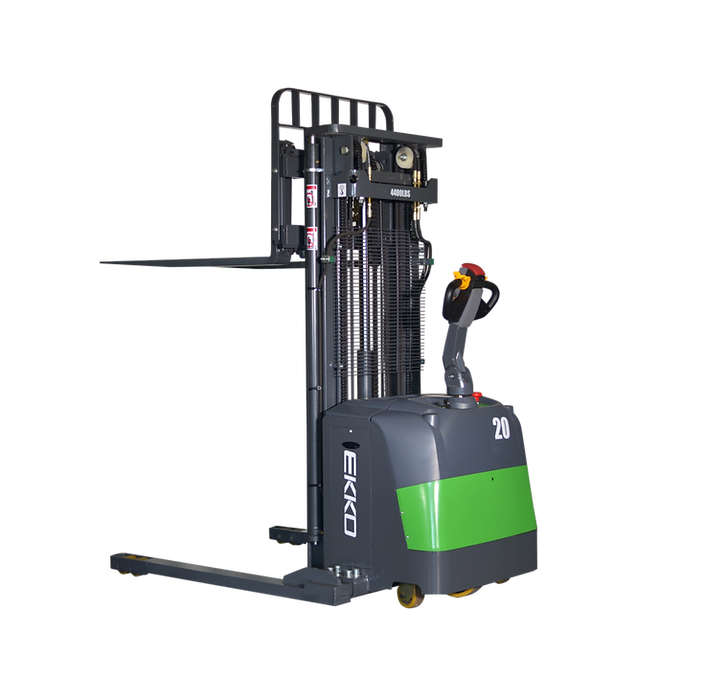
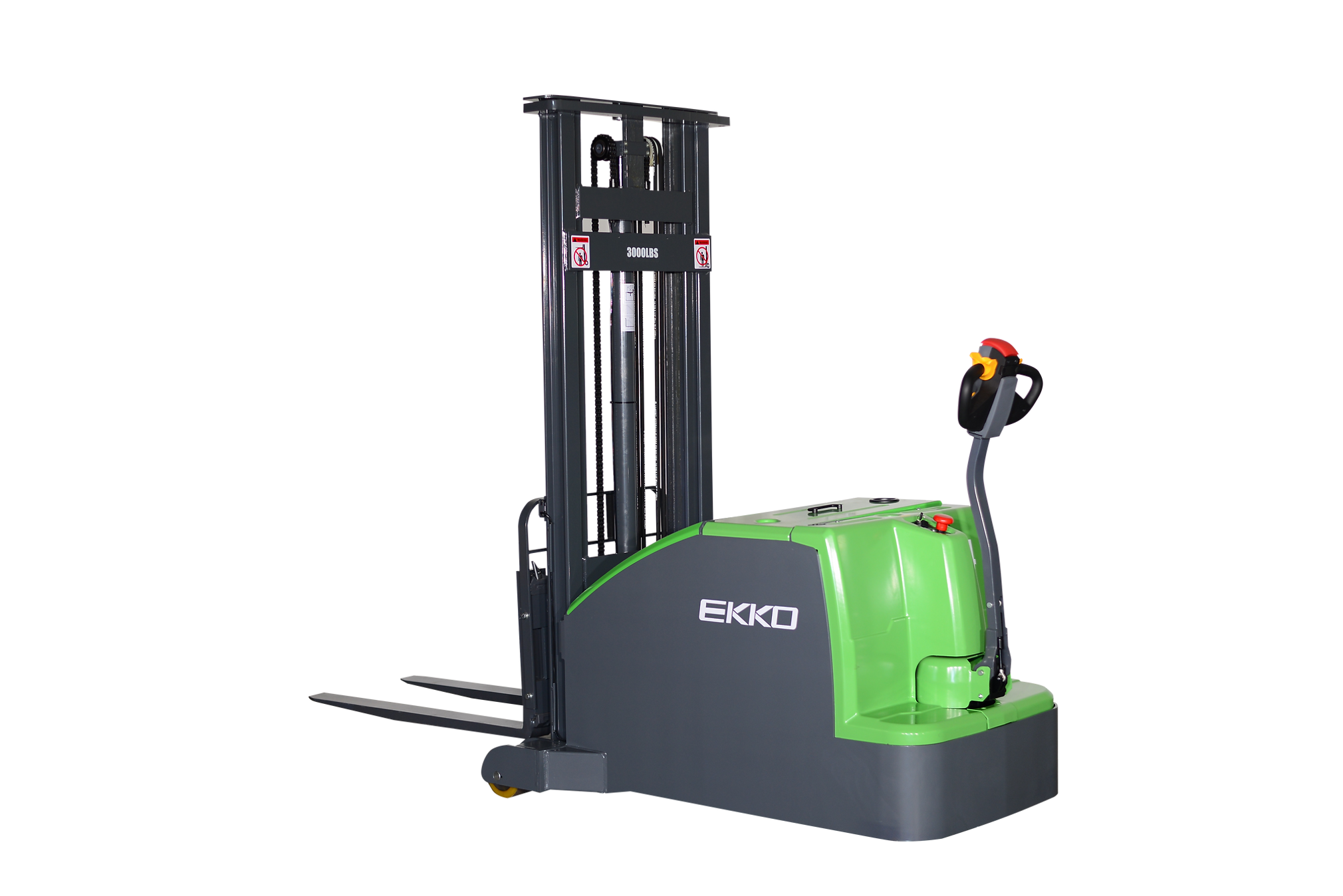
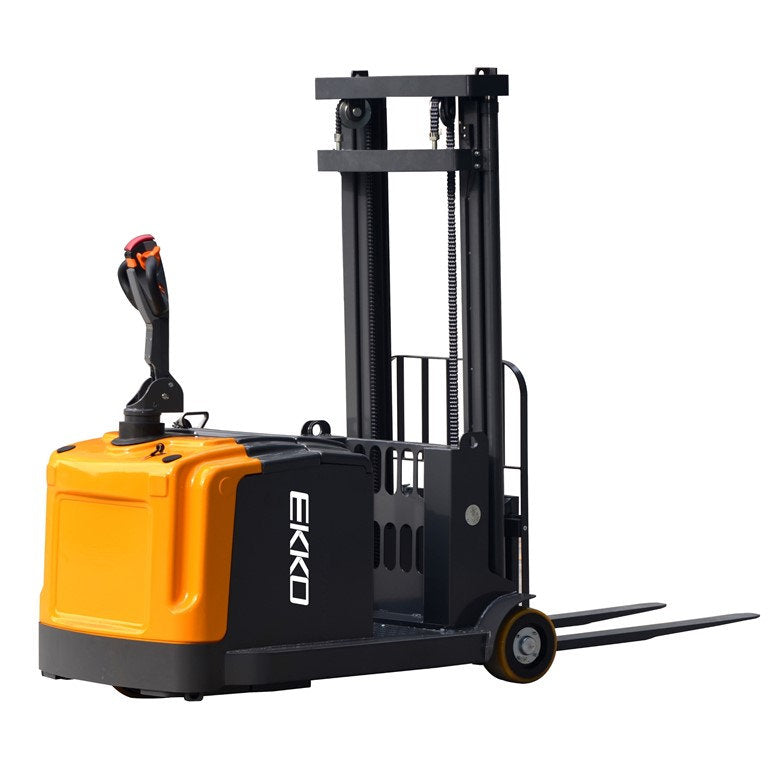
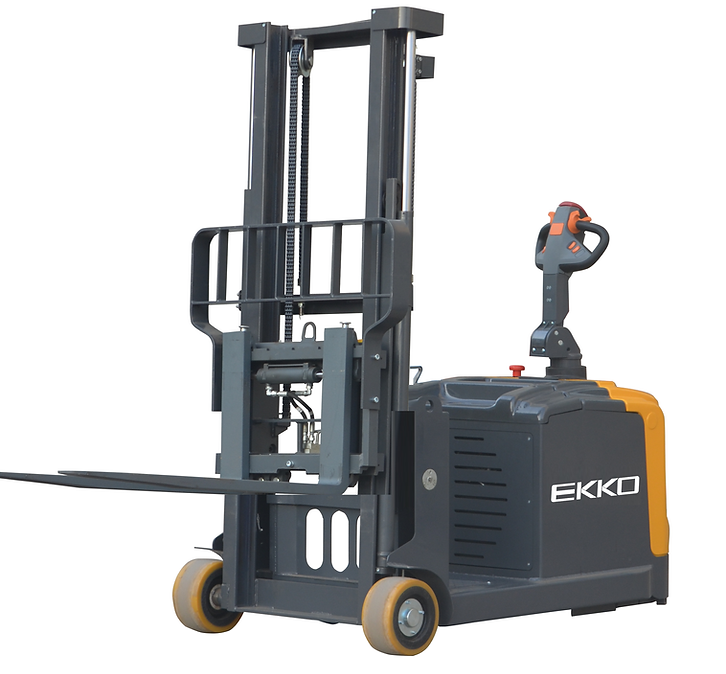
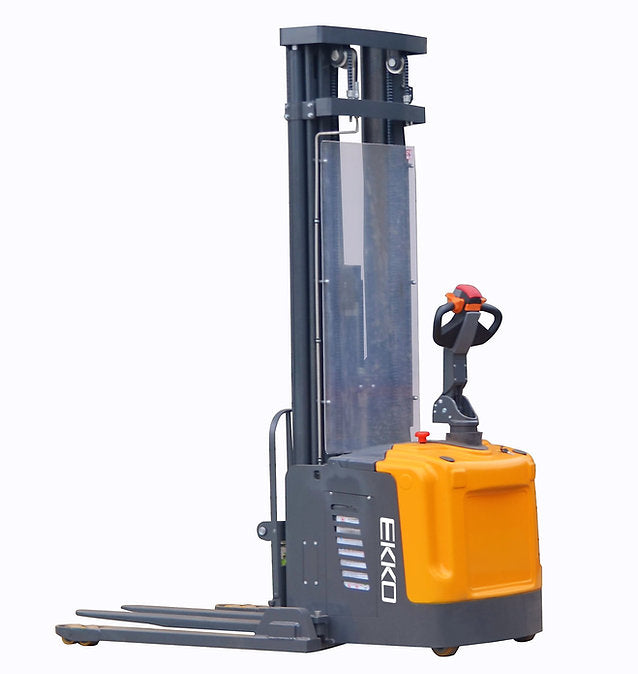
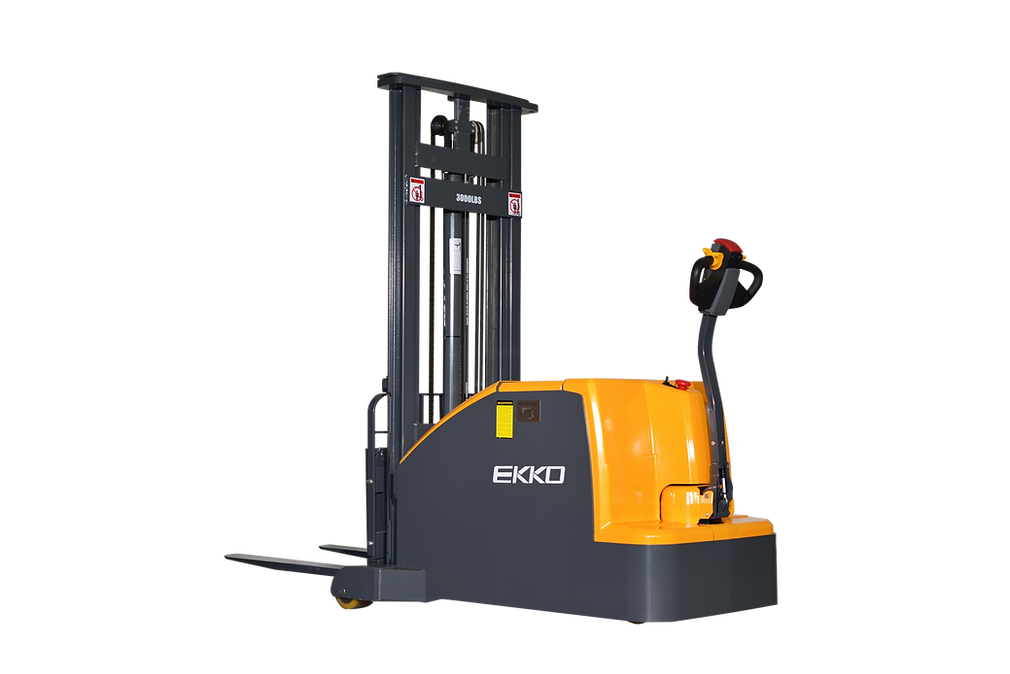
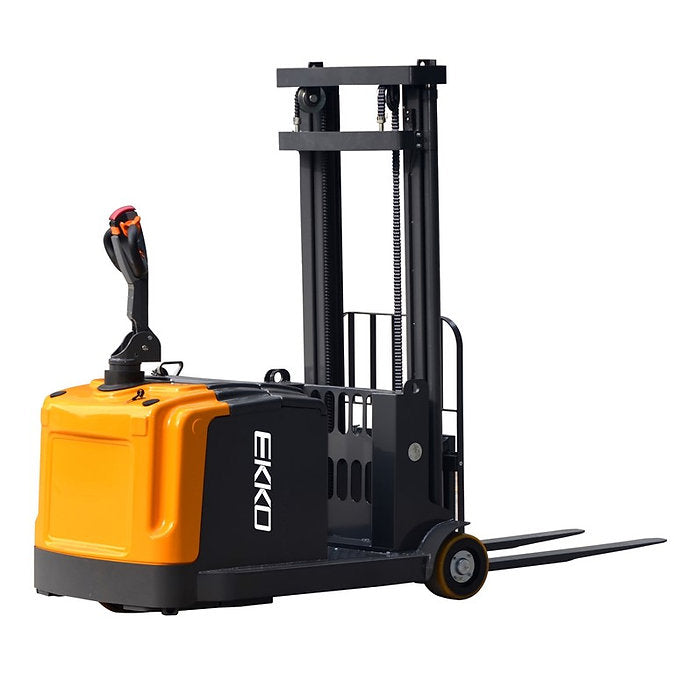
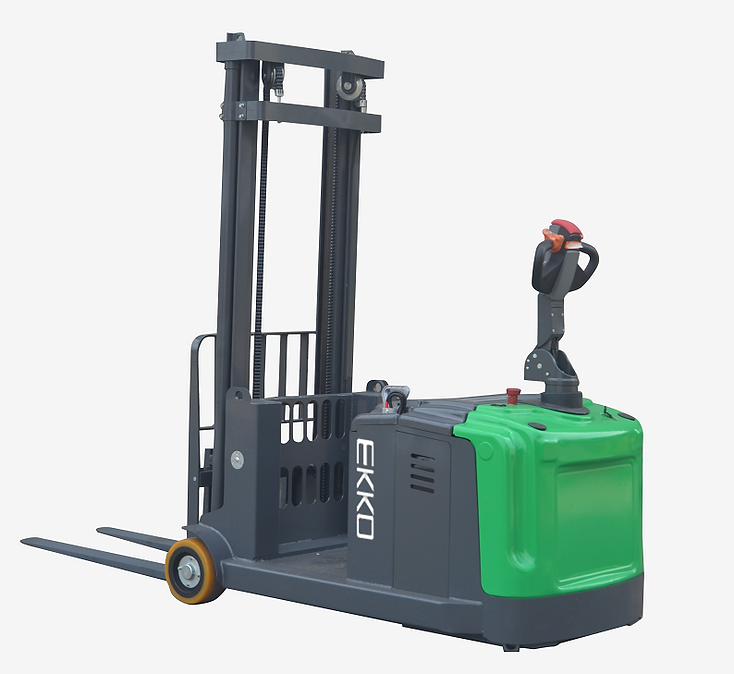
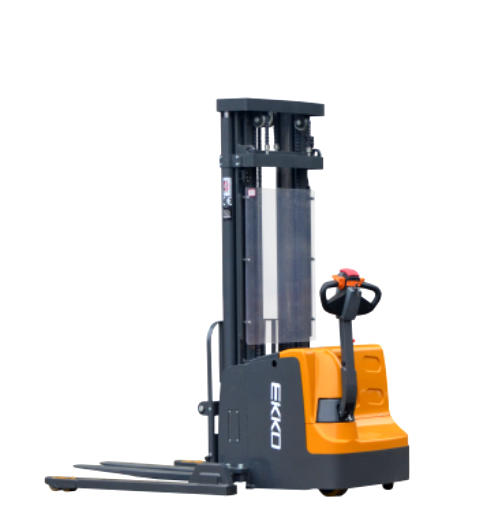
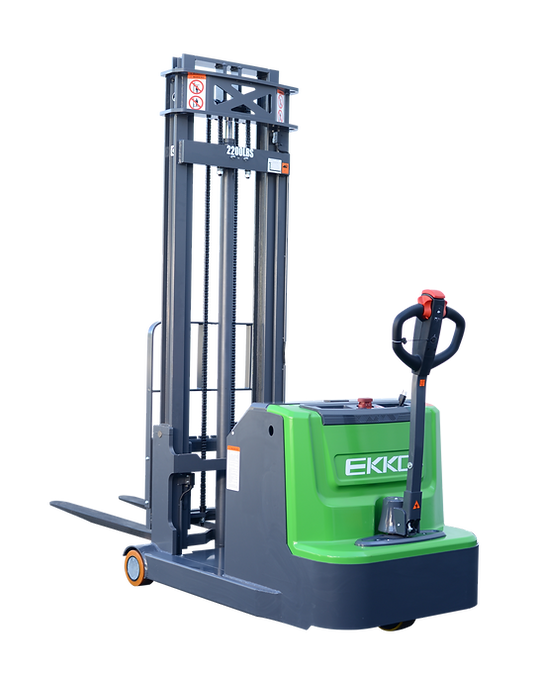
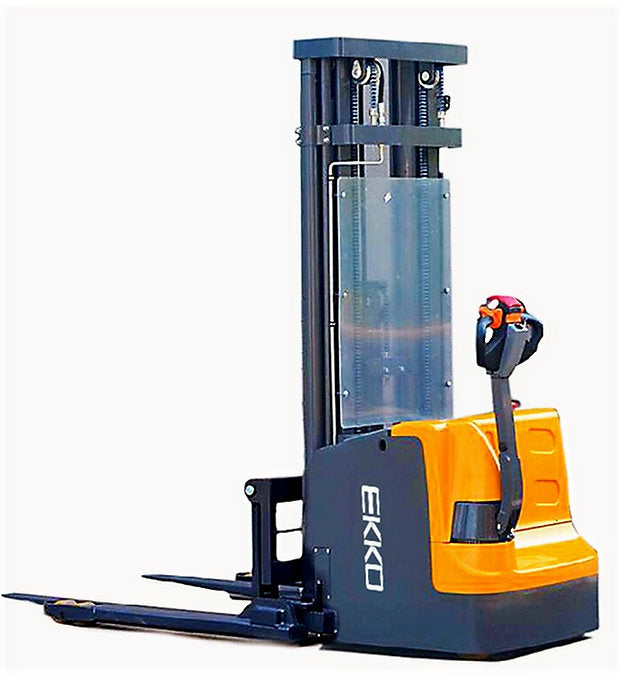
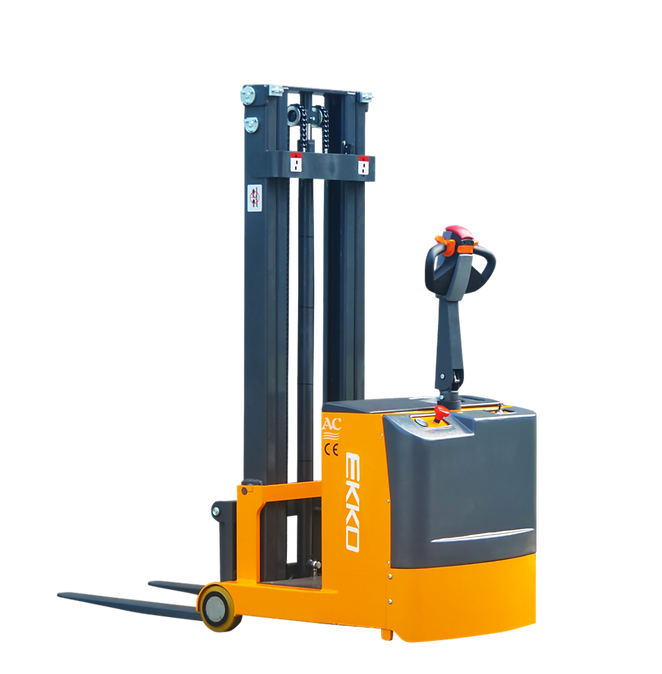
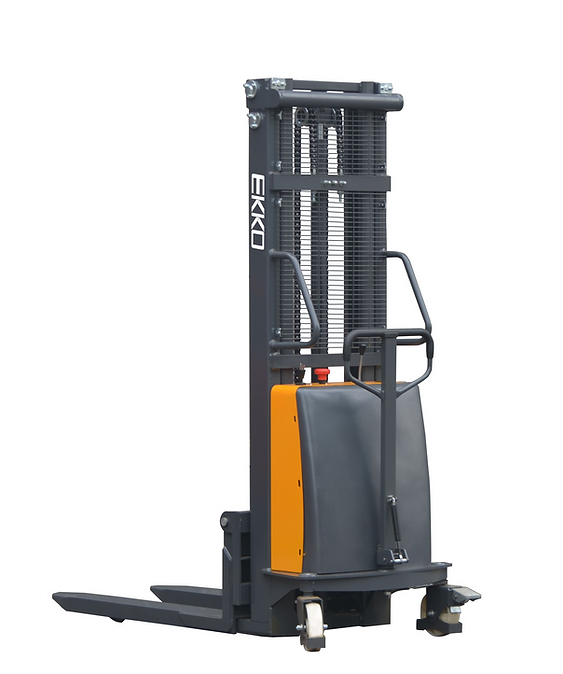
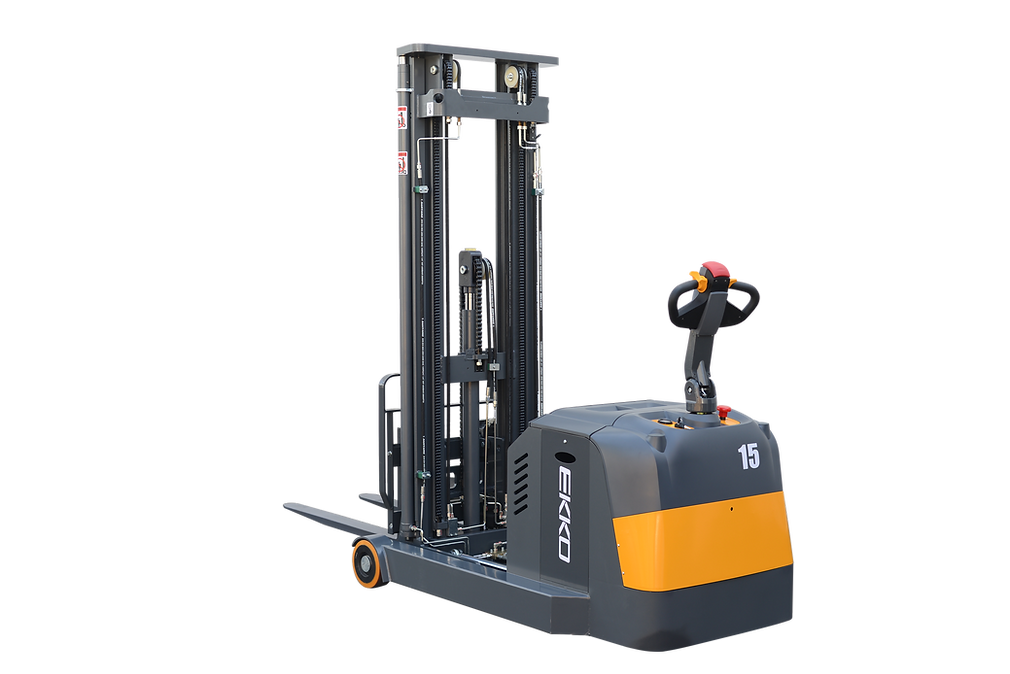
Match the truck to the aisle and the lift height. A counterbalance forklift carries its load out front and balances it with weight in the back of the truck, which is why it needs room to turn and why its lift tops out around 240 inches. Every LPG, diesel, and sit-down electric truck here is a counterbalance design, and so is EKKO's stand up rider forklift, a 4,000 lb stand-on truck whose sideways stance and quick on-off ergonomics fit dock work and short shuttle runs where the operator steps on and off all day. When the aisles get tight and the racking gets tall, that rear counterweight becomes the problem. The answer is a narrow-aisle truck that reaches the load instead of carrying it out front, which shifts the choice to the pair below.
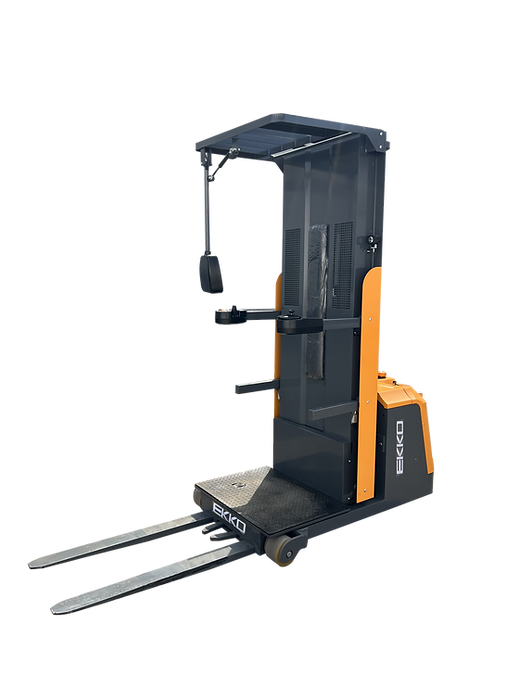
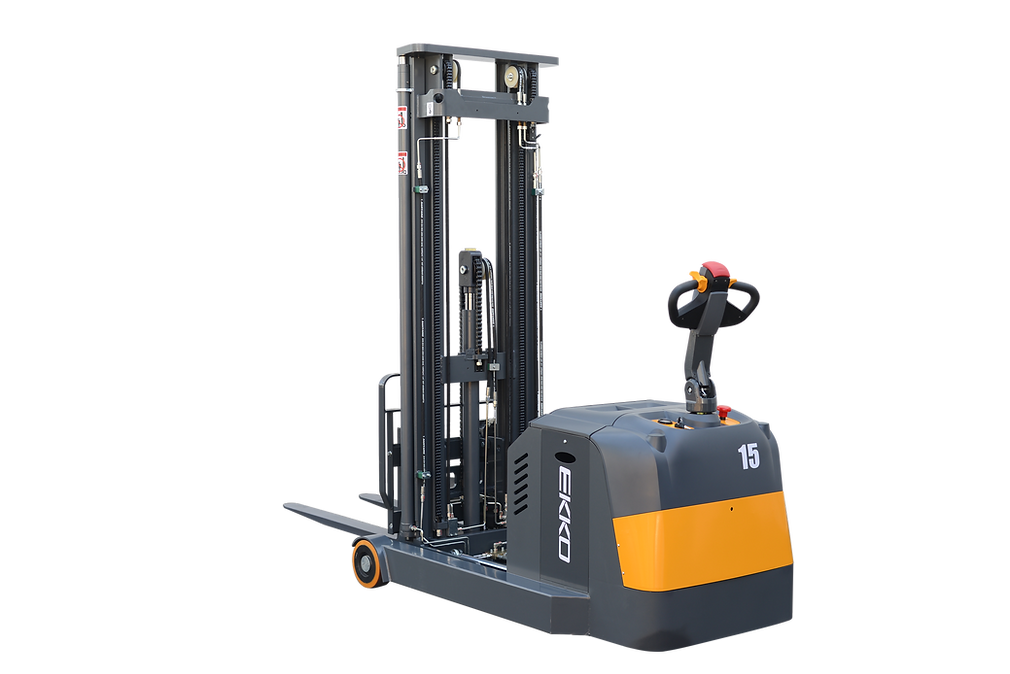
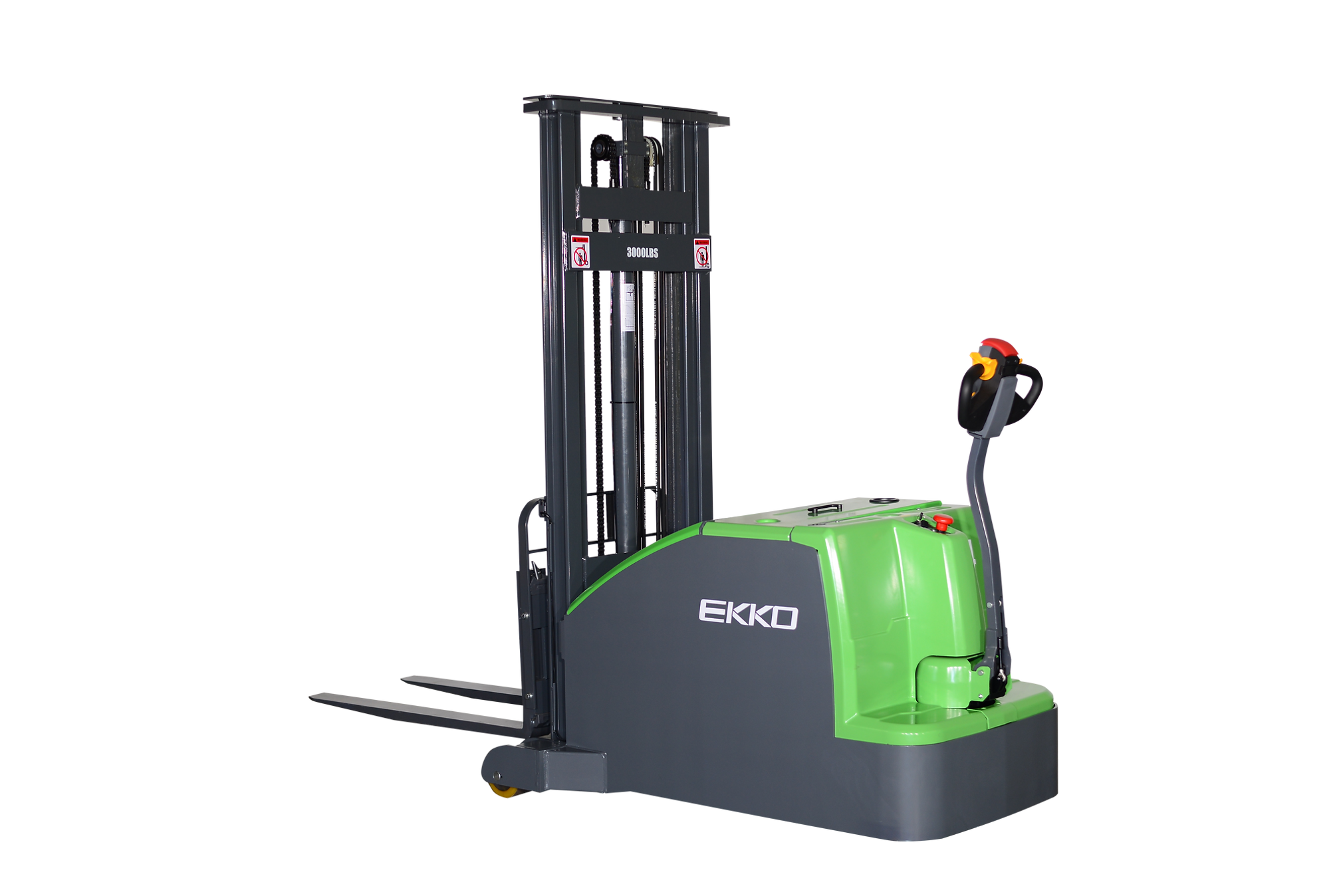
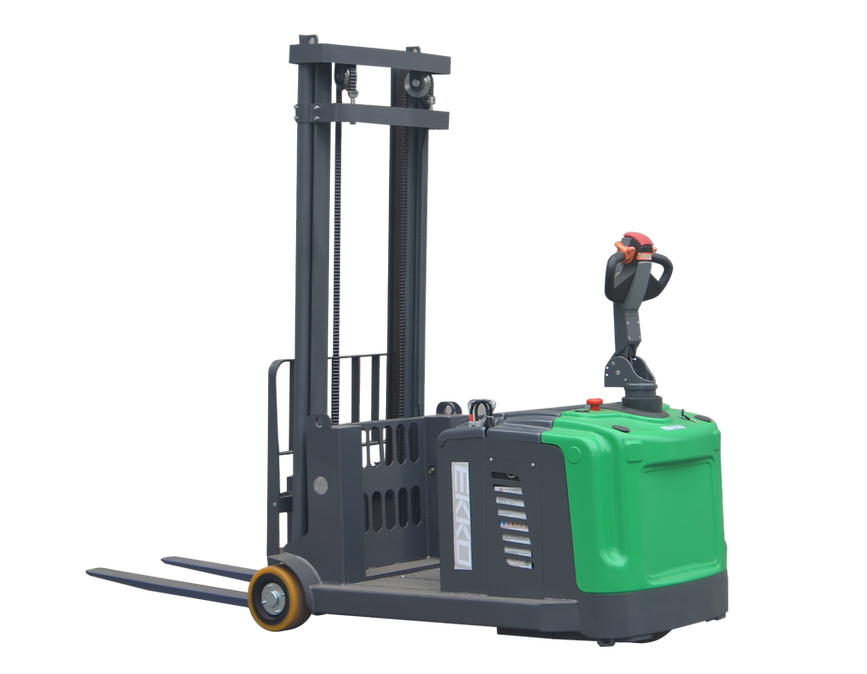
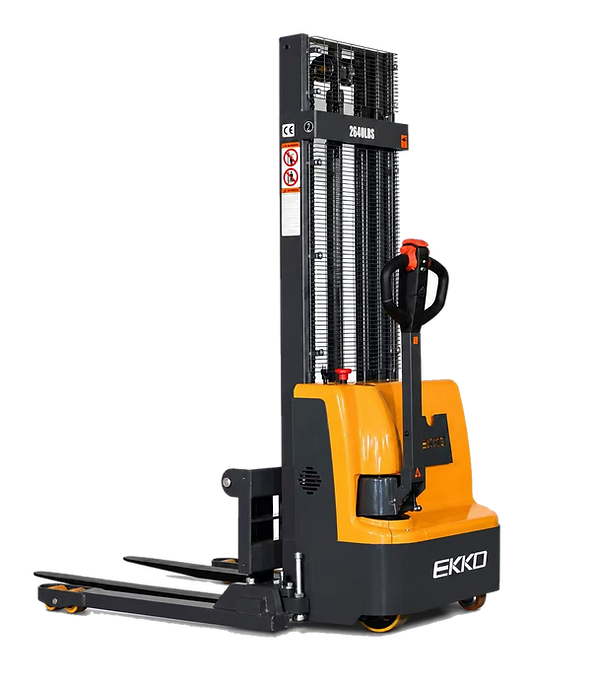
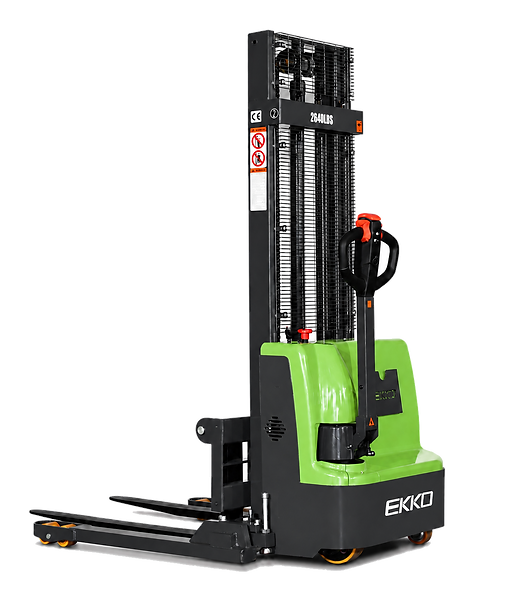
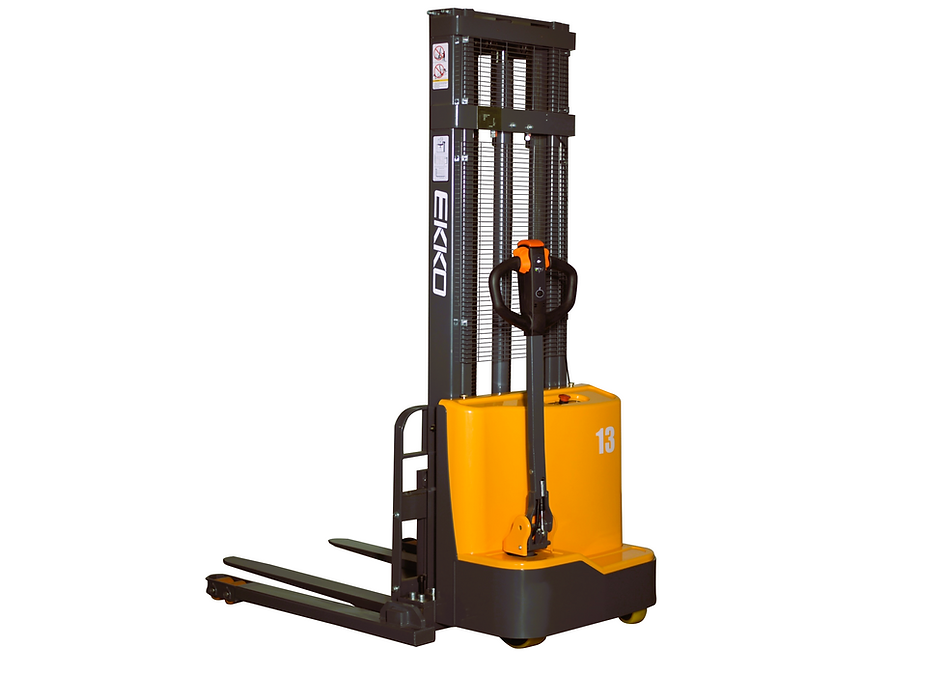
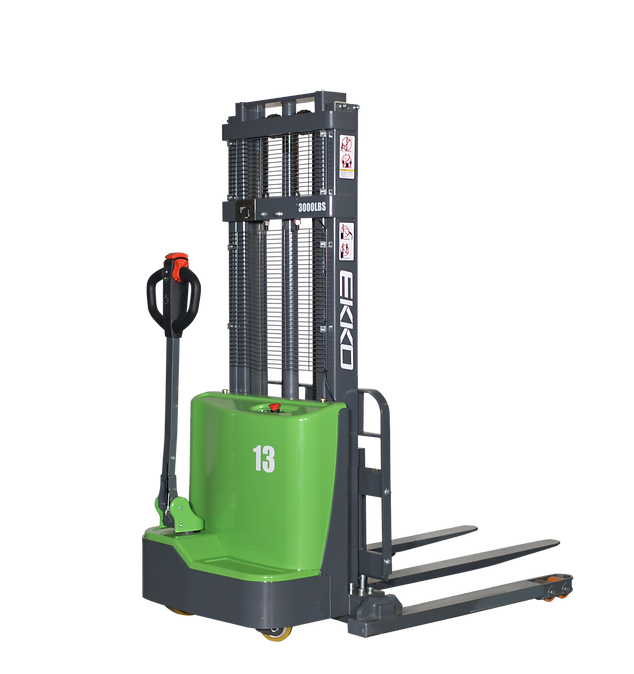
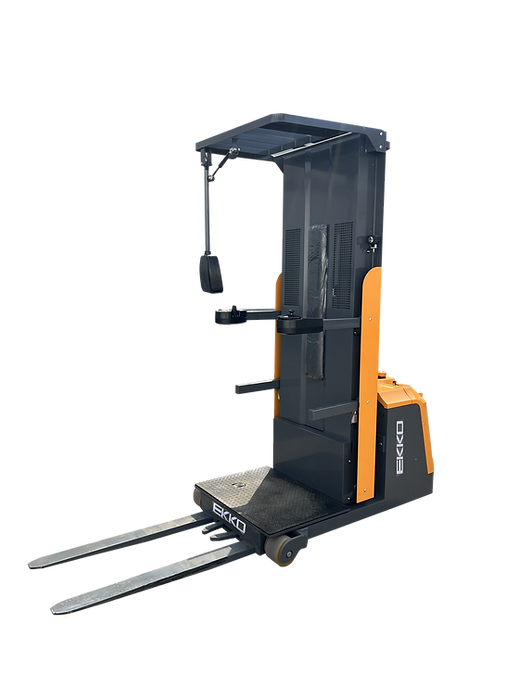
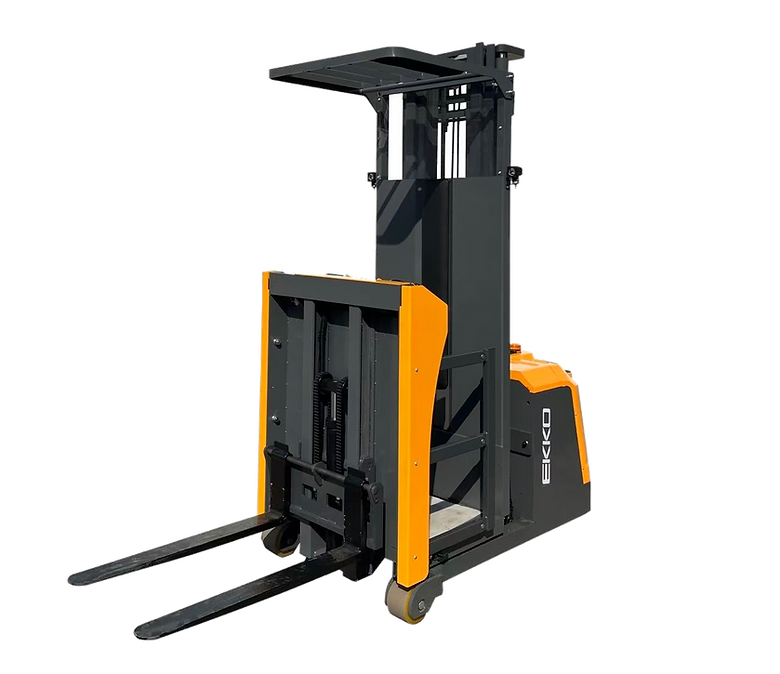
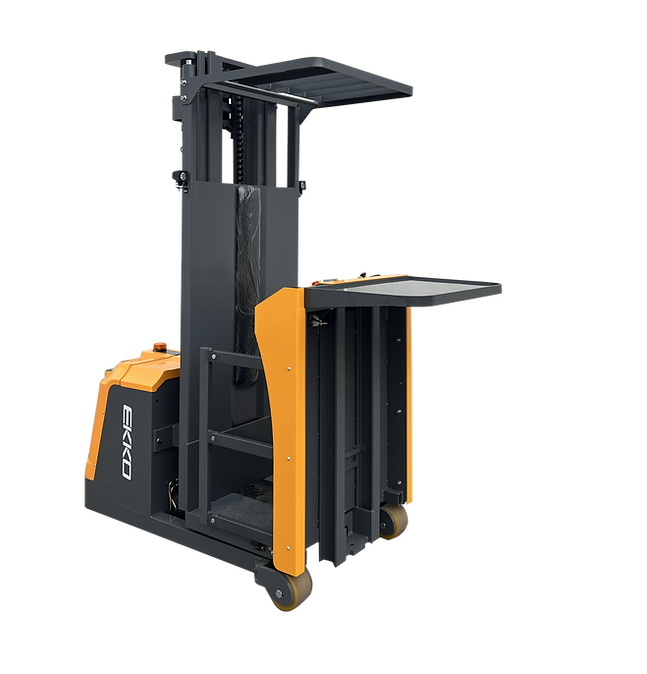
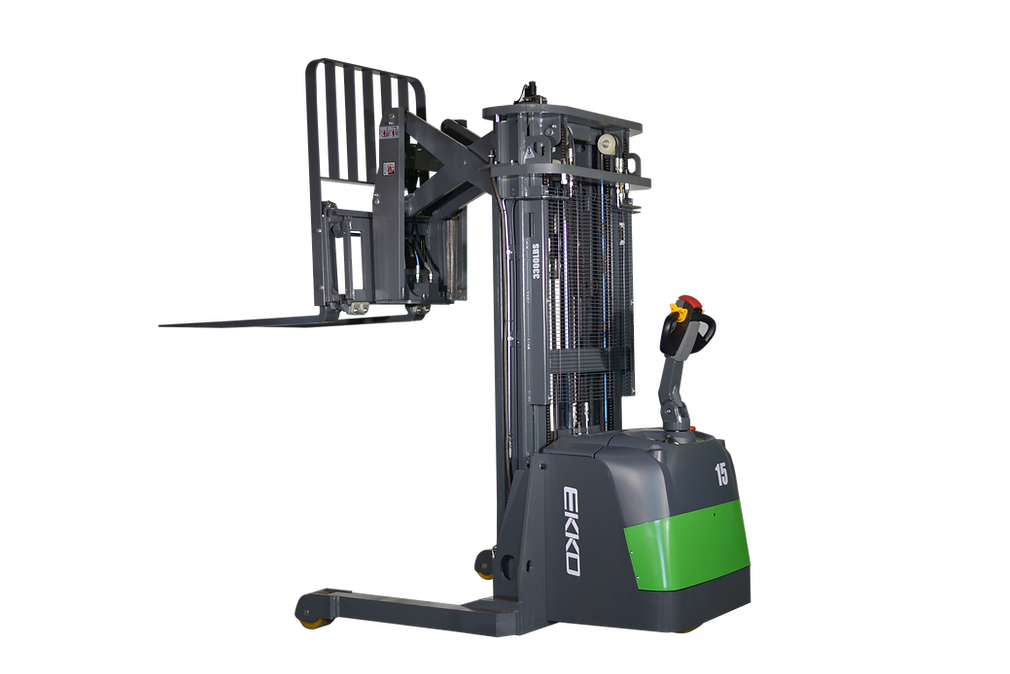
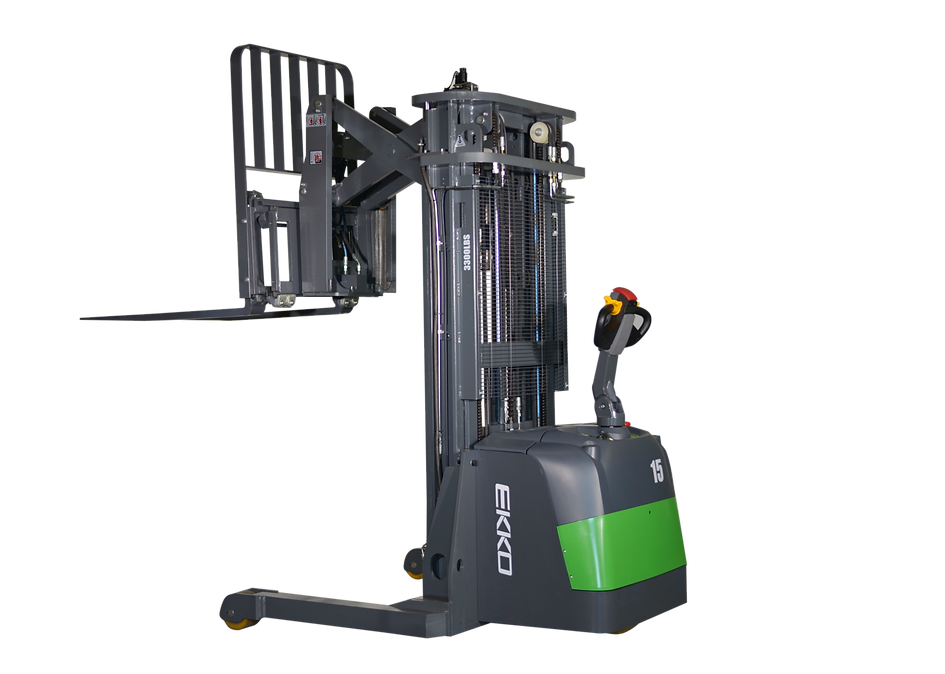
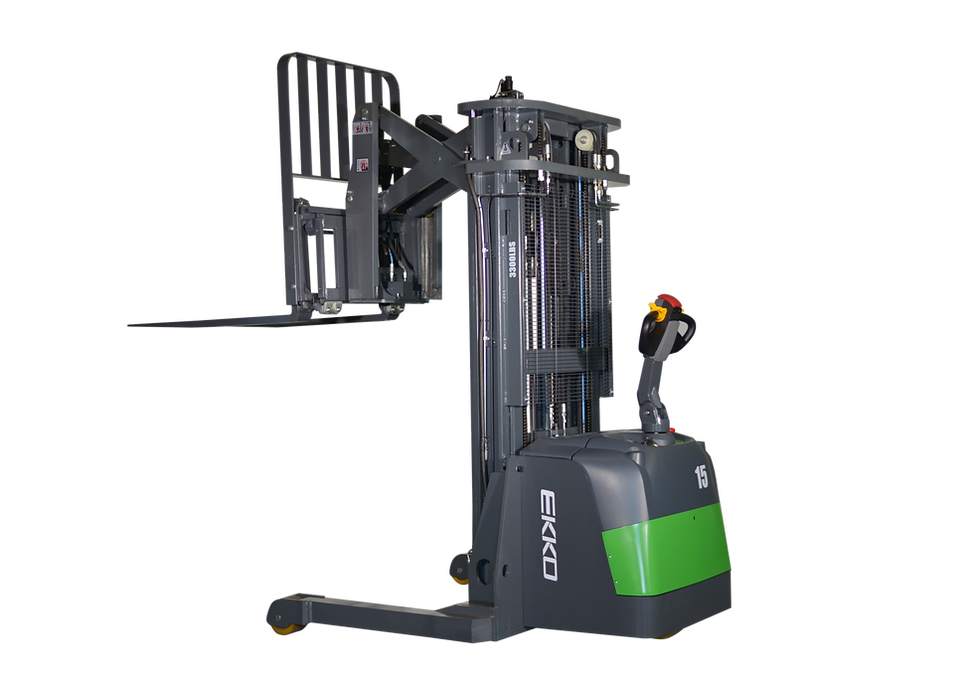
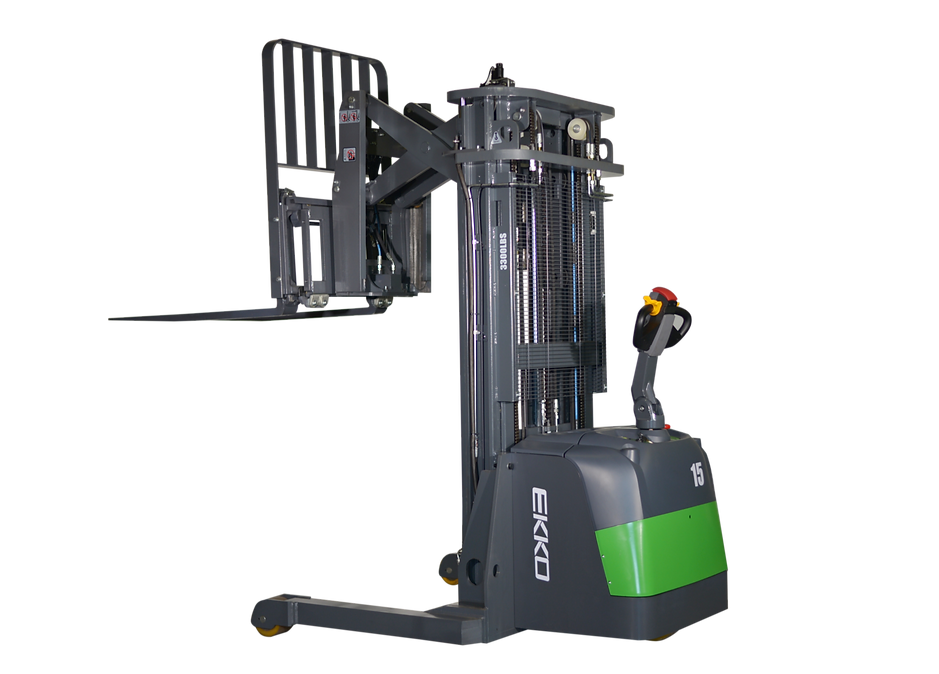
Reach trucks and order pickers: the narrow-aisle pair. EKKO's reach trucks use a pantograph, a scissoring mechanism that pushes the forks forward into the rack and pulls the load back over the wheelbase for travel. Baselegs replace the counterweight, so the truck works aisles a counterbalance cannot and lifts higher, to about 18 ft on the top lithium model. These are pedestrian-controlled walkie reach trucks rated 3,300 lb, with li-ion versions for multi-shift duty. Order pickers solve the opposite job: instead of moving a whole pallet, they raise the operator up to the shelf to pick individual cases by hand. EKKO splits them into a low-level 220 lb picker that lifts the operator to roughly 165 inches and heavier 1,500 lb platforms that carry a pallet up alongside the picker. Rule of thumb: reach truck for putaway and pallet moves at height, order picker for hand-picking cases from that same racking.
Every one of these is a powered industrial truck. Every truck on this page is a powered industrial truck under OSHA 29 CFR 1910.178, so 1910.178(l) requires each operator to be trained and evaluated before running one, with a re-evaluation at least every three years. The certification is specific to the truck type and to your workplace, so a reach truck operator is not automatically cleared to run a sit-down LPG truck. Order pickers add a second rule: because the operator rides the platform up, OSHA requires fall protection whenever the platform is elevated, which means a full-body harness and lanyard clipped to the machine's anchor point. Budget the training and the harness alongside the truck, and keep the records, because operator certification is one of the first things an inspection asks to see.
Capacity, tires, and floors. Rate the truck to your heaviest real load with margin, and remember that rated capacity drops as the mast goes higher and as the load center moves away from the backrest, so read the truck's capacity plate rather than the headline number. Tires decide where it runs: cushion tires sit low and turn tight on smooth sealed concrete, while pneumatic tires roll over gravel, broken asphalt, and yard surfaces, which is why EKKO offers both cushion and pneumatic builds across the LPG range. Check aisle width and turning radius against your layout before buying any counterbalance truck, measure door and ceiling heights against both the lowered and the raised mast, and confirm the floor can carry the wheel loads. Round up when you land between sizes, because an underbought forklift bottlenecks the whole operation and gets traded within a year.
Frequently Asked Questions
Match the power to the environment. Battery-electric makes no exhaust and suits enclosed warehouses, food storage, and indoor shifts. LPG is the flexible middle: it runs indoors with adequate ventilation and outdoors freely, and refuels in minutes by swapping the propane tank. Diesel gives the most torque for outdoor yards and rough ground, but its exhaust builds up fast indoors, so keep it outside or in wide, open bays.
A sit-down counterbalance forklift carries the load out front and balances it with a rear counterweight, so it needs wider aisles and lifts to around 240 inches. A reach truck drops the counterweight for baselegs and uses a pantograph to push the forks into the rack, so it works much narrower aisles and lifts higher, to about 18 ft on EKKO's top model. Tall, dense racking points to the reach truck; general floor and dock work points to the counterbalance.
Yes, with adequate ventilation. OSHA allows internal combustion trucks, including propane units, to operate indoors as long as ventilation prevents exhaust from building to dangerous levels. Propane burns cleaner than diesel, which is why LPG is the common indoor-outdoor choice, but it still produces carbon monoxide, so it is not a substitute for a battery-electric truck in a tightly enclosed space.
Yes. Every truck here is a powered industrial truck under OSHA 29 CFR 1910.178, and 1910.178(l) requires documented training and evaluation before anyone operates one, with a re-evaluation at least every three years. The certification is tied to the truck type and the workplace. Order pickers carry an extra requirement: fall protection, a full-body harness and lanyard tied to the platform anchor, whenever the operator is elevated.
A reach truck moves whole pallets into and out of racking at height. An order picker raises the operator up to the shelf to pick individual cases by hand. If you store and retrieve full pallets, buy the reach truck. If workers pick loose cartons from upper racking all day, buy the order picker, and plan on the harness that OSHA requires when it lifts.
Start with your heaviest real load and add margin, then check the truck's capacity plate rather than the headline rating, because rated capacity falls as the mast rises and as the load center moves out. EKKO's range covers 220 lb order pickers, 3,300 to 4,000 lb reach and rider trucks, and counterbalance trucks from 3,500 lb up to a 10,000 lb LPG model. When you land between sizes, round up.