Floor Locks
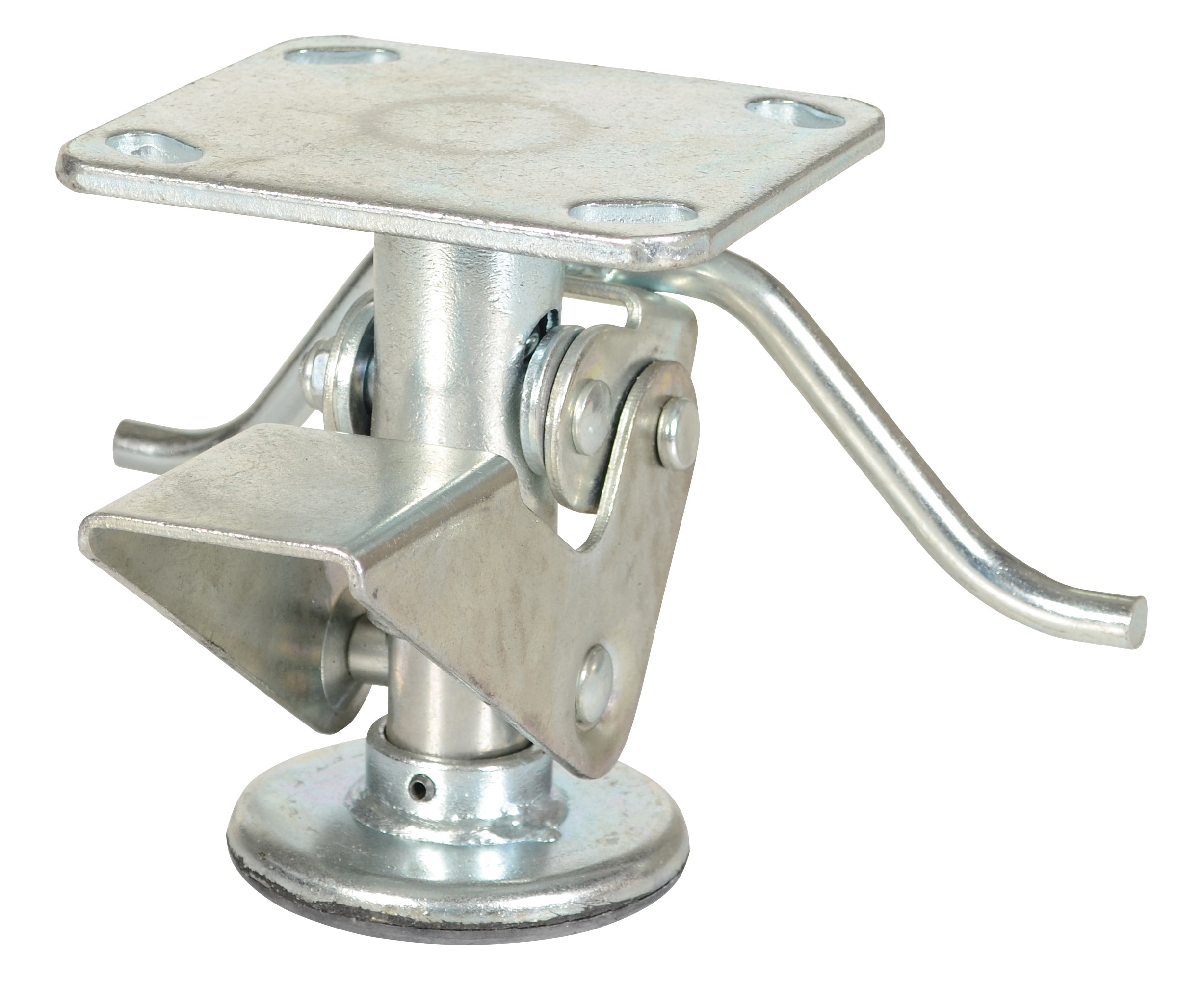
Floor locks keep a caster-mounted cart, workbench, or platform from rolling or creeping while someone loads it, unloads it, or works at it. The lock bolts to the frame between the casters, and a spring-loaded foot pad drops to the floor when you press the pedal, adding the friction that swivel casters cannot hold on their own. This collection is built around Vestil's floor lock range, from economical zinc-plated units around $20 to adjustable-height and stainless models near $180, plus a low-profile lock for carts that ride close to the ground. The polyurethane models add a thermoplastic base for extra grip and wear life. Alongside them sit Vestil basement floor jacks, telescoping steel columns for supporting and leveling floor beams and joists, a different job that shares the levelling name. Match the lock to your caster size first, then to how the equipment mounts and where it has to work.
Floor Locks & Levelling Jacks Buying Guide
What a floor lock actually does. A floor lock is a stabilizer, not a brake and not a lift. It presses a friction pad against the floor so a parked cart stops jostling under hand pressure while you load, weld, or assemble on it. That makes it the right hardware for industrial carts and dollies, mobile workbenches, and rolling lift tables that need to sit still on demand and then move again. It does nothing for a cart already rolling, and it will not hold a load on a grade, so treat it as a park-and-hold device. Placement matters as much as the model: on a standard four-caster cart, two locks at diagonal corners give balanced hold, and a long platform wants one at each end. Engage every lock you fit, because a single corner left free lets the cart pivot around it.
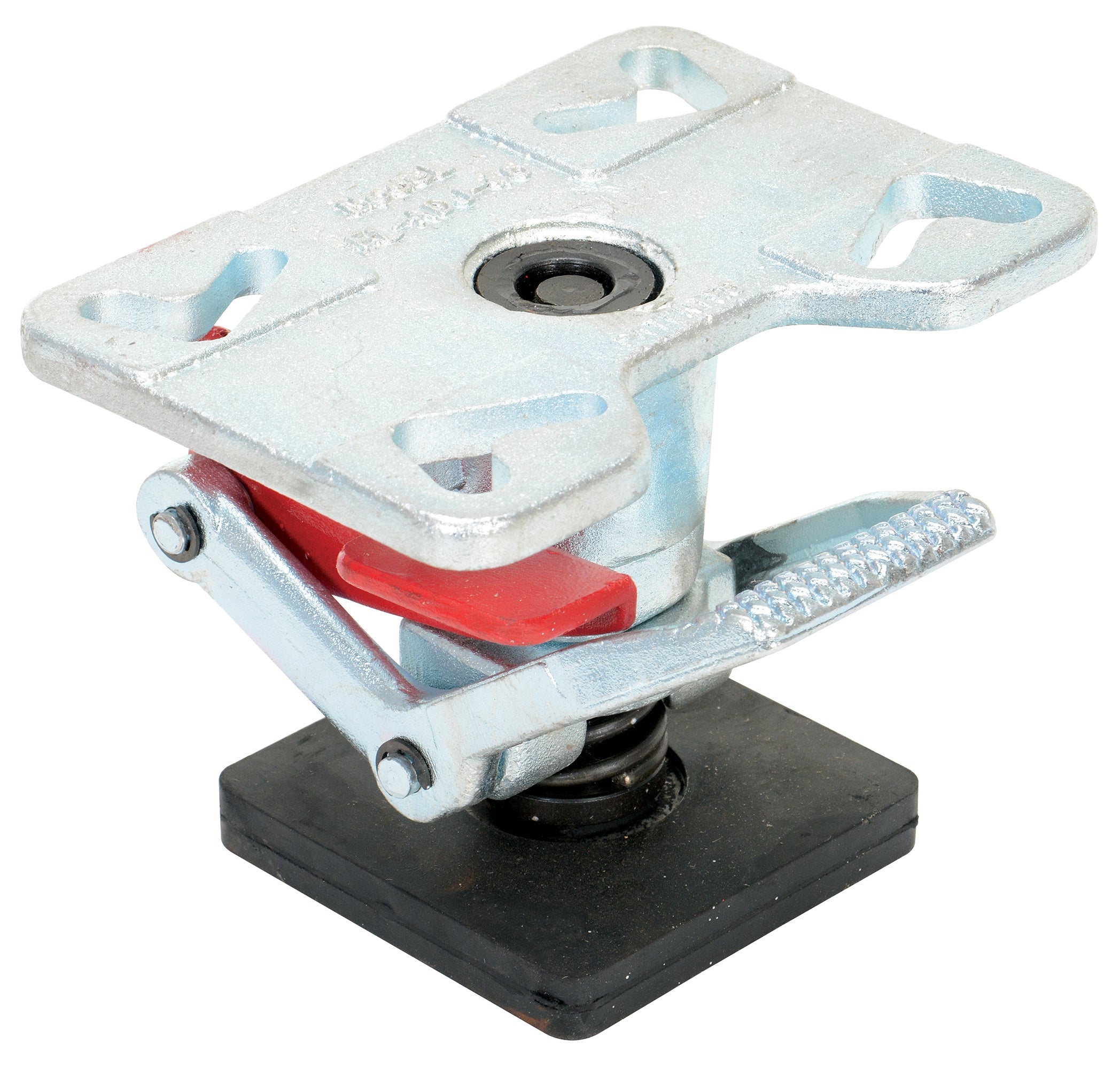
Size the lock to your caster. The pad has to reach the floor at the height your casters set, so caster size is the first number to match. The economical floor locks come sized to 4, 5, 6, and 8 inch caster diameters, one part number per size, and run about $20 to $26. The polyurethane models cover 3 through 8 inch casters. If a single cart fleet runs mixed caster heights, or you standardize on one lock across carts that are not identical, the adjustable-height floor lock spans a range instead of a fixed size, either 4 to 6 inch or 6 to 8 inch casters, and its foot pad tunes by turning the bottom pad. That adjustment also lets you keep the locking force consistent as the spring and pad wear, which fixed units cannot do.
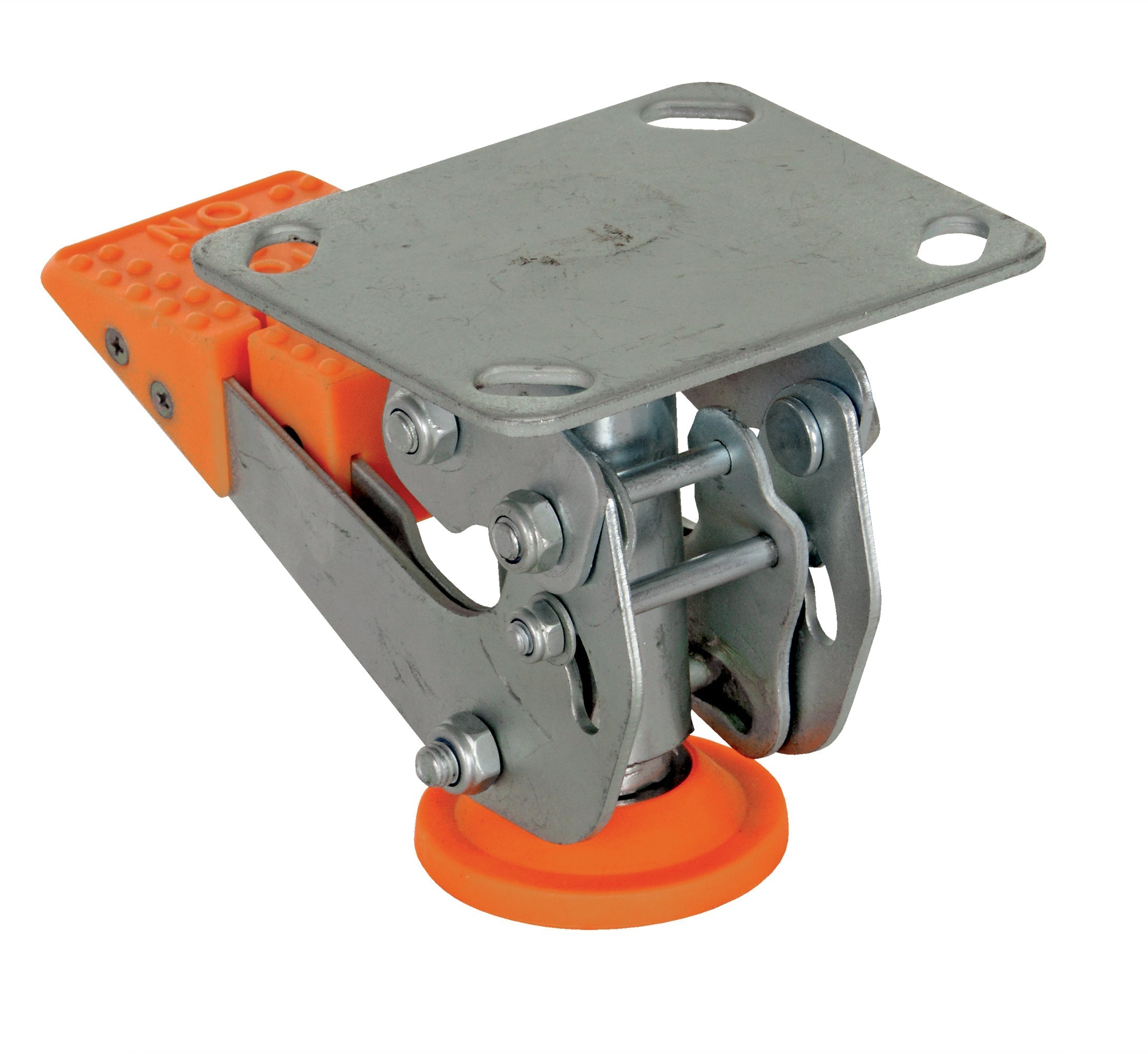
Foot pad material and grip. Cheaper is fine on smooth, dry concrete. The economical locks use a non-skid rubber pad on zinc-plated steel and hold a bench or cart in a clean shop for the least money. Where the floor is dusty, damp, or takes real side loads, the polyurethane locks put a thermoplastic polyurethane base under the same steel body, which grips harder and wears longer than rubber. The adjustable-height model adds suction cups on its bottom pad for extra bite, and it is built on heavier cast and steel construction for daily production use. To engage any of them you set the cart near the caster you want to pin, then press the foot pedal until the spring builds tension and the pad loads against the floor.
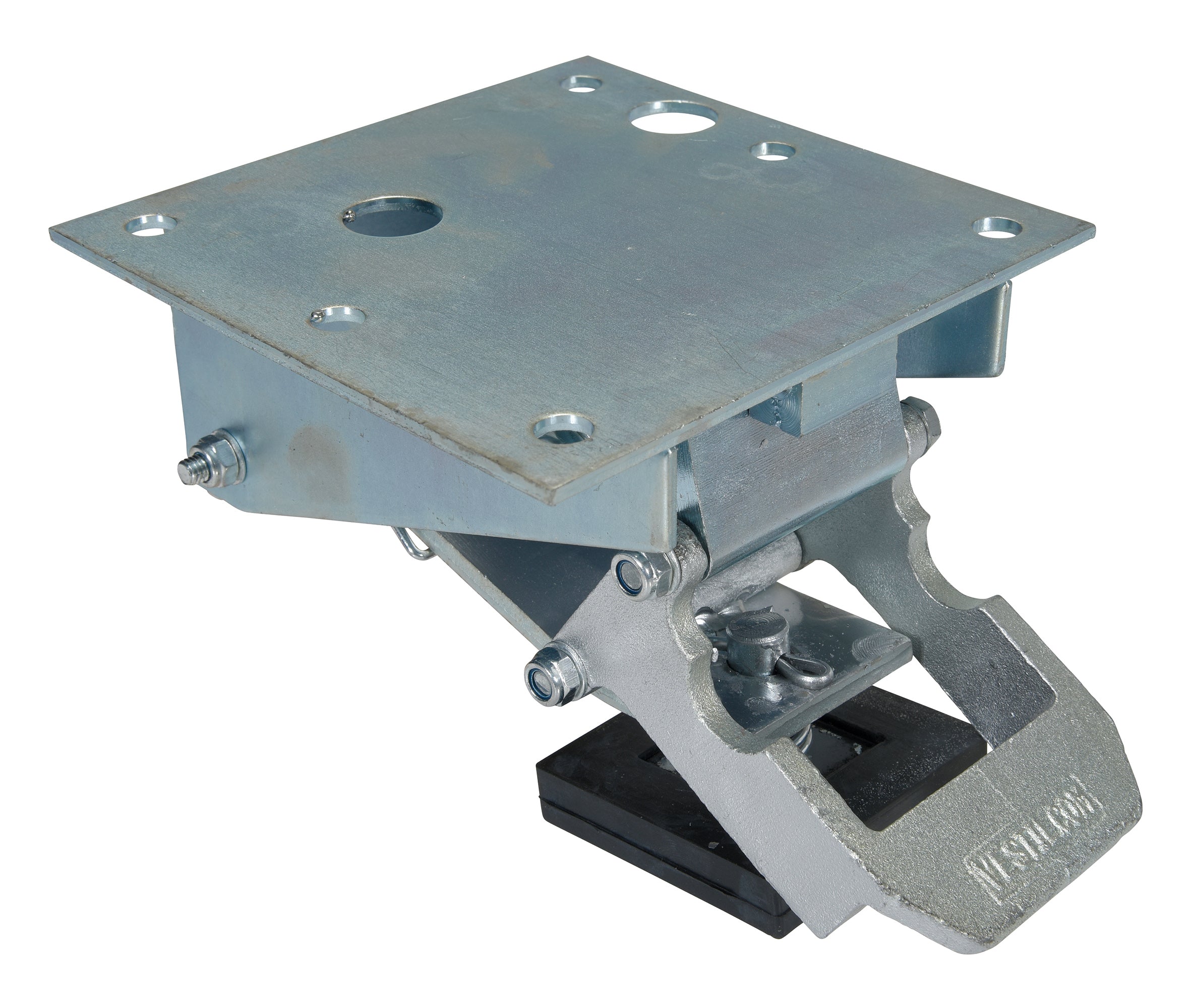
Profile and how it mounts. Most floor locks stand a few inches tall and bolt to the cart frame between the casters. When the deck rides low and there is no room for a standard body, the low-profile floor lock is the lowest-profile unit on the market, built on heavy cast construction with the same adjustable-height pad, and it bolts to the underside of the cart. It is foot operated like the rest. The polyurethane range also lets you pick where the release sits, middle or side, so the pedal lands where an operator's foot can reach it without crouching under the load. Decide the pedal position and the mounting height against how your crew approaches the cart, because a lock nobody can reach at a glance gets left disengaged.
Steel or stainless. Standard floor locks are zinc-plated or painted steel, which is all a dry indoor plant needs. Washdown areas, food and pharmaceutical lines, and anywhere the lock takes regular chemical or moisture exposure call for stainless, and the adjustable-height lock offers a stainless build for exactly that. Expect to pay for it: the stainless adjustable units run near $170 to $180 against about $55 to $60 for the same lock in plated steel. Buy stainless only where corrosion would actually take out a plated unit, and keep the cheaper finish everywhere else.
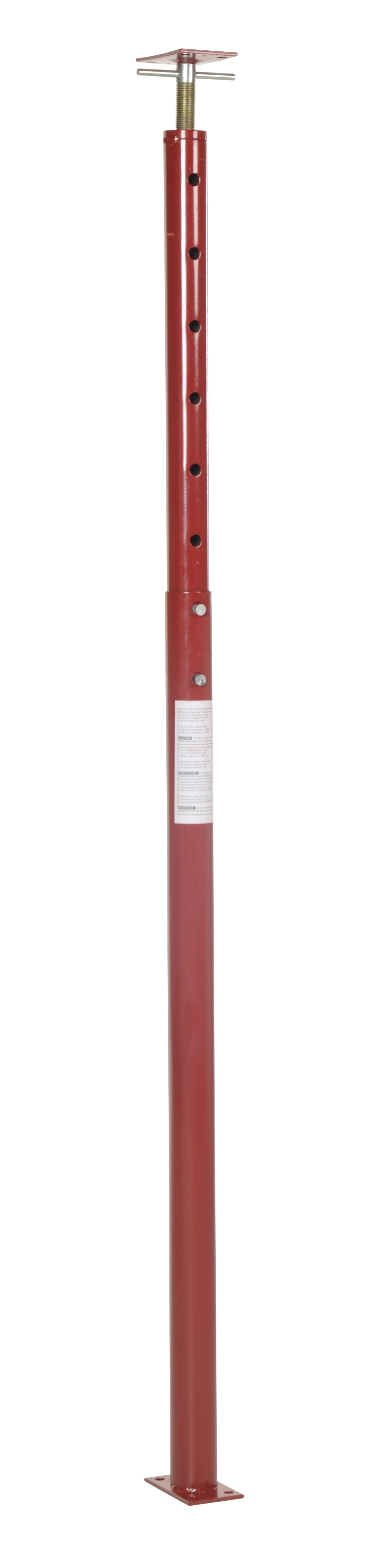
Levelling jacks are a different tool. The basement floor jacks in this collection share the shelf but not the job. These are telescoping all-welded steel columns, red oxide finish, that provide support for leveling and stabilizing floor beams and joists during construction and repairs. You set the rough height with removable pins, then fine-tune with the turning bar. Height ranges span short cribbing jacks that adjust from 12 to 16 inches up through tall posts that reach 100 and 150 inches, priced from about $35 to $95. They are shoring hardware for a floor system, not a lifting jack for a load, and not related to caster stabilization at all. If you need a hydraulic unit to raise a machine or a vehicle, that lives in hydraulic jacks and rams. For a permanent structural column rather than temporary support, confirm the load rating and check local building code before you leave one in place.
Frequently Asked Questions
On a standard four-caster cart, fit two locks at diagonal corners for balanced hold. A long or heavy platform benefits from one lock at each end, or one at all four corners for maximum stability. Whatever you install, engage every lock when you park, since one free corner lets the cart pivot around it.
No. A floor lock lowers a spring-loaded friction pad to the floor and holds the equipment stationary against hand pressure. The casters stay in contact with the ground. It is a stabilizer for a parked cart, not a jack, so it does not raise the load or take weight off the wheels.
Match the lock to your caster diameter. Vestil's economical locks come in fixed 4, 5, 6, and 8 inch sizes, and the polyurethane models cover 3 through 8 inch. If your carts run mixed or nonstandard caster heights, the adjustable-height floor lock spans a 4 to 6 inch or 6 to 8 inch range and tunes by turning the bottom pad.
No. A floor lock is a park-and-hold device, so bring the cart to a stop first, then step on the pedal. It adds friction to keep a stationary cart from jostling or creeping under hand pressure, and it is not built to stop a rolling load or hold one on a slope.
No. Floor locks stabilize caster-mounted carts and benches. Basement floor jacks are telescoping steel columns that support and level floor beams and joists during construction and repairs, adjusted by removable pins and a turning bar. They share the levelling name in this collection but do completely different jobs.