Hoist Accessories
Hoist accessories are the parts that turn a bare electric hoist into a working overhead system: the trolley that carries it along the beam, the pendant or radio remote that runs it from the floor, the end stops that keep it on the track, and the load testers that prove it still lifts what its nameplate claims. This collection pairs with the powered units in electric hoists, and it splits into three jobs. Carry the hoist across the beam, which is trolleys, from hand-push and geared models up through motorized, food-grade, and air-powered versions. Control it from a safe distance, which is the weather-resistant Duct-O-Wire pendants and the Bison radio remotes. And keep it honest, which is the Harrington static and dynamic hoist testers plus the beam end stops that belong on every runway. Brands run Bison on the value end, Harrington on the industrial and food-grade end. Prices start under two hundred dollars for a push trolley and climb past forty thousand for a test rig.
Shop Electric Hoist Accessories by Category
Compare Electric Hoist Accessories
| Model | Price | Capacity | |
|---|---|---|---|
| Harrington MCR Air Powered Trolley for TCK Series | $9,649 | 3-6 ton | View → |
| Harrington MCL Lube-Free Air Powered Trolleys | $8,579 | 1-6 ton | View → |
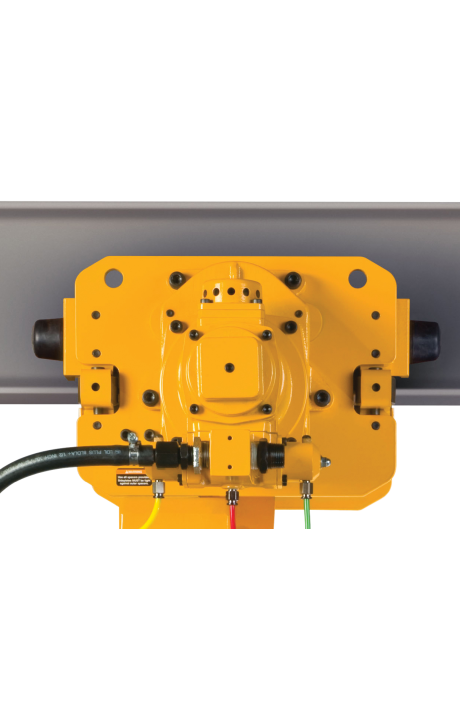
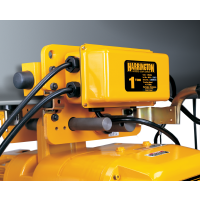
| Harrington MR-FG Dual Speed Food Grade Motorized Trolley | $7,084 | 1-2 ton | View → |
| Harrington SMRQ 1Ph Dual Speed Motorized Trolley | $7,023 | — | View → |
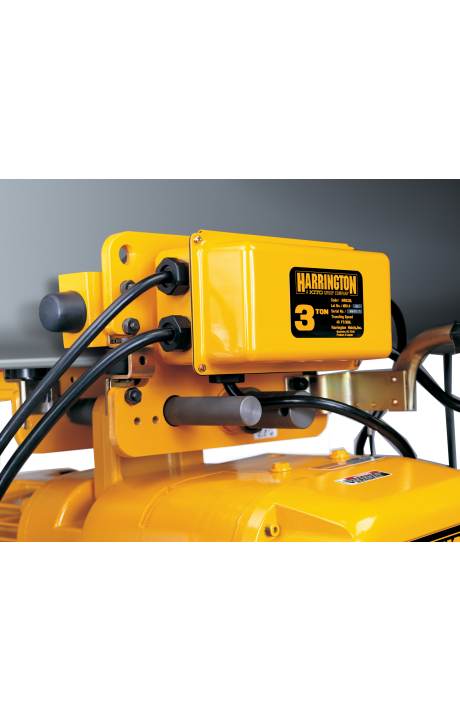
| Harrington SMR Single Phase Motorized Trolley | $6,046 | 1/4-3 ton | View → |
| Harrington MR Single Speed Motorized Trolley | $5,317 | 1-5 ton | View → |
 In Stock
 In Stock
 In Stock
 In Stock
 In Stock
 In Stock
 In Stock
 In Stock
 In Stock
 In Stock
 In Stock
 In Stock
 In Stock
 In Stock
 In Stock
 In Stock
 In Stock
 In Stock
Electric Hoist Accessories Buying Guide
Three jobs: carry the hoist, control it, and prove it. Everything on this page supports a hoist rather than lifting on its own, and it sorts into three groups. The trolley carries the hoist along an I-beam so the load can travel across the bay instead of going straight up and down in one spot; it is the accessory most buyers come here for and has the most choices. The controls, pendants and radio remotes, put the operator at a safe working distance from the load. The end stops and testers are the safety layer: end stops keep a trolley from rolling off the beam, and the Harrington load testers confirm a hoist still holds its rating after service. Most of these parts hang off the powered units in electric hoists, so pick the hoist and how it mounts first, then match the accessories to it.
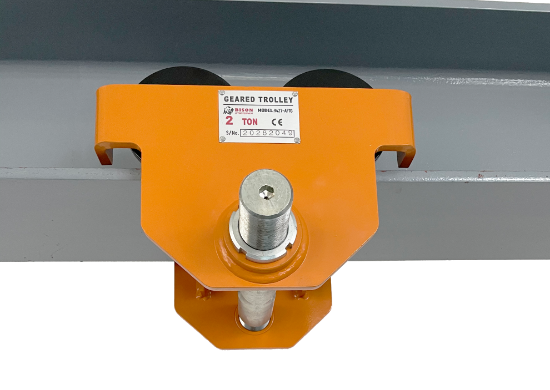
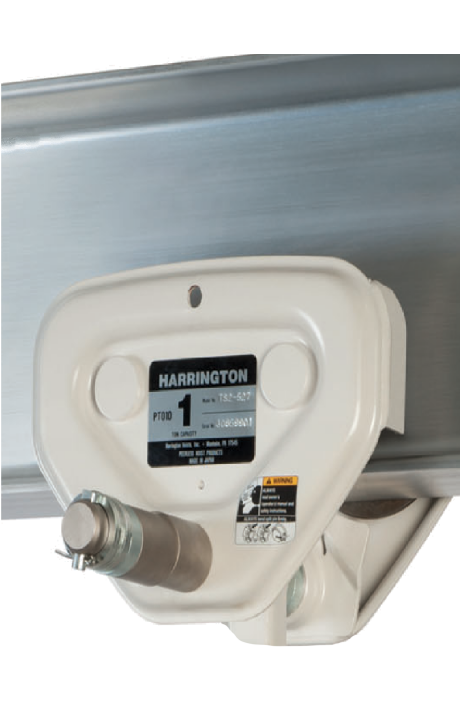
Fit the trolley to the beam before you look at anything else. A trolley rides the lower flange of an I-beam, so the first spec is flange width, not capacity. Every trolley here adjusts across a range, and the beam has to fall inside it. The Bison ATP low-headroom trolleys come in a plain push version from about $180 and a geared version from about $230, both rated 0.5 through 5 ton, with fit ranges that run from roughly 2 to 12 inches of flange depending on capacity. Measure the actual flange width of your runway, confirm it sits inside the trolley's range, and only then check that the trolley rating covers the hoist plus its heaviest load. If your hoist hangs from a fixed hook instead of a beam, skip the trolley and see suspension points. Flange width is the most common ordering mistake here, because a trolley that will not clamp your beam is useless no matter how strong it is.
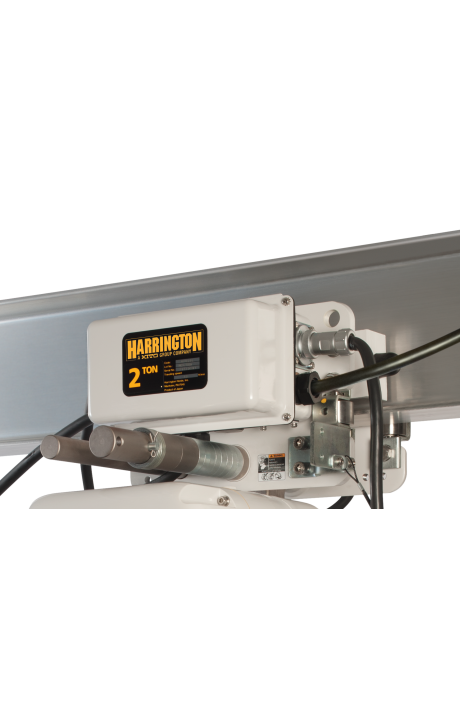
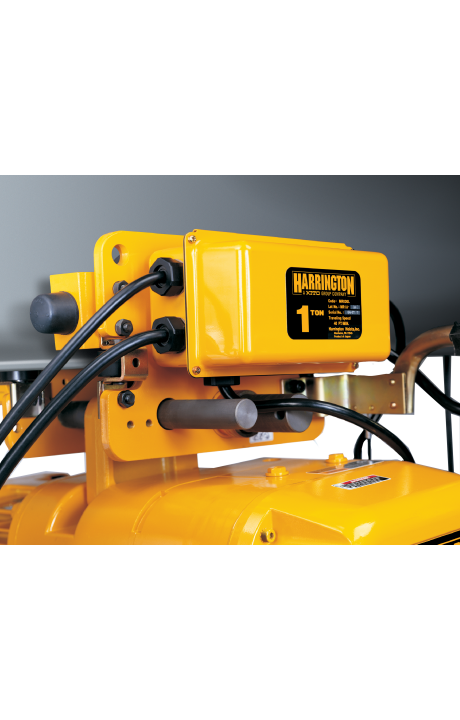
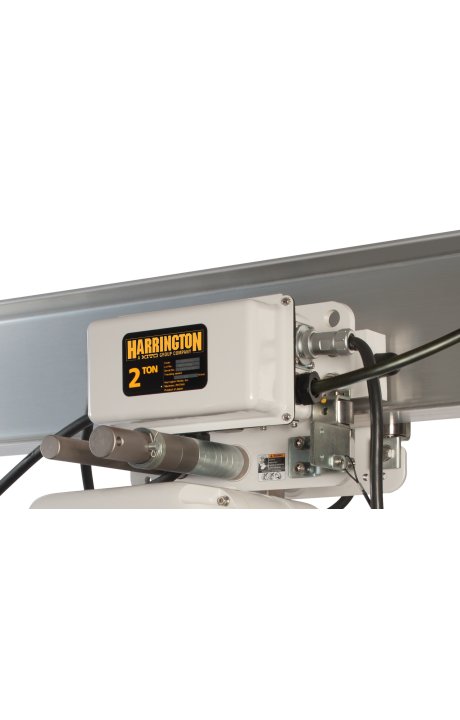
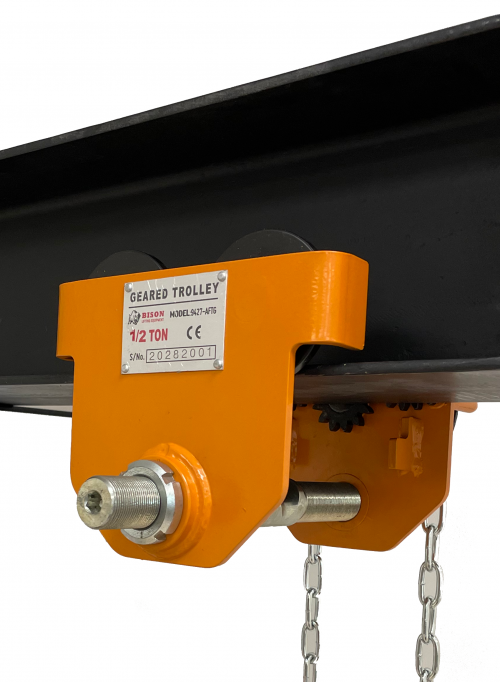
Push, geared, or motorized. Three ways move a trolley along the beam. A push trolley rolls when the operator shoves the load by hand, fine for light loads, short beams, and occasional moves. A geared trolley adds a hand chain and gearing so one person can inch a heavy load precisely without fighting it, the right pick when positioning matters or the load is too heavy to push. A motorized trolley drives itself, and it earns its price on long runways, heavy loads near the trolley's rating, and all-shift duty. Harrington's motorized units cover the powered end: the MR single-speed runs 1/8 through 5 ton from around $5,300, the SMR single-phase model suits shops without three-phase power, and the SMRQ adds dual-speed travel so the trolley creeps for spotting and runs fast between picks. The same push and geared trolleys also carry the hand-chain and lever units in manual hoists and trolleys.
Specialty trolleys: food grade and air powered. Two families solve harder environments. Food-grade trolleys carry nickel-plated or white-epoxy finishes and food-safe details for wet, washdown processing and packaging lines: Harrington's PT-FG push trolley starts around $1,150, and the MR-FG motorized trolley comes single- or dual-speed for the same clean-plant duty. Air-powered trolleys trade the electric motor for compressed air, which suits high duty cycles that would cook an electric unit and, with spark-resistant components, hazardous locations where an electric arc is a problem. The Harrington MCL lube-free air trolley covers 1/4 through 6 ton, and the MCR is built to travel Harrington's TCK air hoists. These are five-figure machines, so buy them for the environment that demands them, food safety, continuous running, or an explosive atmosphere, not as a general upgrade.
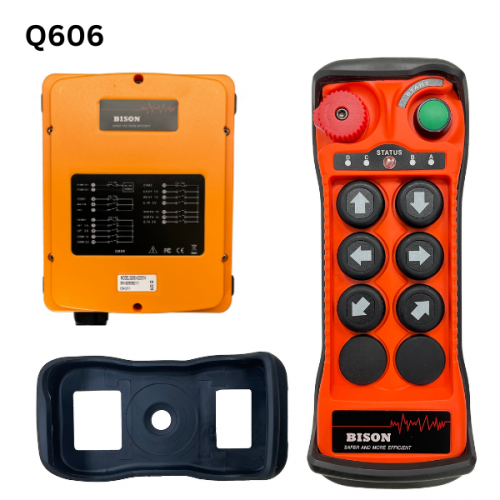
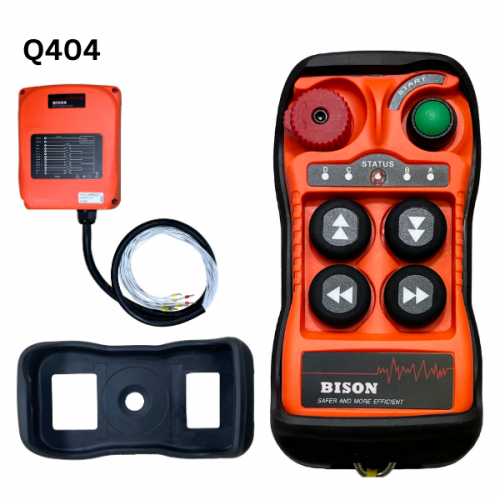
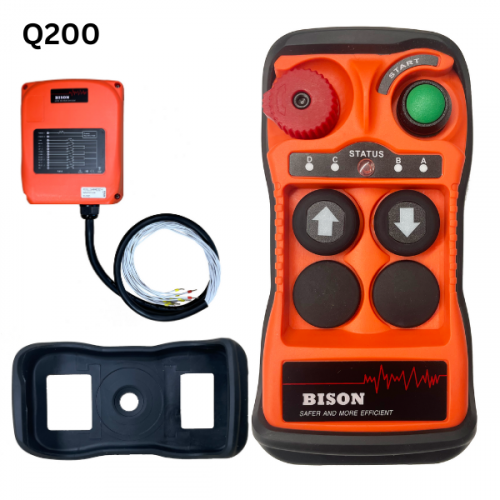
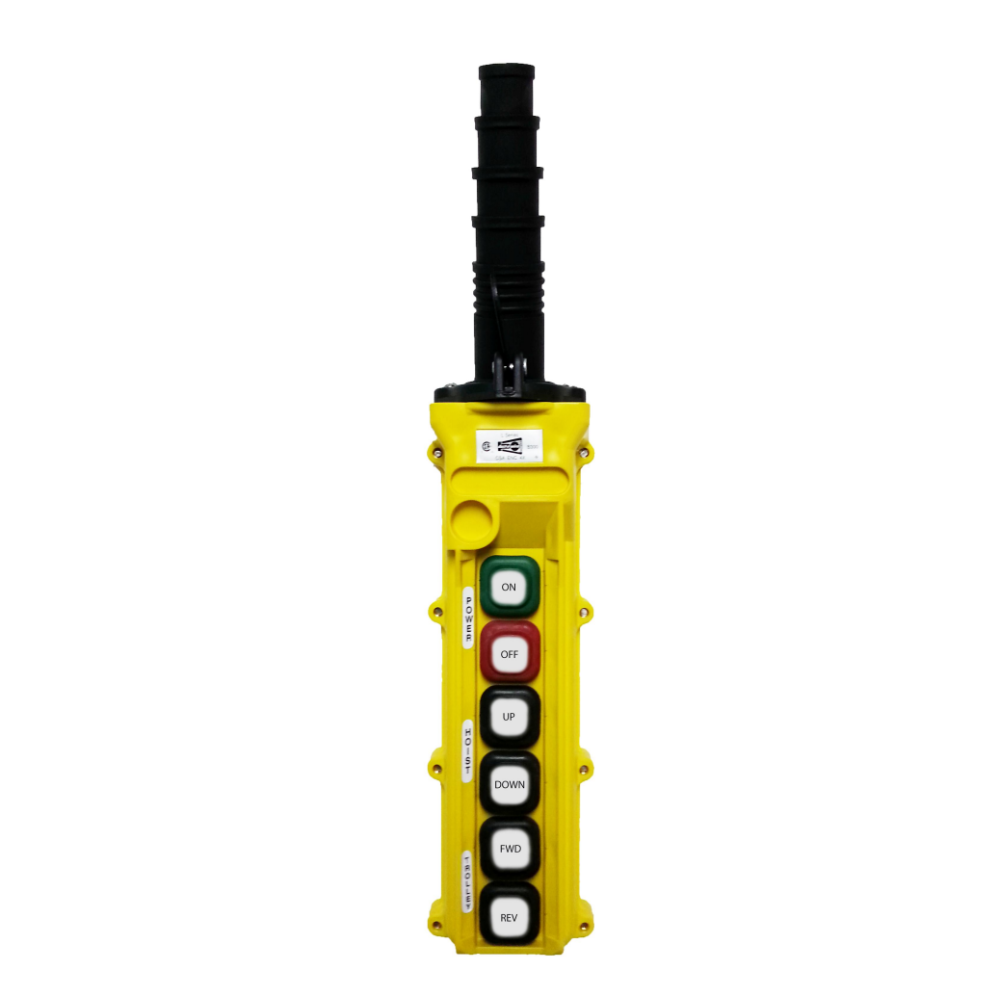
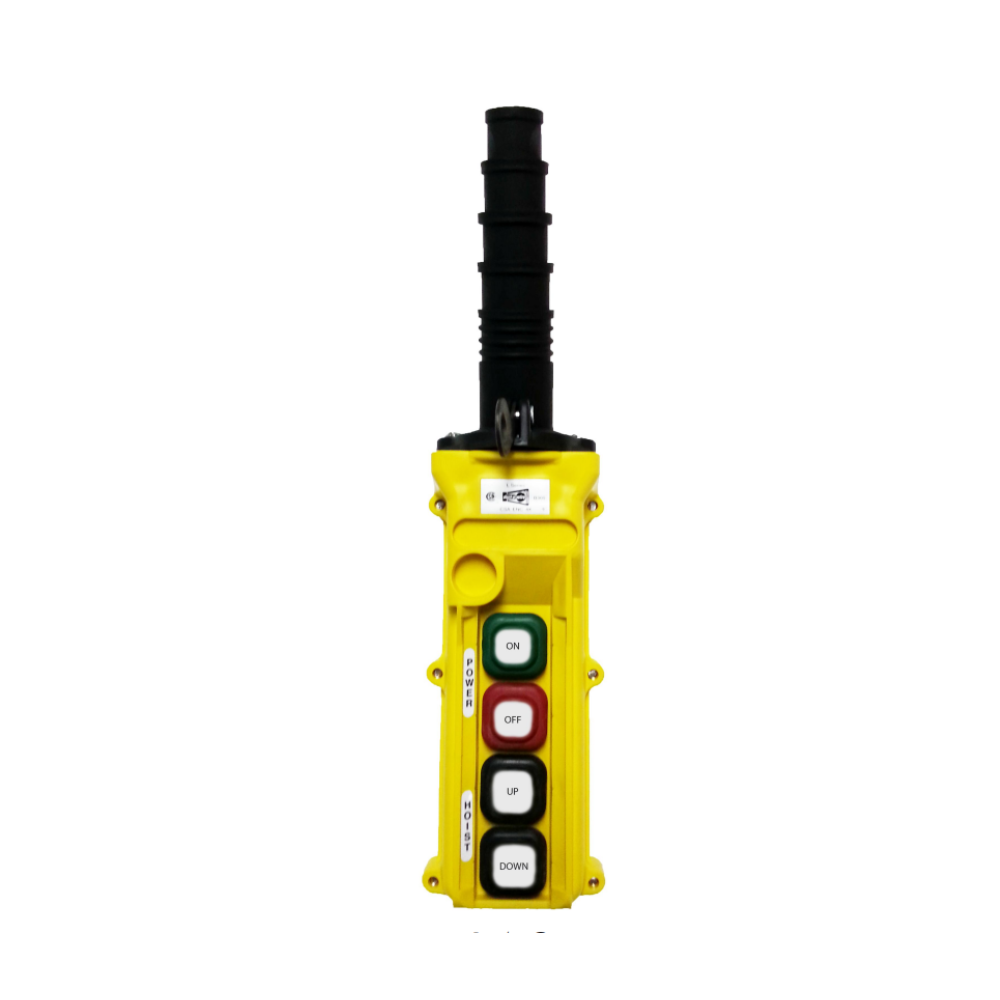
Run the hoist from the floor: pendants and radio remotes. A pendant is a wired push-button station that hangs from the hoist; a radio remote cuts the cord so the operator can stand clear of the load and see the whole lift. The Duct-O-Wire weather-resistant pendants come in a two-motion up/down build from about $225 and a four-motion up/down, left/right build from about $310, both in sealed enclosures rated for outdoor and washdown use. The Bison radio remotes step up by how many motions your system has: a hoist-only remote from about $570 runs a fixed hoist, the hoist-and-trolley remote adds beam travel, and the hoist, trolley, and bridge remote drives a full underhung crane that moves in all three axes, the kind of monorail and underhung crane covered by ASME B30.11. Each comes single- or dual-speed. Buy the remote that matches your crane's motions exactly, no more and no fewer.
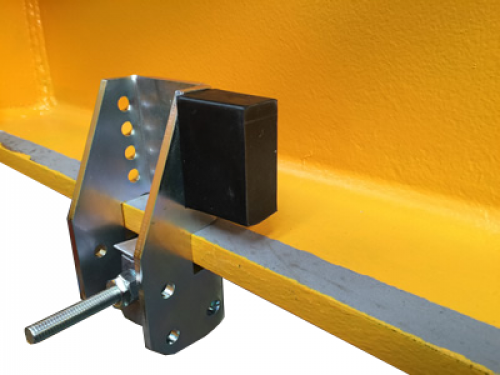
End stops and the load-test rigs that keep a hoist honest. Two safety items close out the collection. The universal beam trolley end stops bolt to the ends of a runway and physically stop a trolley from rolling off the beam; the ones here fit flange widths from about 3 to nearly 25 inches, and a runway without them is an accident waiting on the first hard stop. The Harrington static and dynamic hoist testers are shop equipment for dealers and service departments that certify hoists: the static tester load-tests manual hoists to 10 ton, and the dynamic tester runs manual and electric hoists under load. That matters because ASME B30.16, the standard covering overhead underhung hoists, ties testing to a hoist's life. A hoist is load-tested before first use and again after any repair to a load-bearing part, with the test load set between 100 and 125 percent of rating by a qualified person.
Frequently Asked Questions
Measure the width of the lower flange on your I-beam and match it to the trolley's stated fit range. The Bison ATP trolleys adjust across a span, and your flange has to fall inside it, roughly 2 to 12 inches depending on the capacity you pick. Confirm the flange fit first, then confirm the trolley's rating covers the hoist plus its heaviest load. A trolley that will not clamp your beam is useless regardless of its capacity.
Push trolleys are cheapest and fine for light loads and short beams that you move by hand now and then. Geared trolleys use a hand chain for precise, low-effort positioning of heavy loads. Motorized trolleys drive themselves and pay off on long runways, heavy loads near the rating, and all-shift duty. Buy up the ladder as the load, the travel distance, and how often you move it increase.
They match how many motions your system has. A hoist-only remote runs a fixed hoist that only goes up and down. The hoist-and-trolley remote adds beam travel for a hoist on a monorail. The hoist, trolley, and bridge remote drives a full underhung crane that moves in all three axes. Pick the remote that matches your crane exactly, extra channels you do not use are wasted, and too few leaves a motion you cannot control.
Buy food-grade when the trolley lives on a wet washdown line in food processing or packaging, where the nickel plating and food-safe finish resist the corrosion that would eat a standard trolley. Buy air-powered when the duty cycle is high enough to overheat an electric motor, or when the area is classified as hazardous and a spark is a risk. Both cost far more than a standard electric trolley, so match them to a real requirement rather than buying them as a default upgrade.
Yes. End stops bolt to the ends of a runway and physically prevent a loaded trolley from rolling off the beam, which is a fall hazard the first time someone travels the hoist hard toward the end. They are inexpensive next to everything else on the runway, and they fit a wide range of flange widths, so there is no reason to run a beam without them.