Fall Protection Equipment
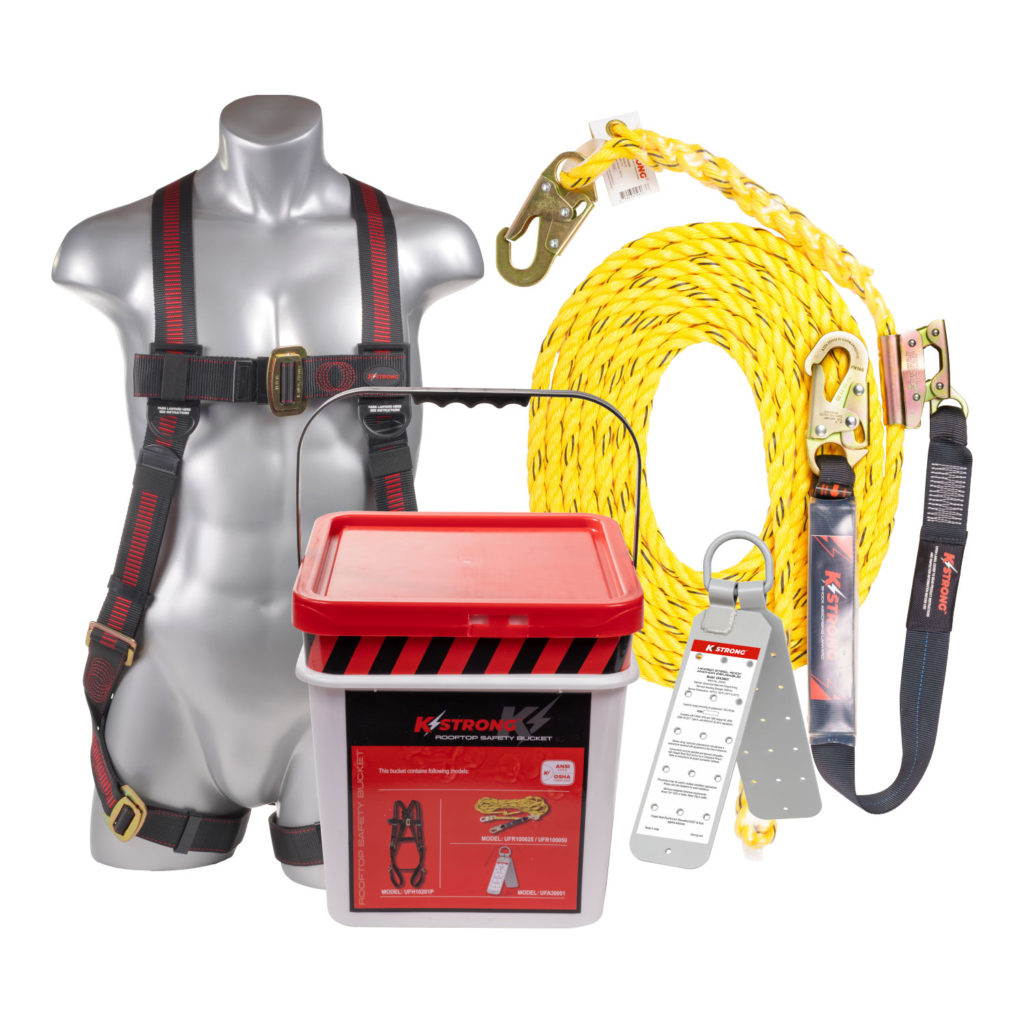
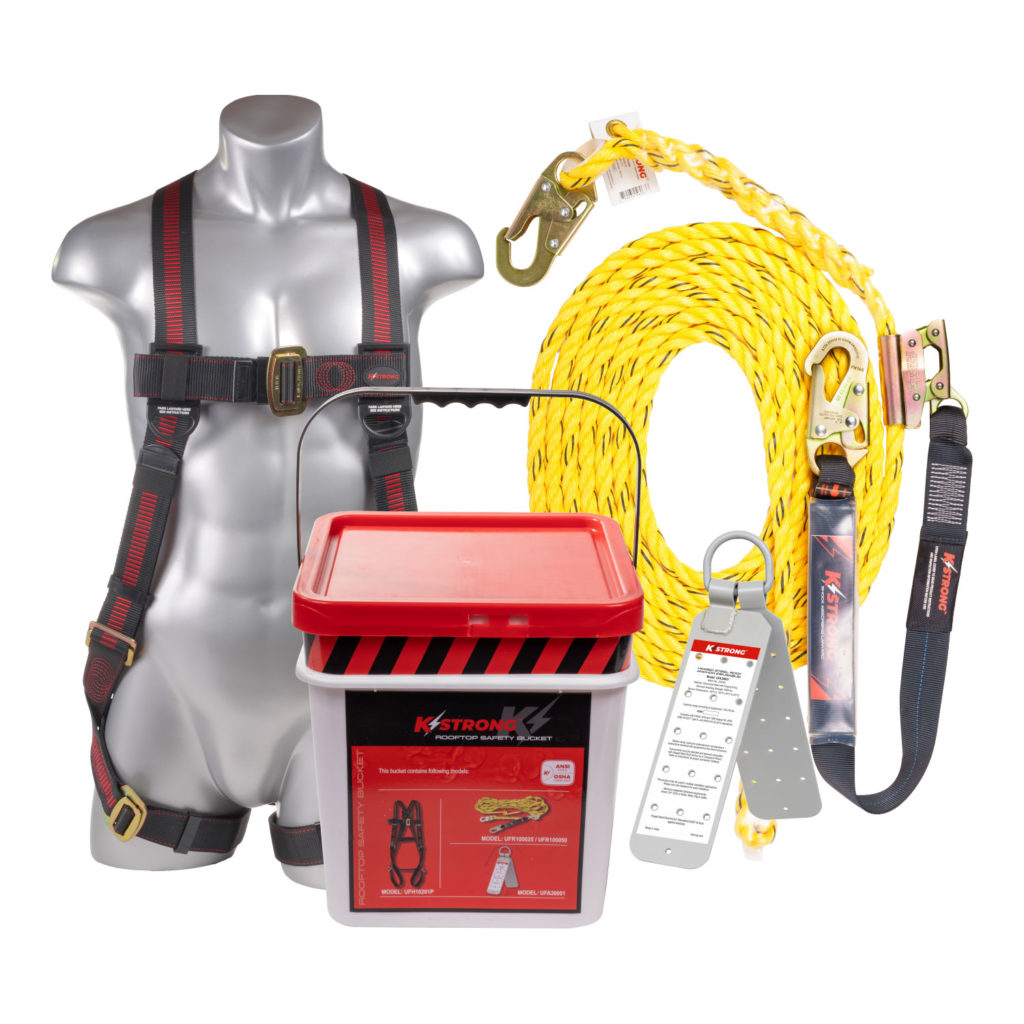
Fall protection equipment covers everything that keeps a slip at height from becoming a fatality: the harness on the worker, the lanyard or lifeline behind its D-ring, and the anchorage holding both. OSHA requires fall protection at 6 ft in construction and 4 ft in general industry, which puts nearly all elevated work inside this catalog. We carry the KStrong line end to end, Kapture full body harnesses, shock absorbing lanyards, Micron and Brute self-retracting lifelines, beam and concrete anchors, along with Globestock confined space tripods and personnel-rated winches, from a $4 carabiner to an $8,700 confined space kit. A fall arrest system is three components working as one, and a mismatch between them shows up only when the system is asked to do its job. The sections below walk the decisions in order and flag the OSHA and ANSI numbers to check before anyone leaves the ground.
Shop Fall Protection by Category
Compare Fall Protection
| Model | Price | Capacity | |
|---|---|---|---|
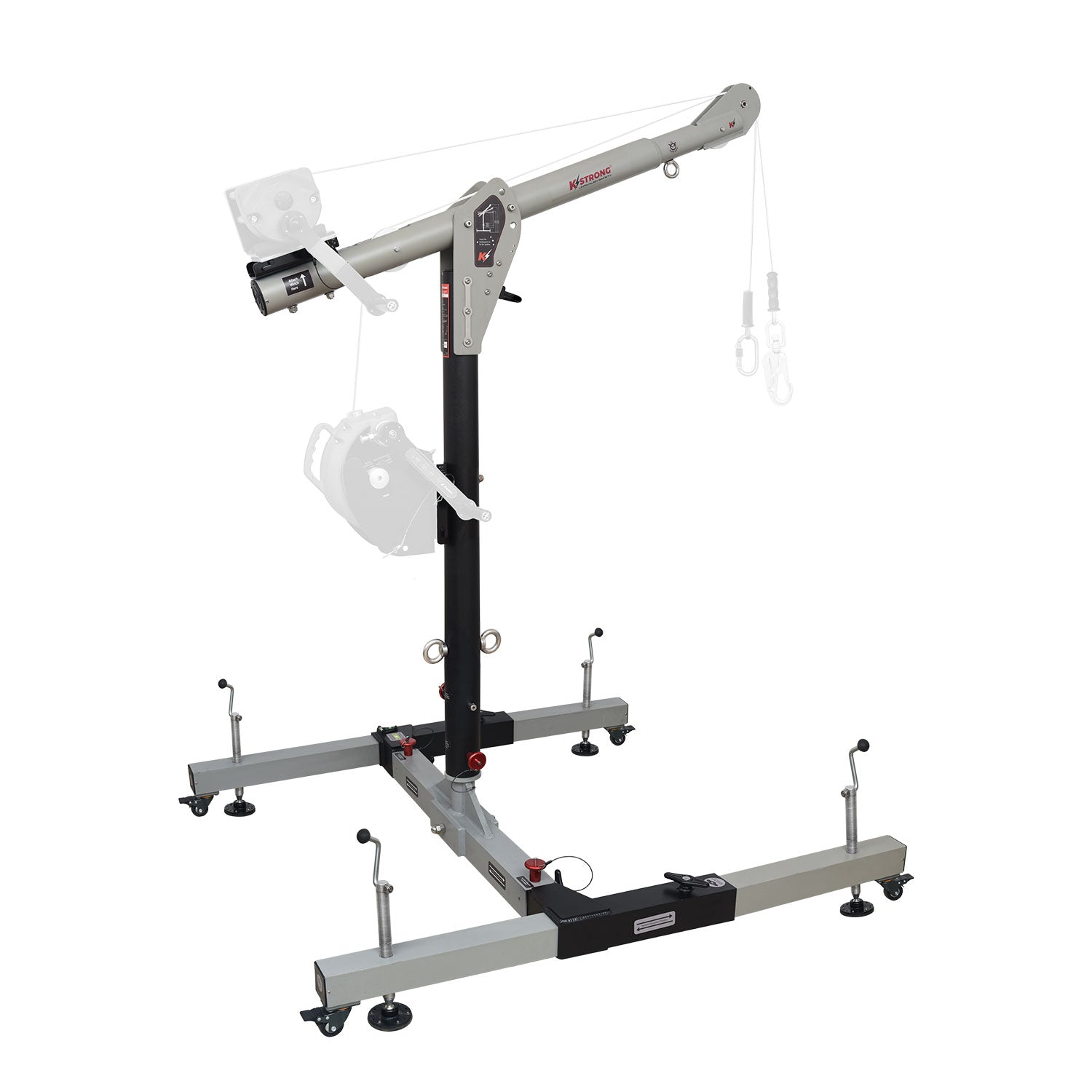
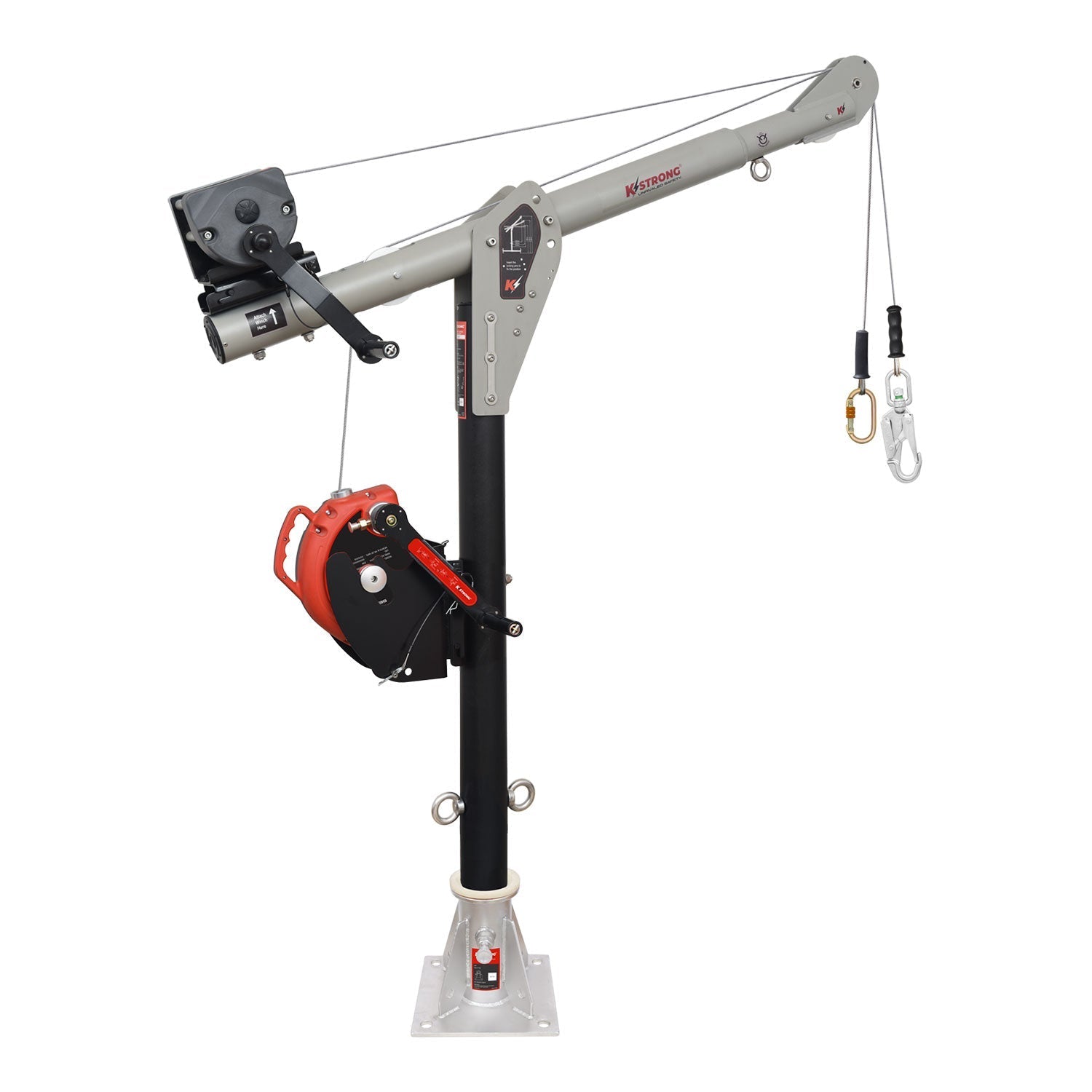
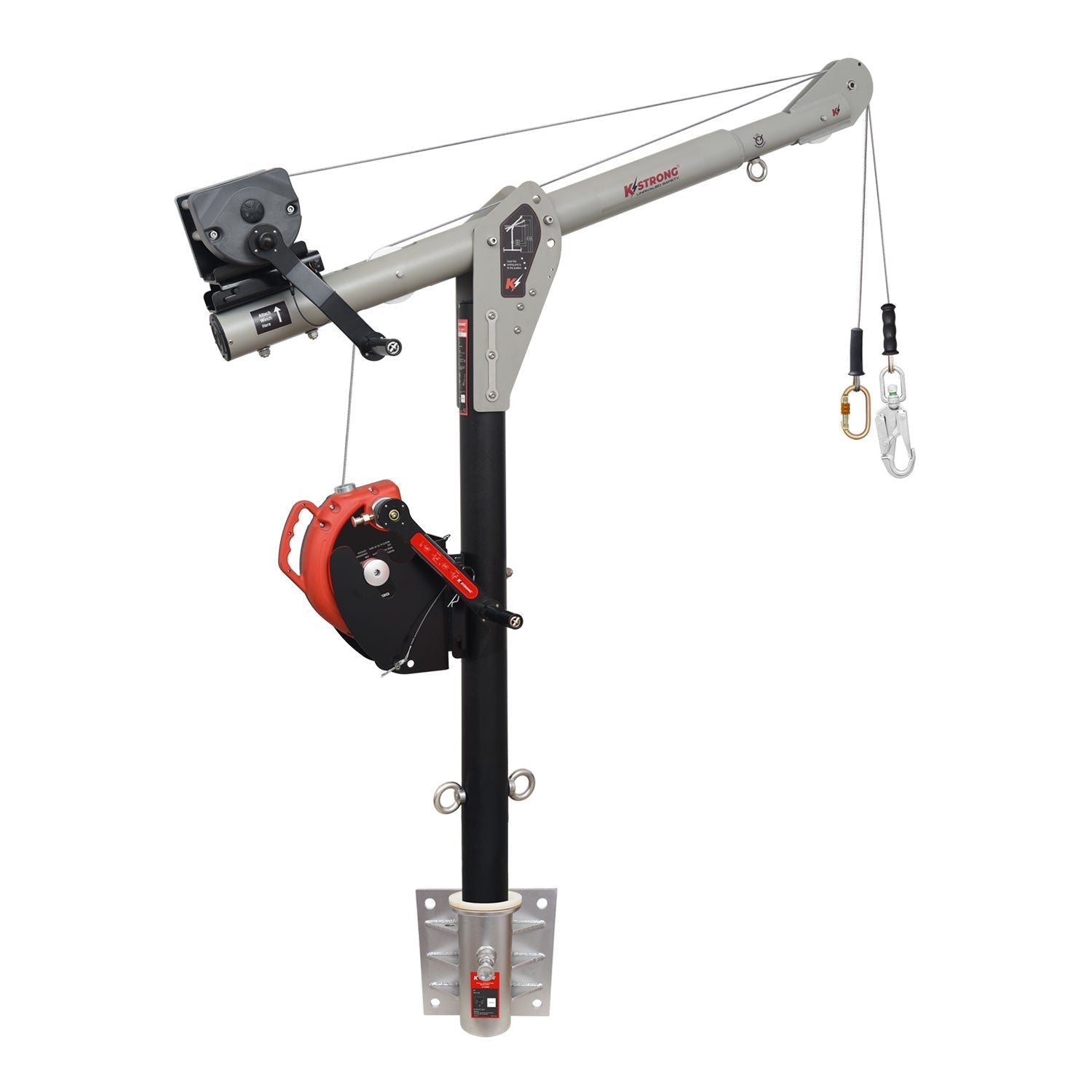
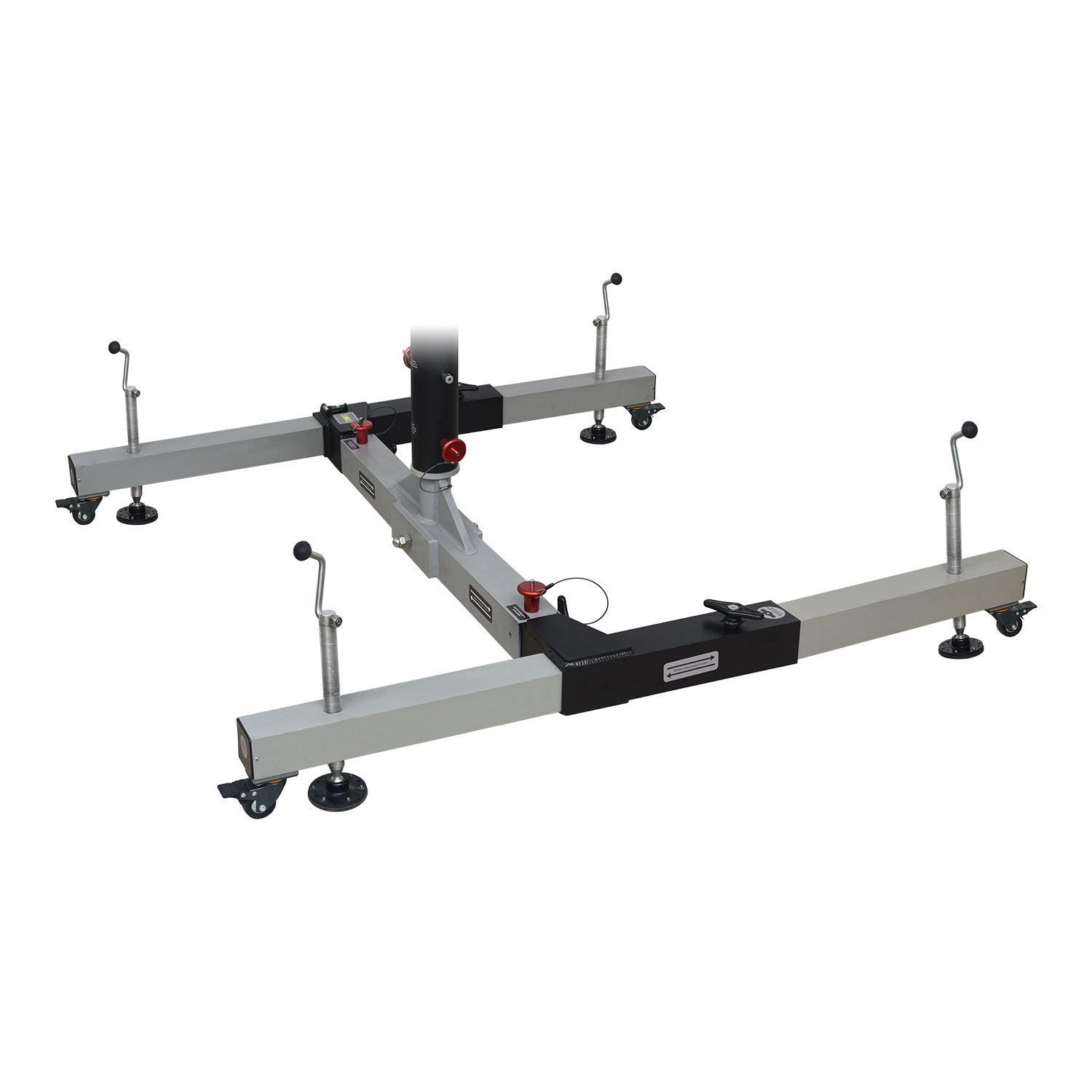
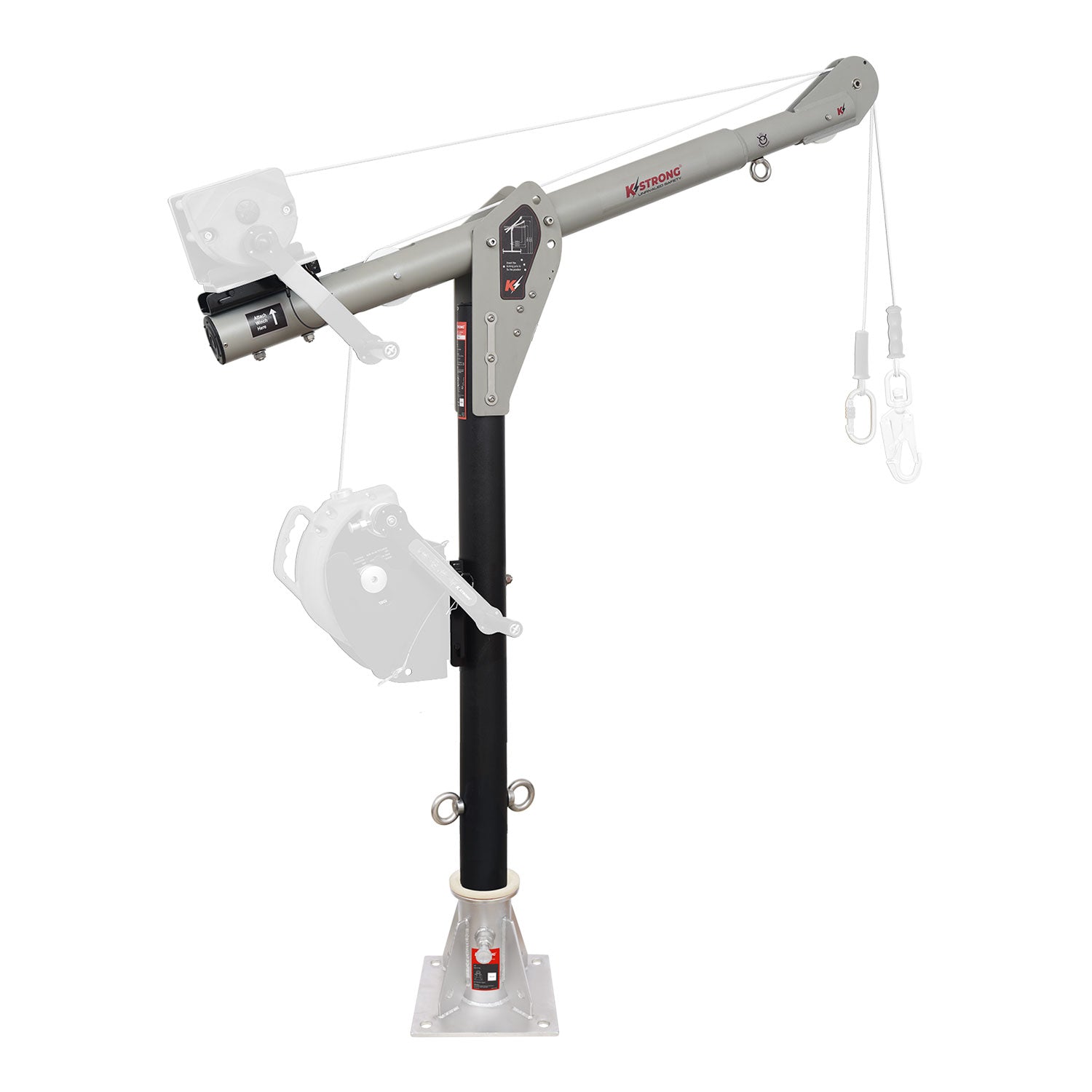
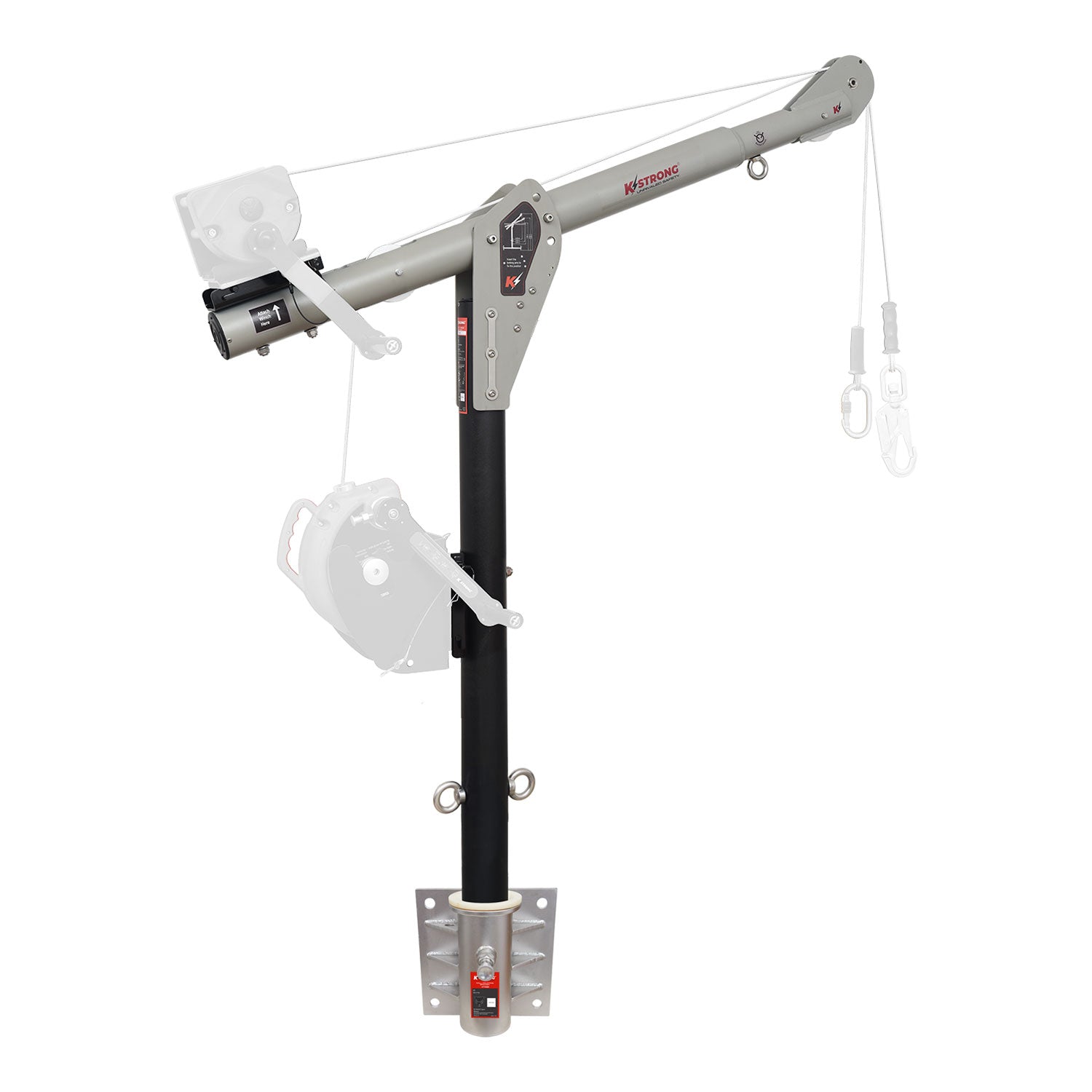
| KStrong® Megadavit™ H-Base Deluxe Kit | $8,699 | 1,102 lb | View → |
| KStrong® Megadavit™ H-Base Basic Kit. | $6,617 | 1,102 lb | View → |
| KStrong® Megadavit™ Floor Mount Deluxe Kit | $6,118 | 1,102 lb | View → |
| KStrong® Megadavit™ H-Base Frame Assembly | $4,276 | — | View → |
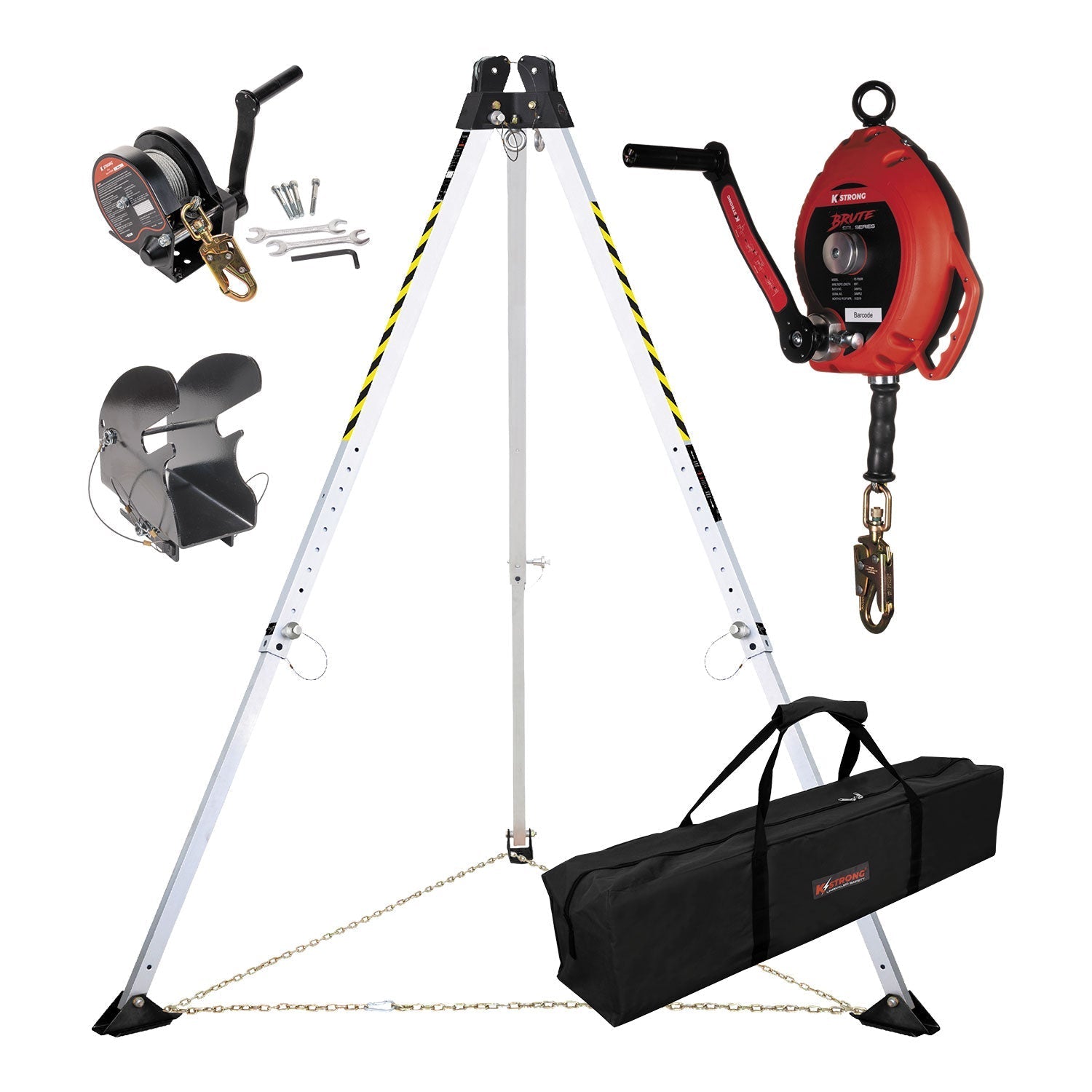
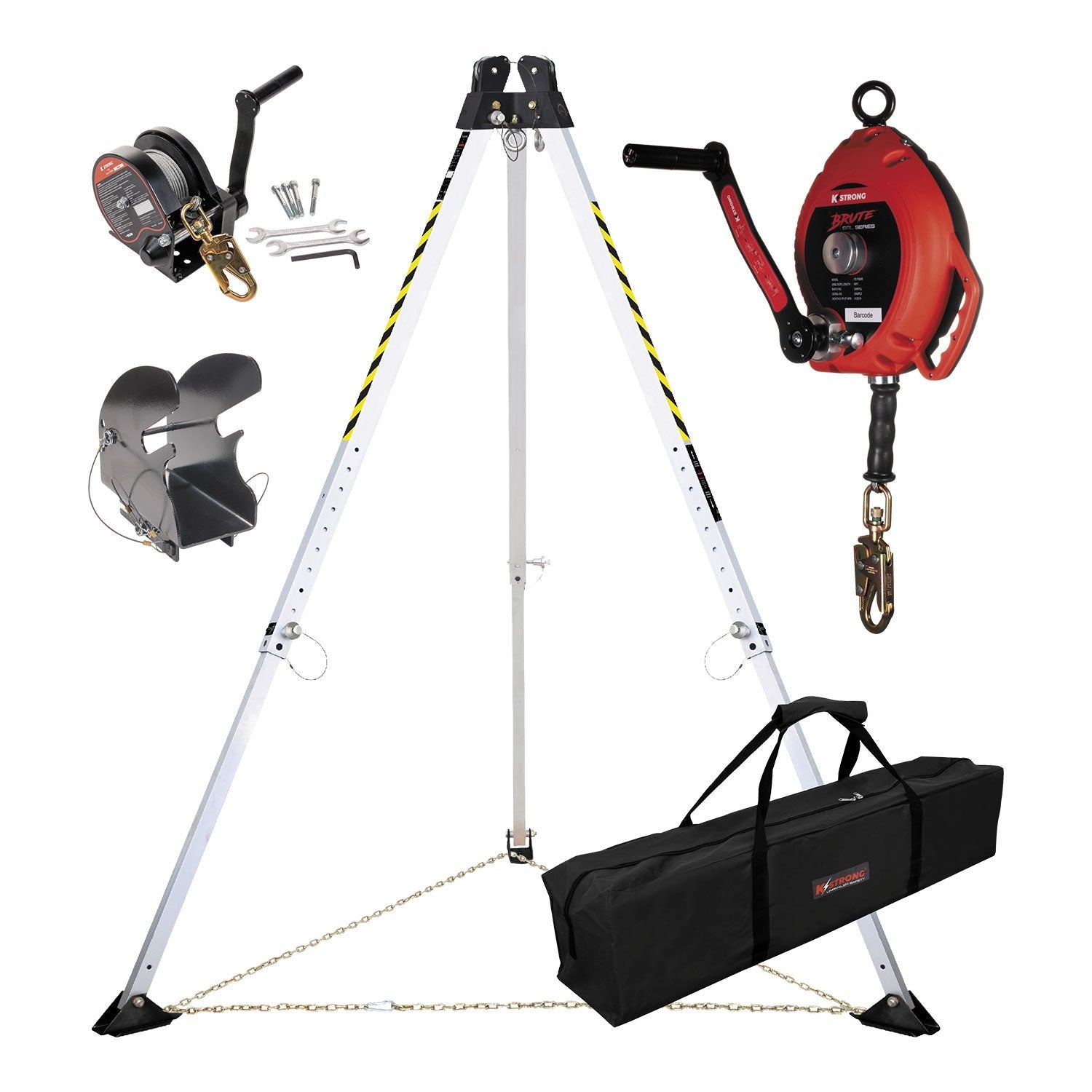
| Globestock Confined Space Tripod Kits | $4,059 | — | View → |
| KStrong® Megadavit™ Floor Mount Basic Kit | $4,036 | 1,102 lb | View → |
 In Stock
 In Stock
 In Stock
 In Stock
 In Stock
 In Stock
 In StockIn Stock
 In Stock
 In Stock
 In Stock
 In Stock
 In Stock
 In Stock
 In Stock
 In Stock
 In Stock
 In Stock
 In Stock
 In Stock
 In Stock
 In Stock
 In Stock
 In Stock
 In Stock
 In Stock
 In Stock
 In Stock
 In Stock
 In Stock
 In Stock
 In Stock
 In Stock
 In Stock
 In Stock
 In Stock
 In Stock
 In Stock
 In Stock
 In Stock
 In Stock
 In Stock
 In Stock
 In Stock
 In Stock
 In Stock
 In Stock
 In Stock
 In Stock
 In Stock
 In Stock
 In Stock
 In Stock
 In Stock
 In Stock
 In Stock
 In Stock
 In Stock
 In Stock
 In Stock
 In Stock
 In Stock
 In Stock
 In Stock
 In Stock
 In Stock
 In Stock
 In Stock
 In Stock
 In Stock
 In Stock
 In Stock
 In Stock
 In Stock
 In Stock
 In Stock
 In Stock
 In Stock
 In Stock
 In Stock
 In Stock
 In Stock
 In Stock
 In Stock
 In Stock
 In Stock
 In Stock
 In Stock
 In Stock
 In Stock
 In Stock
 In Stock
 In Stock
 In Stock
 In Stock
 In Stock
Fall Protection Buying Guide
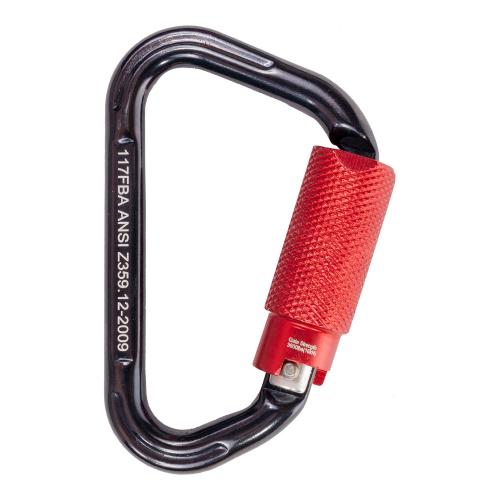
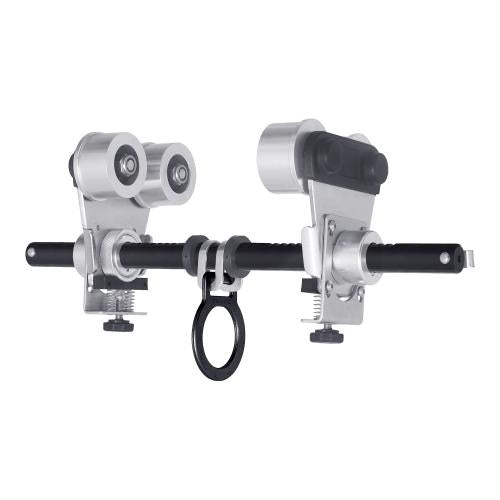
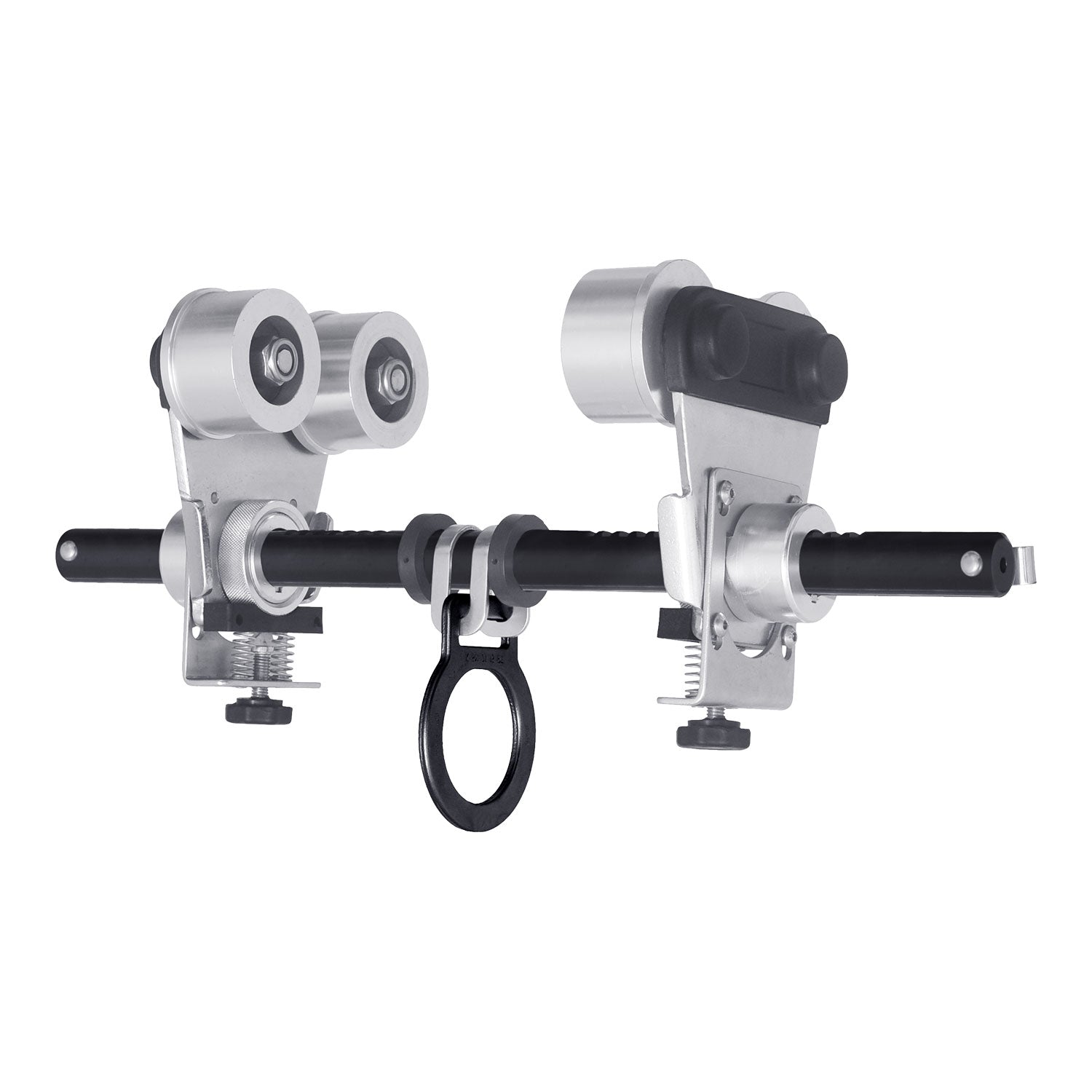
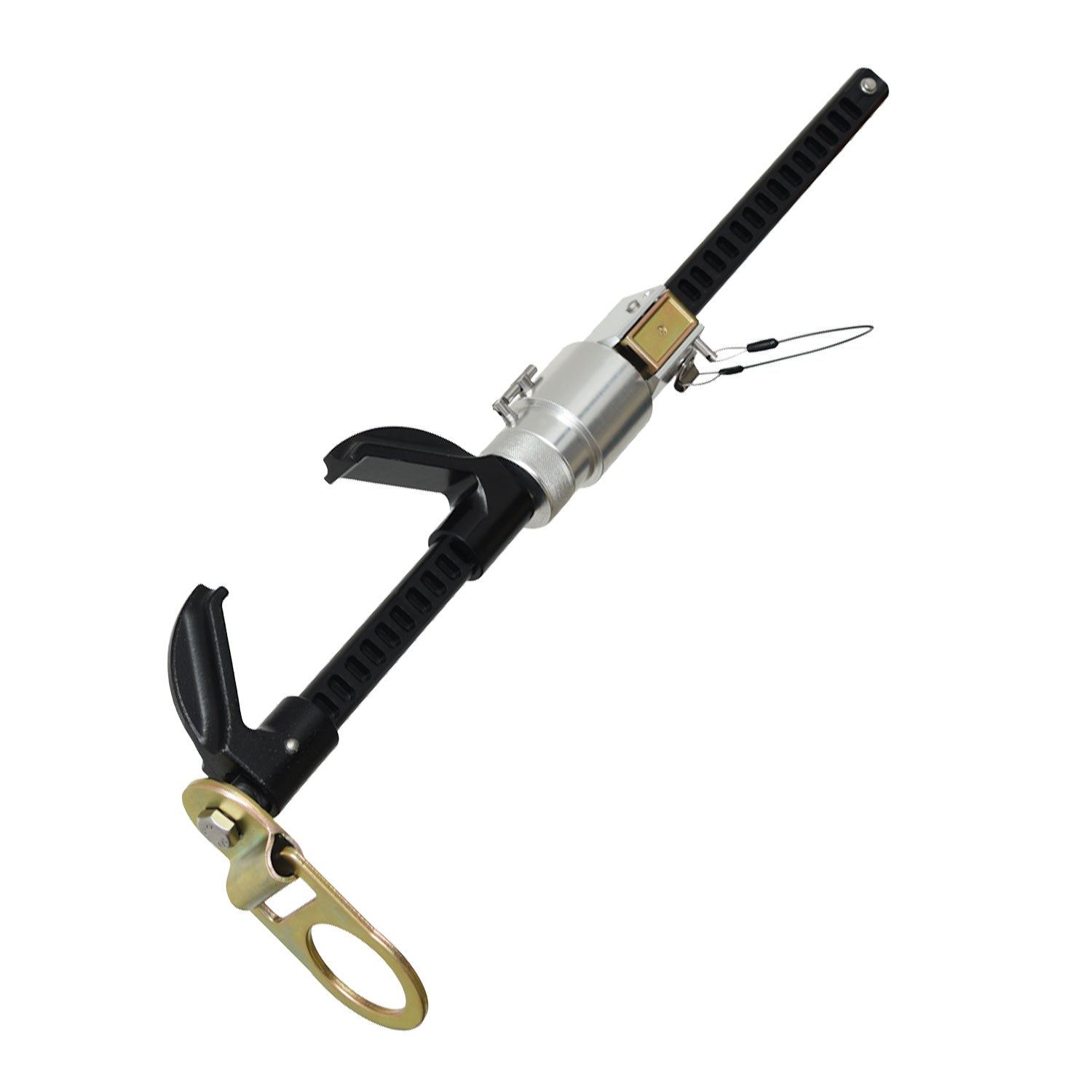
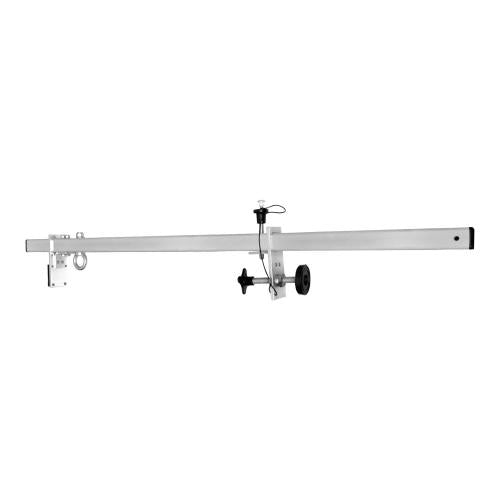
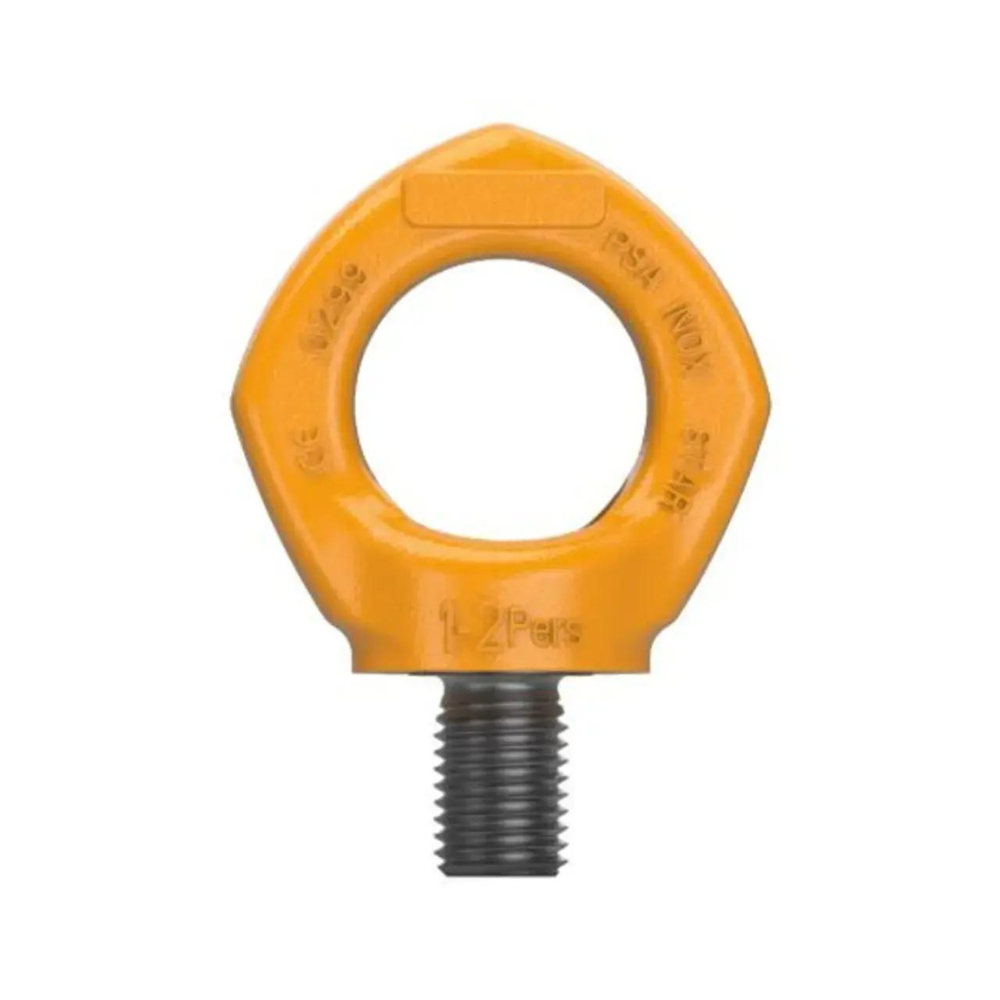
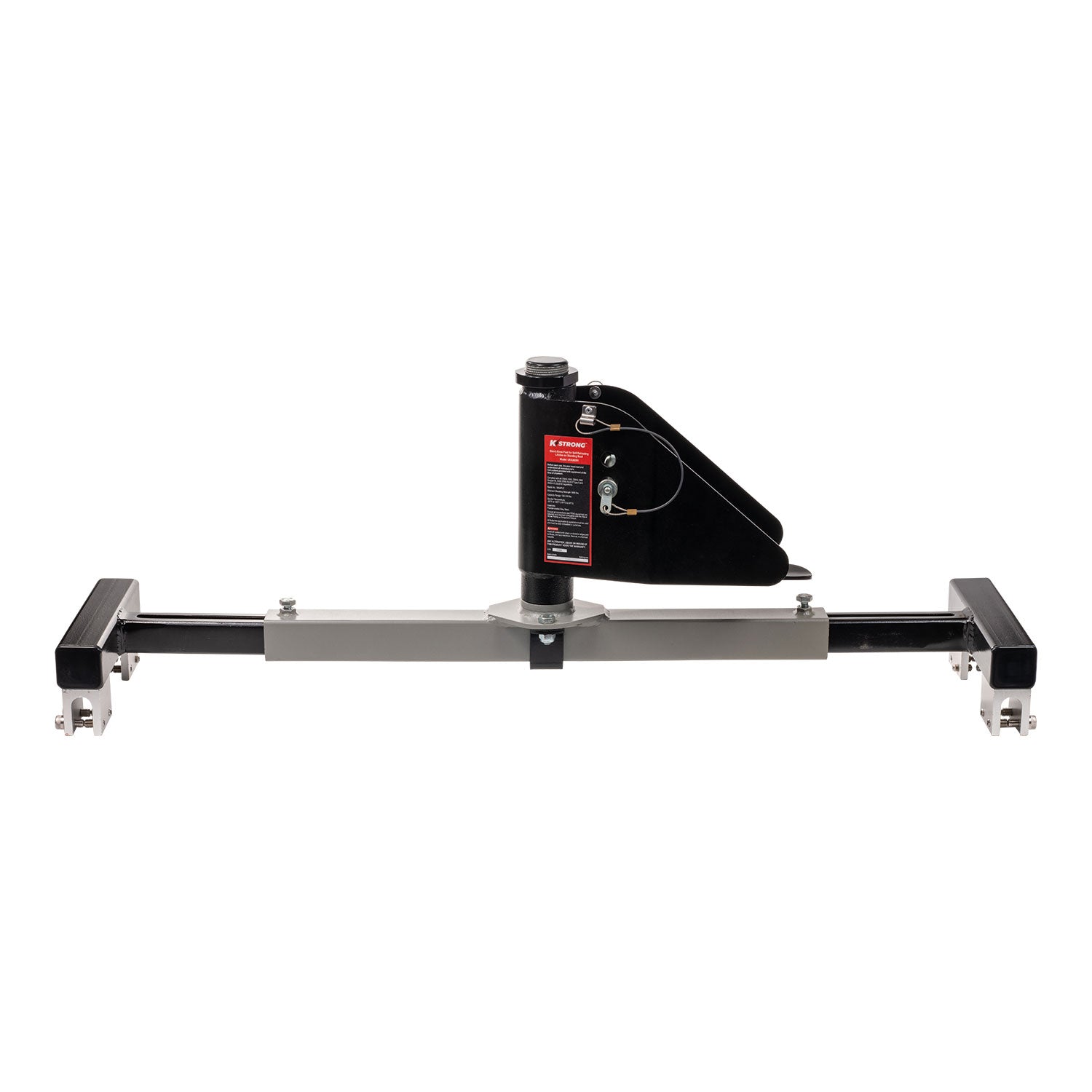
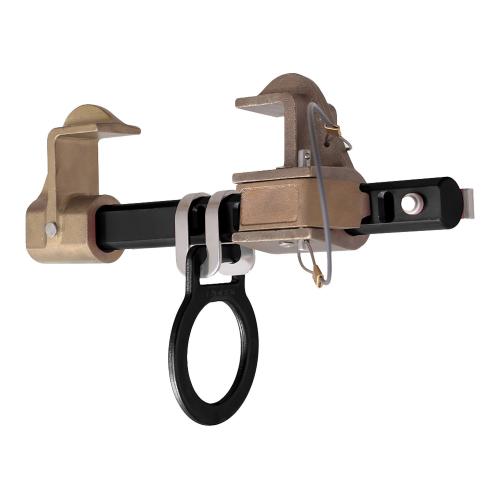
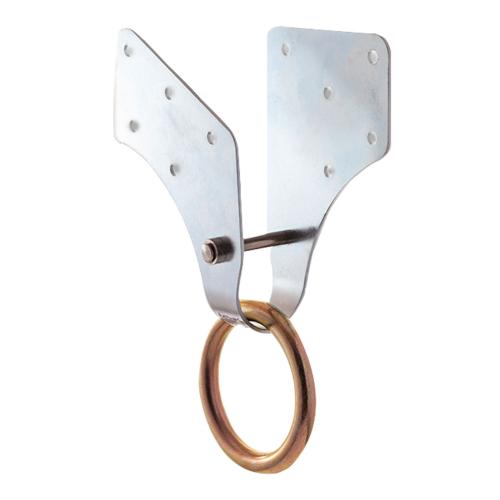
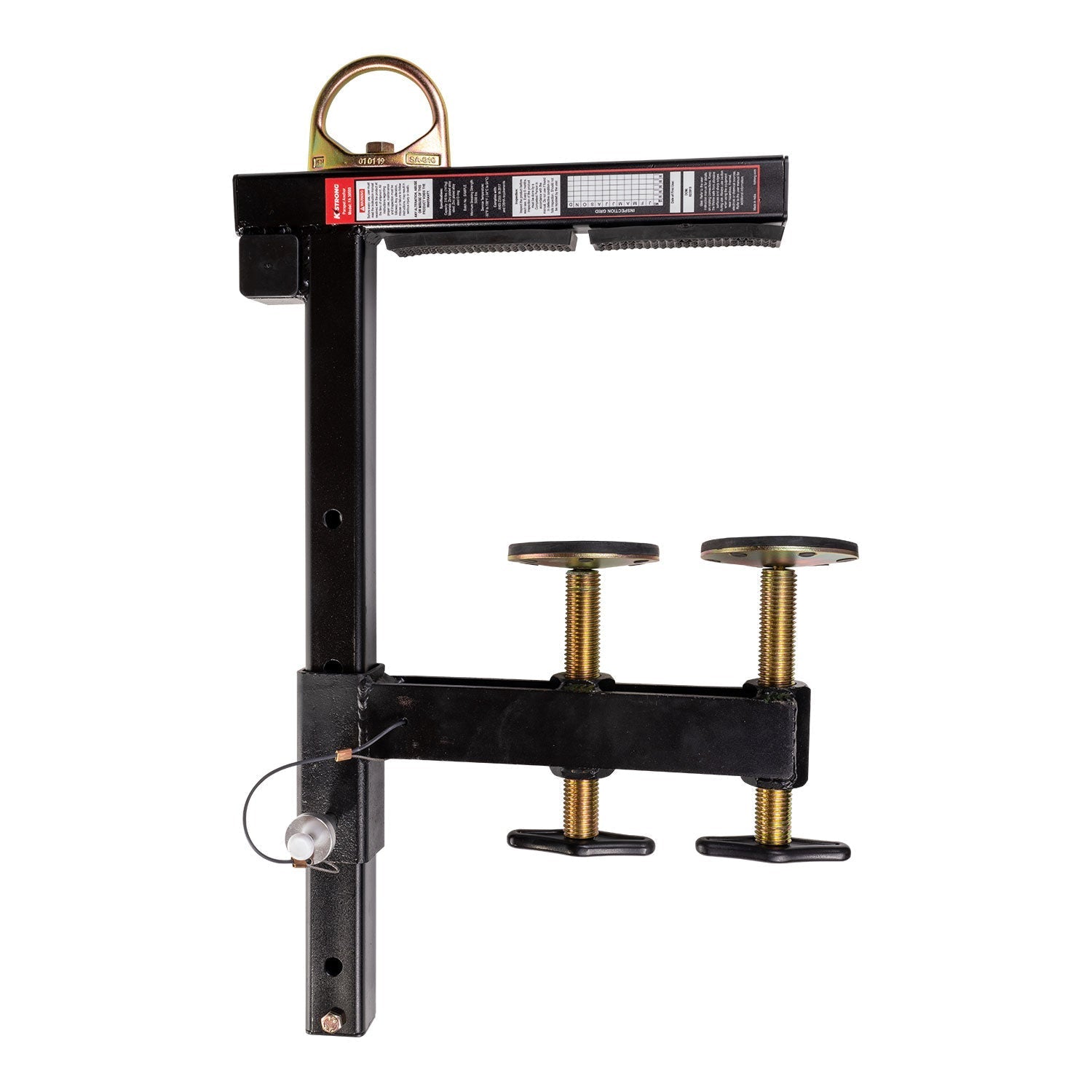
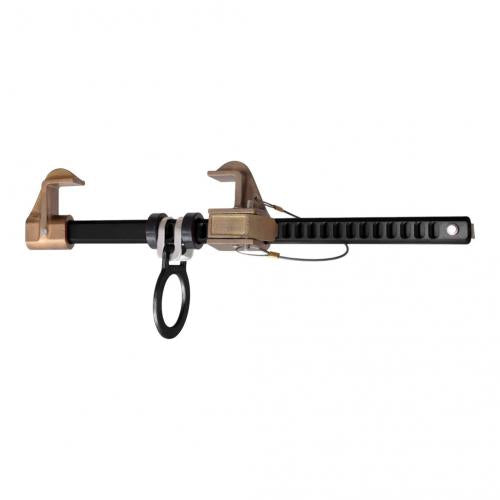
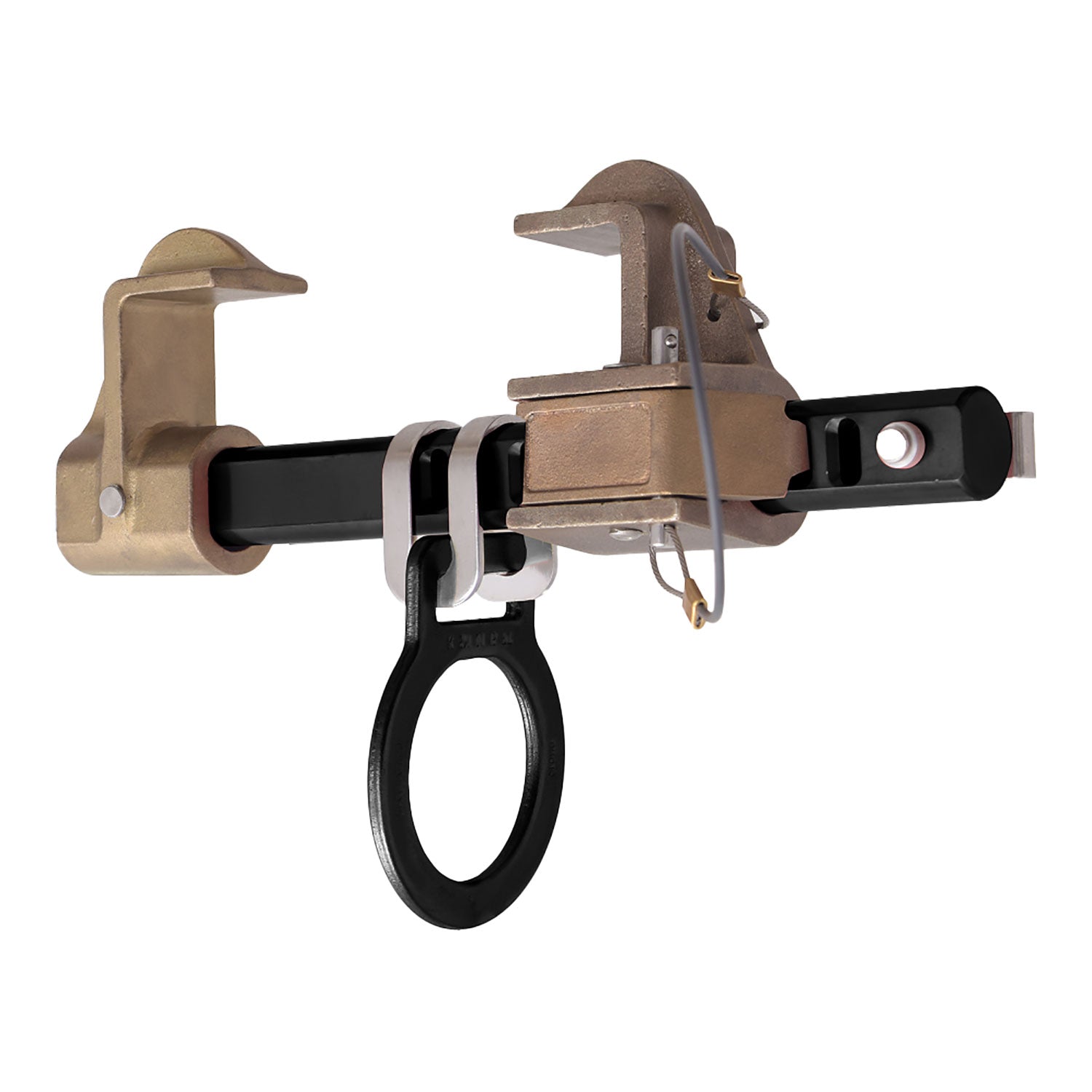
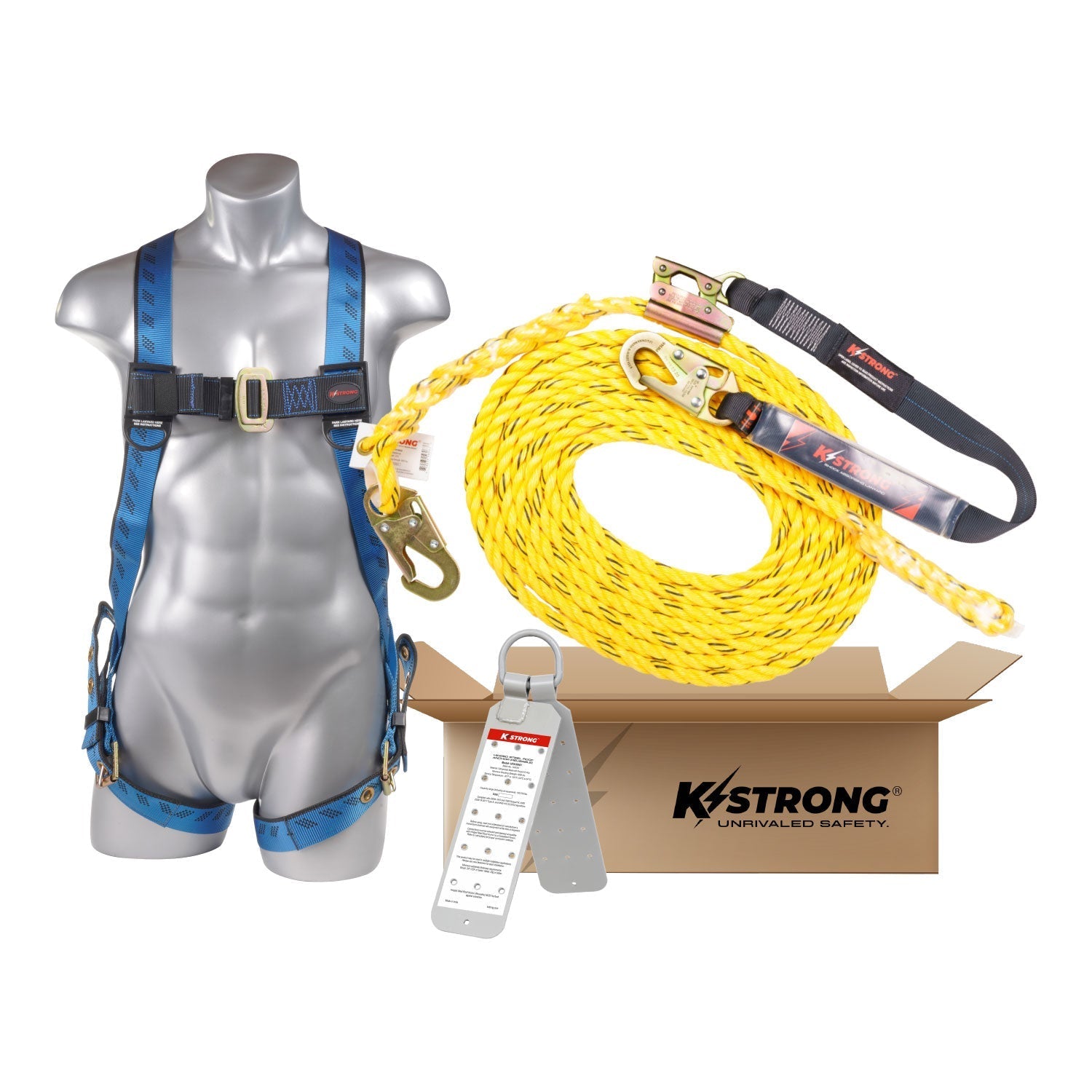
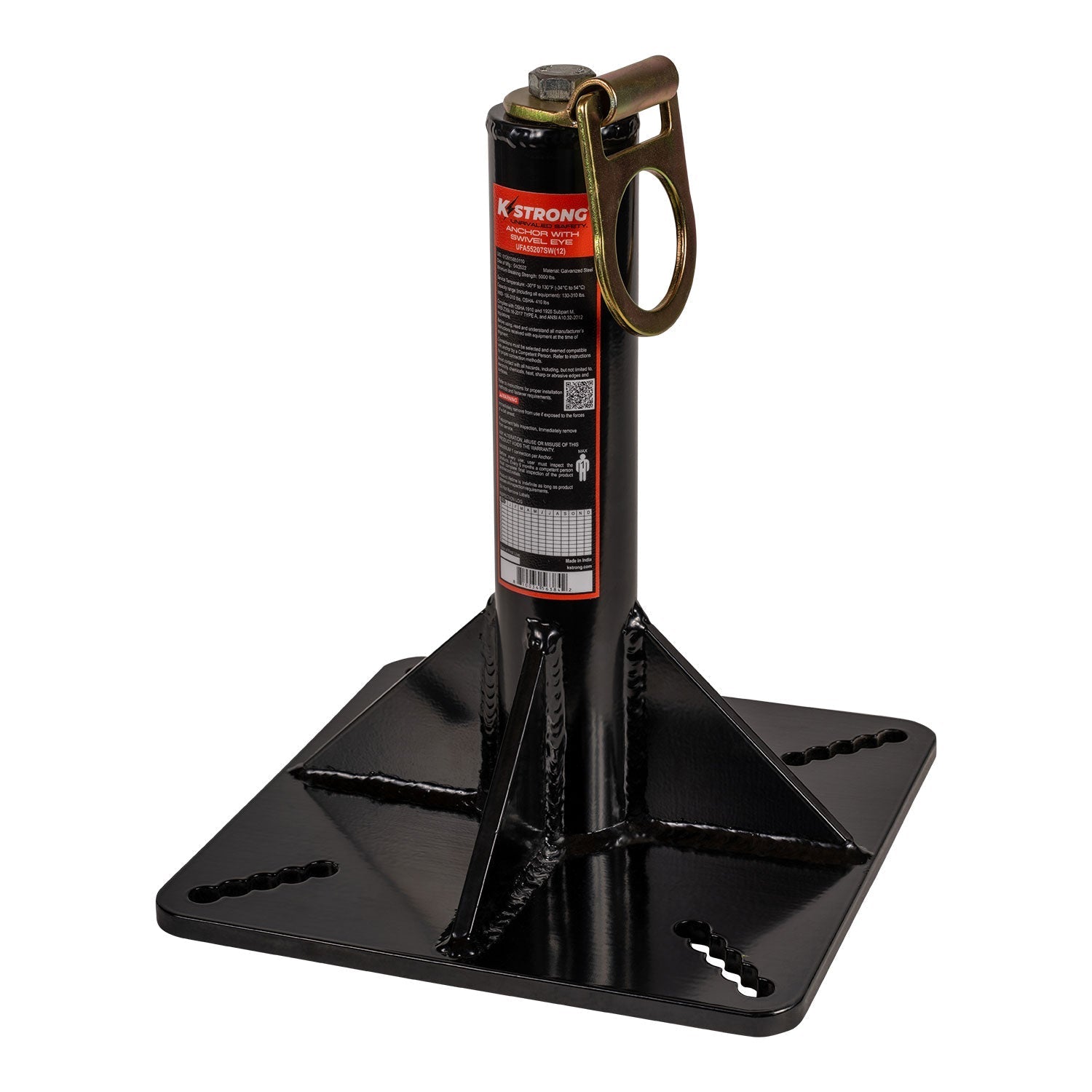
Anchorage first: 5,000 lb or an engineer's signature. Every arrest system hangs from its anchorage, and OSHA 1926.502(d)(15) gives you two ways to qualify one: it supports 5,000 lb per attached worker, or a qualified person designs it into a complete system with a safety factor of at least two. Off the bare structure, that means purpose-built hardware, and our connectors and accessories collection carries the working set: KStrong sliding and fixed I-beam anchors that clamp flanges from 3 to 14 inches, a rolling beam anchor that tracks along with the worker, door jamb and window anchors for openings, removable 3/4 inch concrete bolt anchors, and 5,000 lb drop-thru anchors with swivel D-rings. Pick the anchor for the structure you actually have, and put it as close to directly overhead as the work allows, because every foot of offset adds swing and every foot of slack adds fall distance.
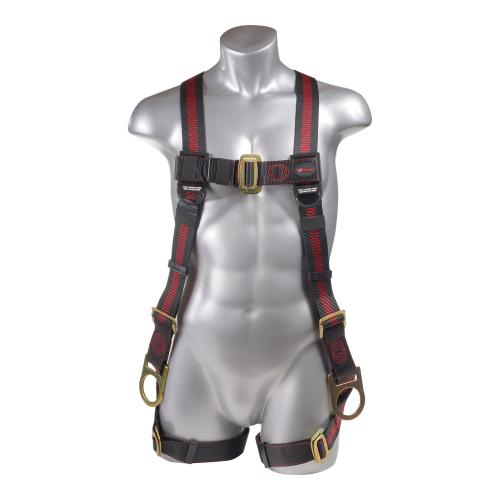
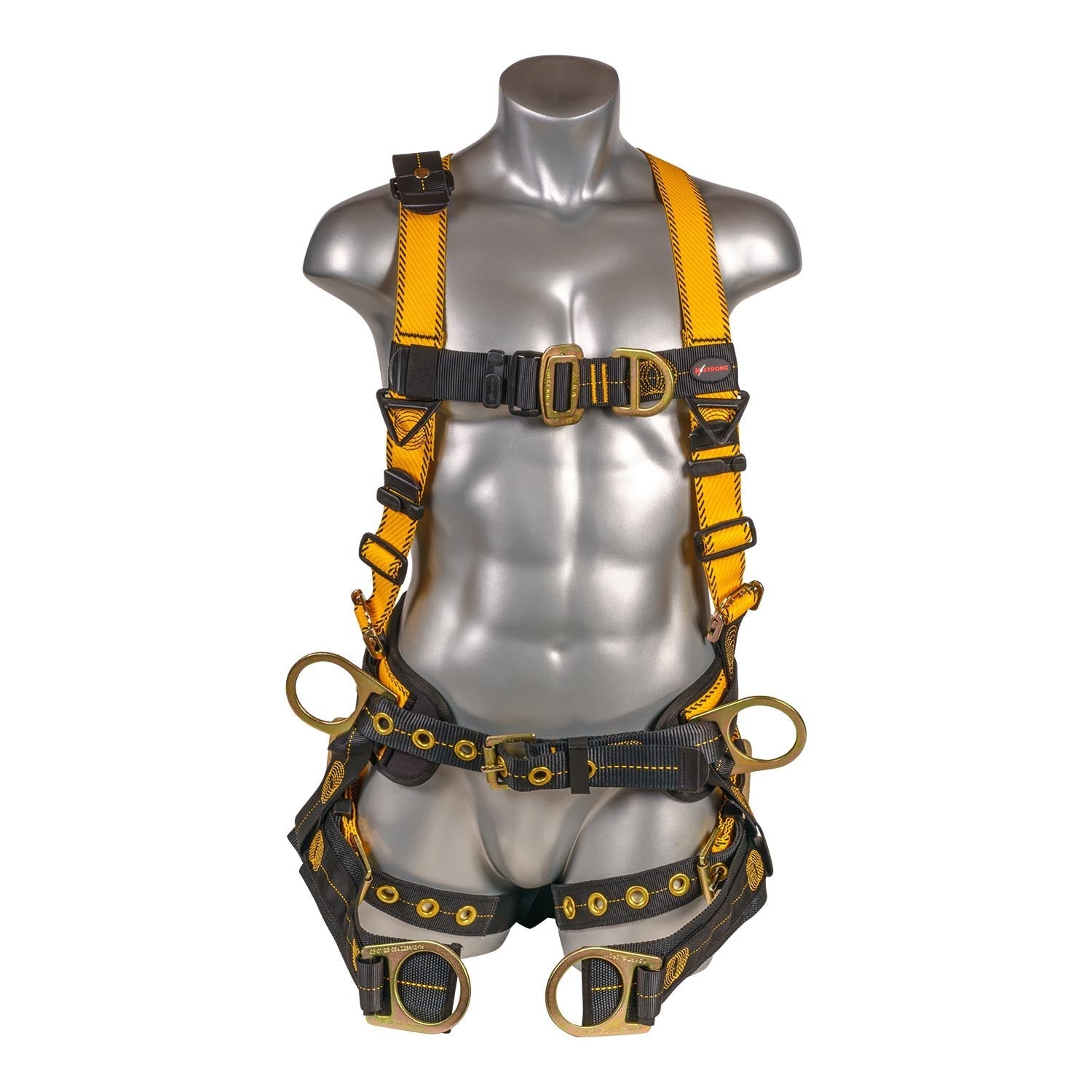
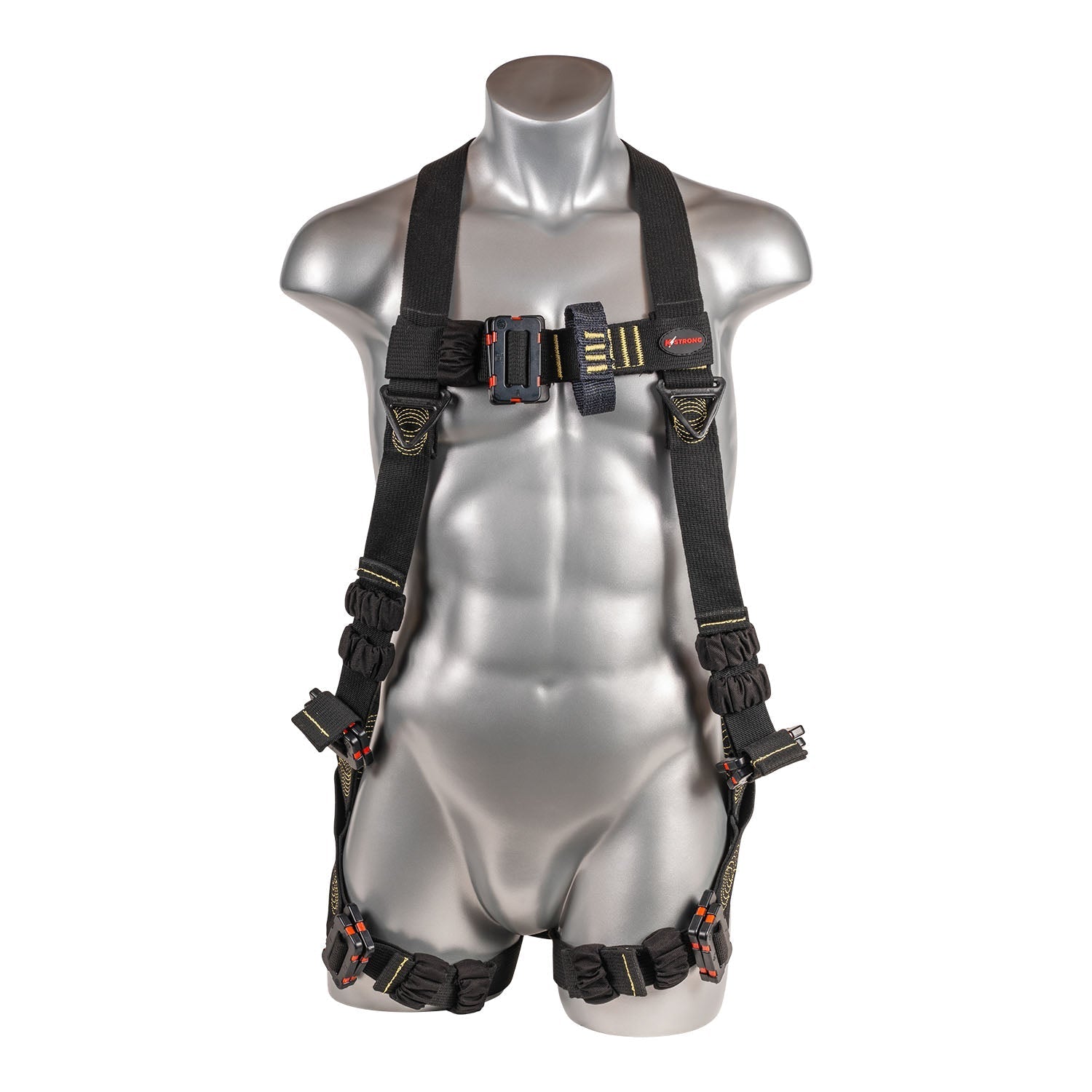
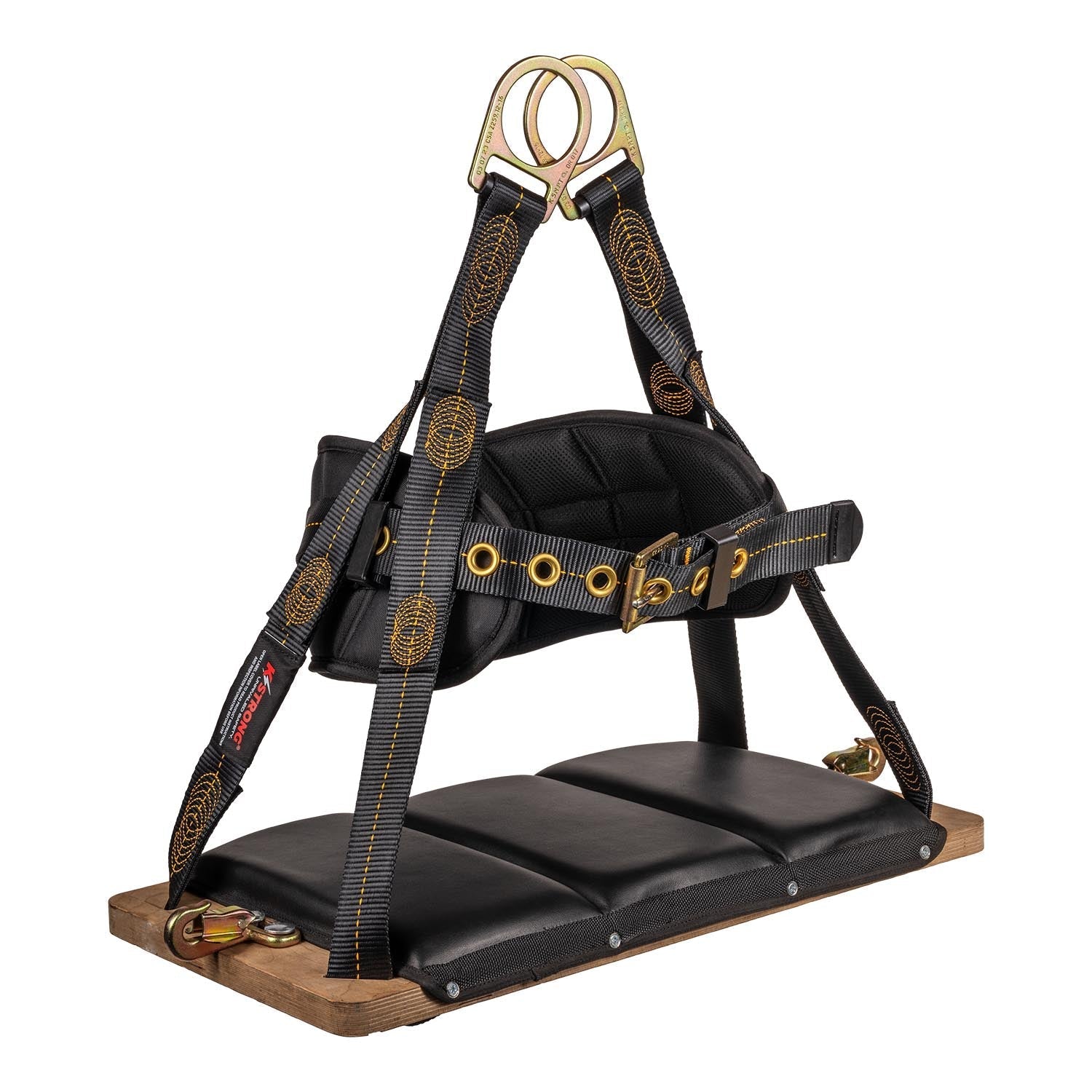
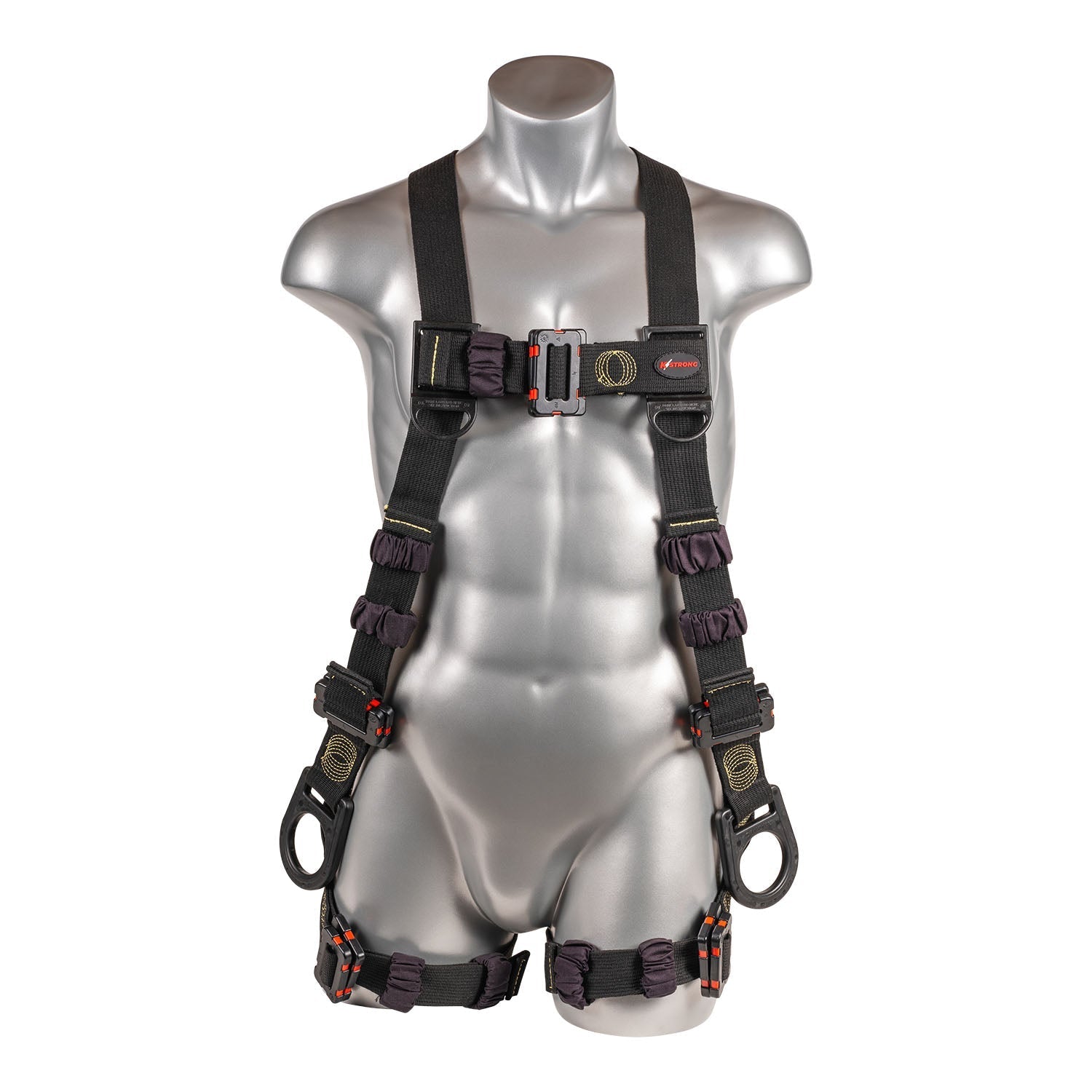
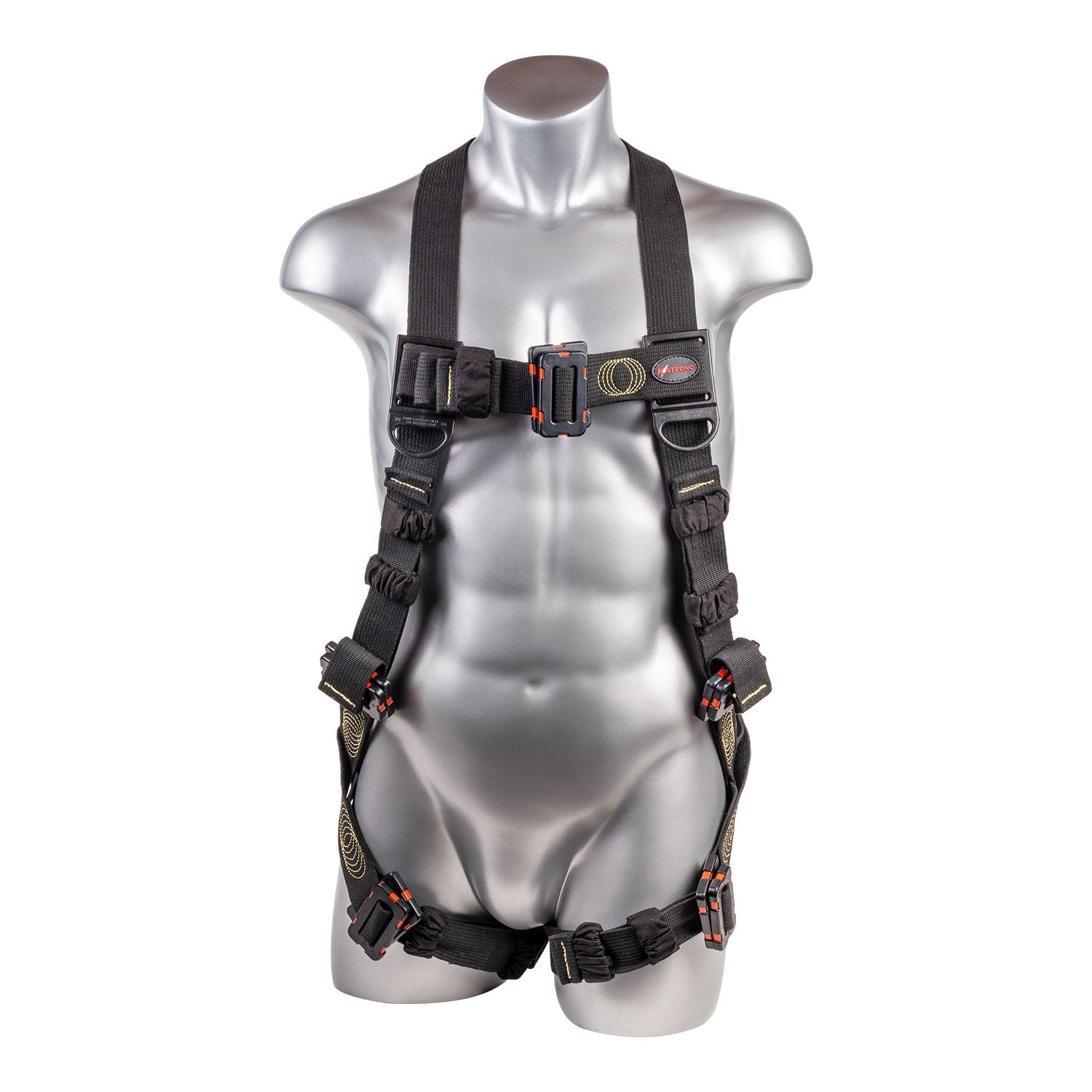
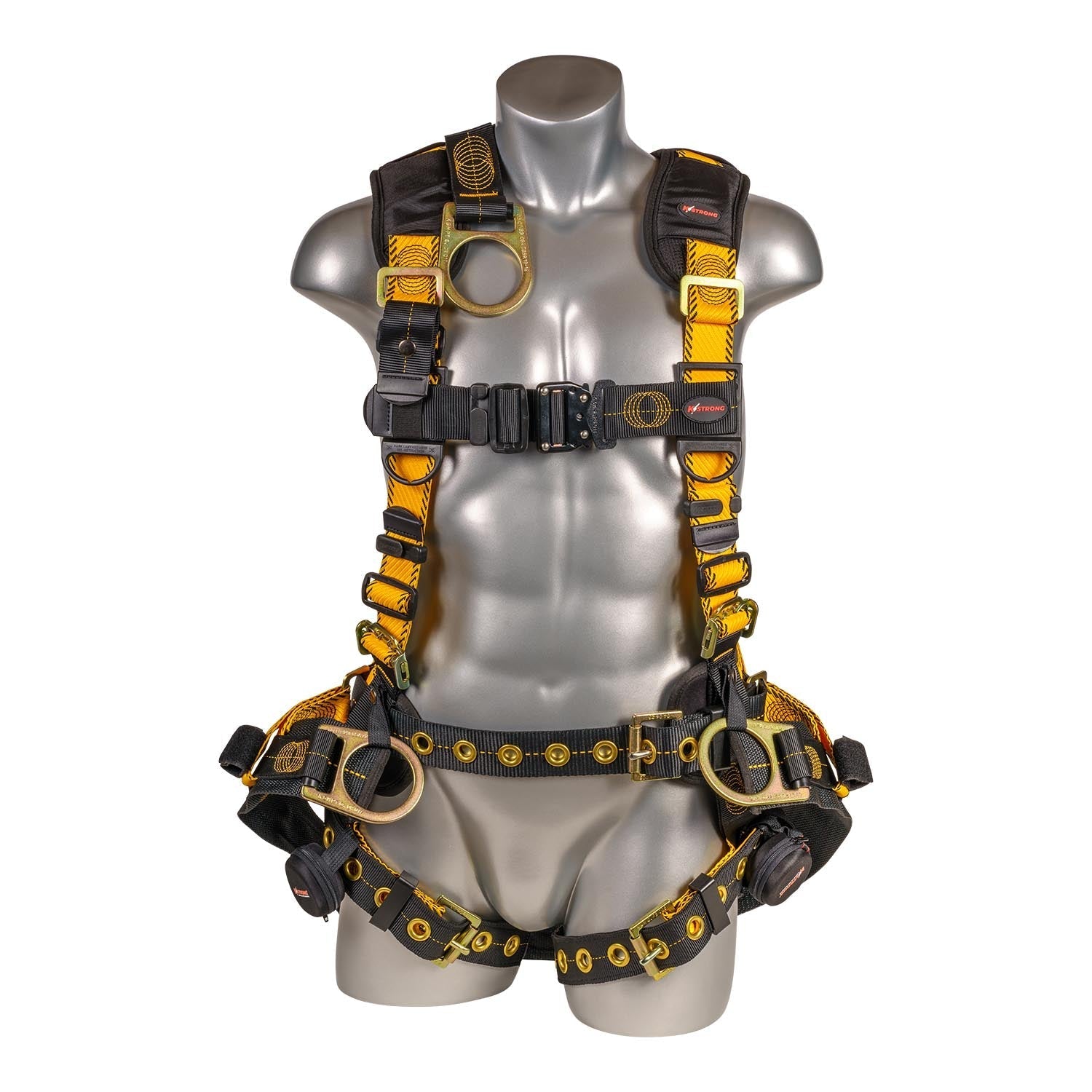
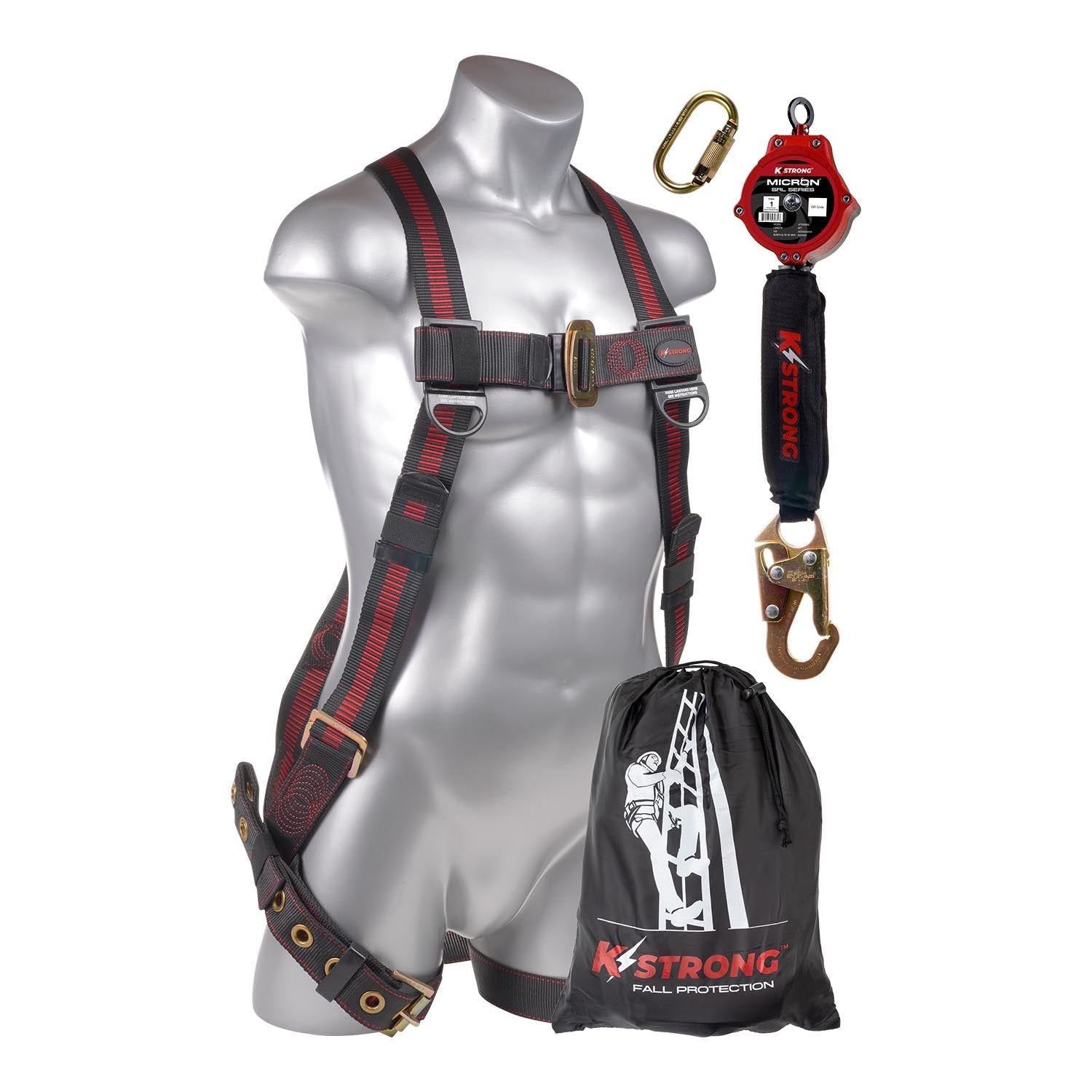
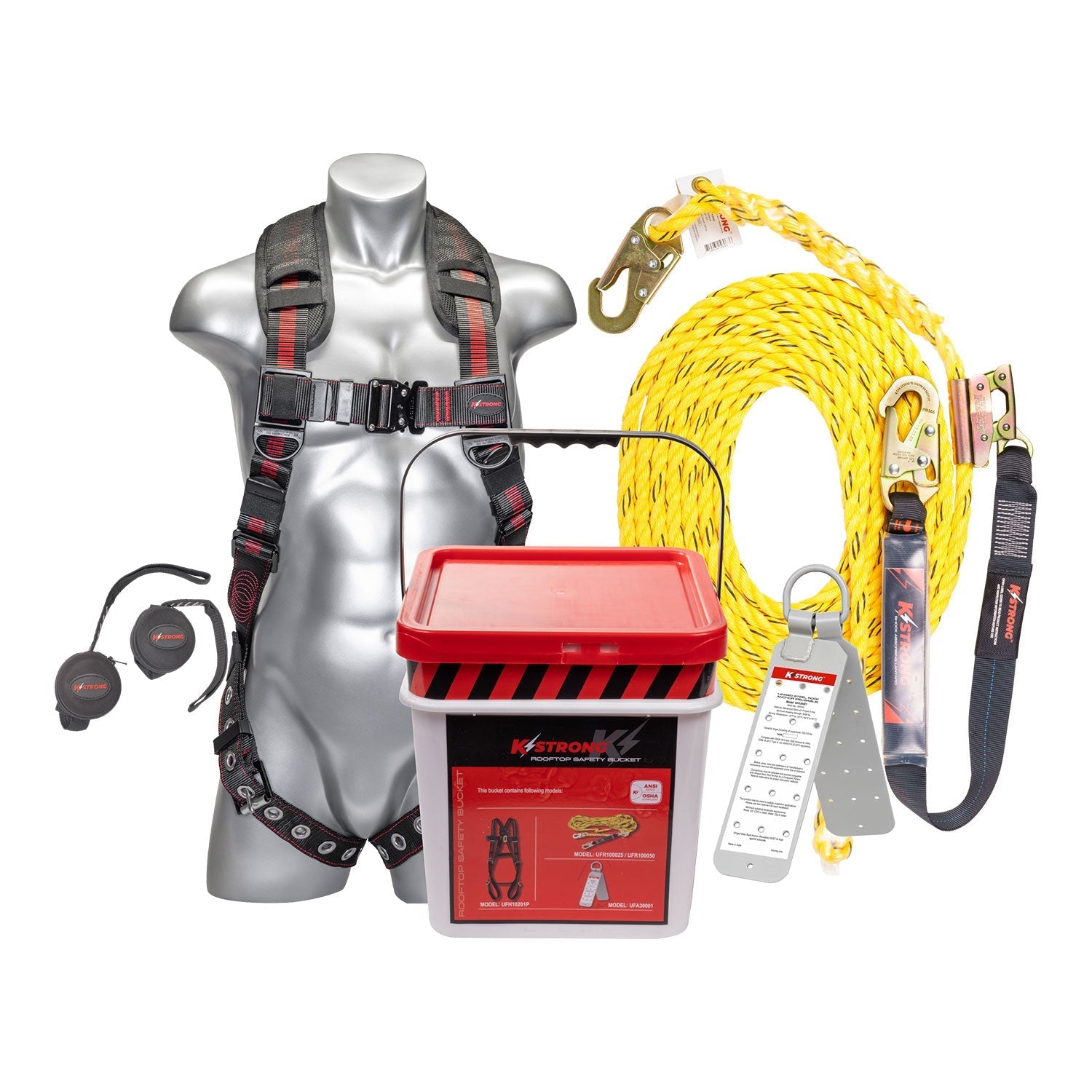
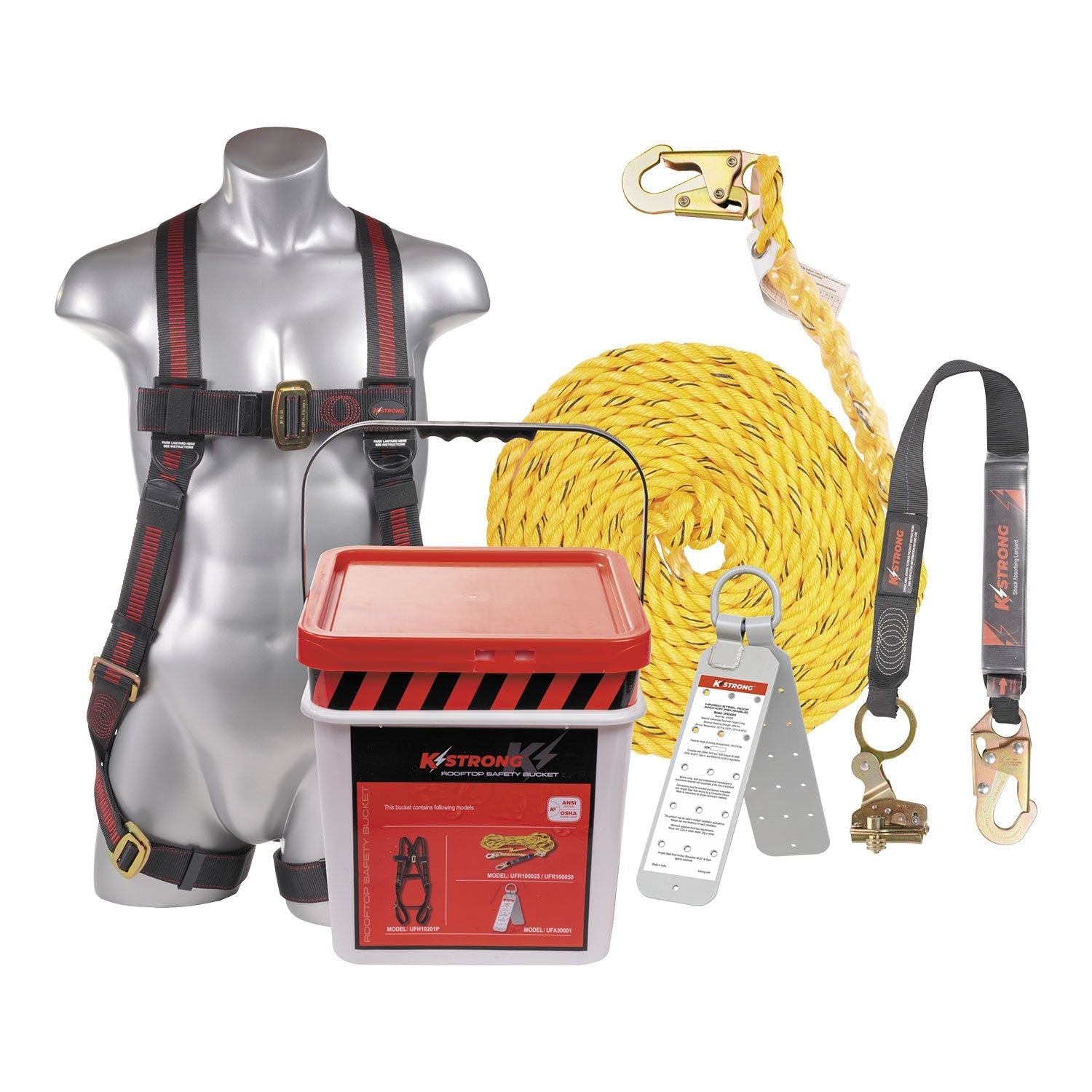
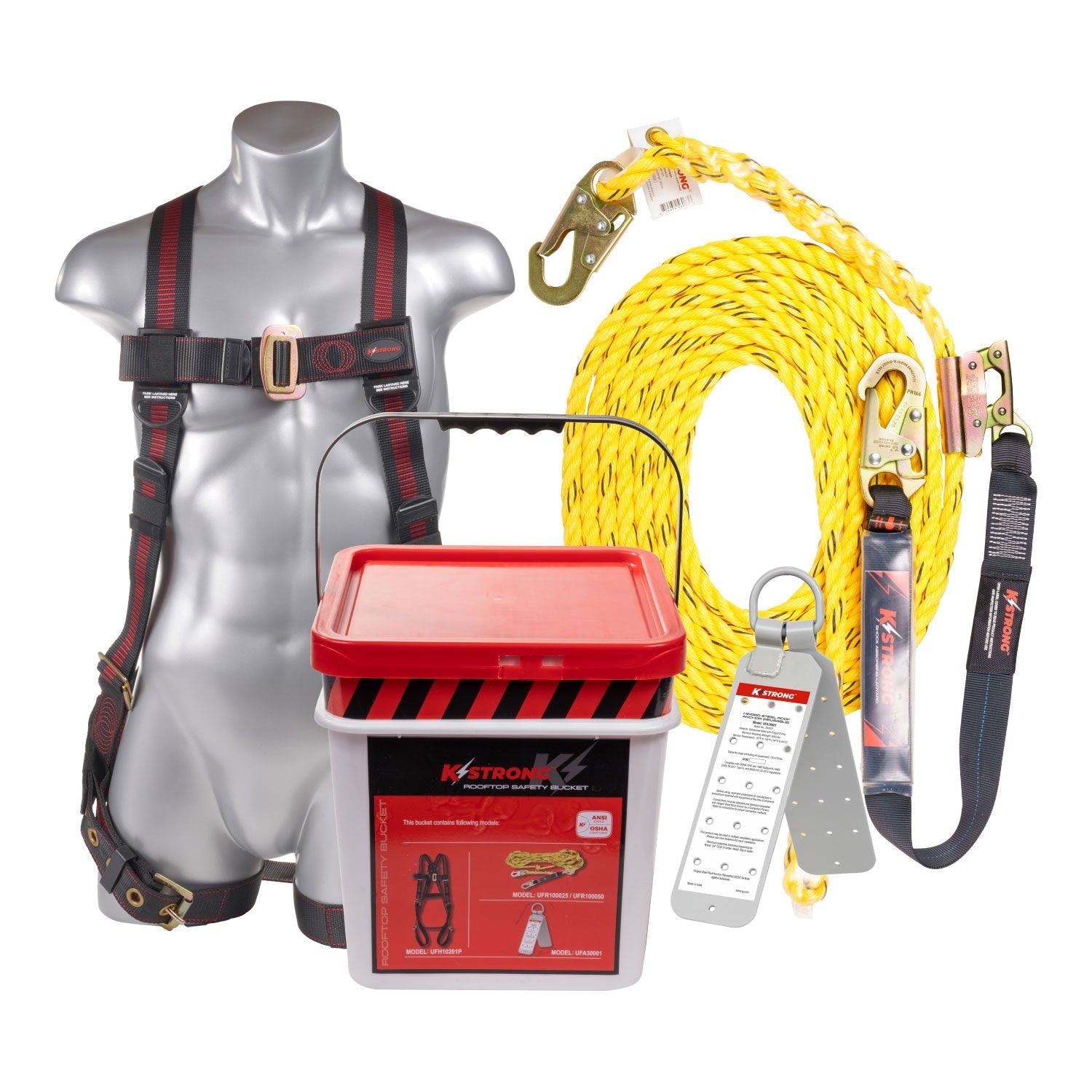
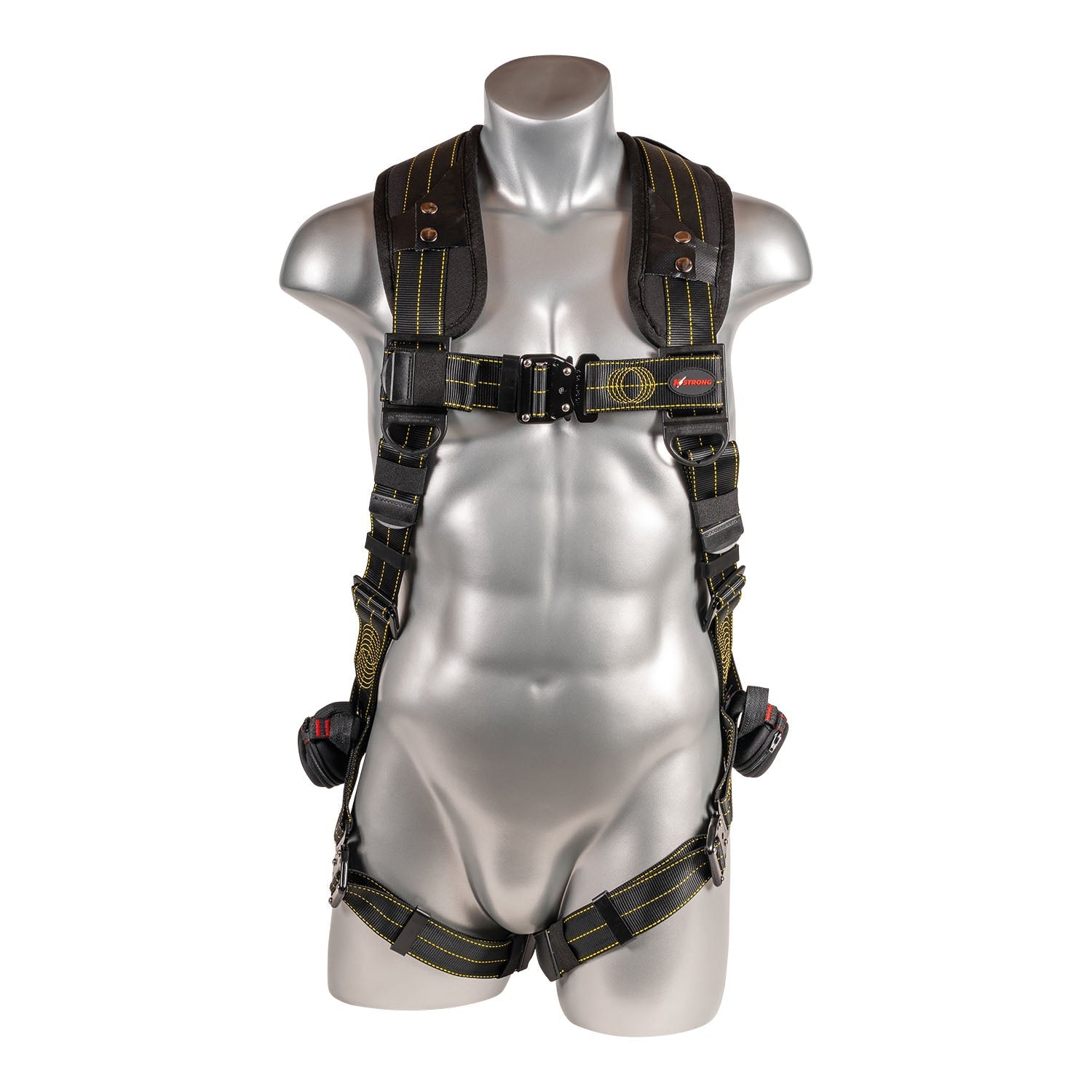
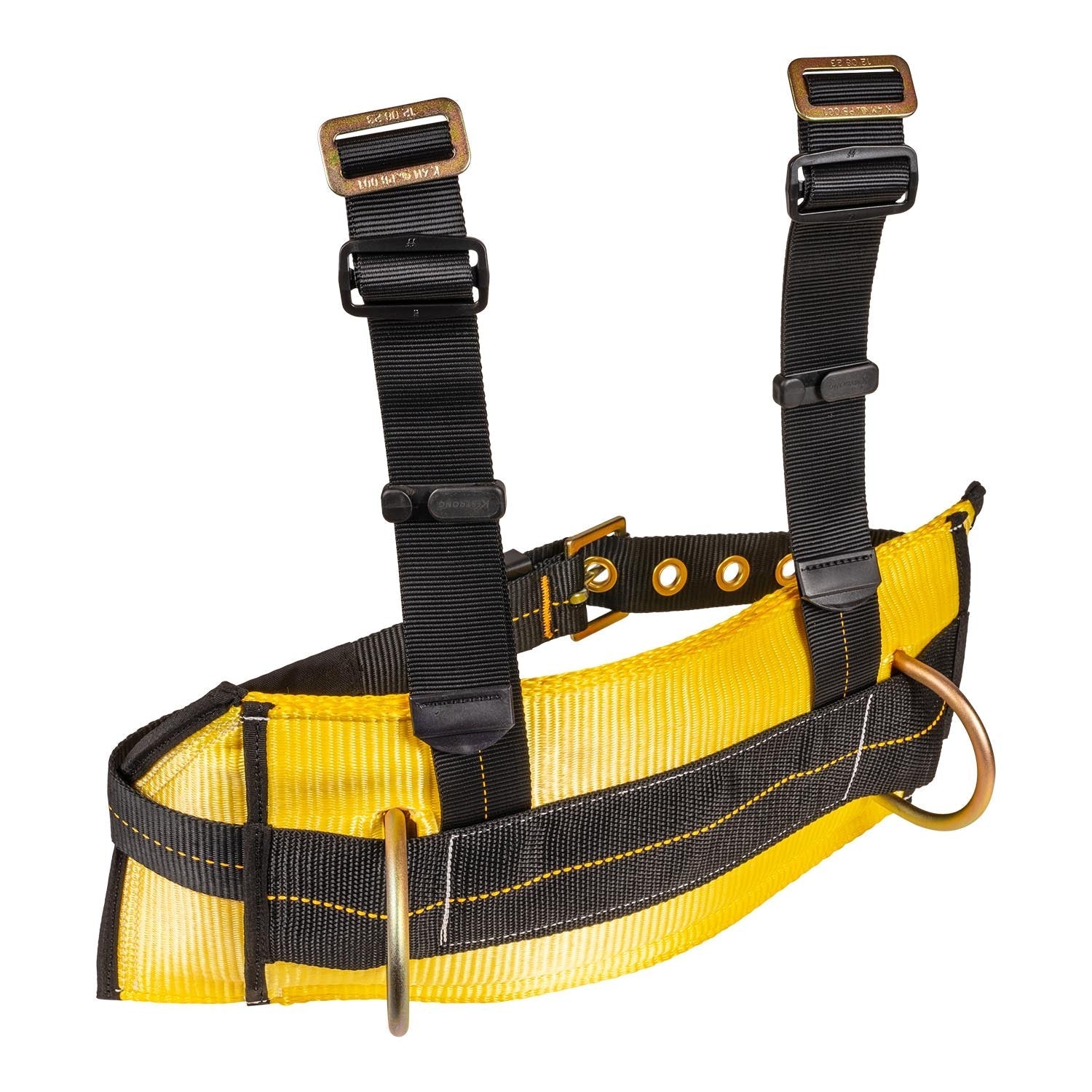
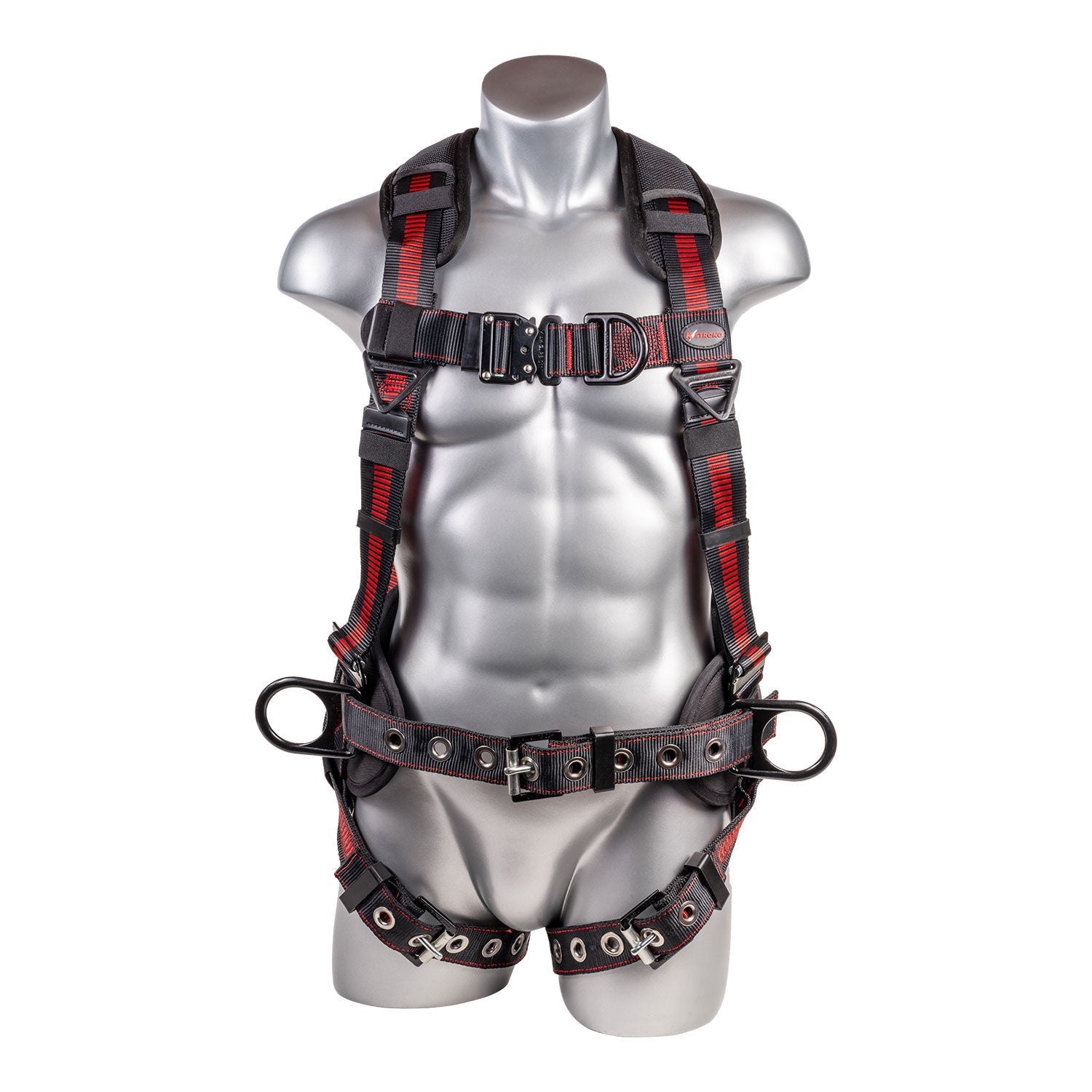
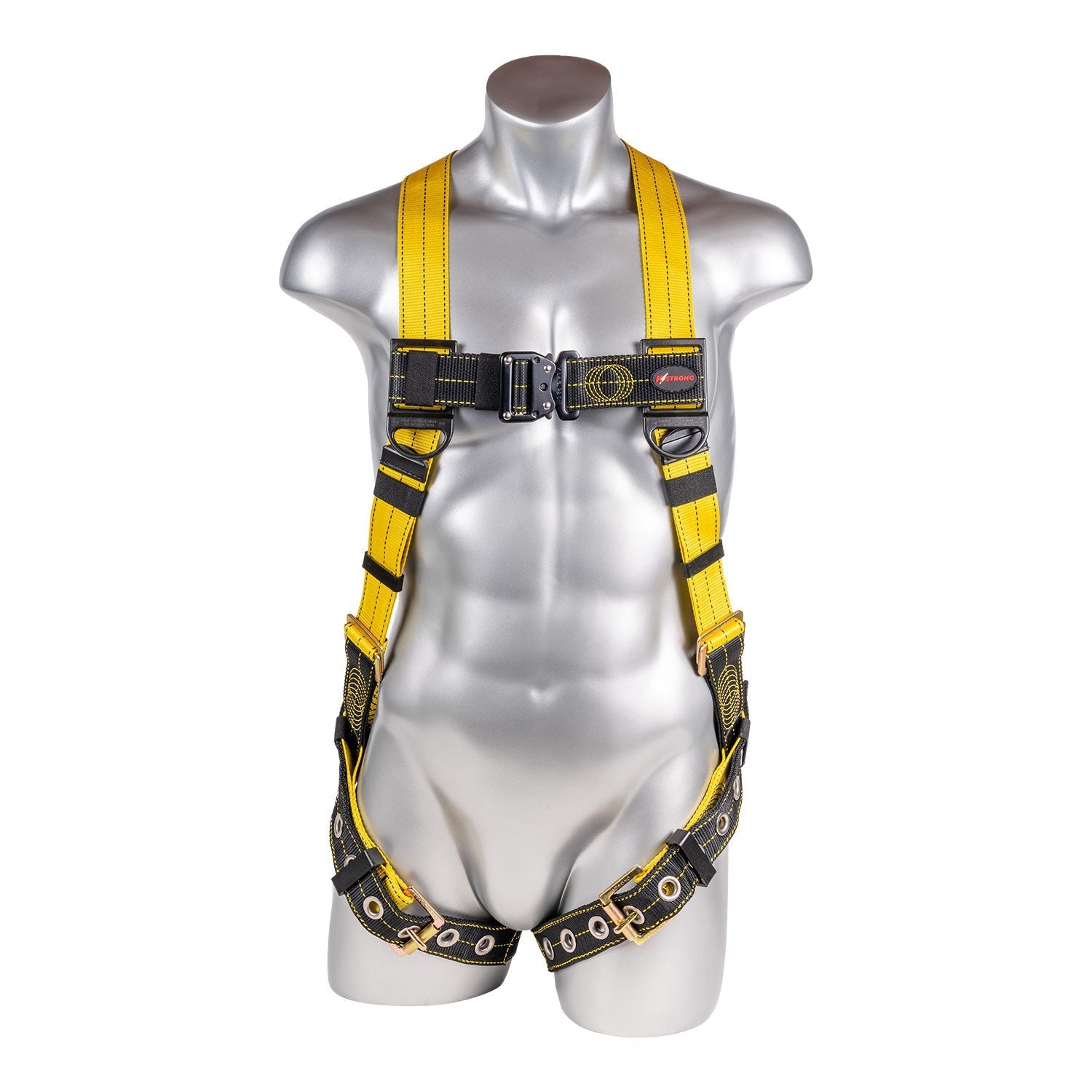
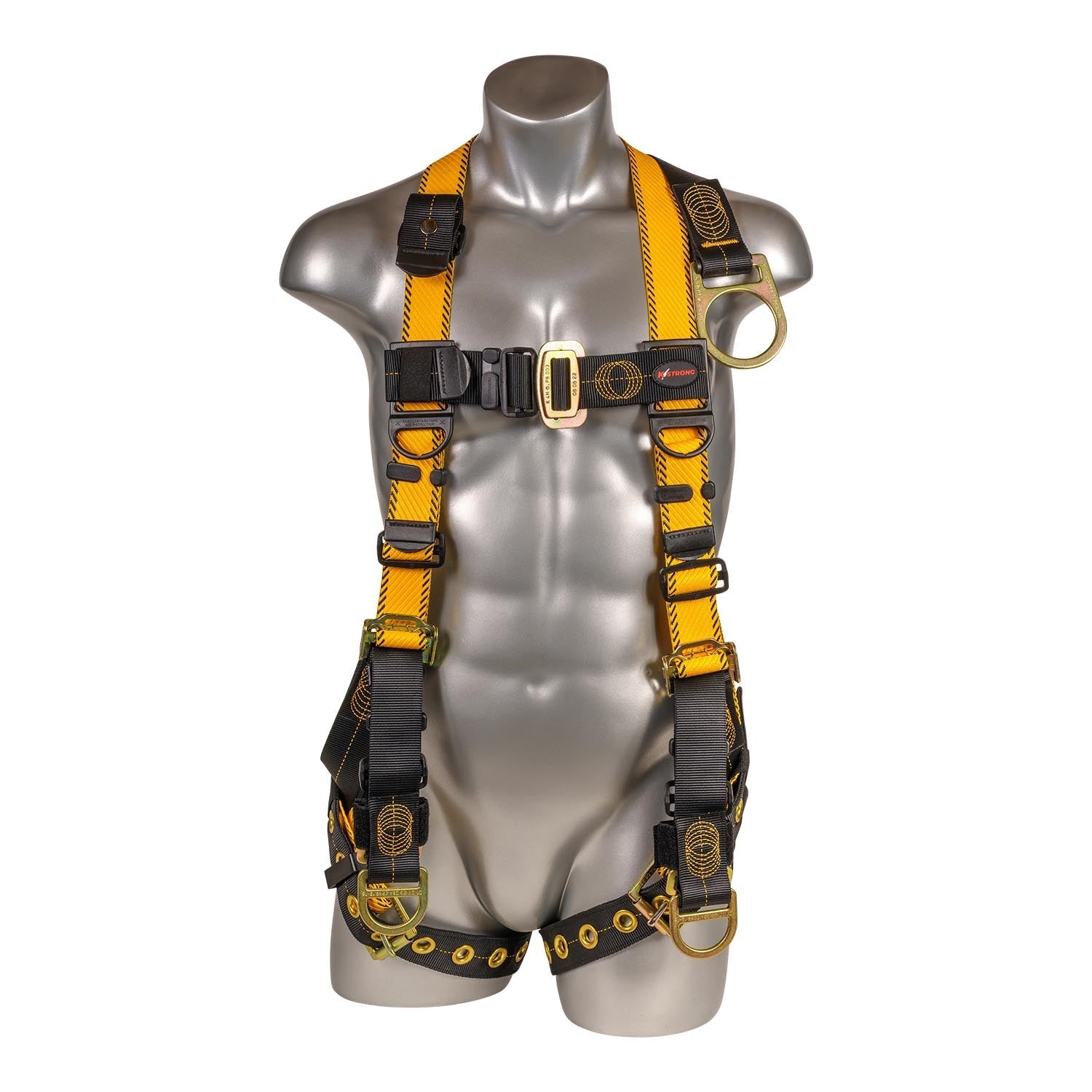
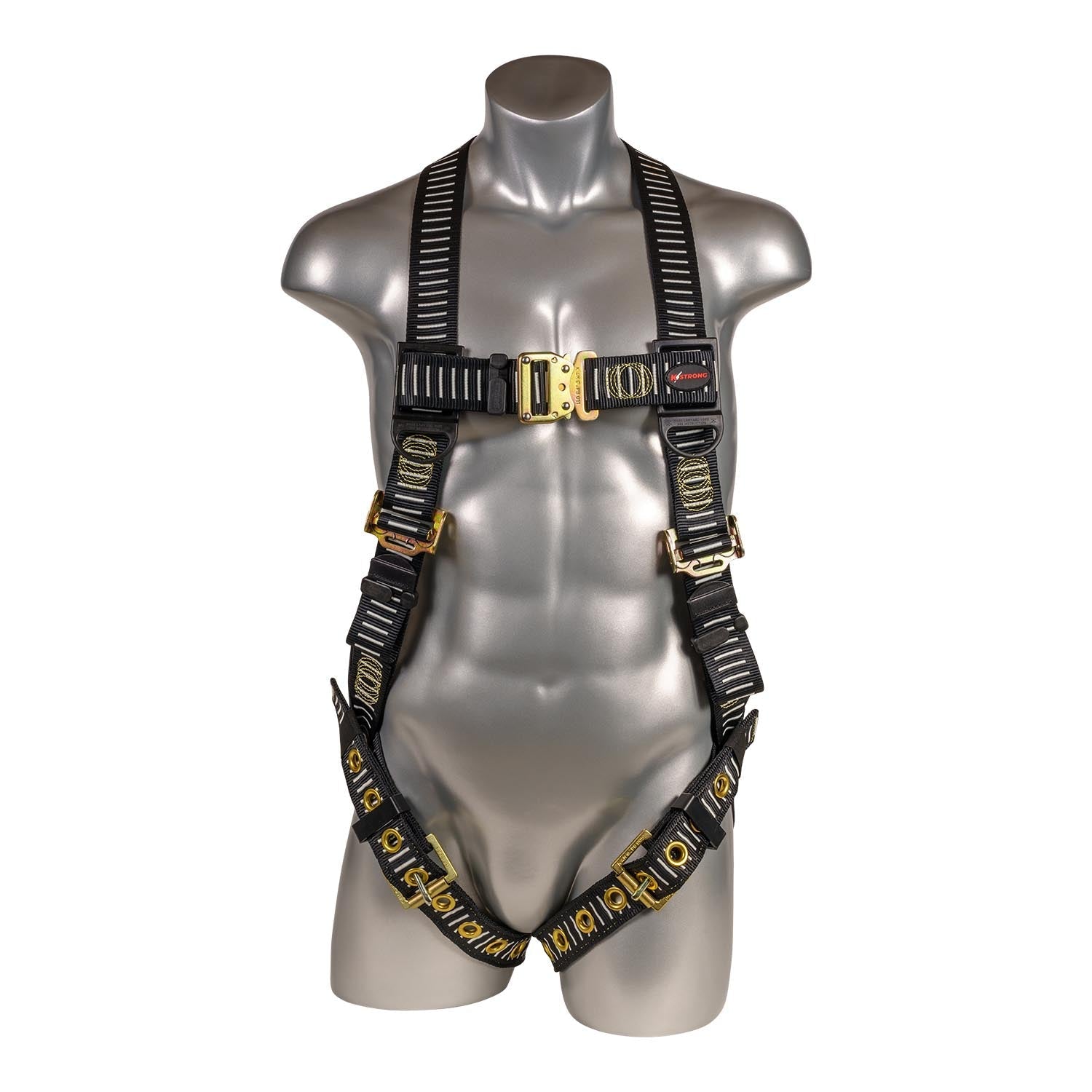
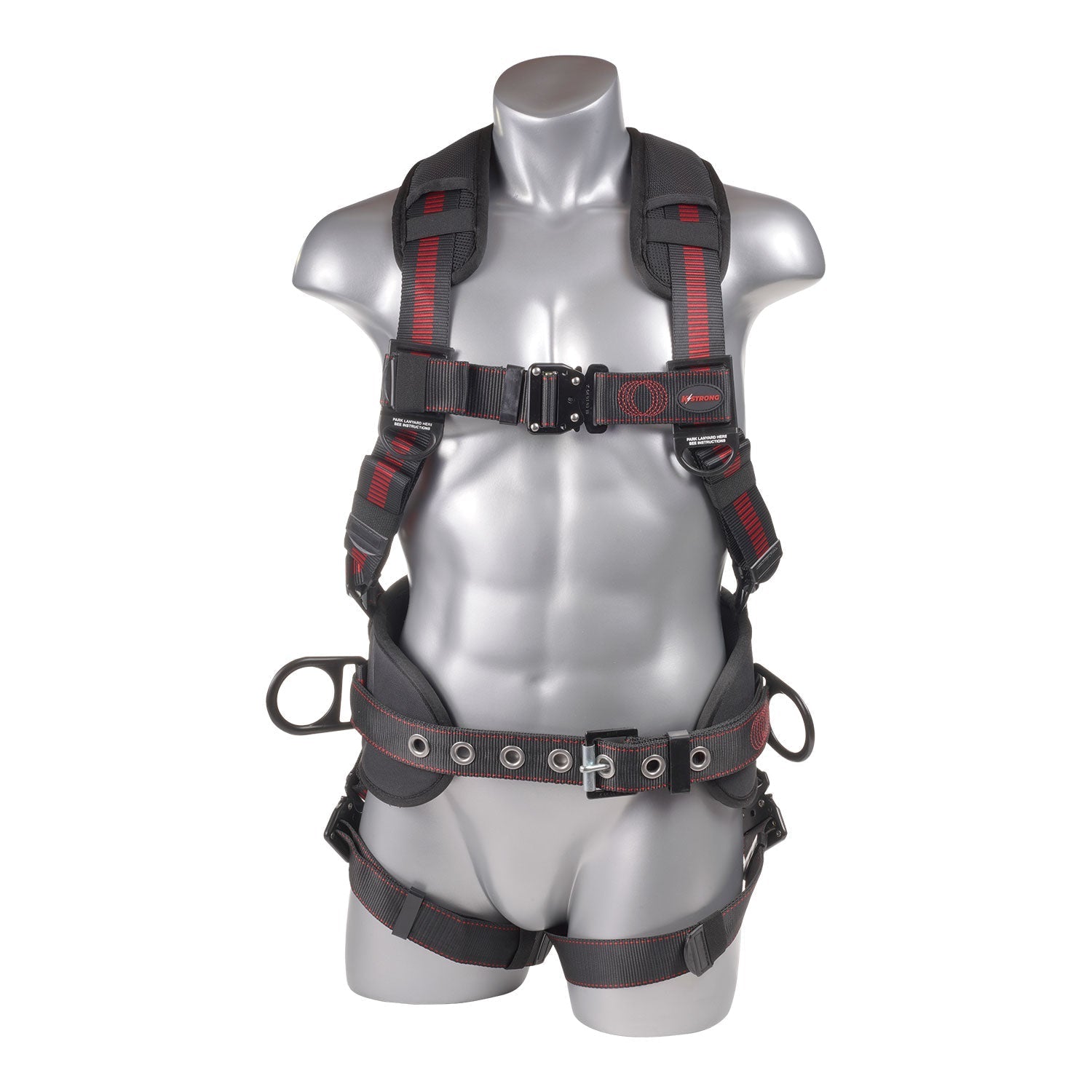
The harness is sized to the shift, and the standard is Z359.11. Full body harnesses are built to ANSI/ASSP Z359.11, and every KStrong Kapture harness in safety harnesses carries that rating, so the real differences are comfort and attachment points. The 3-point Essential is the value pick for occasional work at height. The 5-point Elite adds chest and side D-rings for positioning, and the Element version is webbed with Revolta oil and water repellent treatment for crews who spend the day around drilling fluid and grime. If a harness is worn eight hours a day, padding and hardware placement stop being luxuries; a harness that hurts gets loosened, and a loose harness concentrates arrest forces where they injure. For long suspended work we also stock bosun chairs with rigid boards, which take the load off the harness during the hang.
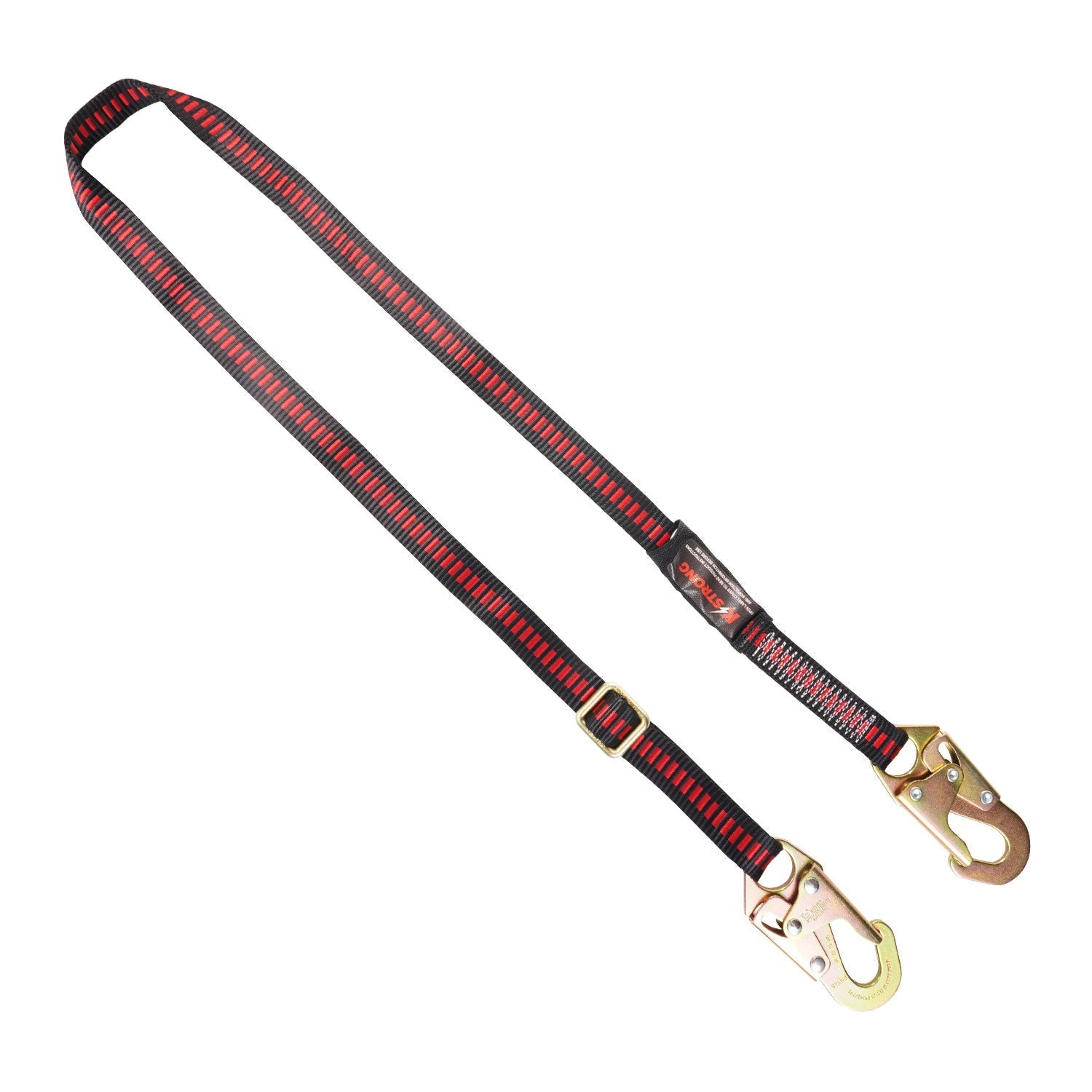
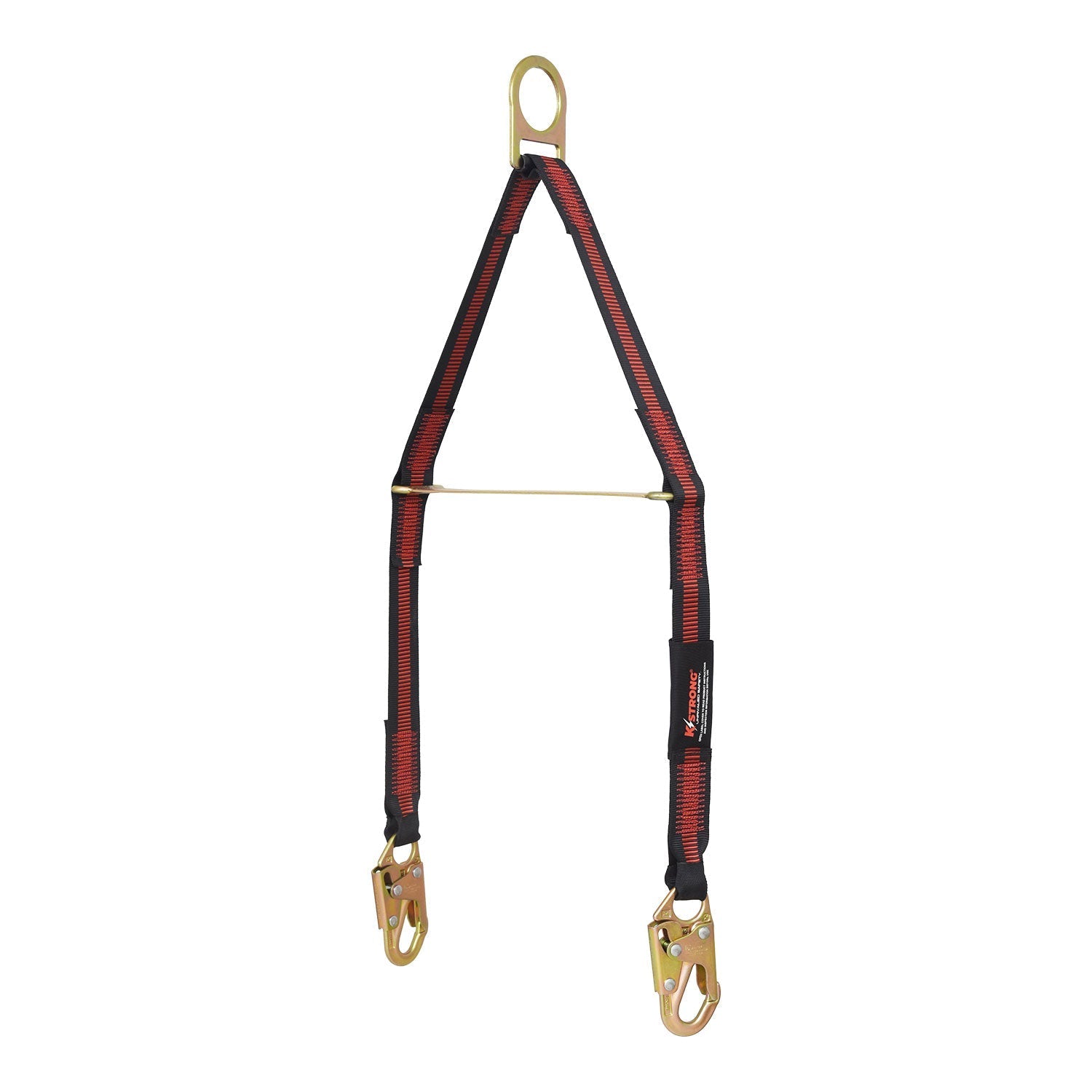
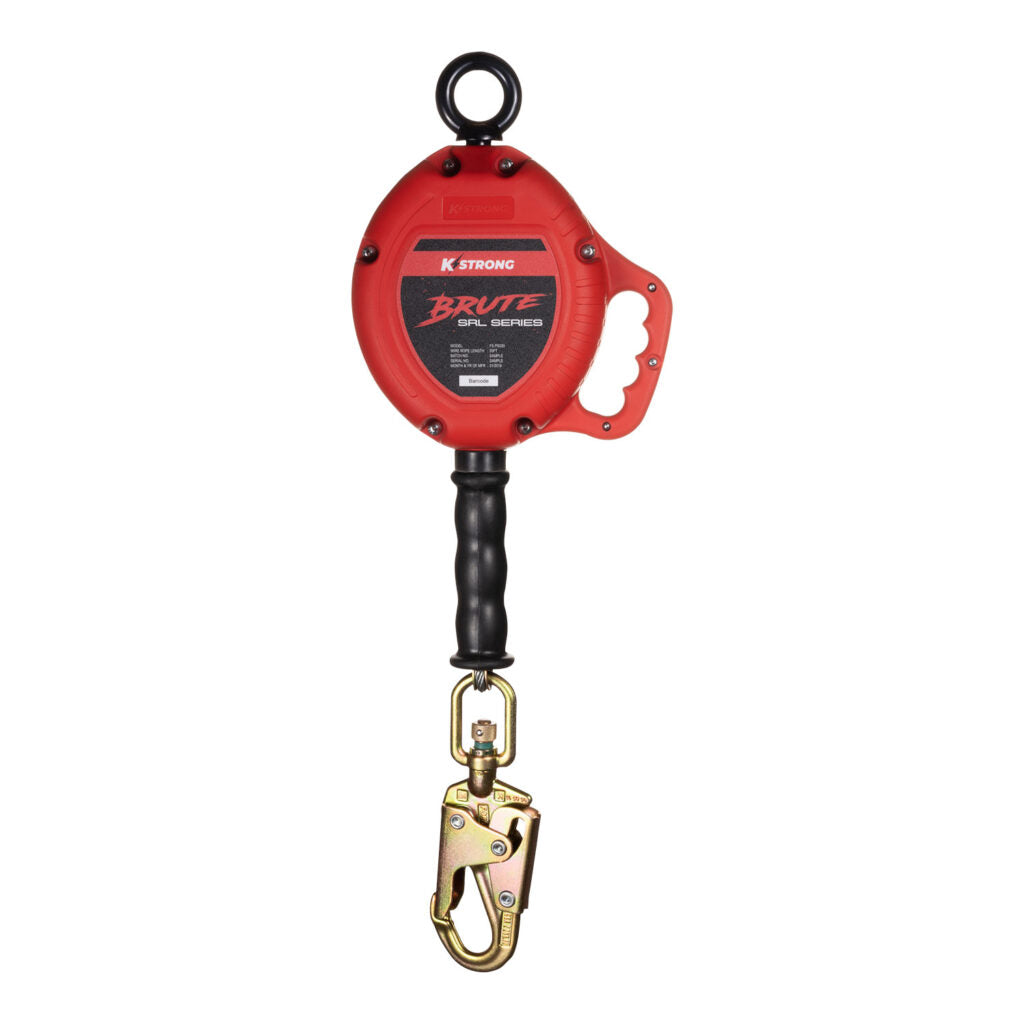
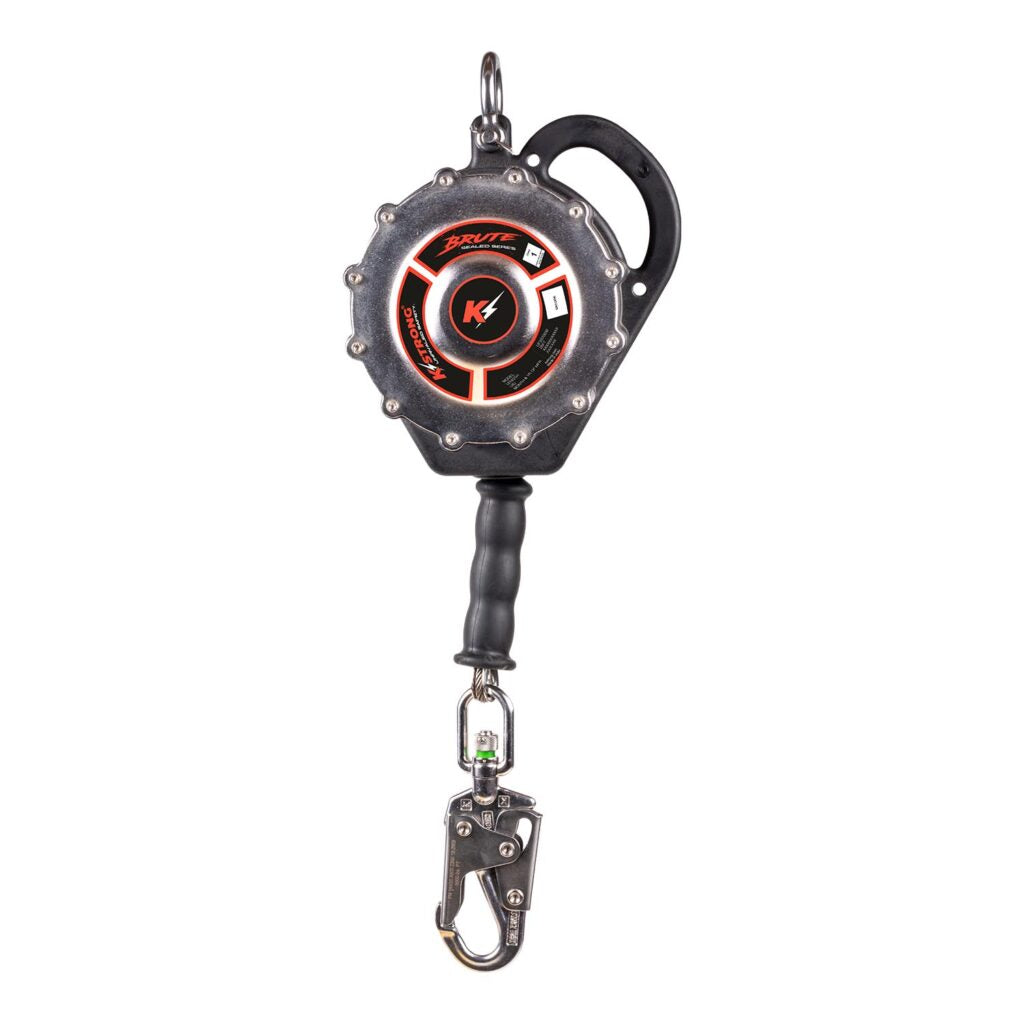
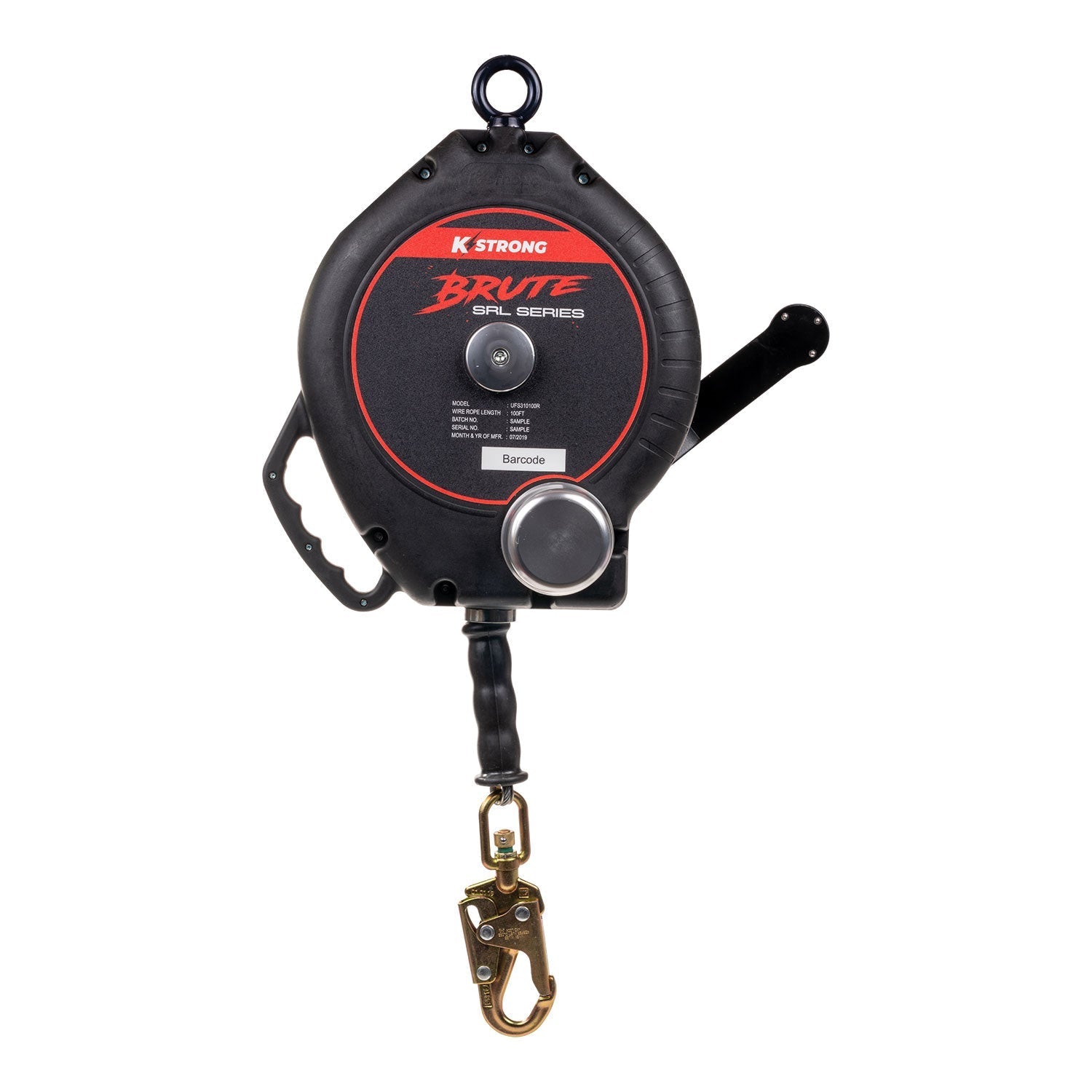
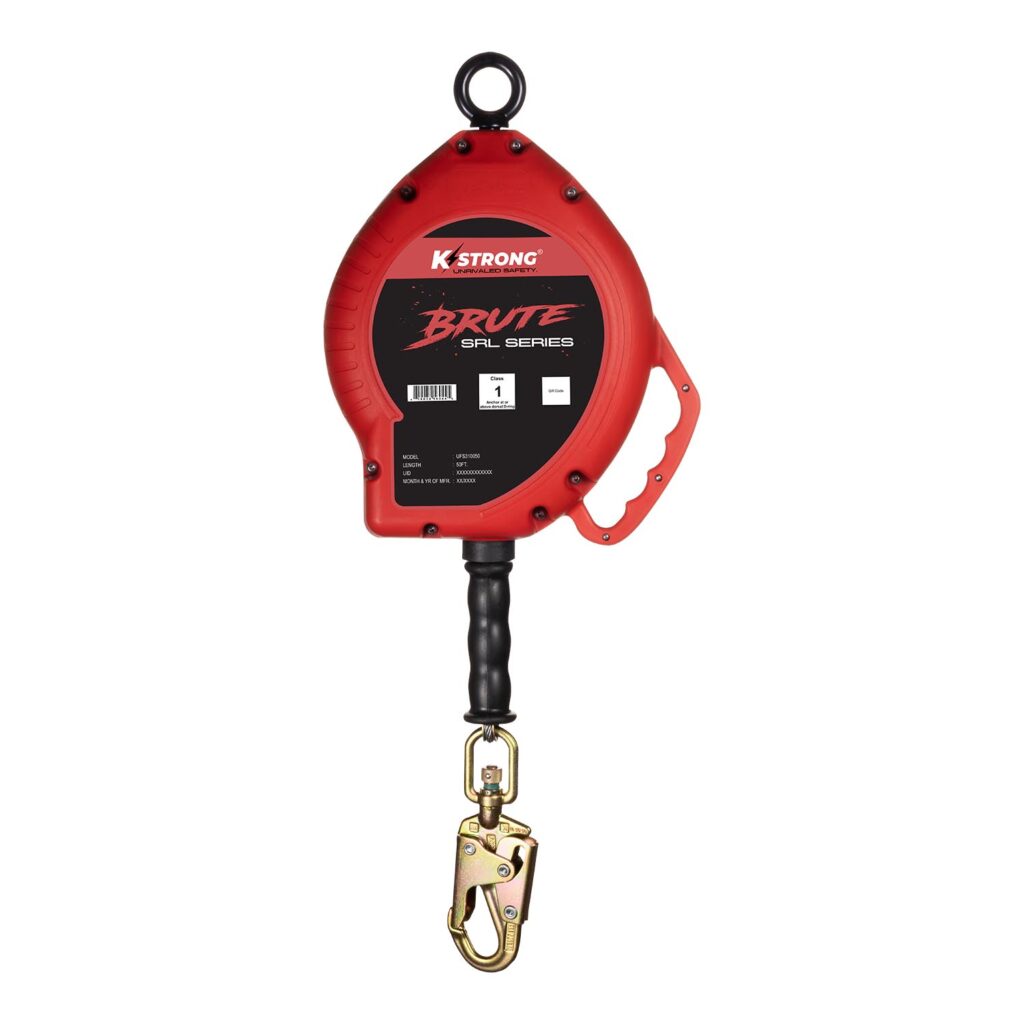
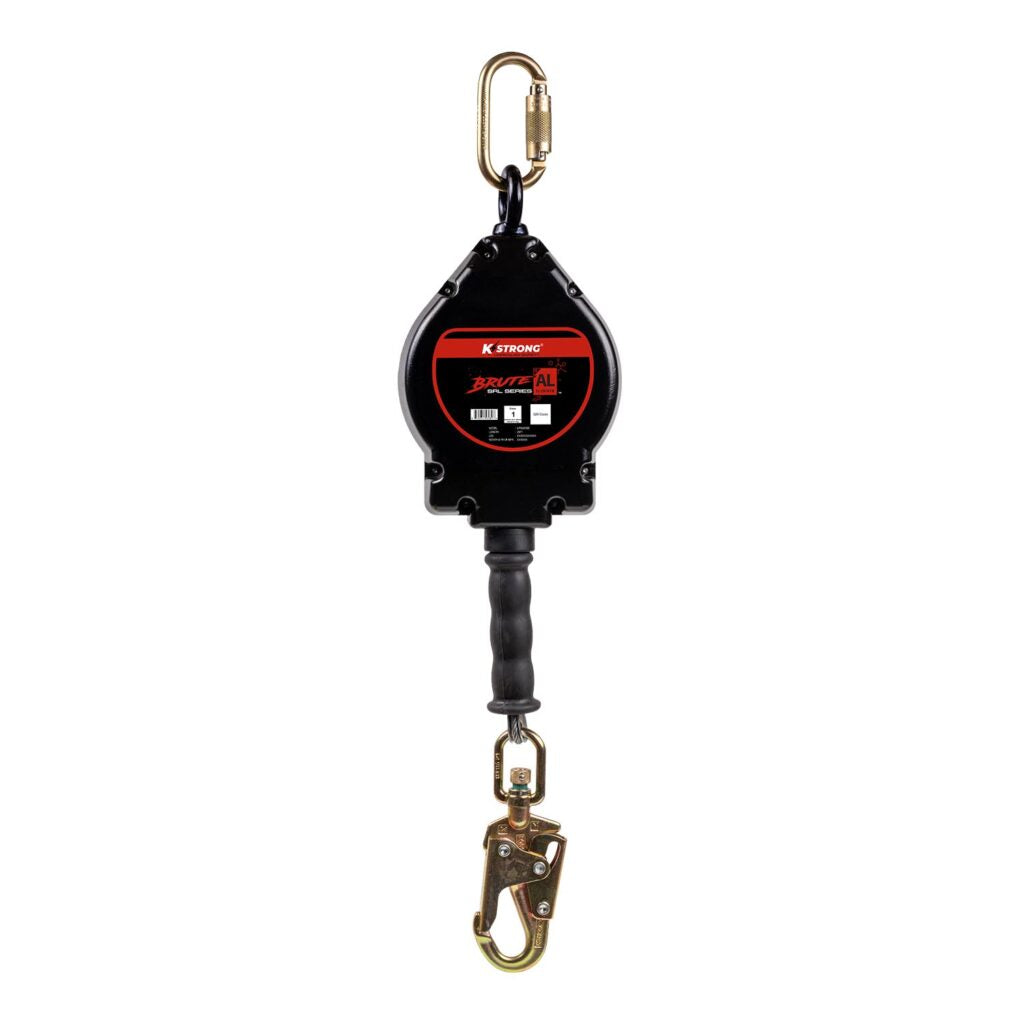
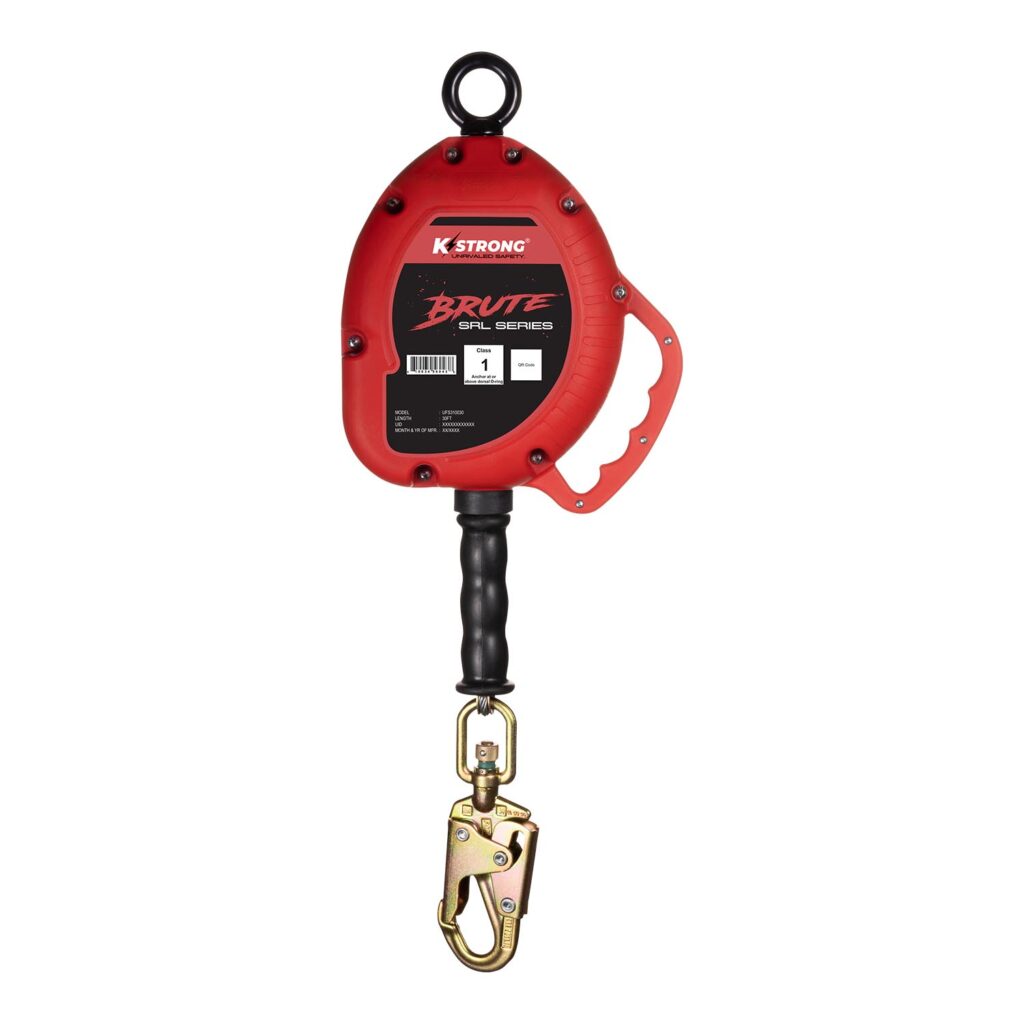
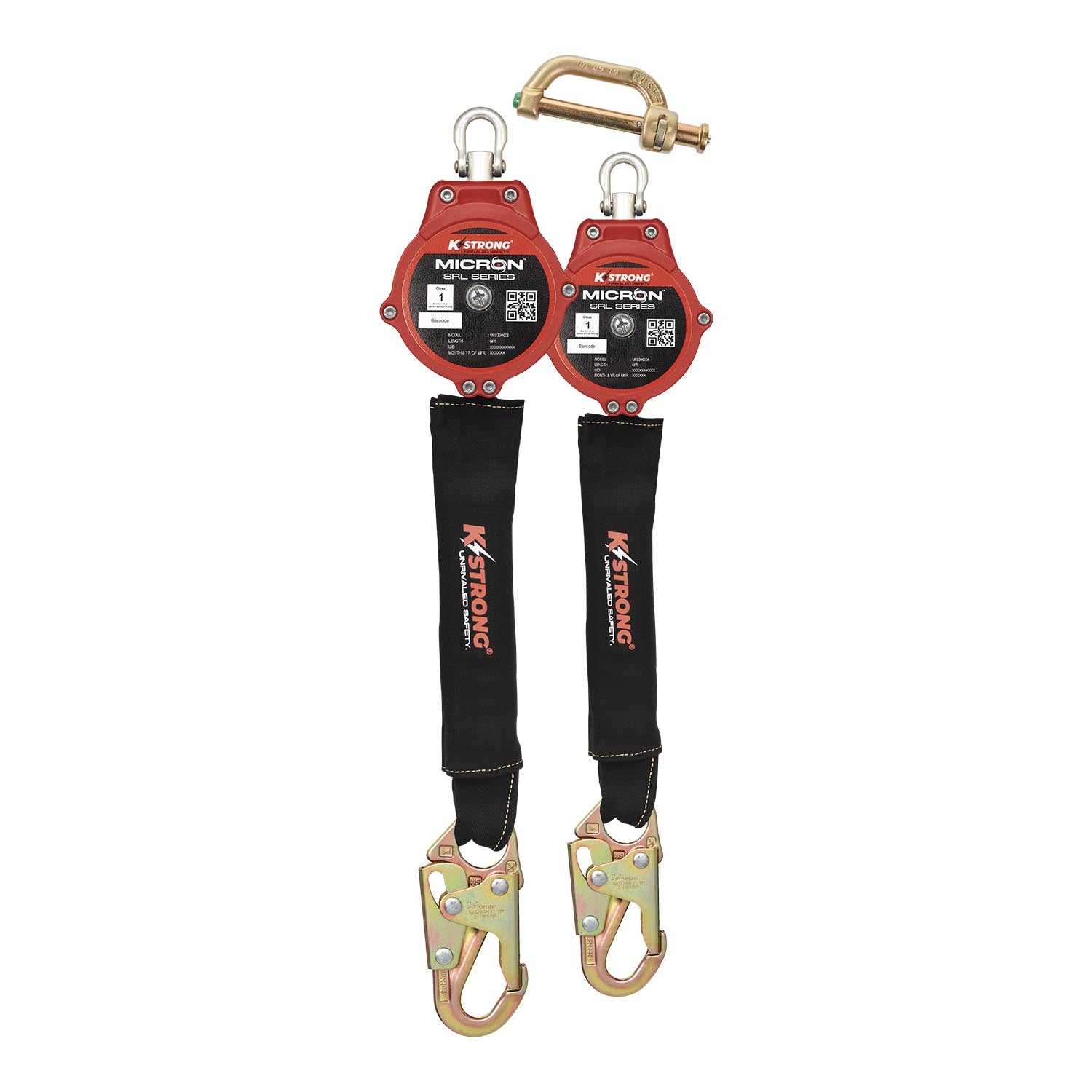
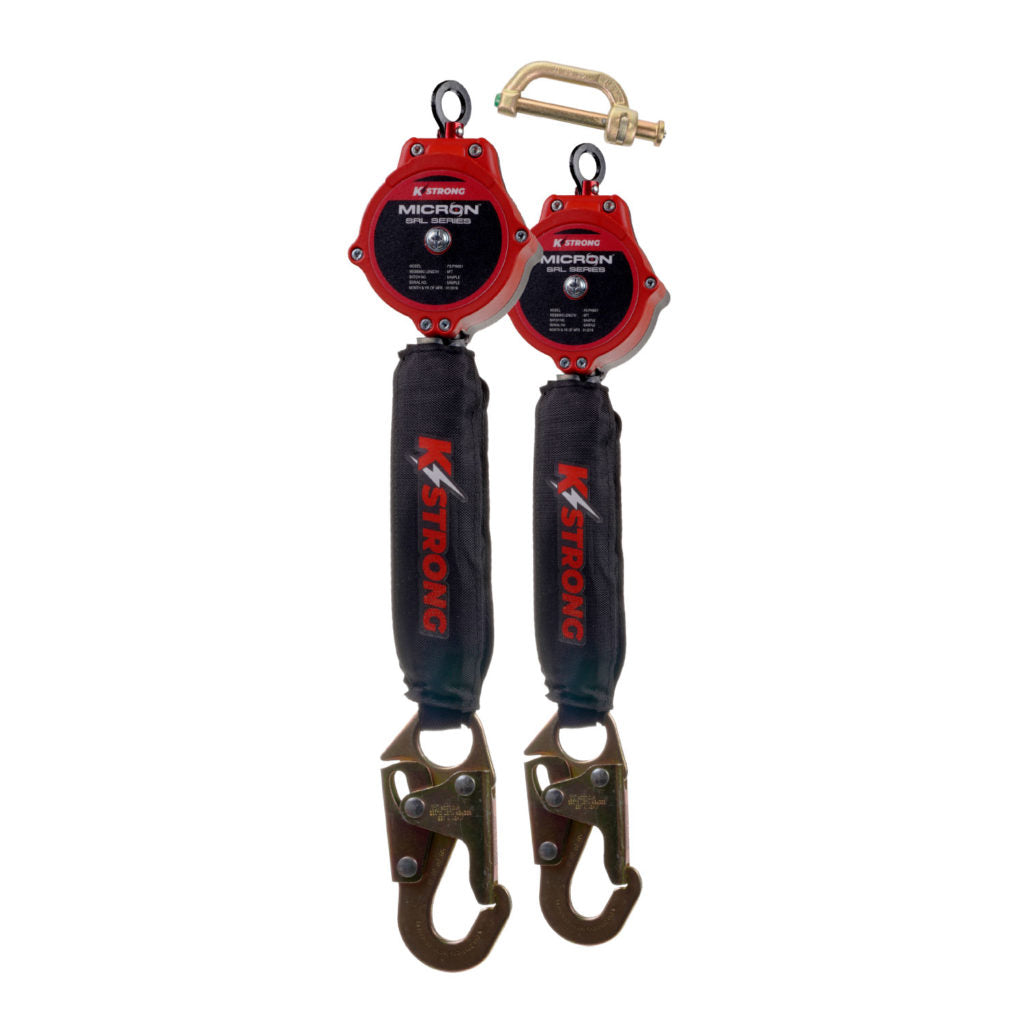
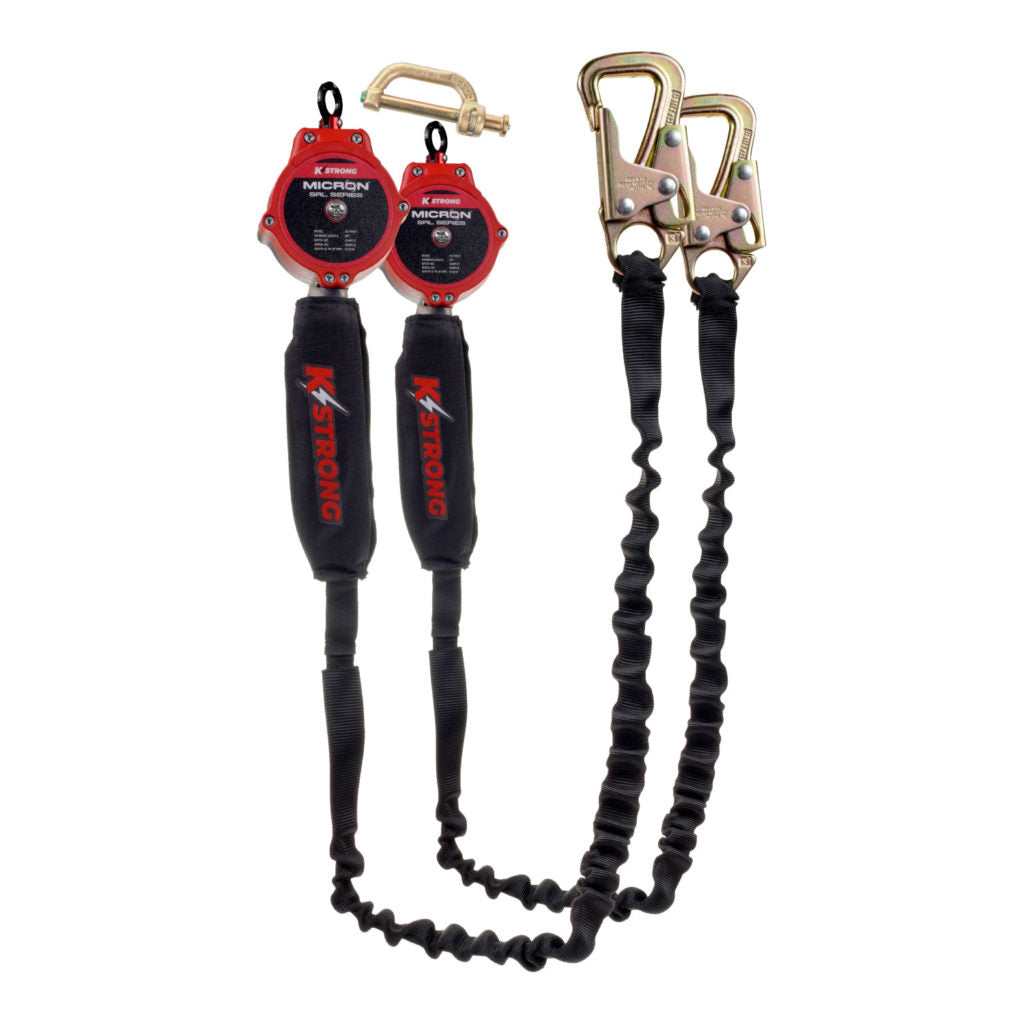
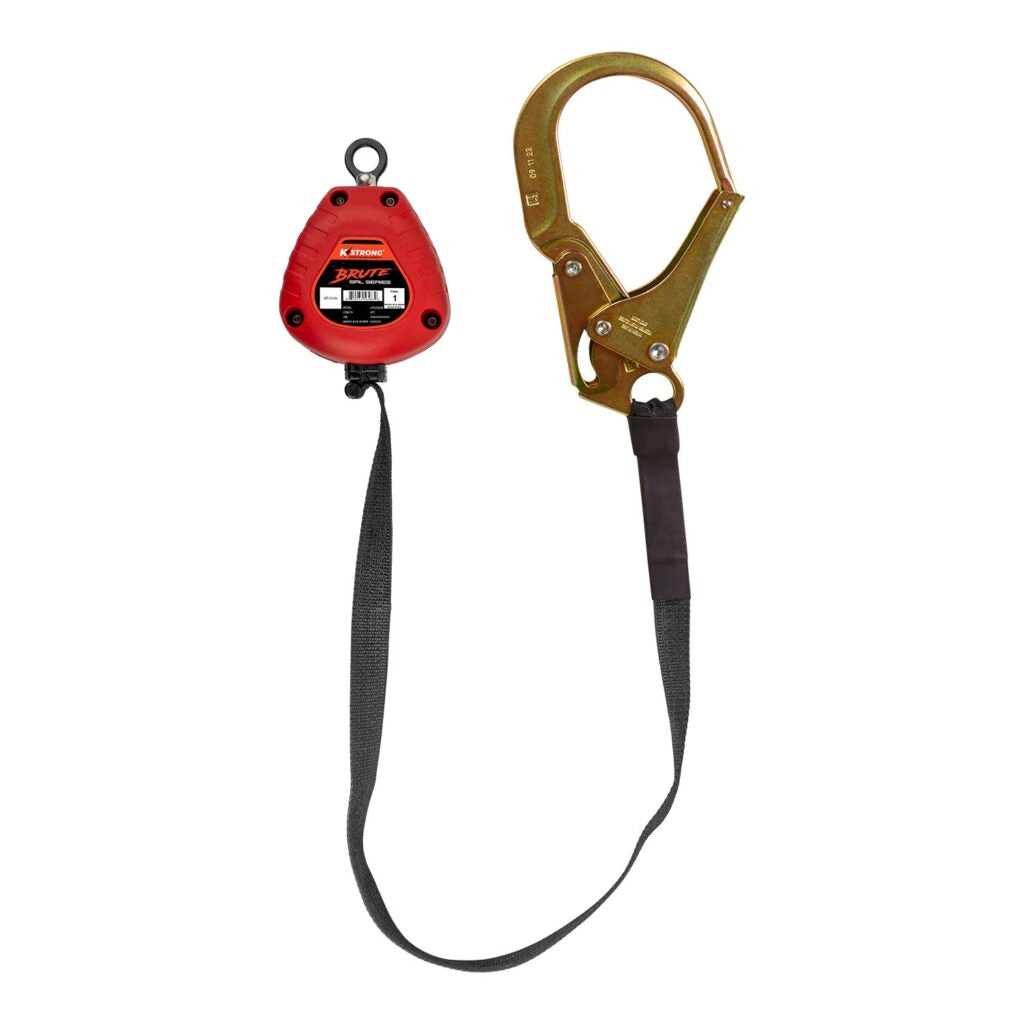
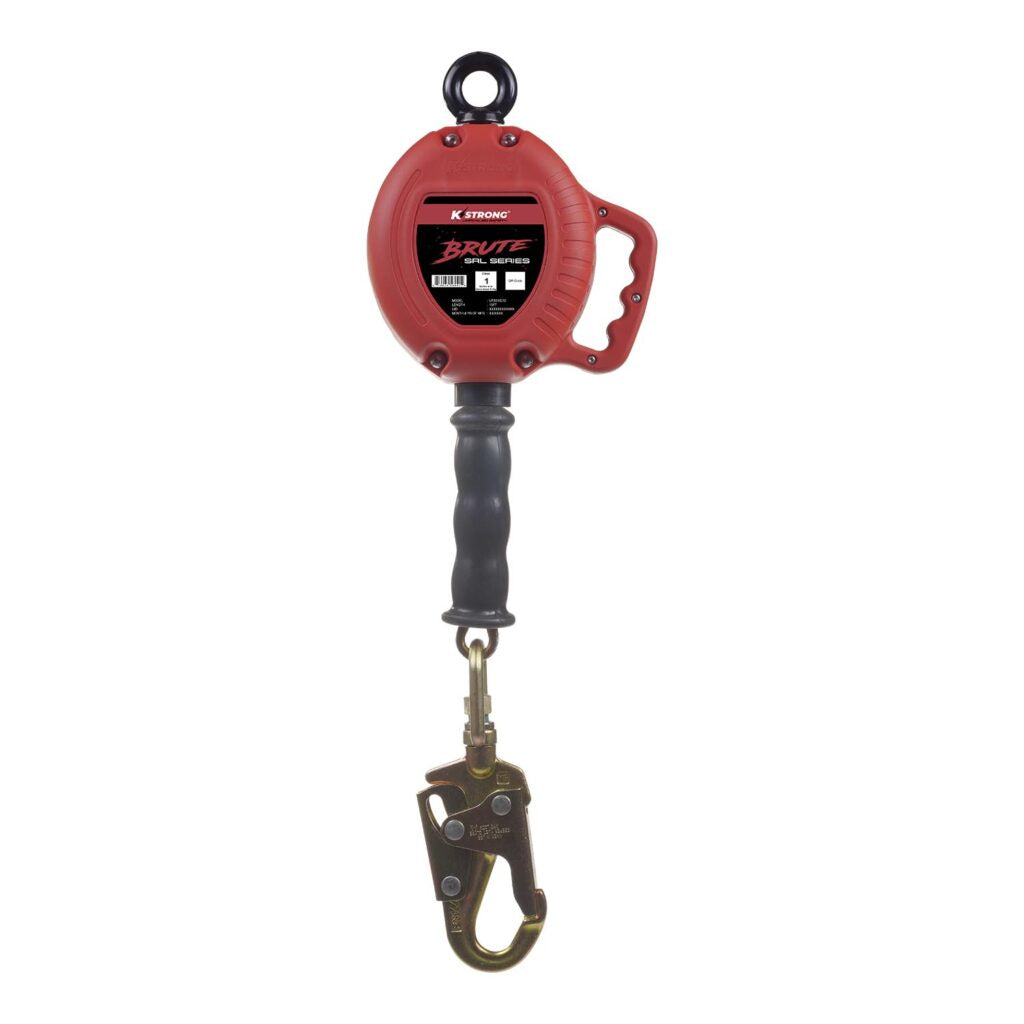
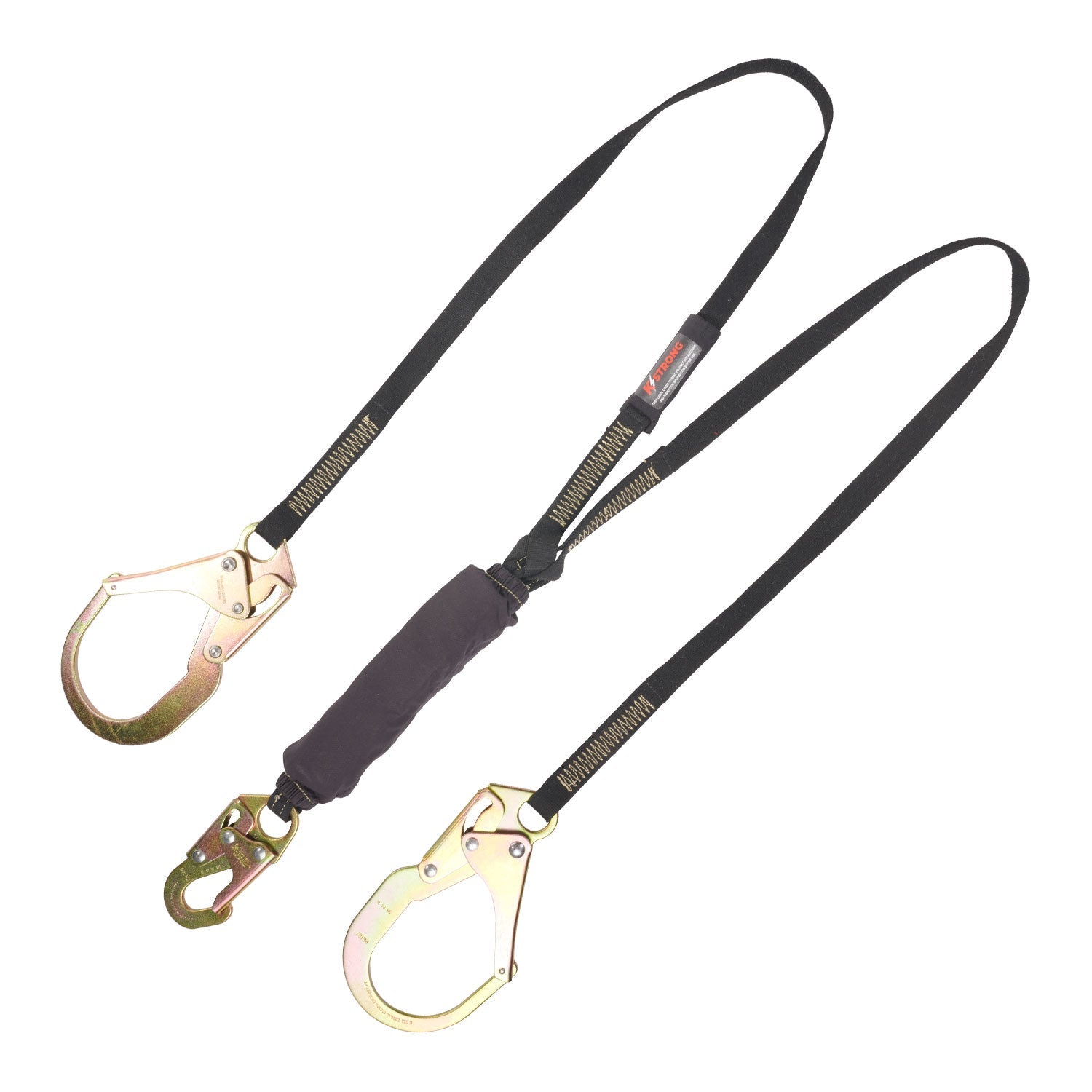
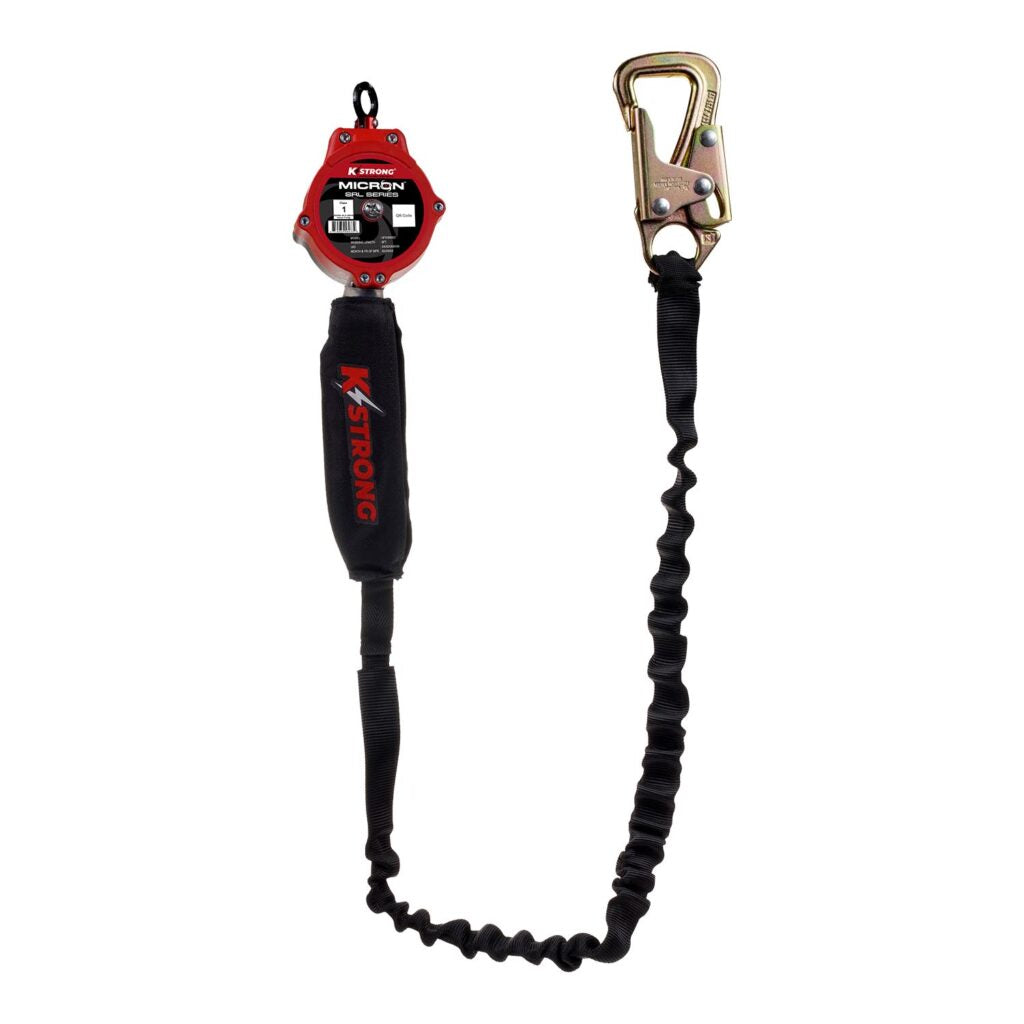
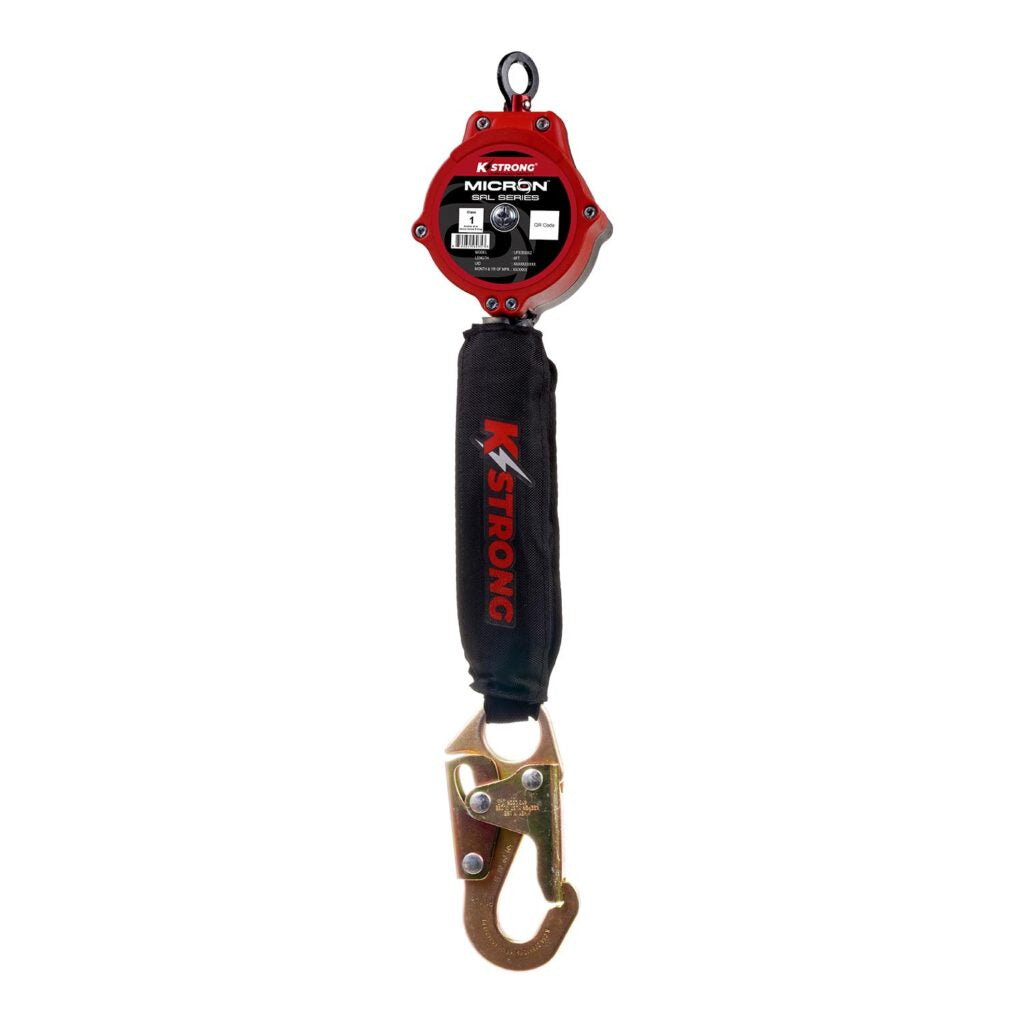
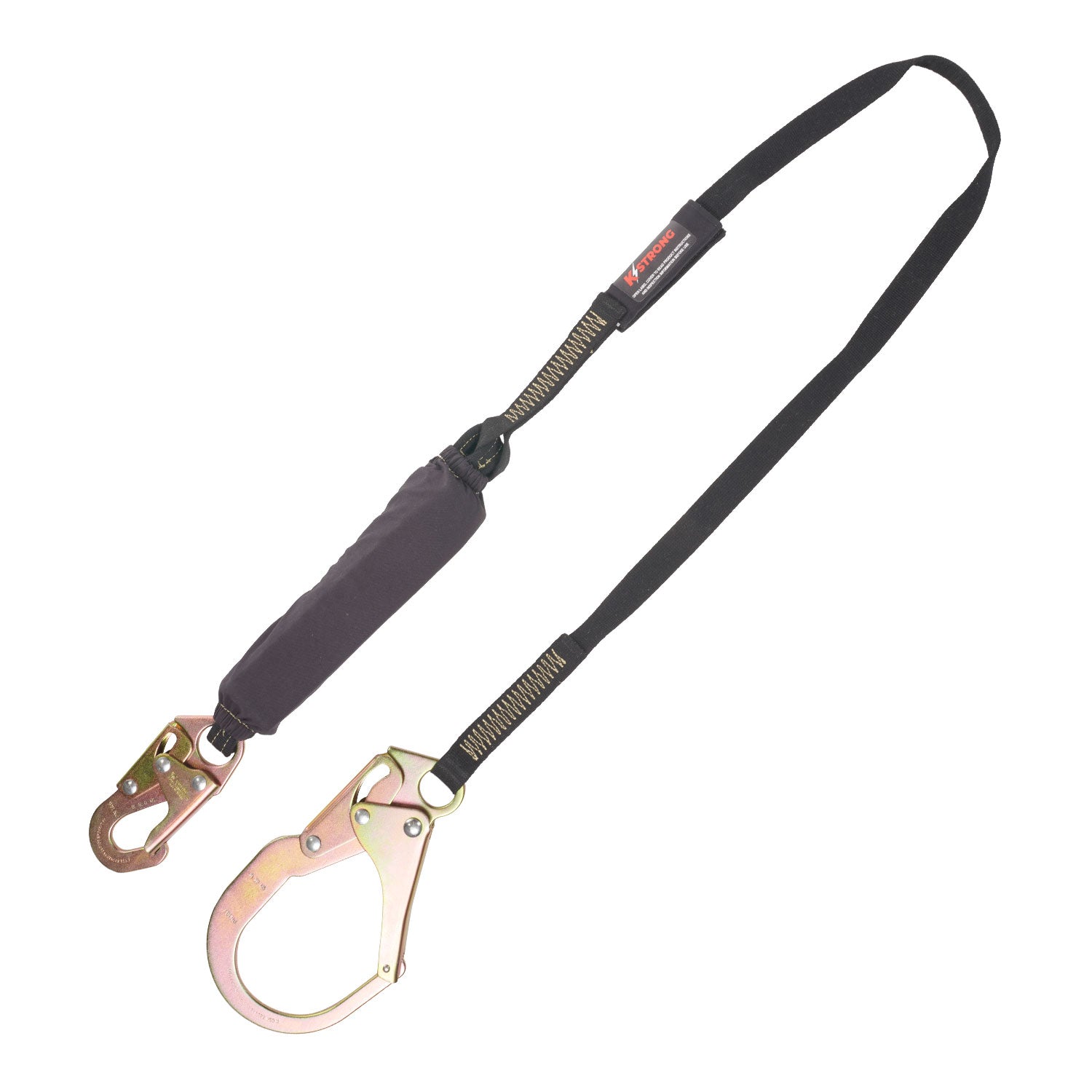
Lanyard or SRL is a fall clearance question. OSHA caps free fall at 6 ft and arresting force at 1,800 lb with a full body harness, and the connecting device is what does the capping. A 6 ft shock absorbing lanyard lets you fall its full length before the absorber pays out, so total clearance below the working surface can run well past 15 ft once you add deceleration distance, harness stretch, and margin. A self-retracting lifeline stays tensioned to the D-ring and locks within inches, which is why SRLs win any job with a lower level in play. Our fall arrest and restraint gear covers adjustable 4.5 to 6 ft shock absorbing and positioning lanyards, including twin leg versions for 100 percent tie-off while moving between anchors, and lifelines runs from 6 ft Micron web SRLs up to 50 ft Brute cable units, with sealed SRLs for dirty environments.
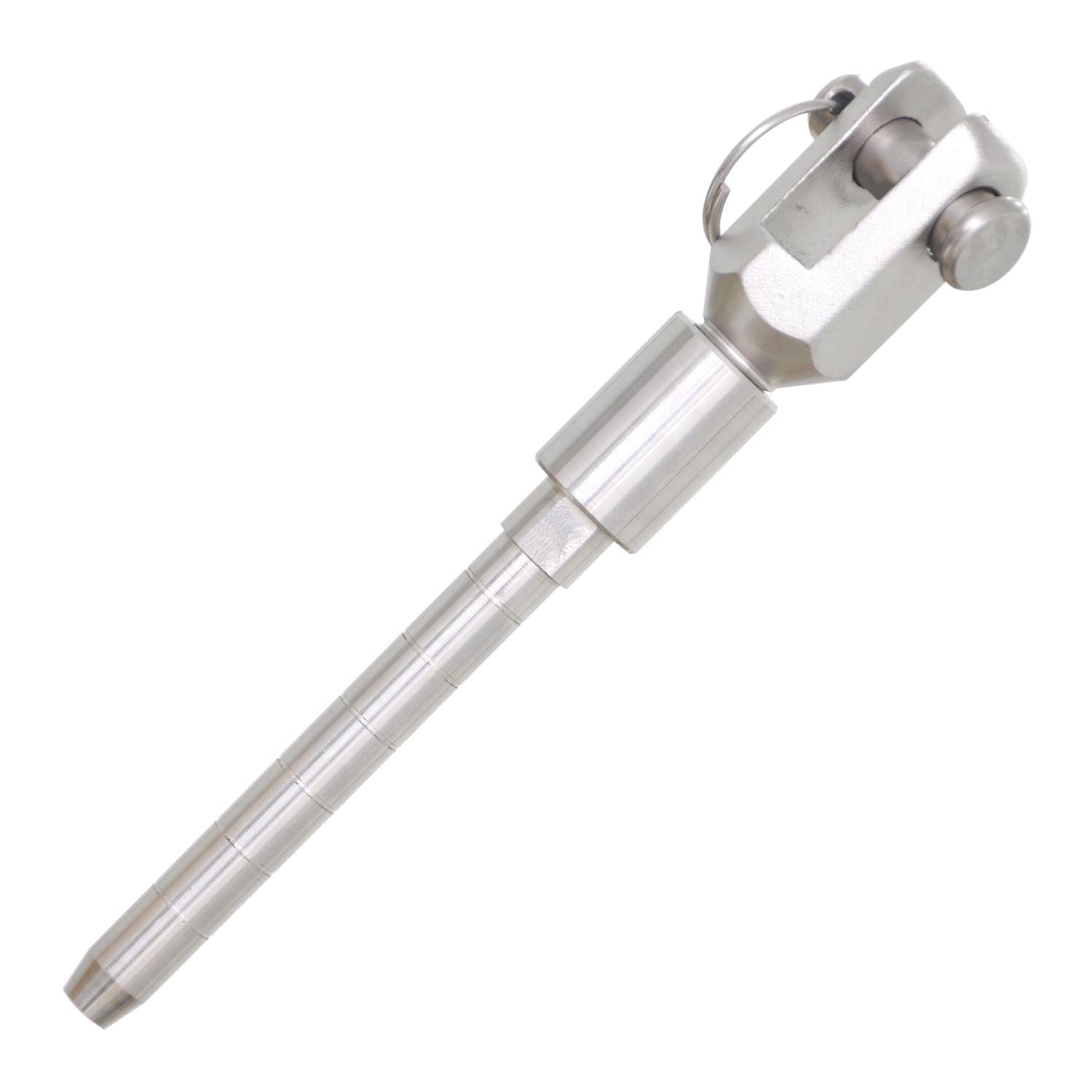
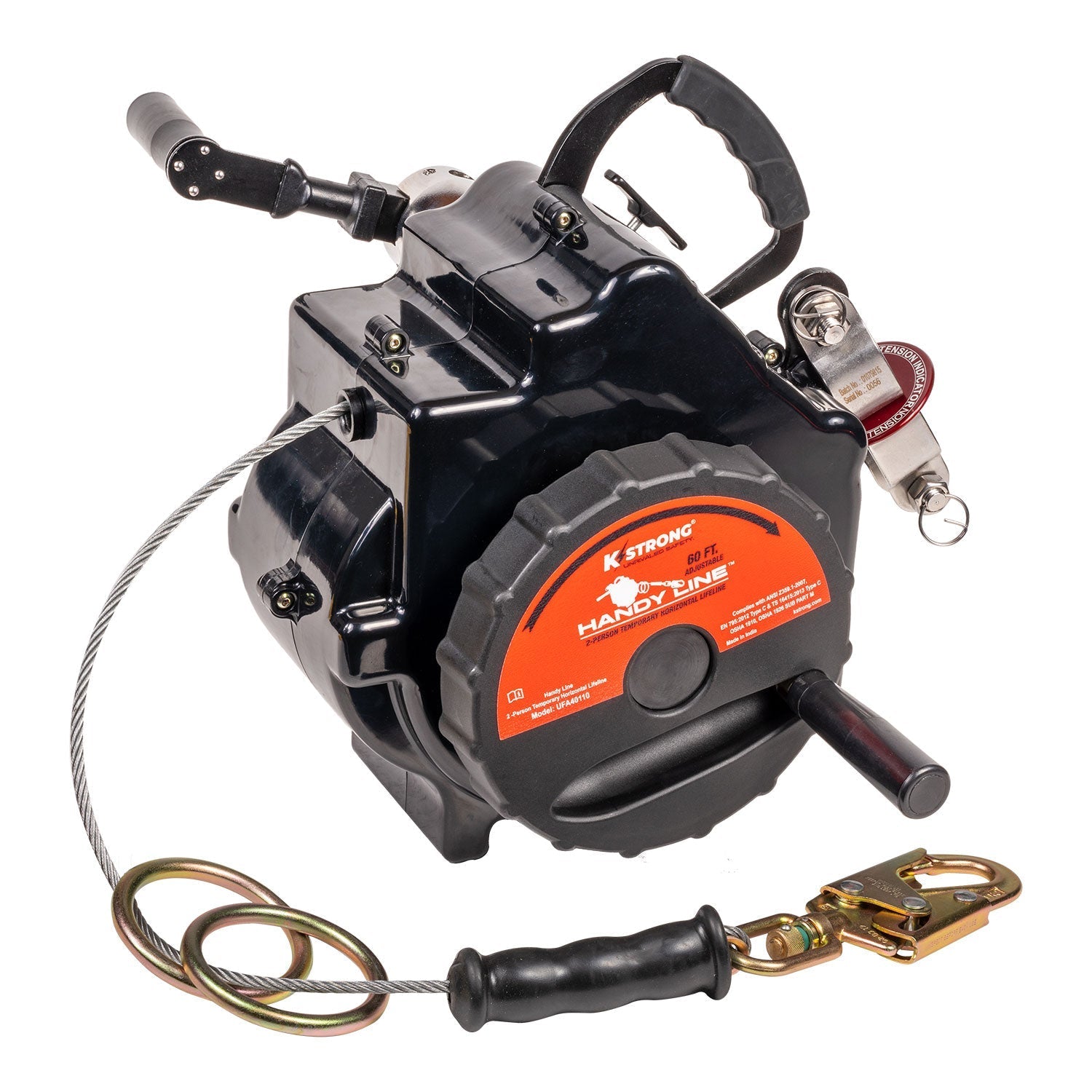
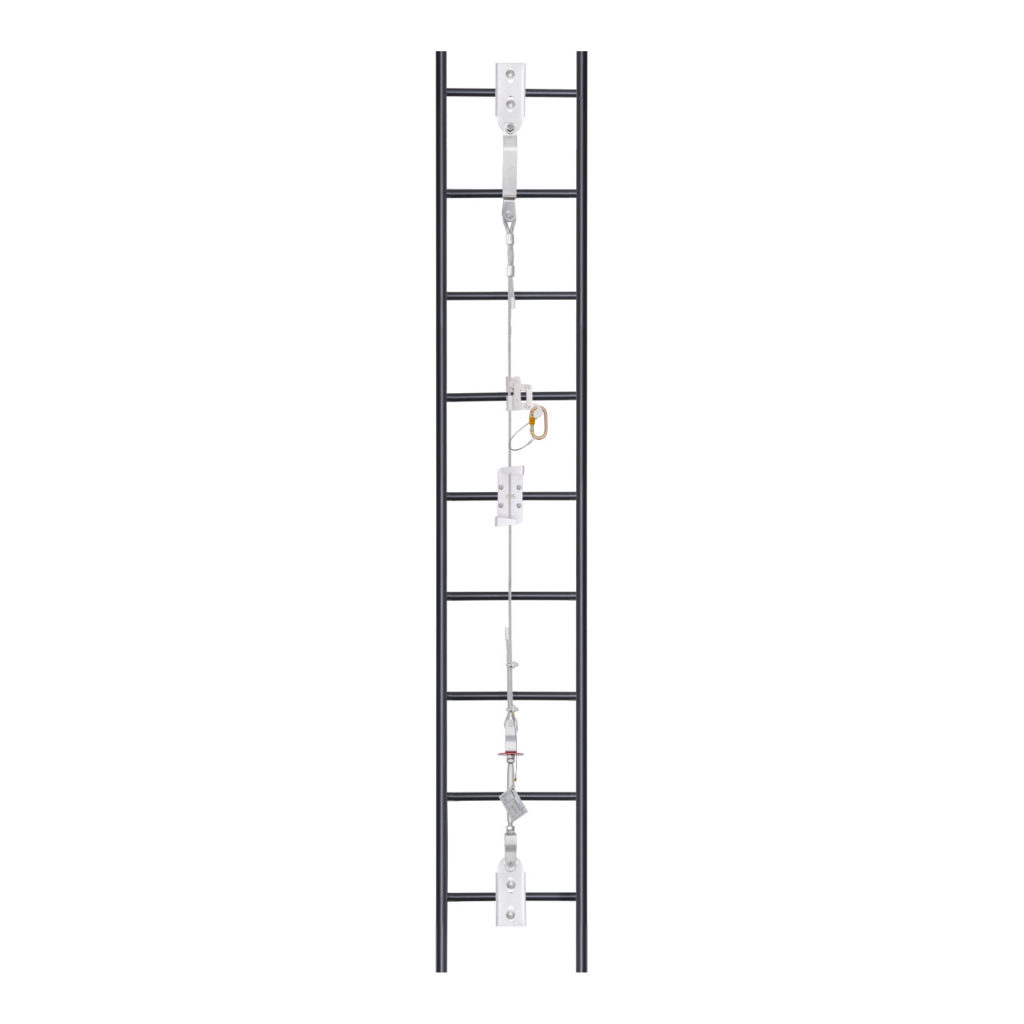
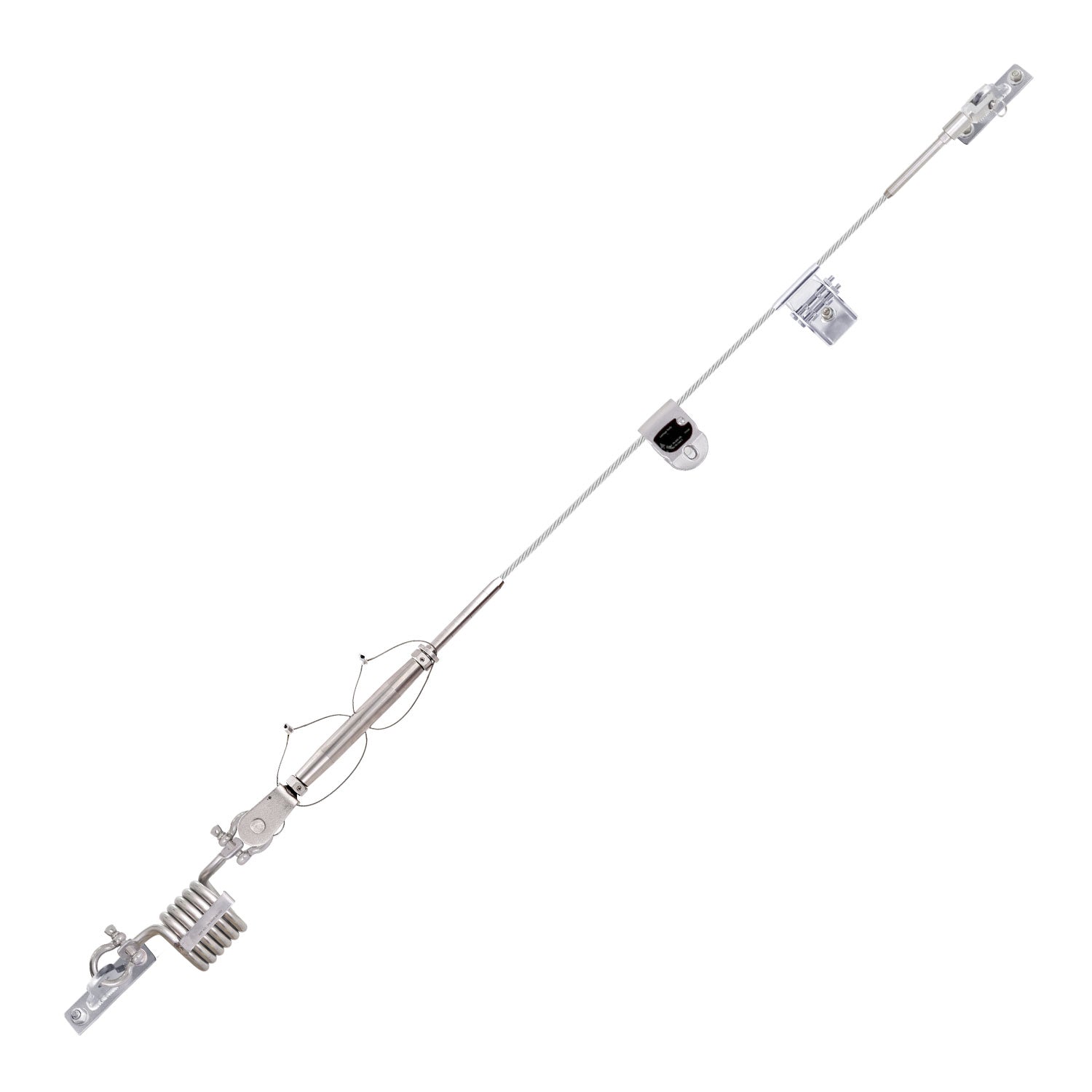
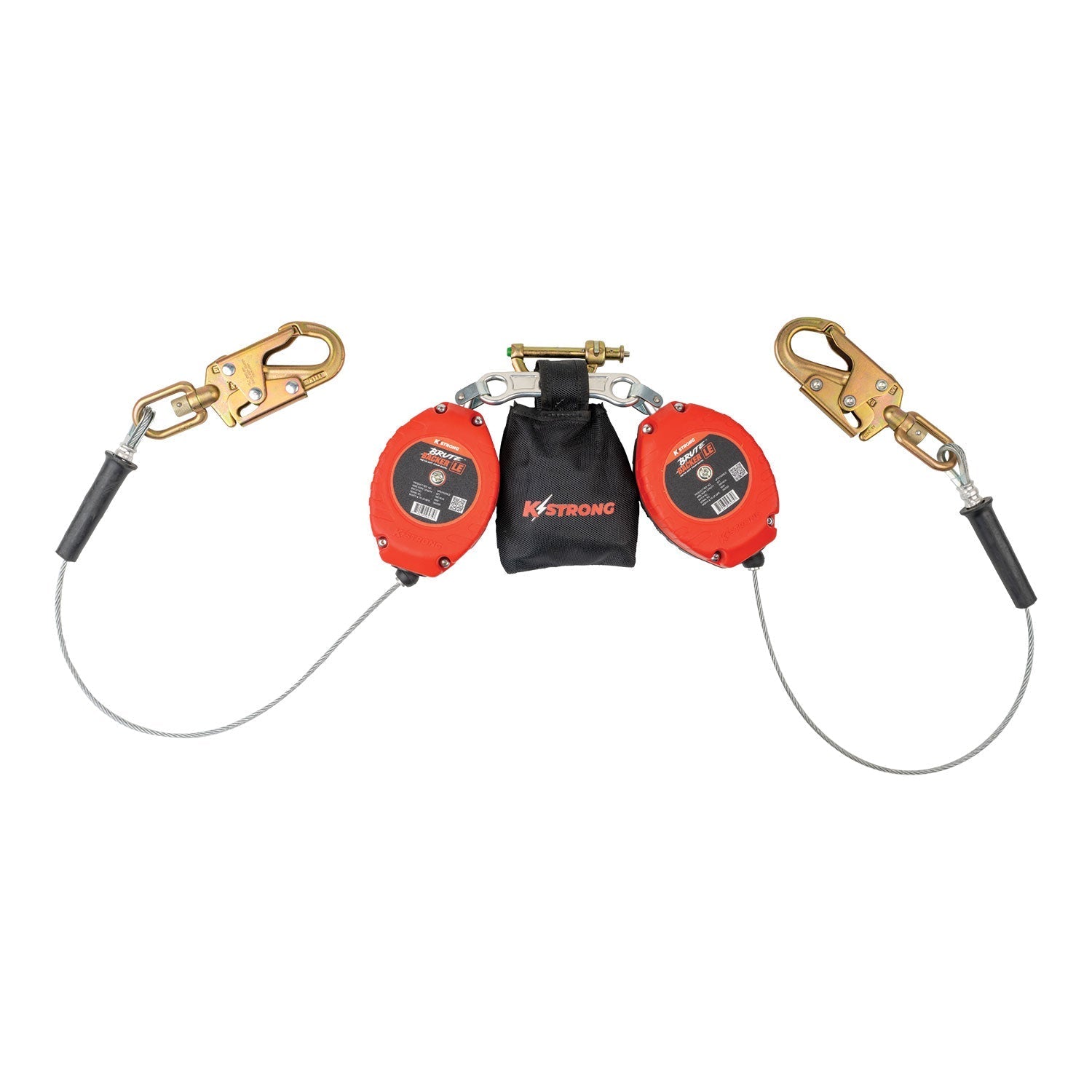
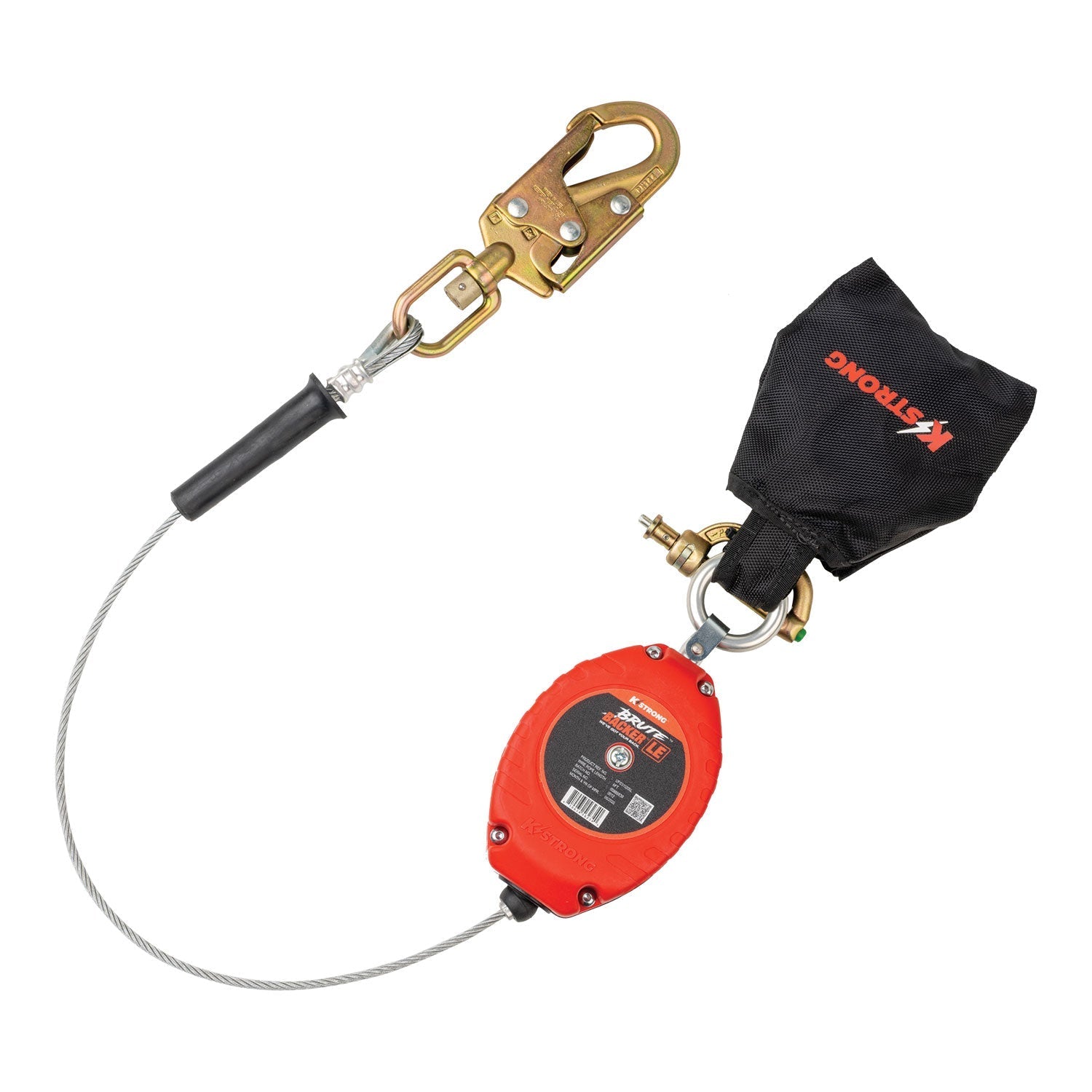
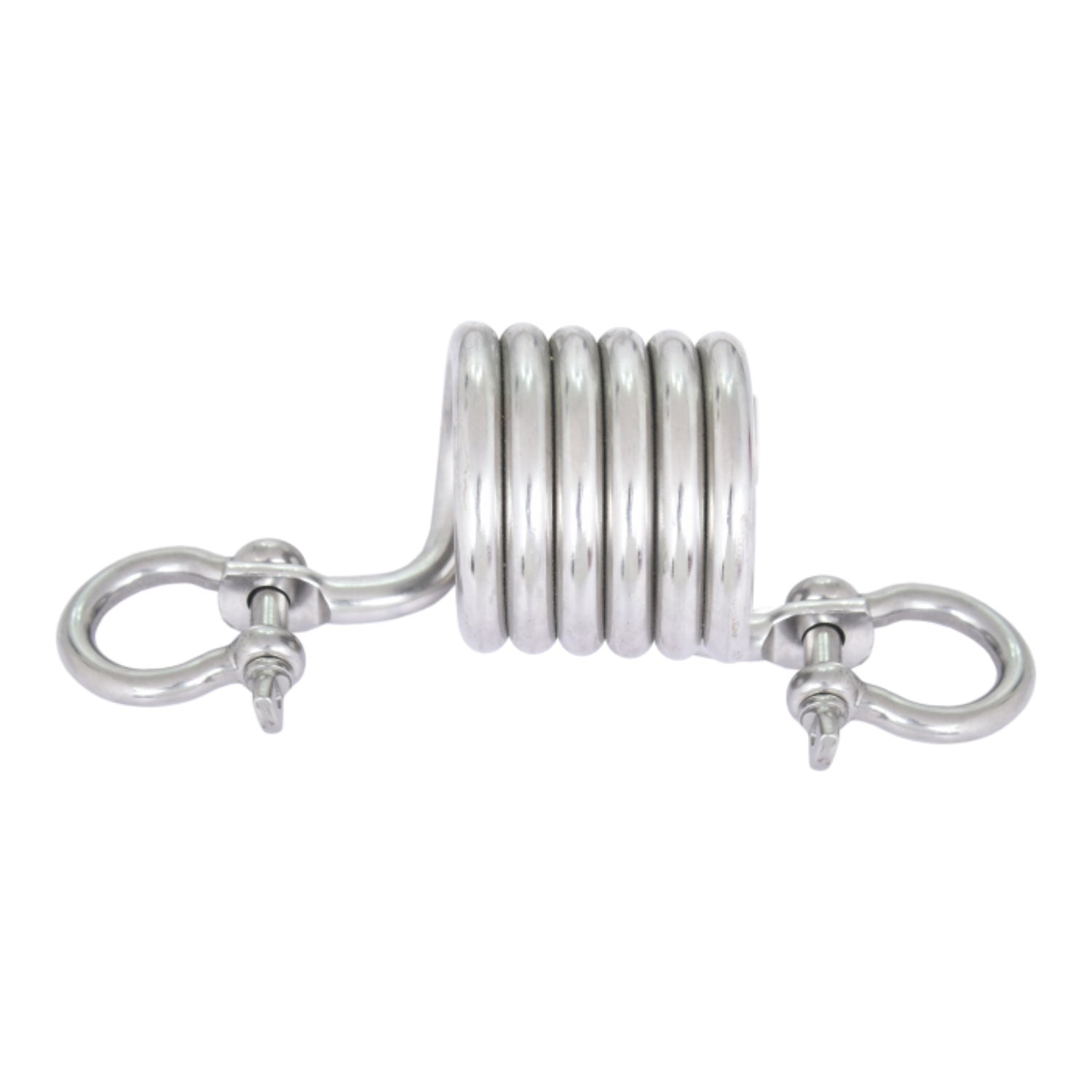
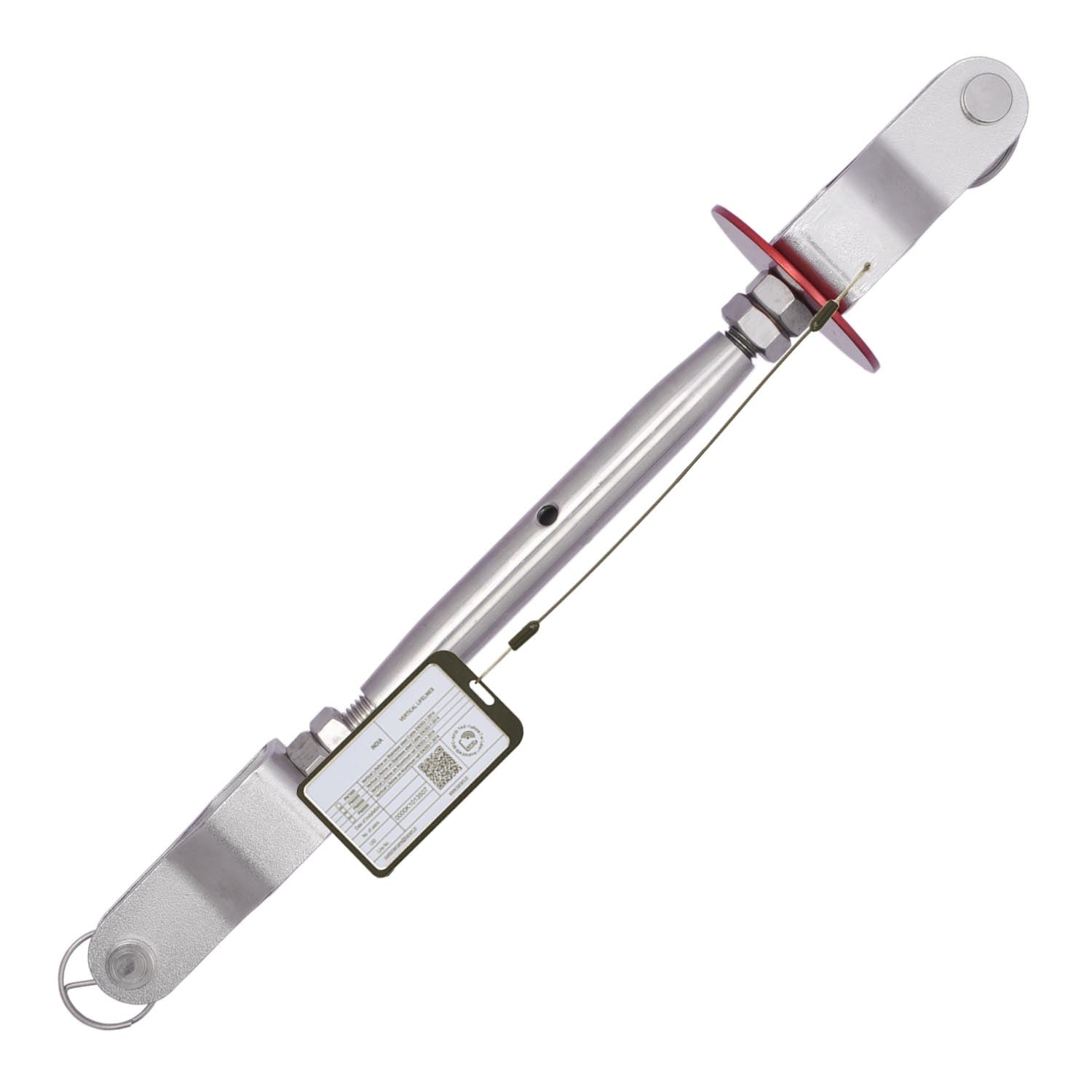
Anchoring below the D-ring is a class question now. The 2021 revision of ANSI Z359.14 split self-retracting devices into two classes. Class 1 devices are for anchorages at or above the dorsal D-ring. Class 2 devices are tested for anchorages below it, down to foot level, and for the leading edge exposure that comes with tying off low, where a fall can drop the line across the edge of a deck. If your anchor point sits below your shoulders, or the line can contact an edge, the label has to say Class 2; the Brute Backer LE single and dual 8.5 ft cable SRLs are built for that assignment. For work strung along a run rather than at a point, the KStrong Handy Line temporary horizontal lifeline covers 60 ft and two workers, and coil shock absorbers, cable extremities, and stainless intermediate brackets support the permanent HLL systems.
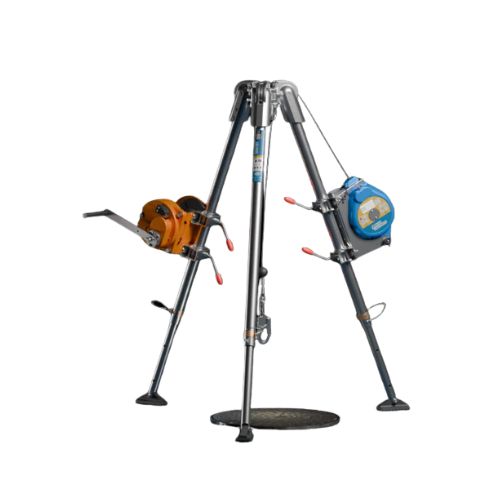
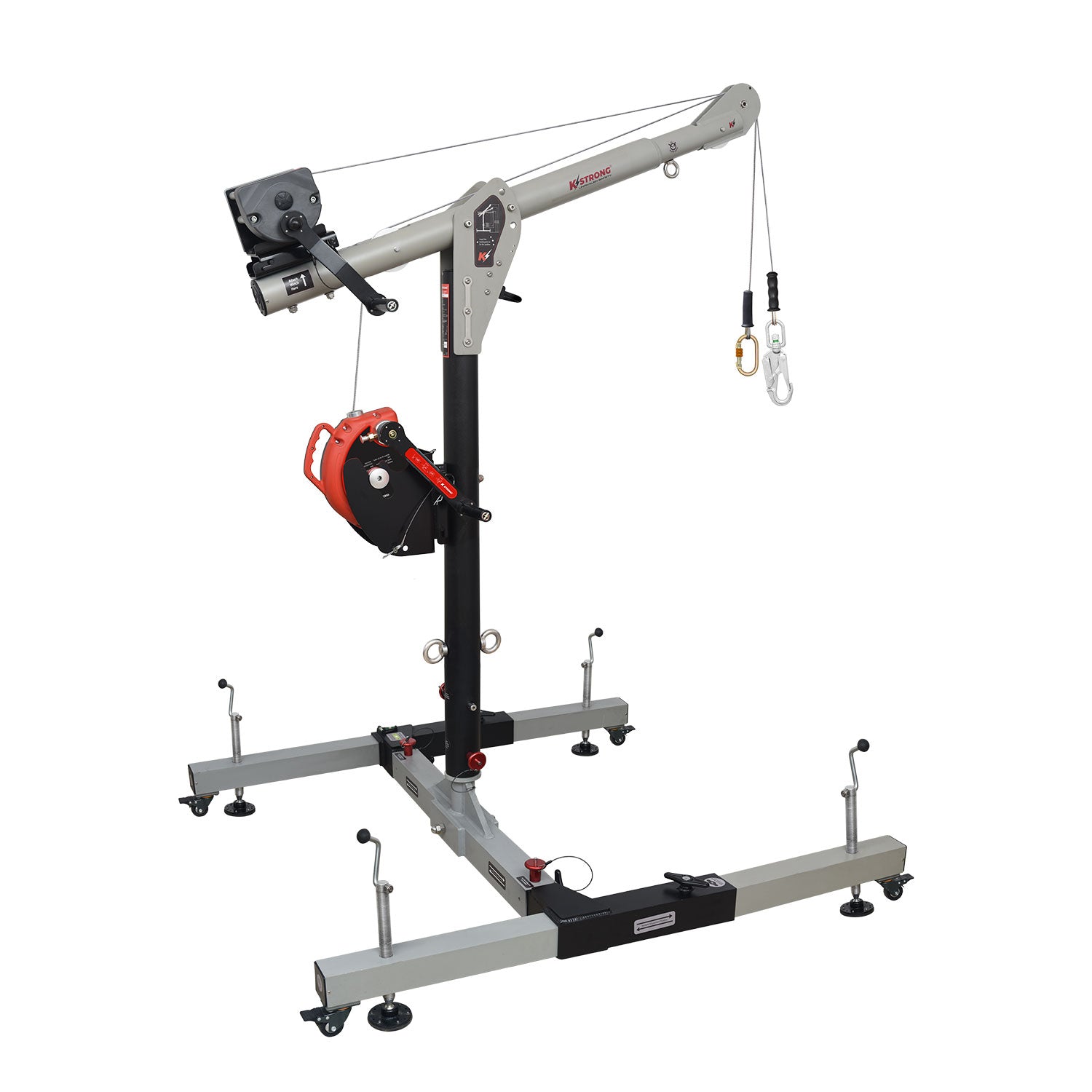
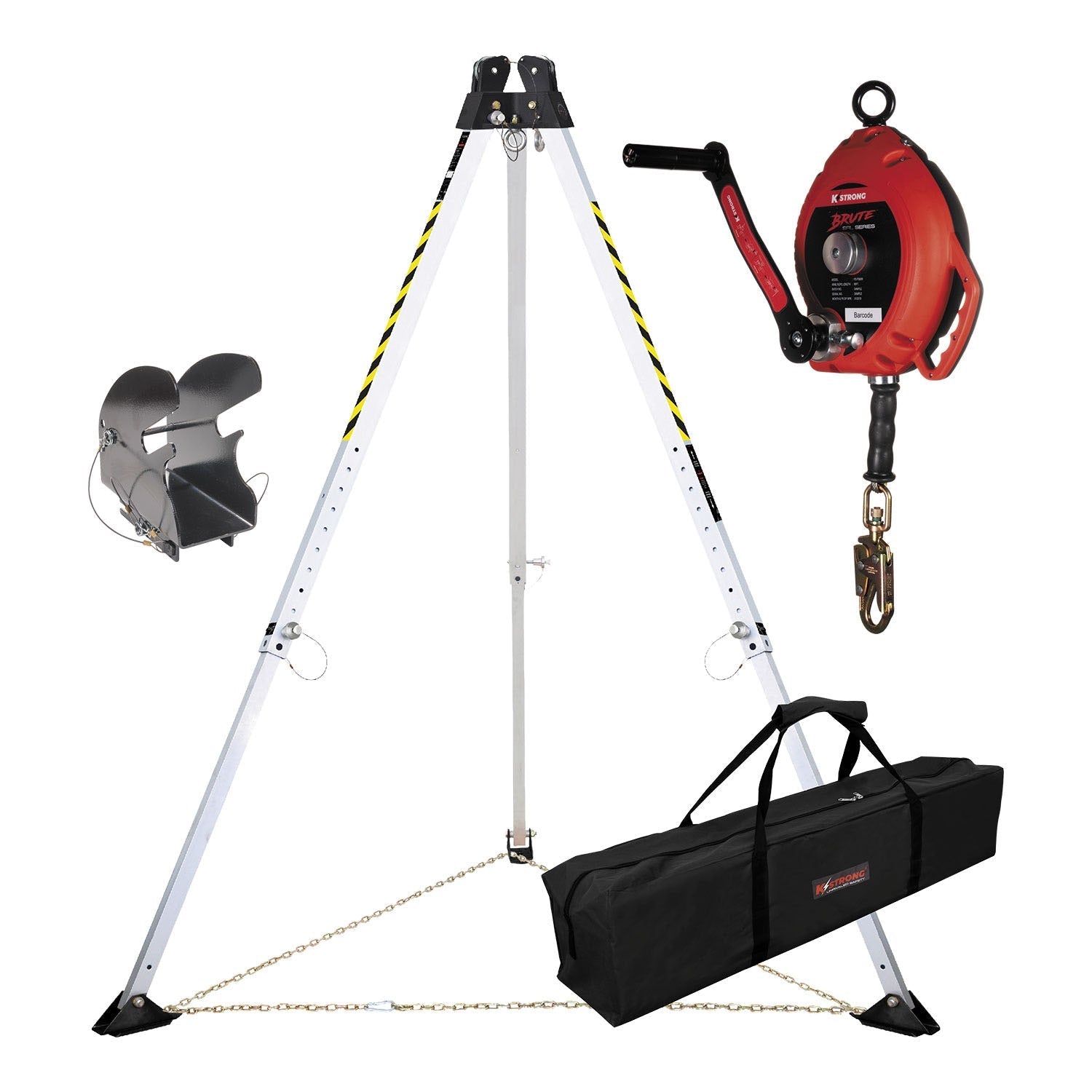
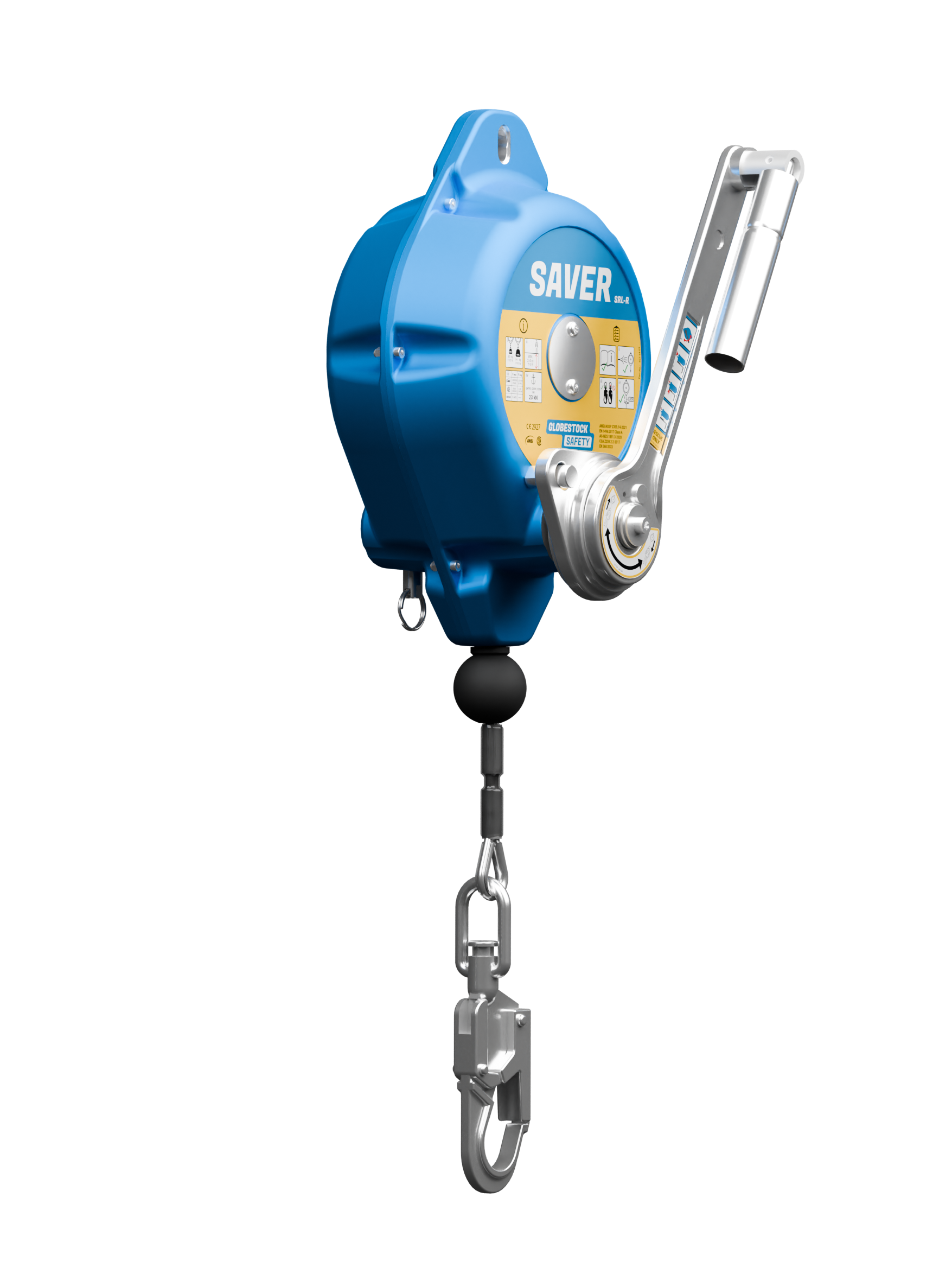
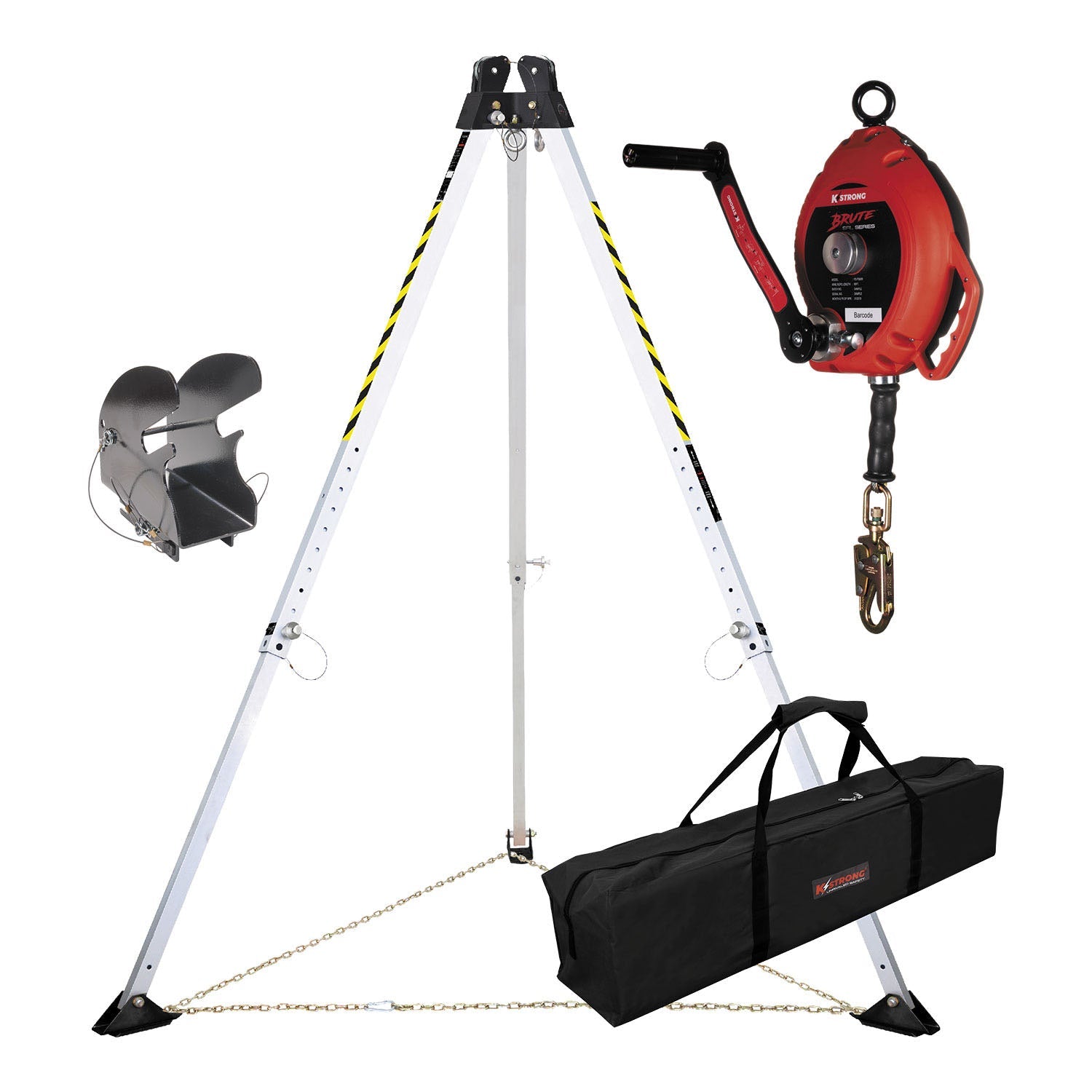
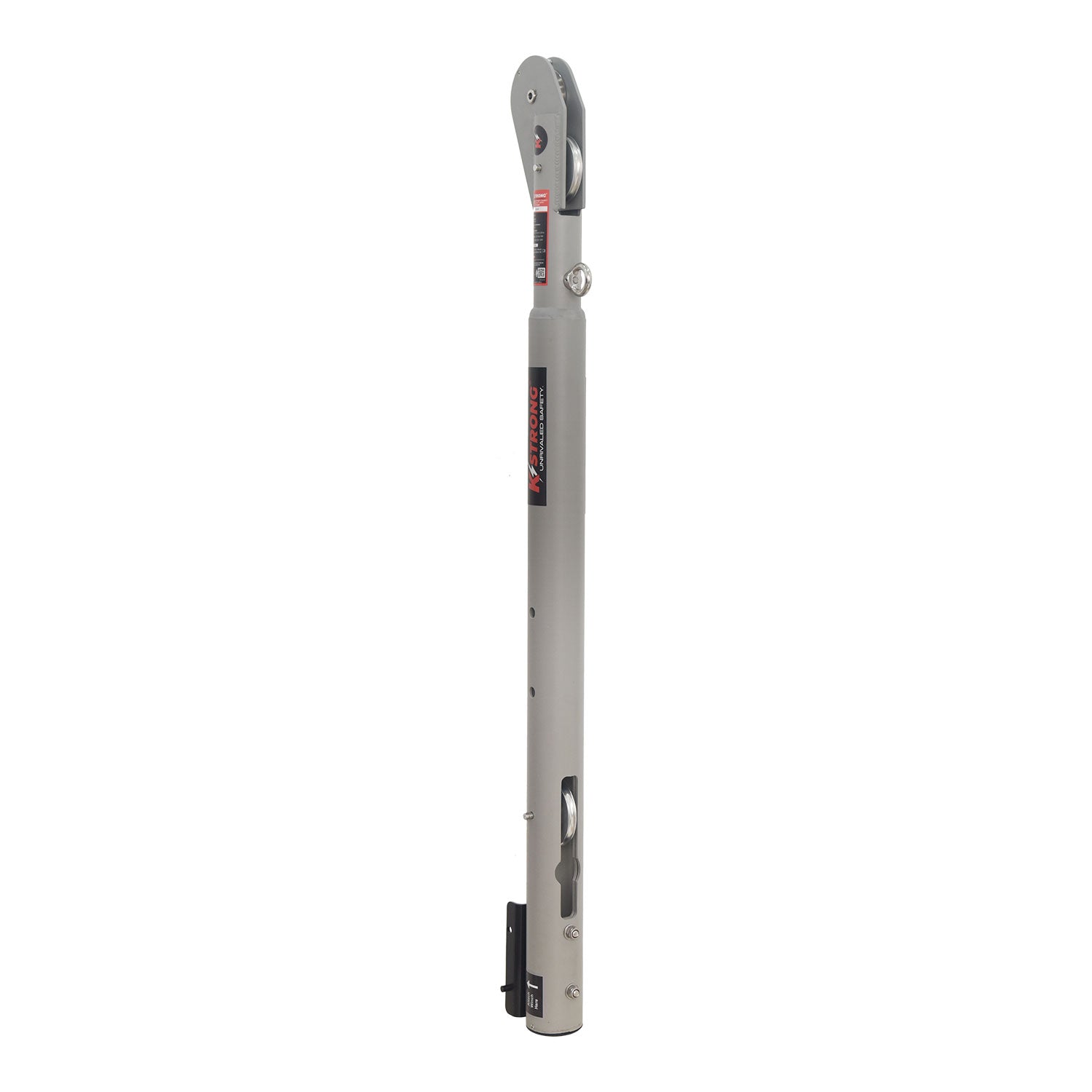
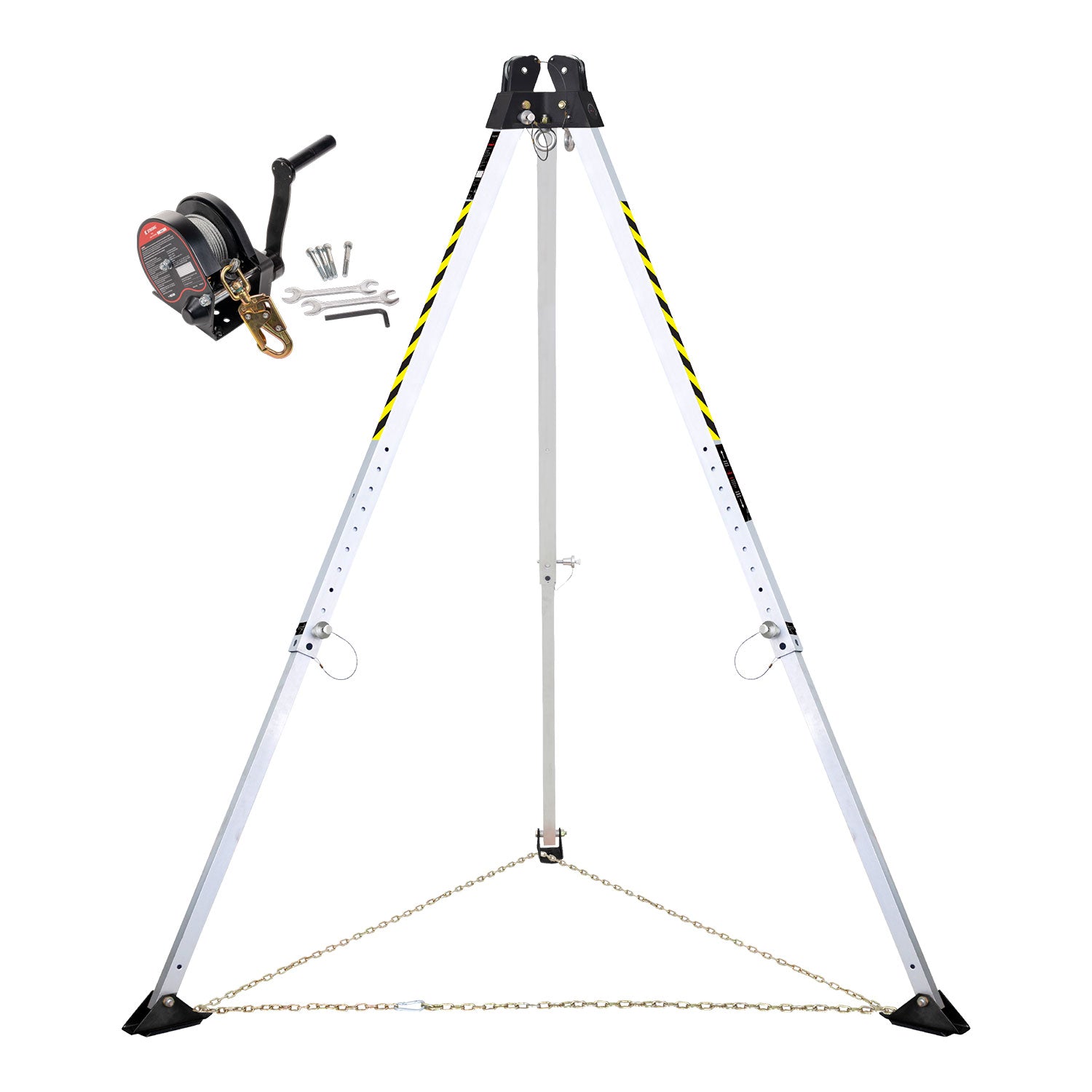
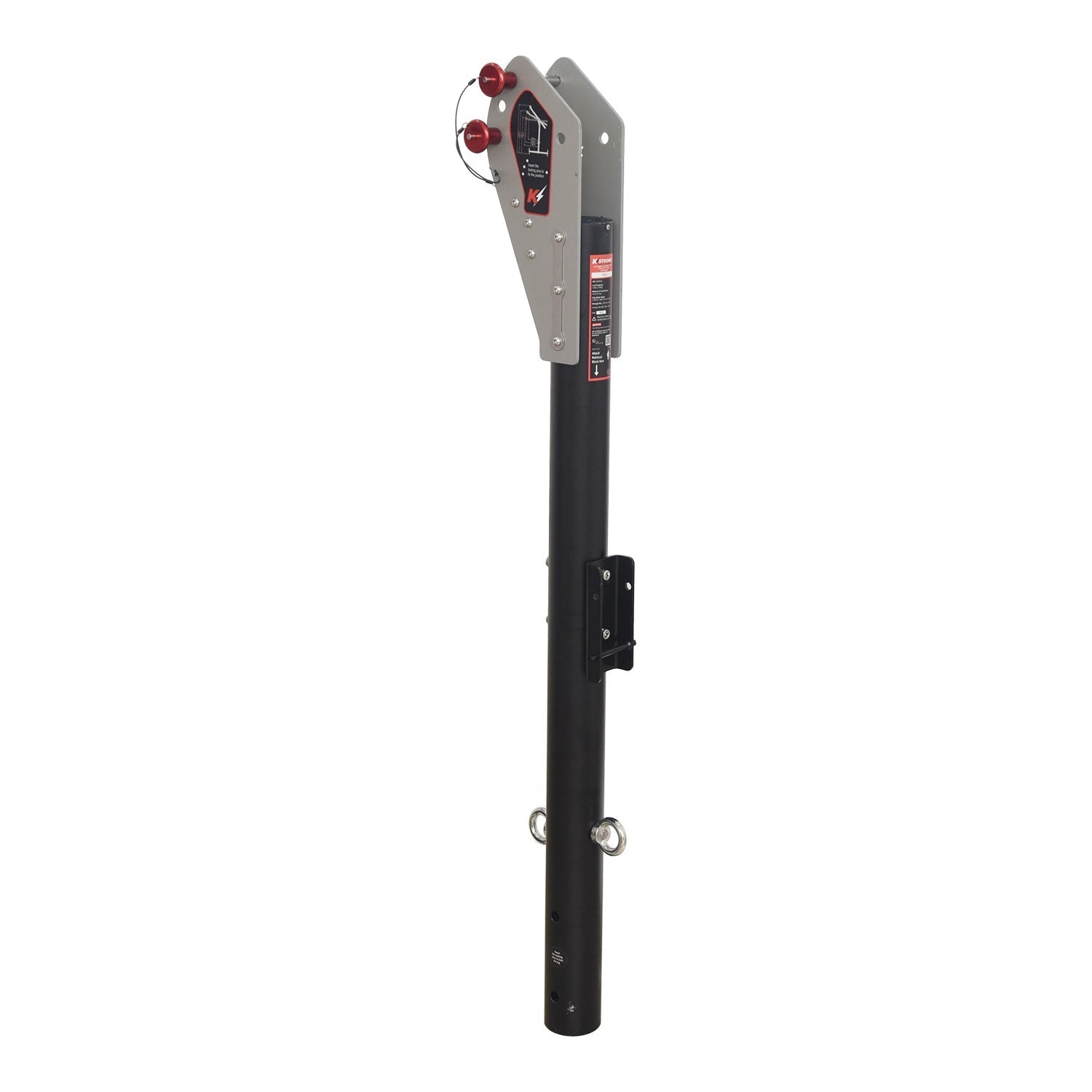
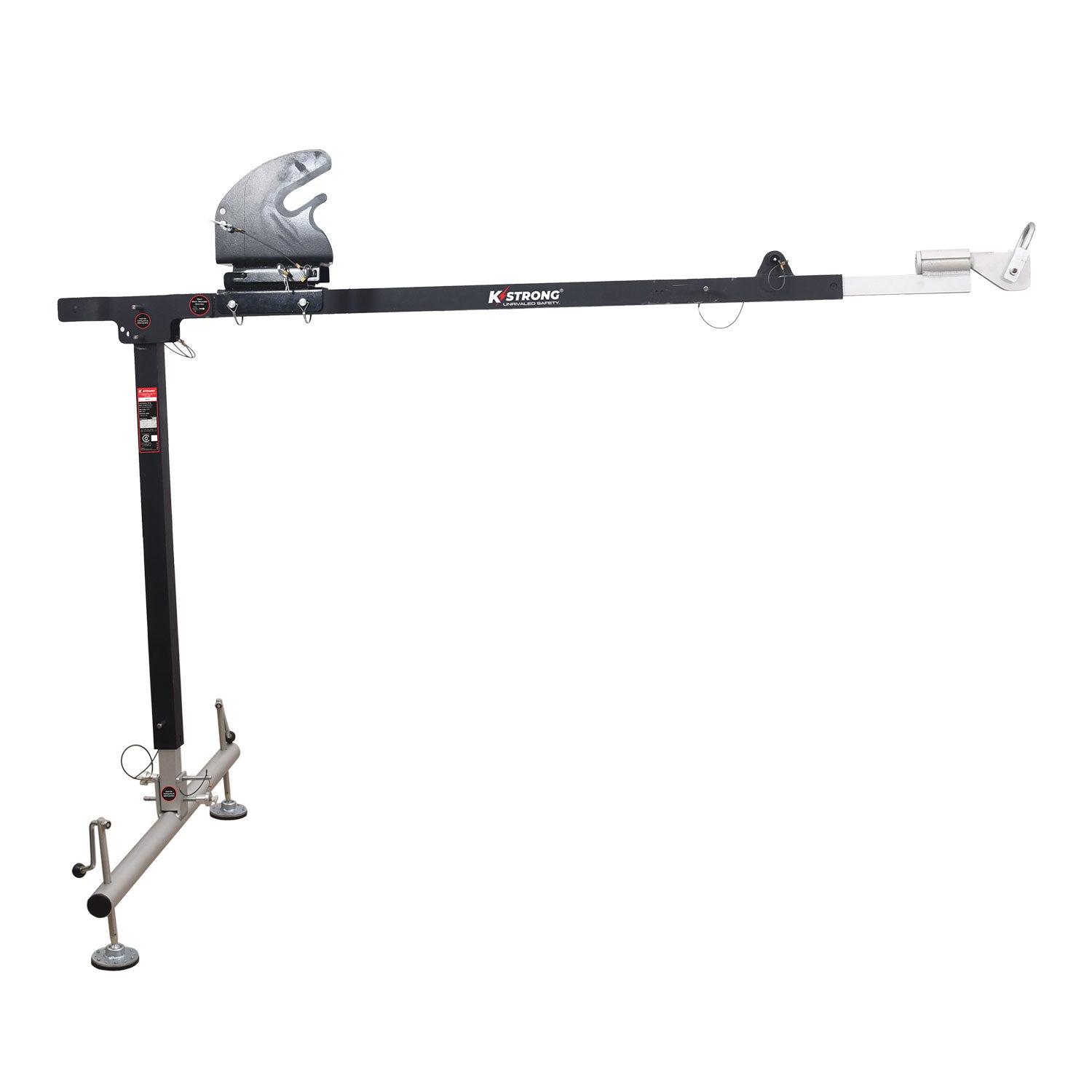
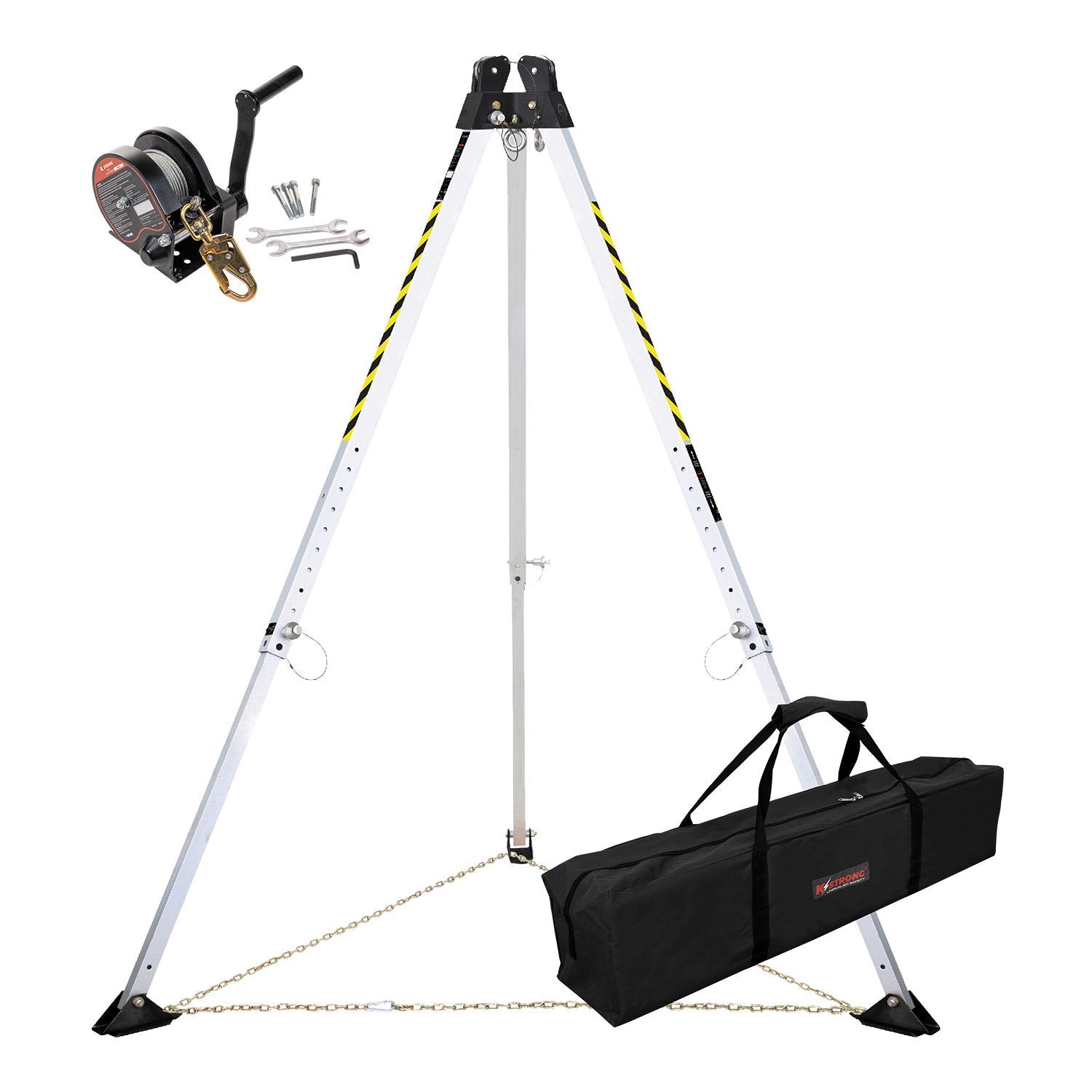
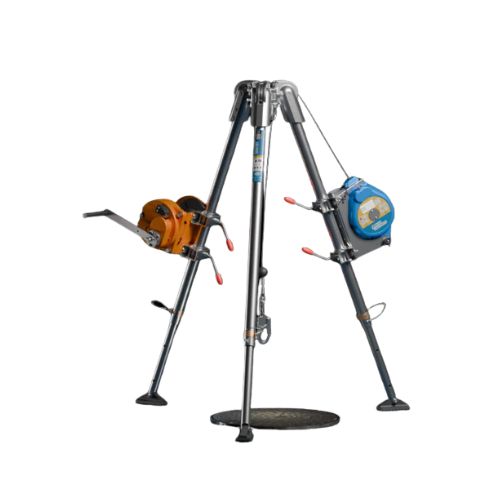
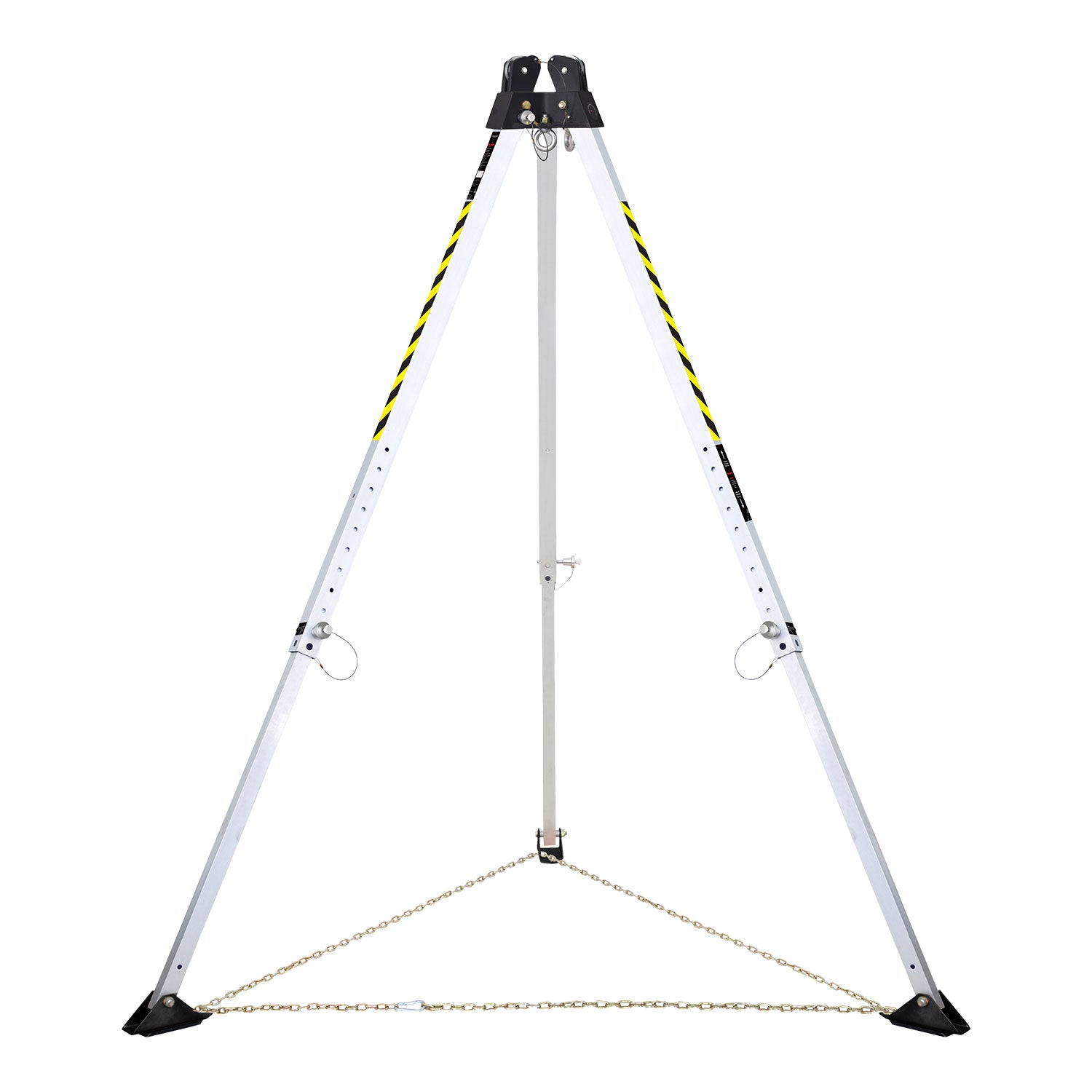
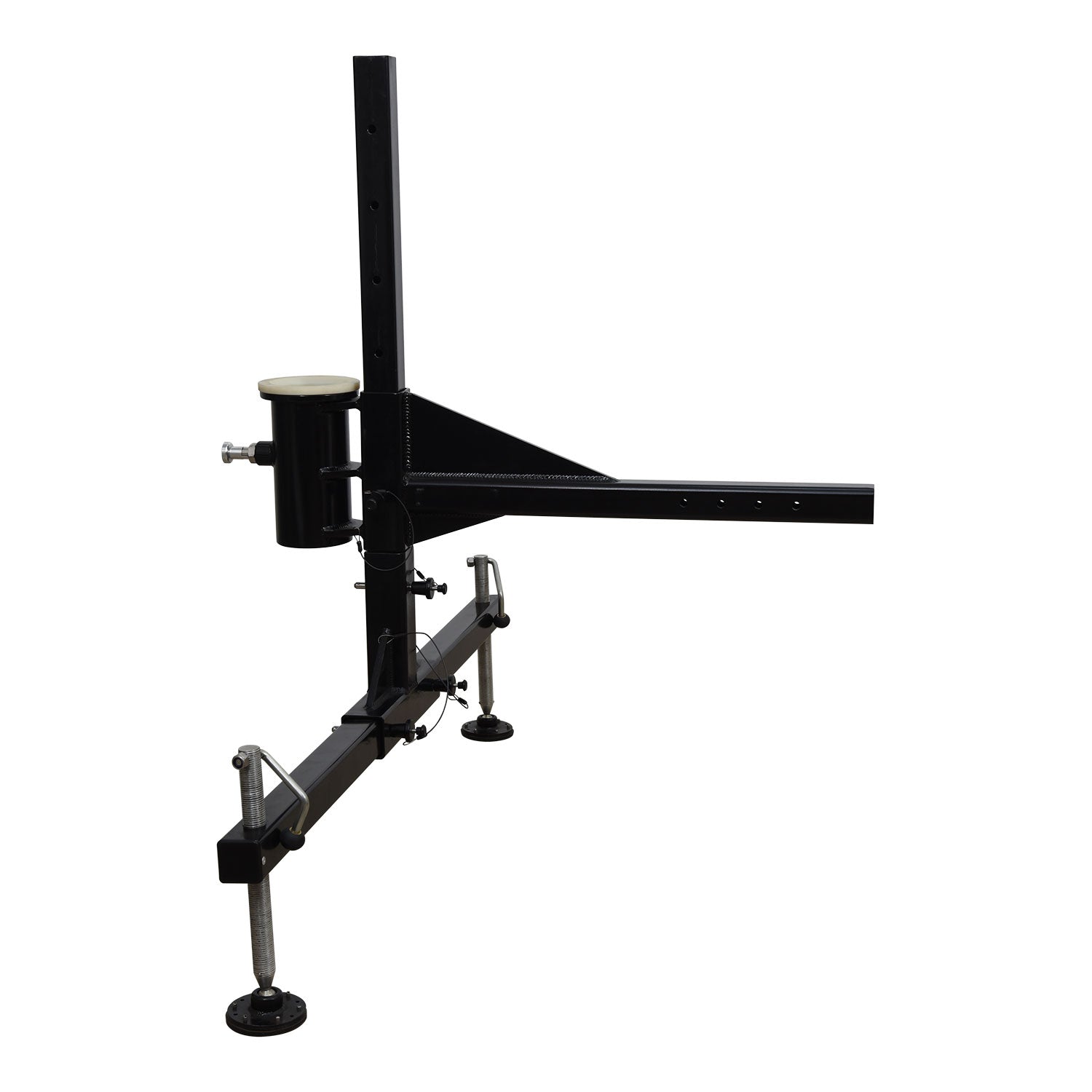
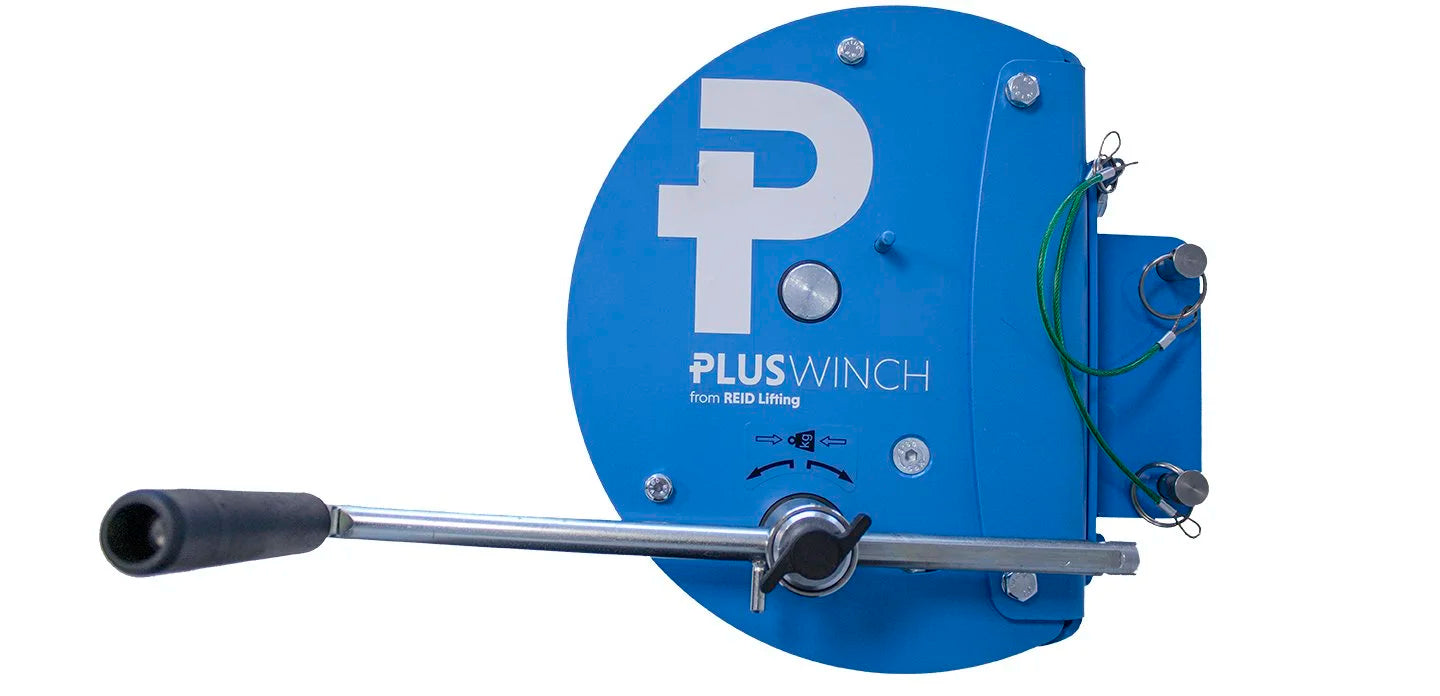
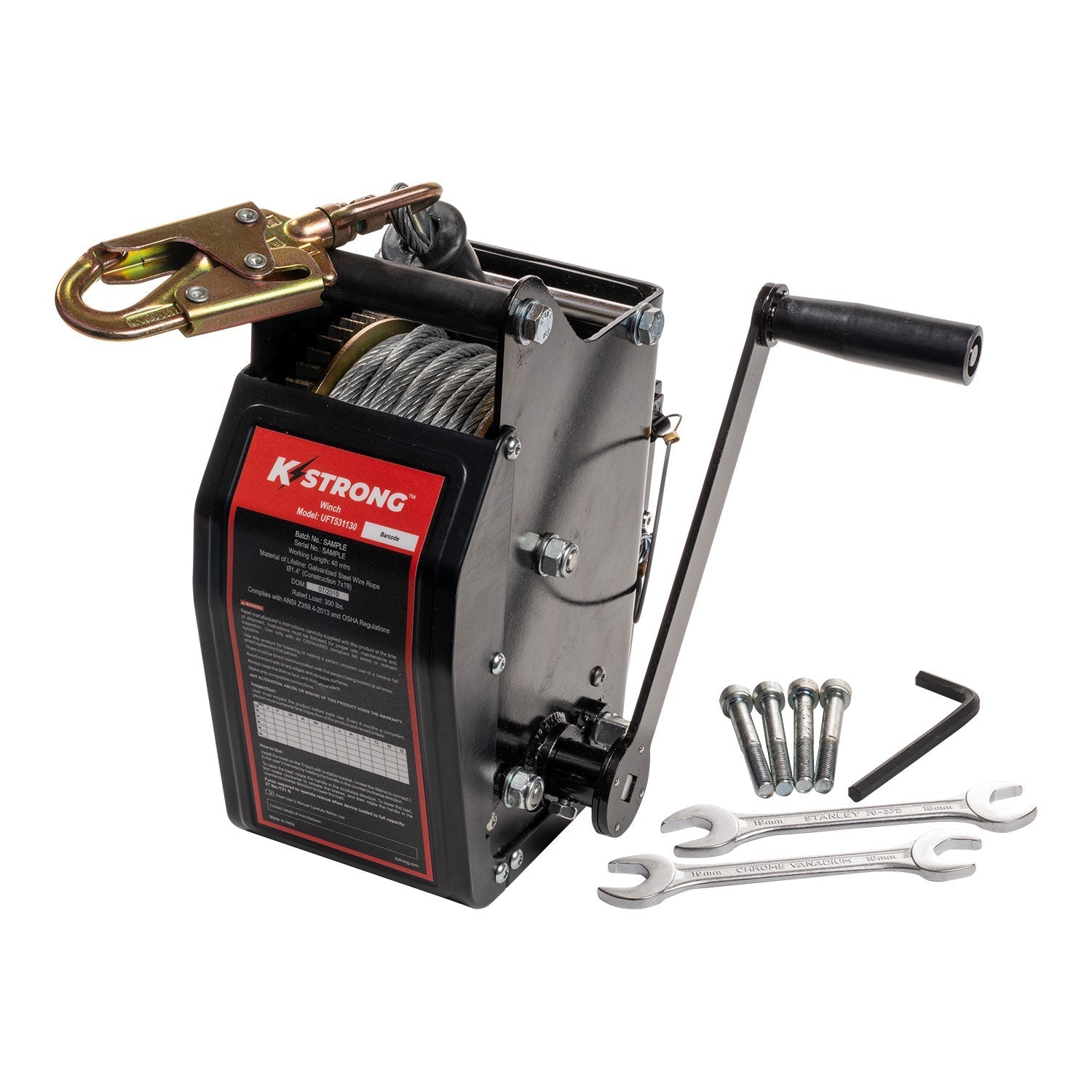
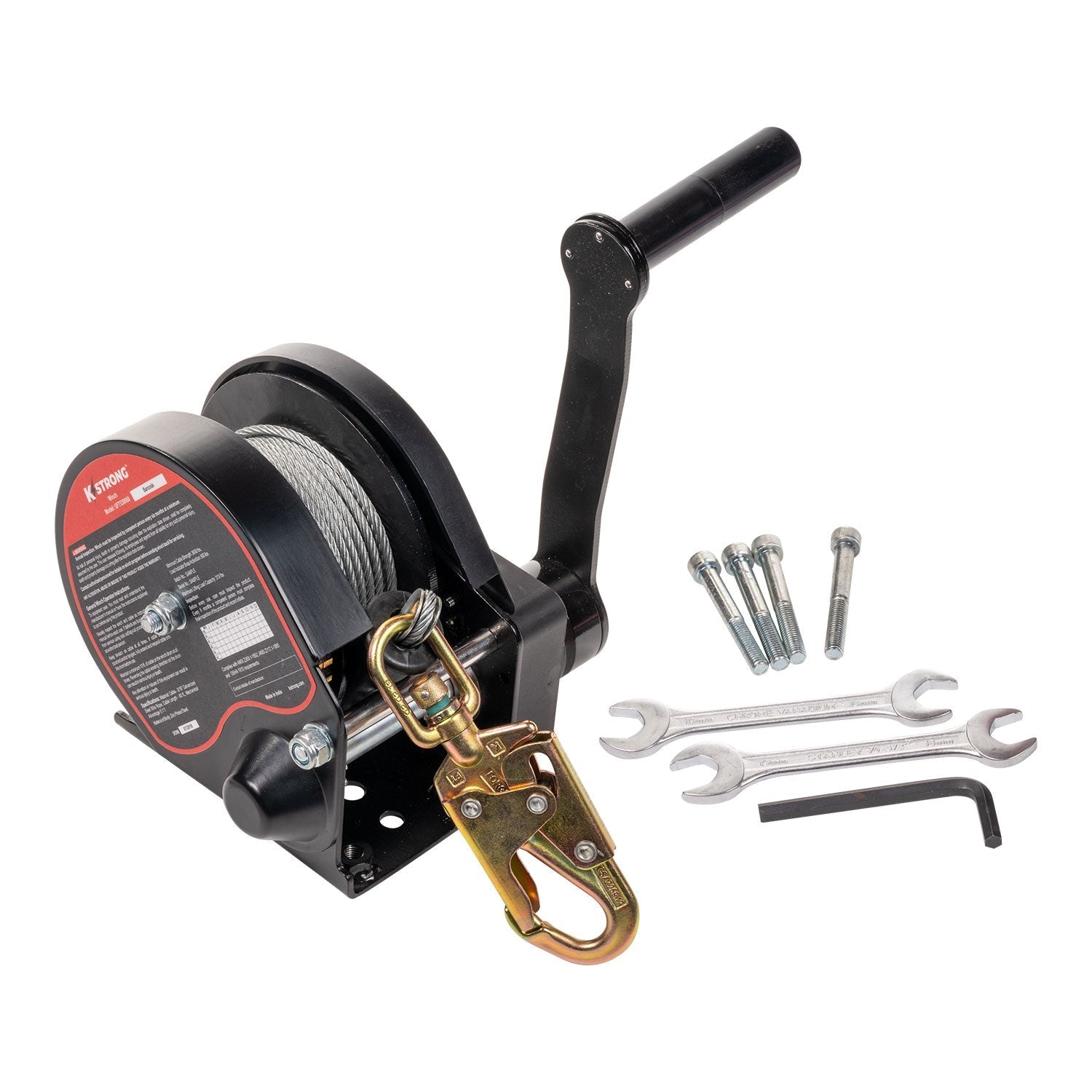
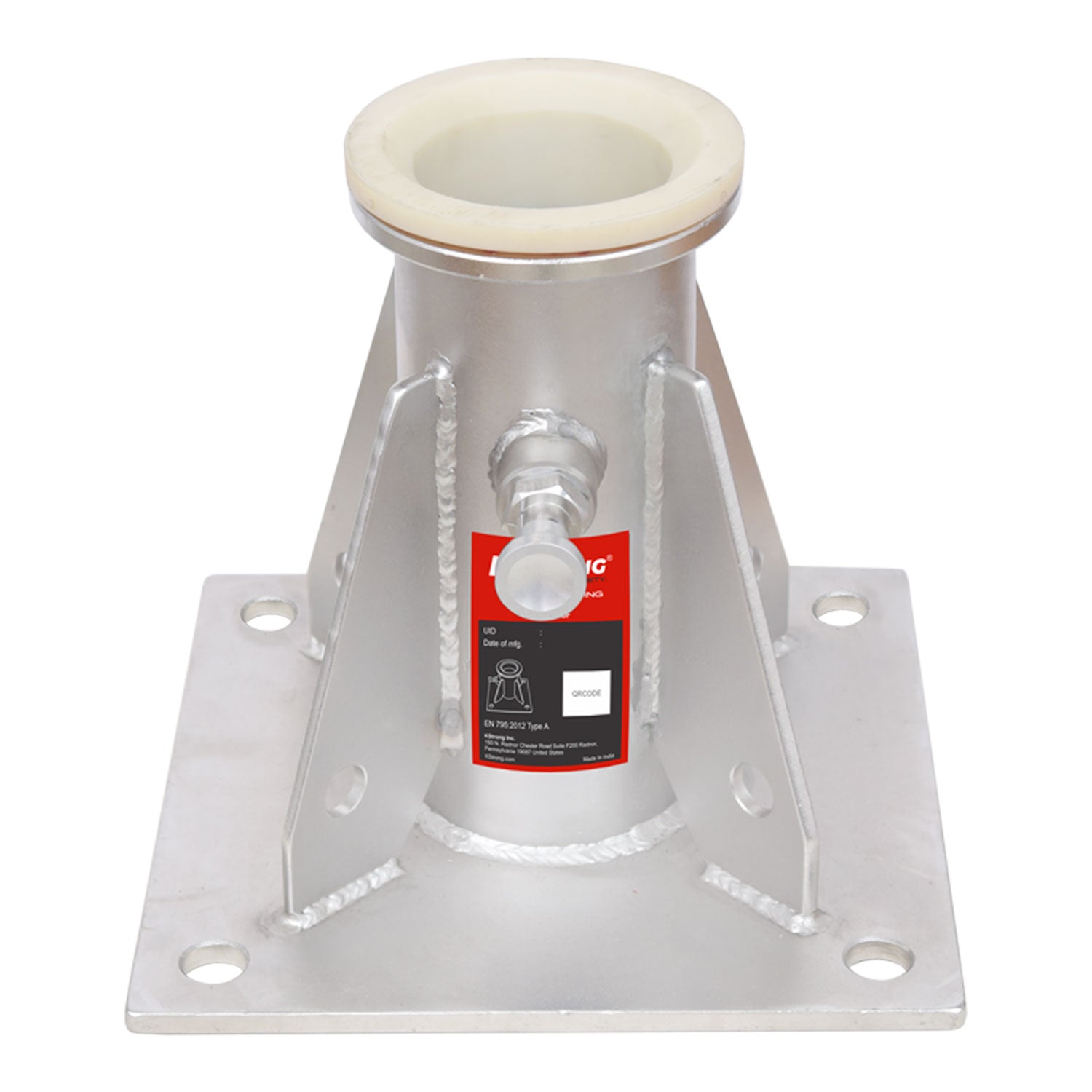
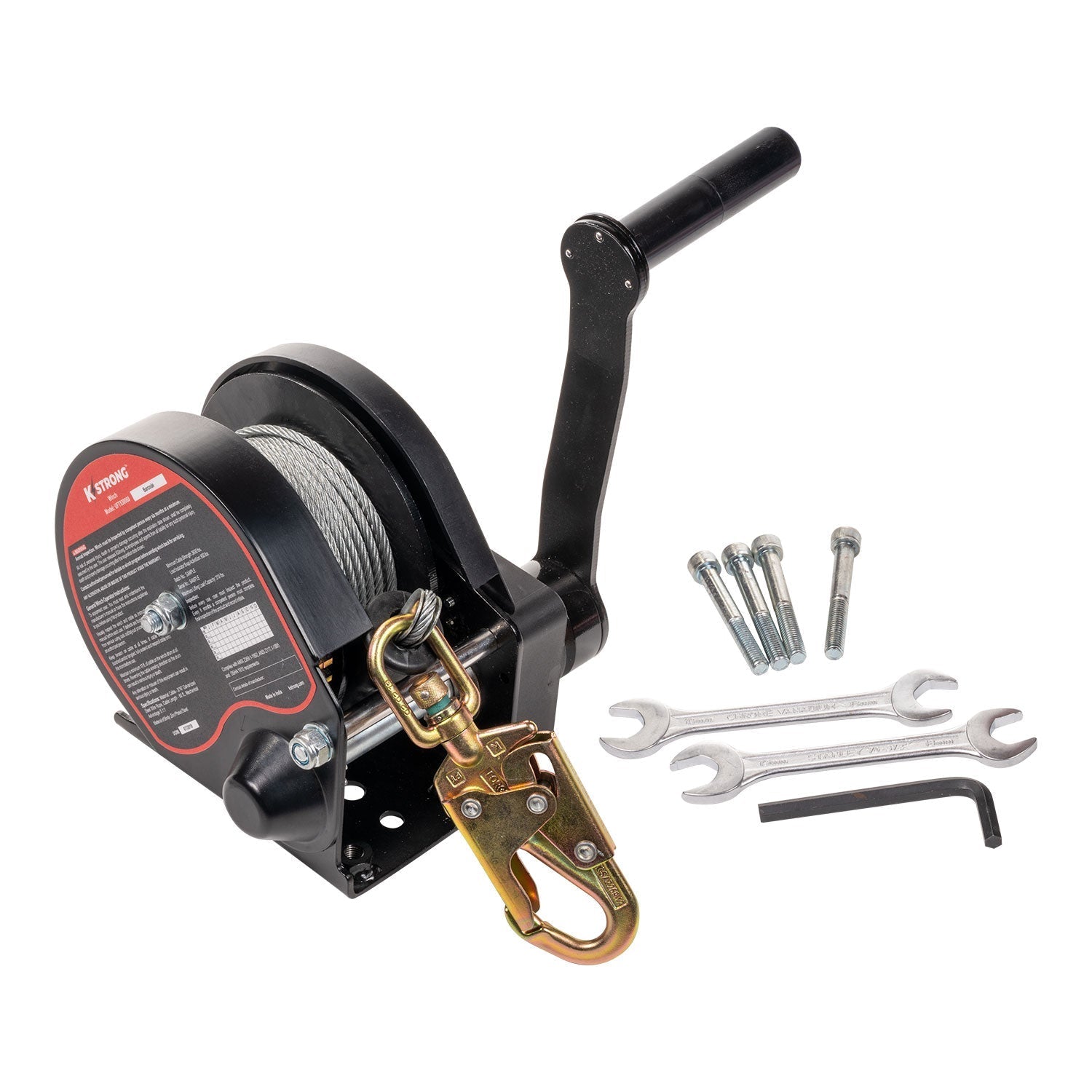
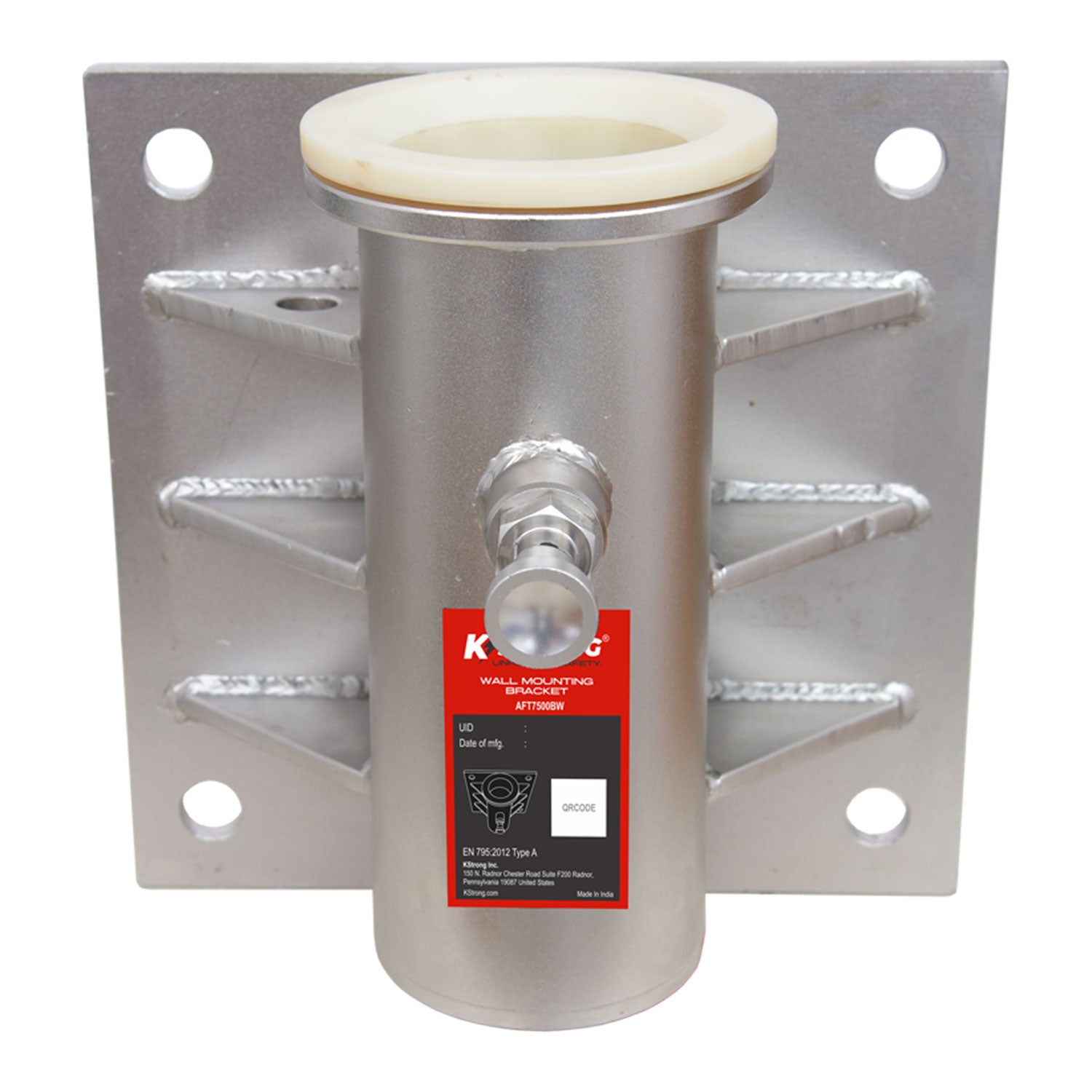
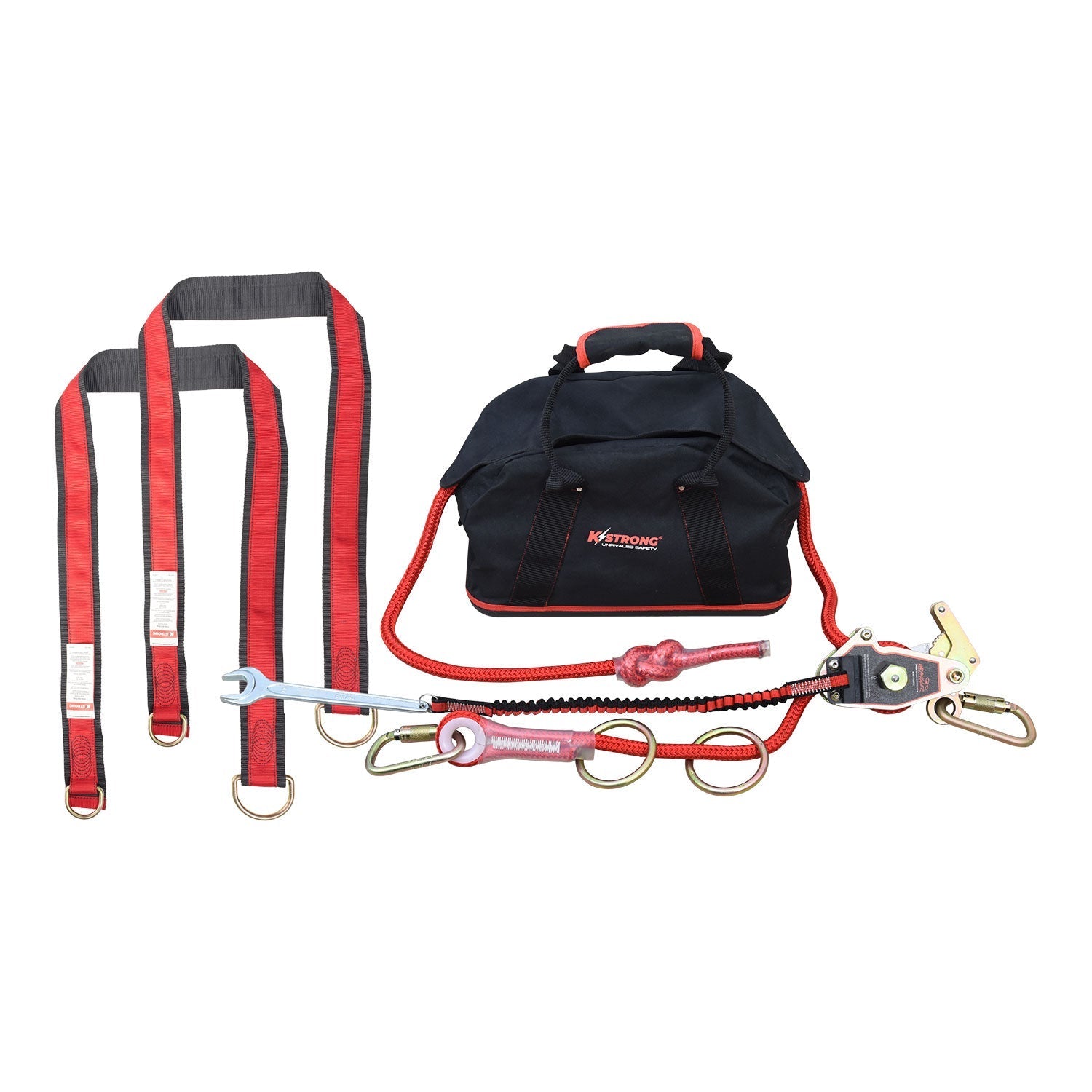
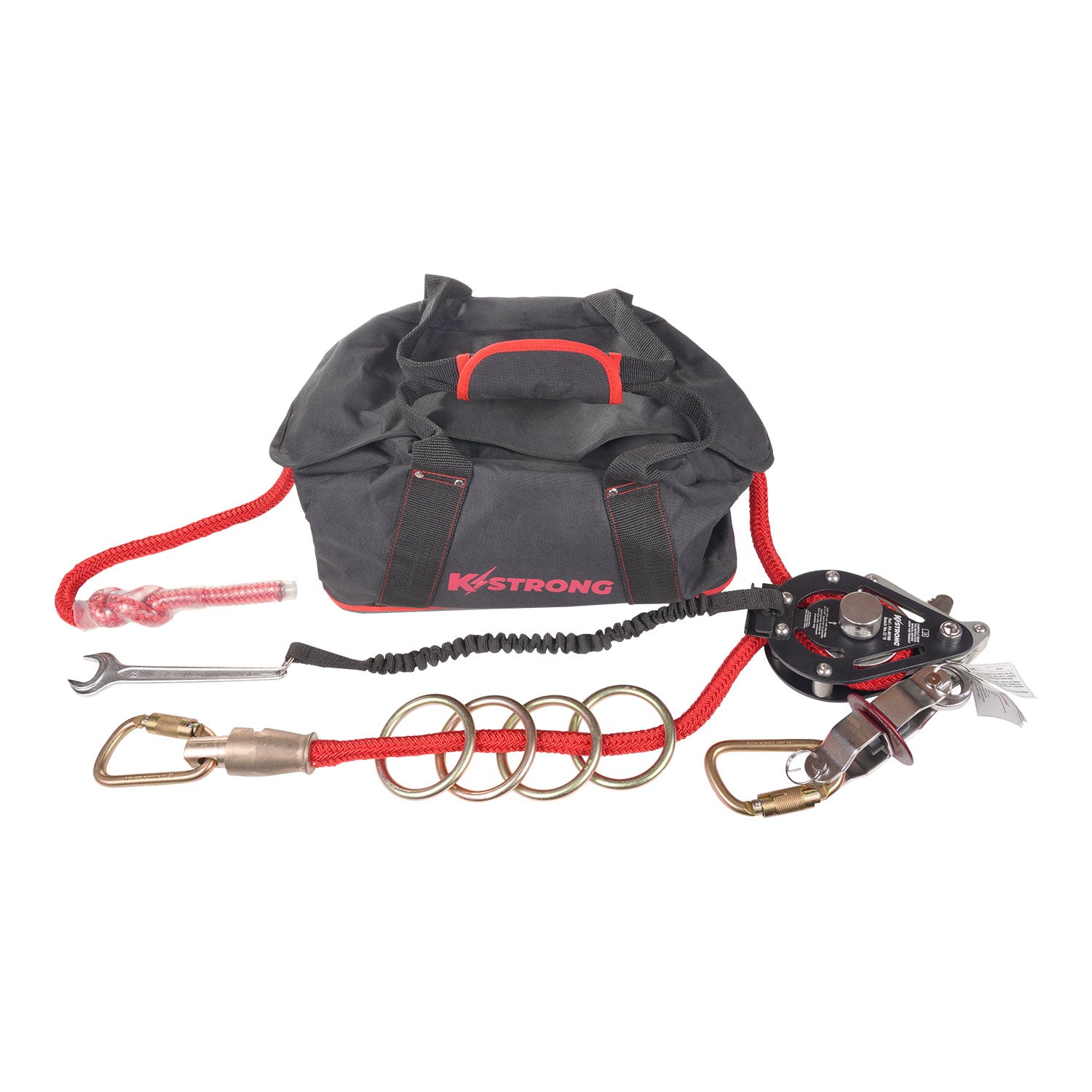
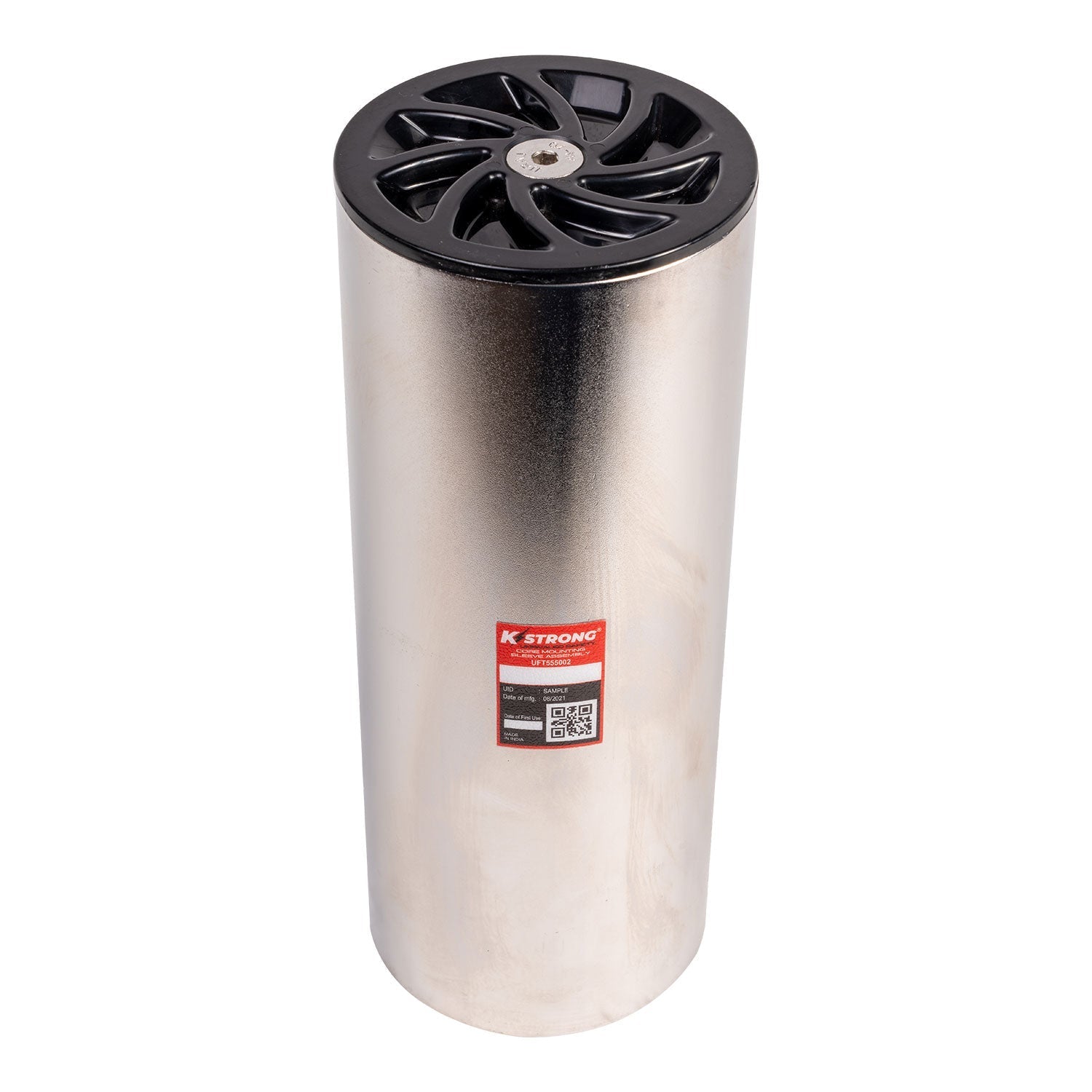
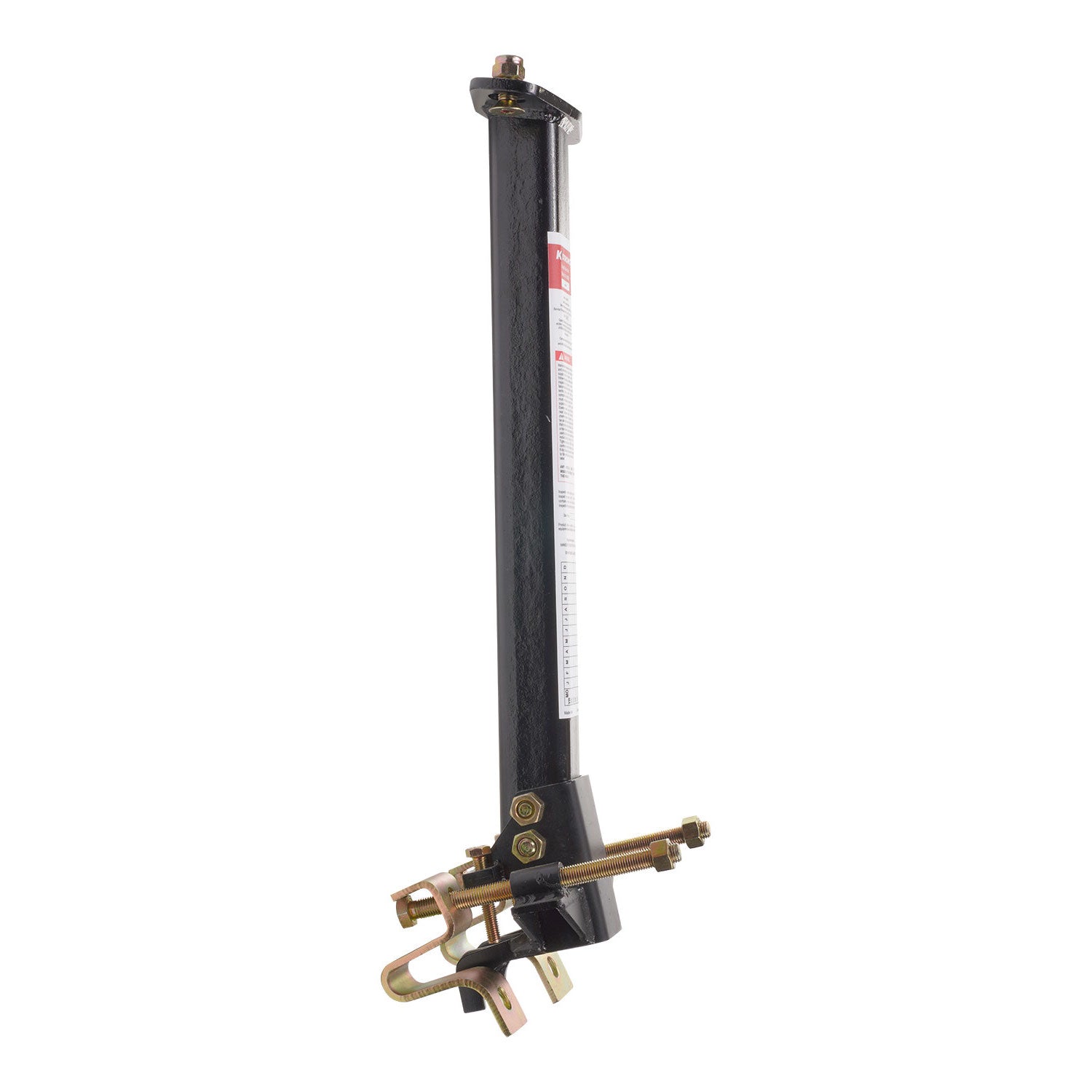
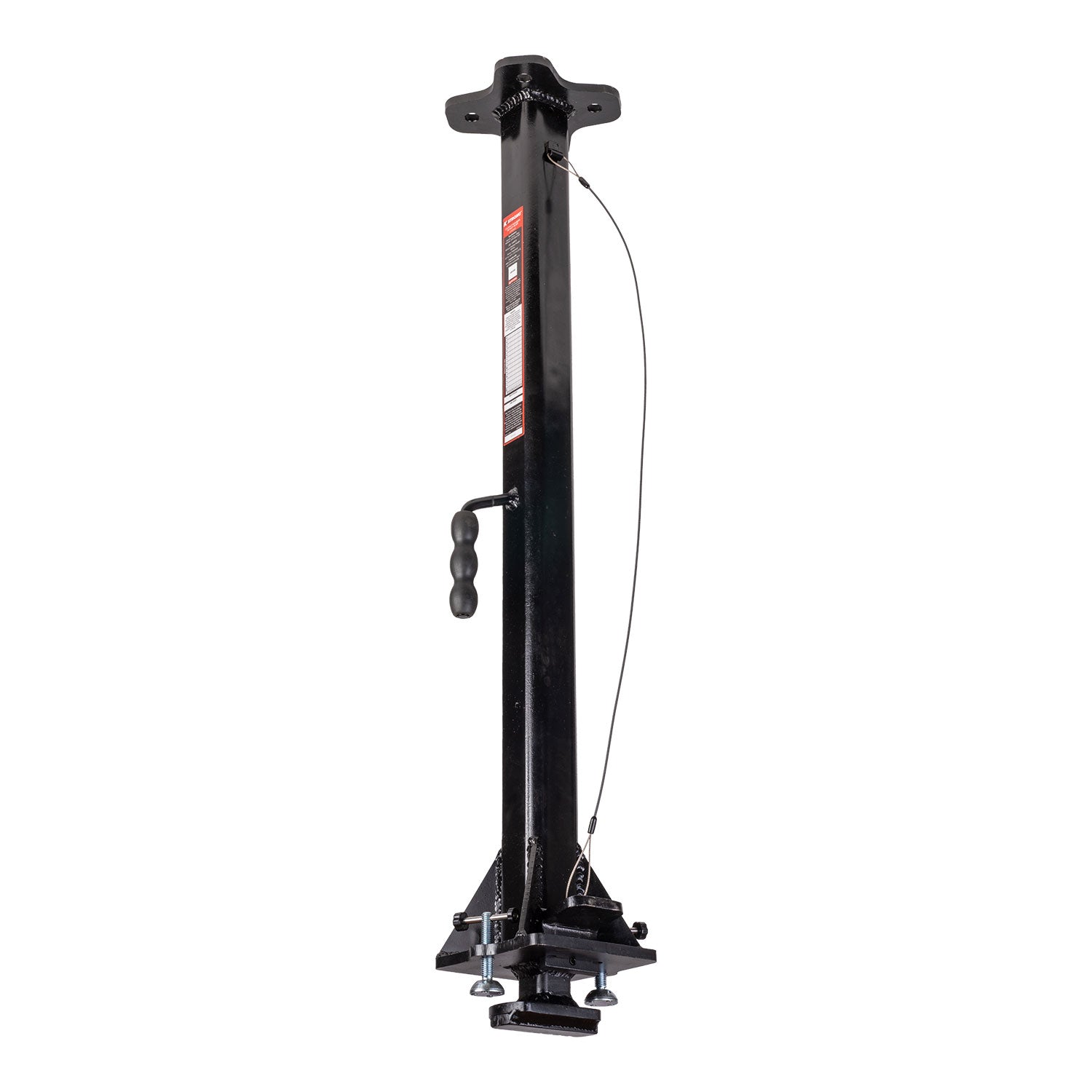
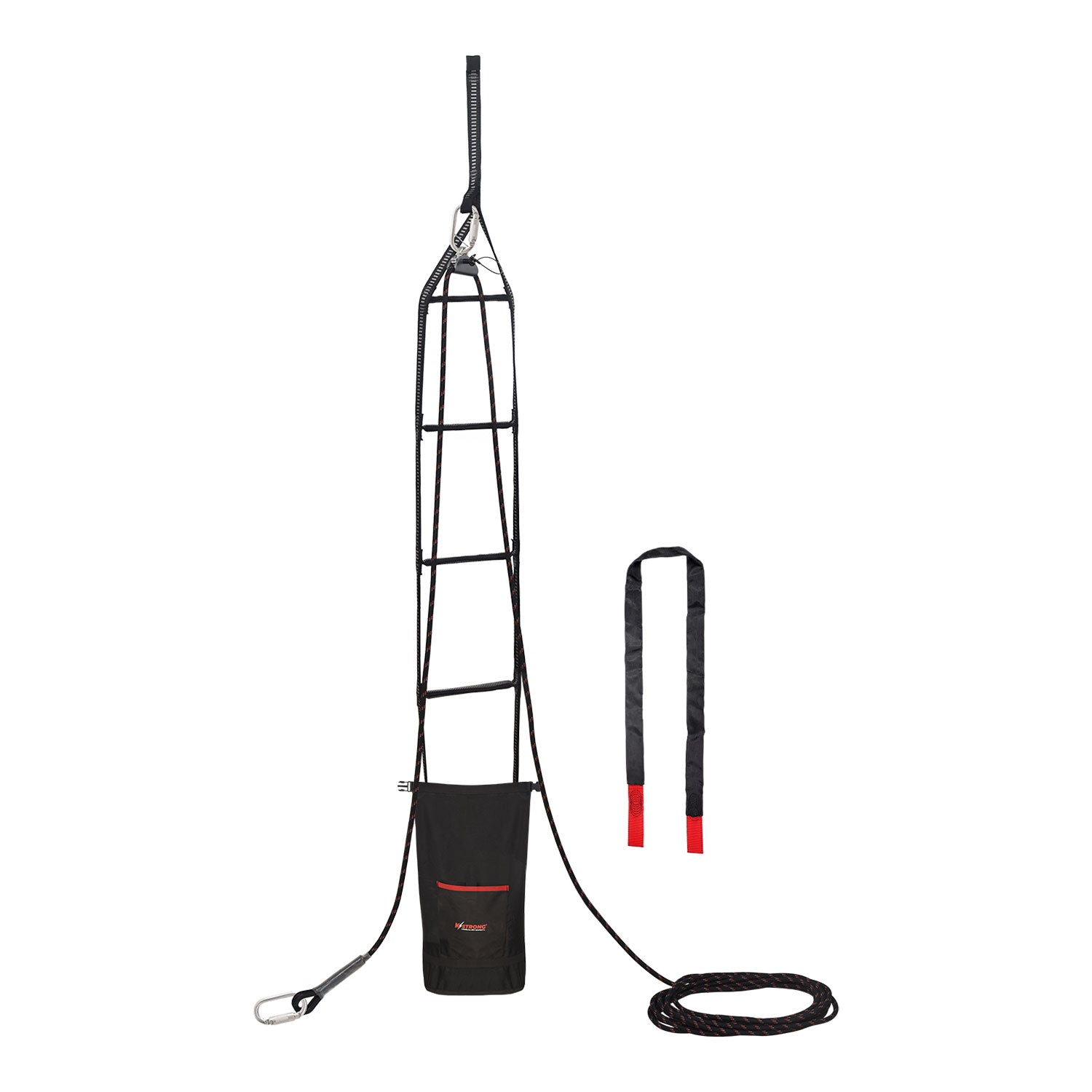
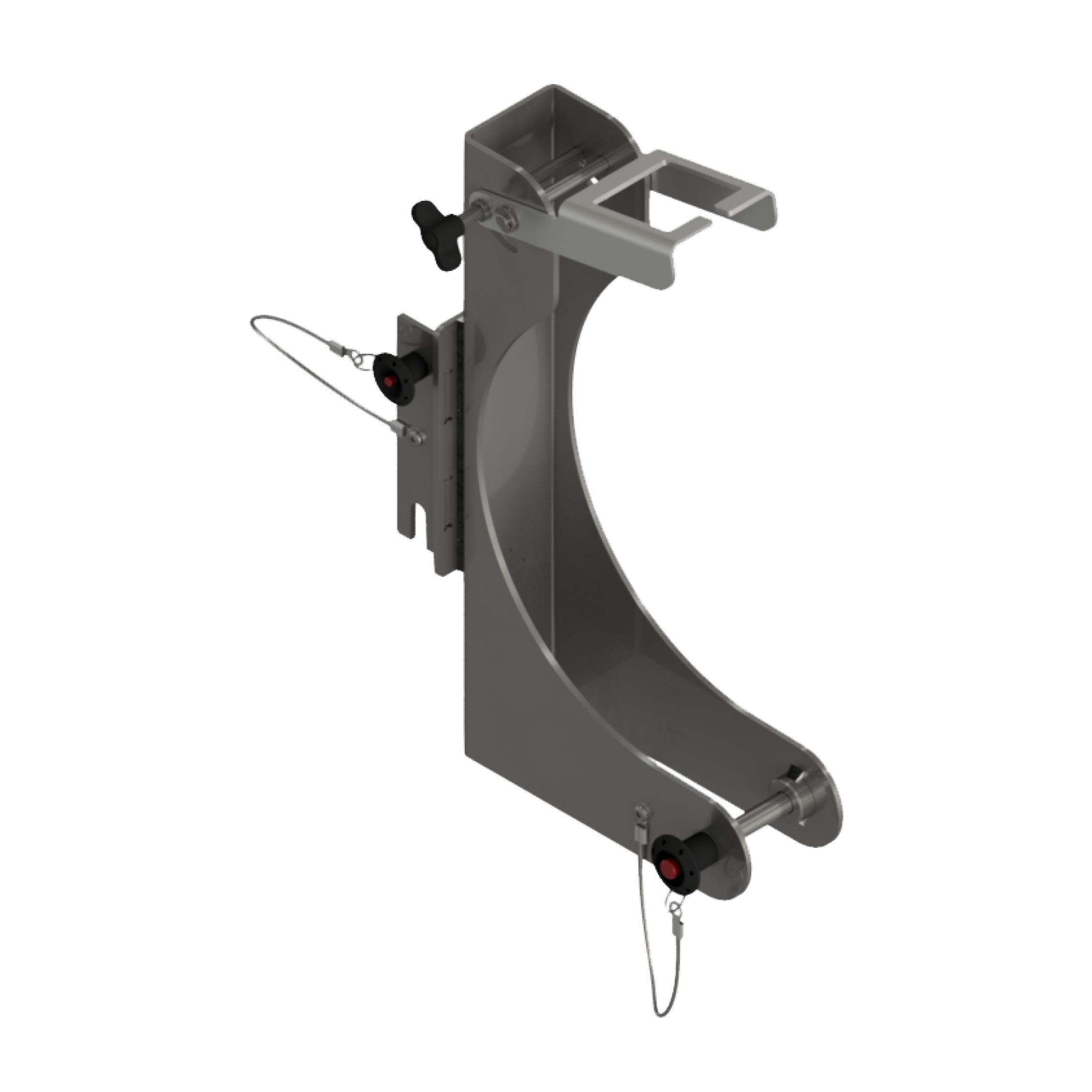
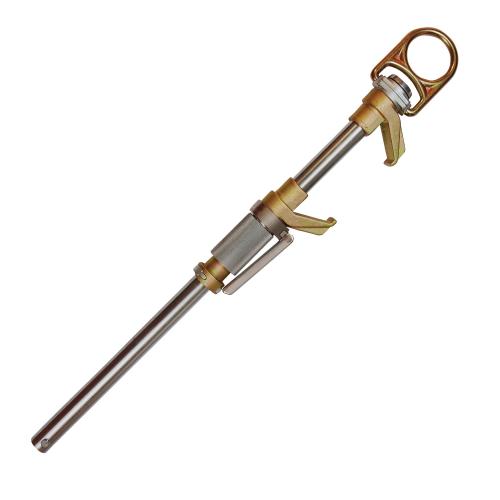
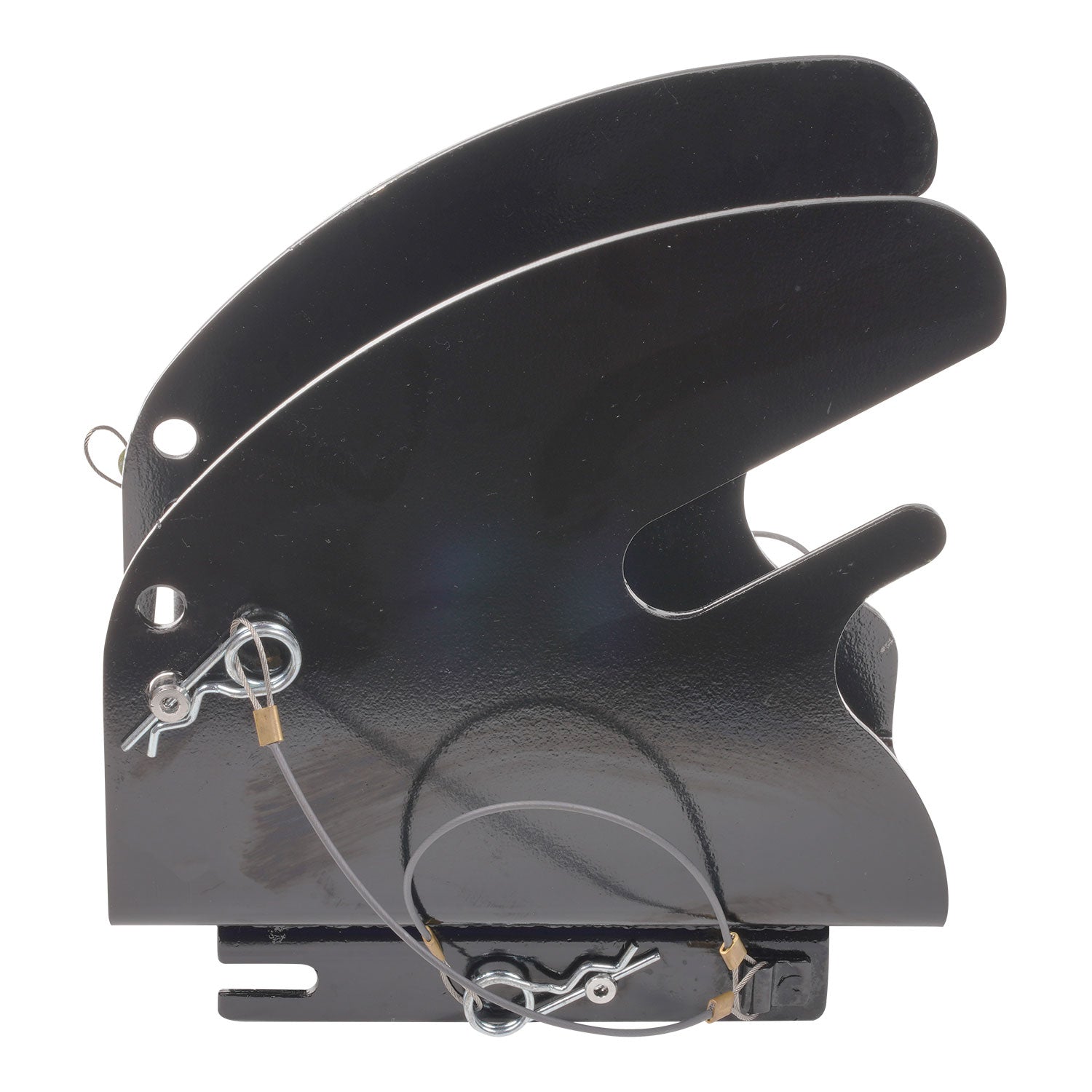
Confined space entry needs retrieval, and that is a different rig. OSHA 1910.146 requires a retrieval system whenever an authorized entrant goes into a permit-required confined space, unless retrieval would add risk, so the tripod over the manhole is compliance hardware and its winch has to be rated for people. Our confined space equipment collection pairs Globestock tripod kits with KStrong winches carrying 60 to 100 ft of galvanized or stainless cable, personnel and material rated, bi-directional for raising and lowering. The Megapod recovery kit sets up over openings a tripod cannot straddle, and the 20 ft rescue ladder system gives an entrant a self-rescue path. Buy the entry setup as a kit where you can: winch, bracket, and tripod are tested together, and a mismatched bracket is the kind of detail nobody catches until the rescue.
Inspection, and when gear is done. Fall protection has one hard retirement rule: equipment that has arrested a fall comes out of service immediately, because energy absorbers deform in ways you cannot reset. Short of that, inspect before every use, webbing for cuts, burns, and UV chalking, stitching for pulls, hardware for cracks and corrosion, SRLs for smooth retraction and solid lockup, and put everything through documented inspections by a competent person on a set schedule. Harnesses and lanyards here run about $16 to $430, cheap against everything else on the site, and the arithmetic never favors squeezing one more season out of suspect webbing. Cut up or tag retired gear so it cannot drift back into the crib.
Frequently Asked Questions
At 6 ft above a lower level in construction under 29 CFR 1926.501, and at 4 ft in general industry under 1910.28. Separate triggers apply above dangerous equipment and for specific tasks, so check the rule for your work, but the practical answer is that almost any elevated task needs a plan.
OSHA 1926.502(d)(15) requires 5,000 lb per attached employee, or an anchorage designed, installed, and used under a qualified person's supervision as part of a complete system with a safety factor of at least two. Rated hardware like our beam and concrete anchors carries its marking; tying off to whatever steel looks solid is not a plan.
Whenever fall clearance is short. A 6 ft lanyard permits up to 6 ft of free fall plus deceleration distance, harness stretch, and margin, while an SRL stays tensioned and locks within inches. If there is any doubt about what sits below the working level, the SRL is the answer.
They come from ANSI/ASSP Z359.14-2021. Class 1 devices are limited to anchorages at or above the dorsal D-ring. Class 2 devices are tested for anchorage below the D-ring and for leading edge exposure, where a fall can load the line over an edge. Anchoring at your feet with a Class 1 device defeats the testing behind it.
OSHA 1910.146 requires a retrieval system for authorized entrants unless it would increase overall risk. In practice that means a tripod or davit over the opening, a personnel-rated winch, and a harness on the entrant. Our Globestock kits package tripod and winch as a tested pair.
Immediately after it arrests a fall, when it fails any inspection, and at the manufacturer's stated service life. Check webbing, stitching, hardware, and SRL lockup before each use, and keep a documented inspection schedule under a competent person. Destroy or clearly tag retired gear so it stays retired.