Outrigger Pads
Outrigger pads sit under the outrigger floats of a crane, boom truck, or aerial lift and spread that concentrated leg load across enough ground to keep the machine from punching through. A steel float might be a foot square, but the soil under it usually cannot take the pressure that small a contact puts on it, and the pad is what turns a small hard contact into a large gentle one. This collection is built on the DICA line out of Urbandale, Iowa: SafetyTech pads in medium, heavy, and extra heavy duty builds from 45,000 up to 112,000 lb, molded from a proprietary engineered thermoplastic, plus round FiberTech FRP pads rated to 170,000 lb for the bigger reactions. When the machine moves into all-terrain and lattice crane territory, the crane pads take over with fiber-reinforced polymer sections that reach 400,000 lb. Size the pad to the load and the soil, not to what fits in the truck box.
Shop Outrigger Pads by Category
Compare Outrigger Pads
| Model | Price | Capacity | |
|---|---|---|---|
| DICA 12Inch FiberMax Crane Pads | $19,559 | 400,000 lb | View → |
| DICA 10Inch FiberMax Crane Pads | $12,773 | 325,000 lb | View → |
| DICA 6.75Inch FiberMax Crane Pads | $9,706 | 250,000 lb | View → |
| DICA 6Inch FiberMax Crane Pads | $5,973 | 175,000 lb | View → |
| DICA EcoMax Crane Pads | $5,294 | 175,000-325,000 lb | View → |
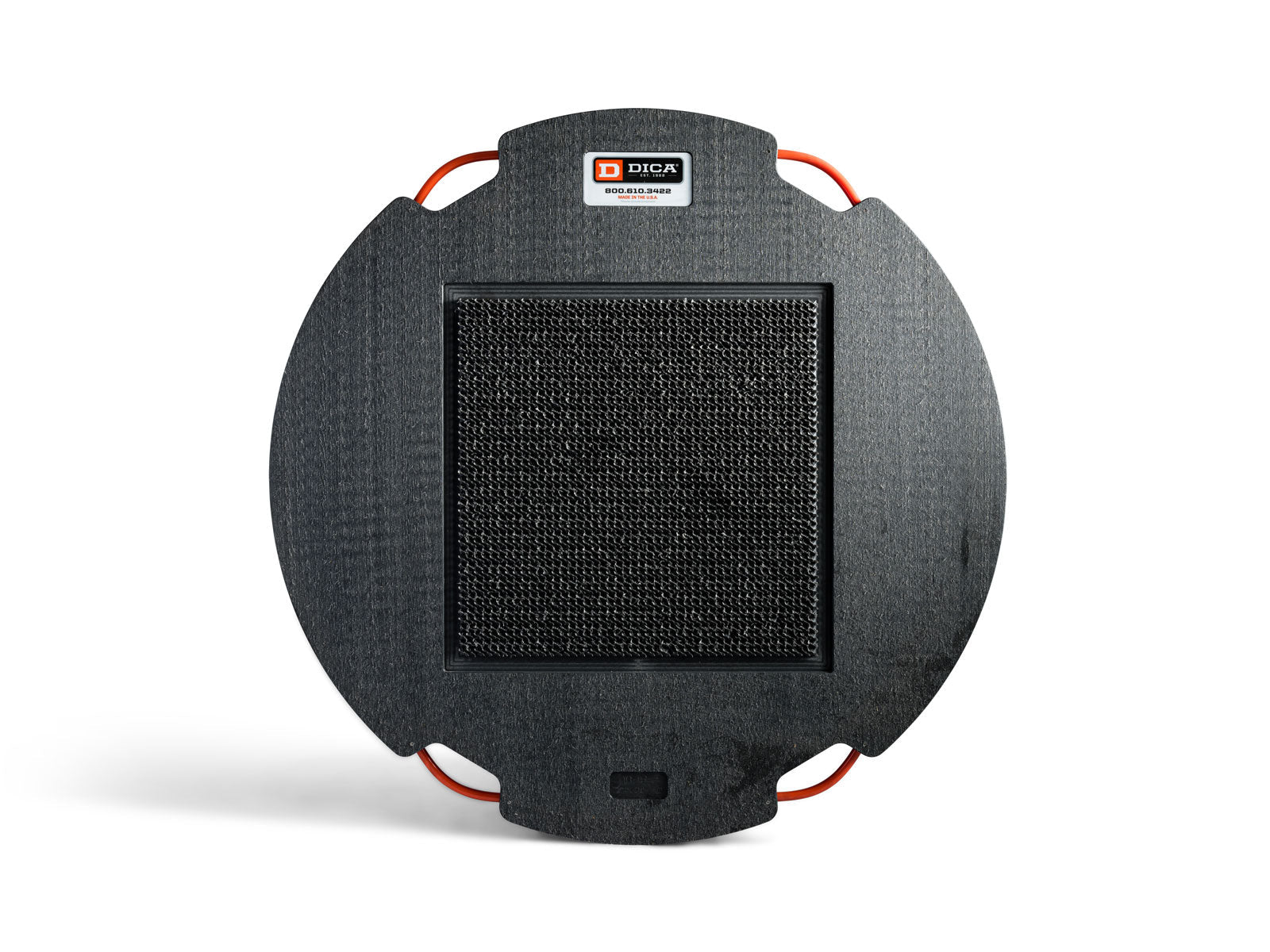
| DICA 1Inch FiberTech Outrigger Pads | $1,467 | 170,000 lb | View → |
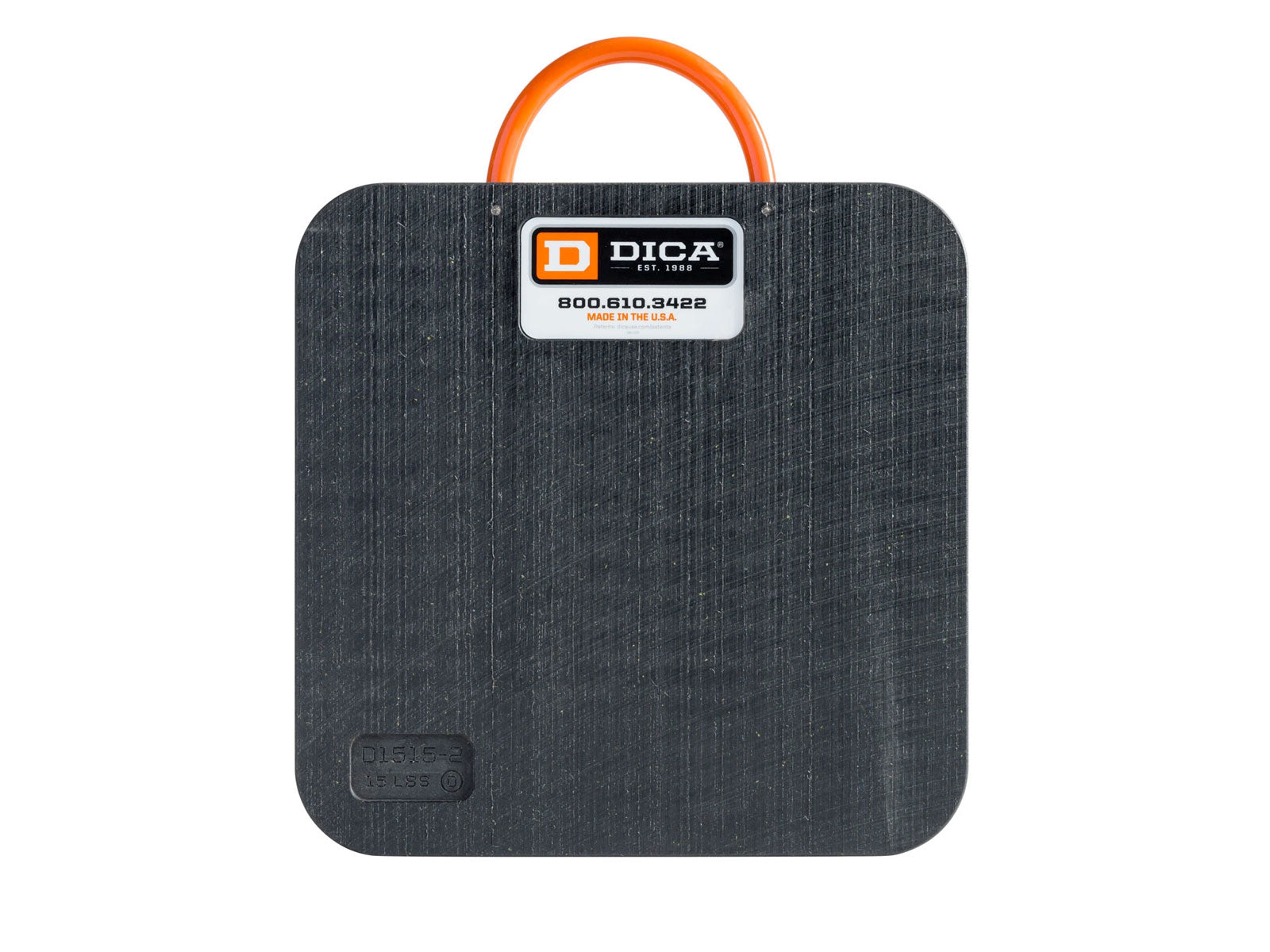 In Stock
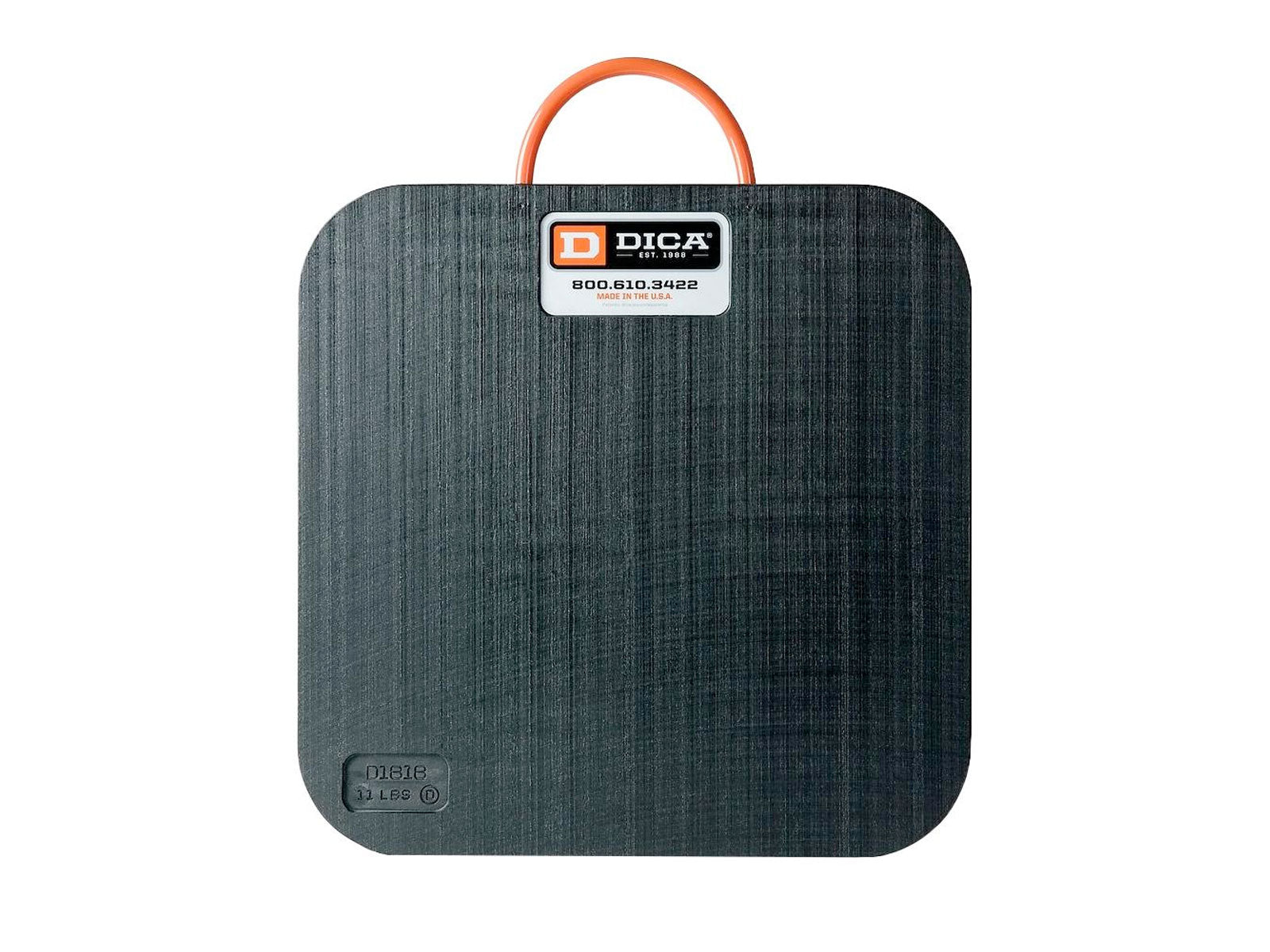 In Stock
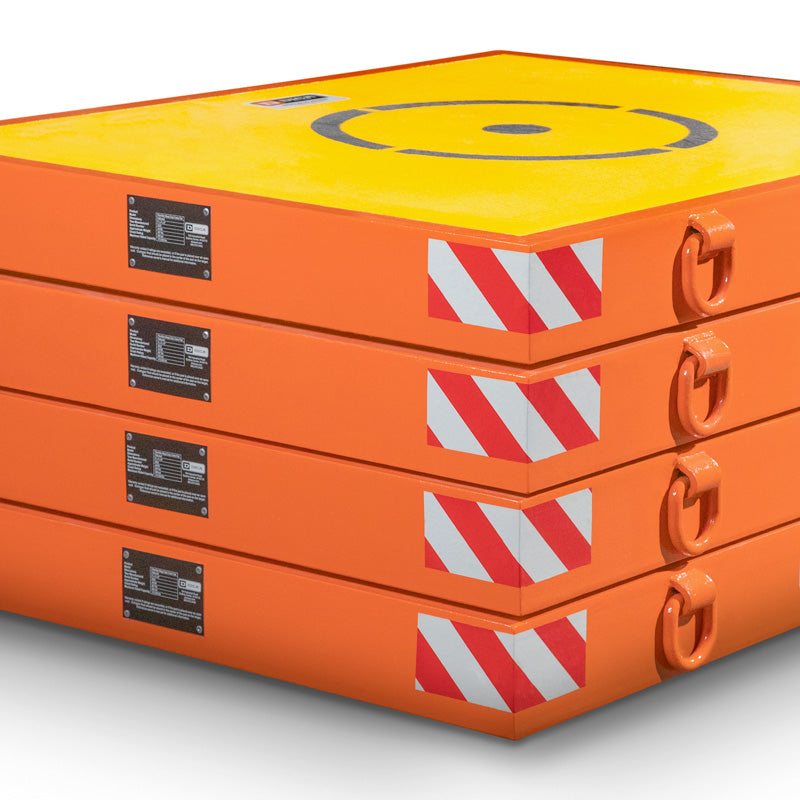 In Stock
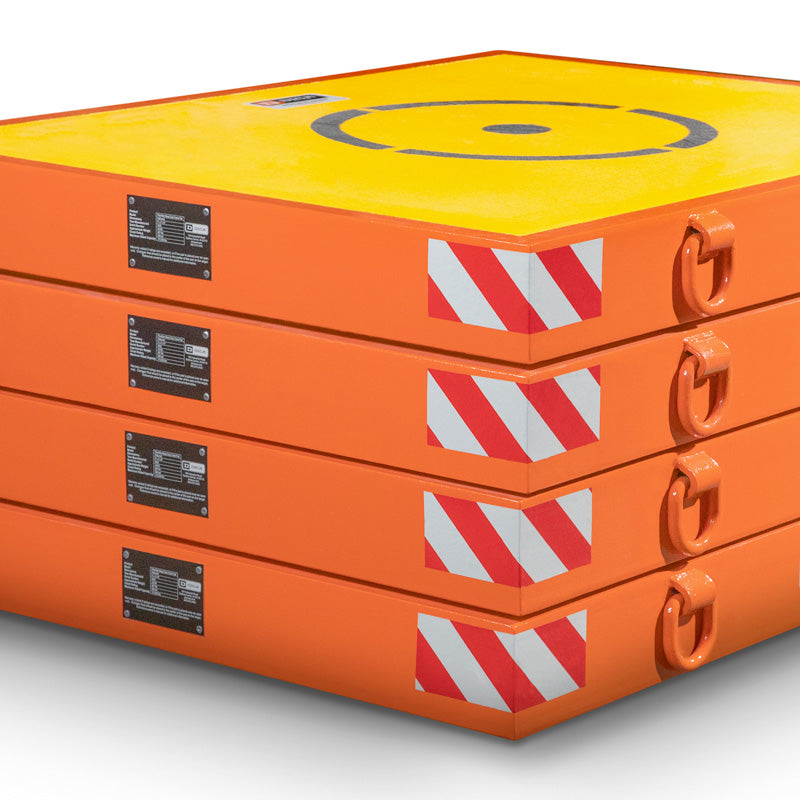 In Stock
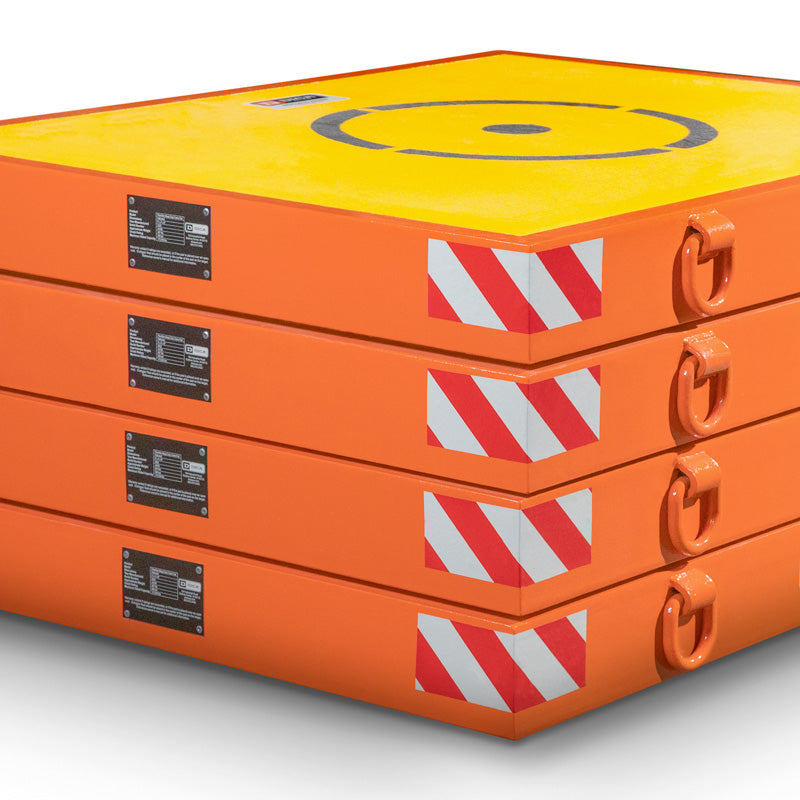 In Stock
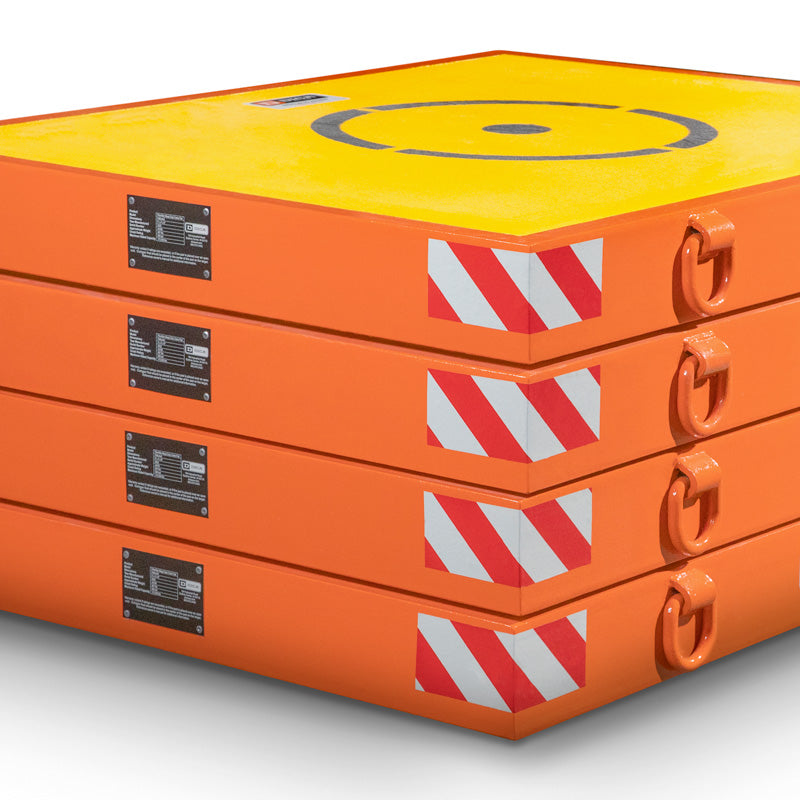 In Stock
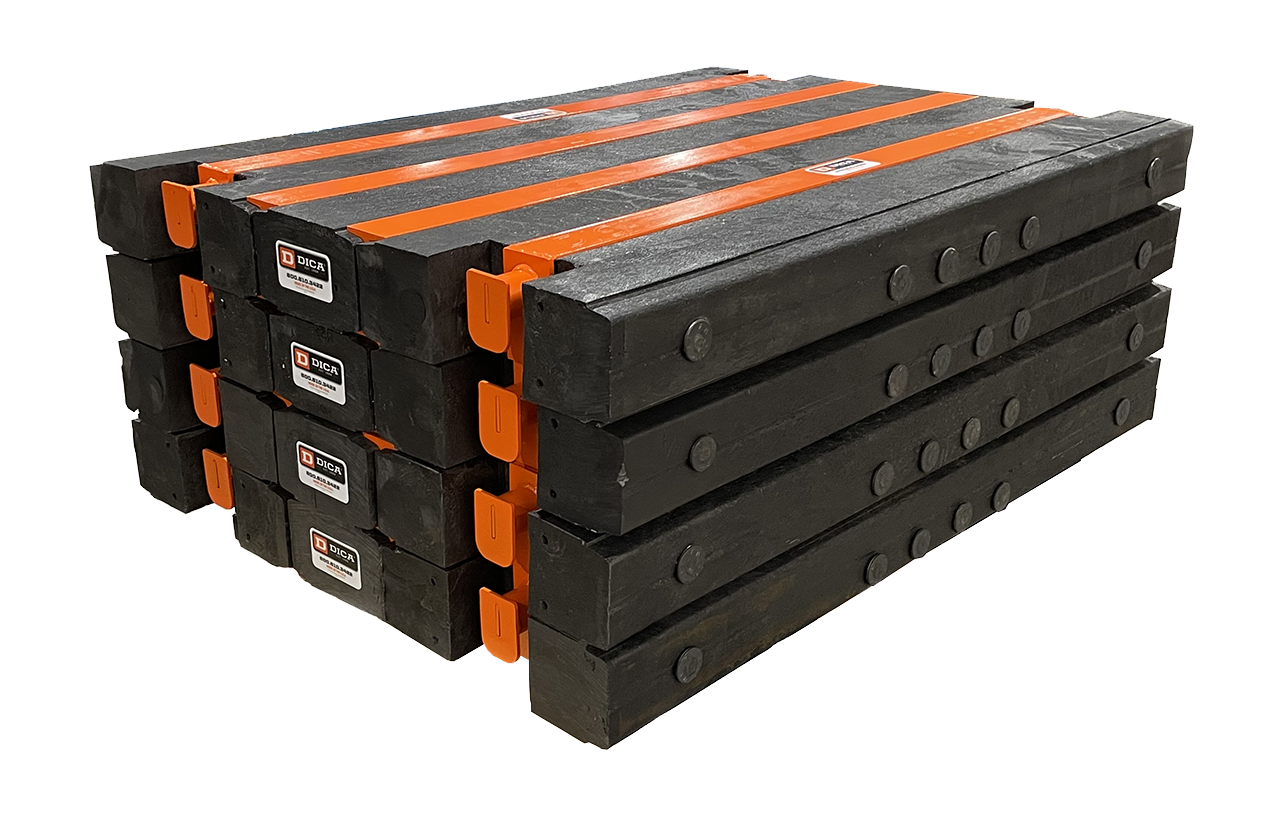 In Stock
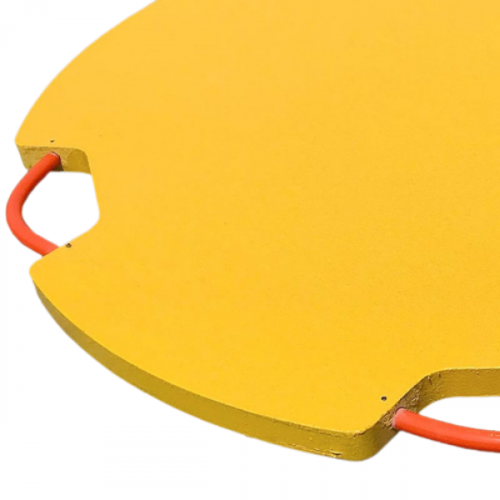 In Stock
 In Stock
 In Stock
Outrigger Pads Buying Guide
What the pad is doing under the float. Every outrigger puts the machine's weight, plus the load and the leverage of the boom, down onto a small steel foot. That reaction force divided by the foot's contact area is the pressure the ground sees, and it is usually far higher than soil, asphalt, or even a concrete slab can carry. The pad's whole job is to enlarge the contact area so the pressure drops to something the ground supports. Roughly double the pad's area and you roughly halve the pressure. That is why a pad is not casual dunnage: it is the engineered link between a machine rated in tons and a surface rated in pounds per square foot. Get it wrong and the float sinks, the machine lists, and the load chart the operator is trusting no longer describes the lift.
Size the pad by the numbers, not the habit. Sizing an outrigger pad is arithmetic. Take the maximum outrigger reaction force from the crane's load chart at the worst-case boom position, then divide it by the allowable ground bearing pressure of the surface you are set up on. Reaction force divided by allowable pressure equals the minimum pad area you need. Firm compacted gravel might carry several thousand pounds per square foot; soft or saturated clay a small fraction of that, which is why the same crane needs a much larger pad on bad ground than on good. You will hear a rule of thumb that the pad should be three or four times the float area. Treat that as a rough sanity check, not the answer. On soft soil the calculated area routinely comes out larger than any simple multiple of the float.
Outrigger pads or crane pads. The two families overlap, and the split is mostly about reaction force and machine size. Outrigger pads suit service trucks, boom trucks, digger derricks, aerial lifts, and smaller cranes, where one person can still place the pad by hand. The DICA SafetyTech and FiberTech pads on this page cover that band up to 170,000 lb. When you move into large all-terrain and lattice boom cranes, single outrigger reactions climb past what a portable pad can spread, and you step up to crane pads: thicker FiberMax and EcoMax fiber-reinforced polymer sections that behave like an engineered crane mat, rated from 100,000 lb into the hundreds of thousands and up to 400,000 lb. Same physics, more area and more bending strength, sized to the machine's outrigger reactions rather than to a truck's tool box.
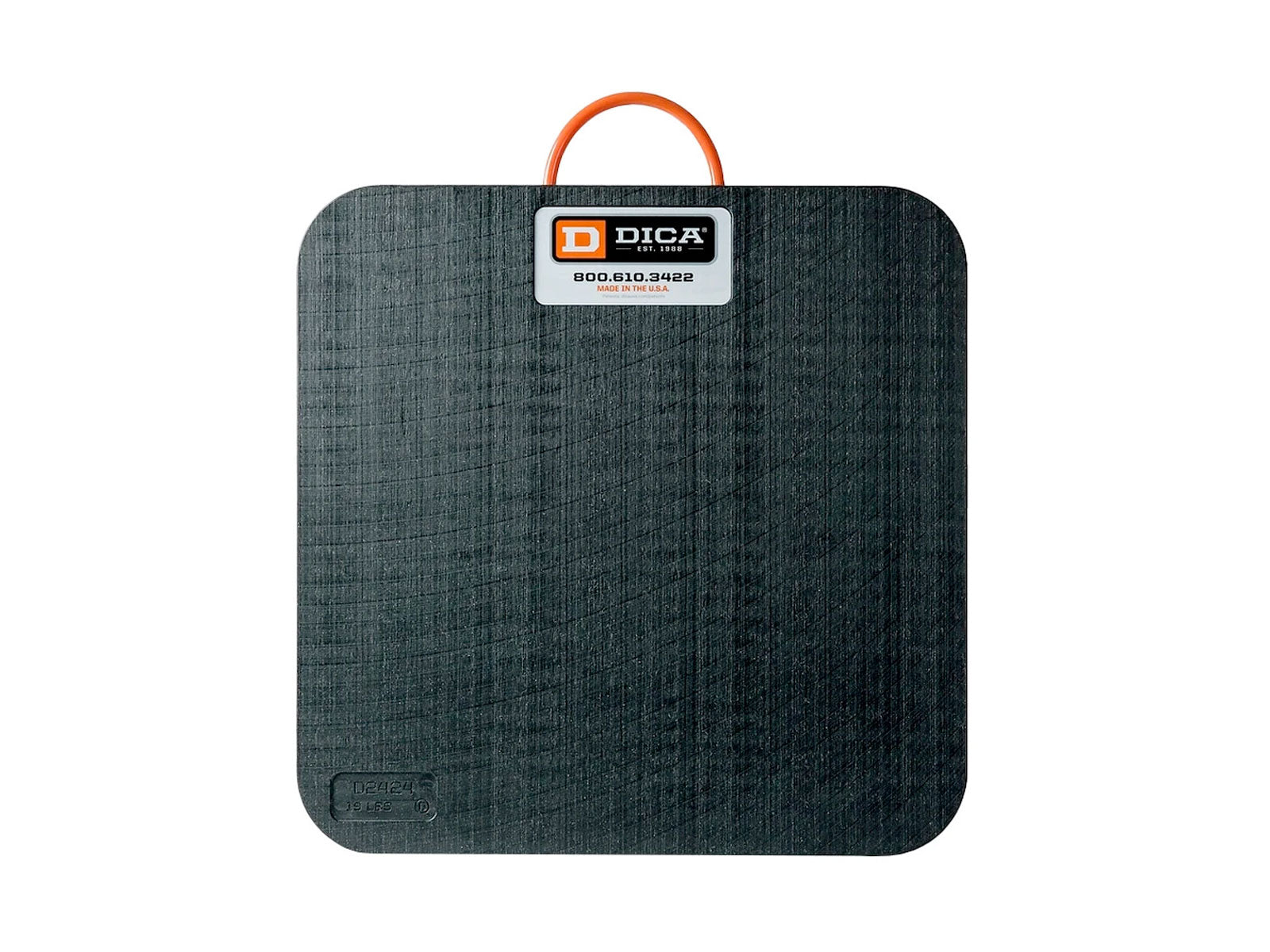
Reading the DICA range. The SafetyTech pads step up by thickness, and thickness tracks both capacity and how much the pad can bridge over an uneven or point-loaded spot. The 1 inch medium-duty pad is rated 45,000 lb, the 1.5 inch 55,000 lb, the 2 inch heavy-duty 70,000 lb, and the 3 inch extra heavy-duty 112,000 lb, in square and round plan sizes from a 12 inch pad up past 48 inches. They carry molded handholds, and several offer a hi-vis yellow or orange option so the pad is easy to spot and hard to leave behind on the ground. The round 1 inch FiberTech pad trades the thermoplastic for FRP to reach 170,000 lb in a comparatively light section. Pick the plan size from your area calculation first, then confirm the pad's rating covers the reaction.
OSHA 1926.1402 and who owns the ground. For construction crane work the governing rule is 29 CFR 1926.1402. It states that the equipment must not be assembled or used unless the ground is firm, drained, and graded to a sufficient extent that, in conjunction with supporting materials such as pads or cribbing where needed, the manufacturer's specifications for adequate support are met. The rule also assigns responsibility: the controlling entity for the site must ensure ground conditions are adequate and must inform the crane user of known hazards like backfilled trenches, voids, or buried utilities. Pads are the supporting material the rule contemplates, but they do not rescue ground that is not firm and drained to begin with. Document the soil assessment and keep the pad ratings with the lift plan.
Weight, handling, and inspection. A pad only helps if the crew will actually deploy it, so weight matters. The thermoplastic SafetyTech pads stay light enough to place by hand across most of the range, which is a large part of why an engineered pad beats a scrap timber cribbing pile nobody wants to lift. Store them flat and out of direct sun where you can, and inspect before each setup. The DICA thermoplastic is built to deform under load and recover rather than split, but check for cracks, deep gouges, or a permanent dish that signals the pad has been overloaded, and retire anything that no longer sits flat. Match the pad to the machine every time; a pad that worked under a digger derrick is not automatically right under a 90 ton all-terrain crane.
Frequently Asked Questions
Divide the maximum outrigger reaction force from the crane's load chart by the allowable ground bearing pressure of your surface, and the result is the minimum pad area. The reaction force comes from the chart at the worst-case boom position; the allowable pressure comes from the soil, with a safety factor applied. Soft or wet ground needs a much larger pad than firm gravel for the same crane. The old three-times-the-float rule is a rough check, not a substitute for the calculation, and on poor soil the calculated area often runs larger than that anyway.
It is mostly scale. Outrigger pads are the portable pads that go under service trucks, boom trucks, aerial lifts, and smaller cranes, and the DICA SafetyTech and FiberTech pads here cover that band to 170,000 lb. Crane pads are the thicker, higher-capacity fiber-reinforced sections for large all-terrain and lattice cranes, rated into the hundreds of thousands of pounds and up to 400,000 lb; see the crane pads collection. Both spread the outrigger reaction across the ground. Crane pads simply spread far more of it and behave more like an engineered mat.
OSHA 1926.1402 does not name outrigger pads by product, but it requires that ground conditions be firm, drained, and graded enough to support the crane, using supporting materials where necessary to meet the manufacturer's requirements. On most real ground that means pads or cribbing under the floats. The rule also makes the controlling entity for the site responsible for adequate ground conditions and for informing the crane operator of known hazards such as buried utilities or backfilled excavations.
The SafetyTech outrigger pads are molded from DICA's proprietary engineered thermoplastic, built to flex under load and recover rather than shatter the way wood or some plastics can. The FiberTech and FiberMax pads use fiber-reinforced polymer, a composite originally developed to replace heavy timber and steel mats. Inspect before every setup and retire any pad with cracks, deep gouges, or a permanent bow, since those are signs it has been loaded past its rating.
Thicker pads carry more and bridge better over an uneven or point-loaded spot, but it is the plan area, the width and length, that actually controls ground pressure. Size the area to your reaction force and soil first, then choose a thickness rated for the load: DICA's SafetyTech runs 1 inch at 45,000 lb up to 3 inches at 112,000 lb, and the crane pads go thicker still for the heaviest machines. A pad that is thick but too small in area will still overload the soil under it.