Tie Down Chain
Tie down chain is the steel that holds a load to the deck when synthetic straps would saw through on the first sharp edge. Every chain here is Grade 70 transport chain, the heat treated carbon steel that flatbed and heavy-haul fleets have run for decades, in the diameters that matter for securement: 1/4 inch rated 3,150 lb up through 1/2 inch at 11,300 lb working load limit. You can buy it four ways. Cut lengths of Mytee binder chain from 6 to 25 feet, Kinedyne grab-hook assemblies that arrive with hooks swaged on ready to rig, bulk barrels for shops that cut and build their own, and Grade 70 and Grade 43 floor chain tie-downs that mount to the deck. Prices run from around $30 for a short cut length or a floor tie-down into the low hundreds for the longest assemblies, with bulk chain priced by the drum. Pick the format and the size, then pair it with a binder to tension it.
Compare Transport Chain
| Model | Price | Material | Barrel Weight | Working Load Limit | |
|---|---|---|---|---|---|
| Kinedyne 3/8" Grade 70 Bulk Barrel of Chain | $1,645 | Grade 70 alloy chain | 565-618 lb | 6,600 lbs / 3,000 kgs | View → |
| Kinedyne 1/2" Grade 70 Bulk Barrel of Chain | $1,589 | Grade 70 alloy chain | 525-551 lb | 11,300 lb | View → |
| Kinedyne 5/16" Grade 70 Bulk Barrel of Chain | $1,582 | Grade 70 alloy chain | 527-584 lb | 4,700 lbs / 2,135 kgs | View → |
| Kinedyne 1/4" Grade 70 Bulk Barrel of Chain | $1,291 | Grade 70 alloy chain | 524 lbs / 238 kgs | 3,150 lbs / 1,430 kgs | View → |
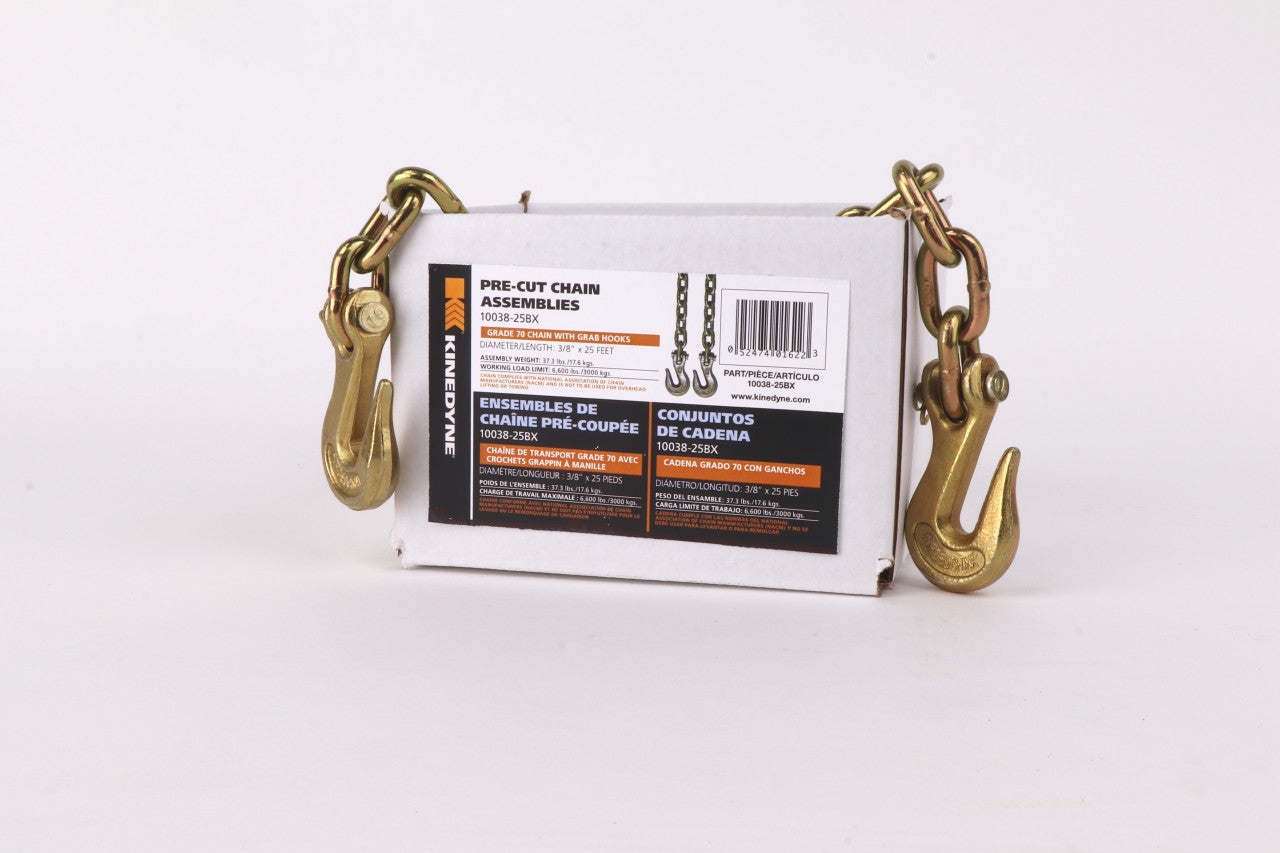
| Kinedyne Grade 70 Grab Hook Chain Assembly 3/8 | $75 | — | — | — | View → |
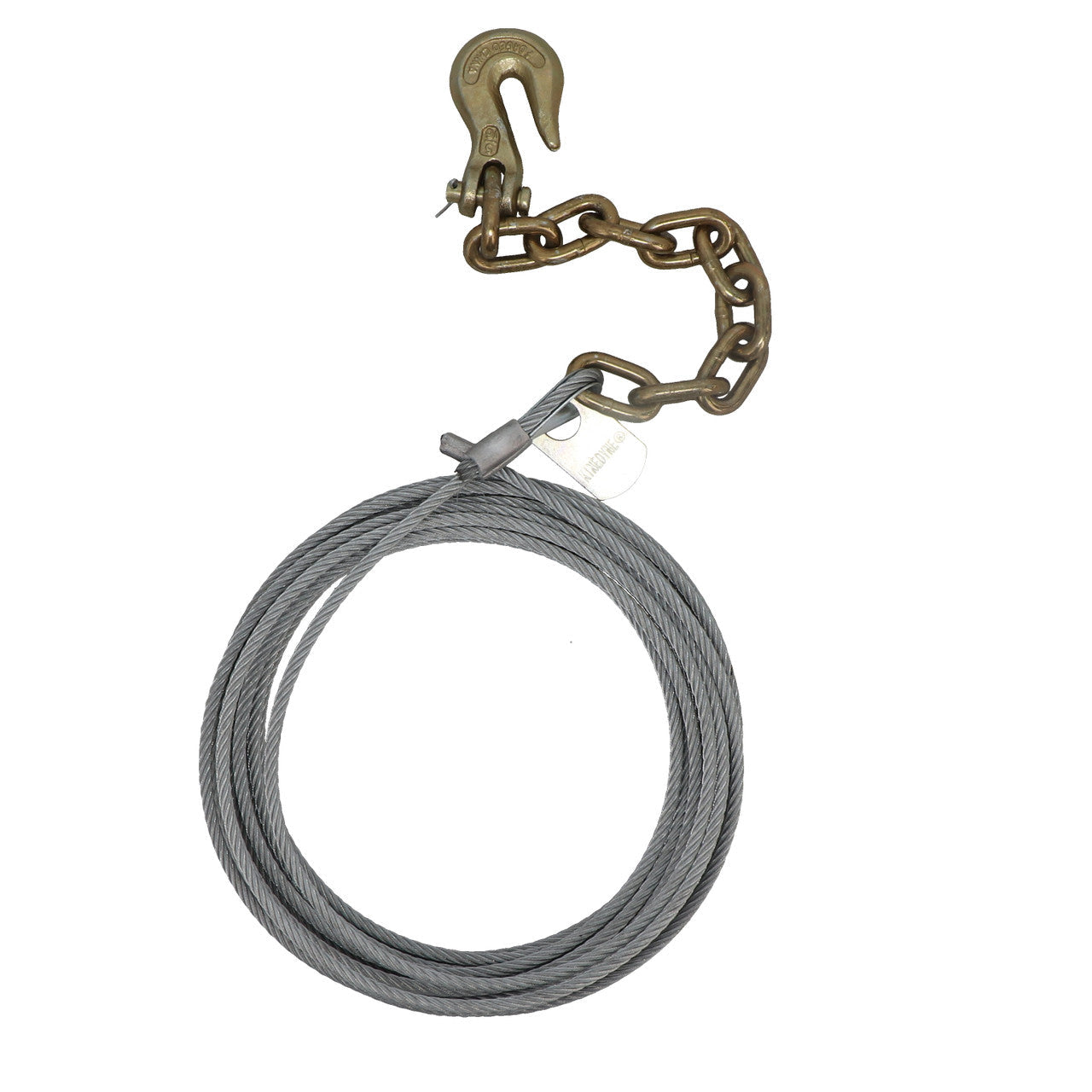
| Kinedyne 1/4" by 30' Wire Rope Chain Assembly | $37 | — | — | — | View → |
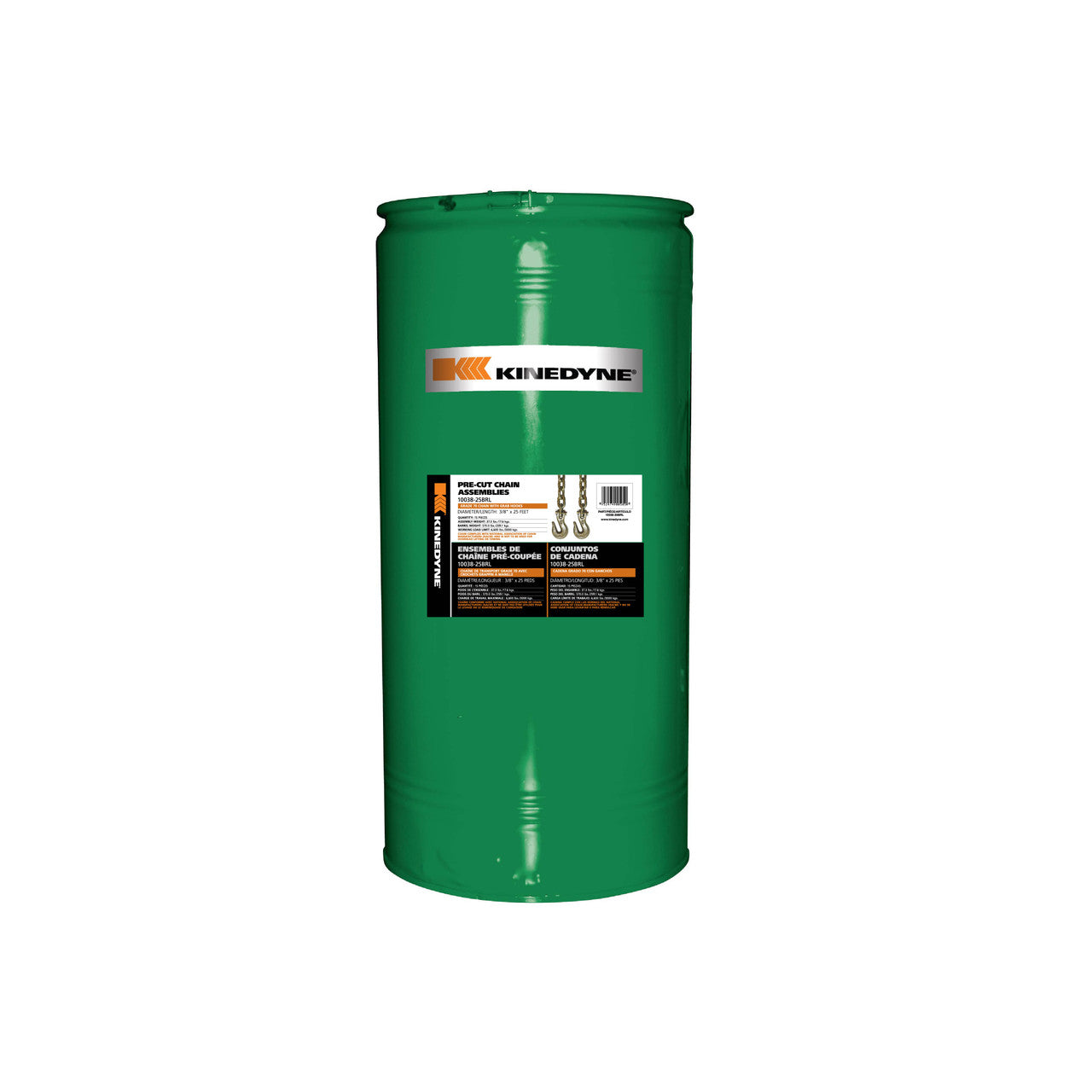 In Stock
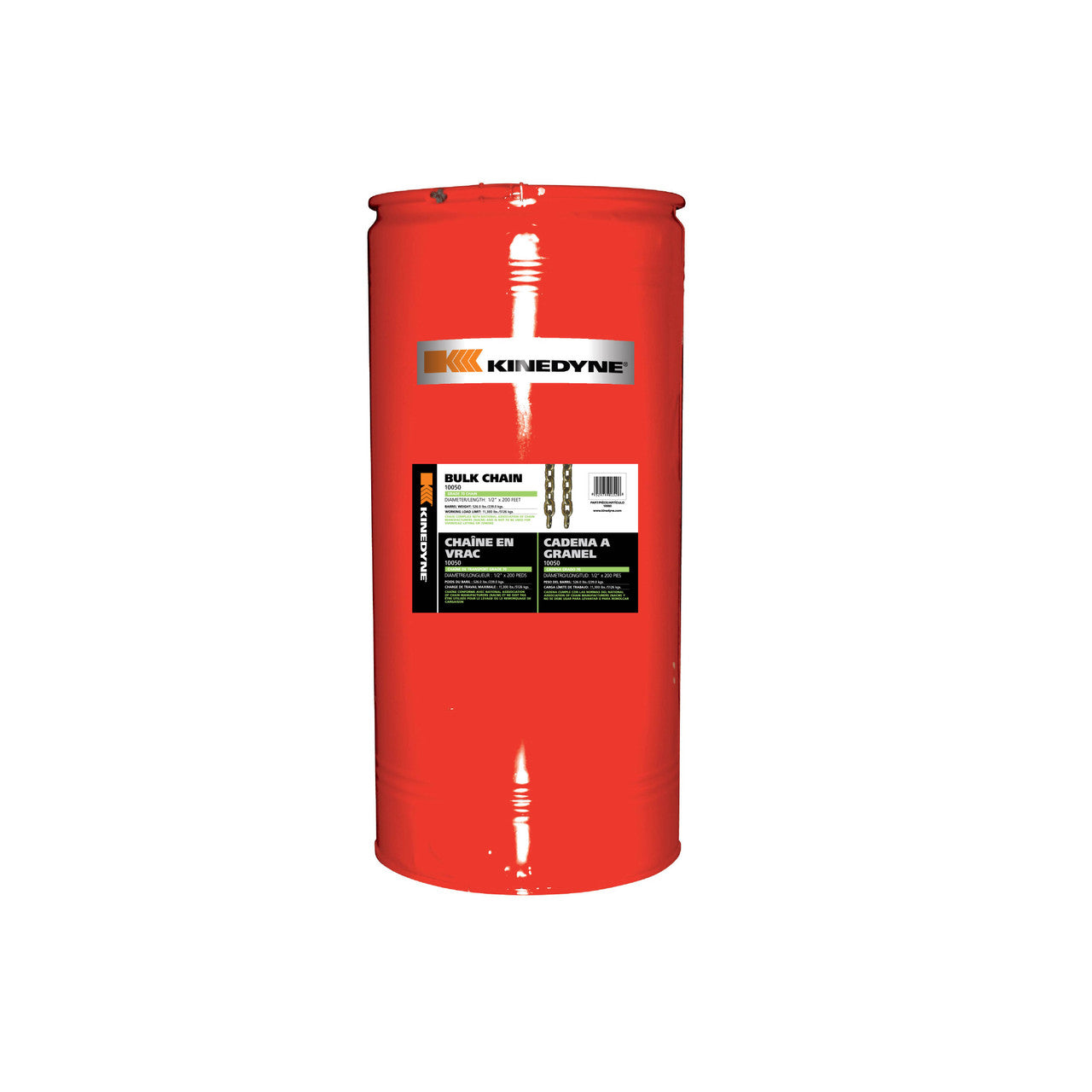 In Stock
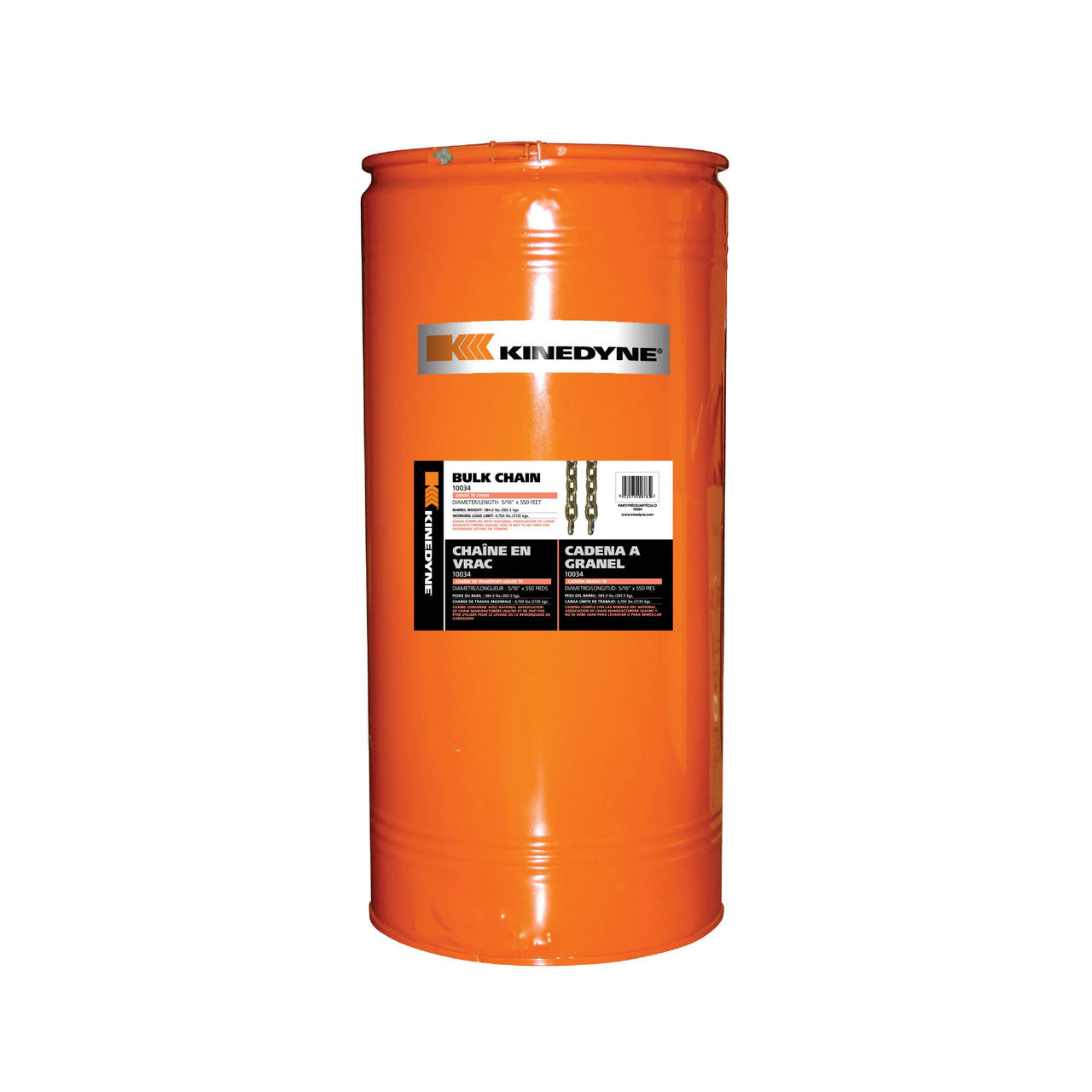 In Stock
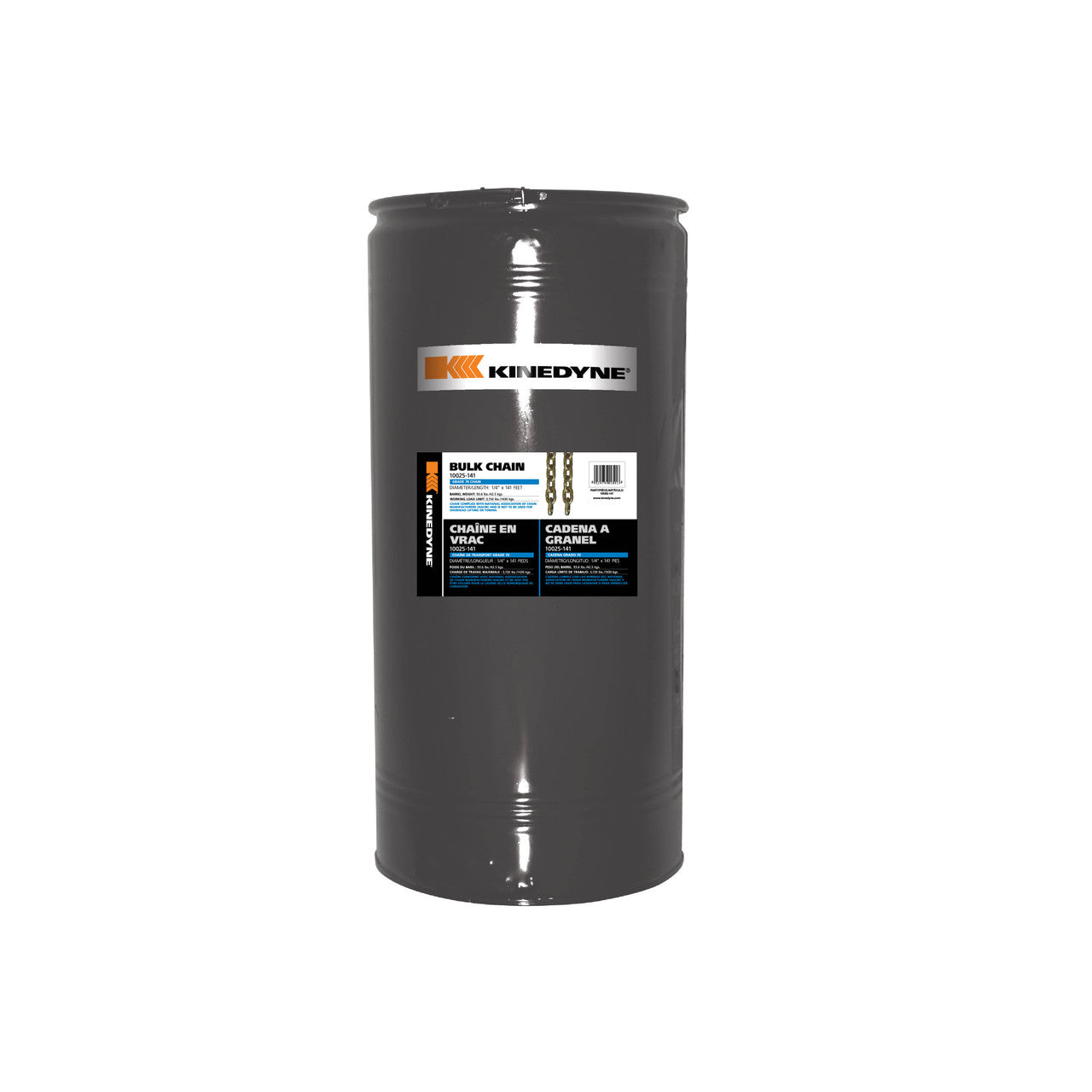 In Stock
 In Stock
 In Stock
 In Stock
 In Stock
 In Stock
 In Stock
Transport Chain Buying Guide
Transport chain, not lifting chain. Grade 70 is built for one job: holding cargo down. It is not rated for overhead lifting, and no amount of extra length changes that. The moment a load hangs from it you are outside what the chain was proof tested and certified to do, and you want Grade 80 or 100 alloy chain instead. What Grade 70 gives you is a 4:1 design factor, meaning a break strength of at least four times the stamped working load limit, in a light, heat treated chain finished in gold chromate. That gold color and the 7 or 70 embossed in the links let a roadside inspector identify the grade without a gauge. Keep it readable: under the federal securement rules, welded steel chain an inspector cannot identify by grade is scored as plain Grade 30 proof coil, a fraction of what Grade 70 actually holds, so an unreadable link costs you rating on the spot.
Size sets the rating. Rating climbs with diameter, and four common transport sizes cover most decks. Our Mytee Grade 70 binder chain runs 1/4 inch at 3,150 lb, 5/16 inch at 4,700 lb, 3/8 inch at 6,600 lb, and 1/2 inch at 11,300 lb, in cut lengths from 6 to 25 feet so you buy close to the reach you need instead of dragging extra chain across the deck. Three-eighths inch is the flatbed workhorse for machinery, steel, and equipment; 5/16 inch handles lighter loads and is the common floor-chain diameter; 1/2 inch is for the heavy iron. Size the chain to the securement math, not to habit, and remember the assembly is only ever rated to the lower of the chain and the binder that tensions it. The full tie-down math and binder pairing live on the transport chain and binders hub.
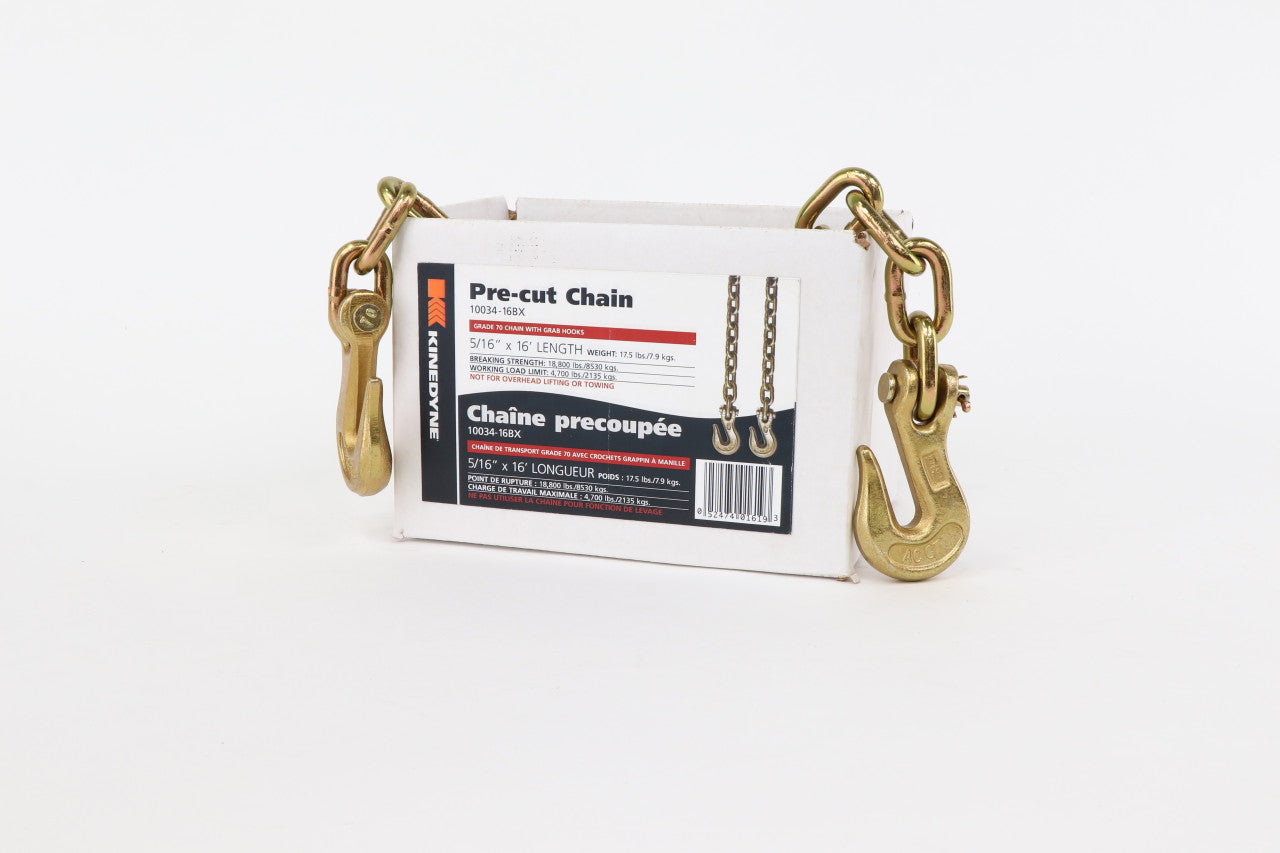
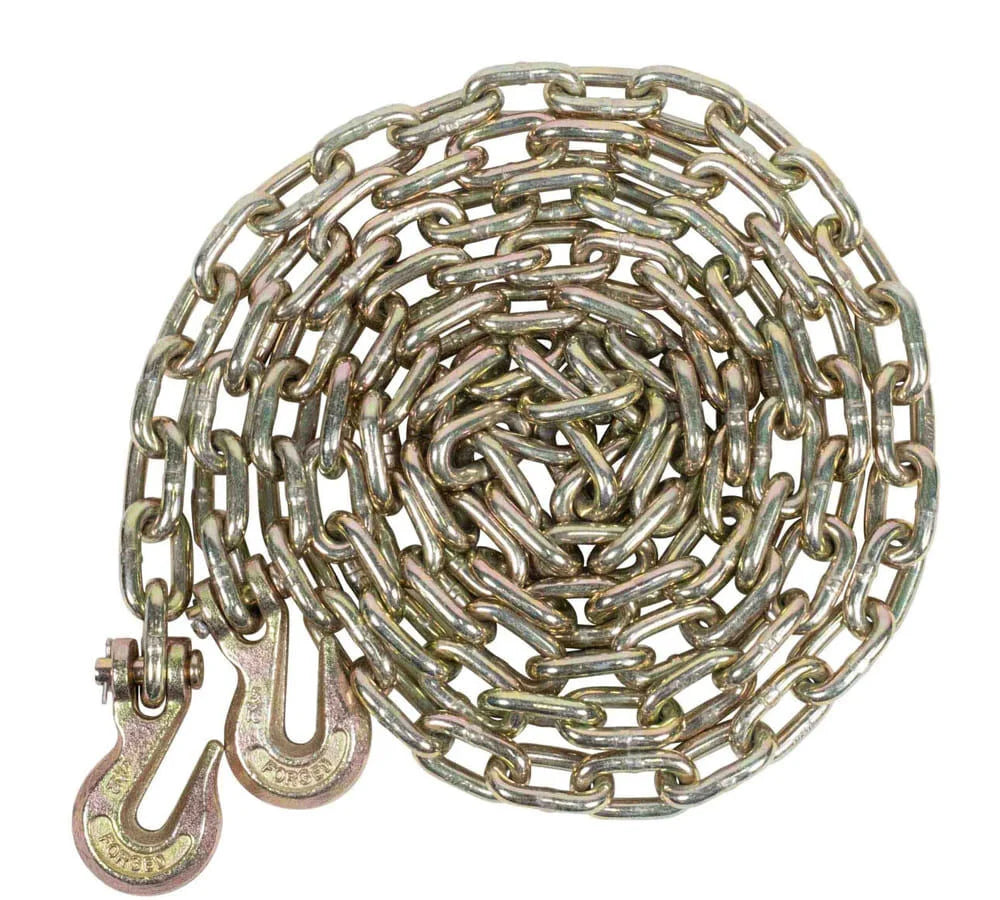
Four ways to buy the chain. Cut lengths are the simplest: a measured run of Mytee Grade 70 with a length and a rating, ready to pair with a binder. Kinedyne grab-hook chain assemblies go a step further, arriving with a grab hook swaged on each end so the chain is ready to wrap and cinch out of the box; the 5/16 inch assemblies start around $46 and the 3/8 inch at 6,600 lb around $70. Shops that build and repair their own rigs buy Grade 70 by the bulk barrel, 400 to 800 feet on a drum in 1/4, 5/16, and 3/8 inch, some barrels pre-cut into 16, 20, and 25 foot grab-hook lengths. Whichever format you choose, the chain is half an assembly; the chain binders that pull the slack out and hold it are the other half, and each half carries its own working load limit.
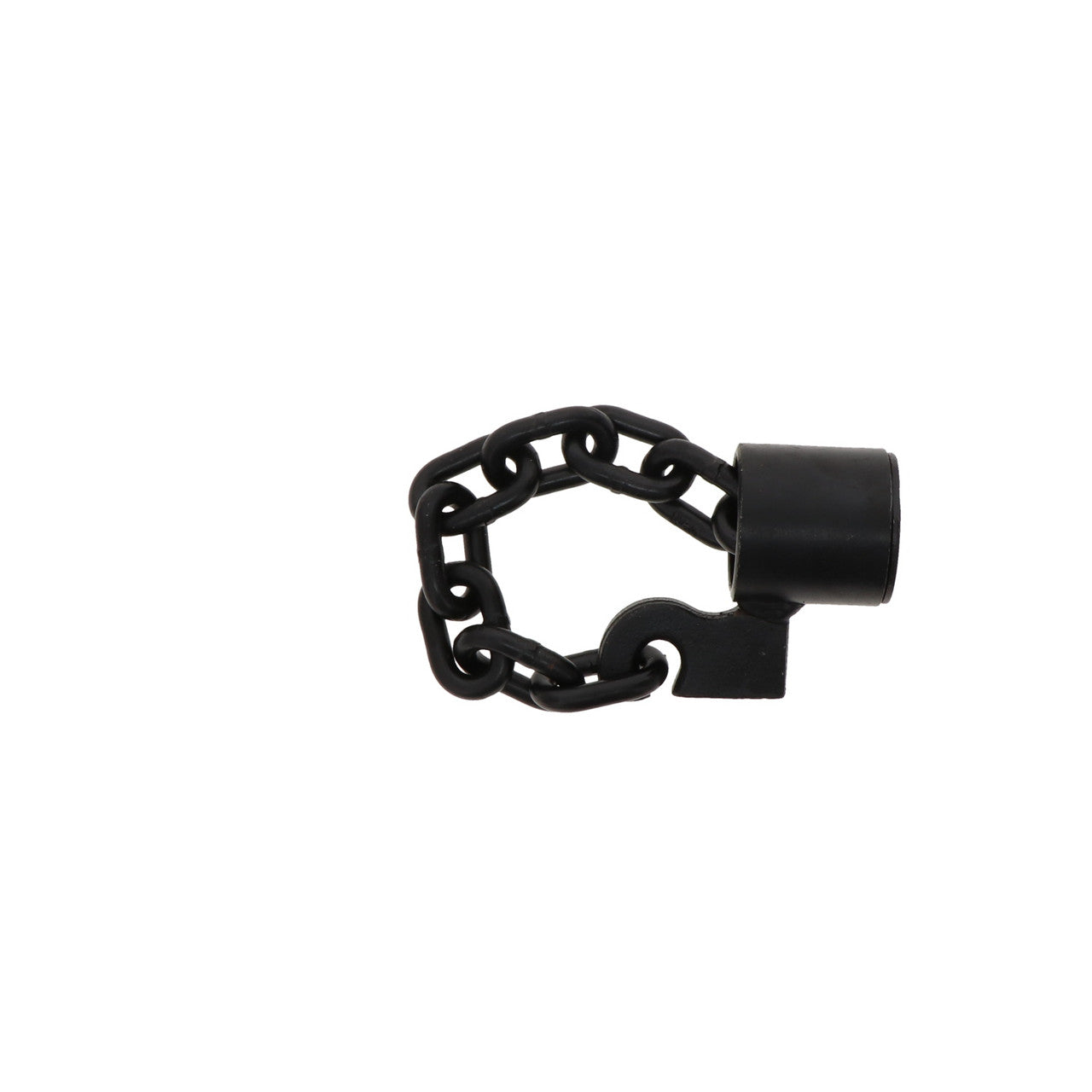
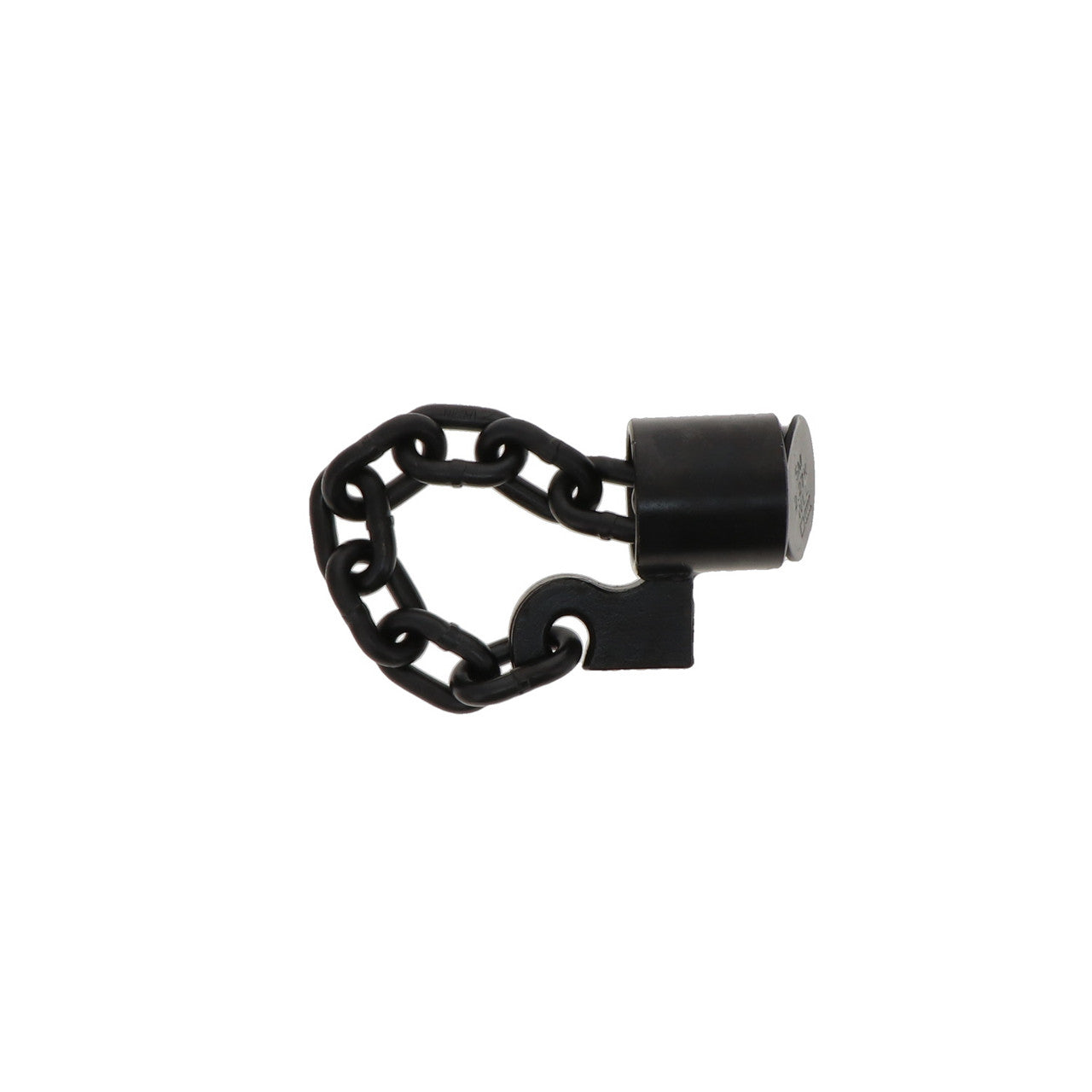
Grab hooks let you shorten to fit. A grab hook is the flat, narrow-throated hook you see on transport assemblies, and its whole purpose is adjustment. The throat cradles a single link and lets the next link pass, so you can hook any point along the chain, shorten the run to exactly the length the load needs, and then take up the last of the slack with the binder. That is why a grab-hook assembly rigs faster than loose chain and a separate hook: you wrap the load, grab the nearest link, and bind. It also terminates the run cleanly at the deck rail or stake pocket. When you shorten with a standard grab hook, seat the link flat in the throat with the weld facing out so the hook loads the body of the link, not the weld.
Floor chain and the Grade 43 option. Not every tie-down wraps over the top. Our Kinedyne floor chain tie-downs mount to the deck as a fixed anchor for chaining a load down, and they come in two grades. The heavy-duty version is Grade 70 rated 6,000 lb; the standard-duty version is Grade 43 high-test rated 5,000 lb, a softer, lower-cost carbon chain for lighter deck work. Both run about $32. Grade 43 is legitimate securement chain with its own marked rating, but it sits below Grade 70 size for size, so keep the two straight and never assume a floor chain matches the rating of the 3/8 inch chain going over the load. When in doubt, read the tag and the embossed grade, not the color.
Inspect the links, and never repair them. A transport chain is a chain of single points of failure, and it gets checked link by link before it carries a load. Pull it out of service for a stretched link, a bend or twist, a nick or gouge, a crack anywhere near a weld, or wear past the maker's allowance measured with a wear gauge. OSHA's marine rule retires a chain when a measured section stretches more than 5 percent, and the same logic applies on a deck. Heat is the quiet killer: any welding, grinding, or torch work destroys the heat treatment the Grade 70 rating depends on, so a damaged transport chain is scrapped, never repaired or straightened. Keep the grade marking legible for the same reason it was stamped, and at these prices no load is worth defending a questionable chain.
Frequently Asked Questions
No. Grade 70 is transport and tie-down chain, proof tested and certified for cargo securement, not overhead lifting. For hoisting and rigging picks you need Grade 80 or Grade 100 alloy chain rated for lifting. Using transport chain overhead puts you outside its certification, and the grab hooks fitted to these assemblies are not lifting hooks.
Size to the load. Grade 70 runs 1/4 inch at 3,150 lb, 5/16 inch at 4,700 lb, 3/8 inch at 6,600 lb, and 1/2 inch at 11,300 lb working load limit, with 3/8 inch the general flatbed size for machinery and steel. The federal floor is that the aggregate working load limit of your tie-downs reach at least half the cargo weight; the hub page walks the full count and math.
Buy grab-hook assemblies if you want chain ready to wrap and cinch out of the box, with a hook already swaged on each end. Buy plain cut lengths if you have your own hooks or are matching an existing rig. Buy a bulk barrel only if you cut and build chain in volume, since a drum holds 400 to 800 feet. Every option still needs a binder to tension it.
Grade 70 is the higher-strength heat treated transport chain, gold chromate finished and marked so an inspector can read the grade. Grade 43 high-test is a softer, lower-cost carbon chain that sits below Grade 70 size for size. Our standard-duty Grade 43 floor tie-down is rated 5,000 lb and the heavy-duty Grade 70 version 6,000 lb, so match the deck anchor to the load and do not mix the ratings up.
Yes. The chain wraps and hooks the load, but a load [binder](/collections/chain-binders) is what pulls the slack out and holds the tension. A chain without a binder is not a working tie-down. Match the binder's chain-size range and working load limit to the chain, because the assembly is only ever rated to the weaker of the two.
The moment a link shows a stretch, bend, twist, nick, gouge, or crack near a weld, or wears past the manufacturer's allowance on a gauge. OSHA retires chain at more than 5 percent stretch over a measured section. Heat or field welding destroys the heat treatment the rating depends on, so a damaged Grade 70 chain is scrapped, never repaired.