Vertical Balers
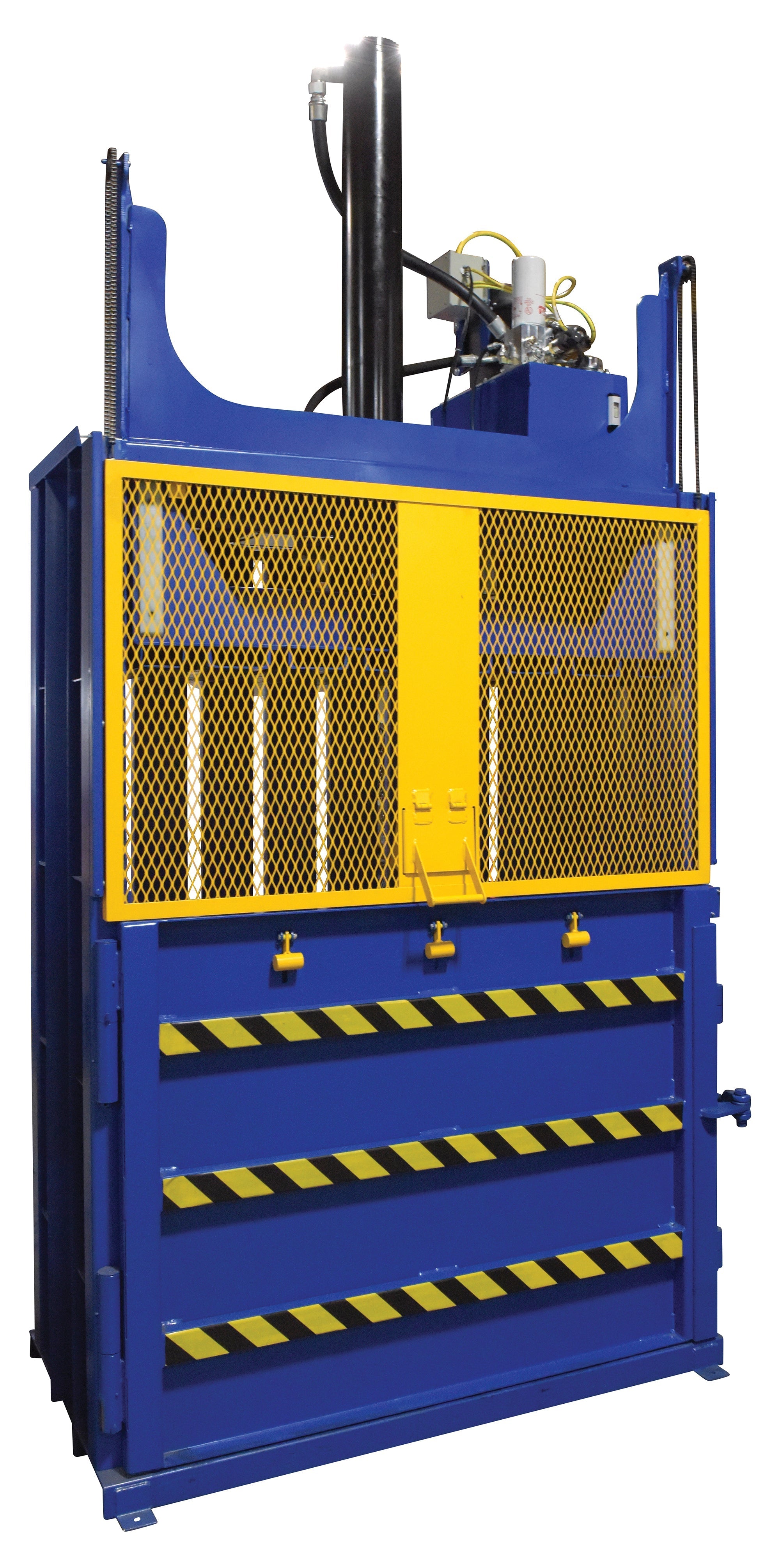
A vertical baler compresses loose cardboard straight down with a hydraulic ram, packing a dock's worth of old corrugated boxes into a dense bale a forklift can move and a recycler will pay for. This collection centers on the Vestil CBB-3000-37, a downstroke machine that runs on 460 volt three-phase power and weighs around 4,400 pounds. It is the compacting side of our [waste handling](/collections/trash-collection-recycling) hub, the counterpart to the [dumpers](/collections/dumpers) that tip scrap and the [sweepers](/collections/magnetic-brush-sweepers) that clear the floor. A vertical baler fits a shop generating a few carts of cardboard a day rather than a continuous stream; above that volume the job moves to a horizontal baler this catalog does not stock. Price it against a year of hauling bills, not on impulse.
Balers Buying Guide
What a vertical baler does, and where this one sits. A vertical baler is manually fed and compresses with a downstroke platen. You load cardboard through the front door, the centrally located cylinder drives down through the cycle to shape a bale, and once the cycle finishes you discharge the bale from the chamber. The Vestil CBB-3000-37 is that machine here, a single model priced near $15,500 with a large-button control panel and hardware included for the required assembly. It sits under waste handling equipment beside dumpers and magnetic and brush sweepers in facilities maintenance. If your waste is scrap, chips, or floor grit rather than cardboard, those are the pages you want instead.
Height decides the room before the baler does. A vertical baler is tall by design, and the Vestil is no exception. Overall it stands about 142 inches, close to 12 feet, on a footprint near 41 by 75 inches. That height is the first thing to check, because the door and platen need clearance to travel above the frame, so a bay that fits the machine on the floor can still be too short to run it. Measure ceiling height and look for sprinkler heads, ducts, and lights before you order. The base carries fork pockets on 20 inch centers, so a lift truck can set the machine in place and help move the finished bale off it.
Power, install, and the standard that governs it. This is not a plug-in machine. The CBB-3000-37 runs on 460 volt three-phase power, which means a dedicated circuit and an electrician, not a wall outlet or an extension cord, and assembly is required out of the crate. Installation, operation, and maintenance of any baler rated 600 volts or less fall under ANSI Z245.5, the baling equipment safety standard, which covers the interlocks, guarding, emergency stops, and warning markings the machine ships with. Follow the manufacturer's written procedures the standard references; that documentation is what keeps the safeguards doing their job.
The economics, and who may run it. The case for a baler is the hauling invoice. Loose old corrugated cardboard is mostly air, so hauling it means paying to move empty space; compressed into dense bales, the same cardboard needs fewer pickups and can turn a disposal cost into a per-ton rebate from the recycler. A vertical baler suits a shop generating up to roughly ten tons of cardboard a month; past that, throughput points to a continuous horizontal machine. One rule is not negotiable: under the Fair Labor Standards Act, Hazardous Occupations Order No. 12 bars anyone under 18 from loading, operating, or unloading a power-driven baler, whatever they are baling. Train and authorize adult operators, and keep the lockout discipline the standard calls for.
Frequently Asked Questions
A vertical baler is manually fed and compresses with a downstroke ram, which suits a shop making up to about ten tons of cardboard a month. A horizontal baler runs continuously and is built for high, steady tonnage, and this catalog does not carry one. If your dock generates a few carts of old corrugated cardboard a day, the vertical Vestil is the right size. If cardboard streams in all shift, price a horizontal machine elsewhere.
The CBB-3000-37 stands about 142 inches tall, close to 12 feet, on a footprint near 41 by 75 inches, and it needs clearance above that for the door and platen to travel. Measure ceiling height and check for sprinkler heads, ducts, and lights in the bay before ordering. The frame fitting the floor is not the same as the machine fitting the room.
No. It runs on 460 volt three-phase power, so it needs a dedicated circuit wired by an electrician, not a wall outlet or extension cord. Assembly is also required out of the crate, with the hardware included. Budget for the electrical work and the install when you weigh the machine against your hauling costs.
It depends on volume. Loose cardboard is mostly air, so you pay to haul empty space; baling it cuts the number of pickups and can flip a disposal cost into a recycling rebate. Below a cart or two of cardboard a day the machine is hard to justify. Above that, run the purchase against a year of dumpster pulls and hauling fees before deciding it is too much machine.
Only trained, authorized adults. Under the Fair Labor Standards Act, Hazardous Occupations Order No. 12 prohibits anyone under 18 from loading, operating, or unloading a power-driven baler or compactor, regardless of what is being baled. Beyond that, ANSI Z245.5 sets the operating, guarding, and lockout requirements; follow the manufacturer's written procedures and keep the interlocks and emergency stops functional.