Magnetic Sweeper
A magnetic sweeper is the cheapest insurance a welding or machining floor can buy: a permanent magnet that drags nails, screws, weld spatter, and steel shavings off the concrete before they find a forklift tire. Every unit here is Vestil, and the range covers three ways of doing that job. Hanging sweepers clip to a chain or ride on the forks of a lift truck and clear a wide aisle in one pass. Push sweepers are walk-behind units for tighter spaces and quick after-shift laps. Manual brush sweepers cover the debris a magnet ignores, dust, grit, and packaging trash, with no power and no cord. Prices run from the low twenties for a hand wand to the mid four hundreds for the widest forklift-mounted bar. Buy to your aisle width and the debris you actually make.
Compare Magnetic & Brush Sweepers
| Model | Price | Overall Width | Capacity | |
|---|---|---|---|---|
| Vestil Hanging Magnetic Sweepers | $317 | 36-72 in | 45-130 lb | View → |
| Vestil Manual Brush Sweepers | $235 | — | — | View → |
| Vestil Magnetic Push Sweepers | $105 | 3-36 in | 30-70 lb | View → |
Magnetic & Brush Sweepers Buying Guide
Start with the magnet, because ferrous debris is the costly kind. A magnetic sweeper works off a permanent ceramic magnet, always on, no power and no cord, so the only upkeep is wiping the bar clean. That also sets its limit: it lifts ferrous foreign object debris, the nails, screws, weld spatter, and steel shavings that puncture forklift and trailer tires, and it ignores aluminum, brass, copper, and most stainless. On a floor that welds or machines, that ferrous shrapnel is exactly the debris that costs you a tire, so a single pass after each shift is the cheapest housekeeping you can run. OSHA 1910.22 puts the baseline in writing anyway: walking and working surfaces have to be kept clean, orderly, and in a sanitary condition, and a swept floor is also a floor nobody slips on.
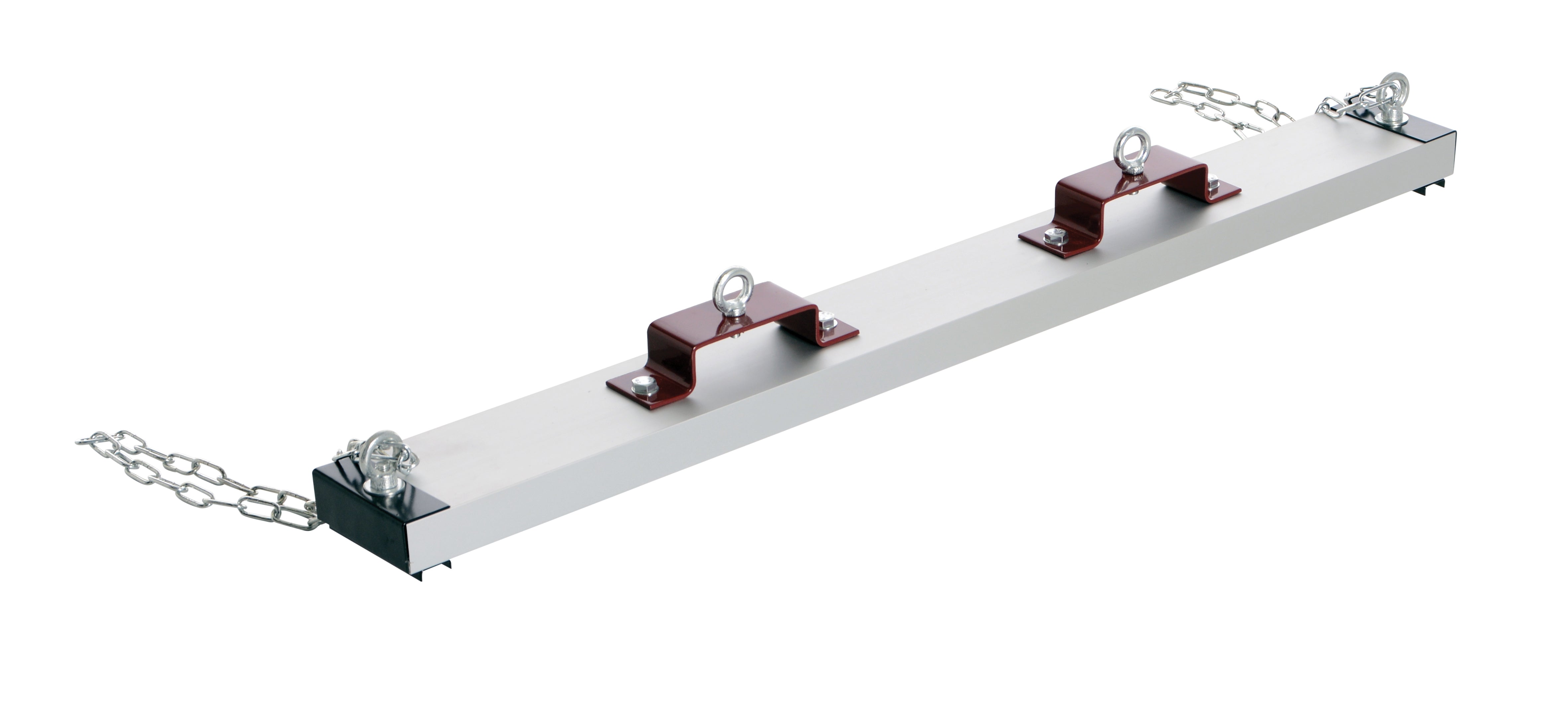
Hanging units: chain, forks, or both. The hanging magnetic sweepers come three ways to attach. A chain unit clips behind anything you already tow, a cart, a tug, a mower. A forklift-mount rides on the forks so the lift truck sweeps an aisle on its way to the next pick. The chain-and-forklift versions do both off one bar. Sweep widths run 36, 48, 60, and 72 inches, with pickup capacity climbing alongside the width, from around 45 lb on the narrow forklift bars to 130 lb on the widest heavy-duty models. Wider is faster per pass but heavier to hang and store, so size the bar to your main aisle, not your widest one, and let the forklift do the carrying if you have one on the floor.
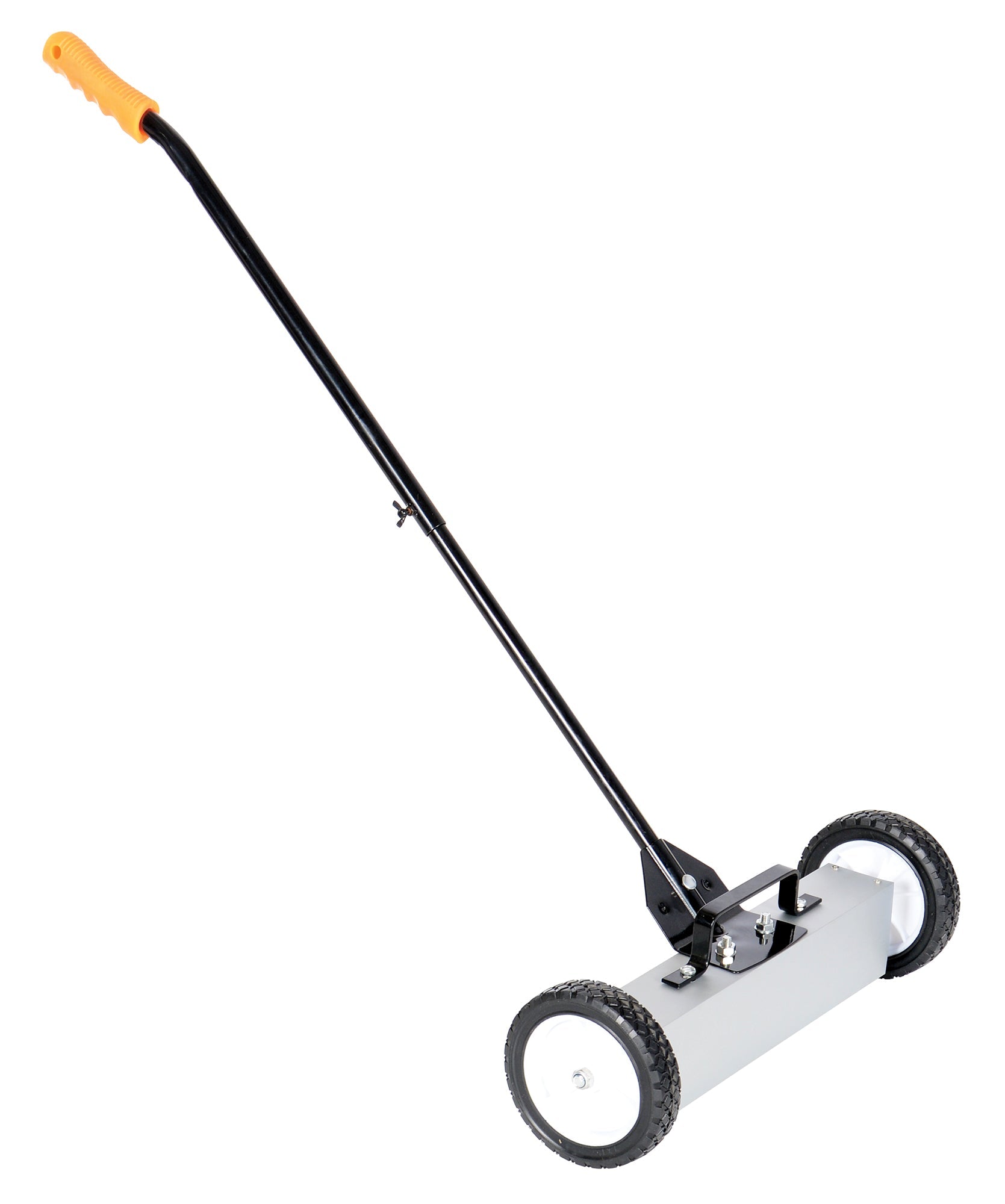
Push sweepers for the tight lap a forklift cannot make. Where a hanging bar cannot reach, around benches, in a tool crib, along a loading edge, a walk-behind push sweeper covers it. These run 18 to 36 inches wide, and the useful feature is the release: a handle-lift or lever mechanism tips the collected metal straight into a bin instead of onto your gloves. For spot checks and tight corners there is also a small hand-held wand at the bottom of the range, which is the tool for clearing a single dropped fastener before it goes under a tire.
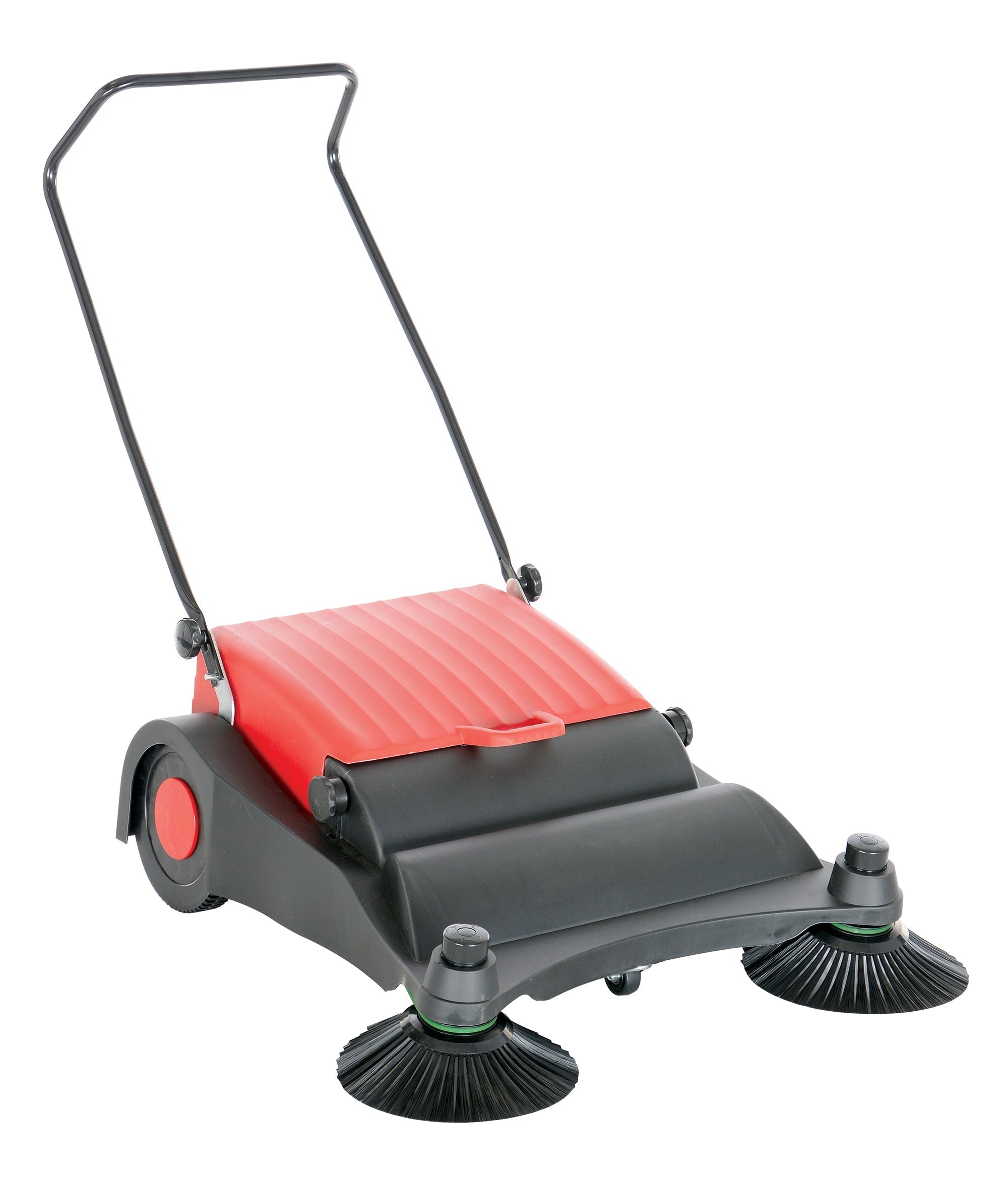
Brush sweepers for the debris a magnet will not touch. When the floor trash is dust, grit, sawdust, or packaging scrap rather than metal, the manual brush sweepers handle it with no power and no cord. They come belt or gear driven and push debris into an onboard hopper as you walk, the quiet, cordless alternative to dragging a shop vac across a small footprint. Most plants that weld or machine end up running both: a magnetic pass for the ferrous hazard and a brush pass for everything else. This collection sits under waste handling equipment for that reason, floor debris is the third waste stream after what you bale and what you dump.
Frequently Asked Questions
No. These use a permanent ceramic magnet, so they only lift ferrous debris, the steel and iron nails, screws, weld spatter, and shavings that puncture tires. Aluminum, brass, copper, and most stainless are non-magnetic and stay on the floor, which is what the brush sweepers are for.
The magnetic and brush units in this collection do not. The magnetic sweepers run off an always-on permanent magnet, and the brush sweepers are hand-pushed with a mechanical drive, so there is no cord, no charge cycle, and effectively no upkeep beyond keeping the magnet or brush clean.
On the push and hanging models with a release, a handle-lift or lever raises the magnet away from the pickup plate and the debris drops straight into a bin, so your hands never touch the metal. On simpler units you wipe or scrape the bar clean by hand once it fills up.
Match it to the aisle you clean most, not your widest one. Wider bars, up to 72 inches, clear more ground per pass but are heavier to hang and store, while the 18 to 36 inch push and forklift models are easier to handle in tight spots. If a forklift already travels the route, a forks-mounted bar sweeps on the way to the next pick for no extra trip.
Usually yes, if your floor sees more than metal. A magnet ignores dust, grit, sawdust, and packaging trash, so plants that both weld and generate general debris tend to run a magnetic pass for the ferrous hazard and a brush pass for everything else.