Industrial Step Stools
An industrial step stool is the welded steel or aluminum platform a worker climbs to reach a machine control, a top shelf, or a line running above bench height, and in a plant it looks nothing like the folding plastic kind from a kitchen. This collection is Vestil's step stand program, and it splits three ways: fixed-height step stands in one, two, and three step heights, crank-up adjustable step stands that dial in over a range, and adjustable-height Work-Mate standing platforms built for a worker who stays at one station all shift. Materials run from powder-coated and galvanized steel to aluminum for units that get carried, up to stainless steel for wash-down and food areas. Prices start under $100 for a small stainless step stand and climb past $1,800 for a full stainless Work-Mate stand. Start from how high you need to stand, how often the stool moves, and whether the floor gets hosed down, and the right unit follows.
Compare Step Stands
| Model | Price | Steps | Overall Width | |
|---|---|---|---|---|
| Vestil Double Sided Step Ladders- Yellow | $628 | 2-4 | — | View → |
| Vestil High Profile Stainless Steel Adjustable Height Work-Mate Stands | $543 | — | 19-24 in | View → |
| Vestil Adjustable Step Stands with Handrail | $463 | 2-3 | 24-72 in | View → |
| Vestil Portable Two-Step Ladders | $392 | — | — | View → |
| Vestil Low Profile Portable Adjustable Height Worker Stands | $388 | — | 19-24 in | View → |
| Vestil Aluminum Step Stands (Knock Down) | $262 | 2-3 | — | View → |
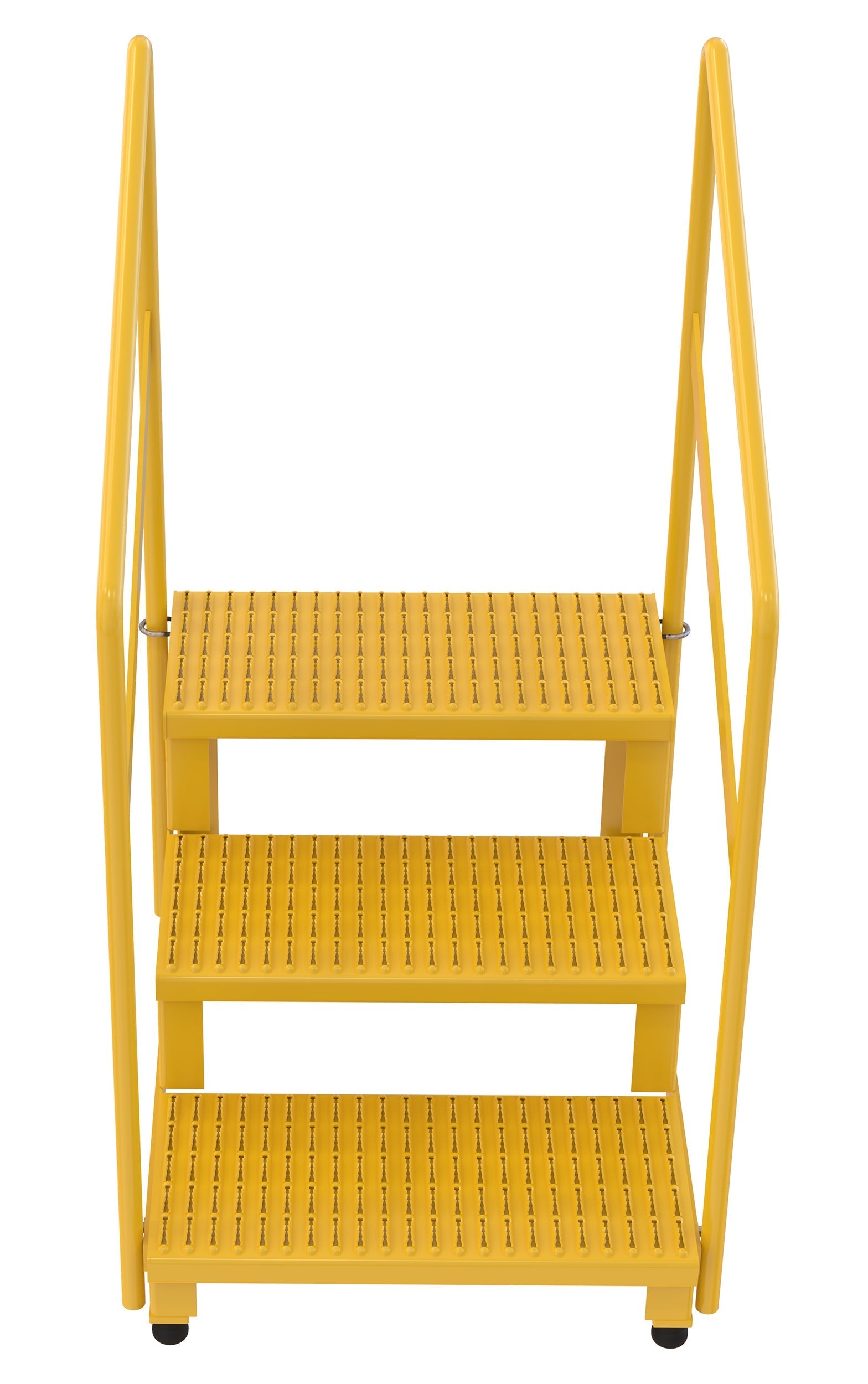 In Stock
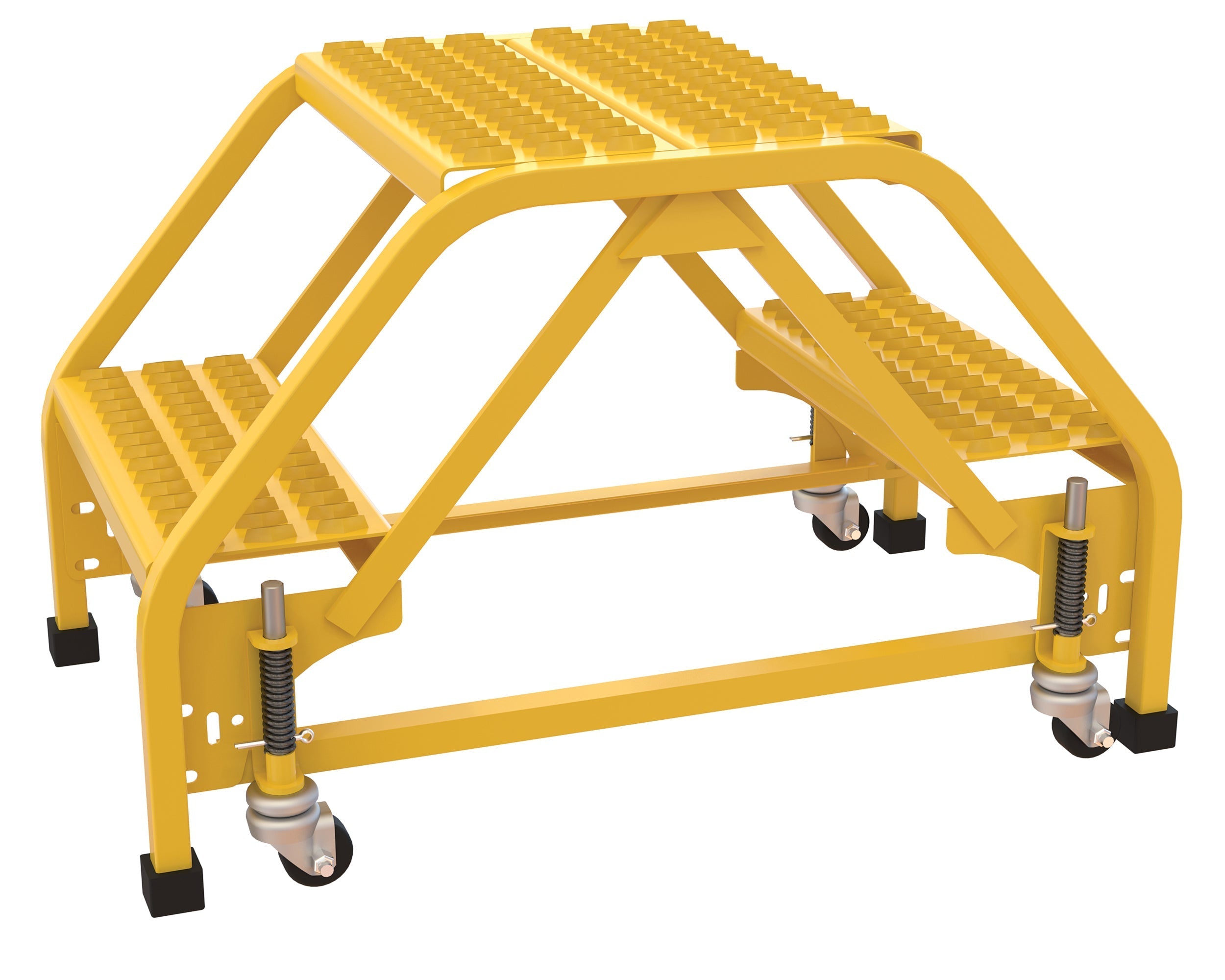 In Stock
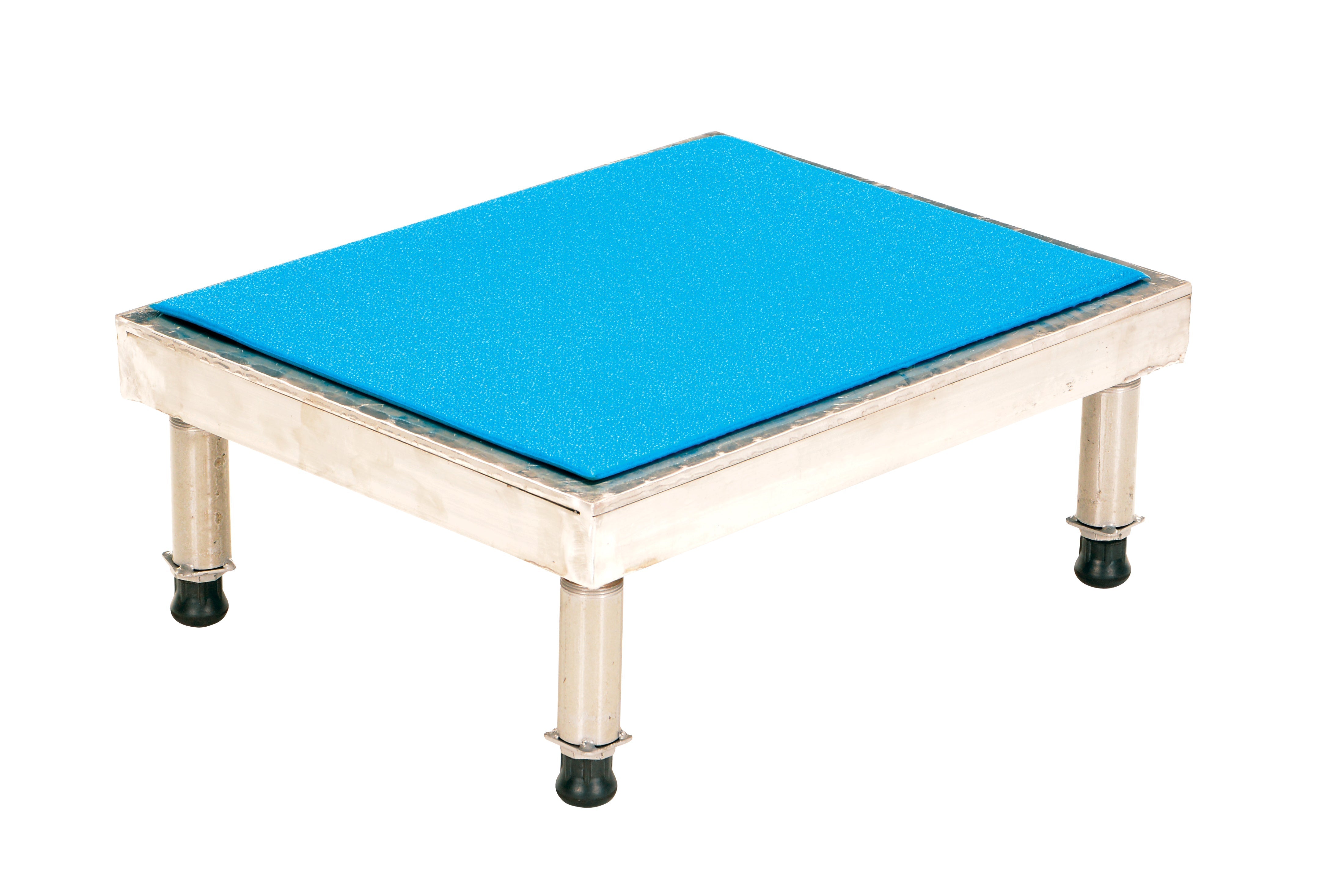 In Stock
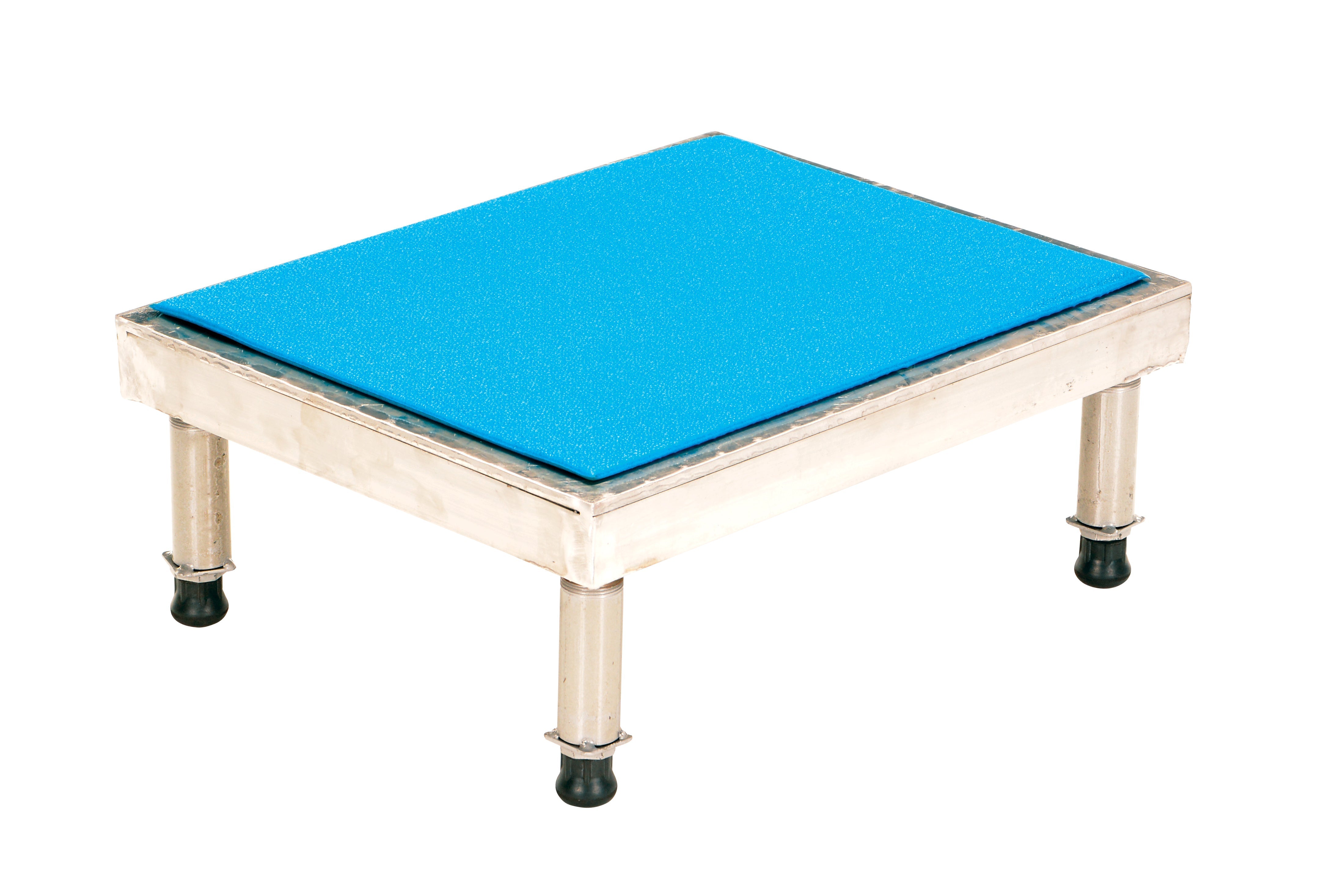 In Stock
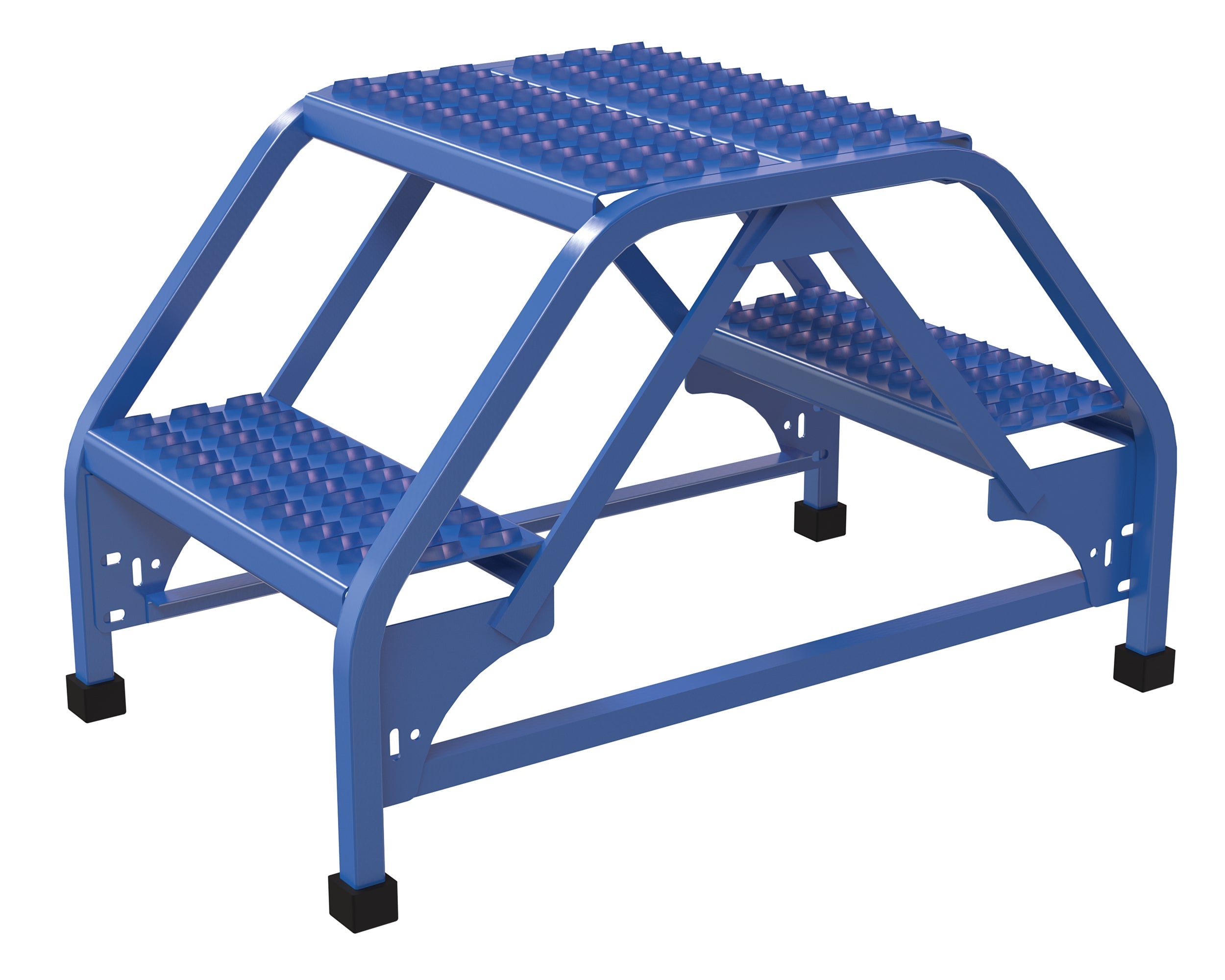 In Stock
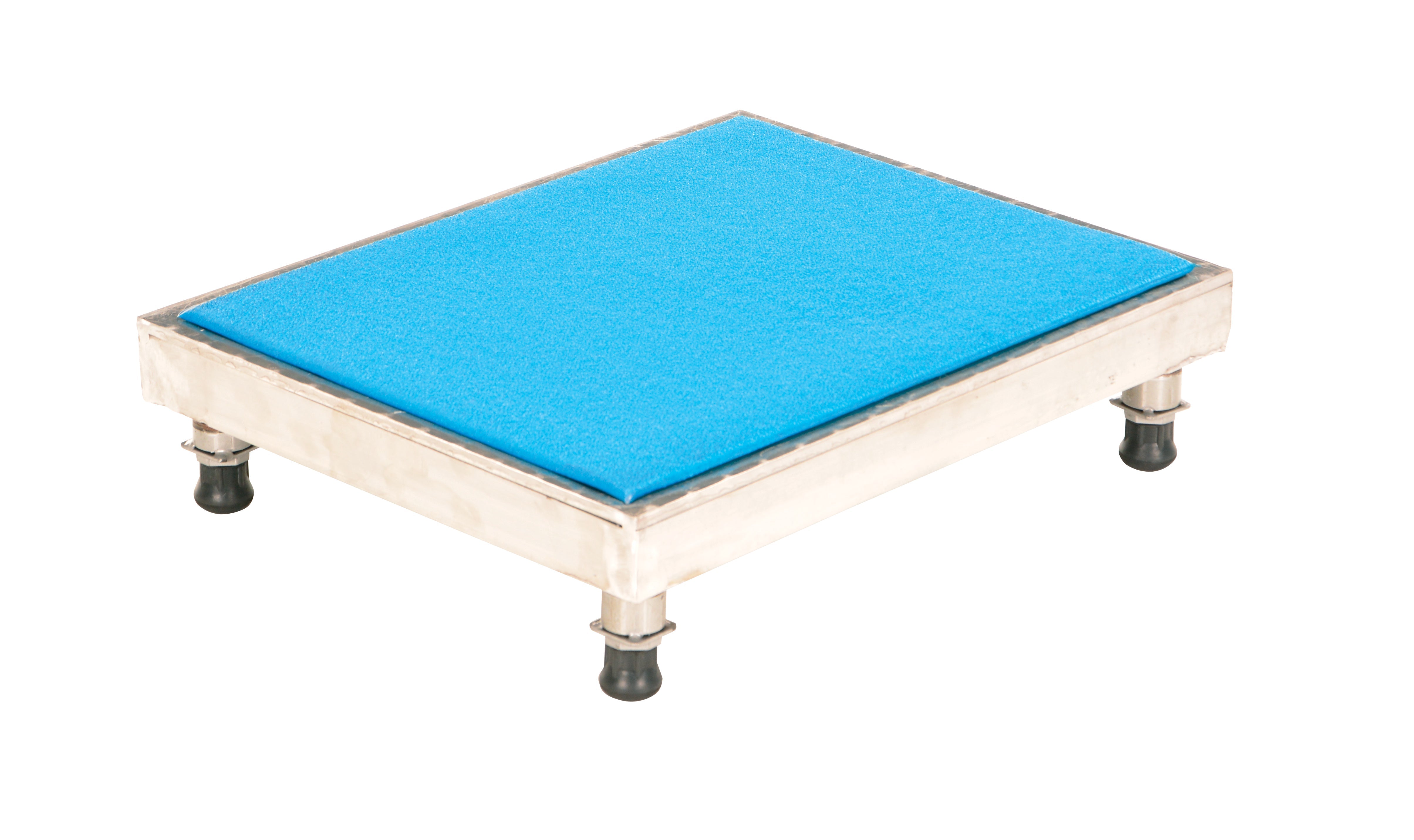 In Stock
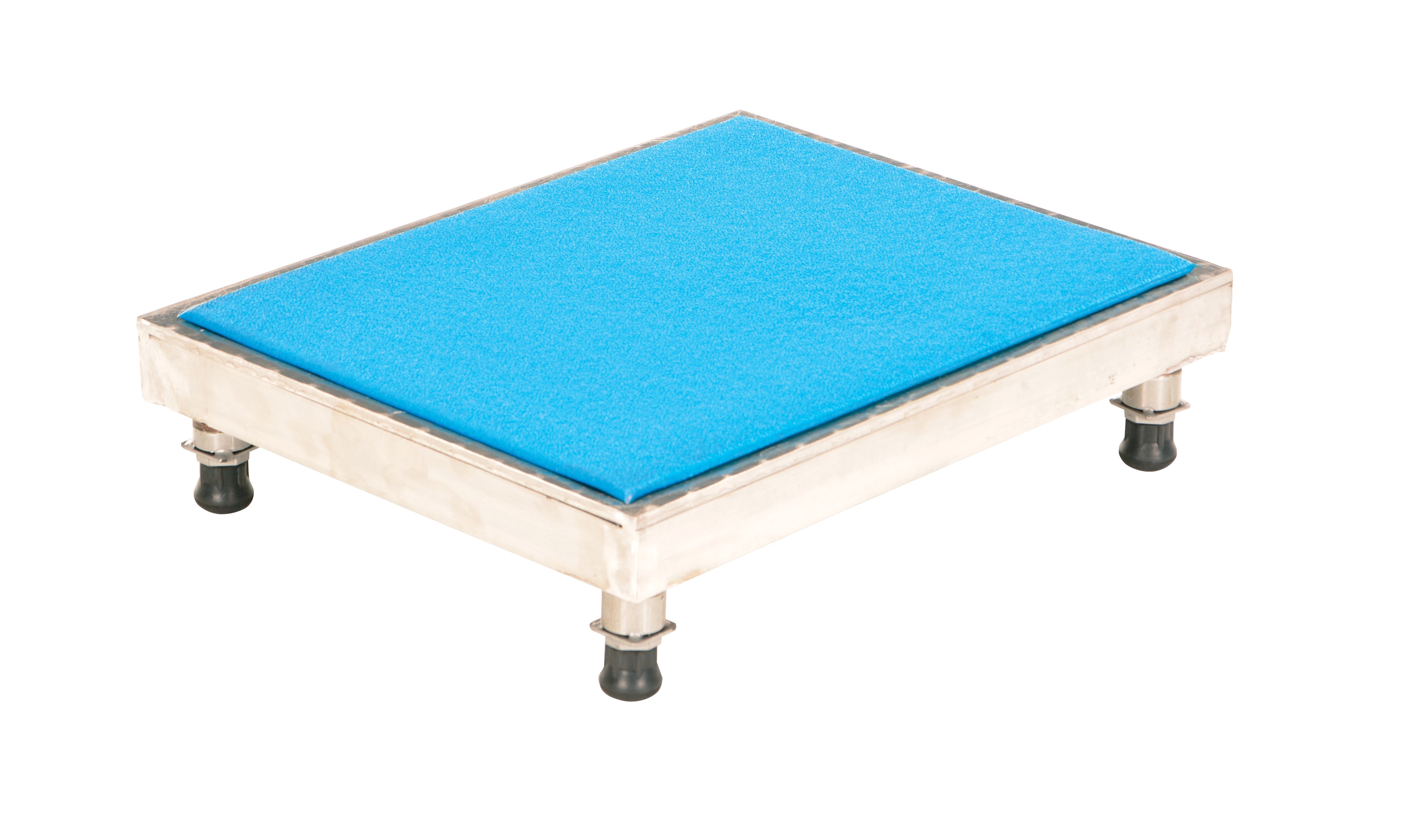 In Stock
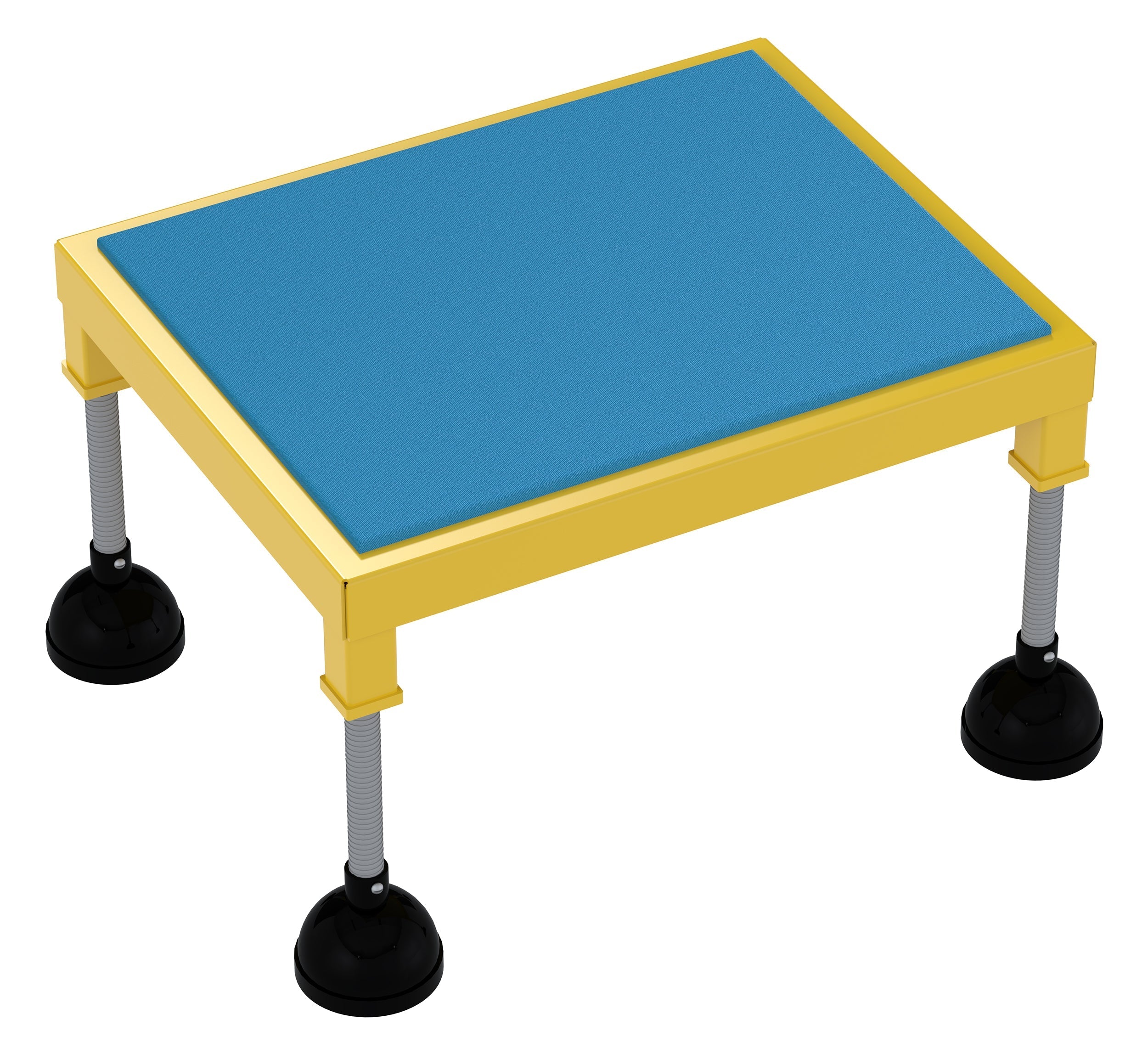 In Stock
 In Stock
 In Stock
 In Stock
 In Stock
 In Stock
 In Stock
 In Stock
 In Stock
 In Stock
 In Stock
Step Stands Buying Guide
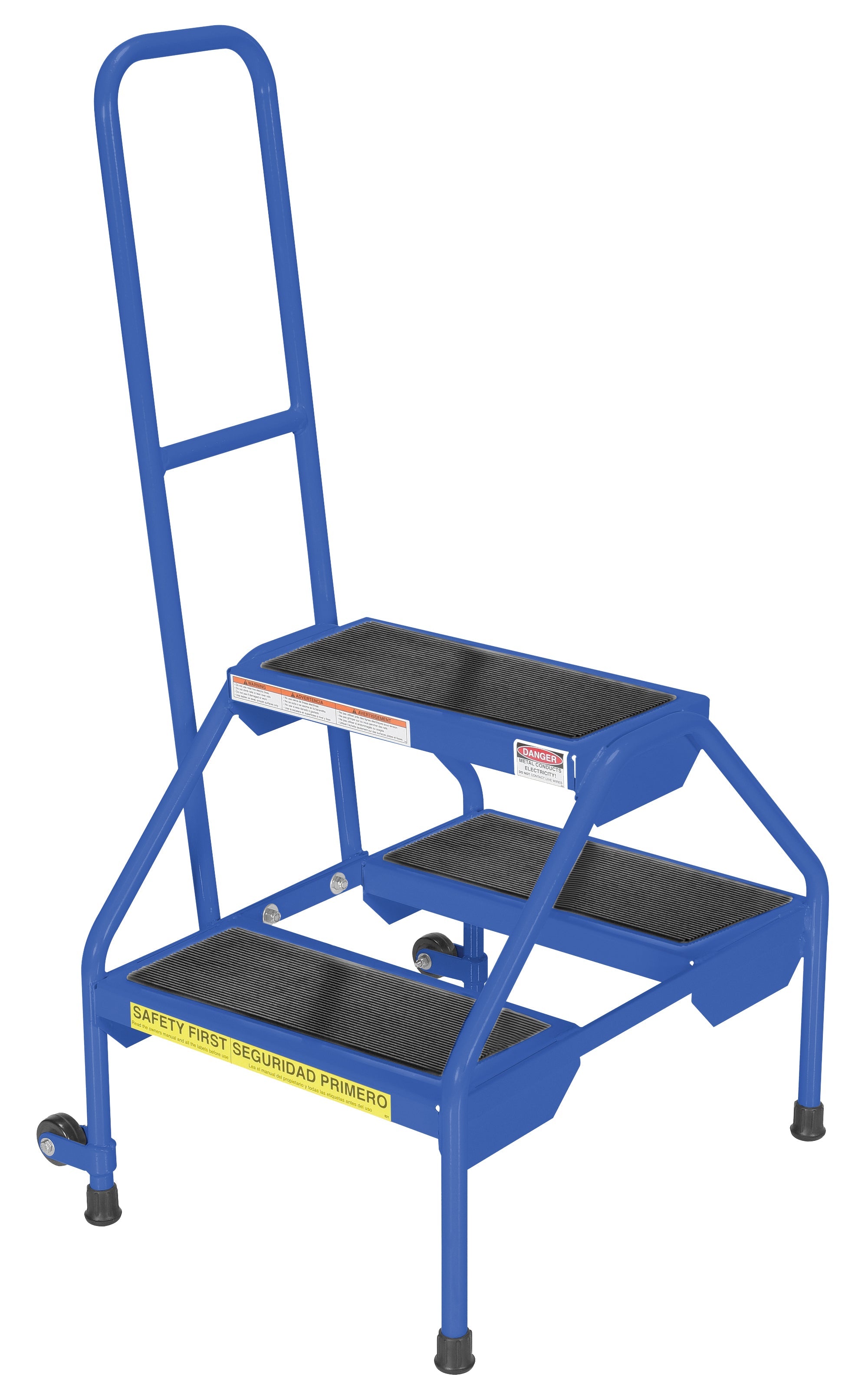
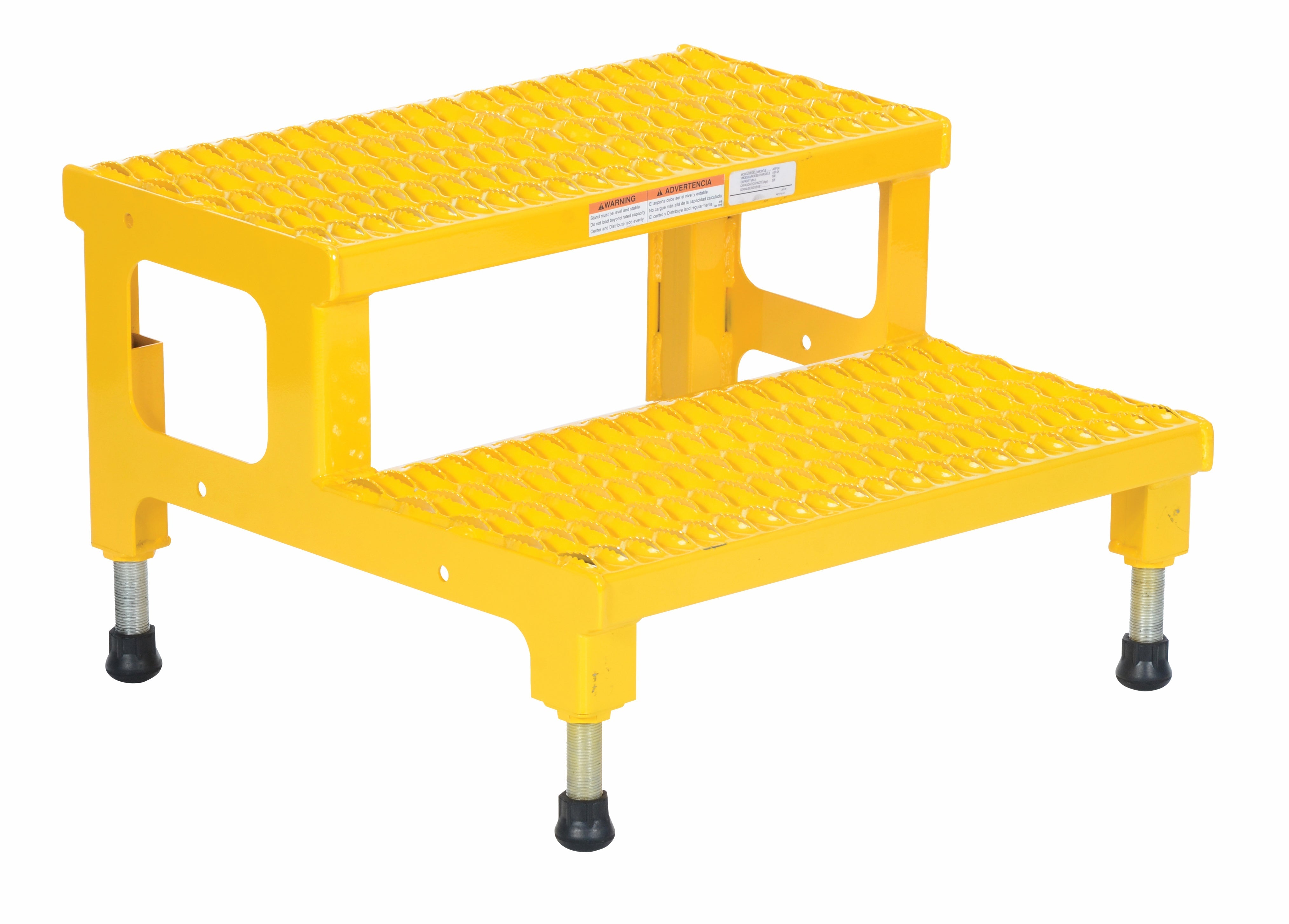
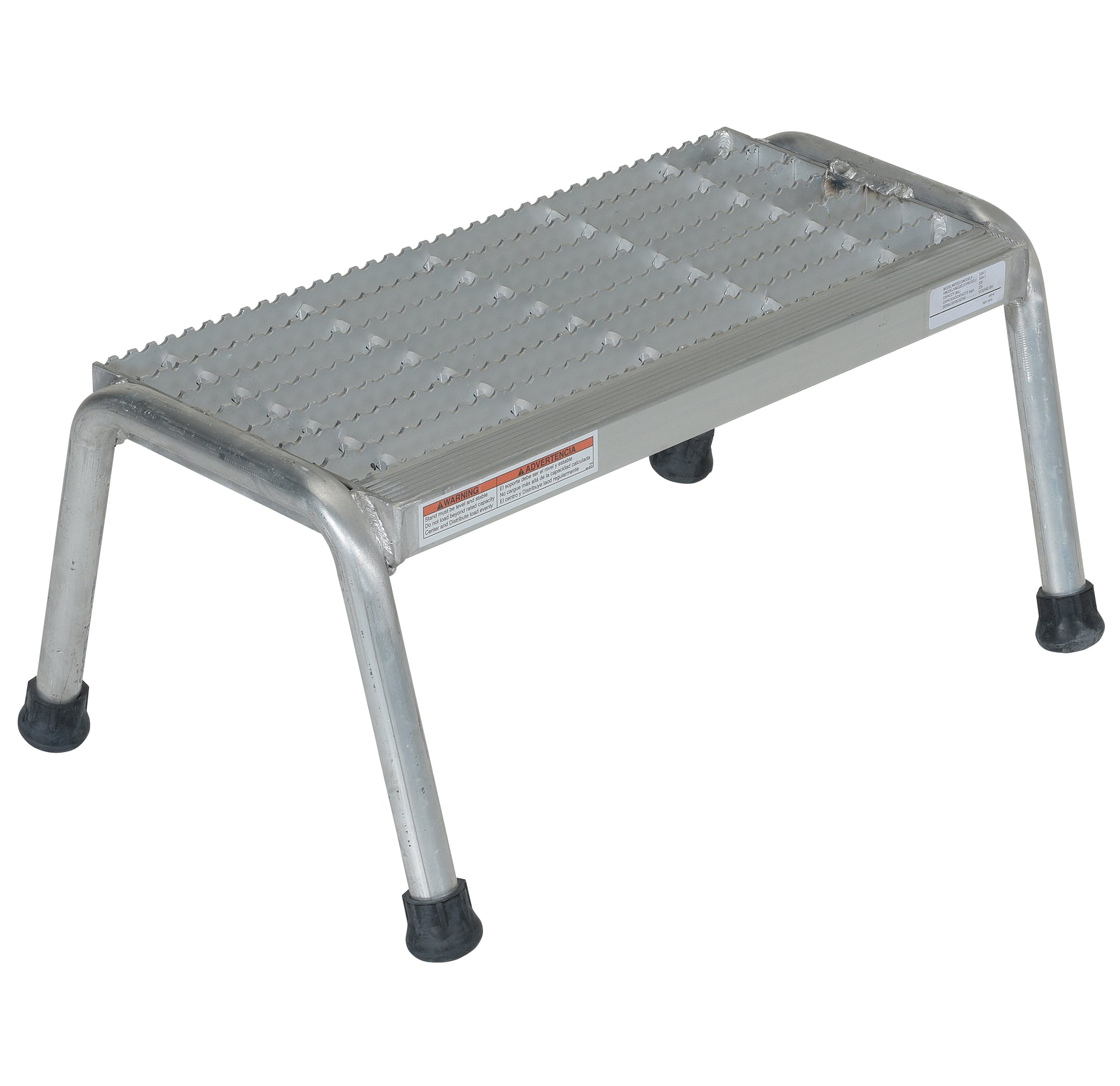
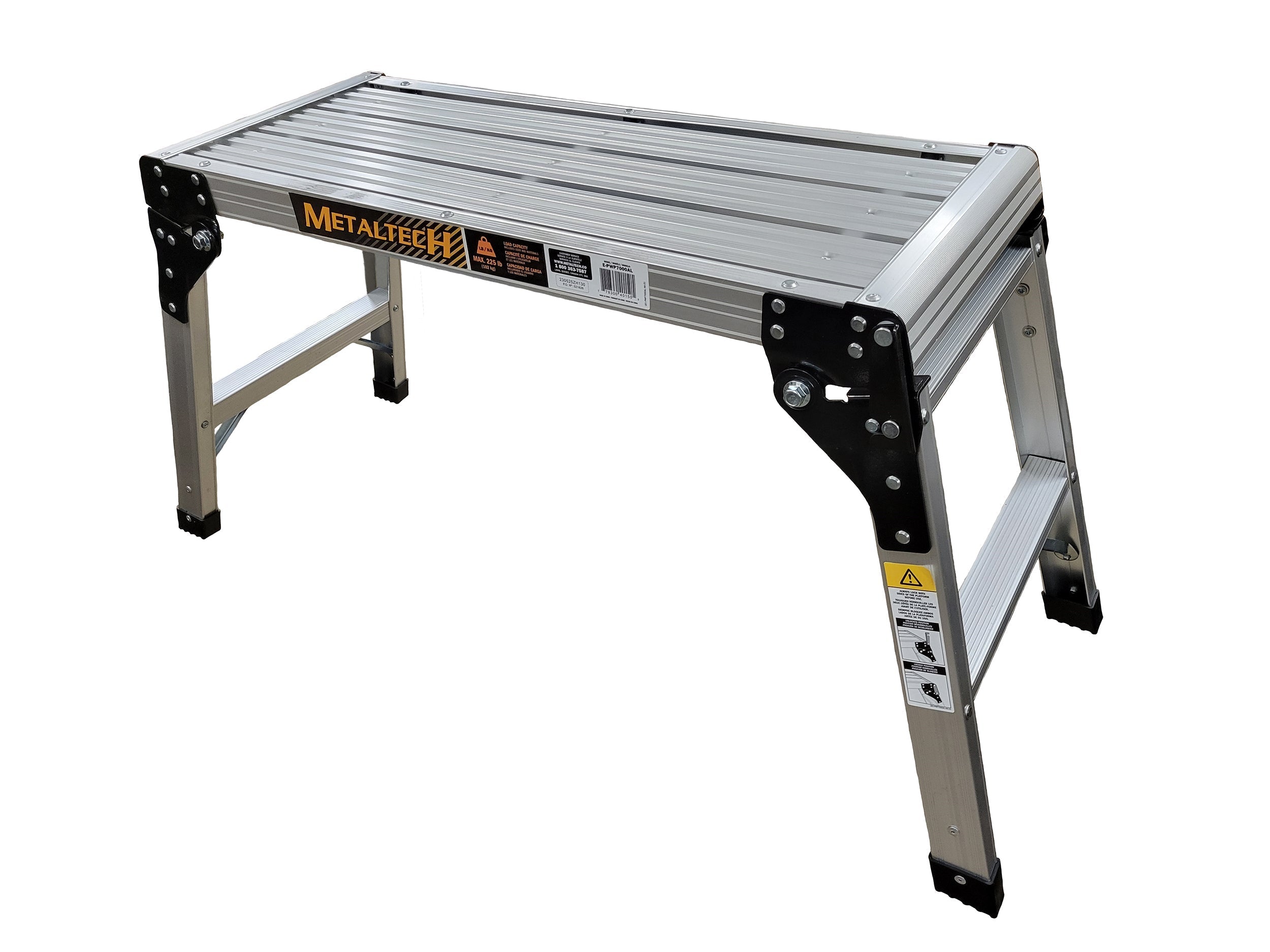
Three families, and they solve different problems. The listings here fall into three groups, and picking the group first saves you from comparing units that do unrelated jobs. Fixed-height step stands, the aluminum, stainless, and galvanized steel steps, are one, two, or three steps at a set height for a repeatable reach, the simplest and cheapest option. Adjustable step stands, including the Adjustable Step-Mate Stands and the Adjustable Step Stands with Handrail, raise and lock over a range so one unit covers several reach heights. Work-Mate standing platforms are a separate idea entirely: instead of climbing to reach up, the worker stands on the deck at a set working height and stays there. Around those sit the Aluminum Folding Step Platforms with an optional tool tray, portable two-step ladders, and double-sided step ladders that let a crew climb from either side of an assembly.
Size the top step height, then decide about handrails. Count your reach in steps, but watch the height where the rules change. Under OSHA 1910.23(e), a mobile ladder stand with a top step height of 4 feet or above has to have handrails, and a platform 4 to 10 feet up needs handrails at least 36 inches tall plus midrails. In practice that means a one or two step stand is a bare-frame buy, but once you move to a taller three-step or an adjustable unit that climbs past 4 feet, buy the handrail version rather than bolting one on later. The Adjustable Step Stands with Handrail come built for that, in 2 and 3 step configurations and widths from 24 up to 72 inches, so a wide unit gives two people room to work off the same platform.
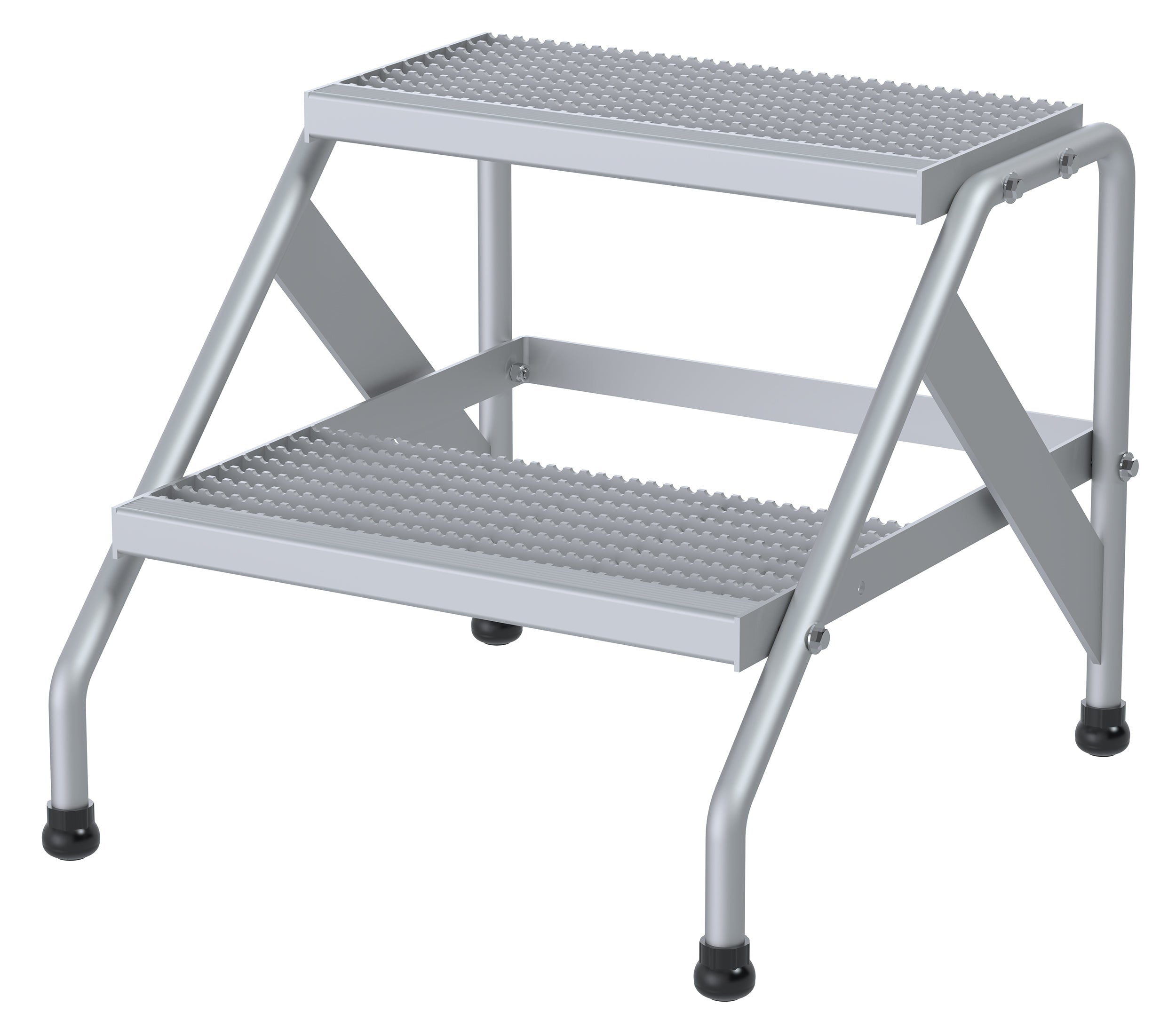
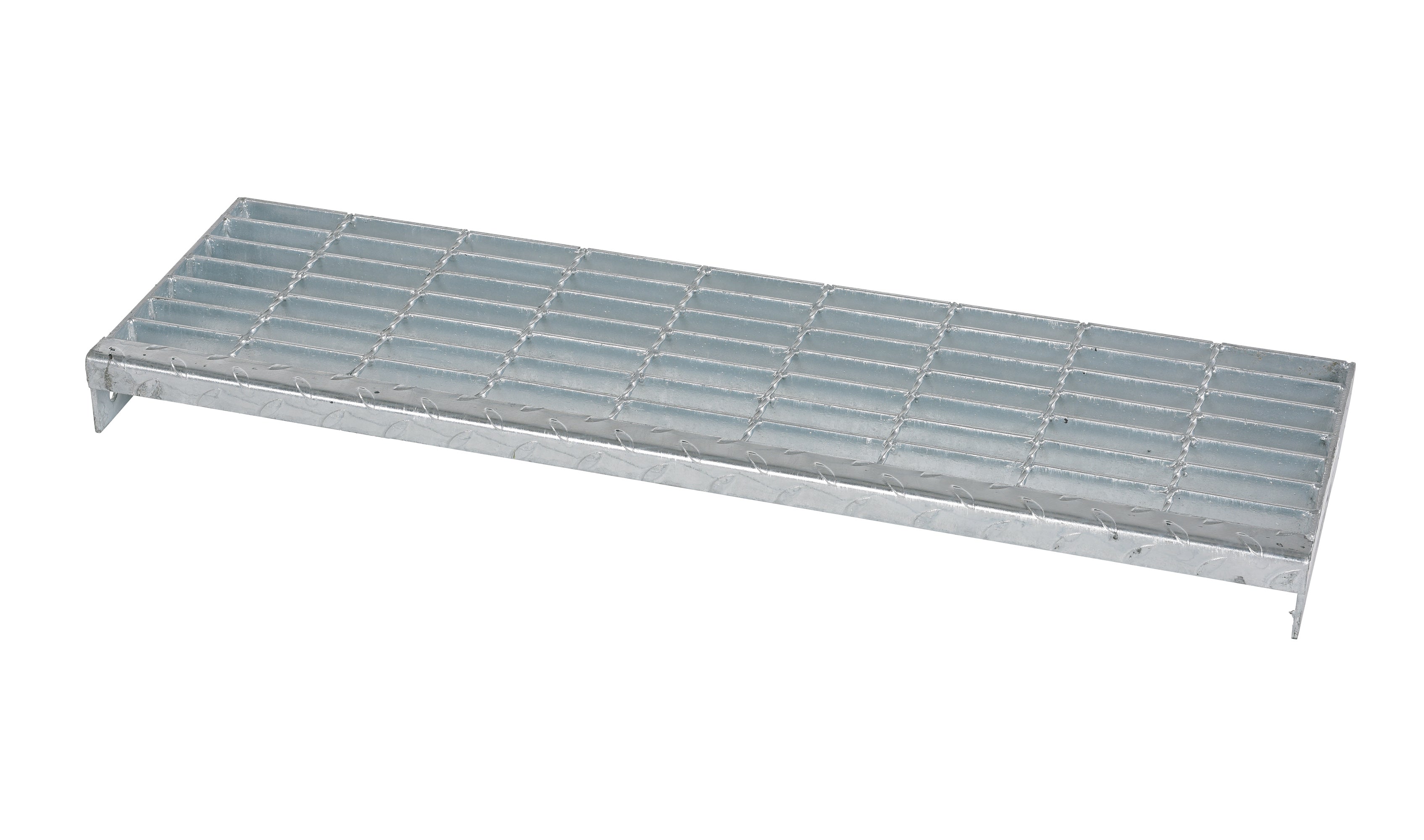
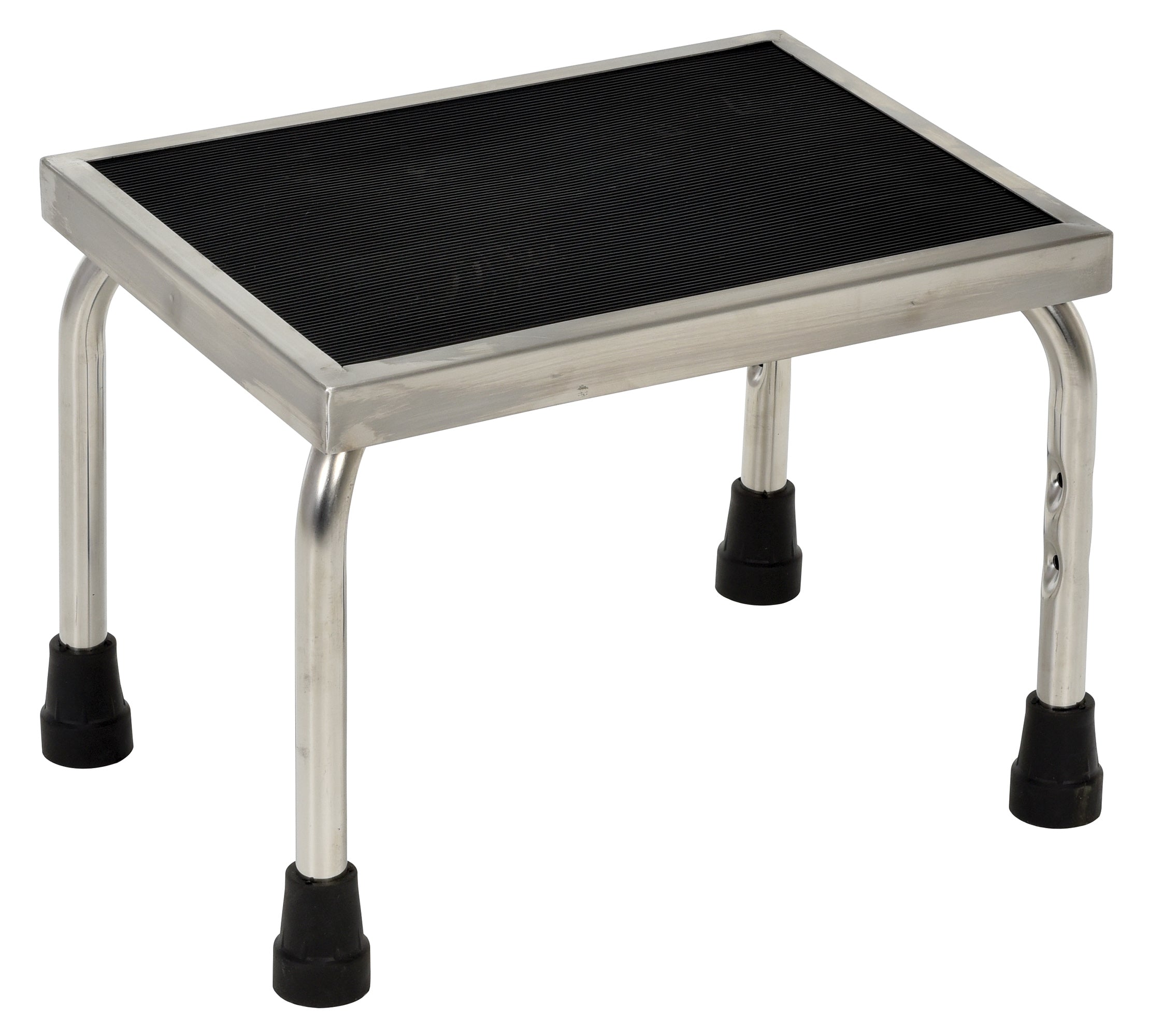
Material: aluminum to carry, steel for price, stainless for wash-down. The frame material is a floor-and-weight decision. Aluminum step stands weigh a fraction of steel, so a single worker can reposition one across a shop without help, and the knock-down aluminum version ships flat and bolts together on site. Powder-coated and galvanized steel costs the least per step height and shrugs off abuse, with galvanized steps holding up in damp or outdoor spots where paint would fail. Stainless steel is the wash-down answer: the Stainless Steel Step Stands start around $78 and take daily sanitizing in food, beverage, and pharma areas without corroding, which is exactly where a painted frame turns to rust. Match the metal to the environment first, then to how far and how often the stool travels.
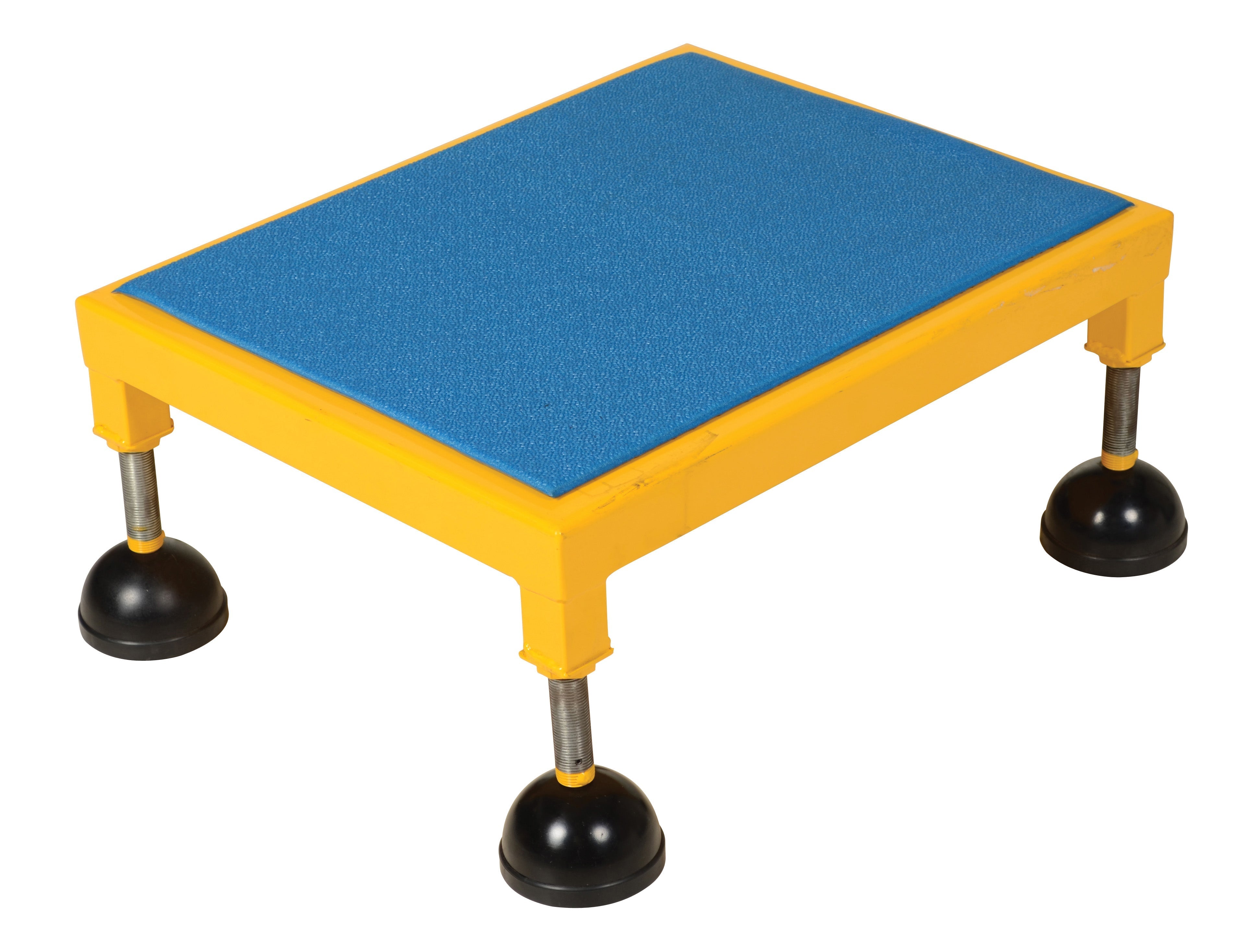
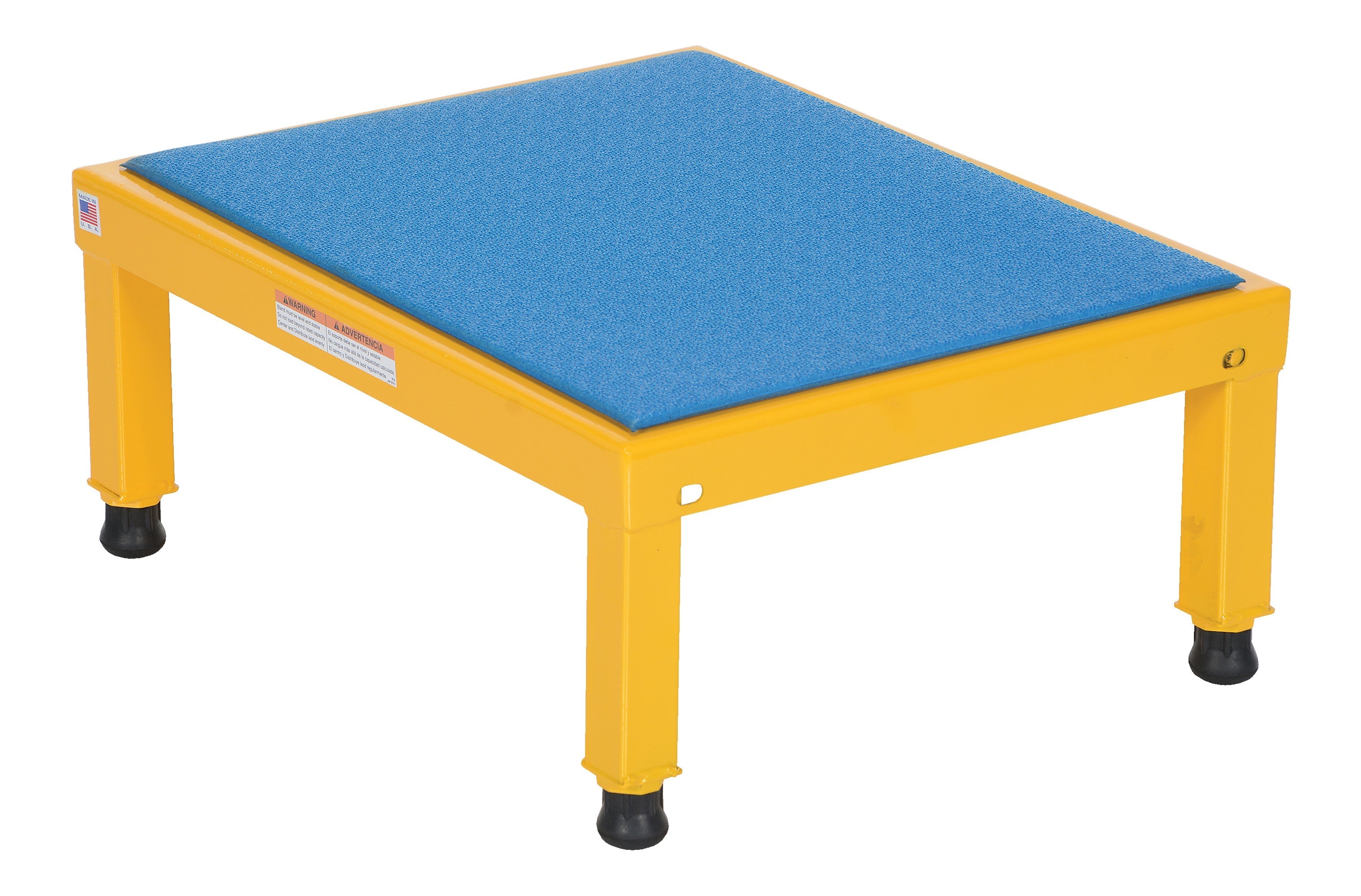
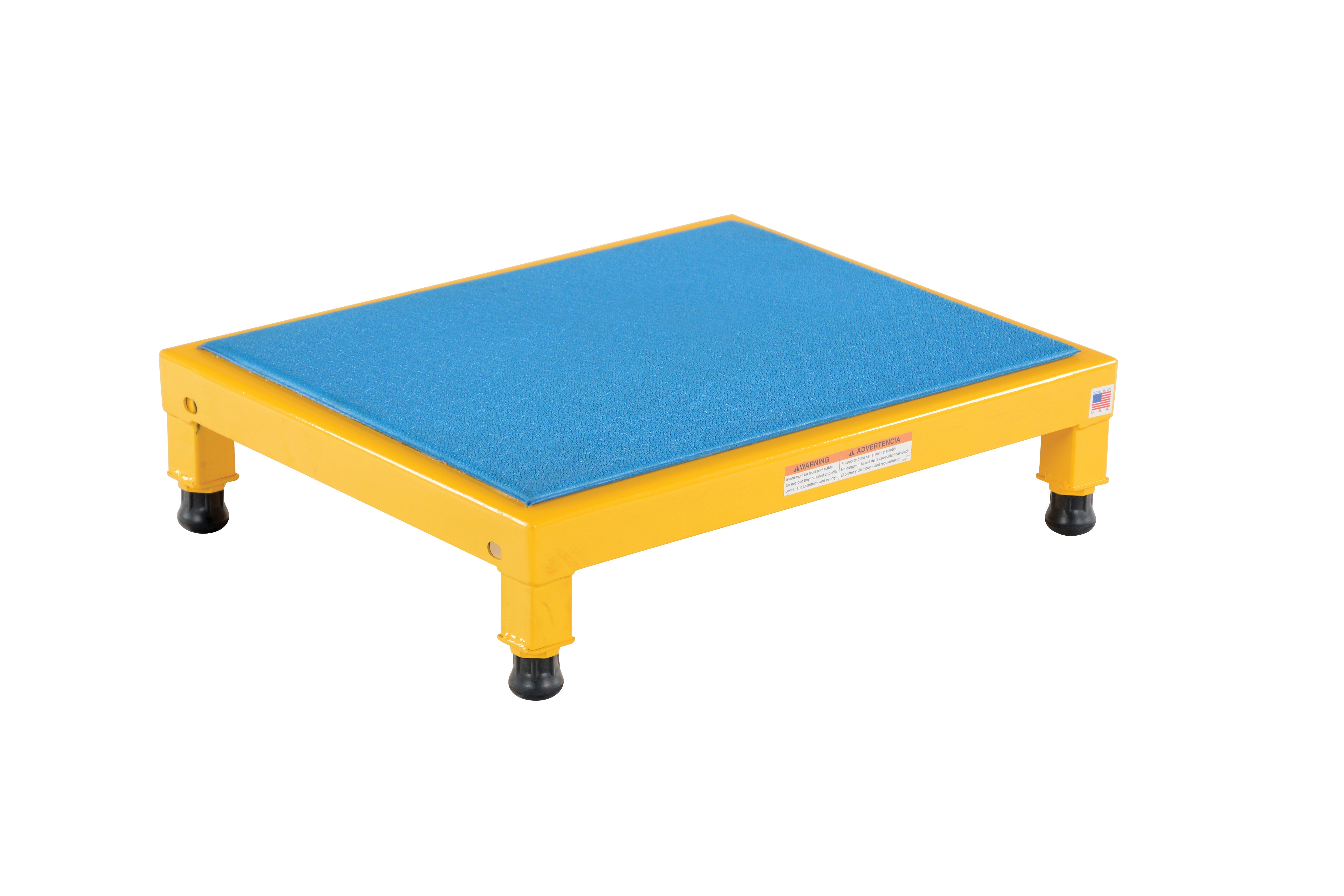
The Work-Mate stand is for standing at a machine all shift. When a worker spends the whole shift at one bench, conveyor, or CNC door and the surface sits at the wrong height, the fix is an adjustable-height Work-Mate standing platform, not a taller stool. These crank up and lock so the deck lands at the exact height that puts the hands square to the work, and they come in High Profile and Low Profile ranges in steel, aluminum, and stainless steel. Step lengths run from 24 up to 96 inches for lining up along a long machine, in 19 and 24 inch depths. The portable worker-stand versions are rated to 500 lb and carry between stations, while the fixed Work-Mate frames stay put. Getting the standing height right is what keeps the reaching, bending, and shoulder strain off the operator over an eight-hour day.
Step surface: grip strut, perforated, or anti-fatigue mat. The tread you stand on matters as much as the height. Grip strut gives the most aggressive traction and sheds chips, coolant, and water through the surface, which makes it the pick for greasy machine areas and wet floors. Perforated steel drains and cleans easily and is a little kinder underfoot for repeated climbing. For a Work-Mate stand where someone stands in place, the ergonomic anti-fatigue mat step is the upgrade that earns its keep, cushioning the operator through the shift. The double-sided step ladders offer grip strut or perforated treads in 2, 3, and 4 step heights, and the portable two-step ladders add an anti-slip rubber mat option in blue or yellow for visibility on a busy floor.
Capacity, casters, and the standards to check. Mobile ladder stands and platforms fall under OSHA 1910.23(e), with ANSI-ASC A14.7 as the design and testing standard behind them, and both set a hard structural rule: the unit has to support at least four times its maximum intended load, meaning the worker plus every tool and part carried up. The step geometry is specified too, uniform spacing with a rise no more than 10 inches and a depth no less than 7 inches, a step width of at least 16 inches, and a stringer slope no steeper than 60 degrees from horizontal, all of which the Vestil units are built to. On the floor, confirm the casters lock or spring back under load before anyone climbs, keep both feet on a step, and never stack a box or a second ladder on the platform to gain height. If the reach is genuinely higher than the stand covers, the answer is a taller unit, not a workaround.
Frequently Asked Questions
In a plant they are the same thing, and the terms get used interchangeably. Both name a small welded steel or aluminum platform, usually one to three steps, that a worker climbs for a low reach at a rack, machine, or bench. The difference that actually matters is against the light plastic step stools in our separate collection, which nest and handle the quick occasional reach. Everything here is heavier industrial hardware rated for daily use and built to OSHA and ANSI ladder-stand requirements.
Under OSHA 1910.23(e), a mobile ladder stand with a top step height of 4 feet or above must have handrails, and a platform 4 to 10 feet up needs handrails at least 36 inches tall along with midrails. Below 4 feet a bare-frame step stand is compliant. If your reach puts the top step at or past 4 feet, buy a unit like the Adjustable Step Stands with Handrail rather than adding a rail to a stand that was not built for one.
Buy fixed if the reach is always the same, since a one, two, or three step stand at a set height is cheaper, lighter, and has nothing to adjust or maintain. Buy adjustable, either a crank-up Step-Mate stand or a Work-Mate platform, when one unit has to cover several heights or when you are dialing in a standing height for all-shift work at a machine. The rule of thumb: fixed for reaching up occasionally, adjustable for standing at a station where the right height changes the operator's whole day.
Match the metal to the environment and the movement. Aluminum is light enough for one person to carry between areas, and the knock-down version ships flat. Powder-coated or galvanized steel costs the least per height and takes shop abuse, with galvanized holding up in damp or outdoor spots. Stainless steel is for wash-down, food, beverage, and pharma areas where daily sanitizing would rust a painted frame, and the stainless step stands start around $78.
A Work-Mate stand is an adjustable-height standing platform for a worker who stays at one station. Rather than climbing to reach up, the operator stands on the deck, which cranks up and locks at the exact height that puts their hands square to the work. They come in High Profile and Low Profile ranges, in steel, aluminum, and stainless, with step lengths from 24 to 96 inches and a choice of grip strut or cushioned anti-fatigue mat treads. The portable versions are rated to 500 lb and move between stations.