Steel Step Stool
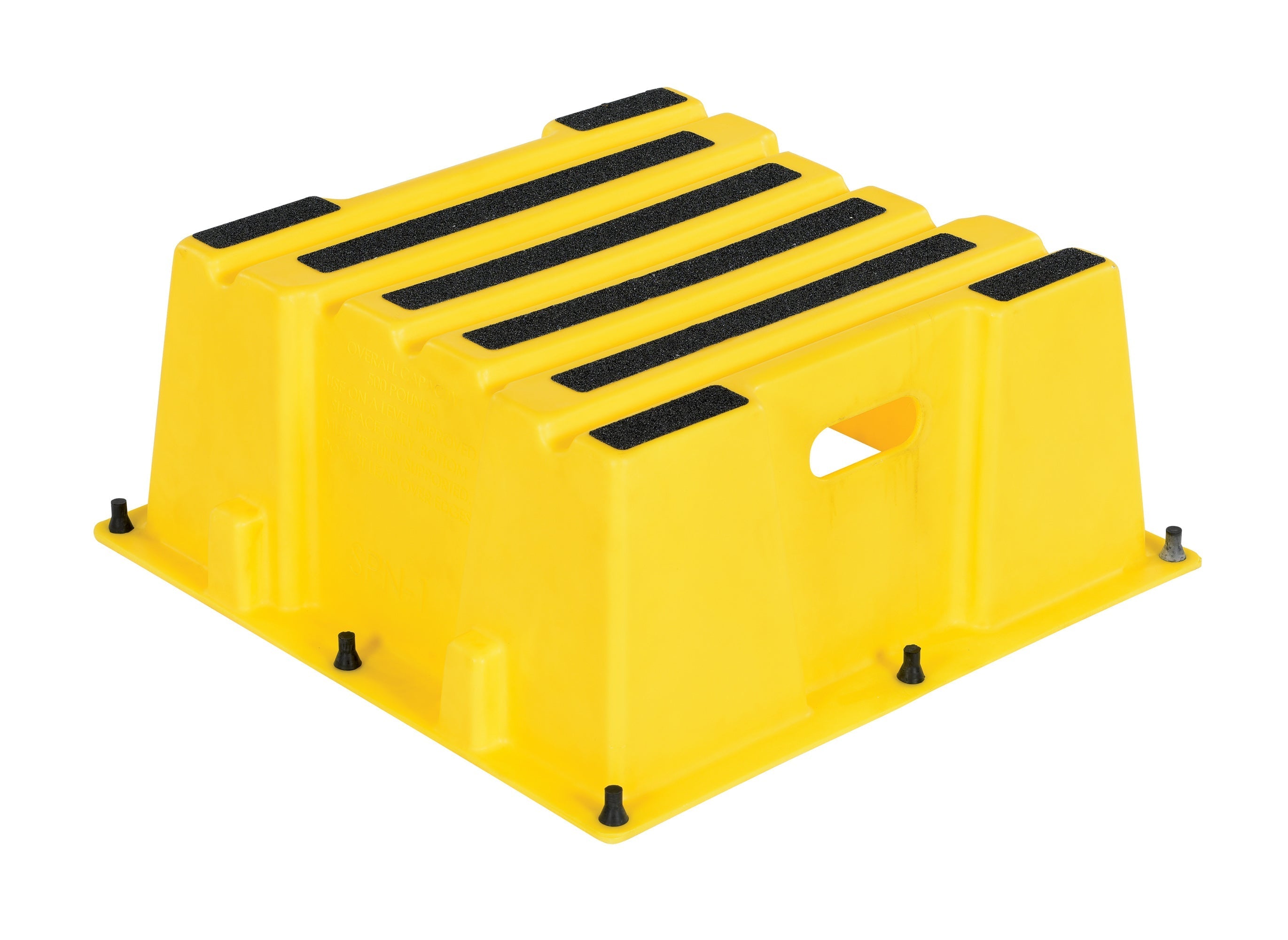
A steel step stool is the short, sturdy platform a worker steps onto for a one or two step reach: grabbing a box off a shelf, checking a gauge, standing eye level with a machine. This collection is Vestil's step stool line, and it comes in two builds. The steel rolling step stool is a powder-coated frame on spring-loaded casters that roll when the stool is empty and lock down the moment a worker steps on, rated to 500 lb, with a rubber-topped step and a rubber ring around the base for grip. The nestable polyethylene stools cover the same low reaches in a lighter package, molded in safety yellow with a ribbed anti-slip step surface and the same 500 lb rating, offered from a single step up to four. Prices run from under $70 for a one-step poly stool to a few hundred for a taller nestable unit fitted with rails. Pick by how often the stool moves and whether it has to store flat.
Compare Step Stools
| Model | Price | Capacity | |
|---|---|---|---|
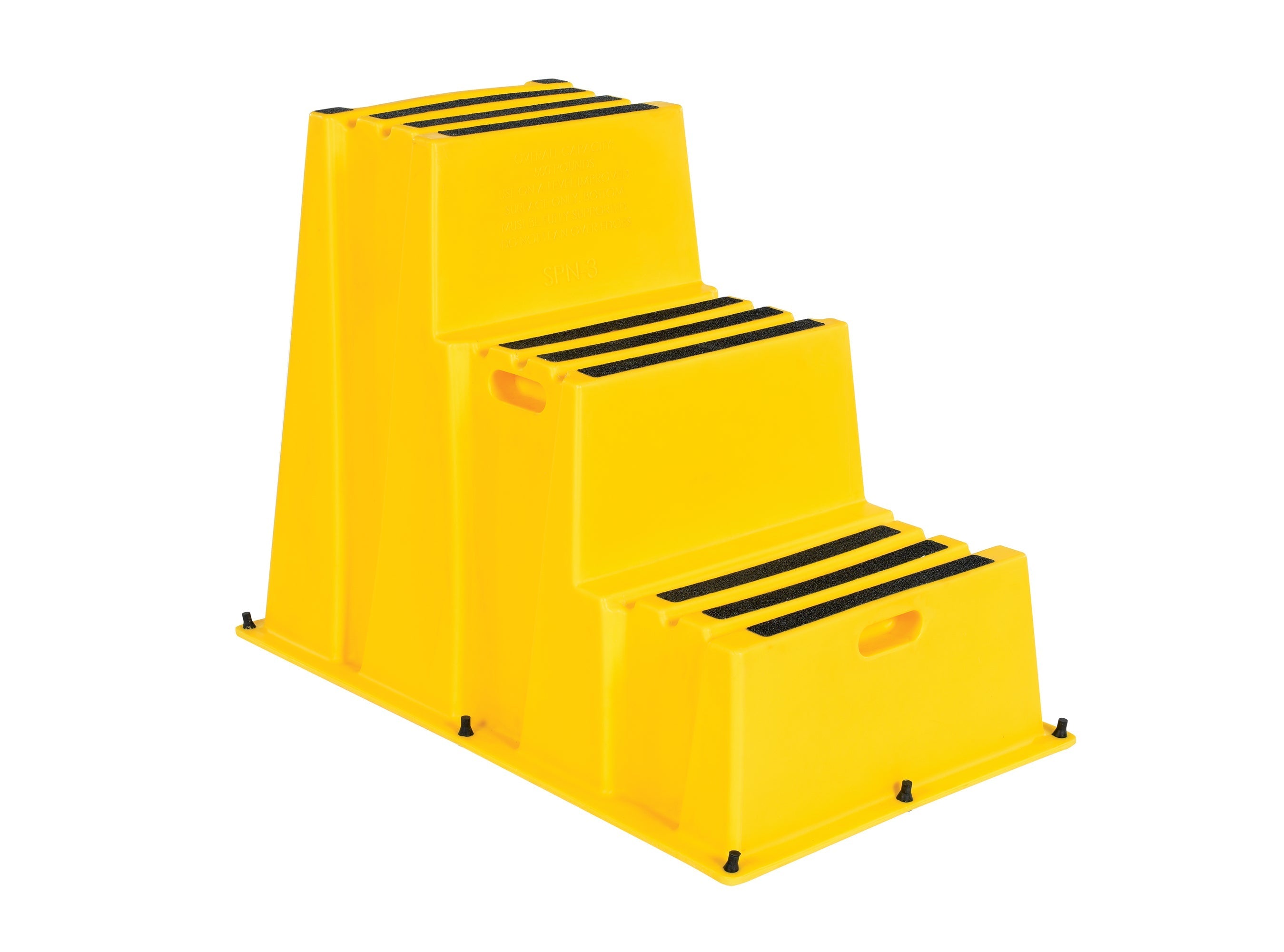
| Vestil 3 Step Nestable Polyethylene Stools | $141 | 500 lb | View → |
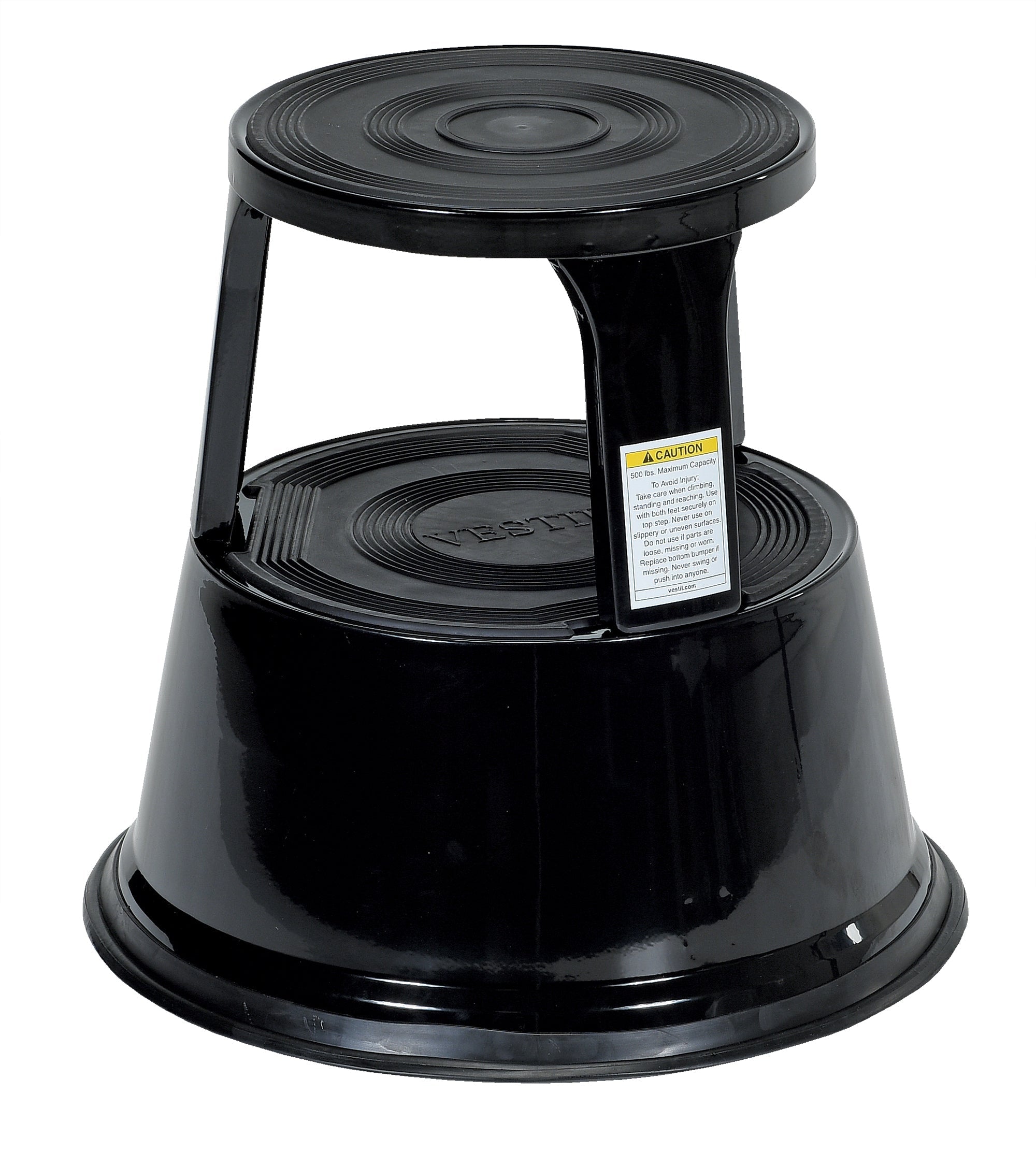
| Vestil Rolling Step Stools | $96 | — | View → |
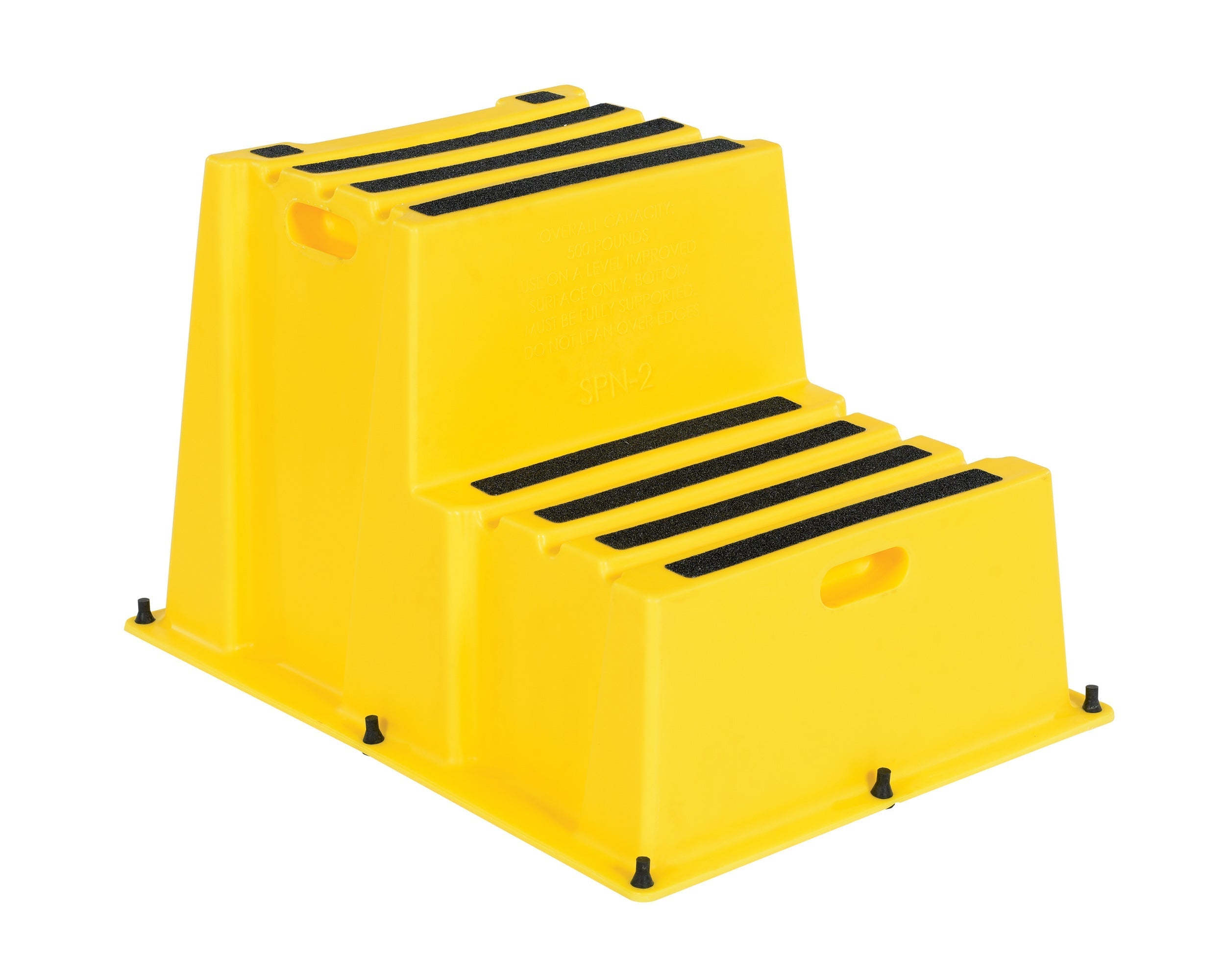
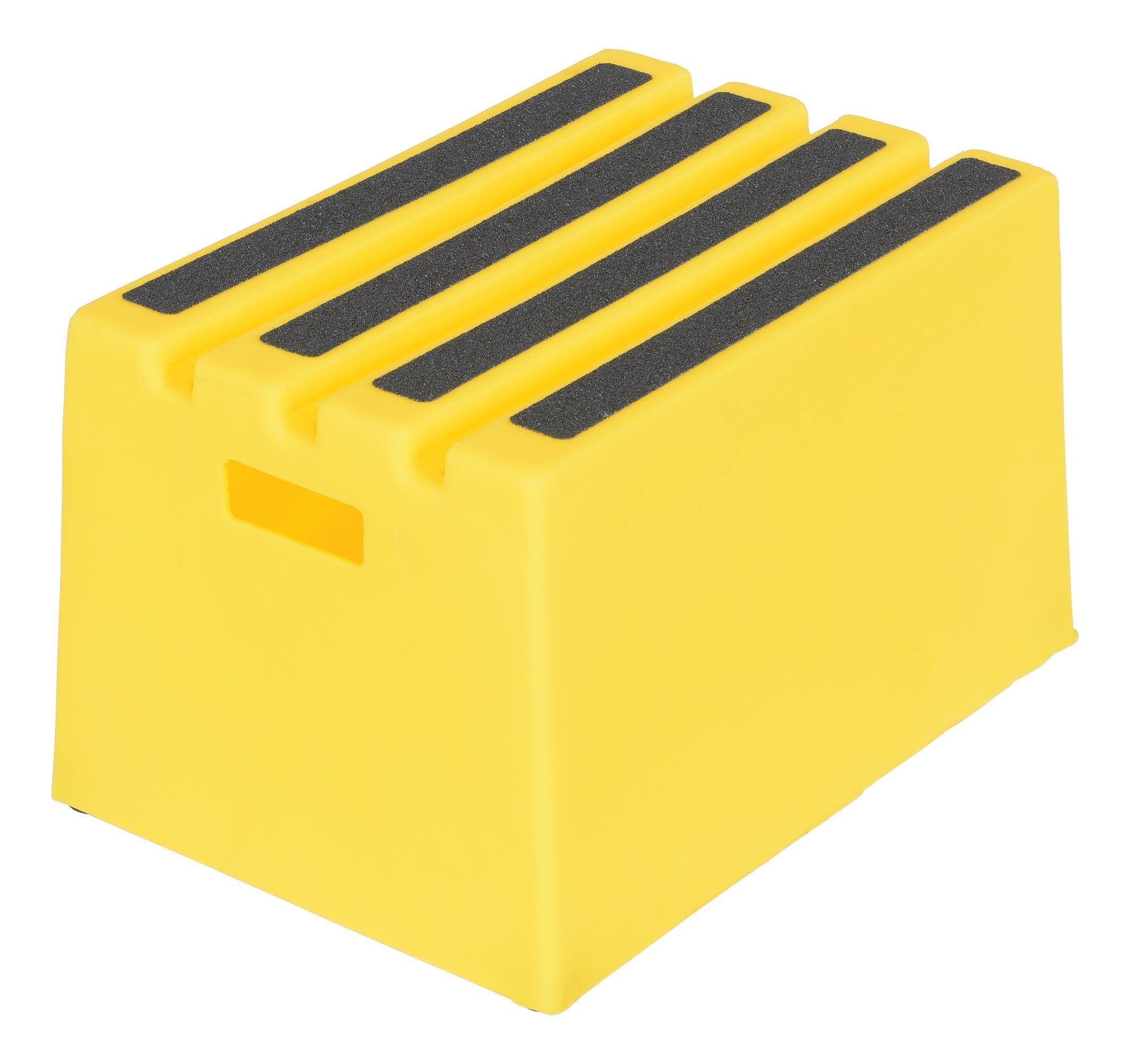
| Vestil Polyethylene Step Stools | $70 | 500 lb | View → |
 In Stock
 In Stock
 In Stock
 In Stock
 In Stock
Step Stools Buying Guide
Steel or polyethylene, and what each build is good at. The two families here answer the same low reach in different ways. The Vestil steel rolling step stool is welded steel with a powder-coat finish, rated to 500 lb, and its whole point is that it moves. Spring-loaded casters carry it across the floor empty, then retract under a worker's weight so it plants on a rubber base ring instead of rolling out from under you. It comes in black, gray, red, and yellow, starts around $96, and suits a picker or line worker who repositions the stool a dozen times a shift. The nestable polyethylene stools trade steel's toughness for weight and cost. They are molded plastic, safety yellow for visibility, with a ribbed anti-slip step, they stack inside each other to store in a fraction of the floor space, and a one-step unit starts under $70. If the stool lives in a wet or corrosive spot, or gets carried around and stacked at the end of the day, the poly stools earn their place.
Why the rolling stool locks when you step on. The mechanism worth understanding before you buy the steel stool is the spring-loaded caster. At rest with no one on it, the springs hold the stool up on four casters so it rolls freely to wherever the reach is. Step on, and your weight compresses the springs until the frame settles onto the rubber ring around the base, which grips the floor and stops the stool dead. Step off, and it lifts back onto the wheels. That is what separates a rolling step stool from a stool you have to drag or a wheeled stool that skates away underfoot. It only works as designed on a firm, level floor, so check that the surface is sound before you plan a job around the roll, and keep the caster springs and rubber base clean of grease that would compromise the grip.
Nestable poly stools and the retrofit options. The polyethylene stools are sold plain but built to be added to. Across the one, two, and three-step configurations, the same unit takes bolt-on handrails, a back rail, and casters as retrofit options, so you can start with a bare stool and add a grab rail later when a taller reach or a nervous operator calls for one. The higher you climb, the more a handrail matters: a one-step stool is a curb, but a three-step stool puts a worker high enough that a rail changes the risk. Nesting is the other feature to plan around. Empty stools stack inside one another, which is why a stockroom can keep several on hand without giving up a bay to store them. If you are outfitting more than one workstation, the poly stools are the ones that disappear into a corner between uses.
Read the 500 lb capacity the way rigging reads a load limit. Both builds here carry a 500 lb uniform capacity, and that number covers the worker plus whatever they carry up. A 220 lb worker hauling a 60 lb case of parts is a 280 lb load, comfortably inside the rating, but stack a couple of heavy boxes on the top step to free your hands and the math changes fast. Size for the worst case, not the average, and never treat the capacity as headroom to spend. The rating also assumes the stool sits square on all four feet or casters on a sound floor. Set one leg on a pallet edge, a drain grate, or a patch of debris and you have quietly cut what it can safely hold. Level footing first, load second.
The standards a step stool answers to. Step stools are covered by their own consensus standard, ANSI ASC A14.11, which defines a stepstool as a self-supporting portable climbing device 36 inches or less in height and sets the construction and load requirements. OSHA folds step stools into the general ladder rule at 29 CFR 1910.23, and OSHA's own definition puts a step stool at 32 inches or less in overall size with flat steps. The practical distinction that matters on the floor: a step stool is designed so a worker may stand on the top cap as well as the steps, which is exactly what you are told never to do on a stepladder. Follow the label on the unit, keep the anti-slip step surfaces clean, and pull any stool with a cracked step, a bent frame, or a caster that no longer retracts out of service until it is repaired or replaced.
Where a step stool ends and a step stand or ladder begins. A step stool is the right tool only when the reach is one or two steps and occasional. When a worker has to stand at a fixed height at a machine or line for a full shift, that is a work platform, not a stool, and the buy is over in step stands, including the adjustable-height Work-Mate models that raise the operator to the work. When the reach climbs past a couple of steps, to stock on a high rack, over a conveyor, or up to a mezzanine, step up to the rolling warehouse ladders, crossover ladders, and access ladders in industrial ladders. Naming the job first is how you avoid the classic mistake of a worker standing on the top of a stool to reach shelf height that a real ladder should have covered. Match the tool to the reach and the frequency, and the step stool stays in its lane.
Frequently Asked Questions
Buy the steel rolling step stool if the stool moves constantly, since the spring-loaded casters let it roll empty and lock down under load. Buy the nestable polyethylene stools if you want something lighter and cheaper that stacks flat to store, or if the spot is wet or corrosive. Both are rated to 500 lb, so the choice is about mobility and storage, not strength.
Both the steel rolling stool and the polyethylene nestable stools carry a 500 lb uniform capacity. That figure has to cover the worker plus anything they carry up. Size for the heaviest realistic case, keep the stool square on a sound floor, and never treat the rating as spare room to fill.
Yes. Unlike a stepladder, a step stool is designed so a worker can stand on the top cap as well as the steps, which is part of how ANSI and OSHA define the device. Always follow the label on the specific unit, and make sure the stool is on firm, level footing before you climb.
The casters hold the empty stool up on its wheels so it rolls to the work. When a worker steps on, their weight compresses the springs and the frame settles onto a rubber ring around the base that grips the floor and stops the stool from rolling. Step off and it lifts back onto the wheels. It needs a firm, level surface to work as intended.
Step stools have a dedicated standard, ANSI ASC A14.11, which defines a stepstool as a self-supporting portable climbing device 36 inches or less in height. OSHA covers them under 29 CFR 1910.23 and defines a step stool as 32 inches or less in overall size. Keep the step surfaces clean and pull any stool with a cracked step or bent frame out of service.