Off Road Jack
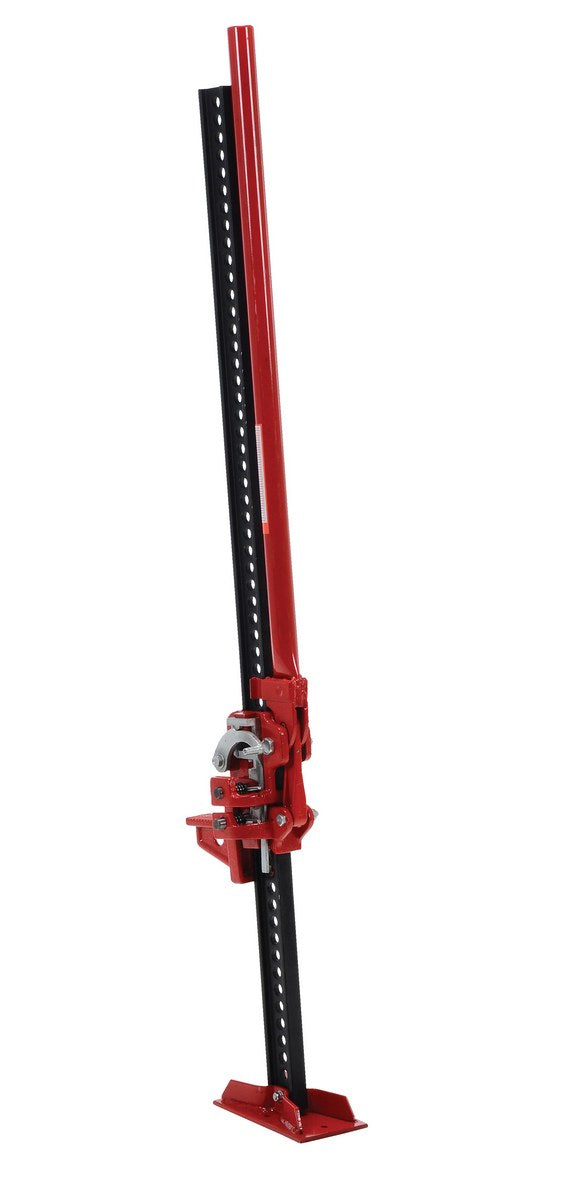
An off road jack is the tall mechanical lift a farm truck or overland rig carries for the jobs a low hydraulic jack cannot reach: a buried axle, a flat on soft ground, a bumper that has to come up two feet before a tire clears. This collection centers on the Vestil HDFJ-48, a cast iron ratchet farm jack rated at 7,000 lb with a lift that runs from roughly 6 inches off the ground to 42 inches up the bar, priced around $130. It is the classic high-lift pattern, a toothed steel bar and a lever-driven ratchet that climbs it, the same tool that changes a tractor tire, resets a fence post, or breaks a bead out in a field. The guide below covers how it lifts, what the 7,000 lb rating means in practice, and the handle discipline that keeps the tool from hurting you.
Vehicle Recovery Jacks Buying Guide
What a farm jack does that a bottle jack can't. A hydraulic floor or bottle jack lifts a few inches from a low saddle and needs firm, level ground under it. A farm jack works the opposite problem. The Vestil HDFJ-48 stands on a tall toothed bar and climbs it with a lever-driven ratchet, carrying the load from about 6 inches off the ground up to 42 inches, so it reaches bumpers, frame rails, and lift points a low jack never touches. That vertical range is why it rides on trucks, tractors, and trailers that work off pavement, where a hydraulic jack sinks or bottoms out. It sits under Cargo Control & Tie-Downs as the tool for the day a load or a rig leaves the road and something has to come up high.
Reading the 7,000 lb rating. The HDFJ-48 is rated at 7,000 lb, cast iron through the standard and running gear rather than stamped sheet, which is what lets a farm jack take field abuse for years. That number is a lifting capacity, not a hold-it-there rating: the jack raises the load, and once it is up you transfer the weight to a stand, cribbing, or blocks before any hand or body goes near it. One height covers this jack, about 48 inches of bar with a 42 inch working lift, so the choice here is simple and the real work is in how you use it, not which model you pick.
The multi-tool reputation, honestly. The high-lift pattern earned its name because the same bar and climber will do more than lift. With the right technique and rigging it can spread, clamp, or drag a slow inch-at-a-time pull out of a stuck vehicle, which is why overland and farm crews keep one on the rack. The Vestil ships as the bare jack, so treat those recovery tricks as things the tool can do with separate rigging and know-how, not features in the box. When you need real pulling power, a proper winch does the job faster and with far more control.
Handle discipline and safety. A farm jack is one of the more dangerous tools on a rig, and the danger is the handle. Under load the bar stores energy, and if your grip slips or the load shifts the handle can whip up or down hard enough to break a jaw or an arm. Keep both hands on it, keep your face out of its arc, and ride it down slowly under control rather than letting it drop. Set the foot on firm ground or a board so it cannot sink or tip, chock the wheels, and never work under a vehicle held up by the jack alone. Gloves help with the pinch points around the climbing pins and runner.
Frequently Asked Questions
It is a tall mechanical lift, also called a farm jack or high-lift jack, built to raise a vehicle far higher than a hydraulic floor or bottle jack can. Instead of a hydraulic ram it uses a toothed steel bar and a ratchet that climbs it as you pump the handle, which is what lets it reach bumpers and frame rails on rigs that work off pavement.
The bar is about 48 inches tall and the working lift runs from roughly 6 inches off the ground up to 42 inches. That range covers tall ground clearance jobs a low jack cannot handle, like clearing an oversized tire or lifting a frame on uneven terrain.
The 7,000 lb figure is a lifting capacity, meaning what the jack can raise, not a weight it should hold while you work. Once the load is up, support it on jack stands, cribbing, or blocks and never rely on the jack alone to keep it there.
They demand respect. The main hazard is the handle, which can kick up or down with real force if your grip slips or the load moves. Keep both hands on the handle, stay clear of its swing arc, set the base on firm footing, chock the wheels, and lower the load slowly under control.
The high-lift pattern can be rigged to spread, clamp, or slowly pull, which is why it is a recovery staple, but this Vestil unit ships as the bare jack. Those uses need separate rigging and technique, and for serious pulling a dedicated winch is the right tool.