Snatch Blocks
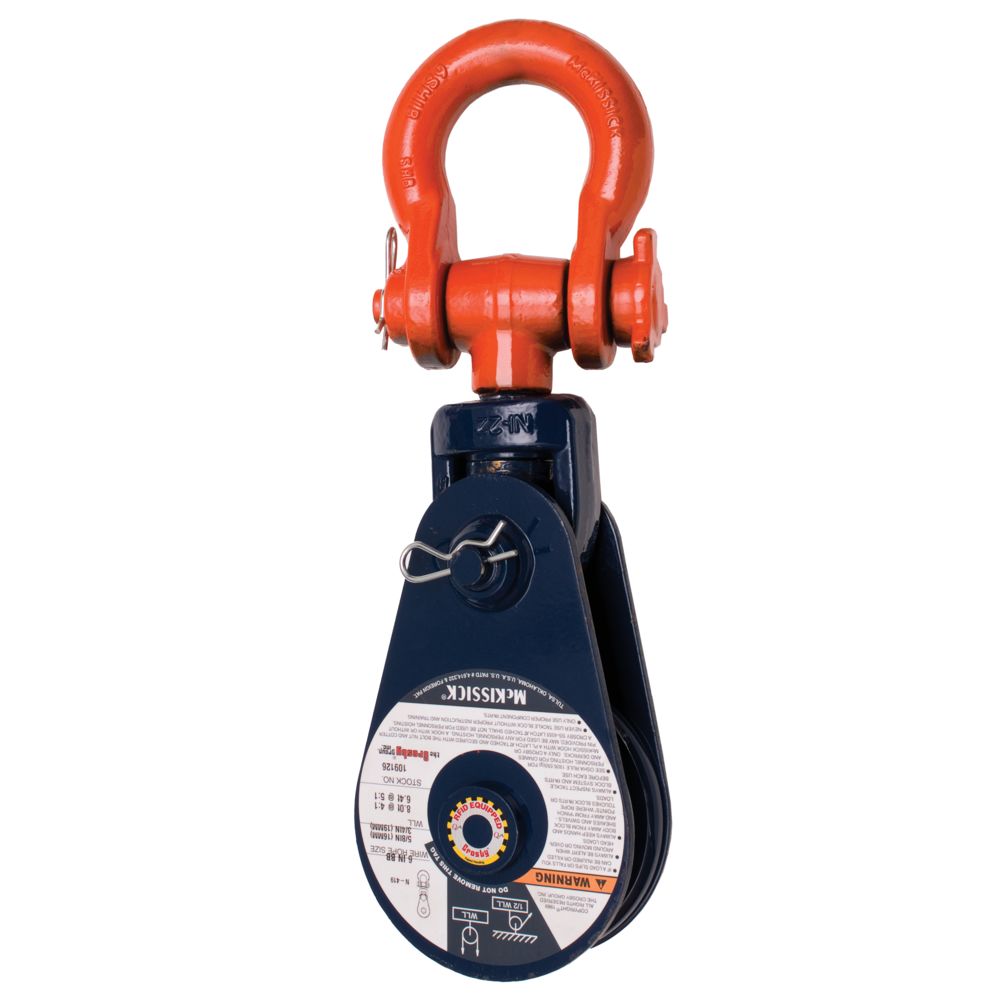
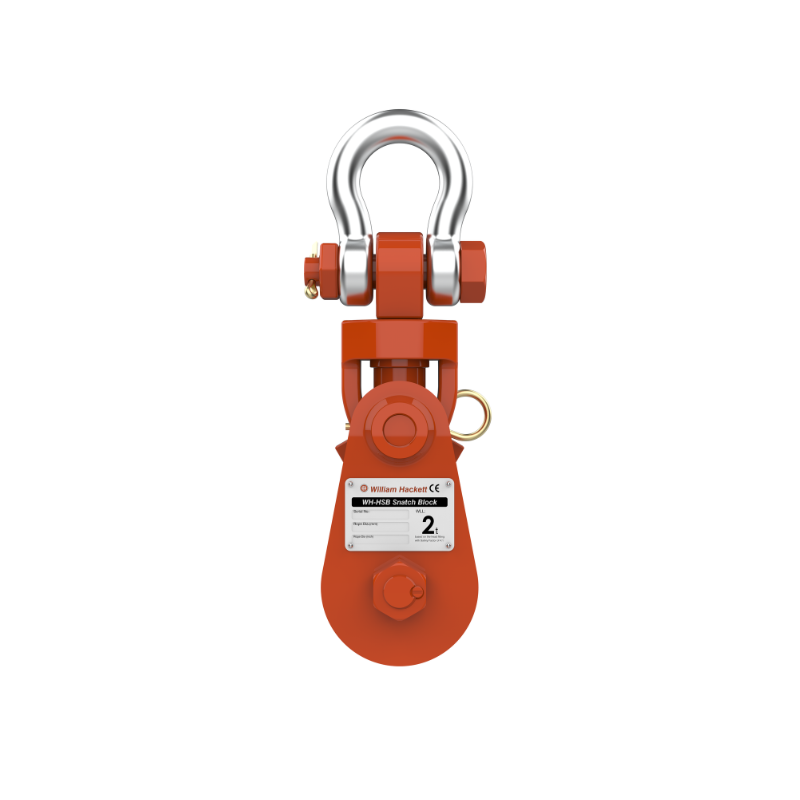
Snatch blocks are pulleys whose side plate swings open, so you can drop a bight of rope over the sheave anywhere along its length instead of threading the end through. That one detail is why they ride in a recovery kit and a rigging bag: you rig them mid-line, in the field, without unhooking the line. This collection runs from budget Mytee Products blocks with hook or shackle fittings, priced well under a hundred dollars, up through the McKissick 419 Light Champion and the William Hackett HSB series, which climb from a 3 inch sheave to a 12 inch sheave and from 2 ton to 25 ton of rated capacity. Reach for a block for one of two jobs: redirect a winch or crane line around a corner onto a cleaner lead, or anchor the block to a fixed point and roughly double your pulling power. Both jobs load the block harder than they load the rope, which is exactly where sizing has to start.
Compare Snatch Blocks
| Model | Price | Capacity | |
|---|---|---|---|
| Holloway Houston Inc. McKissick® 419 Light Champion Snatch Blocks | $274 | 2-8 ton | View → |
| William Hackett HSB Snatch Blocks | $192 | 2-25 ton | View → |
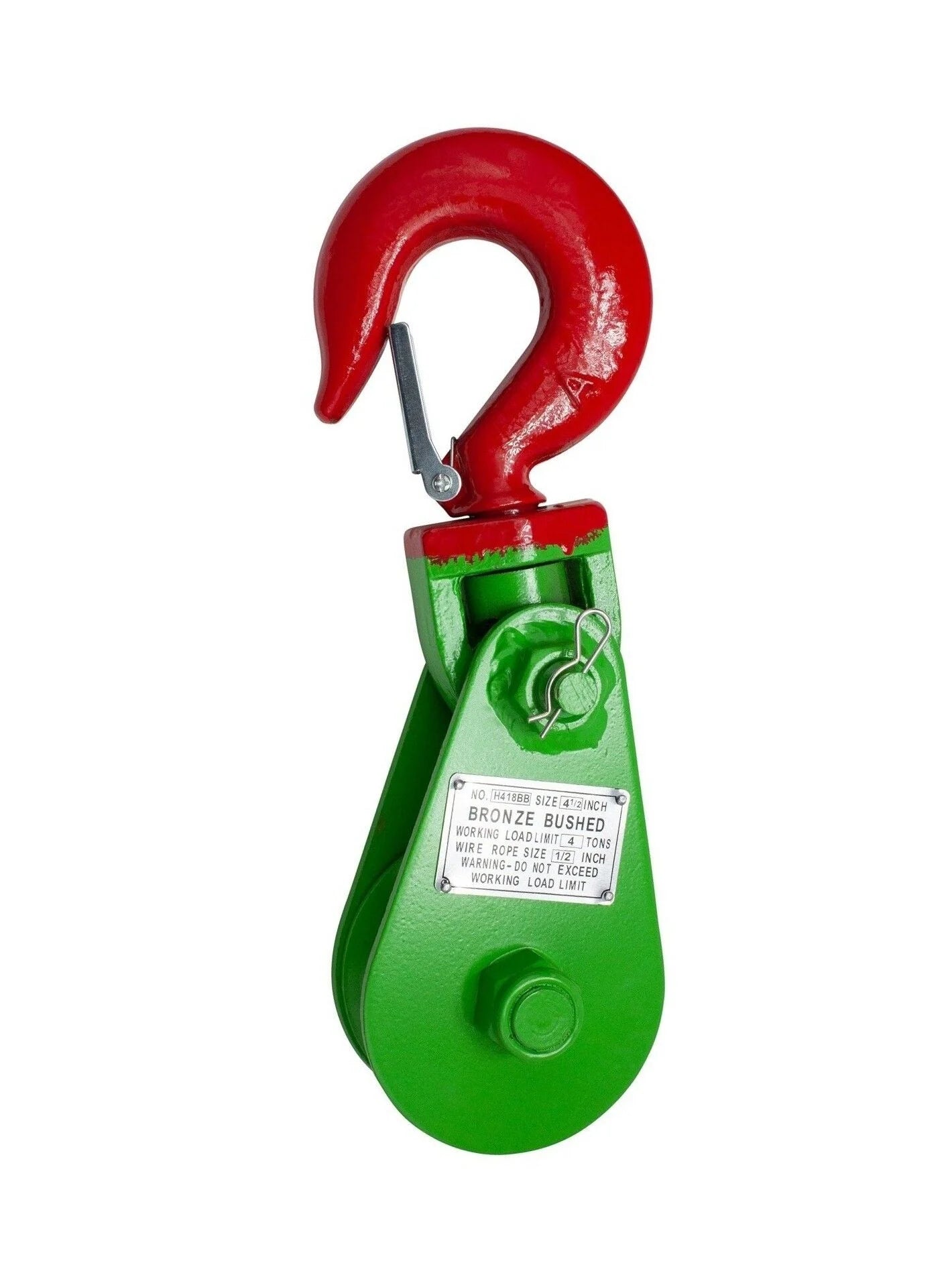
| Mytee Products Snatch Block With Hook | $37 | 8 ton | View → |
Snatch Blocks Buying Guide
The opening side plate is the whole point. What separates a snatch block from an ordinary pulley block is a side plate that swings or drops open on a hinge or pin. Open it, lay a bight of rope over the sheave, close it, and the block is rigged, no free rope end required. That matters when the line is already run, already under a winch, or anchored at both ends, which is the normal case in vehicle recovery and in redirecting a crane whip. The trade is that an opening plate is a moving part under load, so every block here uses a positive latch or locking pin, and the operator confirms it is seated before taking tension. Treat the plate the way you treat a shackle pin: closed and locked, or the block is not rigged.
Two jobs: change direction, or multiply the pull. A snatch block earns its keep two ways. Anchored to a fixed point with the line passing through it, it changes the direction of a pull, letting a winch or crane work around a corner or onto a better lead angle. Anchored to the load itself, with the line dead-ended back near the winch, it becomes a moving pulley and gives close to a 2:1 mechanical advantage: the winch pulls about half the force for the same load, in exchange for reeling twice the rope at half the speed. Friction in the sheave shaves a little off that ideal, more with a plain bushing, less with a roller or ball bearing, but the working rule holds. Stack a second block and you can reach 3:1 or 4:1 for a truly stuck load.
The block carries more than the line pull. Here is the sizing mistake that hurts people. A block does not see the tension in one leg of rope, it sees the vector sum of both legs, so its rated load has to cover the resultant, not the winch pull. When the rope makes a full 180 degree turn and both legs pull the same direction, the load on the block runs to about twice the line tension. Redirect gently, on a shallow deflection, and the block sees far less. Size to the worst case: assume the tight redirect, double the line pull, and pick a block whose working load limit clears that number with margin. The Mytee, McKissick 419, and William Hackett HSB blocks are all rated by the load on the block, from 2 ton up through 25 ton on the largest William Hackett sheaves, so read the option you are buying against the doubled figure, not the winch label.
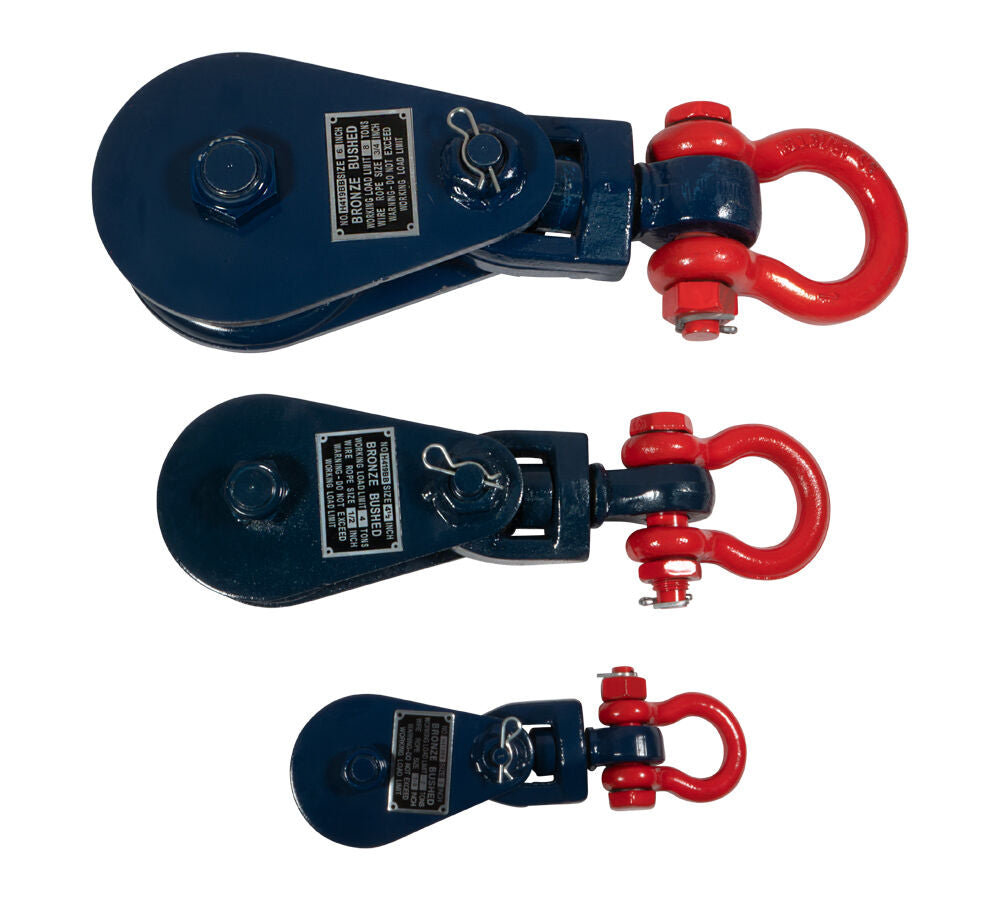
Match the sheave to the rope you are running. Every block here is grooved and rated for a range of rope: the Mytee blocks run 3/8, 1/2, and 3/4 inch wire rope on 3, 4.5, and 6 inch sheaves, and the McKissick and William Hackett ranges climb to larger sheaves for heavier rope. Two rules keep the rope alive. First, the groove has to fit the rope diameter, since a groove too wide lets the rope flatten and one too narrow pinches it. Second, sheave diameter drives fatigue life: the tighter the wire rope bends, the faster its wires work-harden and break, and dropping a sheave well below the rope maker's recommended diameter can cut rope life several fold. Snatch blocks run smaller sheave-to-rope ratios than continuous crane sheaves because the duty is intermittent, but stay inside the block's rated rope range and consult the rope table for hard-service work. Synthetic winch line is easier on a small sheave but wants a smooth, burr-free groove or it chafes.
Fittings: hook, shackle, or swivel eye. How the block hangs decides how fast you rig and how it aligns under load. A hook, on the Mytee Snatch Block With Hook, is the quickest to clip onto an anchor and the right pick for repeated recovery work where speed matters, backed by a latch so it cannot roll off. A shackle, on the Snatch Block With Shackle, is the more secure, higher-integrity connection for a rated lift or a hard anchor, at the cost of a pin to thread. A swivel eye, offered on the McKissick 419, lets the block rotate to align with the lead of the rope so the sheave stays square to the pull instead of side-loading. For anchor points that would gouge a hook or ride hard against a tight eye, a synthetic soft shackle makes a strong, snag-free connection. Match the fitting to the anchor and the job, not to habit.
Rated, marked, and inspected. Rigging blocks fall under ASME B30.26, the rigging hardware volume, which sets how they are built, marked, and inspected. A compliant block carries a legible marking of the manufacturer and its rated load, and that rating stays meaningful only while the markings are readable and the block is undamaged. Before each use, check the sheave for cracks and flat spots, the bearing for free rotation, the side plate latch for positive engagement, and the hook or shackle for wear and deformation, and pull any block out of service if the plate will not lock or the sheave is chewed. Keep in mind that a block sized for winch recovery is not automatically an overhead lifting device, so when the pull becomes an overhead lift, work to the plan of a qualified person and to the block's rated load. Documented periodic inspection follows the same rhythm as the rest of your rigging.
Frequently Asked Questions
A snatch block is a pulley with a side plate that opens, so you can insert a rope mid-line without threading the end through. It does one of two jobs: anchored to a fixed point it changes the direction of a winch or crane pull, and anchored to the load it acts as a moving pulley and gives roughly 2:1 mechanical advantage, letting the winch pull about half the force for twice the rope.
More than the line pull. The block carries the vector sum of both rope legs, so on a full 180 degree redirect the load on the block runs to about twice the line tension, and on a gentle deflection much less. Size the block to the doubled worst case: take your line pull, roughly double it, and choose a working load limit that clears that number with margin.
When you anchor the block to the load and dead-end the line back near the winch, yes, close to 2:1, minus a little sheave friction. The winch pulls about half the force for the same load but reels twice the rope at half the speed. Rig two blocks together and you can reach 3:1 or 4:1 for a badly stuck load.
Start with the rope. Match the block's groove and rated rope range to your wire rope or synthetic line, then confirm its working load limit covers roughly twice your line pull. These blocks span 2 ton to 25 ton with 3 inch to 12 inch sheaves, so a light winch redirect and a heavy crane lead take very different blocks. Bigger sheaves also bend the rope less and extend its fatigue life.
Only a block rated and marked for it, used within its working load limit and to a rigging plan. Rigging blocks are covered by ASME B30.26, which calls for a legible rated-load marking and regular inspection. A block bought for winch recovery is not automatically an overhead lifting device, so confirm the rating and the intended use before the pull becomes a lift.