Crane Pads
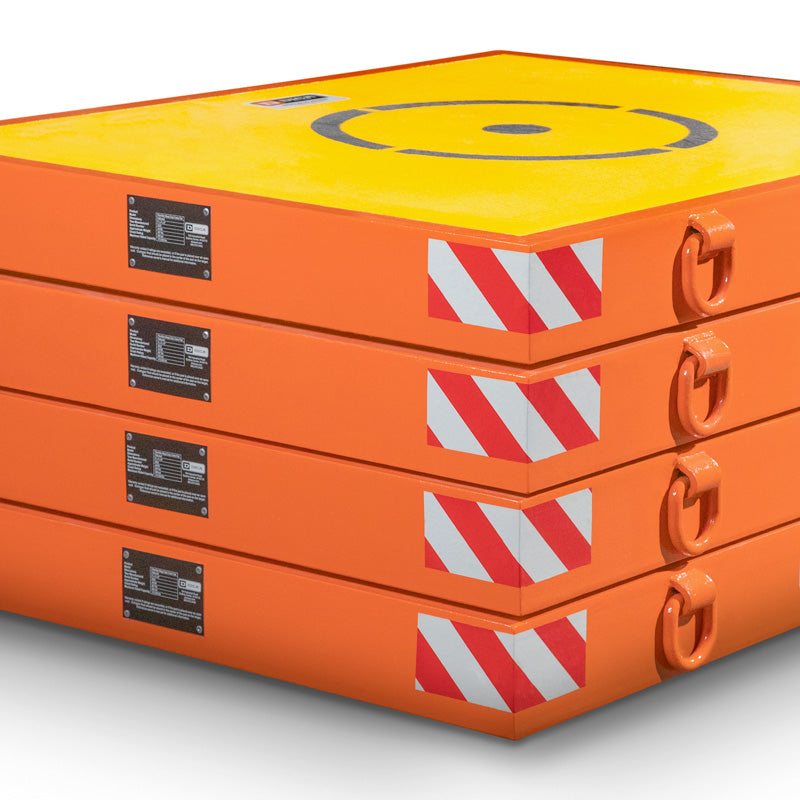
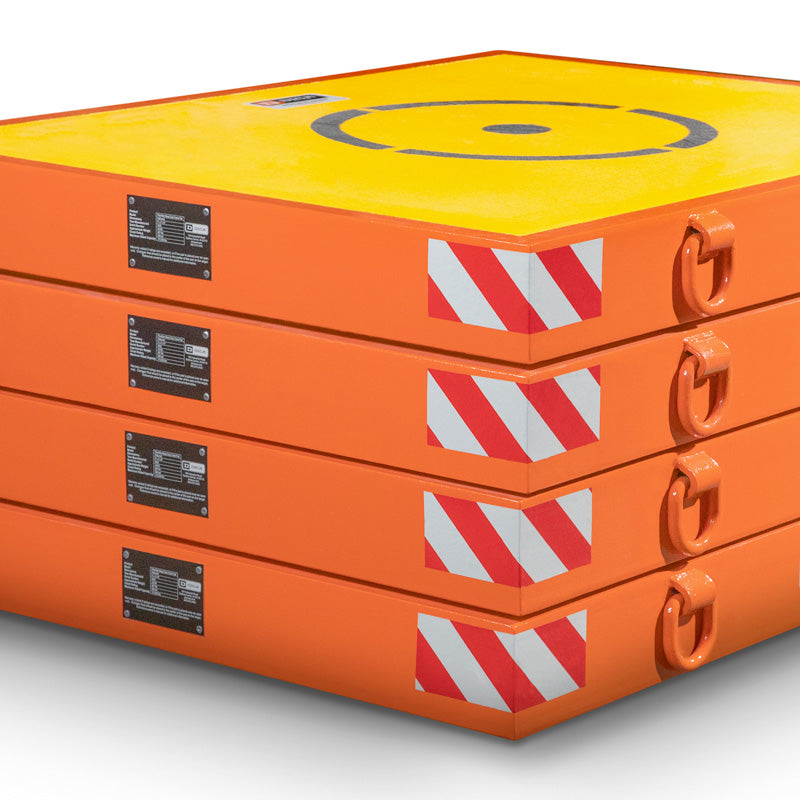
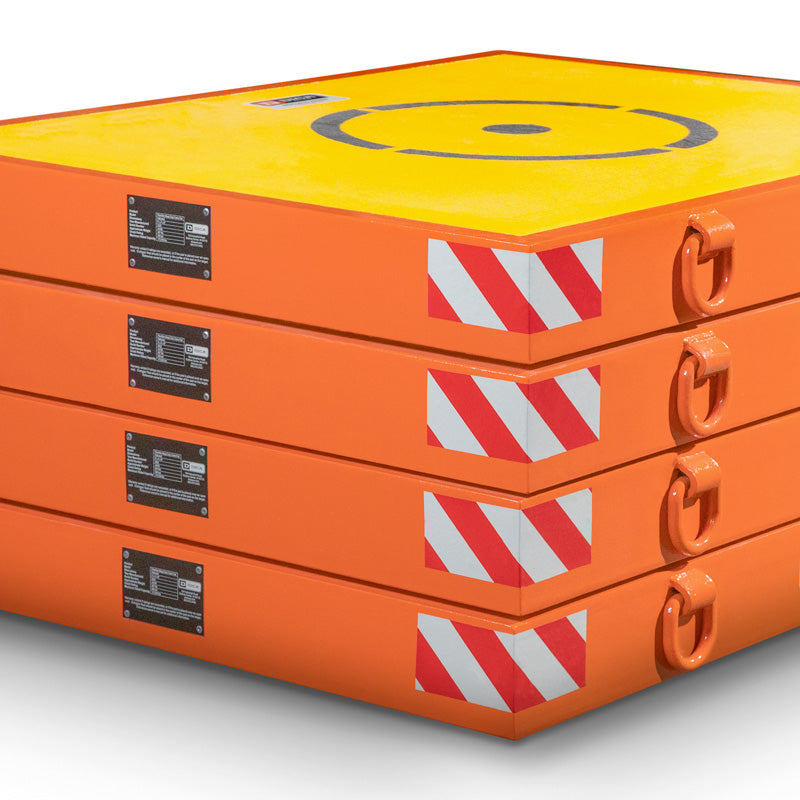
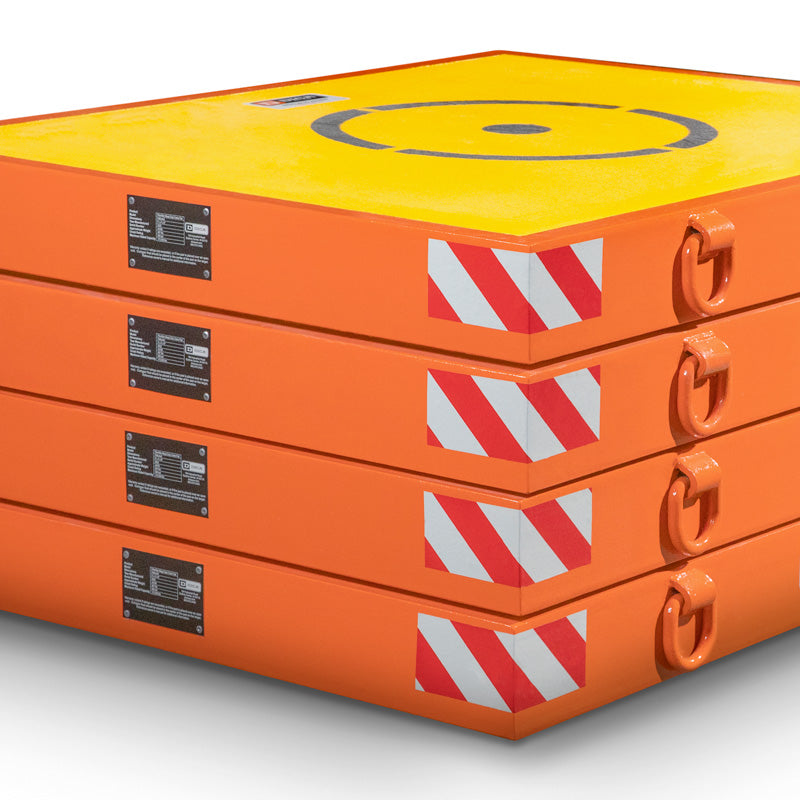
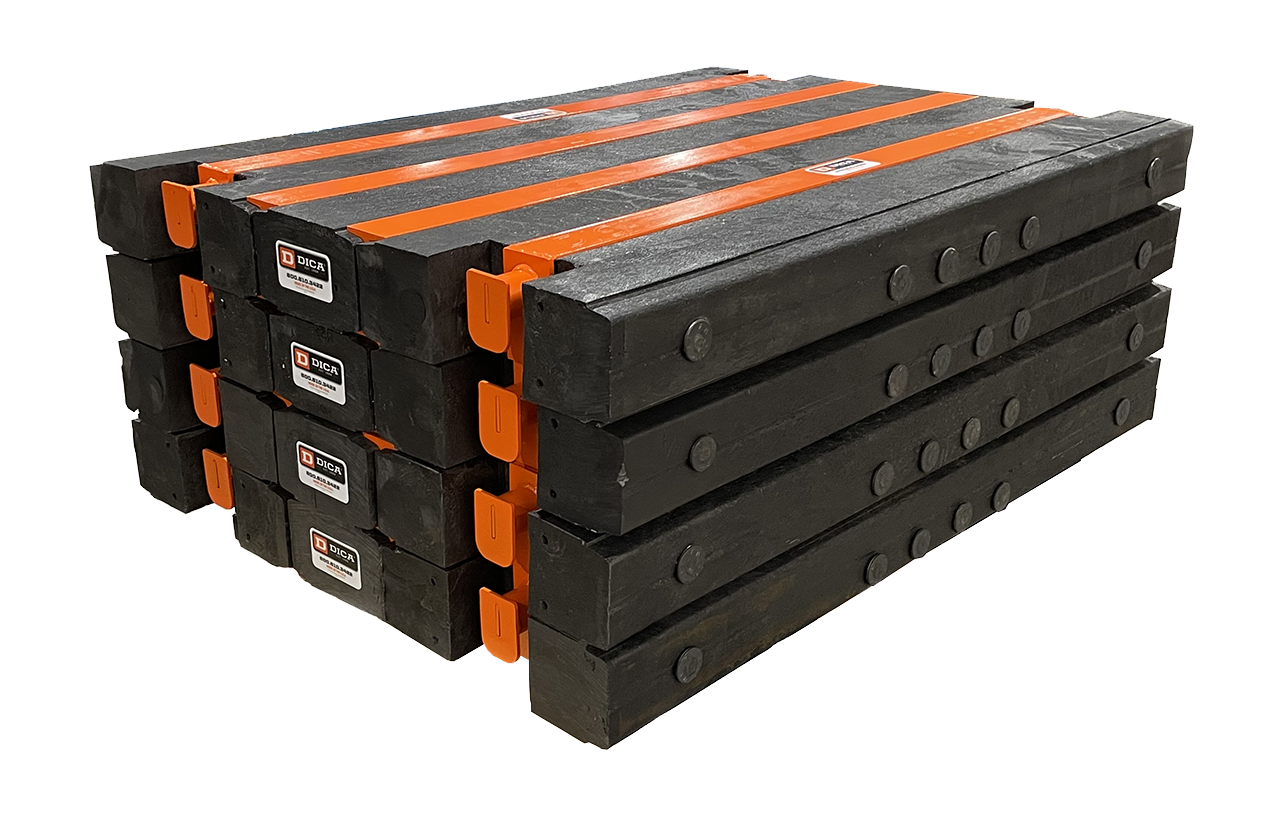
Crane pads are the heavy end of ground support: the large, thick composite mats that go under the outrigger floats of all-terrain, rough-terrain, and boom truck cranes whose leg reactions run into the hundreds of thousands of pounds. Where a smaller outrigger pad handles an aerial lift or a service truck, a crane pad takes the concentrated load of a machine rated in tons and spreads it over enough ground that the float does not sink, the machine does not list, and the load chart the operator trusts still describes the lift. This collection is the DICA line built for that duty: patented FiberMax pads molded from fiber-reinforced polymer in 6, 6.75, 10, and 12 inch thicknesses, rated from roughly 100,000 lb up to 400,000 lb, plus the recycled-composite EcoMax pad for cranes into the 150 ton class. Prices run from around $5,300 to about $27,000. Size the pad to the reaction force and the soil, then confirm how it will be supported.
Compare Crane Pads
| Model | Price | Capacity | |
|---|---|---|---|
| DICA 12Inch FiberMax Crane Pads | $19,559 | 400,000 lb | View → |
| DICA 10Inch FiberMax Crane Pads | $12,773 | 325,000 lb | View → |
| DICA 6.75Inch FiberMax Crane Pads | $9,706 | 250,000 lb | View → |
| DICA 6Inch FiberMax Crane Pads | $5,973 | 175,000 lb | View → |
| DICA EcoMax Crane Pads | $5,294 | 175,000-325,000 lb | View → |
 In Stock
 In Stock
 In Stock
 In Stock
 In Stock
Crane Pads Buying Guide
What separates a crane pad from a smaller outrigger pad. The two do the same physics, spread a concentrated leg load over more ground, but they work in different weight classes. The outrigger pads one level up handle service trucks, aerial lifts, and digger derricks, where the float is small and the reaction sits in the tens of thousands of pounds. A crane pad is what goes under an all-terrain, rough-terrain, or boom truck crane, where a fully extended outrigger can drive a single float into the ground at well over a hundred thousand pounds, and no foot-square steel foot spreads that safely. The pads here are correspondingly larger and thicker, several feet on a side and 6 to 12 inches deep, heavy enough that footprint and handling weight become part of the buying decision. If you are matching pads to a specific machine, start from the crane and its load chart, not from what happens to fit in the truck box.
Size to the worst-case reaction, and remember it moves. Sizing is arithmetic: take the maximum outrigger reaction from the crane's load chart and divide it by the allowable ground bearing pressure of the surface, and the result is the minimum pad area. The wrinkle that catches crews is that the reaction is not one fixed number. As the crane swings and the boom moves, the load shifts across the four outriggers, so the leg carrying the most on a pick over the side is not the leg that carried the most a quarter turn earlier. Size every pad to the worst case any leg will see through the full working arc, not to the reaction at setup. Ground bearing pressure is the other half and it is unforgiving: firm compacted gravel might carry several thousand pounds per square foot, while soft or saturated clay carries a small fraction of that, which is why the same crane needs a much larger pad on bad ground. When you cannot get a real number for the soil, that uncertainty is an argument for more pad, not less.
FiberMax: composite that acts like steel and weighs far less. DICA's FiberMax pads are molded from continuous sheets of fiber-reinforced polymer, and the point of the material is stiffness. A FiberMax pad delivers the rigidity of steel while weighing roughly 60 percent less, which matters because a pad a crew cannot move is a pad that gets left in the yard. The line carries a 1,000 psi crush rating and comes in 6, 6.75, 10, and 12 inch thicknesses; capacity climbs with thickness, from around 100,000 lb on the thinner pads to 325,000 lb at 10 inches and 400,000 lb at 12. The thicker, larger pads reach into the high five figures on our site, and they carry a long factory warranty because the composite does not rot, rust, absorb fluids, or delaminate the way wood cribbing and some plastics do. This is the tier for lattice, all-terrain, and the heaviest boom truck work.
Fully supported or bridged: the number changes with what is underneath. A crane pad only carries its headline rating when the whole underside is bearing on the ground. Set it so the center spans a rut, a curb, or a soft spot with only the ends supported, and the pad is now loaded in bending, which is a different and lower rating entirely. DICA's EcoMax pad is explicit about this, publishing a standard fully-supported capacity and a separate lower bridge rating for the ends-supported case, with only the fully-supported and one bridged orientation approved inside the operating area. Rated at 160,000 lb across 24 square feet, the EcoMax suits cranes up to about the 150 ton class and is the recycled-composite value pick in the collection, pairing steel-like stiffness with a lower price than the FiberMax mats. Whichever pad you run, the honest move is to prepare the ground so the pad is fully supported and buy on the fully-supported number.
Center the float, and know the standards you set up under. Two things finish a good setup. First, center the outrigger float on the pad: the EcoMax carries a built-in center target for exactly this, because a float parked at the edge drives load into one corner instead of spreading it, and DICA rates its pads to level a fully supported float up to 10 degrees in two planes. Second, know the rules. ASME B30.5 requires that outrigger blocking have enough strength to resist crushing, bending, or shear, and enough thickness, width, and length to completely support the float, carry the load to the supporting surface, and prevent the machine from shifting or settling under load, which is the standard a rated pad meets and scrap lumber does not. On construction sites, OSHA 1926.1402 puts the ground itself on the controlling entity, requiring conditions firm, drained, and graded enough to support the crane with the pads and cribbing in use. The pad is one link in that chain; the ground under it is the other.
Frequently Asked Questions
Same job, different weight class. Outrigger pads handle service trucks, aerial lifts, and digger derricks with reactions in the tens of thousands of pounds; crane pads are the larger, thicker mats built for all-terrain, rough-terrain, and boom truck cranes whose fully extended legs put well over a hundred thousand pounds through a single float. The [outrigger pads](/collections/outrigger-pads) collection covers the lighter DICA SafetyTech line, while this page covers the heavy FiberMax and EcoMax mats.
Divide the worst-case outrigger reaction from the crane's load chart by the allowable ground bearing pressure of the surface, and that is the minimum pad area. Because the reaction shifts as the crane swings, size to the highest load any leg sees through the full arc, and lean to a larger pad whenever the soil is soft, wet, or unknown.
The fully supported rating applies when the entire underside of the pad bears on the ground. The bridge rating is a lower number for when only the ends are supported and there is a gap beneath the center, which loads the pad in bending. DICA publishes both for the EcoMax; the safe practice is to prepare the ground so the pad is fully supported and buy on that number.
FiberMax pads are molded from fiber-reinforced polymer that delivers steel-like stiffness at roughly 60 percent less weight, which is deliberate: a pad too heavy to place slows setup or gets skipped. Even so, the larger mats are a two-person or mechanical handling item, so factor handling into which thickness and footprint you order.
ASME B30.5 requires outrigger blocking strong enough to resist crushing, bending, and shear and sized to fully support the float and carry the load to the ground. On construction sites, OSHA 1926.1402 makes the controlling entity responsible for ground conditions firm and level enough to support the crane with its pads in place. A rated pad meets the material requirement; adequate ground meets the rest.