What a jib crane is
A jib crane is a compact crane built around a horizontal arm, the jib, that pivots on a vertical support. A hoist and trolley ride along the jib, so you can lift a load and swing it through an arc to move it within the crane's reach. It's the classic workstation crane: mounted at a machine, an assembly bay, or a loading point, it handles the repetitive lifting there without the cost and structure of a full overhead crane. Our jib cranes cover the common capacities that suit most workstation lifting.
How a jib crane works
The mechanism is simple and durable. The vertical column (or wall bracket) carries the load down to a foundation or building structure, while the jib arm rotates around it, sweeping the hoist through a circle or partial circle. The hoist does the vertical lifting, and the trolley moves it in and out along the jib, so together the rotation and the trolley give you coverage of a circular or fan-shaped area. The result is a crane that can pick a load at one point and place it anywhere within its swing and reach, over and over, efficiently.
Freestanding (floor-mounted) jib cranes
A freestanding or floor-mounted jib crane bolts to an engineered concrete foundation and needs no building support, which means it can go almost anywhere on the floor and rotate a full 360 degrees. Mast-style versions in particular offer full-circle coverage and handle heavier loads. The trade-off is the foundation: a freestanding jib requires a properly sized, reinforced concrete footing rated to the crane's capacity and span. If you need full rotation and maximum flexibility in placement, and you can pour the foundation, the freestanding jib is the most capable choice.
Wall- and column-mounted jib cranes
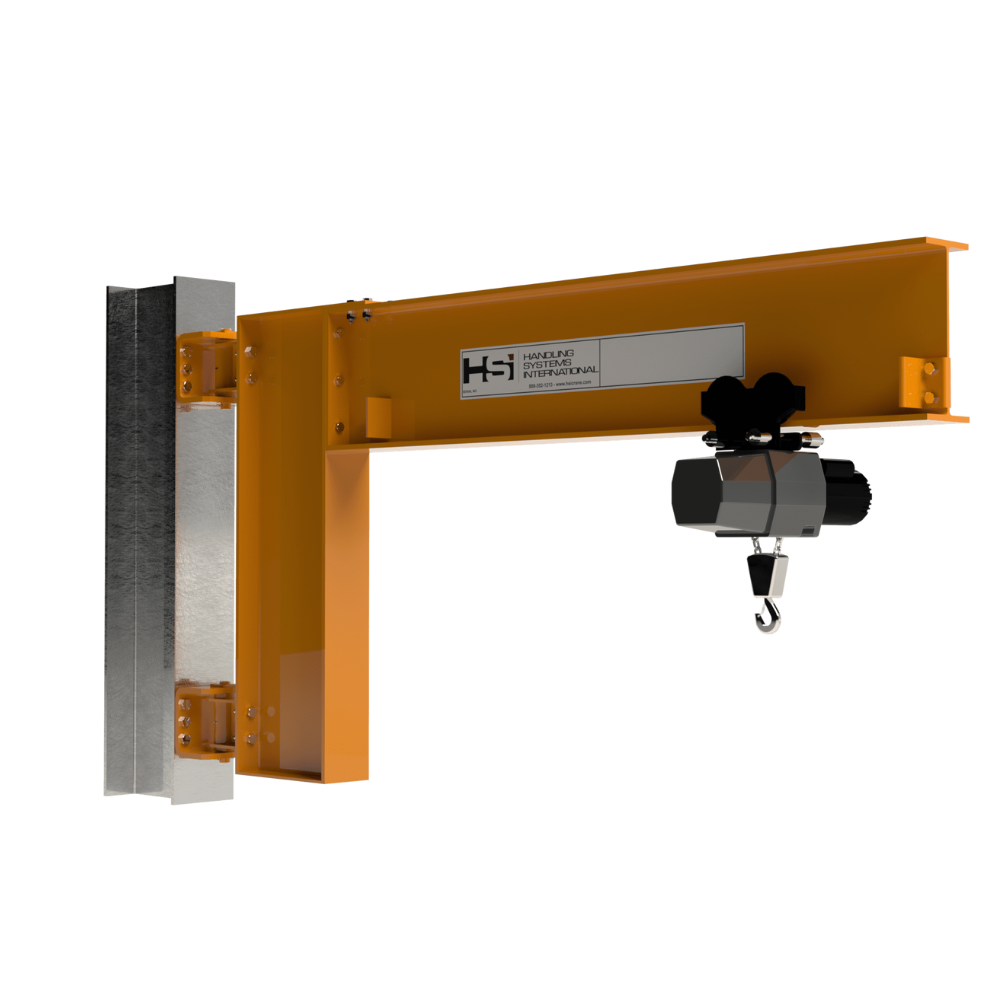
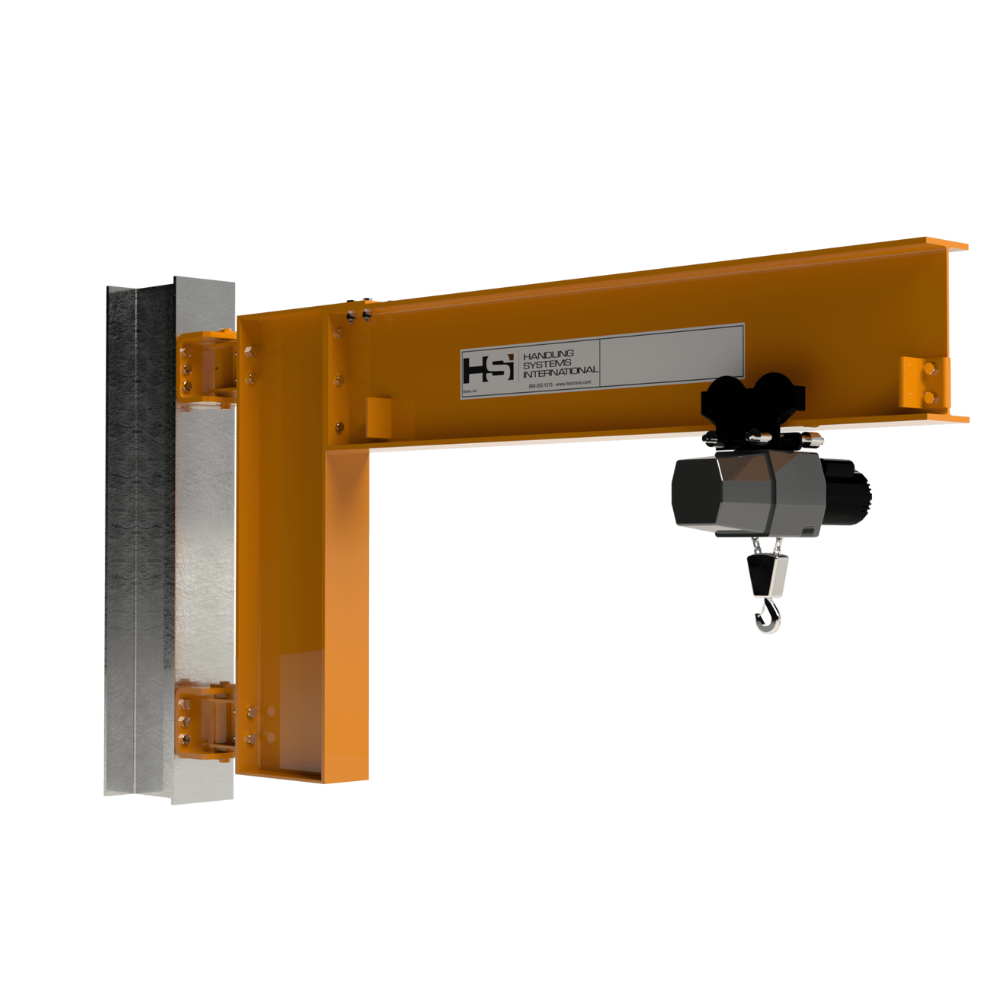
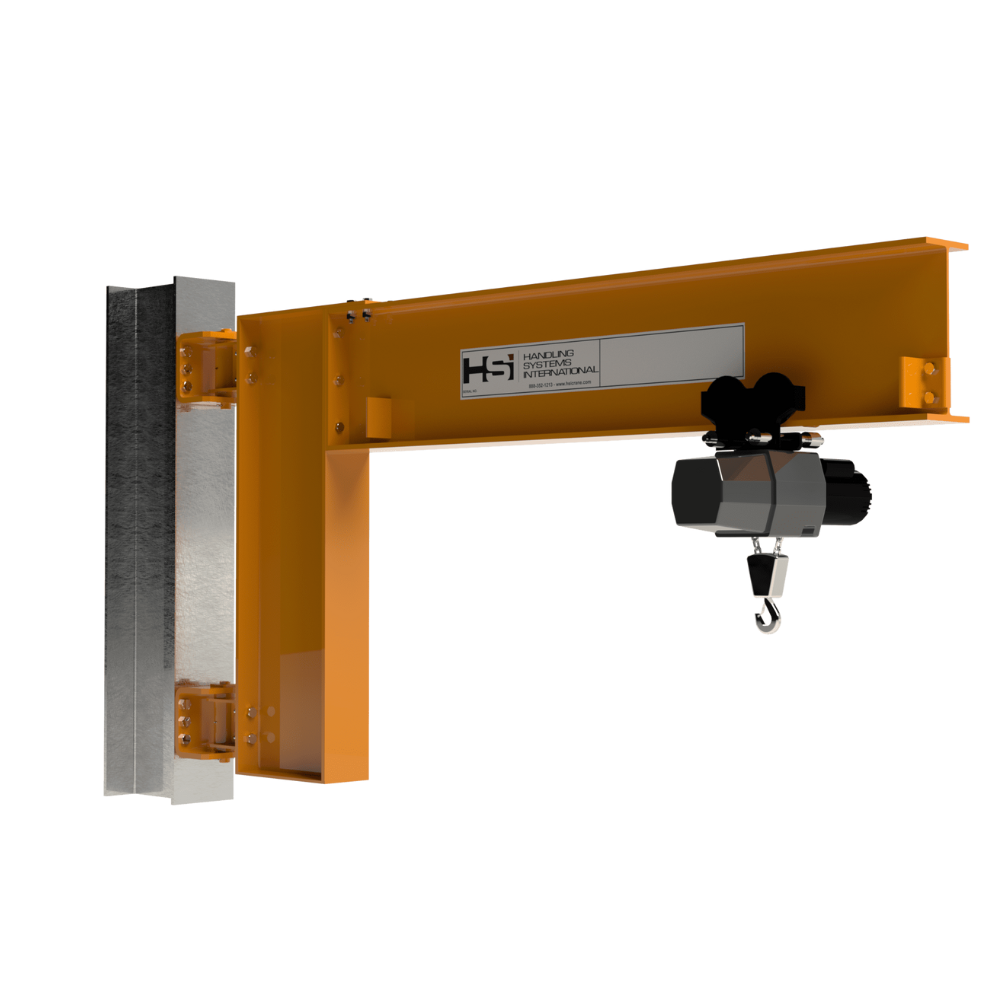
A wall- or column-mounted jib crane attaches to existing building structure, a wall or a support column, instead of a floor foundation, which saves valuable floor space. Because it's mounted to one side, it typically rotates 180 to 200 degrees rather than a full circle. These are ideal for adding lifting capacity along a wall, under an existing overhead crane, or at a workstation where floor space is tight. The catch is that the building structure must be strong enough to carry the crane and its load, so the mounting point has to be verified. When floor space is precious and the structure can take it, wall-mounted jibs are efficient.
Articulating jib cranes
A third type, the articulating jib crane, has a two-part boom with a second pivot, letting the hoist reach around obstacles, into machine enclosures, or under other equipment. Where a standard jib sweeps a simple arc, an articulating jib can navigate a load into awkward positions that a single rigid boom couldn't reach. They're specialized, and typically used for lighter, precise material handling in tight or obstructed work areas. If your lifting involves reaching around or into equipment rather than a clear open sweep, an articulating jib solves a problem the standard types can't.
Capacity and span
Jib cranes come in standard capacities, commonly a quarter-ton, half-ton, 1, 2, 3, and 5 tons, with heavier custom units available, and spans and heights typically in the 8-to-20-foot range. Our HSI cantilever jibs, for example, run from 250 and 500 lb up through 1,000 and 2,000 lb. Two things to know: always choose a capacity above your heaviest load, rounding up, and understand that a longer span raises the structural and foundation demands even at the same rated capacity. Span and capacity together drive the size of the foundation or the strength the mounting structure needs.
How to choose and size a jib crane
Sizing a jib crane means working several specs. Pick a capacity above your heaviest load (round up). Choose the span (boom length) to cover your work area, remembering longer spans need more structure. Decide the rotation you need, full 360 degrees calls for a freestanding or mast jib, while 180 to 200 degrees suits a wall or column mount. Confirm the height under the boom (HUB) gives your hoist and load clearance. And plan the mounting: a freestanding jib needs an engineered foundation; a mounted jib needs adequate building structure. Getting capacity, span, and foundation right is the core of a safe jib crane.
Jib versus gantry versus bridge crane
A jib crane isn't the only option, and it's worth knowing where it fits. A jib covers one or two workstations with a rotating boom, ideal for localized, repetitive lifts. A gantry crane rolls on the floor and is mobile, suiting loads that move around a shop. A bridge (overhead) crane covers an entire bay from permanent runway rails, for the heaviest, highest-throughput work. We compare all three in our jib vs gantry vs bridge crane guide. Choose the jib when your lifting is concentrated at a fixed workstation.
Jib versus davit crane
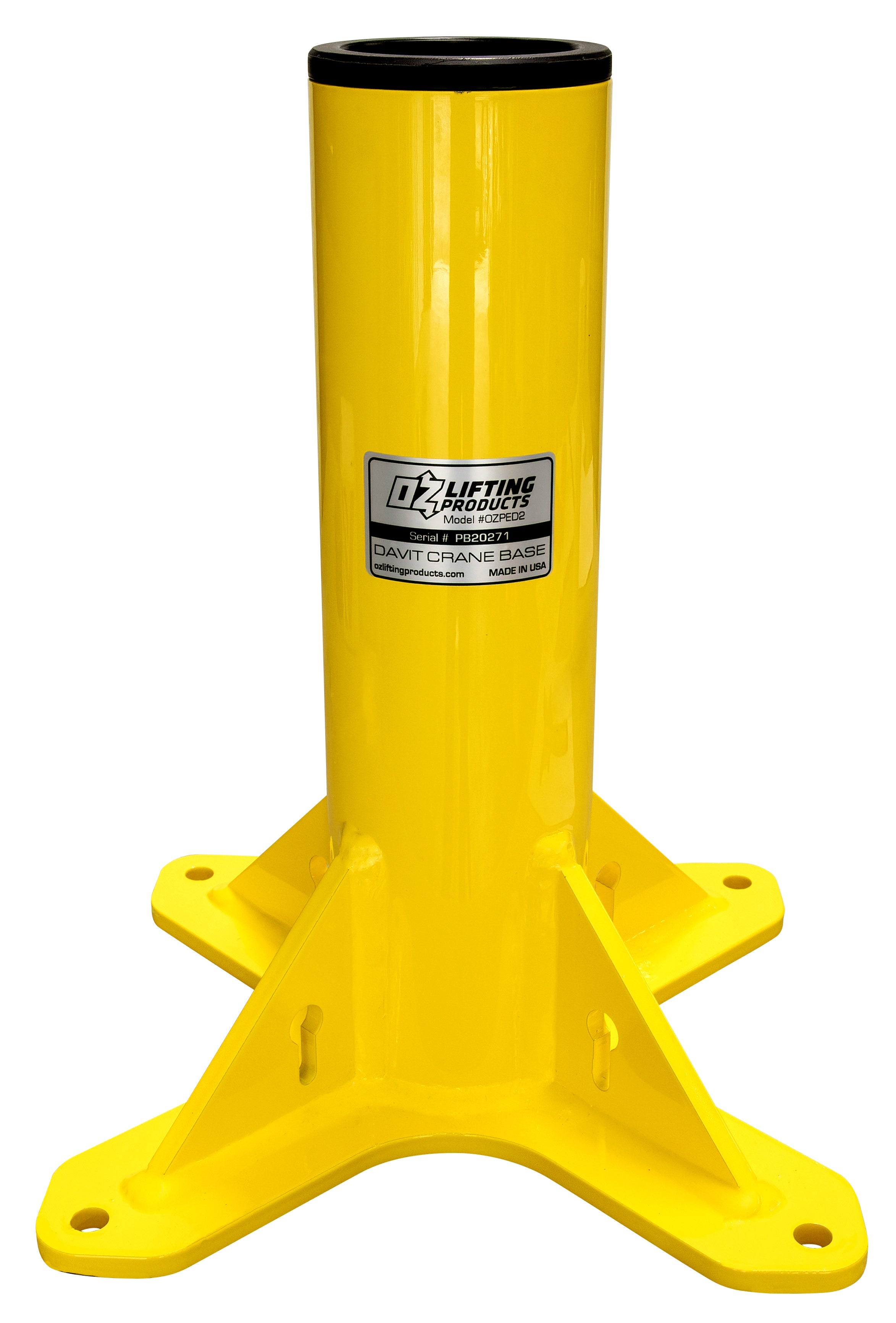
For lighter, portable lifting, a davit crane is the jib's smaller, more flexible cousin: lighter, movable between mounting sockets, and often winch-driven, suited to confined-space, marine, and truck-bed lifts. A jib crane is the heavier, fixed choice for repetitive lifting in one spot. As a rough guide, above about 2 tons or beyond about 5 meters of reach, a jib crane is usually the answer; within those limits, a davit may be preferable. Our jib crane vs davit crane guide covers the choice in full.
The bottom line
A jib crane is a rotating-boom crane mounted to a floor foundation or a wall, ideal for localized, repetitive lifting at a workstation. Freestanding jibs rotate 360 degrees and need an engineered foundation; wall and column mounts rotate 180 to 200 degrees and save floor space; articulating jibs reach around obstacles. Size the capacity, span, rotation, and mounting to your work, and confirm the foundation or structure is rated. Browse our jib cranes, compare crane types in our jib vs gantry vs bridge guide, or see the full crane range.
Foundations and installation
One aspect of jib cranes deserves emphasis: the foundation. A freestanding jib transmits its load and the tipping moment of a lifted load at the end of the boom down through its column into the floor, so it needs an engineered, reinforced-concrete foundation sized specifically to the crane's capacity, span, and the floor's condition. This isn't a place to improvise, an undersized foundation can let the crane shift or fail. Wall and column mounts likewise need verified structure. Factor the foundation or structural work, and its cost and lead time, into any freestanding jib project from the start, not as an afterthought.