What a davit crane is
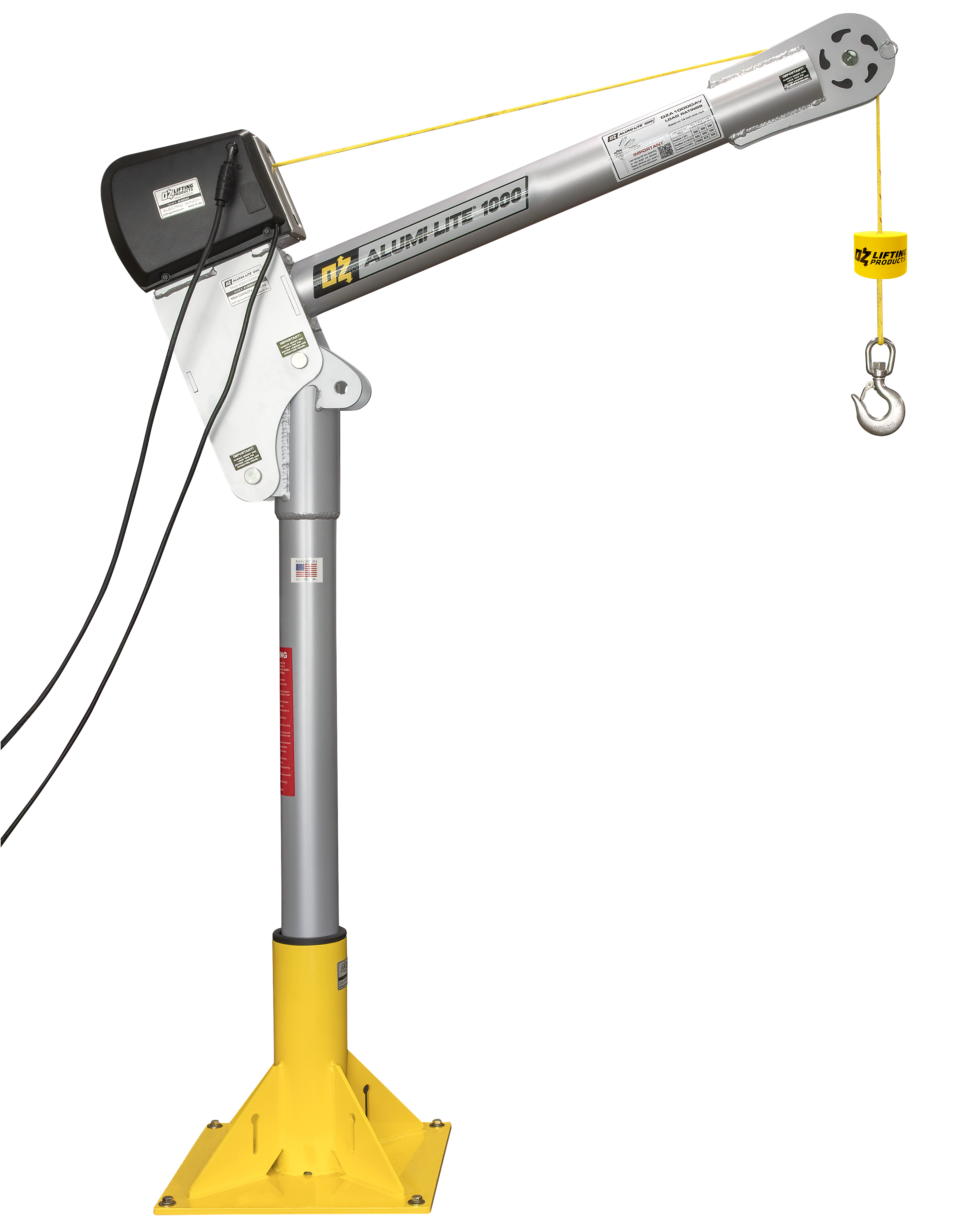
A davit crane is a compact, flexible lifting crane built for portability. It has a vertical mast and a boom, frequently telescoping and angle-adjustable, and it typically lifts with a hand or electric winch rather than a chain hoist. The defining feature is that a davit is designed to be moved: it drops into mounting sockets at different locations, so one crane can serve several lift points around a facility, a boat, or a vehicle. Our davit cranes include aluminum and steel models with manual and electric winches for a range of light lifting.
How a davit differs from a jib crane
Both cranes have a boom on a vertical support, but they're built for different jobs. A jib crane is a heavier, fixed installation for repetitive lifting in one spot, mounted to a foundation or wall. A davit crane is lighter, portable, and far more flexible in mounting, it can be lifted out of one socket and placed in another, mounted to a deck, wall, roof, or truck bed, and often broken down for transport or storage. So the jib is about capacity and repetition at a fixed station; the davit is about portability and reaching multiple, sometimes awkward, locations.
Where davit cranes are used
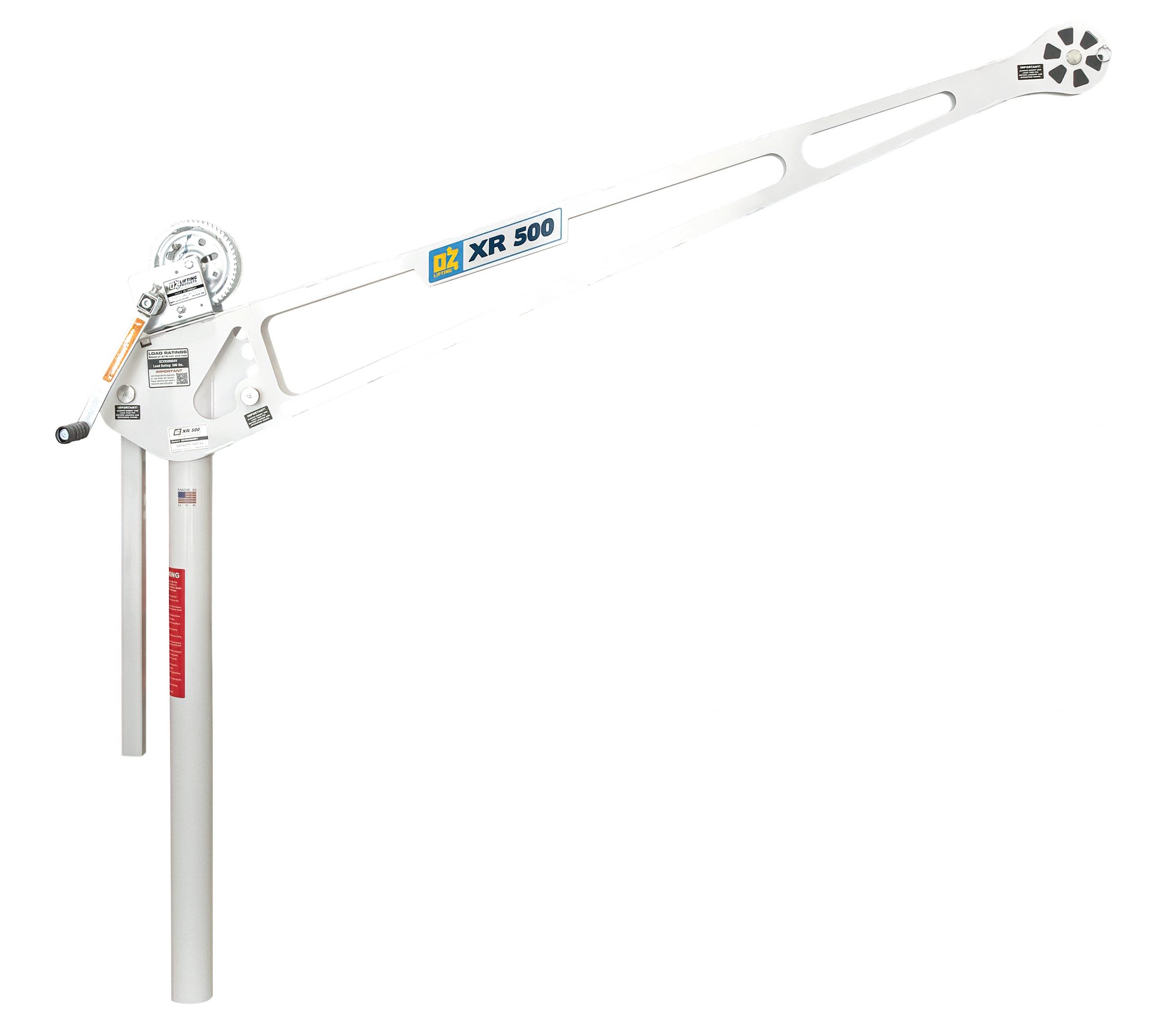
The davit's portability suits it to jobs a fixed crane can't easily do. It's a mainstay for marine and dock work, lifting dinghies, outboard motors, and gear on and off boats, hence models like the OZ Lifting XR davit. It's used for confined-space entry and rescue, lowering and raising workers and equipment through manholes and tank openings. And it handles truck-bed loading, roof access, and any situation where you need to lift moderate loads at several different points. Wherever lifting happens in multiple locations or tight spots, the davit's flexibility is the reason to choose it.
Manual versus electric winch
Davit cranes are usually powered by a winch, and you choose between manual and electric. A hand-winch davit like the OZ Lifting XR needs no power, is simple and portable, and suits lighter, occasional lifts. An electric-winch davit lifts faster and with less effort, better for heavier or more frequent work where power is available. The choice mirrors the wider winch decision, manual for simplicity and no-power sites, electric for speed and reduced fatigue. Our electric vs hand winch guide covers the trade-off that applies here too.
Capacity and reach
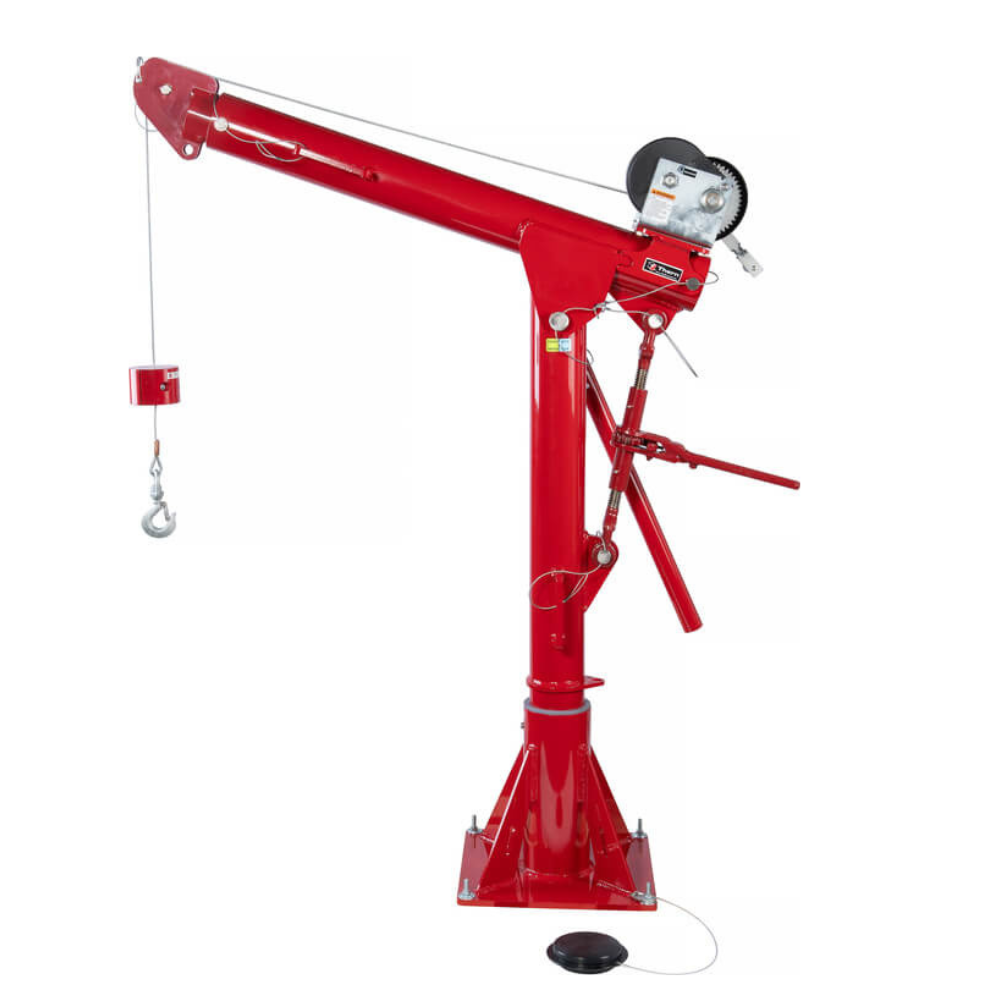
Davit cranes are light-duty by design. Portable models commonly handle 500 to 2,000 lb, and heavier stationary davits reach around 5,500 lb, well below what a jib or gantry crane carries. Reach is similarly modest but flexible, thanks to telescoping and angle-adjustable booms. The Thern Commander aluminum davits, for instance, offer portable lifting in the several-hundred-pound class. If your loads exceed a couple of tons or you need long reach, a davit isn't the tool, a jib or gantry is. Within its light-to-moderate range, the davit trades outright capacity for portability and mounting flexibility.
Mounting options
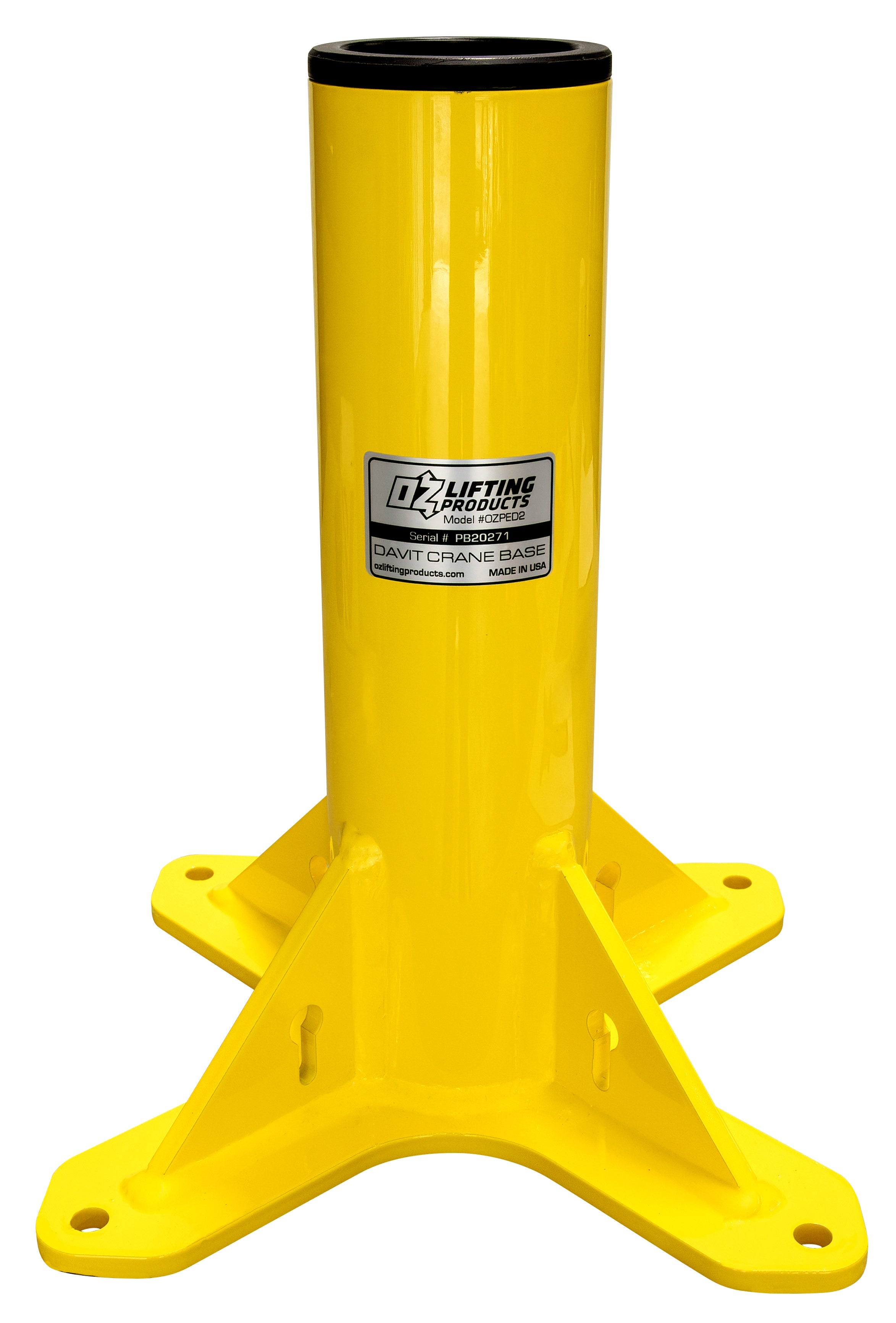
Flexible mounting is central to the davit's appeal. Rather than a single fixed foundation, davits use bases and sockets you can install at multiple points, floor pedestal bases, wall mounts, deck sockets, and vehicle mounts, so one crane serves many locations. You lift the davit out of one socket and set it in another, or move it on a portable base. This is exactly what makes a davit suit boats, trucks, and multi-station facilities. When planning a davit system, think about where you'll need to lift and install a socket or base at each point, then move the one crane between them.
Portability and storage
Many davit cranes are designed to break down and be carried or stored, especially aluminum models chosen for their light weight. A portable aluminum davit like the Thern Commander AL can be moved by hand and set up at the lift point, then taken down and stowed. This matters for occasional lifting, marine use, and any job where the crane doesn't live in one place. The lighter the davit, the easier it is to transport and reposition, which is why aluminum is popular despite steel's higher capacity. Match the material to your balance of portability and load.
Choosing a davit crane
Pick a davit by capacity, reach, mounting, and power. Choose a capacity above your heaviest load, staying within the davit's light-to-moderate range (step up to a jib or gantry if you exceed it). Confirm the boom reach and any telescoping or angle adjustment cover your lifts. Plan the mounting sockets or bases at each location you'll lift. And choose manual or electric winch by your frequency and whether power is available. For portable, multi-location, marine, or confined-space lifting of moderate loads, size the davit to those needs. Compare it against a jib in our jib crane vs davit crane guide.
The bottom line
A davit crane is a lightweight, portable crane with a winch-driven, often telescoping boom, built to move between mounting sockets for multi-location lifting. It's the choice for marine, confined-space, truck-bed, and multi-station work of moderate loads (typically up to a couple of tons), where portability and flexible mounting beat outright capacity. Choose the winch type and mounting for your job, and step up to a jib or gantry crane for heavier or longer-reach lifting. Browse our davit cranes or see the full crane range.
Safety and rated use
Like any crane, a davit is rated for a maximum capacity that must never be exceeded, and it must be used only within its intended configuration and inspected regularly under ASME B30 standards. Davits used for personnel work, confined-space entry and rescue, or lifting people, carry additional requirements and must be specifically rated and equipped for it (with the proper fall-protection and man-rated components). Never use a material-rated davit or winch to lift people. Confirm the davit and its winch are rated for the load and the application, respect the capacity, and inspect the crane, mast, boom, and winch before use.