The core difference
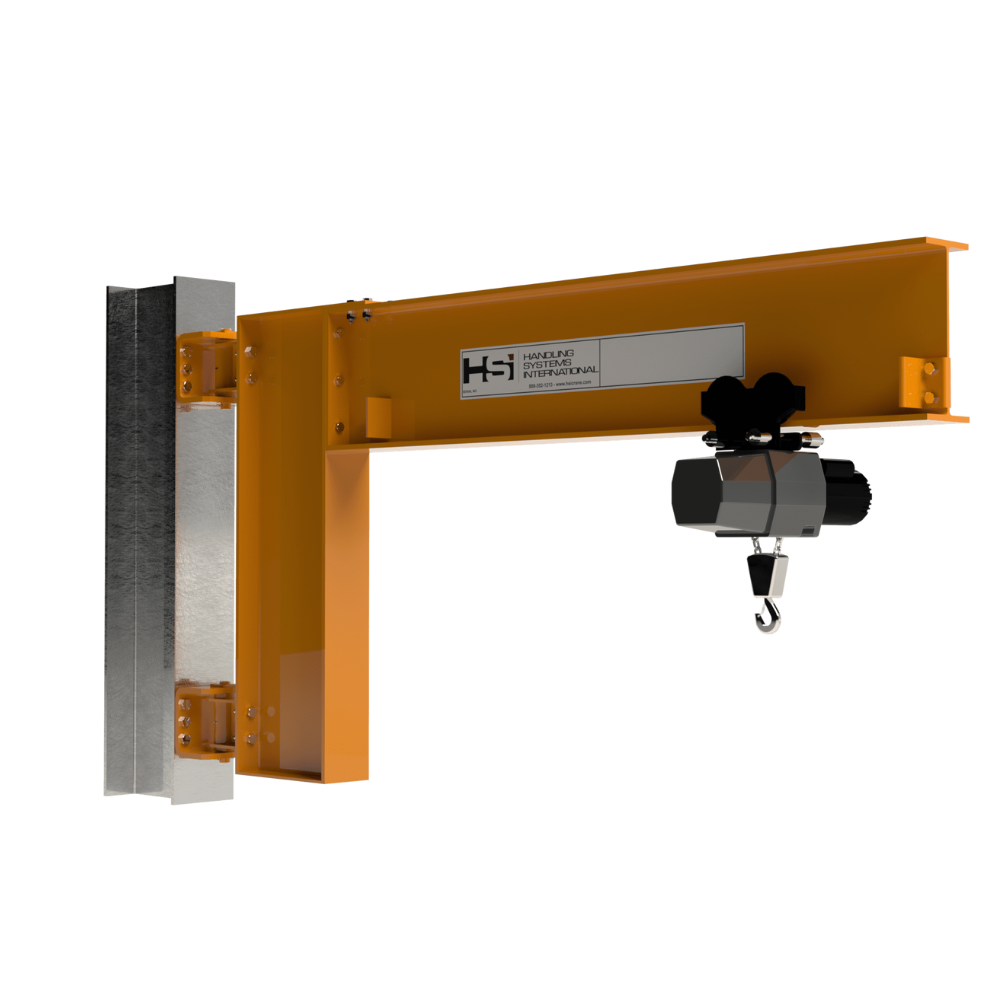
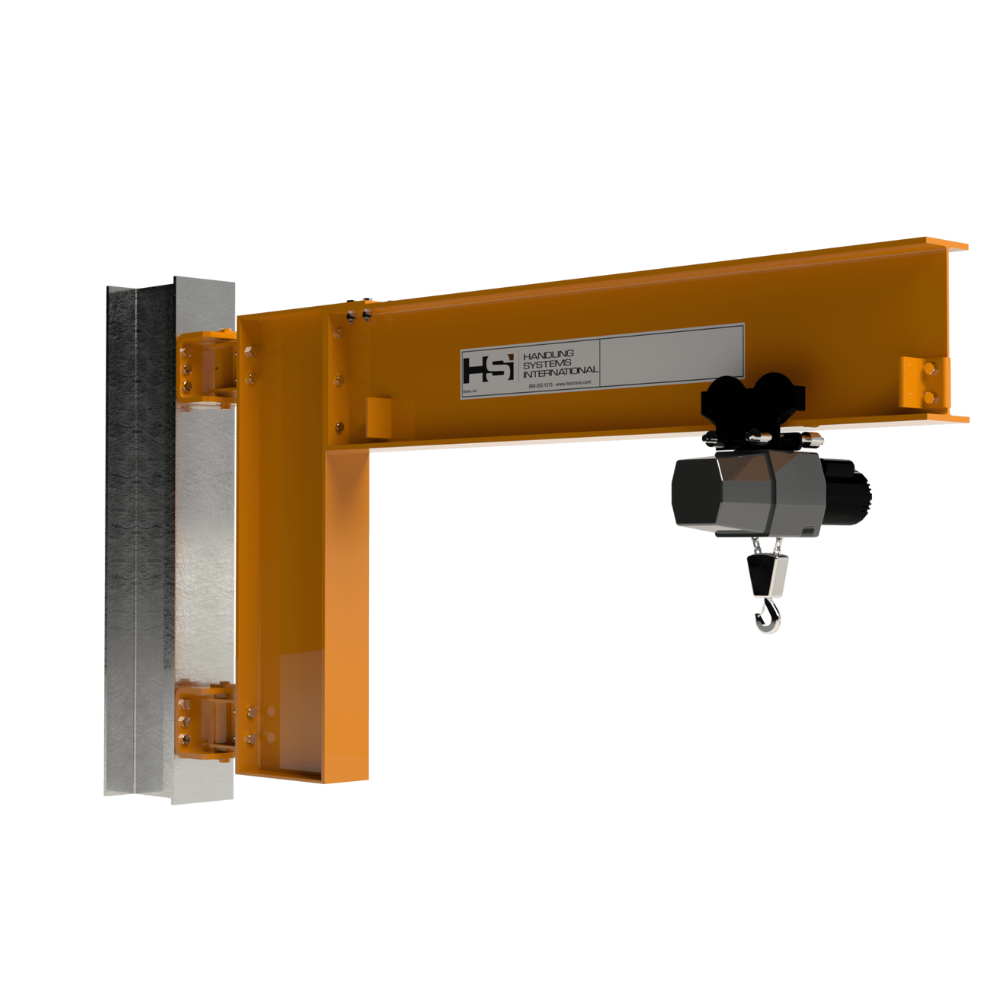
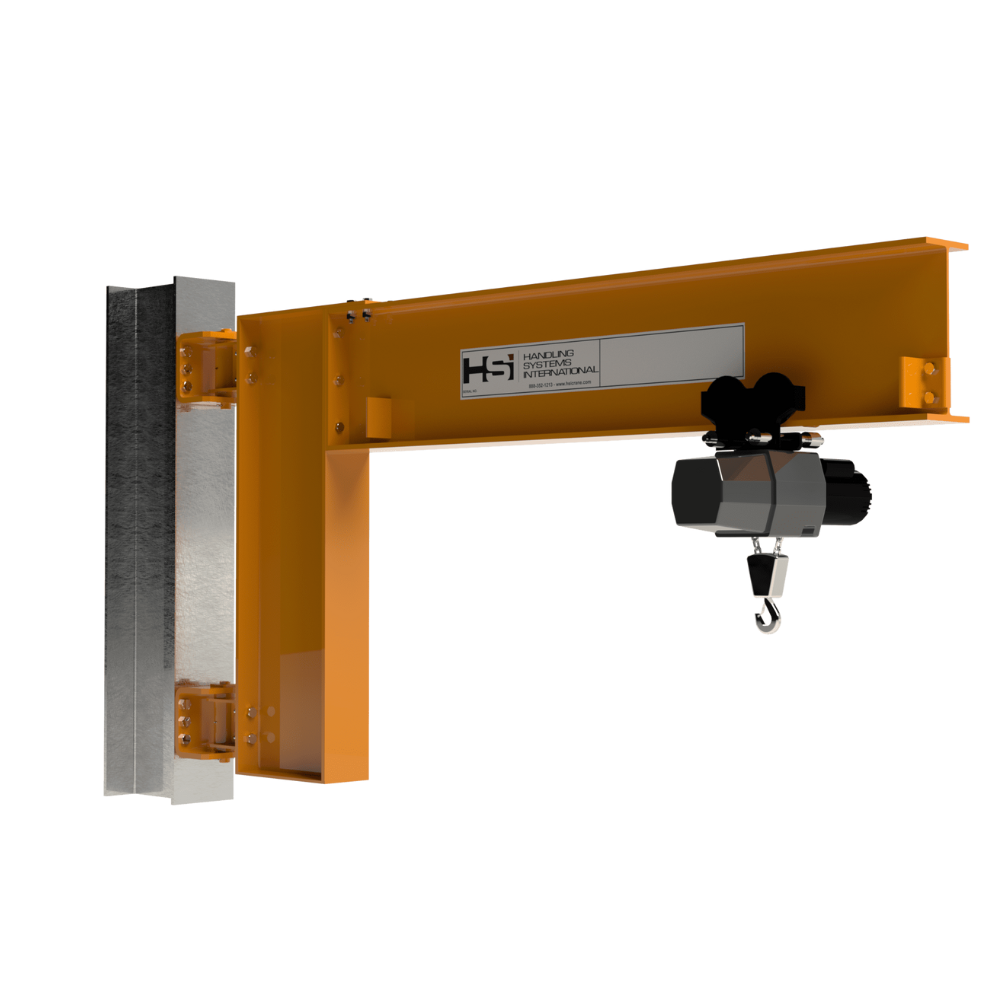
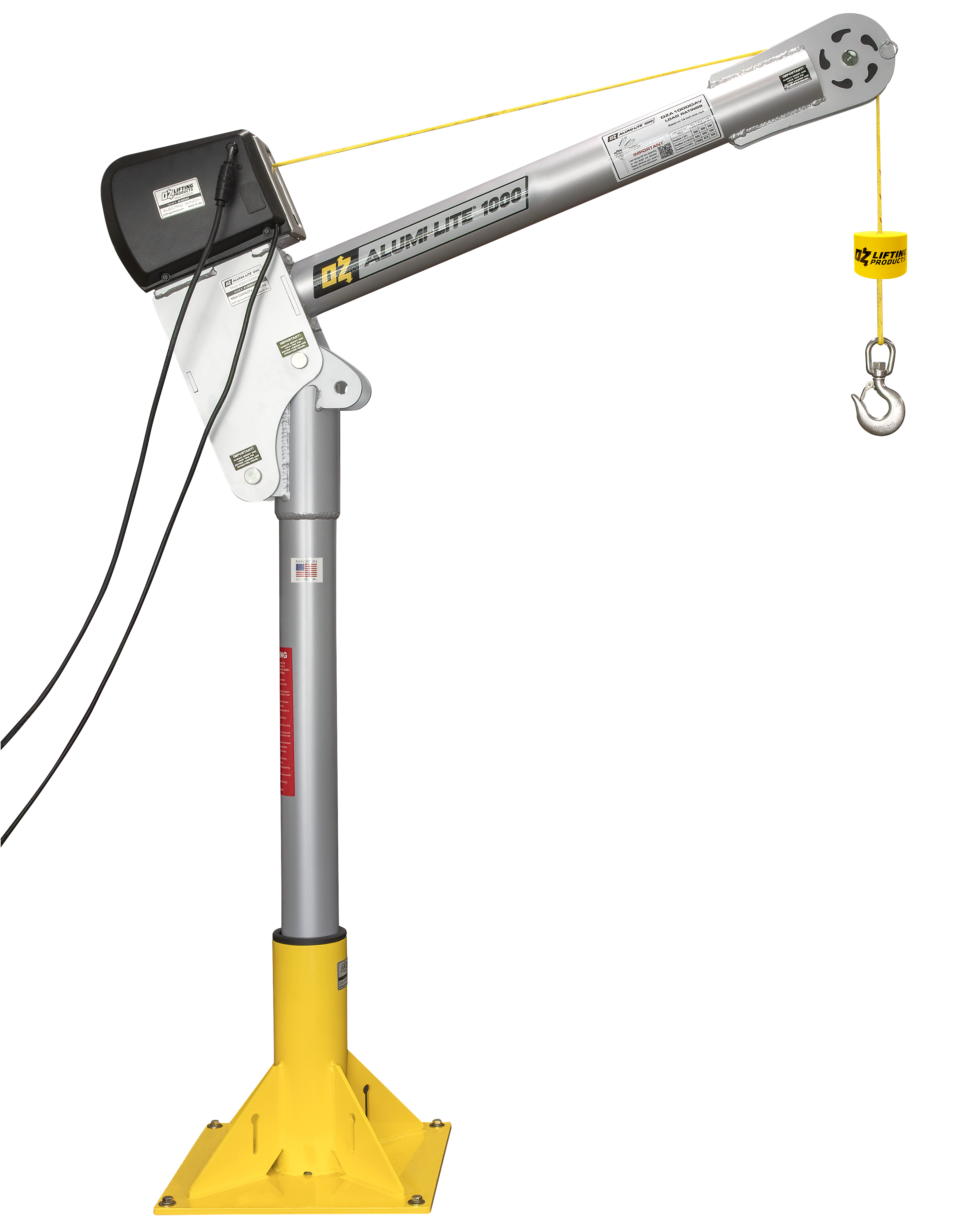
Both cranes lift with a boom on a vertical support, but they solve different problems. A jib crane is a fixed, heavier crane installed at a single workstation for repetitive lifting, its strength is capacity and repetition in one spot. A davit crane is a lighter, portable crane that moves between mounting sockets, its strength is flexibility and reaching multiple or awkward locations. So the decision comes down to whether you need heavy, repeated lifting at a fixed station (jib) or lighter, flexible lifting at several points (davit).
Capacity
Capacity is the clearest divider. Jib cranes cover standard ratings from a quarter-ton up to 5 tons, with heavier custom units, so they handle serious workstation loads. Davit cranes are light-duty, commonly 500 to 2,000 lb portable and up to around 5,500 lb for heavier stationary models. If your loads run into the multiple-ton range, the jib is the tool; if they're a few hundred pounds to a ton or so, the davit is enough. The rough threshold: above about 2 tons, lean jib; below it, a davit can serve.
Portability versus permanence
This is where the davit shines and the jib doesn't. A davit is built to move, dropped into different sockets, carried between sites, broken down for storage, so one crane serves many lift points. A jib crane is a permanent installation: bolted to a foundation or building, it stays put and lifts at that station. If your lifting happens in one fixed place repeatedly, the jib's permanence is fine and its capacity is a plus. If it happens in several places, or on a boat or truck, the davit's portability is essential and the jib simply can't follow the work.
Reach and coverage
The two cover space differently. A jib crane sweeps its boom through an arc, up to 360 degrees on a freestanding unit, giving consistent circular coverage at a workstation, and longer spans reach farther (at the cost of more structure). A davit's reach is more modest but flexible, with telescoping and angle-adjustable booms, and its real coverage comes from being movable to wherever the lift is. So a jib gives strong fixed coverage of one area; a davit gives light coverage of many areas. Match this to whether your lifting is concentrated or spread out.
Installation and foundation
Installation effort differs a lot. A freestanding jib crane needs an engineered, reinforced-concrete foundation sized to its capacity and span, a real construction step, while a wall or column jib needs verified building structure. A davit crane is far easier: you install sockets or bases at your lift points, and the crane drops in, no major foundation for portable models. So if you want lifting up and running with minimal construction, or you rent or move locations, the davit's simple mounting is a big advantage. The jib's foundation is the price of its higher capacity and permanence.
Cost
Cost tracks capability. Davit cranes are generally more affordable, portable, and easier to install, a light davit is a modest investment. Jib cranes cost more and climb with capacity and span: a 1-ton jib runs into the low thousands and a 5-ton or large wall-mounted unit well beyond that, before the foundation and installation. So for light, flexible lifting, the davit is cheaper to buy and install; for heavy, fixed, repetitive lifting, the jib's higher cost buys capacity and durability you can't get from a davit. Weigh the purchase and installation together.
Typical applications
Their uses rarely overlap. Jib cranes serve machine shops, assembly stations, loading bays, and anywhere a workstation needs repeated lifts of substantial loads. Davit cranes serve boats and docks, confined-space entry and rescue, truck-bed loading, roof access, and multi-station facilities, lighter loads at flexible points. If you picture a fixed station lifting heavy parts all shift, that's a jib; if you picture lifting moderate loads at a boat, a manhole, or several spots around a site, that's a davit. Let your actual application point you to the right one.
The rough decision rule
A useful shortcut: above about 2 tons of capacity or beyond about 5 meters of reach, a jib crane is usually the right answer, because davits aren't built for that weight or span. Within roughly 2 tons and 5 meters, and especially where portability, flexible mounting, or marine and confined-space use matter, a davit may be preferable. It's a rule of thumb, not a hard line, your specific frequency, budget, and installation constraints matter too, but it captures the essential split: heavy and fixed points to a jib, light and flexible points to a davit.
The bottom line
Choose a jib crane for heavier, repetitive lifting at a fixed workstation, when you can install a foundation or mount and want capacity up to several tons. Choose a davit crane for lighter, portable, multi-location lifting, marine, confined-space, truck-bed, and multi-station work, where flexibility beats capacity. The rough rule: above ~2 tons or ~5 meters reach, go jib; within that, consider a davit. See our what is a jib crane and what is a davit crane guides, or browse the full crane range.
When you might use both
Some facilities keep both, because they answer different needs. A jib crane handles the heavy, repetitive lifting at a main workstation, while a portable davit covers the lighter, scattered lifts elsewhere, loading a truck, servicing equipment across the site, or marine and confined-space work. Rather than forcing one crane to do everything, matching each tool to its job is often the efficient answer for an operation with varied lifting. If your work includes both a fixed heavy station and lighter lifting at other points, owning a jib and a davit can make more sense than compromising on one.