Electric Pallet Jacks
An electric pallet jack takes the muscle out of moving loaded pallets, putting a battery and a drive motor where the operator's legs used to be, and it earns its keep the moment pallet moving becomes somebody's full-time job rather than an occasional chore. We stock the Vestil powered line across the range: economy semi-automatic walkies from around $2,600, fully powered trucks that both drive and lift, scale-equipped models that weigh a load while carrying it, single-fork trucks for open-center pallets, and rough-terrain and roll-handling builds for the loads a standard walkie cannot touch. Prices climb from the economy end past $22,000 for a 6,000 lb rider. Two questions settle most of the decision: semi-electric or fully powered, which is about how much of the work the truck does, and duty cycle, which decides battery size and chemistry. One rule rides along with every powered truck: OSHA treats it as a powered industrial truck, so operators need training before they run it. The sections below walk each call in order.
Compare Electric Pallet Jacks
| Model | Price | Capacity | |
|---|---|---|---|
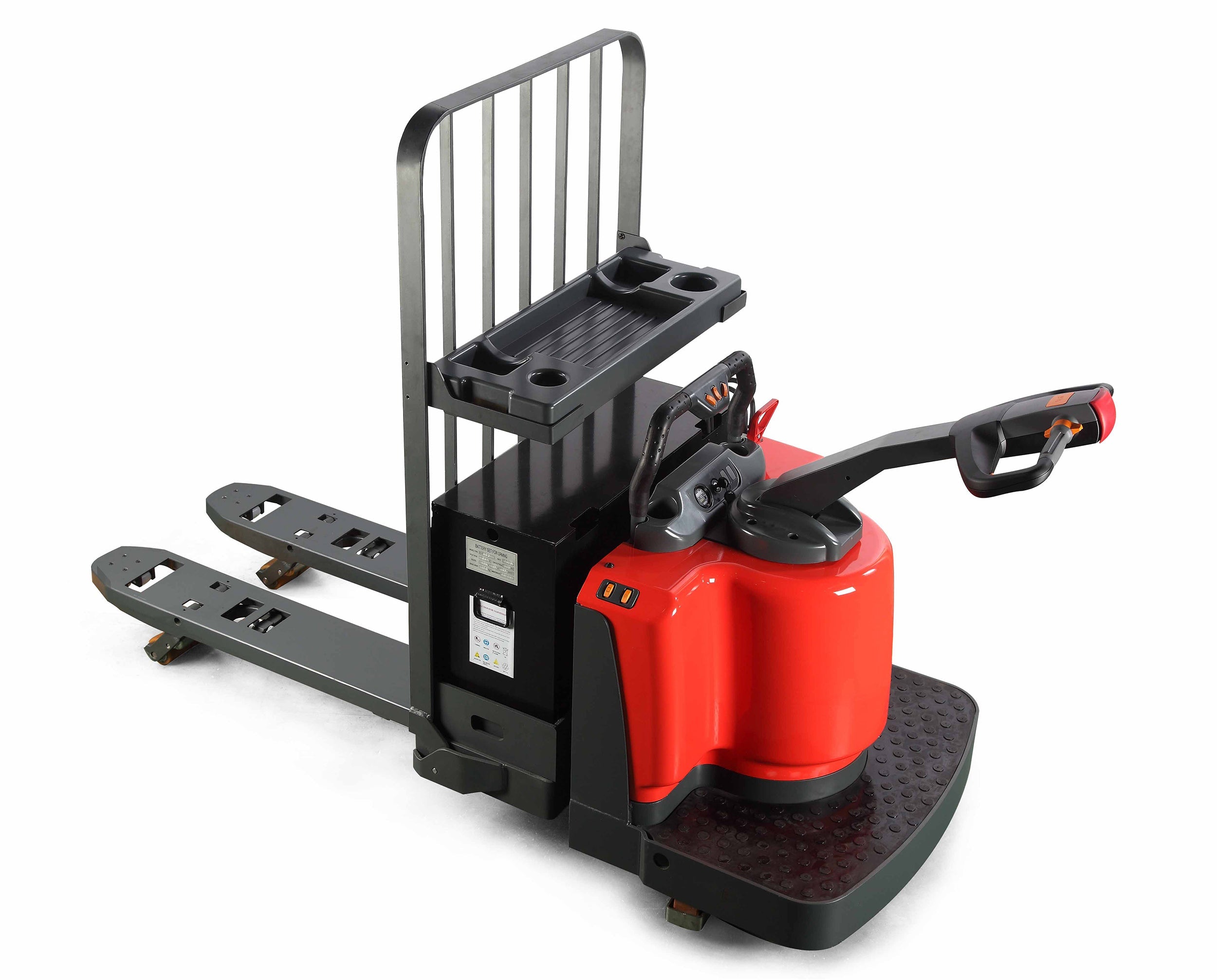
| Vestil Fully Electric Pallet Truck with Backrest | $22,966 | 6,000 lb | View → |
| Vestil Rough Terrain Tilting Electric Pallet Truck | $13,346 | 2,500 lb | View → |
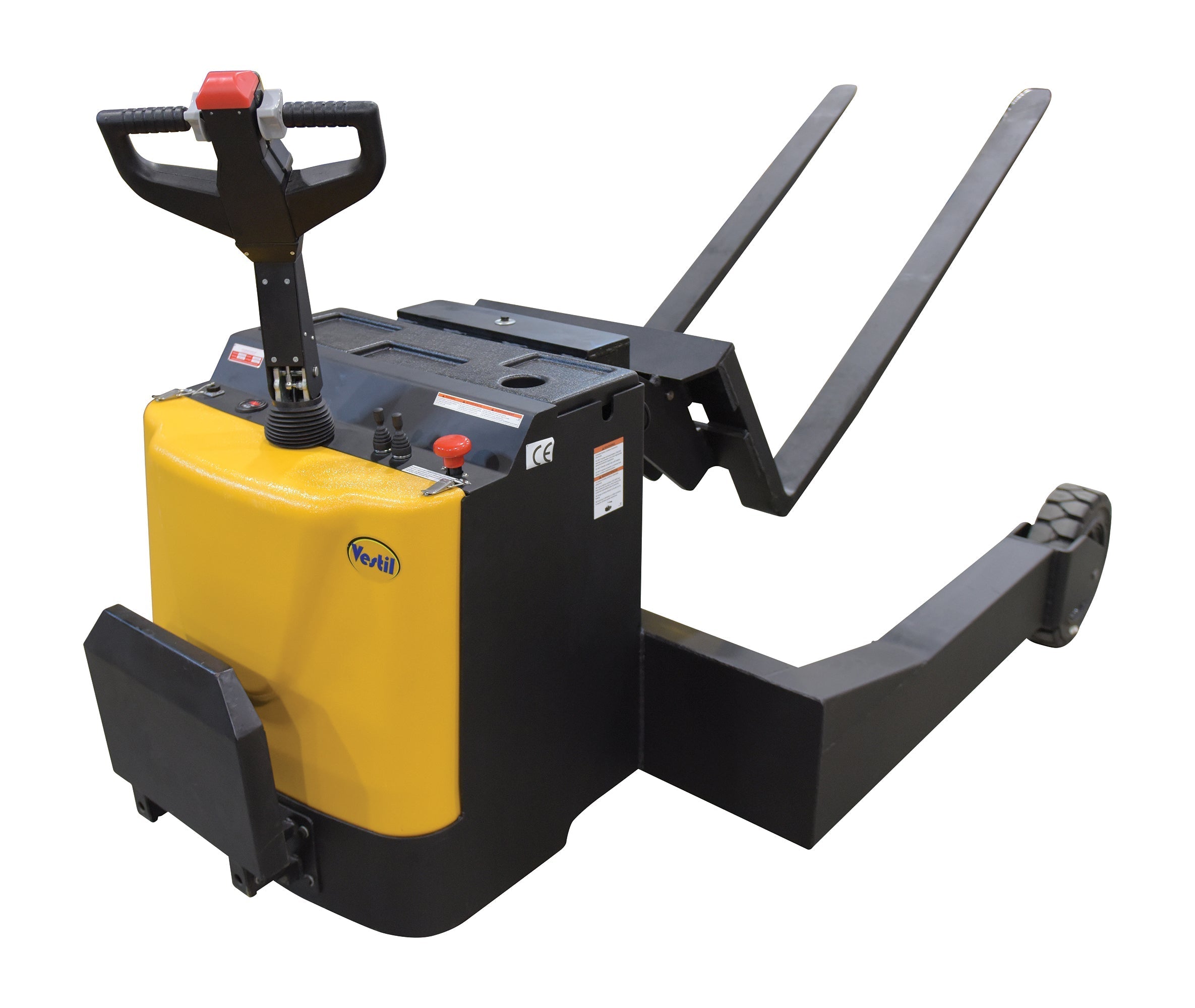
| Vestil Electric Powered Roll Pallet Trucks | $10,713 | — | View → |
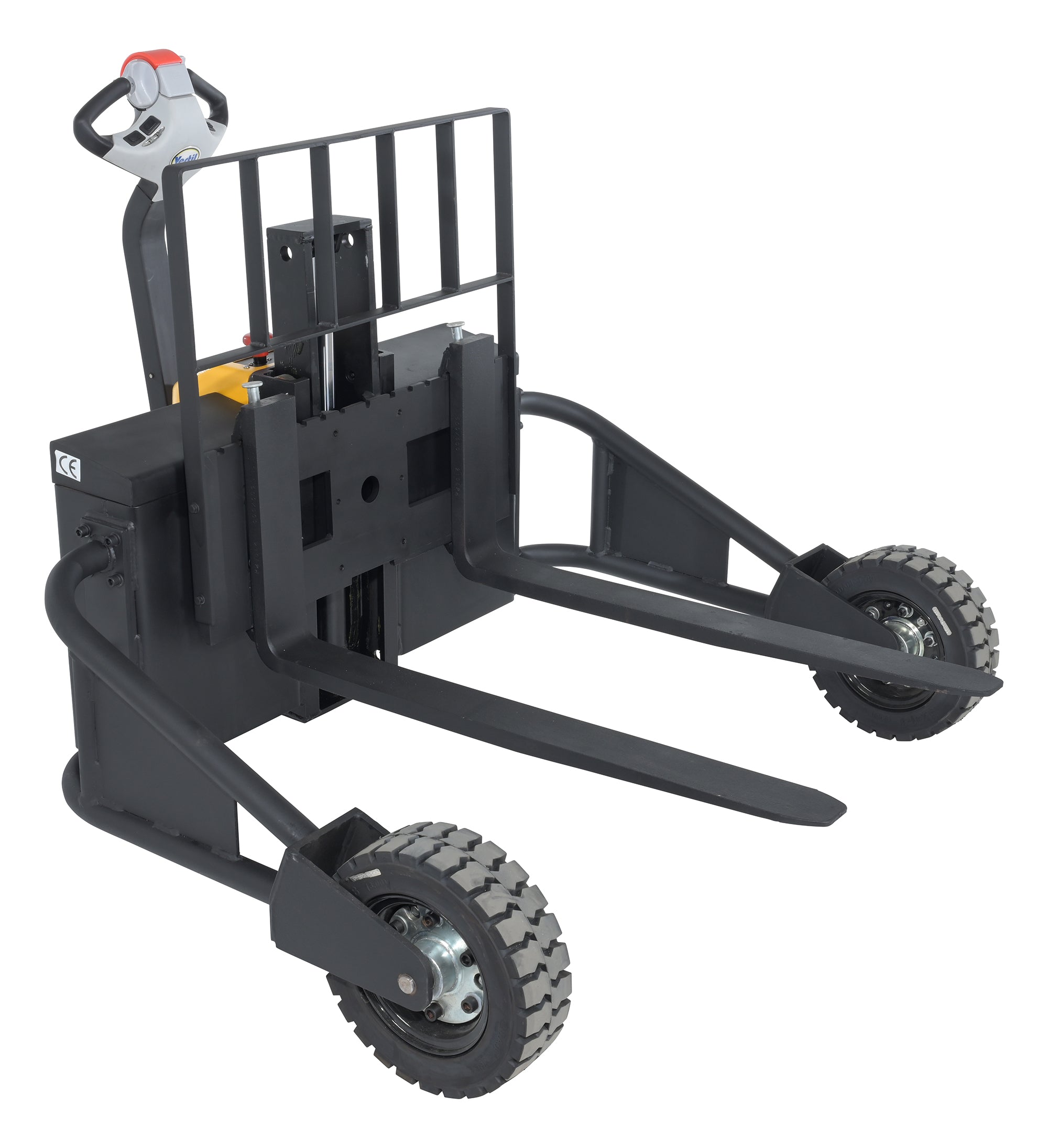
| Vestil Electric Powered Rough Terrain Pallet Trucks | $8,321 | 2,000-3,000 lb | View → |
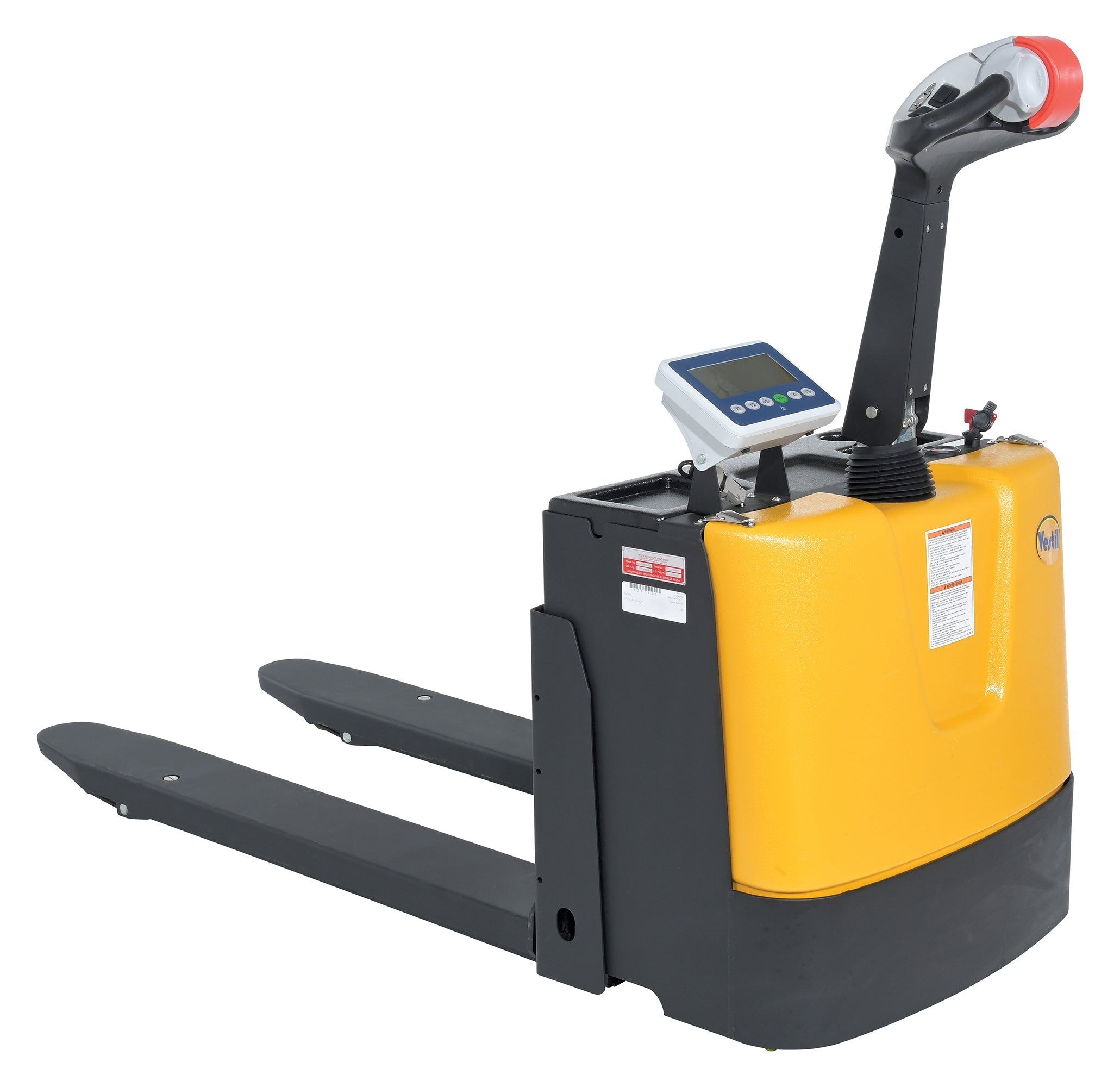
| Vestil Electric Pallet Trucks with Scale | $8,175 | 3,000-33,000 lb | View → |
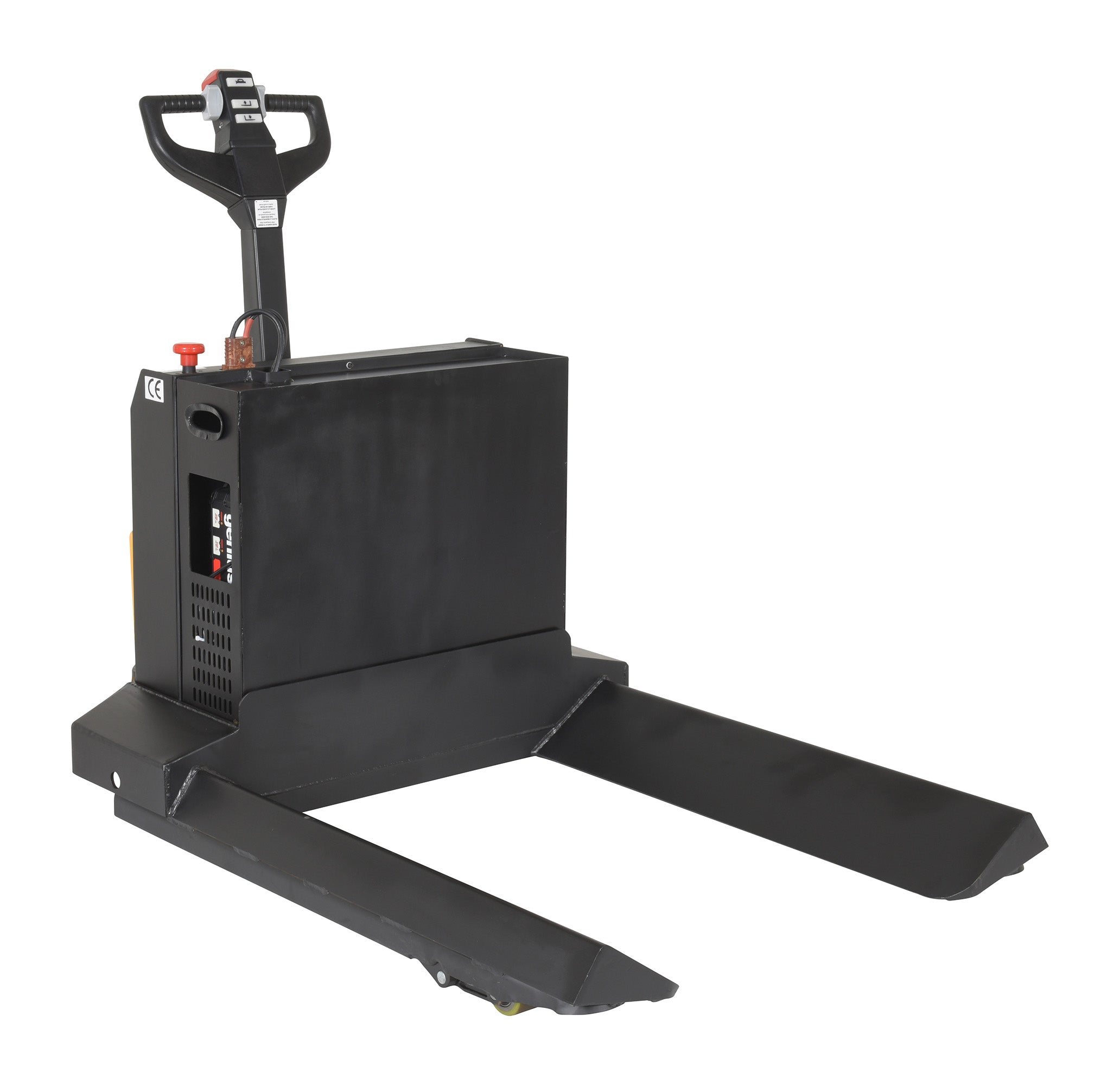
| Vestil Single Fork Electric Pallet Truck w/ Scale | $6,257 | — | View → |
 In Stock
 In Stock
 In Stock
 In Stock
 In Stock
 In Stock
 In Stock
 In Stock
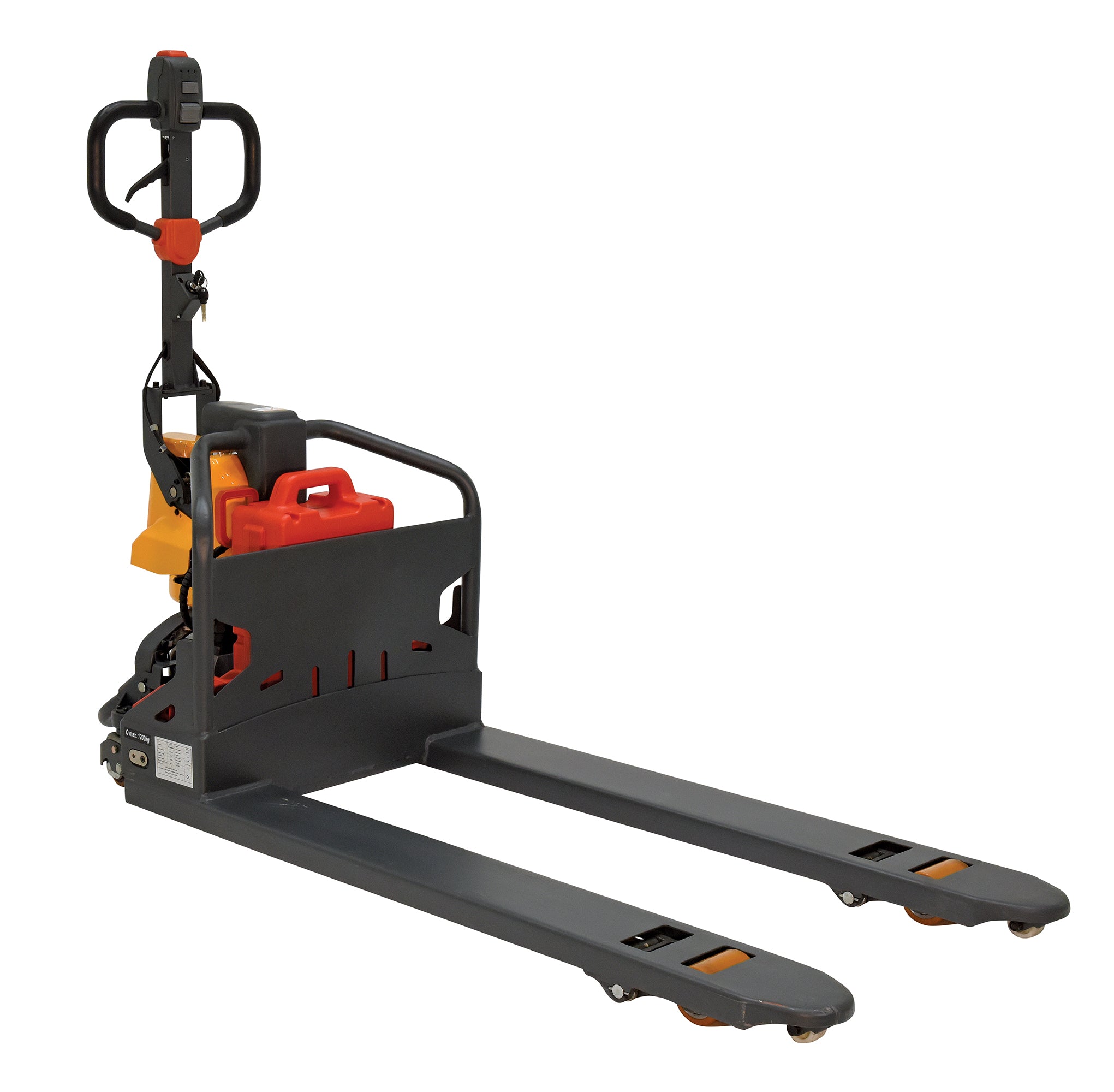 In Stock
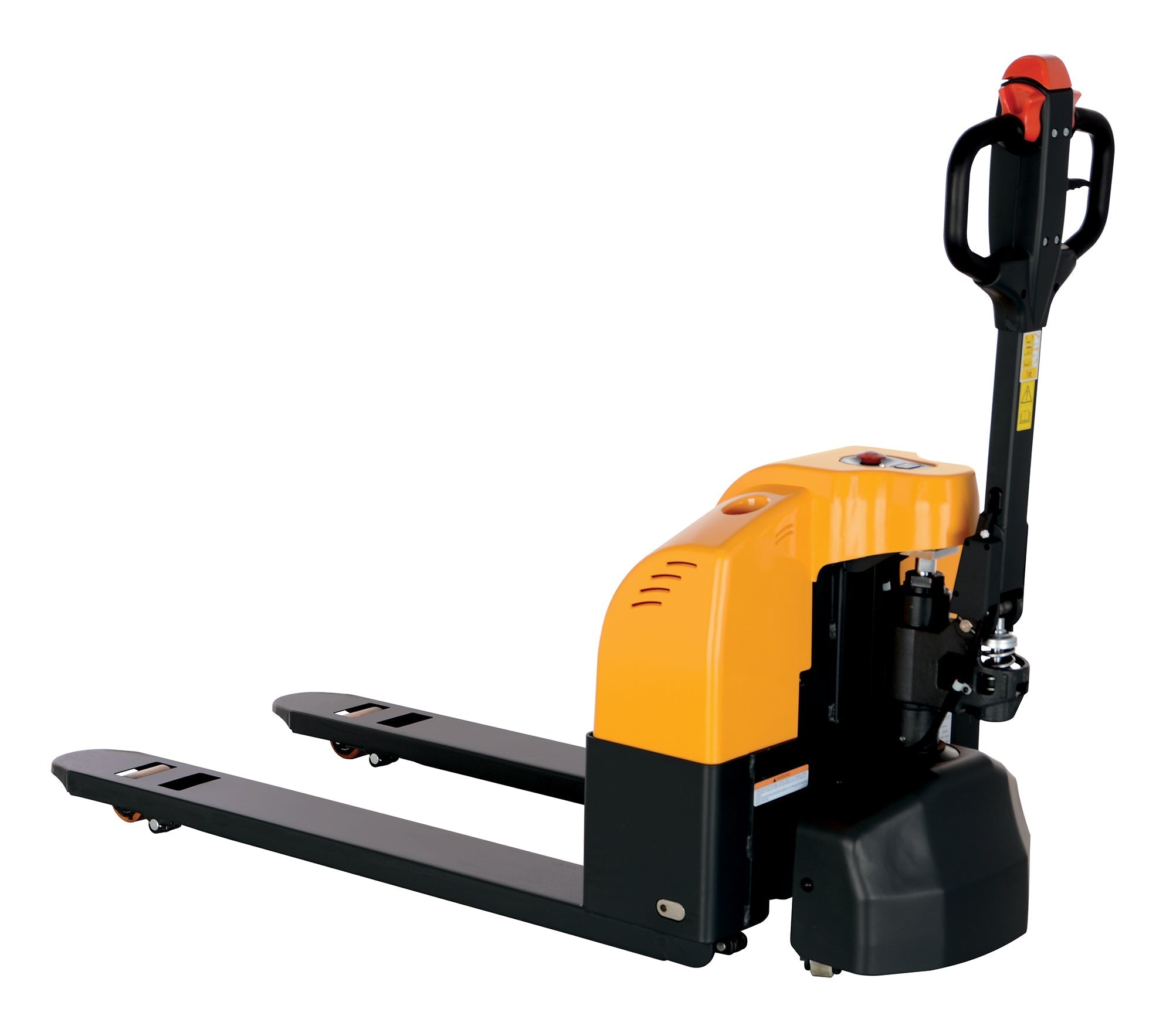 In Stock
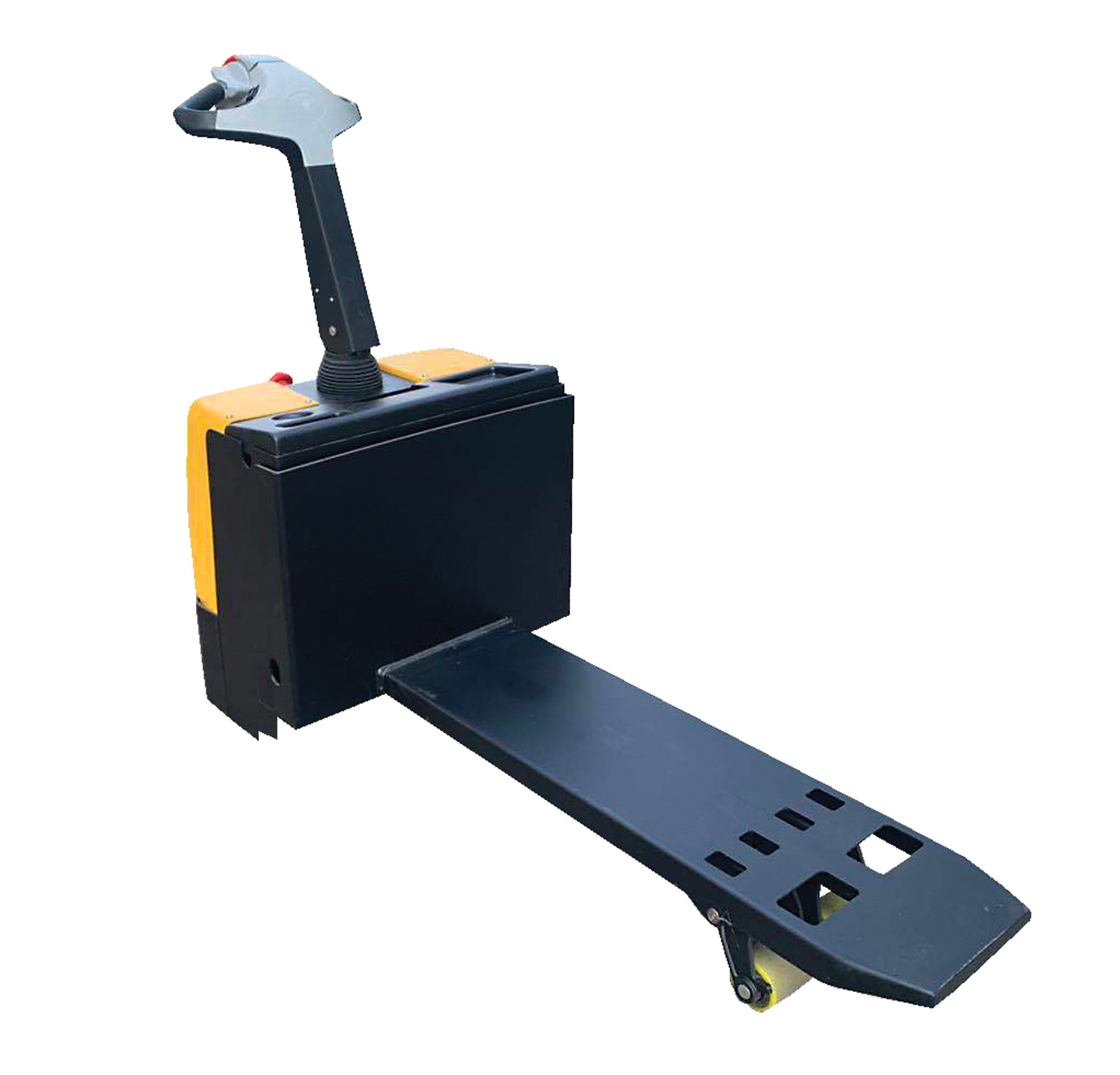 In Stock
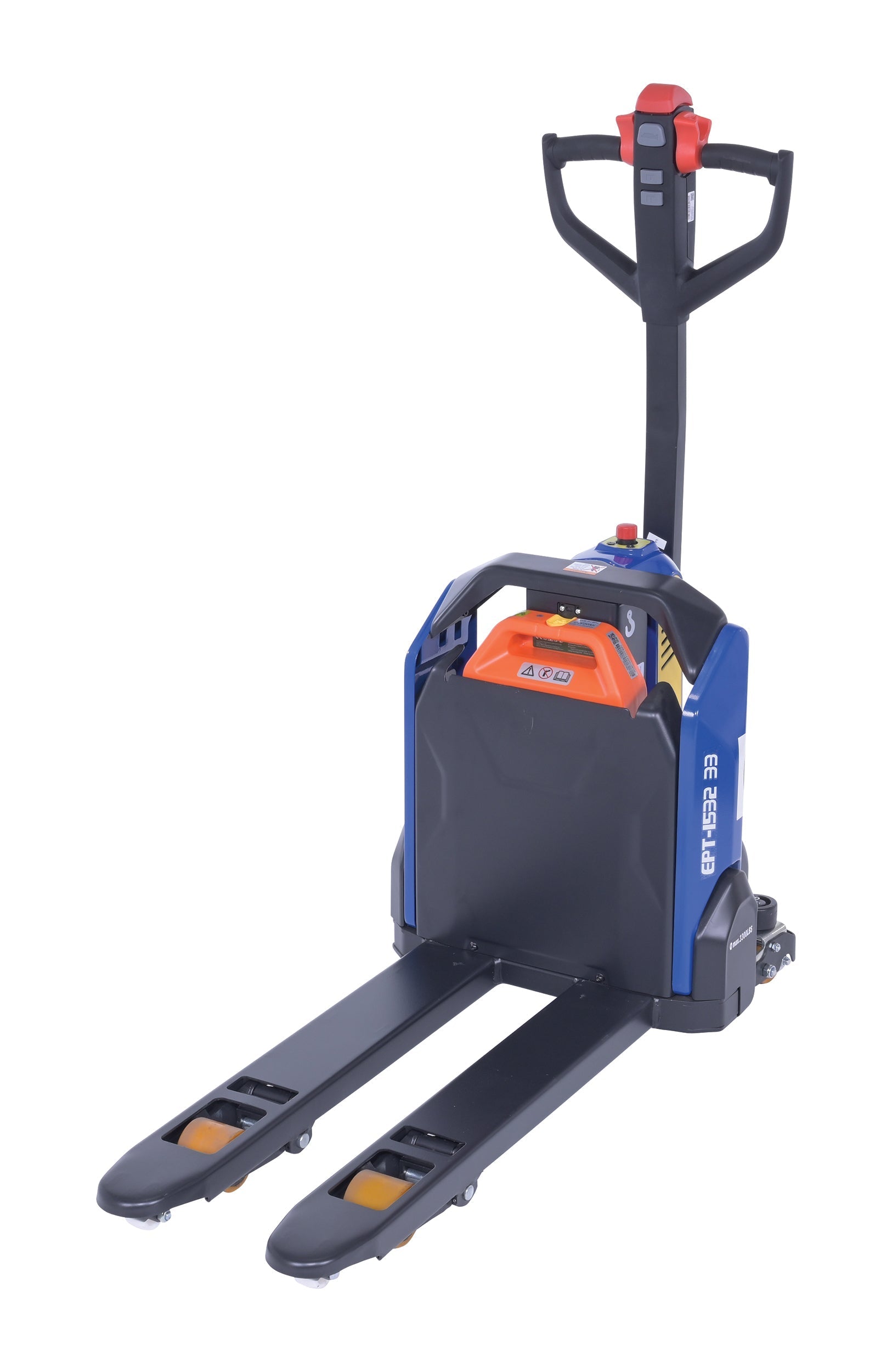 In Stock
 In Stock
 In Stock
 In Stock
 In Stock
 In Stock
 In Stock
Electric Pallet Jacks Buying Guide
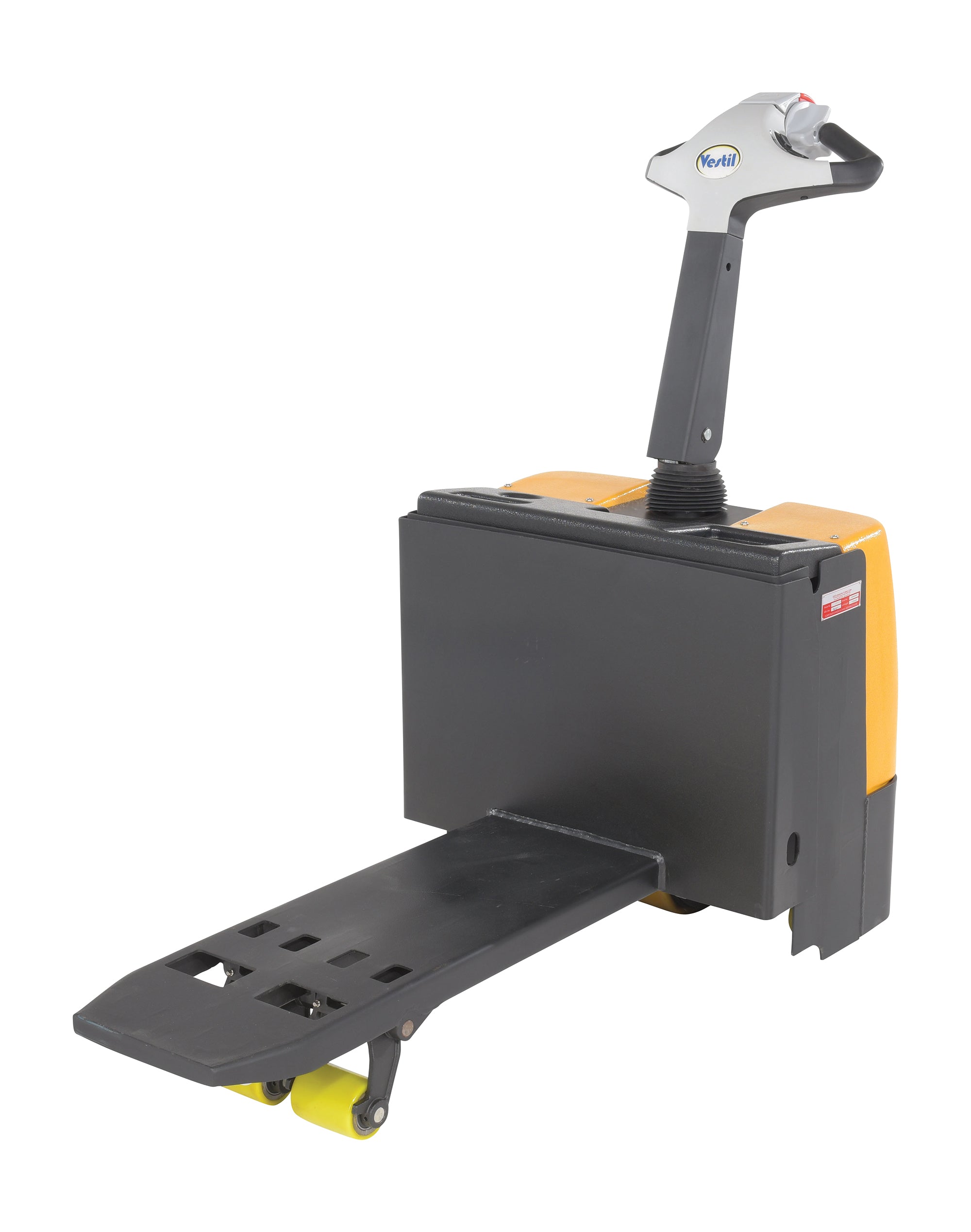
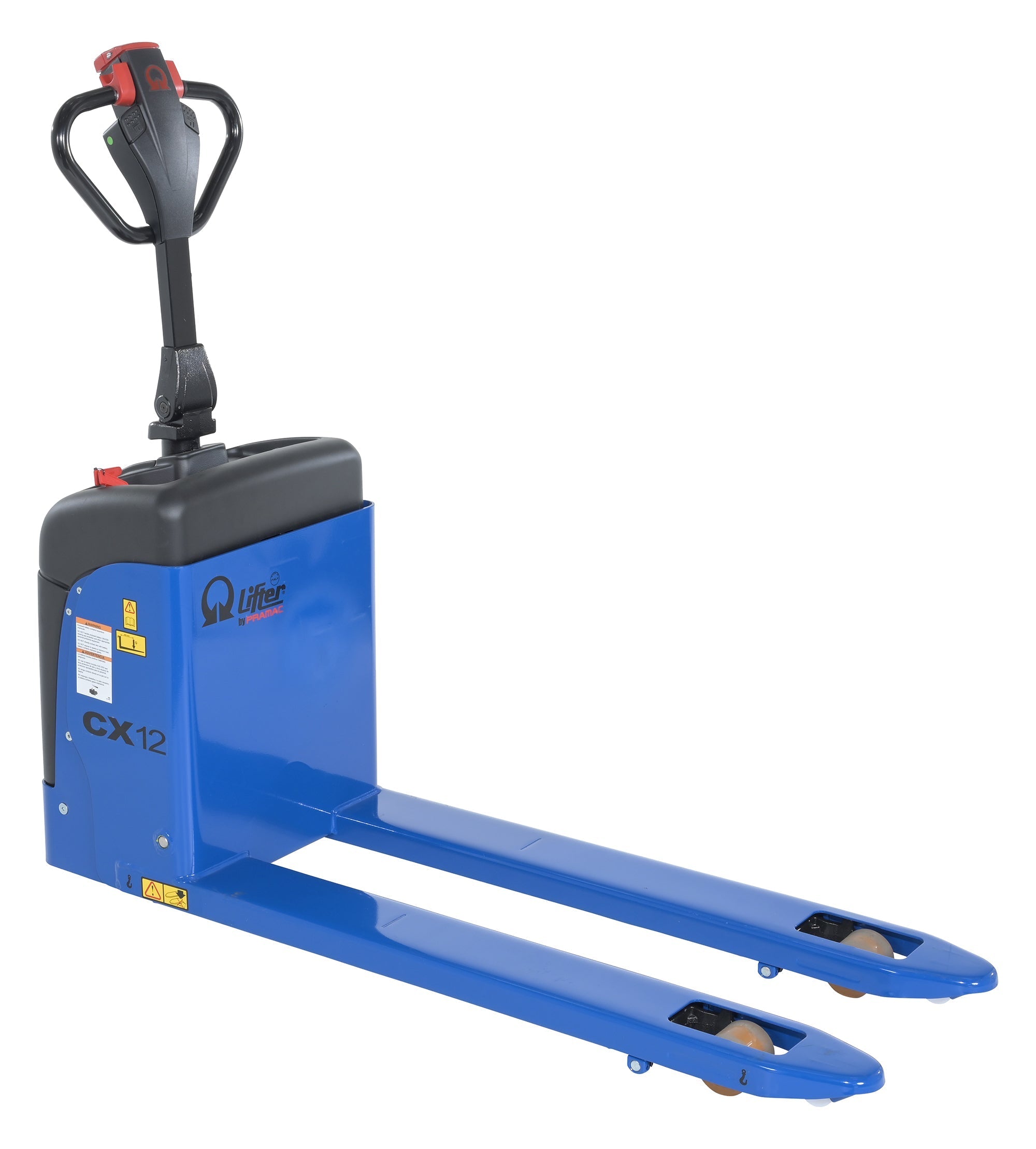
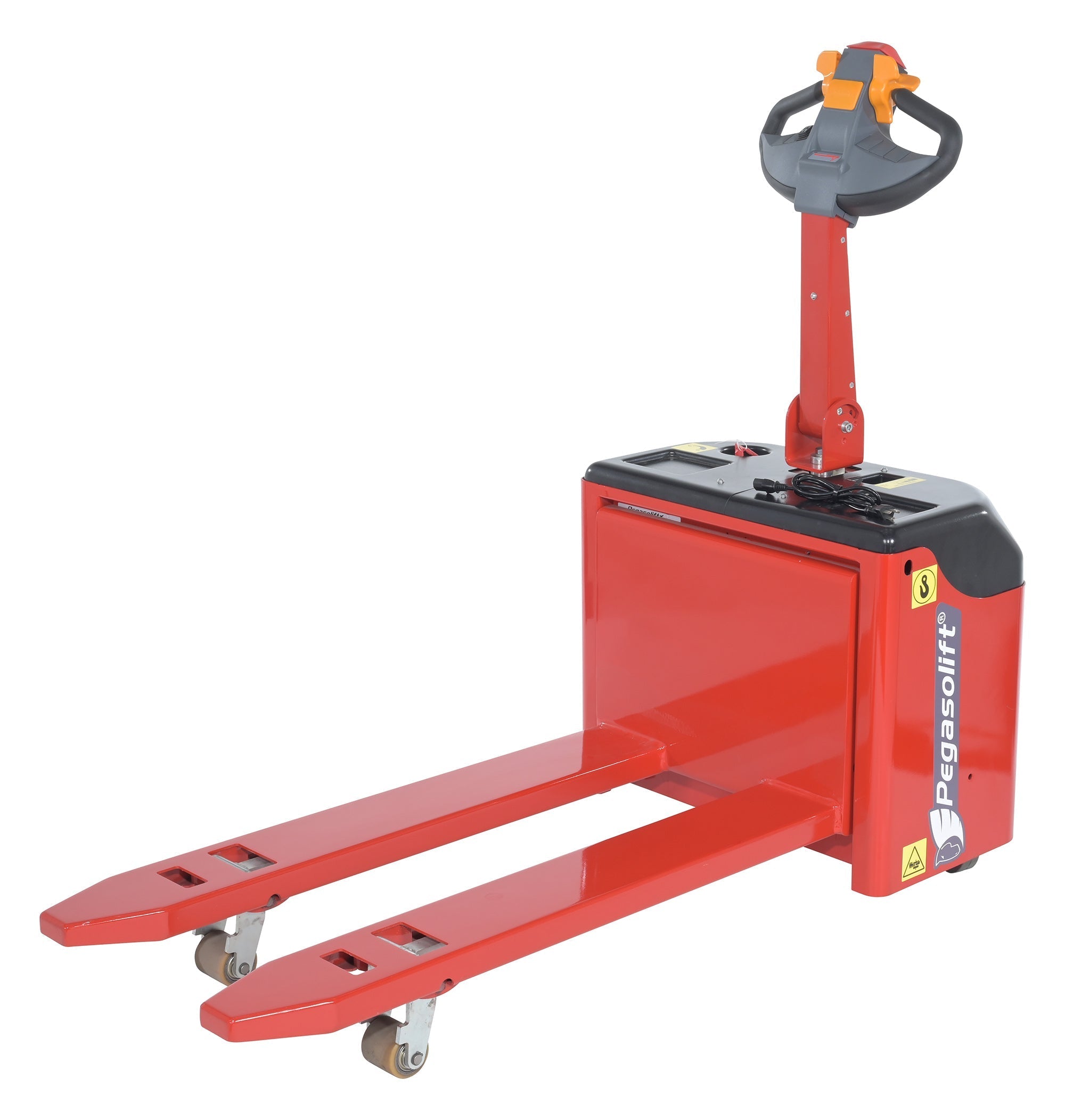
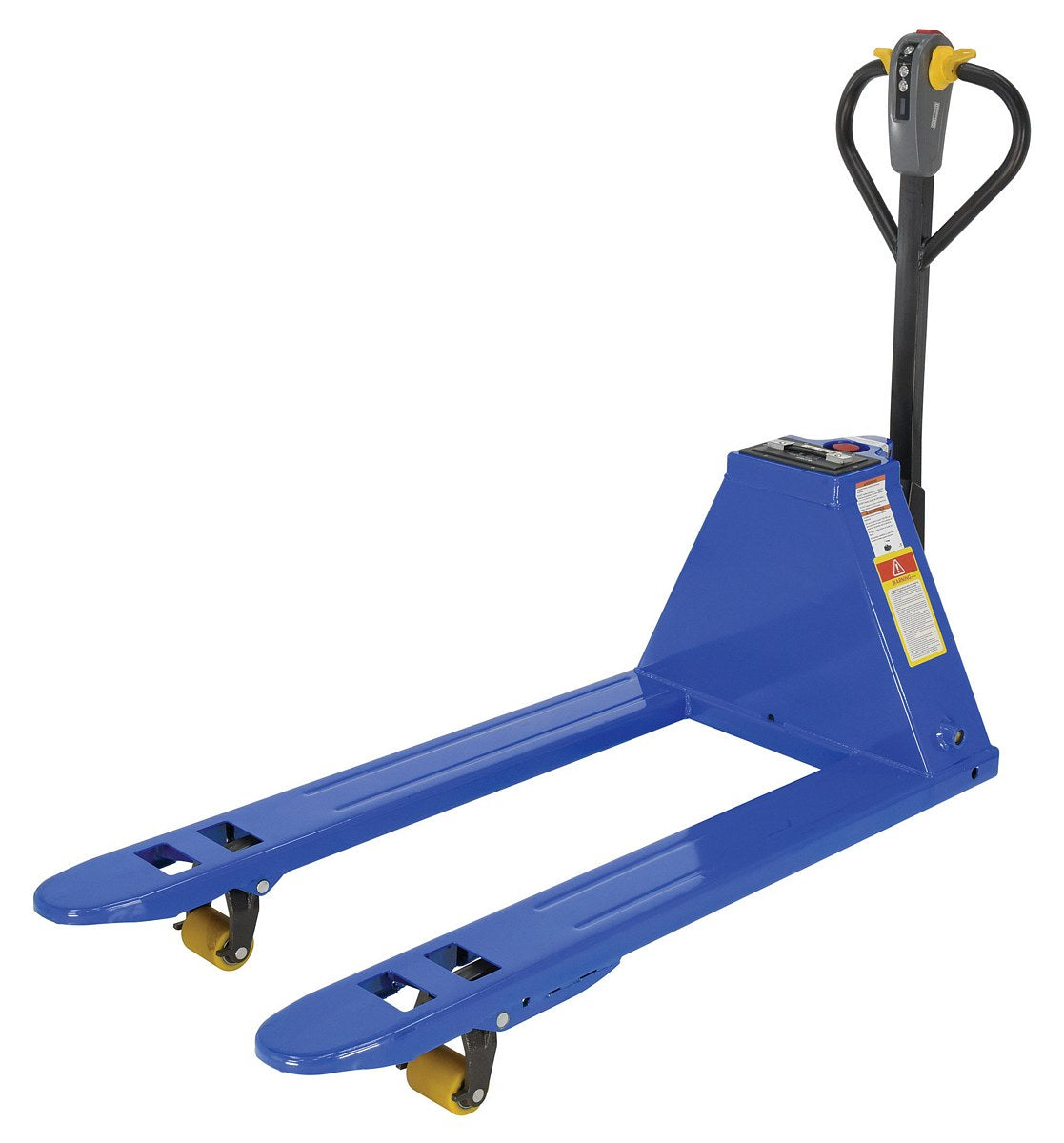
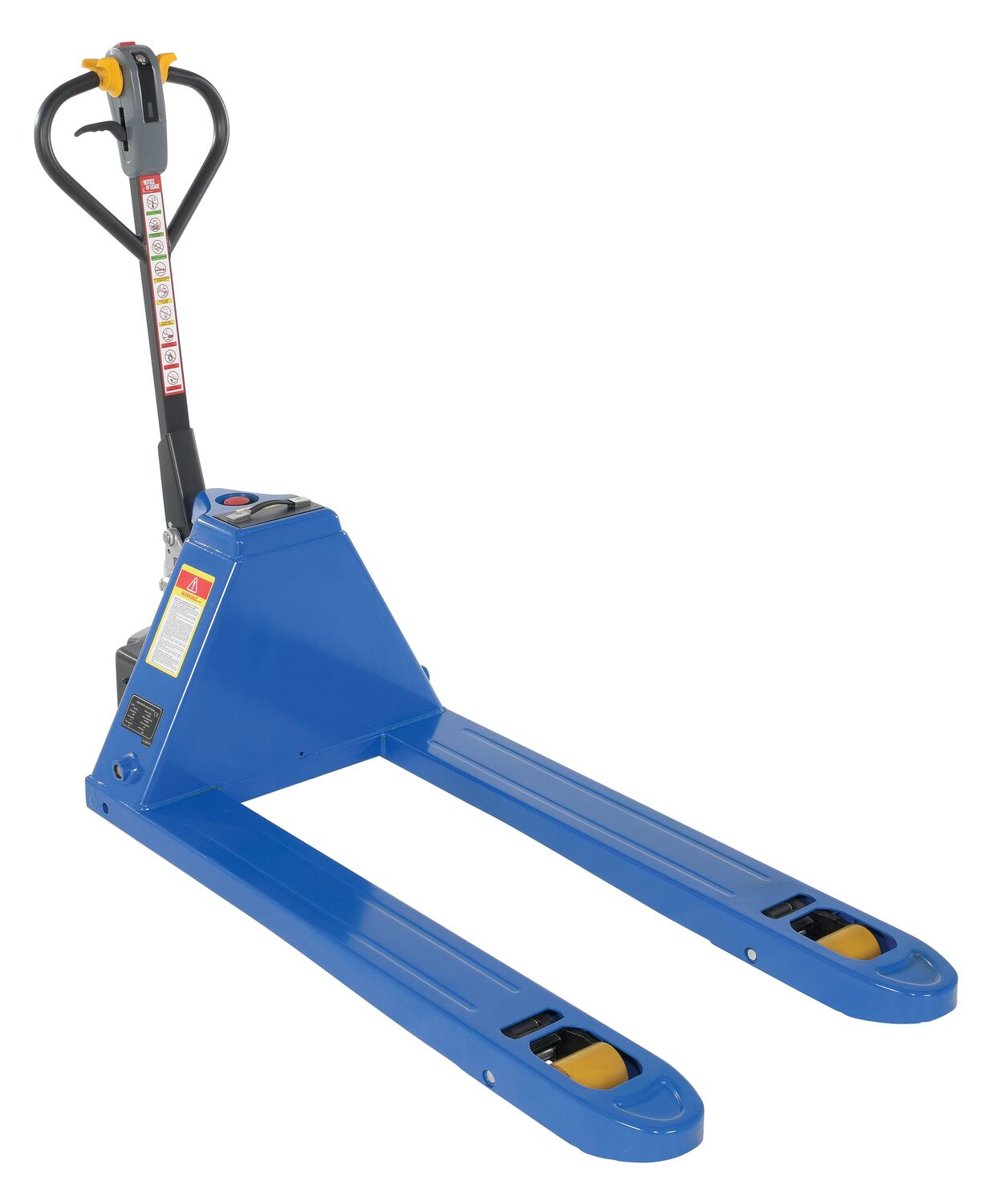
Semi-electric or fully powered: how much work the truck does. The first fork in the road is how much of the job you want the truck to handle. A semi-electric truck powers the drive motor so the operator no longer tows the load by hand, but leaves the lift to a hydraulic pump handle, the same manual stroke you would use on a hand truck. Vestil's economy semi-automatic runs about $2,600 and its dedicated Semi-Electric Pallet Truck about $4,550. A fully powered truck adds a lift motor so the forks rise at the push of a button, which matters when operators raise and lower loads dozens of times a shift and pumping a handle each time turns into real fatigue. The economy fully automatic sits near $3,130, and the broader Fully Powered line spans roughly $3,500 to $11,700 as voltage, fork size, and capacity grow. Semi-electric is the honest buy when travel is the pain point and lifting is occasional; fully powered wins when both the travel and the lifting run all day. Below this powered range sit our hand operated pallet jacks for lighter, occasional moves, and the whole family lives under the pallet jacks hub.
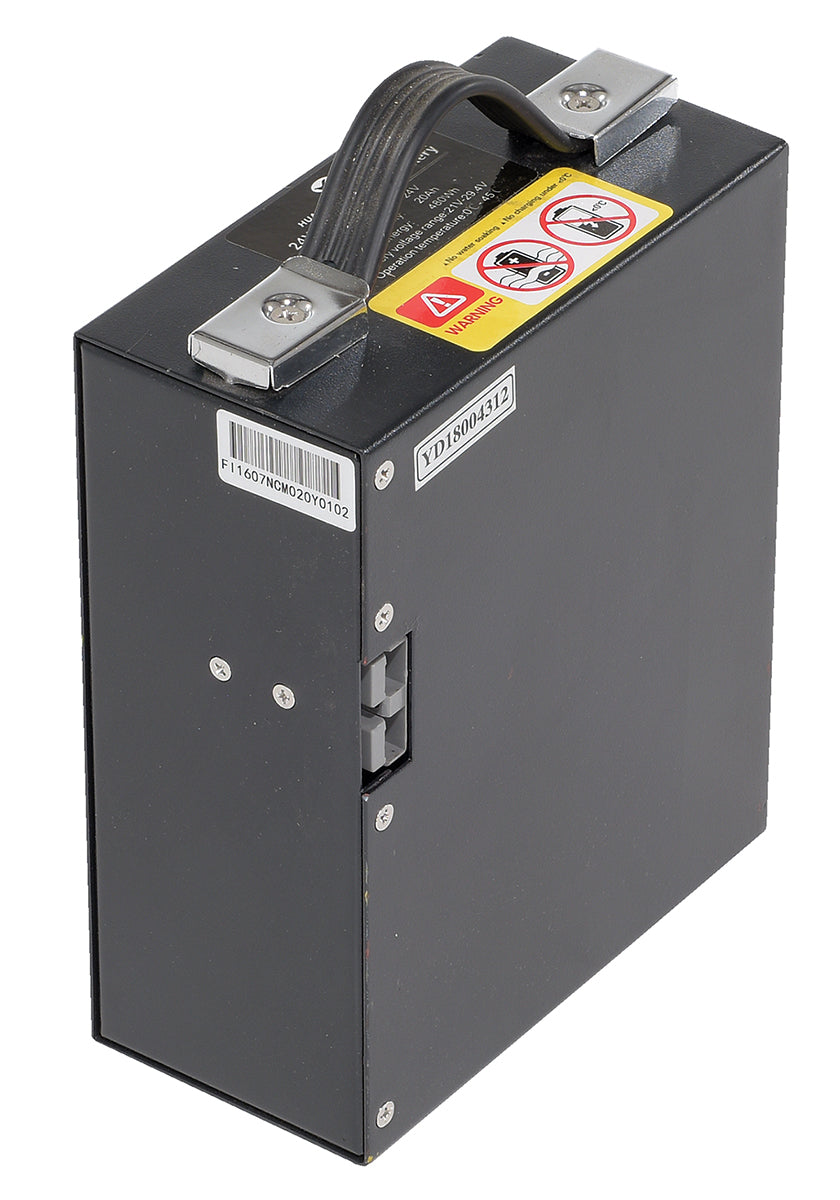
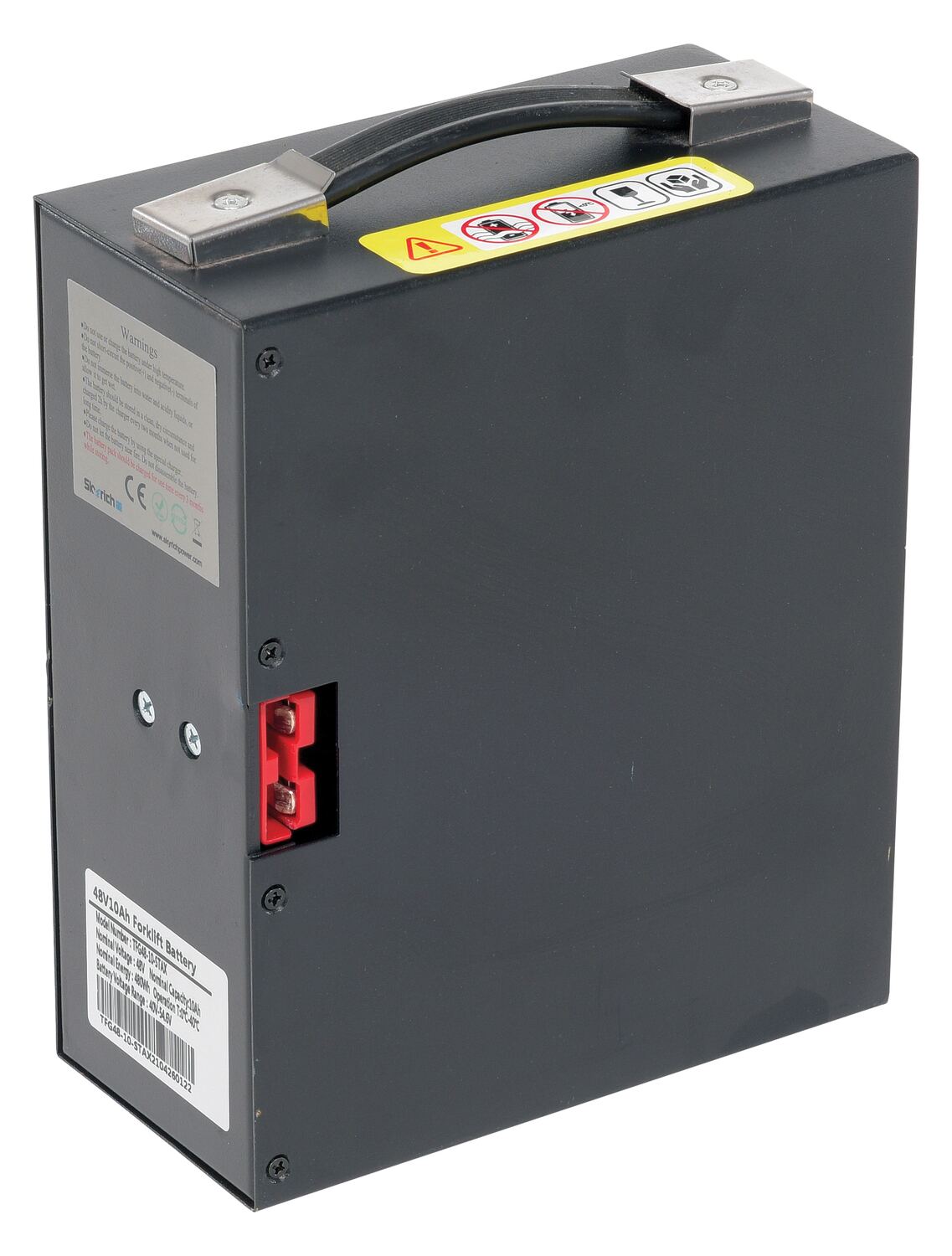
Duty cycle sets the battery, and the battery sets the truck. Electric pallet jacks are Class III material handling equipment, and the battery is the part that decides whether the truck keeps up with your shift. Vestil offers 12V systems on the lighter and single-fork models and 24V on the heavier fully powered trucks, and the higher voltage carries more energy for longer routes and steeper pulls. The bigger question is chemistry. A traditional lead-acid battery wants a full, uninterrupted charge cycle and suffers if it is topped up in short bursts, so a single-shift operation that can charge overnight is its natural home. Lithium-ion tolerates opportunity charging, meaning operators can plug in during breaks without shortening the battery's life, which suits multi-shift floors that never have eight idle hours to spare. Batteries are consumable and priced separately here, about $620 for the economy semi-electric pack and roughly $1,020 for the economy fully electric pack, so budget a spare and plan where the truck charges before it arrives. A battery that never sees a full cycle dies young, whichever chemistry you pick.
OSHA training comes bolted to every powered truck. The moment a pallet truck has a drive motor, it becomes a powered industrial truck under OSHA 29 CFR 1910.178, the same standard that governs sit-down forklifts, and 1910.178(l) applies to walk-behind equipment exactly as it does to riders. Every operator needs a combination of formal instruction, practical training, and an evaluation of their performance in the workplace before they run one, and each operator's performance has to be re-evaluated at least once every three years. Employers keep the records, because operator certification is one of the first things an inspection asks to see. None of this attaches to a hand operated pallet jack, which stays outside the powered-truck rule and can be run after basic instruction. That difference is a genuine line item: powered is still often the right buy, but budget the training hours and the recordkeeping alongside the purchase price rather than discovering them after the truck is on the floor.
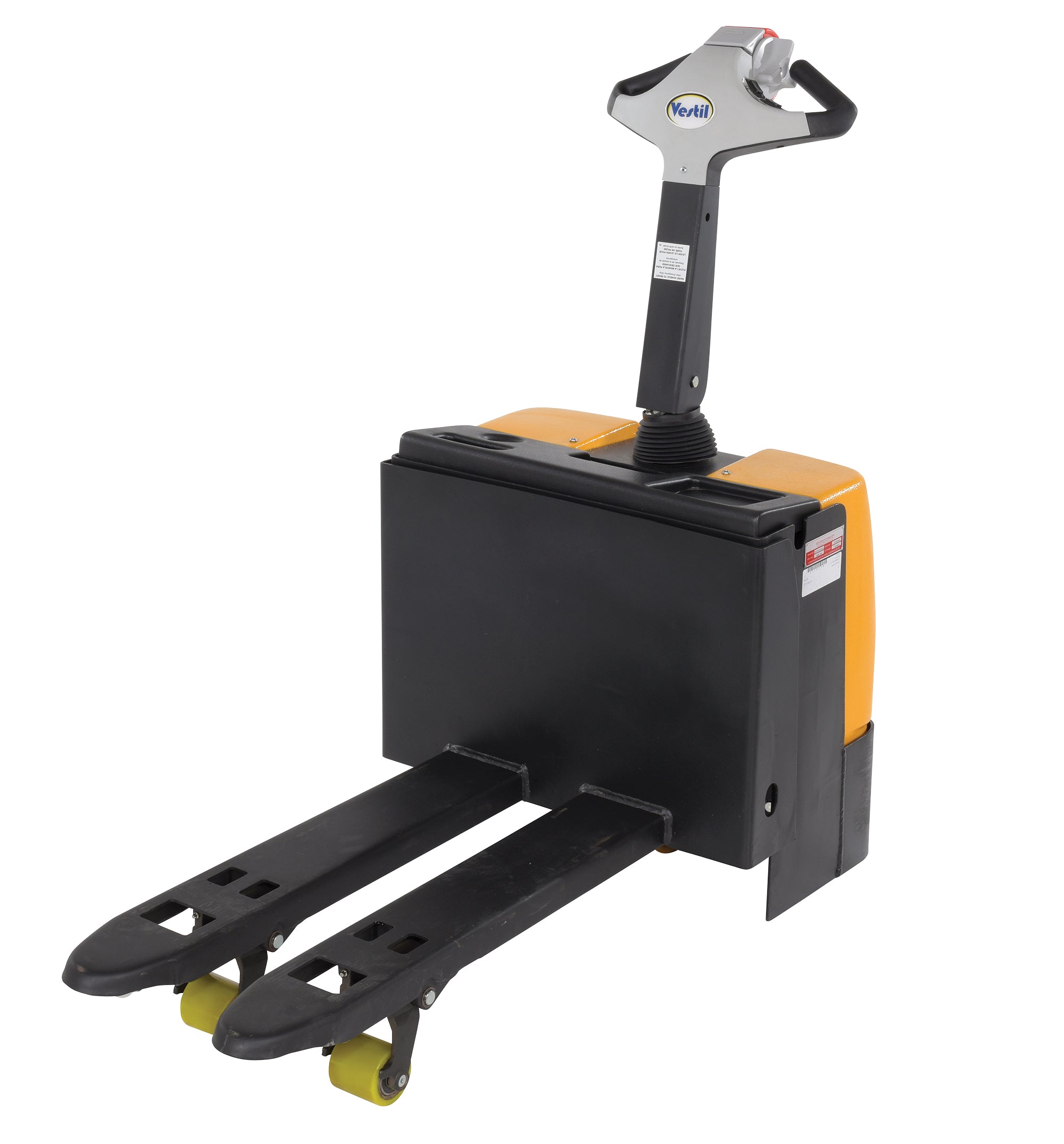
Capacity and duty: buy above the heaviest pallet. The capacity rule is the same one that governs every truck we sell: weigh the heaviest pallet the machine will ever carry, not the average one, and buy above it. A pallet of paper, tile, or drummed liquid can pass 4,000 lb without looking any different from the aisle, and overloading a powered truck does not fail dramatically, it wears the hydraulics and drive early and shows up as a truck that will not hold height. Vestil's fully powered range tops out with a 6,000 lb fully electric truck with backrest near $22,970, which is a stand-on rider built for long hauls where an operator would otherwise walk miles a shift. Below that, walkie trucks keep the operator on foot behind a tiller. Choose the rider when routes are long and the load count is high; choose a walkie when aisles are tight and the moves are shorter. When pallets also have to go up onto racking, step across to stackers, and when the job outgrows walk-behind gear entirely, the forklift trucks collection picks up from there.
Scale, single-fork, and other work-specific electric builds. Some jobs need the truck to do more than carry. Scale-equipped electric trucks weigh a load while they move it, which removes a separate trip to a floor scale for anyone batching or shipping by weight; Vestil's 24V Electric Pallet Trucks with Scale run roughly $8,175 to $11,000, and a 12V Single Fork Electric Pallet Truck with Scale sits near $6,260. The single-fork geometry itself, offered on a standard 12V electric truck from about $4,265, slides into open-center, mesh, and specialty pallets that a two-fork truck cannot enter, the powered answer to the manual Pallet Master trucks. For loads that are pallet-shaped without being pallets, the Vestil Tote Lifter carries totes and skids and raises them to working height, running from about $1,075 to $3,530 with 12V powered options; the broader tote and skid lifters collection covers that lane in full. Match the extra function to a job you actually run daily, because each option adds cost and a part to maintain.
Off smooth concrete: rough terrain, roll, and gas. Every standard pallet truck rating assumes smooth, level concrete, and the wheels are where reality intervenes. Run a warehouse walkie across gravel or broken asphalt and it stalls, so Vestil builds electric trucks with running gear sized for the yard. The Electric Powered Rough Terrain Pallet Trucks put large tires under a powered chassis at roughly $8,320 to $9,340, and a Rough Terrain Tilting Electric Pallet Truck near $13,346 adds a tilt function for uneven ground. Where the load is a paper, carpet, or film roll rather than a pallet, the Electric Powered Roll Pallet Trucks carry it on wide forks from about $9,575 to $10,715. And when a site is big enough that battery range becomes the limit, Vestil's Gas Powered All Terrain Pallet Trucks and Stackers, roughly $10,060 to $12,990, trade the charger for a fuel tank. These nonstandard movers, along with the manual all-terrain and specialty trucks, sit in specialist pallet trucks, and the whole floor-level category rolls up under material handling equipment.
Frequently Asked Questions
Yes. OSHA classifies electric pallet jacks as powered industrial trucks, and 29 CFR 1910.178(l) requires documented training, practical instruction, and a workplace evaluation before anyone operates one, plus a re-evaluation of each operator at least once every three years. The rule applies to walk-behind walkies the same way it applies to sit-down forklifts. Manual hand pallet trucks carry no such requirement and can be run after basic instruction.
A semi-electric truck powers the drive motor so the operator no longer tows the load by hand, but the forks still rise on a manual hydraulic pump handle. A fully electric, or fully powered, truck adds a lift motor so both driving and lifting are powered. Semi-electric is the cheaper buy when travel is the main fatigue point and lifting is occasional; fully powered pays off when operators raise and lower loads many times a shift.
It depends on your shift pattern. Lead-acid batteries want a full, uninterrupted charge cycle and are the natural fit for a single-shift operation that can charge overnight. Lithium-ion tolerates opportunity charging, so operators can plug in during breaks without shortening the battery's life, which suits multi-shift floors that never have a long idle window. Lithium costs more up front and usually runs longer between charges. Plan where the truck will charge before you buy either one.
In the Vestil line we stock, economy semi-automatic walkies start around $2,600 and economy fully automatic models around $3,130. Fully powered trucks span roughly $3,500 to $11,700 as voltage, fork size, and capacity grow. Scale-equipped, single-fork, rough-terrain, and roll-handling builds run higher, and a 6,000 lb fully electric rider with backrest tops out near $22,970. Batteries are priced separately.
A walkie is walk-behind: the operator stays on foot and steers with a tiller handle, which suits tight aisles and shorter moves. A rider adds a stand-on platform or fold-down backrest so the operator travels with the load, which makes sense on long routes where walking the distance all shift would wear an operator down. Vestil's fully electric 6,000 lb truck with backrest is the rider end of the range; most of the collection is walk-behind.