Skid Lifters
A skid lifter picks up a load a standard pallet jack cannot get under and raises it to a height a pallet jack was never built to reach. Skids rest on solid runners with no bottom deck boards, totes sit flat on the floor, and both leave a jack's forks nowhere useful to go. This Vestil range solves that with single-fork and straddle-leg trucks that slide under the load, then lift it hydraulically to working height so parts arrive at the bench instead of the floor. Pricing starts near $1,128 for a single-fork skid positioner and runs into the low four figures for powered high-rise and Tote-A-Load trucks, with a tall-reach tote lifter at the top of the line. The buying decision comes down to what you are lifting, how high it has to go, and whether the operator pushes the truck or a battery does the work. The sections below take each in turn.
Compare Tote/ Skid Lifters
| Model | Price | Power | |
|---|---|---|---|
| Vestil High Tote Lifter | $17,356 | 12V | View → |
| Vestil High Lift Trucks (Pramac) | $4,166 | DC powered, onboard battery + charger | View → |
| Vestil Tote-A-Loads | $4,102 | 12V | View → |
| Vestil Dual Power Tote Lifter | $3,580 | 12V | View → |
| Vestil High Rise Lift Trucks | $3,374 | 12V/115V | View → |
| Vestil Single Fork Skid Positioner Lifter | $1,128 | — | View → |
 In Stock
 In Stock
 In Stock
 In Stock
 In Stock
 In Stock
Tote/ Skid Lifters Buying Guide
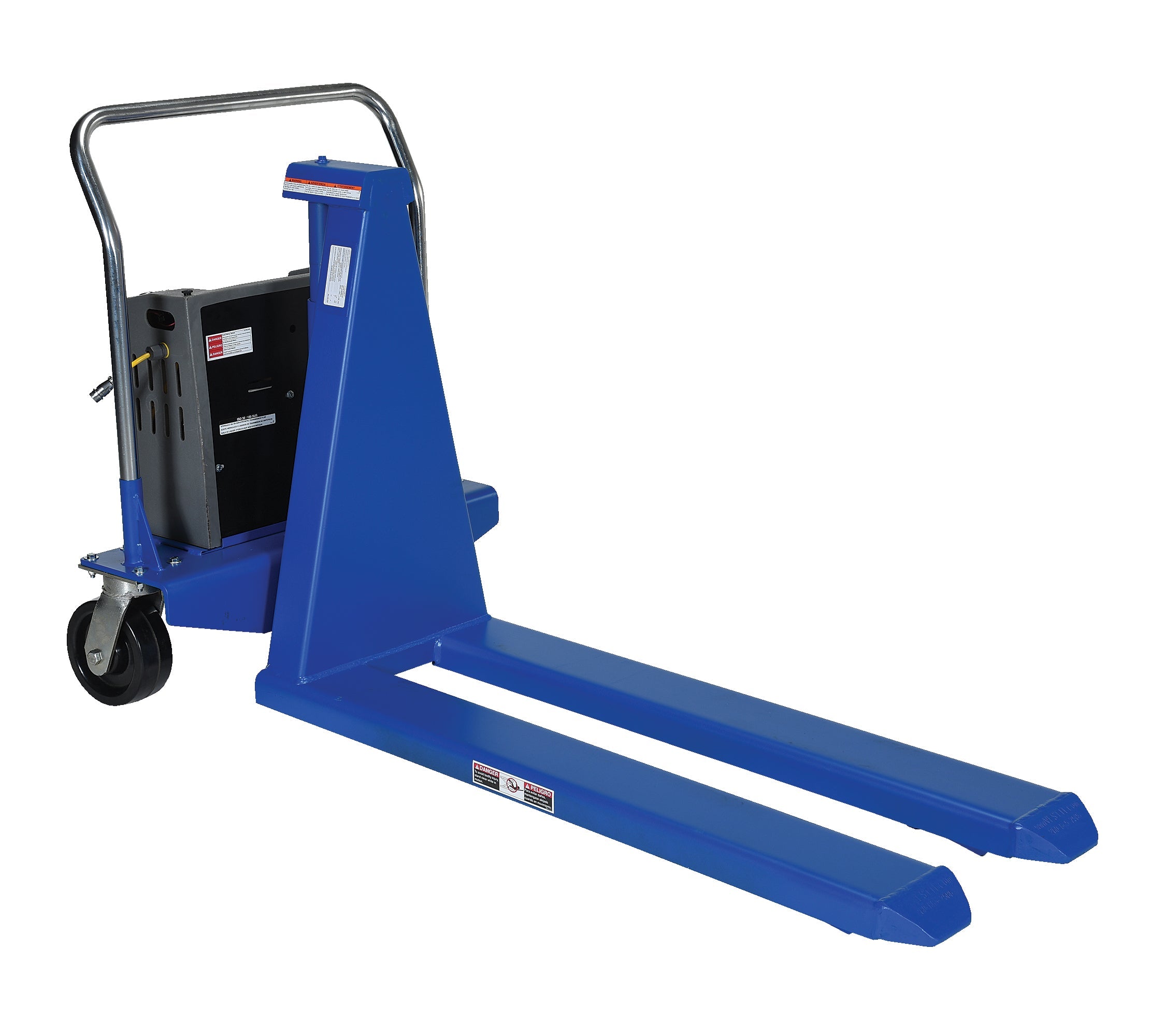
Why a skid or tote needs its own truck. A pallet jack works by sliding its forks into the gap between a pallet's top and bottom deck boards, then lifting the whole load an inch or two to clear the floor. A skid has no bottom deck boards. It rests directly on solid runners, which leaves no gap for a jack's forks and no easy way to raise it. A tote is harder still, a closed container sitting flat on the ground with nothing to fork at all. A skid lifter answers both. Single-fork and straddle-leg trucks reach under the runners or cradle the container, then use a hydraulic ram to raise the load well past the few inches a pallet jack manages, up to bench and work height. That extra travel is the whole point. It turns a floor-level load into one an operator can reach without bending.
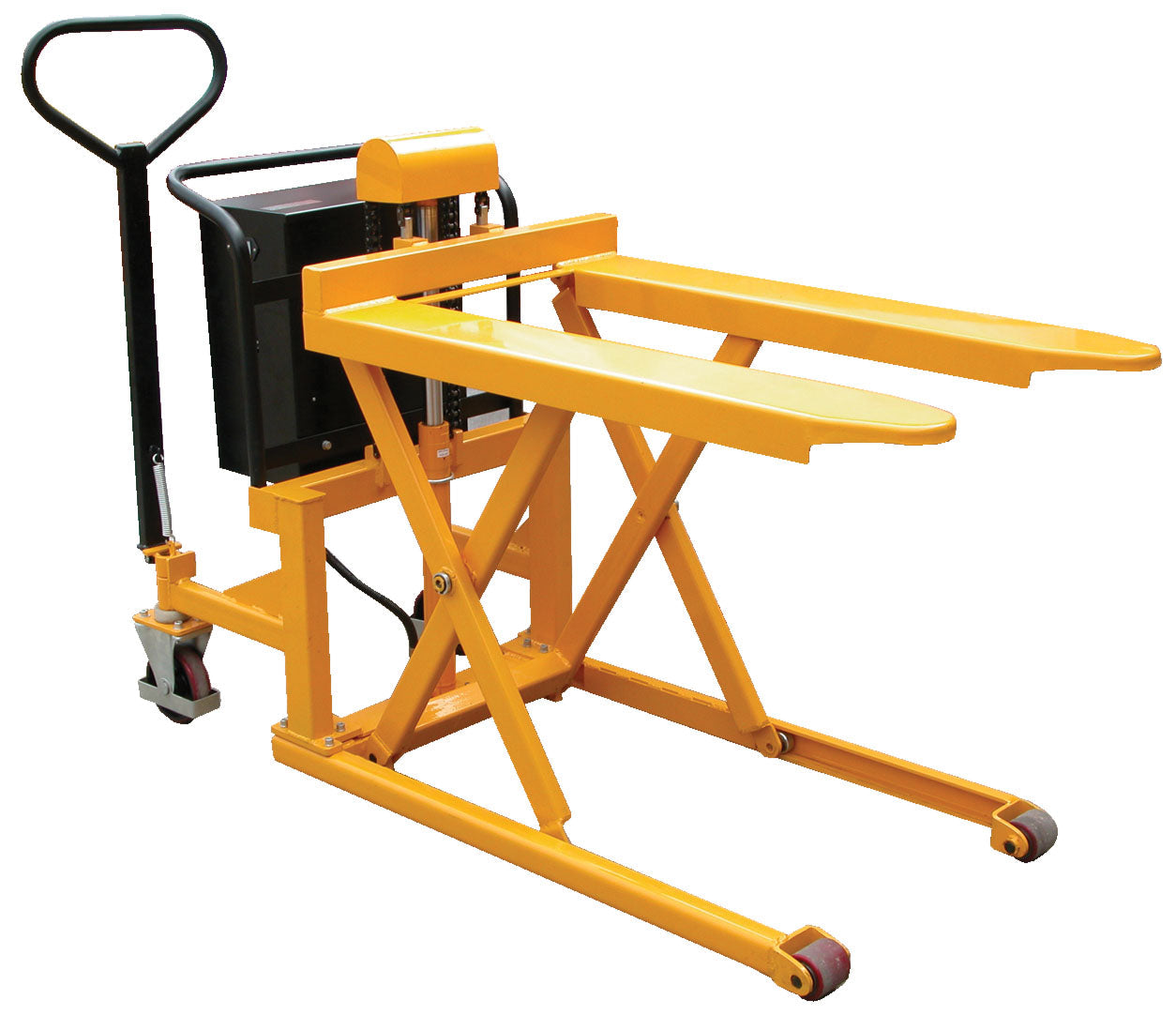
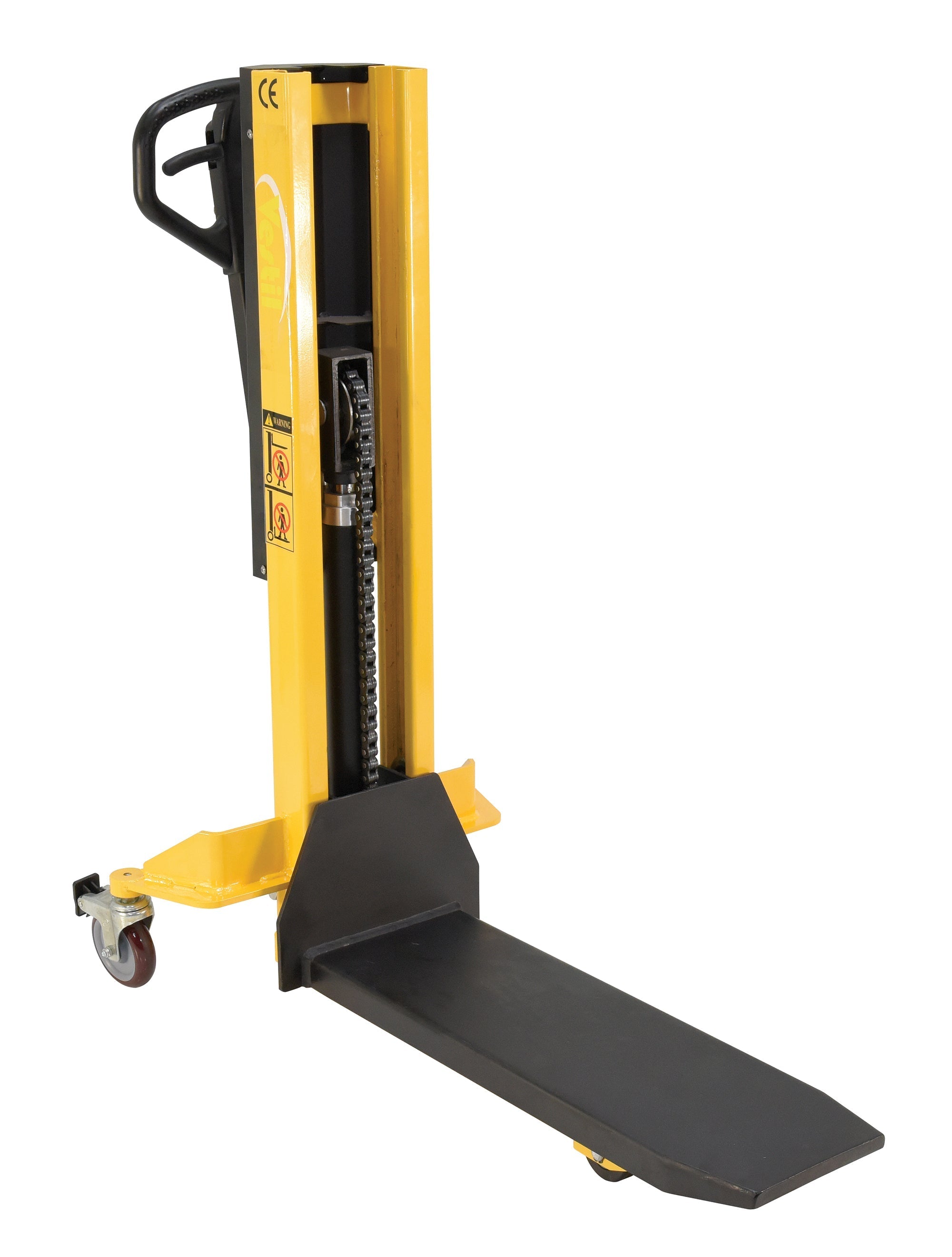
Single-fork skid positioners: the entry point. The least expensive way into this category is a single-fork skid positioner, which starts around $1,128 and is rated for either 600 or 800 lb. One fork slides under a skid or a small load, and a hydraulic lift raises it to a comfortable working height. There is no second fork and no straddle base, so the truck tucks into tight cells and around benches where a two-fork machine would not fit. It is the right buy when the loads are light, the skids are small, and the job is really about ergonomics, getting a part off the floor and up to the hands rather than hauling heavy freight across a building. For heavier or wider loads, the straddle-leg trucks below take over.
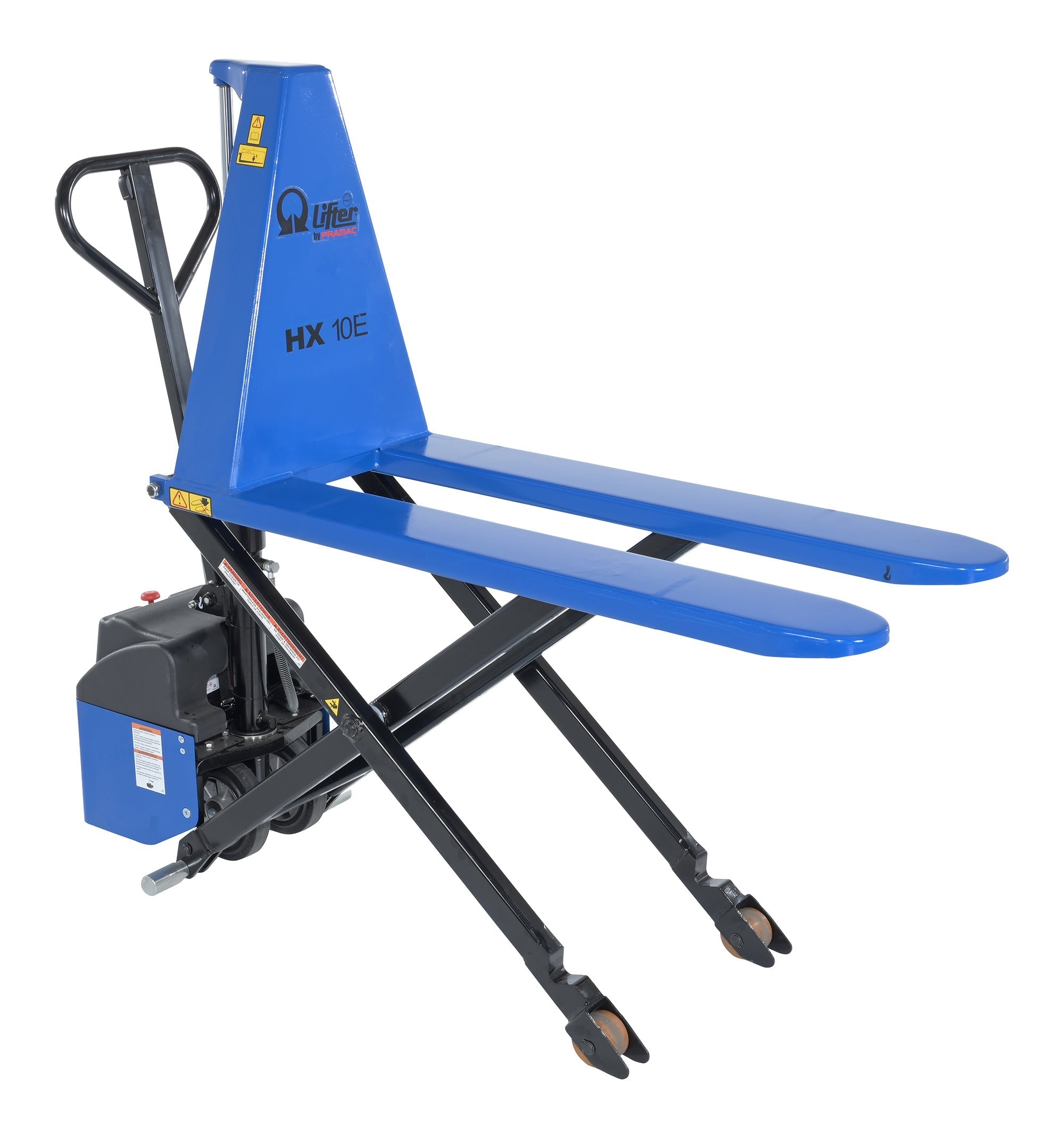
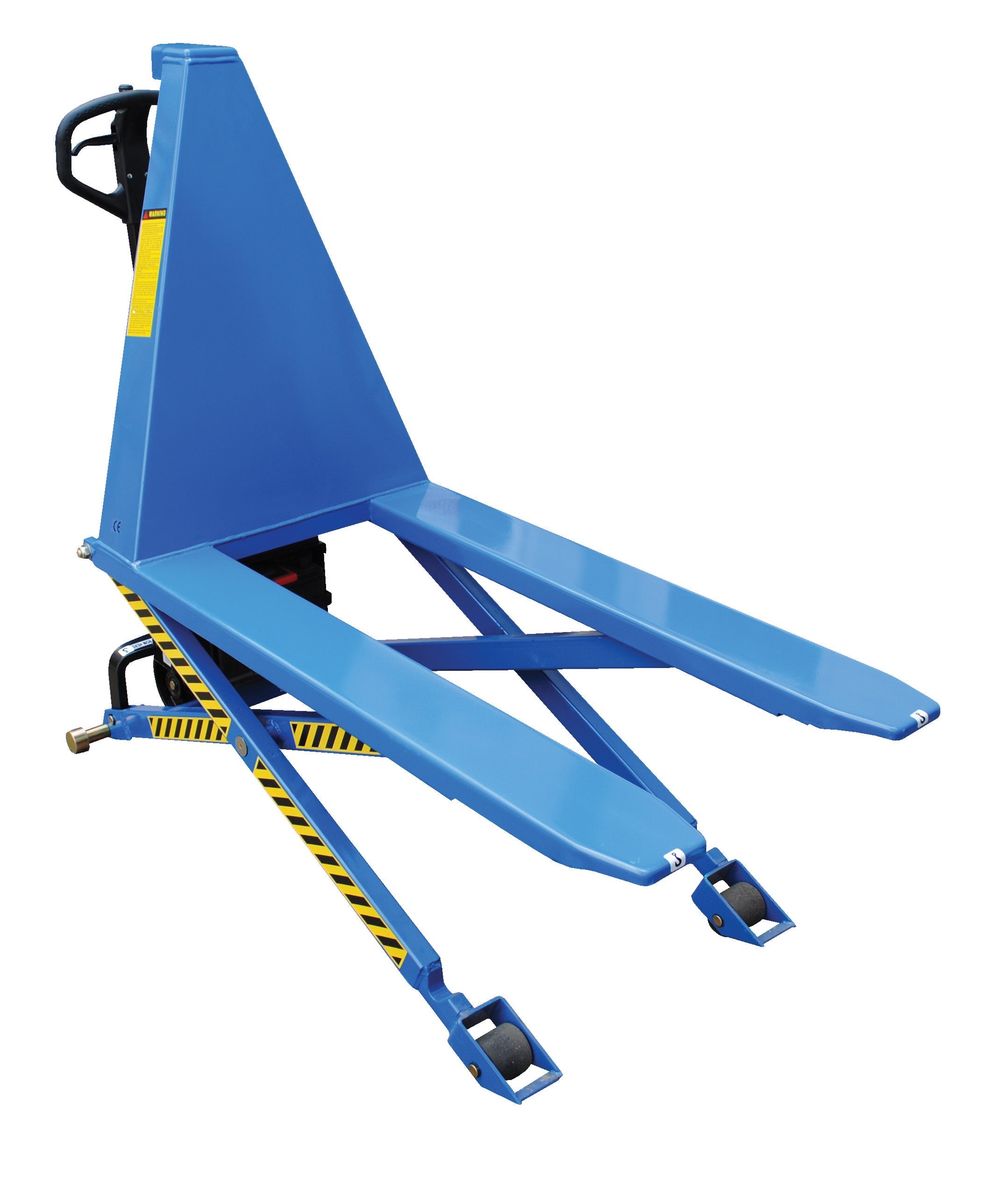
High-lift and high-rise trucks: raising the load to the work. When the load is heavier or has to climb higher, the straddle-leg trucks earn their keep. The High Rise Lift Trucks run about $3,374 to $3,486 and offer three lift power options, 115V AC, a reciprocating air over oil pump, and 12V DC battery, with forks in 20 by 48 in or 27 by 48 in. The High Lift Trucks built on Pramac running gear sit a step up at roughly $4,166 to $4,720, with 21 by 45 in or 27 by 45 in forks. All of them work the same way. The operator pushes the truck into position by hand, powered or air hydraulics then raise the load, and an automatic brake sets in at about 8 in of travel so a lifted load cannot roll. Bringing material up to the operator instead of asking the operator down to the floor is the same ergonomic logic behind our lift tables and self-elevating tables, applied to a load that has to travel first.
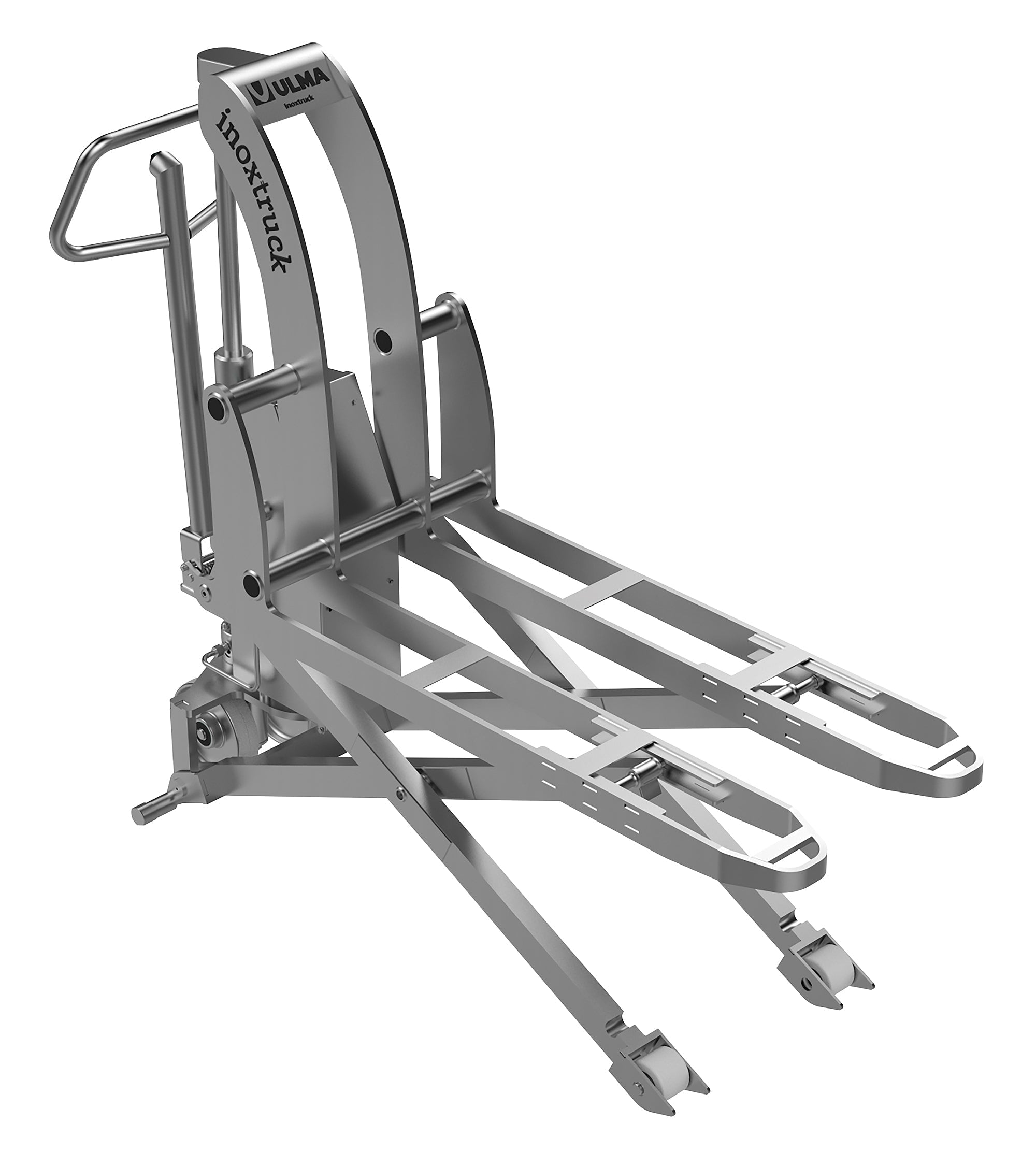
Tote lifters: containers up at bench height. Totes are the other half of this collection. The Tote-A-Loads carry a plastic or steel container and raise it to bench height, priced from about $1,482 to $4,142 depending on whether you take the 12V DC powered lift or the foot pump, with forks in 21 by 43 in or 27 by 43 in. The Dual Power Tote Lifter runs about $3,580 on 12V power. At the top of the line, the High Tote Lifter reaches well above bench height for feeding elevated hoppers, conveyors, and machines, which is why it lands near $17,356. Match the truck to the discharge point, since a low workbench asks for very different reach than a machine hopper five feet up, and that reach is most of what separates the models on price.
Power, fork size, and floor clearance. Three practical questions settle the rest. First, power. A foot pump costs less and never needs charging, while a 12V DC lift, which ships with an onboard charger and a charge indicator gauge, spares the operator the pumping on high-volume days. Second, fork size. The widths here run from 20 to 27 in, sized to the skid, tote, or small pallet you actually handle, so measure the load before ordering rather than assuming the wide fork. Third, the base. Straddle legs give the truck its stability but need floor clearance to spread around or under the load, so confirm your skids and racking leave room for them. Where the job is really horizontal travel with only a small lift, a walkie from our electric pallet jacks or a pallet stacker may fit better, and for pure floor transport look at industrial carts and dollies.
Compliance and where these trucks fit. One thing to know before you buy powered material handling. OSHA 1910.178 covers powered industrial trucks, which ASME B56.1 defines as power propelled, meaning the truck drives itself. Most of the trucks here are pushed by hand and only power the lift, so they fall outside that operator-certification requirement, unlike a self-propelled electric pallet jack. Any model you spec with powered travel does come under the rule, so confirm the drive type. Either way, train operators on safe lifting, load limits, and the auto-brake before the first shift. These trucks sit alongside the rest of the ergonomic material handling range, work positioners, tilters, and the wider ergonomic solutions group, all built to keep loads off the floor and off the operator's back.
Frequently Asked Questions
A pallet jack forks into the gap between a pallet's top and bottom deck boards and lifts an inch or two to clear the floor. A skid has no bottom deck boards and a tote is a closed container, so neither gives a pallet jack that gap. A skid lifter reaches under the runners or cradles the container with a single fork or straddle legs, then raises the load to bench or work height, far more travel than a pallet jack provides.
In this Vestil range, a single-fork skid positioner starts around $1,128. Powered high-rise and Tote-A-Load trucks run into the low four figures, roughly $3,400 to $4,700, and a tall-reach high tote lifter for feeding elevated hoppers sits near $17,356. Reach height and lift power drive most of the price difference.
OSHA 1910.178 applies to powered industrial trucks, which ASME B56.1 defines as power propelled, trucks that drive themselves. The models here that are pushed by hand and only power the hydraulic lift generally fall outside that certification requirement, unlike a self-propelled electric pallet jack. Confirm your model's drive type, and train every operator on load limits, safe lifting, and the auto-brake regardless.
The single-fork positioners are rated 600 or 800 lb for light skids and parts. The straddle-leg high-lift and tote trucks carry heavier loads to greater height. Weigh the heaviest load the truck will ever lift, not the average one, and buy above it, because overloading a hydraulic lift bends forks and wears the ram long before it fails outright.
A foot pump costs less, adds no charging routine, and suits occasional lifts. A 12V DC powered lift, which includes an onboard charger and a charge indicator, saves the operator the pumping when loads go up and down all shift. Choose by how often the truck lifts, not by the sticker price alone.