Pallet Inverter
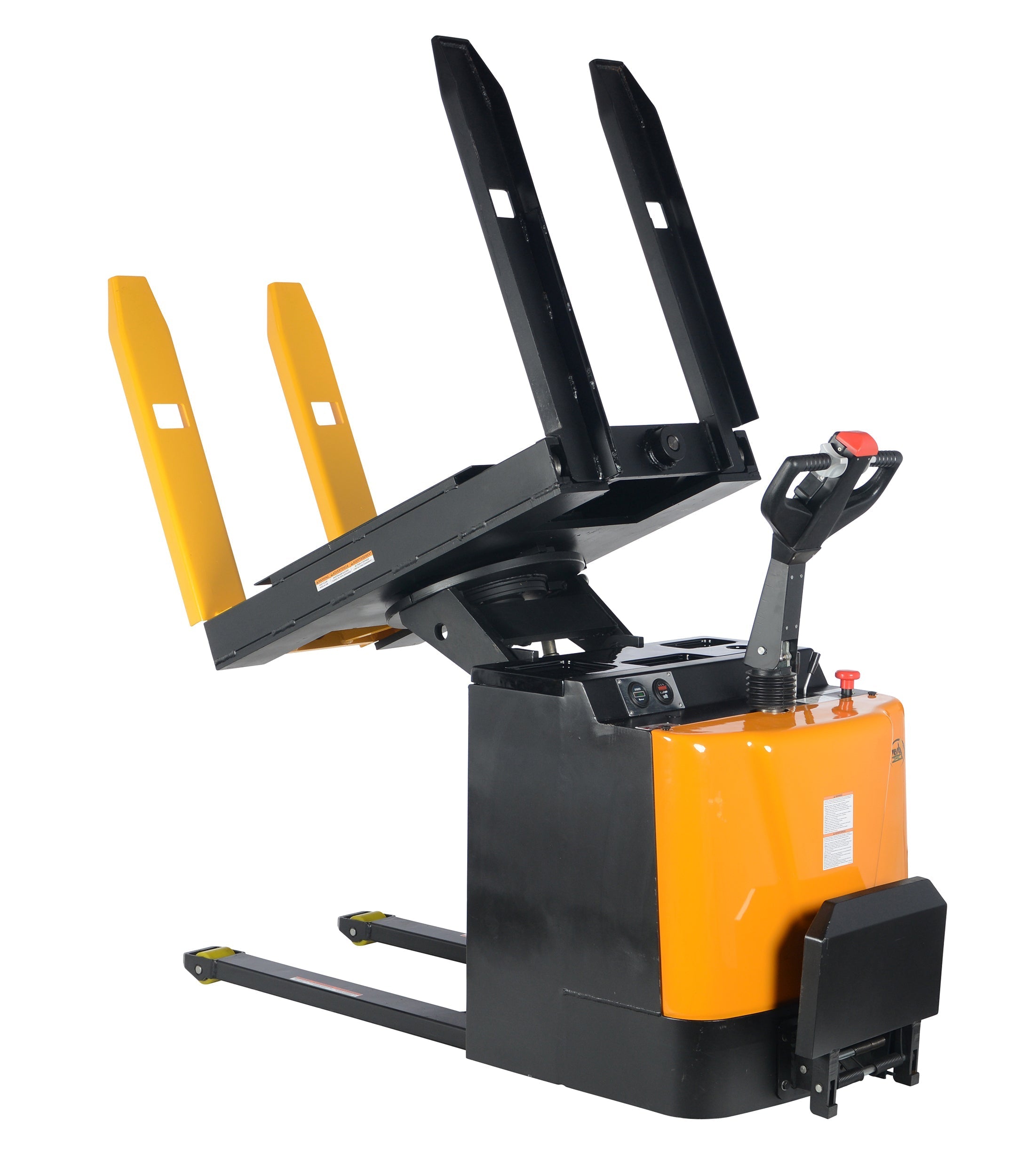
A pallet inverter clamps a loaded pallet, rotates it a full 180 degrees, and sets the goods down on a fresh pallet without anyone touching the stack. That one move solves a short list of expensive problems: swapping a broken wood pallet for a sound one, converting to plastic or hygienic pallets for food and pharma work, pulling a slip sheet, or recovering a crushed bottom layer. We stock the Vestil portable line, a self-contained machine that a forklift or pallet jack can reposition anywhere on the floor. Two builds cover most docks, separated by how wide the load's pallet openings run. Pricing sits in the high 26,000s to near 28,000 dollars, and the sections below cover which opening to buy and where an inverter beats restacking a load by hand.
Pallet Inverters Buying Guide
What the machine does, and when it pays for itself. A pallet inverter earns its place the moment restacking loads by hand turns into a routine job. Clamp the load, power the tilt, rotate 180 degrees, and release the goods onto the pallet waiting underneath. It handles four tasks: pallet exchange, damaged-pallet removal, slip-sheet transfer, and switching wood pallets for plastic or export-grade ones. The economics are simple. If you swap a pallet once in a while, a pallet jack and a bit of labor cost less than a five-figure machine. The inverter pays when the work is daily and high volume, when the load is too heavy or too fragile to break down safely by hand, or when a food, pharmaceutical, or cleanroom operation requires a hygienic pallet under product that cannot be unpacked. In those cases it removes the single worst manual task in the room and the injury risk that rides along with it.
Portable, so it goes to the load. The Vestil unit we carry is self-contained rather than a fixed floor station. It runs on four 6V batteries with an on-board charger, a battery-level gauge, an emergency battery disconnect, and a horn, and it rolls on polyurethane steer and load wheels that stay kind to finished floors. Drive and tilt are DC powered; the rotation itself is manual, which keeps the control in the operator's hands during the flip. Because it is mobile, one machine can serve a receiving dock in the morning and a shipping lane in the afternoon, and a forklift or pallet jack repositions it as the work moves. It can also stand in as a powered pallet truck, a powered tilter, or a manual turntable when a full inversion is not what the job needs.
Match the fork opening to your pallet. The two builds differ by fork opening. The 32 to 54 inch model suits standard GMA-sized single pallets, which is what arrives on most American docks. The 32 to 76 inch model opens wide enough for tall loads, double-stacked pallets, or oversized skids that the narrower jaws will not clear. Both are rated at 3,000 lb, and the trap is rating to your average load instead of your worst one. A pallet of liquid, tile, or dense packaged goods can pass 3,000 lb without looking any heavier from the aisle, so weigh the heaviest load the machine will ever flip and stay under the rating. If your real problem is low skids or totes rather than full pallet inversion, look at specialist pallet trucks and tote and skid lifters first, since an inverter is overkill for those.
Where it sits among the pallet gear. This collection lives under pallet jacks as the transfer specialist. When the job is simply moving pallets from A to B, hand operated pallet jacks cover the light and medium end and electric pallet jacks take over on long routes and full shifts. The inverter is the one machine in that family that changes the pallet under a load instead of moving the load on its pallet, and that is the only reason to buy it.
Frequently Asked Questions
It clamps a loaded pallet, rotates the whole load 180 degrees, and sets the goods down on a different pallet placed underneath, all without unpacking or restacking the load. Facilities use it to exchange damaged pallets, switch wood pallets for plastic, pull slip sheets, and recover a crushed bottom layer.
Both builds are rated at 3,000 lb. Rate to the heaviest pallet you will ever flip rather than the average one, since dense loads like liquids or tile can reach that weight without looking heavy.
Both. The drive and the tilt are DC powered from four 6V batteries with an on-board charger, and the rotation is manual so the operator keeps control through the flip. It also includes a battery-level gauge, an emergency battery disconnect, and a horn.
The 32 to 54 inch model fits standard GMA single pallets and covers most docks. Choose the 32 to 76 inch model if you handle tall loads, double-stacked pallets, or oversized skids that the narrower opening cannot clear.
Yes. It is self-contained and rolls on polyurethane steer and load wheels, and a forklift or pallet jack can reposition it. That lets one machine serve receiving and shipping in the same shift instead of forcing every load to a fixed station.
When pallet swaps are a daily, high-volume task, when the load is too heavy or fragile to break down safely, or when food, pharmaceutical, or cleanroom work requires a hygienic pallet under product that cannot be unpacked. For occasional swaps, a pallet jack and labor cost less.