Load Arrestors
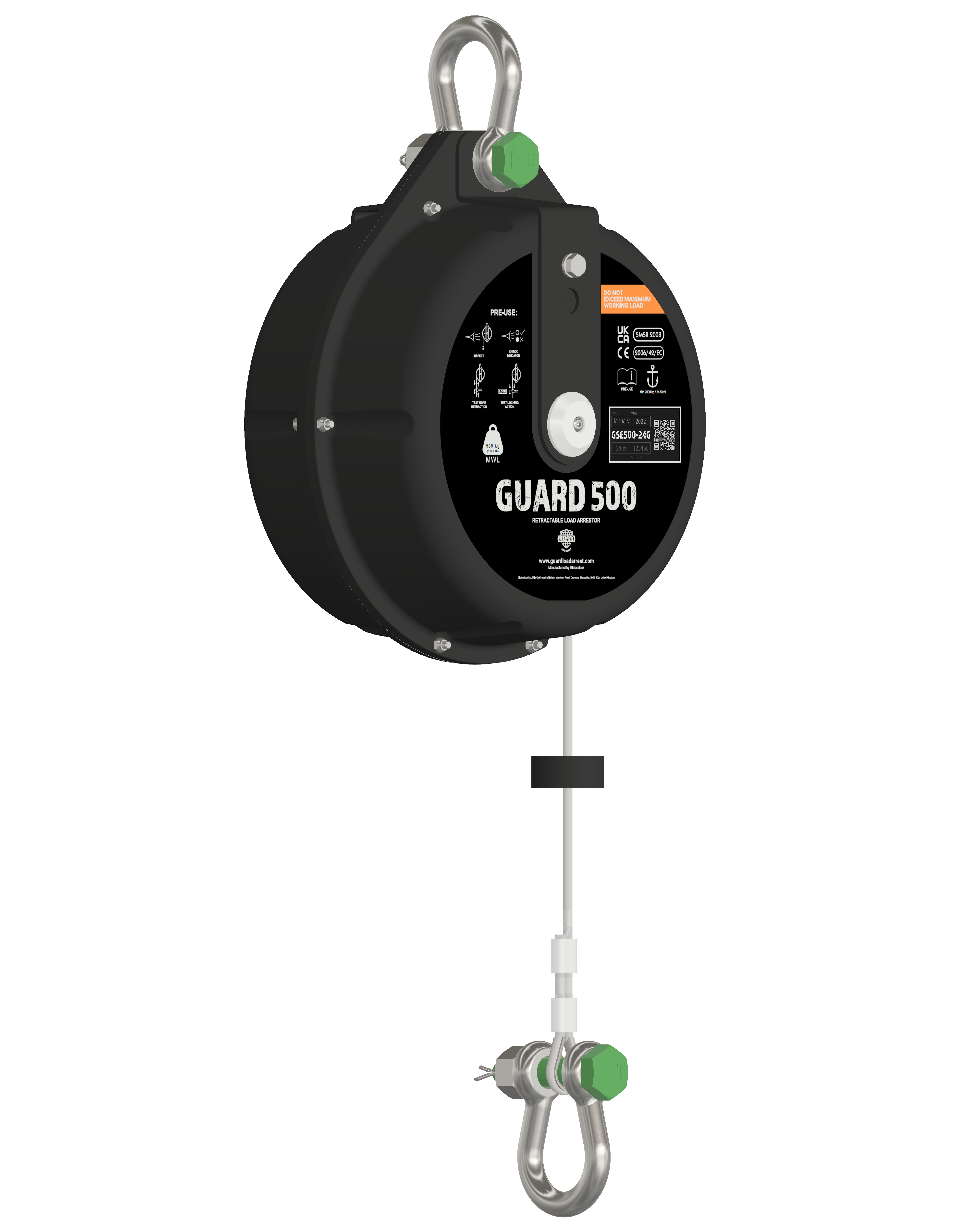
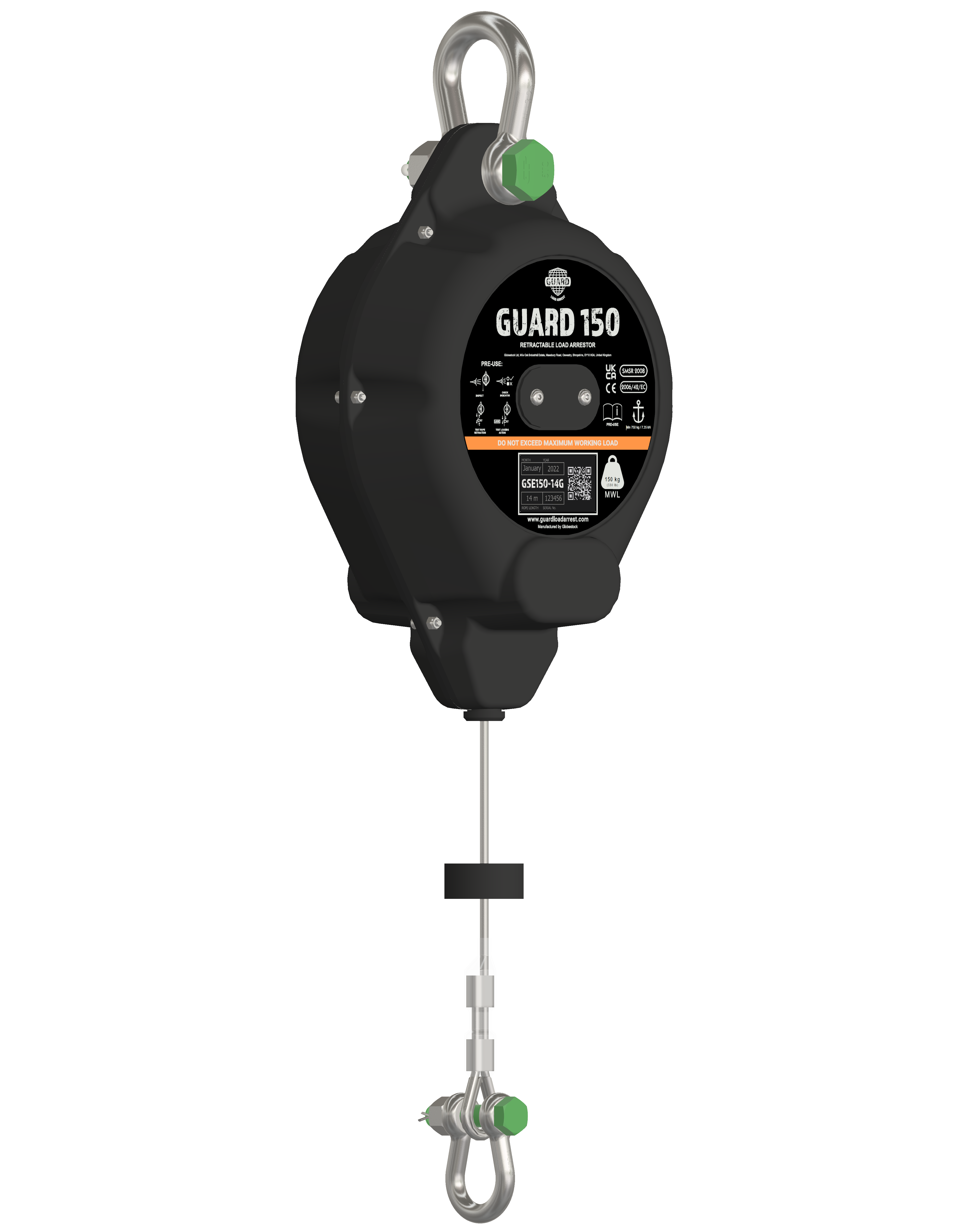
Load arrestors are the secondary safety device that catches a suspended load if the primary hoist or wire rope lets go. They do not carry the load in normal service. They hang beside the hoist, clip to the load with a tensioned steel cable that pays in and out as the load moves, and lock the moment that cable starts to run out under a free fall. This collection carries the Globestock-built Guard range in galvanized and stainless steel cable builds, rated from 330 lb up to 3,300 lb and offered with short or long drop lengths for low bays or tall lifts. It is protection for the equipment and the people below, sized to the load it stands behind rather than the load it lifts.
Compare Load Arrestors
| Model | Price | Capacity | |
|---|---|---|---|
| Guard Load Arrestor - Stainless Steel | $1,846 | 330-1,760 lb | View → |
| Guard Load Arrestor- Galvanized | $1,150 | 330-3,300 lb | View → |
Load Arrestors Buying Guide
What it does, and what it does not. A Guard arrestor is a fall arrest block built for equipment rather than people. In normal use the hoist does all the work and the arrestor just tracks the load, its cable extending and retracting to stay tensioned. If the hoist brake fails and the load starts to drop, the cable accelerates, an internal lock engages, and the load is caught within a short distance instead of hitting the floor. Two rules make or break the install. Anchor the arrestor to the structure independently, never to the hoist you are backing up, and run its cable to the load itself. Hang it from the same point that fails and it fails with it. It pairs with the hoists and electric hoists it protects, on a separate anchor rated for the job.
Galvanized or stainless is the first decision. Both builds work the same way; the cable is the difference. Galvanized steel is the standard rope and the value pick, and it covers general indoor material handling, production lines, and stage or theater rigging. Our galvanized Guard runs from $1,150 for the 330 lb model up to $5,085 for the 3,300 lb, which is the top of the range. Stainless steel cable is the upgrade for washdown areas, food and pharmaceutical rooms, coastal and marine air, and anywhere corrosion would pit a galvanized rope over time. It costs more and tops out lower, from $1,846 up to $5,417 at 1,760 lb. If the room ever gets hosed down or sits in salt air, buy the stainless; otherwise galvanized is the right call.
Sizing: capacity and drop length. Pick a safe working load above the actual suspended weight, never at or below it. Each model also carries a minimum load, a few pounds needed to keep the cable tensioned and the mechanism armed, so a very light fixture on a high-capacity unit is the wrong match. Drop length is the second number: the same capacity comes in a short cable for low headroom and a long cable, out past 79 ft, for tall bays and multi-level lifts. Measure the full travel the load makes and add margin, because the cable has to reach the load through its whole descent. Match both numbers before price. An arrestor that runs out of cable partway down protects nothing below that point.
It backs up the gear; it does not clear the floor. A load arrestor lowers the odds of a dropped load, but it does not let anyone stand under a suspended one. OSHA 1926.1425 still requires keeping clear of the load, and this device is a backstop, not a permission slip. Treat it like the rest of your fall protection: inspected before use, with its fall indicator checked and its service record current. One rule is absolute. Any Guard arrestor that has actually caught a load must come out of service immediately and go back to a Globestock-approved service agent, no matter when it was last inspected. A unit that has done its job once cannot be trusted to do it again until it is rebuilt.
Frequently Asked Questions
No. It is rated to catch loads and equipment, not to arrest a falling person. Personnel fall protection is a separate system built to ANSI Z359 and lives in our fall protection collection. Never clip a worker to a load arrestor.
Galvanized is the standard and covers dry indoor work at the lowest cost, up to 3,300 lb. Choose stainless for washdown areas, food and pharmaceutical rooms, and corrosive or coastal air where it resists pitting; it tops out at 1,760 lb.
It must be removed from service at once and returned to a Globestock-approved service agent for inspection and rebuild, regardless of its last service date. A unit that has caught a load is not fit to reuse until that is done.
On an independent anchor rated for the load, positioned beside the hoist rather than hung from it, with the cable connected to the load. If it shares the point that fails, it cannot catch anything.
No. OSHA 1926.1425 still requires keeping clear of suspended loads. The arrestor reduces the consequence of a failure; it does not remove the rule.
A safe working load above the real suspended weight, with a drop length long enough to reach the load through its full travel. Watch the minimum load too, since the cable needs some tension to stay armed.