What material handling equipment is
Material handling equipment (MHE) covers everything used to move, position, store, and protect materials as they travel through manufacturing, distribution, and warehousing. That's a huge range, from a simple hand pallet jack to a powered stacker, an overhead crane, or a rack system holding thousands of pounds. The unifying idea is efficiency and safety: getting loads where they need to go with less labor, less risk, and less product damage. Almost every operation that moves physical goods runs on some mix of this equipment, which is why choosing the right pieces matters.
The four categories of MHE
The industry sorts material handling equipment into four broad categories, and understanding them makes the whole field easier to navigate. Transport equipment moves material between locations, and includes conveyors, cranes, and industrial trucks like forklifts and pallet jacks. Positioning equipment handles material at a single spot, such as lift tables, hoists, slings, and spreader bars. Unit-load formation equipment holds material as a single load: pallets, skids, crates, and containers. And storage equipment holds material over time: pallet racking, shelving, and mezzanines. Most operations use equipment from all four.
Transport: moving loads around
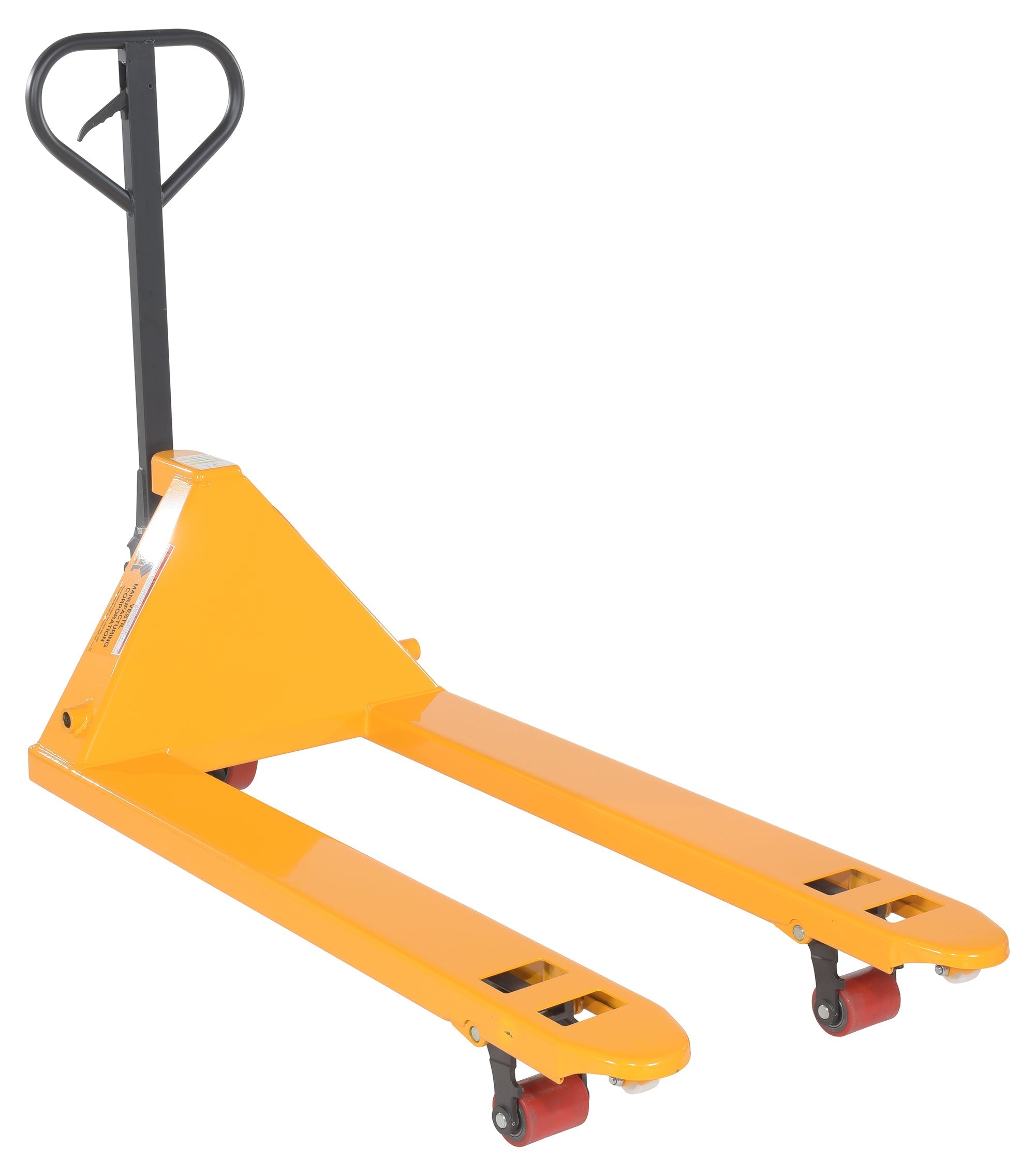
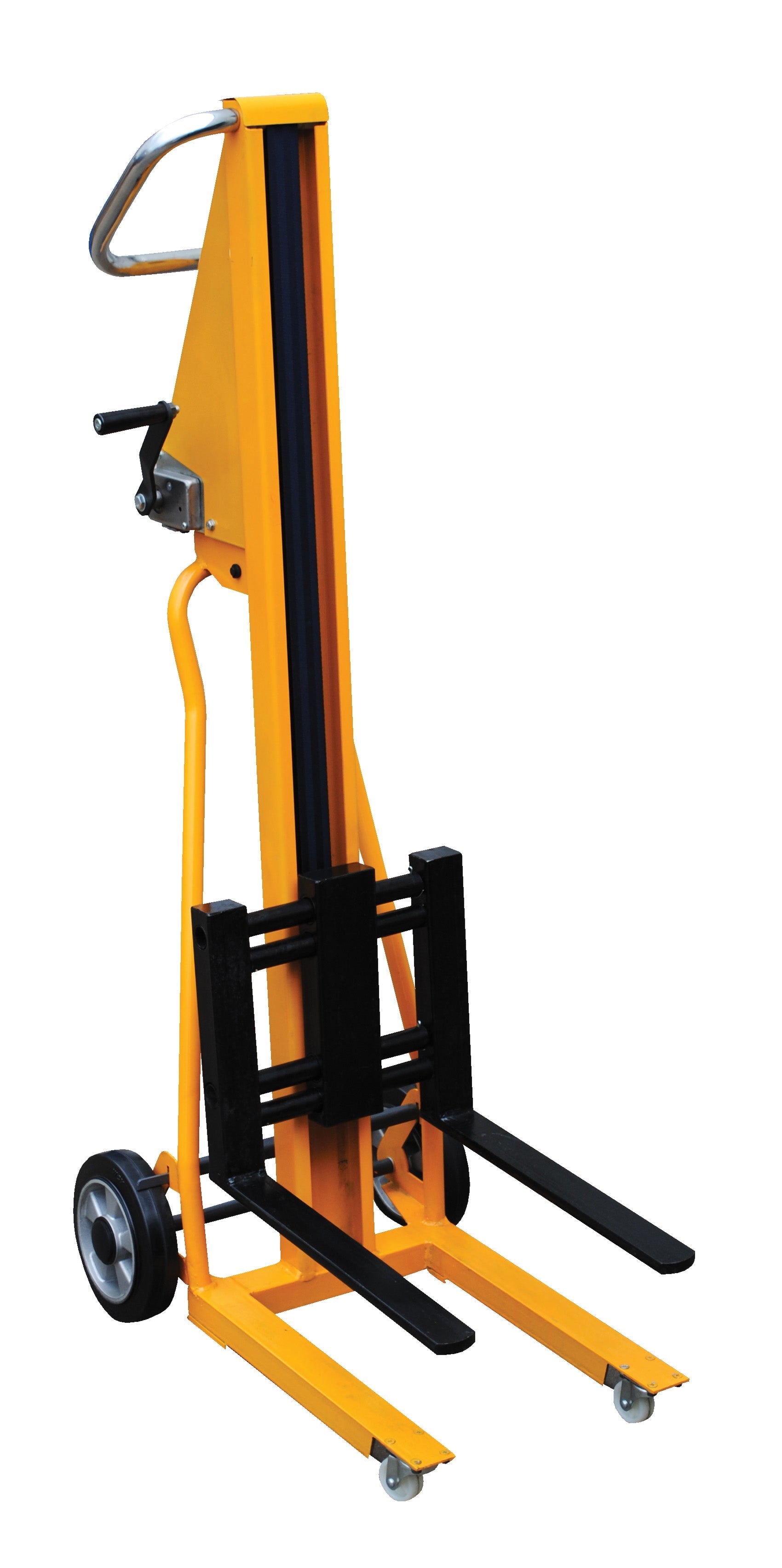
This is the category most people picture first. At floor level, a pallet jack (also called a pallet truck) slides under a pallet and rolls it a few inches off the ground, the most basic and common tool in any warehouse. To lift loads up to storage height, a pallet stacker adds a mast. For heavier or overhead work, cranes and hoists take over, including gantry cranes that bring lifting capacity anywhere on the floor. We stock the full range, from hand pallet trucks to powered stackers and portable gantries.
Positioning: lifting and placing loads
Positioning equipment handles material precisely at one location, and it's where rigging comes in. Lift tables raise work to a comfortable height. Hoists and cranes lower onto a load, which is then connected with rigging equipment: lifting slings, shackles, hooks, and spreader bars that keep wide loads stable during a lift. Getting positioning right is as much about the rigging as the lifting machine, since the connection between hook and load is where safety is won or lost.
Storage and unit-load equipment
The other two categories are easy to overlook but essential. Unit-load formation equipment, pallets, skids, crates, and containers, bundles loose material into a single unit that the transport equipment can move efficiently. Storage equipment, pallet racking, shelving, and mezzanines, holds those units safely over time and makes the most of floor space. A well-run operation matches all of it together: loads formed into units, moved by transport equipment, positioned by lifting gear, and held in storage designed for the weight and volume involved.
How to choose the right equipment
Start with the job, not the catalog. Ask how heavy the loads are, how high they need to go, how far they travel, and how often. A back-room moving a few pallets a day needs a simple hand pallet jack; a busy warehouse stacking to height needs a powered stacker or forklift; an assembly floor lifting machinery needs a hoist and proper rigging. Match capacity with margin to spare, never exceed a rated load, and factor in the surface, the aisles, and the people using it. The right equipment is the one that fits the actual task safely, not the biggest or the cheapest.
Pallet jacks and stackers
For most floor-level moving, a pallet jack is the workhorse: affordable, simple, and rated around 4,500 to 5,500 lb. When you need to lift loads up onto racking or a truck, a stacker adds a powered mast. The two together cover a huge share of everyday warehouse work. Our pallet cluster digs into the details: what a pallet jack is, how much one costs, how it works, and how much it lifts. Browse the full range in our pallet jack collection.
Cranes, hoists, and gantries
When loads are too heavy or awkward for a truck, overhead lifting takes over. A gantry crane puts lifting capacity anywhere on the floor without permanent structure, and a hoist provides the vertical pull. Choosing here comes down to capacity, span, and whether you need the crane to be portable or fixed. Our guides on what capacity gantry crane you need and gantry vs bridge crane help you spec the right lift, and the best portable gantry cranes comparison covers our top picks.
Rigging and lifting gear
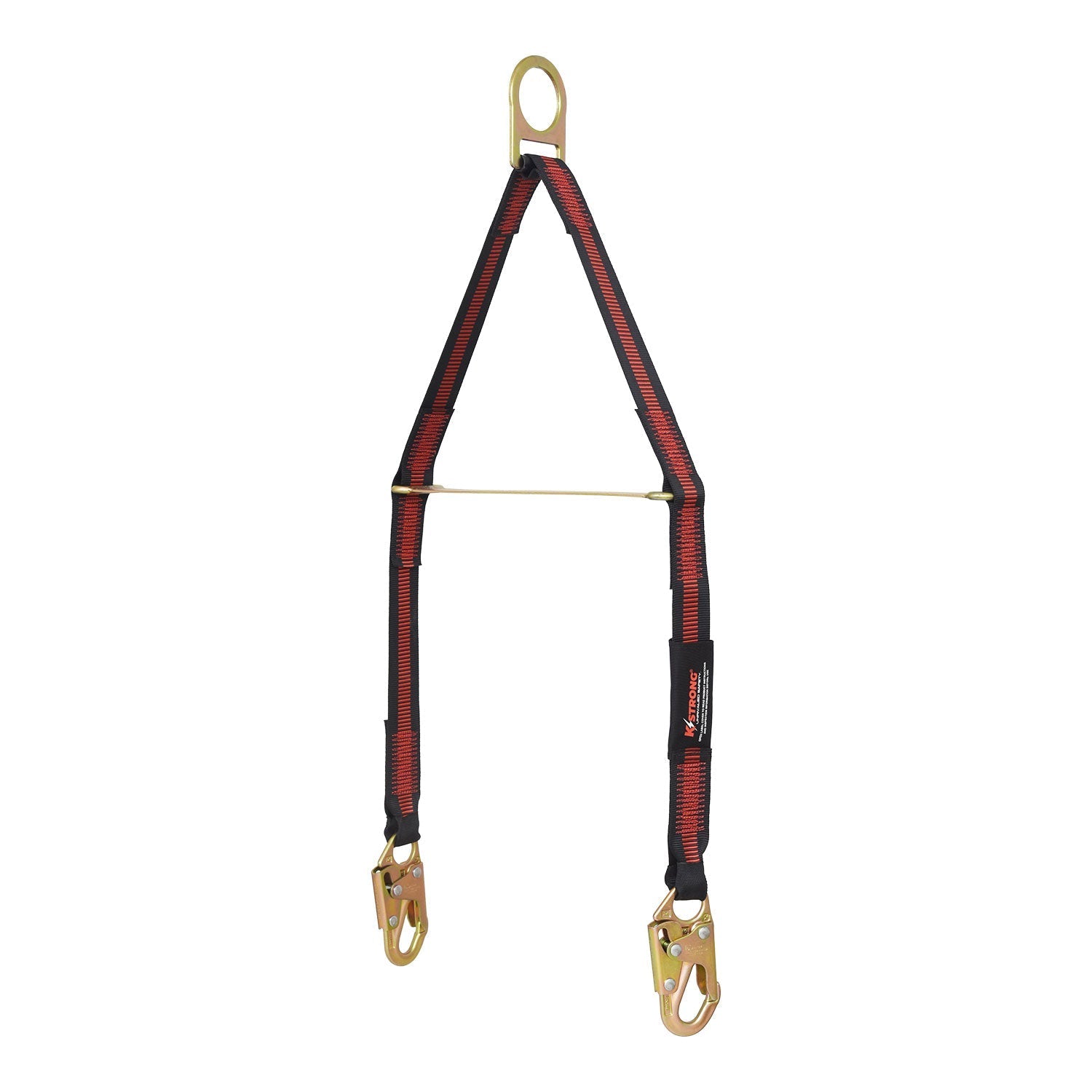
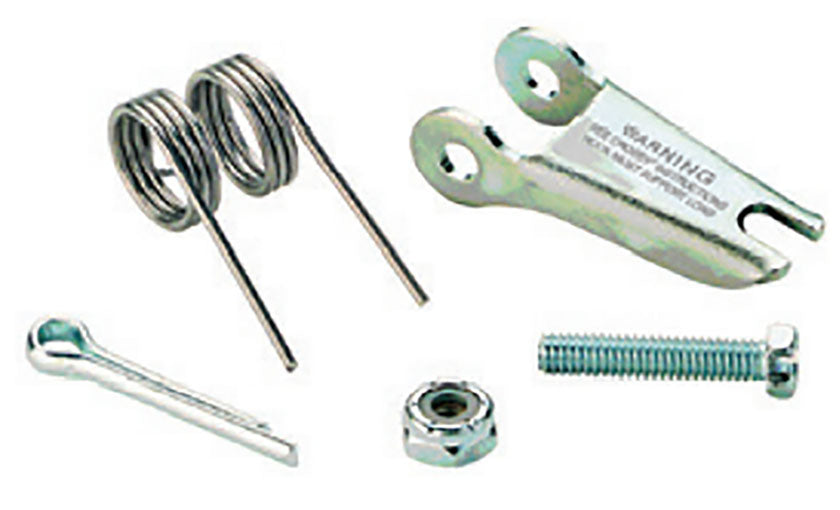
Every overhead lift depends on the gear connecting the hook to the load, and this is where safety concentrates. Rigging equipment, slings, shackles, hooks, eye bolts, and spreader bars, must be rated for the load and inspected regularly. Choosing the right lifting sling for the job, wire rope, chain, or synthetic, matters as much as the crane itself. Under-spec or damaged rigging is a leading cause of lifting accidents, which is why we cover it in depth alongside the machines.
Safety and inspection come first
No piece of material handling equipment is safe without proper use and inspection. Rigging must be inspected before each shift and formally at least once a year, loads must never exceed rated capacity, and operators should be trained on the specific equipment. The rules exist because these tools move serious weight. Our guide on how often rigging equipment must be inspected covers the OSHA and ASME requirements. Treat safety as the first spec, not the last, and the equipment does its job for years.
Where to start
If you're building out or upgrading an operation, start by mapping your loads and tasks, then match equipment category by category: transport to move, positioning and rigging to lift, storage to hold. Buy rated capacity with margin, from equipment that fits your space and your people, and don't cut corners on the rigging and safety gear. Browse our full material handling collection to see the range, or dig into the specific guides above for pallet jacks, cranes, and rigging. When in doubt on a heavy or complex lift, ask for a quote and spec it properly.
Common material handling mistakes to avoid
A few mistakes recur across operations. The biggest is under-spec equipment, buying a jack or sling rated too close to the load, which is dangerous; always leave capacity margin. Another is using the wrong tool: forcing a pallet jack to do a stacker's job, or a lifting beam where a spreader bar belongs. Skipping inspections is a third, especially on rigging, where a worn sling can fail catastrophically. And ignoring the surface, running a standard jack on rough ground, or a heavy electric unit on a light floor, causes trouble. Match the equipment to the actual load, task, and environment, and most problems disappear.
Buy rated, quality equipment
Material handling equipment moves serious weight, so this isn't the place to cut corners on quality. Buy gear with a clear, verified load rating from established manufacturers, and confirm that rating covers your heaviest load with margin. Cheap, unrated, or grey-market lifting equipment is a genuine safety risk, a failed sling or overloaded jack can injure people and destroy product. A quality pallet jack, stacker, crane, or sling from a reputable maker costs a little more up front and pays back in reliability and safety over years of use. Treat the load rating as the first spec you check, every time.