The Best Electric Chain Hoists Compared
The best electric chain hoist for you comes down to capacity, duty, and control features. Below are our top electric chain hoists compared, all with VFD (variable-frequency drive) control for smooth, precise lifting. Match the capacity to your heaviest load with margin (round up), and the duty class to how often you'll lift. All pair with a trolley for movement along a beam.
| Rank | Model | Price | Capacity | Power | |
|---|---|---|---|---|---|
| #1 | Bison BVH Series VFD Single Phase Electric Chain… | $2,650 | 1/2 ton | 120V | View → |
| #2 | Bison BXH Series VFD Single Phase Electric Chain… | $3,100 | 1/2 ton | 120V | View → |
| #3 | Bison BIH Series 1/2 Ton VFD Single Phase Electric… | $5,800 | 1/2 ton | — | View → |
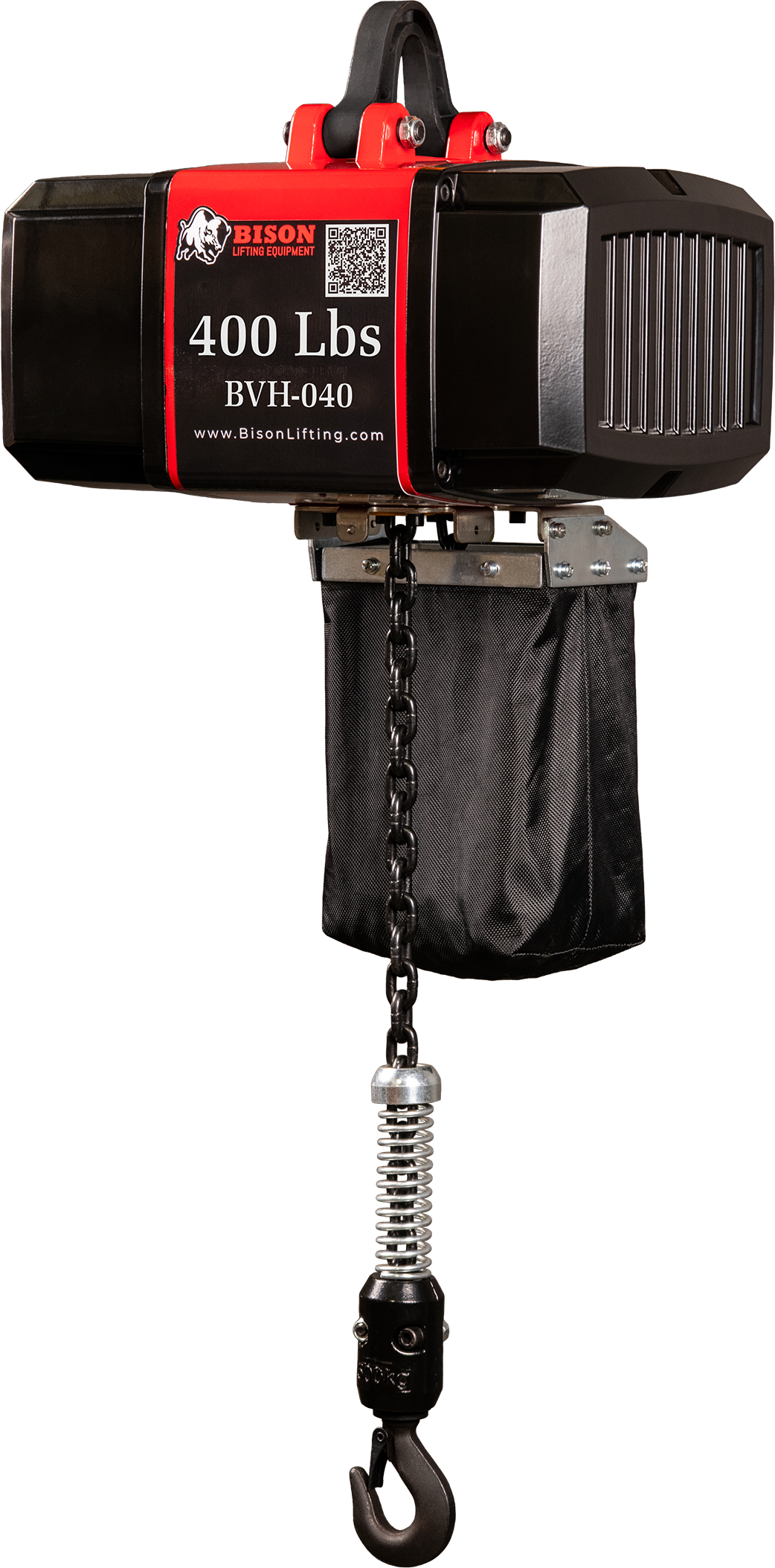
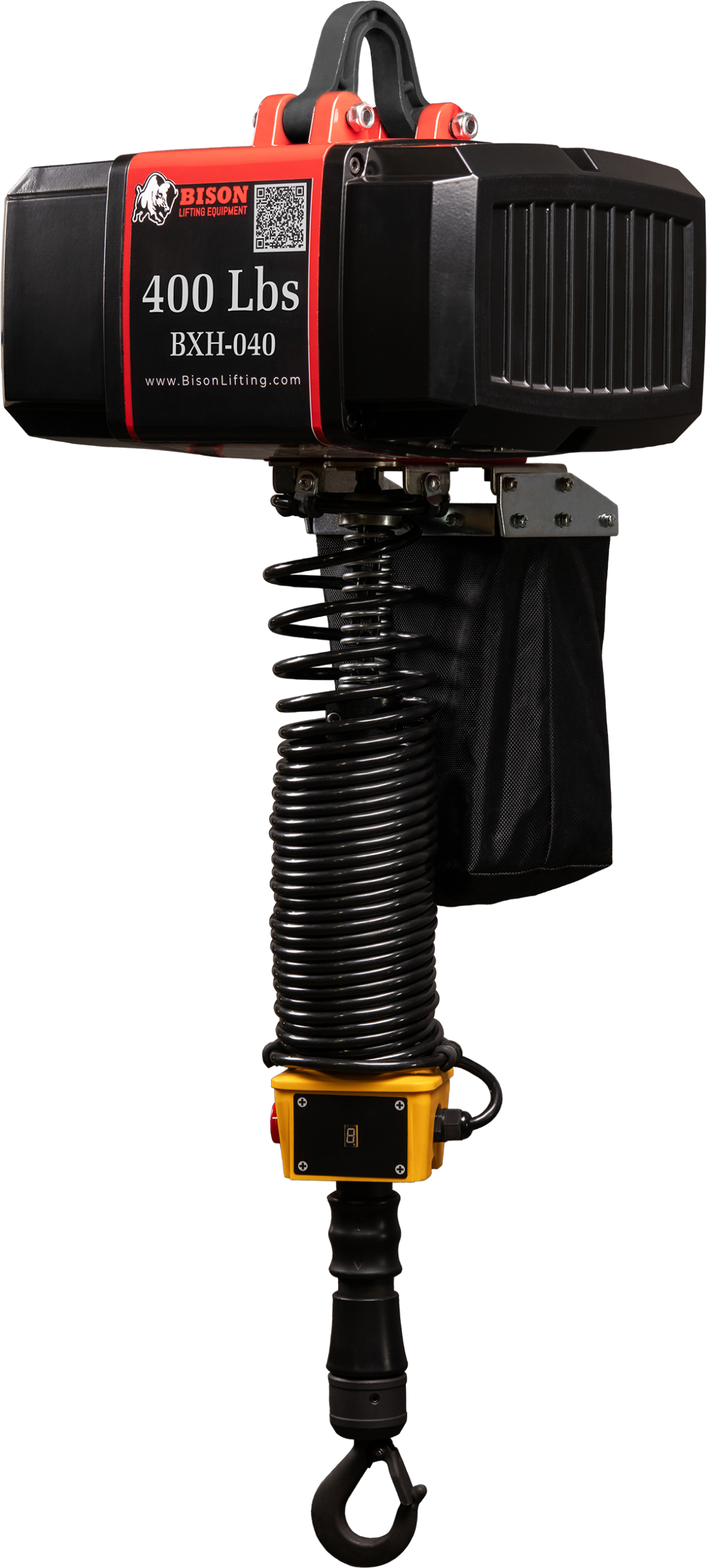
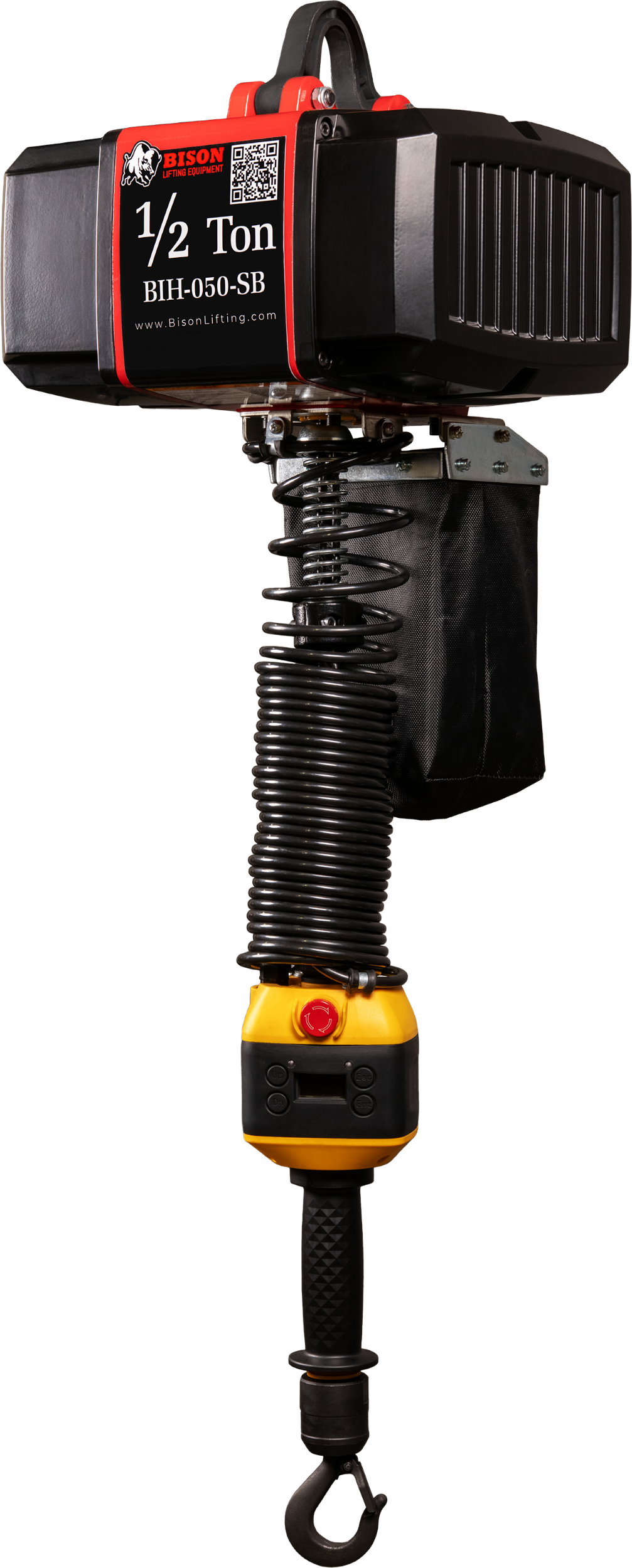
Best value: Bison BVH Series VFD
The Bison BVH Series VFD single-phase electric chain hoist is the value pick, bringing variable-frequency-drive control, smooth, precise, soft-start lifting, at the most accessible price of our three. Single-phase power means it runs on common shop electrical supply rather than requiring three-phase, which simplifies installation for many operations. For a shop that wants powered, controllable lifting without stepping up to a premium or high-duty unit, the BVH delivers the core benefit of an electric hoist, effortless, fast, repeatable lifts, at a sensible price. It's the sensible default for general powered lifting.
Step up: Bison BXH Series VFD
The Bison BXH Series VFD single-phase electric chain hoist steps up in capability and price, with VFD control and a build suited to more demanding use. It's the choice when your loads or duty exceed what the entry unit is meant for, or when you want additional capacity and robustness while keeping single-phase convenience. The VFD control again delivers smooth acceleration and precise positioning, which protects both the load and the hoist. For an operation lifting more often or heavier, the BXH is the middle-ground upgrade that adds headroom without jumping to the top of the range.
Premium: Bison BIH Series VFD
The Bison BIH Series 1/2-ton VFD single-phase electric chain hoist is the premium unit here, built for the most demanding single-phase applications with full VFD control. Despite the modest tonnage in this configuration, it represents the top of the range in build and capability, aimed at operations that need the best control and durability. If your lifting is frequent, precise, and central to production, and you want a hoist engineered to take it, the BIH is the investment-grade choice. It costs the most, but for heavy-use production lifting, the build and control quality repay it.
Why VFD control matters
All three of these hoists share variable-frequency-drive control, and it's worth understanding why that's valuable. A VFD ramps the motor up and down smoothly rather than starting and stopping abruptly, which gives soft, precise lifting, protects the load from jerking, reduces shock on the hoist and the supporting structure, and extends component life. For delicate positioning, fragile loads, or simply a longer-lasting hoist, VFD control is a real upgrade over basic single-speed units. It's a big part of why these Bison hoists suit precise, repeated production work rather than just occasional lifting.
How to choose your electric chain hoist
Work three specs. First, capacity: pick a rating above your heaviest load and round up if you're between sizes, never size at the limit. Second, duty: match the hoist's classification to how often you'll lift, from intermittent to constant production, and don't underspecify. Third, power and features: confirm your electrical supply (these are single-phase, easing installation) and decide whether VFD control's smoothness and longevity are worth it for your work (usually yes for frequent or precise lifting). Then add the right trolley for beam travel. Get capacity and duty right first; the rest follows.
Don't forget the trolley and structure
Whichever hoist you choose, remember it's part of a system. To move loads along a beam you'll need a trolley, plain push or motorized, matched to the hoist and the beam, and it affects your headroom, so factor it into your height calculation. And the beam, crane, or mount the hoist hangs from must be rated for the hoist plus its full load, with margin. A great hoist on an under-rated beam is unsafe. Spec the trolley and confirm the supporting structure alongside the hoist, so the whole lifting system, not just the hoist, is rated for the job.
The verdict
For most operations wanting powered lifting, the Bison BVH Series VFD is the value pick: smooth VFD control on convenient single-phase power at a sensible price. Step up to the BXH for more demanding loads and duty, or the premium BIH for the most intensive single-phase production work. All three deliver the core electric-hoist benefits, fast, effortless, precise lifting, with VFD smoothness. Match capacity (rounded up) and duty class to your loads and frequency, add the right trolley, and compare the specs above.
FAQ
For general powered lifting, the Bison BVH Series VFD is the value pick, with smooth variable-frequency-drive control on single-phase power. Step up to the BXH for heavier or more frequent use, or the premium BIH for intensive production. Match the capacity and duty class to your loads and how often you lift.
A basic 1-ton electric chain hoist runs roughly $500 to $3,000, with larger, two-speed, low-headroom, or VFD-controlled units costing more. Our Bison VFD hoists sit in the mid-to-upper range, reflecting their smooth variable-frequency-drive control and build quality.
Choose a capacity above your heaviest load, and round up to the next standard rating if you fall between sizes, a 4,300-lb load needs a 3-ton hoist, not a 2-ton. Never size a hoist at or below your load, and match the duty class to how often you'll lift.
Related Guides
Sources: OSHA/ASME B30 hoisting standards, manufacturer references (Columbus McKinnon/CM, Harrington, Bison, Coffing, Konecranes), verified 2026-07-22. Overhead lifting is governed by rated capacity, never exceed it, and follow ASME B30 inspection requirements. · Updated 2026-07-22