The core difference
The two hoist types are named for their lifting medium. A chain hoist raises the load on a load chain running through a lifting wheel, while a wire rope hoist winds a steel cable onto a drum. That difference shapes their strengths: chain hoists are compact, portable, and precise for lighter loads, while wire rope hoists are built for heavier, continuous, harder-duty lifting with greater height and longevity. Neither is simply better, they're tuned for different scales and duties of work, and the right choice follows from how heavy, how high, and how hard you lift.
Chain hoist strengths
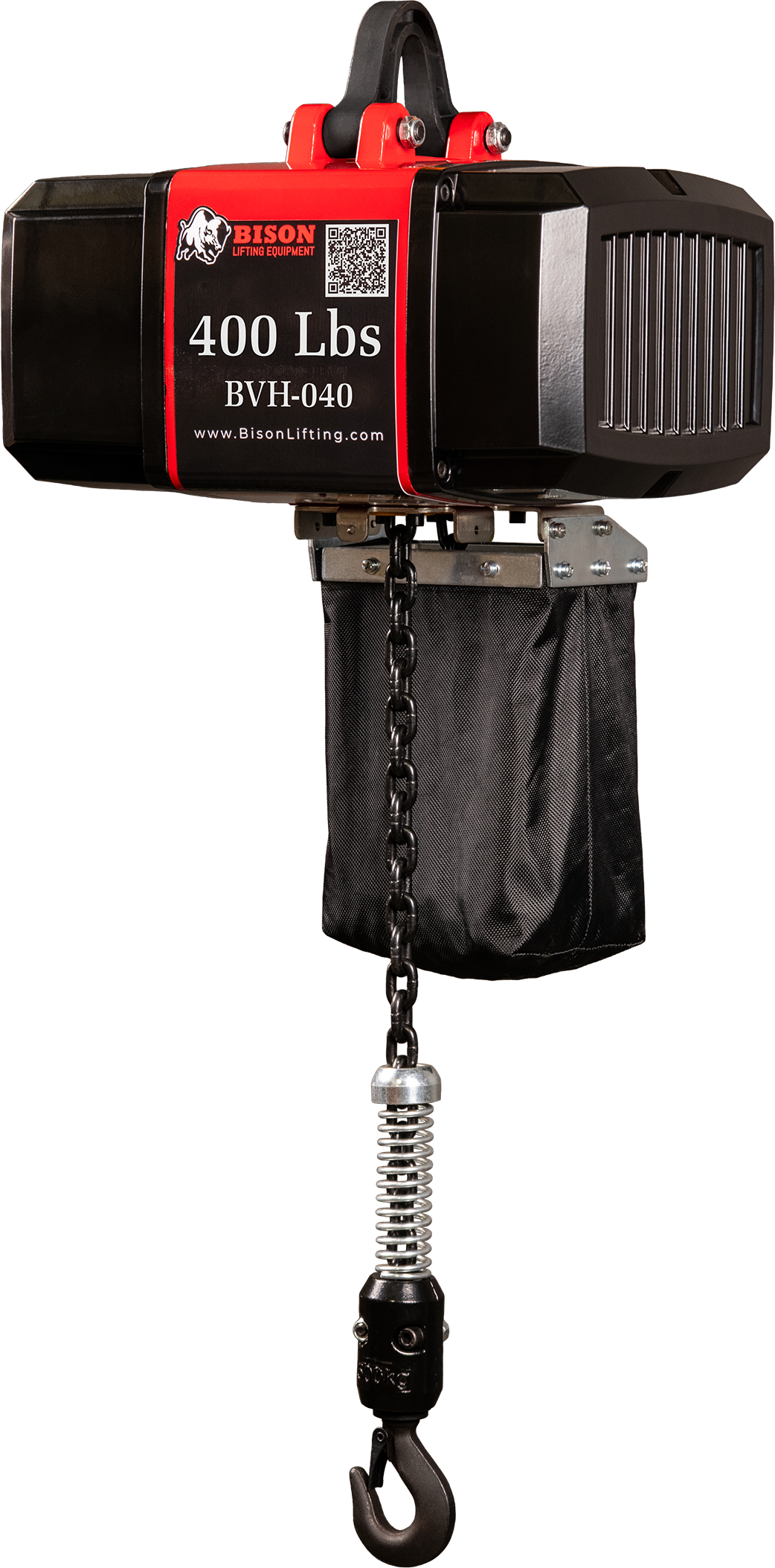
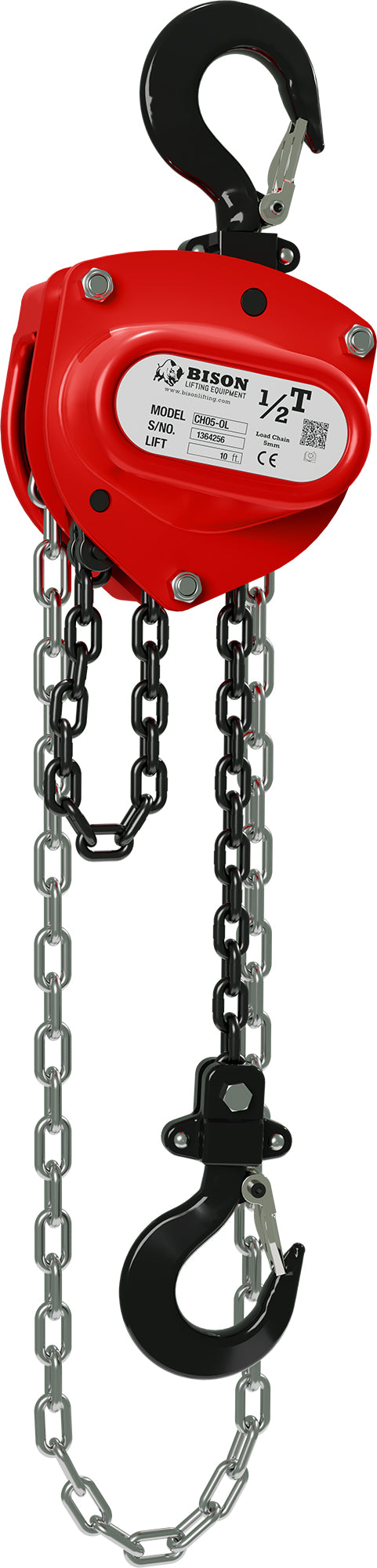
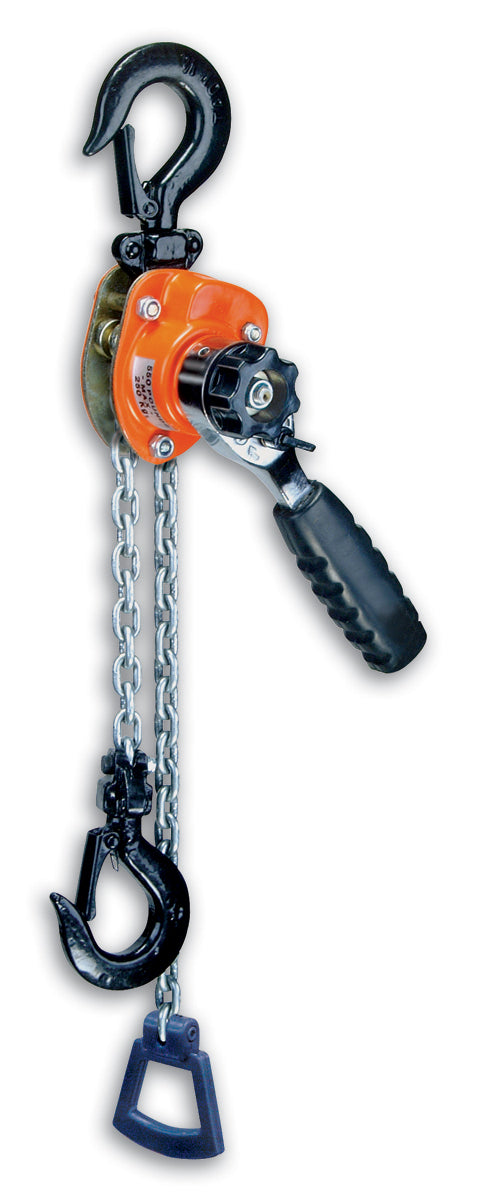
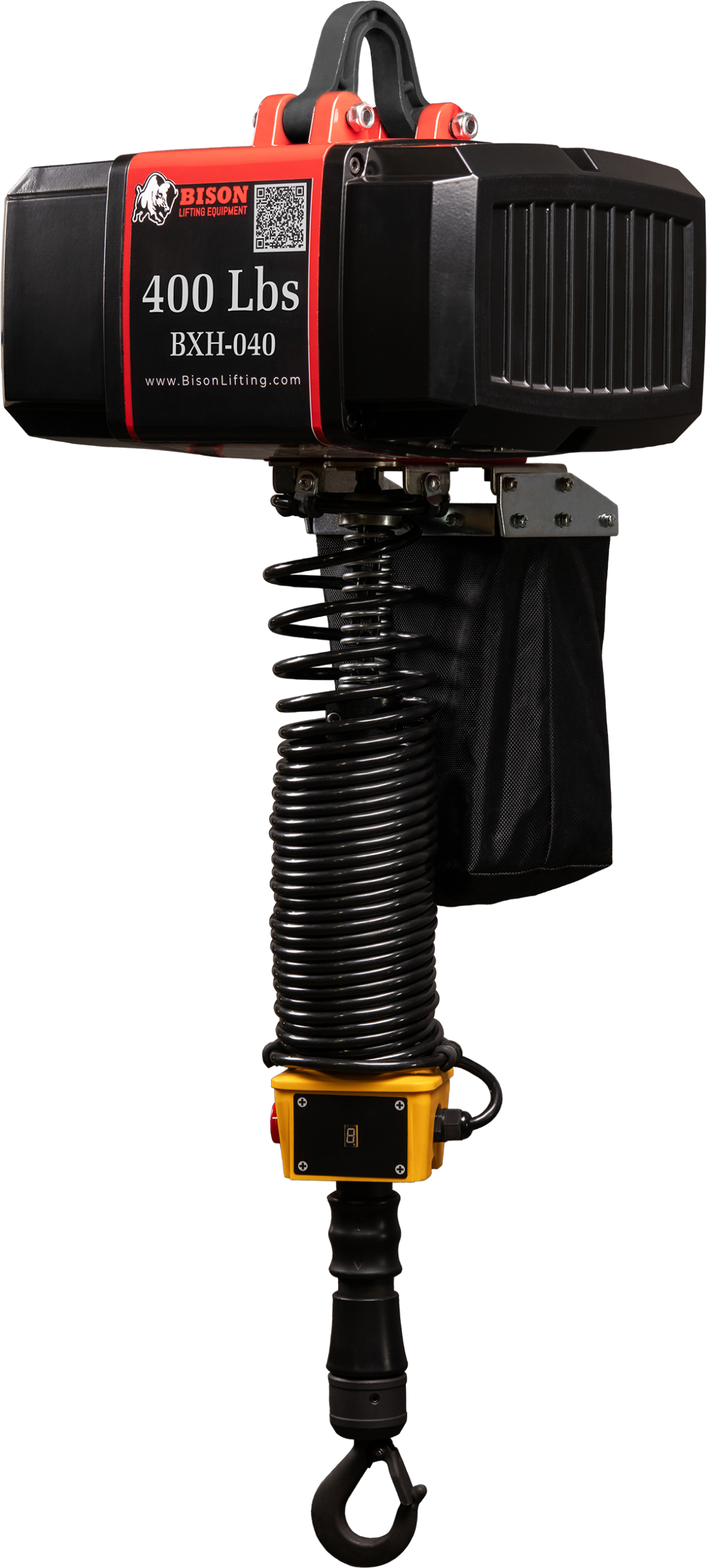
A chain hoist excels at lighter loads, versatile and tight environments, and precise straight-line vertical lifts. It's more compact and portable than a wire rope hoist, easier to move between jobs, and lower in cost. Chain hoists are common up to around 30 tons but are usually used well below that, in shops, maintenance, and general production. Their precision and compactness make them the default for most everyday lifting where loads are moderate. If you want a hoist that's flexible, easy to handle, and economical for light-to-moderate work, the chain hoist is the natural pick.
Wire rope hoist strengths
A wire rope hoist is built for the heavy end: heavier loads, continuous operation, and harsh-duty environments. It typically handles capacities from a few tons up to 30 tons and beyond, offers higher lift heights, and provides finer horizontal-positioning speed ranges, which matters in demanding production. It also lasts longer, often 20-plus years against roughly 10 for an electric chain hoist, so over a long, heavy service life it can be the better value despite a higher purchase price. For high-throughput, heavy, continuous lifting, the wire rope hoist is engineered to take it.
Cost and mobility
The trade-offs are cost and portability. Wire rope hoists cost more up front and are larger and less mobile, they're generally fixed installations on a crane or runway, not tools you carry to a job. Chain hoists cost less and are far more portable, some are light enough to move by hand between lift points. So if you need a hoist you can relocate, or you're on a budget for moderate loads, chain wins. If you're equipping a permanent heavy-lifting station and the hoist will run hard for decades, the wire rope hoist's higher cost buys durability and capacity.
Lift height and duty
Two specs often tip the decision. Lift height: wire rope hoists generally reach higher, an advantage in tall bays and deep lifts, while chain hoists are typically used for shorter lifts. Duty: wire rope hoists are designed for continuous, high-frequency operation, whereas chain hoists suit intermittent and moderate-frequency work. If your application demands long lifts and constant cycling, the wire rope hoist is built for it. If lifts are shorter and the hoist works intermittently, a chain hoist is more than adequate and cheaper. Match both height and duty to the hoist type.
Service life
Longevity favors wire rope in heavy service. An electric chain hoist commonly lasts around 10 years in typical use, while a wire rope hoist can run 20 or more, so for a hoist that works hard every day, the wire rope unit's longer life offsets part of its higher cost. For lighter, intermittent use, a chain hoist's lifespan is plenty and the lower price wins. Think about the total cost over the hoist's working life, not just the purchase, especially for a heavy-duty station where replacement and downtime are expensive.
Which should you buy?
Buy a chain hoist for light-to-moderate loads, tight or changing locations, precise vertical lifts, portability, and a lower budget, which describes most general lifting. Buy a wire rope hoist for heavy loads, continuous high-duty operation, tall lifts, and a long, hard service life, typically a permanent heavy-lifting installation. If you're unsure and your loads are moderate, the chain hoist's versatility and lower cost make it the safer default. Step up to wire rope when the weight, height, or duty genuinely exceeds what a chain hoist is built for. Our how to choose a hoist guide helps you decide.
The bottom line
A chain hoist is compact, portable, precise, and economical, ideal for lighter loads and general work; a wire rope hoist is heavier-duty, higher-lifting, and longer-lived, ideal for heavy, continuous operation, at a higher cost and less mobility. Choose chain for versatility and moderate loads, wire rope for heavy, high-duty, permanent lifting. Weigh capacity, lift height, duty, and total lifetime cost. We stock chain hoists for the general-lifting majority, see our what is a hoist and best electric chain hoists guides.
A note on capacity overlap
The two types overlap in the middle of the range, roughly a few tons up to around 30 tons, where either could work, and there the decision turns on duty and use rather than raw capacity. If a mid-range load is lifted intermittently and you value portability and cost, a chain hoist is fine. If the same load is lifted continuously in hard production, a wire rope hoist's durability and speed range suit it better. Below a few tons, chain hoists dominate; well above 30 tons, wire rope and specialized hoists take over. In the overlap, let duty and mobility decide.