The core difference
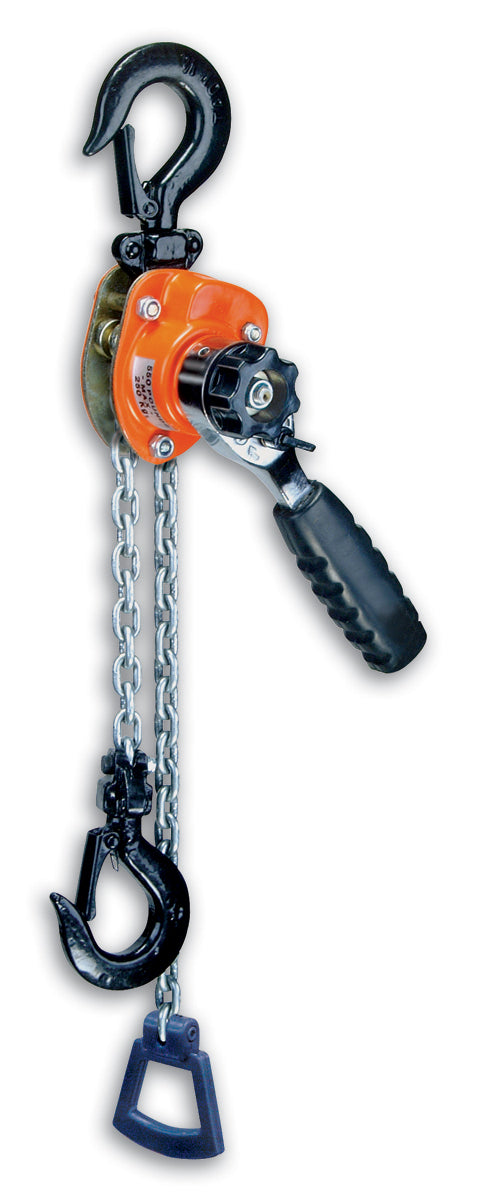
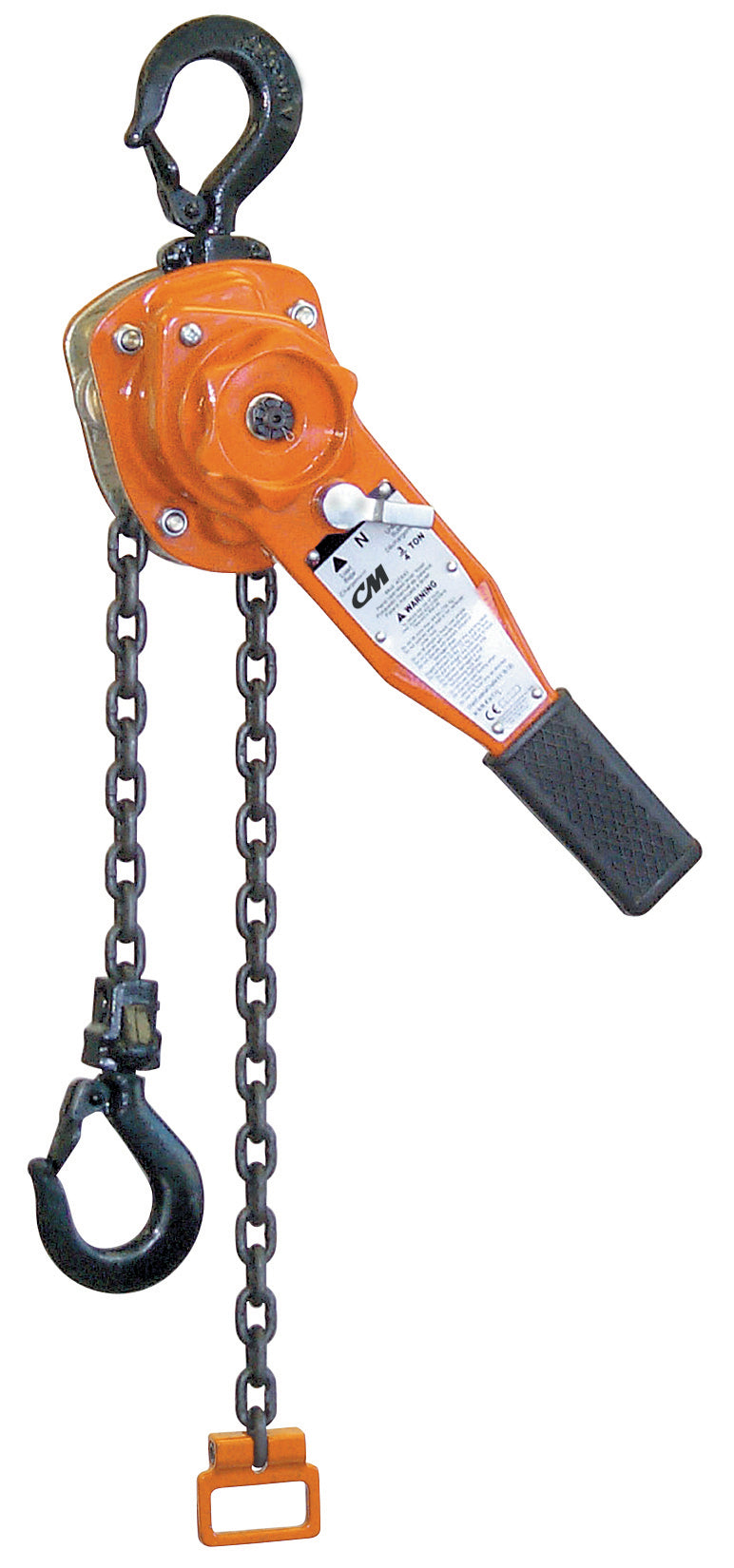
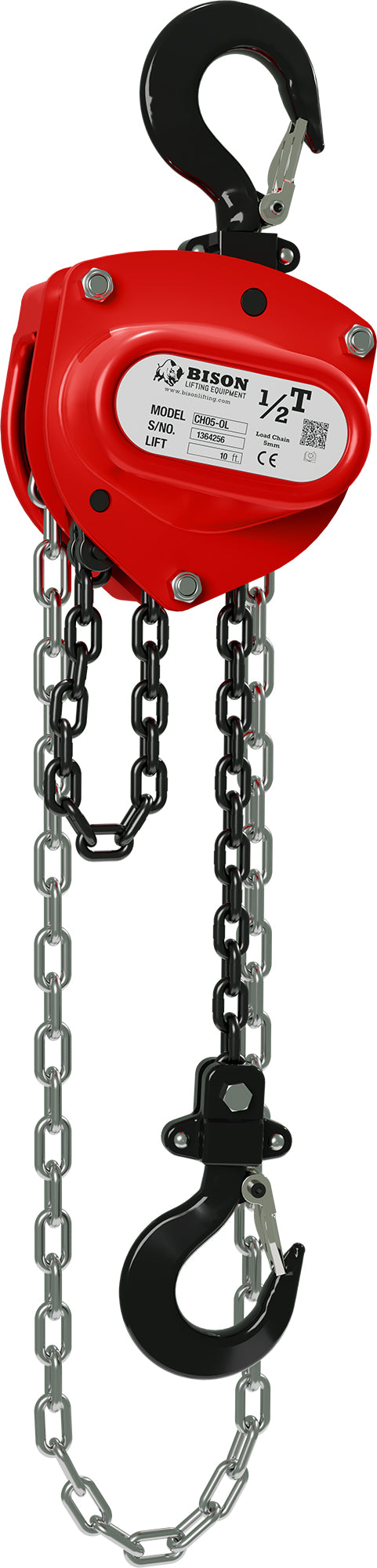
Both are manual hoists, but they operate differently and suit different tasks. A lever hoist, also called a ratchet lever hoist or come-along, uses a ratchet-and-pawl mechanism worked by cranking a hand lever back and forth. A hand-chain hoist is worked by pulling a continuous loop of hand chain, which turns gears to raise the load. The lever's one-handed cranking and the hand chain's two-handed pulling lead to their key distinction: the lever hoist works in any orientation, while the hand-chain hoist is built for vertical lifting.
The lever hoist's multi-directional advantage
The defining strength of a lever hoist is direction. Because it's cranked by a lever rather than a hanging pull chain, it lifts and pulls vertically, horizontally, and at any angle, which makes it the tool for rigging, tensioning loads, pulling equipment sideways, and applying controlled force in awkward positions. You can operate it one-handed, in tight spots where a pull chain wouldn't hang freely. For load binding, come-along pulling, and any job that isn't a straight overhead lift, the lever hoist is purpose-built, which is exactly why riggers keep them on hand.
The hand-chain hoist's vertical strength
A hand-chain hoist is optimized for straight vertical lifting, and it does that job well: pulling the hand chain gives smooth, controlled raising and lowering, and the mechanical advantage lets one person lift heavy loads. It typically needs both hands and enough room for the hand chain to hang, so it's less suited to horizontal or one-handed work. For a fixed-point overhead lift, hanging a load from a beam or hook and raising it, the hand-chain hoist is efficient and precise. It's the better choice when the task is genuinely vertical and you have the space.
Capacity and reach
The two also tend to differ in scale. Hand-chain hoists generally handle larger capacities and longer lifts, making them the choice for heavier vertical lifting. Lever hoists are often more compact, favoring portability and moderate loads over maximum capacity and height, though heavy-duty lever hoists exist. So for a big, tall vertical lift, the hand-chain hoist usually fits better; for a portable, multi-directional pulling and lifting tool you can carry to the job, the lever hoist wins. Match the tool to whether you need reach and capacity or portability and flexibility.
A note on terminology
The names can confuse, because usage varies. Some vendors call a wire-rope hand-ratchet puller a come-along and a chain-based version a lever hoist, but functionally they're the same idea: a lever-operated device for pulling and lifting. Come-along is often used loosely for any hand-lever puller. What matters is the mechanism (lever ratchet versus pull chain) and the capability (multi-directional versus vertical), not the label. When shopping, look past the name to how it's operated and what direction it works in, that tells you whether it fits your task.
When to use each
Use a lever hoist / come-along for rigging, load binding, tensioning, horizontal or angled pulls, one-handed operation, and tight spaces, anywhere the job isn't a simple straight lift. Use a hand-chain hoist for controlled vertical lifting from a fixed overhead point, especially heavier or taller lifts where you have room for the hand chain. Many rigging kits include both, since they cover different needs. Neither replaces the other; they're complementary manual hoists. Pick by the direction of the work and whether portability or capacity matters more.
Safety for both
Whichever you use, the safety fundamentals are the same. Both are rated for a maximum capacity that must never be exceeded, both must be inspected before use and periodically under ASME B30 standards, and both should be used only within their rated direction and application. A lever hoist's ratchet and a chain hoist's brake both hold the load, but worn or damaged units can fail, so inspection matters. And for overhead lifting specifically, use only a hoist rated and intended for lifting. Respect the capacity, inspect the gear, and use each tool for its intended job.
The bottom line
A lever hoist (come-along) is lever-operated and works in any direction, making it the tool for rigging, tensioning, and horizontal or angled pulls, while a hand-chain hoist is pull-chain operated and built for controlled vertical lifting, usually at larger capacities. Choose the lever hoist for multi-directional, portable, one-handed work and the chain hoist for straight overhead lifts. Both are rated tools that demand respect for their capacity and inspection. See our full what is a hoist guide for how they fit the wider hoist range.
Common uses for each
To make it concrete: reach for a lever hoist to tension a load, pull a piece of equipment into position, bind a load for transport, or make a lift in a spot too tight for a hanging pull chain, its lever and multi-directional pull shine there. Reach for a hand-chain hoist to lift an engine, a motor, or any heavy load straight up from a beam or gantry, where its capacity, reach, and smooth vertical control do the job. Riggers and maintenance crews typically carry both, because a day's work often includes both a sideways pull and a straight lift.