Container Lifting Lugs
Container lifting lugs are the corner hardware that turns a shipping container into something a crane or hoist can hang from, dropping into the ISO corner castings and twistlocking in place. This collection is the connector-and-sling half of container lifting: the lugs that clip to the box and the bottom-lift sling that rigs beneath it, as opposed to the beams and frames that carry the weight. It is built around Camlok top lugs and Tandemloc, the North Carolina maker that engineers container rigging in the United States. A single Tandemloc top lug is rated 25,000 lb and a Camlok set of four holds 123,480 lb for the group, while the Tandemloc rotary lug carries 33,600 lb and swivels to follow an angled sling. Prices run from a few hundred dollars for one lug up to the high four figures for a full load levelling bottom lift sling. What you buy comes down to whether you pick the box from the top or the bottom, and whether a spreader keeps the pull vertical for you.
Compare Container Lifting Slings & Rigging
| Model | Price | Capacity | |
|---|---|---|---|
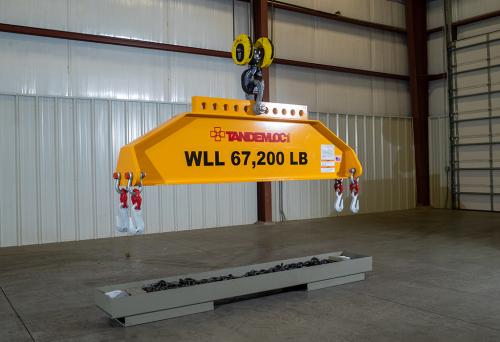
| Tandemloc Autoloc Spreader Container Lifting Frame | $33,249 | 67,200-70,000 lb | View → |
| Tandemloc Load Levelling Bottom Lift Sling for ISO Containers | $19,927 | — | View → |
| Tandemloc ISO Container Spreader Beam | $9,544 | 52,900-67,200 lb | View → |
| Tandemloc 6 Inch Corner Caps | $6,204 | 67,880 lb | View → |
| Camlok Container Lifting Lugs (Set of 4EA) | $1,205 | 88,100-123,480 lb | View → |
| Tandemloc Rotary Container Lifting Lug | $650 | 33,600 lb | View → |
 In Stock
 In Stock
 In Stock
 In Stock
 In Stock
 In Stock
 In Stock
Container Lifting Slings & Rigging Buying Guide
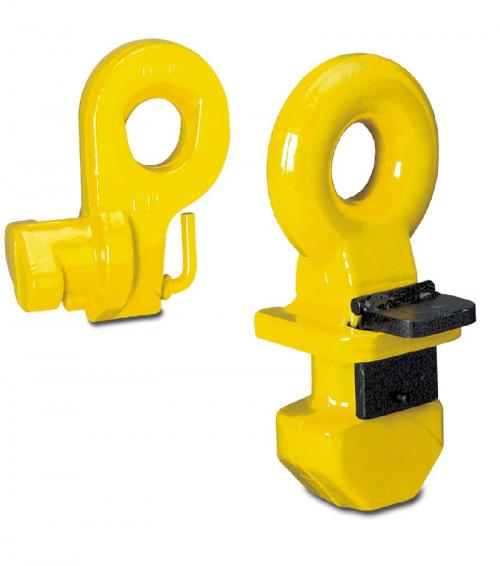
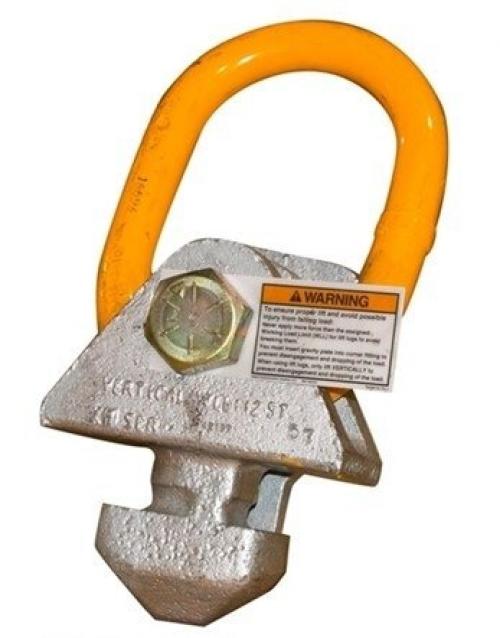
What a container lifting lug is, and what it is not. A container lifting lug is the connector between a lifting line and one corner of the box. It drops into the aperture on an ISO corner casting and turns a quarter turn to lock, and a retaining pin keeps it from backing out under load. Four of them, one per top corner, turn a container into a four-point pick. The castings are identical on every compliant box because ISO 1161 fixes their dimensions, which is why a Camlok set or a Tandemloc top lug fits any container that meets the standard, regardless of who built it. What a lug does not do is set the direction of pull. It gives you a rated attachment point and nothing more, so the geometry of the lift, whether the lines run straight up or gather at an angle, is on you and the rest of the rigging. That one fact drives every other choice on this page.
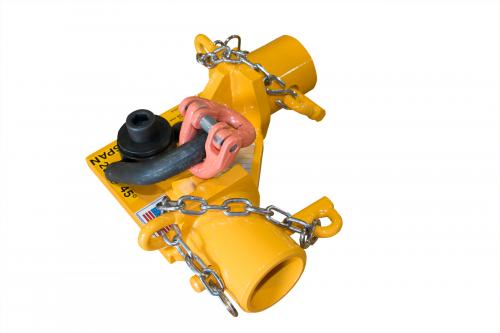
Top lugs and rotary lugs behave very differently. Lugs split into two families. A top lug seats in the top aperture of the corner casting and is built for a straight vertical pull only: the Tandemloc 20901AA top lug at 25,000 lb and the Camlok set at 123,480 lb for the group are top lugs, and both assume a spreader or vertical slings above them. A rotary lug is the other answer. It seats in the casting and its bail rotates to line up with the sling, so you can run angled slings from the four corners down to a single hook without crushing them inward, as long as the angle stays above 30 degrees to horizontal. The Tandemloc rotary lug at 33,600 lb is the one to reach for when there is no spreader in the building and the pick has to gather to one hook. Below 30 degrees the leg tensions climb out of range and the method is off limits, rotary lug or not.
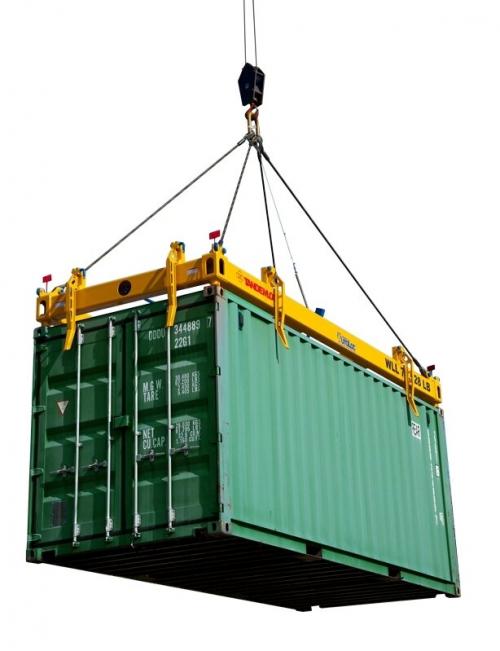
The vertical-pull rule that shapes every choice. The reason top lugs demand a spreader comes straight from ISO 3874, the standard for handling freight containers. It allows a packed container to be lifted by the four top corner fittings only with a spreader or with vertical slings and chains; angled slings pulling inward on the castings are not permitted, because the corners are not built to take load in that direction. So a set of top lugs is half a lift. The other half is a container spreader or beam that holds the four lines apart and vertical, or enough headroom to run genuinely vertical slings straight off the hook. Decide the sling angle before you buy the lugs, not after the box is in the air, and if you cannot keep the legs vertical, a rotary lug or a spreader is the honest fix.
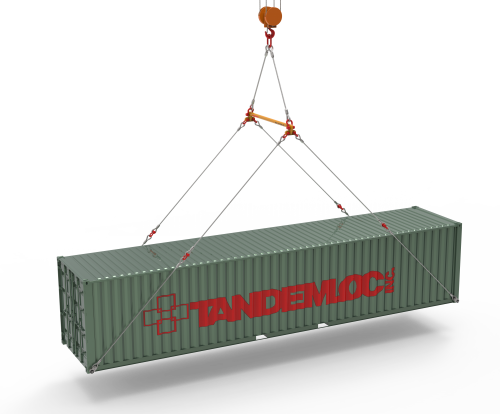
Bottom lifting when the top corners are blocked. Bottom lifting picks the box from its four lower corner fittings instead of the top, which is the move when the top corners are stacked on, obstructed, or you need the lowest possible headroom. It carries the same rule in reverse: run plain slings up to one hook from the bottom fittings and they drag inward against the top rails and crush the box. The Tandemloc load levelling bottom lift sling for ISO containers solves that with built-in geometry that holds each leg clear of the container and shares the weight evenly across all four corners. It is rated 67,200 lb, matching a fully loaded box, and it is the priciest single item in this collection for that reason. When the top is available, lugs and a spreader come cheaper; when it is not, this sling is the clean answer.
Match the lug to your heaviest container. Size the lug to the worst case, not the average pick. A general purpose ISO container, 20 ft or 40 ft, shares the same maximum gross weight of 67,200 lb, so a loaded short box can be every bit as heavy as a long one. Split across four corners in a clean vertical pick that is a little under 16,800 lb per corner, which is why a 25,000 lb top lug covers a full container with real margin and the Camlok set at roughly 30,870 lb per corner covers it comfortably. Buy a matched set of four rather than mixing lug types across the corners, and confirm the rating against both your container size and the way you actually rig it. The same modular logic behind the general lifting spreader bars applies here: the headline number means nothing until you tie it to the geometry you will lift at.
Marking, proof testing, and inspection. A lug used to lift a load hangs below the hook, which puts it under ASME B30.20 for below-the-hook lifting devices, the same discipline as the beams and slings around it. Each lug carries its rated load and a serial number, gets proof tested before first use, commonly to 125 percent of its rating, and takes a documented periodic inspection on top of the quick visual every operator owes it before a lift. Look at the twistlock, the retaining pin, and the casting seat every time, and pull any lug with a cracked body, a worn pin, or a bail that no longer rotates freely. Keep the proof-test certificate with the set. The rest of the range sits one level up in container lifting equipment, with the frames and beams in container spreaders and beams and skates for sliding a landed box in container moving carts.
Frequently Asked Questions
Each lug drops into the aperture of an ISO corner casting and turns a quarter turn to twistlock, with a retaining pin that keeps it from backing out under load. A set of four, one in each top corner, turns the container into a four-point pick, and every compliant casting takes the same lug because ISO 1161 fixes their dimensions. The lug gives you a rated connection point; it does not control the angle the slings pull at, which is why the rest of the rigging still matters.
Only if the slings pull vertically. ISO 3874 permits lifting a packed container by the top corner fittings with a spreader or with vertical slings and chains, but angled slings pulling inward on the castings are not allowed. Top lugs therefore need a spreader or true vertical headroom above them. If you have no spreader and the legs must gather to one hook, use rotary lugs, which rotate to follow the sling as long as the angle stays above 30 degrees to horizontal.
A top lug seats in the top aperture and is built for a straight vertical pull, so it assumes a spreader or vertical slings above it; the Tandemloc 20901AA and the Camlok set are top lugs. A rotary lug swivels to line up with the sling, so it lets you run angled slings from the four corners down to a single hook, provided the angle stays above 30 degrees. Pick the top lug when a spreader keeps the pull vertical, and the rotary lug when the pick has to gather to one hook without one.
Size to the maximum gross weight, which is 67,200 lb for a general purpose ISO container whether it is 20 ft or 40 ft, since a loaded short box can be as heavy as a long one. In a clean vertical four-point pick that is a little under 16,800 lb per corner, so the 25,000 lb Tandemloc top lug covers a full container with margin, and the Camlok set at roughly 30,870 lb per corner covers it comfortably. Buy a matched set of four and confirm the rating against your container size before the first lift.
Yes. A lug used to lift a load is a below-the-hook lifting device under ASME B30.20, so each is marked with its rated load and serial number, proof tested before first use, commonly to 125 percent of its rating, and given a documented periodic inspection on top of a visual check before every lift. Check the twistlock, the retaining pin, and the casting seat each time, retire any lug with a cracked body or a bail that will not rotate freely, and keep the proof-test certificate with the set.