Conveyor Systems
Conveyor systems move a load along a fixed path with almost no operator effort, which is what separates them from every wheeled cart and truck in the wider [material handling](/collections/material-handling-equipment) catalog. This is a focused Vestil lineup built around two ideas: gravity roller sections that carry boxes and totes down a line, and ball transfer platforms that let a worker slide and spin a load in any direction at a station. Prices run from a few dollars for a single ball transfer up to a little over three thousand for an expandable roller line that stretches to reach a trailer. Nothing here is powered, so there is no motor, no controls, and no wiring day. The load moves because you push it, or because the line is pitched to let gravity do the work. Pick by the job the conveyor does, then by the size and weight of what rides on it, and the shortlist gets very short very fast.
Compare Conveyor Systems
| Model | Price | Capacity | |
|---|---|---|---|
| Vestil Expandable Roller Conveyors | $3,402 | — | View → |
| Vestil Roller Conveyors | $854 | 5,000 lb | View → |
| Vestil Ball Transfer Platforms | $535 | 75 lb | View → |
| Vestil Pop-Up Ball Transfer Platforms | $516 | 250-500 lb | View → |
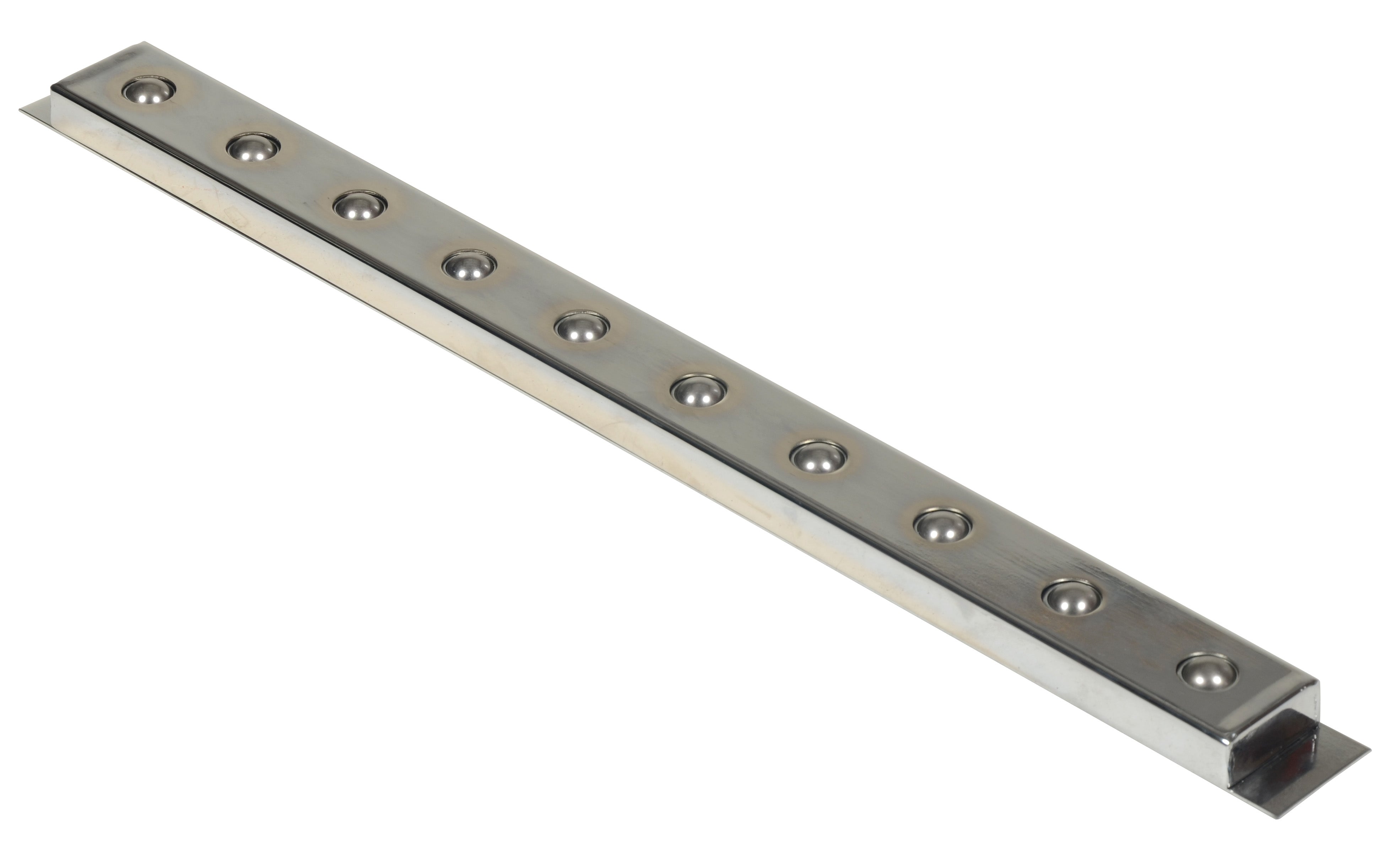
| Vestil Ball Transfer Strips & Single Ball Transfers | $65 | 75 lb | View → |
 In Stock
 In Stock
 In Stock
 In Stock
 In Stock
Conveyor Systems Buying Guide
Gravity does the work here. Every conveyor on this page is unpowered, which keeps the buying decision simple. On a level roller line the push needed to start a load moving is roughly 3 percent of its weight, so a 200 lb tote takes only a few pounds of hand pressure to send down the rollers. Pitch the line downhill and gravity takes over: a common starting point is about half an inch of drop per foot of length, less for heavy loads that would otherwise run away, and more for light or irregular items that stall. Because there is no motor, there is nothing to wire, no controls to spec, and no powered-equipment training to schedule. The trade is that a person or gravity has to supply the energy, so these lines fit short runs, packing benches, dock work, and the gaps between other machines rather than long automated transport across a plant.
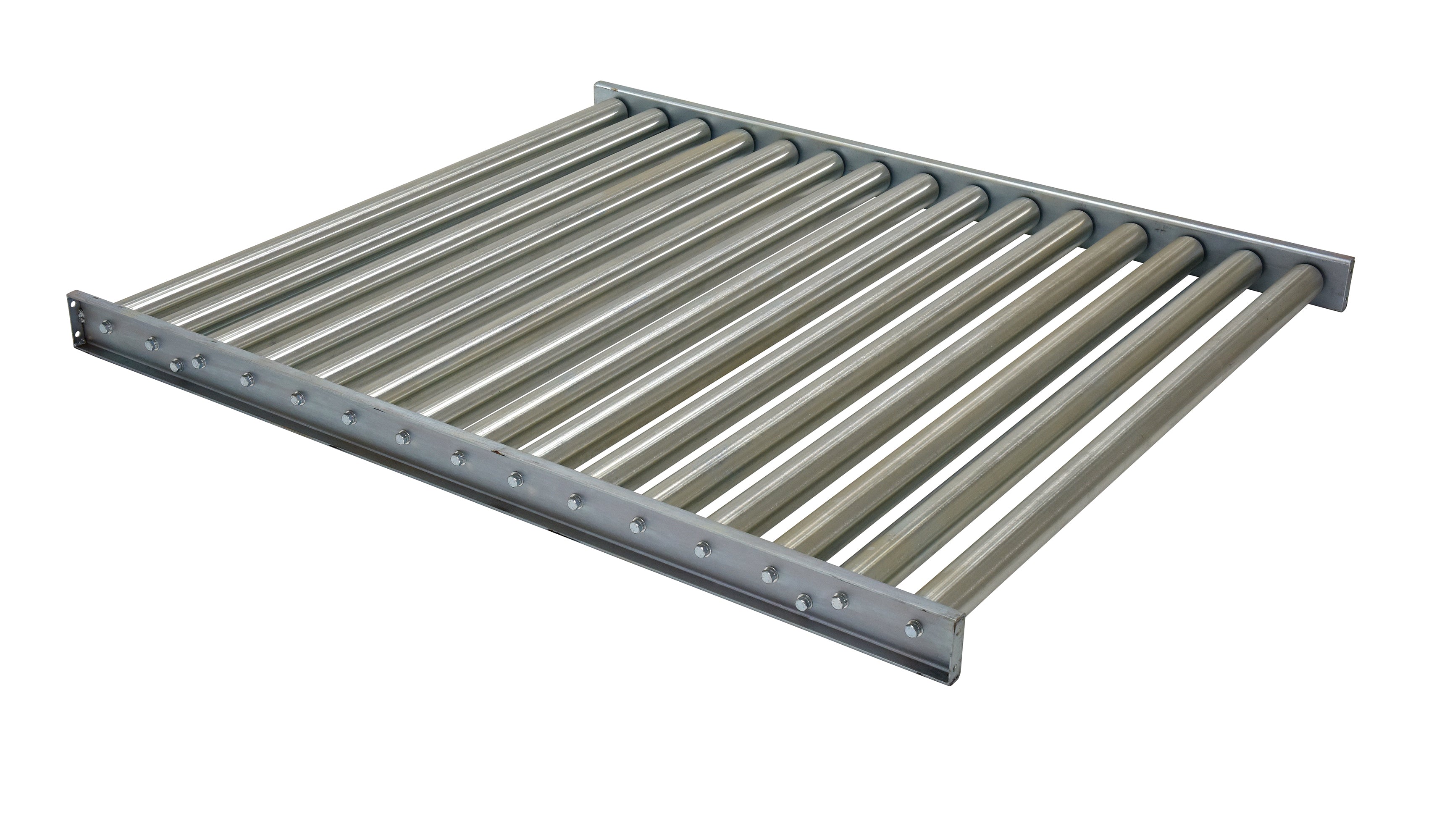
Roller conveyor: match the spacing to your shortest box. The straight gravity roller section is the workhorse, and Vestil sells a standard length here for around 854 dollars. The one rule that decides whether a roller line works is spacing: keep at least three rollers under the load at all times, which means the roller centers can be no more than a third of your shortest package length. A 12 inch box wants centers of 4 inches or tighter, or it drops nose-first into the gap between rollers and stops. Roller conveyor suits firm, flat-bottomed loads such as cartons, totes, and small crates. Anything with an open bottom, a rim, or a soft sag rides better on closer centers or on skate wheel, so measure your worst case, not your average, before you set the pitch.
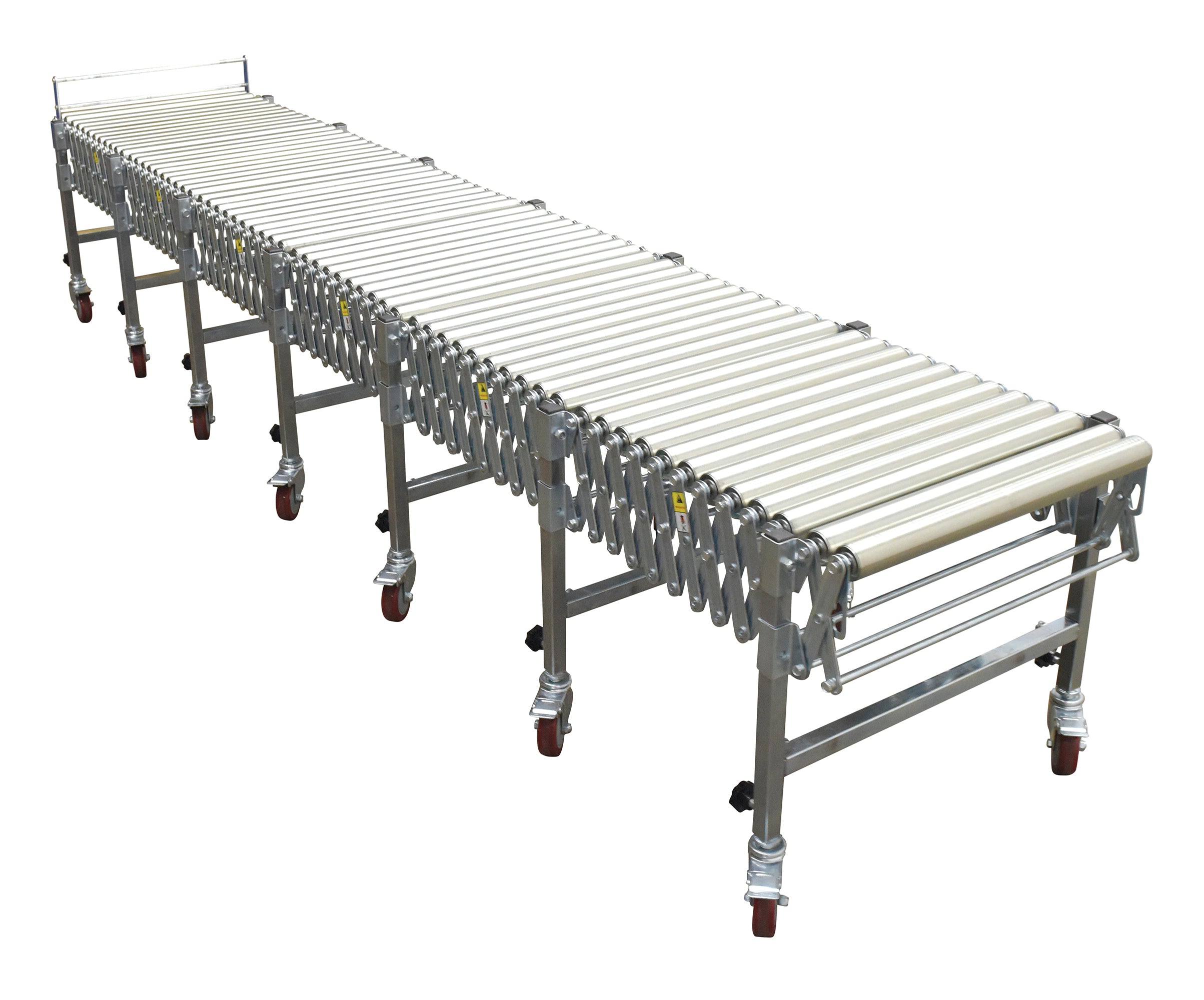
Expandable roller conveyor: the line that comes to the trailer. When the conveyor has to move to the work instead of the work moving to it, the expandable roller conveyor is the answer, priced around 3,375 dollars with a 200 lb per section rating. It concertinas out to bridge a dock to a trailer, then contracts and rolls out of the way when the truck leaves, and it curves so a single unit can swing between two dock doors or track around an obstacle. This is the tool that empties or loads a trailer one carton at a time without an operator carrying anything more than a few feet. Watch the capacity: at 200 lb it is built for boxes and parcels, not palletized freight, so keep heavy skids on the pallet jacks and stackers and let the expandable line handle what people would otherwise hand-stack.
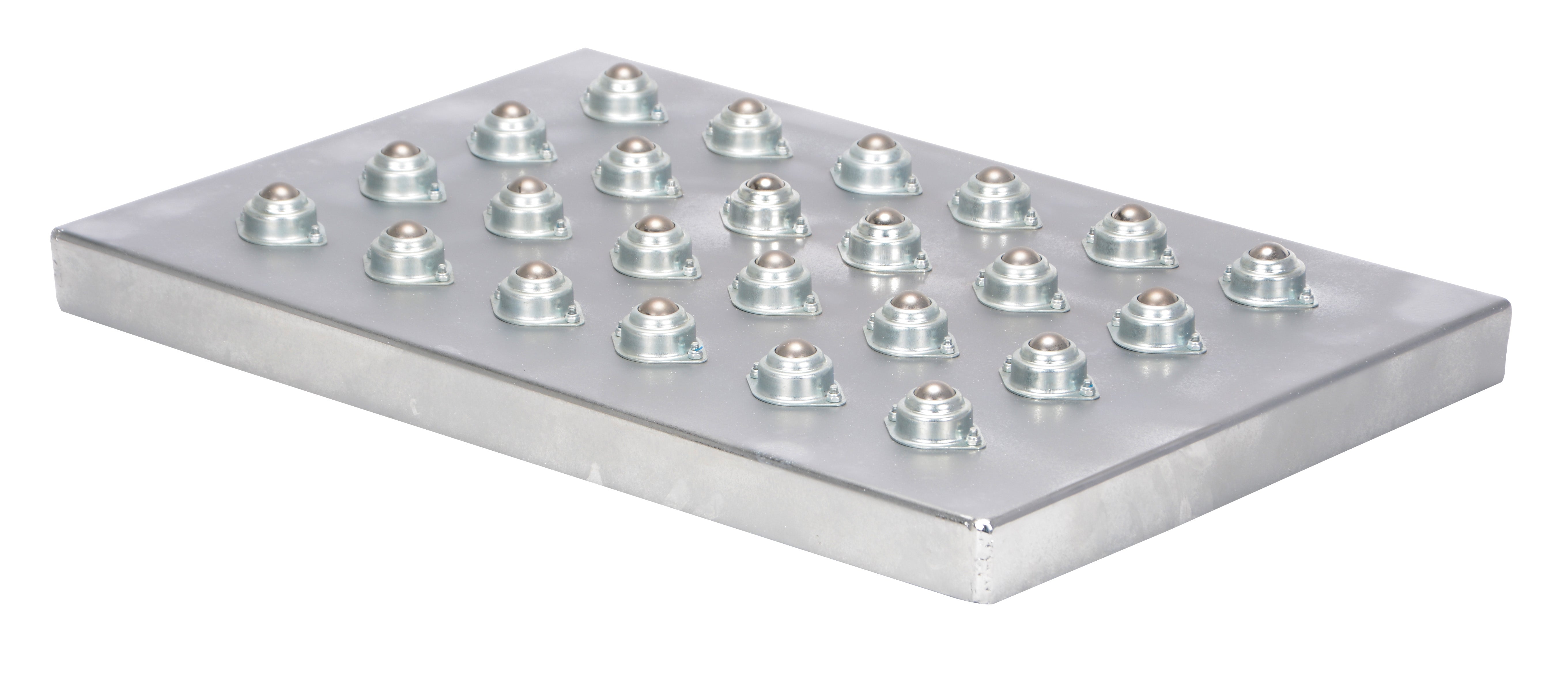
Ball transfer platforms: move and rotate at the station. A roller line moves a load one direction. A ball transfer platform moves it any direction. Vestil builds these as a flat grid of load-bearing balls, each sitting on smaller support balls so it rolls 360 degrees under light push, in sizes from 18 by 28 inches up to 40 by 48 inches and roughly 534 to 1,190 dollars depending on the footprint. The point is manual positioning: slide a box square to a taping head, spin a part to face the operator, or merge two lines where packages have to be nudged onto a new path. The same three-contact logic as rollers applies, so keep at least three balls under the load, which the tighter grids do easily. These platforms pair naturally with a lift table when the job is to hold work at the right height and turn it, not carry it somewhere.
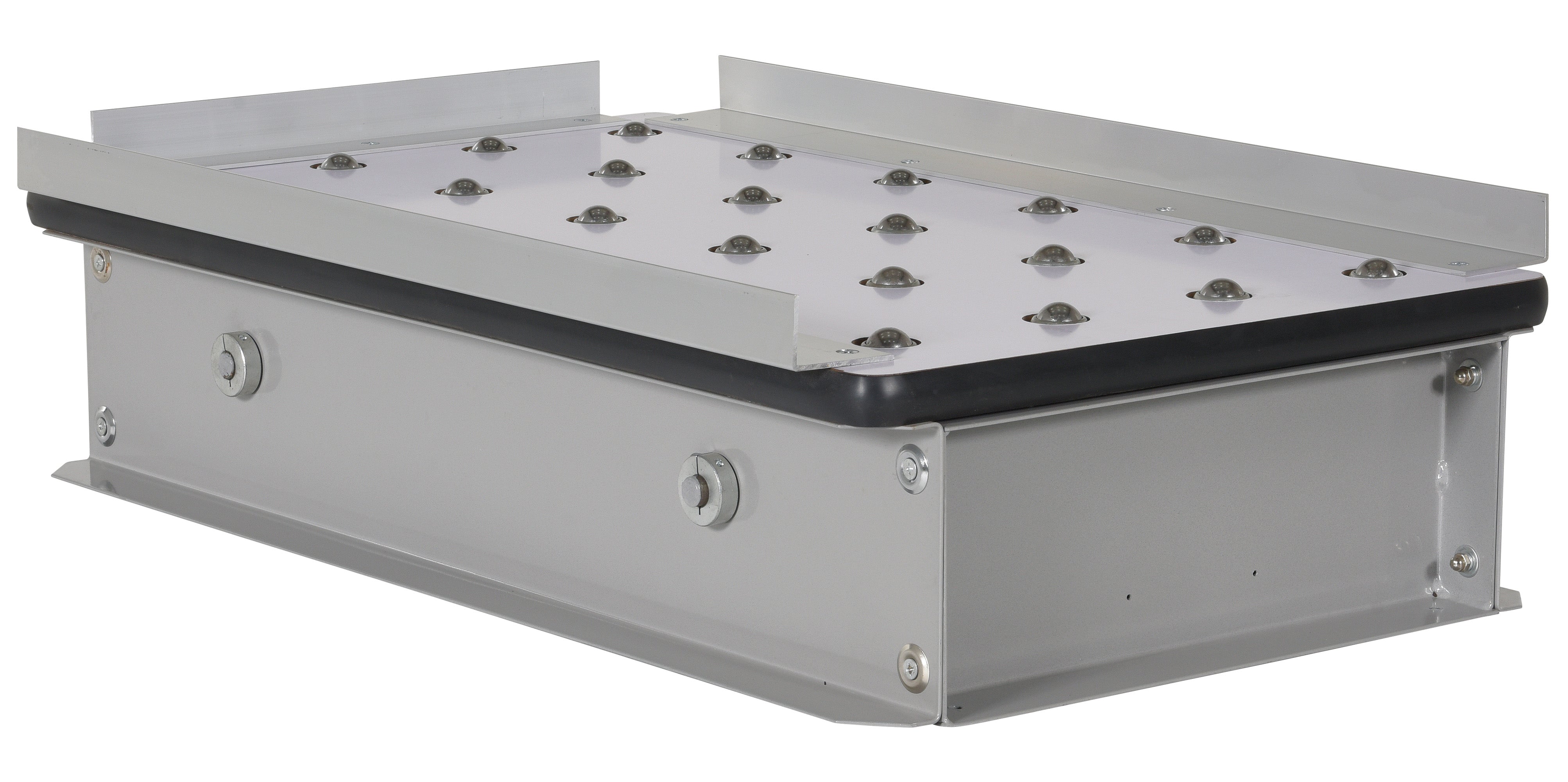
Pop-up transfers and single balls: build the surface you need. Two products let you shape the transfer yourself. The pop-up ball transfer platform, about 516 to 940 dollars in 19 by 32 and 40 by 48 inch sizes, sits flush until it is raised above the surrounding roller line, at which point the balls lift the load clear and let it move off at a right angle before dropping back. That is how you divert or turn a package off a straight run without a mechanical pusher. The strips and single ball transfers, from about 6 dollars for one ball up to roughly 125 dollars for a 60 inch strip, are the raw components: drop them into a workbench, a chute end, or a custom fixture to add low-friction, multi-direction movement exactly where a full platform will not fit. Between the two, most odd transfer points can be solved without a custom machine.
Capacity, safety, and where conveyors sit in the flow. Rate every section over your heaviest real load with margin, the same discipline as any lifting gear, and remember that a platform rated for boxes is not rated for a full pallet. Even unpowered conveyors fall under ASME B20.1, the safety standard for conveyors and related equipment, which covers guarding at pinch points, keeping hands clear of moving rollers, and safe loading practice, so brief anyone working a line and guard transfer nips where loads change direction. The last question is how loads reach the conveyor and leave it. Cartons come off a truck by hand or on the expandable line, but pallets and heavy unit loads still need forklift trucks, pallet jacks, or hand trucks and carts at each end. A conveyor is the middle of the flow, not the whole of it, so plan the handoffs before you plan the line.
Frequently Asked Questions
All of them are unpowered. The roller conveyors move loads by hand push or by gravity when the line is pitched downhill, and the ball transfer platforms move loads by hand in any direction. There is no motor, no electrical hookup, and no powered-equipment operator training to schedule, which keeps both the purchase and the install simple. If you need continuous powered transport over a long distance, this gravity and manual lineup is not the right tool.
Keep at least three rollers under the load at every point along the line. In practice that means the roller centers should be no more than one third of your shortest package length, so a 12 inch box needs centers of about 4 inches or less. If the spacing is too wide, short or soft-bottomed items dip into the gap between rollers and stall, so always size the spacing to your smallest, least rigid load rather than the average one.
It is a work surface covered with a grid of small rotating balls that let an operator slide and spin a load in any horizontal direction with light effort. The common uses are positioning a box square to a packing or labeling station, rotating a part to face the worker, and merging or transferring items where two lines meet. Vestil offers them from 18 by 28 up to 40 by 48 inches, so match the platform to the largest item that has to sit fully supported on it.
A general starting point is about half an inch of drop per foot of conveyor length, but it depends on the load. Heavier items need less slope or they accelerate too much, while light or irregular items need more slope to keep moving. The reliable method is to test the pitch with both your lightest and your heaviest real loads before committing, since the goal is steady flow without runaway speed.
A standard platform keeps its balls in a fixed position and works as an always-active positioning surface. A pop-up platform sits flush with the surrounding roller line until it is raised, lifting the load clear of the rollers so it can move off at a right angle, then lowering again. Use the standard platform for a dedicated hand-positioning station, and the pop-up when you need to divert or turn a load off a straight conveyor run.
Generally no. This lineup is sized for cartons, totes, and parcels, and the expandable roller sections are rated around 200 lb, which is box territory rather than palletized freight. Move full pallets and heavy unit loads with forklift trucks, pallet jacks, or stackers, and let the conveyor handle the lighter items a person would otherwise carry or hand-stack. Always confirm the rating of the specific section against your heaviest real load.