Winch Remote Control
A winch remote control is the pendant station and motor starter that let an operator run a Thern electric power winch from a safe distance, hands off the drum and eyes on the load. This is a small, focused collection of the control gear Thern builds to pair with its power winches: drum-mounted control switches in standard NEMA 1 and watertight NEMA 4 enclosures, single-speed reversing motor starters that drive motors up to 60 horsepower, and variable-speed starters that meter line speed through a three-step push button. Every unit here ships with a pendant on a long cord, so the person at the controls stands clear of the rope and the pinch points. The guide below sorts them by how much speed control the job needs and what the environment demands of the enclosure.
Compare Electric Winch Controls
| Model | Price | Brand | Control Type | Motor Compatibility | Enclosure | |
|---|---|---|---|---|---|---|
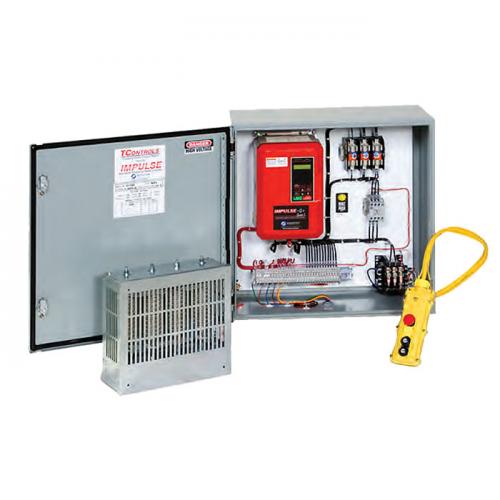
| Thern Electric Motor Controls - Variable Speed Reversing Motor Starters | $6,610 | Thern | Reversing, 10:1 infinitely variable-speed electric motor control | 3-phase 230 VAC motors 1-25 hp, or 3-phase 460 VAC motors 1-60 hp (voltage/phase specified at order) | NEMA 12 rated steel enclosure (indoor); NEMA 4 watertight enclosure available | View → |
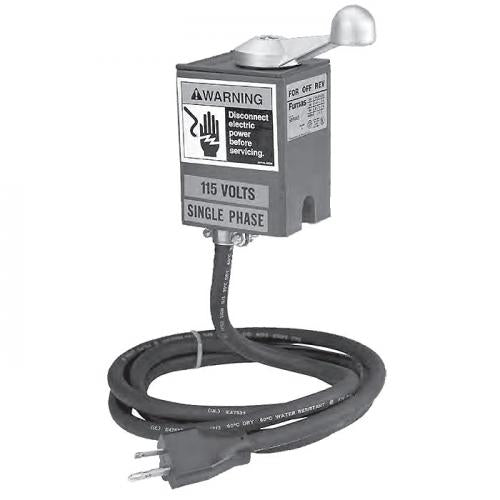
| Thern Electric Motor Controls - Single Speed Reversing Motor Starters | $1,910 | — | — | — | — | View → |
Electric Winch Controls Buying Guide
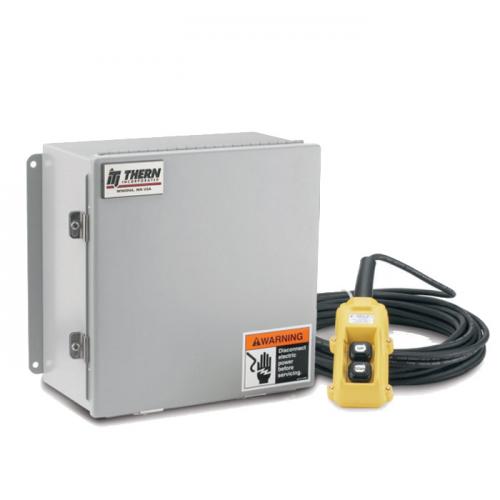
The pendant is the remote, and it keeps you off the drum. Each of these controls terminates in a hand-held pendant on a cord, usually 50 feet of it, wired to momentary-contact push buttons that only run the winch while you hold them down. That length is the whole point: it puts the operator well back from the drum, the wire rope, and the load, where a snapped line or a fouled lay cannot reach. The pendant itself carries a NEMA 4 rating so it survives being set down in a wet bay or dragged across a shop floor. Treat the cord as part of your inspection routine, because a cut jacket or a stuck button is the fastest way a remote turns into a hazard.
Single speed or variable speed. The Thern single-speed reversing motor starters run the winch one direction or the other at full motor speed, with the reversing contactors electrically and mechanically interlocked so the motor can never be commanded both ways at once, plus thermal overload protection on the circuit. They cover a wide motor range, from small 1.5 horsepower units up to 60 horsepower, and start around $1,720. When the job needs the load to creep into position, the variable-speed reversing motor starters give three steps of infinitely adjustable speed off the pendant, so the operator can inch a load the last few inches instead of bumping it. That control costs more and spans the widest price range in this group, which is the trade for precise, repeatable positioning.
Match the enclosure to where the control lives. Enclosure rating decides where a control can safely mount. NEMA 1 is an indoor, dry rating that keeps out fingers and falling dirt but offers no protection against water, so it belongs in a clean, sheltered switch room. NEMA 4 is watertight, built to shrug off hose-down washdown and driven spray, which is what you want anywhere near a wet process or an outdoor tie-in. Thern's drum control switches are offered both ways, in NEMA 1 from $546 and in watertight NEMA 4, so you buy the box the location calls for. The variable-speed starters come in a NEMA 12 enclosure rated against dust and dripping oil, paired with the watertight NEMA 4 pendant on the operator end.
Buy the control for your winch, not off a shelf. These are not universal remotes. A motor starter has to match the winch motor it drives, so confirm voltage, phase, and horsepower against your winch before ordering, and note that the single-speed units are built around a 115-volt control circuit. Thern ships the controls separately from the winch, to be mounted and wired by a qualified electrician, not plugged in out of the box. If you are still choosing the winch these will run, start in industrial electric winches and the broader winches collection, then come back here and spec the control to the motor you land on.
Frequently Asked Questions
It is the combination of a motor starter and a hand-held pendant that lets an operator run an electric power winch from a distance. The pendant, on a long cord, carries the push buttons; the starter is the switchgear that actually powers and reverses the winch motor. Together they keep the operator away from the drum and the load line while the winch runs.
No. Each Thern motor starter is sized to a specific motor, so you have to match its voltage, phase, and horsepower to the winch you are running. The controls also ship separately from the winch and are meant to be mounted and wired by a qualified electrician, not connected out of the box. Confirm compatibility with the winch spec before ordering.
A single-speed reversing motor starter runs the winch at full motor speed in either direction, with interlocks that prevent both directions at once. A variable-speed starter adds a three-step, infinitely adjustable speed control on the pendant, letting the operator slow the line to inch a load into position. Variable speed costs more and is worth it for precise placement work.
NEMA 1 is a basic indoor rating that keeps out contact and falling dirt but gives no water protection, so it suits dry, sheltered locations. NEMA 4 is watertight, built to withstand washdown and driven spray, which makes it the right choice near wet processes or outdoors. Thern's drum control switches are offered in both so you can match the enclosure to the environment.
No. The controls in this collection use a corded pendant, typically on a 50-foot cable, rather than a radio transmitter. The long cord still lets the operator stand well clear of the winch and the load while keeping the push buttons in hand.
It is the switchgear that lets a winch motor run in both directions, raising and lowering or paying out and hauling in. Thern's units use reversing contactors that are electrically and mechanically interlocked, so the motor cannot be driven two ways at once, and they include thermal overload protection to shut the motor down before it burns up.