Stainless Steel Lifting Chain
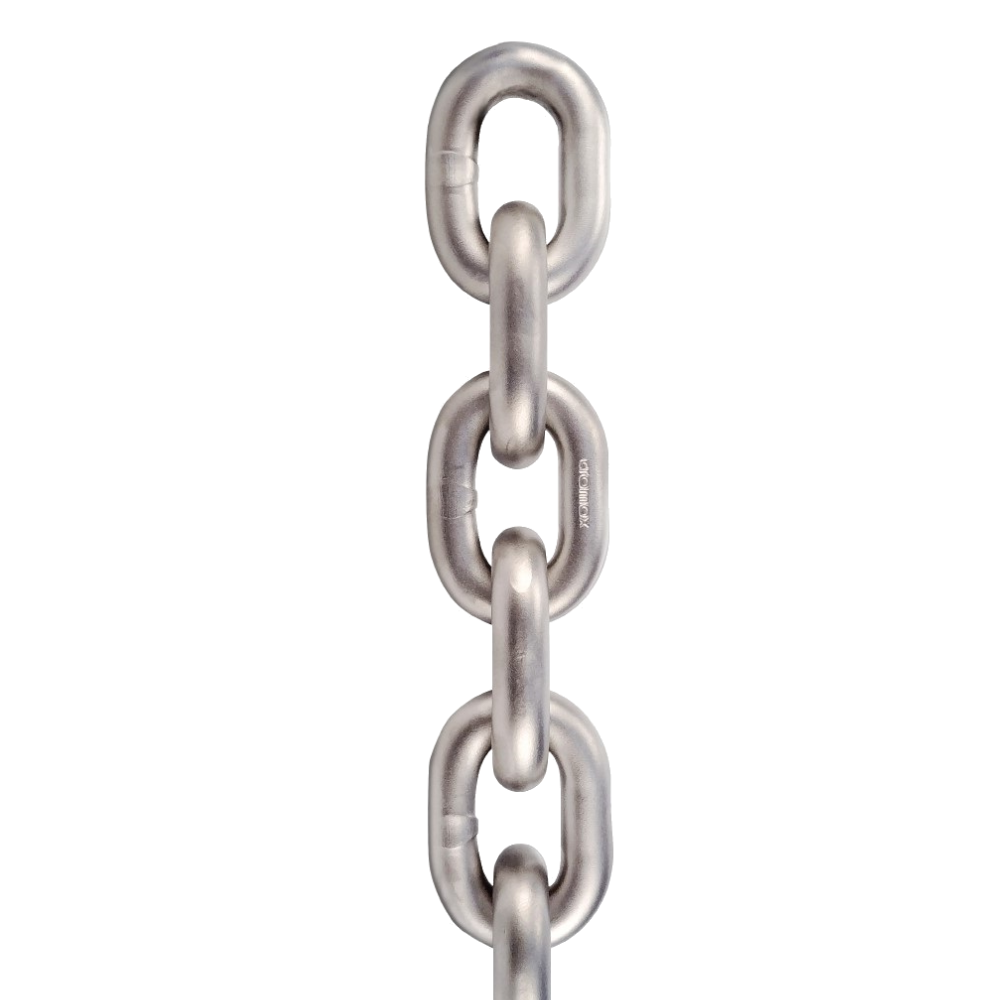
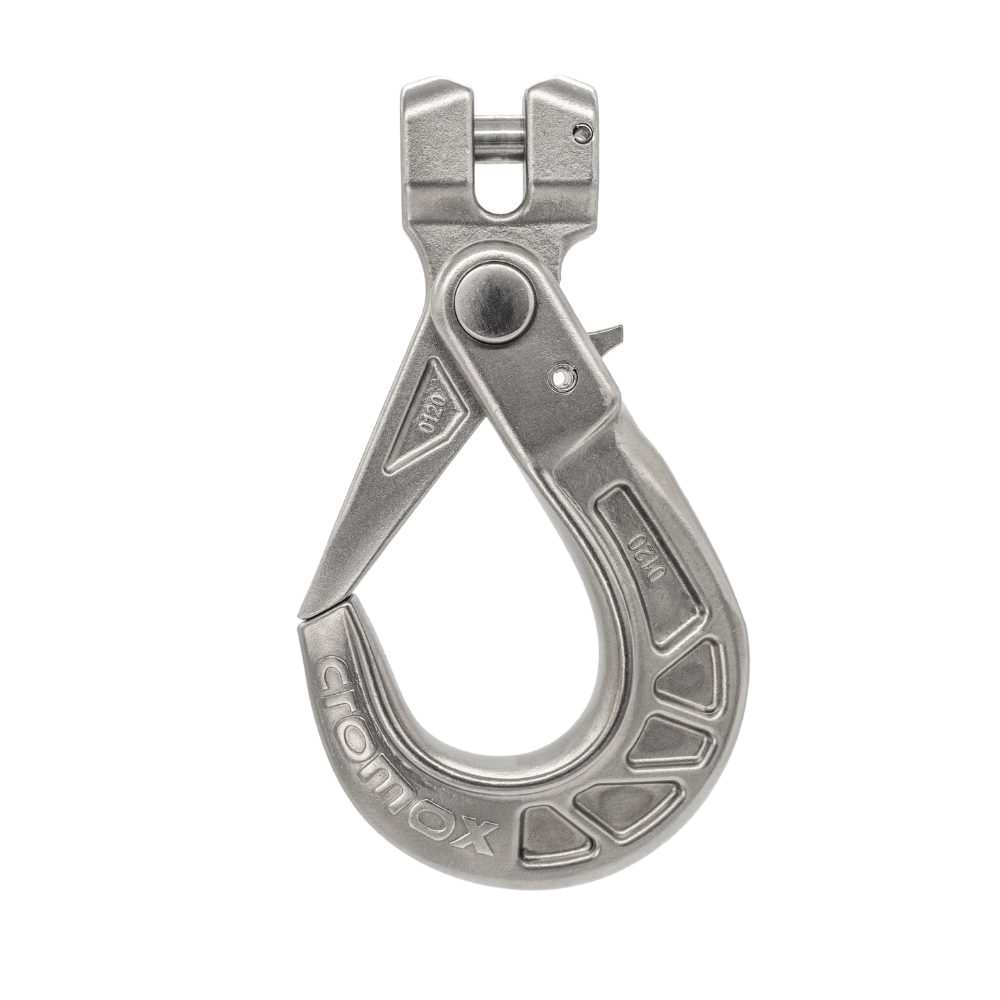
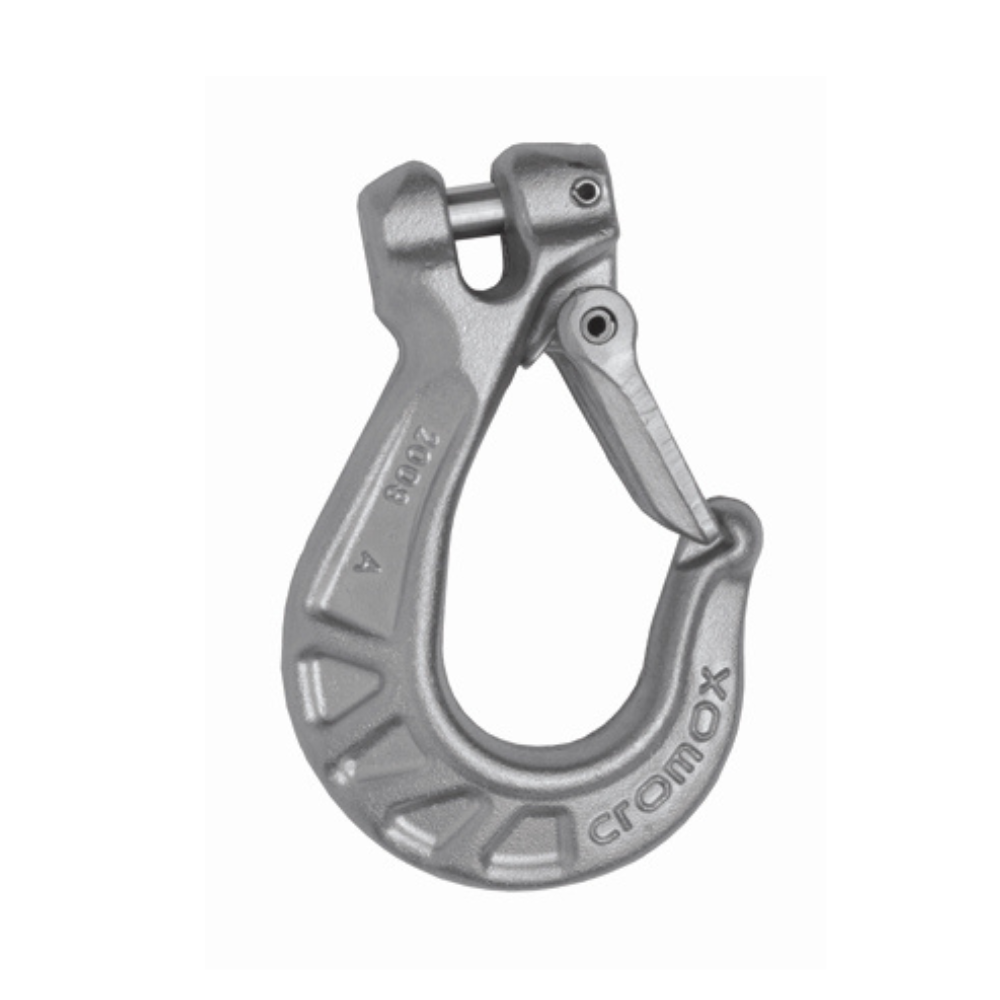
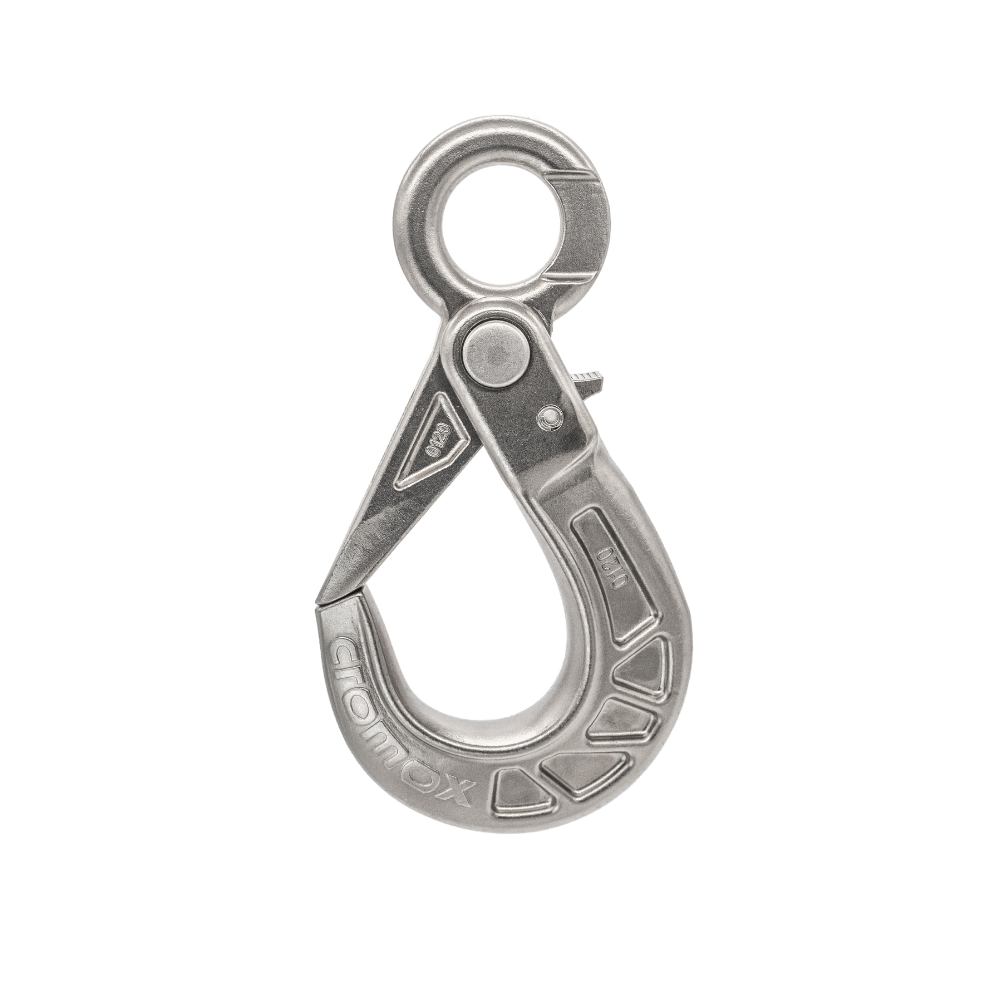
Stainless steel lifting chain is what you rig when the load moves through an environment that would rust ordinary alloy chain out of service. This collection carries the Cromox Grade 60 line end to end: round-link chain from 3/16 inch up to 5/8 inch, rated from 1,320 lb to 13,250 lb working load limit, plus the matching sling hooks, self-locking hooks, swivel load hook, connecting links, master links, shorteners, and clevis shackle needed to build a complete sling in stainless. Every piece here is made from 1.4462 duplex stainless (AISI 318LN), a chromium-nickel-molybdenum steel that shrugs off the acids, chlorides, and washdown chemicals that pit standard hardware. Grade 60 is the top practical grade for stainless lifting chain, so this is the strongest corrosion-resistant chain you can rig for overhead work. The sections below cover where stainless earns its higher price, how to size the chain by diameter, and why a stainless sling has to be built all the way through in stainless.
Compare Grade 60 Stainless Steel Chain Components
| Model | Price | Overall Length | Capacity | |
|---|---|---|---|---|
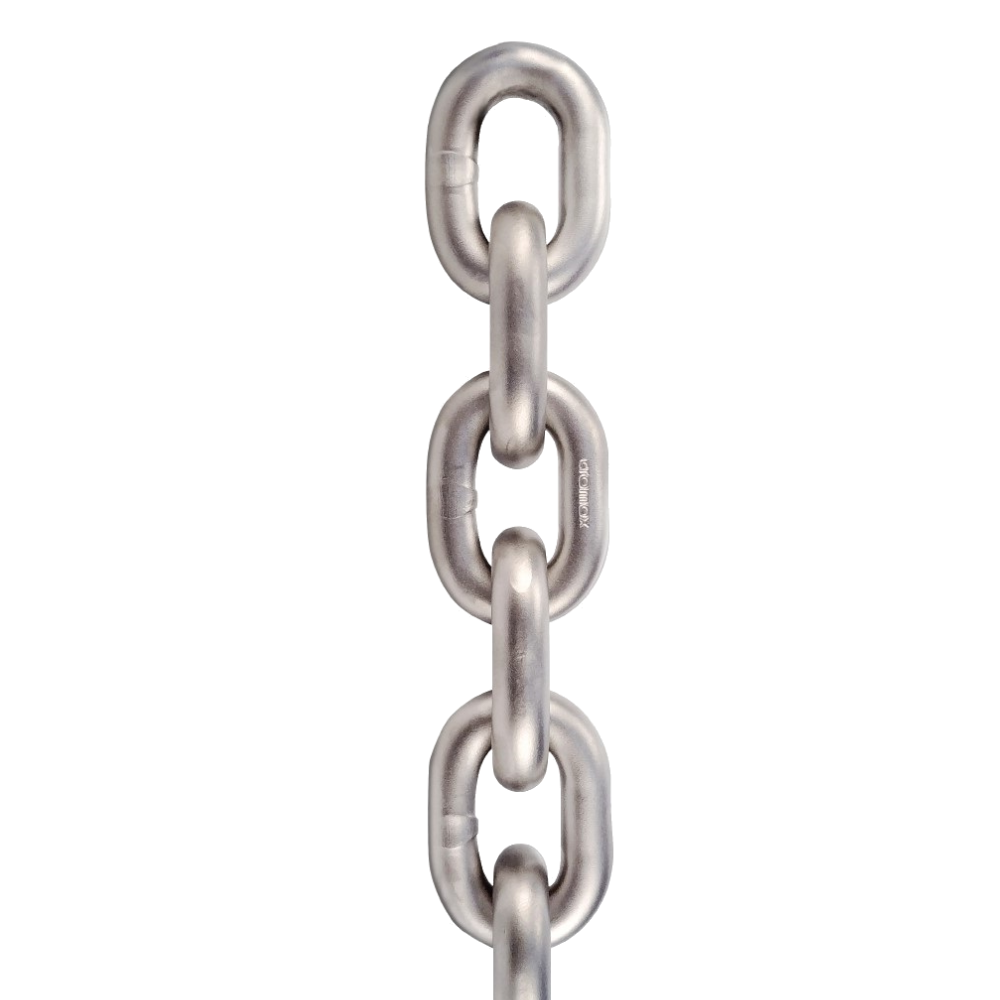
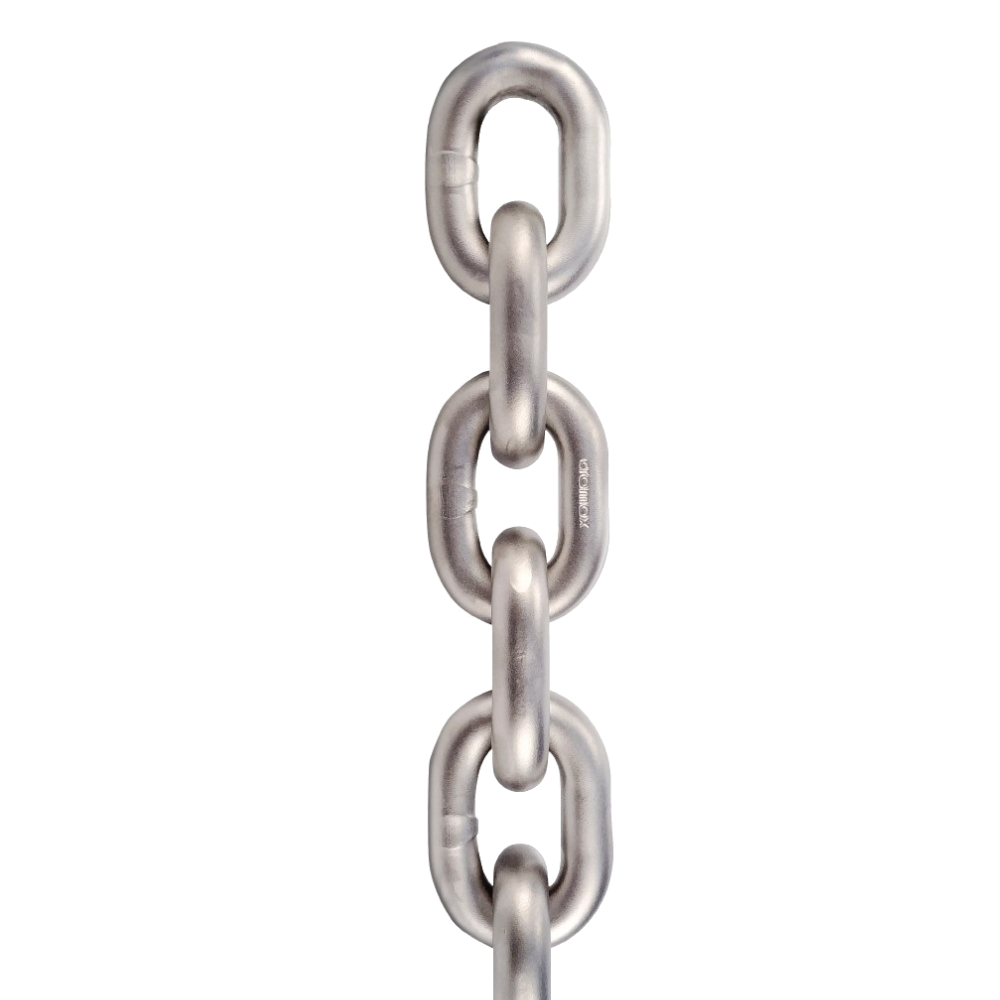
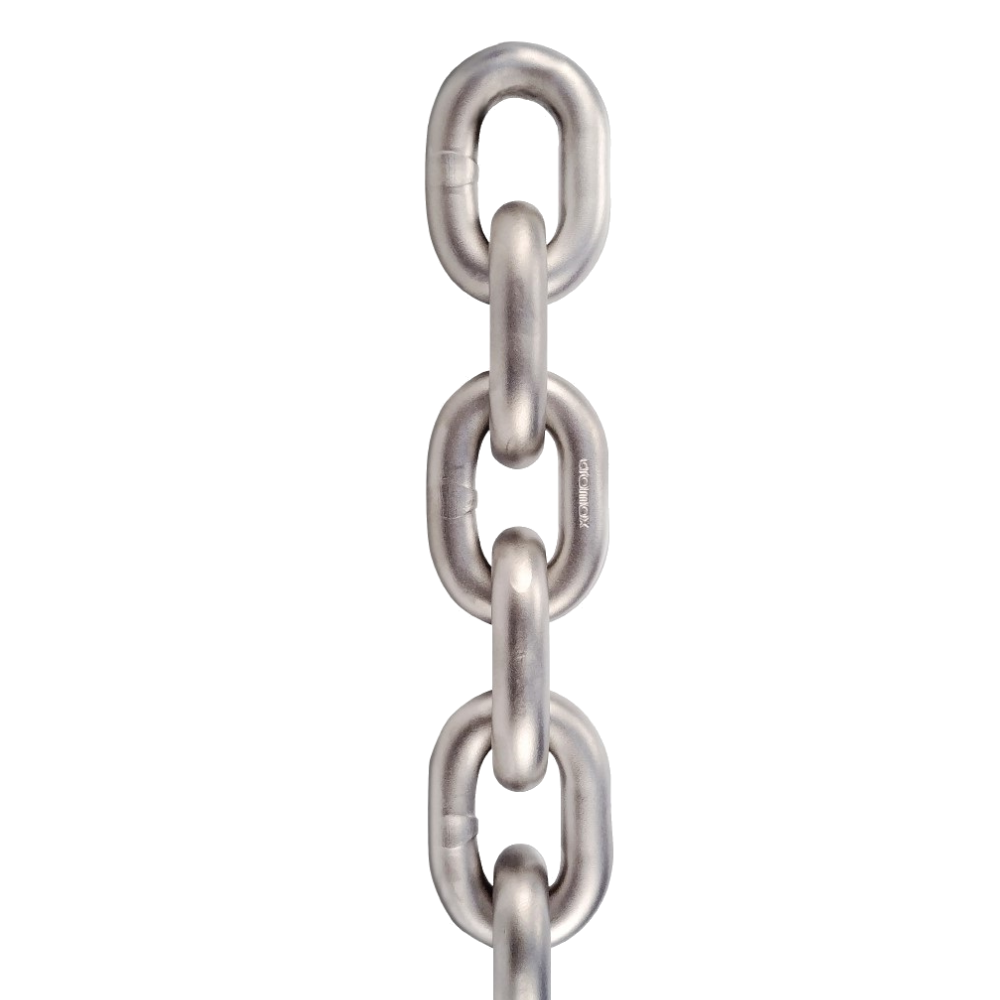
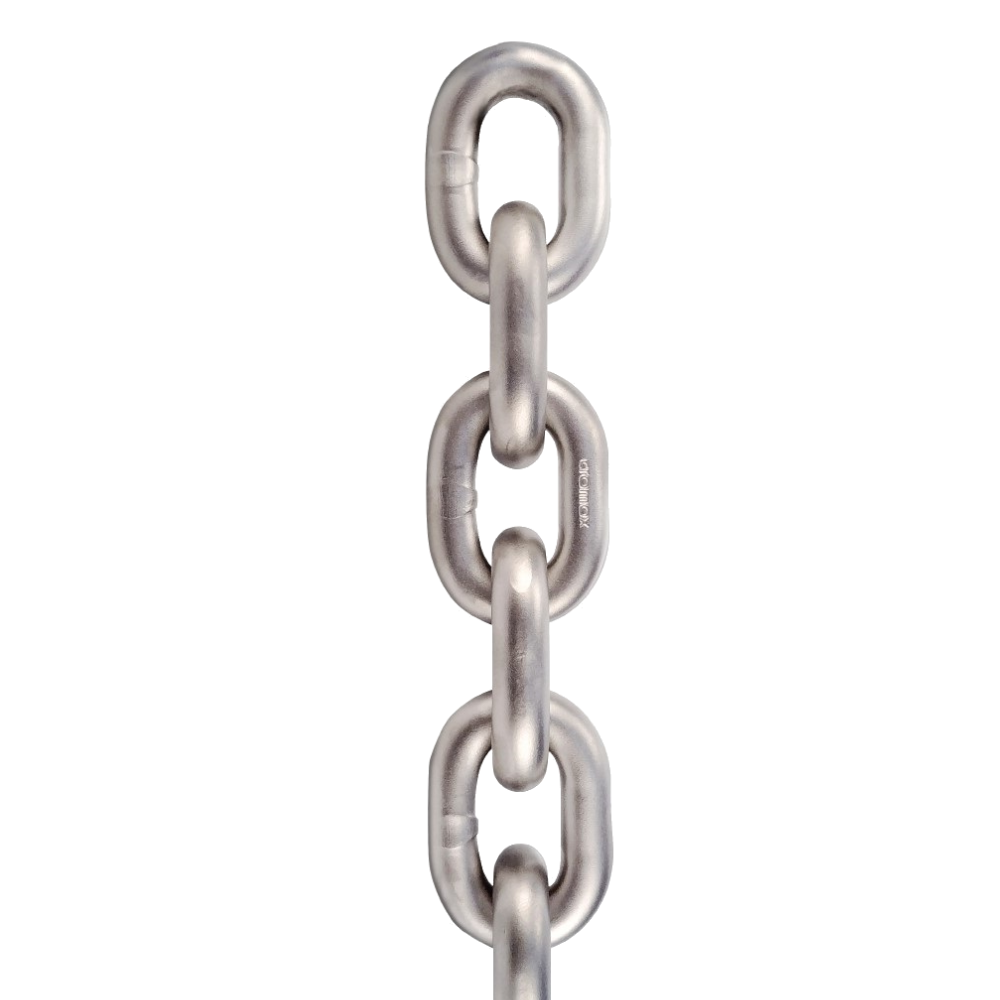
| Cromox Grade 60 1/2" Stainless Steel Chain WLL 8480lbs | $1,025 | 10-200 ft | 8,480 lb | View → |
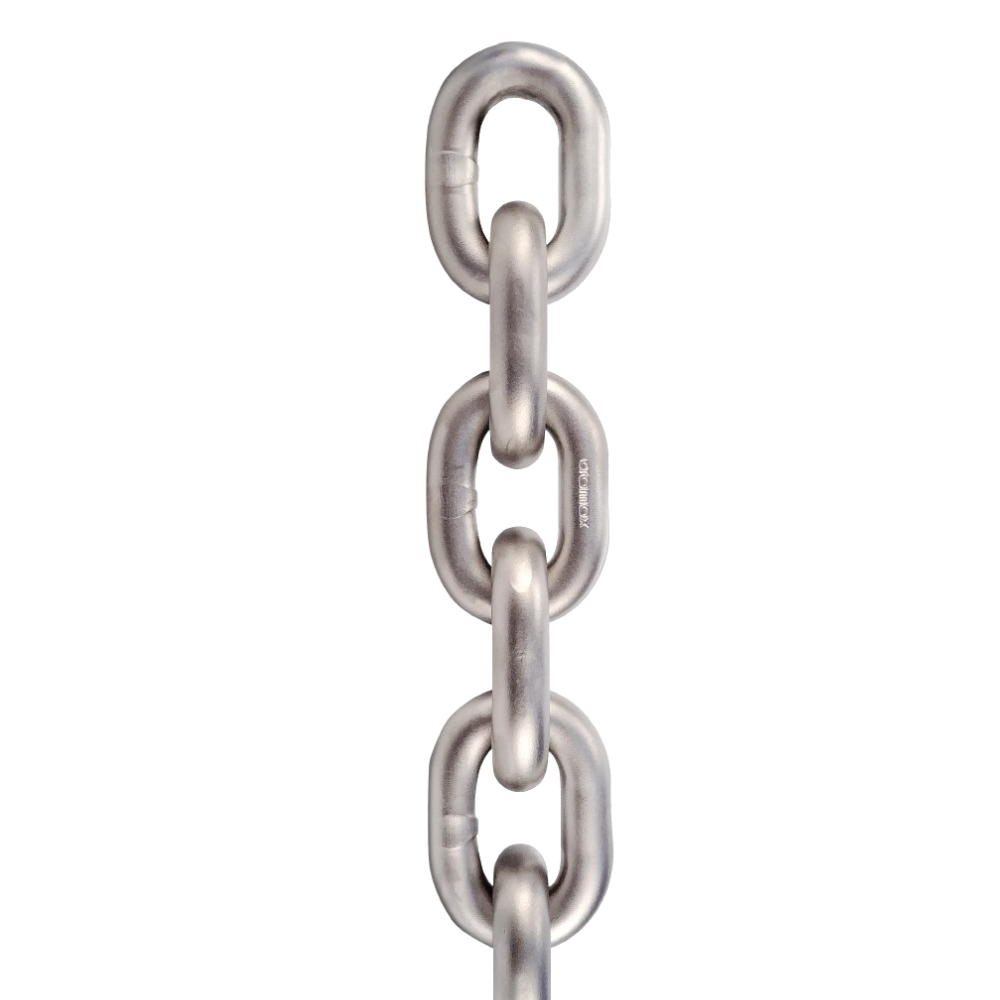
| Cromox Grade 60 5/8" Stainless Steel Chain WLL 13250lbs | $708 | 10-100 ft | 13,250 lb | View → |
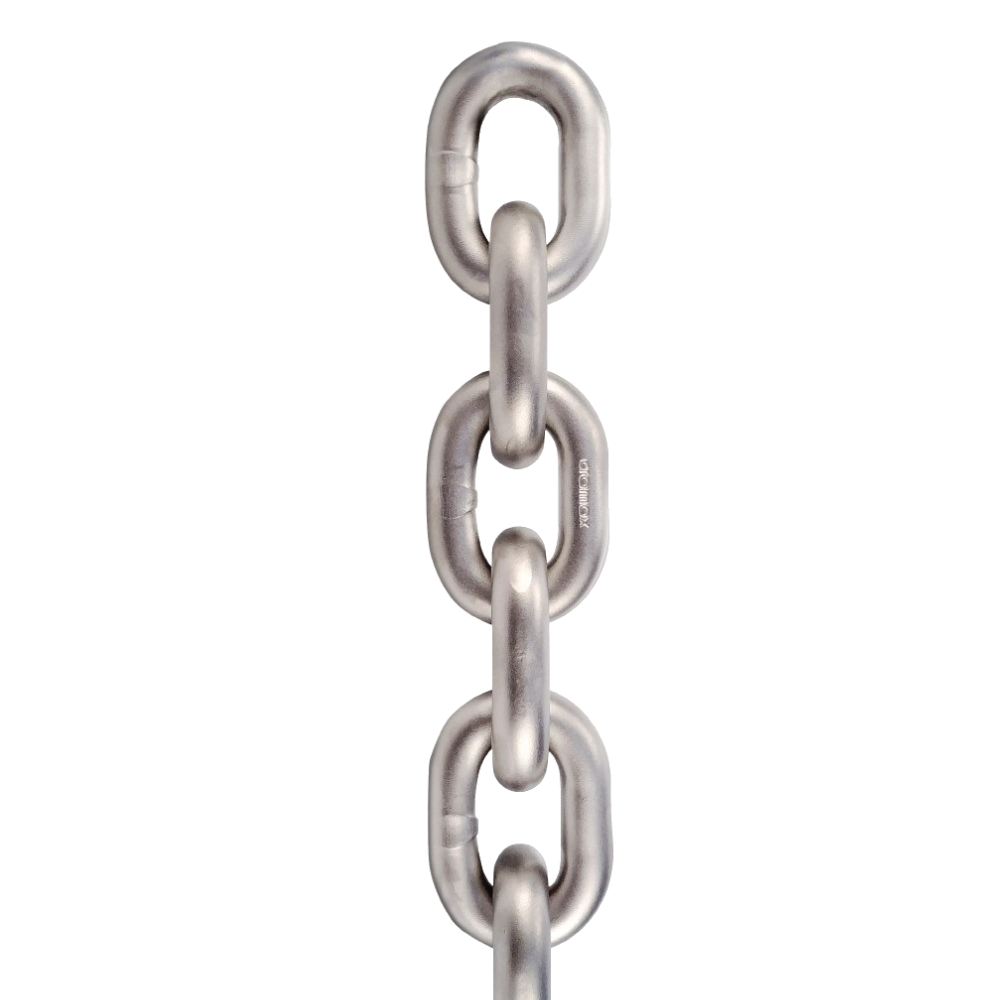
| Cromox Grade 60 1/8" Stainless Steel Chain WLL 880lbs | $140 | 10-200 ft | 880 lb | View → |
 In Stock
 In Stock
 In Stock
 In Stock
 In Stock
 In Stock
 In Stock
 In Stock
 In Stock
 In Stock
 In Stock
 In Stock
 In Stock
 In Stock
 In Stock
 In Stock
 In Stock
 In Stock
 In Stock
 In Stock
Grade 60 Stainless Steel Chain Components Buying Guide
Grade 60, and why stainless chain stops there. Alloy chain for overhead lifting runs Grade 80, 100, and 120, and those are stronger pound for pound than anything stainless. Stainless lifting chain tops out around Grade 60 for a physical reason: the austenitic and duplex steels that resist corrosion cannot be heat treated to the hardness of alloy chain without giving up the very corrosion resistance you bought them for. So Grade 60 is the ceiling, and Cromox builds to it. The Grade 60 duplex here reaches breaking loads that hold the standard 4:1 margin over the marked working load limit, the same design factor ASME B30.9 sets for alloy chain slings. You give up some capacity against a carbon Grade 100 chain component set, and you gain a chain that never leaves rust on the product or corrodes toward failure in a wet plant. When the environment is dry and clean, alloy chain is the cheaper, stronger buy. When it is not, stainless is the chain that lasts.
Match the chain to the environment, not merely the load. Duplex stainless is the point of this collection. The 1.4462 grade holds roughly twice the yield strength of common 316 austenitic stainless and resists chloride stress corrosion cracking far better, which is what makes it the right steel for saltwater, pool chemistry, and hot chloride washdown where plain 316 hardware can crack. That corrosion resistance opens doors carbon chain cannot enter: food and beverage lines where a rusted link would harbor bacteria straight through a sanitation cycle, pharmaceutical and clean-room work, chemical plants, and marine and offshore rigging. If your lifts run through those areas, pair the chain with food grade hoists and trolleys so the whole lifting path meets one hygiene standard. In a dry shop this chain is overkill. Around acids, salt, and daily washdown, it is the chain that is still rated a year later.
Sizing the chain by diameter. Chain is sold by link diameter, and the working load limit climbs with it. The Cromox Grade 60 range runs 3/16 inch at 1,320 lb, 1/4 inch at 1,980 lb, 9/32 inch at 2,750 lb, 5/16 inch at 3,300 lb, 3/8 inch at 5,400 lb, 1/2 inch at 8,480 lb, and 5/8 inch at 13,250 lb, with a light 1/8 inch chain at 880 lb for the smallest work. Those are single-leg vertical ratings. Rig two legs to a master link and the sling angle changes each leg's share, exactly as it does on a carbon chain sling, so size off the angle-adjusted load, not the raw total. Chain here starts at $385 for the 3/16 inch size. Buy the diameter that clears your heaviest real lift with the 4:1 factor intact, and leave that factor alone.
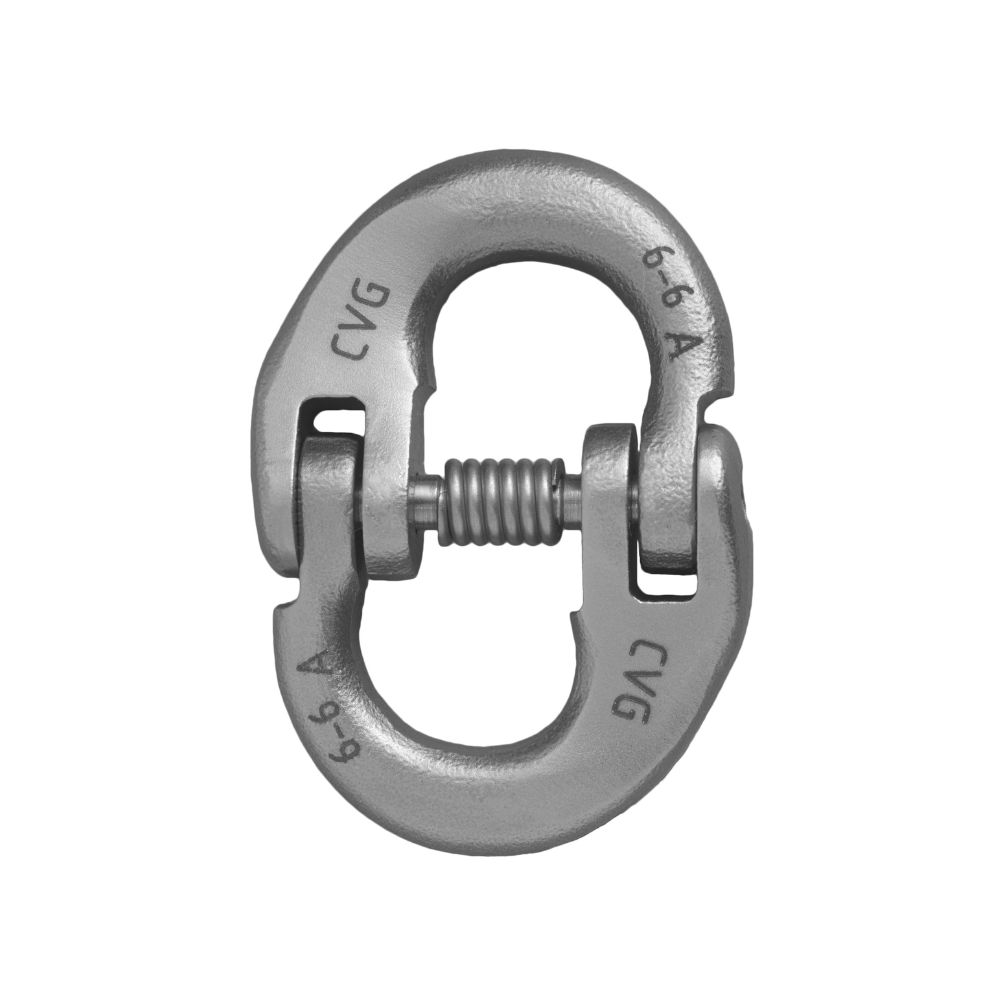
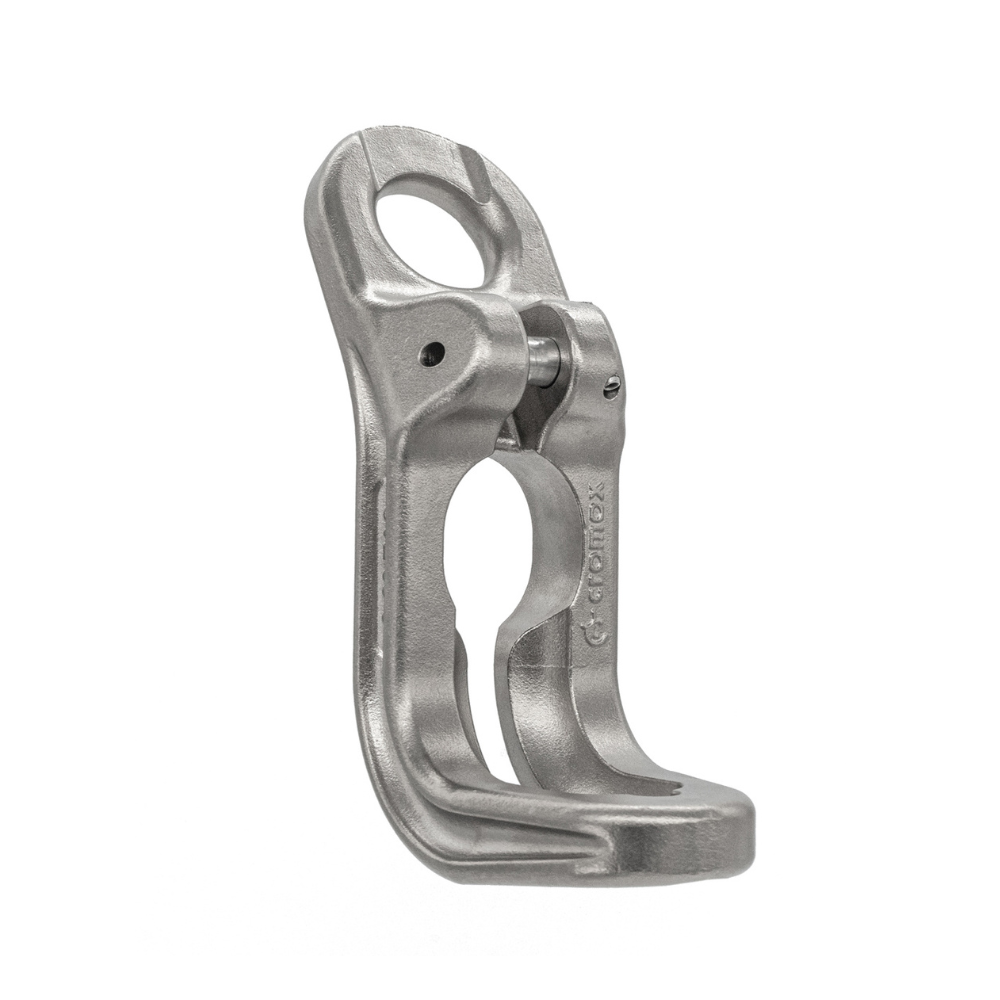
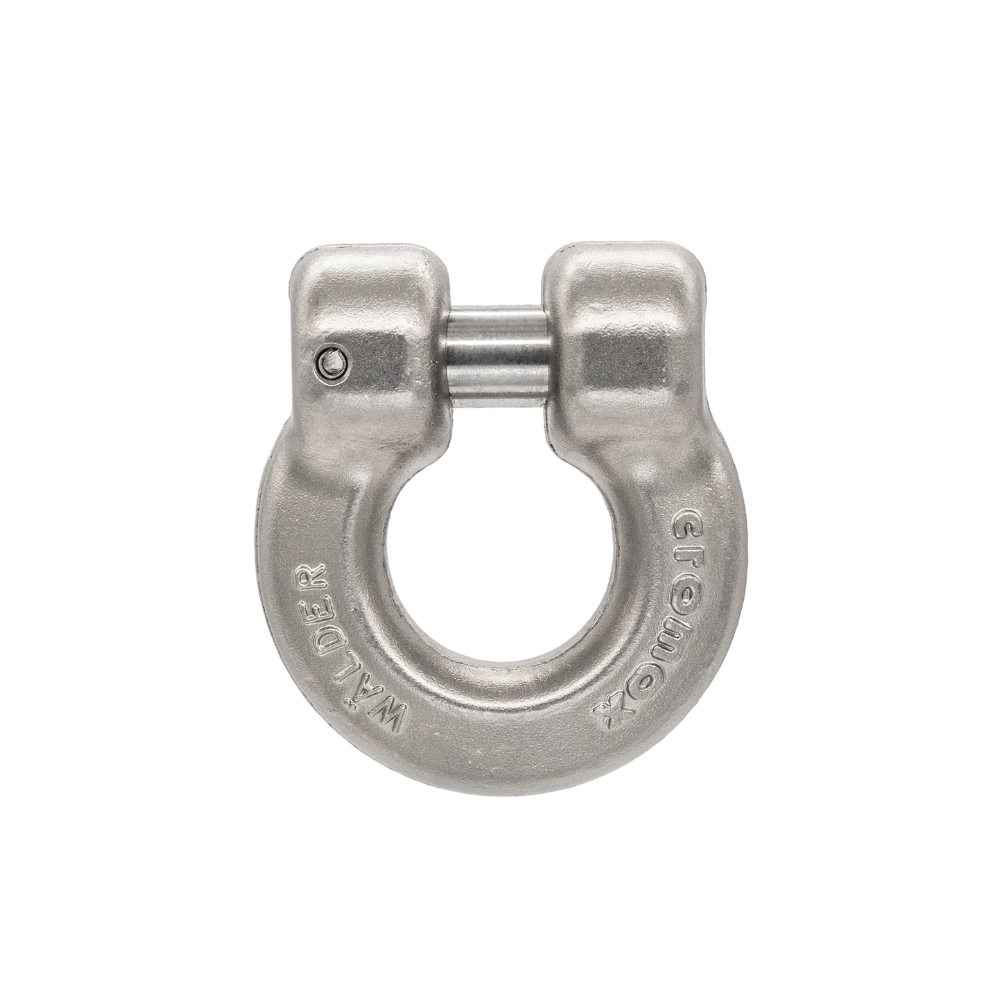
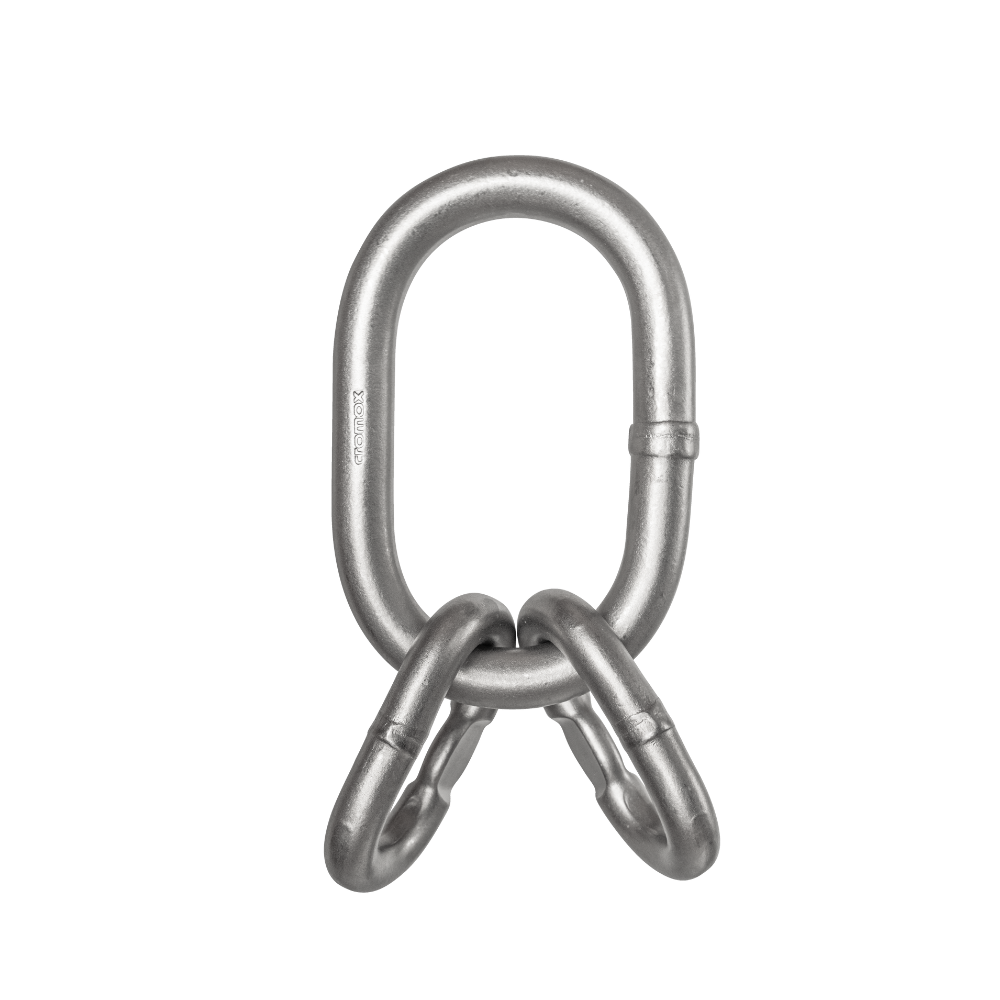
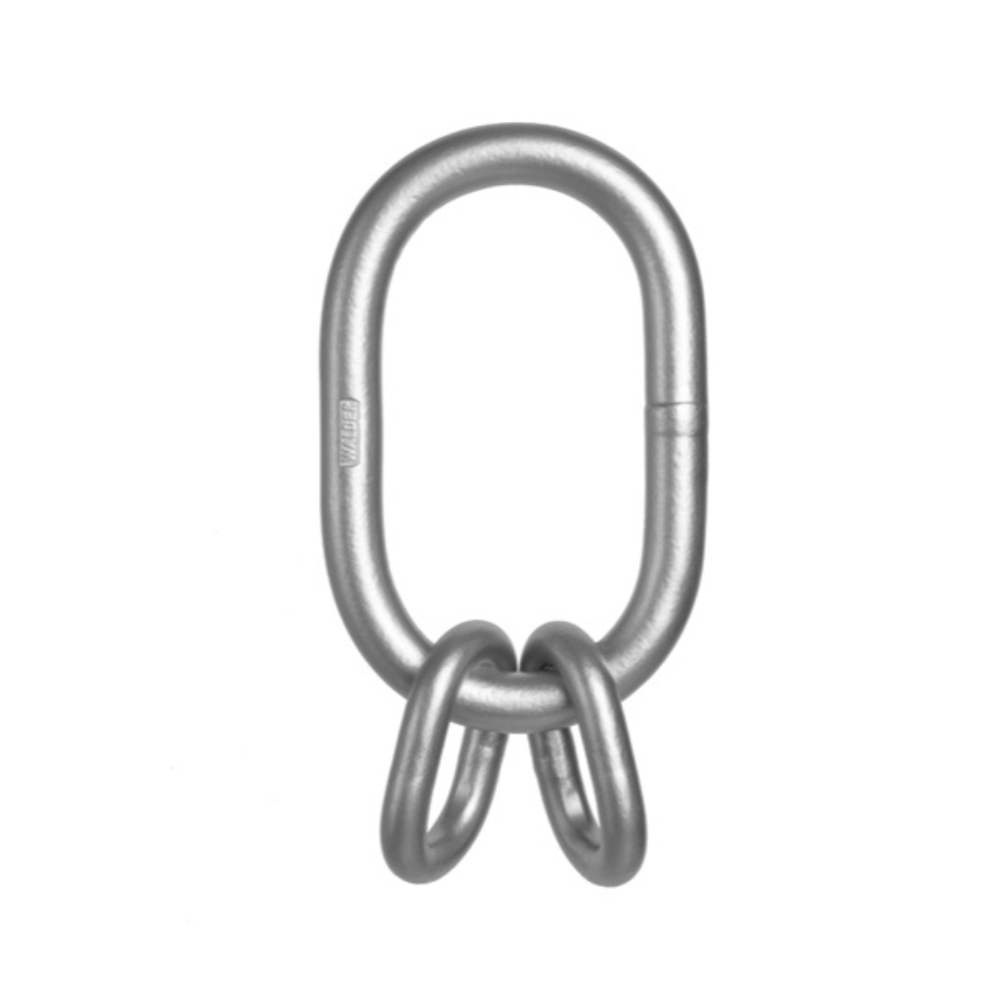
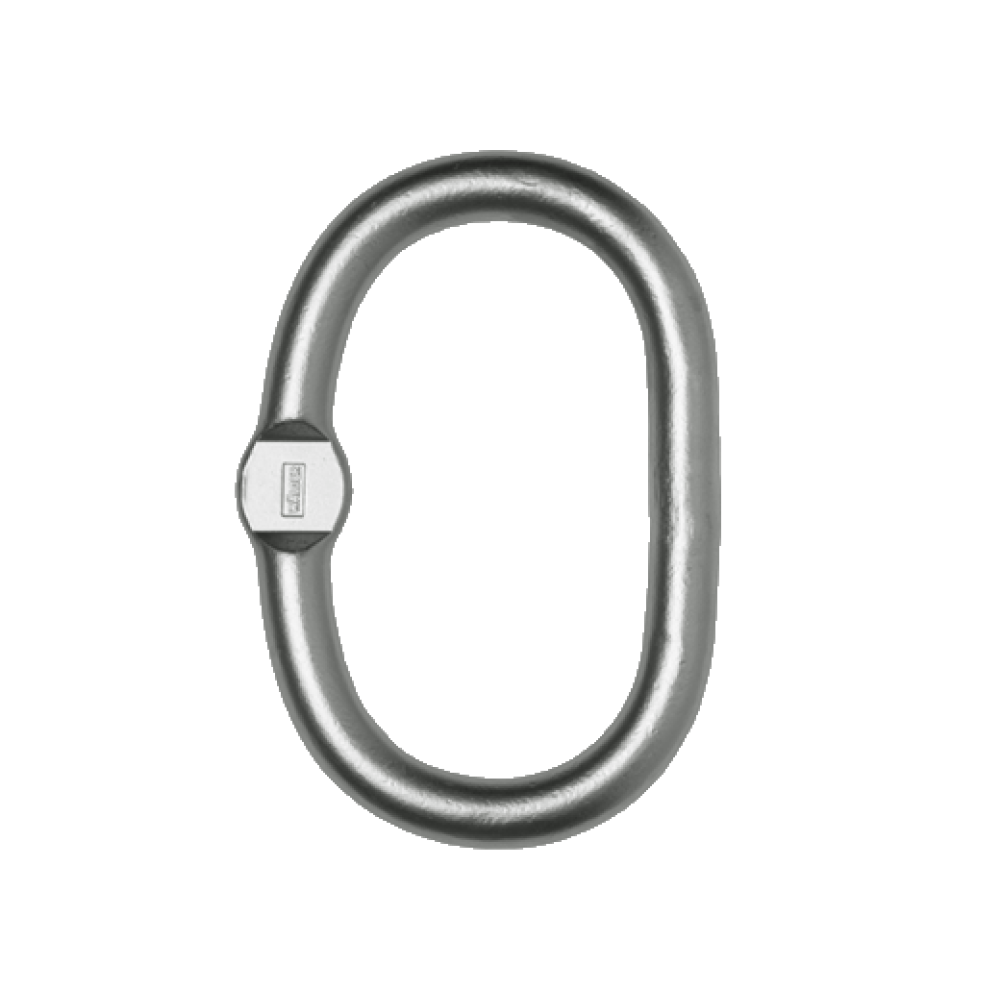
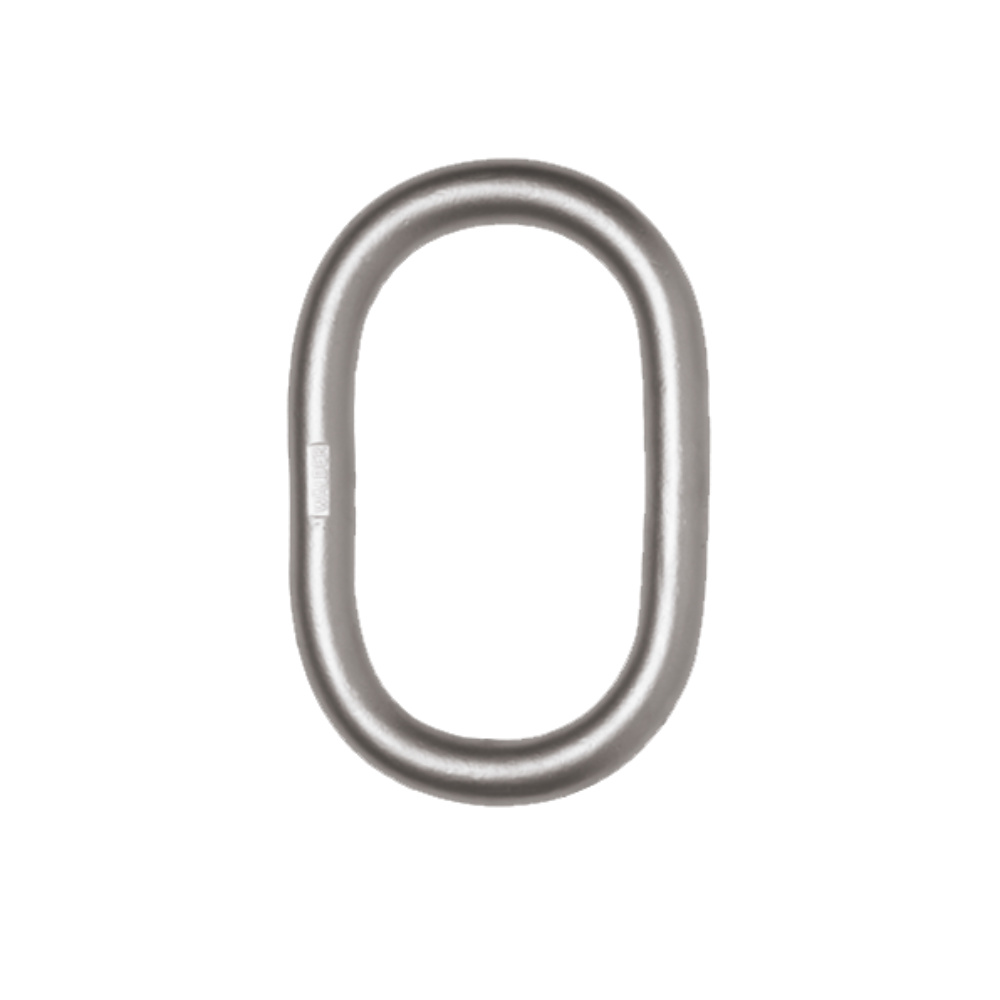
Build the whole sling in stainless. A stainless chain rigged with carbon steel fittings is not a stainless sling. Two things go wrong. The carbon part rusts first and becomes the weak link, and the dissimilar metals set up galvanic corrosion at every point they touch, which eats the assembly faster than either metal corrodes alone. So this collection carries the full set to keep a sling stainless from master link to hook: Grade 60 master links and master links with a flat section, connecting links from $67 that join chain to fitting without welding, a 13,300 lb clevis shackle at $56, and a shortener that takes up slack to level an off-center load. Match every component's grade and size to the chain, the same discipline any rigging equipment build demands, and the sling holds its stamped rating end to end.
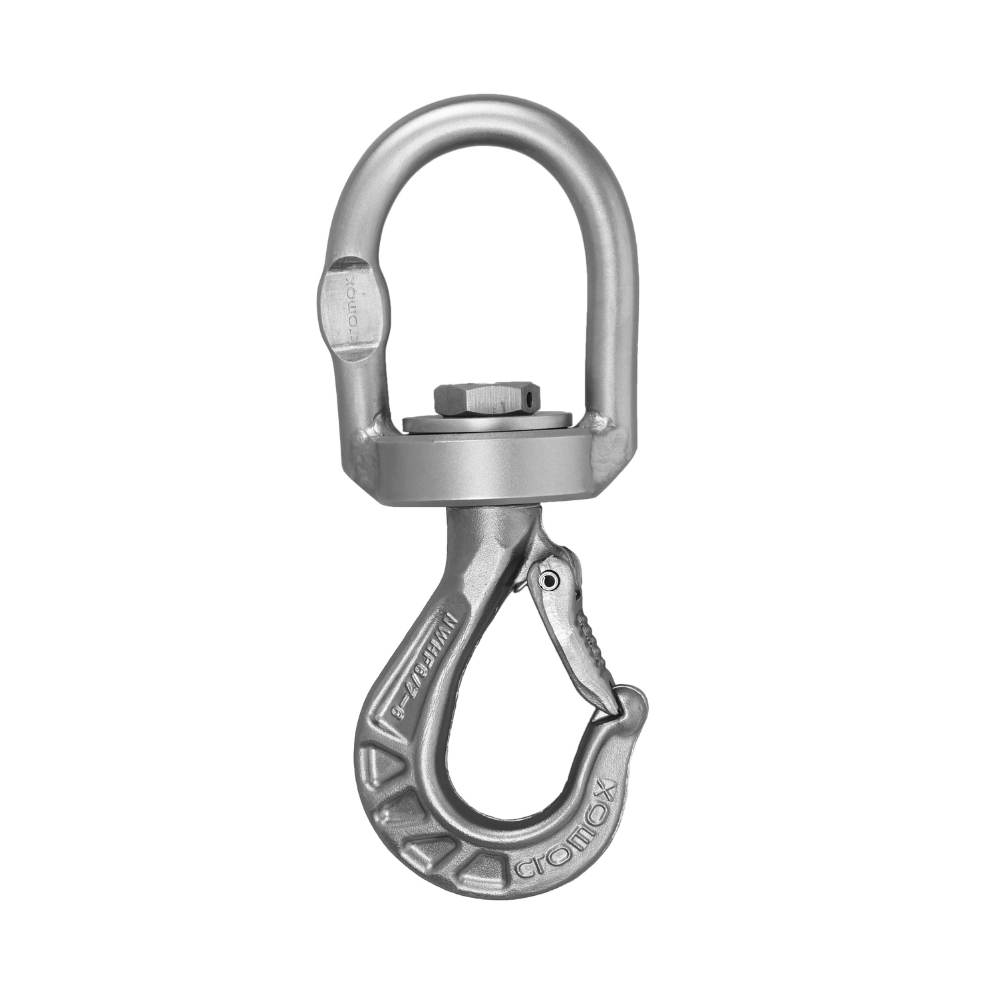
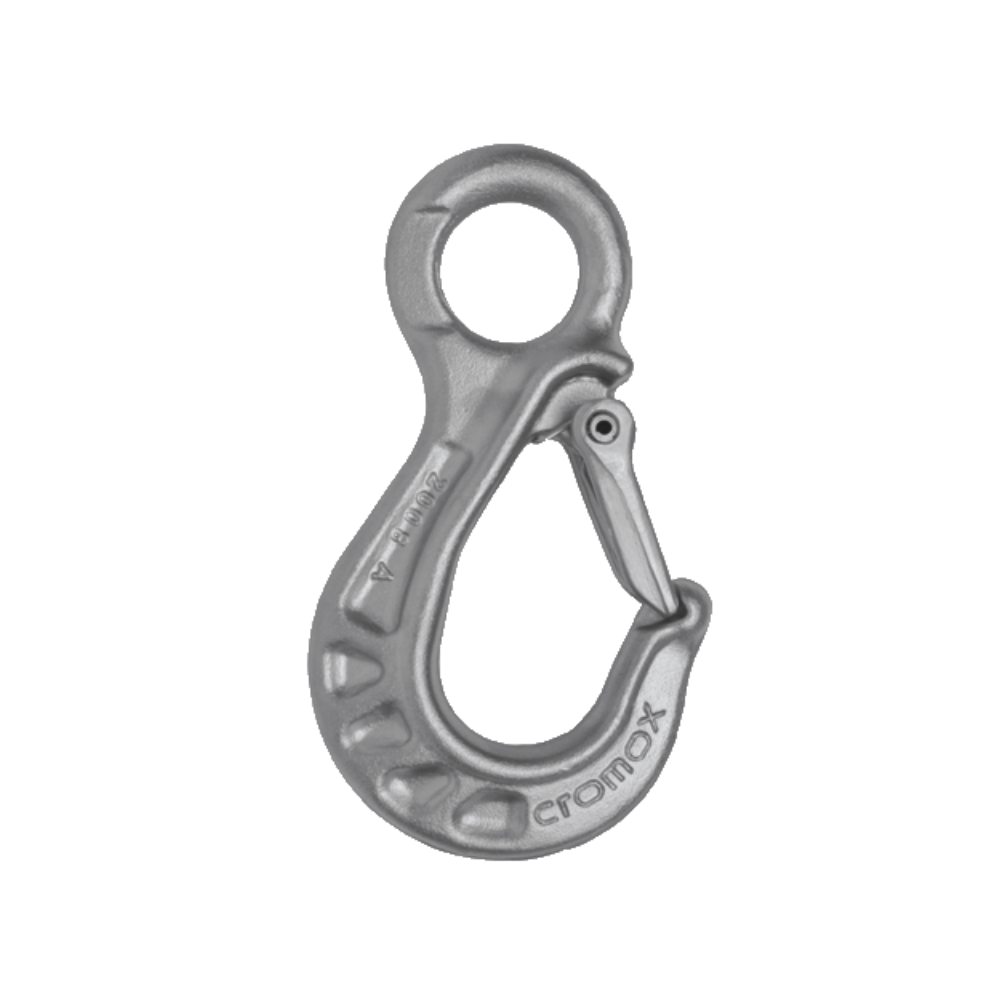
Hooks and the connectors that finish the assembly. The hook is where the load meets the chain, and stainless offers the same choices an alloy set does. A clevis or eye sling hook with a latch is the general pick, rated to 5,400 lb on the mid sizes. A self-locking hook, from $112, closes positively so the load cannot jump the throat on a slack cycle, and a swivel load hook lets a spinning load turn without winding up the chain. All of them, plus the clevis shackle, sit alongside the carbon options in lifting hooks and connectors and lifting shackles if you want to compare fittings across grades. Whatever you hang, keep the hook's rating at or above the chain's, and use the latch on every sling hook that carries one.
Frequently Asked Questions
Yes. Grade 60 stainless is approved for overhead lifting and carries the same 4:1 design factor as alloy chain, meaning breaking load is four times the marked working load limit. Build, mark, and inspect it as a sling under ASME B30.9. The only real difference from Grade 80 or 100 alloy chain is capacity: at a given diameter, stainless carries less, so size the chain to your load with that in mind.
It is a metallurgy limit, not a manufacturing shortcut. The corrosion-resistant stainless steels used for lifting chain cannot be hardened as far as the alloy steels in Grade 80, 100, and 120 chain without losing the corrosion resistance that is the whole reason to buy stainless. Grade 60 is the practical top grade for stainless lifting chain, and Cromox builds to it.
1.4462 duplex stainless steel, also called AISI 318LN. It is a chromium-nickel-molybdenum steel with added nitrogen and a mixed austenite-ferrite structure. Compared with common 316 austenitic stainless, duplex has roughly double the yield strength and markedly better resistance to chloride stress corrosion cracking, which is why it holds up in saltwater and hot washdown chemistry.
No. Carbon fittings on a stainless chain rust first and become the weak point, and joining stainless to carbon steel sets up galvanic corrosion at every contact, which corrodes the assembly faster than either metal alone. A stainless sling has to be built all stainless, with every component matched to the chain in grade and size, or it does not hold its stamped rating in the environment you bought it for.
When the chain works around anything corrosive: food and beverage lines under sanitation washdown, pharmaceutical and clean-room lifts, chemical plants, and marine or offshore rigging exposed to salt. In those settings carbon alloy chain rusts, loses its rating, and can contaminate the product. In a dry, clean shop with no washdown, standard Grade 80 or 100 alloy chain is stronger for the money and the better choice.