Chain Sling Components
Chain sling components are the individual fittings that build and repair a Grade 100 alloy chain sling: the master link that meets the crane hook, the connecting links that join leg to leg, the hooks that grab the load, and the shortening hardware that tunes leg length on the fly. This collection carries the William Hackett Grade 100 range, master links, sub-assemblies, mechanical component connectors, clevis sling hooks, clevis self-locking hooks, and eye grab hooks, plus replacement latch kits and the CM EZ Connect combined master link and chain shortener. Sizes run from 1/4 inch chain up to 5/8 inch, with hook working load limits from 3,000 lb to 22,000 lb and master links rated past 17 metric tons. Everything here is Grade 100, roughly 25 percent stronger than Grade 80 at the same diameter, so you can build a lighter sling to a given capacity or a stronger one at the same weight. Buy the piece you need, matched to the chain you run.
Compare Grade 100 Chain Components
| Model | Price | Capacity | |
|---|---|---|---|
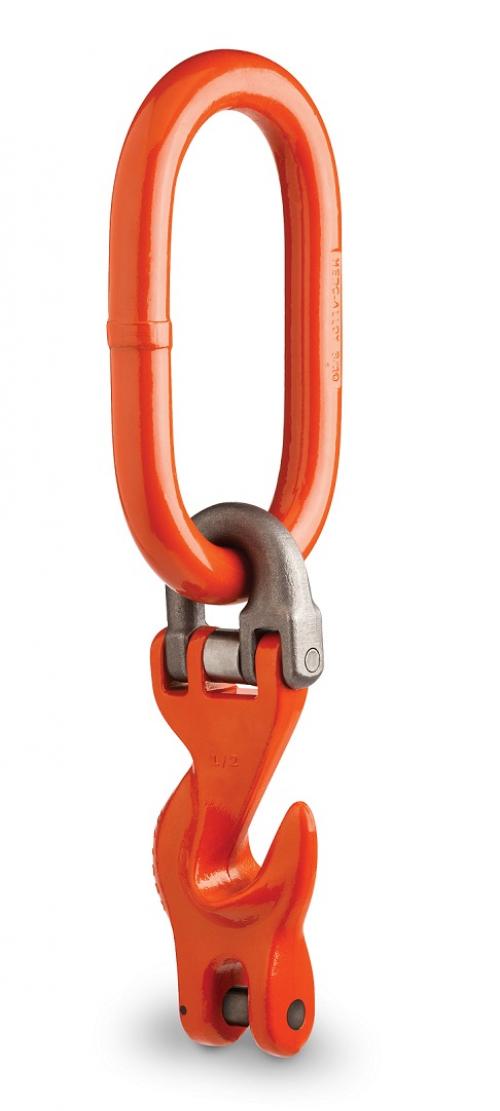
| CM EZ Connect Master Link & Chain Shortener | $196 | 4,300-22,600 lb | View → |
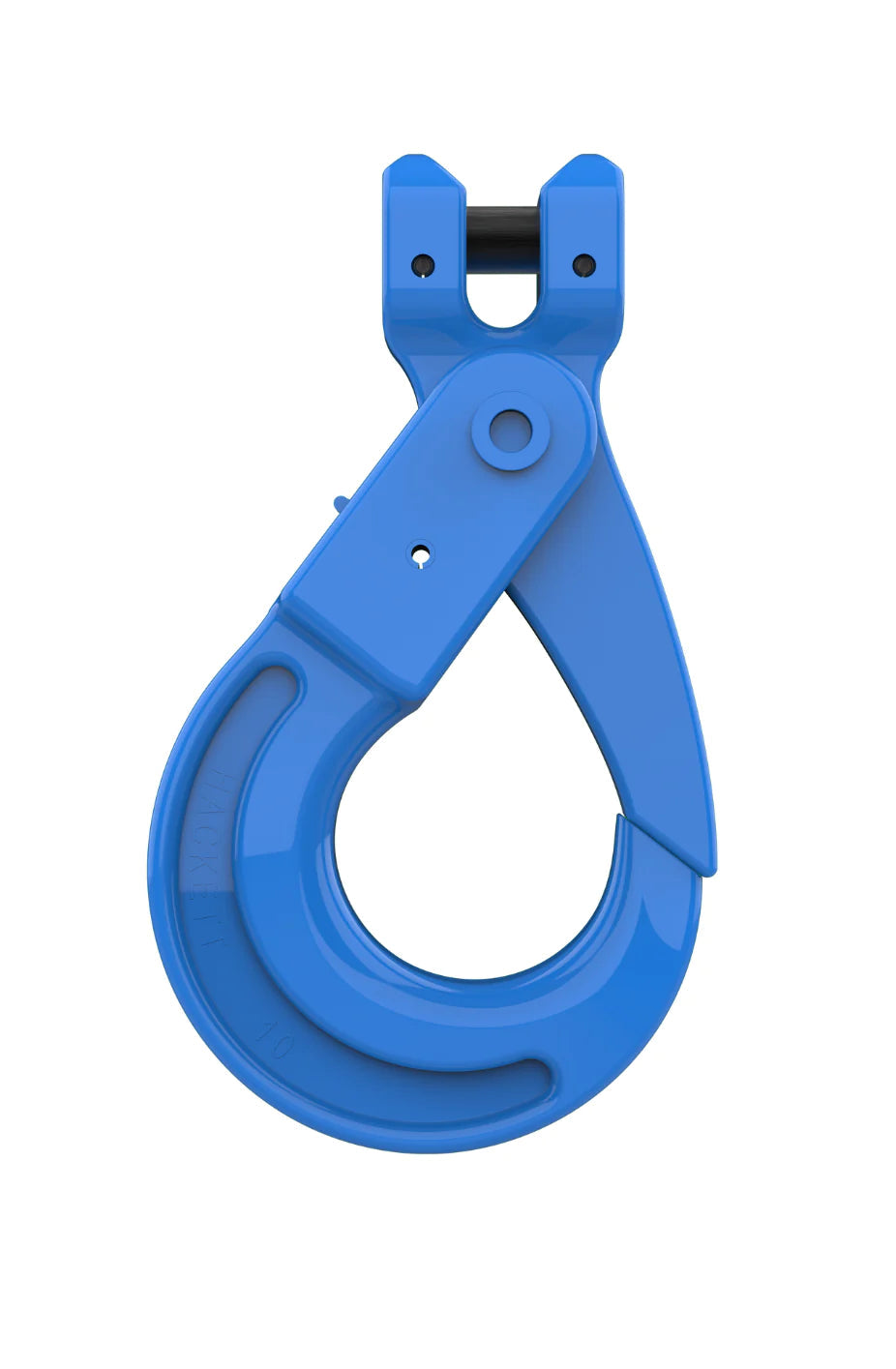
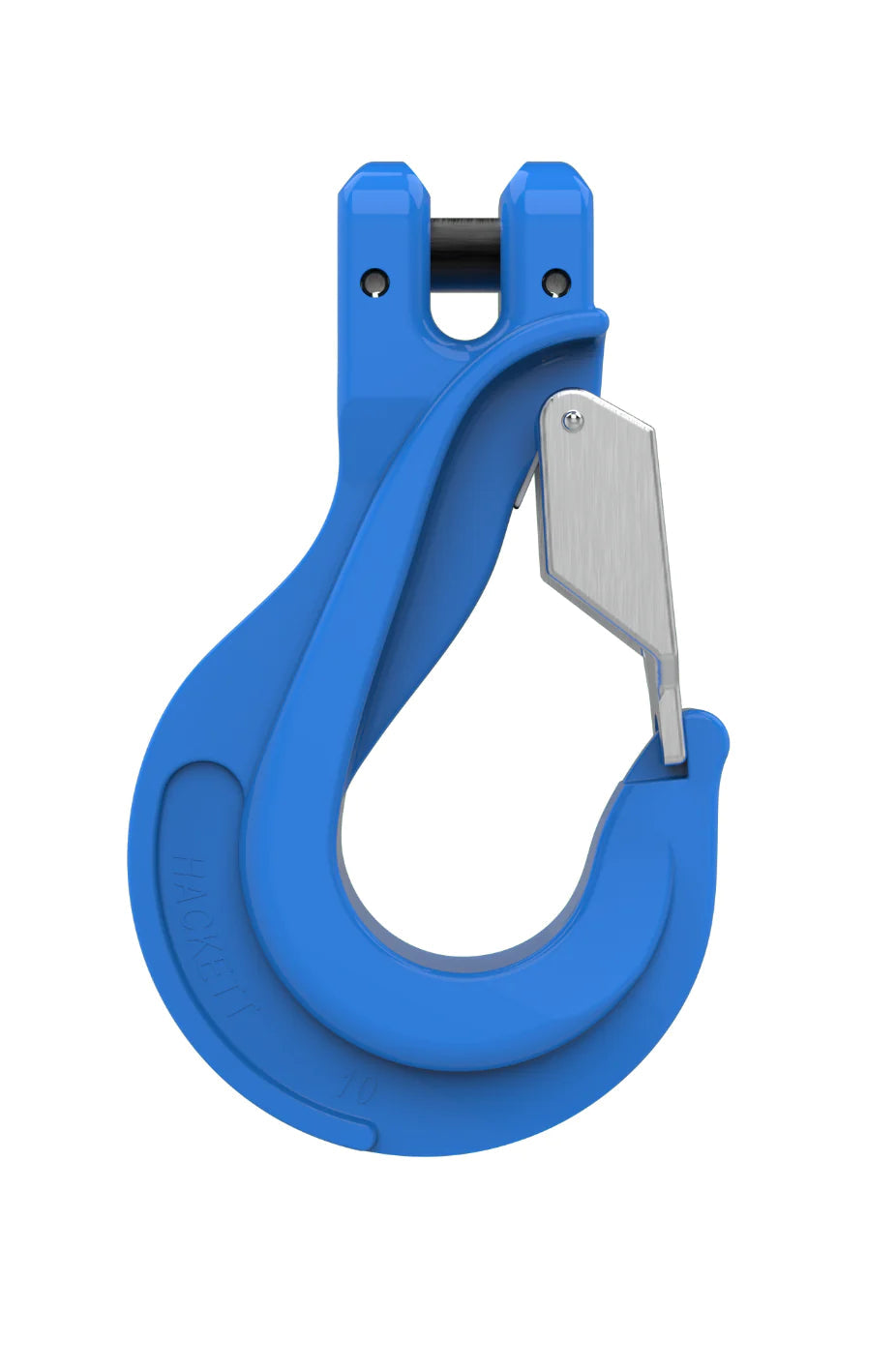
| WH Grade 100 Clevis Self-Locking Hook | $53 | 3,000-22,000 lb | View → |
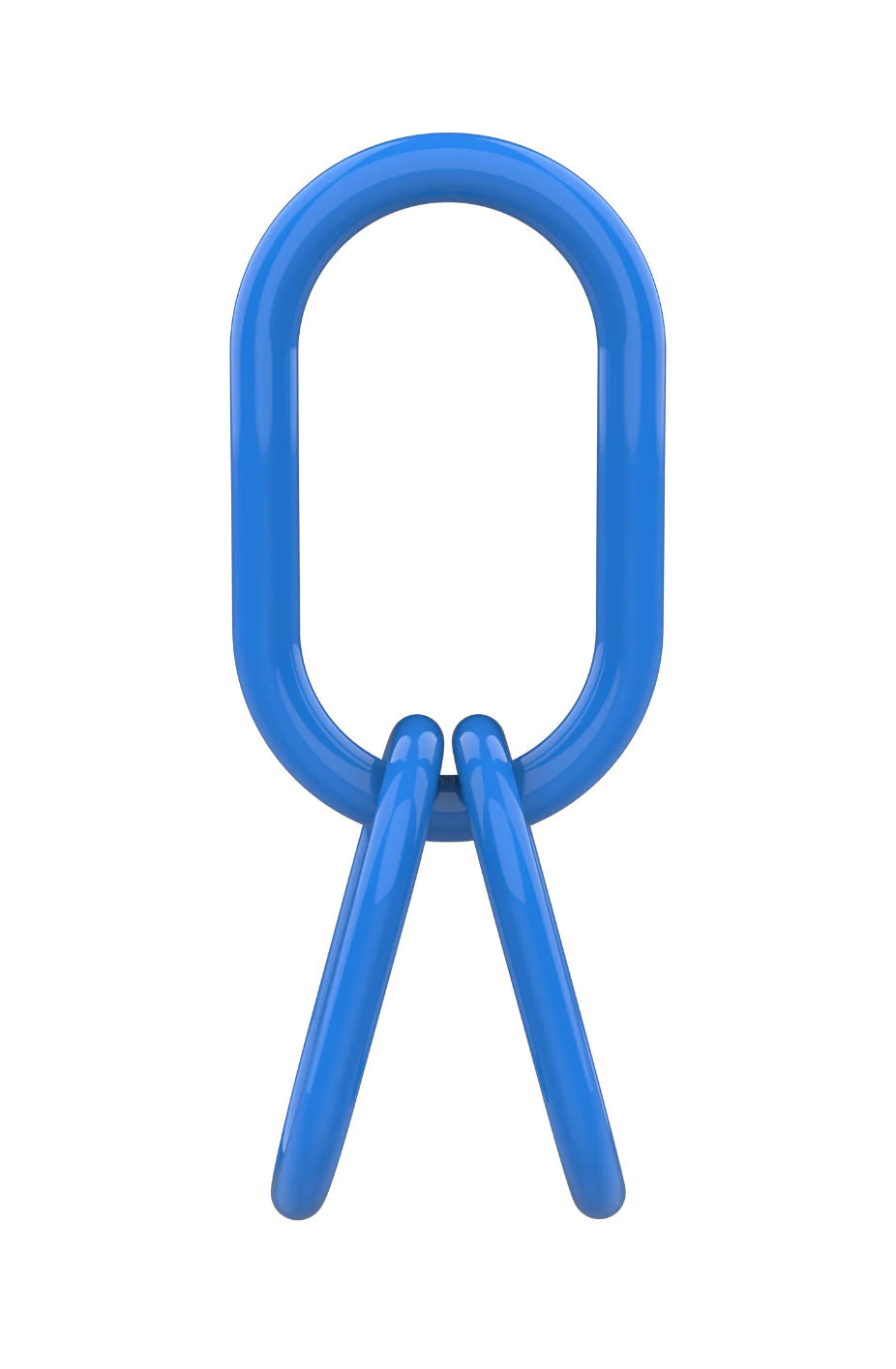
| William Hackett Grade 100 Sub-Assembly | $51 | 2.9-21 ton | View → |
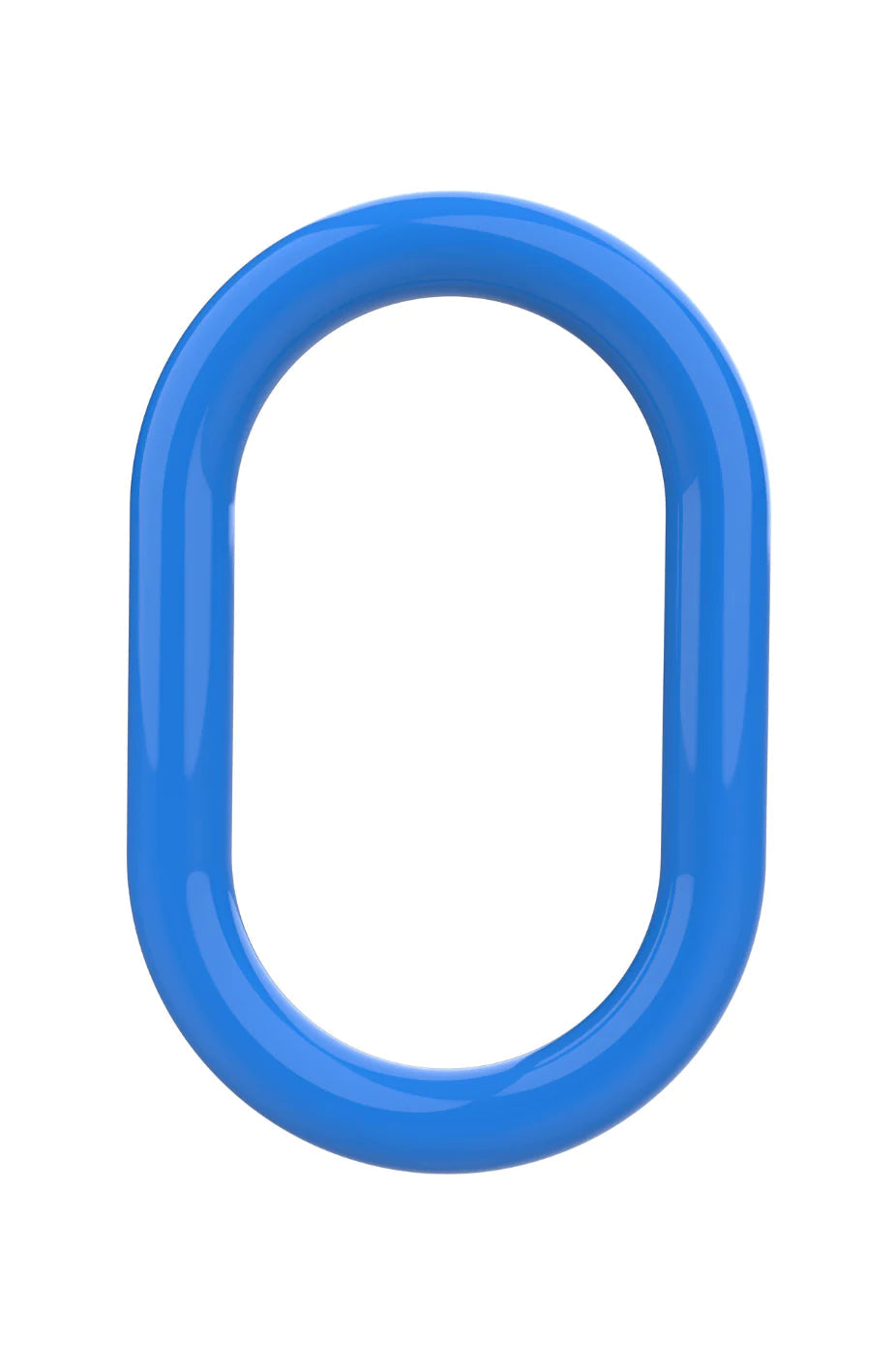
| William Hackett Grade 100 Masterlink | $15 | 2.8-17 ton | View → |
 In Stock
 In Stock
 In Stock
 In Stock
 In Stock
 In Stock
 In Stock
 In Stock
Grade 100 Chain Components Buying Guide
What each part does, and where it sits in the sling. A finished chain sling is a stack of matched fittings, and this collection sells them one at a time so you can build a new leg or repair an existing one without buying a whole assembly. At the top is the master link, the oblong ring the crane hook enters. Below it, connecting links join the master link to the chain and the chain to the end fitting. At the bottom is the hook that takes the load, either a sling hook, a self-locking hook, or a grab hook used to shorten the leg. If you would rather buy the sling already assembled and tagged as a unit, the Grade 100 chain slings collection carries single, double, and 4-leg builds. This page is for the shop that assembles or services its own.
Match the grade the whole way through. The rule that governs everything here is simple: every load-bearing part of a chain sling must be the same grade as the chain. Hang a Grade 80 hook on Grade 100 chain and the whole sling drops to the weaker rating, because a rig is only as strong as its weakest link. Alloy chain slings are built to a 4 to 1 design factor, meaning the minimum breaking force is four times the marked working load limit, and that factor only holds when the fittings are engineered to the same standard. The William Hackett parts here are Grade 100, certified to EN 818-4, and hold full rating with no reduction from about minus 40 F up to 400 F. Above that, derate by the manufacturer's temperature chart. Keep receipts and match part to part, and the assembled sling carries the rating stamped on its tag.
Master links and sub-assemblies: the top of the sling. The master link is the single most stressed part of a multi-leg sling, because every leg's tension funnels into it. That is why a master link on a triple or quad sling has to be proof tested to six times the rating of one leg, not one times, to survive the combined pull. The Grade 100 Masterlink here runs from 6 to 8 mm chain at 2.8 tonnes up to 20 mm at 17 tonnes and starts at $14.97. For three and four leg builds, the Grade 100 Sub-Assembly gives you a master link with two smaller coupling links already welded on, so each pair of legs hangs from its own intermediate link instead of crowding the main ring. It spans 6 mm at 2.9 tonnes to 16 mm at 21 tonnes from $51.37, and it saves the guesswork of sizing intermediate links yourself.
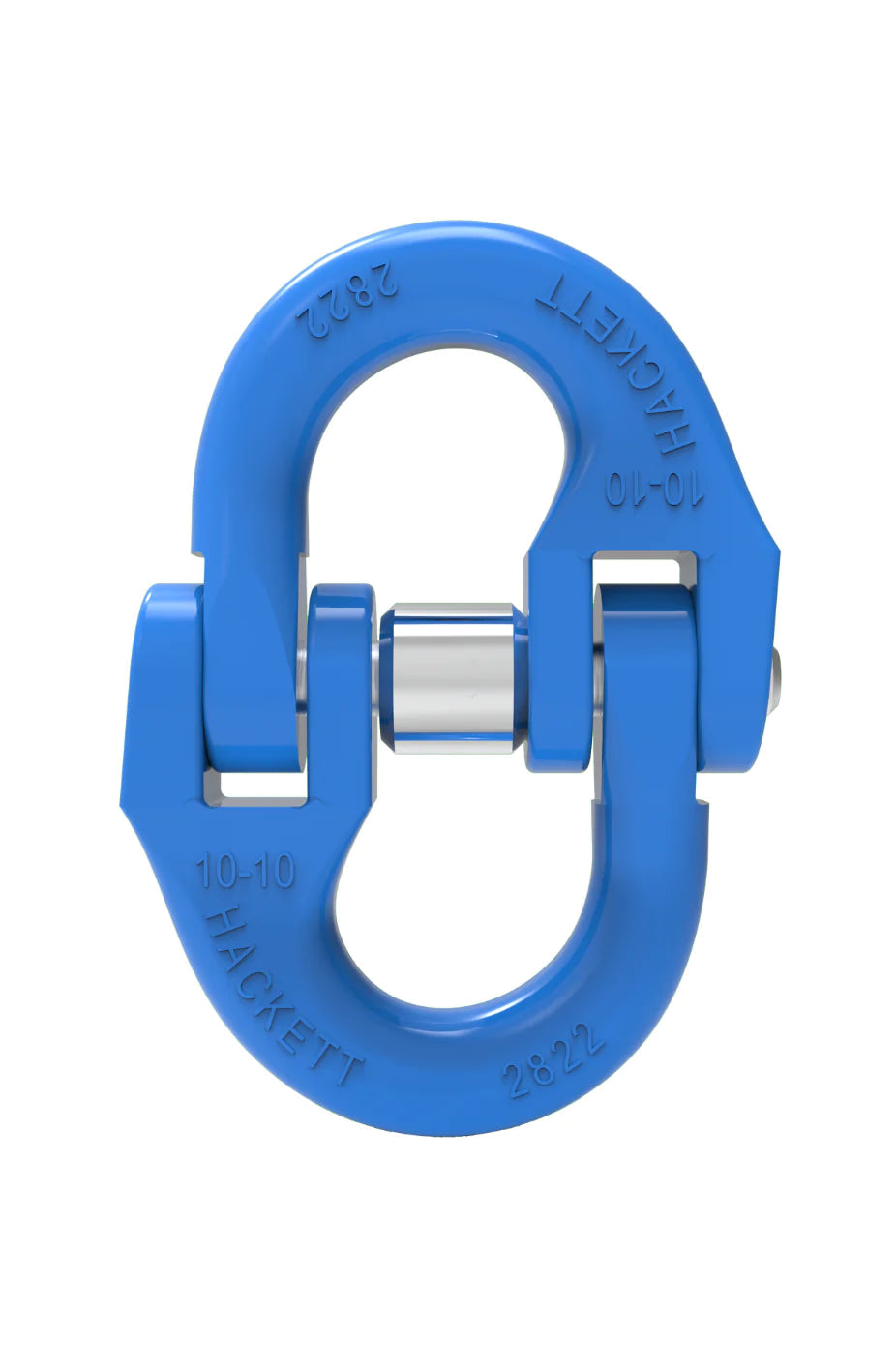
Connecting links versus the hooks. A connecting link, sometimes called a coupling or hammerlock link, is the two-part mechanical link that joins components without a welding torch. The WH Component Connector splits into two forged halves held by a load pin and a retaining spring, so you can add or swap a hook, a master link, or a length of chain on the bench and rebuild the sling in minutes. It covers 1/4 through 5/8 inch chain from $19.12, and it is the part most people forget to stock until a hook needs replacing. When the end fitting itself is the job, the hooks below attach by clevis, which pins straight to the chain without a separate connector. Broader hook and link selection across grades lives in lifting hooks and connectors.
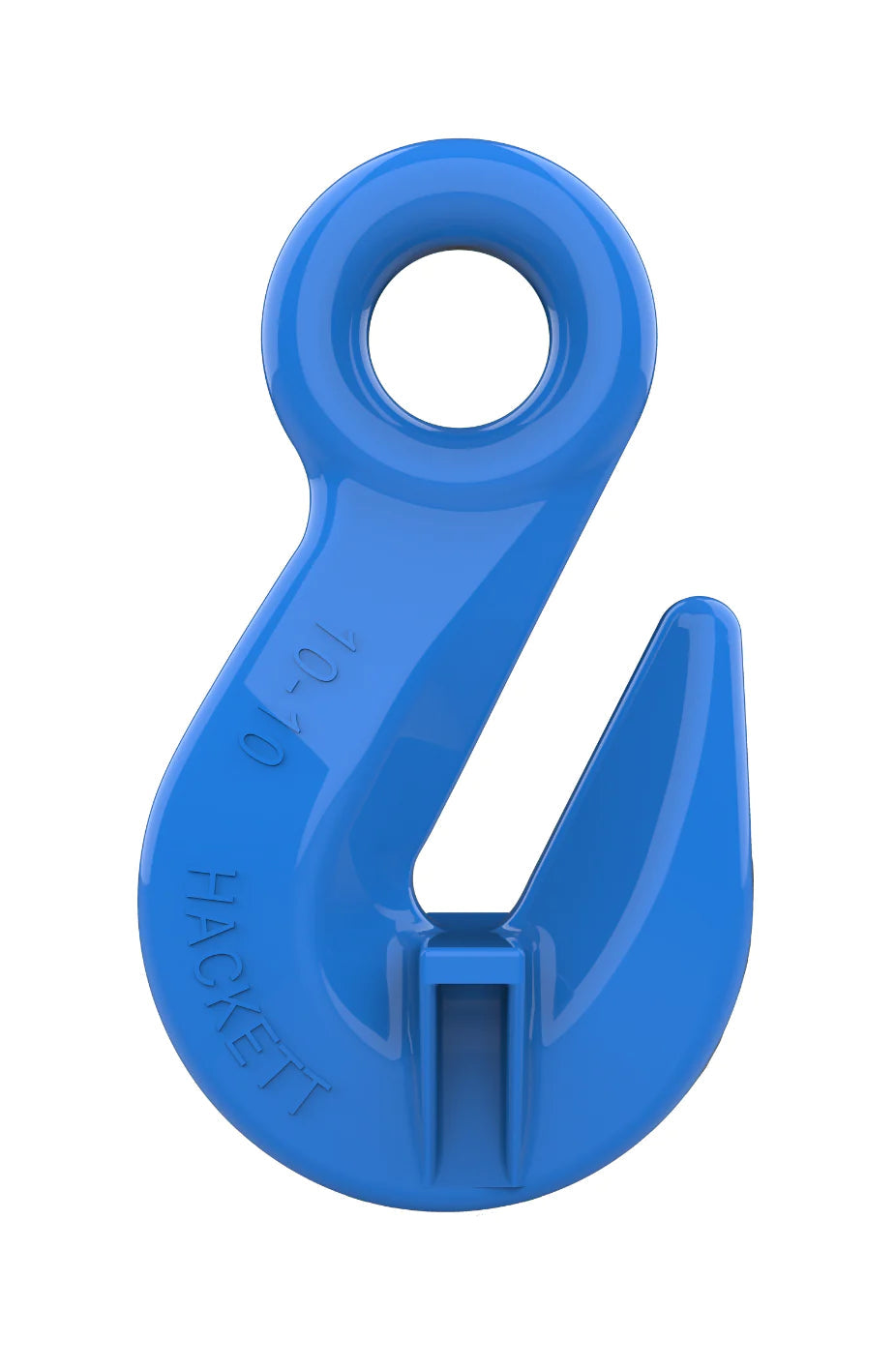
Sling hook, self-locking hook, or grab hook. Three hooks, three jobs. The Clevis Sling Hook is the everyday end fitting, a latched hook that seats the load in the bowl and keeps the sling from jumping out, from $24.37 across 3,000 to 22,000 lb. The Clevis Self-Locking Hook, from $53.12, adds a spring latch that snaps closed and locks under load; it will not open until the load comes off and a hand releases it, which is the pick for overhead and blind picks where a bumped latch is a dropped load. The Eye Grab Hook, from $12.65, is the chain shortener: cradle a link in its saddle to take up slack and level an off-center pick, with no reduction in working load limit thanks to the supporting cradle design. The CM EZ Connect combines a master link and a shortening hook in one fitting for adjustable single and double leg slings, from $195.70.
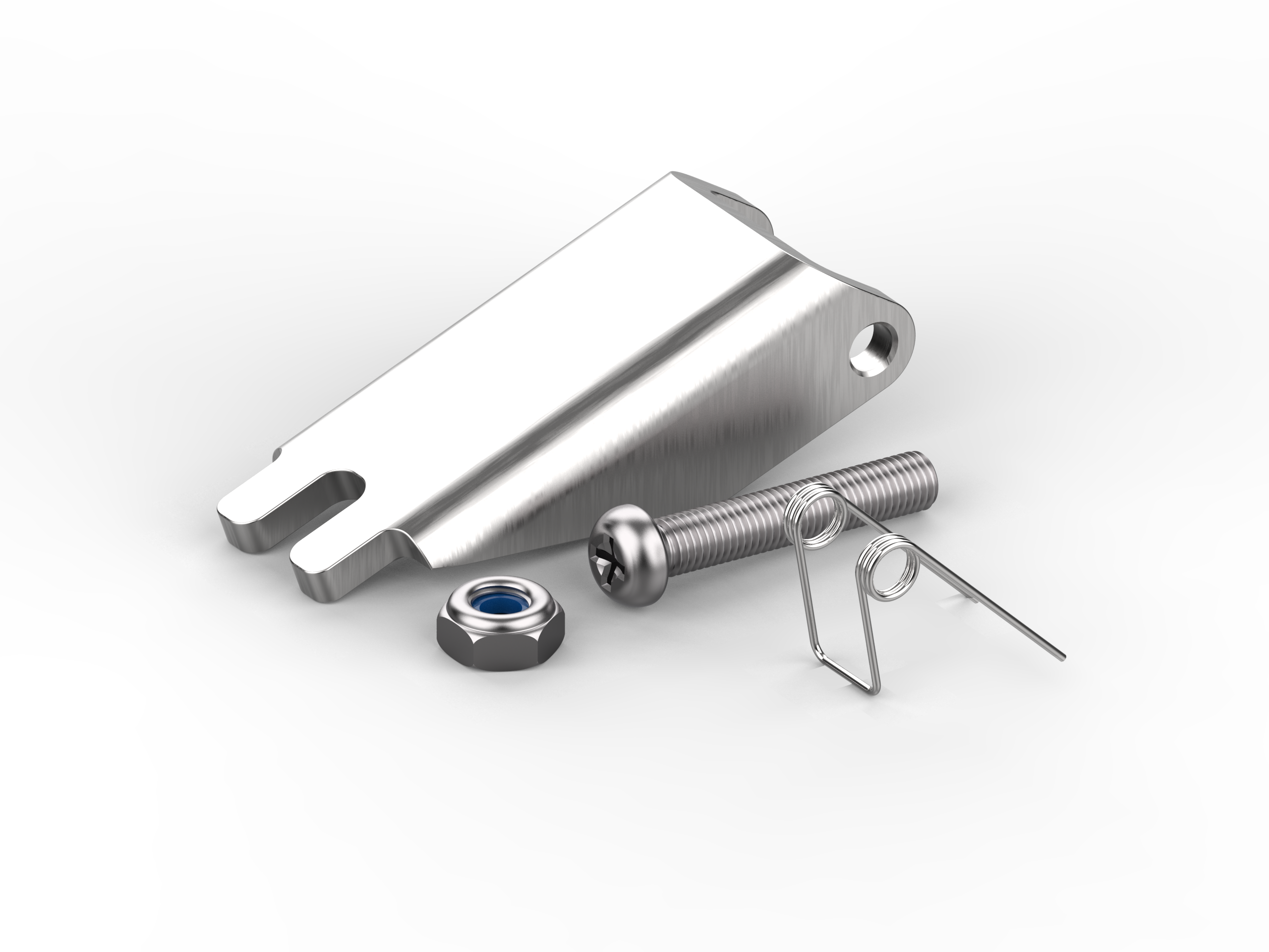
Latch kits, inspection, and when to scrap a part. Latches wear and bend before hooks do, so a box of matched latch kits keeps a good hook in service instead of scrapping it. The WH Grade 100 Latch Kits fit 1/4 through 5/8 inch hooks from $9.99, and swapping a tired latch is a five minute job. Slings fall under ASME B30.9 and their hooks under ASME B30.10, both of which want a visual check before each use and a documented periodic inspection on a schedule that tightens with heavier service. Pull any component for a stretched or bent link, a hook opened more than 15 percent at the throat or twisted more than 10 degrees, cracks, gouges, heavy wear, a latch that will not seat, or illegible markings. When a stainless assembly is the requirement instead of alloy, the Grade 60 stainless steel chain components collection is the corrosion-resistant path.
Frequently Asked Questions
No. Every load-bearing part of a chain sling must be the same grade as the chain, because the weakest component sets the rating of the whole assembly. A Grade 80 hook on Grade 100 chain gives you a Grade 80 sling, and mismatched parts void the tag. Stay all Grade 100 through the master link, connecting links, and hooks.
A sling hook has a spring latch that keeps the load from bouncing out of the bowl, but the latch does not carry load and can be pushed open by hand at any time. A self-locking hook has a latch that snaps shut and locks under load; it stays locked until the load is removed and someone releases it deliberately. Use self-locking hooks for overhead lifts and blind picks where an accidental release would drop the load.
The eye grab hook is a chain shortener. You cradle a chain link in the hook's saddle to take up slack, shorten one leg, or level an off-center load without cutting chain. Because the link seats fully in a supporting cradle, a properly designed Grade 100 grab hook does not require any reduction of the sling's working load limit. Confirm on the fitting's own rating that it is a cradle or shortening grab hook, not a plain grab hook.
For single and double leg slings a plain master link is enough. For three and four leg slings, a master link alone crowds too many legs into one ring, so use a sub-assembly, which is a master link with two smaller coupling links already welded on. Each pair of legs then hangs from its own intermediate link, and the master link on a triple or quad sling is proof tested to six times a single leg's rating to handle the combined load.
As individual parts, so you can build a new sling leg or repair an existing one. If you want a finished, tagged, and proof-tested sling instead, buy from the assembled Grade 100 chain slings collection. The one exception here is the CM EZ Connect, which ships as a combined master link and chain shortener unit for adjustable single and double leg slings.
The William Hackett Grade 100 components hold their full working load limit with no reduction from roughly minus 40 F up to about 400 F. Above that, capacity must be reduced according to the manufacturer's temperature derating chart, and prolonged exposure to high heat can permanently lower the rating even after the part cools. For sustained high-heat work, check the derating table before every lift.