Stainless Steel Chain Hoist
A stainless steel chain hoist is what a food, beverage, dairy, or pharmaceutical plant reaches for when an ordinary black-chain hoist would rust out over a washdown line and shed contamination into the product below. In practice the answer is a food grade hoist, and this collection is built entirely on Harrington's food grade (FG) line: the NER-FG electric chain hoist in hook, push-trolley, and motorized-trolley builds, plus the standalone MR-FG motorized trolleys and PT-FG push trolleys that add travel to a beam. Every unit runs corrosion-resistant nickel-plated load chain, FDA-approved lubricants, chip-resistant white epoxy paint, and stainless steel and nickel-plated hardware, all aimed at the one thing that sets this category apart: keeping the machine from contaminating what passes underneath it. Capacities run from 1/4 ton to 2 tons on standard 10, 15, and 20 foot lifts, and prices start near $1,150 for a bare trolley and climb into five figures for a hoist with a powered trolley.
Compare Food Grade Hoists & Trolleys
| Model | Price | Capacity | Lift Height | |
|---|---|---|---|---|
| Harrington NERM-FG Motorized Trolley Food Grade Electric Chain Hoist | $10,335 | 1/4-2 ton | 10-20 ft | View → |
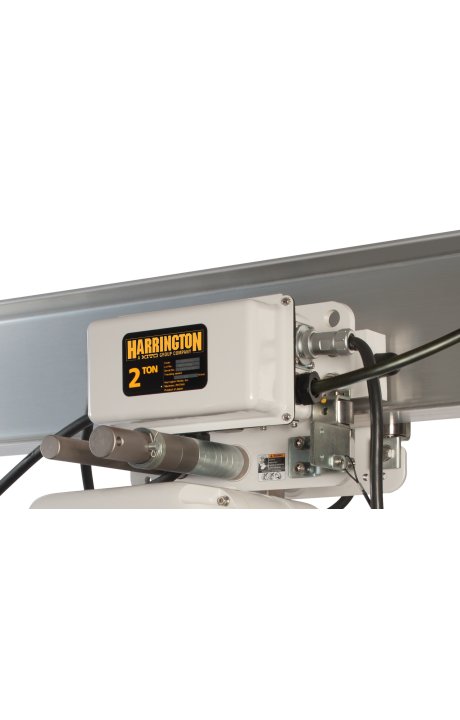
| Harrington MR-FG Dual Speed Food Grade Motorized Trolley | $7,084 | 1-2 ton | — | View → |
| Harrington NERP-FG Push Trolley Food Grade Electric Chain Hoist | $6,992 | 1/4-2 ton | 10-20 ft | View → |
| Harrington NER-FG Hook Suspension Food Grade Electric Chain Hoist | $5,410 | 1/4-2 ton | 10-20 ft | View → |
| Harrington MR-FG Single Speed Food Grade Motorized Trolley | $4,561 | 1-2 ton | — | View → |
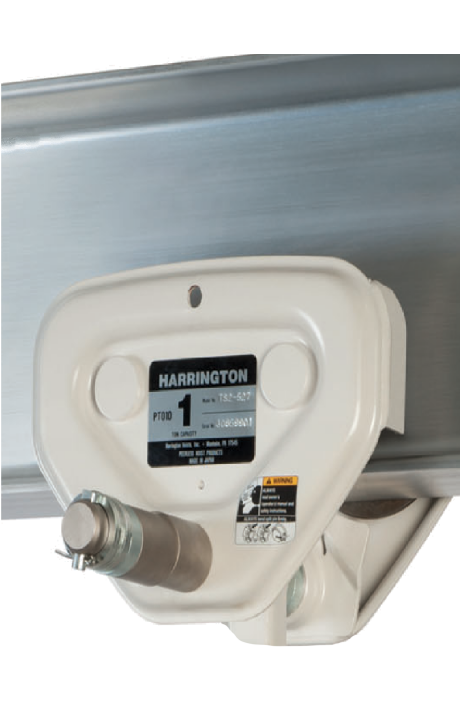
| Harrington PT-FG Good Grade Push Trolley | $1,156 | 1/2-2 ton | — | View → |
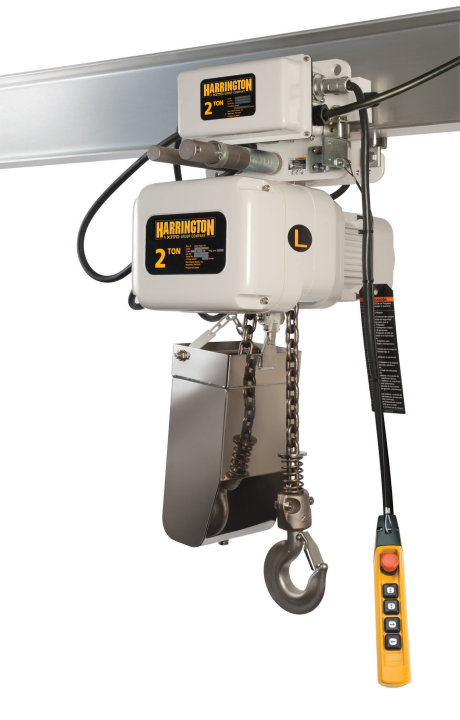 In Stock
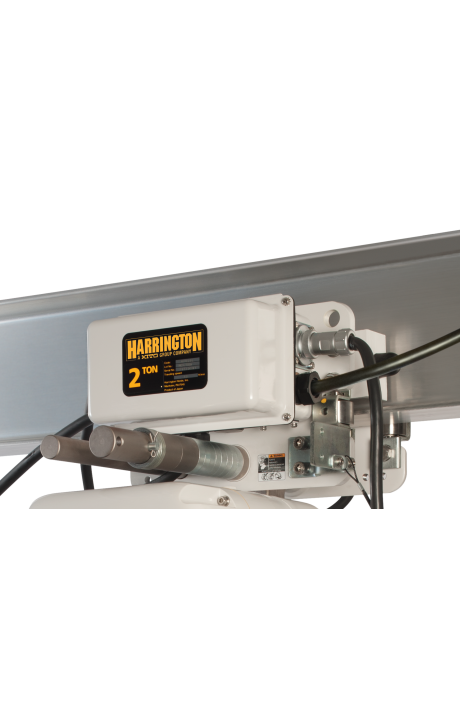 In Stock
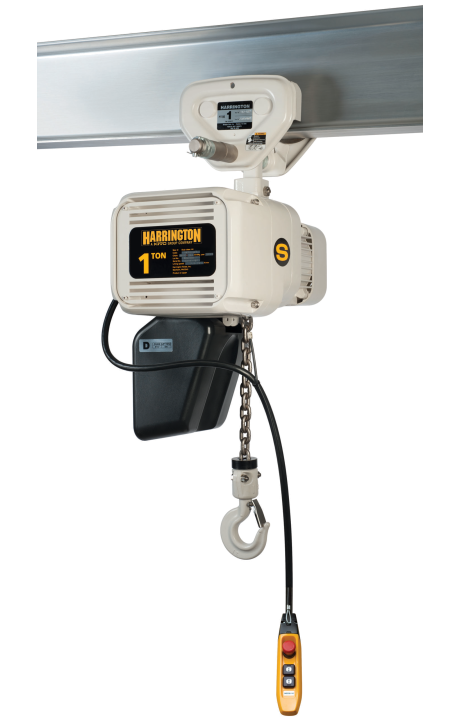 In Stock
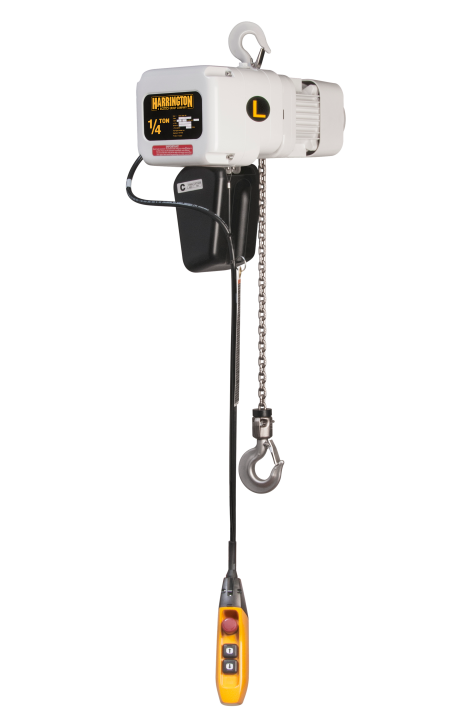 In Stock
 In Stock
 In Stock
Food Grade Hoists & Trolleys Buying Guide
What food grade changes, and what it does not. The FG suffix on every Harrington hoist here marks a specific set of changes aimed at one problem: stopping a lifting machine from contaminating what passes under it. The load chain is corrosion-resistant Grade 80 DIN chain plated with nickel instead of the usual black or zinc finish, so damp air and steam do not bloom rust onto it. The grease on that chain and the oil in the gearbox are FDA-approved lubricants, picked because a drip lands on product rather than concrete. The hoist body and the bottom hook wear a chip-resistant white epoxy paint that will not flake into an open line, and the exposed hardware is stainless steel and nickel-plated instead of bare steel. What food grade does not mean is direct food contact: these are built for facilities where incidental contact and daily washdown are the risk, not for lifting inside the product itself. If corrosion is not your problem, the standard-finish version of the same machine sits in electric chain hoists for less money.
Size the capacity the honest way. The NER-FG runs 1/4, 1/2, 1, and 2 ton, which covers the overwhelming majority of food and beverage lifts: motors, pumps, mixer heads, filler change parts, and tote or drum work. Size it the honest way, the heaviest thing you will lift plus the hook block, the sling, and any below-hook gear, then round up to the next rating and stop. A hoist run near its ceiling wears fast, and one bought two sizes over is money parked on the beam. Lift height is a catalog choice too, with standard 10, 15, and 20 foot lifts, so measure from the hook's landing point up to the beam and buy the reach the room actually needs. A hook-suspension NER-FG starts around $5,400 and climbs with capacity and lift. If your loads outrun 2 tons, the food grade line ends there, and the job moves to a heavier standard-industrial machine.
Single speed or dual speed. Every NER-FG comes single-speed or dual-speed, and the dual-speed uses an under-the-cover variable frequency drive rather than a two-winding motor. That VFD buys two things a food line values: a slow creep speed for landing a filler part or a mixer blade onto studs without chasing it, and a soft ramp that keeps the load from swinging when the button is pressed or released. Single-speed is the cheaper buy and is right for plain vertical lifting where nothing needs delicate spotting. Dual-speed earns its premium on repetitive change-part work and anywhere a load has to seat precisely into a fixture. Decide which before you order, because the drive is part of the hoist and not something you bolt on later.
Suspension: bare hook, push trolley, or motorized trolley. How the hoist hangs and travels is the biggest fork in this collection, and Harrington sells it three ways. The NER-FG hook suspension model hangs from a beam clamp or a trolley eye, or from the hook of a jib crane or portable gantry, and stays put. The NERP-FG arrives as the hoist already married to a plain push trolley, from about $6,250, that you roll along the beam by hand. The NERM-FG ships with a powered motorized trolley, from about $10,300, that drives the load down the runway on its own pendant button, the clean choice when travel is part of every cycle. If you already own a food grade hoist and only need to add travel, this collection also carries the trolley on its own: the MR-FG motorized trolley in single-speed from about $4,560 and dual-speed from about $6,980, plus the PT-FG push trolley starting near $1,150. Buying the matched hoist-and-trolley package beats sourcing a trolley separately and hoping the flange width lines up.
Confirm the power at your panel. The NER-FG is a three-phase hoist, wired for 460-volt three-phase, sixty-hertz power, which is standard in the plants these serve. Confirm what is at your panel before you order, because a three-phase hoist will not turn on single-phase service, and rewiring a line for three-phase is a far bigger project than the hoist itself. If your only power is single-phase 115 or 230V, the food grade line will not fit as-is, and the decision moves to the single-phase units in the broader electric hoists range, none of which carry the FG washdown package. When you are close to the two-ton line and running the hoist hard, three-phase is the right side of that fork anyway.
Duty class and inspection under ASME B30.16. Two things govern the buy beyond the food-grade finish. First, duty: the NER-FG carries the same H4 classification and sixty-minute-rated motor as the standard NER, which means it is built for high-volume production handling of loads near capacity, not standby use. Size capacity to the heaviest lift, then confirm the duty class covers the busiest hour of the shift, because underbuying duty is the expensive mistake. Second, the rules: overhead electric chain hoists fall under ASME B30.16, the standard covering construction, installation, operation, inspection, testing, and maintenance of underhung and stationary hoists. It calls for a frequent visual check before use plus a documented periodic inspection at least yearly, on intervals that tighten as service gets heavier. Most hoists like these sit outside OSHA 1910.179, which covers only top-running double-girder cranes, so B30.16 is the standard your inspection program follows. Weigh the food grade units against the standard-finish hoists if washdown is not what you are fighting, since the FG package is a premium you pay only when the environment demands it.
Frequently Asked Questions
Food grade is a defined package of changes, not a marketing label. On Harrington's FG line it means corrosion-resistant nickel-plated Grade 80 load chain, FDA-approved grease on the chain and oil in the gearbox, chip-resistant white epoxy paint on the hoist body and bottom hook so nothing flakes into product, and stainless steel and nickel-plated hardware in place of bare steel. Together they let the hoist run over a washdown line without rusting or shedding contamination onto what passes below.
No, and it is worth being precise. These are food grade hoists that combine stainless steel and nickel-plated hardware with a nickel-plated load chain and epoxy-painted housing, which is what resists rust and washdown in a food or beverage plant. They are rated for incidental food contact and steamy, damp environments, not for direct contact with the product itself. A fully stainless hoist is a specialty item; for the plants these serve, the FG corrosion package is what the job actually requires.
The NER-FG covers 1/4, 1/2, 1, and 2 ton, which handles nearly all food and beverage lifting, from pumps and motors to mixer heads and filler change parts. Standard lift heights are 10, 15, and 20 feet. Size the capacity by totaling the heaviest load plus the hook block, sling, and any below-hook gear, then round up to the next rating. If your loads pass 2 tons, the food grade range stops there.
Buy the push-trolley NERP-FG if the load moves a short distance along the beam and hand power is fine, since it costs less, around $6,250 to start. Buy the motorized-trolley NERM-FG, from about $10,300, when travel happens on every cycle or the runway is long, because a powered trolley drives the load on its pendant button instead of a worker muscling it. You can also add travel to a hoist you already own with the standalone MR-FG motorized or PT-FG push trolleys in this collection.
The NER-FG runs on 460-volt three-phase, sixty-hertz power, which is standard in the industrial plants these serve. Confirm the voltage and phase at your panel before ordering, because a three-phase hoist will not run on single-phase service and converting a line is a bigger job than the hoist. If you only have single-phase 115 or 230V power, the food grade line will not fit, and you would look at single-phase units that do not carry the washdown package.