Chain Slings
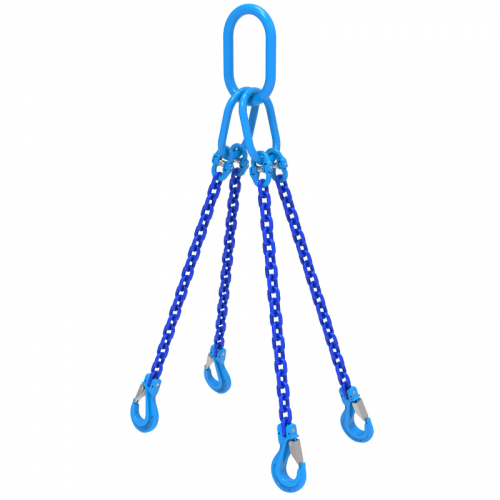
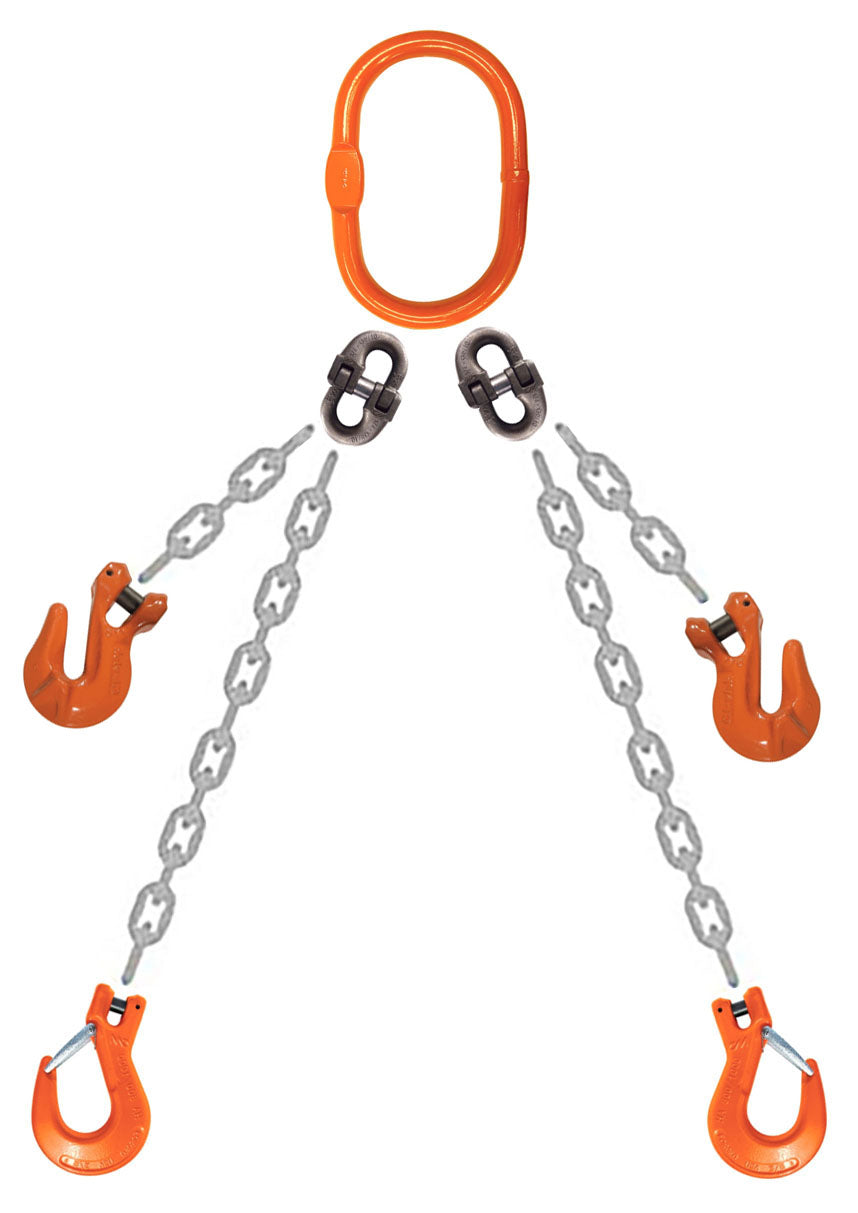
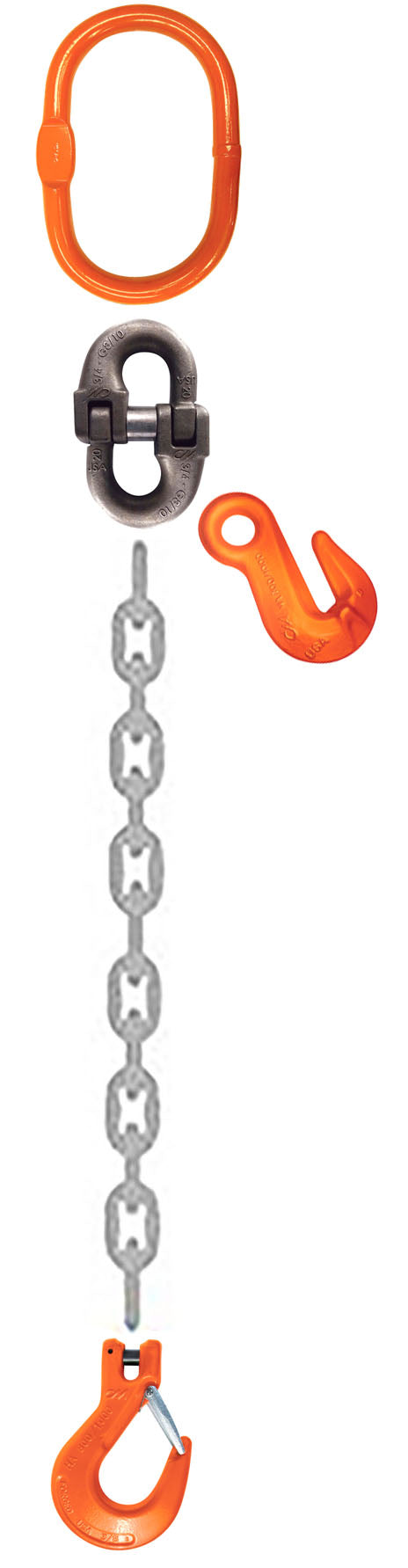
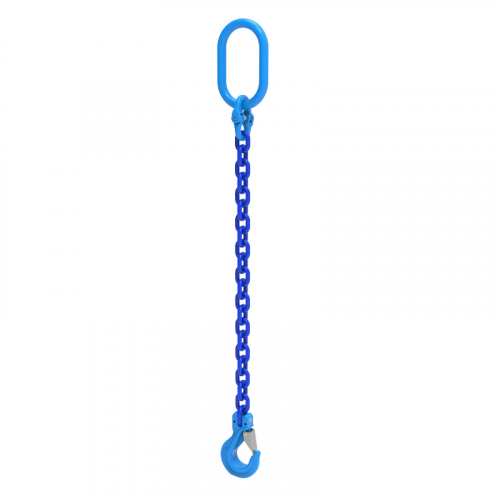
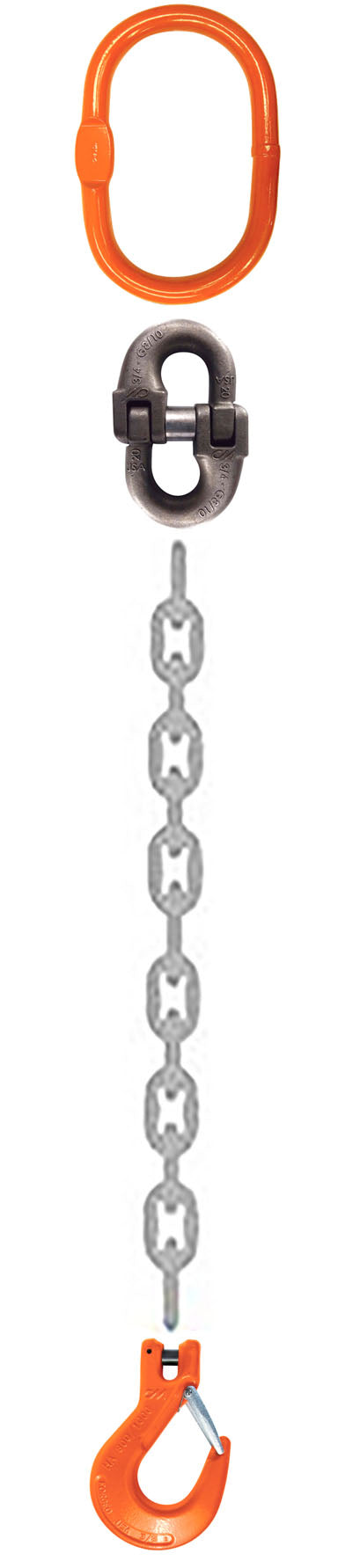
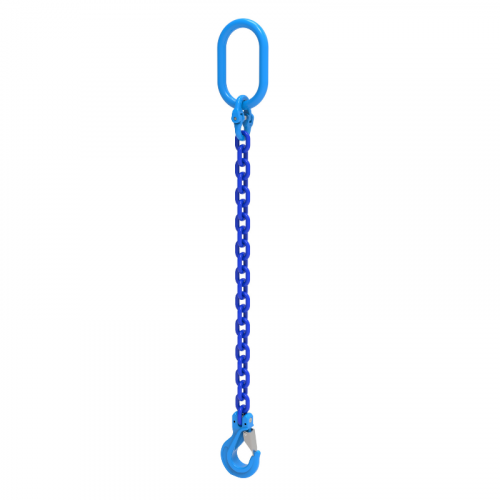
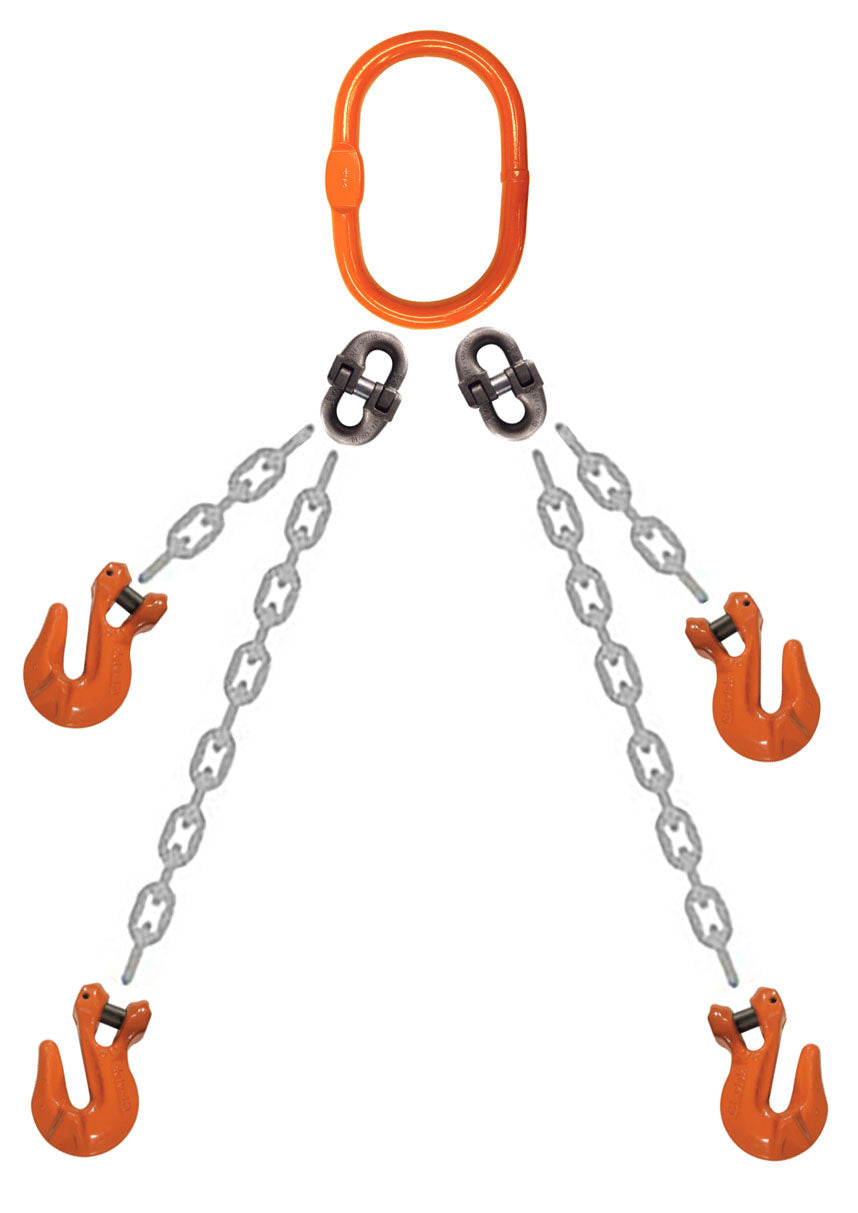
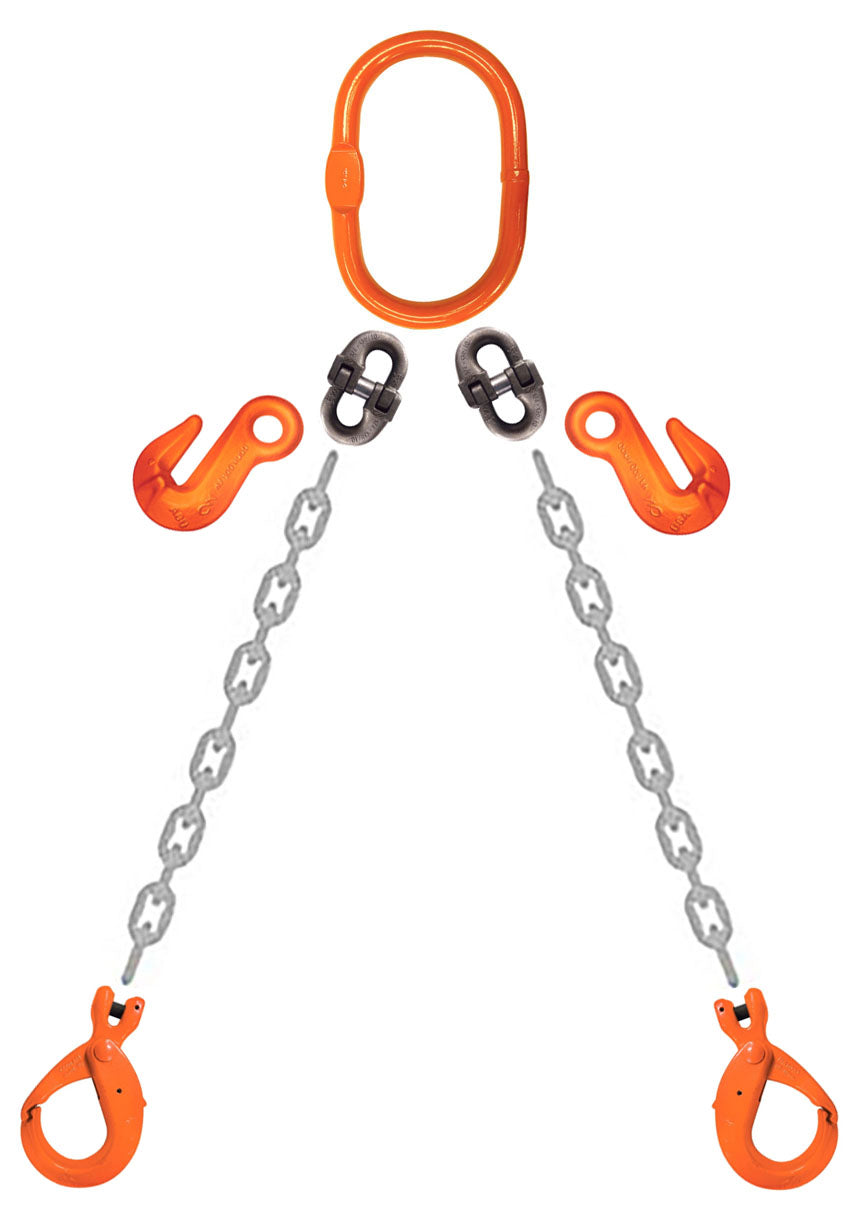
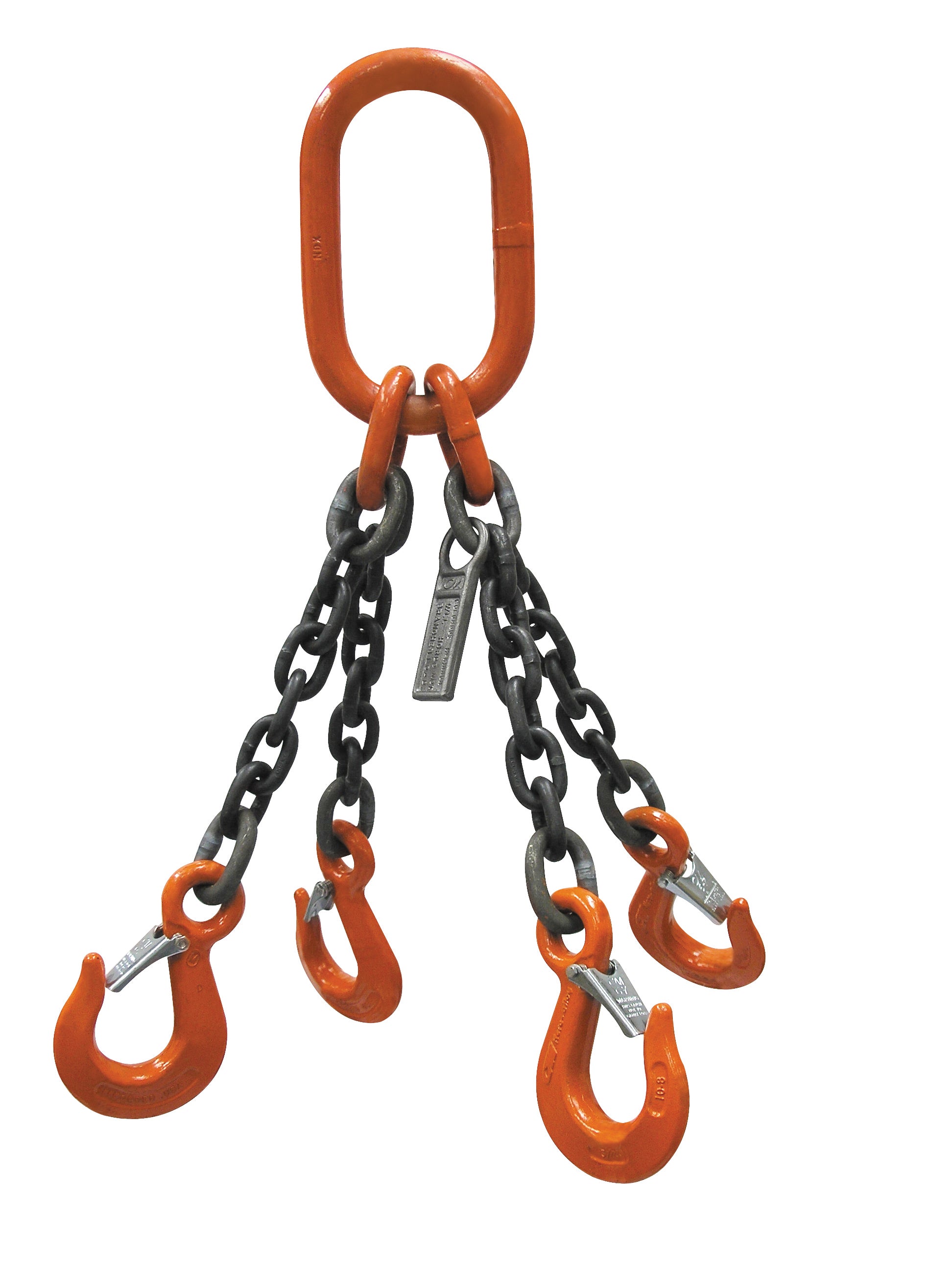
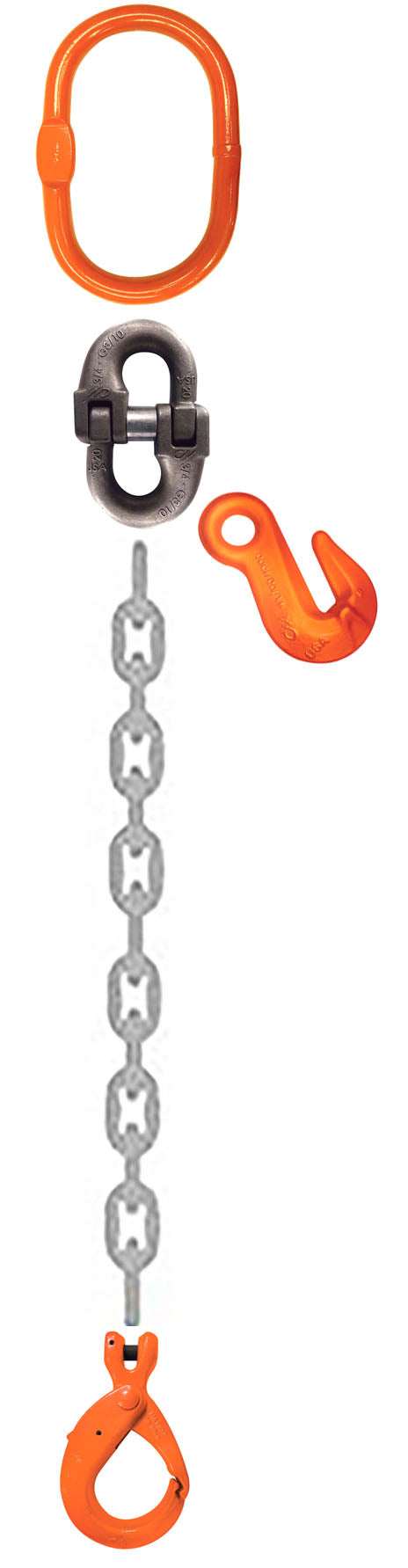
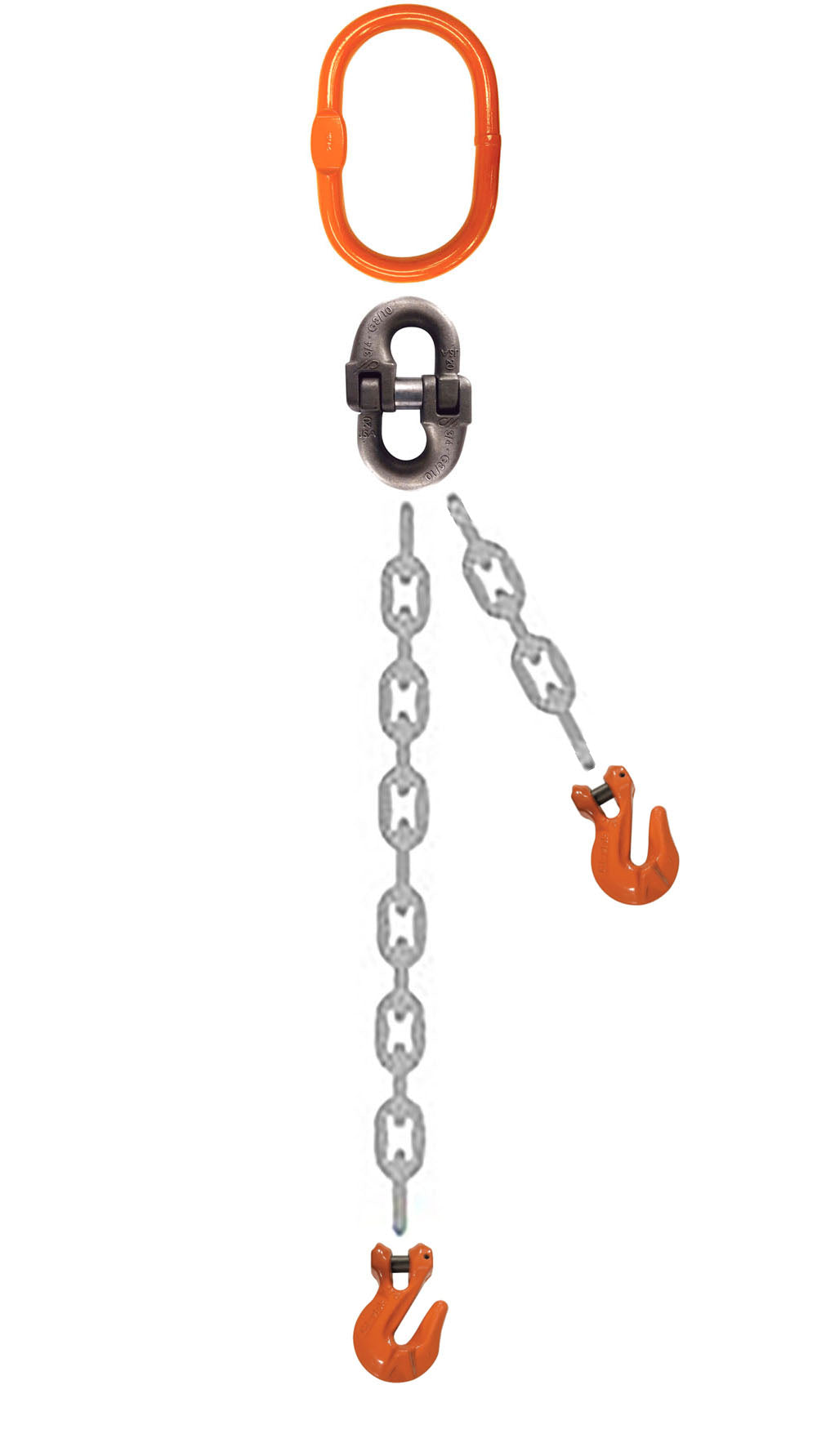
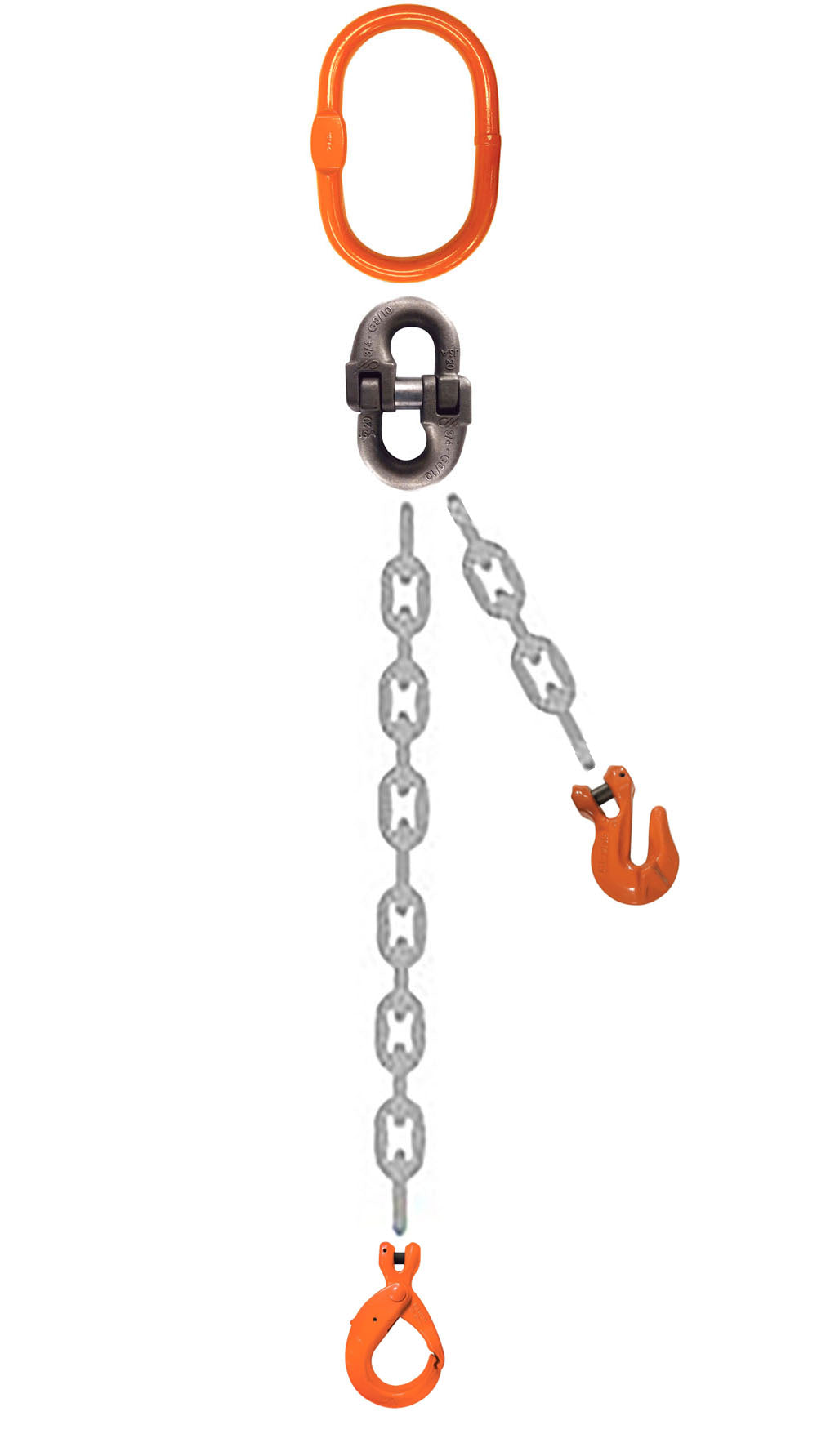
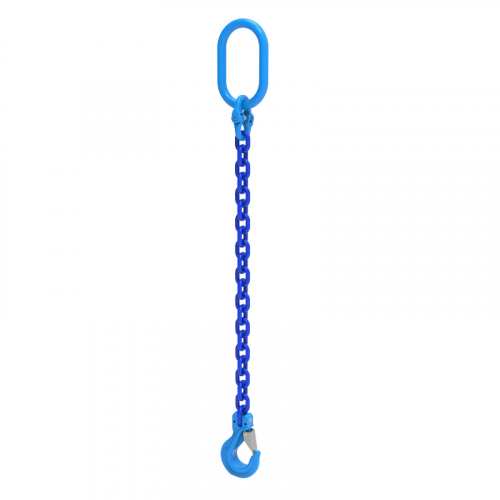
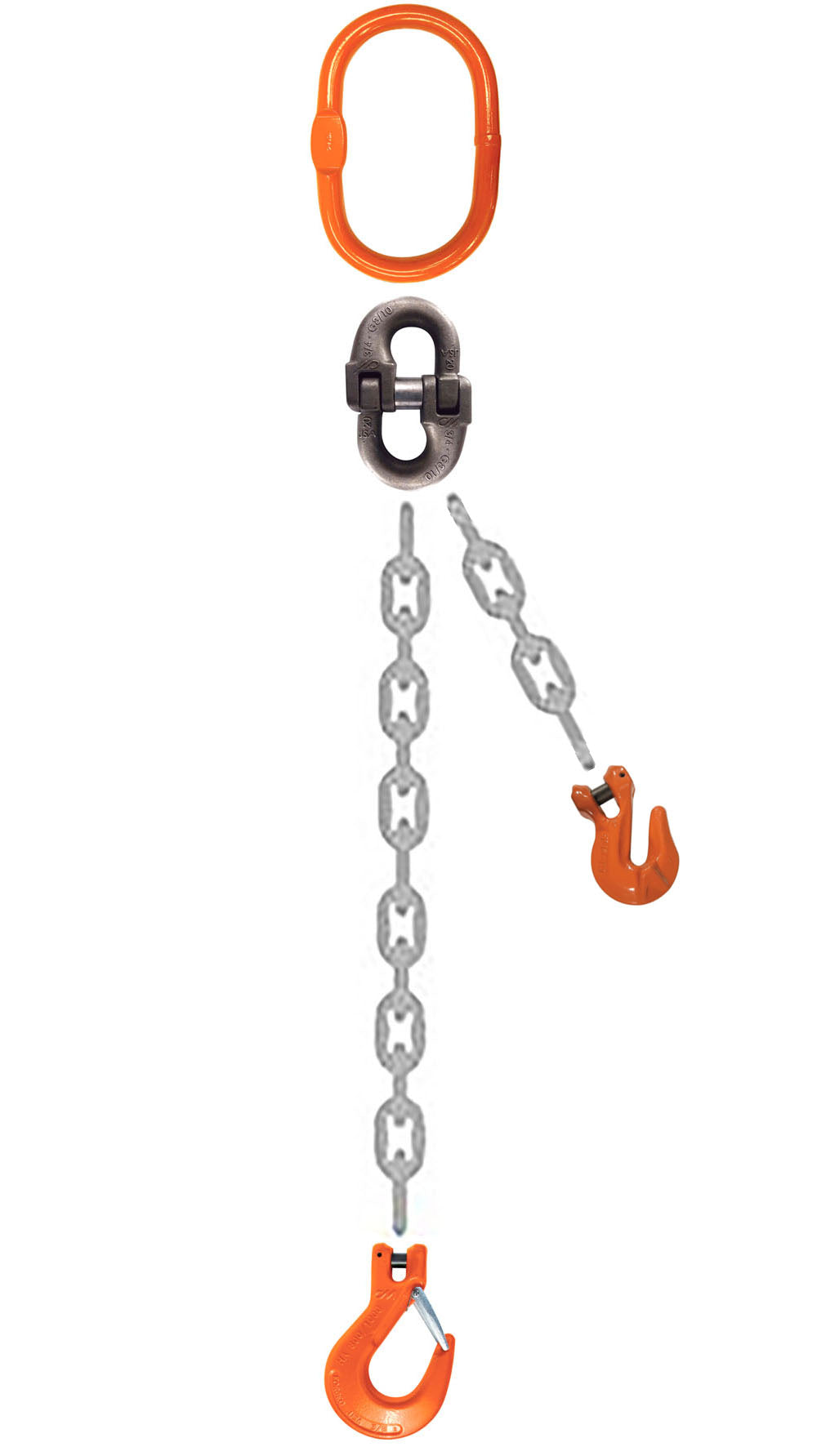
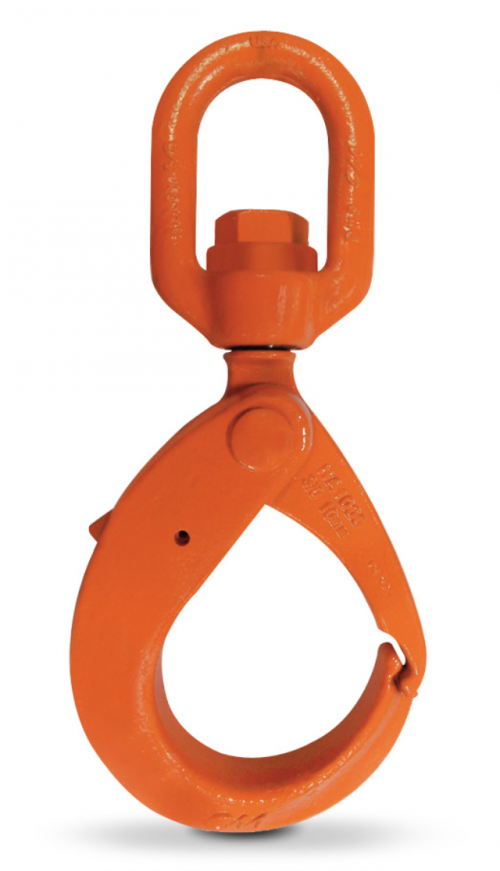
A chain sling is alloy chain built into a rated assembly: a master link at the hook, one to four legs, and fittings matched so the tag speaks for the whole unit. This collection is built on William Hackett Grade 100 assemblies, from a 1/4 inch single leg rated 2,700 lb at $102 to a 1-1/4 inch 4-leg rated 191,700 lb, backed by CM Grade 80 Hammerlok coupling links and sorting hooks, Grade 100 master links from $15, and Kinedyne Grade 70 bulk chain by the 800 ft barrel for securement work. Chain is the sling you buy for heat, edges, and abuse: it carries full rating where synthetics have long since been carried out of the building, and it can be inspected link by link over years of service. The guide below covers grade, leg count, angle math, and the ASME B30.9 rules that keep a chain sling legal.
Compare Chain Slings & Lifting Chains
| Model | Price | Overall Length | Capacity | |
|---|---|---|---|---|
| William Hackett 1-1/4 Inch Diameter 191700lbs 4-Leg Chain Sling | $17,893 | 3-30 ft | 191700 lb | View → |
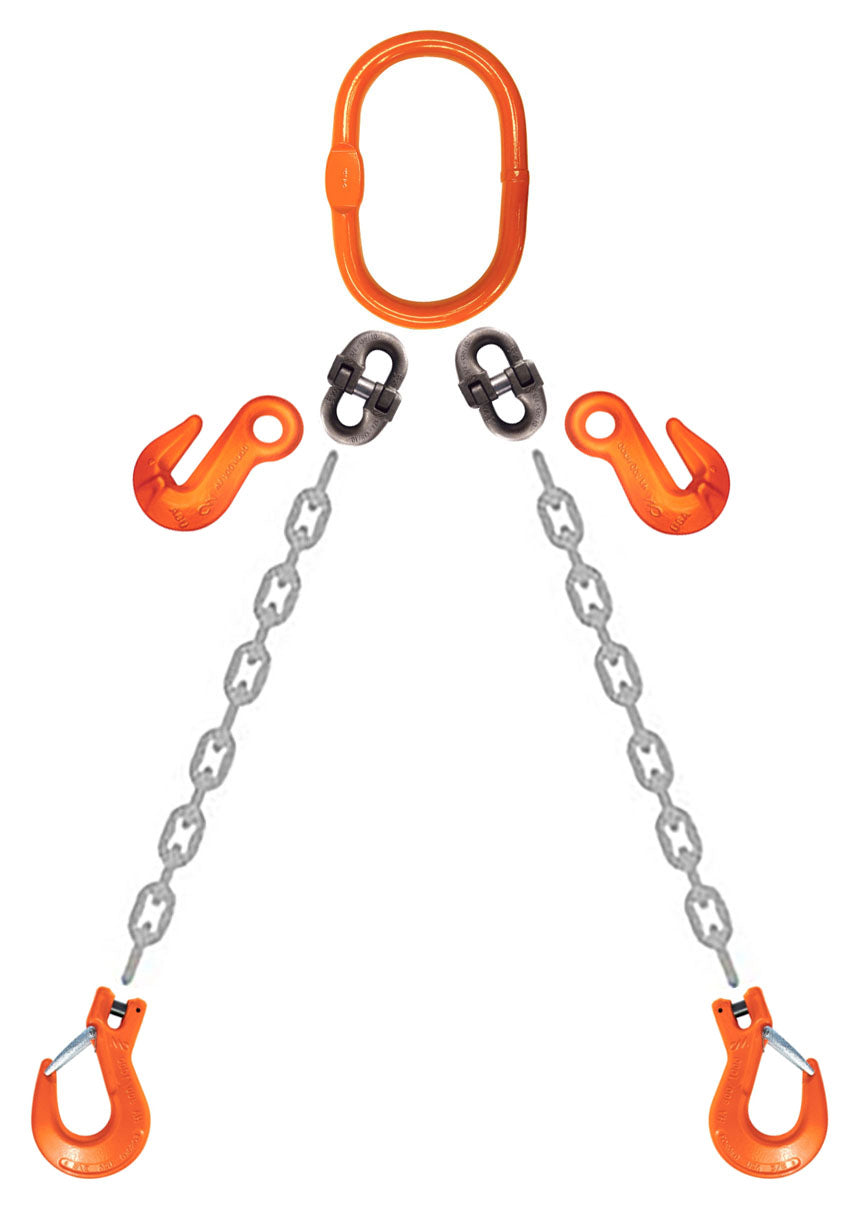
| William Hackett 1-1/4 Inch Diameter 127800lbs 2-Leg Chain Sling | $5,782 | 3-30 ft | 127800 lb | View → |
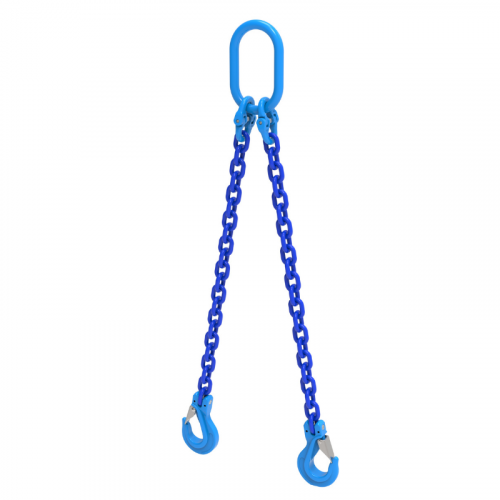
| William Hackett 1 Inch Diameter 84200lbs 2-Leg Chain Sling | $2,505 | 3-30 ft | 84200 lb | View → |
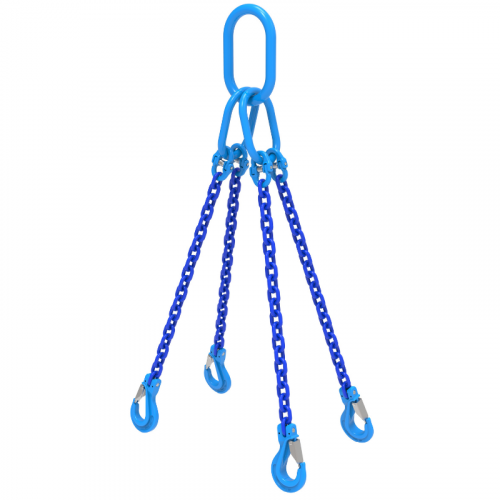
| William Hackett 7/8 Inch Diameter 90600lbs 4-Leg Chain Sling | $2,127 | 3-30 ft | 90600 lb | View → |
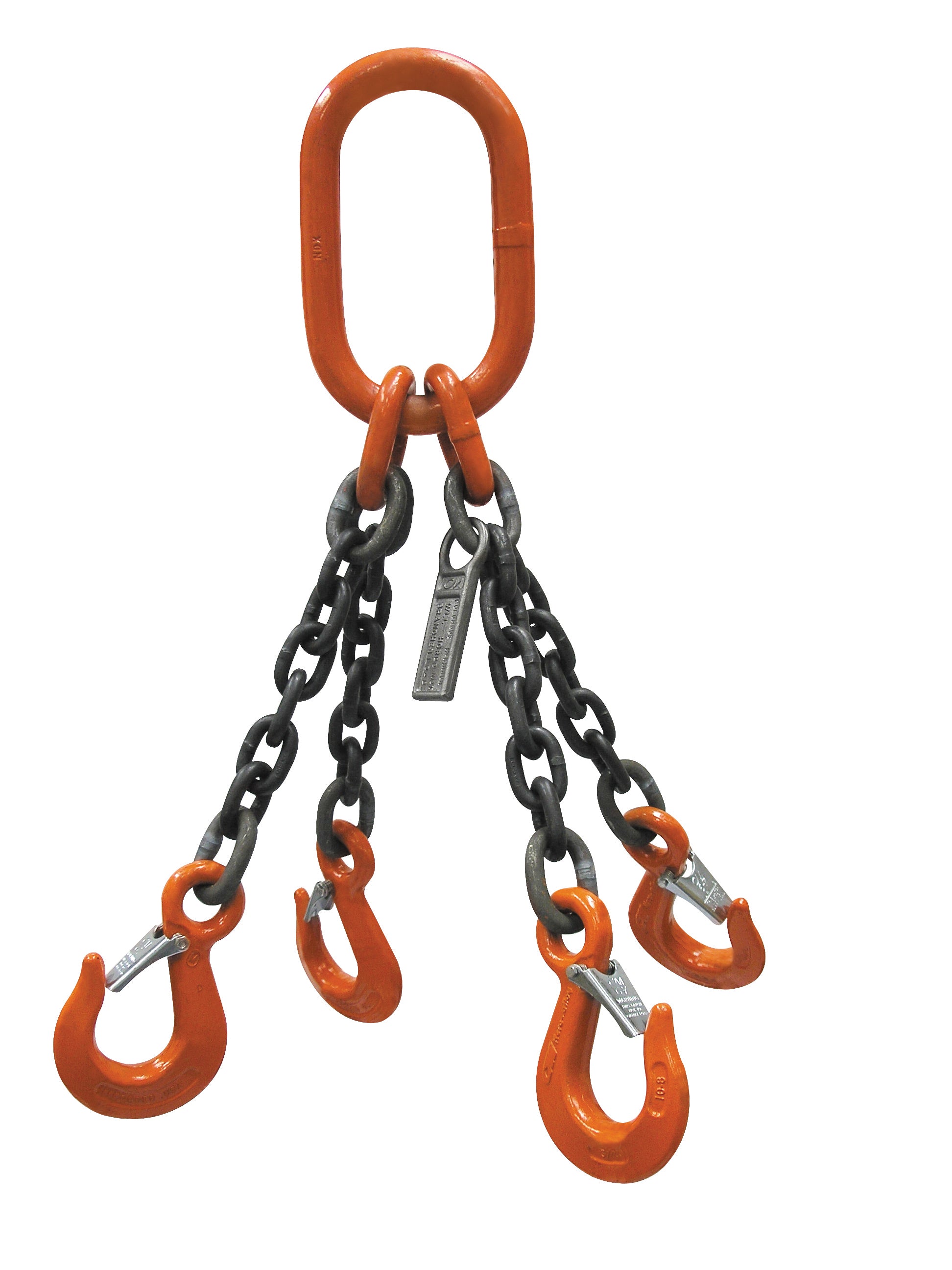
| William Hackett 3/4 Inch Diameter 74900lbs 4-Leg Chain Sling | $1,595 | 3-30 ft | 74900 lb | View → |
| WH 5/8 Inch Dia. x WLL 47900lbs 4-Leg Grade 100 Chain Slings | $1,555 | 3-30 ft | 47,900 lb | View → |
 In Stock
 In Stock
 In Stock
 In Stock
 In Stock
 In Stock
 In Stock
 In Stock
 In Stock
 In Stock
 In Stock
 In Stock
 In Stock
 In Stock
 In Stock
 In Stock
 In Stock
 In Stock
 In Stock
 In Stock
 In Stock
 In Stock
 In Stock
 In Stock
 In Stock
 In Stock
 In Stock
 In Stock
 In Stock
 In Stock
 In Stock
 In Stock
 In Stock
 In Stock
 In Stock
 In Stock
 In Stock
 In Stock
 In Stock
 In Stock
 In Stock
 In Stock
 In Stock
 In Stock
 In Stock
 In Stock
 In Stock
 In Stock
 In Stock
 In Stock
 In Stock
 In Stock
 In Stock
 In Stock
 In Stock
 In Stock
 In Stock
 In Stock
 In Stock
Chain Slings & Lifting Chains Buying Guide
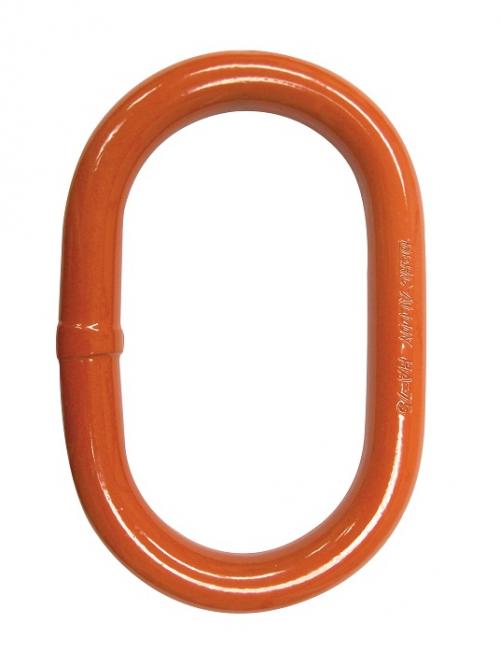
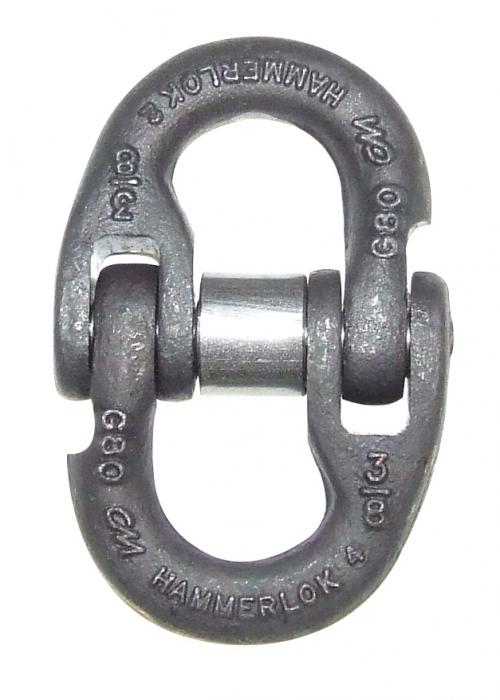
Grade is the license to lift overhead. OSHA 1910.184 and ASME B30.9 both require alloy steel chain for overhead lifting, which in practice means Grade 80 or Grade 100; carbon steel transport chain does not qualify no matter how heavy it looks. That is why the Kinedyne Grade 70 barrels here, 1/4 through 1/2 inch, are securement chain: they tie down loads on trailers and handle dragging and sorting in the yard, and they never go over a hook. Between the two lifting grades, Grade 100 carries roughly 25% more working load than Grade 80 at the same diameter, so it hits a given rating with thinner, lighter chain, and every William Hackett assembly in this collection is built from it. The CM Grade 80 components, Hammerlok couplers from $50 and the sorting hook, cover repairs and rigs built around Grade 80 systems. Match component grade to chain grade, because a Grade 80 coupler on Grade 100 chain rates the whole leg at Grade 80.
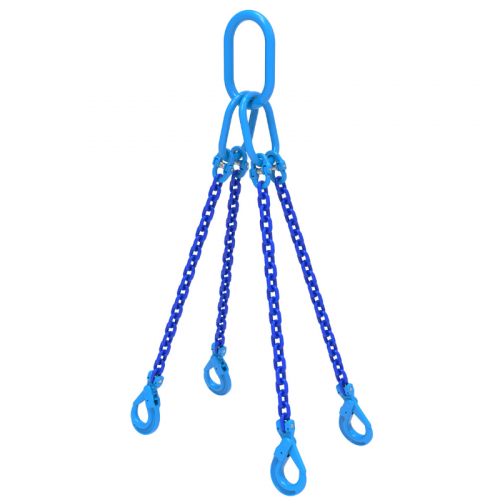
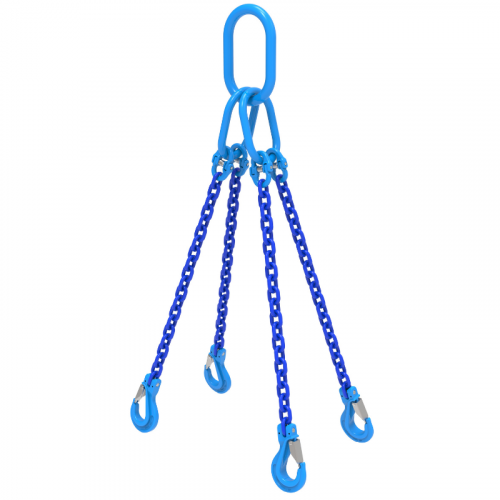
What the multi-leg ratings already assume. Run the arithmetic on the William Hackett tags and the design assumption falls out: the double leg ratings equal two legs at a 45 degree angle from horizontal, and the 4-leg ratings equal three legs at that same angle, not four. The 5/16 inch line makes it concrete: 5,700 lb single, 8,100 lb double, 12,100 lb on the 4-leg. Both conventions are conservative on purpose. Legs rigged steeper than 45 degrees see less tension than the tag assumes, which is margin in your favor; legs flatter than 45 degrees see more, which the rating does not cover. And a 4-leg sling on a rigid load cannot be trusted to share evenly, since three legs carry while the fourth balances, so the rating counts three. Rig longer legs when headroom allows, keep the angles steep, and the printed numbers stay honest.
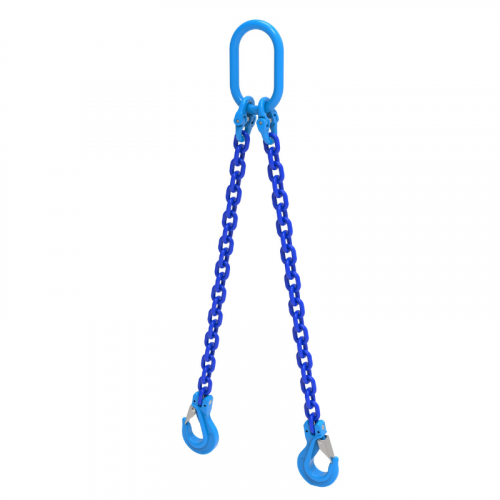
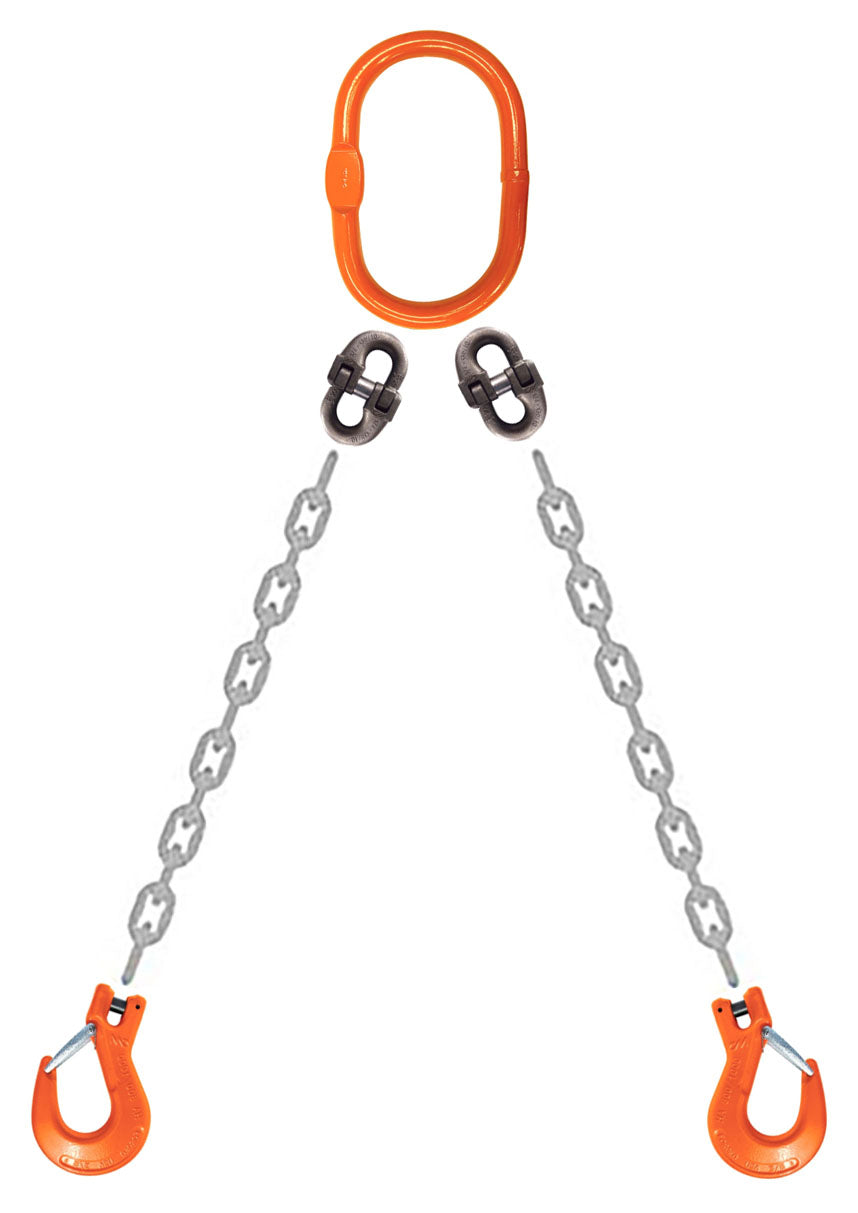
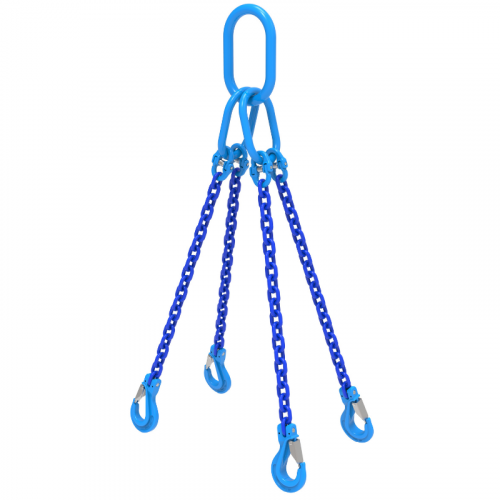
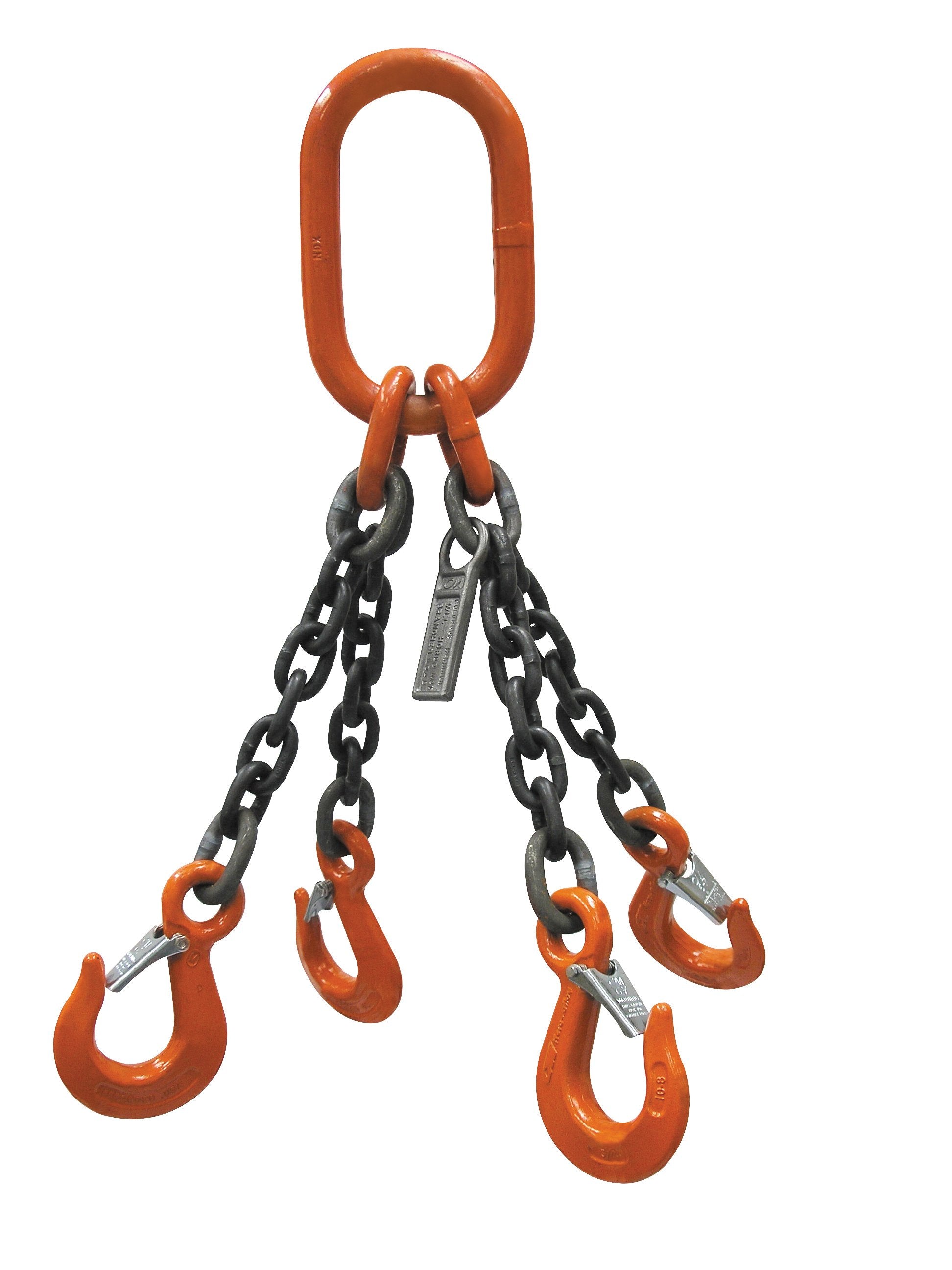
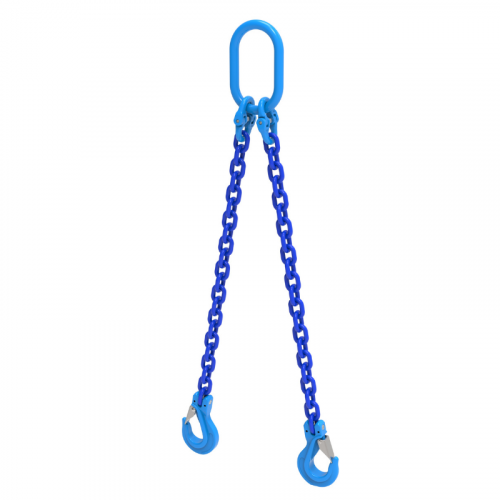
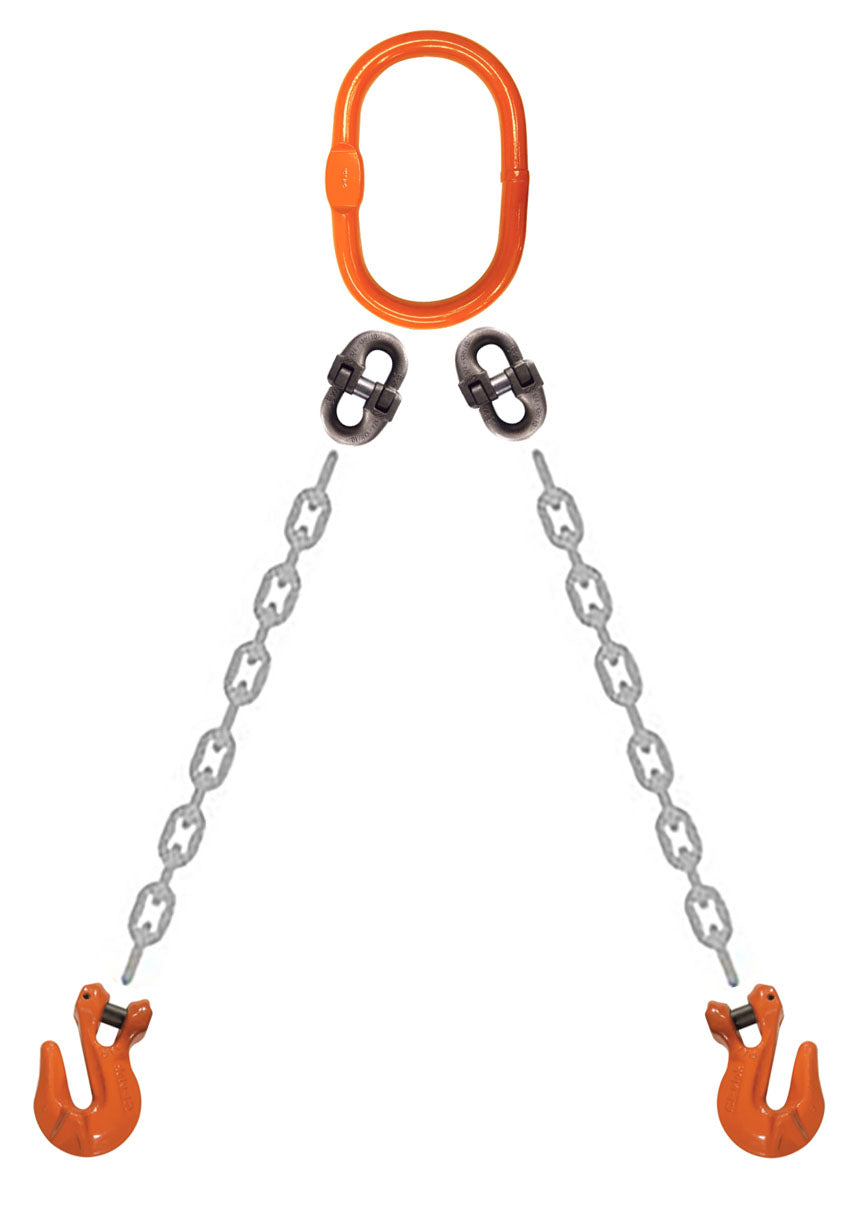
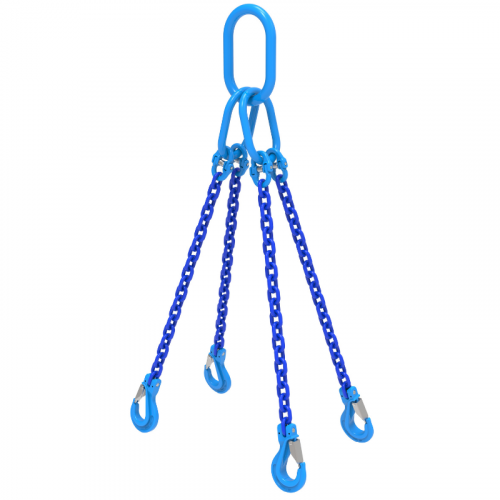
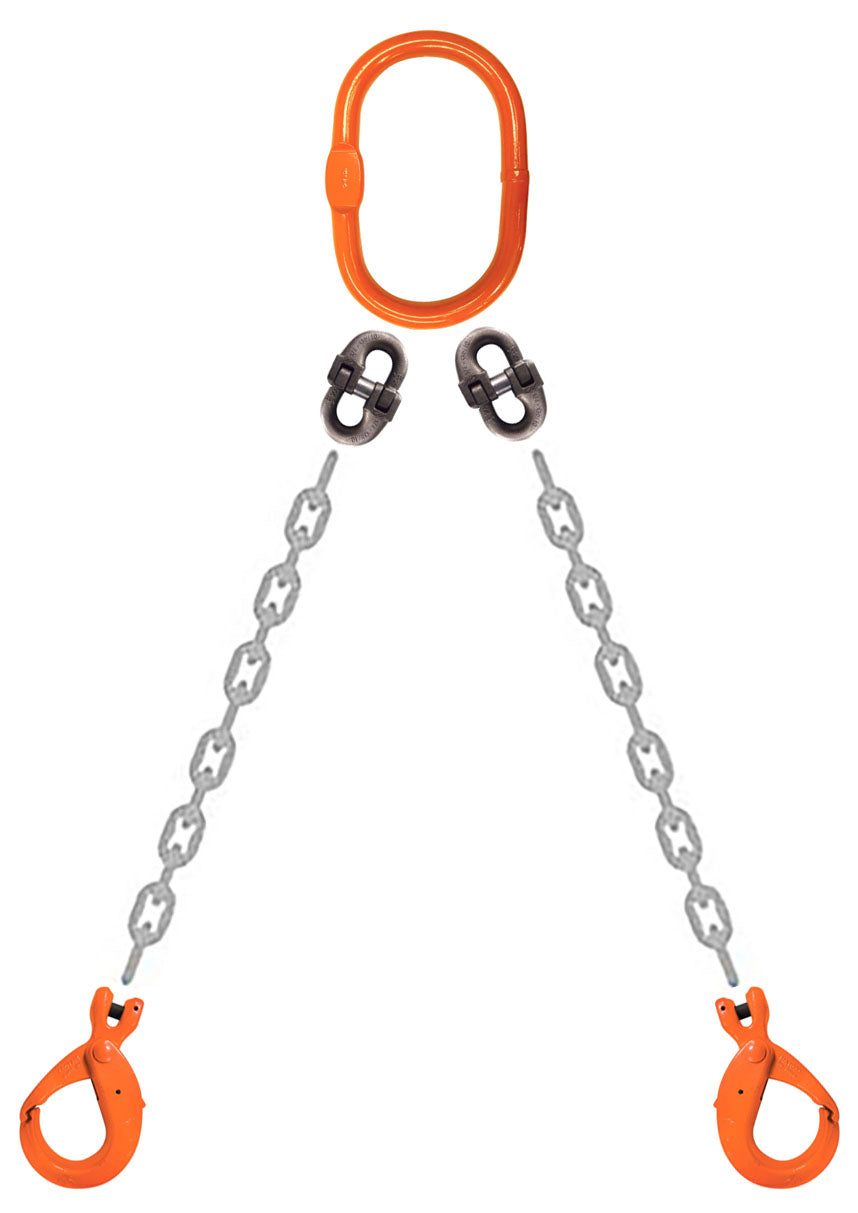
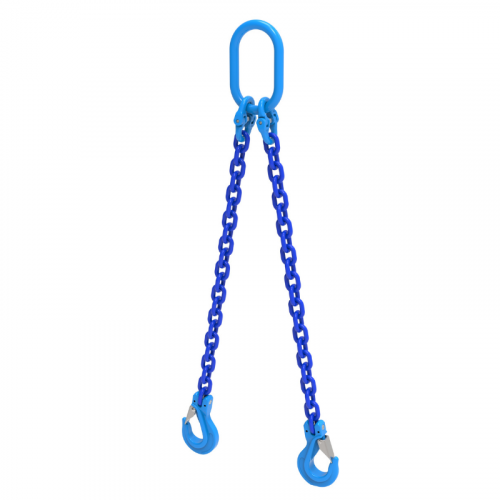
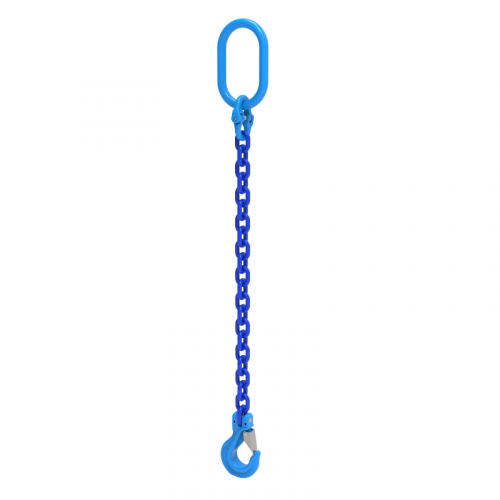
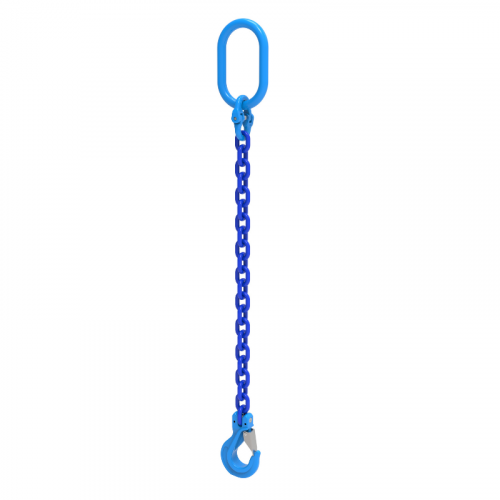
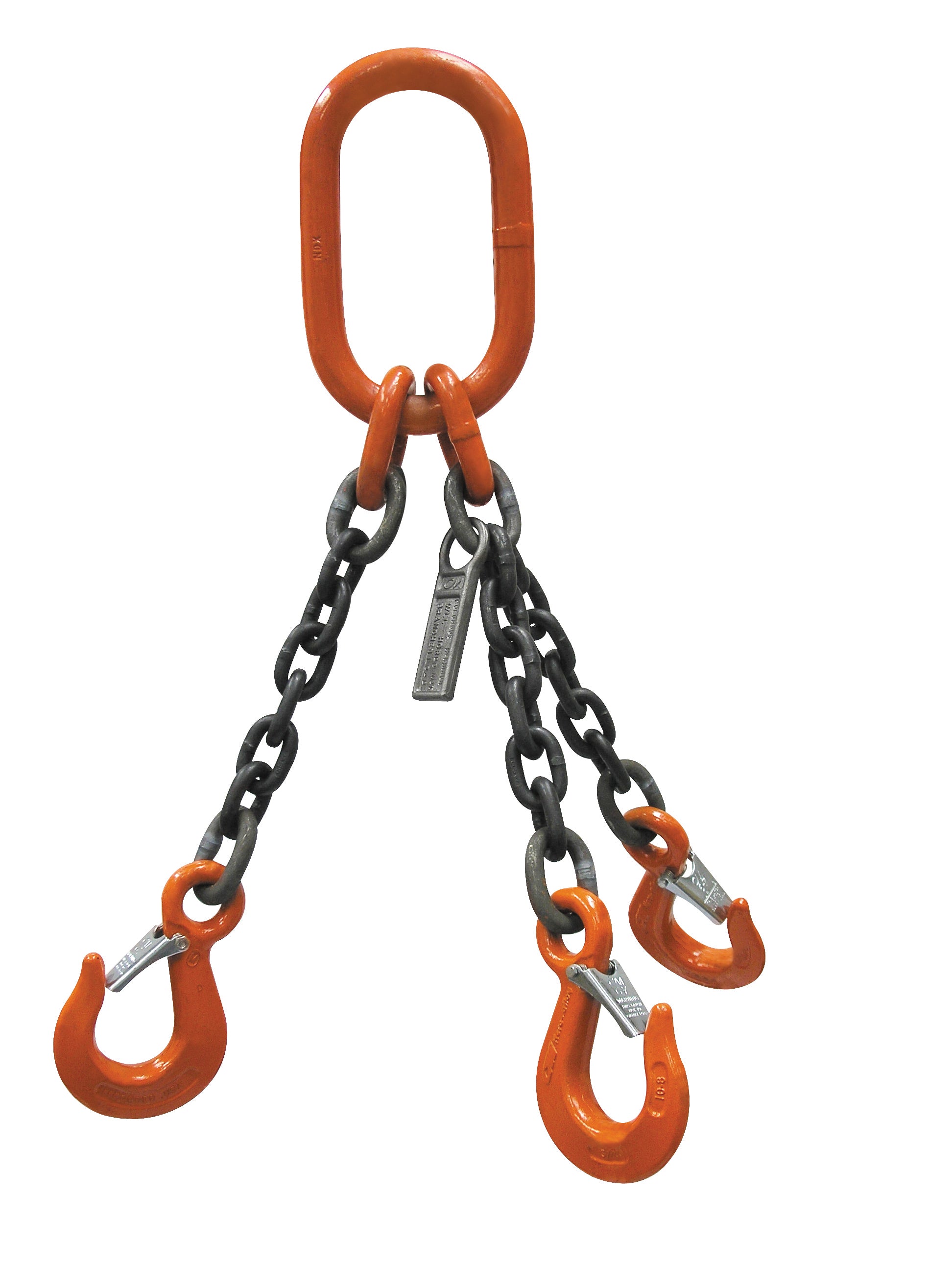
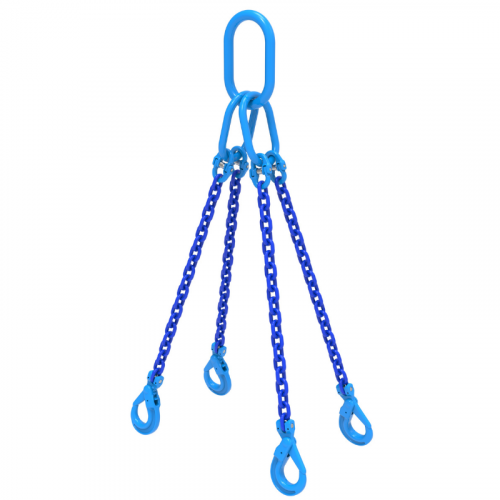
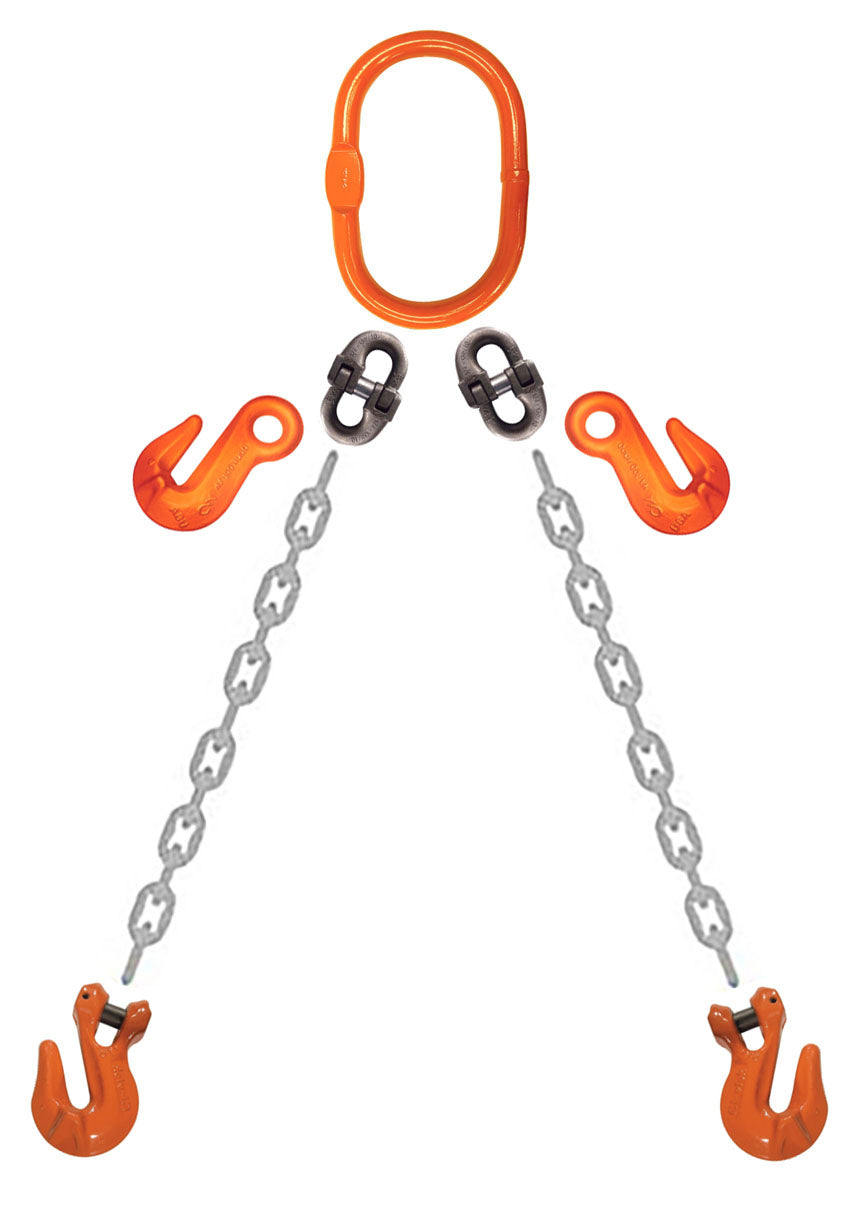
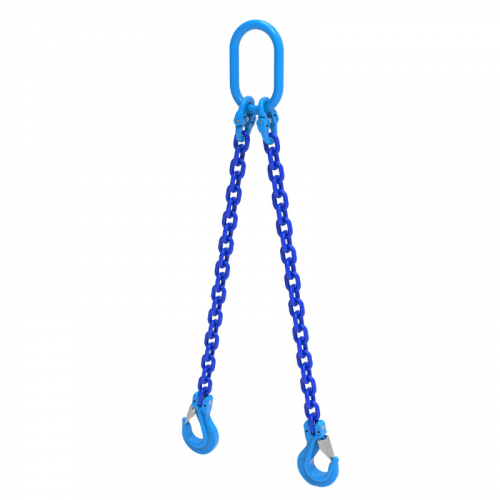
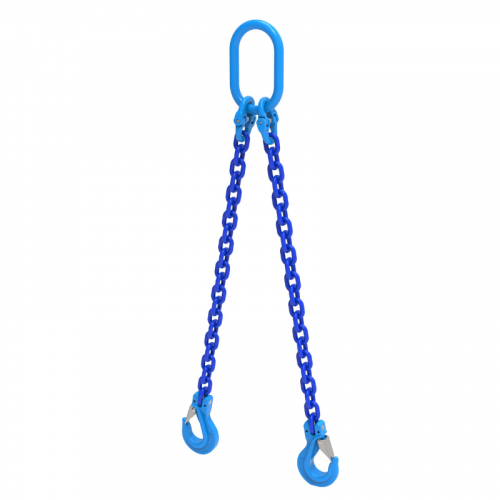
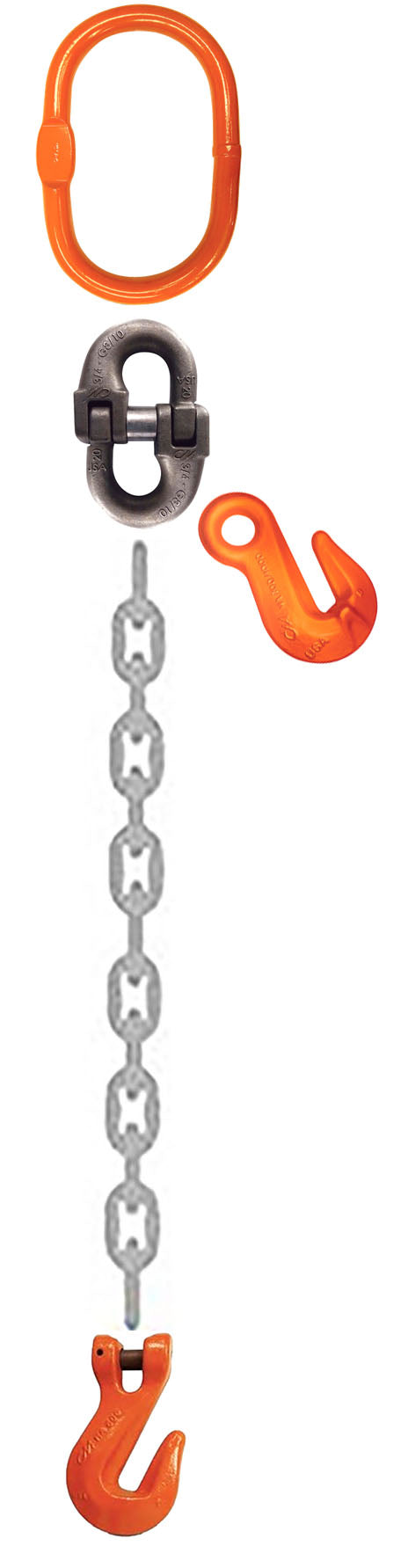
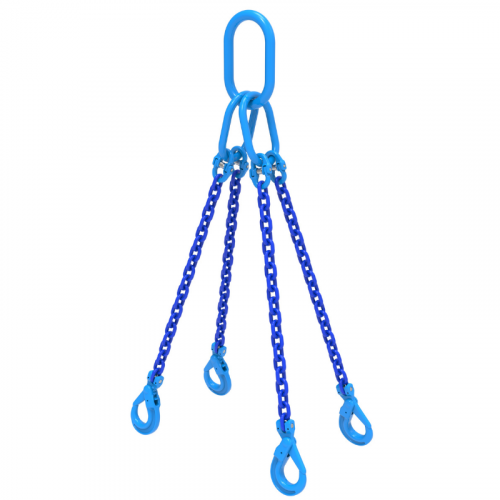
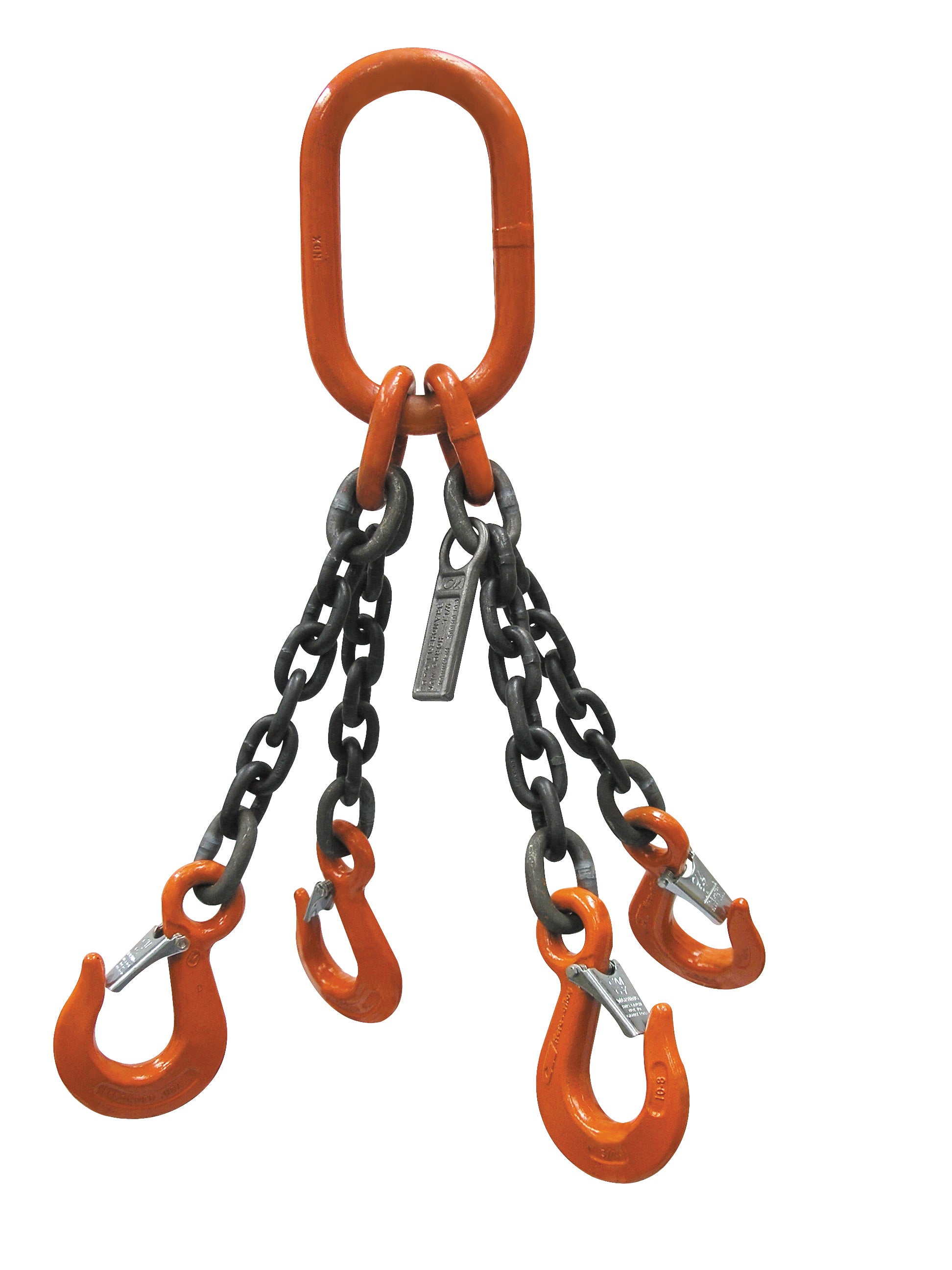
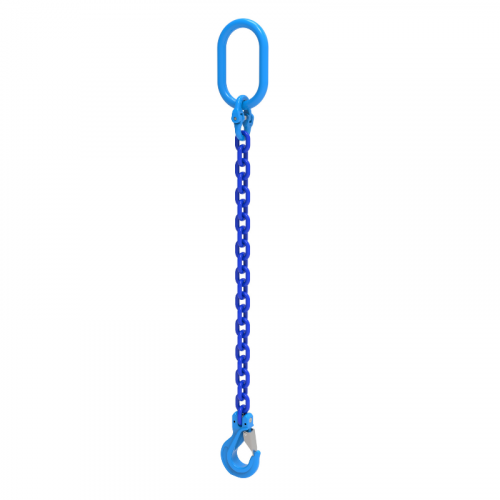
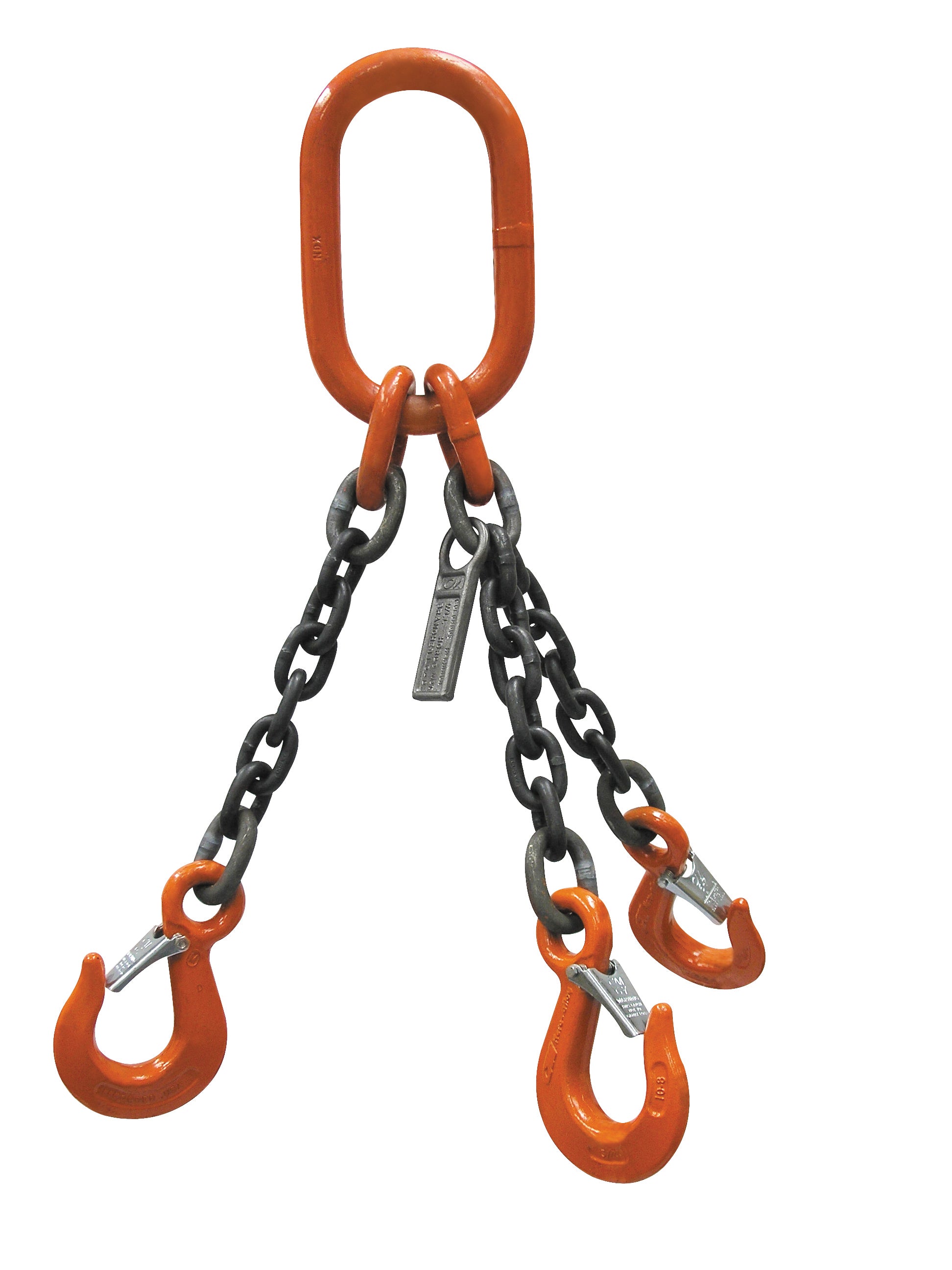
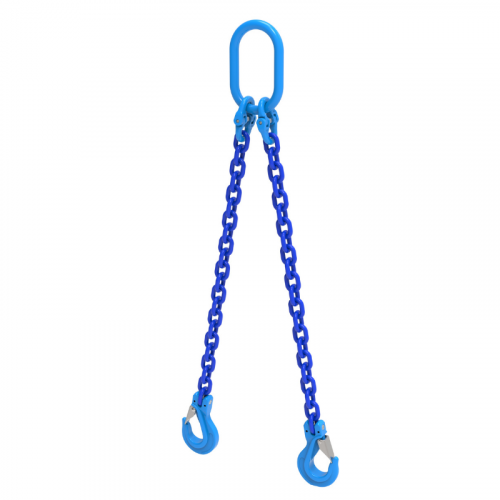
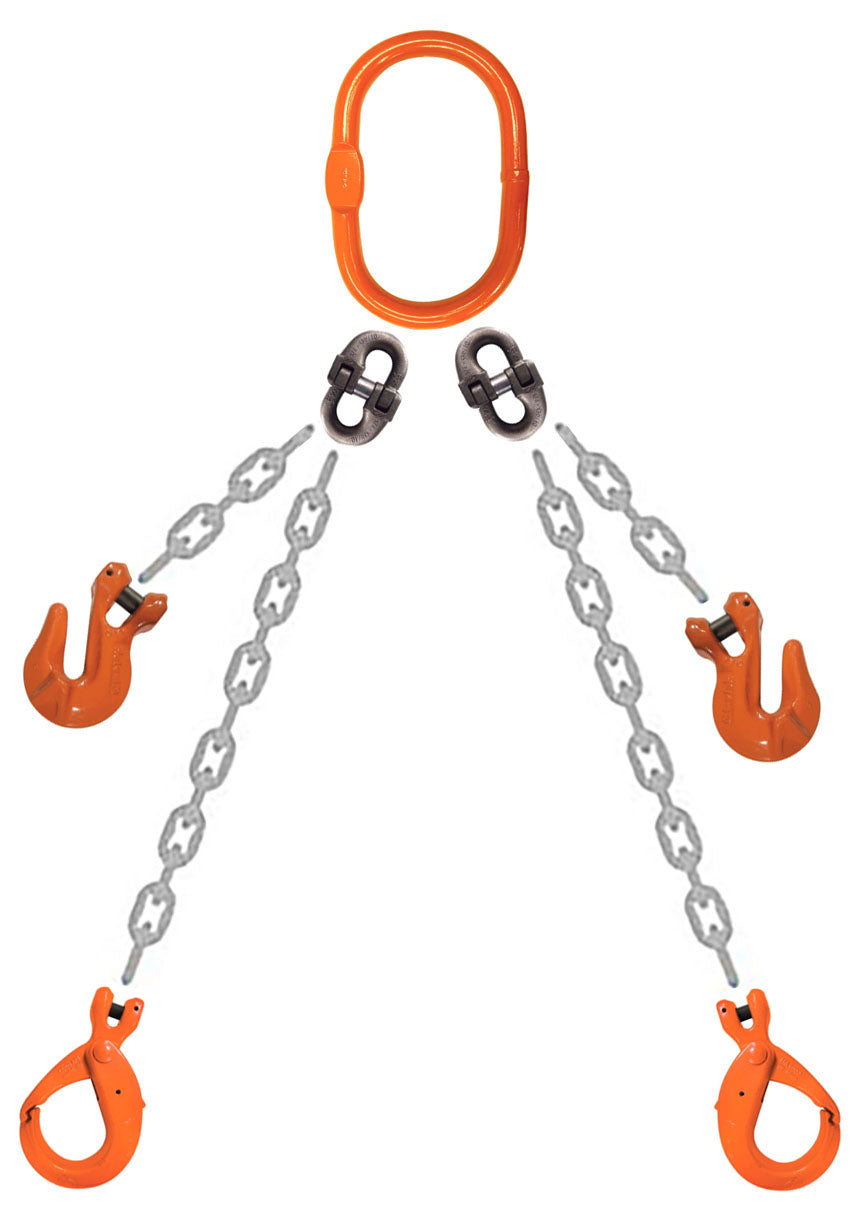
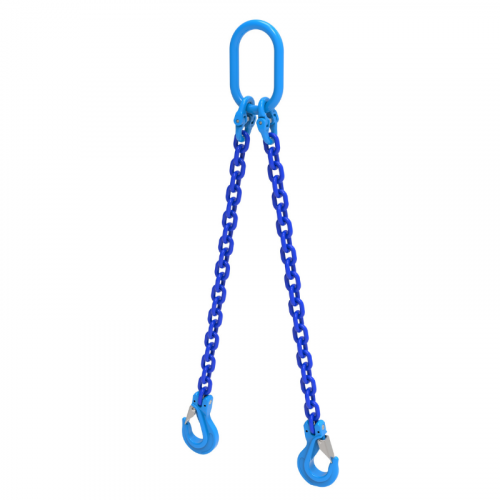
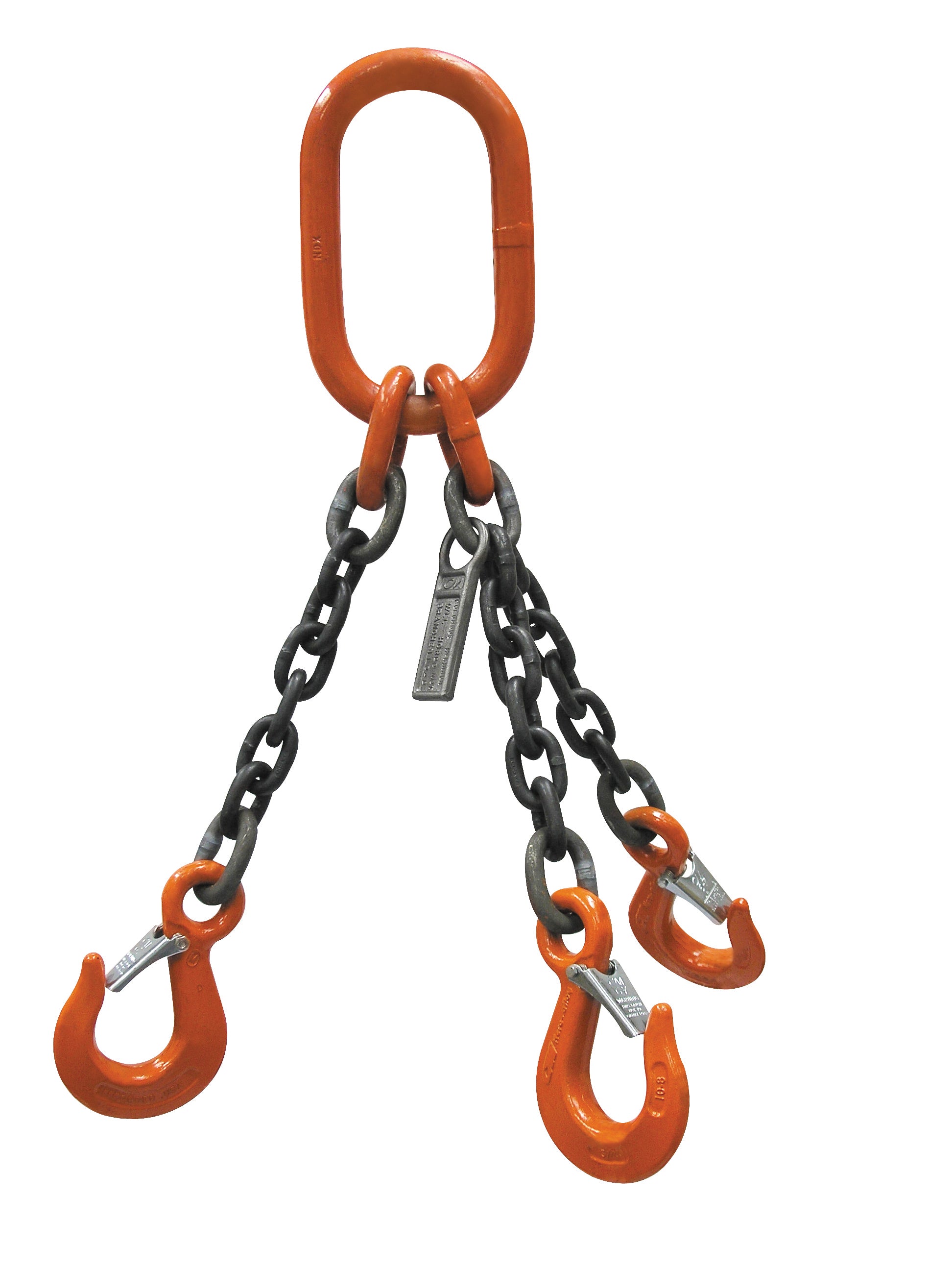
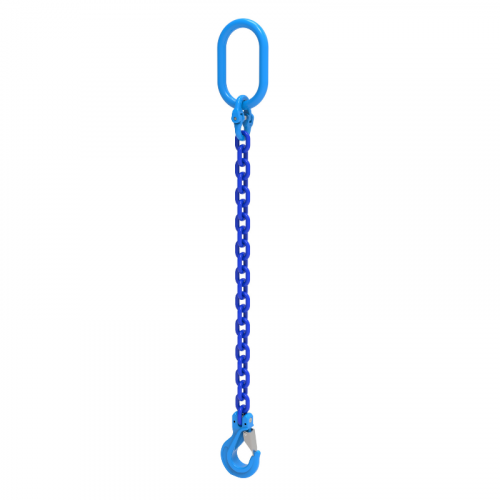
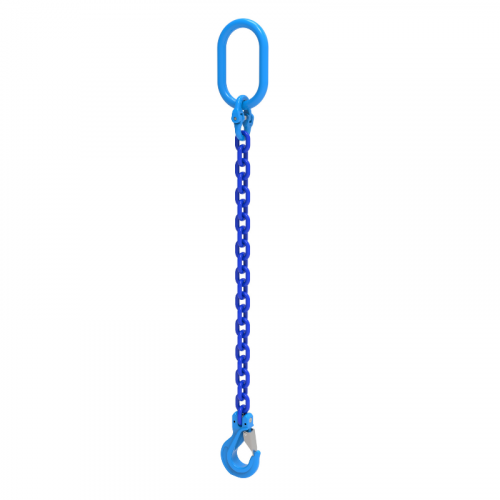
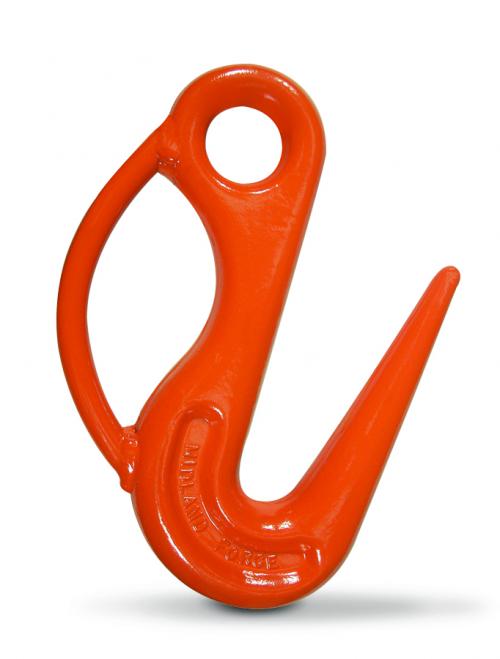
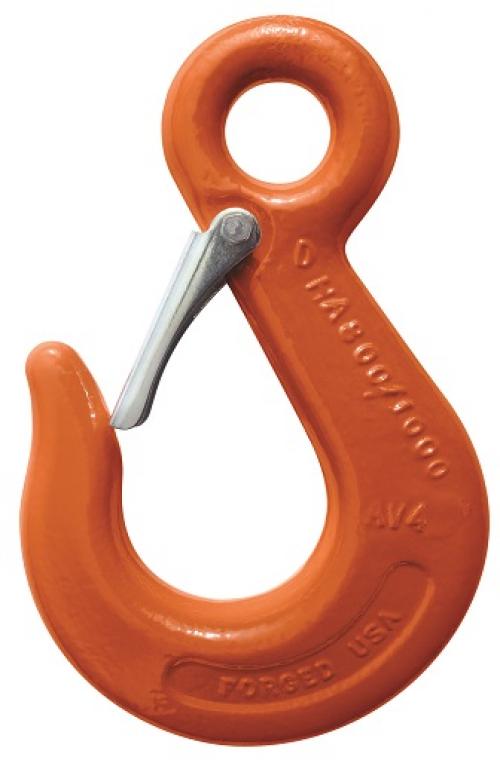
Pick the legs from the load's pick points. A single leg with the load hanging plumb is the simplest rig, and the William Hackett singles run 2,700 lb at 1/4 inch through 59,600 lb at 1 inch. Doubles suit loads with two lift points that need to ride level, 3,800 lb to 84,200 lb here, and the 4-leg assemblies handle rigid frames, fabrications, and machinery with four corners, topping out at 191,700 lb on 1-1/4 inch chain. Buying assembled is the shortcut worth taking: master link, legs, and hooks arrive matched, proof tested, and tagged as one unit. For rigs built in-house around existing chain, the Grade 100 master links from $15 and the CM Hammerlok couplers do the joining, and the CM sorting hook, designed to take load on its point the way ordinary hooks must not, covers plate and pipe sorting duty at $153.
Heat, edges, and chemistry: chain's home turf. Grade 100 alloy chain carries its full working load limit to 400 F and follows published reduction tables above that, which is why parts fresh out of heat treat and hot fixtures ride on chain. Edges that would cut a synthetic sling in one lift merely wear against alloy steel. The trade runs the other way too: chain is heavy for its rating, and it will mar painted and machined surfaces, so for finish-critical loads the webbing slings and round slings next door are the better call. Chemistry is chain's quiet weakness. Acids and acidic cleaning baths can drive hydrogen into alloy steel and embrittle it invisibly, so alloy chain never gets acid-dipped, and plating or galvanizing after purchase is off the table without the manufacturer's approval. A sling that has been through process chemicals goes to a qualified person before it lifts again.
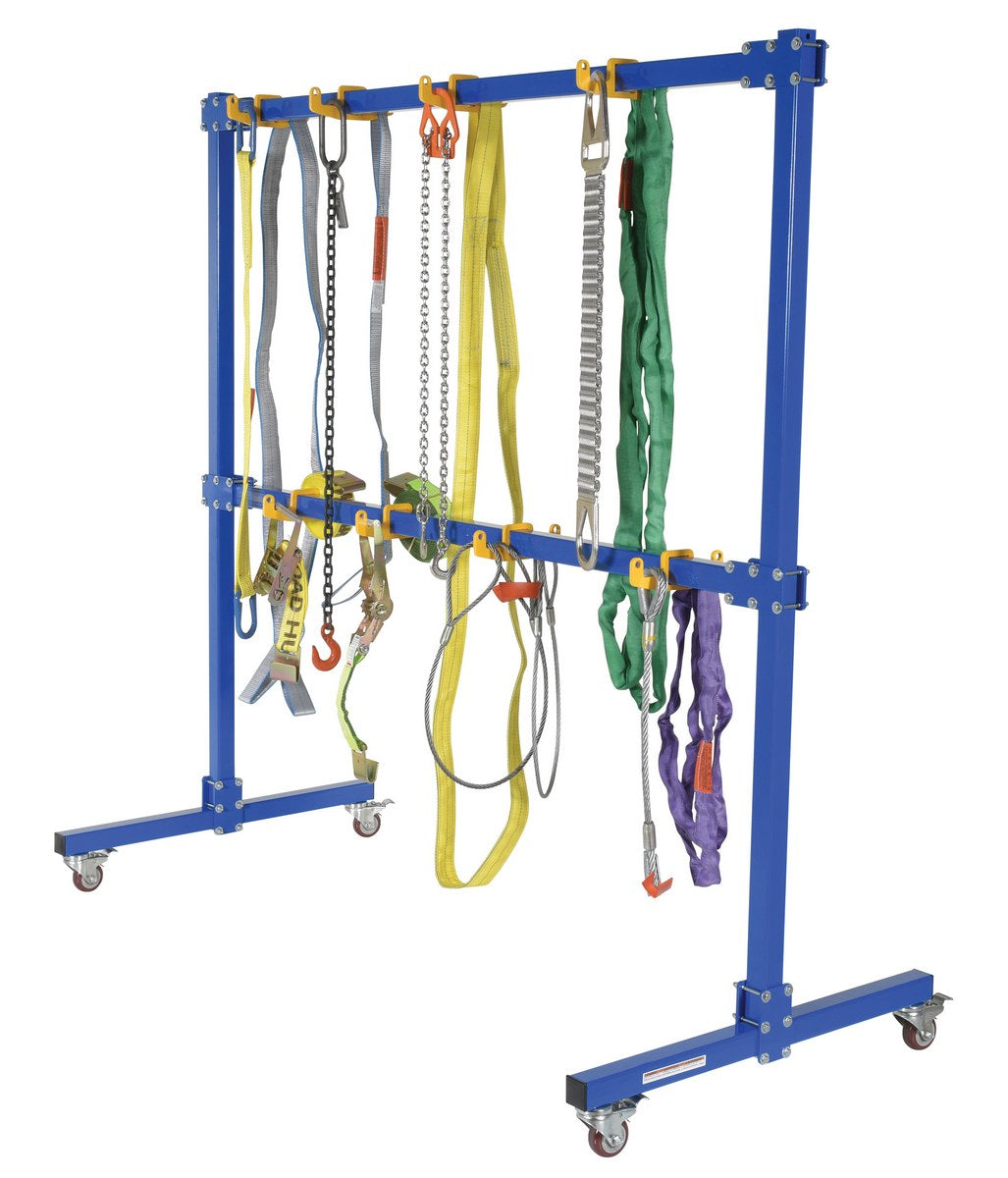
Inspection under ASME B30.9. Chain slings answer to ASME B30.9: a visual check each day the sling is used and a documented periodic inspection at least yearly, tightening with severe service. The periodic look is link by link. Measure the reach, bearing point of the master link to bearing point of the hook, against the length on the tag, because stretch shows up there before any single link looks wrong. Reject twisted, bent, gouged, or nicked links, wear at the link-to-link bearing points beyond the manufacturer's allowance, cracks anywhere, and hooks with a sprung throat or a dead latch. The tag itself is a criterion: no legible size, grade, reach, and rating, no lift. Repairs belong to the manufacturer or a qualified person and get proof tested afterward, one more argument for assembled slings with spare-part support. A Vestil sling rack at $519 keeps the fleet off the floor and makes the inspection habit easy to keep.
Frequently Asked Questions
No. Overhead lifting requires alloy steel chain under OSHA 1910.184 and ASME B30.9, and Grade 70 is heat-treated carbon steel built for tie-downs. The Kinedyne barrels in this collection are here for load securement and yard work. If it goes over a hook, it is Grade 80 or Grade 100.
About 25% more working load at the same chain diameter, which means a lighter sling for the same rating and one grade to stock instead of two. The William Hackett assemblies here are all Grade 100, so a crew standardizing from scratch never has to think about which sling is which.
The William Hackett tag ratings work out to legs at 45 degrees from horizontal, with the 4-leg rated as three legs carrying. Rig steeper than 45 degrees and you gain margin; rig flatter and the tag no longer covers you. When in doubt, longer legs stand steeper.
Measure the reach, bearing point to bearing point, and compare it against the tagged length. Growth means the chain has yielded somewhere even if no single link looks deformed, and the sling comes out of service for a qualified person to evaluate. Check reach at every periodic inspection so there is a paper trail.
Yes. The William Hackett assemblies arrive complete with master link, legs, and hooks matched, proof tested, and tagged as a unit, from single leg through 4-leg. The master links, Hammerlok couplers, and sorting hook in the collection support custom builds and field repairs by a qualified person.
Grade 100 chain holds full rating to 400 F, far past the 180 F where OSHA pulls synthetic web slings, and manufacturers publish derating tables for service above that. For loads out of heat treat, off a weld table, or too hot to touch, chain is the sling that stays rated.