What a shackle is
A shackle is the small but critical connector that joins the pieces of a lift together, a sling to a load, a sling to a hook, or two slings to a master link. It's a U-shaped or bow-shaped forged-steel loop closed by a removable pin, so you can open it, thread it through the connection points, and close it. Because a shackle sits directly in the load path, it's rated, forge-stamped with its capacity, and inspected like any critical rigging. Our rigging hardware collection carries the Crosby and CM shackles most operations rely on.
Anchor (bow) versus chain (D) shackles
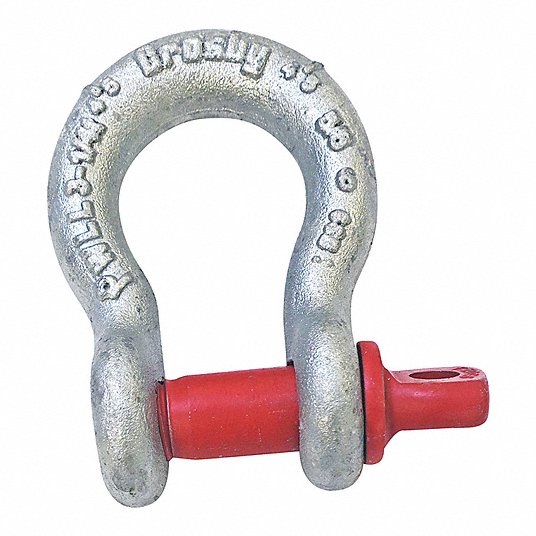
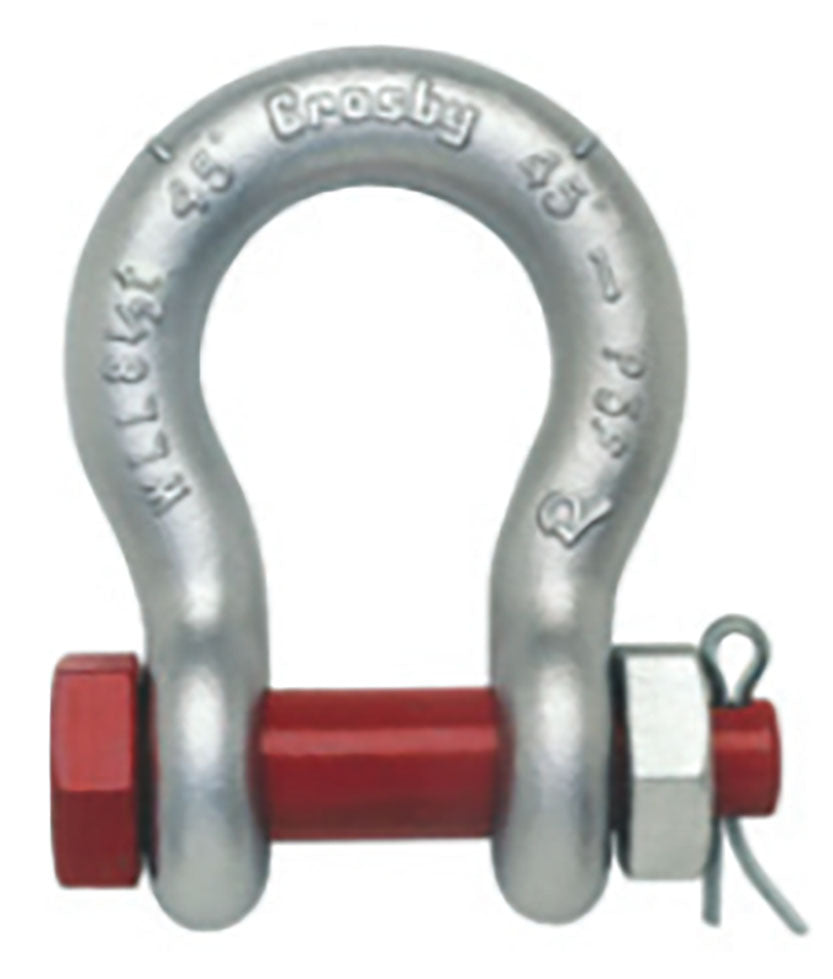
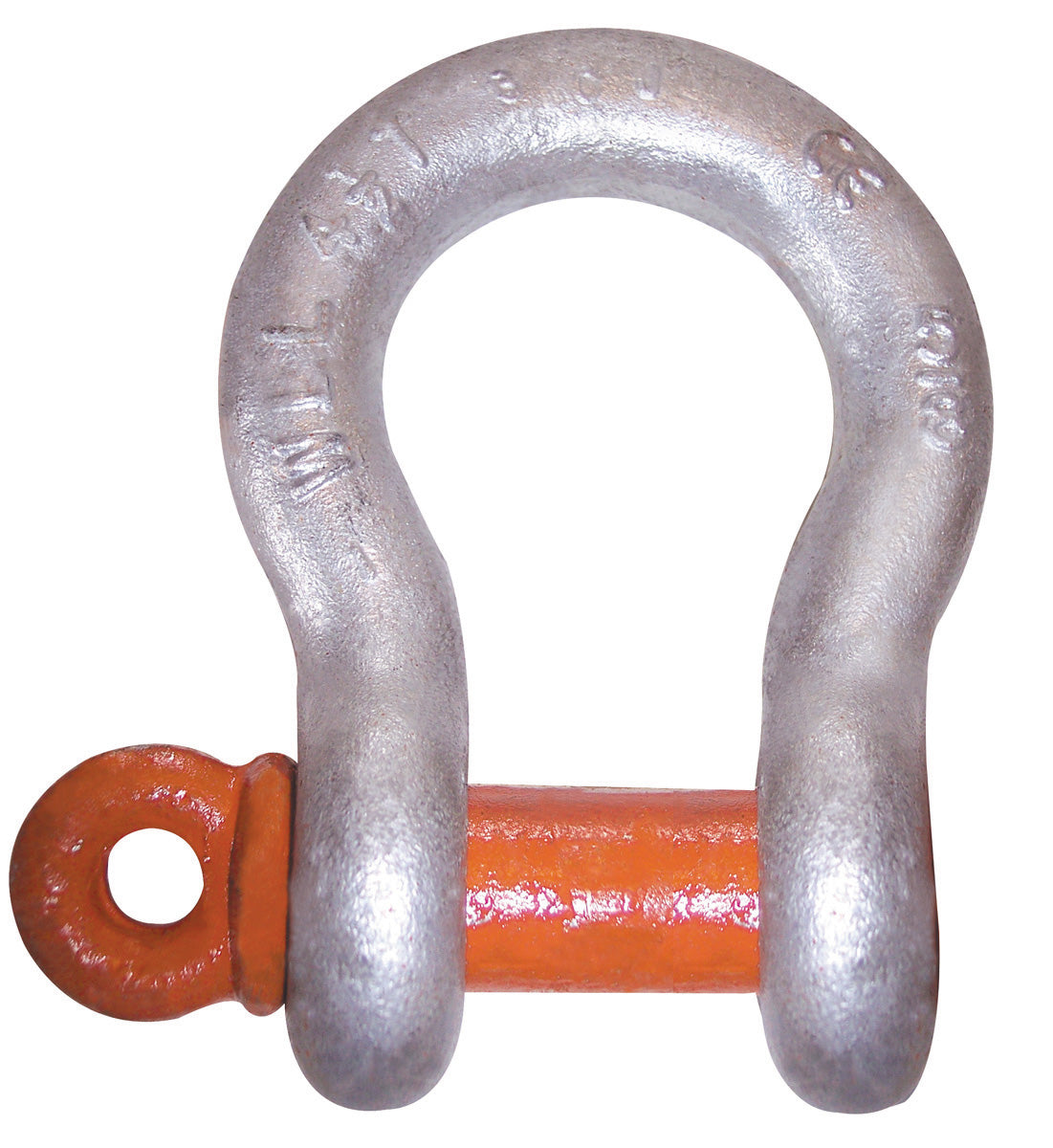
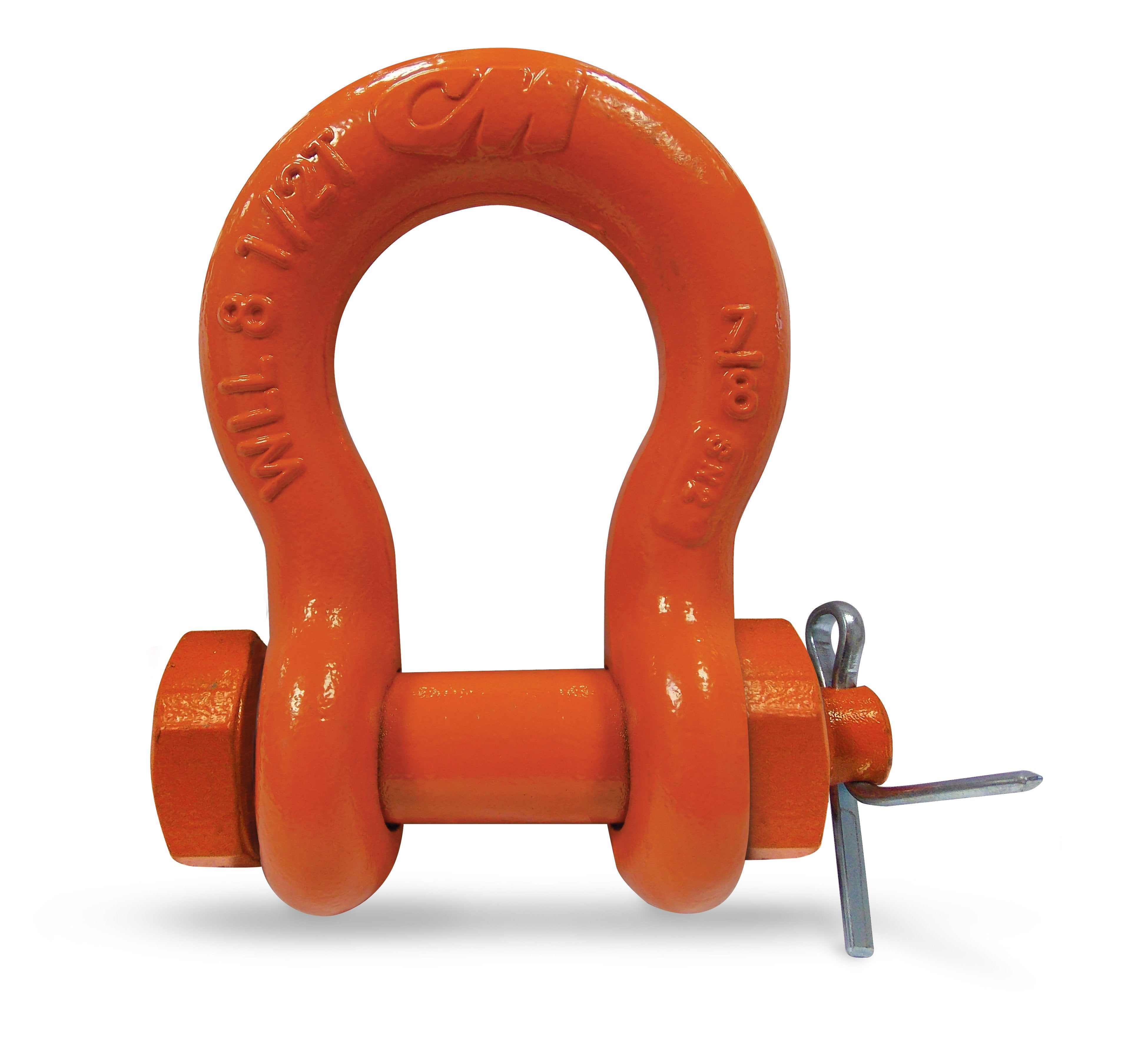
Shackles come in two body shapes, and the difference matters. An anchor or bow shackle, like the Crosby G-209, has a rounded, larger bow that can take loads from multiple directions and wider angles, which suits multi-leg slings and off-axis loading, and it carries a high rating for its size. A chain or D shackle has a straighter, narrower body best for straight, in-line pulls in a single load path. Rule of thumb: use a bow shackle when the load comes from more than one direction or multiple sling legs, and a D shackle for a simple in-line connection.
Screw-pin versus bolt-type pins
The pin closes the shackle, and there are two main types. A screw-pin shackle uses a threaded pin you hand-tighten, quick and convenient for connections you'll make and break often. A bolt-type shackle uses a bolt, nut, and cotter pin that stays secure even under rotation, torque, and vibration, which suits permanent or long-term installations. There's also a round-pin style. The choice between screw-pin and bolt-type is one of the most common shackle questions, covered fully in our screw-pin vs bolt-type shackle guide.
Working load limit is everything
The single most important number on a shackle is its working load limit (WLL), the maximum load it's rated to carry, and it's permanently forge-stamped on the body along with a size and grade mark. Never estimate a shackle's capacity by eye; read the stamp. Quality lifting shackles are built with a 6-to-1 design factor and proof-tested to twice their WLL, so the rating carries a real safety margin, but that margin is not license to exceed it. Select a shackle whose WLL meets or exceeds the load, or the tension in each sling leg, with room to spare.
Matching the shackle to the sling and load
A shackle has to fit the connection, not just carry the weight. The pin diameter and the jaw and bow width must accept the sling eye without pinching it, and the load should bear on the shackle's bow, not directly on the pin. Under-size the shackle and it won't fit or won't carry the load; oversize it and the sling eye may slip or seat poorly. So sizing is about both capacity and geometry, covered in our how to size a shackle guide. Choose a shackle rated above the load whose jaw fits your sling and fittings.
The standard: ASME B30.26
Rigging shackles are governed by ASME B30.26, the standard for rigging hardware, which sets the rules for their identification, use, and inspection. Key requirements: every shackle must carry a legible WLL and manufacturer mark; side-loading reduces the rated capacity and must be de-rated per the manufacturer's chart; and shackles must be inspected routinely and periodically, with damaged ones removed from service. Buying to B30.26 from reputable makers, and using shackles within the standard's rules, is what keeps this small connector from becoming the weak link in a lift.
Safe use rules
A few practices prevent most shackle failures. Seat the pin fully so its shoulder contacts the body, never partially threaded. Ensure sling legs bear on the bow, not the pin, and that multiple legs seated in the bow don't exceed 120 degrees of total included angle. Avoid side-loading a screw-pin shackle; orient it so the load pulls in-line, and de-rate for any off-axis load. For any connection subject to movement, rotation, or vibration, use a bolt-type shackle so the pin can't unthread. And inspect before use. These rules are simple, and skipping them is how shackles fail.
Materials and finishes
Most lifting shackles are forged, quenched-and-tempered alloy steel for strength, and come galvanized (for corrosion resistance) or self-colored. Alloy shackles are typically approved for use from -40°F to 400°F. For corrosive or washdown environments, stainless-steel shackles are available at higher cost. The Crosby G-2130 (galvanized bolt-type) and its self-colored S-2130 counterpart are examples of the galvanized-versus-plain choice. Pick the finish for your environment: galvanized for outdoor and wet conditions, self-colored where corrosion isn't a concern, stainless for harsh chemical or marine service.
Choosing a shackle
Pull it together with a short checklist. Pick the body shape by load direction, bow for multi-direction and multi-leg, D for in-line pulls. Pick the pin by permanence, screw-pin for frequent changes, bolt-type for long-term or vibrating connections. Confirm the WLL exceeds the load or leg tension with margin. Check that the jaw and pin fit your sling and fittings. And choose the finish for your environment. Reputable brands like Crosby and CM make this easy, since their shackles are clearly rated and marked. Compare options in our best lifting shackles guide.
The bottom line
A lifting shackle is the forged connector that joins slings, hooks, and loads, in bow or D body shapes, with screw-pin or bolt-type pins. Choose the shape by load direction, the pin by permanence, and always confirm the working load limit stamped on the body exceeds the load, with the jaw sized to your sling. Follow ASME B30.26, seat the pin fully, avoid side-loading screw-pins, and inspect before use. Explore the specifics in our screw-pin vs bolt-type, sizing, and CM vs Crosby guides.
Common shackle mistakes
A handful of errors cause most shackle problems. Using an unrated or counterfeit shackle whose stamped capacity you can't trust. Exceeding the working load limit, or ignoring the reduction from side-loading. Using a screw-pin where vibration will loosen it, instead of a bolt-type. Sizing the jaw wrong so the sling eye pinches or the load bears on the pin. And skipping inspection, letting a bent or worn shackle into a lift. Every one is avoidable: buy genuine rated hardware, read and respect the WLL, match the pin type to the application, fit the jaw to the sling, and inspect before use.