Adjustable Spreader Beams
An adjustable spreader beam replaces a shelf full of fixed bars with one lifter that pin-adjusts or reconfigures to match the load in front of you, so the top slings pull straight down on each lift point no matter how the width changes from pick to pick. This collection is the Tandemloc adjustable range, US-made below-the-hook beams proof tested to 125 percent of their working load limit and designed to ASME B30.20 with the structural rules of ASME BTH-1 before they ship. It covers AT14 telescopic beams that slide from 48 out to 240 inches, telescopic kits that run 51 to 288 inches into the tens of thousands of pounds, the AL50 combination beam that rigs as a spreader or a lifting beam, and end-cap sets that turn a length of pipe into a rated beam of whatever span you cut. The decision below comes down to how much range you need and how you set it.
Compare Adjustable Spreader Beams
| Model | Price | Capacity | |
|---|---|---|---|
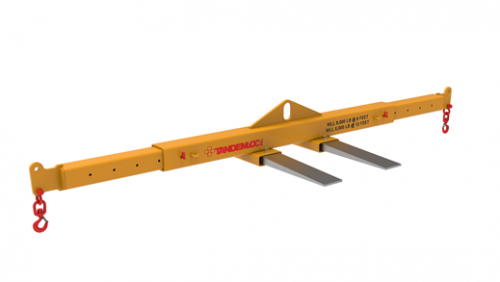
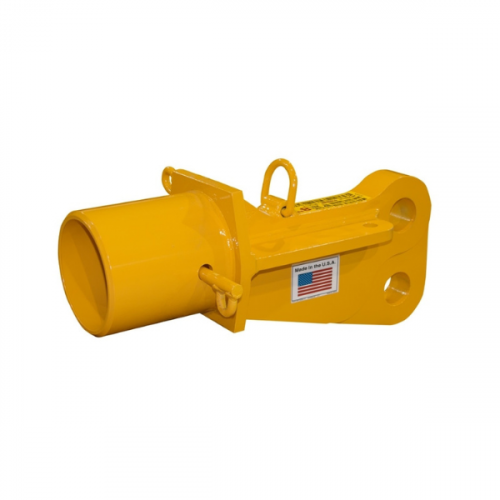
| Tandemloc Telescopic Forklift Lifting Beam | $5,883 | 5,000-8,000 lb | View → |
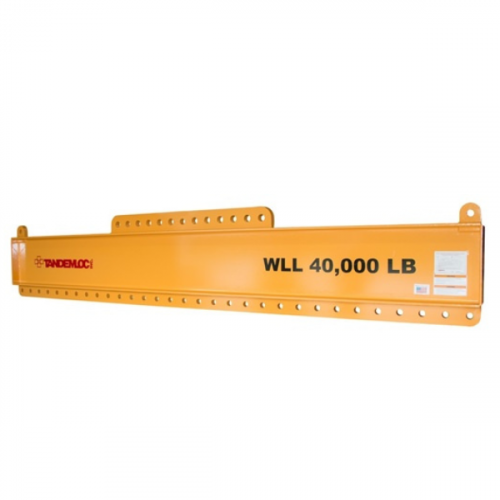
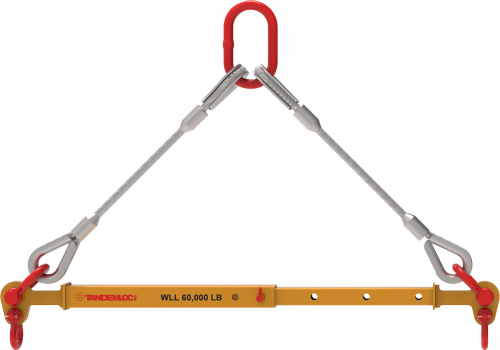
| Tandemloc AT 14 Series Telescopic Spreader Beams (With Top Sling) | $4,372 | 36,000-100,000 lb | View → |
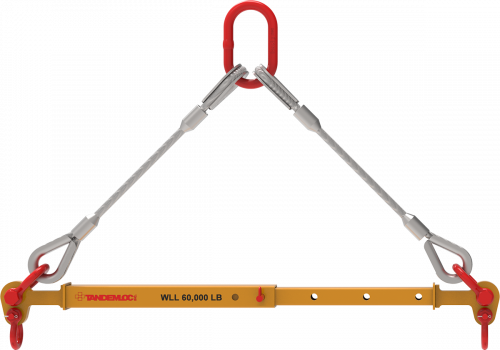
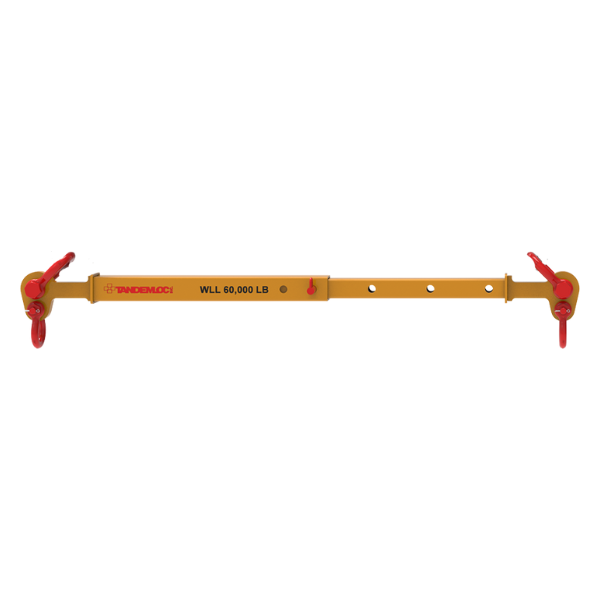
| Tandemloc AL50 Series Combination Spreader Beam | $4,028 | 10,000-60,000 lb | View → |
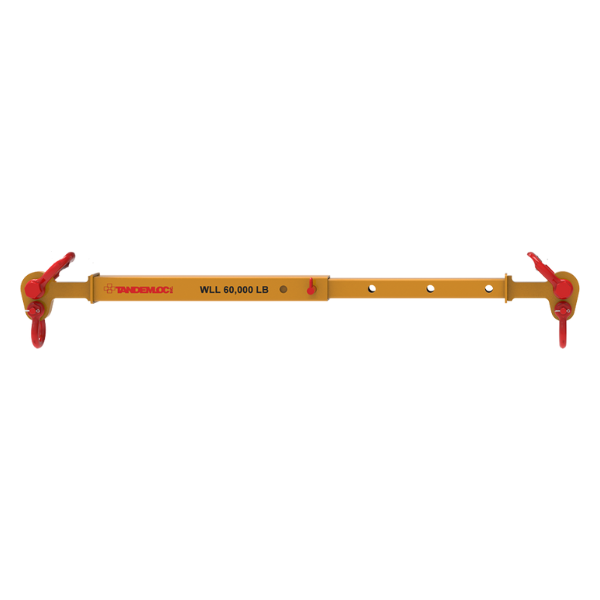
| Tandemloc AT14 Series Telescopic Spreader Beams (Without Top Sling) | $3,019 | 3,600-100,000 lb | View → |
| Tandemloc AT14 Series Telescopic Spreader Beams (With Top Sling) | $2,043 | 2,000-32,000 lb | View → |
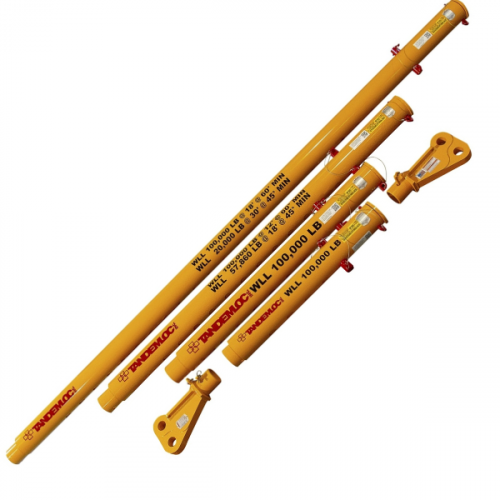
| Tandemloc Telescopic Adjustable Spreader Beam Kits | $1,730 | 28,000-180,000 lb | View → |
 In Stock
 In Stock
 In Stock
 In Stock
 In Stock
 In Stock
 In Stock
 In Stock
 In Stock
Adjustable Spreader Beams Buying Guide
Why adjustable, and where it pays off. A fixed bar rates its capacity at one spread and nothing else, so a shop that lifts loads of different widths ends up owning a rack of them. An adjustable beam collapses that rack into a single lifter. Job to job, one beam covers a band of widths, so you carry and inspect one device instead of six. On an unfamiliar load, you set the beam to the lift points you measure on site instead of hoping a fixed length lands close. The tradeoff is that you set it correctly every time and confirm the rating at that setting. If your loads never vary, a fixed bar from the broader Lifting Spreader Bars range is simpler and cheaper. If they vary at all, adjustable earns its keep.
How the adjustment actually works. Adjustable covers three mechanisms here. The AT14 telescopic beams are the true slide-and-pin design: an inner tube slides inside an outer tube and a load pin drops through matched holes to lock the spread, so one person resets the width in the field in a minute. The heavier telescopic kits work the same way but ship as a kit you assemble to the range you bought. The end-cap sets take a different path: a pair of caps clamps onto a length of pipe, and because you choose the pipe length, you build a beam at exactly the span you need, then cut a shorter or longer pipe later for a different job. The AL50 combination beam adds a second axis, rigging as a spreader from two angled top slings or as a lifting beam from a single center bail. Match the mechanism to how often you reset: pin-adjust for frequent width changes, kits and caps when the spread is set once per campaign. The full line sits under Tandemloc Spreader Beams.
Confirm the rating at the spread you pin to. The most important habit with any adjustable beam: the headline capacity is the maximum rating, not a number the beam holds at every setting. As you extend the spread, the bending and buckling loads on the beam grow, so capacity falls off toward the long end of the range. The AT14 models carry 2,000, 4,000, 8,000, or 13,000 lb depending on the model. The heavier telescopic kits run 28,000, 52,000, and 100,000 lb, with some long-spread configurations pointing to the load chart rather than a flat number. Before every lift, read the rating at the exact spread you have pinned, on the beam's own chart or data plate, and keep your load inside that number with margin. Treating the maximum as if it applied at full extension is the classic way an adjustable beam gets overloaded.
Set the spread to the lift points, and budget the headroom. The beam's job is to put a vertical sling directly over each lift point, so measure the distance between the load's pick points and pin the spread to match, keeping the legs symmetric so the load rises level. Adjustable helps here because you dial in the measured width instead of accepting the nearest fixed length. Then account for the top rigging, which eats headroom. The AT14 ships two ways: the with-top-sling version from about $2,043 comes with the matched sling assembly that sets the geometry the beam was rated at, while the bare beam from about $1,807 is right only when you already own a rated top sling at the correct angle. Either way the angled top slings add several feet between the hook and the beam, the usual reason a beam that fits the load will not fit the building. Measure hook height at the working position first, and match your bottom slings from the lifting slings range.
Pick your rung on the capacity ladder. Start with the AT14 telescopic beams for everyday picks from 48 to 240 inches at up to 13,000 lb. When a load outgrows that, the telescopic adjustable kits span 51 to 288 inches at 28,000, 52,000, and 100,000 lb, priced from about $1,730 for the smallest kit into five figures for the largest. The AL50 combination beam, from about $4,028 to roughly $26,648, is the pick when some lifts meet low headroom: it rigs as a lifting beam from a center bail when there is no room for top slings, and as a spreader when there is, across 10,000 to 60,000 lb. For a shop without a crane, the telescopic forklift lifting beam carries 5,000 lb from the forks at about $5,883. Buy the rung that covers your range with margin, not the biggest number on the chart.
Standards, markings, and re-rating when you reconfigure. Adjustable and modular spreaders are below-the-hook lifting devices under ASME B30.20, and the 2025 edition of that standard was updated to address adjustable and modular spreader bars specifically. The device must stay marked with its manufacturer, serial number, and rated load, and on an adjustable beam that marking includes the load chart tying capacity to spread. The beam's own weight counts against your crane or hoist capacity. And when you change the configuration, a different spread on a telescopic beam or a new pipe on an end-cap set, you are lifting at a different rating, so re-read the chart rather than carrying over the last job's number. Every Tandemloc lifter here ships proof tested to 125 percent of its rated load with certification and is designed to ASME BTH-1 at Design Category B, a 3 to 1 design factor against the steel's yield strength, Service Class 0 for up to 20,000 load cycles. For container work, which has its own dedicated fitting, see Container Spreaders & Beams.
Frequently Asked Questions
A fixed bar holds one spread; an adjustable beam covers a band of widths from a single lifter. If your loads vary at all, one adjustable beam replaces several fixed bars, so you buy, store, and inspect one device instead of a rack. The tradeoff is that you set the spread and confirm the rating at that setting on every lift. If your loads never change width, a fixed bar is simpler and cheaper.
No. The headline number is the maximum rating, and capacity falls off as you extend toward the long end of the range because the bending and buckling loads grow. Always read the rating at the exact spread you have pinned, on the beam's load chart or data plate, and keep your load inside that number with margin. Treating the maximum as if it applied at full extension is a common way these beams get overloaded.
The AT14 telescopic beams pin-adjust from 48 to 240 inches at up to 13,000 lb. The heavier telescopic kits run 51 to 288 inches at 28,000 to 100,000 lb. And because the end-cap sets build a beam from a length of pipe you cut, they reach spans out to 100 feet at the largest pipe sizes. Match the range to the load widths you actually lift, not the maximum on the chart.
Order it with the top sling, from about $2,043, unless you already own a matched, rated top sling at the correct angle. The beam's rating assumes the geometry of the sling it was designed with, and the with-sling version costs only a couple hundred dollars more than the bare beam at about $1,807. That is cheap insurance against improvised top rigging at the wrong angle.
Yes. They are below-the-hook lifting devices under ASME B30.20, and the 2025 edition was updated to address adjustable and modular spreader bars specifically, with structural design following ASME BTH-1. Every Tandemloc beam here ships proof tested to 125 percent of its rated load with certification, marked with its manufacturer, serial number, and rated load.