What lifting slings are
A lifting sling is the flexible link between a lifting machine and the load. When a crane or hoist lowers its hook, the sling is what actually goes around, under, or onto the load and connects it, usually through shackles or hooks, to the hook above. Because the sling carries the full weight, it's one of the most safety-critical pieces of rigging, and it's rated, standardized, and inspected accordingly. There are four main sling types, and picking the right one for the load and environment is the first decision in any lift.
The four sling types at a glance
Each type has a job it does best. Alloy chain slings are the toughest, for heavy, high-heat, and abrasive work. Wire rope slings are the rugged everyday choice, durable and abrasion-resistant at lower cost than chain. Synthetic web slings are lightweight and gentle, for delicate or finished loads. And synthetic round slings are flexible, color-coded by capacity, and remarkably light for very high-capacity soft lifts. The rest of this guide covers each in depth, then how to choose, rig, and inspect them.
Wire rope slings
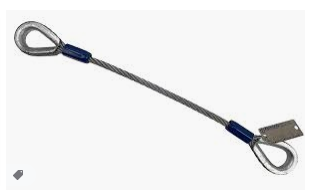
Wire rope slings are made of multiple steel wires laid into strands around a core (common classes are 6x19 and 6x37). They're the rugged, general-purpose workhorse: durable, abrasion-resistant, higher in capacity than synthetics, cheaper than chain, and fairly lightweight for their strength. They excel at heavy, everyday lifting and rough-surfaced loads. The trade-offs are that they're less flexible, kinks and broken wires reduce their strength, they can mark or damage delicate surfaces, and they can corrode. For heavy, repetitive, rough-service lifting, wire rope is often the sweet spot of cost and capability.
Alloy chain slings
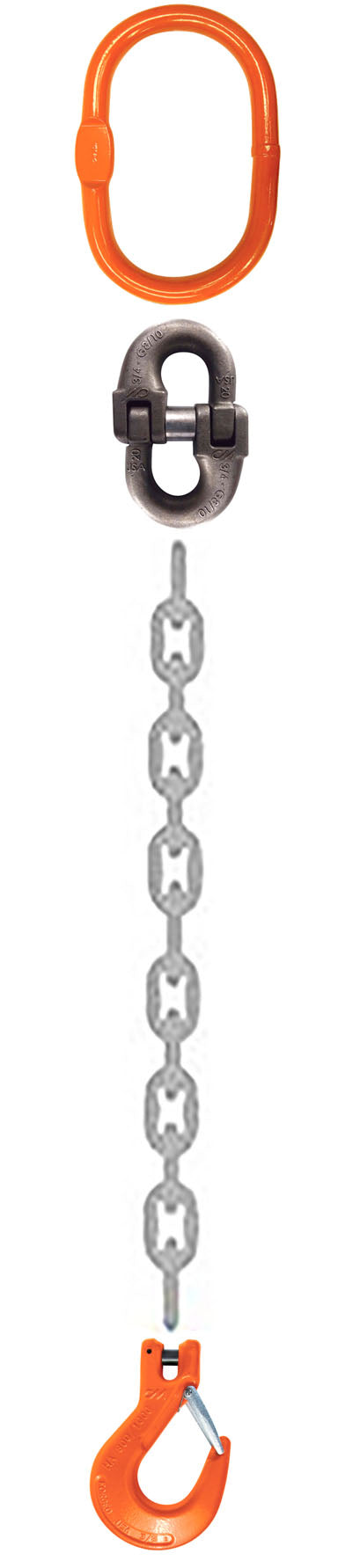
Alloy chain slings, built from Grade 80 or Grade 100 alloy-steel links with master links and hooks, are the toughest slings made. They withstand severe-duty and heavy lifting, high heat (above 400°F, where synthetics can't go), sharp edges, and harsh, abrasive environments, and they're field-repairable by replacing links. The downsides are weight, chain is the heaviest sling per unit of capacity, and higher cost. They must be inspected for stretch, wear, and cracked or bent links. When the work is hot, sharp, dirty, or brutally heavy, alloy chain is the answer.
Synthetic web slings
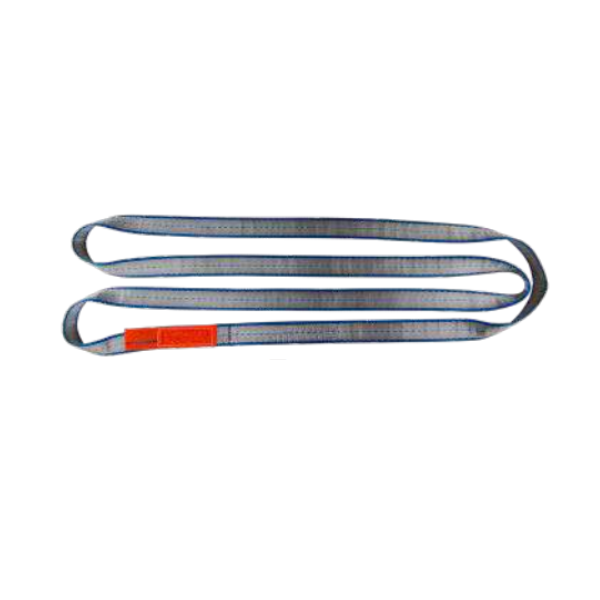
Synthetic web slings are flat woven straps of polyester or nylon with reinforced eyes. They're lightweight, flexible, gentle on the load, and low-cost, and they conform to a load's shape, which makes them ideal for delicate, finished, or painted surfaces you can't afford to mark. Typical capacities run up to about 10 tons depending on width and plies. Their limits are real: they're vulnerable to cuts, abrasion, and UV, they're heat-limited (see the temperature section), and nylon is degraded by acids and bleach. For lighter, surface-sensitive lifts, web slings are the go-to.
Synthetic round slings
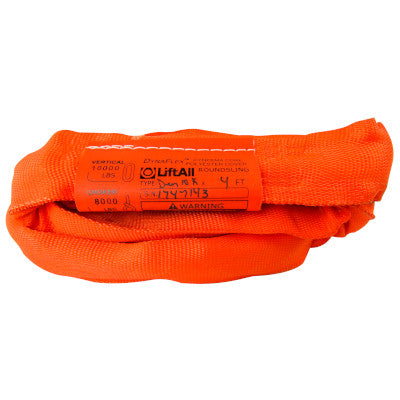
Synthetic round slings are a continuous loop of polyester yarn inside a protective, color-coded jacket. They're remarkably light, around 10 percent of the weight of a comparable wire or chain sling, extremely flexible, and gentle on loads, with the jacket color coding the capacity. Standard round slings reach up to about 90 tons, and high-performance versions go far higher, so they combine gentle handling with serious capacity. The key caution: if the outer jacket is cut or abraded through to the core, the sling must be removed from service, and internal damage can be hidden, so inspection matters.
Nylon versus polyester synthetics
Within synthetics, the fiber matters. Nylon stretches more, giving it shock-absorbing give, and it tolerates grease, oils, and alkaline conditions, but it's weakened by acids and by wet conditions. Polyester stretches less, giving better load control, and it handles wet and mildly acidic conditions and bleaching agents that degrade nylon, which makes it the general-purpose default for most web and round slings. If you need shock absorption or work around alkalis, nylon fits; for most general lifting and control, polyester is the safer default. Match the fiber to the chemicals and conditions in your environment.
Choosing the right sling
Selecting a sling comes down to the load and the environment, covered fully in our how do I choose a lifting sling guide. In short: weigh the load and confirm the sling's rating exceeds the tension in each leg; consider the surface (synthetic for delicate, steel for rough); check the environment (chain or wire rope for high heat, synthetics for gentle handling); watch for sharp edges; and account for leg count and sling angle. The rule of thumb: heat, sharp edges, and severe duty point to chain; rugged high-capacity everyday work to wire rope; delicate and lightweight loads to synthetics.
Sling angle and capacity
One of the most misunderstood and dangerous parts of rigging is sling angle. As a sling leg moves from vertical toward horizontal, the tension in it rises sharply for the same load, which reduces its usable capacity. At a 30-degree angle from horizontal, each leg carries roughly double the tension it would vertical, and angles below 30 degrees must never be used. This is why riggers calculate leg tension, not just total weight, and use the manufacturer's load chart. Our how does sling angle affect capacity guide explains the factors and the math.
Inspection and safe use
Slings wear, and worn slings fail, so inspection is mandatory under OSHA 1910.184 and ASME B30.9: a check before each use, plus a documented periodic inspection by a designated person, at least annually and more often in severe service. Damaged slings must be removed from service, and every sling must carry a legible tag showing its rated capacity. What to look for differs by type, covered in our how to inspect a lifting sling guide. Combined with respecting the working load limit and rigging at safe angles, inspection is what keeps a sling from failing over someone's head.
The bottom line
Lifting slings, wire rope, alloy chain, synthetic web, and synthetic round, are the critical link between a lifting machine and the load, each suited to different loads and conditions. Choose the type by the load, surface, environment, and capacity; rig it at a safe angle; respect the working load limit; and inspect it before every use and formally each year. Explore each topic in depth through the guides linked above, compare types in our best lifting slings guide, or browse the full sling collection.
Common sling mistakes to avoid
A few errors cause most sling failures. Sizing to total load weight instead of the tension in each leg, which sling angle multiplies, is the classic one. Running a synthetic sling over a sharp edge without protection cuts it under load. Using a synthetic in high heat melts it. Skipping the pre-use inspection lets damaged slings into service. And ignoring the capacity tag, or using a sling with no legible tag, means lifting blind. Every one of these is avoidable with the discipline covered in this guide: size to leg tension, protect edges, match the type to the environment, inspect, and read the tag.