Fall Protection Carabiners
Fall protection carabiners are the small rated links that close every connection in an arrest system, and they answer to a standard a hardware store snap link never meets. Under OSHA 1910.140(c)(8) and ANSI Z359.12, a personal fall arrest carabiner has to survive a 3,600 lbf load on the gate in every direction and be self-closing and self-locking, so it cannot open under load or work itself free. This collection gathers the connector end of the KStrong fall protection line along with Lift-All connecting hooks: quarter-turn and auto-locking steel carabiners, light aluminum bulb models for gloved hands, stamped alloy snap hooks, oversized rebar and scaffold hooks, tie-back hooks, and the swivel and twin/single connectors that keep SRL and twin-leg lanyards from crossing. Prices run from a sub-$15 locking steel carabiner up past a $270 swivel anchor for self-retracting lifelines. The sections below walk gate action, opening size, material, and the compatibility rules that stop a connector from rolling out.
Compare Connectors & Hooks
| Model | Price | Model | Type | Gate Opening | Standard | |
|---|---|---|---|---|---|---|
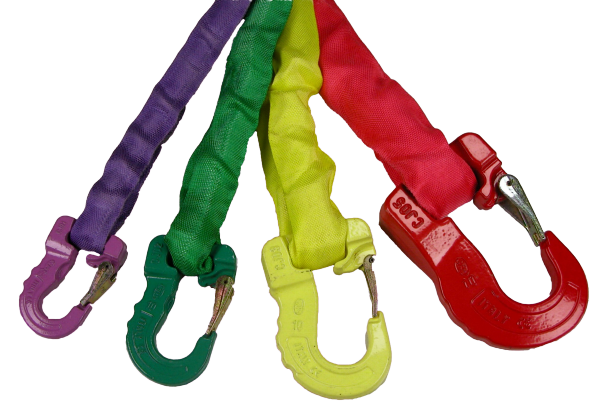
| Lift-All Direct Connect Hooks | $85 | — | — | — | — | View → |
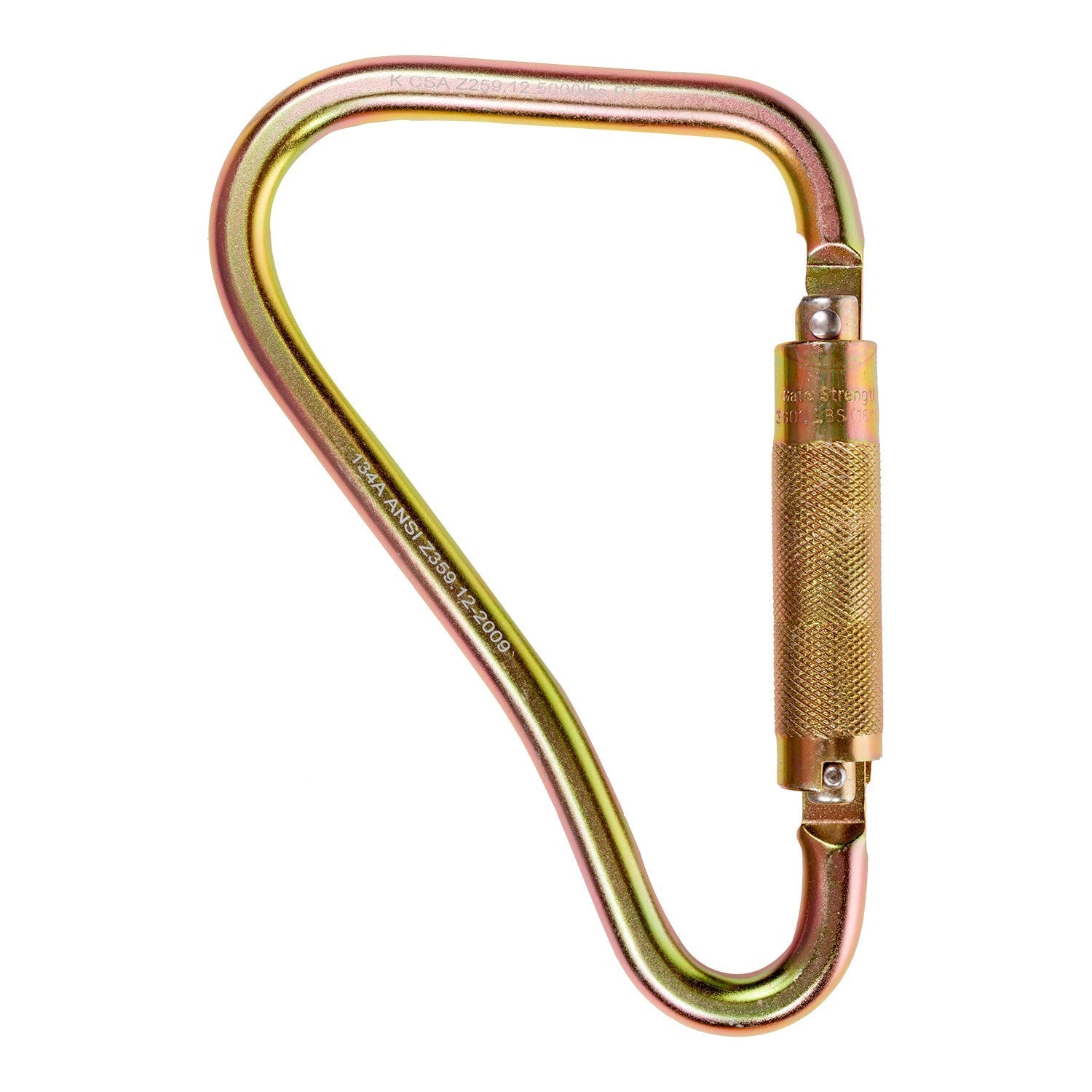
| KStrong® Large Steel Carabiner 2" Gate Opening (ANSI) | $54 | UFC408120 | Steel Carabiner | 2" | ANSI | View → |
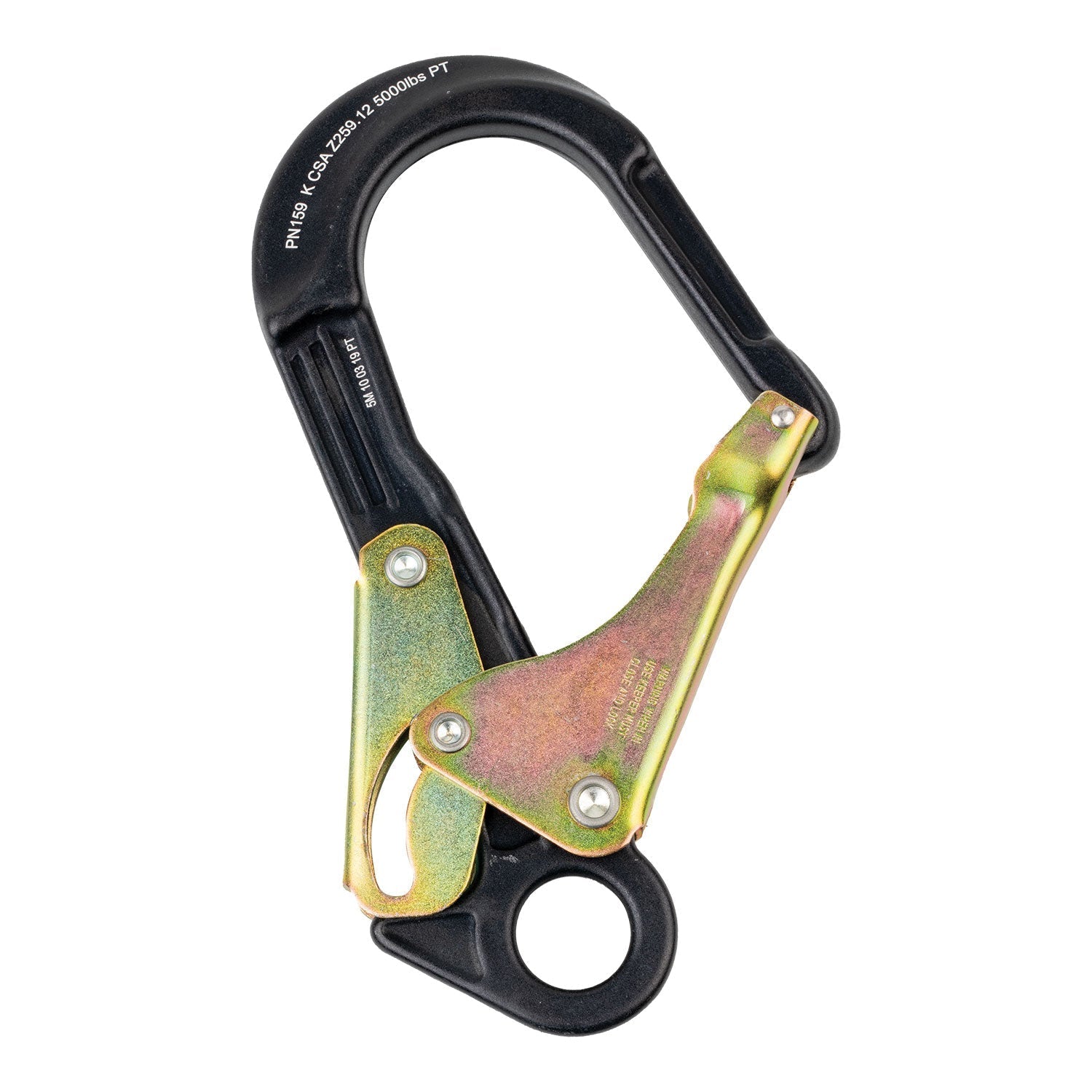
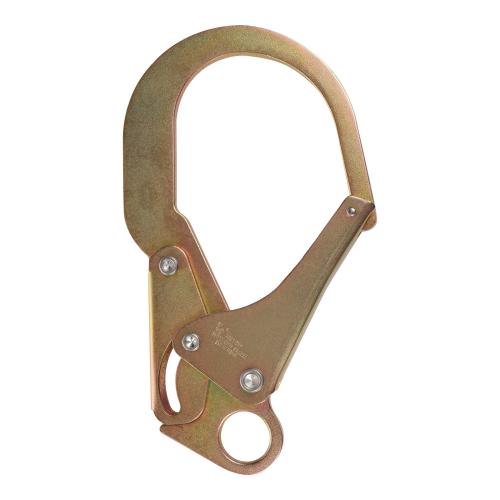
| KStrong® Large Aluminum Rebar Hook 2" Gate Opening (ANSI) | $45 | UFC408450 | Large Aluminum Rebar Hook | 2" | ANSI | View → |
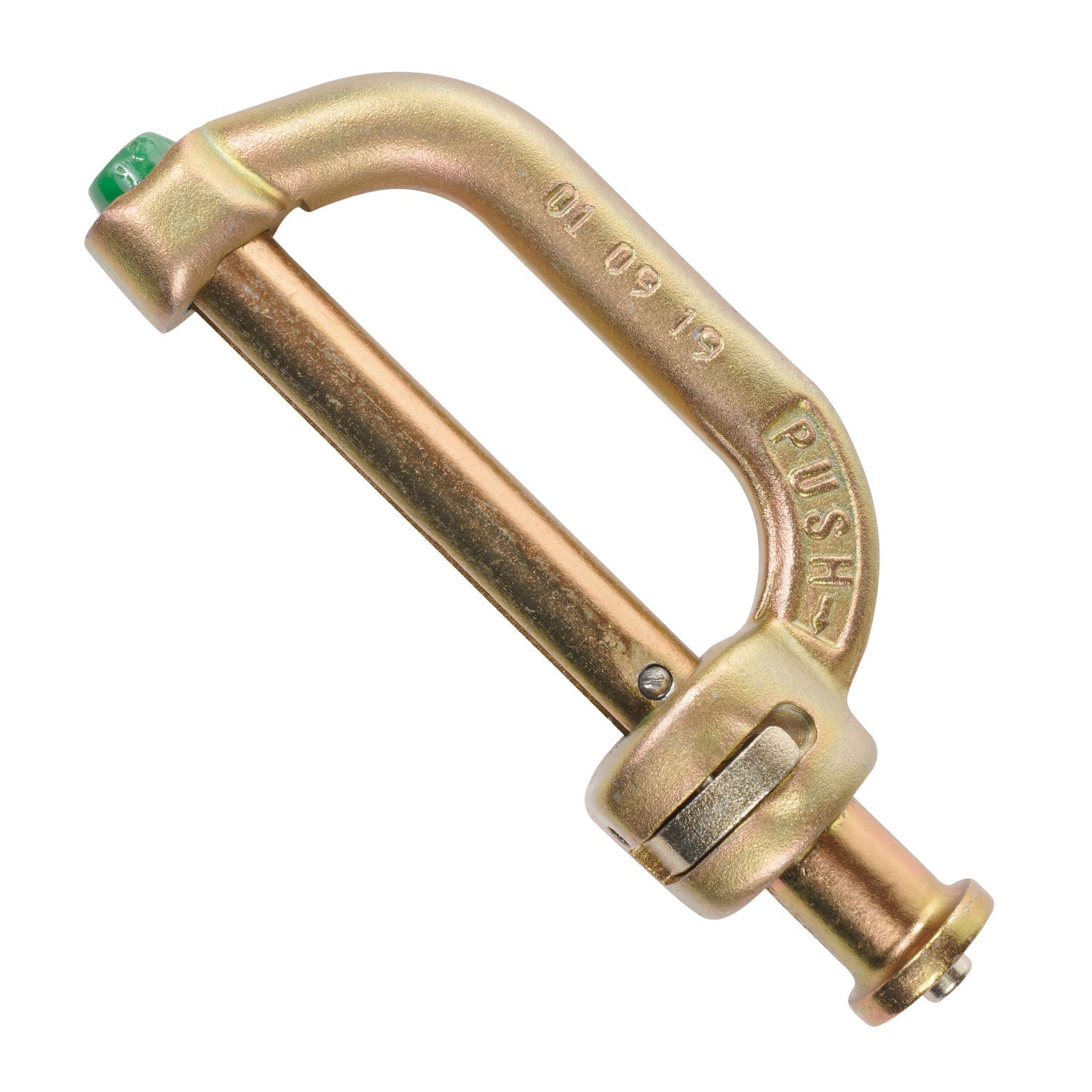
| KStrong®️ Twin/Single Connector with Steel Pin (ANSI) | $38 | UFC409151 | Twin/Single Connector, Steel Pin | — | ANSI | View → |
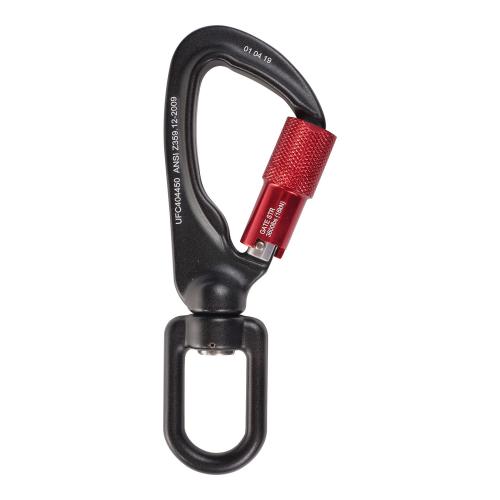
| KStrong Small aluminum quarter turn locking carabiner with swivel load indicator (ANSI) | $34 | UFC404450 | Small Aluminum Quarter Turn Locking Carabiner | — | — | View → |
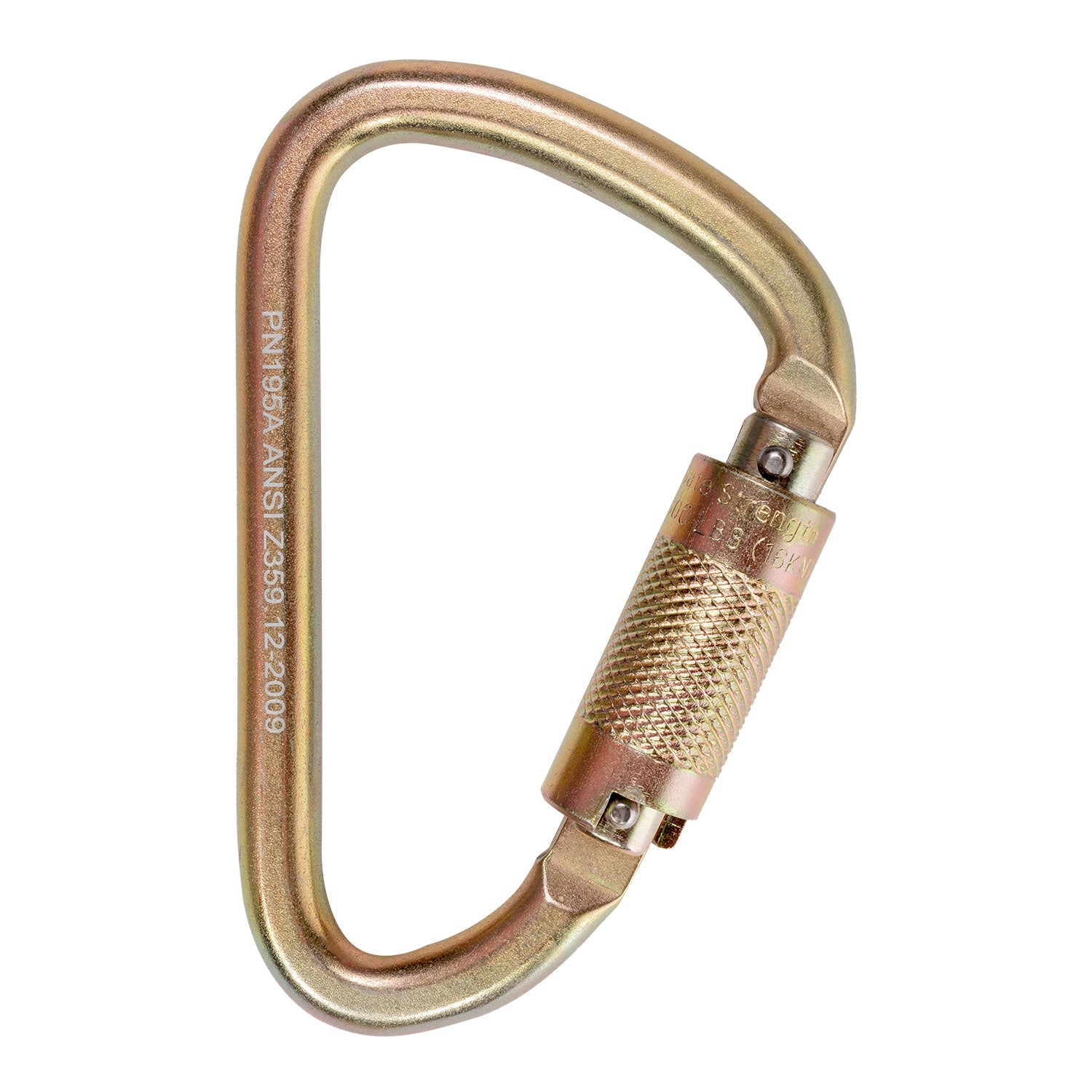
| KStrong® Small Steel Carabiner 1” Gate Opening (ANSI) | $28 | UFC401110 | Small Steel Carabiner | 1" | ANSI | View → |
 In Stock
 In Stock
 In Stock
 In Stock
 In Stock
 In Stock
 In Stock
 In Stock
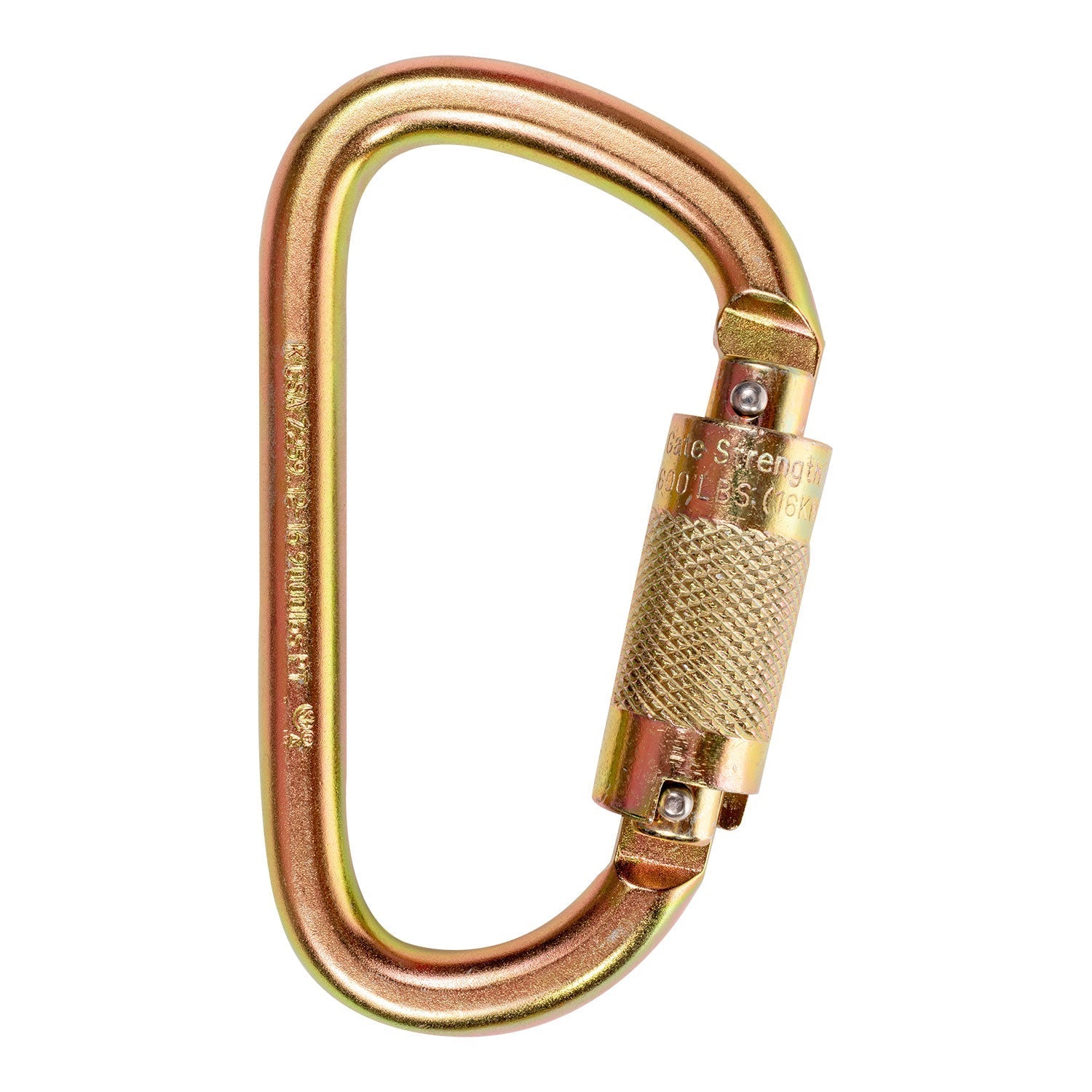 In Stock
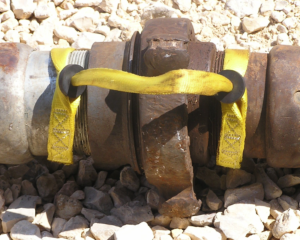 In Stock
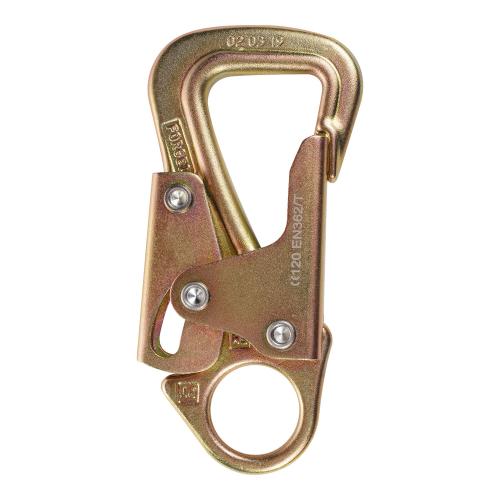 In Stock
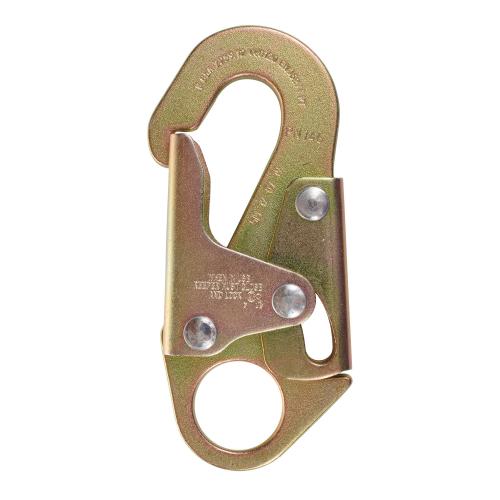 In Stock
 In Stock
Connectors & Hooks Buying Guide
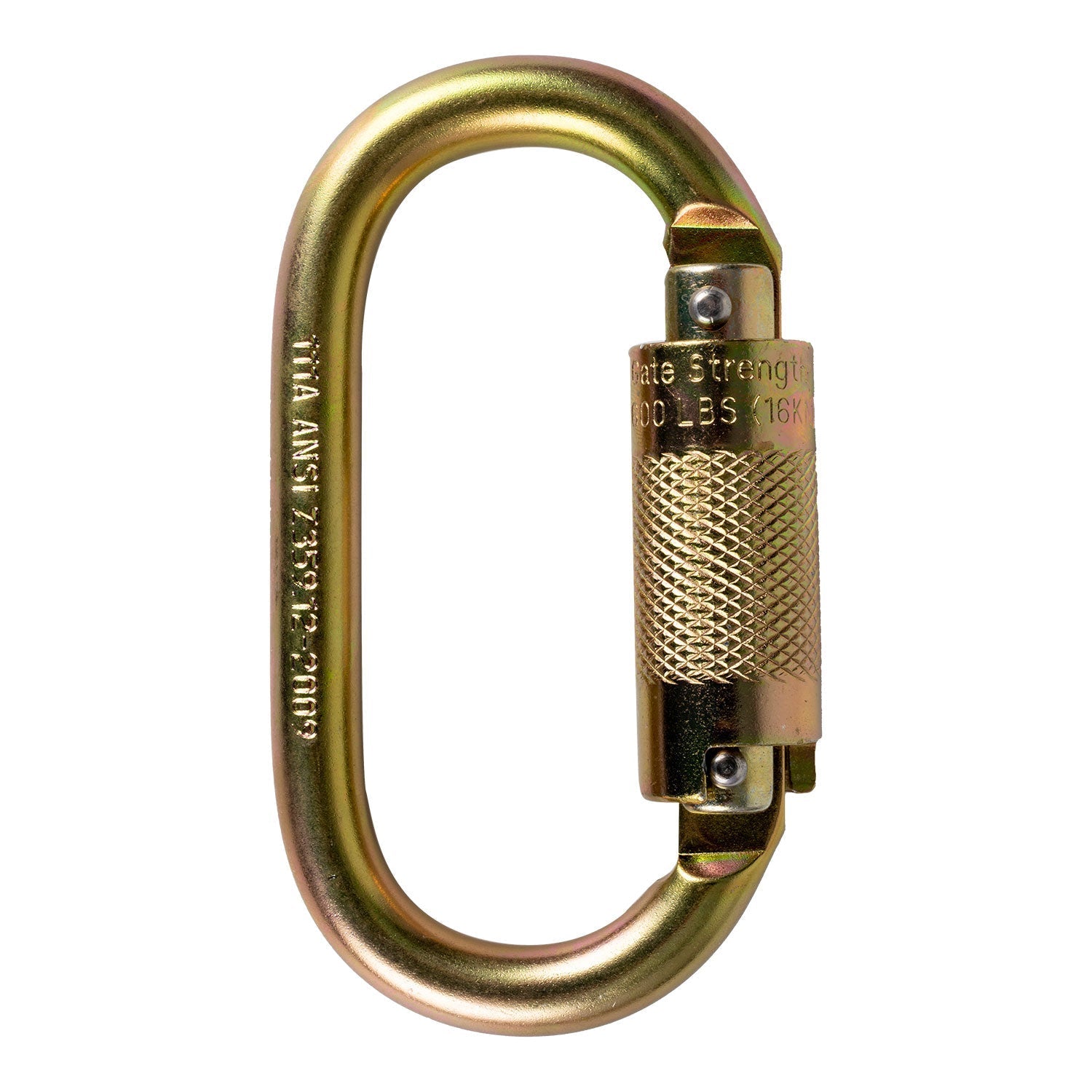
The number that separates a rated connector from a clip. A fall protection carabiner is defined by its gate, not its shape. OSHA 1910.140(c)(8) and ANSI Z359.12 require the gate to hold a minimum 3,600 lbf on the face, side, and minor axis, and to be self-closing and self-locking so it cannot be opened by an accidental brush against structure. That is why a climbing snap link or a utility spring clip has no place on a lanyard, even when it looks stout. The body strength sits well above the gate: most steel carabiners here carry a 5,000 lb rating, and the small steel carabiner with a 1 inch gate is rated to 9,000 lb for the heaviest tie-ins. Every connector in this collection is stamped with its rating and the standard it meets, so confirm the marking is legible before you clip in and treat any unmarked snap as off the table.
Gate action and opening size pick the connector. Two things decide which connector you reach for: how the gate locks and how wide it opens. A quarter-turn locking carabiner takes a deliberate twist to release, which is the workhorse action for clipping to a fixed D-ring; the oval quarter-turn locking steel carabiner with a .67 inch gate around $12.65 is the value pick and the one crews buy by the box. Opening size is the second call, because a small gate will not close around a large member. The .84 inch gate steel carabiner near $20.64 and the 1 inch gate steel model around $27.68 step up to bigger attachment points, while the large steel carabiner with a 2 inch gate around $52.95 wraps beams and bar that a narrow gate cannot reach. Match the opening to the member in front of you, not the smallest connector on the hook.
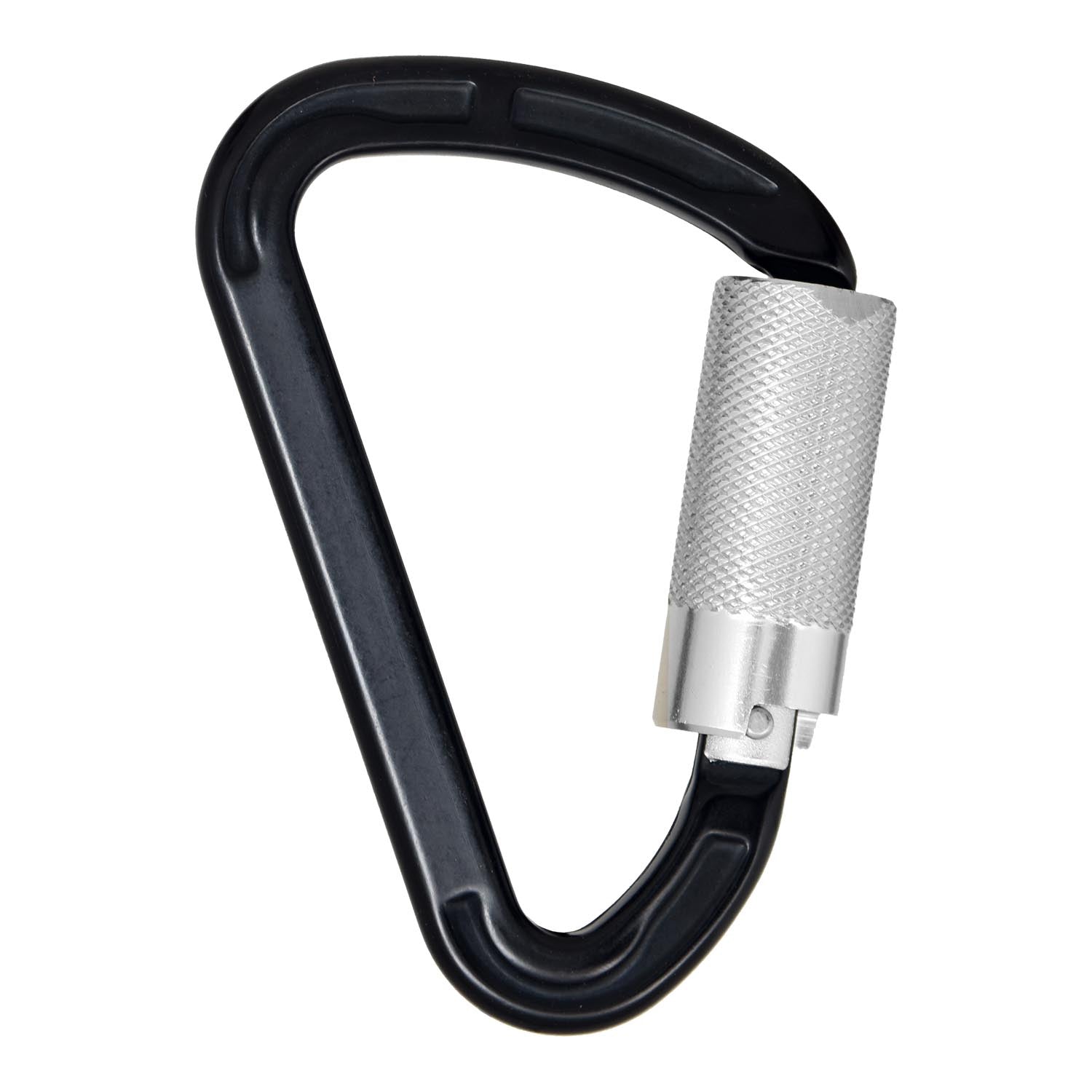
Steel or aluminum, and the load-indicator option. Steel and aluminum both meet the same 3,600 lbf gate and 5,000 lb body rating, so the choice comes down to weight and wear. Steel takes daily abuse, resists gouging in gritty environments, and costs the least, which is why it dominates general construction. Aluminum saves weight for a worker who carries a rack of connectors all shift and is easier to run with a gloved hand; the aluminum bulb-type carabiner with a .67 inch gate near $22.50 is built for that grip. The small aluminum quarter-turn locking carabiner around $34.42 adds a swivel load indicator that flags an impact, so a connector that has taken an arrest force gets pulled from service instead of quietly going back in the bag. Pick steel for wear and budget, aluminum for weight and gloved handling.
Hooks for what a carabiner cannot wrap. When the connection point is too large for a carabiner gate, the answer is a hook. The stamped alloy steel snap hook around $13.93 is the self-locking standard for terminating a lanyard at a D-ring. Rebar and scaffold hooks open far wider: the large aluminum rebar hook with a 2 inch gate near $45.15 and the large stamped alloy rebar hook with a 2.63 inch gate around $24.77 wrap columns, rebar, and scaffold tube directly. The tie-back hook with a 5,000 lb rated gate near $16.23 is the one hook designed to wrap a lanyard back on itself, a move OSHA warns against with an ordinary snaphook. For rigging terminations rather than personal fall arrest, the Lift-All Direct Connect Hooks span roughly $84.81 to $378.64. When the hook has to reach a beam or embed, pair it with a rated sling from the anchor straps collection.
Rollout and cross-loading are the two failures to design out. A rated connector still fails if it is loaded wrong. Rollout is the first hazard: OSHA 1926.502(d)(6) requires a snaphook to be sized compatible with what it clips or to be a locking type, so the connected member cannot depress the keeper and let the hook slip free. Keep one connector per D-ring, matched to the shape it closes on, and never clip a standard snaphook back onto its own lanyard. Cross-loading is the second: a carabiner is strongest along its spine, the major axis, and loses the majority of its strength when the load pulls across the gate. Keep every connector loaded end to end with the gate closed and locked, and check that it has not rotated sideways in the D-ring. The twin/single connector with steel pin near $37.90 exists precisely to keep twin-leg lanyard legs organized at the dorsal ring instead of stacking two hooks on one point.
SRL, roof, and multi-worker connectors, plus inspection. A few connectors here do a job a plain carabiner cannot. The swivel anchor for self-retracting lifelines, from about $272.99, lets a retracting line rotate without kinking as the worker moves. The bull ring anchor rated to 5,200 lb around $52.18 gives several workers a common tie-in on one point. Roof anchors ride in this collection too, because on a roof the anchor and the connector are chosen together: single-use steel anchors start near $6.41, the hinged reusable steel anchor runs about $23.63, and the single-seam anchor near $90.05 handles standing-seam metal that cannot be penetrated. For the full range of structural tie-offs behind these connectors, see the anchor points collection. Whatever you buy, inspect before every use for smooth gate function, nose and keeper wear, and corrosion, and retire any connector that has arrested a fall, since gate springs and alloy do not always recover from a shock load.
Frequently Asked Questions
The gate is what qualifies it. OSHA 1910.140(c)(8) and ANSI Z359.12 require the gate to withstand a minimum 3,600 lbf in all directions, including the face and minor axis, and to be self-closing and self-locking so it cannot open under load or from an accidental bump. The body itself is rated separately, usually 5,000 lb, and up to 9,000 lb on the 1 inch gate steel model here. A climbing carabiner or a utility snap does not meet the 3,600 lbf gate rule and should never be used in a personal fall arrest system.
Match the opening to the member you are clipping. A .67 inch gate closes cleanly on a standard harness or anchor D-ring and is the everyday size. Step up to a .84 or 1 inch gate for larger attachment points, and to a 2 inch gate carabiner or a wide-gate rebar hook when you need to wrap a beam, column, scaffold tube, or bar of rebar directly. A gate that will not fully close around the member cannot lock, so size up rather than force a small connector onto a large point.
Not with an ordinary snaphook. OSHA's guidance warns against clipping a standard snaphook onto its own lanyard because the connection can roll out. The correct part is a tie-back hook, like the KStrong tie-back hook with a 5,000 lb rated gate near $16.23, which is engineered and marked for wrapping the lanyard around a member and clipping back onto itself. Read the label: only a hook rated for tie-back use is allowed to be used that way.
Both are rated connectors that must meet the 3,600 lbf self-locking gate requirement, but they suit different connections. A carabiner is a symmetrical link you thread and twist or squeeze to open, ideal for clipping to a D-ring or a small anchor. A snap hook has a spring-loaded keeper that opens one way and snaps shut, which is faster for terminating a lanyard, while rebar and scaffold hooks give you a much wider throat to wrap large members a carabiner gate cannot reach.
Both carry the same gate and body ratings, so decide on weight and wear. Steel resists gouging and abrasion, holds up to daily jobsite abuse, and costs less, which makes it the default for general construction. Aluminum is lighter for a worker carrying many connectors and easier to operate with gloves, and the aluminum model with a swivel load indicator flags an impact so a shock-loaded connector gets retired. For gritty, high-wear environments choose steel; for weight and gloved handling choose aluminum.