Anchor Straps
Anchor straps are the flexible link between a structure and a personal fall arrest system, the part that turns a beam, column, or concrete slab into a rated tie-off point. OSHA 1926.502(d)(15) sets the bar every one of them has to clear: a 5,000 lb anchorage per attached worker, or an engineered system designed by a qualified person to a safety factor of at least two. This collection carries the KStrong line in three working forms, web cross-arm straps that wrap and cinch, PVC coated wire cable slings for edges that cut webbing, and concrete embed straps cast into the pour for a point that stays. Lengths run from 2 ft up to 30 ft, most of them under $65, so the strap is rarely the costly part of the system it protects. Choosing one comes down to what you are anchoring to and what the point has to survive. The guide below sorts the three types by structure, edge exposure, and whether the tie-off is temporary or permanent.
Compare Anchor Straps
| Model | Price | Overall Length | |
|---|---|---|---|
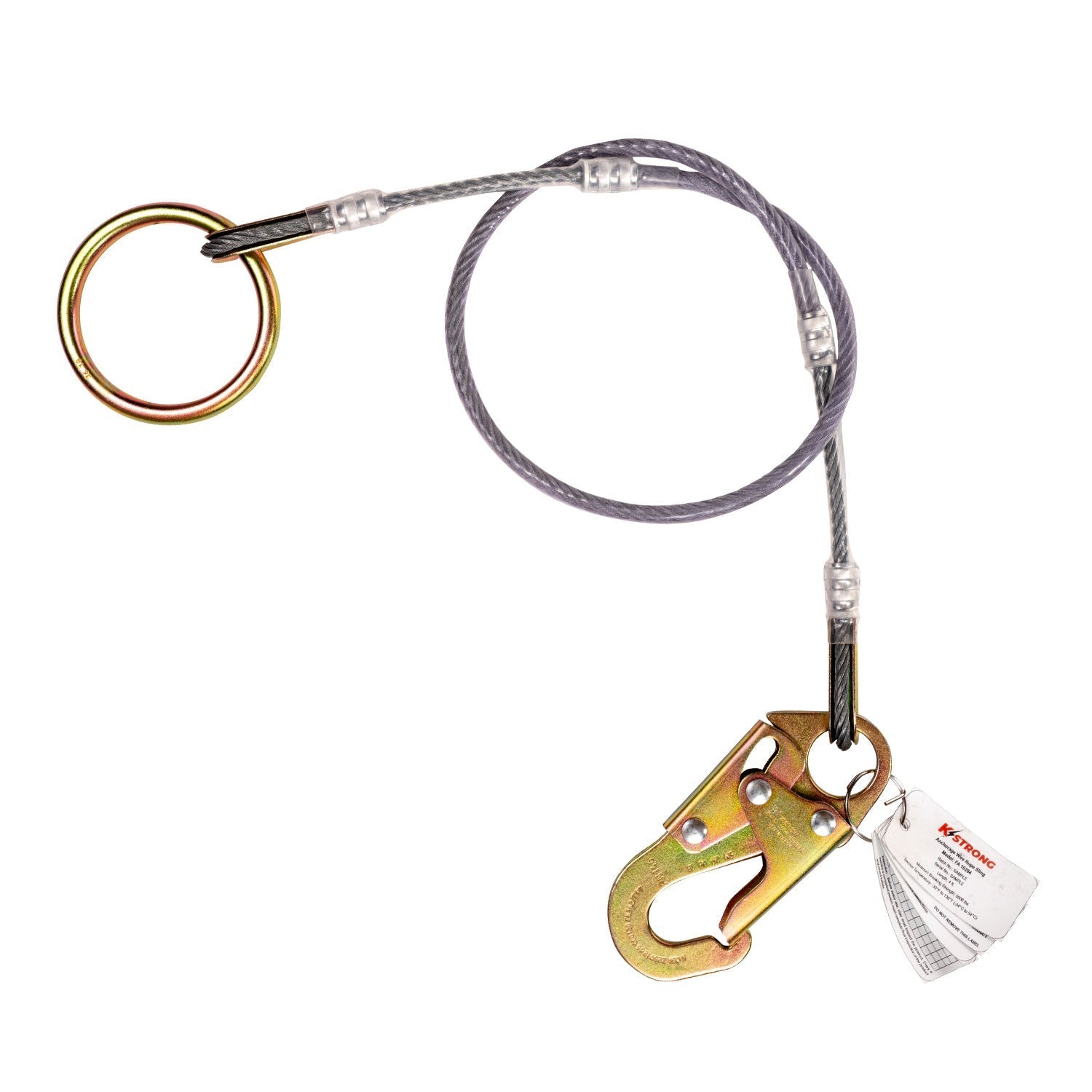
| KStrong® Coated Wire Anchor Sling with Snap Hook and Large O-ring (ANSI) | $43 | 3-6 ft | View → |
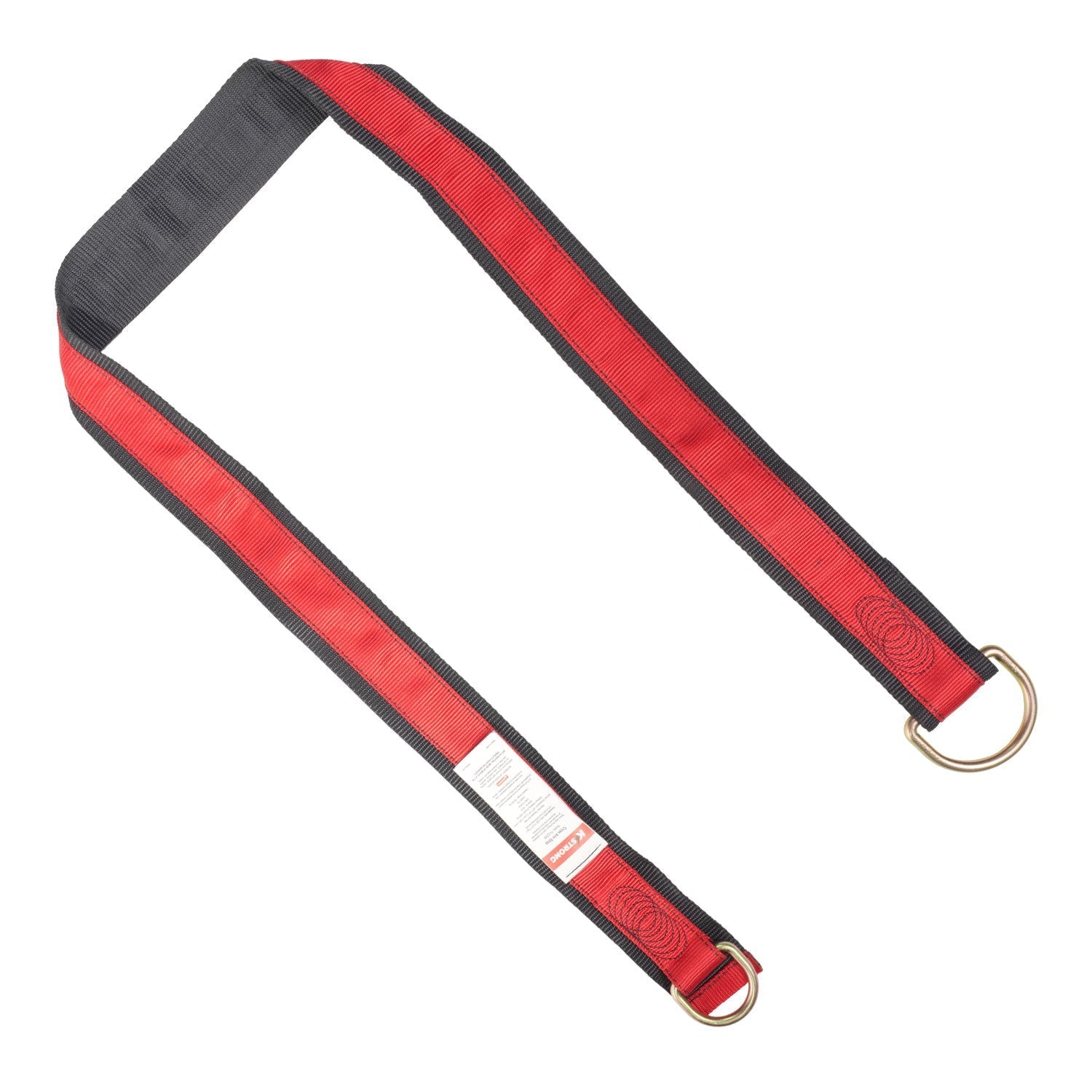
| KStrong® Choker Style Anchor Strap with Wear Pad | $21 | 3-30 ft | View → |
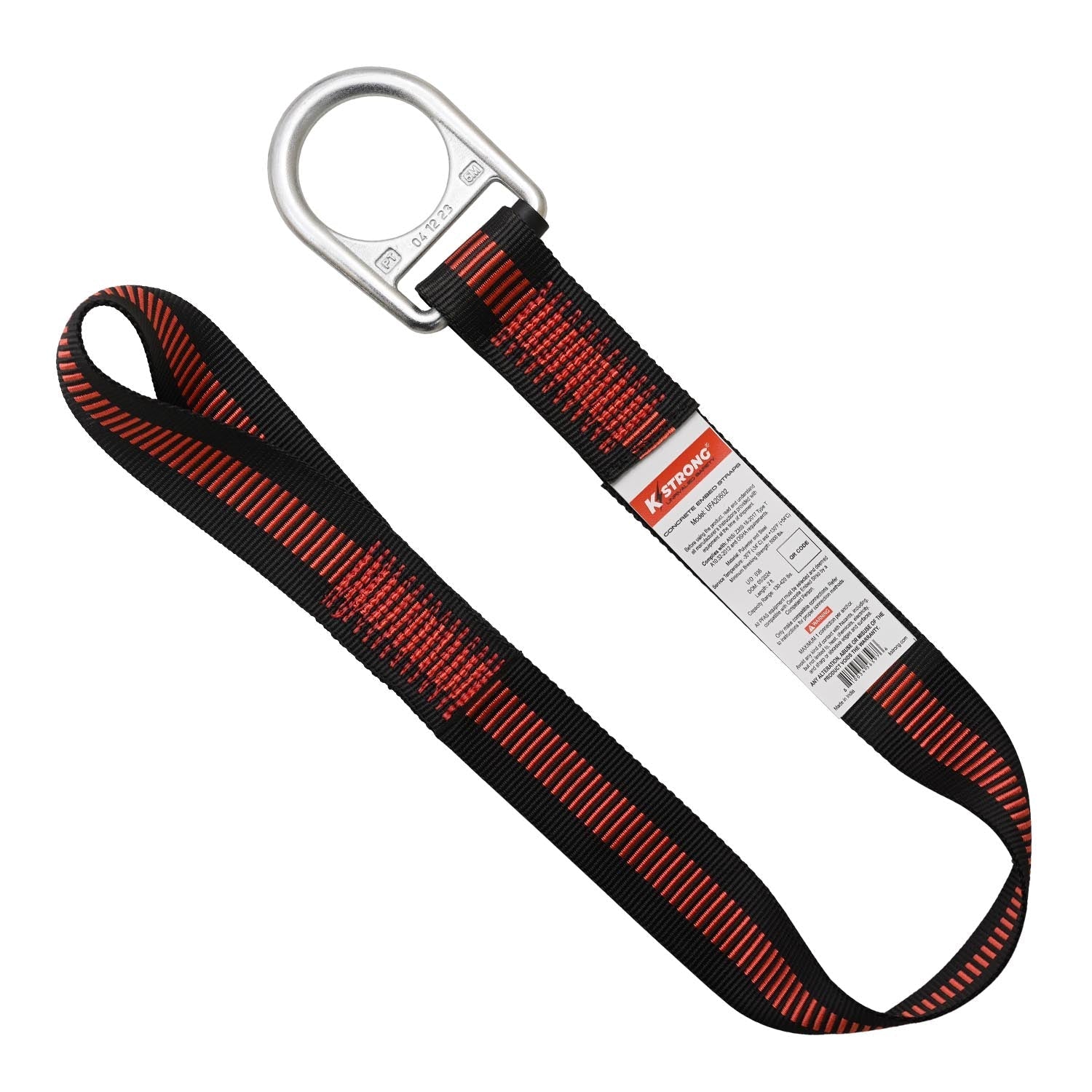
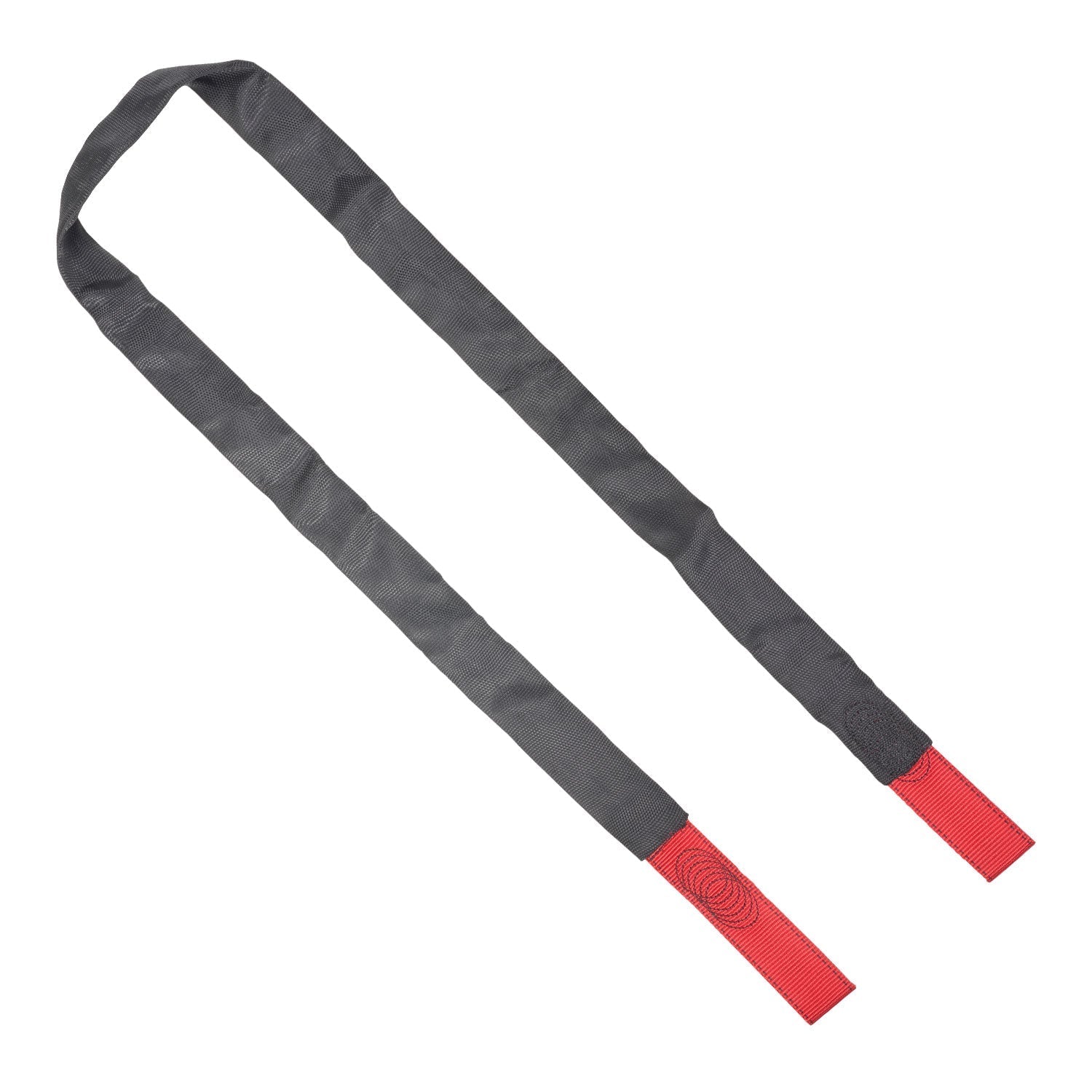
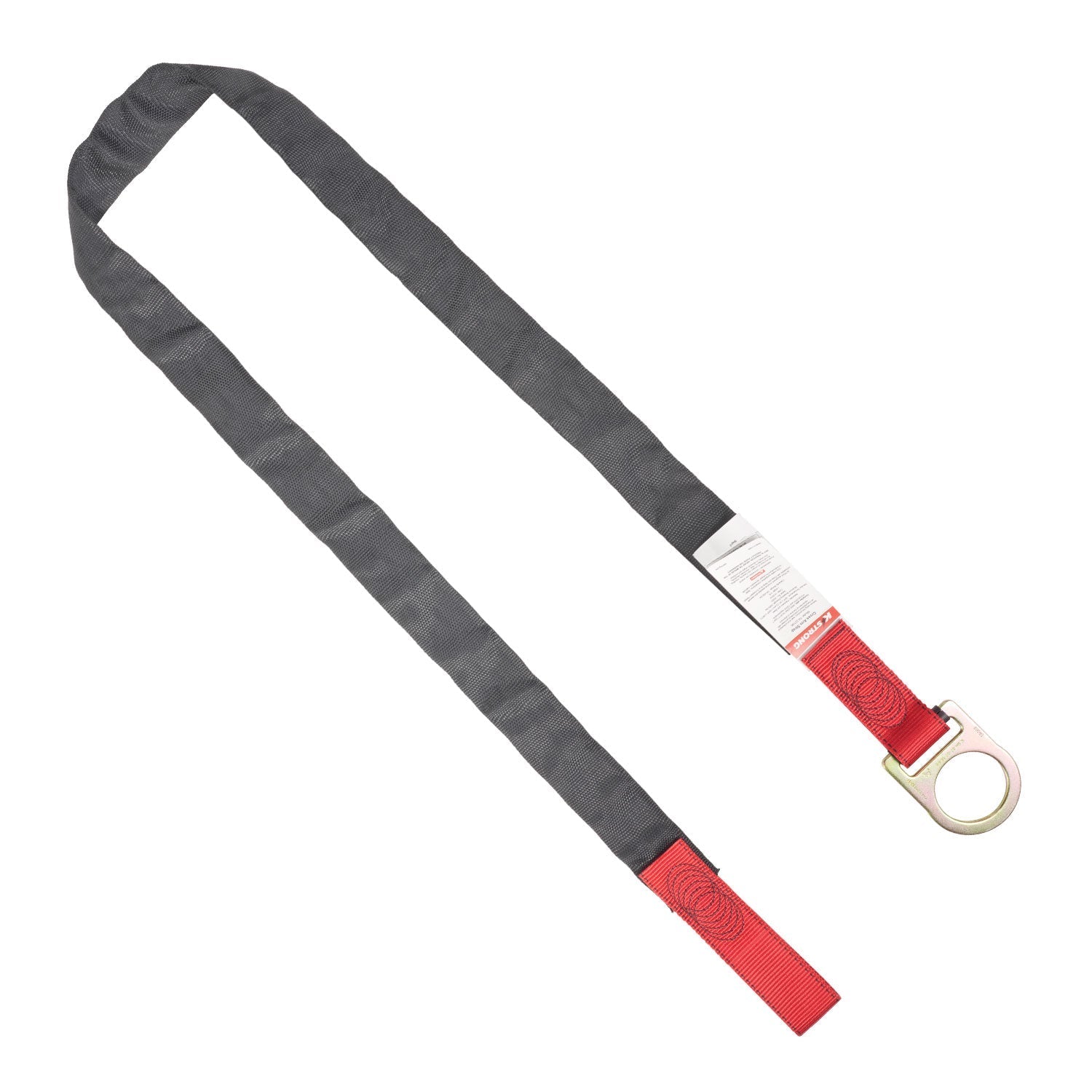
| KStrong® Concrete Embed Anchor Strap with Loop and Forged D-ring (ANSI) | $10 | 2-4 ft | View → |
 In Stock
 In Stock
 In Stock
 In Stock
 In Stock
 In Stock
Anchor Straps Buying Guide
Where the anchor strap sits in the system. An anchor strap does one job, connecting the harness lanyard or lifeline to something that will hold a fall. It is an anchorage connector under ANSI/ASSP Z359.18, the standard that governs performance, testing, and marking for these components. Everything that clips to it lives in the neighboring collections: the shock absorbing and positioning lanyards in fall arrest and restraint gear, the self-retracting units in lifelines, and the carabiners and snap hooks in connectors and hooks. The strap carries the same 5,000 lb rating expected of any anchor, and it has to reach from a sound structural member to a point as close to directly overhead as the work allows. Offset adds swing on a fall, and every inch of connector length adds to the distance below the working surface before the system arrests.
Web cross-arm straps: wrap, cinch, and move on. The choker style anchor strap is the portable workhorse, a length of heavy polyester webbing with a large O-ring on one end and a small one on the other. Pass the small ring through the large ring around a beam or column, pull it tight, and clip in; unwrap it and it moves to the next point in seconds. The wear pad is the detail that matters, a reinforced sleeve that rides between the structural webbing and the edge it wraps, because a flange corner or a rusted lip is what saws through an unprotected strap. KStrong offers this one from 3 ft for a tight column up to 30 ft for large members or reaching past obstructions, priced from about $21 to $64. It is the right pick anywhere the structure is smooth steel or timber and the tie-off only needs to last the shift.
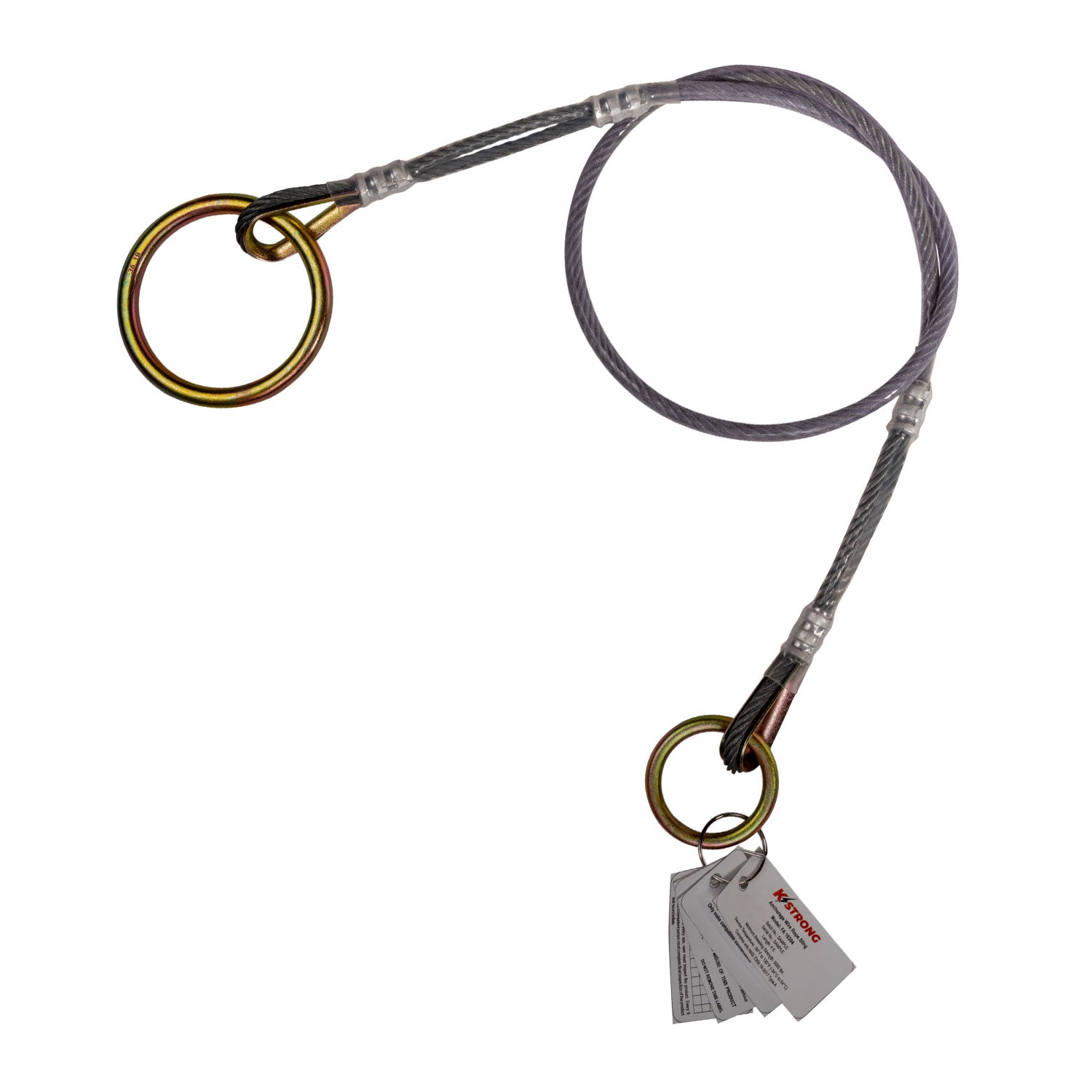
Coated wire cable slings for edges that cut. Webbing loses to heat, weld spatter, and sharp uncoated steel, and that is where the coated wire anchor slings earn their place. Both versions here are quarter-inch galvanized cable inside a PVC coat that resists abrasion and corrosion, rated to 5,000 lb and offered from 3 to 6 ft. The pass-through cable sling with large and small O-rings works the same choke as the web strap but survives contact that would retire webbing, running about $37 to $55. The anchor sling with a snap hook and large O-ring adds a self-closing connector on one end for faster hookup where you are clipping and repositioning, about $43 to $62. Reach for cable over web when the anchor point is a cut plate edge, a hot line, or a member the crew has already chewed through a strap on.
Concrete embed straps: a point cast into the pour. When the structure is concrete and the tie-off has to stay, the embed straps are built to be cast in place. A textile loop end is set into the formwork before the pour and becomes part of the slab or wall, a protective sheath guards the webbing where it exits the concrete, and the exposed end presents a connection point for the life of the structure. All three versions carry a 5,000 lb minimum rating and run roughly $8.50 to $14, cheap enough to place generously across a tilt-up or precast job. The choice is the end fitting: the loop-and-D-ring and loop-and-forged-D-ring straps (2 to 6 ft) give a single exposed D-ring, forged where the duty runs heaviest, while the loops-on-both-ends version leaves a textile loop proud of the surface for a pass-through connection. Specify these during design, because a strap cannot be retrofitted into cured concrete.
Rating, connection, and the self-locking rule. Two rules travel with every anchor strap. First, whatever clips to the O-ring or D-ring has to be a self-locking snap hook or carabiner; ANSI and OSHA both require it, and a non-locking gate can roll out under load. Second, the anchorage rating is a system number, so the strap, the connector, and the structure all have to hold 5,000 lb per worker. When a strap will not reach a sound member, the fixed hardware in the parent connectors and accessories collection covers the gap: beam clamps, bolt-on and drop-thru anchor points for concrete and steel, and the rebar hooks and steel carabiners in connectors and hooks. Match the strap to the structure first, then confirm the connector on both ends is rated and compatible before anyone weights the line.
Inspection and when a strap is done. Anchor straps get inspected before every use and pulled at the first honest defect. On web straps, look for cuts, fraying, burns, weld spatter, UV chalking, and pulled stitching, and check that the wear pad still covers the contact zone. On cable slings, look for broken wires, kinks, birdcaging, splits in the PVC that let water reach the steel, and corrosion at the O-rings. Any strap in a system that has arrested a fall comes out of service, no exceptions, because the shock it just passed to the rest of the gear can leave damage the eye cannot read. At these prices the replacement is trivial next to what the strap protects, so retire on suspicion and keep the inspection logged.
Frequently Asked Questions
An anchor strap creates a rated tie-off point on a structure so a worker can connect a lanyard or self-retracting lifeline to it. It wraps a beam, column, or concrete member and gives you an O-ring or D-ring to clip into, standing in for a fixed anchor where none exists. Under OSHA it has to support 5,000 lb per attached worker, or be part of a system a qualified person engineered to at least a 2:1 safety factor.
The web cross-arm straps and the coated wire cable slings are reusable, wrap them, cinch them, use them, and move them to the next point. The concrete embed straps are the exception: their loop end is cast permanently into the concrete, so the strap itself is not removable, though the exposed D-ring can be clipped into again and again for the life of the structure.
Both choke around a structural member and give you an anchor point, but the material decides where each belongs. Web straps use polyester webbing with a wear pad and suit smooth steel or timber. Coated wire slings use quarter-inch PVC coated galvanized cable that shrugs off heat, weld spatter, sharp edges, and corrosion, so they go where webbing would be cut or abraded. Both here are rated to 5,000 lb.
No. The loop end has to be set into the formwork and cast into the concrete during the pour, so it becomes part of the finished slab or wall. There is no way to embed one into cured concrete. For a tie-off on an existing concrete structure, use a bolt-on or removable concrete anchor from the connectors and accessories collection instead.
OSHA requires a fall arrest anchorage to support 5,000 lb for each worker attached, unless a qualified person has engineered the anchorage into a complete system with a safety factor of at least two. The ANSI rated straps in this collection carry that 5,000 lb rating, and remember it is a system figure: the connector and the structure the strap wraps have to hold it too.