Crane Forks
Crane forks are a set of steel tines on a bail that hangs from a crane or hoist hook and slides under a loaded pallet to pick it straight up, no forklift and no ramp required. They earn their keep wherever palletized stock has to reach a spot wheels cannot: up onto a mezzanine, down into a mould pit, off the back of a flatbed, or across a floor too congested for a lift truck. This collection covers Tandemloc's AN-series pallet lifters and Vestil's overhead load lifters in fixed, adjustable, and wheeled patterns, plus a two-bar Machining and Welding pallet lifting set, with capacities from 2,000 up to 6,000 lb on 36, 42, and 48 inch tines and prices starting around $1,600. Every one of them is a below-the-hook lifting device with its own rated load and inspection life. The guide below walks the choice from how a fork balances a pallet through how you size, secure, and rate the pick.
Compare Crane Forks
| Model | Price | Capacity | |
|---|---|---|---|
| Star Industries Crane Forks | $5,482 | — | View → |
| Tandemloc AN17W Wheeled Lightweight Pallet Lifters | $3,865 | 2,000-4,000 lb | View → |
| Tandemloc AN18A Standard Fixed Fork Pallet Lifters | $3,061 | 2,000-6,000 lb | View → |
| Tandemloc AN17A Lightweight Pallet Lifter | $2,682 | 2,000-6,000 lb | View → |
| Machining & Welding Pallet Lifting Bars (Pair) | $2,098 | 4,000 lb | View → |
| Vestil Overhead Load Lifters | $1,876 | 2,000-4,000 lb | View → |
 In Stock
 In Stock
 In Stock
 In Stock
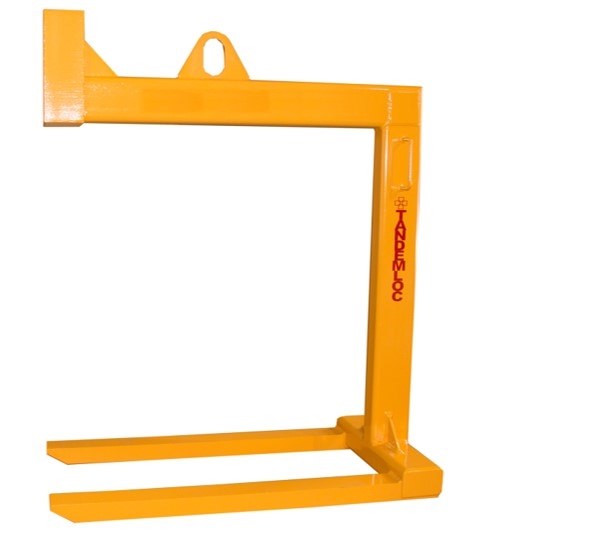 In Stock
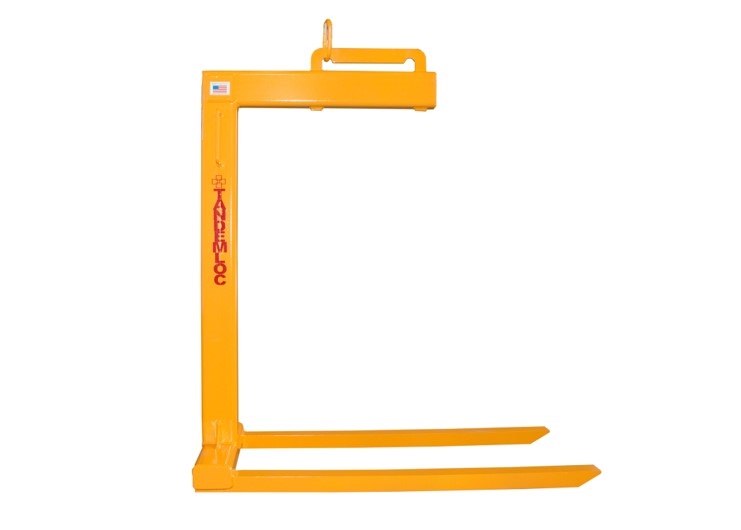 In Stock
Crane Forks Buying Guide
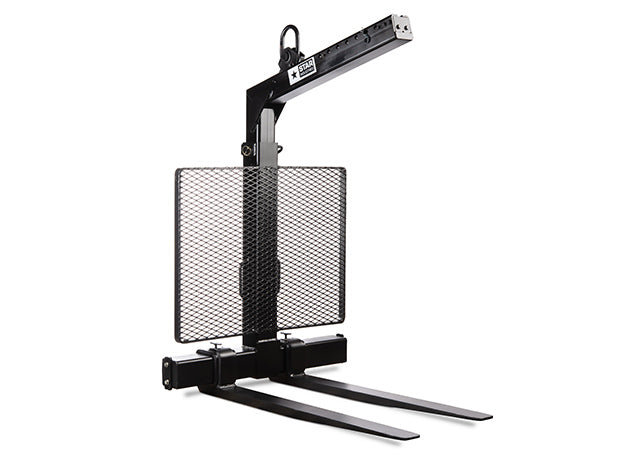
How a crane fork carries a pallet, and why balance is everything. A forklift keeps a load stable with a mast in front and a counterweight behind the axle. A crane fork has neither. It hangs from a single point, so the pallet only rides level when its center of gravity sits directly under that point and centrally between the two tines. Load a fork off to one side and it tilts, and a tilted pallet on open tines is a load hunting for the floor. Two designs answer this. A fixed-tilt fork is built so a correctly centered, evenly loaded pallet hangs level, which is the Tandemloc AN17A and AN18A approach and the simplest and strongest build. A self-leveling fork uses a sliding bail or a spring linkage that finds the load's center of gravity on its own and keeps the pallet flat as it rises. Self-levelers forgive an uneven load, but many need a minimum weight on the tines before the mechanism engages, so a near-empty pallet can still ride wrong. Whichever you run, center the load between the arms before you take the strain.
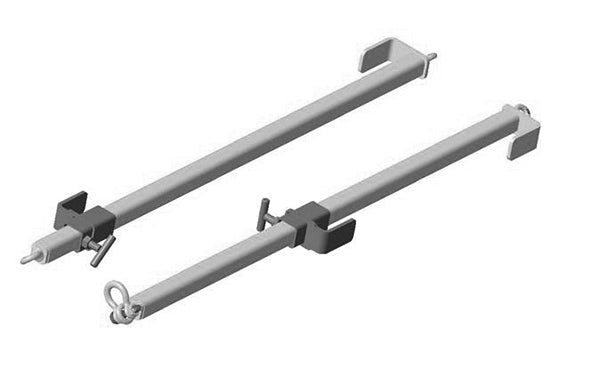
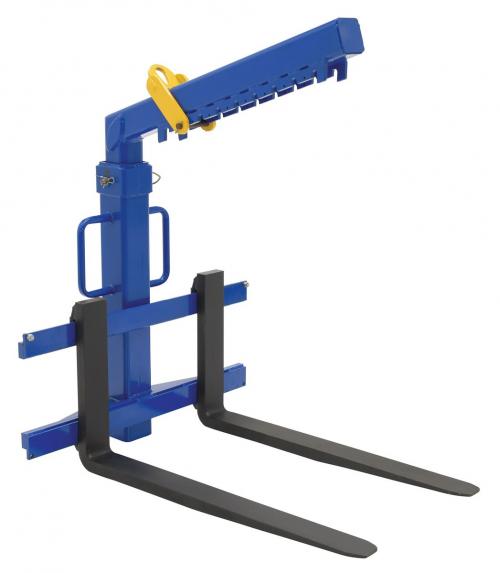
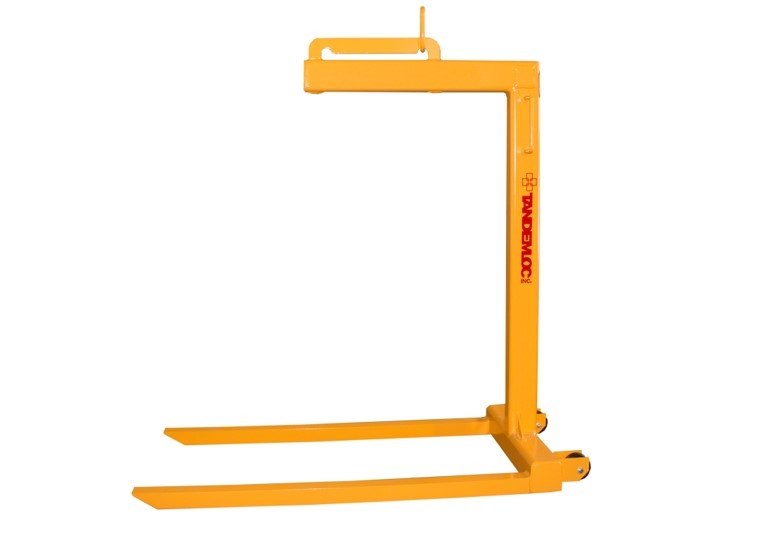
The product ladder: fixed, adjustable, and wheeled. Vestil's overhead load lifters are the entry to the range and the widest in style, offered as Fixed, Adjustable, and Deluxe builds at 2,000 and 4,000 lb from about $1,585. The Adjustable version slides the tines to match a 36, 42, or 43 inch pallet, which is the one to buy in a shop that lifts mixed sizes. Tandemloc's AN18A standard fixed-fork lifter is the heavier-duty fixed pick, rated 2,000 to 6,000 lb on 36, 42, and 48 inch tines, while the AN17A lightweight lifter covers the same 2,000 to 6,000 lb band on 36 and 48 inch tines in a lighter frame that is easier to hang and store. When a worker has to set the device under a pallet by hand, the AN17W wheeled lifter adds casters so the empty fork frame rolls into position instead of being muscled, at 2,000 to 4,000 lb. The Machining and Welding pallet lifting bars take a different tack: a matched pair of bars that slide under a pallet from opposite sides and hang from a four-leg bridle, useful for a wide or double pallet a single fork frame cannot straddle.
Size the capacity, then the tine length. Capacity comes first. Total the pallet, its contents, and any dunnage, then buy the next rating up with margin, the same discipline you apply to any rigging. Tine length is the second axis, and it is not free capacity. A 48 inch tine reaches under a deep or double pallet, a 36 inch tine steers more easily in a tight aisle and keeps the load closer in, and the longer tine puts the load farther out on the arm. That is why a fork's rating is tied to a stated load center, and picking a pallet whose weight sits out past that point can overload a tine even when the total stays under the tag. Match the tine to the pallet you actually run, a GMA pallet is 48 by 40 inches, and keep the load back against the heel where the fork is strongest rather than out near the tips.
Securing the load in the air. A pallet on open tines has nothing behind it but a backstop, so the failure mode that matters is the load sliding off the open end. Keep the load hard against the heel and the stop, never pick a pallet the tines do not support all the way to the stringer, and use the safety chain if the device carries one, since most rate a chain that ties the load back to the bail so a shifted pallet cannot walk off. Because the whole assembly hangs from a single hook it will also swing and rotate, so move slowly, run tag lines on long or awkward loads, and keep everyone out of the swing path and from under the load. This is exactly why a crane fork is less forgiving than the forklift it replaces: no seat, no back rest, no counterweight, only the balance you set and the stop at the heel.
Rate the machine, and the rules that apply. The fork's own weight comes off the crane's capacity, and the bail adds height that eats into your hook clearance, so read the overhead crane and hoist ratings against the loaded, rigged device rather than the pallet alone. Every fork here is a below-the-hook lifting device under ASME B30.20, rated, marked, and inspected on its own schedule with a visual check before each shift, and a shop-built or custom fork must be proof tested to 125 percent of its rated load before first use, so buy the rating tag and keep the paperwork. One line has no exception: crane forks and the material lifting baskets beside them in the crane attachments hub are for material only. Hoisting a person on either is prohibited under OSHA 1926.1431, which demands a purpose-built and tested personnel platform. The slings and shackles that finish the rig, on the days a fork hangs from a bridle instead of straight off the hook, sit in lifting slings and the wider rigging equipment page.
Frequently Asked Questions
No, and avoiding one is the whole point. A crane fork hangs from your existing crane or hoist hook and slides under a standard pallet, so it lifts palletized stock into spots a lift truck cannot reach: a mezzanine, a machine pit, a congested bay, or the bed of a flatbed. You supply the overhead crane or hoist and the headroom; the fork is the below-the-hook attachment that turns the hook into a pallet lift.
Total the pallet, its contents, and any dunnage, then step up to the next rating with margin. Our forks run 2,000 to 6,000 lb. For tines, a 48 inch length reaches under deep or double pallets while a 36 inch is easier to steer in tight aisles. A longer tine also carries its rated load at a stated load center, so keep the weight back against the heel and match the tine to the pallet you actually handle, which for a GMA pallet is 48 by 40 inches.
With care. Because a crane fork hangs from one point, the load stays level only when its center of gravity is centered between the tines, so an off-center pick will tilt. A self-leveling model uses a sliding bail or spring linkage to find the center of gravity for you, but many need a minimum weight on the tines before that mechanism works, meaning a near-empty pallet can ride wrong. Center and balance the load first, every time.
Load against the backstop and the heel, never pick a pallet the tines do not support to the stringer, and use the safety chain if the device carries one to tie the load back to the bail. Remember the assembly swings and rotates on a single hook, so move slowly, use tag lines on long loads, and keep people out of the swing path. A crane fork has no counterweight or back rest to catch a shifting load, so the stop at the heel is your only backup.
Yes. Every crane fork is a below-the-hook lifting device under ASME B30.20, which means it carries a rated load, gets marked, and needs a visual check before each shift plus a documented periodic inspection. Any shop-built or custom fork must also be proof tested to 125 percent of its rated load before first use. Keep the rating tag legible and hold the test and inspection paperwork; an auditor asks for the records, not your word.
No, without exception. Crane forks are rated for material, and hoisting a worker on them is prohibited under OSHA 1926.1431. Lifting people by crane requires a purpose-built, tested personnel platform, not a pallet fork or a material basket. Treat the fork as a material handling attachment only, and use the correct personnel platform when a job genuinely needs to raise a worker.