Material Lifting Baskets
A material lifting basket is a rated steel bin that hangs below a crane or hoist hook and boxes loose, awkward, or spill-prone material inside four walls before the load ever leaves the ground. This collection is built around BTH Gear's 2 ton baskets on a standard 48 by 40 inch footprint, the same size as a GMA pallet, in three loading patterns: a caster-equipped basket you roll into position, a ramp-sided basket you walk material up into, and a swing-gate basket for repeated in-and-out access. Rigging assemblies, the four-leg bridles that gather the basket's lift eyes to a single hook, are available on every model. Where a bare sling would let pipe, offcuts, fittings, or bagged material shift and drop, a basket contains the whole load and turns a risky overhead move into a routine one. The guide below sorts the choice by how you load the basket, how you rig it, and the standard every one of them answers to.
Compare Material Lifting Baskets
| Model | Price | Capacity | |
|---|---|---|---|
| BTH Gear Material Lifting Basket With Casters 48x40x42" x 2Ton | $5,650 | 2 ton | View → |
| Machining & Welding Pallet Lifting Bars (Pair) | $2,098 | 4,000 lb | View → |
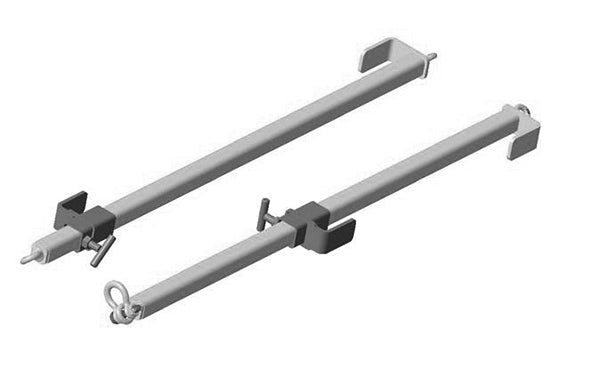 In Stock
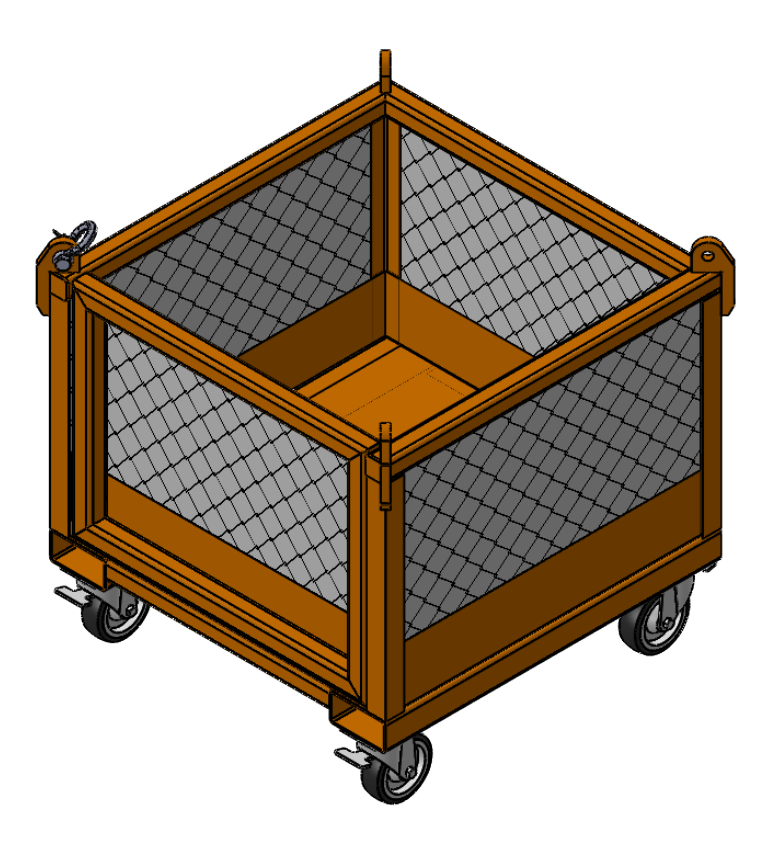 In Stock
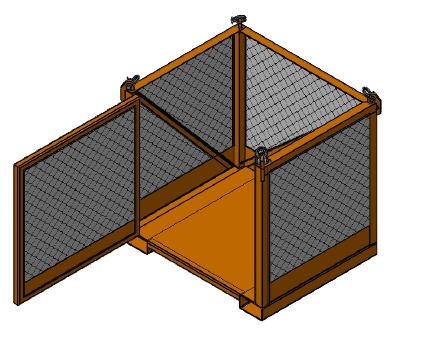 In Stock
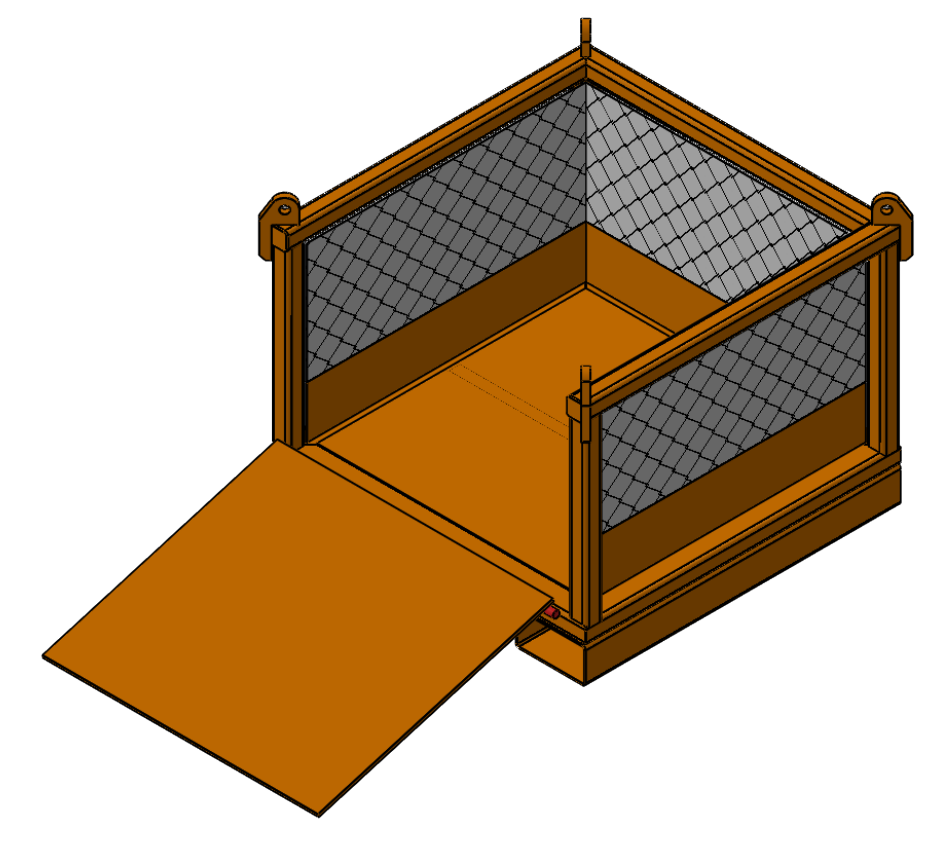 In Stock
Material Lifting Baskets Buying Guide
When a basket beats a fork or a bare sling. A crane fork picks a load that already rides a pallet, and a sling wraps a load that holds its own shape. A material lifting basket earns its place in the third case: when the load is loose, awkward, or would spill. Cutoffs and drops from a fab shop, fittings and couplings, bagged aggregate, small castings, demolition scrap headed up to a roof dumpster. Box it and the whole load moves as one contained unit with nothing to slide off a tine or slip a choke. The three families on the wider Crane Attachments hub map straight to those three cases: crane forks for palletized loads, slings from the rigging equipment range for loads that keep their shape, and baskets for everything that does not. Pick the one that matches the load, not the crane you happen to have.
Size to the footprint and the 2 ton limit. BTH Gear's baskets share a 48 by 40 inch footprint at 42 inches tall, and that size is deliberate. It matches the standard 48 by 40 pallet, so a full basket drops onto a pallet, into a rack bay, or through a door sized for pallet traffic without surprises. The rating is 2 tons, or 4,000 lb, and that ceiling covers the load plus the basket's own steel, so weigh dense material rather than eyeballing it. A 42 inch box of steel offcuts reaches the limit long before it looks full, while light, bulky material fills the volume first. Know which one you are lifting, round the estimate up, and if the same basket handles both light bulk and dense scrap, rate your plan to the heavy day.
Casters, ramp, or gate: match it to how you fill it. The three patterns solve three loading problems, and choosing wrong means fighting the basket every shift. The caster model puts the empty basket on wheels so one worker rolls it under the fill point, loads it on the floor, then hooks and lifts, which suits a station where the basket moves between a fill spot and a lift spot. The ramp model gives a sloped side you walk or wheel material up and into, the right call when a cart, hand truck, or drum has to go in rather than get lifted over a 42 inch wall. The gate model adds a swing door in one side for fast repeated access, the pick for a bin loaded and emptied by hand many times a day. Casters are also offered as an add-on to the ramp and gate baskets, so a gate basket can roll too when the workflow needs both.
The rigging assembly is part of the lift. A basket has four lift eyes, one at each top corner, and something has to gather them to the single crane hook. That something is the rigging assembly, a four-leg bridle matched to the basket and offered as an option on every model here. Buy it with the basket unless you already own a bridle rated for the job, because the leg angle is not a detail to improvise. The flatter the legs run, the harder they pull inward and the more tension each leg carries, so keep the sling angle at 60 degrees or greater from horizontal and each eye stays close to its rating. Angled legs also add height between the hook and the basket rim, several feet of it, which is the usual reason a basket that clears the load will not clear the building. Measure hook height at the working position before you order, the same headroom math that governs a lifting spreader bar or any four-leg lifting sling pick.
Below the hook: the standard and the inspection it carries. A material lifting basket is a below-the-hook lifting device, which puts it under ASME B30.20, the standard that governs the marking, construction, inspection, testing, and operation of gear that attaches a load to a hoist. In practice that means three things. The basket carries a rated working load limit stamped on it, and you never exceed it. It is proof tested, since custom-designed lifting devices of this kind are proof tested to 125 percent of their rated load before service, the same discipline OSHA applies to rigging accessories. And it gets an inspection of its own before each use, with the walls, welds, eyes, and bridle checked the way you would check a sling, because the basket is a rated component, not a container grabbed off the floor.
Material only, never a person. This is the one rule with no exceptions. A material lifting basket is rated to lift material, and lifting a person in it is an OSHA violation, full stop. Hoisting employees is prohibited except through a purpose-built personnel platform meeting 29 CFR 1926.1431, which carries its own construction criteria, a proof test to 125 percent of rated capacity, and a trial lift before anyone steps aboard. OSHA is blunt about why: cranes are designed to lift material, not personnel, and a material basket meets none of the personnel-platform requirements. If a job needs to put a worker at height, that is a personnel platform or an aerial lift decision, never a material basket one.
Frequently Asked Questions
It contains a loose, awkward, or spill-prone load inside rated steel walls so a crane or hoist can move it overhead as one unit. Typical loads are fab-shop offcuts and drops, pipe and fittings, small castings, bagged material, and demolition scrap. Where a bare sling would let the load shift or drop, the basket boxes it first.
The BTH Gear baskets are rated at 2 tons, or 4,000 lb, on a 48 by 40 inch footprint that stands 42 inches tall. The 48 by 40 dimension matches a standard pallet, so a full basket sets down on a pallet or into a rack bay cleanly. The 4,000 lb rating covers the load plus the basket's own steel, so weigh dense material rather than filling by eye.
The basket has four lift eyes but needs a four-leg bridle to gather them to a single hook. That bridle is the rigging assembly, offered as an option on every model. Add it unless you already own a bridle rated for the job and sized to hold a sling angle of 60 degrees or greater at these lift points.
The caster model rolls on wheels so you fill it on the floor, then hook and lift. The ramp model has a sloped side so a cart, hand truck, or drum can go in without being lifted over the wall. The gate model has a swing door for fast repeated hand loading and emptying. Casters are also available as an add-on to the ramp and gate baskets.
No. A material basket is rated for material only, and hoisting a person in it violates OSHA. Lifting employees requires a purpose-built personnel platform meeting 29 CFR 1926.1431, with its own construction criteria, a 125 percent proof test, and a trial lift. For work at height, use a personnel platform or an aerial lift instead.
Yes. As a below-the-hook lifting device under ASME B30.20 it carries a stamped working load limit, is proof tested to 125 percent of its rated load before service, and must be inspected before each use. Check the walls, welds, lift eyes, and bridle the same way you inspect a sling, because the basket is a rated component in the lift.