Drum Pourers & Rackers
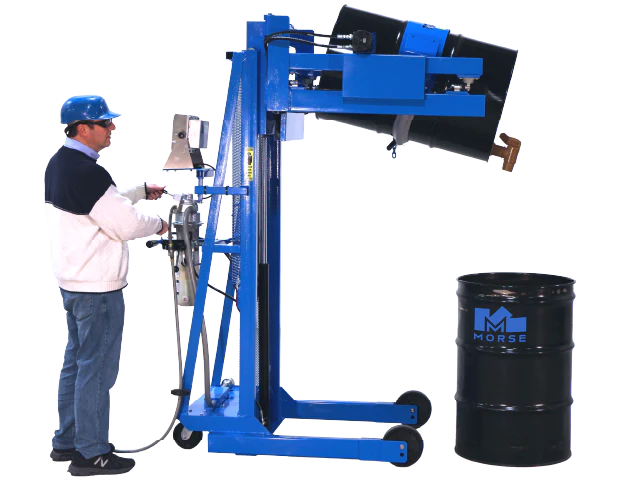
Drum pourers and rackers are the Morse machines that take a full drum the last step past moving it: they dispense from it or lay it into storage. A vertical-lift pourer raises a rimmed 55 gallon drum on a battery-powered hydraulic track and tilts it a controlled 360 degrees, so you meter product out of a faucet or cone instead of wrestling the barrel by hand. A racker does the opposite job, lifting an upright drum and rotating it to horizontal to set it on a rack, where a faucet left in the bung turns the rack itself into a dispensing station. This page is that dispense-and-store corner of drum handling, all of it Morse, the Syracuse manufacturer that has built nothing but drum, barrel, and pail equipment since 1923. Prices run from around $3,600 for a battery Hydra-Lift Karrier to north of $24,000 for an intrinsically-safe scale-equipped pourer, with a rimmed drum palletizer sitting in between.
Compare Drum Pourers & Rackers
| Model | Price | Capacity | |
|---|---|---|---|
| Morse Intrinsically-Safe Scale-Equipped Vertical-Lift Drum Pourer | $20,900 | — | View → |
| Morse Rimmed Drum Palletizer 1000lbs | $13,820 | 1000 lb | View → |
| Morse MORStak Rimmed Drum Racker 800lbs | $12,100 | 800 lb | View → |
| Morse MORStak Carriage-Mount Drum Racker | $8,910 | — | View → |
| Morse 106" Veritical-Lift Drum Pourer 800lbs | $6,950 | 800 lb | View → |
| Morse 60" Vertical-Lift Drum Pourer | $6,035 | 800 lb (363 kg) | View → |
 In Stock
 In Stock
 In Stock
 In Stock
 In Stock
 In Stock
 In Stock
 In Stock
 In Stock
 In Stock
 In Stock
Drum Pourers & Rackers Buying Guide
Pouring and racking are the two jobs on this page. Every machine here does one of two things, and it helps to name them before shopping. Pouring is controlled dispensing: the machine raises a drum and tilts it so liquid or dry product comes out of a faucet, valve, or cone at a rate you control, then returns the drum upright without a spill. Racking is storage plus dispensing: the machine lifts an upright drum and rotates it to horizontal so it lies on a rack, where a faucet left in the bung makes the rack a standing dispensing station. Neither job is lifting a drum through the air, which is drum lifting attachments, and neither is rolling one across the floor, which is drum dollies and carts. If the drum needs to be tipped, metered, or laid down, you are on the right page.
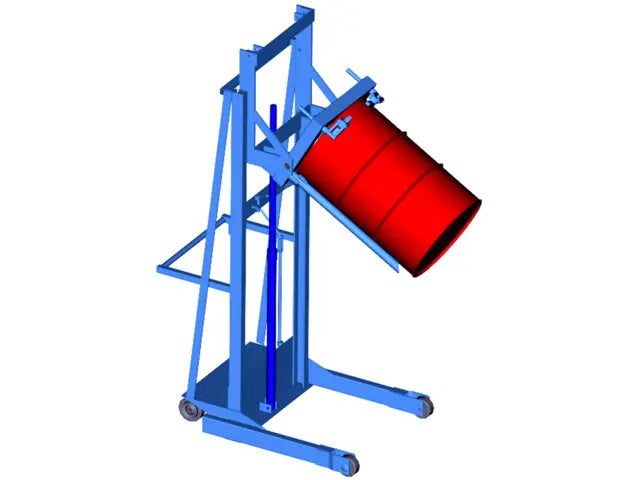
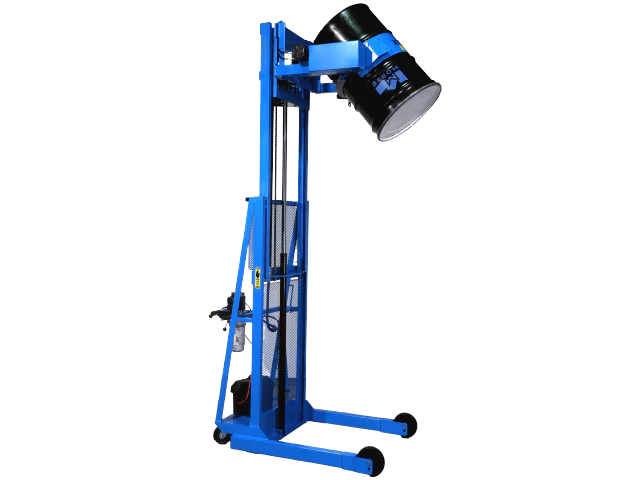
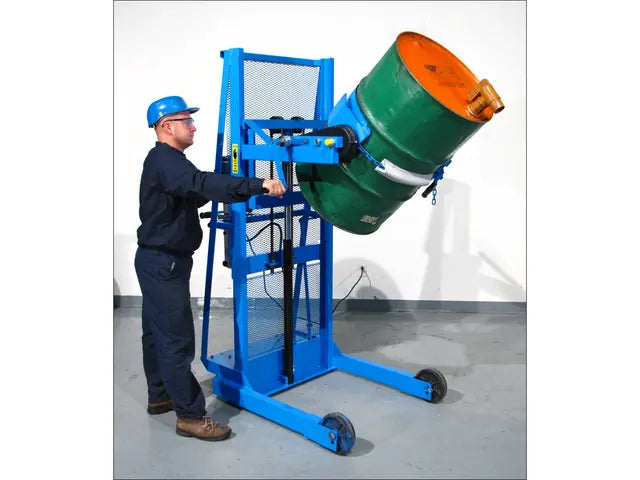
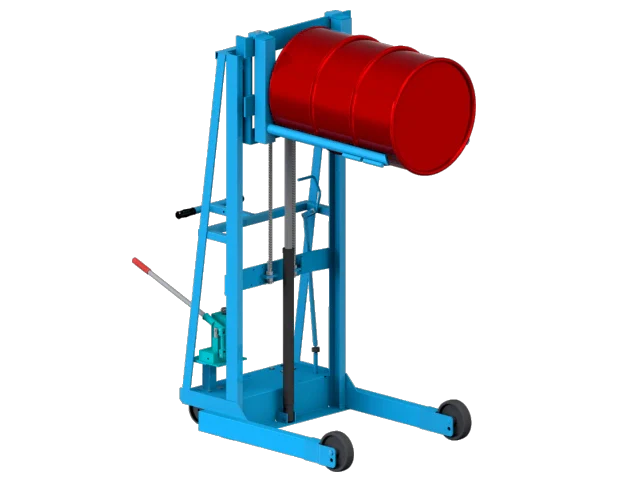
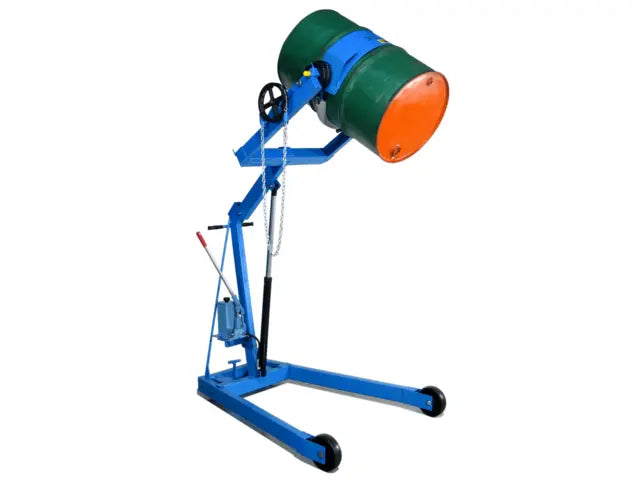
Pourers raise the drum, then tilt it a controlled 360 degrees. A Morse vertical-lift pourer runs the drum up a vertical track and then rotates it, and the rotation is the point: you can tilt a full drum 360 degrees in either direction and stop at any angle, so the pour starts slow and never gets away from you. Most models use a 12 volt DC battery-powered hydraulic lift and tilt, with air and plug-in electric options, all rated at 800 lb. The reach that separates them is pouring height. Single-stage machines dispense up to about 60 inches, enough to pour into a tank or mixer at working height, and two-stage models reach up to about 106 inches for elevated hoppers and totes. The 26 inch Mobile Karrier Pourer is the low, wheeled version: a hand-pump lift you roll to the point of use and pour at bench height, from around $3,840.
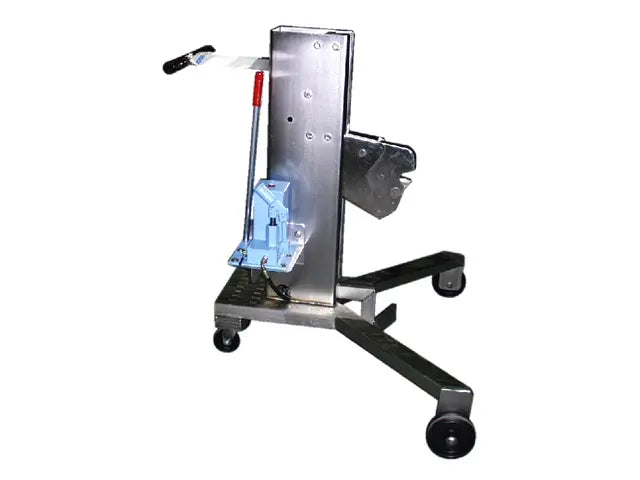
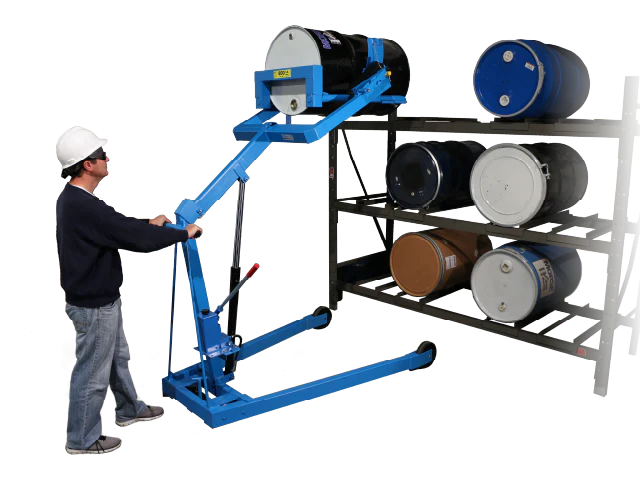
Rackers lay the drum on its side and become a dispensing station. Racking a drum means lifting it upright, tilting it to horizontal, and setting it on a rack so it lies on its side. Do that with the faucet or valve already in the bung and the rack turns into a gravity dispensing station you draw from all week. The Morse drum racker for horizontal 55 gallon drums is the floor-standing version of this, from about $5,600 at 800 lb, and it handles a drum with a faucet up to roughly 10 inches long left in place. Racked drums sit side by side with almost no clearance between them, so a wall of them takes less floor than the same drums standing upright, and every one is ready to dispense without being touched again.
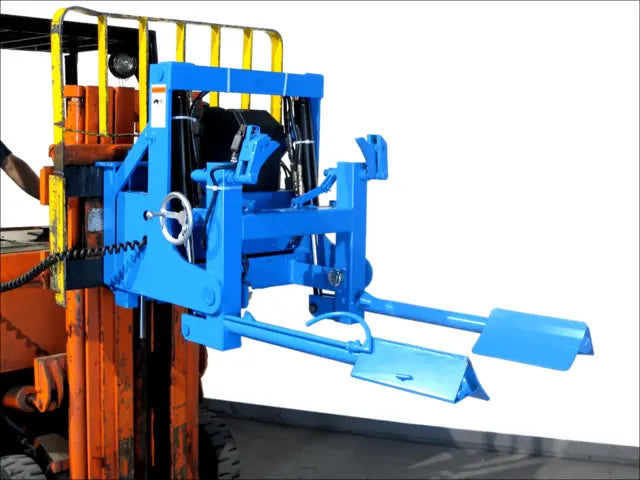
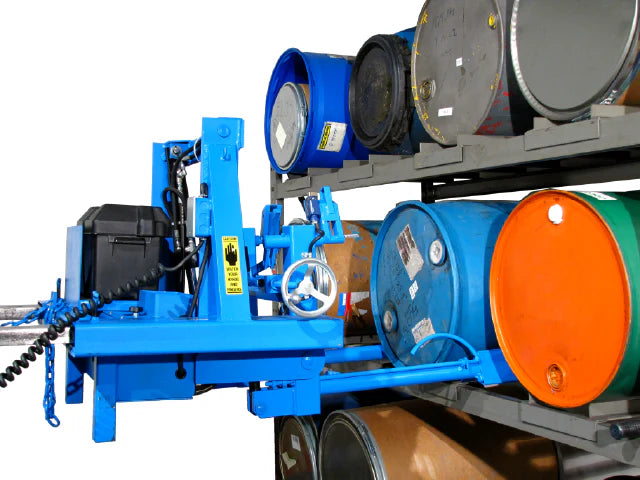
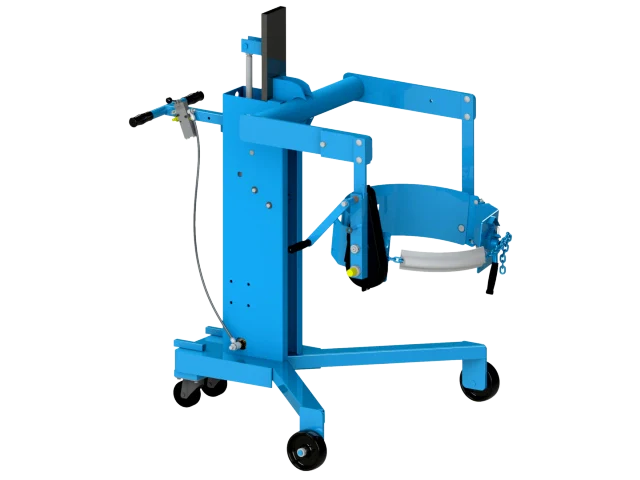
MORStak turns a forklift into a drum racker. The MORStak rackers are forklift attachments, and they exist to kill the most dangerous habit in a drum room: balancing a drum on bare forks. The fork-mount and carriage-mount MORStak models, around $8,810 and $8,910, carry a self-contained 12 volt battery that powers the drum tilt, run from a two-button pendant that reaches back to the operator, and lift a rimmed upright 55 gallon steel or plastic drum, tilt it to horizontal, and place it in a rack up to about 8.5 feet high, then retrieve it and stand it back up. The Omni-Lift Karrier Drum Racker, from about $4,080, is the self-mobile floor version for shops without a forklift, racking a drum up to roughly 6 feet and handling either an upright or an already-horizontal drum.
The palletizer moves rimmed drums on and off pallets. The Morse rimmed drum palletizer, from about $13,820 at 1,000 lb, does the job its name says: it raises a rimmed upright drum and sets it onto or lifts it off a pallet, spill-containment pallet, or dolly, with a V-shaped base that reaches into a pallet corner so drums pack tight. It earns its place next to the pourers and rackers because a full drum's journey often ends the same way, up off the floor and onto something. Some machines here collapse several of those steps into one chassis: the Hydra-Lift Karrier lifts, wheels, and pours from a single unit from around $3,610, and it pays off when one drum makes that whole trip every day. When it does not, a single-purpose pourer or racker is cheaper and better at its one task.
Hazardous areas and weighing change which pourer you buy. Where a drum holds flammable solvent, coating, or fuel, a standard pourer is the wrong tool. The intrinsically-safe scale-equipped vertical-lift pourer, from about $20,900, is built for classified areas: spark-resistant parts and a T-type ULPI scale indicator that is intrinsically safe and approved for many hazardous locations under the National Electrical Code. The scale adds batch weighing right at the pour, with accuracy near plus or minus 0.2 percent, so you dispense to a target weight instead of guessing. If your room is not classified but you still need to weigh, Morse builds scale pourers without the hazardous-area electronics for less. Match the model to the room first, then the power: these run on single or three phase at the voltage and frequency your building supplies, and the wrong spec is a return.
Frequently Asked Questions
A pourer keeps the drum on a lift and tilts it to dispense from the top, then stands it back up, so it is built for repeated controlled pours into tanks, mixers, and totes. A racker lays the drum down on its side on a storage rack and leaves it there, and with a faucet in the bung that rack becomes a dispensing station you draw from over days or weeks. Choose a pourer when you dispense measured amounts and put the drum away, and a racker when you want the drum staged horizontal and tapped in place.
Pouring height is the main spec that separates the vertical-lift models. Single-stage pourers reach up to about 60 inches, which covers pouring into a tank, kettle, or mixer at working height. Two-stage pourers reach up to about 106 inches for elevated hoppers, totes, and mezzanine-level equipment. The wheeled 26 inch Mobile Karrier Pourer sits at the low end for bench-height dispensing you can roll to the job. All of them tilt a full 360 degrees, so you control the pour rate at any height.
Only if you are pouring in a classified hazardous area, meaning the room can hold flammable vapor, dust, or fuel. That model uses spark-resistant parts and an intrinsically-safe scale indicator approved for hazardous locations under the NEC, and it costs more for it, from about $20,900. If your area is not classified, a standard pourer is correct and far cheaper, and you can still add a scale for batch weighing without the hazardous-area electronics. Confirm your room's classification with whoever manages it before spending on the intrinsically-safe unit.
It depends on whether you run a forklift. The MORStak fork-mount and carriage-mount rackers attach to a truck you already own and let one operator rack drums up to about 8.5 feet high using a battery-powered tilt and a two-button pendant, which is the safe replacement for balancing a drum on bare forks. If you have no forklift, the self-mobile Omni-Lift Karrier racks a drum up to roughly 6 feet on its own base, and the floor-standing horizontal drum racker handles lower single-station racking. Match the tool to the rack height and the equipment on your floor.
The range is built around the rimmed 55 gallon steel or plastic drum, the standard barrel with a rolled top rim the machine grips and tilts, and capacities are rated at 800 lb on the pourers and rackers and 1,000 lb on the palletizer, comfortably over any full drum. The rim matters, because these tools hold the drum by that reinforced top edge, so a rimless or unusually shaped container will not seat correctly. Measure a plastic drum before assuming, since poly barrels run wider than steel at the same volume, and confirm the drum has a faucet or valve short enough to work with a racker if you plan to dispense from the rack.