Drum Tipper
A drum tipper raises a full drum off the floor and tilts it on command, so a 55 gallon barrel that weighs close to 500 lb pours a measured stream into a tank, tote, or mixing vessel with nobody straining under it. This collection is the pouring and dispensing corner of Morse drum handling, built entirely by the Syracuse manufacturer that has done nothing but drum, barrel, and pail work since 1923. The range leans toward the machines that do the job most precisely: vertical-lift pourers that raise a drum to charging height, scale-equipped models that weigh product as it leaves the drum, stainless builds for washdown and corrosive service, and an intrinsically safe version for flammable areas. Prices run from a few thousand dollars for a pail handler to the high five figures for the classified-area pourer. The guide below sorts the machines by lift style, weighing, and the environment they have to survive.
Compare Drum Pourers & Stackers
| Model | Price | Capacity | Drum Size/Type | Lift Height | |
|---|---|---|---|---|---|
| Morse Stainless Steel Intrinsically-Safe Scale-Equipped Vertiical-Lift Drum Pourer | $39,700 | 800 lb (363 kg) full drum; 500 lb (227 kg) half-full drum (half-full rating reflects the tilt mechanism's capacity for an unbalanced, bottom-heavy load) | 55-gallon (210 L) steel drum; MORCINCH holder auto-adjusts 22"-23.5" (56-59.7 cm) diameter; Diameter Adapters available down to 14"-20.5"; Bracket Assembly/Top Rim Clamp accessories required to handle a rimless plastic drum or a fiber drum | — | View → |
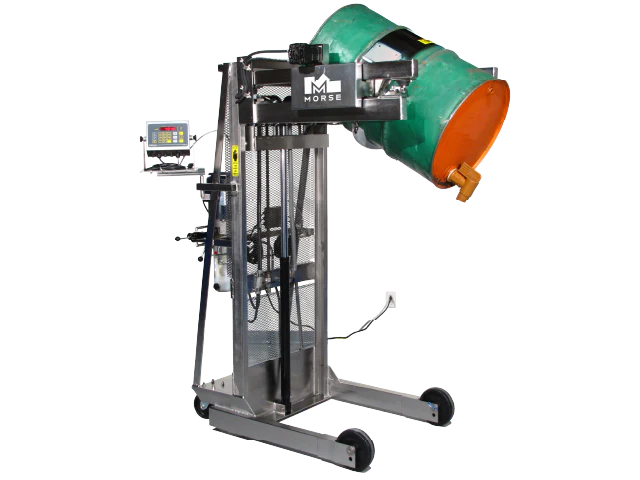
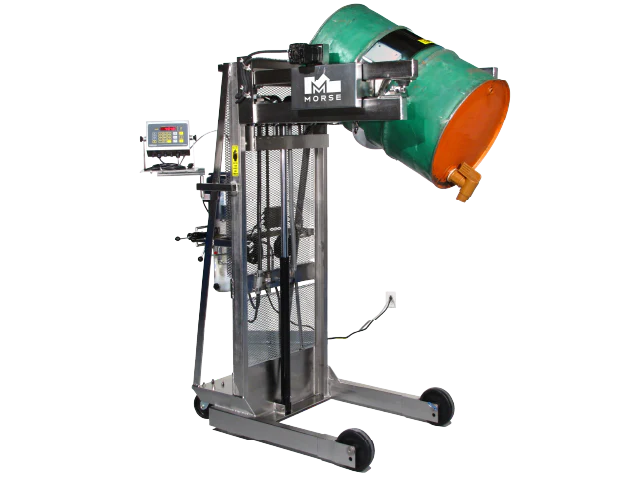
| Morse Stainless Steel Scale-Equipped Vertical-Lift Drum Pourer | $35,900 | — | — | 60-106 in | View → |
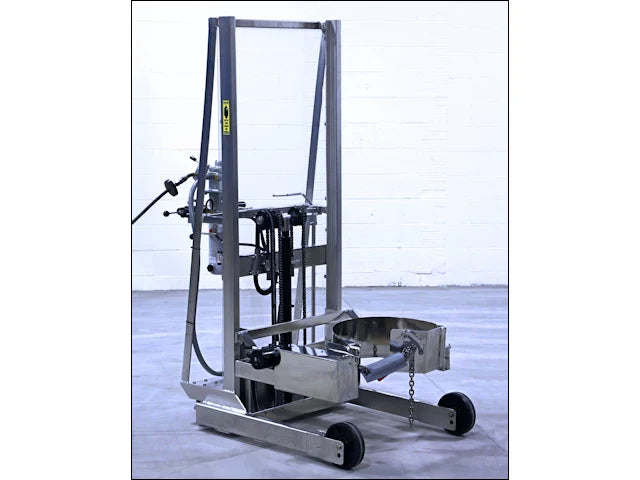
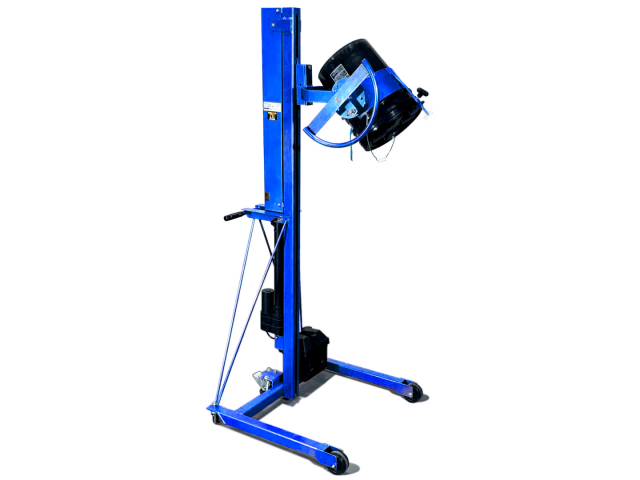
| Morse Stainless Steel Vertical-Lift Drum Pourer | $21,880 | — | — | 60-106 in | View → |
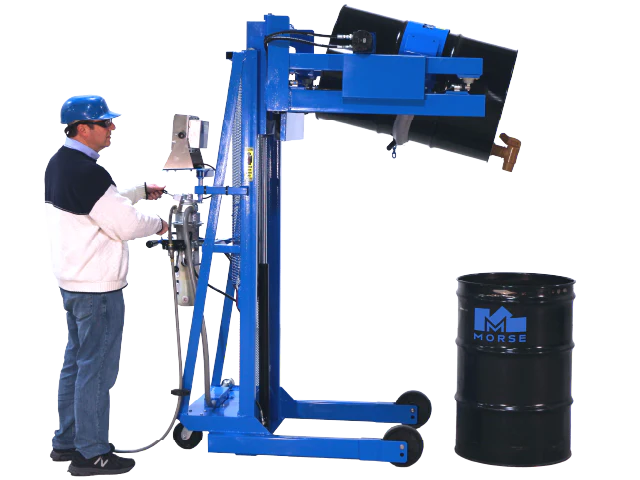
| Morse Scale-Equipped Veritcal-Lift 55-Gallon Drum Pourer | $18,250 | — | — | 60-106 in | View → |
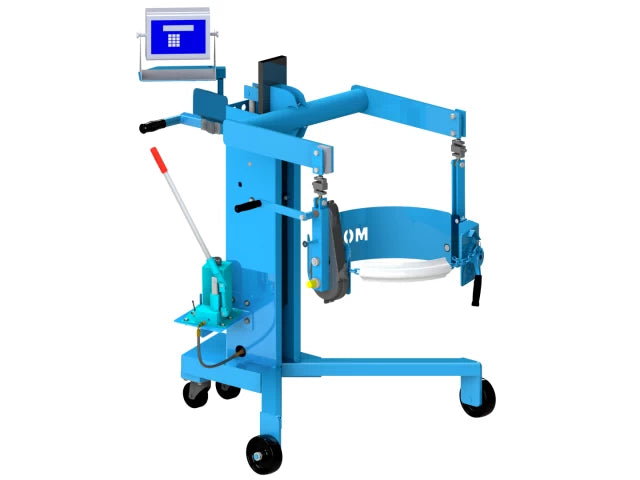
| Morse Scale-Equipped Mobile Karrier/Pourer | $12,700 | 600 lb (272 kg) | 55-gallon ribbed steel drum (rim/rimless plastic or fiber drum via optional Top Rim Clamp or Bracket Assembly kits) | — | View → |
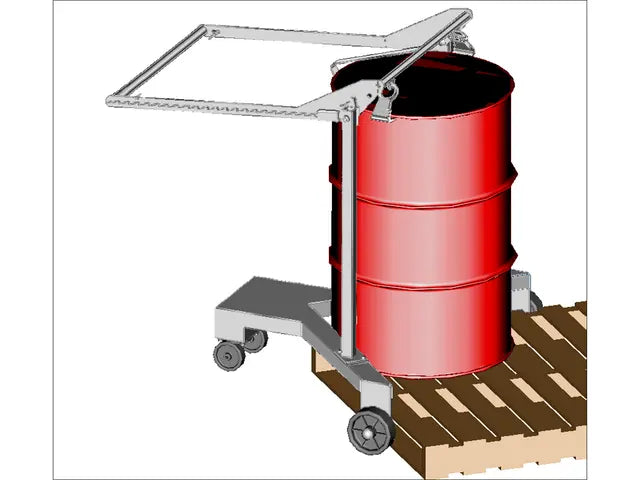
| Morse Stainless Steel 55-Gall Drum Spotter | $4,360 | 800 lb (363 kg) | 55-gallon rimmed drum (steel, plastic, or fiber), 22"-23.5" diameter under rim, 34"-36" tall | — | View → |
 In Stock
 In Stock
 In Stock
 In Stock
 In Stock
 In Stock
 In Stock
Drum Pourers & Stackers Buying Guide
Tipping is one of four verbs. Drum handling breaks into four jobs, and tipping is one of them. Moving a drum across the floor is drum dollies and carts. Hanging it from a hoist or crane hook is drum lifting attachments, and doing that lift from a forklift carriage is forklift drum attachments. Blending contents inside a sealed drum is drum rollers and tumblers. Everything on this page does the fourth job: it holds the drum and controls the tilt so product pours where you aim it instead of glugging out in a surge. The wider pouring and racking range, including horizontal drum rackers and lower-cost mobile pourers, sits in drum pourers and rackers; this collection is the stainless, scale, and vertical-lift end of that family. If you are still deciding which verb you need, start at drum handling equipment.
Vertical lift, then tilt. A vertical-lift drum tipper carries the drum straight up a track and then tilts it to pour, which keeps the drum's reach constant through the whole lift and lets you charge a tank or hopper well above bench height. Morse builds these with a 12V DC battery-powered hydraulic system that raises and tilts a full drum smoothly, and the mobile vertical-lift pourers reach dispensing heights up to 106 inches, while single-stage 515 series models work up to 60 inches for lower vessels. The machine is designed to pour through a drum faucet or a drum cone fitted in the bung, so the stream stays controlled rather than dumping. Match the reach to the tallest thing you fill: buy the tall pourer only if you actually dispense above head height, since the shorter unit is steadier and cheaper for floor-level totes.
The scale turns pouring into batching by weight. Several pourers here carry an integrated scale that displays drum weight as you pour, which turns dispensing into batching by weight. Morse rates the weighing at plus or minus 0.2 percent with a display precision of 0.1 lb or 0.1 kg, in English or metric, so you draw off an exact charge instead of guessing by sight glass or counting turns of a faucet. That accuracy earns its cost anywhere a recipe depends on how much came out of the drum: coatings, adhesives, food and chemical blending, and any process that has to reconcile what left the drum against what went into the batch. If you only need to empty a drum rather than meter it, the plain vertical-lift pourer without the scale does the pour for several thousand dollars less.
Mobile pourers and the small end. Not every pour happens at a fixed station. The Morse scale-equipped mobile Karrier/pourer, from about $12,700, is a wheeled machine that brings the weigh-and-pour function to the drum wherever it sits, useful when drums are filled in place and cannot be walked to a stationary unit. At the small end, the PailPRO 5-gallon pail handler, around $3,620 and rated 100 lb, grips and pours a 5 gallon pail the same way the big machines handle a drum, for plants that dispense from pails rather than barrels. Both keep an operator's hands off the container during the tilt. If your dispensing is from a horizontal drum on a rack instead, the drum rackers in drum pourers and rackers park the barrel on its side for tap service and cost less than a powered tipper.
Stainless steel and intrinsically safe. Finish and area classification set the top of this range. Stainless steel pourers cost more than painted ones for the same lift, and they earn it in washdown bays, corrosive service, and food or pharma rooms where painted steel rusts or fails a compliance check. Above that sits the intrinsically safe, scale-equipped stainless pourer, from about $39,700, built for rooms where flammable vapors are present. Intrinsically safe equipment is the wiring method OSHA permits inside Class I hazardous locations under 1910.307, because it is designed so the electrical energy available cannot ignite the atmosphere. Read Morse's own caveat with it: the spark-resistant build is not a substitute for grounding and bonding the drum against static discharge during transfer. Confirm your area classification first, and treat any standard-motor pourer as off the table inside a classified zone.
Spotting the drum and matching the accessories. Before a drum can be poured it often has to be placed, and the stainless 55-gallon drum spotter, about $4,360, does that job: a two-wheel truck on polyolefin wheels with rear swivel casters that moves a closed steel drum and sets it to and from pallets and pouring positions. It is the bridge between the floor and the tipper. Faucets, drum cones, and the control and battery accessories that keep these powered machines running live in drum handling accessories; order the cone or faucet that matches your bung and product at the same time as the pourer so the first dispense is controlled. And once a drum is empty, moving the next full one back into position is a job for drum dollies and carts or a drum lifting attachment on the hoist.
Frequently Asked Questions
A drum tipper is a machine that lifts a full drum and tilts it to pour under control, instead of an operator wrestling the barrel by hand. On this page the tippers are Morse vertical-lift pourers: they raise the drum up a track, keep its reach constant, and tilt it to dispense through a faucet or drum cone, at heights up to 106 inches for charging tanks and hoppers. The terms drum dumper, drum pourer, and drum tipper all describe the same lift-and-tilt function.
It weighs the drum continuously and shows the weight as product leaves it, so you dispense an exact charge by weight rather than by eye. Morse rates the accuracy at plus or minus 0.2 percent with 0.1 lb or 0.1 kg display resolution, in English or metric units. That lets you batch coatings, adhesives, or chemicals to a recipe and reconcile what left the drum against what went into the mix. If you only need to empty a drum, the plain vertical-lift pourer without the scale costs several thousand dollars less.
In the environments that destroy painted steel: washdown areas, corrosive product storage, and food or pharmaceutical rooms where the finish is a compliance matter. Stainless costs more for the same lift and tilt, so buy it for the environment rather than the look. In dry general service the painted vertical-lift pourer does the identical job for less, and the stainless premium buys nothing there.
Only the intrinsically safe, spark-resistant model is built for that, and only inside the hazardous-location classification it is listed for. Intrinsically safe equipment is permitted in Class I hazardous locations under OSHA 1910.307 because its electrical energy cannot ignite the atmosphere. Confirm your area classification first, and note Morse's own warning that a spark-resistant machine still is not a substitute for grounding and bonding the drum against static during transfer.
Morse mobile vertical-lift pourers reach pouring heights up to 106 inches, which covers charging elevated tanks, mixers, and hoppers. Single-stage 515 series models raise the drum up to 60 inches for lower vessels and cost less. Size the reach to the tallest container you actually fill, since a shorter pourer is steadier and cheaper when everything you charge sits near floor level.
The drum spotter is a positioning tool, not a pourer. It is a two-wheel truck that moves a closed 55-gallon steel drum and sets it to and from pallets and staging spots, on polyolefin wheels with rear swivel casters for steering. Use it to place a drum where the tipper can reach it, then let the vertical-lift pourer or a horizontal racker in drum pourers and rackers handle the actual dispensing.