Oversize Load Flags
Oversize load flags are the cheapest compliance item on any wide or long haul, and the one most likely to get a load pulled over when it goes missing. This collection covers the two jobs the federal rule and the state permit offices actually check for: red or orange fluorescent warning flags that mark the extremities of a projecting load, and the reversible "WIDE LOAD" and "OVERSIZE LOAD" banners that hang on the front bumper and the rear of an over-dimensional move. Everything here is Kinedyne, priced from a few dollars for an 18 inch corner flag up to about forty for the Canadian reflective D banner, so a full legal kit for a wide load runs less than a single citation. The guide below sorts them by what the load is doing, projecting past the rear, running over width, or crossing into Canada, and by how you plan to mount them.
Compare Flags
| Model | Price | Part Number | Dimensions | Reads | Feature | |
|---|---|---|---|---|---|---|
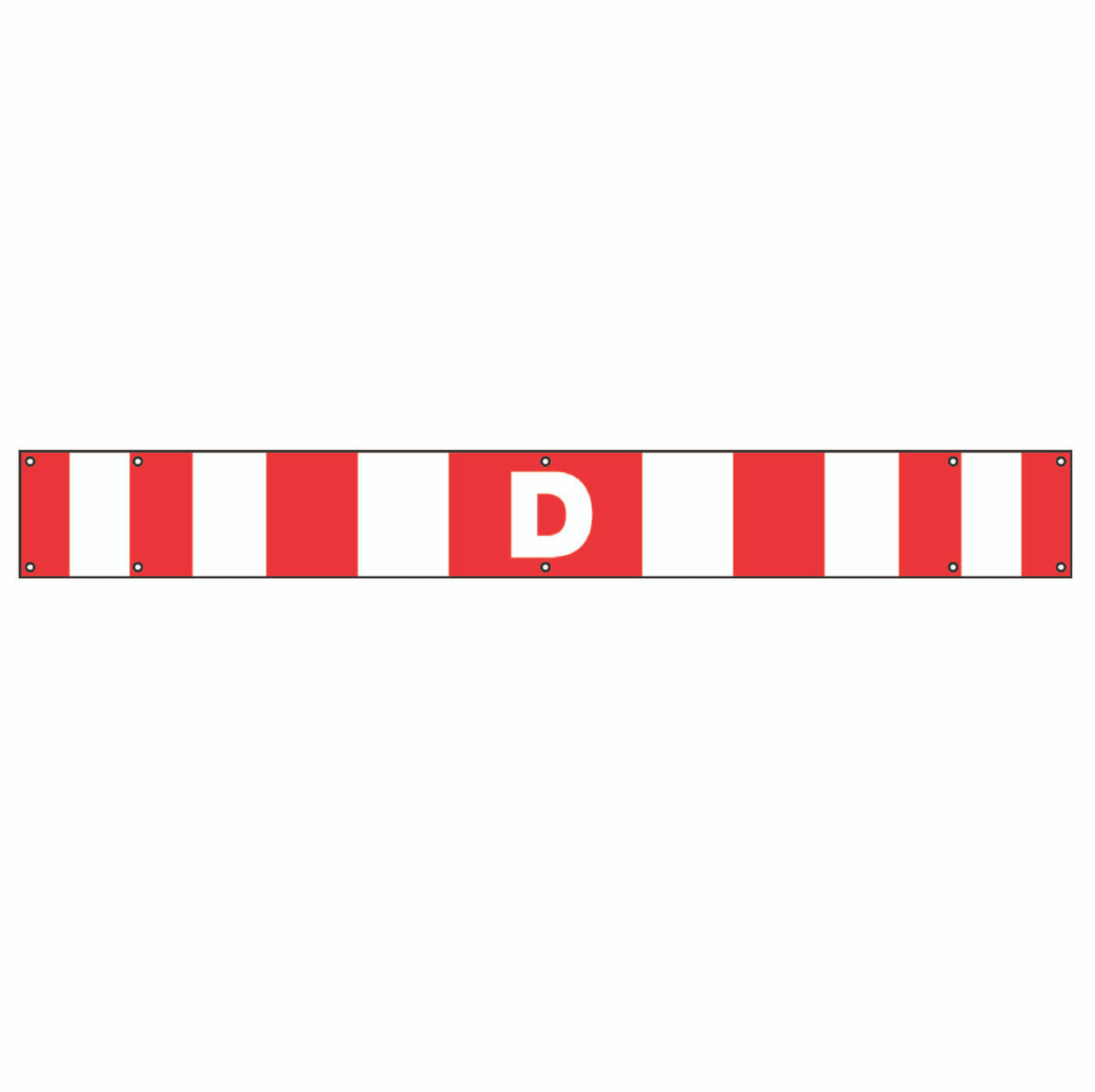
| Kinedyne 12" by 96" Canadian Reflective D Dimensional Banner | $40 | 9127 | 12" x 96" | "Wide/Oversize Load" ("D" dimensional/reflective banner) | 10 grommets | View → |
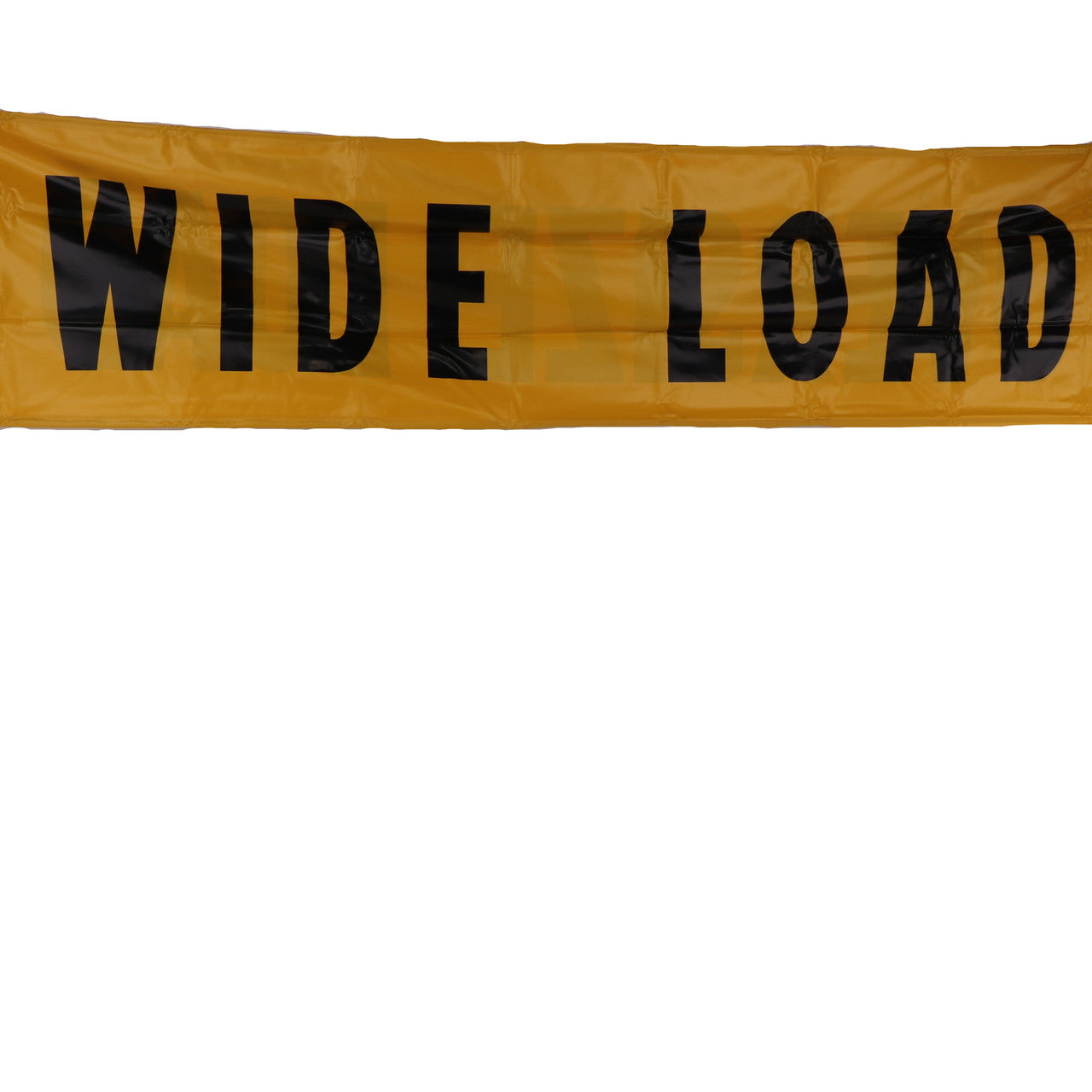
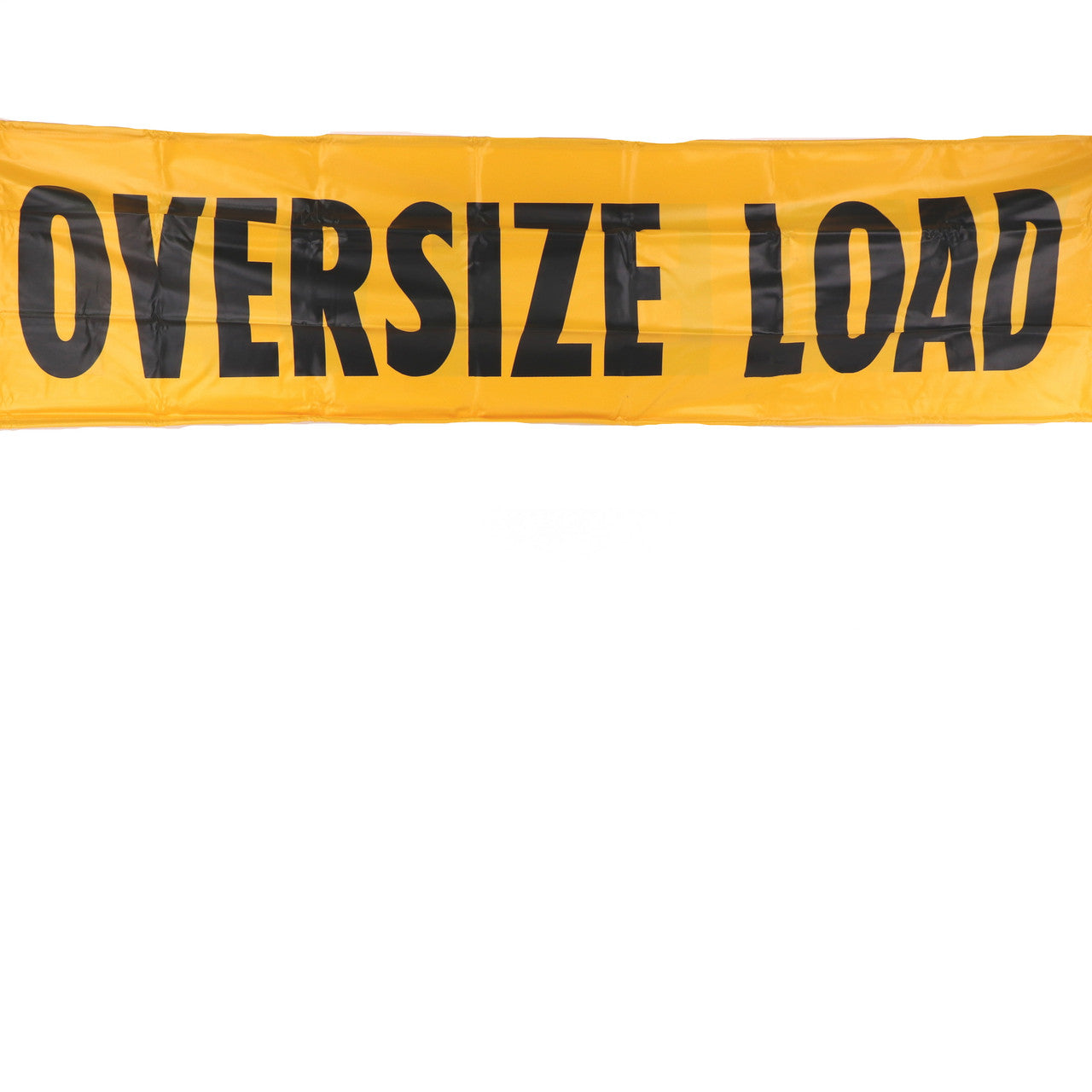
| Kinedyne 18" by 84" Reversible "Wide Load" & "Oversize Load" Banner with Sewn-In Rope | $27 | 9125 | 18" x 84" | "WIDE LOAD" on one side, "OVERSIZE LOAD" on the other (reversible) | High-strength brass grommets; 2 ropes sewn in (one top, one bottom), 156" long | View → |
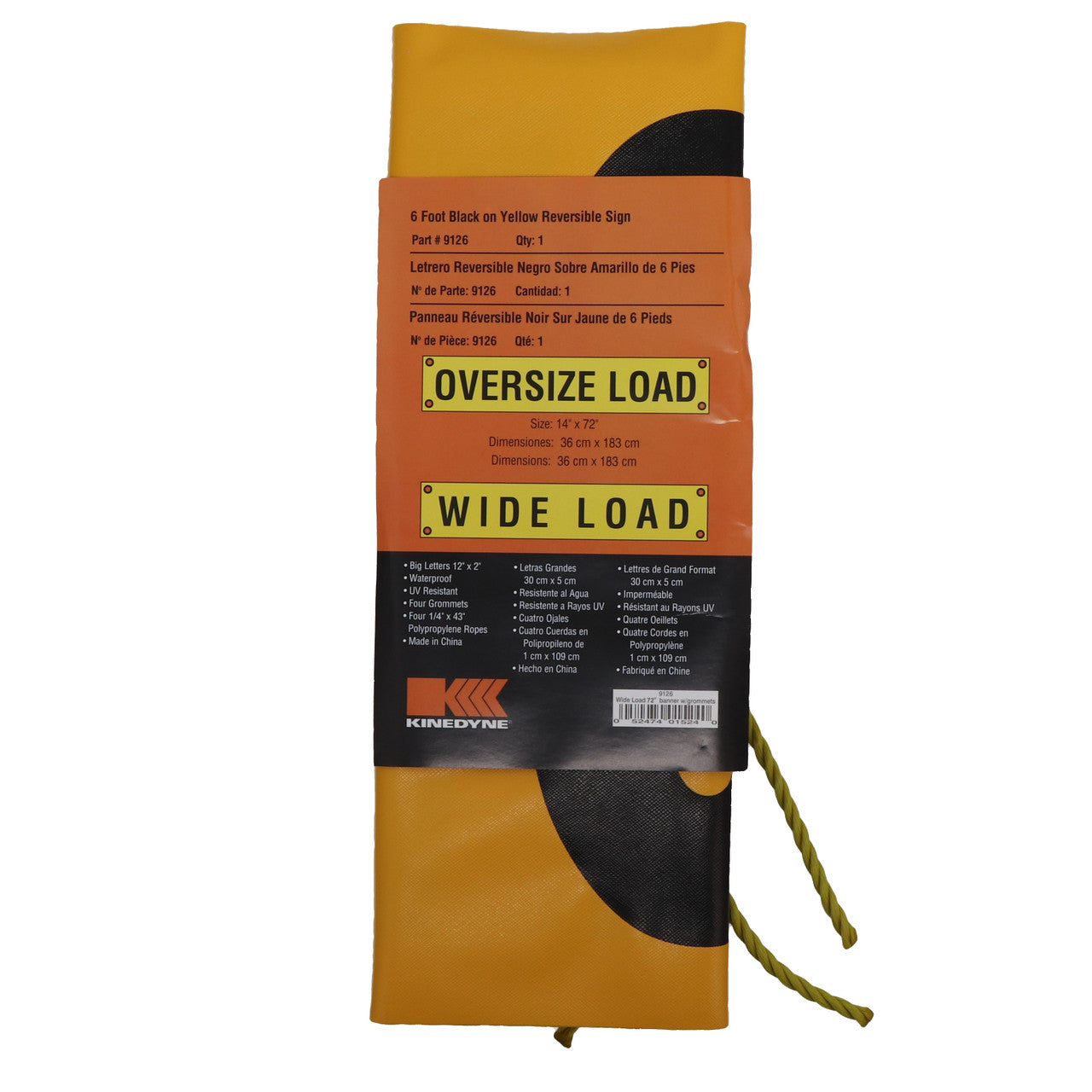
| Kinedyne 14" by 72" Reversible "Wide Load" and "Oversize Load" Banner | $22 | 9126 | 14" x 72" | "WIDE LOAD" on one side, "OVERSIZE LOAD" on the other (reversible) | High-strength grommets, 4 ropes 43" long | View → |
 In Stock
 In Stock
 In Stock
 In Stock
 In Stock
 In Stock
 In Stock
Flags Buying Guide
When flags are federally required, and how big. The floor is 49 CFR 393.87. Any commercial vehicle hauling a load that extends more than 4 inches beyond the sides, or more than 4 feet beyond the rear, has to mark the extremities of that load with red or orange fluorescent warning flags, and each flag must be at least 18 inches square. Placement follows the shape of the overhang: a rear projection 2 feet wide or less takes a single flag at the rearmost point, and anything wider takes a flag at each rear corner so the full width reads from behind. That size and color are a minimum, not a suggestion, which is why a faded, torn, or undersized flag counts the same as no flag at an inspection. Buy to 18 inches square in a bright fluorescent shade and mark every point where the load sticks out.
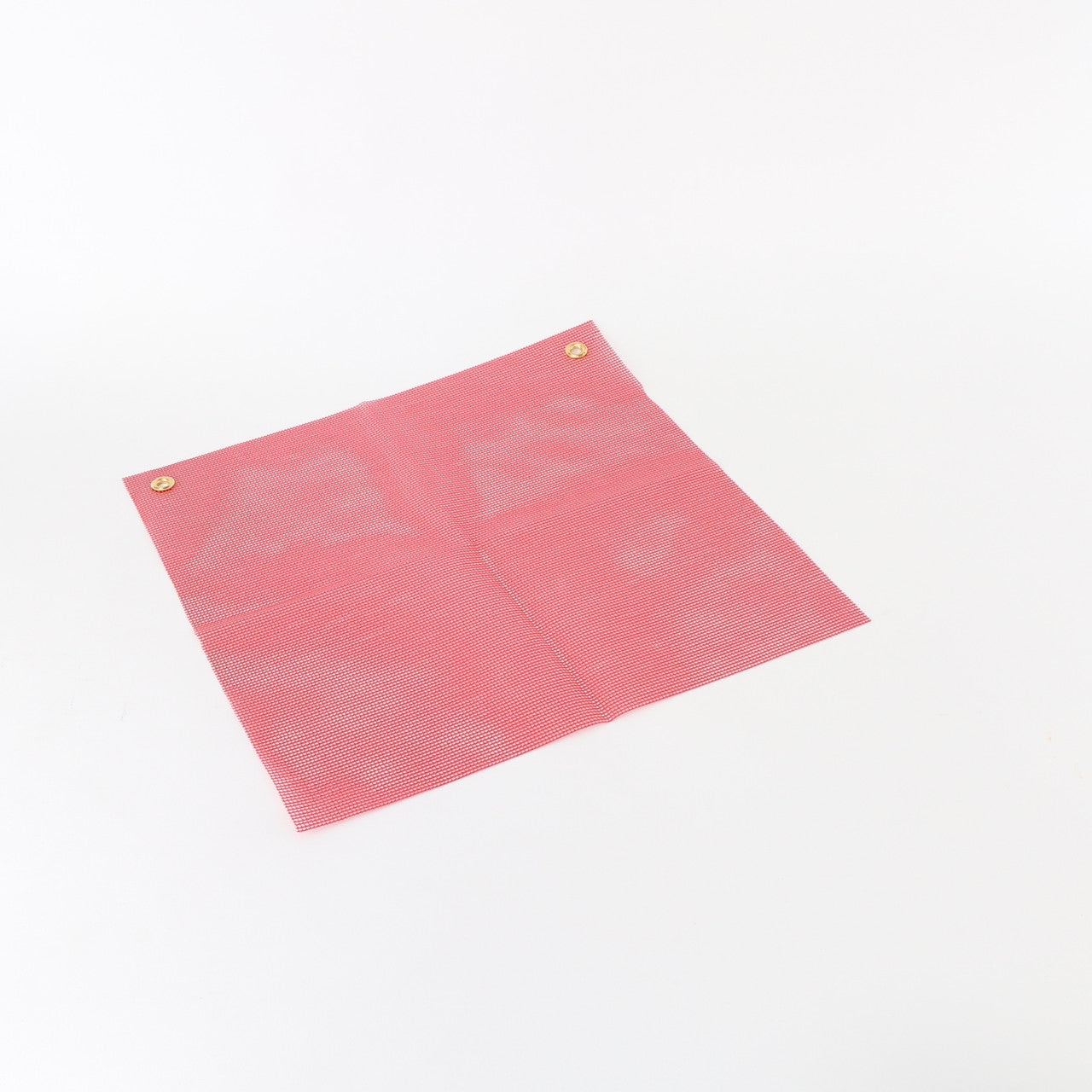
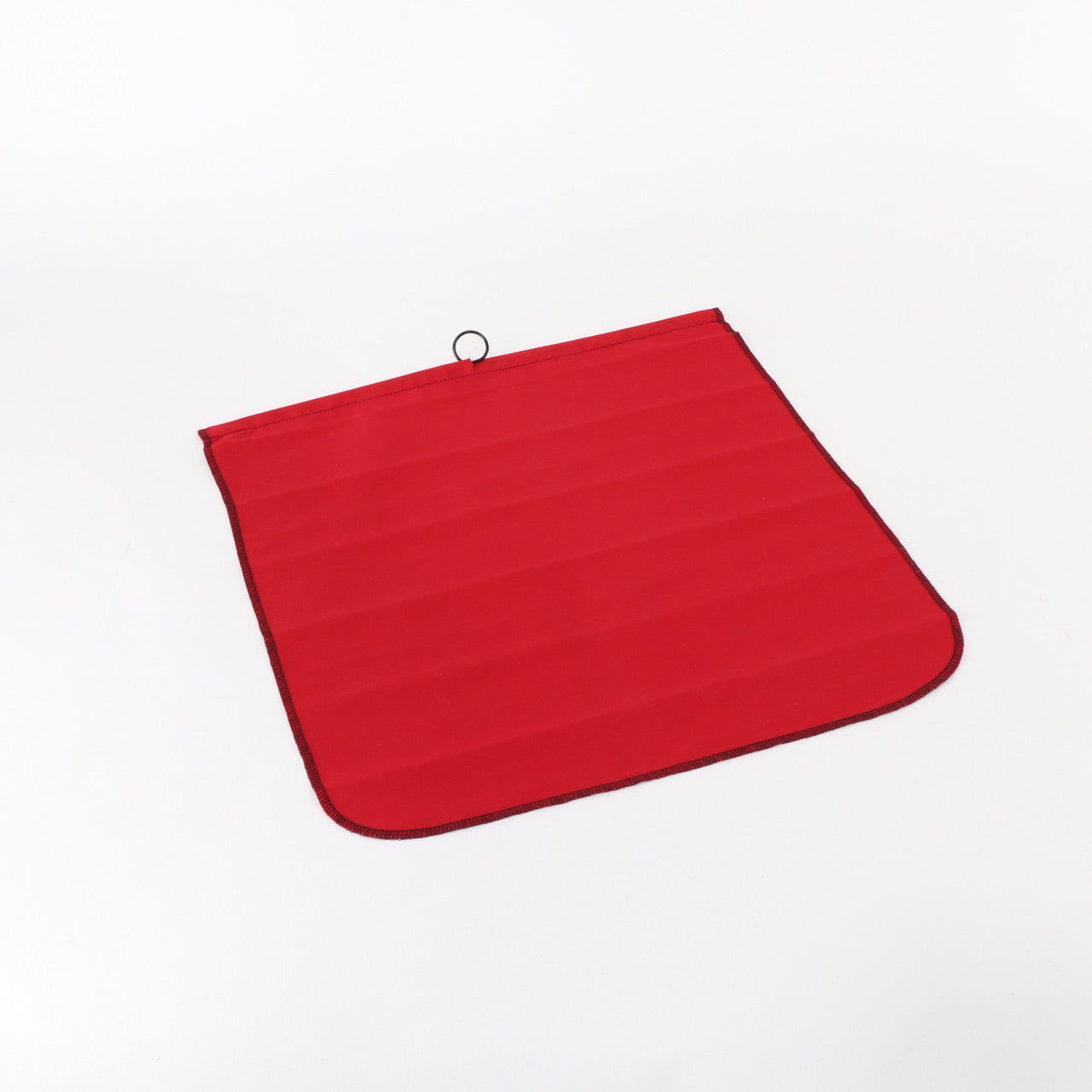
Corner warning flags: wire rod, dowel, or grommets. The three 18 by 18 inch flags here do the same regulatory job and differ only in how they mount. The cotton flag on a steel wire rod is the budget throwaway, a staff you drop into a pocket or zip-tie to a corner for a one-off move. The heavy-duty mesh vinyl flag on a 30 inch dowel is the one that survives a season: the open mesh lets highway wind pass through instead of wrapping the flag around its own staff or shredding it, and vinyl shrugs off rain and sun where cotton fades and rots. The mesh vinyl flag with brass grommets skips the staff entirely, so you tie or bolt it flat against the widest point of the load, a coil, a beam end, a bucket edge. Match the mount to the load and keep spares, because these are the items that walk off between jobs.
WIDE LOAD and OVERSIZE LOAD banners. Warning flags mark the corners; the banner tells traffic what it is looking at. Kinedyne's reversible banners print "WIDE LOAD" on one face and "OVERSIZE LOAD" on the other, black letters on a highway safety yellow background, so one banner covers both permit wordings. The standard is roughly 7 feet wide by 18 inches tall with letters at least 10 inches high and about a 1.5 inch brush stroke, which is what the 18 by 84 inch banner gives you; the 14 by 72 inch version is the 6 foot option for a narrower bumper or a shorter rear frame. One banner rides the front bumper of the tractor and a second rides the rear of the load, both visible and unobstructed. Check the state permit before you buy, because a few states call for 12 inch letters or reflective faces and will not accept the standard 10 inch sign.
Choosing between the plain and sewn-in-rope banner. Both 7 foot banners carry the same reversible print, so the choice is about how you hang them. The plain 18 by 84 inch banner relies on its grommets, which is right when you mount to a rigid frame, a bumper bracket, or a sign holder that gives it shape. The version with sewn-in rope adds a continuous cord along the edges, so you can lash it directly to the load or across a gap with no frame at all and still pull it drum tight against the wind. On flatbed and step-deck work where the banner ties to the cargo itself rather than a fixed bracket, the rope version is the faster, more secure hang, and it keeps the banner from luffing and tearing at highway speed.
Running at night or into Canada. Flags are a daytime device. Once lighted lamps are required, 393.87 has you replace the corner flags with lamps: an amber lamp visible from the front and side at the widest point, and a red lamp visible from the rear on the rearmost edge, with most states wanting them legible from about 500 feet. Loads over 10 feet wide usually add a rotating amber beacon on the cab. For loads that cross the border, Canadian rules use their own marker: the 12 by 96 inch Canadian reflective D banner carries the over-dimensional "D" with the red and white striped field, is reflective for low light, and mounts front and rear the way a US oversize banner does. Carry it separately from the domestic banners so a Canada leg is a swap, not a scramble.
Placement, permits, and replacing faded flags. None of this hardware substitutes for the permit. The permit sets the wording, the sign and letter size, the flag and lamp count, and the running hours, and those specifications shift from state to state, so the permit is the spec sheet and this collection is how you meet it. Practical rules that hold everywhere: flags and banners have to be clean, bright, and unobstructed, mounted at the true extremities rather than a convenient spot, and swapped the moment a fluorescent flag fades toward pink or a banner starts to fray. At a few dollars a flag and a few tens for a banner, replacing a tired set is the cheapest insurance on the load, and a bin of spare 18 inch flags in the truck means a torn one never turns into a stopped move.
Frequently Asked Questions
Under 49 CFR 393.87, you flag any load that extends more than 4 inches beyond the sides of the vehicle or more than 4 feet beyond the rear. The extremities get red or orange fluorescent flags at least 18 inches square. A rear projection 2 feet wide or less needs one flag at the rearmost point; wider than that needs a flag at each rear corner. Your state permit can require flags and banners on top of that federal minimum, so read it before you load.
Warning flags must be at least 18 inches square, which is the size of every corner flag in this collection. The "OVERSIZE LOAD" banner is commonly 7 feet wide by 18 inches tall with black letters at least 10 inches high on a yellow background, which is the 18 by 84 inch banner here; the 14 by 72 inch version is the 6 foot option. A handful of states require 12 inch letters, so confirm the permit's number before ordering.
The cotton flag on a steel wire rod is the low-cost throwaway for occasional use. The heavy-duty mesh vinyl flag on a 30 inch dowel lasts far longer because the open mesh passes wind instead of wrapping or shredding, and vinyl resists rain and sun. The mesh vinyl flag with brass grommets has no staff, so you tie or bolt it flat against the widest point of the load. Same 18 inch size and same regulatory job, different mount.
Only if you tie the banner to the load itself rather than to a rigid frame or bracket. The sewn-in rope lets you lash the 7 foot banner directly to cargo or across a gap and pull it tight with no holder, which is the common case on flatbed and step-deck work. If you mount to a fixed sign bracket or bumper holder, the plain grommet banner is all you need.
Flags are a daytime marker. When lighted lamps are required, 49 CFR 393.87 has you replace the corner flags with lamps: an amber lamp visible from the front and side at the widest point and a red lamp visible from the rear on the rearmost edge, typically legible from about 500 feet. Loads over 10 feet wide usually add a rotating amber beacon on the cab. Check the permit, since night running is restricted or barred for many oversize moves.
The 12 by 96 inch Canadian reflective D banner carries the over-dimensional "D" marker used in Canada, with the red and white striped field and a reflective face for low light. Use it in place of the US-style "OVERSIZE LOAD" banner when your route crosses into Canada, mounted front and rear the same way. Keep it separate from your domestic banners so a Canada leg is a quick swap.