Crane Man Baskets
A crane man basket is a rated platform that hangs from a crane or hoist hook to lift workers up to a job a ladder or aerial lift cannot safely reach. This collection carries the Machining & Welding basket line in both families that share the name: personnel baskets built to carry people, and material baskets built to carry parts, stock, and tooling. The personnel range runs from a compact 34 by 40 inch platform rated 500 lb up to a 48 by 94 inch model at 2,000 lb, plus a round basket and a dedicated rescue basket. The material range covers fixed-side, drop-side, sloped-end, and swing-door boxes from 2,500 lb to 6,000 lb capacity. The two look alike and lift the same way, but only one is legal to put a person in, and the guide below keeps that line bright. Size, capacity, and loading style are the decisions that get you to the right basket.
Compare Material/Personnel Baskets
| Model | Price | Capacity | |
|---|---|---|---|
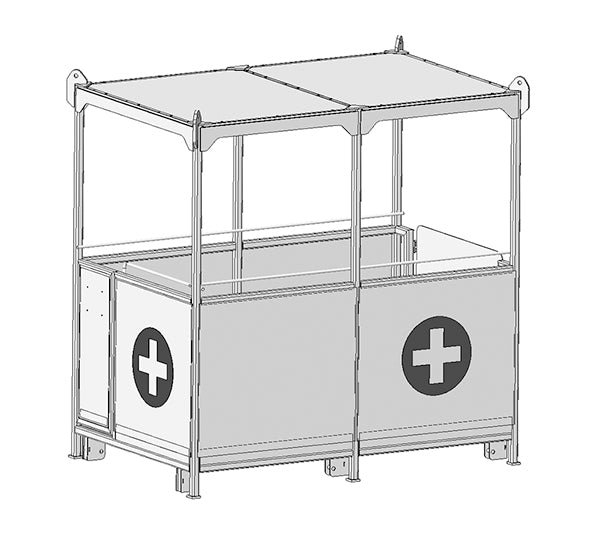
| Machining & Welding Rescue Personnel Basket | $18,077 | 2,000 lb | View → |
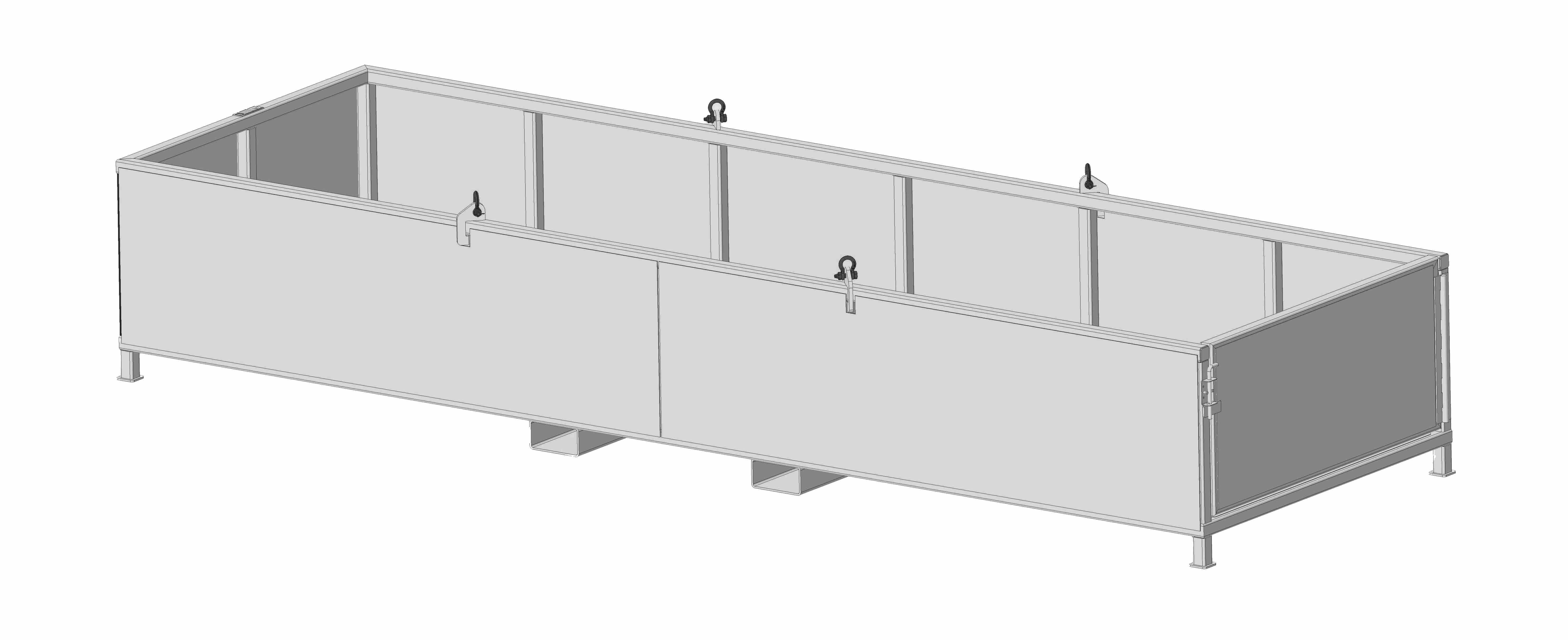
| Machining & Welding Fixed Side 6000lbs Sloped End Material Baskets | $12,937 | 6,000 lb | View → |
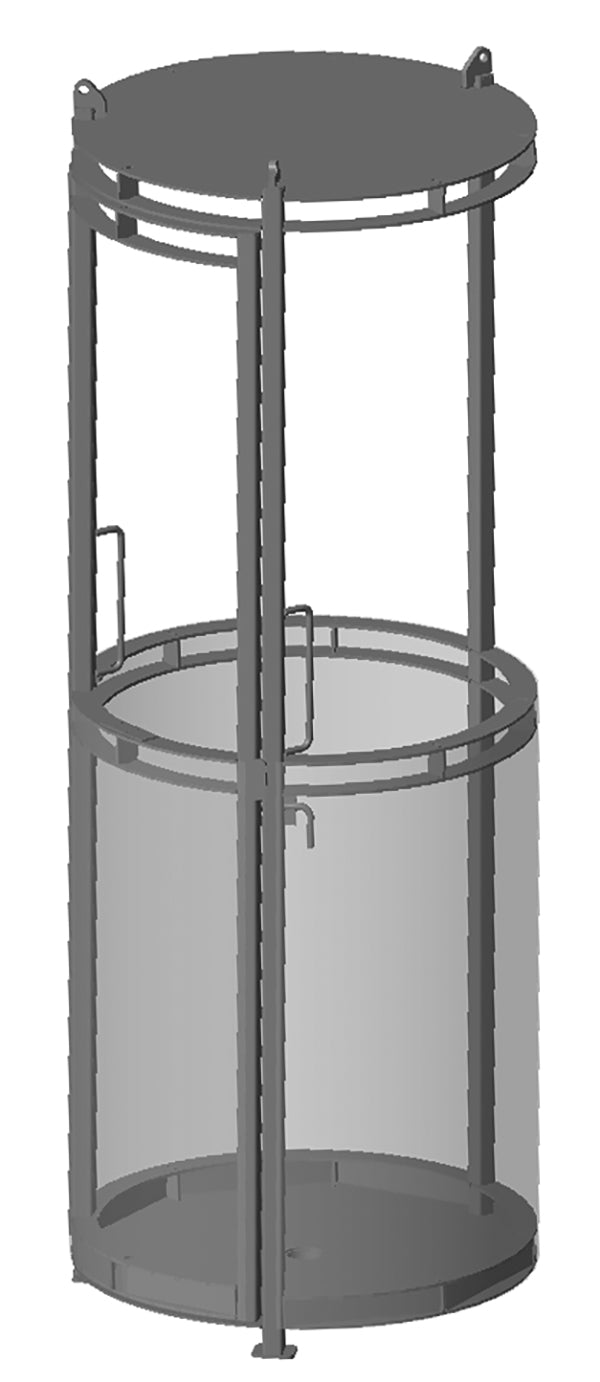
| Machining & Welding Round Personnel Basket | $12,110 | 500 lb | View → |
| Machining & Welding Swing Door Material Baskets | $10,764 | 2,500 lb | View → |
| Machining & Welding Personnel Baskets | $8,179 | 500-2,000 lb | View → |
| Machining & Welding Drop Side Material Baskets | $7,511 | 2,500 lb | View → |
 In Stock
 In Stock
 In Stock
 In Stock
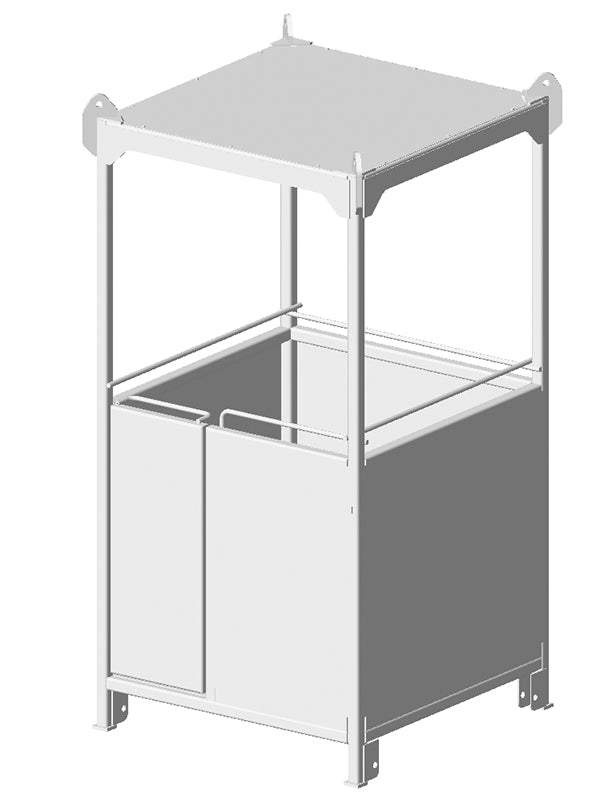 In Stock
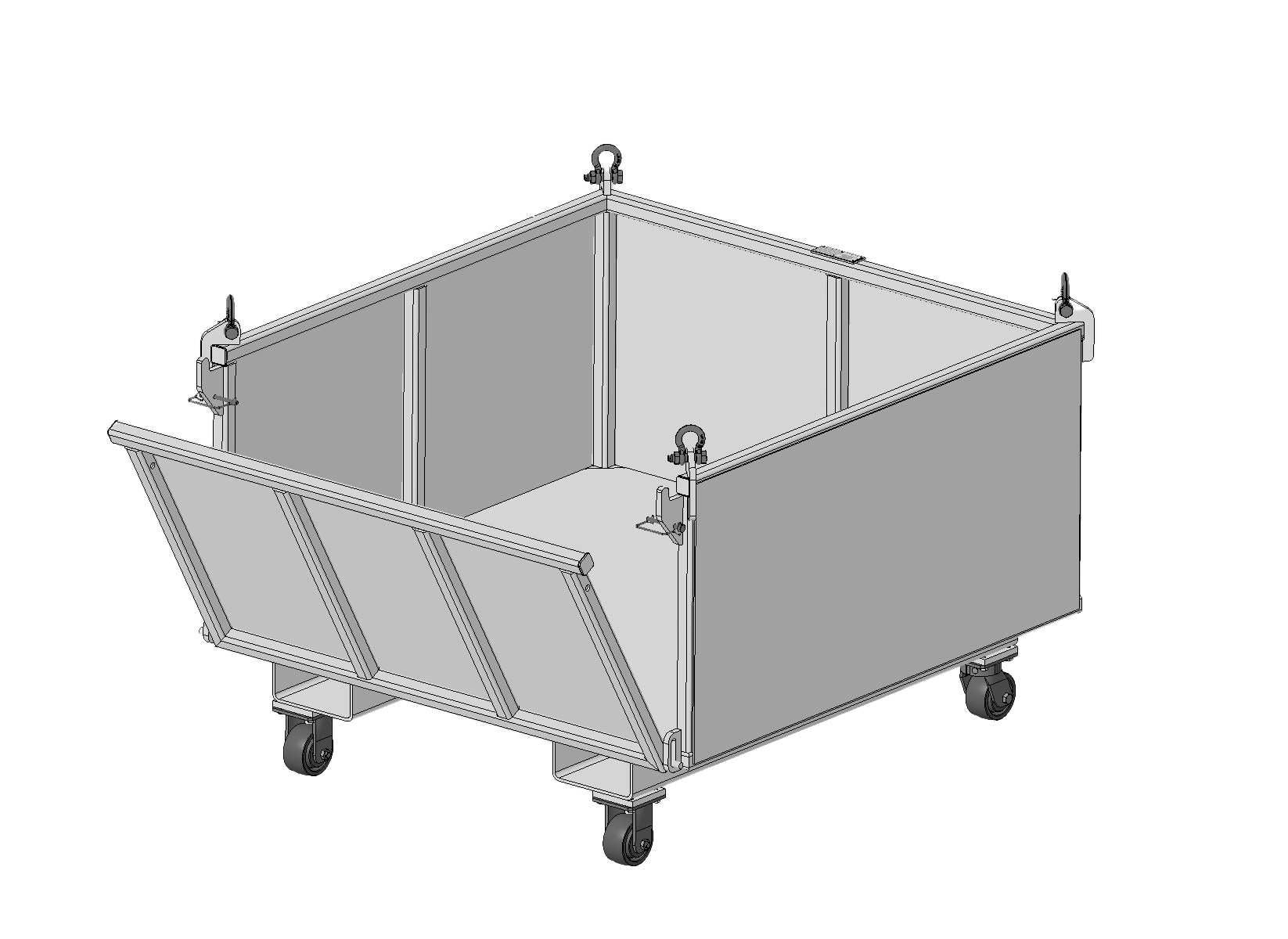 In Stock
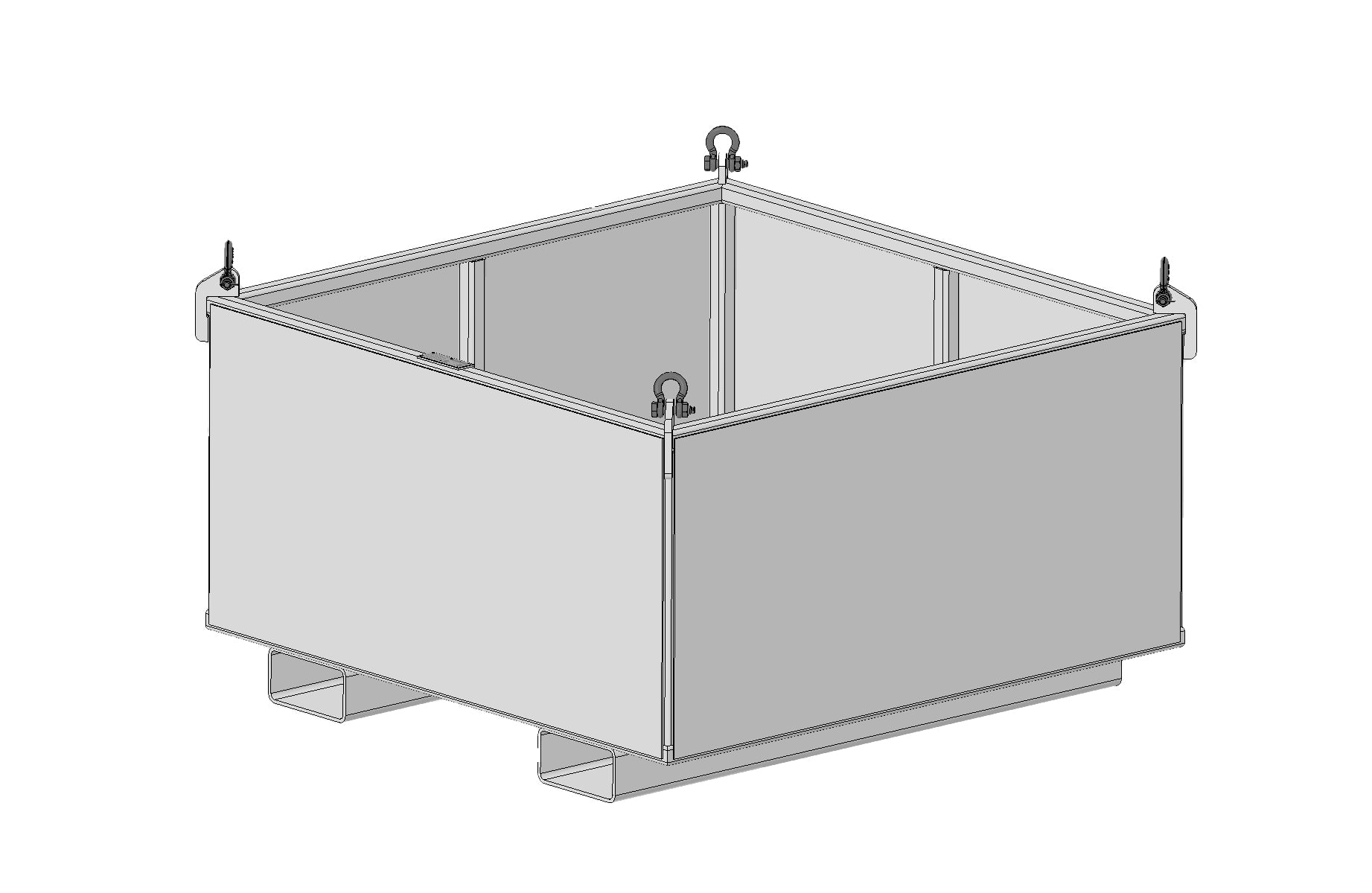 In Stock
Material/Personnel Baskets Buying Guide
Two very different baskets share this page. Everything here hangs from a hook, but it splits into two families that must never be confused. A personnel basket, the true crane man basket, is a rated platform engineered and tested to carry people. A material basket is a steel box for stock, weldments, castings, and tooling, rated for weight but never for occupants. The visual similarity is exactly why crews get hurt: a material basket has no guardrail system tested for fall protection, no proof-test record for personnel use, and no design margin for people moving around inside it. Use the personnel range, the 34 by 40, 48 by 48, 48 by 72, and 48 by 94 inch platforms, whenever a worker rides the hook. Use the material handling style baskets for cargo. The rule is one line long and worth repeating on the jobsite: material baskets carry material, personnel baskets carry personnel, and the two are not interchangeable.
What OSHA asks before a man basket lifts a person. Hoisting people by crane is governed by OSHA 29 CFR 1926.1431. The standard opens by prohibiting personnel hoisting outright, then allows it only where the employer can show that conventional access, a personnel hoist, ladder, stairway, aerial lift, or elevating work platform, would be more hazardous or is not possible. Once you are past that gate, the numbers are concrete. The platform itself, excluding the guardrail and fall-arrest anchorages, must support its own weight plus at least five times the maximum intended load. At each jobsite, before anyone rides and again after any repair or modification, the platform and its rigging must be proof tested to 125 percent of rated capacity, followed by a trial lift with the anticipated load to the working positions. ASME B30.23, Personnel Lifting Systems, is the companion consensus standard that fills in construction, inspection, and use detail. Keep the manufacturer certification and your proof-test record together with the machine.
Fall protection lives inside the basket. A compliant man basket is a fall-protection system, so treat the guardrail and anchorage the way you treat the slings. Under 1926.1431, a grab rail runs inside the entire perimeter of the platform except at access gates, and each occupant must wear a full body harness with the lanyard attached independently to the lower load block or overhaul ball, meeting the requirements of 1926.502. Gates cannot swing outward and must self-close and latch. The suspension has to be designed to keep the platform from tipping as people shift their weight, which is why the personnel range is sized by both footprint and rating: pick the 500 lb 34 by 40 for a one-person inspection reach, step up to the 1,000 lb 48 by 48 (a mid-rail version is offered) for two workers and tools, and take the 1,500 or 2,000 lb models when the crew or the payload grows. Match harnesses and lanyards from fall protection to each rider, not to the basket.
The rescue and round baskets, and when their shape pays. Two personnel models here are built for a specific problem rather than general reach. The Round Personnel Basket, priced at $12,110, drops a person straight down a manway, tank hatch, or vertical shaft where a rectangular platform will not clear the opening, and its shape keeps the occupant centered under the hook. The Rescue Personnel Basket at $18,077 is the machine you stage before a confined-space or elevated crew starts work, so a stricken worker can be lifted out on a stretcher instead of improvised rigging. Both are single-configuration units, no size menu, because the geometry is the whole point. If your work is retrieval and standby rather than transport, budget for the dedicated basket up front. It is far cheaper than the rescue that goes wrong because the only platform on site was the wrong shape.
Material baskets: size the box to the load and the flow. The material side answers a different question: how do you get the load in and out. The Fixed Side 2500lbs baskets are the workhorse, offered in 36, 48, and 60 inch sizes with optional castors, from about $6,050, and they suit stock you crane or fork over the top. When you load and unload by hand from the side, the Drop Side baskets (36 and 48 inch, from about $7,080) fold a wall down so a worker is not reaching over a fixed rail all shift. The Swing Door baskets, in 52 and 172 inch lengths, open an end for long bar, tube, and extrusion. For heavy or awkward stock, the Fixed Side 6000lbs Sloped End baskets run 48 by 96 and 48 by 120 inches from about $12,940, with the sloped end easing forklift entry. Add castors when the basket lives on a shop floor and moves between stations like the rest of your industrial carts and dollies.
Rig the basket to the hook, then weigh it. Whether it holds people or parts, the basket is only as safe as what connects it to the crane. Personnel platforms ship with a bridle designed for the unit, and that suspension is part of the rated system; do not substitute a shop sling for it. Material baskets take a matched four-leg bridle or wire rope sling set, and the same discipline from the parent lifting slings applies: the weakest component sets the rig rating, and the sling angle cuts capacity as the legs spread. The basket's own tare weight counts against your crane and hook capacity before you add a single pound of load, so read it off the data plate and, on a marginal lift, confirm the total on a dynamometer from load weighing equipment. For dedicated below-the-hook carriers beyond baskets, the crane attachments and lifters and cages collections cover the rest of the family.
Frequently Asked Questions
No. Material baskets are rated for weight of cargo only. They have no fall-protection guardrail system tested for occupants, no personnel proof-test record, and none of the design margin OSHA requires for hoisting people. Only a personnel basket, proof tested and rigged under 29 CFR 1926.1431, may carry a worker on the hook. Putting a person in a material basket is both unsafe and a citable violation.
OSHA 29 CFR 1926.1431 (Hoisting personnel) is the enforceable construction rule, and ASME B30.23, Personnel Lifting Systems, is the companion consensus standard. Together they set the design factor, the proof test, the trial lift, the fall-protection anchorage, and the requirement that personnel hoisting is used only when conventional access would be more hazardous.
Yes. At each jobsite, before anyone is hoisted and again after any repair or modification, the platform and its rigging must be proof tested to 125 percent of the platform's rated capacity. That is followed by a trial lift with the anticipated load moved to each working position, with a visual inspection afterward before a person rides.
Yes. Each occupant wears a full body harness with the lanyard attached independently to the lower load block or overhaul ball, meeting 1926.502. A grab rail runs the full inside perimeter except at the gate, and gates self-close and latch and cannot swing outward. The guardrail does not replace the personal fall arrest system.
Match footprint and rated load to crew and payload. The 34 by 40 inch platform at 500 lb suits one worker on an inspection reach. The 48 by 48 inch at 1,000 lb, with an optional mid-rail, carries two with tools. Step to the 48 by 72 inch (1,500 lb) or 48 by 94 inch (2,000 lb) as the crew or material grows. The round and rescue baskets are single-configuration units for shafts, manways, and retrieval.
A man basket, or personnel basket, is engineered and proof tested to carry people, with a perimeter grab rail, fall-arrest anchorages, and a suspension built to resist tipping. A material basket, whether fixed side, drop side, sloped end, or swing door, is a rated steel box for stock and weldments only. They lift the same way but are not interchangeable.