Post Lift Tables
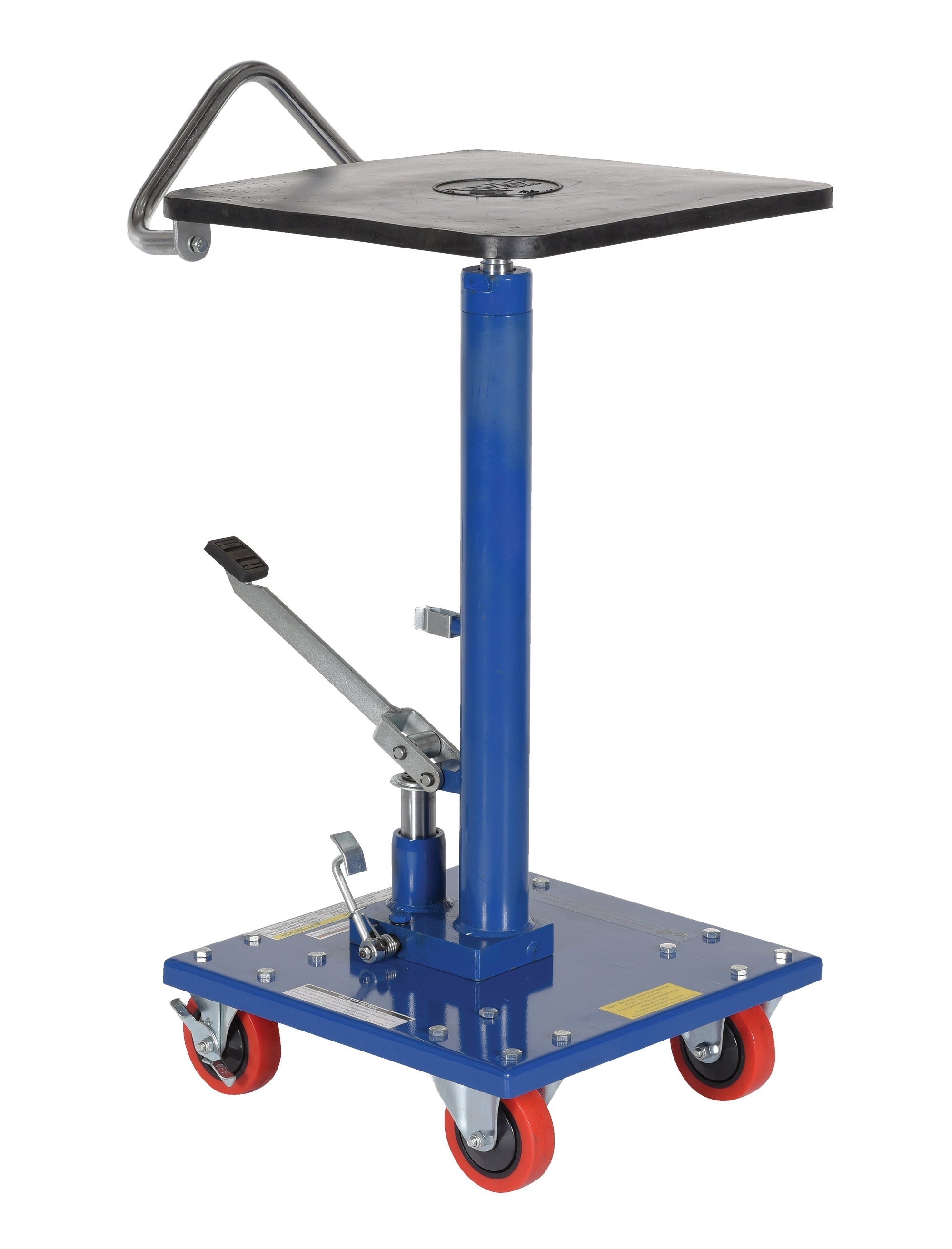
A post lift table raises its load on one or more vertical columns set beside the deck rather than on folding scissor legs underneath it, and that single design choice is the reason to reach for one. The column layout keeps the base compact and leaves the underside of the platform open, which suits die handling at a press, positioning a welder's workpiece, and battery change-out in tight cells where scissor legs would foul the job. We carry the Vestil post table line across every drive type, from foot pump hydraulic units starting around $530 through DC powered and air over hydraulic models, plus mechanical tables, rounded-top versions, die tables, forklift battery transfer platforms, and long deck carts. The buying decision comes down to four numbers, capacity, raised height, deck size, and how far off center the load will sit, and this page works through each one.
Compare Post Tables
| Model | Price | Capacity | |
|---|---|---|---|
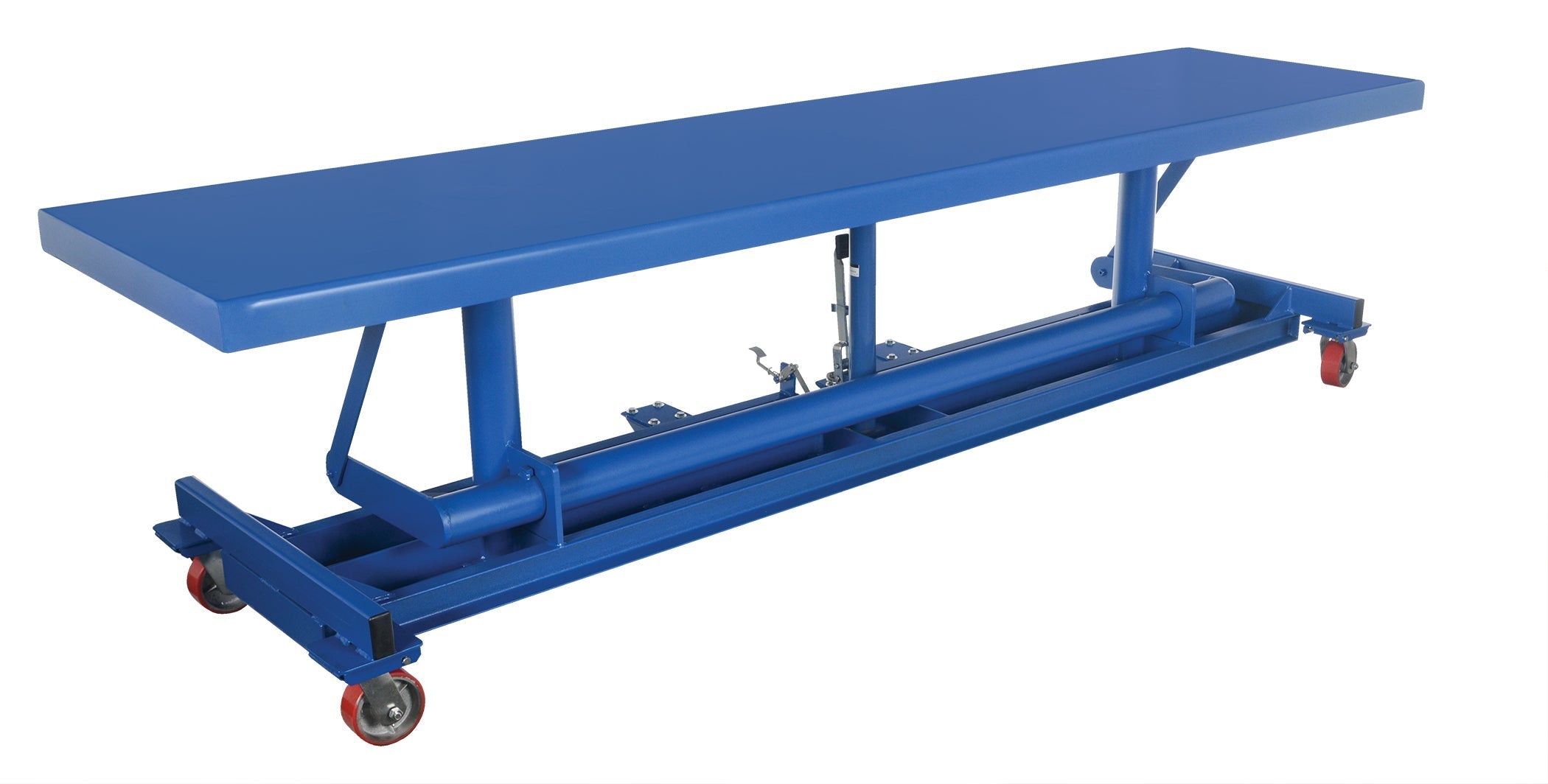
| Vestil Long Deck Carts | $2,675 | 2,000-4,000 lb | View → |
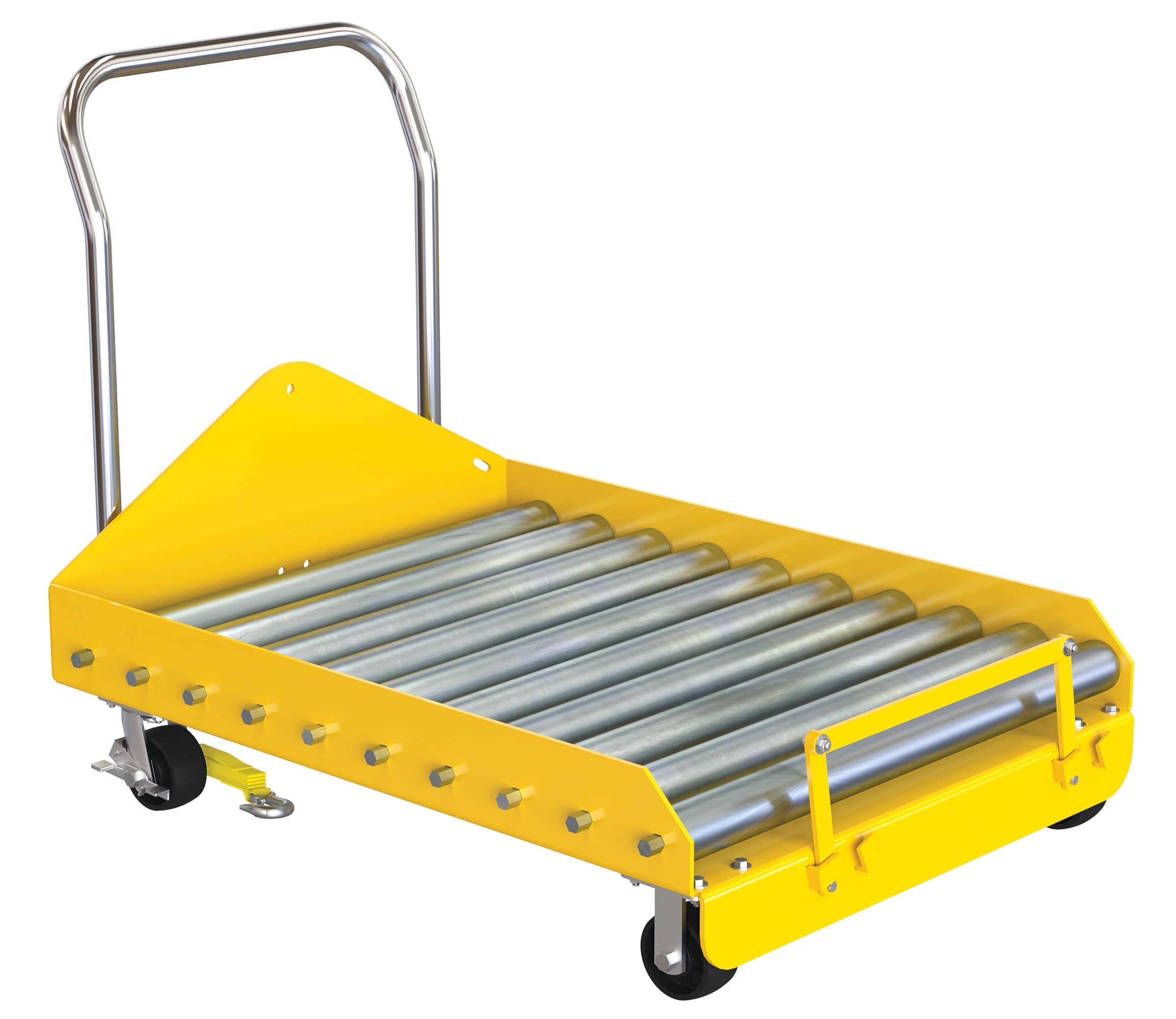
| Vestil Battery Transfer Platforms | $1,628 | 4,000 lb | View → |
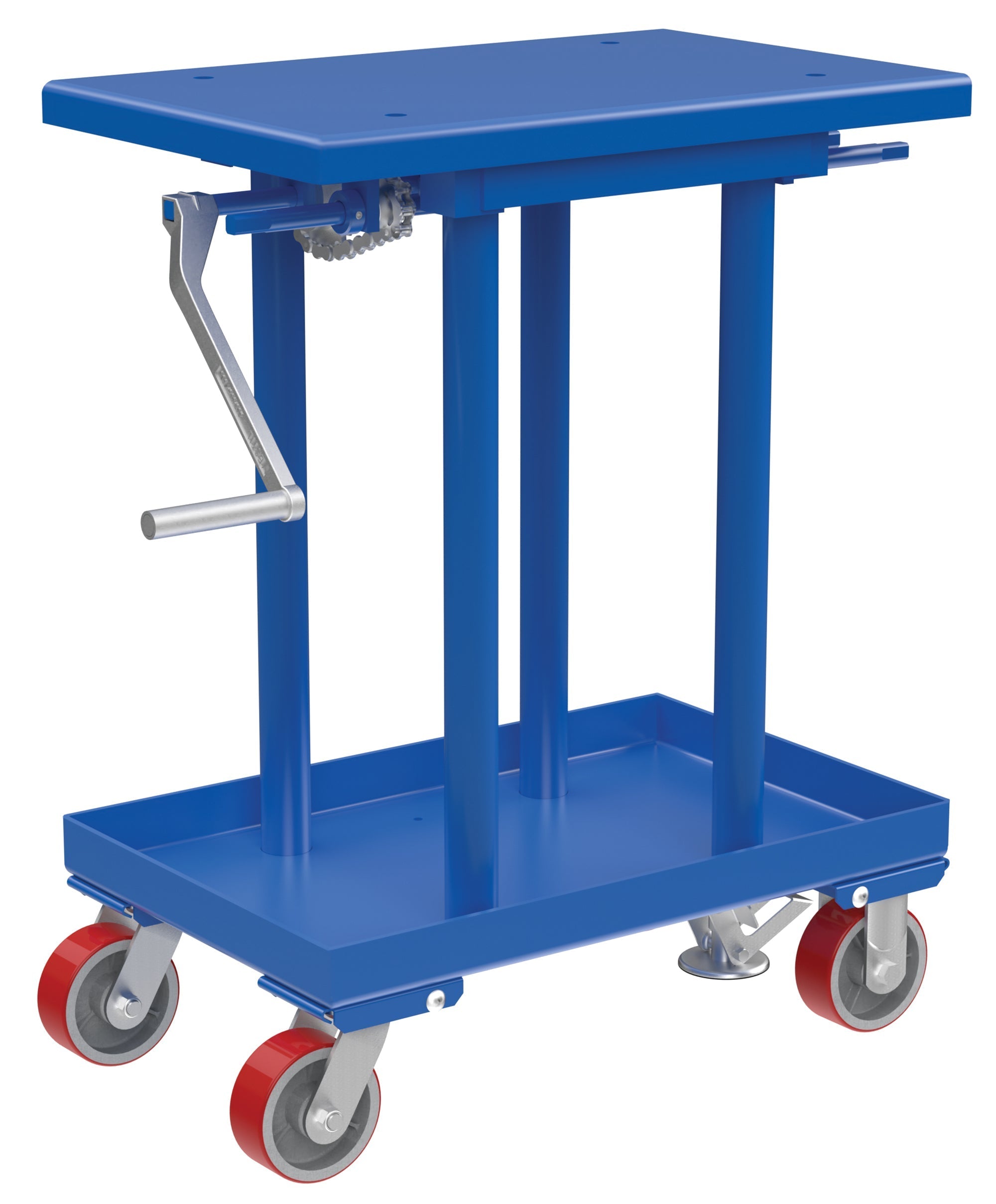
| Vestil Mechanical Post Tables | $1,213 | 1,000-2,000 lb | View → |
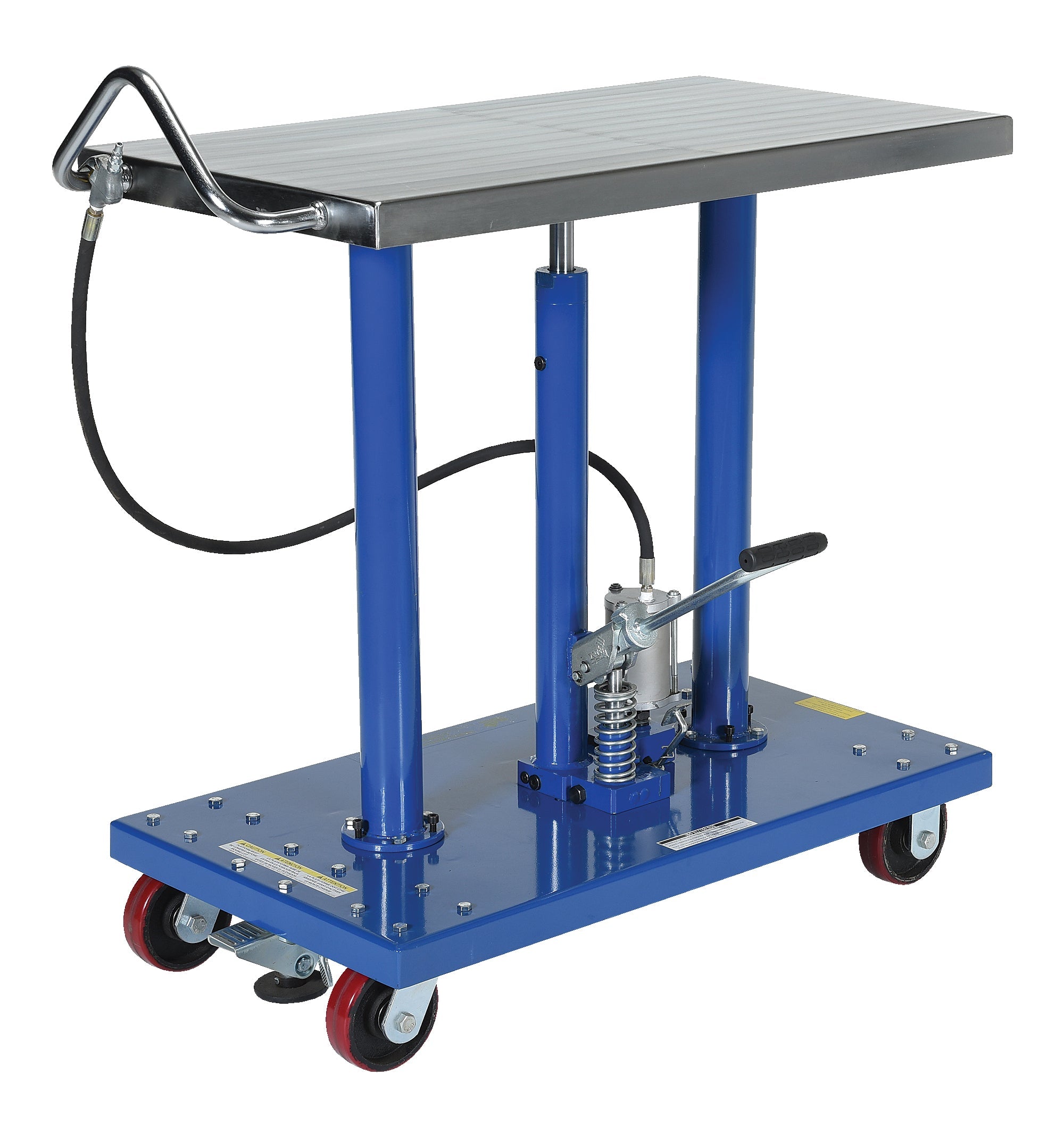
| Vestil Air Hydraulic Post Tables | $1,122 | 1,000-2,000 lb | View → |
| Vestil Die Tables | $992 | 2,000 lb | View → |
| Vestil Hydraulic Post Tables w/ Rounded Tops | $733 | 200-300 lb | View → |
 In Stock
 In Stock
 In Stock
 In Stock
 In Stock
 In Stock
 In Stock
Post Tables Buying Guide
Post or scissor: what the column mechanism buys you. The scissor table is the shop default, but a post table earns its place when footprint and an open underside matter. Instead of an X-frame folding under the deck, a post table lifts on a column, or a pair of columns, standing at the edge of the platform, so the base stays small and nothing crowds the space beneath the load. That is why post tables show up at press lines feeding dies, at welding stations positioning a part, and in cells too tight for scissor travel. The trade is range: a single post gives less vertical travel than a well-designed scissor, so if you need to serve both a floor-level pallet and mezzanine height, a scissor on the parent Lift Tables page is usually the better tool. When the load builds or breaks down in place, a spring-loaded self-elevating table may be the answer instead. Pick the mechanism for the task, then spec the numbers within it.
The cantilever is why centering matters more here. Every lift table is rated with the load centered on the deck, and a post table is stricter about it than a scissor. Because the column sits to one side and carries the platform as a cantilever, a load pushed toward the front or the outboard edge puts a bending moment straight into that column and its bearings, and the effective capacity falls off faster than a centered rating suggests. Vestil publishes reduced off-center limits for exactly this reason. So size in two steps: take the honest weight of the heaviest load plus any die shoe, fixture, or container, then look hard at how it will actually sit. A die that overhangs the front of the deck, a part loaded from one side, an operator leaning on the edge, all of them argue for the next capacity up. The price gap between adjacent ratings is small next to a sprung column.
Capacity, raised height, and deck size. Three numbers bound the buy. Capacity on the Vestil hydraulic post table line runs from 200 lb bench units up to 6,000 lb, and the price ladder is gentle: a 200 lb foot pump table starts around $530 and the heavier decks climb from there. Raised height decides what the table can serve, so match it to the machine you feed. The die tables come in 36, 48, and 60 inch raised heights so a die arrives at press height, while the mechanical tables top out near 54 inches. Deck size has to be large enough that the load never overhangs at full extension, where deflection is greatest and the cantilever moment is worst; hydraulic post table decks range from a 16 by 16 inch top up to 48 by 48 inches. Check all three against your process before you commit to a footprint, because a deck that is right on capacity but too short forces exactly the off-center loading the last section warned about.
Drive type is a cycles-per-day question. A foot pump post table costs the least and needs no electrical service, and it earns its keep at a station cycling a few times an hour. But every stroke of the pedal is operator effort, so a table raised and lowered all shift turns that effort into fatigue and slow cycles. When the duty climbs, the same tables come DC powered at 12V, raising at the push of a button, and plants running on compressed air can spec the air over hydraulic version, offered on 1,000 and 2,000 lb decks. Washdown, food, and pharma floors have an answer too: the hydraulic line offers partially stainless steel builds that take cleaning chemistry without corroding. If the table also has to travel between stations, the scissor-based elevating lift carts put the mechanism on wheels instead of asking you to reposition a fixed table.
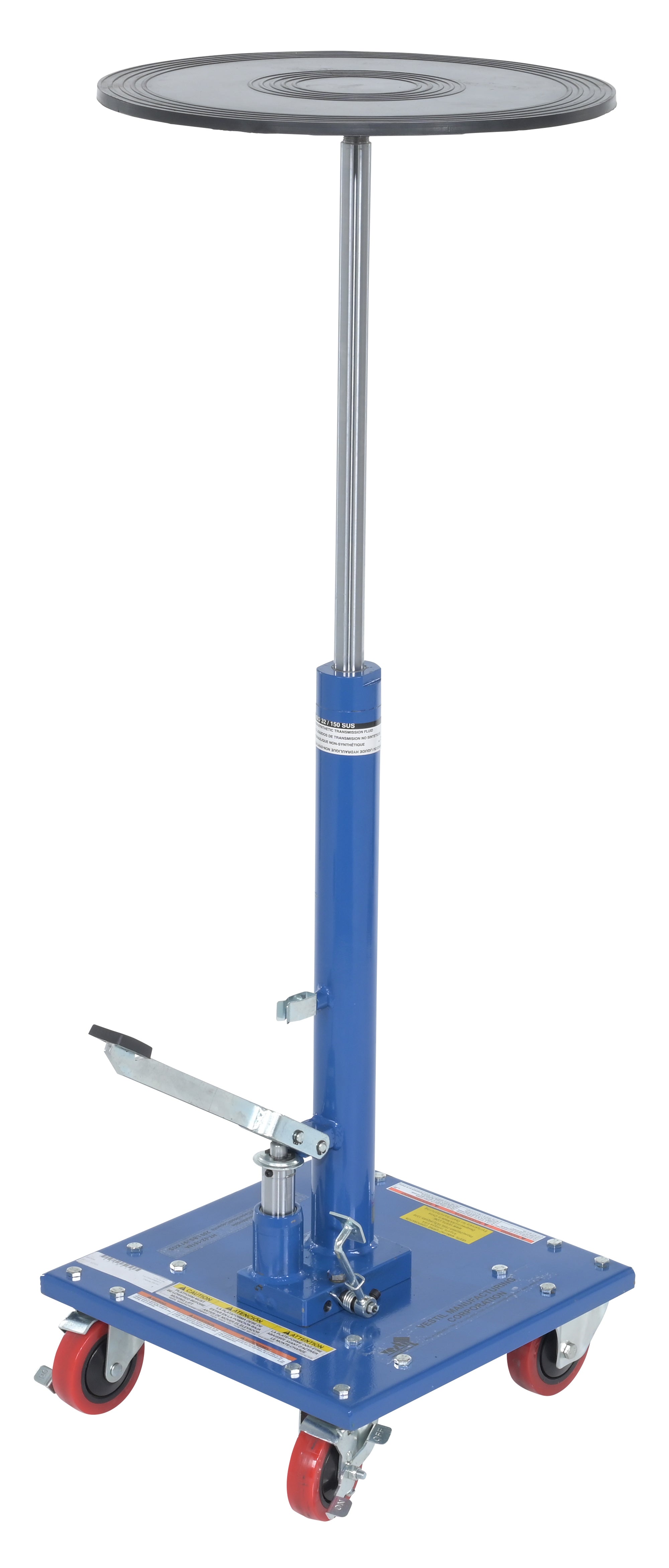
Die tables, rounded tops, and mechanical models. The category splits into a few purpose-built shapes. Die tables are the reason many shops buy here at all: they park a die at consistent press height for loading and unloading, with an optional chrome platform that lets a heavy die slide rather than drag across steel. Rounded-top post tables swap the square deck for an 18 or 24 inch round top, which cradles a drum, a coil, or a round workpiece that would rock on a flat platform. Mechanical post tables drop the hydraulics entirely and use a screw mechanism, for a shop that wants no pump to service and no oil to leak. When the job is really about tipping a container toward the operator rather than raising it flat, a tilter or a work positioner is the correct machine, not a flat-deck post table.
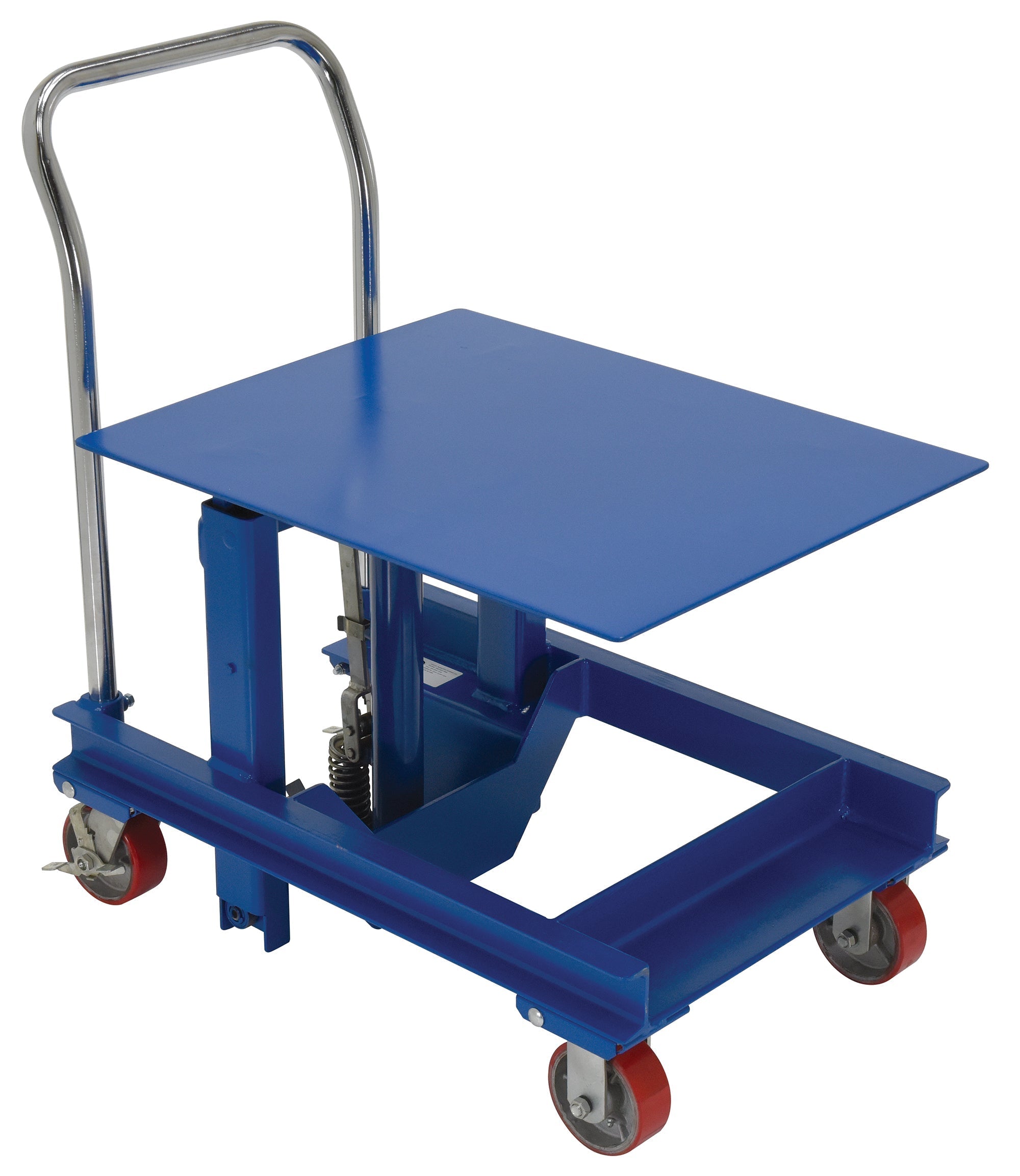
Battery platforms, long decks, and the standard behind the category. Two members stretch the definition. Forklift battery transfer platforms and carts move a lift truck battery, commonly 1,000 to 4,000 lb of it, out of the truck and onto a stand or the next machine, with an optional winch to drag the battery across rather than muscle it; they take the single worst manual lift out of a battery room. Long deck carts put a post table deck up to 120 inches long on a rolling frame for extrusions, lumber, and long fabrications a standard deck cannot support. On the standards side, know one distinction: ANSI MH29.1, the safety standard the scissor tables are built to, explicitly carves out lift tables that do not use a scissor mechanism, so a post table sits outside its scope. That puts the weight on the manufacturer's rating plate and the discipline behind it: keep loads centered, never exceed the marked capacity, and block the platform before anyone works underneath it.
Frequently Asked Questions
A post lift table raises its deck on one or more vertical columns standing beside the platform, instead of on folding scissor legs underneath it. That keeps the base compact and the underside of the deck open, which is why post tables suit die handling, press feeding, and welding positioning in tight cells. The trade is vertical travel: a single post gives less range than a comparable scissor table, so choose a post table for footprint and open access, and a scissor when you need to span from floor level to a tall working height.
Total the honest weight of the heaviest load plus any die shoe, fixture, or container, then look at how it will sit on the deck. Post tables are rated with the load centered, and because the column carries the platform as a cantilever, a load pushed to the front or outboard edge cuts the effective rating faster than on a scissor table. If the load overhangs, loads from one side, or gets leaned on, buy the next capacity up. The Vestil hydraulic line spans 200 lb through 6,000 lb, and the price step between ratings is small.
It is a cycles-per-day decision. A foot pump table is cheapest and needs no power, and it is fine at a station that cycles a few times an hour. If the table raises and lowers all shift, the pedal effort becomes fatigue, so step up to the 12V DC powered version and cycle at the push of a button. If your plant runs on compressed air, the air over hydraulic model does the same job off the shop air supply, on 1,000 and 2,000 lb decks.
Yes, that is what the battery transfer platforms and carts are for. They bring a deck to the height of the truck's battery compartment so a battery, often 1,000 to 4,000 lb, can be rolled out onto the platform and moved to a charging stand or the next machine. The winch option pulls the battery across the rollers rather than asking anyone to shove it, which is the point of the equipment: removing the heaviest and most awkward manual lift in a battery room.
ANSI MH29.1, Safety Requirements for Industrial Scissors Lifts, applies to lift tables that use a scissor mechanism and explicitly excludes lift tables that do not, so a post table falls outside its scope by design. That does not make a post table unregulated; it means the manufacturer's rating plate and operating instructions govern. Follow them: keep the load centered, stay within the marked capacity, and block the raised platform before performing any service underneath it.